Saturday, October 17, 2015
Hillary Clinton backs Obama's move to keep troops in Afghanistan

Hillary Clinton supports President Barack Obama’s decision to keep 5,500 US troops in Afghanistan when he leaves the White House in 2017.
Clinton said in an interview with CNN, the first part of which was broadcast on Friday, that Obama’s moves were an example of “a leader who has strong convictions about what he would like to see happen but also pays attention to what’s going on in the real world”.

Obama planned to keep only a small US military presence in Afghanistan, which was invaded in 2001, by the end of his presidency. But military leaders have said the Afghans need more support from the US to fight the Taliban and maintain gains made in the past 14 years.
Clinton, who served as Obama’s secretary of state during his first term, said the US wanted to bring its troops home and “we certainly don’t want them engaged in on-the-ground combat. We want them to help support and train the Afghan army”.
“So I can’t predict where things will be in January of 2017. But I support the president’s decision,” she said.
The White House’s announcement thrusts the future of Afghanistan into the 2016 race, an issue that has received scant attention up to this point and was not addressed during the first Democratic presidential debate on Tuesday.
Clinton has not talked extensively during her campaign about how she would pursue a peaceful transition from the war in Afghanistan.
During a Friday afternoon campaign appearance in Nashua, Clinton said Obama did not reach his decision “easily” and noted the partnership the US has established with Afghan president Ashraf Ghani.
“We have invested a lot of blood and a lot of treasure in trying to help that country and we can’t afford for it to become an outpost of the Taliban and [Islamic State] one more time, threatening us, threatening the larger world,” Clinton said.
In a June 2014 interview at the Council on Foreign Relations, Clinton said that she would be open to extending the timeline for US withdrawal from Afghanistan but it would depend upon “conditions on the ground and what was being asked for”.
Clinton negotiated with then-Afghan president Hamid Karzai on a bilateral security agreement toward the end of her tenure that would have set the legal parameters for the residual force to stay in Afghanistan. She has said she was surprised when Karzai refused to sign it.
Clinton has said that setting a timeline for withdrawal was an important step but the Afghanistan government would need to step up to make it work.
As secretary of state, Clinton supported Obama’s troop surge in Afghanistan, writing in her book Hard Choices that she was “under no illusions about how difficult it would be to turn around this war. But all things considered I believed that the president had made the right choice and put us in the best position to succeed.”
UNHCR in Malaysia treating Pakistani Christian asylum seekers unfairly

In keeping with details, the UNHCR is treating Muslim asylum seekers from Myanmar, Syria, Iraq and other Islamic countries on priority basis. Whereas, the cases of Pakistani Christians seeking asylum are being delayed unnecessarily.
For this cause Pakistan Christian Congress has been raising this issue on various platforms. PCC has received a report from Malaysia that initially UNHCR gives Pakistani Christians a time period of two years at least for first interview after which they would be registered as refugees. After keeping them waiting for two years already they are made to wait for another two or three years that the UNHCR issues a date for the final interview after which their asylum status is decided.
Also read: Muslim teachers beat a Christian head master saying “You are a Choora how can you be our boss”
PCC further criticised that in sharp contrast, UNHCR is giving a period of few months to Muslims asylum seekers from Myanmar, Syria, Iraq and various other Islamic countries.
Moreover what adds to the plight of Pakistani Christians seeking asylum in Malaysia that the Malaysian police regard all refugees as un-registered and illegitimate until they do not appear for an initial interview with the UNHCR after which they are registered as refugees. In view of this, when Pakistani Christians seeking asylum wait for two or three years for an initial interview they face maltreatment and harassment from the Malaysian police for these two or three years until their first interview with the UNHCR.
In this regard, President of Pakistan Christian Congress PCC, Dr. Nazir S. Bhatti has shown great concern over mistreatment with Pakistani Christian asylum seekers in Malaysia, Thailand, Sri Lanka, Hong Kong, and Singapore. He has strongly criticised the offices of UNHCR in Malaysia, Thailand, Singapore, Sri Lanka and Hong Kong. “PCC urges Secretary General Ban Ki Moon of UNO to direct UNHCR to adopt same standards to deal with cases of Muslims and Christian refuges in South and South Eastern countries.”
At the same time, Dr. Bhatti urged the European Union to take in the Pakistani Christian asylum seekers and facilitate them as well. He also urged the international NGO’s and humanitarian organisations to help the Pakistani Christian refugees stranded in Sri Lanka, Malaysia, Thailand, Singapore and in Hong Kong.
- See more at: http://www.christiansinpakistan.com/unhcr-in-malaysia-treating-pakistani-christian-asylum-seekers-unfairly/#sthash.vbsMiJ0x.dpuf
"د قبایلي سیمو بې کوره خلک دي تر ژمې وړاندې ستانه کړل شي"

د پاکستان د سرحدونو او قبابلي چارو لپاره د سینیټ قايمه کمیټۍحکومت ته ویلي چې د ژمي تر راتګ وړاندې دې له قبایلي سیمو بې
کوره کړل شوي خلک خپلو سیمو ته ستانه کړي.
: د پاکستان د سرحدونو او قبابلي چارو لپاره د سینیټ قايمه کمیټۍحکومت ته ویلي چې د ژمي تر راتګ وړاندې دې له قبایلي سیمو بې کوره کړلشوي خلک خپلو سیمو ته ستانه کړي.
دا غوښتنه د جمعې په مازیګر په اسلام اباد کې د یادې کمېټۍ په غونډه کې شوې ده چې مشري یې سنېټر هلال الرحمان کوله.
په دې غونډه کې د پاکستان د سرحدونو او قبایلي چارو – سېفران – وفاقي وزیر او په قابلي سیمو کې د پرمختګ د چارو ادارې – فاټا سیکرټیریټ – چارواکوهم ګډون درولود.
د سرحدونو او قبابلي چارو لپاره قايمه کمیټۍ د حکومت او فاټا سیکرټرېټ چارواکو ته وویل چې د شمالي وزیرستان او نورو قبایلي سیمو د بې کوره کړل شوو خلکو له خوا یې شکایتونه ترلاسه کړي دي چې د حکومت له پلوه د نه پاملرنې له کبله له ستونزو سره مخامخ دي.
خو د سېفران وفاقي وزیر او فاټا سیکرټیریټ چارواکو وویل چې دوی له بې کوره کړل شوو خلکو سره ټولې ممکنې مرستې او همکارۍ کوي.
تر دې غونډه وروسته د یادې کمیټۍ یو غړي سینټر تاج محمد اپریدي مشال راډیو ته وویل چې دوی له حکومته غوښتتنه وکړه چې بې کوره کړل شوي خلک دي تر ژمي وړاندې خپلو سیمو ته ستانه کړي.
دا په داسې حال کې ده چې د شمالي وزیرستان د بې کوره کړل شوو خلکو مشرانو په وار وار د جرګو له لارې له حکومته غوښتنه کړېده چې دوی دي ژر تر ژره خپلو سیمو ته ولېږل شي.
د پاکستان پوځ د ۲۰۱۴م کال د جون میاشتې پر پنځلسمه نېټه په شمالي وزیرستان کې د وسله والو پر ضد عملیات پیل کړي وو چې لا هم روان دي.
د دې عملیات له کبله تر یو میلیون زیات خلک بې کوره شو چې زیارتره د خیبر پښتونخوا په بنو او د افغانستان په خوست کې مېشت دي.
د دې بې کوره کړل شوو خلکو مشرانو په وار وار له مشال راډیو سره د مرکو پر مهال ویلي چې د پوځي عملیاتو له کبله د دوی کورونه او کاروبارونه لا خو له منځه تللي او لا هم په پراخه کچه زیانمن شوي دي.
د دوی په وینا ، د قبایلي سیمو پر نامه چې نړۍ پاکستان ته کومې مرستې ورکوي هغه د قبایلي سیمو خلکو ته نه رسېږي.
Balochistan Facing Severe Food Insecurity

Adnan Aamir
Balochistan is facing severe food insecurity, said participants of one day consultative dialogue, on Wednesday.
30 out of 32 districts of Balochistan are food insecure and only Quetta and Jaffarabad are food secure as per the report of Sustainable Development Policy Institute (SDPI).
These issues were revealed during a one-day consultative dialogue held to celebrate world food day in Quetta Press Club by Azat foundation in collaboration with HARD, ActionAid, Pakistan Kissan Ittehad and Agriculture research department of Balochistan.
30 out of 32 districts of Balochistan are food insecure – SDPI
World food day is celebrated every year on 16th October and theme for this year is Social protection and agriculture: Breaking the cycle of rural poverty
Speaking on the occasion, Marcel Stallen, International Project Manager of Food and Agriculture Organization (FAO) said that a lot of work needs to be done to make Balochistan food secure.
Provincial Disaster Management Authority (PDMA) has stated that 29 out of 32 districts of Balochistan are facing drought conditions due to fewer rainfalls last year.
“At the moment FAO is working in 14 districts of Balochistan on projects funded by USAID and AUSAID,” said Mr. Stallen. He added, “Balochistan government should convince international donors to fund FAO so that we can expand our operations in Balochistan.”
Commenting on the existing agriculture policy of Balochistan, Mr. Stallen remarked that it’s outdated. “FAO has developed a new agriculture policy for Balochistan which is in its final stages and its awaiting approval from provincial cabinet,” he informed the participants of the meeting.
5 rivers in Khuzdar district alone dump 350,000 cusecs of water in Arabian Sea very year – Sultan Shahwani.
Highlighting the reasons for food insecurity in Balochistan, Sultan Shahwani of HARD Balochistan said, 5 rivers in Khuzdar district alone dump 350,000 cusecs of water in Arabian Sea very year.
80 percent people of Balochistan depend on agriculture for their livelihood either directly or indirectly, claimed Naseer Shahwani, representative of Zamindar Action committee (ZAC) which is the union of agriculturalists of Balochistan.
He alleged that all funds allocated for agricultural development in Quetta during tenure of this government have been embezzled and ended in pockets of activists of ruling parties.
Panjgur district of Balochistan alone can produce wheat for entire Pakistan – Naseer Shahwani.
Mr. Shahwani further claimed that Balochistan can be food basket for entire Pakistan if due attention is provided to agriculture in the province. “Panjgur district of Balochistan alone can produce wheat for entire Pakistan,” said representative of ZAC.
Ahmad Jan Baloch, a social activist, contended the assertion that Balochistan is an agricultural province. “Pakistan is an agricultural country but not Balochistan,” claimed Mr. Baloch.
Participants of the consultative dialogue lamented the absence of senior officials of agriculture department of Balochistan.
“We invited Secretary and Director General Agriculture department but they didn’t bother to come,” Zahid Mengal, executive director of Azat Foundation told the participants.
Secretary and Director General Agriculture department were invited to consultative meeting but they didn’t bother to come – Zahid Mengal.
Other who spoke at the occasion include Dr. Khair Mohammad and Ghulam Jan who are agriculture experts, Gul Khan Naseer Head of Programs of Azat Foundation, Noor Ahmad Mengal from Pakistan Kissan Ittehad and Arif Shah Kakar, Associate Professor of Agriculture college Quetta.
Meeting was concluded on the note that both provincial and federal government need to take urgent steps to make Balochistan food secure.
Pakistan - Asghar Khan case - What happened in 1990

The fact is that what happened in 1990 is still very important today. Essentially the democratic will of the people was stolen from them by an institution, and an entire election manipulated to show an entirely different result. At a time when we still hear allegations of election rigging it is vital we get to the bottom of the matter. If an election can be intervened in by outside forces it makes the entire exercise in democracy rather futile. We must remember that polls cost a huge amount of taxpayers’ money and their outcome cannot simply by moulded to fit the interests of a particular bloc. For these reasons it is vital that we see all politicians and other players cooperate with the FIA. It is hard to believe that the Sharifs cannot recall being handed over a very large amount of money in a secret deal orchestrated by the then president Ghulam Ishaq Khan. Younis Habib, who then headed the Mehran Bank, has also given a statement that is impossible to believe by saying that the money was given to another Mr Sharif rather than the current prime minister. The repercussions from this case are widespread. We continue to live in fear of interventions in our democratic working. To overcome these, the Asghar Khan case must reach a definite conclusion.
Pakistan - Federalism Under Squeeze
 By - Afrasiab Khattak

The prolonged and mad fixation of the two big political parties and the country’s media with the by election of NA 122 Lahore kept the political focus of the country hostage for quite some time. For many days there was very little space in the so called mainstream media of the country for issues like war on terror in the country, military operation in FATA, the miseries of millions of Pashtun IDPs, bloodshed in Balochistan, turmoil in Karachi, load shedding, the menace of polio, and last but not the least the deteriorating situation on both the eastern and western borders of the country. It was flabbergasting to see the obsession of the two big parties withbye-elections in just one constituency of the National Assembly, which is a house of 342 members. It is particularly so when the federal government of Muslim League (N) has a comfortable majority and loss of one seat would not have made any difference in the parliamentary strength of the ruling party. There is one and only one explanation for the aforementioned obsession. The contest was not for just one National Assembly seat. It was about Takht-e-Lahore (throne of Lahore) which decides as to who will rule the country. So the fixation with NA 122 was basically a mere symptom of the deeper and more serious malaise, the growing Punjabisation of Pakistani politics and further marginalization of the population wise smaller units of the federation in the last few years.
Now to call these phenomena new one would be factually wrong. The hegemony of the Punjabi ruling elite over the state system and its policies has dogged the country through out its existence. Interestingly this imbalance prevailed even in the undivided Pakistan when the then East Pakistan (Bengal) had a bigger population than the population of all the four western provinces put together. The aforementioned imbalance was embedded in the state structure inherited by Pakistan from the colonial era. Pakistan had a week political class, week parliament and a week judiciary from day one. Compared to these institutions we got an over developed civil and military bureaucracy of the colonial system that launched the first coup in 1954 by dissolving the Constituent Assembly of the country. In 1955 One Unit was created by coercing all the provinces and regions to merge in West Pakistan Province with Lahore as its capital to counter the population weight of the then East Pakistan. But even then the East Pakistan had 54 percent of the country’s total population. So the then East Pakistan was forced to disenfranchise part of its population by accepting the principle of “ parity” (50 percent seats in the National Assembly) for “ greater national interests”. The martial law imposed in 1958 further reinforced this oppressive and exploitative system. This development led to severe crises that culminated in the disintegration of the country in 1971, a history well known to all.
In the aftermath of the debacle in East Pakistan the ruling establishment dominated by military and civil bureaucracy had to beat a retreat and elected representatives of the people were able to frame a federal, parliamentary democratic Constitution in the country in 1973. But the authoritarian establishment could not reconcile with a federal democratic system. So it consistently worked for undermining the system. After learning of the previous two unsuccessful efforts, in 1977 General Zia led a successful coup and the first casualty was the Constitution. It was not only suspended but its federal and democratic structure was also undermined by distortions and deformations inserted in it by the military dictator. Subsequently Musharraf imposed many more distortions in the Constitution. After the 2008 general elections democratic forces of the country tried to cleans the Constitution from distortions and deformations and bring the original federal and democratic character of the Constitution back. Although they could only partially succeeded in achieving that aim but the 18th Constitutional Amendment was a landmark development in terms of abolition of the concurrent legislative list and devolution of power to the provinces.
PML-N had supported the 18th Amendment because it also did away with the ban on third time prime ministership inserted in the Constitution by GeneralMusharraf to prevent Mian Nawaz Sharif and Shaheed Benazir Bhutto from becoming prime minister for the third time. Having achieved that purpose the current ruling party has not hidden its reservations about the 18th Amendment. It has revived ministries of health and education ministries in violation of the Constitution. The federal government has not been calling the constitutionally mandatory meetings of the Council of Common Interest (CCI) in 90 days. The unfinished task of devolution of powers under the 18th Amendment remains unfinished and there is no visible movement on this front. Federal government is not an abstract or neutral entity. It is by and large an extension of the Punjabi ruling elite. So for obvious reasons the ruling party is least interested in devolution of power and would roll back whatever is achieved so far.
But that is not all. The military dominated Pakistani state system is neither neutral nor politically inactive. It resorts to political engineering by tilting state policies into certain direction and at times by using naked coercion. The unlimited and growing powers of the apex committees, that do not figure anywhere in the country’s law or
Constitution has practically reversed whatever little autonomy the provinces had enjoyed in the past. Provincial governments in Balochistan and Sindh have been rendered dangerously powerless. As if that was not enough PTI has expanded its political power base with the clear support of the establishment. Nationalist and progressive political forces (in comparative terms) in the smaller provinces, weather in power or in the opposition, have faced growing pressure of state institutions. Media control has played an important role in it for casting political leaders in the roles of either Devils or Angels. Alternative to a Punjab based PML (N) has been created in the shape of PTI, representing another faction of Punjabi elite. It is not surprising to see these developments accompanied by more overt support for Afghan Taliban confirming the nature of overall state policies.
These developments practically amount to a reversion to a not so invisible One Unit even without any pretension of its constitutionality. It’s a policy rejected by the people in the past and will be also resisted in the future. Using force to impose it will certainly lead to the rise of centrifugal forces and weakening of the forces believing in the federation. Make no mistake about it.
Now to call these phenomena new one would be factually wrong. The hegemony of the Punjabi ruling elite over the state system and its policies has dogged the country through out its existence. Interestingly this imbalance prevailed even in the undivided Pakistan when the then East Pakistan (Bengal) had a bigger population than the population of all the four western provinces put together. The aforementioned imbalance was embedded in the state structure inherited by Pakistan from the colonial era. Pakistan had a week political class, week parliament and a week judiciary from day one. Compared to these institutions we got an over developed civil and military bureaucracy of the colonial system that launched the first coup in 1954 by dissolving the Constituent Assembly of the country. In 1955 One Unit was created by coercing all the provinces and regions to merge in West Pakistan Province with Lahore as its capital to counter the population weight of the then East Pakistan. But even then the East Pakistan had 54 percent of the country’s total population. So the then East Pakistan was forced to disenfranchise part of its population by accepting the principle of “ parity” (50 percent seats in the National Assembly) for “ greater national interests”. The martial law imposed in 1958 further reinforced this oppressive and exploitative system. This development led to severe crises that culminated in the disintegration of the country in 1971, a history well known to all.
In the aftermath of the debacle in East Pakistan the ruling establishment dominated by military and civil bureaucracy had to beat a retreat and elected representatives of the people were able to frame a federal, parliamentary democratic Constitution in the country in 1973. But the authoritarian establishment could not reconcile with a federal democratic system. So it consistently worked for undermining the system. After learning of the previous two unsuccessful efforts, in 1977 General Zia led a successful coup and the first casualty was the Constitution. It was not only suspended but its federal and democratic structure was also undermined by distortions and deformations inserted in it by the military dictator. Subsequently Musharraf imposed many more distortions in the Constitution. After the 2008 general elections democratic forces of the country tried to cleans the Constitution from distortions and deformations and bring the original federal and democratic character of the Constitution back. Although they could only partially succeeded in achieving that aim but the 18th Constitutional Amendment was a landmark development in terms of abolition of the concurrent legislative list and devolution of power to the provinces.
PML-N had supported the 18th Amendment because it also did away with the ban on third time prime ministership inserted in the Constitution by GeneralMusharraf to prevent Mian Nawaz Sharif and Shaheed Benazir Bhutto from becoming prime minister for the third time. Having achieved that purpose the current ruling party has not hidden its reservations about the 18th Amendment. It has revived ministries of health and education ministries in violation of the Constitution. The federal government has not been calling the constitutionally mandatory meetings of the Council of Common Interest (CCI) in 90 days. The unfinished task of devolution of powers under the 18th Amendment remains unfinished and there is no visible movement on this front. Federal government is not an abstract or neutral entity. It is by and large an extension of the Punjabi ruling elite. So for obvious reasons the ruling party is least interested in devolution of power and would roll back whatever is achieved so far.
But that is not all. The military dominated Pakistani state system is neither neutral nor politically inactive. It resorts to political engineering by tilting state policies into certain direction and at times by using naked coercion. The unlimited and growing powers of the apex committees, that do not figure anywhere in the country’s law or
Constitution has practically reversed whatever little autonomy the provinces had enjoyed in the past. Provincial governments in Balochistan and Sindh have been rendered dangerously powerless. As if that was not enough PTI has expanded its political power base with the clear support of the establishment. Nationalist and progressive political forces (in comparative terms) in the smaller provinces, weather in power or in the opposition, have faced growing pressure of state institutions. Media control has played an important role in it for casting political leaders in the roles of either Devils or Angels. Alternative to a Punjab based PML (N) has been created in the shape of PTI, representing another faction of Punjabi elite. It is not surprising to see these developments accompanied by more overt support for Afghan Taliban confirming the nature of overall state policies.
These developments practically amount to a reversion to a not so invisible One Unit even without any pretension of its constitutionality. It’s a policy rejected by the people in the past and will be also resisted in the future. Using force to impose it will certainly lead to the rise of centrifugal forces and weakening of the forces believing in the federation. Make no mistake about it.
Iranian forces fire eight mortar shells into Pakistani territory

The Iranian border guards on Saturday morning fired eight mortar shells inside Pakistani territory, security sources said.
A security official who requested anonymity told Dawn that Iranian forces fired at least eight mortar shells that landed in a village in Panjgur district of Balochistan.
The security official added that no human loss of life or damage to civilian structures was reported as a result of the shelling.
Frontier Corps, Levies and other law enforcement personnel reached the spot and security was tightened following the border violation by Iranian border forces.
Last year in October, Iranian border guards had fired six mortar shells at a Pakistani border town of Mashkail, while a more recent incident occurredearlier in July this year when at least four mortar shells were fired towards Panjgur district.
Pakistan has accused Iranian forces of violating its territorial integrity and has lodged protest with Iran in this regard several times in the last few years.
Pakistan shares a 900 kilometre long porous border with Iran and the two countries had last year decided to boost intelligence coordination to wipe out terrorists from the border region.
Former Pak President Pervez Musharraf Responsible for Benazir Bhutto's Assassination: Statement

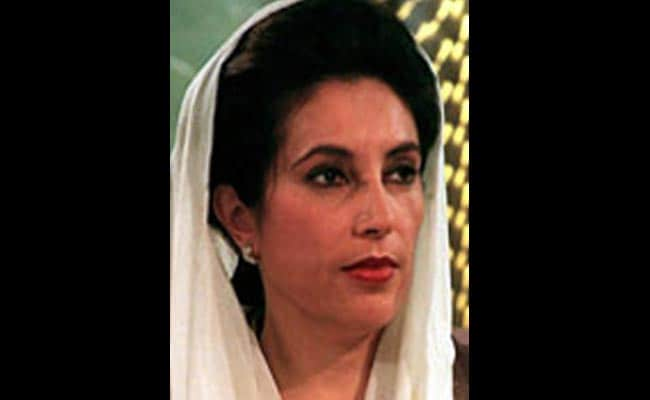
According to Pakistan's Geo News, who today claimed to have obtained the four-page statement recorded on October 1, Mr Siegel said General Musharraf was responsible for the murder of the former prime minister because she had informed him of death threats being faced.
Mr Siegel added that an intelligence agency of a Gulf country had traced a phone call in which plans to murder Benazir Bhutto were discussed. According to that phone call, three accomplishes of General Musharraf were part of that plan.
The US journalist also revealed that Benazir Bhutto had requested Gen Musharraf to be allowed to bring a foreign security team to Pakistan. The former president dismissed requests for a foreign security team and cars with tinted windows.
Mr Siegel in his statement further said he had learnt that mobile jammers provided for Ms Bhutto's security were not operational.
OCTOBER 18: Bilawal Bhutto pays glowing tributes to Karsaz martyrs

“This is the day when Jiyalas and the people of Pakistan wrote history with their blood. Millions of people who turned out at Karachi Airport to welcome their leaders were invaded by sponsored terrorists,” he said adding they were very aware that return of Shaheed Mohtarma Benazir Bhutto was aimed at to wage a unified national war against terrorists and their sponsors until complete elimination of the evil.
Bilawal Bhutto Zardari said that the way the people from all the four provinces, Azad Jammu & Kashmir, Gilgit-Baltistan and FATA swarmed the commercial capital of Pakistan sent out a clear message to those harbouring terrorists that people of Pakistan were rising up against scourge of terrorism and extremism. “These elements wanted to kill my mother and the Party leadership and take the country to stone-age and impose cruel pre-Islamic Arabic culture upon our motherland,” he said adding that Karsaz martyrs foiled their nefarious designs by sacrificing their lives.
PPP Chairman said that his Party had always fought for the rights of the all people of Pakistan and offered hundreds of lives during this decades-long struggle against the dictatorships and their chickens which grew up into monsters of terrorism. “Dictators vanished into mid-air and went under the mud, terrorists are on their way to hell and PPP still continues to fight with their left-over remnants even today,” he added.
He said that people of Pakistan, PPP leadership and workers are the heirs to the martyrs of the nation, including those laid down their lives on October 18, 2007 and they won’t forget these sacrifices for a single breath taking care of their families.
Bilawal Bhutto Zardari pledged that vision of Shaheed Zulfikar Ali Bhutto, Shaheed Mohtarma Benazir Bhutto and thousands of martyrs will continue to be followed until the achievement of their mission despite perpetual offences of the dictatorial forces and their agents against the Party.
https://mediacellppp.wordpress.com/2015/10/17/october-18-bilawal-bhutto-pays-glowing-tributes-to-karsaz-martyrs/
Friday, October 16, 2015
Kissinger poisoned the Middle East: America is living in a quagmire of his making
GREG GRANDIN, TOMDISPATCH.COM

W made matters worse, but the region's radicalization can all be traced to our steady support of the Shah of ShahsThis piece originally appeared on TomDispatch. The only person Henry Kissinger flattered more than President Richard Nixon was Mohammad Reza Pahlavi, the Shah of Iran. In the early 1970s, the Shah, sitting atop an enormous reserve of increasingly expensive oil and a key figure in Nixon and Kissinger’s move into the Middle East, wanted to be dealt with as a serious person. He expected his country to be treated with the same respect Washington showed other key Cold War allies like West Germany and Great Britain. As Nixon’s national security adviser and, after 1973, secretary of state, Kissinger’s job was to pump up the Shah, to make him feel like he truly was the “king of kings.”

Stop the Killing! Stop Saudi Arabia’s campaign of violence!
Today a young boy, Ali Mohammad al-Nimr emaciates alone in solitary confinement, Al-Harra prison in Saudi Arabia, awaiting a death sentence. Al-Harrah is one of Saudi Arabia notorious high security prisons, where inmates are routinely tortured. For Ali, his fate is more grim. The Saudi regime plans on executing him to death by crucifixion and beheading. One of Ali’s capital offenses include :using a phone to promote disloyalty to the King.

Ali Mohammad al-Nimr’s nightmare began on February 14, 2012, when age only 16. Saudi Security Forces arrested him, as he rode his bike near his family home, by rear ending him with a Jeep.
Ali was born December 25, 1995 in Qatif, Saudi Arabia. He is the nephew of prominent Shia cleric and political activist Sheikh Nimr al-Nimr. In December, 2011, Ali accompanied his uncle to a meeting, where Shiekh Nimr called for the peaceful respect human dignity for all citizens. For this crime, on October, 15 2014, Sheikh al-Nimr was sentenced to death by the Specialized Criminal Court, where charges included “seeking ‘foreign meddling’, ‘disobeying’ its rulers and taking up arms against the security forces.” His brother, Mohammad al-Nimr (Ali’s father), was arrested on the same day for tweeting information about the death sentence.
In the terrible day in February, without his parents ever being informed, Ali Mohammed al-Nimr was taken to a juvenile prison – there he was tortured for months and asked to confess to crimes he never committed: all of it to implications Shiekh Nimr. For the next four month Ali Mohammad al-Nimr was held incommunicado, without any access to legal counsel or contact with the outside.
For he attended a peaceful rally in the Shia majority Qatif (eastern province of Saudi Arabia), Ali Mohammad al-Nimr was abducted and incarcerated. Because his family represents outspoken beacon of hope for Saudi Arabia’s Shia community, Ali Mohammad has been brutalized by the regime.
In June 2012, Ali’s mother was finally allowed to visit her son in prison. There, she witnessed the horrors her son was put through – the beating, the torture, the abuses and psychological duress he had to endure day after day, week after week, month after month.
In December 2012, Ali Mohammad al-Nimr, then age 17, was charged with thirteen ludicris charges including Hariba (treason against God and the King of Saudi Arabia) – a blanket accusation the Saudi regime has often times used to silence its prisoners of conscience.
Ali Mohammad was never allowed access to a lawyer, he was never offered the opportunity to defend himself, or even allowed to challenge the charges which were brought against him.
After being found guilty of all the charges against the King, Ali Mohammad al-Nimr was sentenced to death by beheading and crucifixion.
In May 2014, following a lengthy and difficult appeal, Ali Mohammad’s case was reviewed before a panel of judges. Judges in Saudi Arabia, fall under the direct authority of the king, and their allegiance is not to the rule of law but the throne. Ali Mohammad al-Nimr never stood a chance at any fair trial.
Again, the final appeal was handed out secretly in July of 2015, where 13 judges sentenced him to death with no chance of further appeal.Since May 2014, Ali Mohammad, this young boy from Qatif has sat in prison, awaiting for his accusers to steal his last breath. His crime? Being a Shia Muslim in Saudi Arabia.
Ali’s predicament is not an isolated incident – Saudi Arabia’s prisons hold many minors within their walls; and too many, like Ali Mohammed al-Nimr, have been sentenced to death, in clear violation of the UN Convention on the Rights of the Child (CRC).
It needs to be noted that in 1996, Saudi Arabia agreed to be a state party to the CRC, when the Saudi Human Rights Commission signed a Memorandum of Understanding with the Office of the High Commissioner for Human Rights (OHCHR).
And yet, Saudi Arabia has systematically violated Ali Mohammed al-Nimr’s rights.
Not only has the UN failed to fulfill its mandate by challenging those in infractions of international law, it rewarded the kingdom.
In June of 2015 Faisal Trad, Saudi Arabia’s ambassador in Geneva, was elected Chair of the UN Human Rights Council panel that appoints independent experts.
Today we wish to break the silence and denounce those crimes the international community should have acted against long ago!
The UN Convention on the Rights of the Child (CRC) states:
“Article 37 States Parties shall ensure that:(a) No child shall be subjected to torture or other cruel, inhuman or degrading treatment or punishment. Neither capital punishment nor life imprisonment without possibility of release shall be imposed for offences committed by persons below eighteen years of age;
(b) No child shall be deprived of his or her liberty unlawfully or arbitrarily. The arrest, detention or imprisonment of a child shall be in conformity with the law and shall be used only as a measure of last resort and for the shortest appropriate period of time;
(c) Every child deprived of liberty shall be treated with humanity and respect for the inherent dignity of the human person, and in a manner which takes into account the needs of persons of his or her age. In particular, every child deprived of liberty shall be separated from adults unless it is considered in the child’s best interest not to do so and shall have the right to maintain contact with his or her family through correspondence and visits, save in exceptional circumstances;
(d) Every child deprived of his or her liberty shall have the right to prompt access to legal and other appropriate assistance, as well as the right to challenge the legality of the deprivation of his or her liberty before a court or other competent, independent and impartial authority, and to a prompt decision on any such action.”
Moreover, under article 15 of the UN Convention on the Rights of the Child (CRC), peaceful assembly is a protected right. It reads:
“Article 15: 1. States Parties recognize the rights of the child to freedom of association and to freedom of peaceful assembly.
2. No restrictions may be placed on the exercise of these rights other than those imposed in conformity with the law and which are necessary in a democratic society in the interests of national security or public safety, public order (ordre public), the protection of public health or morals or the protection of the rights and freedoms of others.”
Active petitions calling for the unconditional and immediate release of Ali Mohammed al-Nimr:
– The White House (for U.S. citizens only): https://petitions.whitehouse.gov//petition/negotiate-release-ali-mohammed-al-nimr
– Amnesty International: http://www.amnesty.org.au/action/action/38122/
– Change.org: https://www.change.org/p/king-abdullah-bin-abdul-aziz-supreme-court-of-saudi-arab-stop-the-crucifixion-of-ali-mohammed-al-nimr#petition-letter
END
For all press queries and details please contact Al Nimr PR representatives at Veritas Consulting:
Catherine Shakdam in the UK at
Email: catherine.shakdam@veritas-consultancy.one
or
Marwa Osman in Lebanon at
marwa.osman@veritas-consultancy.one
http://en.abna24.com/service/middle-east-west-asia/archive/2015/10/16/715400/story.html
Subscribe to:
Posts (Atom)