Friday, August 7, 2015

SEARCH OPERATIONS IN SEMINARIES OF BANNED ORGANISATIONS IN PUNJAB

The Counter-Terrorism Department, police and intelligence officials carried out joint search operations in seminaries of Multan, Faisalabad division, Gujranwala and Bahawalpur on Thursday.
On Sunday, one such operation was launched in Lahore seminaries where 14 students had been taken into custody.
Multan City Police Officer Azhar Ikram led the search operation in the city and Chungi No 9.
The spate of raids on seminaries is to bust militants, if any, from seminaries. It is a part of the National Action Plan to avert reaction to the Zarb-i-Azb Operation.
The police officer said that entire area was sealed before starting the operation while pickets were raised at several intersections and along roads for random searches. The seminaries of banned organisations, those on the fourth schedule and the workers of banned organisations were also searched, he said.
A house-to-house search was conducted to seize illegal weapons and explosives and people living in these localities illegally were detained.
He said 20 people were arrested and 20 Kalashnikovs seized from seminaries and houses.
CHINIOT:
Seven people were taken into custody during raids on seminaries while books, CDs and computers were seized.
The seminaries raided included Idara Dawat Wal Irshad, headed by PML-N MPA Maulana Ilyas Chinioti; Jamia Millia Islamia, Madressah Darul Uloom Madina, Madressah Jamia Farooqia and Jamia Baasat Rajoa Sadat.
Documents related to seminaries’ registration were also seized and the identity of students and teachers was verified through biometric machines.
FAISALABAD:
Regional Police Officer’s spokesman Malik Shahid said 43 seminaries were searched in Faisalabad, Jhang and Toba Tek Singh.
He said police had not found any hate material, wanted suspects, explosives or proclaimed offenders in any seminary.
He said 21 seminaries had been searched in Faisalabad and 11 in Jhang.
GUJRANWALA:
Eighteen students from different seminaries were detained and later released after interrogation.
The students were arrested from seminaries at Sheranwala Bagh, on Sheikhupura Road, in Khiali, Railway Station and Sabzi Mandi.
BAHAWALPUR:
Search operations were conducted in 18 seminaries of the district and 10 suspects taken into custody, mainly for failure to prove their identity.
http://www.shiitenews.org/index.php/pakistan/item/17632-search-operations-in-seminaries-of-banned-organisations-in-punjab

Analyzing Baloch-Pashtun Relationship in Balochistan

By Jeeyand Kashif Sajidi
Balochistan, the largest and most restive province of Pakistan is inhabited by many ethnic groups such as Baloch, Pashtun, Hazara and Seraiki. Among these Baloch and Pashtun are two major ethnic groups. Both these nations are historic neighbors and history reveals that they have lived peacefully.
History
The only major conflict between the two is known as Afghan-Baloch war (1757) which took place between the troops of Baloch hero, Noori Naseer Khan and Afghan hero, Ahmed Shah Abdali. The battle ended with “The Treaty of Kalat” also known as “Treaty of non-interference” (1758) and opened a new chapter of friendship between the Balochs and Afghans.  By the treaty of Kalat, both the leaders agreed not to interfere in the internal matters of others and Baloch under their leader Naseer khan Noori accompanied the Afghan King Ahmed Shah Abdali in several campaigns in India and Iran. Naseer Khan helped the Afghans in defeating the Iranians in Khorasan (1759), he also assisted Ahmed Shah in the third battle of Panipat (1761). In 1765, he helped Ahmed Shah in giving a crushing defeat to the Sikhs of Punjab.
Both the nations have lots of similarities; they both live in a tribal system and take pride in their distinct cultural identity.  There is also similarity in their history, the disintegration of the Baloch and Afghan state took place at the same time in late 19th century, when British colonialists entered their region. Balochistan and Afghanistan paid a heavy price for their strategic location and became a victim of British Forward Policy and Great Game which was driven by strategic rivalry between Britishers and Russians in Central Asia. Russia forcefully annexed the Khanates of Central Asia and reached close to Afghanistan. British Indian government used it as pretext to invade Afghanistan in order to make it a buffer state and protect her Indian colony from Russia. Similarly, the strategic importance of Balochistan compelled the Britishers to attack it and interfere in its internal matters. Baloch and Afghan gave a tough time to the imperial power but the mighty Britishers at last were successful in achieving their geo-political aims.
The Afghans were defeated in the second Anglo-Afghan war (1878-1880) and were forced to sign” The treaty of Gandamak” which divided their country in different administrative units. It was here that some parts of Afghanistan were merged with few Baloch areas which were taken by the Britishers on lease from the then ruler of Kalat State and named the province as British Balochistan. On the other hand, colonial power divided the Balochistan into different parts. Western Balochistan was given to Iran (1871) without taking into consideration the history, geography, culture and sentiments of the native people. Goldsmith line, which divided Balochistan, was drawn to please Iran and keep it away from Russian influence. Britishers further divided Balochistan giving Baloch areas of Seistan and Zabol to Afghanistan. Whereas Kalat retained its independent status and British Balochistan was made a part of India.
The intentions of Britishers in dividing Balochistan and Afghanistan were clear. One was to check the Russian influence in the region and other was to weaken the Baloch and Afghan nationalism by dividing them politically and culturally. The imperial powers have always used the tactics of “Divide and Rule” in order to rule smoothly and exploit the resources of the colonies. The division of a particular ethnic group in heterogeneous political system divides its power and political unity and they cannot offer a joint resistance against the colonial masters.  Inayatullah Baloch in his book “The problem of Greater Balochistan” has written “A fixed area or territory is an essential factor for the development of nationalism. Scattered and physically separated people cannot become a nation. The political and international division of Balochistan became an obstacle and hindrance in the development of Baloch nationalism”.
Post-Partition
After the Second World War, the Britishers left the region and two new states came into being Pakistan and India but the ex-colonial masters did not resolve the issue of Durand line, and Goldsmith line which divides Baloch and Pashtun in different countries. After the inception of Pakistan, there was no visible change came in the mindset of the ruling class. The Pakistani establishment viewed Baloch and Pashtun nationalism with great fear and implemented colonial policies which it inherited from its ex-Colonial masters in order to feeble the nationalism of both the groups.
After the creation of Pakistan, Baloch and Pashtun retained their old unity by forming a political party NAP and struggled jointly against the one unit system and demanded the creation of new provinces on ethnic basis. They succeeded in their aim in 1970 and one unit system was abolished by creating four new provinces. But still the establishment carried on the policy of Divide and Rule. Pashtun areas, which Afghanistan ceded to Britishers in second Anglo-Afghan were merged with Balochistan, without caring much about the feeling of the people of that area. Likewise, Baloch areas of Dera Ghazi, Rajanpur were put into Punjab and Jacobabad into Sindh.  The rulers were different but the idea was the same to check and curb the Baloch and Pashtun nationalism by dividing them into different provincial units.
After the merger of few Pashtun districts with Balochistan, the harmony that existed between the two began to evaporate because Pashtun became a minority in the new province. Since the creation of the province, Pashtun nationalists have claimed to be under-represented and time and time again they have put forward miscellaneous demands. One demand is to merge their areas with their brethren of Khyber Pakhtunkhwa (KP). Second demand is to establish a separate province by the name of Southern Pashtunkhwa and third demand is for equal share in the distribution of resources in Balochistan.  They assert that their population is equal with that of Baloch in the province but their representation is far below in all the sectors. They support this argument by the fact that there has never been a single full fledge Pashtun Chief Minister in the province ever since its emergence. On the other hand Baloch nationalists maintain that Pashtun have been given more representation in proportion to their population and reject the claim that Pashtun and Baloch are equal in numbers.
2013 Elections
The elections of 2013 have widened the gulf between the two as some Pashtun candidates allegedly won form Baloch constituencies of PB-4, PB-5 and NA-260 through rigging. Another bone of contention between the two is the question of Afghan refugees. A large number of Afghan refugees have settled in Balochistan and have got the green Passport and now they are dual nationals of Pakistan and Afghanistan. Baloch nationalists have alleged that settlement of Afghan refugees is a conspiracy against Baloch which is plotted by establishment to transform Baloch majority into a minority. Whereas, Pashtun nationalist are of the view that Afghan refugees are settling in Pashtun areas which were historically their areas and Baloch should not have problem with this.
Points of View
According to Naseer Nangial, Provincial Deputy Secretary of Pashtunkhwa Student’s Organization (PSO), “Pashtuns comprise half of the population of Balochistan yet, we have never got our due rights. In the Baloch-Pashtun province, we will only accept the relationship of equality, the relationship of master and subject is not acceptable to us.” He added, “Baloch districts might be more in number, but our tehsils are even more populated than their districts. If Baloch nationalists want to treat us like their slaves than we want the restoration of the British Balochistan province which comprises of all the Pashtuns districts of Balochistan. Pashtun who is the owner of this land and have been living here for centuries are being labeled as refugees by Baloch leadership.”
According to Ghulam Nabi Marri, The General Secretary of Balochistan National Party’s Quetta District, “We have historical kinship with Pashtuns and they are our brothers. All the Pashtun don’t want a separate province but a specific political party is demanding it. Pashtun live separately from Baloch in their own districts and we have no claim on their land. If that ethnic party thinks it is the representative of all the Pashtuns, then they are part of the incumbent government they should pass a resolution in the Balochistan assembly for a new province, we will definitely endorse it.” He further added, “Their claim of equal population is not right and demand of same share in the distribution of resources is not reasonable. Baloch reside in 22 out of 32 districts in Balochistan. China has invested 46 billion dollars in Balochistan not because of the almonds and grapes but due to the deep sea port of Gwadar and world’s fifth largest deposit of copper and gold in Saindak and Rekodiq. All these areas have 100 percent Baloch population. Opportunist leaders have fooled their innocent people by calling Baloch as usurper, Baloch itself is an oppressed nation how it can subjugate others. They have no political ideology and their ideology is just based on the enmity with Baloch. Their political maturity can be judged from the fact that Baloch are demanding their rights from Islamabad and they are demanding their rights from Baloch.”
Many experts have expressed concerns that the census of 2016 will worsen the relation between the two ethnic groups and a single unpleasant event can lead to a civil war which the volatile province cannot afford.  A veteran Baloch politician Aslam Bezanjo said in his statement,” To hold a census in presence of Afghan refugees is beyond common sense. If Pashtun leadership wants them to be included in the census than they should merge their areas with KP.”  Baloch Political party BNP-Mengal also stated that” If Pashtunkhwa Milli Awami Party (PKMAP) propose a resolution for separating Pashtun areas from Balochistan, then  they will support it whole heartedly.  Baloch nationalists have shown maturity in their statements and it is the best way to resolve the conflict. It is time for the Pashtun leaders to reciprocate. Instead of demanding for equal representation and equal share in resources, they should demand a province of their own. Native of Balochistan already gets a very meager share in its own resources from the federal government and if they are asked to share their paltry resources with illegal Afghan refugees then it will be too unfair.
Bottom Line
Sense will prevail if PKMAP passes a resolution for a separate province and end the blame game and Baloch political parties should stay on their words and support it. In the new province if they want to share their resources with Afghan refugees or anyone else no one will have a problem.  This is the only way left by which cordial and harmonious ties between the two can be retained.

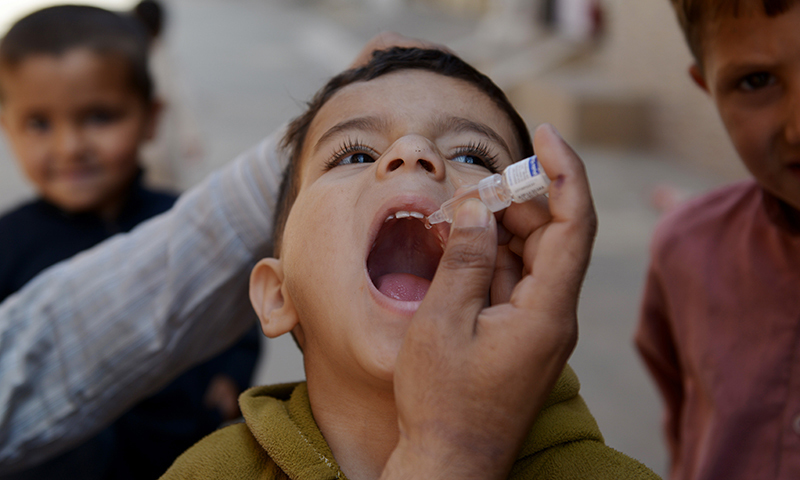
Pakistan - Ulema against polio


PARENTAL refusals continue to be a worrying factor in the drive against polio in Pakistan.
As reported in this paper yesterday, during the last vaccination campaign in Balochistan, parents of over 21,000 children refused to allow their offspring to be inoculated against the crippling disease. Of these, 21pc declined on religious grounds.
This was pointed out during a meeting in Quetta that provincial health officials held with prominent intellectuals and ulema.
With a vaccination drive scheduled to start soon in Balochistan, the religious leaders were asked to play a proactive role, particularly in the high-risk Quetta block, which includes Quetta, Pishin and Killa Abdullah districts.
Significantly, these areas were the most affected by polio last year in the province which recorded around 25 polio cases. The religious leaders present at the meeting reaffirmed their continued support for the polio eradication campaign.
However, the clergy needs to do far more than mouthing platitudes and giving reassurances. It has considerable sway over societal attitudes to education and healthcare, particularly in the country’s more conservative areas.
Vaccination against polio is no exception. In fact, religious sentiment has been especially exploited on this issue by extremists to derail the anti-polio effort, render the work of vaccinators exceedingly dangerous and even justify the murder of around 70 polio workers and members of their security detail since 2012.
Religious leaders can play a vital role to change the narrative and counter those peddling disinformation. However, the endeavour must be sustained and relentless enough to develop critical mass.
In 2013, hard-line cleric Maulana Samiul Haq issued a fatwa urging parents to have their children vaccinated against polio; he later appeared in a photo-op with PTI chief Imran Khan who administered anti-polio drops to his grandson.
Aside from dramatic visuals, such one-stop, flash-in-the-pan efforts achieve little of substance. Pakistan’s clergy could look to the stunning success in polio eradication by India where ulema committees — including representatives of various Muslim sects as well as a doctor — were formed to address parental reservations regarding vaccination, reportedly found most often among Muslim communities.
The strategy is often cited as having played a definitive role in India’s campaign.
Meanwhile, although authorities in Pakistan have even arrested parents/guardians for refusing to get their children inoculated against polio, they could perhaps — as a somewhat less draconian sanction — also consider linking the issuance or renewal of certain documents to parents allowing their children to be vaccinated.

The vulnerable children of Pakistan


By Zeeba T Hashmi

Harmful practices against children, including child abuse, go on with impunity and unfortunately lack prioritisation by the authorities.
The struggle for the rights of the child in Pakistan has come a long way to realise the gravity of the situation, in which children remain vulnerable to economic and social exploitation. The Constitution of Pakistan enshrines six Articles to safeguard the rights of children, which include protecting children from slavery, forced labour and employment of children under 14 in hazardous vocations, providing special protection to children, maintaining the religious identity of children at educational institutions, to provide free and compulsory education to children between the ages of five and 16 and to remove all social evils against children.

Although these injunctions do not, in spirit, fully complement the articles of the UN Convention on the Rights of the Child (UNCRC) that Pakistan ratified in 1997, their implementation, especially since the devolution, remain devoid of concrete state actions. The major visible problem is that there is no uniform definition of a child in the Constitution. The Child Employment Act of 1991 sets the age of employment at 14, which is in direct contradiction of the requirement to make education free and compulsory for children up to the age of 16. According to civil society organisations specialising in this field, the number of child labourers range between eight to 19 million, if the domestic sector is also included. The Society for the Protection of the Rights of the Child (SPARC) reports that among the children working as domestic labourers, around 62 percent are girls. Because of the lack of monitoring of household workers, many children, especially girls, are exploited and sometimes sexually abused by their employers.

The consideration of the age of a child is grossly discriminatory for a girl. For example, in the Hudood Ordinance, the age of the girl child is set at 16, whereas for boys it is 18. This discrimination is in direct contradiction of the articles of the UNCRC that consider an individual below the age of 18 to be a child. There are compounded vulnerabilities of children in Pakistan that are not covered by the Constitution and are insufficiently addressed by the implementing bodies, both at the national and provincial levels. In the plethora of issues that children face every day, those that suffer the most are children who belong to minority religions and poor households and suffer from physical and mental disabilities. So far, the state has failed to take adequate steps to counter discrimination against children. For the protection of the rights of children, the child protection bodies have been set up at the provincial level, with the exception of Balochistan and FATA. Though the government has set up the Child Protection Management System (CPMIS), with the help of UNICEF, it remains ineffective.

Birth registration takes place and children are issued a B-Form, until they reach the age of 18, when they are issued National ID cards. The children of refugees are issued similar cards, but they are deprived of the basic rights that other Pakistani children enjoy. There have also been budget cuts by the government that forced the Basic Education for Afghan Refugees to curtail its activities, resulting in the expulsion of about 20,000 Afghan refugee children from schools. The Bengalis and Biharis remain stateless in Pakistan, along with the Rohingiyas from Myanmar. Their children suffer the most as they are not issued ID cards or registered births, thus depriving them of their basic rights in Pakistan. They are also discouraged from seeking legal help whenever they come into conflict with the law. Apart from the risks that refugee children face, thousands of children have been displaced due to the war on terror and are subjected to extreme hardships.

Discrimination on the basis of religion is a concern that needs proper redress. Not only are the minorities considered social outcasts, but they also face extreme difficulties in attaining education on merit. According to the policy, a Hafiz-e-Quran gets 20 extra points, whereas a non-Muslim does not get any, resulting in them not meeting the standards in highly competitive educational institutes. Although the government allows for the non-Muslim students to choose ethics studies over Islamiyat subject, as is also enshrined in the constitution, in application this does not happen due to the lack of availability of ethics books and/or teachers trained in the subject. As a result, non-Muslim children become plagued by a confused identity, which is a gross violation of their dignity and religion. Although there have been attempts by the state to promote interfaith harmony, they loses their appeal because of growing intolerance and bigotry.

Children belonging to poor families are forced to attend dilapidated schools, in which the quality of education is poor and negligible. Consequently, their poor analytical skills and critical thinking make these children incapable of landing decent jobs in the future and they remain in the vicious cycle of poverty. Harmful practices against children, including child abuse, go on with impunity and unfortunately lack prioritisation by the authorities. The Sindh government adopted the Child Marriages Restraint Act, much to the dismay of the religious parties, who continue to advocate that marriageable age be in sync with Islam. In its attempt to curb child marriages, the Punjab government has levied harsher penalties on those responsible for child marriages, including clerics and parents. These are good precedents for other provinces to follow but the Council of Islamic Ideology strongly opposes them, as it considers such a ban to be un-Islamic. The implementation of these new laws is a test of time to see the fruits that they may bear. With more than 40 percent of the total population under the age of 19 years, attempts to curb vulnerabilities should become a primary focus of the country in the long run, as the number of crimes against children grows. Pakistan must make a stern policy to propagate and safeguard the rights of children to protect this country’s future.

Successes and Challenges in Afghanistan and Pakistan


Remarks
Dan Feldman
Special Representative for Afghanistan and Pakistan 
United States Institute of Peace
Washington, DC
August 5, 2015


Thanks Nancy. I’m delighted to be at USIP to give my valedictory address as the Special Representative for Afghanistan and Pakistan, or, as we term it, “SRAP.” I visited the region this past week to pay my farewell calls, and look forward to comparing notes here with Steve and Andrew given their own extremely recent travels, and appreciate their flexibility on the timing of this event. The relationship with USIP has been a special and even familial one, and a model for the way in which experts and policy makers can shape each other’s thinking in a collaborative manner. Thank you for that.
I started working on Afghanistan and Pakistan six years ago when Richard Holbrooke offered me a once-in-a-lifetime opportunity at the inception of the SRAP office to serve as his deputy, and ultimately became Special Representative myself a year ago. Now that I’m transitioning back to the private sector, I wanted to reflect on the successes that have been achieved while also acknowledging the many challenges that remain.
I was incredulous recently when in the midst of testifying to Congress, my deputy was asked derisively, “What has diplomacy actually achieved in Afghanistan?” That demonstrated for me the need to highlight the fragile but significant developments in the region that have been fostered and sustained due primarily to assiduous diplomatic efforts.
• It was diplomacy that facilitated and nurtured the Afghan effort to create a government of national unity;
• It was diplomacy that has put our bilateral relationship with Pakistan on firmer footing now than at any point in this Administration;
• It was diplomacy that opened an historic opportunity for Afghanistan and Pakistan to work together toward a common interest in peace;
• It was diplomacy that has supported Afghan determination to fundamentally change the role of women in society;
• It was diplomacy that secured the international political and financial support the Government and security forces of Afghanistan need;
• And it can only be through sustained diplomacy with the international community and especially the countries of the region that the opportunity for success in Afghanistan will be preserved.
These types of diplomatic openings don’t just spontaneously generate. I am extremely proud to have been a charter member of SRAP – this innovative and entrepreneurial team, created by the vision of Secretary Clinton and Ambassador Holbrooke, and sustained by Secretary Kerry’s own commitment to this office, this region, and to the power of diplomacy. Due to its achievements, I believe SRAP will serve as a whole-of-government prototype for how government can more nimbly respond to complex crises in the future. And every day, this dedicated team, many of whom are here today, has honored Richard Holbrooke’s memory by seeking to fulfill his definition of diplomacy -- minimizing conflict, saving lives, and achieving results.
Afghanistan
You all know the list of momentous achievements in Afghanistan: access to education, improving the role of women and girls, health and longevity, independent media, infrastructure, and GDP growth. Afghanistan is simply not the country it was when the Taliban ruled.
Political stability in Afghanistan is the lynchpin of Afghan security. Just one year ago, the prospects for stable leadership after the electoral impasse seemed remote, and the unpalatable options included an extension of President Karzai’s term and threats of a “parallel government.” After an Afghan request for his intervention, Secretary Kerry made two visits to Kabul last July and August, when he famously brokered the political compromise that resulted in the unity government. After achieving agreement on the parameters of that framework, I was left behind in Kabul to lead the mediation and hammer out, over six or seven weeks, a political agreement between now-President Ghani and now-CEO Abdullah to form a unity government, becoming the first democratic transition of power in Afghanistan’s history.
Coalition governments, even in the most mature democracies, grapple mightily with implementation, and Afghanistan is no different. But President Ghani’s government has made progress in a range of key areas over the past year, from appointments and anti-corruption initiatives to the recent establishment of the Special Electoral Reform Commission, which was especially fulfilling for me to meet with last week.
For this unity government to achieve its promises of reform, it must operate in a more inclusive manner. This includes empowering Ministries and provincial governors to assume much of the work, and engaging more comprehensively with the full range of Afghan stakeholders – the Parliament, civil society, opinion leaders, domestic media, and ultimately the Afghan people. Those who feel excluded from the government pave the way for spoilers to attract the disaffected and create unnecessary instability.
That is why I urge my colleagues in the Afghan government to seize this last, best opportunity to demonstrate that this government is both durable and functional, and can translate the rhetoric of policy vision into tangible policy implementation that will benefit the daily lives of all Afghans. And my message to those outside of government is – support the unity government and ensure it’s on the path to success. This is the legitimate government, reflective of the millions of votes cast, that the international community will continue to support. Afghans don’t deserve any alternative that weakens rather than strengthens the fabric of their society.
Political stability will optimize success in the ongoing efforts to address other related challenges. The economic climate must weather the shock of the drawdown of international resources. And the security challenges throughout the country are severe, as the Taliban has launched a violent onslaught, killing many civilians and inflicting significant casualties. We always anticipated this would be a difficult fighting season and pose a real challenge to the Afghan security forces, but they have held their own. While the Taliban has made temporary gains, the ANSF has retaken lost territory, and the Taliban have not seriously challenged any major urban center or provincial capital. The ANSF has proven it was ready for the lead security responsibility transferred to it from NATO last year, and we will continue to support the ANSF as it builds the skills and resources it needs to match its undoubted courage and commitment.
One final word on the progress we have seen in Afghanistan. We and our allies should be proud of the role that our assistance has played – including that administered through our unprecedented “civilian surge.” Development will always be difficult work, and there will at times be accurate reports of waste given the challenges faced by one of the world’s poorest, most conflict-affected, and least institutionalized countries. And to be clear, anyone – American or Afghan, government employee or contractor – who illegally benefits from assistance funds must be held accountable. But despite the easy allure of “gotcha” reporting on assistance delivery, we must continue to assess the overall impact of our efforts, and not just focus on the easiest, mechanical accounting of project execution. We must redouble our efforts to provide accountability to the extent feasible, but not fundamentally chill initiatives that are critical to achieving our core security interests – degrading Al Qaeda and its affiliates, and ensuring Afghanistan does not once again become a safe haven for terrorists who can threaten international security. These are hard goals and important ones, and there will be failures as we try to find the right mix of initiatives to achieve them. But that risk of failure is one worth taking.
Pakistan
In Pakistan, too, diplomats have been at the front lines of protecting our national interests. Diplomacy has brought our bilateral relationship from a tumultuous nadir several years ago to its current strengthened and stable position, based on a more honest and realistic set of expectations.
The principal vehicle for this recovery has been our Strategic Dialogue, where we have honed in on key areas of strategic alignment to deliver results, including countering terrorism, addressing nuclear concerns, and promoting stability through economic reforms and trade, energy initiatives, and educational opportunities.
This evolving dynamic has produced some notable progress, particularly in targeting Al Qaeda leadership and countering the threat posed by IEDs. There is a renewed effort by the Pakistani leadership to bring greater security throughout the country, as demonstrated by the ambitious undertaking of the North Waziristan operation just a year ago, and which has been further accelerated in the aftermath of the Peshawar massacre last December.
Our assistance has been of great value under Kerry Lugar Berman, which has rebalanced our assistance portfolio in favor of civilian assistance, from the previously disproportionate reliance on security assistance,. In particular, our ability to better brand key “high visibility, high impact signature projects” in energy, economic growth, infrastructure development, and higher education contributed to improved perceptions of the U.S. High-level economic visits, including by Commerce Secretary Pritzker earlier this year, showcase the potential of the economic relationship, which can be unlocked if Pakistan continues progress on its reform agenda.
Yet despite this progress, as with other complex – yet crucial – relationships, the U.S.-Pakistan one still faces challenges, though ones we now discuss in a transparent manner befitting real partners. We continue to have concerns about Pakistan’s history of using proxies against perceived foes in the region. Although we’ve seen concrete actions by Pakistan to more clearly establish the writ of sovereignty, the military and civilian leadership must make good on their commitments not to differentiate between terrorist groups. Just as they have vigorously pursued the Pakistani Taliban, they must take equally forceful actions against groups like the Haqqani Network, which pose serious threats to American (and Afghan) lives and resources, and Lashkar-e-Tayyiba, which has the potential to destabilize the region.
Let me also say a word about Pakistan’s democracy. I’ve heard many allege that the U.S. is ambivalent about democracy in Pakistan – but that could not be further from the truth. We realize that the process of strengthening and embedding democratic rule will be gradual – but it is critical to Pakistan’s future, and I know this is also understood by both Pakistan’s civilian and military leadership. It has been almost eight years since democracy was reinstated in Pakistan, and two and a half years since the country’s own first historic transition of power, and there continue to be challenges. Just a year ago, the Sharif government was beset by protests that fed rumors of a coup, but today, it appears that civilian and military leadership have come to an important modus vivendi, as preserving the centrality of civilian led, democratic institutions, is critical to Pakistan’s future.
AfPak / Reconciliation
Diplomacy is also giving new life to the relationship between Afghanistan and Pakistan. President Ghani deserves great credit for courageously opening the opportunity for rapprochement with Pakistan, and particularly in such a deliberate and strategic manner.
We similarly appreciate Pakistan’s efforts to further an Afghan-led, Afghan-owned reconciliation process, as the U.S. has long maintained that it is just such a process, which we strongly support without pre-conditions, is the surest way to end violence and achieve lasting stability in Afghanistan and the region.
It is clear that there can be no long-term stability in Afghanistan without Pakistan’s support and Pakistan has taken unprecedented actions this year to facilitate a discussion between the Afghan government and the Taliban, resulting in the Murree meeting on July 7th, the first time that senior Taliban representatives openly and with permission from their leadership met with an official and representative Afghan government delegation.
Needless to say, the news of Mullah Omar’s death last week has complicated this picture. But I believe it may be an important opportunity. The Taliban think of themselves as a movement that emerged to end a civil war. Now they have to decide whether to continue to fight, or to finally end the violence that has stunted Afghanistan’s development, and become part of the legitimate political system of a sovereign, united Afghanistan.
Region
Concerted American diplomacy has also resulted in the sustained engagement of the international community, and particularly the key nations of the region. Since the beginning of this Administration, one important mechanism for coordination has been the International Contact Group we launched, comprised of the SRAPs from over 50 countries, including more than one-third from Muslim-majority countries.
I’m especially optimistic that regional powers have increasingly come to see that supporting a stable Afghanistan, free of terrorism, is in their interests. There has been a marked and productive change in the posture of countries in the region over the past six years. As one example, we welcome China’s engagement in Afghanistan and Pakistan, which we see not as competitive but complementary to our own efforts. In 2009, on my first official trip to engage the Chinese, my colleagues in Beijing refused to even have the words “Afghanistan” or “Pakistan” on our agenda. Today we have embarked on a series of collaborative development projects in Afghanistan and convened a trilateral U.S.-China-Afghanistan discussion, both firsts of their kind with the Chinese.
Our efforts to spur broader regional integration include both diplomatic endeavors to convene key neighbors, such as through the Heart of Asia process, and economic initiatives, such as energy connectivity between countries via the CASA-1000 project, or fully implementing the Afghanistan-Pakistan Transit Trade Agreement.
Closing
Our interest in stability in Afghanistan and Pakistan is no less acute than it was 14 years ago. The achievements that have been made in Afghanistan and Pakistan have come at the cost of an immense investment in blood and treasure by not just the U.S., but by our coalition partners, and most of all, by Afghans and Pakistanis. Those investments can be redeemed and our interests secured only by continued diplomacy. I am deeply grateful for the opportunity to learn from some of America’s finest and most storied diplomats and to myself carry that baton for a year, working with what remains, as Holbrooke frequently touted, the best and most dedicated team I’ve ever seen. I will watch with passionate interest as they continue this critical work.

http://www.state.gov/p/sca/rls/rmks/2015/245767.htm

Quetta: Pakistan's Mysterious City With Ties to Taliban

Kokab Farshori
Quetta, capital of volatile Balochistan province, is considered a censored city, around 1,300 kilometers southwest of Islamabad, Pakistan. The alleged presence of the Afghan Taliban Shura, or advisory council, and a simmering Baloch insurgency shrouds the city of 2 million people in mystery.
The death of the Afghan Taliban's reclusive leader Mullah Omar brought Quetta again into the media limelight. Afghan government officials, some Taliban communiques and media reports have claimed that Taliban leaders were holding a series of strategy meetings in Quetta.
Local reporters can hardly report on Taliban activities in Quetta. Foreign journalists are not welcome. A foreign correspondent would need a No Objection Certificate (NOC), bureaucratic jargon for permission, from Pakistan’s security agencies to visit Quetta. The latest recorded visit to Quetta by foreign journalists took place in 2013.
“That was an embedded trip arranged by the government for 16 foreign journalists,” a local reporter said.
The guarded secrecy of the city is so tough that Pakistani plainclothes intelligence agents beat up New York Times reporter and author Carlotta Gall in 2006. The Times' Sunday Book Review recounted her story in April 2014.
It said: “The officer in charge accused her of trying to interview Taliban members, which he said was forbidden. She learned later that her rough treatment had been ordered by the head of the ISI press department to discourage her from reporting ISI-Taliban links.”
The strategic southwestern city of Quetta is home to Pashtuns, Baloch and Hazaras, as well as Urdu- and Punjabi-speaking ethnic groups. The Pashtuns in Quetta and nearby border towns share a cultural and linguistic identity with Pashtuns in southern Afghanistan, a stronghold of the Taliban.
“The locale fits in the Afghan Taliban without raising a suspicion,” a local journalist said. The Sharqi [eastern] bypass and Gharbi [western] bypass areas of Quetta are established Afghan Taliban residential locations. Afghan officials have said on record that Taliban fighters were regularly treated in hospitals in border towns and Afghan refugee camps in Balochistan.
Kabul believed Mullah Omar was living in Quetta. Islamabad has denied the reports, but questions were raised about where Taliban leaders came from to attend the Pakistan-facilitated peace talks with the Afghan government representatives at Pakistan’s hill resort of Murree last month.
A full military corps of Pakistan is in charge of Pakistan’s southwestern Balochistan province, with headquarters in Quetta. The corps oversees security on the border with Afghanistan, Iran and the Arabian Sea. It also has led the 10-year military operation against the Baloch insurgency. Baloch rebels fight there for a greater share in the region's natural resources.

Thursday, August 6, 2015

Pakistan: 2 Ahmadi Muslim mosque attackers among 3 killed in police encounter near DG Khan

Three terrorists belonging to a banned organization have been killed in an encounter with police in Dera Ghazi Khan, Radio Pakistan has reported.

Two of the three men killed in the encounter were reportedly involved in an attempted terrorist attack on an Ahmadiyya mosque about a month ago, according to the local police.

A police spokesman confirmed that two dead terrorist, Haneef and Iftikhar, were involved in the July 11, 2015 attack on the Ahmadiyya mosque situated on College Road in Taunsa Sharif where a policeman guarding the mosque was critically injured.

A special team was constituted to arrest the militants following the attacks and the attackers were soon arrested. A cache of weapons and suicide jackets were recovered from the militants.

The spokesman said police van carrying alleged terrorists came under attack on Indus Highway resulting in a shootout with the terrorists and their accomplices.

Three of the terrorists were killed in the exchange of fire.

A policeman was also injured in the encounter, Radio Pakistan reports..

http://ahmadiyyatimes.blogspot.com/2015/08/pakistan-2-ahmadi-mosque-attackers.html

Pakistan - 50 MADRASSAS IN SINDH LINKED WITH BANNED OUTFITS, SINDH GOVT

The Sindh government with the help of intelligence agencies has identified at least 48 seminaries ( madrassas ) in the province having links with banned terrorists organisations and half of them are operating in Karachi.
“These seminaries are promoting terrorism and terrorism training . We have worked out and our security forces are ready to take action against these illegal and un-registered madaris,” IG Sindh Police Ghulam Hyder Jamali told a meeting held on Wednesday at CM House.
The meeting, chaired by Chief Minister Qaim Ali Shah, was held in compliance with the decision of the apex committee which decided to coordinate with the ulema of all schools of thought to get all madrassas registered under the amended laws in the province.
The sources said that all of these seminaries (Madaris) have belongs from Deoband school of thoughts in involved in terrorism, promoting of hatred materials and terrorists training to the banned terrorists groups.
The IG Sindh said that as many as 9,590 seminaries have been reported in the province, of which 6,503 are registered, 3,087 are un-registered and 167 have been sealed because of illegality.
During the meeting, the chief minister assigned the task for co-ordination to his special assistant on religious affairs Dr Qayoom Soomro and asked him to call an urgent joint meeting of all stakeholders, including ulema specially associated with Wafaqul Madaris, and seek their support for registration of the seminaries under the amended laws of the Sindh government.
“Provincial authorities have sought the guidelines from the federal government for registration of madrassas and even recommended some amendments, but we are still waiting for the response,” Qaim Ali Shah said.
The provincial government cannot further wait and waste time and would itself amend the law for the safe and secure registration of madaris, he added.
The chief minister has given the go-ahead to the officials concerned to expedite their work and ensure that the task is completed as soon as possible with the co-operation of all the stakeholders in the province.
Dr Soomro told the meeting that he has already started establishing contact with the religious scholars and discussed with them on the subject. “No one among them is opposing the idea for registration of seminaries and all are willing to co-operate with the government.”
Home Secretary Mukhtar Soomro said that the Sindh government would amend the law to get NOC from the concerned DC, home secretary and SBCA as compulsory for safe and secure registration of any madrassa.
http://www.shiitenews.org/index.php/pakistan/item/17623-50-madrassas-in-sindh-linked-with-banned-outfits-sindh-govt

Over a million people affected by floods in Pakistan: NDMA

Over a million people have been affected by floods across Pakistan so far, the National Disaster Management Authority (NDMA) said on Thursday.
Since the flash floods started ravaging various parts of the country in mid-July, at least 166 people have been killed and 128 injured. Besides, 8,471 houses and 2,976 villages have also been damaged by the floods.
Currently, Taunsa and Guddu barrages are facing a high-level flood, whereas, Kalabagh, Tarbela, Chahsma, Kotri and Nowshera are experiencing medium-level flooding.
Tarbela dam has already reached its capacity of 1,550 feet. On the other hand, Mangala is just short of its capacity – 1,242 feet – by six feet.
According to details provided by the NDMA, 13 people were killed in Balochistan, 79 in Khyber Pakhtunkhwa, 42 in Punjab, 23 in Azad Jammu and Kashmir, seven in Gilgit-Baltistan, and two in FATA.
Responding to the disastrous situation, NDMA provided around 70,000 tents to the victims across the country. Also, rations packs, 1,500 tarpaulins, 8,913 blankets, 700,000 aqua tablets and 124 tons of mineral water have also been distributed to the affectees, Radio Pakistanreported.
In Punjab and Sindh, 154,140 and 583,096 people were evacuated respectively from flood-hit areas. According to the authority, 757 relief camps were established across the country to facilitate and provide safe haven to the flood-affected population.
Balochistan
Providing details of the damage wrought by floods, in Balochistan at least 13 people have been killed while 33 have been injured. As many as 798 houses have been damaged by the floods. However, the NDMA has not released the number of people affected by the floods in the province, but 383 tents and 8.4 tonnes of ration have been distributed among flood affectees.
Khyber-Pakhtunkhwa
At least 79 people have been killed, while the flash floods left 70 people injured. Around 3,320 houses have been damaged along with a number of villages affected. So far, 3,614 tents and 385.53 tonnes of ration have been distributed distributed with eight relief camps established.
Punjab
In Punjab, 42 people have been killed and 12 injured. Around 3,058 houses were damaged in 496 villages with 367,929 people affected. Some 154,140 people have been evacuated to safer areas with 394 relief camps hosting 17,404 people. The government has provided 37,800 tents and 3,138 tonnes of ration to flood affected people.
Sindh
Although there have been no reports of deaths from floods in Sindh so far, around 583,096 people in 2,177 villages have been affected by the floods there. Some of the affected people have been shifted into 349 relief camps. The pdma has also distributed 24,159 tents and 642.39 tonnes of ration have been distributed.
Meanwhile, the Chief of Naval Staff Admiral Muhammad Zakaullah, while attending a Command and Staff Conference in Islamabad, directed concerned officials to to continue monitoring the flood situation, and make utmost efforts for rescue efforts by judiciously utilising the deployed assets and resources  to provide much needed assistance to flood victims.
Azad Jammu and Kashmir
At least 23 people were killed and five injured because of floods in AJK, whereas, 321 houses were damaged, and 17 villages were left affected. Around 3,000 tents were given here to establish camps.
Gilgit Baltistan
In Gilgit-Baltistan, at least seven people were killed and six injured. As many as 812 houses were damaged in 286 villages affecting 136,000 people. Around 3,380 tents and 21.5 tonnes of ration were distributed in the region.
FATA
At least two people were killed and two injured by the floods that also left 162 houses damaged in the region.

Pakistan - IDPs’ funding crunch

WITH national attention mostly preoccupied by security matters and political theatre, the plight of Fata’s internally displaced persons is easily forgotten.
Yet the fact remains that hundreds of thousands of people displaced by the conflict in the tribal areas remain unable to return home, while there are indications that their ordeal may get tougher still.
As reported in this paper on Wednesday, UN agencies are likely to wind down relief activities for IDPs mainly due to a funding shortfall, along with restrictions on access to displaced persons placed on humanitarian workers — both local and foreign.
Attracting funds from the global community in these times of financial uncertainty is indeed tough, along with the fact that more ‘high-profile’ conflicts, such as Syria, are currently attracting the attention of the donor community.
In the Fata IDPs’ case, while $433m is required to fund relief programmes, the UN says only $197m has been received. The fact that the state has restricted access — reportedly due to security concerns — to aid workers has also hampered efforts, as organisations are not able to independently verify the conditions.
In the meantime, only 4,000 out of over 100,000 displaced families, whose details have been verified, have been able to return to North Waziristan.
The government hopes to send all IDPs home by the end of 2016. That is a long way away and the state must explain how it expects to sustain these people until then, especially if funds are short.
If donors have tightened their purse strings, then the state must do some creative maths and come up with the funds for the IDPs’ upkeep and rehabilitation as these are Pakistani citizens and it is primarily the government’s responsibility to care for them.
Secondly, the government must reconsider its policy of not giving access to IDPs to humanitarian workers. If it is unable to help IDPs, it must not create obstacles in the way of those who are in a position to provide help.
The displaced persons’ food, shelter, health and education needs must be catered to until they are able to return to their native areas, while the conflict zones must be rebuilt to allow these people to start their lives anew.
The military may have done its job in largely clearing the tribal areas of militants. Now it is the state’s job to ensure that the civilians displaced by the military operation are not left in the lurch.

Pakistan - US drone strike kills five 'militants' in North Waziristan

A US drone attack on a militant compound in North Waziristan on Thursday killed at least five militants, security officials said.
Military sources said the drone strike took place in Lawra Mandi village of Datta Khel in the North Waziristan tribal district bordering Afghanistan, where the military is battling Taliban militants.
The drone fired two missiles targeting a house, killing at least five suspected militants, sources said.
“At least five militants were killed in the drone attack,” senior security official told AFP.
Another security official in Peshawar confirmed the attack and the casualties.
The area is generally off-limits to journalists, making it difficult to independently verify the number and identity of the dead.
North Waziristan is among Pakistan’s seven tribal districts near the Afghan border which are rife with insurgents and have been strongholds of Taliban and Al Qaeda operatives, among others.
Military in June last year launched an all-out operation named 'Zarb-i-Azb' against Taliban militants in the region, following which parts of the tribal agency was declared cleared of militants.
The army has intensified its offensive since the Taliban's massacre of 153 people, mostly children, in a school in the northwestern city of Peshawar in December.
http://www.dawn.com/news/1198786/us-drone-strike-kills-five-militants-in-north-waziristan