Tuesday, July 21, 2015

Pakistani Christians Facing Increasingly More Persecution Within And Without Pakistan

Persecution on religious grounds is increasing day by day in Pakistan.
According to the Forgotten Missionaries International (FMI), Christians are facing religion based persecution which is boosted by various elements. Bruce Allen from the FMI says: “Christians are experiencing much more persecution in Pakistan.”
“There’s a legitimate fear that the government’s not going to look after these Christians, but actually accelerate persecution. They’re going to other countries in Asia…and yet, they’re finding life is very difficult once they arrive in those countries,” Allen says.
Moreover, “In recent months, Pakistan has re-enacted the death penalty. They had a moratorium on that for a number of years, but now under the guise of ‘we want to seek the death penalty for terrorists, they’ve re-enacted it,” he asserts.
“There are Christians in prison–falsely charged under this blasphemy law, and they’re concerned that they could be put to death,” he claims.
What is heart wrenching that owing to the ever worsening persecution, the religious minorities are fleeing by the thousands. However, they’re escaping from one hell to go into another hell.
As data reveals, more than 100,000 Pakistani Christians have left Pakistan and fled to refugee camps in countries like Sri Lanka, Malaysia, Thailand, and the Philippines in the past several years. The UNHCR reveals there are currently, more than 1,400 Pakistani asylum-seekers in Sri Lanka, which is comparatively much higher number as that from 102 asylum-seekers in 2012.
Likewise, in March, Thai police booked hundreds of Christians who had fled persecution in Pakistan. Nonetheless, their misery was increased when the Pakistani leaders pushed for their deportation.
Mr. Bruce Allen says it is certainly not easy for these Pakistani asylum-seekers to live in in countries like Thailand or Malaysia. These countries did not sign the 1951 UN Refugee Convention, which ensures protection of refugees’ basic human rights. “While it might be easy to get into Thailand as a refugee, once you’re there, you might find that life gets very, very difficult,” he added.
- See more at: http://www.christiansinpakistan.com/pakistani-christians-facing-increasingly-more-persecution-within-and-without-pakistan/#sthash.lMa0HdZN.dpuf

Pakistan - Iranian forces fire four mortar shells into Panjgur ( Balochistan )

Four mortar shells fired by the Iranian border forces on Tuesday landed in Balochistan’s bordering district of Panjgur. However, no loss of life or damage to property was reported.
“Three mortar shells landed in open area near Kushak, Surab district of Panjgur,” security sources said.
This was not the first border violation by Iranian border guards this month. A similar incident was reported on July 1.
Earlier in April, eight Iranian border guards were killed in an ambush by armed men near the Pakistan-Iran border. Sectarian outfit Jaish al Adl had claimed responsibility for the attack.
Pakistan has repeatedly raised the border violation issue with the Iranian government, which has maintained that its forces will continue to target terrorists who are a threat to peace.
http://tribune.com.pk/story/923949/border-violation-iranian-forces-fire-four-mortar-shells-into-panjgur/

Pakistan's ''Missing foreign minister''

FOREIGN affairs is a complicated business, but there are occasionally simple truths too. One of those truths is this: every country needs a full-time, cabinet-level, officially appointed foreign minister.
Pakistan does not have one. Instead, the government of Prime Minister Nawaz Sharif has a foreign adviser who doubles as national security adviser and a close Sharif aide who serves as the special adviser to the prime minister on foreign affairs. That is a wholly unsatisfactory state of affairs.
For one, the international diplomatic network is built around foreign ministries led by foreign ministers — there are protocol and coordination elements that simply cannot be well executed by ad hoc appointments.
For another, the Foreign Office structure inside Pakistan is hierarchical and designed to be led by a foreign minister who coordinates with the Prime Minister’s Office.
The flow of information, the interaction between the bureaucratic layers and political leadership, the drumming up of ideas and exchange of points of view — all of that and more are interrupted when there is no full-time foreign minister. And all of that adds up to harming the country’s diplomacy and interactions with the outside world.
There was a relatively straightforward solution to the problem: to use the Senate elections in March to elevate Mr Aziz or Mr Fatemi to parliament and hence be eligible to become a full cabinet member.
For reasons best known to Mr Sharif, that opportunity was declined. Worse yet, the prime minister has done nothing to try and resolve the turf war in the foreign ministry that has hamstrung its functioning.
While kept largely out of the public domain, there is nevertheless a sense that the bureaucracy is being pulled in different directions and the political appointees are unable to present a unified opinion to the prime minister.
None of that is good for the government. Yet, the ministerial problems go well beyond the foreign ministry.
Consider that the information minister is still moonlighting as the law minister, while the supervision of the law ministry has effectively been outsourced to a prime ministerial aide. Then, rather extraordinarily, the water and power minister is also serving as the defence minister.
Both those ministries have heavy workloads — but what sense is there in having a water and power minister during an epic and continuing electricity crisis who also serves as the defence minister at a time of massive internal military operations and significant military-related activity with major regional and international powers?
Ultimately, it appears that Mr Sharif’s instinct to not trust anyone beyond the smallest circle of aides and then to have ministries staffed with multiple principals who are loyal to the prime minister but at odds with their intra-ministerial counterparts is undoing many of the government’s policy initiatives.
A prime minister with a dysfunctional and incomplete cabinet is a prime minister with his policy hands tied.

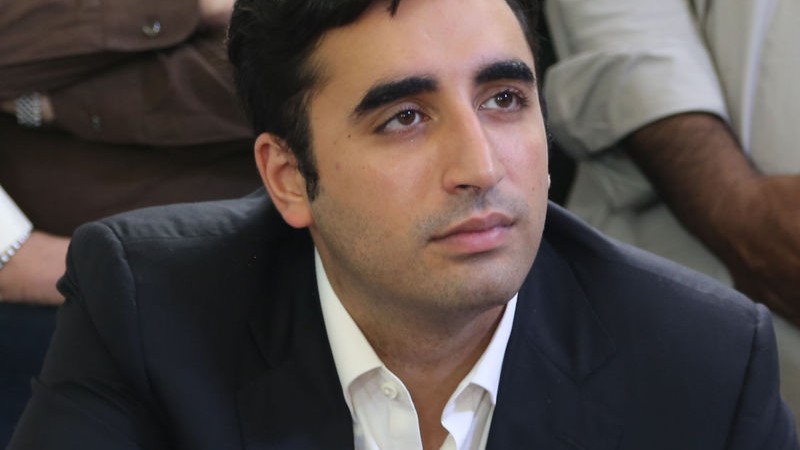
Pakistan - Chairman PPP Bilawal Bhutto grieved over the loss of lives due to floods in Chitral

https://ppppunjab.wordpress.com

Chairman Pakistan Peoples Party, Bilawal Bhutto Zardari has expressed grief and sorrow over the loss of precious lives and damages of property in devastating Chitral floods.
In a press Statement, Bilawal Bhutto Zardari condoled with grieved families and stressed for quick relief in flood affected areas of Chitral and other parts of country.
Bilawal Bhutto Zardari also directed Sindh government to take proper measures to minimize the affects of flood situation in Indus River. He said as per weather forecasts, there may be possibility of flood in lower parts of Sindh and catchment area of River Indus thus the administration needs to stay alert till the last flood streams flows into the ocean.
Bilawal Bhutto Zardari also directed the concerned authorities to monitor the sensitive points of River Indus and strengthen all dykes which were declared weak and make proper relief arrangements for displaced people of kacha area of both banks of river.

Secularists defend non-believers and religious minorities in debate on freedom of belief

Honorary associates of the NSS have spoken out over the persecution of secularists, non-believers and religious minorities in a House of Lords debate.
Lord Harrison, a Labour peer and honorary associate of the National Secular Society, called on the Government to "ensure that the hopes and aspirations of non-believers" in Britain are "not suppressed by careless oversight when we take our rightful place in the public square".
"Why are we conducting this debate in the House of Lords, which still reserves a privileged place for the state religion?" Lord Harrison asked.
"Many will be heartened by the most reverend Primate the Archbishop of Canterbury's recent observation that religious freedom demands space to be challenged and defended, without responding destructively. This echoed Rowan Williams's reservation in 2013 that sometimes UK and US Christians exaggerate mild discomfort over social issues such as pro-gay legislation while failing to emphasise systematic brutality and often murderous hostility practised by religious fanatics abroad."
Lord Harrison pointed out that "humanists and atheists in Britain are still thoughtlessly excluded from contributing to Radio 4's 'Thought for the Day'", an issue the National Secular Society has long campaigned on.
In a wide-ranging debate, much was said about the Islamic State and the precarious position of religious minorities, non-believers and secularists in Islamic countries.
NSS honorary associate Lord Avebury warned that "Daesh makes no secret of its intention to expand its so-called caliphate from its base in Syria and Iraq so that it covers the rest of the Middle East and north Africa. Ultimately it aims to spread its interpretation of seventh-century Islamic governance and beliefs across the whole world, eliminating all other faiths".
"Eliminating the Daesh, its metastases and its wicked ideology taught in Saudi-funded madrassahs throughout the world must be the main goal of all who believe in freedom of religion."
However, Lord Alderdice blamed "secular authoritarianism" for religious fundamentalism, which he said was a "reaction". As an 'example', he cited Turkey, "where it was easy to support a secular regime and then be astonished at the reaction," he argued.
Turning to religious violence and terrorism, Lord Alderdice claimed that "many of those who support violence, including people in Daesh, do not come to it from a religious perspective at all."
A spokesperson for the National Secular Society said that "freedom of religion must incorporate freedom from religion. Wherever that is not understood, freedom of belief is threatened."
"While Islamic State draws headlines, it shouldn't be forgotten that freedom of religion and belief, and the right to apostatise, change your religion or renounce faith all together is virtually non-existent in many Islamic countries. The signatories of the Cairo Declaration continue to deny these basic rights to their citizens."
Lord Bach, the Shadow Attorney General, appeared to call for the Minister of Faith role to return- after the post was left unfilled after the General Election. The National Secular Society was highly critical of the post when it was first created.
The debate, which took place on Thursday 16 July, was called by Lord Alton of Liverpool on Article 18 of the Universal Declaration of Human Rights, which provides for freedom of religion and belief.
Lord Alton opened the discussion by arguing that "the four great murderers of the 20th century—Mao, Stalin, Hitler and Pol Pot—were united by their hatred of religious faith."
"Liberal democracy simply does not understand the power" of religious radicals, Lord Alton added.
Baroness Anelay, a Minister of State in the Foreign Office, responded that "freedom of religion or belief and the right to hold no belief is a key human right" which is "under attack in almost every corner of the globe."
She added that the Government "oppose blasphemy laws wherever they still exist" and described "freedom of religion or belief" as "the key human right."

Christians Suffering Under Mob Violence in Pakistan

In yet another attack in the series of religiously-motivated attacks by Muslims on Christians in Pakistan, a mob attacked Awais Qamar, his wife, Rukhsana, and other members of their family, beating them, blackening their faces with soot, and forcing them to walk around the village (a way of shaming the offender) after an allegation of blasphemy.
According to a team from the European Centre for Law and Justice’s (ECLJ) affiliate in Pakistan that visited the area and gathered the facts, a Muslim neighbor visiting Rukhsana saw a used banner advertising college emblems at the family’s house. The neighbor told Rukhsana that the banner had a verse from the Quran written on it. A few minutes after the neighbor had left, a local mosque made an announcement that the family had desecrated the Quran.
A mob gathered and attacked the family. The local police timely intervened and rescued the family from the mob. According to a World Watch Monitor report, the District Police Officer, Sohail Zafar Chattha, ordered the police to save the couple at any cost, even if they had to shoot the perpetrators. The police had also arrested the Muslim cleric who had incited the violence. In addition, no blasphemy charges were filed against the Christian family. Reportedly, the state inspector general had given police orders to investigate blasphemy allegations before determining whether to file a report.
The American Center for Law and Justice and the ECLJ commend the police response in this case. Yet, this is exactly what the law requires of police officers in Pakistan. In 2002, the Lahore High Court gave specific directions how the authorities are supposed to respond after receiving an allegation of blasphemy. Noting “inefficiency and incompetence of the Investigating Officer” in that case, the court stated:
[W]e direct the Inspector-General of Police . . . to ensure that whenever such a case is registered, it be entrusted for purposes of investigation to a team of at least two gazetted Investigating Officers preferably those conversant with the Islamic Jurisprudence and in case they themselves are not conversant with Islamic Law, a scholar of known reputation and integrity may be added to the team and this team should then investigate whether an offence is committed or not and if it comes to the conclusion that the offence is committed, the police may only then proceed further in the matter.


Two years after the Lahore High Court gave this direction, the legislature enacted section 156-A of the Criminal Procedure Code (Cr.P.C.), requiring that “no police officer below the rank of a Superintendent of Police shall investigate” a blasphemy case registered under section 295-C (passing derogatory remarks against Prophet Muhammad).
Another important procedural safeguard that already exists to protect people accused of blasphemy is section 196 of the Cr.P.C. Under this law, as interpreted by the High Court, a blasphemy case may not be registered unless upon a complaint made by the order of or under the authority of either the Provincial or the Central Government. Ideally, the blasphemy laws should be abolished, but strictly following these procedural safeguards would at least reduce their abuse.
Refusing to file blasphemy charges against Qamar and his family shows that the authorities got it right, at least in this case. It also validates a crucial fact that human rights organizations and even some Pakistani courts have emphasized for years, that many blasphemy cases are baseless. In Qamar’s case, no blasphemy ever occurred and nobody intended to desecrate the Quran. Qamar or his family perhaps did not even know that the banner had a verse from the Quran written on it until the neighbor informed them. How could they have intended to desecrate it? In the past, if all Pakistani authorities had followed the court’s mandated procedure, as the authorities did in this case, many innocent lives could have been saved from mob attacks, and many long prison terms could have been avoided.
For instance, in November 2014, a mob of approximately 1,500 Muslims attacked a Christian man and his pregnant wife, beat them, dragged behind tractors on sharp rocks, broke several of their limbs, and then burned them alive in a brick kiln. A timely and proper response by the local police could have saved the couple’s lives.
In March 2013, about 3,000 Muslims descended on Joseph Colony, a Christian colony in Lahore, Pakistan, to seek revenge for alleged blasphemy. The mob burned about 160 houses, 18 shops, and 2 churches. Despite having knowledge of the attack beforehand, the police in the area stood by and watched as the colony burned. Instead, the alleged blasphemer was arrested and sentenced to death. 
In June 2009, Asia Bibi was arrested and charged under the blasphemy law that punishes making disparaging remarks against Prophet Muhammad. Similarly, a Pakistani court has sentenced Asia Bibi to death, and the High Court recently upheld her conviction.
In these cases, the prosecution failed to follow the Lahore High Court’s direction. Further, procedural safeguards under sections 156-A or 196 of the Cr.P.C. had been violated. Moreover, the defense attorneys failed to file crucial motions to dismiss the cases for these procedural errors. Instead, they merely raised the errors in their closing arguments but did not move the court to dismiss the cases on these grounds. Because the attorneys failed to file the motions to dismiss, the court never directly adjudicated the procedural argument and the attorneys missed a valuable opportunity, whether that be having the case thrown out on procedural defaults if the motion was granted or an additional ground from which to appeal if the motion was denied. Especially, in Asia Bibi’s case, her attorney did not even cross-examine the two main eye-witnesses against her. On appeal, the High Court noted that her attorney had “not defended [her] with the required seriousness as the most relevant aspect of the prosecution case remained unrebutted.” 
In all fairness to the defense counsels in blasphemy cases, the trial courts may still convict defendants due to societal pressure (or sometimes bias), but pressure on the courts does not exonerate attorneys from doing their due diligence. Additionally, the record created through effective legal representation at the trial court would raise the chances of acquittal at the appellate courts.
We encourage the Pakistani government to provide trainings to Pakistani police officers regarding the proper procedure for investigating allegations of blasphemy. Such procedures, as demonstrated by officers Chattha’s and his colleagues’ actions, uphold rule of law, minimize prosecution for false accusations, reduce societal unrest and mob violence, and, importantly, protect innocent Pakistani citizens, including minority Christians, Hindus, Ahmadis, as well as majority Muslims who suffer severe persecution due to false blasphemy allegations. Further, we encourage attorneys who defend against blasphemy charges to robustly consider all procedural and substantive arguments at the right stage of each case, exhausting all remedies available. If each actor (investigators, prosecutors, judges, and defense attorneys) involved in such cases diligently performs his or her duty, many lives can be saved under the existing laws until the Pakistani society is ready to abolish the blasphemy laws.    

http://aclj.org/persecuted-church/christians-suffering-under-mob-violence-in-pakistan-recommendations-for-reducing-persecution-under-pakistans-existing-laws-

Asia Bibi to Appeal for Freedom through Pakistan's 'Flawed Legal System'

By Dan Wooding


Asia Bibi, the Pakistani Christian mother-of-five who is on death row, has been given one last chance to challenge for her freedom from the noose, after a Supreme Court appeal date has been set for Wednesday, July 22nd, starting at 9.00am Pakistan time (5am GMT).


The British Pakistani Christian Association (BPCA) has called on Christians across the globe to pray for her freedom and for justice to be served through the courts.
http://www.crossmap.com/news/asia-bibi-to-appeal-for-freedom-through-pakistans-flawed-legal-system-19851

Pakistan is spying on its citizens, says report by British NGO


The Inter-Services Intelligence commissioned a huge system in 2013 to tap into the main fibre-optic cables entering the country, says a report of Privacy International.
In 2013, Pakistan’s Inter-Services Intelligence commissioned a major surveillance system that taps into three international under-sea cables affecting communications of its citizens and also the neighbouring countries whose communications pass through its borders, according to the findings of a report published by the British NGO, Privacy International.

The report accessed never-before released documents that show how the 'Targeted IP Monitoring System and the Common Operations Environment' will help the ISI collect and analyse a “significant portion of the communications travelling within and through the country at a centralised command centre”.

"If the project that the ISI proposed in 2013 was accomplished, and we suspect it has been, it would have massively increased the intelligence service’s capacity to monitor internet communications by increasing their collection volume," said Eric King, Deputy Director, Privacy International.

The investigation carried out by Privacy International also shows that the mass communication surveillance programme, targeting politicians, media personnel, judiciary and other civil society groups has been in place since 2005.

The report has also accessed phone-tapping statistics that show that in February the ISI was tapping 6,523 phones, 6,817 in March and 6,742 phones in April 2015. The fact that the SIM cards of most phones also contain biometric data in terms of fingerprints also helps the ISI carry out its surveillance without any legislative restrictions.

According to Matthew Rice, advocacy officer for Privacy International, "the scale of the system proposed by the Inter-Services Intelligence does not just affect those who live in Pakistan but also those who live in the region and anyone whose communications travel through Pakistan's networks. This will include a huge amount of innocent people swept up in a project like this for no good reason.”

Surveillance system

Documents attached to the report show that in June 2013, the ISI began a programme to directly tap into the main fibre optic cables entering Pakistan, which carry the bulk of the country’s communications. A note marked “Confidential” and sourced by the Privacy International researchers describe attempts to set up a “Targeted IP Monitoring System and COE (Common Operations environment)”. This aims to capture and store up to 600 giga bytes of Internet protocol traffic per second under the ISI’s control.

However, according to the report, the system could only have 200 analysts, severely limiting its ability to process large amounts of intercepted data. The ISI sought a system that is capable of monitoring “1,000 to 5,000 concurrent targets” for monitoring.

According to documents leaked by National Security Agency (NSA) contractor Edward Snowden, Pakistan serves as a “third party SIGINT (Signals Intelligence) partner,” for the US technical intelligence organisation. The US embassy in Pakistan along with its various consulates serve as “Special Collection Sites” for the NSA, which intercepts communications originating from Pakistan. Pakistan emerged as the nation with the highest dialled number recognition targets and the second-highest dialled number identification targets for the NSA by March 2013.

Foreign firms, domestic law

The Privacy International report also lists a number of foreign firms that have helped Pakistani security agencies, including the ISI, to install mass surveillance software and hardware. It names German companies like Atis, Trovicor, China’s Huwaei, Sweden’s Ericsson and France’s Alcatel for providing surveillance equipment and capabilities to Pakistani agencies. "Without these companies, the Pakistani government would not be able intercept its citizens communications, as they have been doing systematically for over 10 years," said King.

King said that Privacy International was trying to influence the technology-producing countries, particularly the European Union, to reform their export control policies. "In order to ensure that the EU’s trade policy and regulation are in line with its commitment to human rights and democratisation, it is essential that it takes steps to prevent its companies from actively facilitating repression and authoritarianism," he said. "We also call for greater transparency around government contracting processes."

The report also notes that the lack of encryption and controls by the Pakistani government ensures that citizens have no or limited privacy against such kind of surveillance and intrusion. "All are at risk, when, as in Pakistan, armed conflict and insecurity are increasingly used to justify mass surveillance," said King. He pointed to recent developments like the Investigation for Fair Trial Act, 2013.

"Under the act, a warrant can be requested wherever an official has ‘reasons to believe’ that a citizen is, or is ‘likely to be associated’ with, or even ‘in the process of beginning to plan’ an offence under Pakistani law," he said.

"The breadth of those qualifying criteria is remarkable, and renders the additional protection offered by the process of applying to a judge illusory. Under the Prevention of Electronic Crimes Bill, which is being considered at moment, courts would have no role in vetting or reviewing the grounds for interception," he added.

Mehdi Hassan - Remembering legendary 'Ghazal King' on his 88th birth anniversary

King of Ghazal, Mehdi Hassan was remembered on his 88th birth anniversary on Saturday (July 18).
Mehdi Hassan was born on 18 July 1927 in a village called Luna, Rajasthan in Jhunjhunu district in India into a family of traditional musicians.
In 1957‚ Mehdi Hassan was given the opportunity to sing on Radio Pakistan‚ primarily as a thumri singer‚ which earned him recognition within the musical fraternity.
He had a passion for Urdu poetry, and therefore, he began to experiment by singing ghazals on a part-time basis. He cites radio officers Z.A. Bukhari and Rafiq Anwar as additional influences in his progression as a ghazal singer.
He was honored with numerous awards including Nishan-e-Imtiaz, Tamgha-e-Imtiaz, Pride of Performance and Hilal-e-Imtiaz by the Government of Pakistan.
One of his Ghazals he will be most remembered for is Faiz Ahmed Faiz's, 'Gullon Mein Rang Bhare.' A host of other numbers like 'Ik Husn Ki Devi Se Mujhe Piyar Hua Tha', and 'Jab Koi Piyaar Se Bulaye Ga, Tum Ko Ek Shakhs Yaad Aye Ga' are also equally memorable. He sang for over 300 films during his musical career.
Mehdi Hassan died on 13 June 2012 after a protracted illness, in a private hospital in Karachi.

Monday, July 20, 2015

Pakistan: Objective Resolution dividing people on basis of faith, says Asma Jahangir


Counsel for Supreme Court Bar Association Asma Jahangir argued before the apex court on Thursday that the Objective resolution had divided the people of Pakistan on the basis of faith and ideology.

The Objectives Resolution, passed by the first Constituent Assembly in 1949 under the rule of Liaquat Ali Khan, is believed to be objectives on which the future constitution of the country was to be based.

However, opposing the idea that the Objective Resolution was the basic structure of Pakistan’s Constitution, Jahangir noted that it contributed to dividing people and was even used against the people of Pakistan prior to the establishment of Bangladesh.

She further added that it is the people who have ‘faith’, not the State.

Although the counsel opposed the ‘striking down’ of the 21st Constitutional amendment by the apex court, she recommended the Supreme Court interpret it in view of Articles 4 and 8 of the Constitution.

Jahangir went on to say that if the court were to strike down the 21st Constitutional amendment on the basis of the basic structure, then the petitioner would examine the previous Constitutional amendment, wherein, the Objective Resolution was declared a preamble of the Constitution.

She further stated that people’s rights were more important that the independence of the judiciary and that the SC was the only institution which protected the rights of the citizens.

Referring to Article 63 of the Constitution, Justice Qazi Faez Isah remarked that the new concept of a democratic system which has emerged in Pakistan was ‘unfortunate’ for the country.


http://ahmadiyyatimes.blogspot.com/2015/07/pakistan-objective-resolution-dividing.html

Balochistan - Dr. Malik Is Running A Failed Government

Interview by Shoaib Durrazai
Zahoor Buledi belongs to Buleda tehsil of District Kech. He has served as member of Provincial Assembly of Balochistan from Buleda during 2008-13. Shoaib Durrazai of Balochistan Point conducted a short interview with Zahoor Buledi.
Shoaib Durrazai: What’s the nature of your differences with Dr. Malik Baloch and National Party?
Zahoor Buledi: I have regards for Dr. Malik Baloch as I have always had good relations with him. When Dr. Malik Baloch took power as Chief Minister (CM) of Balochistan, people had a lot of expectations from him. Dr. Malik was the first CM from the Makran region and He was the first Middle Class CM as well. He was not a tribal chieftain like his predecessors and this resulted in people attaching great hopes from him. Shockingly people didn’t get the desired results and Dr. Malik Baloch has proven himself to be an uncivilized politician.
Why Dr. Malik and his government have failed to deliver?
Balochistan has multifaceted problems as it has fallen into conflict zone where lots of international agendas are being carried out. Incumbent government has created problems of scarcity of resources, rampant corruption, mismanagement and nepotism.
National Party (NP) is third largest party in Balochistan Assembly and Dr. Malik was elected CM due to special arrangements made by Prime Minister Nawaz Sharif. National Party was waiting for government for last fifteen years and that’s why they superseded all the democratic norms and ethics and now they have become sandwich between two powerful coalition partners PML-N and Pakhthunkhwa Milli Awami Party (PKMAP).
The biggest challenge which Dr Malik is going to face is the upcoming census. The decision to hold census next year was made in Council of Common Interests (CCI) meeting where Dr. Malik abstained and his crony and powerful minister Sardar Aslam Bizenjo attended the meeting without any dissent note. So Census would be suicide for Baloch, as Makran is insurgency ridden no-go area for government machinery and no census can be conducted there. PKMAP is accomplishing its long standing nefarious agenda by registering Afghan immigrants through NADRA. All these circumstances squeezed Dr. Malik’s position and He is seemingly running a failed government.
What you did for people of Buleda when you were MPA from 2008 to 2013?
Being honest, I was also a part of coalition government where we had to operate under a lot of restrictions. We made 7th NFC award possible in which Balochistan’s share in federal divisible pool was increased from 6% to 9%. We established two universities in the province and recruited 5,000 people as a part of Aghaz-e-Haqooq-e-Balochistan package.
In my constituency, I carried out lots of development project in social sector. I established an inter-college for Hoshap which is now functional. Apart from that I also established; Rural health centre at Hoshap, 4 Basic health units, electrified more than 50 villages in the hinterland like Dander, Balgather and Kocha Buleda, provided them the sources and water supply for clean drinking water. I made 6 delay actions dams but ironically 3 of them are still incomplete due to interception of insurgents by blowing up the machinery of Construction Company. My home town is land locked and doesn’t have any all-weather road therefore I initiated a road at an estimated cost of Rs. 1 Billion. Later insurgents brutally killed 7 laborers on the site and work was stopped. Now the incumbent government has once again started the work on that road by deploying Frontier Corps.
Balochistan receives 100s of billions every year after NFC award. Why it has not changed living standards of people?
It is a good question and has a lot of dimensions, corruption and personal interest hampered increase in budgets to trickle down at the grass root level. NFC award couldn’t raise the life standard of general masses. We got the extra money but the non-development budget increased at the same time. Major chunk of non-development budget is being spent on maintaining law and order situation. Secondly the Planning and Development portfolio has always been run by those people who are considered racist and only benefit their ethnicity rather than believing in justified distribution of resources.
Balochistan is the most backward province in Pakistan and doesn’t have proper infrastructure. Social indicators are low, the terrain is too huge, population is scattered, and most of the people are living below the poverty line in rural areas. Government needs billions of dollars to bring them at par with other provinces.
I just want to give an example that once we collected the data for shelter less schools in Balochistan, we needed to have Rs. 54 billion to build schools and our total Public Sector Development Program (PSDP) was Rs. 45 billion. You can imagine that it was a small component of one social sector but we can’t relieve ourselves from the responsibility due to corruption, mismanagement, lack of priorities and so on.
Being a former MPA, how do you see the current situation of Balochistan?
As a politico, I think the situation is still worse in most of the areas. we are not only facing the insurgency but also we have sectarian issues and growing extremism  as our society once projected as liberal society is now deliberately being radicalized day by day. The insurgents are disgruntled and are divided into groups and therefore it is too much difficult for the government to bring them on the table for negotiations.
On the other side the government doesn’t have any plan or vision to solve the issues. Balochistan is virtually being managed as a federal subject. I m sorry to say this government can’t negotiate with federal government for due share in China-Pakistan Economic Corridor (CPEC) where China is investing 46 billion dollars. Every province is getting its share in social sector under CPEC but Balochistan has got nothing. Although Gwadar is flagship project of CPEC, only express ways and Gwadar airport are being built which are considered as components of Gwadar port.
Will there be a change of Chief Minister in Balochistan as a part of Murree Accord?
Murree accord is an itching truth for NP but they are morally bounded to give top slot of Province to PML-N for second half of the tenure. Murree Accord signing was witnessed by Nawaz Sharif, Shehbaz Sharif and Chaudhry Nisar. I don’t think Dr. Malik could be able continue as CM after disclosure of accord, it is morally binding for him to support the candidate of PML-N after completing 2 and half years in office.

In Afghanistan, more multi-million dollar buildings built and barely used by the U.S. military


By Dan Lamothe

The U.S. military failed to stop construction on a $14.7 million warehouse facility in southern Afghanistan, despite delays in the project that made it clear it likely would barely be used by coalition forces, according to a new report by the top U.S. watchdog for Afghanistan reconstruction.
The facility was built at Kandahar Airfield and includes four warehouses with a combined 173,428 square feet of storage space, an administration building and other unspecified supporting facilities. It was designed for the Defense Logistics Agency (DLA), which supplies equipment to U.S. troops at home and overseas.
DLA did not accept delivery of the facility until Feb. 3, 2014, and never used it. “With a few minor exceptions,” the rest of the U.S. military never has, according to the report, which was issued by the Special Inspector General for Afghanistan Reconstruction (SIGAR).
“Although the $14.7 million DLA warehouse facility was well built, lengthy construction delays led to the facility never being used for its intended purpose,” SIGAR said. “Had the facility been completed on schedule, DLA would have been able to use the warehouse facility for more than 2 years before its mission ended in Kandahar.”
It’s the latest in a series of SIGAR reports highlighting how U.S. taxpayer dollars were wasted in Afghanistan. In another case, the U.S. military failed to stop construction at a $36 million headquarters building at Camp Leatherneck, in Helmand province, despite a U.S. general saying in 2010 that it wasn’t needed.
Specifications for the warehouse project in Kandahar were first developed in 2009. The Army Corps of Engineers issued a $13.5 million contract in September 2010 to YDA AFCON Joint Venture, a collaboration between two Turkish construction firms. It was supposed to be completed by August 2011, but the firm was slow to complete work and pay subcontractors, SIGAR found.
The military partially cancelled the contract with about 92 percent of the work done in April 2013. The Army Corps of Engineers issued a $844,526 contract the following month to complete the project by that August, but eventually modified it to include clean-up services, a more expensive fire suppression system and more employees to test a fire pump system and fire pump controllers. That boosted the overall cost to $14.7 million.
The building wasn’t turned over to the Defense Logistics Agency (DLA) until Feb. 3, 2014. By then, the U.S. military already was well into a cutting down the number of troops and civilians deployed.SIGAR recommended that Gen. Lloyd Austin, the commander of U.S. Central Command (CENTCOM), direct U.S. Forces-Afghanistan to identify who made the decision to allow contract modifications that boosted the project’s price tag after the decision was made in August 2013 to end DLA’s mission in Kandahar.
A CENTCOM official, Army Col. Scott A. Petersen, wrote in a letter to SIGAR that the organization concurred with the watchdog’s findings that the warehouses were well built, but well after deadline. Finding out why the Army Corps of Engineers modified the contract to cost more will require an investigation, but he did not indicate whether Austin will order one.
U.S. Forces-Afghanistan had no comments for the report, according to a letter it sent to SIGAR.

Video Report - Afghan Widows Build Unique Community On Kabul Hill

State of Children: Pakistani child mortality rates nearly twice as high as India’s


A Pakistani child is almost twice as likely to die before his or her fifth birthday as an Indian child. Despite significant improvements over the past two decades, Pakistan ranks towards the bottom among countries in the world when it comes to infant and neonatal mortality, according to a report issued by the United Nations Children’s Fund (Unicef).
According to the 2014 State of Children in Pakistan report, one in every 14 Pakistani children (7.1%) die before their first birthday, and one in every 11 (9.1%) do not survive to their fifth birthday. In 1990, the proportion of children who died before the age of one – the infant mortality rate – was 10.6%, and those who did not make it to the age of five – the under-five mortality rate – was 13.8%. While these numbers represent a dramatic improvement over the past two decades, they are still much worse than even comparable countries around the world.
In India, for instance, the infant mortality rate in 2012 was much lower at 4.4% and even the under-five mortality rate was at 5.6%. In 1990, India did start off with lower rates for both than Pakistan – 12.6% and 8.8%, respectively – but has made more progress in reducing both numbers.
The mortality rates among children are often seen as a proxy for the level of social development in a country, since they reflect the level of nutrition, parents’ education, and access to health services. The report, the second such study on Pakistan’s children by Unicef, cites a lack of clean water and sanitation facilities as one of the biggest impediments in reducing child mortality.
Lack of access to clean water and sanitation facilities has a wide range of impact on children’s health and the current status of sanitation and poor hygiene practices has led to significant public costs, such as premature deaths, economic and financial costs due to diseases attributable to poor sanitation, environmental costs, and other welfare costs.
As one of the most powerless groups in society, children often bear the physical and emotional costs of poverty. Poverty experienced by children can affect the rest of their lives, and is more often passed from generation to generation, affecting the long-term health, well-being, and productivity of families as well as society as a whole.
Low levels of education compel families to engage in labour-intensive, low-paying jobs that generate insufficient income to satisfy the needs of the family. The distress and poor health conditions that result from the imbalance between household demands and parents’ ability to satisfy those demands pushes children into work and a lifelong struggle to meet levels of even basic subsistence and robs them of their basic rights to education, good health, and safety.
The challenges to child protection as a result of poverty and inequality are more difficult to overcome when they are compounded by social exclusion and discrimination. Poverty also undermines support systems, whether these are the informal structure that would normally provide mutual support among community members in hard times, or formal structures such as economic safety nets and social services, especially where government lacks the capacity and resources to make these measures effective.
Children growing up in poverty are less likely to access basic social services of quality or to benefit from preventive initiatives or protection mechanisms.

UN military observers in Pakistan visit border after firing


The UN Military Observers Group today began a "fact finding mission" to ascertain the Pakistani claim that India last week resorted to "unprovoked firing" on the border in Jammu and Kashmir.
"The UNMOGIP military officers visited the most effected villages today on working boundary near Sialkot due to Indian unprovoked shelling /firing," according to the Pakistan military's media wing, Inter-Services Public Relations (ISPR).
The UNMOGIP officers based in Rawalpindi flew by helicopter into the area in Sialkot, some 100 kilometres from Lahore, and visited Saleh Pur, Chaprar and Malane in Chaprar Sector near working boundary, the ISPR statement said.
It said officials of the UN Military Observers Group in India and Pakistan (UNMOGIP) met wounded civilians and witnessed the damage to civilian structures in the area.
Civilians of the area also narrated first hand accounts of the incidents. "The UNMOGIP observers are also offered full access in Pakistan to investigate and bring the facts in front of the world," it said.
UNMOGIP observers have been located at the ceasefire line between India and Pakistan in Jammu and Kashmir since 1949 and supervise the truce between the two neighbours.
India has been maintaining that the UNMOGIP has outlived its utility and was irrelevant after the Simla Agreement and the consequent establishment of the Line of Control (LoC). Following heightened tension along their border resulting in casualties on both sides, India had last week warned Pakistan of an "effective and forceful" response to unprovokedfiring and cross-border terrorism.
India's blunt message followed a series of ceasefire violations along the LoC in Jammu and Kashmir by Pakistan which resorted to mortar shelling of Indian areas over two days. India responded in kind and both sides said they had suffered casualties.

Indian Army Warns Pakistan of 'Unexpected Damages' for Ceasefire Violations

The Indian Army has warned Pakistan today of "unexpected damages" if it continues to violate the ceasefire along the border in Jammu and Kashmir.

"There are certain elements across the border who want to create trouble on the Line of Control... we have to give them certain unexpected damage to so that they don't repeat it in future," said Lieutenant General KH Singh, who commands the 16 Corps.
The senior officer said that Pakistan started shelling and firing on villages in the Poonch sector in Jammu on Saturday on Eid because India had managed to stop terrorists from crossing the border just two days before that. Five civilians were injured in the area.

"One girl was killed on the Pakistan side - we regret the incident. The Pakistani army also suffered major damages. They chose the Eid day to retaliate and targeted our civilian areas after Eid prayers," he said.

The clashes over the weekend have raised doubts about a much-discuss thaw between India and Pakistan after Prime Minister Narendra Modi met his Pakistani counterpart, Nawaz Sharif, at a summit in Russia this month. They agreed that their top security officials would hold talks. But in the days since then, the ceasefire along the Line of Control and the International Border has been repeatedly violated, with one Indian killed.

The simmering tension saw Pakistan, in a break from tradition, refusing festive sweets from Indian soldiers on Eid on the border in Punjab.

Pakistan - Khurshid Shah demands PM Nawaz to summon APC over foreign policy

 https://ppppunjab.wordpress.com

Leader of the Opposition in the National Assembly, Syed Khursheed Shah on Sunday said that federal institutions like the National Accountability Bureau (NAB) and the Federal Investigation Agency (FIA) should not have any role to play in Sindh.
Speaking to media representatives here, he said Muttahida Qaumi Movement (MQM) chief Altaf Hussain himself invited the Pak Army for the targeted operation in the metropolis. Therefore, recent ‘hue and cry’ from Mr Hussain against arrests and raids was not justified, he added.
The Pakistan People’s Party (PPP) stalwart said he hopes that former chief justice Iftikhar Chaudhry play an active role in the country’s political affairs.
Declaring corruption a ‘cancer’, Shah said the ‘disease’ had spread during the 55-year-long dictatorial regimes in the country.
Talking to media after Eid Milan party in Madrasa Ghousia, Khursheed Shah said that Prime Minister Nawaz Sharif must have discussed regarding Indian interference in Kashmir including Baluchistan, during his meeting with Indian Prime Minister Modi.
He said that Pakistan should compile new policy after Iran agreement. He said that those leaving PPP had also come from somewhere else to us, now they are searching for new ventures, adding that Bilawal is enough for PPP.
He said that the country needs a new foreign policy at this time, adding that Pakistan should benefit from Iran’s nuclear deal with western countries to its fullest. He said Pakistan should improve relations with its neighbours.
Shah said the current government was hesitant from entering into any agreement with Iran before, he said, but this hesitation should now end.
Speaking against the likelihood of Martial Law in Sindh, he said Muttahida Qaumi Movement (MQM) chief Altaf Hussain himself invited the army for operation because he didn’t trust the police.