Friday, June 5, 2015

Attack on aid workers reflects rising danger in Afghanistan


The killing of nine humanitarian staff by unknown gunmen has led to calls for better protection in the country known as deadliest place to deliver aid.

As the conflict in Afghanistan shows no sign of abating, local humanitarian workers are finding themselves increasingly in the line of fire – or at the mercy of violent criminals.
The latest such attack came early on Tuesday, when unidentified gunmen shot dead nine Afghan employees of the Czech NGO People in Need in northern Afghanistan.
Ross Hollister, country director for People in Need, said the attackers stormed the organisation’s guesthouse in the district of Zari, in Balkh province, at around 1.30am, where they killed two drivers, two security guards and five project workers, including eight men and one woman. Two others survived the attack.
Hollister said the victims had been killed “execution style”, with several of them shot as they slept in bed. The organisation has suspended its Afghanistan operations temporarily.
The incident adds to grim statistics that make Afghanistan by far the deadliest country in the world for aid workers. According to the UN, 57 aid workers were killed in Afghanistan last year.
This year is set become even more brutal, with 26 aid workers killed and 17 injured so far, according to statistics released by Acbar, a coordinating body for NGOs in Afghanistan.
“Killing an aid worker is killing support for the Afghan population,” Justine Piquemal, Acbar’s director, said. “There [has been] a real difference from last year – an awful and real increase.”
As international NGOs gradually scale down activities in Afghanistan, their local staff have remained in some of the country’s most dangerous regions.
Hollister said People in Need had worked for 12 years without security incidents in Balkh province, which is not a hotbed of insurgency, “so it [the attack] really came out of nowhere”.
However, Zari district is ethnically diverse, with deep-running, political faultlines and armed groups belonging to various factions.
While its motives are unclear – and theTaliban has denied responsibility – the attack reveals the complex set of risks that face aid workers in Afghanistan, where ideology, local politics and historic grievances all play a part, as does simple criminality.
“What we can say with clarity is that humanitarian workers are more vulnerable,” said Mark Bowden, the UN’s humanitarian coordinator in Afghanistan. “They work on the frontline in many cases. Secondly, they are more noticeable in terms of what they do in the community, and in some instances, some groups believe they are on the wrong side.”
He added: “If you’re working for an international organisation, people know that you have international backers, and you can be an easier commercial target or criminal target.”
Apparent disagreements within the Taliban about who should be regarded as civilians are also a factor. Senior Taliban leaders are said to have a broader definition than some younger militants of which humanitarian workers deserve protection.
However, the Taliban generally seemed to approve of the killing last December of 12 deminers in Helmand province, as well as the kidnapping of 19 deminers in April. The mine clearers worked for Sterling, an American commercial contractor, which is likely to have classified them as foreign agents in the eyes of the Taliban.
The Taliban also claimed the attack on a hotel in Kabul on 13 May, which killed 14 civilians, including six aid workers, on the basis of targeting “foreign dignitaries”.
Following the attack, Georgette Gagnon, the UN’s human rights director in Afghanistan, said the Taliban’s actions could amount to war crimes. “Taliban statements on avoiding civilian casualties ring hollow when we set them against the latest killings,” she said.
With cash-strapped militants looking for funds, kidnappings are also becoming more common. Acbar said 40 aid workers have been abducted so far this year.
The bodies of five of them, who worked for Save the Children, were found in April in the mountains of Uruzgan province, 40 days after they had been kidnapped.
Relatives of the victims said the kidnappers first demanded the release of five Taliban prisoners. When the authorities refused, they demanded the equivalent of £400,000 in ransom, which the families didn’t have.
“I was proud that my son worked for his own people … He never thought it was dangerous,” said Mualem Rahmatullah, the father of 27-year-old Rafiullah Salihzai, in a recent interview at his home in Tarin Kot.
Mohammad Tawoos Penham, whose brother’s corpse was found with one eye gouged out and bullet wounds to his chest, buttocks and back, urged humanitarian organisations to continue their work, despite the dangers.
“[The] Taliban and terrorists don’t want Save the Children to continue their activities in Uruzgan,” he said, “but they should help the children who are still here.”
He asked organisations to provide better security, such as armed guards, for their local staff. But equipping NGOs with that level of security would defy their purpose in the first place, said Bowden. “They wouldn’t participate in the community and do what they set out to do,” he said.
People in Need’s Hollister agreed: “The cornerstone of our security here is acceptance by the communities where we work. We remain neutral, impartial and not religious. But on some level there is nothing you can do.”


Afghanistan's Karzai Blasts Pakistan

Rahim Sarwan


Former Afghan President Hamid Karzai sat down Thursday with VOA Afghan service reporter Rahim Gul Sarwan in Kabul to talk about incursions of the Islamic State, as well as relations with the U.S., China and, most vociferously, Pakistan.  
The current Afghan government and Pakistan are trying to move past the animosity that characterized Karzai's time in office, and have signed a controversial memorandum of understanding between their intelligence services.

The move comes as the U.S. winds down its military mission in the country and China has shown increasing interest in boosting trade and other relations in the region, despite small but apparently growing support for the Islamic State there.
Rahim Gul Sarwan: How big a security concern does Daesh [the Islamic State group] present to Afghanistan? Are you concerned that Daesh is taking root in Afghanistan? Is Afghanistan prepared for the challenge.

Hamid Karzai: Daesh is not an Afghan-born body ... it is not indigenous to Afghanistan. It was created out of the circumstances and because of foreign interference on a very massive scale in Iraq and Syria.

If there is any Daesh element or elements in Afghanistan, if they are making progress in Afghanistan, it means they have clear foreign backing behind them. It means it’s a foreign intelligence agency providing support to Daesh for purposes beyond Afghanistan.

If Daesh ever grows in Afghanistan this means somebody from outside of Afghanistan is trying to create these forces in order to harm China, Russia and Central Asia.
RGS: Both Pakistan and India say they don’t want to engage in a proxy war in Afghanistan. Who is to be believed?

HK: We should not believe anybody as a nation, as a people. We should take matters into our own hands on this and not allow a proxy war in Afghanistan. And not allow it.

And we must not give an excuse to any of these countries to point the finger at the other country in Afghanistan. Pakistan has been doing this. We must tell Pakistan that they cannot blame India’s work in Afghanistan or India’s work against Pakistan from Afghanistan.
That Pakistan has created enough mischief! And when I say Pakistan, I mean the Pakistani military and intelligence, not the people. They ‘re as much victims as we are — the Pakistani people — in the hands of the same agencies in Pakistan. So not the Pakistani people. The Pakistani military and intelligence must stop creating excuses for the promotion of terrorism.
You must have heard  Admiral [Mike] Mullen of the United States, the retired admiral [and former Joint Chiefs Chairman], who a few years ago said that the Haqqani network is a veritable arm of the ISI [Pakistan's intelligence service]. It’s proven.

ISI’s work in creating radicalism, in promoting radicalism, in using radicalism as a tool of terrorism, as a tool of foreign policy vis-a-vis Afghanistan and also vis-a-vis India and other countries. It should stop it. It should engage in a civilized relationship with Afghanistan. Then we will respond.

RGS: What role can the U.S. play to end war in Afghanistan?

HK: Well, if it is sincere in the war on terror, if it is sincere in the war on terror, then it should begin to be concerned with the countries in the region, especially the big countries of the region — China, India and Russia — and see it as a threat to all and begin a true international and regional cooperation.

That also means redrawing their plans in Afghanistan, focusing more on the Afghan people and the development of Afghanistan, focusing more on the economic upliftment of Afghanistan and less and less on military means in Afghanistan.

RGS: You recently visited China. What role do the Chinese want to play in Afghanistan?

HK: The Chinese can play an extremely important role. The Chinese want to play a very important role. The Chinese are truly desirous of a peaceful Afghanistan of a stable Afghanistan and we in Afghanistan must provide all the help, all the tools, all the support for Chinese engagement in Afghanistan, for Chinese efforts in Afghanistan, for peacebuilding and for bringing economic development to Afghanistan.

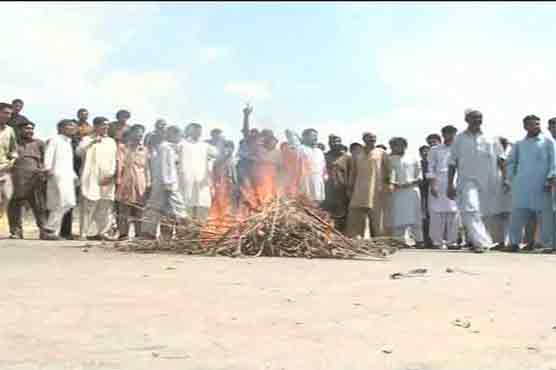
Pakistan - People protest against prolonged power outage in Peshawar


Hundreds of people took to streets on Friday from Peshawar’s Hazar Khwani and adjoining areas to protest against prolonged power outages, Dunya News reported.
The protesters blocked the Ring road for traffic due to which vehicles enroute to Khyber Agency and Afghanistan were lined-up in long queues.
The people chanted slogans against Wapda and were holding placards on which various demands were written.
Police reached the scene to negotiate with the protesters after which they dispersed peacefully on getting assurance that their problem will be resolved soon.
However, the protesters warned the police that they will stage demonstration again if the government didn’t fulfilled their demands.

Pakistan - Safoora attack points to growing Lashkar-i-Jhangvi influence: investigators

Investigators probing the first attack claimed in Pakistan by the Islamic State group believe a notorious local sectarian group may have carried out the massacre as it seeks to expand its ties to the Middle East.
Gunmen stormed a bus in Karachi last month, killing 45 members of the Ismaili minority community in one of the deadliest incidents in Pakistan this year.
The slaughter was swiftly claimed by IS, marking the first time the militants, who have seized control of large areas of Iraq and Syria and declared a “caliphate”, said they were behind an attack in Pakistan.
Islamabad has officially denied that IS is operating in Pakistan, which has been wracked by Al Qaeda and Taliban linked violence for more than a decade.
But investigators believe the attack may have been carried out by the Pakistan-based militant group Lashkar-i-Jhangvi (LJ) as it seeks to expand its international influence — and get access to IS's rich funding.
LJ has emerged as the bloodiest and most ruthless anti-Shia outfit in Pakistan, which has seen a rise in sectarian attacks in recent years, mostly targeting Shias, who make up 20 per cent of the population.
“We are investigating the LJ connection behind the attack and one of the arrested suspects is linked to LJ,” a security official involved in the probe told AFP on condition of anonymity.
“LJ wanted to gain attention of IS for its financial needs and the attack on Ismailis provided the perfect choice as it got international attention."

Returning fighters

Senior intelligence officials and militant sources say LJ cadres have fought in Syria and returned inspired by IS, which has won global notoriety for its brutality and slick propaganda operation.
The returned fighters are working with a new generation of middle-class, educated, self-radicalised 'jihadists' to try to raise the black flag of the IS “caliphate” in Pakistan.
An intelligence officer who has tracked LJ for years said the group, based in the southern part of Punjab, had sent hundreds of fighters to Syria.
“The new cadre of militants going to Syria and Iraq, these militants are mostly educated people with middle-class backgrounds,” the intelligence officer told AFP.
Over the past decade the patchwork of militant groups that make up the Pakistani Taliban have largely focused on waging a domestic campaign against the government and armed forces.
But a former LJ militant who produces online propaganda material for terror groups said for young militants in Pakistan, all the talk now is of IS and the Middle East.
“Many jihadists particularly from Punjab went to fight in Syria and some died,” he said.
“Unlike the past, news from Syria, Iraq and Yemen is the most debated and shared item on extremist-militant forums in Pakistan."
Security analyst Amir Rana said LJ had fighters in Iraq since 2013, and even set up a training camp there.
“The ideological and operational association between Pakistani militant groups and IS is not new, Pakistani militants were part of IS since its inception,” he told AFP.
“The actual threat for Pakistan is the return of LJ militants fighting in Iraq and Syria, as they would add to the sectarian violence here."

Silent surge

LJ, founded in 1996, was behind some of the worst attacks on Shias in Pakistan's history, including two huge bombings in the southwestern city of Quetta in 2013 that together killed nearly 200 people.
The security official said the group was now seeking to expand its operations.
“LJ is growing from an anti-Shia organisation to an organisation with trans-national interests,” he said.
The group has been accused of carrying out attacks in Afghanistan and has also begun targeting Christians, Hindus and other Muslim minorities.
“For the last two years, there is evidence that the organisation is involved in attacking minorities in urban centres where they have established strong bases, especially in Karachi,” he said.
“But LJ has claimed responsibility for hardly any of those incidents — usually militant organisations with no structural or organisational existence have claimed responsibility for attacks carried out by LJ,” he added.
He said LJ maintained a strict cellular structure, with individuals in one unit unaware of the existence of others, and sometimes drew militants from other groups for specific missions.

Educated and radical

On May 20, Sindh Chief Minister Qaim Ali Shah announced the first arrests in connection with the Karachi bus attack.
He said four “highly educated” suspects had confessed their involvement, including a graduate of the city's prestigious Institute of Business Administration.
The detentions of the alleged plotters, who police believe coordinated the gunmen on the ground, caused some surprise in Pakistan, where militancy has been regarded as the preserve of the poor.
But the arrests come as no surprise for officials investigating the case.
The intelligence official overseeing the Karachi investigation said the abundance of extremist literature on the web was attracting educated people from the middle class.
Another senior intelligence official said people with strong academic backgrounds were being increasingly radicalised following the Syrian conflict.
“These 'educated jihadists' are embedded in society, they have normal lives and keep their ideologies alive through the Internet — that's why it is difficult to place tabs on them,” he said.

Pakistan - Metro In Islamabad

The Prime Minister inaugurated the Rawalpindi Islamabad metro bus service yesterday, fulfilling another of his dreams, as revealed by one of his loyal representatives from Rawalpindi to those gathered at the inaugural ceremony.
He further chose to let the congregation know that the PM expressed his desire to have such Metros in Pakistan while he was having a ride on the underground London Metro Railway.
While disclosing this passion of the PM to provide such services in the country , he naively uttered absolute ignorance of himself and his current leader of the historic circumstances and economic factors which turned London metro into reality.
The oldest rapid transit system in the world was launched in 1863, kept expanding and carried 1.
23 billion passengers in 2012/13.
Those were the days when the sun never set on the British Empire.
Heavily indebted, our country which the PM is leading, for the third time, after yet another controversial election, bears the world’s lowest possible performance indicators in economy and social services sectors.
Though a nuclear power, it stands entrapped in a war within its own boundaries while the society is struggling against the bigots who are targeting everything resembling sanity.
In such grim conditions, is it justifiable to spend such large amounts on services which can be viewed best as luxuries?
The 52 billion Rupees Metro project was reportedly undertaken without any feasibility or environmental impact study; which was produced only as an after-thought.
Most of the commuters travel to Islamabad from faraway places like Rawat, Bharakahu and Tarnaul.
These commuters have no direct access to the metro stations which are usually provided with feeding lines to facilitate passengers from a wider area.
There are no bicycle stands along the metro stations although a majority of the poor people still use this economical and healthy mode of transport.
The bus stations with glass all around are going to become ovens in the scorching heat during the summers.
The residents of the twin cities rightfully feel that it has devastated the environment and has been built in entire violation of the master plan of the capital city, which was once considered to be one of the most beautiful capitals in the world.
The Planning Commission owes an explanation to the public on all such issues while the political leaders need to modify and re-set their priorities; preferring the flow of expenditure to improve the current facilities with a focus to strengthen the law enforcement agencies as the top most priority.

Malala building opened at James Gillespie’s High School

http://www.edinburghnews.scotsman.com/

PUPILS and staff at one of the Capital’s top performing secondaries are celebrating after a new teaching block was opened at their school.

The ribbon has been cut on the Malala Building at James Gillespie’s High as part of a £42.8 million redevelopment.
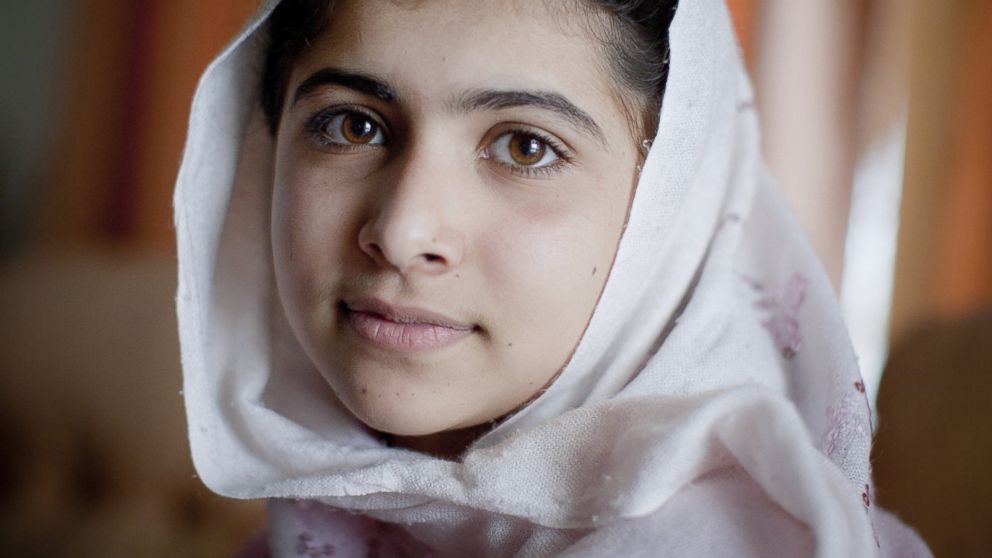
We revealed last month how pupils had decided to name the teaching block in honour of Nobel Peace Prize winner Malala Yousafzai, now 17. She survived being shot in the head by a Taliban gunman in Pakistan in 2012. She was targeted because of her work promoting girls’ education.
Staff and pupils said they were “hugely impressed” with the new facility, which houses the main teaching area and features 57 classroom spaces with full-height glazing to maximise daylight and views.
Headteacher Donald Macdonald said: “It’s a wonderful facility – the design and layout is like no other school.
“There’s a real feeling of light and space with one side of every classroom glazed to allow in lots of natural light and giving views across Edinburgh.
“In fact the building’s been so well received that, despite being on exam leave, many senior pupils chose to come into the new building to study rather than stay at home.”
The opening is part of a rebuild which has already seen the construction of a nursery, two classrooms and a gym at James Gillespie’s Primary.
A synthetic pitch at Thirlestane Road has also been provided for use by secondary pupils.
The final phase will see the demolition of all remaining high school buildings to allow the delivery of new sports and performance blocks.
In addition, the A-listed Bruntsfield House at the centre of the campus is undergoing refurbishment.
Councillor Paul Godzik, the city’s education leader, who joined learning minister Dr Alasdair Allan to open the new block yesterday, said: “I know the staff and pupils are excited to be in the new teaching block which is really impressive.
“This is a modern, fit-for-purpose facility which is unique in Scotland with its courtyards and collaborative break-out areas and will deliver an unrivalled learning 
environment for pupils.
“Work is already under way on the sports and performing arts buildings which will be finished next year and give the James Gillespie’s community a school they can rightly be proud of for many years to come.”
Dr Allan said: “This is an exciting day for pupils and staff at James Gillespie’s High School and I was delighted to be at the official opening of the new Malala Building.
“The Scottish Government is committed to providing modern and sustainable new schools through our Schools for the Future programme and I’m pleased we could provide more than £20m towards the cost of this project.”
He added: “The design of the new school provides modern and inspiring spaces for pupils to learn in.”
Malala was awarded the Nobel prize last year.

Malala's attackers quietly freed by Pakistan

ByTUCKER REALS

At the end of April, Pakistani officials told CBS News that 10 men linked to the Taliban had been sentenced to 25 years in prison for the attempted assassination of teen activist Malala Yousafzai in the country's Swat province.

Friday, however, it emerged that eight of those men were subsequently set free -- and may never have been convicted in the first place -- by a secret military court that found the evidence against them "had gaps."
A senior Pakistani intelligence source confirmed to CBS News' Farhan Bokhari that only "two of the ten suspects have been convicted," and said the other eight "have been freed because they did not carry out the shooting."
Officials from the Pakistani Embassy in London told CBS News later Friday that the eight freed suspects were acquitted because of a lack of evidence against them.
The current whereabouts of the eight men freed by the court, however, remained a mystery.
The two convicted suspects have been sentenced to life imprisonment, according to the embassy in London.
It was The Mirror tabloid of Britain which first reported the development in the story on Friday, saying it had tried to track down the 10 convicts in Pakistani prisons and uncovered the apparent inconsistency.
The official, who spoke to CBS News on the condition of anonymity, said the eight men released had been "held on charges of facilitating this crime, but in the end the evidence had gaps which is why they were freed."
Yousafzai was attacked in 2012 -- shot at close range in the head -- by militants for speaking out in support of girls' education. She was critically wounded in the attack, which took place on a bus as she returned from school in her native city of Mingora, in Pakistan's northern Swat valley. She was subsequently taken to Britain for specialized medical care.
Yousazai went on to gain international recognition for her bravery and last year became the world's youngest recipient of the Nobel Peace Prize.
The details around the two original suspects who have in fact been convicted and imprisoned also changed Friday, with officials telling the Mirror and the BBC that they were the men who actually carried out the attack.
At the end of April, officials said the 10 had been convicted essentially as accomplices, and that the two primary suspects in the case were still at large; identified then as Ataullah Khan, an Islamic militant believed to have pulled the trigger, and Maulana Fazlullah, leader of the Pakistani Taliban. Both men were purportedly believed to be hiding in Afghanistan.
"We are actively pursuing those two," a senior government official from Pakistani Prime Minister Nawaz Sharif's office told CBS News in April. "Sooner or later, both of them will be caught or killed."
That official could not be reached Friday by CBS News for comment.
The trial which led to the two convictions which appeared Friday to actually have been carried out -- and the eight other reported convinctions -- were handed down by a Pakistani court which conducted the trial in complete secrecy, without any members of the media present.
Word of the convictions in April took the journalists of Pakistan, and the world, largely by surprise as there had been no talk of suspects even being in custody. Islamabad had come under increasing pressure to find and arrest the perpetrators, especially given the huge attention gained by Yousafzai's Nobel Prize win.

Pashto Music - Sardar Ali Takkar - GHANI KHAN"S MESSAGE FOR YOUTH بچے چه لوے شے

Thursday, June 4, 2015

Turkish Music Video - EBRU YAŞAR FT. TAN - CUMARTESİ

#TurkeyElections - The last exit before dictatorship

By YUSUF KANLI


The expectation is that this Sunday there will be a very high turnout of Turks casting their votes in parliamentary elections, which may either usher Turkey’s governance system toward an elected dictatorship or save the fragile democracy badly hurt by the Justice and Development Party’s (AKP) 13-year-old majoritarian understanding.

For some reason every single national vote in Turkey – be it mayoral, parliamentary, presidential, or a referendum on a constitutional amendments package – has been very important. Of course, such votes in this country of over 77 million ought to be important. But this election, over and above all the previous ones, will be of existential importance; in a sense, President Recep Tayyip Erdoğan and his political Islam clan have been correct when they claim that Turkey is at the threshold of a second “war of liberation.”

Turkey’s War of Liberation was a heroic one. How the nation waged the war with very limited resources, with an under-armed and undermanned force but with a national mobilization spirit is a legend. What kind of second “war of liberation” might the country be waging now? Is it, as claimed by Erdoğan and his political clan, a war to achieve recourse to the pre-republic imperial era? Or is it one to prevent the retardation to neo-imperial hallucinations and save the republican heritage?

The recent controversy on the reporting of the National Intelligence Agency (MİT) lorries, veiled by a “state secret” cover clamped down by the government, is a vivid example of the state of today’s Turkey. Journalists do not do their profession to please the government of any country. People can spend days discussing whether the ethics of the profession, nationalist feelings or political allegiances should come before journalism. But any sober mind must agree that if a journalist writes about a major scandal and documents his claims with photographs they a president should not then openly vow in front of cameras to cut that journalist down to size.

Such a journalist must be awarded the highest journalistic prize of that country for his excellence in reporting something awful but so strongly veiled by the government. How on earth can the mentality in government target that journalist and how can a prosecutor of that country demand two enforced life sentences against that journalist?

There are plenty of anomalies in this “advanced democracy” of the “New Turkey” of Erdoğan’s governance.

The domestication of media bosses through hefty tax fines, the venomous statements against all parts of society critical of the government, the consolidation of polarization, and the thickening climate of fear have all become characteristics of the “advanced democracy” of Erdoğan’s “Turkish-style presidency.” What kind of presidential system Erdoğan is aspiring to? One with absolute power but with no checks and balances. But when critics say the president aspires to become an elected dictator, Erdoğan gets angry.

Is there anything wrong in Erdoğan being angry at someone or some issue? Not at all. The problem is that when he gets angry at someone - on any issue - that person or institution is barred from all public contact or public tenders (that is if an officious prosecutor hasn’t already asked for a life sentence against them). Is it sane, for God’s sake, for a journalist to face over 100 years in jail just because what he wrote was not appreciated by the top executive of the country? Is it sane for a broadcasting group head to sit in jail for months because the synopsis of a soap opera that is no longer on air allegedly contained incitement to crime? Can judges be dismissed and prosecuted just because they made decisions that the political authority did not like? Remember the Ergenekon and the Sledgehammer cases: Lives devastated and acquittals that came years later. Does Turkey deserve such obsessive governance, which if further consolidated on Sunday might take the dimension of an elected dictatorship?

Going to the voting booths on Sunday, Turkish voters must remember all these things, as well as the aspiration to become part of the European club of democracies. They must spend few moments deciding what kind of Turkey they want to see.

Turkey deserves a functioning democracy aligned with the club of democracies in Europe. Sunday’s vote, in a way, is the last exit for Turks before dictatorship.

Video Report - Turkey - Erdogan party in trouble before Turkey vote

Video Report - Yemenis demand punishment for Saudi Arabia

#Backlash raises plight of jailed Saudi blogger Raif Badawi


Author Interview: Jessie Wingard
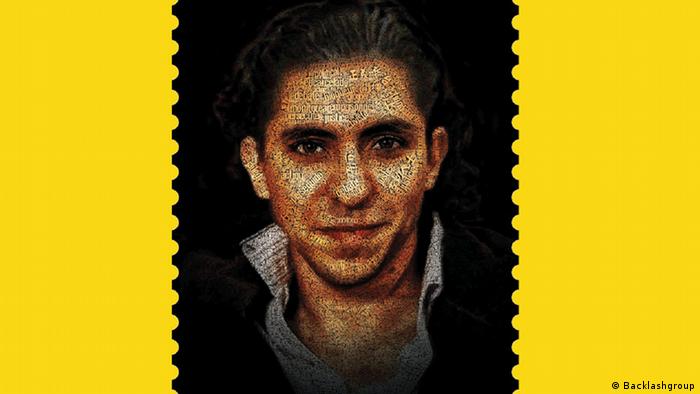
A new social media campaign has been launched to raise the plight of jailed Saudi blogger Raif Badawi. It's hoped the movement will "open people's eyes," says the movement's leader Nathan Newman.
 In an interview with DW, the campaign's leader, Nathan Newman, talks about the importance of the social media #backlash campaign and need to raise awareness of the atrocities occurring in Saudi Arabia.
The campaign, which launched on June 1, aims to shed light on the punishment inflicted on people who speak out in favor of freedom of expression - such as Saudi blogger Raif Badawi.

DW: What is the #Backlash campaign?
Nathan Newman: #Backlash is a 15-week social media protest which has Raif Badawi as a figurehead and symbol for the oppression the Saudi population is being put under right now.
The campaign is being run over 15 weeks. What is the significance of that?
We're looking to pick up mass momentum, essentially, and there have been a lot of great campaigns so far and a lot of support from international groups. We've found that it's created a lot of media and it's time to consolidate [all of that] and pressure folks who won't campaign. So our efforts are more long-term than maybe those of other campaigns, and we hope that by the time the 15th week comes along we'll have picked up a lot more momentum.
Nathan Newman #Backlash social media Kampagne
Newman hopes the #Backlash campaign will help raise awareness of the atrocities in Saudi Arabia
What is the inspiration behind the #Backlash campaign?
I come from a social media background and I think social media has made a lot of changes in society. The Internet has helped democratize information and its spread and social media has sort of accelerated it. I've seen movements and causes like the ALS Ice Bucket Challenge and a few others that maybe aren't as wholesome pop up over the last two or three years. And, it feels like there is a climate right now where people want to get involved in a cause and they want something which is a statement. So for us the mechanics behind the campaign were all geared around making a statement as boldly as we possibly could and to reach as many people as we possibly could.
The #Backlash campaign starts today, June 1. What do you hope it will achieve?
We have found that there is too much ignorance about the problems in Saudi Arabia and in particular how censored that country is - and how a lot of other countries turn a blind eye to the atrocities there.
We hope to achieve mass media attention. There is a lot of education we can do in terms of [explaining] the climate in Saudi Arabia right now. Everything that surrounds the Raif Badawi case is quite shocking, and we have found that it's been quite hard to get widespread media attention. What we've been getting to date has been great but we feel that it's important to take that even further, to put pressure on the Saudi regime and on the situation that is unfolding there right now.
It's amazing to see just how quickly this has taken off. Just seven days ago we had 350 interactions, which was obviously next to nothing. As of 1830 UTC today we've had 529,300 impressions across all of our (social media) accounts. Our approach and the content marketing behind what we've done so far - to go from something like 350 impressions to half a million will maybe open people's eyes a little bit more as well.
How can people do that? How can people get involved in the online protest?
It's quite simple really: All they have to do is take off their shirts, grab a lipstick and draw a lash on their back - preferably with a red lipstick so it stands there nice and bright. You can then take a picture of that lash and post it on Twitter, Facebook or Instagram with the hashtag #backlash and they can also tag us with@backlashgroup so we can see it.
It's as simple as that - if you see any other lashes, we welcome it if you share them to help spread the campaign as far and wide as possible. So far the support has been fantastic - it's been truly international, with people contributing content from countries we haven't even started to see the campaign in yet. It's been overwhelming.
There is no limit to the number of times people can participate, and we are thinking people might start nominating each other. It's one of those things, people don't want to be told what to do, but as soon as something starts to pick up you have them jumping on to what is happening and things sort of take on a little consciousness of their own.
Why are you doing the campaign now?
The anniversary of Badawi's [imprisonment] is coming up on June 17 and Ramadan is also coming up and we know that traditionally people are pardoned around that time. There is also a climate surrounding FIFA and the controversy there and it seems like it's the right time at the moment for this sort of campaign.
Nathan Newman heads the #Backlash social media campaign to raise awareness of jailed Saudi blogger Raif Badawi, who was sentenced in May 2014 to 1,000 lashes, 10 years in prison and a major fine for insulting Islam online.

Music Video - Bon Jovi - I'll Be There For You

Hillary Clinton calls for sweeping expansion of voter access


By Anne Gearan and Niraj Chokshi


Hillary Rodham Clinton on Thursday called for sweeping changes in national voter access laws aimed at making it easier for young people and minorities to take part in elections, putting her on a collision course with Republicans who say such reforms are a political ploy that would lead to widespread abuses.
In a speech at a historically black college here, Clinton called for federal legislation that would automatically register Americans to vote at age 18 and would mandate at least 20 days of early voting ahead of election days in all states.
Making her most fiercely partisan political speech since her first, failed run for president in 2008, Clinton attacked Republicans for what she characterized as a calculated attempt to turn back the clock on voting rights — and called out several potential 2016 opponents by name for backing voter restrictions as governors.
“Today Republicans are systematically and deliberately trying to stop millions of American citizens from voting,” Clinton said during a speech at Texas Southern University. “What part of democracy are they afraid of?”

The pointed attacks and sweeping policy proposals signal that Clinton intends to make voter access a major plank in her campaign platform — a move aimed at firing up the Democratic base and portraying her GOP opponents as suppressing votes. Her campaign’s top lawyer, Marc Elias, has co-filed lawsuits over voting access in Ohio and Wisconsin — both key presidential battleground states with Republican governors who may join the 2016 race.
The Republican National Committee accused Clinton of being “misleading and divisive,” and noted that her home state of New York does not provide early voting. “Her exploitation of this issue only underscores why voters find her dishonest and untrustworthy,” RNC spokesman Orlando Watson said in a statement.
During her speech, Clinton said Republican state legislatures are intentionally restricting voting by curtailing early access to the polls and other measures in an effort to suppress Democratic turnout. Among the potential opponents she singled out for criticism were New Jersey Gov. Chris Christie; Wisconsin Gov. Scott Walker; former Florida governor Jeb Bush; and former Texas governor Rick Perry, who announced his own second run for the White House Thursday
“Today there are people who offer themselves to be leaders whose actions have undercut this fundamental American principle” of a free vote, Clinton said.
Nationwide mandatory voter registration would generally help Democrats, whose support frequently comes from younger, poorer and minority groups that may also be less likely to sign up to vote at 18 on their own. That change and a mandatory minimum period for early voting would have to be approved by Congress — now controlled by Republicans — so it is unlikely to happen in time to benefit Clinton in the 2016 election if she is the Democratic nominee.
“None of them will come easily,” she acknowledged in her speech.

About 71 percent of eligible adults nationwide are registered to vote, according to Census figures, and a lower percentage actually show up at the polls. Registration and turnout tend to be higher among older and relatively affluent white voters, who are also more likely to vote Republican.
Under universal voter registration, every citizen would be automatically registered to vote on their 18th birthday, unless they actively opt out.
The requirement for in-person early voting that Clinton seeks would also mandate that polling places have weekend and evening hours.
Although early voting has become fairly common in the last decade, many Republicans say it increases the opportunity for fraudulent voting. Republicans have raised similar objections to same-day registration and other efforts — many of them led by Democrats — to make voting easier or more convenient. Clinton dismissed such complaints as unfounded.
Election analysts generally agree that voter fraud is rare, although there have been a handful of well-publicized examples of fraudulent names being added to the rolls.
Clinton’s address comes as Democrats are pursuing legal challenges to voting rule changes approved by Republican legislatures in several states.
“This is, I think, a moment when we should be expanding the franchise,” Clinton campaign chairman John Podesta said in an interview Wednesday. “What we see in state after state is this effort by conservatives to restrict the right to vote.”
In recent weeks, Elias has co-filed lawsuits over voting access in Ohio and Wisconsin — both key presidential battleground states with Republican governors who may join the 2016 race.
“This lawsuit concerns the most fundamental of rights guaranteed citizens in our representative democracy — the right to vote,” the lawyers wrote in a federal complaint filed Friday in Wisconsin.
Since the 2010 Republican wave, 21 states have implemented new laws restricting voting access, some cutting back on early voting hours and others limiting the number of documents considered valid identification to vote, according to a new analysis from the Brennan Center for Justice, a nonpartisan think tank at the New York University School of Law. For 14 of those states, the 2016 contest will be the first presidential election with the new restrictions in place.
Some limits also flowed from the 2013 Supreme Court decision that invalidated some parts of the Voting Rights Act of 1965. The day that decision came down, Perry praised it as a “clear victory for federalism and the states” and vowed to proceed with the implementation of a strict photo ID requirement, previously blocked under the law. That requirement is currently being challenged in court, with a resolution expected as soon as this summer.
About three dozen states and D.C. offer early voting of some kind, allowing voters to cast ballots before Election Day without an excuse. The average early voting period is roughly 22 days, the bipartisan National Conference of State Legislatures reported earlier this year.
Oregon’s breakthrough “new motor voter” law passed earlier this year is the closest any state has come to the kind of automatic registration endorsed by Clinton. She praised Oregon as a leader in modernizing antiquated voting procedures, including paper registration.
Under the new law, all Oregonians applying for a new or updated driver’s license are automatically added to the voter rolls, unless they opt-out. The state has estimated that the law will add about 300,000 voters to the rolls.
Younger voters are the least likely to be registered to vote and have tilted toward Democrats in recent years. In 2012, the Census Bureau reported 57 percent of citizens under age 30 were registered to vote, compared with 78 percent of those ages 55 and older. Voters under age 30 supported Barack Obama by a 29 percentage point margin over Mitt Romney, according to network exit polls (66 to 37 percent).
In 2008 and 2012 African American turnout rates surged to match or exceed turnout among whites for the first time, but a central question in 2016 is whether blacks will turn out at similar levels when President Obama is not on the ballot.
Hispanics and Asians – groups Obama won by wide margins as well– vote at far lower rates than the whites and African Americans, representing a large untapped pool of Democratic support. Automatic registration among these groups may encourage more voting participation.
Exit polls in 2012 found that Obama racked up a 7-point lead over Republican Mitt Romney among early voters, compared with a 1-point edge among those casting ballots on Election Day.
Democrats’ advantage among early voters was less clear according to voter registration data tracked by the U.S. Elections Project. In five of seven states where data are available, Democrats made up about the same percentage of early voters as they did on Election Day.

Video Report - President Obama Congratulates Giants on World Series Win

Video Report - U.S. - Massive cyberattack on federal government