Thursday, June 4, 2015

‘Where’s the $500 mn?’ Red Cross promises houses for 130,000 Haitians, ’builds only 6’

An investigation has found that the American Red Cross wasted $500 million in its bid to help Haiti, underperformed in its programs, and then tried to cover it up. Despite the NGO’s celebrated success, insider accounts point to failures.
When a devastating earthquake struck the Western hemisphere’s poorest country in 2010, the American Red Cross was one of the organizations at the forefront of the humanitarian effort to rebuild it a year later, launching a multi-million-dollar effort.
The main program – LAMIKA (a Creole acronym for ‘A Better Life in My Neighborhood’) – was to build hundreds of permanent homes to house some 130,000 people living in abject poverty after the quake.
Now, in 2015, the Port-au-Prince neighborhood of Campeche is as dilapidated as ever, with hardly any new buildings, trash strewn around, animals walking the streets, and people enduring sub-standard conditions in self-made shacks.
“Many residents live in shacks made of rusty sheet metal, without access to drinkable water, electricity or basic sanitation. When it rains, their homes flood and residents bail out mud and water,” an introduction to a report says.
An investigation by NPR and ProPublica gained access to “confidential memos, emails from worried top officers, and accounts of a dozen frustrated and disappointed insiders” familiar with how the NGO broke its promises, misspent millions of dollars, and then issued self-congratulatory progress statements.
The ensuing report reveals very different results to the ones outlined in CEO Gail McGovern’s project plan for Haiti, which promised “brand new communities” that would make “donors proud” and “help the people in Haiti.” She claimed her experience had made her more “flexible during emergencies.”
A Haitian woman living in a tent camp for people affected by the January 2010 earthquake covers her face as she reacts after her tent home was destroyed by Tropical Storm Isaac outside of Port-au-Prince August 26, 2012. (Reuters/Swoan Parker)

The investigation pointed to a series of systematic blunders and untruths surrounding the Haiti effort, however.
The Red Cross’s internal proposal put the number of houses to be built at 700 by January 2013. In reality, only six houses were actually constructed.
“We asked the Red Cross to show us around its projects in Haiti so we could see the results of its work. It declined,” the report reads.
Part of the reason behind the failure is that the Red Cross “didn’t have the know-how” and “they had no development experience,” former employees said.
In some cases, the NGO would give millions to other groups. Poor supervision and lack of proper oversight allowed these subcontractors to rack up inordinate bills for management and overhead costs.
Another issue that could have hindered the Red Cross’s work in Haiti is trouble with the country’s“dysfunctional” land title system.
Reuters/Allison Shelley

Other groups, which the report does not name, had similar problems but, according to the data,“ultimately built 9,000 homes compared to the Red Cross’s six.”
Another possible reason for the dismal results, pointed out by current and former employees, was “an overreliance” on expats who could not speak French or Creole. The Red Cross’s statement, however, said that over 90 percent of people hired were Haitians. That didn’t seem to be reflected in the top positions, however, according to the authors of the report.
According to the report, the NGO displayed an arrogant attitude to national staff – some of the very few people who could speak French and the local Creole. In some cases, the Red Cross actively discouraged their participation. This led to poor communication with the local population and, ultimately, to the failure of the outreach project.
“Going to meetings with the community when you don’t speak the language is not productive,” one Haitian who worked on the project in Campeche said, adding that meetings would be skipped altogether at times.
An earthquake survivor washes his hands in a bucket, donated by Haiti's Red Cross to control infections, near a damaged helicopter in a provisional camp in downtown Port-au-Prince October 30, 2010. (Reuters/Eduardo Munoz)

Some $140,000 was spent on housing, food, and R&R for a foreign project manager, who also enjoyed four paid leaves a year. That comes to more than $100,000 more than would have been spent on a local equivalent.
“A lot of money was spent on those people who were not Haitian, who had nothing to do with Haiti. The money was just going back to the United States,” one Haitian who coordinated expat housing for the Red Cross confessed.
At the same time, Red Cross officials focused more on programs which would generate good publicity than those providing the most homes, according to testimony from Lee Malany, the project manager of the shelter program.
He recalled a Washington meeting where top officials had no idea what to do with the millions they’d been given for housing projects.
The organization would not provide details on how it spent the almost $500 million that it received, nor give specific details of how its projects were carried out. However, various promotional statements estimated that the initiative had repaired some 4,000 homes, erected temporary shelters for thousands of families, and donated $44 million for food aid and hospital construction.
“The Red Cross’s public reports offer only broad categories about where $488 million in donations has gone,” according to the authors of the report.
A woman washes her clothes in a pond close to Cite Soleil, in Port-au-Prince, March 21, 2015. (Reuters/Andres Martinez Casares)

Five years since the quake, a report by McGovern says: “Millions of Haitians are safer, healthier, more resilient, and better prepared for future disasters thanks to generous donations to the American Red Cross.”
The organization claimed that it had helped 4.5 million Haitians, but according to reporters “there is reason to doubt” that.
Asked if there was any truth to the Red Cross’s claims, Haiti’s Prime Minister didn’t seem to know how the numbers could add up: “No, no… it’s not possible,” Jean-Max Bellerive said, stressing that the country’s entire population is only about 10 million.
“What the Red Cross told us is that they are coming here to change Campeche. Totally change it,” the report cites Jean Flaubert, the head of a community group set up by the Red Cross, as saying. “Now I do not understand the change that they are talking about. I think the Red Cross is working for themselves.”
The Red Cross had already been embroiled in several scandals following 9/11 and Hurricane Katrina relief efforts, but that did not matter to the many people, organizations and US celebrities who continued to support it.
The Haiti earthquake was touted as “a spectacular fundraising opportunity” within the organization, according to one former official involved with the program.
A great number of high-profile people and organizations donated to the cause, including Michelle Obama, many Hollywood A-listers, and the NFL.
It later turned out that the organization continued to collect funds for emergency relief projects even after it had hit its targets. The extra money was found to have been put toward eradicating the American Red Cross’s own debt, which exceeded $100 million.


A. Nayyar: Pakistani Christian Legend whose voice melts our hearts even today


Arthur Nayyar, popularly known as A. Nayyar is a living legend. He was born on 17th, September 1950. Nayyar belongs to a Pakistani Christian family and started his career as a singer in the Pakistani music industry in 1974 when he sang a duet with Rubina Badar. He has sung songs of all genres but found a new generation of fans with popular numbers.
In his early years, Nayyar and family lived in Arifwala where his father served as a government employee. It was the time when there was no TV or radio and all that was available to Nayyar to keep his interest in music alive was a cinema near his home.
After moving to Lahore, Nayyar joined St. Francis School where he completed his matriculation. Even in school Nayyar was part of many singing competitions and kept on rehearsing before every performance. Then he joined Forman Christian College to pursue further education. His teachers and friends were fond of his music and they arranged music programs on a regular basis.
With no proper music training, Nayyar learnt the basics of music from Samuel Mumtaz, a local Pastor who had the proper know-how of music. Nayyar also listened to maestros like Kishor Kumar, Mohammad Rafi, Mehdi Hassan, Noor Jahan, and Lata Mangeshkar to polish his skills in the unavailability of a music teacher.
After repeated attempts of gaining recognition, in 1973 he got a break in PTV through a program ‘Naey Fankaar’ produced by Rafique Warraich. The program aimed at introducing new talent. Then Nayyar got an opportunity to perform in ‘Hum Sukhan’ produced by Athar Waqar Azeem. As the show also featured popular singers of the era, Nayyar gained recognition as the program was televised many times.
The year 1974 came with a big break in the film industry for Nayyar and he debuted with a song in the movie ‘Bahisht’. After collaborating with maestros of that time, his career took off and there was no turning back until the 90’s. The press called him ‘one man show’ and termed him as the only male singer in the industry.
Nayyar’s career saw a downfall as the culture of the Pakistani film industry changed and as he had a passion of not compromising on lyrics, he faced a set back. Nayyar also sang Punjabi songs with legendary Madam Noor Jahan for almost a decade.
According to EMI, Nayyar has sung about 4200 films, television and radio songs. He has served the country with sincerity and devotion. Arthur Nayyar received seven Nigar, eight Graduate, four Bolan, and a National and Presidential award.

- See more at: http://www.christiansinpakistan.com/a-nayyar-pakistani-christian-legend-whose-voice-melts-our-hearts-even-today/#sthash.bfuMN2x7.dpuf

Balochistan - How A Road Destroyed Economy Of Awaran

By Shabir Rakhshani
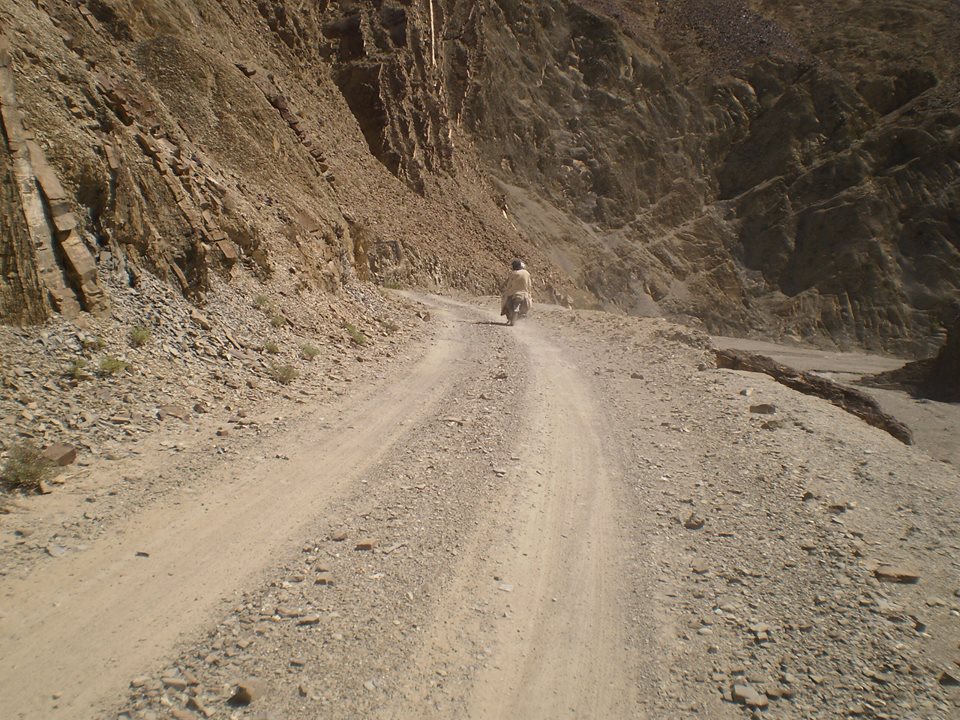
Turbat road was the main route that connected Turbat with Awaran and both these districts with Karachi. Turbat road was not only the main route for transportation of passengers and goods but it was also primary source of livelihood for people living in settlements located along the road.
This road connected Turbat, Mand, Buleda, Hoshab, Josak, dander and bedrang towns with Karachi via Awaran. Turbat road was not an Asphalt road but despite that transporters of Turbat and adjoining areas used it for travelling to Karachi and Quetta. Stretching 278 Kilometers from Awaran to Turbat, when this road was damaged in monsoon rains Building and Roads (B&R) departments of both Awaran and Turbat districts carried out the repair work.
Non-air conditioned buses and Goods carrying vehicles transported passenger and items of daily usage from Karachi to Turbat. People living in Lasbela to Awaran depended upon “Turbat road” for their livelihood. Along this road several restaurants, tea stalls, puncture shops and vehicle repair shops were found which provided all the necessary goods and services to passengers and transporters travelling on this road. This road was the only source of livelihood for all the people that worked in shops and restaurants that were situated on this road. In addition to that, people living adjacent to this road used to get different items of daily usage on affordable rates and Iranian oil reaching through this road had changed fortunes of many local traders.
Existing condition of Turbat Road
During the regime of President Pervez Musharraf new road projects were approved for Makran region.  Two main roads projects were coastal highway and improvement work onAwaran-Lasbela road. Coastal Highway connects Karachi with Gwadar and work on the project started in 2001 and completed in just two years. After completion of this road people of Turbat were completely disconnected from Awaran as they now used the coastal highway instead of Turbat Road to travel to Karachi.
Lasbela to Awaran road was built but the Turbat Road was not upgraded to an asphalt road. This provided the transporters with the excuse of avoid traveling from this road on the pretext of its poor condition. All the shops, restaurants and stalls situated on Turbat road lost their customers and all people working in them lost their source of livelihood. With the passage of time all the commercial centers located on Turbat road turned into ruins and the landscape of the region entirely changed.
Moula Baksh, a resident of Gishkor town of Awaran, used to run a restaurant on Turbat road. He recounts that his restaurant did very well from 1985 to 2003. “I used to earn Rupees 25,000 to 30,000 a day and I employed 15 people,” Mr. Baksh told The Balochistan Point. After construction of coastal highway Moula Baksh had to close down his restaurant and he along with 15 other people lost their only source of livelihood.
Abdul Samad, a farmer based in Gishkor town told The Balochistan Point that “When Turbat Road was functional farmers of Awaran could get oil on cheap prices and could also transport their agriculture goods with ease.” He added, “Coastal Highway has ruined agriculture in Awaran and now oil is available at four times higher rates.”
Mir Abdul Rasheed, a notable of Awaran alleges that coastal highway project was deliberately used to destroy the economy of Awaran. He maintains that 635 kilometer long coastal highway only benefits human settlement in Pasni and Ormara, whereas Turbat road benefitted hundreds of thousands of people. “If Turbat Road had been upgraded during Musharraf’s regime then today fate of Awaran would have been totally different,” Lamented Mr. Rasheed while talking to The Balochistan Point.
Awaran of 2015 is totally different from the Awaran of 2003. In past horns of traffic flowing 24 hours a day didn’t let people sleep and now, according to residents, there are hardly 10 to 15 vehicles using the Turbat road. Deserted roads present a frightening picture for any stranger to the town of Awaran. Construction of coastal highway rendered Turbat road non-functional and snatched the primary source of livelihood from the people of Awaran. According to sources, this provided a conducive environment for people of Awaran to pickup weapons and take part in the ongoing insurgency in Balochistan. As a result, Awaran is currently the one of thr most disturbed districts from insurgency in Balochistan.
On 23rd September 2013, a devastating earthquake flattened Awaran and resulted in deaths of 500 people and over 200,000 people were rendered homeless. This earthquake further exacerbated the economic plight of Awaran that had its roots in construction of Coastal highway.
People of Awaran, while talking to The Balochistan Point, demanded from government that Asphalt roads connecting Awaran with Turbat and Karachi should be constructed on priority basis.

Pakistan - Lessons from Khyber Pakhtunkhwa local polls


By I.A. REHMAN 
NOTHING that happened in Khyber Pakhtunkhwa during the local government elections, including violence, mismanagement and electoral malpractices, was unexpected. While every effort should be made to address the complaints made by the various parties, the authorities concerned must try to ensure that local elections in the other provinces are not controversial.
The KP elections confirmed the increased importance of local government in the country’s politics. Even in the days before 2002 when local bodies did not enjoy the financial resources and political clout they acquired under the Musharraf regime, influential political families kept one foot firmly in local politics. The tradition was evident in the latest local elections; practically every political heavyweight had a young surrogate in the field. And local bodies will always serve as a stepping stone for upward mobility.
The Musharraf regime made local government institutions enormously rich and powerful to the extent that all provincial governments dismantled that structure at the first opportunity. Under the new laws the provincial governments have drastically curtailed the local bodies’ powers and acquired extraordinary powers to control them. Since local government institutions deal with citizens’ basic needs, social welfare infrastructure, security and environmental protection, it will not be possible for the provincial governments to keep them in bondage for long though they will take time before achieving their rightful status as the third tier of constitutional authority.

There is complete consensus that Saturday’s poll was grossly mismanaged.


The pull of visibility at the local level apart, local government elections awaken ambition in a much larger number of bosoms than in the case of polls for the provincial/federal assemblies. A relatively small following can secure one a place in a local body. Thus the results of local elections in Pakistan will be somewhat different from provincial/federal elections till political parties succeed in subsuming local level groupings. Only then will local elections become as correct a barometer of public opinion as elections to higher tiers.
This has been confirmed to some extent by signs of the Awami National Party’s recovery. It should now be possible for the party’s cadres to grow out of the despair the organisation’s 2013 rout had created. However, any significant improvement in the ANP’s fortunes will depend on its leadership’s capacity to heal internal fissures and regain its reputation for integrity.
The Pakistan Tehreek-i-Insaf perhaps did not fully understand the difference between local and higher elections in the current situation and was visibly keen to demonstrate that it had become stronger over the last two years of its rule. Evidence is already available to show that some of the party’s young workers tried to get away with the use of muscle power. The conduct of a provincial minister was enough to lend credence to the rival parties’ allegations of malpractices.
Unfortunately, the clamour against large-scale interference in the polling has been joined not only by almost all the opposition parties but also by PTI’s coalition partner, Jamaat-i-Islami. The PTI must address these complaints in a fair manner. It should be extra-jealous of its reputation, particularly in view of the public support it has gathered by its campaign for fair elections. How serious Imran Khan is about holding the local elections afresh is not clear but the gesture is worthy of appreciation and it could furnish a basis for a settlement acceptable to all parties, even without a re-election.
While the killing of about a dozen persons in election-related violence can only be regretted the scale of violence has mercifully been less than one had feared in view of the presence of militants who had caused havoc in 2013. Did the extremists hold their hand because the parties on their hit list were unlikely to win? If that were the case the implication will be that the militants do not wish to interfere in elections if the parties holding no-objection certificates from them have the upper hand. The democrats cannot be complacent.
There is complete consensus that Saturday’s poll was grossly mismanaged. The KP government is manifestly in the wrong when it blames the Election Commission for the security lapses. However, the ECP apparently failed to adequately train the polling staff. One does not know what arrangements had been made to enable the ECP officials to take timely action whenever and wherever disorder was reported, but no efficient mechanism for a quick response seems to have been put in place.
The large number of ballots a voter was required to stamp increased the time per vote cast and caused delays and bottlenecks. The ECP says it had suggested a staggered poll but the KP government denies this. This is a matter of fact that can easily be established. The problem will have to be resolved in a manner that local elections in Punjab and Sindh are not marred.
Despite the fact that women were prevented from voting at several places, the KP elections have brought the campaigners for women’s rights a victory they richly deserved. The scale of women’s defiance of the powerful patriarchs encourages the hope that before long it will be impossible to deny women’s right to franchise anywhere.
The process will surely be expedited by the ECP’s landmark decision to order fresh election in KP-95, where women had been barred from voting in the recent by-election. It is a victory for both the voiceless women of Lower Dir and the intrepid activists who stood up for them across the country. The anti-women forces are unlikely to accept defeat and therefore the need for the democratic activists to remain vigilant cannot be over-emphasised.

Pakistan - President’s speech disappointed people

https://ppppunjab.wordpress.com

Opposition leader Khursheed Shah on Thursday said that President Mamnoon Hussain’s address would have disappointed the people as it was written by the government in which only the performance of the government was praised whereas nothing was said regarding the benefit of ordinary people.
While talking to journalists after the joint session of the Parliament, he said that Pakistan possesses 10000 megawatt capacity but the government has not informed the president about it. He also stated that the president talked about cricket whereas it would have been better if the matches were conducted elsewhere besides Lahore.
Talking about economy, Khursheed expressed that despite the decline in interest rates people have not been benefited whereas no step has been taken to control the continuously growing population. The opposition leader praised the Sindh government for deciding not to create any obstacle in implementing law and order in the province.
He reiterated that there is no second opinion on Operation Zarb-e-Azab and economic corridor. He also asked the government to call All Parties Conference (APC) on the matter of foreign policy in which the military leadership should also be summoned.

Pashto Music - Sardar Ali Takkar - سپیا که سمن ګله

Wednesday, June 3, 2015

Music Video - Bodybangers Feat. Victoria Kern - Tonight

Music Video - Arash Feat. Sean Paul - She Makes Me Go

Saudi Arabia helps ISIS with anti-Shia ideology

Over the last 10 days, Saudi Arabia has experienced terrorist attacks on Shia mosques, with attackers killing men, women and children as they pray for peace.
On May 22, 2015, a suicide bomber entered Imam Ali mosque in Al-Qudaih, Qatif, Saudi Arabia, killing more than 20 people and leaving more than 130 wounded. Ambulances and medical staff did not respond to the scene of the explosion – a Shia mosque – leaving neighbors to move the bodies to the hospital in their own cars.
A second explosion took place on My 29, 2015. A car bomb in front of Imam Hussein mosque in the Dammam left four dead.
While ISIS detonated the bombs, the House of Saud laid the groundwork for the anti-Shia attacks.
While the Islamic State has claimed responsibility for the attacks, a major contributing factor is the hate against Shia Muslims; a hate fomented by the Wahhabi leadership in Saudi Arabia that believe that as Shia Muslims are not Wahhabi they are are heathens and enemies.
This is the culture that has encouraged ISIS to target Shia mosques in Saudi Arabia.
Wahhabism, a Sunni-based movement that started in the mid-18th century is the basis of Saudi Arabia’s religious ideology. Wahhabism is the most austere and strict of the four schools of Sunni Islam and follows a literal interpretation of the Koran and adherents believe that all who do not follow Wahhabism are infidels.
Founded on the tenets of Wahhabism, the  theology has long dominated Saudi Arabia. In 1744, the founder of the current Saudi royal family, Muhammed bin Saud, joined forces with the founder of Wahhabism, Muhammad bin Abd al-Wahhab making  pact whereby Wahhab backed Saud in his efforts to unify the various tribes of Arabia into a single country, Saudi Arabia, which Saud controlled.
In exchange, Saud agreed to continue his adherence to Wahhab’s religious ideology.
The agreement brought the nomadic militias that backed Wahhabi, called ikhwan (“brotherhood”), under the Saud umbrella and allowed Saud to win political and military victories that established the Saudi state.
The Saud dynasty has used Wahhabi scholars to provide religious legitimacy for its actions since that time and to move against its rivals. As a result, Wahhabism and anti-Shia ideology has dominated the Saudi culture.
This extreme view of Islam by Saudi Arabia has led Riyadh to back extremist groups in the region who target Shia Muslims as well as Christians, Jews and Izidis.
The Islamic State, also known as Daesh or ISIS, shares the Wahhabi’s extreme ideology. The Saudi government has designated ISIS a terrorist group and provides no direct funding to ISIS. It also prohibits private citizens from donating to terrorist groups.
However, Saudi donors, likely including at least some government officials, were believed to be the most significant funding source for the precursor group to ISIS.
This funding likely allowed ISIS to thrive and develop its own financial sources.
The same ideology that prevented women from driving in Saudi Arabia leads to taking Christian, Izidis and Shia women as slaves and to selling young girls to wealthy elder men in Iraq and Afghanistan.
For Wahhabi followers, the term “jihad” means a form of violence.
For Shia Muslims, the term “jihad” means sacrificing your time and life to make the community better, not pledging to fight against others.
In Saudi Arabia, Shia Muslims make up 15 percent of the population in Saudi Arabia. The Shia are systematically discriminated against, thanks to the prevalence of Wahhabism.
Organizations such as Human Rights Watch and Shia Rights Watch regularly report inhumane treatment of Shia Muslims in Saudi Arabia. Yet there has been no action to prevent discrimination against the Shia minority in this country.
Shia, who have no right of citizenship in Saudi Arabia, are marginalized and excluded from government. Even in provinces where the majority of the population is Shia, they have virtually no rights and are barred from participating in elections.


Read more at http://www.commdiginews.com/featured/saudi-arabia-helps-isis-with-anti-shia-ideology-42630/#EyDOFQ9q8O64wFmS.99

Video - Albert Einstein statue unveiled in Jerusalem

Video - First Lady Michelle Obama Celebrates the White House Kitchen Garden Harvest

Pakistan Should be Designated A Country of Concern For Minorities: USCIRF


The United States Commission on International Religious Freedm (USCIRF) recently visited Pakistan. A high level meeting with officials including National Securtiy Advisor Sartaj Aziz, Minister of Religious Affairs, Attorney General and leaders of religious minorities was held.
The USCIRF analyzed that in numerous ways, Pakistan’s blasphemy law and related issued are a growing problem. Religious minorities are facing the affects of this law. It was also stated that despite Pakistan’s claims of being a nation that provides religious freedom and diversity, minorities continue to face the dilemma of being targets of the blasphemy law.
The law openly violates all claims of religious openness but is vigorously implemented in Pakistan. In addition, enforcement of such laws emboldens religious extremist groups and their sympathizers to assault these minorities—as seen most recently when terrorists slaughtered Ismaili Muslims on a bus.
Notably, when it comes to countering the violence, a strong Pakistani Supreme Court ruling in 2014 recognized that the state must do more.
Analysis conducted by the USCIRF concludes to say that despite Pakistan being a multi cultural and diverse nation, minorities are not treated as equal citizens of the nation.
Consequently, they remain convinced that the State Department should designate Pakistan a “country of particular concern” for its continued record of failure in protecting religious freedom. Such a designation would elevate the discussion between Washington and Islamabad by signaling serious concern about current conditions.
- See more at: http://www.christiansinpakistan.com/pakistan-should-be-designated-a-country-of-concern-for-minorities-uscirf/#sthash.A7v6hyPm.dpuf

Pakistan - Why Do The National Media Ignore Balochistan?

Adnan Aamir
Balochistan, the most deprived province of Pakistan is ignored by federal government, different federally controlled organizations and also the mainstream national media of Pakistan. News channels, national newspapers in Urdu and English ignore it like it’s not a part of Pakistan. In the current age, being ignored in mainstream media is aggravating the plight of the province.
There are dozens of news channels operating in Pakistan and the number is growing with the passage of time. These news channels are hyperactive in terms of treating frivolous issues which are relentlessly being presented as breaking news. However, major potential news coming out from Balochistan is not on the radar of Pakistani news channels. Balochistan is only given coverage whenever a mishap takes place in the form of a bomb blast or target killing. Other than broadcasting small news packages, which can be termed as fillers, Balochistan is completely blacked out in national news media. Not long ago, Baloch Students Organization shut down all the Pakistani new channels in Balochistan in order to record their protest against Balochistan being ignored in news media.
In Punjab, Sindh and Khyber Pakhtunkhwa (KP), news channels have their offices, staff and DSNG vans in almost all the major cities. This enables them to cover all urban centers in those three provinces. In the case of Balochistan, new channels along with their staff and DSNG vans are only stationed in Quetta and have no presence in the rest of the 31 districts of the province. Moving to the major English language newspapers, their policies towards Balochistan are not different. Some newspapers have only one correspondent in the province while don’t have a single correspondent for the largest province of Pakistan. These facts speak for themselves.
Why is Balochistan ignored by the national media? The first reason is that Balochistan is facing an ongoing separatist insurgency and security forces filter a great deal of information going out from the province. Undoubtedly, that’s one of the reasons which contribute to blacking out of Balochistan in media. However the main reason behind ignoring Balochistan is the commercial interests of the corporate media of Pakistan. Profit-driven corporate media of Pakistan doesn’t earn much revenue from Balochistan and that’s why it has no interest in giving converge to Balochistan which has become a news desert.
Advertisements are the primary source of revenue for TV channels in Pakistan. TV ratings determine the rates at which different channels would get advertisements. So, entire electronic media is in a race for earning higher ratings. Ratings are measured by 1,100 rating meters which are installed in nine major cities of Pakistan. The trio of Karachi, Lahore and Islamabad has over 800 rating meters installed in them. Unfortunately, there is not a single rating meter installed in Balochistan. Technically, it means that which channels people of Balochistan watch has no bearing on ratings. As a result, TV channels have no business interest in covering any issue about Balochistan due to the flawed mechanism of TV ratings in Pakistan.
The media has a huge role to play in the modern day societies and therefore being ignored has several consequences for people of Balochistan. The media often highlights social injustices that are meted out to people in Punjab or Sindh. When news channels highlight such issues, government authorities are compelled to take action and provide life to the victims. Due to similar coverage, Punjab Chief Minister Shehbaz Sharif has visited homes of dozens of families who were victims of social injustice and ordered immediate relief for them. The people of Balochistan are deprived of this benefit as the social injustices taking place on daily basis never make it to the TV channels.
Balochistan is facing a lot of issues due to the apathy of federal government, ranging from long hours of electricity load shedding to fewer PIA flights, amongst others. These issues continue to be unresolved because there is no media pressure to force the federal government to stop discriminating Balochistan.
Media activism has been one of the biggest problems for different provincial and federal governments in Pakistan. Rental Power Projects were shelved when mega corruption in those projects was reported by media. Similarly, governments in Punjab, Sindh and KP are forced to improve their governance in order to avoid media criticism. Fortunately, the incompetent government of Dr Malik Baloch or his predecessor, the infamous Nawab Aslam Raisani, never faced such problems.
From 2002 onwards Balochistan has been a fertile land for government corruption. Successive governments have taken their share of the pie. It’s astonishing to reveal that not a single story of corruption from Balochistan has ever been revealed by the national media. All the investigative journalists of Pakistan pretend that Balochistan doesn’t exist while choosing news stories to work on. Hence, politicians and bureaucrats in Balochistan are filling their pockets with government funds without any fear of media reporting. People of Balochistan are paying the price because the funds allocated for them end up in the pockets of crooked government officials.
A media group owner, who visited Balochistan recently, said that whatever coverage we are providing to Balochistan is already a big favor and don’t expect anything more form us. Those self-serving and corrupt media bosses, who don’t pay their staff on time, need to behave and treat all the parts of the country on equal basis.
In fact, it should be obligatory on all mainstream news channels and newspapers to give sufficient coverage to all provinces of Pakistan. A clause can be added in the license agreement of news channels to prevent them from ignoring a province of Pakistan just for the sake of petty monetary gains.

Pakistan - Asfandyar Wali demands Khyber-Pakhtunkhwa government's resignation

Awami National Party (ANP) chief Asfandyar Wali Khan demanded on Wednesday the dissolution of the Khyber-Pakhtunkhwa government over the failure of holding free and fair local body elections in the province.

Speaking at a press conference, the ANP Chief demanded the resignation of K-P Chief Minister Pervez Khattak.
“Re-elections should be held to ensure free and fair polls, and a caretaker government should be formed,” Wali said.
The ANP chief said as long as Pakistan Tehreek-e-Insaf (PTI) is in rule, free and fair elections will not be possible.
Khan criticized Pakistan Tehreek-e-Insaf (PTI) chief Imran Khan, saying he “has double standards.”
“In Punjab, he blames Najam Sethi, while for the rigging in K-P local government elections instead of holding the provincial government responsible, he blamed the ECP.”
Falling back on the Khyber Pakhtunkhwa Local Government Act 2013, ANP chief stressed upon the need for a new local government act.

Pakistan - Democracy knocks at KP door, albeit rather violently

Utterly mismanaged and furiously contested local government elections in Khyber Pakhtunkhwa have brought the PTI chief Imran Khan both name and shame: his party has retained its vote bank but his incessant imputation on others of rigging sounds hollow. As figures pour in nearly a score of people have been killed and many more injured, often at the hands of those who lost at the polling booths. Quite strangely, while electoral campaigns were peaceful the day of polling gripped unprecedented heat, and all that could go wrong in terms of holding fair and transparent elections went wrong. Since the local bodies' elections have the ambience of face-to-face democracy, unlike the provincial and national assemblies' elections where voters have relatively limited knowledge about the candidates' credentials, the stakes are always very high. It is quite apparent that the KP government has miserably failed to rise above its political ambitions and provide the required wherewithal for peaceful polling. The PTI chief may blame anybody, as he would often do, but he must accept that pious hopes hardly make safe landings. Of course, it is not a stellar electoral win for the Pakistan Tehreek-e- Insaf, but it has to be accepted that it won the highest number of seats. To say the KP local bodies elections were not rigged the PTI leadership would need a refresher in jugglery. And then there are these Independents, who stand second on the score board. Securing maximum control at the local government level maximum number of district governments in the province without their support - you know how much an Independent costs - would be yet another challenge for the PTI leadership. With rival political parties in control of some district councils, which cannot be ruled out, for the PTI sandwiched between the federal government and hostile district governments in some districts may well be an upcoming scenario, governance won't be a bed of roses. 

But having said that, it must be accepted that even though exceedingly blood-stained, the local bodies elections in Khyber Pakhtunkhwa are a huge step towards, deepening the roots of democracy in Pakistan. Of course, we have had democratically-elected governments for many years now, but their delivery at the grassroots level was only nominal. Once elected the members of the national and provincial assemblies would disappear and would return to their voters at the next election. In the absence of this third tier of government they would pocket budget allocations for the local bodies and use it the way they would like. And how ironic it that leaders who become rulers courtesy democratic elections remained in denial for local governments - even at the cost of violating the Constitution. But for the Supreme Court's final deadline to hold local bodies' elections they would have stayed in that state of denial. Now that local bodies elections are a reality and can neither be denied nor delayed we expect of the remaining provinces, Punjab and Sindh, to exercise due vigilance in order to ensure these are violence-free. It is so very easy to accuse the Election Commission of Pakistan of doing everything that goes wrong with the electoral process. But that is hypocritical, for the violence on the day of election and then at celebratory rallies is essentially the product of political parties. To organise elections at 11,000 polling stations contested by some 100,000 candidates in KP that is a rich mosaic of inaccessible tough terrain was no mean achievement of the Election Commission of Pakistan. The one wants removal of all four provincial election commissioners but not the Chief Election Commissioner, owes an explanation as to what stopped him from putting in place the needed security at the polling stations, and whose activists were baying for the blood of Mian Iftikhar Hussain. That the local bodies elections in KP were grossly mismanaged is a verdict announced by FAFEN, a non-governmental organisation committed to help free and fair elections. According to it, the KP government is guilty of 'severe mismanagement, irregularities and rigging'. It also says that women voters were 'deprived of their right to vote at 15 polling stations'. Is it true that the main beneficiary of these san-women polls is the PTI's coalition? Ideally, these elections should have been staggered and held in three or four phases, and the ballot papers made simpler. But, all in all democracy has knocked at the door of Khyber Pakhtunkhwa, albeit rather violently. 

Sherry Rehman - Neither Pakistan nor China will accept dictation on where to build economic corridors


https://mediacellppp.wordpress.com
Vice President PPPP Sherry Rehman said on Wednesday that reports about India organizing and celebrating a war carnival to mark the 50th anniversary of the 1965 Indo-Pak war will further shrink the space for any semblance of normalcy left in the bilateral relationship.
“Muscular articulations such as these, or objecting to Pakistan’s CPEC route, will be seen as beating a war drum. Clearly, such moves will do very little in the way of resuming dialogue, which the BJP leader has stated his government’s interest in,” said the former ambassador.
According to reports, Indian Prime Minister Narendra Modi has ordered the armed forces, including the Indian Army and Air Force to organize the event from September 1 to 23 – the dates of the actual war. The carnival – reportedly comprising tableaux, exhibitions, processions, public lectures and film shows – will be held in the Indian capital.
Rehman said that any agenda for peace requires an appetite for it, not an investment in valourising memories of conflict.
CPEC reservations
Speaking on Indian reservations over the CPEC route, Rehman said that it must be borne in mind that the corridor passes entirely through Pakistan’s territory, and the reservation over transit through Kashmir is misplaced.
“Infrastructure projects are being developed on both sides of the LoC, which impact, foremost, the communities within Jammu and Kashmir. It may serve Kashmir and the broader region better if India’s foreign policy decision makers were to consider the economic benefits created from expanding trade with China and increased trade across the LoC.
Instead of finding pathways to peace and trade, it is unfortunate that the new “global re-positioning” of India includes large doses of coercive diplomacy and hard posturing. None of it will be helpful to constructing new regional economic dividends for South Asia,” she cautioned, “since neither China nor Pakistan will take dictation from India as to where to build highways that connect people for prosperity.”

Pashto Music - مرثیه حسین شاعر غنی خان - SARDAR ALI TAKKAR

Pakistan - LG elections - Khyber Pakhtunkhwa ruction

The Khyber Pakhtunkhwa (KP) Local Government (LG) elections continue to hit the headlines with charges and counter-charges of rigging and mismanagement, putting the role of the KP Pakistan Tehreek-e-Insaaf (PTI) government and the Election Commission of Pakistan (ECP) into the spotlight. First and foremost, the arrest of ANP secretary general Mian Iftikhar Hussain on charges of being responsible for the killing of a PTI worker in Pabbi has taken a new twist, with the father of the slain worker deposing in court that he had been ‘pressurised’ to name Mian Iftikhar in the case. There is no clarity from the reports who pressurised him, but the statement has given rise to more suspicions that Mian Iftikhar is being politically victimised in the matter. Leaders of political parties and even the prime minister have condemned the arrest. Latest reports say Mian Iftikhar has been bailed out of police custody, but the bitter aftertaste of what is looking increasingly like a manipulated victimisation of a political rival will not quickly or easily go away. The police have added to the confusion surrounding the affair by claiming it whisked Mian Iftikhar away into protective custody to save him from an angry mob baying for his blood. If this is so, why was he then charged with murder and his physical remand obtained from the court? The police have some explaining to do regarding their inexplicable and unacceptable double facedness. And let us not forget in this context Imran Khan’s repetition ad nauseam that the KP police are autonomous. Neither, it seems, will the blame game between the ECP and the PTI government go away so easily. Each is blaming the other for the violence that attended the polling. The ECP says law and order remains the responsibility of the provincial government while LG elections are held, while Imran Khan and Chief Minister Pervaiz Khattak are passing the buck onto the ECP, claiming they had ‘surrendered’ the police and therefore security and law and order to the ECP. The correct position is probably what the ECP has delineated, that this is a joint responsibility. If that argument is accepted, it seems fair to apportion at least part of the blame to both of the two protagonists.

Imran Khan has done well to suspend the basic party membership of provincial minister Ali Amin Gandapur for interfering with and disrupting polling in his home district of Dera Ismail Khan. Mr Gandapur first tried to pull a ‘scarlet pimpernel’ act on the police by disappearing through a back door of his house while the police waited in front to arrest him, but was later persuaded by the chief minister to surrender to the police. He is now under arrest and charged with the election misdemeanour. Complaints about rigging and mismanagement meanwhile continue to flow in thick and fast from Peshawar and other parts of KP, including the recommendation of the returning officers to hold re-polling in 26 Peshawar stations. The ECP has responded to the massive questioning of the polls process by announcing it will set up one election tribunal for each district, to be headed by a retired district and sessions judge, which will have to dispose of all complaints within 45 days. Many parties, including the PPP, ANP, JUI-F, QWP, PML-N, and even the PTI’s coalition ally Jamaat-i-Islami have complained and protested against rigging allegedly carried out by the PTI government. Whatever the outcome after the event of the to and fro accusations between the ECP and PTI regarding responsibility for the violence on polling day, now that the voting hurly burly is done, what excuse can the PTI government offer for the continuing violence between political rivals and their supporters to date? The massive exercise of holding LG polls in the troubled KP province has indeed been completed, but the manner of their holding leaves much to be desired and raises serious questions about the coming Punjab and Sindh LG elections. The ECP’s contention that it had recommended a phase-wise holding of the LG polls in KP, which it says the PTI government rejected, may by now be seen as the only way to avoid a similar ruction in the LG polls in Punjab and Sindh, both bigger and more thickly populated than KP. 

Pakistan - #PTI's Rigging - Polls And Controversy

The PTI led KPK government finds being blamed of rigging in the local body polls in the province. All the contesting parties including its allies are vociferously condemning the rigging holding the Chief Minister of the province responsible for engineering the results. PTI Chairman Imran Khan’s statement putting all the blame of maladministration during the polls on the Election Commission of Pakistan (ECP) has further fuelled the fire. The workers of almost all the contesting parties demonstrated in front Khan’s Bani Gala residence against the excesses of the PTI in these polls.

The accusation of rigging in elections is never a surprise for to the people in the region. Its history dates back to the referendum held in the then North West Frontier Province, which was to decide the fate of the province at the time of partition. It is very unfortunate that almost every election has been made controversial by the contesting parties ever since in Pakistan. The current outbreak of allegations from the political parties as well as the disappointment shown by the ECP while defending its own role is definitely a setback for the PTI which had been portraying itself as a flag bearer of fair and free elections in the country. The ECP and the PTI have been having varying opinions over the schedule of holding these elections for quite some time. The provincial chapter of the ECP opposed the idea of the KPK government of holding the Local Government polls in one go citing security issues. PTI effectively insisted to have these polls on the same day. The violence on election day exposed the weaknesses of the provincial government. The issuance of seven ballot papers for every category of seats is also being criticised by the political stakeholders in the due to the literacy level of the populace. The forced ban on the women voters to cast their vote is another issue which resulted in a low turnout in certain districts, and turned the whole process into a mockery. If nothing less, the liberal and self-righteous façade of the PTI in the urban areas will be scrutinised by the electorate in the rest of the country. The PTI government in KPK will have to come clean out of this controversy otherwise it is certainly going to have a negative impact on the PTI’s image as a liberal democratic party. They have been shouting out, blue in the face, that they are different, uncorrupted, honest, but actions speak louder than words.

Pakistan - Directive to officials: Resolve Karachi water crisis urgently: Bilawal


PPP chairperson Bilawal Bhutto Zardari on Tuesday directed officials to gear up efforts to resolve the water crisis in Karachi on a war footing.
He issued the direction while presiding over a meeting on the Karachi water crisis at Bilawal House. This was his first meeting after his arrival in Karachi. The meeting that was co-chaired by PPP Co-chairperson Asif Ali Zardari, was attended by CM Syed Qaim Ali Shah and Information and Local Government Minister Sharjeel Inam Memon.
The Chief Secretary Sindh Siddique Memon, officials of KMC, Karachi Water and Sewerage Board (KWSB) and Sindh government were also present.
The officials briefed the PPP chairperson about pending issues and government initiatives taken including K-4 water scheme and rental desalination plant being set up in Karachi. “We will inaugurate K-4 by June 10 to provide 260 million gallons of water per day in the first phase. This project will be completed within two to three years. We are also planning to set up the rental desalination plan to supply 80 MGD water to the city by Ramazan,” Sharjeel briefed the attendees.
He said that 3000 water tankers will be provided in Karachi daily in the holy month.
Meanwhile, the CM and Inspector General Police separately called on PPP leaders Bilawal Bhutto and Asif Ali Zardari. They briefed them about the law and order situation, especially the targeted operation in Karachi.

Pakistan - Bilawal Bhutto summons meeting of PPP leaders today


Chairman of Pakistan Peoples Party (PPP) Bilawal Bhutto announced to hold a meeting over prolonged water shortage in Karachi.

According to the details, Chief Minister of Sindh (CM) Qaim Ali Shah and Minister of Information Sindh Sharjeel Memon would brief the PPP chief about the water scarcity in Karachi during the meeting.

Sources have reported that co-chairman of PPP and former president Asif Ali Zardari would also attend the meeting.

Moreover, other isues are also likely to be taken under discussion in the meeting.

Earlier, Chairman Pakistan People’s Party (PPP) Bilawal Bhutto returned to Pakistan after a span of 7 months on Monday. He was greeted in grand fashion at Bilawal house.
Strict security arrangements were in place for the arrival of party Chairman Bilawal Bhutto at Karachi airport.
Commandos of Special Security Unit (SSU) were also deployed at airport along with a heavy contingent of police.
Bilawal Bhutto Zardari landed at Karachi airport after which a helicopter, which was present on scene, took him straight to Bilawal house.
It is pertinent to mention here that Bilalwal Bhutto started his political career in October 18, 2014 after which he departed for overseas due to differences in opinion.
During his period of self-exile, Bilawal Bhutto did not attend PPP’s foundation day celebrations and mother’s anniversary.