Sunday, May 24, 2015

Pakistan - 10th anniversary of actor, director, writer, singer Rangeela being observed

Saeed Khan Rangeela, one of the finest comedians of Pakistan film industry’s history, died on this day in 2005. His 10th death anniversary is being observed today. Rangeela was not only a superb comedian; he was also an intellectual who knew the art of film-making inside-out. He was an actor, director, producer, writer and singer at the same time.


Dunya news-Acting Style of Legend comedian and... by dunyanews Born on January 1, 1937, Mohammad Saeed Khan aka Rangeela moved to Lahore at a young age in order to find work. In the early days of his career in Lahore, Rangeela painted billboards of the movies. But fate had some other perks lined up for him. One day, when a comedian was absent from the set, Rangeela was called upon to play his part and that he did with ease, leaving everyone on the set wondering.

Rangeela - Ga Mere Manwa Gata - Dia Or Toofan... by Hanif_Punjwani However, his career formally started at the age of 21 from a Punjabi feature film Jatti. Rangeela started to do comedy roles after this movie and soon became one of the most sought after comedians in the Lollywood. His funny faces, awkward gestures and hilarious dialogues made him a star. People started copying his style in public.

WAY SAB TON SOHNIYA HAI MAN-TASSAWAR KHANAM by innocent222
11 years after he made his debut in 1958, Rangeela decided to start directing movies. His first directorial was ‘Diya aur Toofaan’ that was released in 1969.

The song ‘Gaa Mere Manwa Gaata Ja Re’ is still fresh in the memories of the music-lovers. The song was sung by Rangeela himself and it featured in Diya aur Toofaan.
By now, Rangeela had not only proved himself a successful actor, director, producer and a singer but also a successful businessman since he had established his  Rangeela Productions  as well.
But his ever restless soul didn’t allow him to slow down. In 1970, Rangeela wrote the script of a movie and named it ‘Rangeela’. He produced this movie, directed it and played the lead role in the movie as well. It was a classic. He played the character of a boy who was made to believe by his mother that he was the most handsome man around ‘Sab Toon Sohniya’ but he was not even close to being handsome in fact. Movie was a blockbuster and Rangeela got the award for the best screen writer for this movie. He played the character so marvelously that the movie goers could not hold themselves from bursting into tears as a disillusioned Rangeela gets blinded.

Mehdi Hassan tu husn ki devi hai main hun tera... by ujaar In the movie ‘Parda Na Uthao’ (1974), Rangeela played a triple role and played all three roles with absolute command.
After winning four awards in four consecutive years for best writer in 1970 (Rangeela), best comedian in 1971 (Dil aur Duniya), special award for playing three roles simultaneously in 1972 (Meri Zindagi Hai Naghma) and best comedian again in 1973 (Insaan aur Gadhaa), Rangeela wrote another movie in 1979 titled ‘Aurat Raaj’. Starring Rangeela, Waheed Murad, Sultan Rahi and Rani, Aurat raaj was a rare spectacle of feminism at that time, showing reversed roles of the women and men. It highlighted, in a humorous manner, how difficult it would have been for men if they had to perform the duties of women.
He also tried his luck localizing Western concepts. in 1973, trying to remake the 1956 Anthony Quinn movie  The Hunchback of Norte Dame , Rangeela made  Kubra Ashiq  but the movie couldn t impress the viewers. Rangeela directed the movie and played the title role. The movie is actually based on a 1831 French novel by Victor Hugo.
Rangeela again got four awards in 3 consecutive years from 1982 to 1984. This time he was best comedian for ‘Naukar tay Maalik’ (1982), best director and story-writer for ‘Sona Chandi’ (1983) and best comedian again for ‘Miss Colombo’ (1984).
His last directorial was Khubsurat Sheitan in 1994 after which he decided to take a long leave from the industry.
Rangeela died on May 24, 2005, at the age of 68 and left hundreds of thousands of fans mourning after a lustrous career of more than 35 years in Pakistan film industry. Rangeela was an actor, director, producer, stroy-writer and a singer at the same time. In short, he was an era.
Rangeela was married thrice and had 14 children, 6 boys and 8 girls
Pakistan film industry may never, and must never, forget the services rendered by this son of Lollywood.


افغانستان - طالبان هر کال په زوره په میلیونو ډالر تر لاسه کوي


رویټرز خبري ایجنسۍ دملګرو ملتونو د یو رپورټ  په حواله لیکي په افغانستان کې طالبانو ته په تیرکال کې د بیلا بیلو وسیلو نه خوا اوشا ۴۰۰ میلیونه ډالره ترلاسه شوي په دې کې ځینې پېسې د چندو په ذریعه ځینې په ځايي خلکو د ټیکس لګولو او ځینې د نشيي موادو له کاروباریانو ترلاسه شوي.

د ملګرو ملتونو امنیتي شورا ته د بندیزونو څار ډلې  یو  رپوټ وړاندې کړی چې  په دې پېسو کې ۲۷۵ ملینه ډالره د طالبانو مشرانو ته رسیدلي او باقي په ځايي کچه طالبانو استعمال کړي یا ګډې وډې کړي دي.

دا رپوټ زیاتوي چې هم دا پېسې طالبان په ځايي کچه عملیاتو لپاره استعمالوي.  له دې  علاوه دټیلیفون، تعمیراتو، معدنیاتو او نورو پرمختیايي کارکؤنکو کمپینیانو نه چې کومې پېسې ترلاسه کیږي هغه د طالبانو مشرانو ته رسیږي.

دې رپورټ د طالبانو په اړه هغه عام تاثر رد کړی دی،  چې وايي طالبانو ته لویه سرمایه د اپیمو  له کروندې او کاروباره  میلاویږي. ځکه چې په افغانستان کې د نړۍ تر ټولو زیات یعنې  خوا اوشا د څلور بیلیونه ډالرو اپیم پیدا کیږي. خو د افغان چارواکو د وېنا ترمخه طالبان په دې کې تقریباً ۱۰۰ میلیونه ډالر ترلاسه کوي چې د ټول پېداوار ډېره کمه برخه ده.

البته په دې رپوټ کې ویل شوي چې د اپیمو د ډېر پیداوار ولایتونو لکه هلمند، روزګان او  کندهارکې د ځايي عملیاتو لپاره طالبان  له دې  ګټه پورته کوي خو دغه هم د عملیاتو دخرچ لپاره یواځنۍ وسیله نه ده.

رپورټ وايي چې طالبان په کرونده لس فیصده او په آمدن دوه نیم فیصده ټیکس وصولوي. په وړو کاروبارونو یې هم لس فیصده  ټیکس مقرر کړی او که څه هم په بجلۍ او اوبو کنټرول نه لري خو په دې هم ټیکس وصولوي.

د ملګرو ملتونو دا رپوټ وايي د طالبانولپاره  پرمختیايي منصوبې او بهرنۍ مرستې هم  د آمدن تر ټولو ښه وسیله ده.  دغه له لسو نه تر شلو فیصدو پورې وي چې ددغه منصوبو د ترسره کولو کار ته اجازه ورکوي او ټهیکدرانو ته یې تحفظ ورکوي.

رپورټ وايي چې طالبانو  تیرکال  په نېټو او بهرنۍ ځواکونو  په بریدونو له  سلو نه تر یو نیم سل میلیونه ډالر خرچ کړي دي. او دا راز چې د ۲۰۰۶م کال راهیسې د طالبانو آمدن سیوا شوی دی نو دوی  دغه بریدونه هم زیات کړي دي.

بلخوا په نیویارک د یولسم ستمبر د بریدونو د یولسمې کلیزې په حواله طالبانو خپل یو بیان کې ویلي چې امریکا او دهغې اتحادیان دې جنګ او خونریزي ودروي او د مسلې هواري لپاره دې د عقل او هوش نه کار واخلي.

هلته بهرنيو ځواکونو دې هېواد کې امنیتي ذمه وارۍ افغان ځواکونو ته د حواله کولو سلسله شورو کړې ده

China’s Peaceful Pivot Through Pakistan – OpEd

By Syed Muhammad Ali

According to historian Daniel Headrick, the opening of Suez Canal in 1869 transformed the 19th Century geopolitics and geo-economics and accelerated the globalization of the world. In the 21st Century, the $46 billion China-Pakistan Economic Corridor promises to do it once again.

Zachary Karabell’s award-winning book, ‘Parting the Desert’ explains the complex engineering, economic, political and diplomatic challenges which the French diplomat and entrepreneur Ferdinand de Lesseps faced, while building the strategic waterway of Suez Canal and bringing Orient and Occident closer to each other by reducing thousands of miles and days of costly and perilous sea travel. The Suez Canal also brought the rising industrialized powers of Western Europe closer to their Eastern colonies and markets, which provided them cheap labor and free raw material. The China-Pakistan Economic Corridor (CPEC) worth $46 billion will do the same. It will enable Beijing to sustain its economic rise, by bringing South Asian, Central Asian, Middle Eastern, African and Western European markets and raw material suppliers, closer and making its products cheaper in the international markets. CPEC will also allow China to sustain it rapid economic growth by making the energy producing West Asia and the Middle East closer and more accessible.

However, Karabell’s book also lucidly traces the complex and multi-dimensional challenges which the French empire faced while building the Suez Canal during the 19th Century and later the British Empire encountered, in trying to maintain its exclusive control over it during the 20th Century. The building, use and security of the Suez Canal have been overshadowed by the great power rivalry, throughout its existence. Sharing the socio-economic benefits of the Suez Canal with the local populace was less of a concern for those who built it or later fought for it. The sobering experience of building and controlling the strategic waterways of Suez Canal offers various useful lessons for those who plan to build the CPEC.

The Suez Canal was built at a time of intense rivalry between major powers, in a multi-polar world, which was more competitive than inter-dependent. In addition, during the 19th Century, the developed world was more connected to their colonies than to their strategic competitors and the relationship between the great powers and their colonies was more exploitative than based on a desire to equitably sharing the ensuing wealth and opportunities. Hence, during the 19th and first half of the 20th Century, the inter-state competition for wealth and power was viewed as an intense zero-sum game between the great powers and it also led to a few peaceful and mostly violent independence movements within their colonies.

In contrast, the China-Pakistan Economic Corridor aims to reinforce the strong Sino-Pak geostrategic and geo-political bonds with a deeper, more lucrative and lasting geo-economic inter-dependence between the two neighboring nations. This will not only enable the governments of China and Pakistan to cooperate with each other but also allow the societies of the two nations to become closer and wealthier than ever before. Moreover, CPEC should make Pakistan, more not less, acceptable as an economic corridor and investment hub, not merely for China but also for the rest of the developed world.

The Chinese paradigm of peaceful rise rejects international politics as a zero-sum pursuit of wealth and power. Instead, Beijing aspires for a world, in which wealth and opportunity should be shared in an all-inclusive manner between all nations rather than via a mutually-exclusive or hostile method of statecraft, conducted between the developed and developing nations. This will enable not only the existing and rising major powers but also the developing nations, to mutually shape a more peaceful, secure and stable world order, rather than to return to the competitive great power rivalry, which made the 20th Century, the most vicious and bloody era in human history. Despite unprecedented technological progress, the sobering lessons of the 20th century inform us that without socio-economic justice, equitable sharing of wealth and progress and a universal, criteria-based approach towards arms control, peace and security is less, not more likely.

Pakistan and China face three key challenges in the successful implementation of the China-Pakistan Economic Corridor. First, at the global level, both nations need to convince the major powers, which have an interest in maintaining and benefiting from the geopolitical and geo-economic status quo, that this corridor is not against any other major power or alliance but presents an opportunity not merely for the nations of China and Pakistan but also for the rest of the world to benefit by investing in and trading through this strategic route, akin to Suez Canal. Major powers fought many a times for the control over Suez Canal, only to realize after the crisis of 1956 that all nations will mutually benefit more in its peaceful and collective use instead of violently vying for its exclusive control.

Second, both Pakistan and China aim to eliminate terrorism from their respective territories. The timely success of the Counter-terrorism efforts by both the nations in their respective territories is fundamental to ensuring that this region benefits from the promise which it has always offered but seldom yielded. Third, development besides being a socio-economic subject is also a political phenomenon. It is vital for both China and Pakistan to ensure that the opportunities and rewards of CPEC are visibly, equitably and fairly shared with all the social and economic strata. This will allow the local and particularly the millions of poor people of this region to develop a collective stake in CPEC, as a ray of hope towards their socio-economic emancipation, welfare and empowerment rather than to further expand the socio-economic divisions. This approach will be useful not merely in terms of regional economic progress but more importantly towards nation building.

The China-Pakistan Economic Corridor, like the Suez Canal, will bring different parts of the world closer to each other, like never before. Thanks to technology, the age of shrinking distances has never been faster and costlier. Humanity’s common dream of a prosperous, progressive and peaceful world can be realized if we learn from past mistakes and our collective dreams can conquer our individual fears. The US has pivoted towards East Asia, through a strategic rebalance while China has pivoted towards rest of the world, through Pakistan. The former is based on fear, the latter on hope. Let us give hope a chance.

Former U.S. Intelligence Analyst Weighs In On Af-Pak Intelligence Deal


Marvin Weinbaum, formerly an analyst on Afghanistan and Pakistan for the U.S. State Department and presently at the Middle East Institute in Washington, talks about the fierce opposition Afghan President Ashraf Ghani faces in Afghanistan after the unprecedented agreement on intelligence-sharing between Pakistan's Inter-Services Intelligence (ISI) and Afghanistan's National Directorate of Security (NDS), which aims to bolster the fight against insurgents in the region. However, it remains to be seen what an effect such an accord will have on the neighboring countries and the South Central Asian region.
RFE/RL: How much of a surprise was this deal struck between the ISI and the NDS? Why has it caused such an uproar in Afghanistan?
Marvin Weinbaum: It's surprising to many because a main obstacle to any kind of rapprochement between Afghanistan and Pakistan has always been assumed to be the intelligence services in both countries. So the possibility that an accord has been reached for them to work together is naturally difficult for many people to imagine.
It appears that the push for an agreement on the Afghan side has apparently come not from its National Directorate of Security (NDS) but from President Ghani, and very likely Hanif Atmar, his security adviser. The head of the NDS reportedly opposed the initiative. But for Ghani, cooperation between the intelligence services is no doubt seen as essential either to bringing the Taliban to the negotiating table or militarily defeating the insurgents.
RFE/RL: We haven't seen the sort of quid pro quo that Ghani was perhaps looking for when he opened this proverbial window to Pakistan by visiting the country in November and trying to reset Afghanistan's historically fraught relations with Pakistan. Do you agree with that description of the relations, or has there been some progress?
Weinbaum: That Pakistan has not delivered is certainly the perception on the Afghan side. They fail to see the reciprocity that would demonstrate that Pakistan has in fact changed what is viewed as its traditional approach to Afghanistan -- preferring a country that is unstable and weak so as to make it more amenable to Pakistan's manipulation.
What the Afghans are really looking for is solid evidence that Pakistan is ready to end the sanctuary that Taliban insurgents have enjoyed in Pakistan. Until they see that, I think they are not going to be satisfied.
The Pakistanis, for their part, say that they have disrupted infiltration and, in particular, have dislodged the Haqqani network. They also point to evidence that there is more coordination between the militaries of both countries. But it is hard to make the case while attacks in Kabul and across the country are continuing and even increasing.
RFE/RL: Afghanistan claims that Pakistan has supported Afghan Taliban factions such as Quetta Shura and the Haqqani network, while Islamabad has accused Kabul of supporting the Tehrik-e Taliban Pakistan (TTP) as well as the Baluch separatists. Do you think the two intelligence services, and the two governments, can build enough trust to do a barter here and agree on a common policy to refrain from supporting any kind of violent actors in the near future?
Weinbaum: Certainly trust is badly lacking. The publics in both countries have long been taught to blame the other for most of their problems. However, Afghanistan has sought to build trust by breaking with a previous policy that established ties with the TTP.  It had been justified by the Hamid Karzai government as payback for Pakistan’s believed support of the Afghan Taliban.
Now, at Ghani’s direction, the Afghan military has diverted troops to attack the TTP forces that have taken refuge from the Pakistan army in Afghanistan’s eastern provinces.  As for Balochistan, although some separatists have found safe haven in Afghanistan, it has never been clear how, if at all, Afghan governments have supported the insurgency.
RFE/RL: India has a paradoxical role in all of this as perhaps Afghanistan's closest regional ally historically. But, at the same time, it is Pakistan's main regional rival. How do you see New Delhi in all this? Do you see it as unhappy over a Pakistan-Afghanistan settlement, despite Ghani's recent attempt to convince the Indian leadership that the peace settlement in Afghanistan will not be detrimental to Indian interests in the region?
Weinbaum: The Indians are naturally suspicious of this accord between the two intelligence services. Until now, there had been a certain amount of understanding of Afghanistan’s wanting to get closer to Pakistan. New Delhi appears to have appreciated that Ghani would need some space in the relationship if his country were going to make progress in normalizing ties with Pakistan. Ghani, chief executive Abdullah Abdullah, and others reassured the Indians that Afghanistan still depended strongly on India's support. More positively, India saw rapprochement between Afghanistan and Pakistan as conceivably weakening Islamabad’s resistance to its desired direct transit trade with Afghanistan. In any case, the Indians have not forced the Afghan government to choose sides.
But the tentative agreement between the NDS and ISI has raised alarm in New Delhi. There is the deep suspicion that the ISI will use the accord to spread its influence in Afghanistan and undermine the country’s ties with India.
RFE/RL: Do you think the extremists on the two sides – the Pakistani Taliban sheltering in Afghanistan and the Afghan Taliban hiding in the Pakistan – do you see them as capable of torpedoing any prospects for cooperation, as after all, a cooperative relationship between the two nations is bad for them?
Weinbaum: No doubt, the extremists on both sides will want to do whatever they can to prevent intelligence sharing and other forms of cooperation between Pakistan and Afghanistan. For the Afghan Taliban there is reason to fear that it will lead to greater pressure to compromise with the Kabul government or toward shutting down their activities in Pakistan. Among Pakistan's Taliban, cooperation is likely to result in greater coordination of operations intended to defeat them.
RFE/RL: For Ghani's initiative to succeed, what sort of actual developments should we be looking for in the coming weeks and months?
Weinbaum: Should it succeed, it will give momentum to process of reconciliation between Afghanistan and Pakistan. But I would worry more about Ghani's initiative not succeeding. If this backlash that Ghani faces over an agreement continues to build, he may not have the political strength to stay the course in improving relations with Pakistan. Backing away from an agreement would be a major political setback for him and the unity government. Conceivably, it would give those who are unhappy with the unity government an opportunity to replace it.
But there is no clear plan B for Afghanistan. A military-led government is possible, but it would likely soon break apart into its ethnic and regional elements. The most probable beneficiary of Ghani’s removal would be Hamid Karzai, who is not only bitterly opposed to improved relations with Pakistan but is conceivably angling to return to power. The possibility also exists that the resulting political instability will bring a breakup in central authority and result in civil conflict. Naturally, the Taliban will be the real winners.

Pakistan - Gwadar Youth Forum Protests Appointment Of Non-Locals

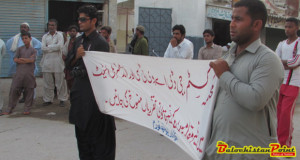
Gwadar Youth Forum (GYF) protested against the appointment of non-local candidates on different vacancies in Gwadar District, on Saturday.
GYF is a community organization working for social welfare and protection of rights of youth of Gwadar.
Large numbers of educated local youth are unemployed but instead of providing them the employment opportunities, most of the vacant posts, even the ones reserved for locals, are bestowed upon the non-locals, alleged GYF protestors.
Speaking at the occasion, GYF President, Barkatullah Baloch said that non-local candidates have been appointed on vacancies, reserved for locals of Gwadar, in Pakistan customs, Vocational Training center (VTC), Gwadar Development Authority (GDA) and Gwadar Industrial Estate.
Customs has appointed 10 employees from Hyderabad – Sindh, VTC has appointed 5 non-locals on vacant posts of BPS-16 and BPS-17 in the last one year without even advertising the posts and conducting tests or interviews, added Mr. Baloch.
 “Recently a sub-office of Gwadar Industrial Estate had been established in Karachi with appointment of five non-locals while the head office of the same department in Gwadar remains non-functional,” said a protestor. However, he added, “non-local employees are drawing large amounts of salaries from Gwadar Industrial estate.”
GDA School has appointed two non-local wardens for the hostels on the vacancies that were reserved for local residents” lamented another protestor.
GYF demanded the government to take necessary actions against the departments involved in violating recruitment rules and depriving people of Gwadar of their rights.
In case the government fails to take action against the concerned departments then GYF will continue their protests and also file a petition in the Balochistan High Court, warned the protestors before dispersing peacefully.

Pakistan's Schools of terror

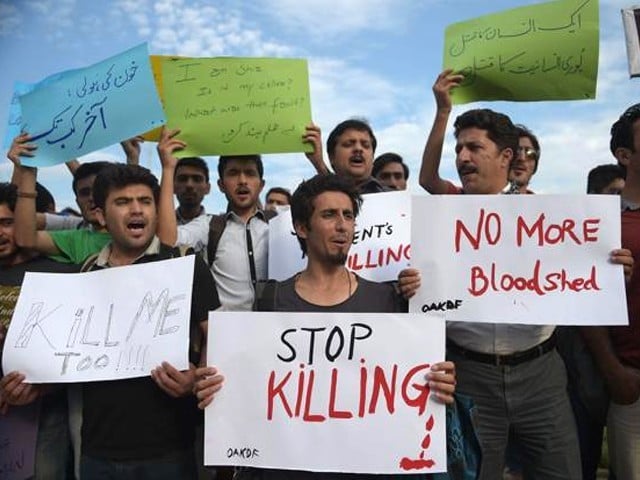
It is strange to see the surprise shown by many that members of the terrorist cell accused of conducting the Safoora Chowk massacre and the murder of activist Sabeen Mahmud were graduates of major private and public universities. No one who has attempted to trace the roots of the terrorist-militant networks that emerged in Pakistan in the late 1960s and were consolidated in the 1980s has been able to ignore the centrality of the Pakistani university to the rise of militancy. What is more of a surprise is a report in this newspaper that intelligence agencies have started to keep a watch on Karachi’s academic institutions following the arrest of university graduates for involvement in high-profile terrorist attacks. Intelligence officials have claimed that Al-Qaeda and the Taliban are penetrating academic institutions under a strategy and have symphatisers in many places. Their focus are students studying computer sciences, applied physics and applied chemistry – all useful on the terrorist front. If accusations against the Safoora cell are proven, then it would confirm that a number of well-educated men from upper-middle class families have been recruited by terrorist groups. The story of Saad Aziz, business graduate turned tableeghi turned alleged terrorist, is not the outlier. Many university graduates, alienated by both their education and the lack of work opportunities in the country, have turned to extremism and radicalism to give their lives meaning.

It is rather surprising this is being called a ‘new brand of militant’. The story spans a number of decades. Religiously-inspired militant students took over university campuses first in the 1980s when the Gen Zia government supplied them arms and ammunition. Many of these students were recruited in the Afghan and Kashmir wars. The ones that remained were told to eliminate all left and liberal opposition to the dictatorship. The arming of these student groups with ties to global militant groups came as the democratic politics that had made Pakistani campuses so vibrant till the 1970s was crushed. Student unions were banned and universities were left to radical religious groups. Our report also confirms that militant groups using the names ‘Punjabi Taliban’ and ‘Badar Group’ were created by ex-IJT members in 2007. One root of why terrorists have emerged in Pakistan’s universities is repression. The way to resolve this kind of radicalisation is to return healthy political debate from all kinds of spectrum to the university. Recent attempts to curb academic freedoms is only counter-productive, and a continuation of the legacy that produced militant students in the first place.

Pakistan : Asfandyar urges ANP workers to encourage women voters


Awami National Party Chief Asfandyar Wali Khan has urged his party workers to encourage women to vote during the local government elections.

Addressing a public rally organised on Saturday at Tehmash Khan Stadium in the provincial capital, he said any ANP candidate who tries to bar women from voting will be expelled from the party.

“I have also asked ANP K-P Chief Amir Haider Khan Hoti to investigate the low turnout of women in the by-polls in Lower Dir,” he said. “If any candidate from my party is found to be involved, he or she will no longer be a part of ANP.”

Clash of priorities

Asfandyar said he will not accept any changes to the China-Pakistan Economic Corridor.

“It has come to our notice the original plan is being altered to include Lahore in the mega project,” he added.

The ANP leader said the project was envisaged in the previous government’s tenure.

“Lahore was initially not part of the project,” he said. “ANP will never allow anyone to change the original route.”

According to the ANP chief, the federal government is repeatedly accusing people of being traitors for opposing changes to the route. “Prime Minister Nawaz Sharif has said those who are opposing changes to the route are enemies of development in Pakistan,” he said. “I strongly disagree with this statement and will not be threatened by allegations levelled against us.”

Asfandyar said China started this project to counter militancy and extremism in Xinxiang province.

“The federal government should contemplate similar goals for K-P and the tribal belt,” he added.

http://tribune.com.pk/story/891322/need-of-the-hour-asfandyar-urges-anp-workers-to-encourage-women-voters/

Is Pakistan capable of protecting its minorities?


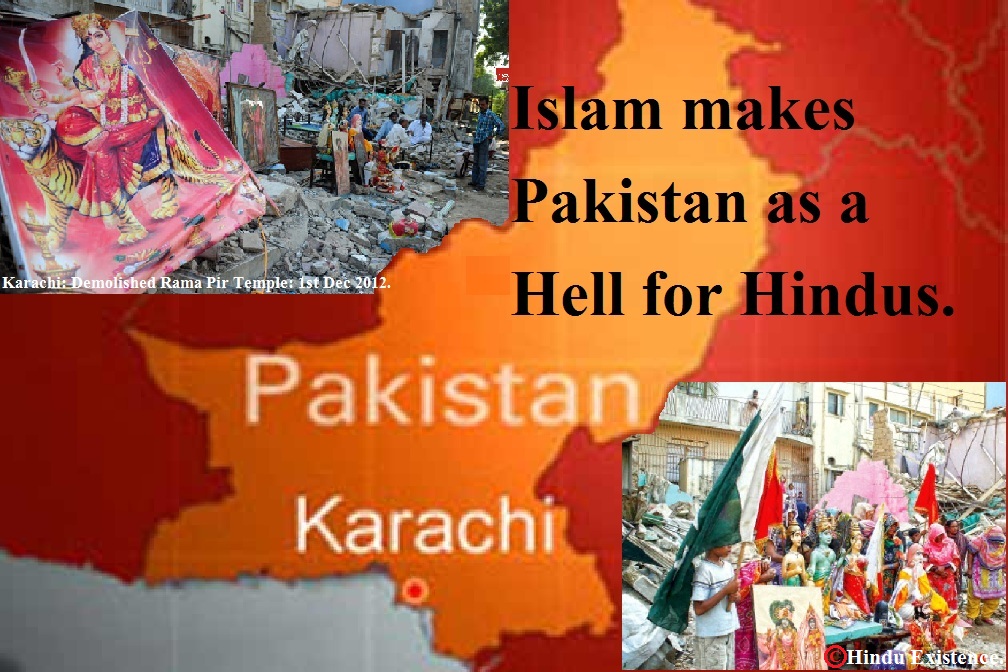
The recent attack on the Ismaili Muslims in Karachi brought a lot of things into perspective. Firstly, it exposed the ineffectiveness of various military, rangers and police operations, and, secondly, it unveiled the dangers our minority communities are exposed to.

But seeing this attack in isolation would not be of any help. We need to understand how religion has facilitated the state and, by extension, the militant organisations over the past decades and how it has led to the conundrum that we find ourselves in now.
The first time Islam came to serve the government was in 1953, for Mumtaz Daultana, which led to the victimisation of Ahmadis. After this, while almost every government took religion’s aid to stay in power, it was during Ziaul Haq’s era that the scope of religion was extended as an agent to fight the American war against Russia. This step essentially led to the establishment of the first international religious jihadi organisation, the Haqqani Network – according to Stanford University.
And the number of jihadi organisations has grown rapidly since then.
According to the South Asian Terrorism Portal, currently in Pakistan, there are 48 domestic, national and transnational militant jihadi organisations operating. This alone shows how fertile the country has become for religious organisations that have devoted themselves to eradicating ‘lesser Muslims’ – like the Twelver Shias, the Bohri Shias, Ismailis, Ahmadis and the Barelvi Muslims.
Countries across the globe chalk out cohesive and well-planned strategies to eradicate radicalisation of any orientation. However, in Pakistan, it is the opposite; here, the state has been reduced to issuing mere condemnations after every brutal killing. And, similarly, it has no power whatsoever to conduct operations against those extremist elements with which it shares cordial relations and considers as ‘strategic assets’. The terms ‘good Taliban’ and ‘bad Taliban’ are a manifestation of this unrealistic approach. The state has adopted a dualistic approach here. It sponsors extremist organisations and also condemns the killings of innocent citizens by those very organisations.
While it is not to say that India might not be involved in training actors who could disrupt peace in Pakistan, it is the state’s responsibility to ensure the security of minorities from all of its enemies. The ordinary man is least concerned about who carries the attack out; their sole worry is about their own security – a primary right which the state has failed to give them.
Ismailis have been targeted previously as well – in Chitral, Gilgit.
In Chitral, many Ismailis were killed during Zia’s regime and Ismaili jamatkhanas (worship places) were set on fire during the same period. A number of Ismailis, who have been killed individually, have never been reported on mainstream media. In Karachi, the Ismaili jamatkhanas have been attacked previously and many Ismailis have fled Karachi due to security reasons from Garden and adjoining areas.
In 2014, the Tehreek-e-Taliban Pakistan (TTP) released a 50-minute long audio message threatening Ismailis to stop their work as they were supposedly “promoting western culture” in Pakistan.
After the Karachi incident, the media in Pakistan stopped mentioning the words ‘Ismaili Muslims’; instead, it carefully adopted the words ‘Ismaili community’ – the Urdu newspapers used the word ‘Ismaili bradari’ – to refer to the minority. The news analysis projected the philanthropic work of Ismailis and their imam, and asked the government to protect “a community that is economically contributing for the betterment of the country”.
One wonders if “contributing economically” is the reason for the state to protect its citizens or is it the nature of the social contract that a citizen has with the state under which the government is solely responsible for the protection of its citizens. That still needs to be answered.
States do not protect minorities because they contribute towards the betterment of the economy, health, education, or art; they do so because they are citizens of the state.
Coming from an Ismaili background, it was interesting to note that many prominent news anchors and journalists have literally no knowledge of Ismaili history. The Ismailis were mentioned as Aga Khanis in each report, which is not the religious identity of Ismailis. Aga Khan is an honour title bestowed on Hasan Ali Shah, the 46th imam of Nizari Ismailis, by Persian King Fath-Ali Shah Qajar.
It was funny to note one journalist asking naively why Ismailis were being killed as they were neither Sunnis nor Shias. Such is our understanding of various Islamic sects. Moreover, in almost all newspaper reports, the attack was not condemned as an attack against an Islamic sect – it was condemned because the “Ismailis were peaceful people”. This sums up very well how informative and free our media is.
The attack on Ismailis, and other minority groups in Pakistan, is a result of the failed Afghan-jihad policy of the state. And unfortunately, the state has no interest in learning from its past mistakes as it still debates in its parliament about the Yemen issue and seems enthusiastic to fight another war despite having lost 50,000 of its citizens. In the meantime, militant organisations are mobilising masses to protect the Harmain Sharaifin at the cost of their lives.
Pointing all fingers towards RAW and India is giving safe passage to the extremists who are subverting peace of the country and are brutally killing members of minority communities. The state has zero interest in dealing with these militant organisations. This attitude of the state must send a clear message to minorities that their killings will continue in the near and distant future.
Some people will light up vigils, some TV channels will air talk-shows, and some newspapers will highlight their ‘peaceful attitude’ and their ‘great services’ for the nation. But no one will try to discuss the real problem, and in turn, its solution.
Legendary Urdu poet Jaun Elia once said,
Hamara aik hi to mud’da tha,
Hamra aur koi mud’da nahi
(We had only one desire,
We don’t have any other desire).
The minorities in Pakistan had and have only one desire – the right to live freely as a citizen of the state. But does the state have the same desire?

Pakistan - Former PM Gilani speaks to abducted son for first time in 2 years

Former prime minister Yousuf Raza Gilani spoke to his abducted son Ali Haider Gilani over telephone on Sunday for the first time since he was kidnapped two years ago.

The former prime minister confirmed to various media outlets that he had spoken to Ali Haider Gilani over a telephone call from Afghanistan that lasted about eight minutes. Gilani said that his son was safe, and that he was “in high spirits”. He was in Multan along with Pakistan Tehreek-e-Insaf (PTI) senior leader Shah Mehmood Qureshi, who also spoke to Ali Gilani over the phone.

Ali Gilani was kidnapped from Multan on May 9, 2013 while campaigning on the last day of his election campaign for his candidacy for Multan’s PP-200 constituency. His secretary and guard were shot dead in the attack by unknown gunmen. Since then, media reports suggested that he was taken by his kidnappers first to the country’s lawless tribal areas, and then reportedly shifted from North Waziristan to Afghanistan’s Kunar province after the launch of a military operation in the tribal areas.

Earlier this month, Gilani was part of a delegation led by former president Asif Zardari to Kabul, where the former premier sought the release of his abducted son after getting clues to his possible presence in Afghanistan. Gilani was reported to have also sought the release of Shahbaz Taseer, the abducted son of slain Punjab Governor Salman Taseer who is also reported to have been taken to Afghanistan.

When asked on Sunday, Gilani confirmed that he had also pushed for Taseer’s release, but that he only spoke his own son today over phone. He said that his son was safe and “in high spirits”. He expressed the hope that his son would be released soon. The ex-PM said the abductors had made some demands; however, he did not reveal those demands. “I spoke to him, he is all right. Now I have to talk to Afghan authorities for release of my son,” he said.

http://www.dailytimes.com.pk/national/24-May-2015/former-pm-gilani-speaks-to-abducted-son-for-first-time-in-2-years

Pakistan - What must the state do

By 

The state of Pakistan is in doldrums. On this point, there is a complete consensus among all sections of society. Even the custodians of power do not dispute the popular verdict. But there is little agreement on how the state can be reclaimed, made into an efficient apparatus geared to serve public interest.
The moment we talk of reclaiming the state we are confronted with the question: What state are we wanting to reclaim? The question is further complicated by the realisation that the people of this country failed to create a state that they were required to do in 1947. They made the huge mistake of accepting the arrangement made by the British to administer their colony as the state of Pakistan. Anyone who calls for reviving the state as it was in 1948 will only invite derisive laughter.
Our efforts at state-making did not bear wholesome fruit. The state model chosen by us — a federation managed by a parliamentary system of government — ran into trouble from day one. The viceregal system of rule, inherited from the British and kept in force and consolidated over nine years (1947-1956), had no room for the federal idea; thus, the state followed the unitary form of government till 1973 and the powers that be have allowed it only a few characteristics of a federation in small installments over the past 42 years.
The plan to establish a parliamentary democracy has not fared any better. Democratic institutions have been at the sufferance of the civil-military bureaucratic alliance and the governments to this day have never really put their faith in the parliamentary system, which implies parliament’s supremacy, rule of cabinet that is collectively answerable to the parliament, and reasonable space for intervention by political parties and civil society organisations.
The task, therefore, is reclaiming a state that has existed only in theory. Besides, we should have realised that the concept of a democratic state does not accord with our social structure and our feudal culture. If we cannot erase inequalities on the basis of belief, gender, and socio-economic status, our culture will continue to make democratic consolidation extremely slow and difficult, if not altogether impossible.
Further, our persistence with a spurious democracy has unavoidably resulted in poor governance and that has alienated the people from democracy and the state both. Bad governance has also given rise to two alternatives to democratic state — one a praetorian state, that we experimented with four times (Ayub regime 1958-1869, Yahya regime (1969-1971), Zia regime (1977-1988) and Musharraf regime (1997-2008), and a theocratic state, that is on the agenda of extremist militants and their cohorts operating as religious political outfits.
 The challenge from the religious extremists will be harder to meet. Waywardness over decades has undermined the democratic forces’ capacity to fight regression that is justified in the name of belief. 
It has often been suggested that the people of Pakistan should have a new social contract, that is, they should redefine the state or have a new constitution. The trouble is that preparing a new social contract in a multi-national, highly stratified, and fragmented society such as Pakistan has become is a Herculean task. The country does not have the resources, nor does it have time, to try to harmonise the diverse interests into a new wholesome consensus. The 18thAmendment was an eye-opener; it only meant working for a maximum possible compromise though that left quite a few parties unsatisfied.
Besides, is it possible to discard the ideal of a federation? Certainly not. Pakistan has paid a heavy price for deviating from its federal premises, and it can survive only as a federation. Likewise, we are stuck with the system of parliamentary democracy. With all its faults, this is the only system our people are familiar with; and this is the only form that is easily compatible with a federation.
Thus, reclaiming the state demands removal of obstacles to the establishment of a functional democracy, that is, promoting a culture of democracy by removing the socio-economic causes of inequality on the basis of belief, gender and social status. In plain words, land reforms, removal of discrimination on the grounds of belief and gender, and due respect for the rights of peasants and workers are essential mile-posts on the route to the people’s democratic destiny.
However, it will be necessary to ensure that progress towards the creation of a democratic state is not hampered by the proponents/partisans of a praetorian or a theocratic state. Despite the assurances of the Supreme Court that it has made a relapse into authoritarianism impossible, Pakistan is manifestly vulnerable to take-over by the military establishment, not only covertly but also overtly.
The only safeguard can be effective devolution of power so as to ensure that any disruption of democratic order will involve taking power away from hundreds of thousand people and not merely a few hundred parliamentarians. It will also be necessary to turn the political parties from moribund, family-based coteries into dynamic organisations capable of permitting flow of ideas from cadres to leadership and not only in the reverse direction.
The challenge from the religious extremists will be harder to meet. Waywardness over decades has undermined the democratic forces’ capacity to fight regression that is justified in the name of belief. If two decades ago the issue was determination of the role of religion in politics, today the question is which of the several versions of religion should guide the people of Pakistan.
The theocratic forces are now challenging the state with the strength of arms and the state is making the mistake of answering violence with violence. This is a recipe for disaster. The state must regain the moral ground by discarding force/violence as the only means of buying citizens’ loyalty.
The state must also start pulling away from models that are being offered under religious labels. A three-pronged strategy might still work. First, good governance is needed not only as a people’s right but also as a means to keep the religious extremists at bay. Secondly, all forms of faith-based discrimination must be eliminated. And, thirdly, the monopoly of the most conservative elements over religious discourse should be abolished.
In short, Pakistan’s only way out of the multi-dimensional crisis lies through reinforcement of the democratic and federal assumptions of the state structure.

How the Axact Scandal Changed Pakistan's Media

By 


Nobody resigns in Pakistan. People generally blame others for their failures. When reporters asked a former railway minister after a big train accident if he would resign from his job, "Why should I resign?" he asked, "I was not the train driver." Resignations from people in the position of authority make big headlines, but today, journalists in Pakistan are not reporting about such resignations. They are, on the contrary, making headlines with unprecedented en mass resignations from their lucrative jobs at an upcoming news channel after finding out that their employer was actually making illegal money by, according to one newspaper, "running the world's largest fake diploma mill."
When the Times reported on May 17th about the fake degree empire run by the CEO of BOL News Network from Karachi, the company immediately resisted the chargesby describing it as a conspiracy by a foreign newspaper to defame Pakistan. Some of the star journalists who had newly joined the network emerged as the defenders of the new channel against the NYT report on broadcast and social media. The story itself was backed with so much evidence that many senior journalists soon began to realize that it was no longer possible for them to defend the network's owner and the wealth he had accumulated through illegal practices. There was already growing pressure from some journalists on those who had joined BOL to demonstrate journalistic honesty and quit the network.
After much speculation, the first big resignation came Saturday evening when
Kamran Khan, the president and editor-in-chief (co-founder) of BOL Group, went on Twitter and announced his disassociation with the network. Mr. Khan is a renowned investigative journalist who has covered Pakistan's security and intelligence affairs for nearly three decades for publications as respectable as the Washington Post. When he quit the show Today With Kamran Khan, one of Pakistan's most widely watched late night political shows on Geo News to join BOL, he made news even in the country's most respected English newspaper, the Dawn. When BBC Urdu invited him last week to speak about the scandal surrounding Axact, the parent company of BOL, he appeared unconfident and unpersuasive in his responses. "Would BOL investigate the Axact scandal if it existed today," asked veteran journalist Shafi Naqi Jamie. "Of course we would," said Mr. Khan but without mentioning the "how" part of it. The BBC interview was probably the place where he may have realized how hard it had become to defend the illegal practices of his new bosses.
"[The] charges against Axact [are] far from proven in court but my conscience [is] not letting me continue. I've decided to disassociate from Bol immediately," he Tweeted Saturday night. Mr. Khan was the first one to make headlines for what many called his courageous and professionally correct decision but he was not the only one to do so. Within a few hours, BOL's media empire appeared collapsing when several other prominent journalists also announced their resignations. They all cited journalistic integrity, commitment to the truth and opposition to corruption as factors that influenced their decisions although they were resisting all kinds of pressure to quit the network until a week ago.
Never before in its media history has Pakistan experienced such a large scale of resignations from top journalists based on the investigations of a foreign newspaper. Some jaded skeptical citizens are complaining why their own secret services and the media organizations are unable to dig out stories as big as the one reported by theNYT. Journalists can be blamed for their inefficiencies but they must be commended for this stance they have taken in the wake of the scandal surrounding BOL. This was probably the most highly paid job these journalists had ever held in their careers. Many of them had worked hard for decades to rise on the top and they had reached here in spite of encountering peer jealousies and frequent criticism. They had already been labeled as greedy and selfish. It must have been a tough decision for many of them but they have surely made the journalism community very proud and instilled a new spirit of hope that journalism is not for sale.
These journalists have set a new precedence for their country's media. They have acted as bravely as the lawyers did in 2007 by standing up against General Musharrafwhen the former dictator deposed the country's Chief Justice. Many lawyers lost income and missed opportunities to be promoted as judges because of their commitment to the country's constitution. They struggled for two daunting years before General Musharraf was compelled to reinstate the Chief Justice of the Supreme Court. Today, it was the journalists' turn to show that money did not solely define who they are and what they stand for. Many of them made a decision that they would perhaps never regret.
The resignation episode also comes as a reminder that the media in Pakistan is gradually changing for better. The recent years have seen more journalists coming outand refusing dictations from the military and other non-state actors and now they have said no to a business tycoon who believed he could buy the best of the country's journalists. So, what are the lessons learned from this episode? Husain Haqqani, a former journalist and Pakistan's ex-ambassador to the United States, summarized it this way on Twitter: "Lesson for journo friends from #Bol #Axact saga: When someone offers way more money than market rates, the money is often shady."
The NYT report has pushed the Pakistani media into a new age. One lesson that Pakistan's press corps should learn is that that foreign journalists who produce excellent journalism do not do so on the instructions of any foreign governments or intelligence agencies, as they accused journalist Declan Walsh. Quality journalism is extremely essential for a functioning democracy. Journalists should keep questioning everything and everyone, including themselves, so that a culture of accountably and transparency is developed and promoted.
http://www.huffingtonpost.com/malik-siraj-akbar/how-the-axact-scandal-changed-pakistans-media_b_7428644.html

Axact Scandal : Holding a mirror to society


Hassan Javid

The schadenfreude that has been on display in Pakistan this past week has truly been a sight to behold. Following an exposé by the New York Times, Axact has gone from being (in its own words) ‘the world’s leading IT company’ and ‘Pakistan’s largest software exporter’ to an entity whose illegal shenanigans are currently being investigated by a wide and diverse range of government agencies. Accused of running dozens of fake diploma mills around the world, defrauding and misleading thousands of people across the globe, tax evasion, and a manifest failure to produce any evidence in support of the notion that it does, indeed, primarily produce software, Axact remains defiant in the face of relentless criticism, arguing that the current campaign against it has been instigated by rivals attempting to undermine the launch of its BOL media organization. The company has also threatened all and sundry with legal action for spreading these accusations, going so far as to threaten Pak Tea House, an independent blog, with dire consequences for posting Tweets that made mention of the brewing scandal. All of this posturing and righteous indignation has thus far been met with a collective shrug; as each new day brings with it fresh proof of wrongdoing, it is becoming increasingly apparent that Axact has a lot of explaining to do.
Coincidentally, news of Axact’s questionable business practices broke at the same time as reports that six banks in the United States and the United Kingdom are to be fined $5.7 billion for colluding to rig foreign currency markets. This week also saw accusations that Peabody Energy, the largest privately owned coal company in the world, attempted to make use of the Ebola crisis in Africa as a means through which to more effectively market its products and services. All of this comes on the heels of various other fines, punishments, and revelations over the years that have pointed towards one core fact: all over the world, private companies and corporate actors are constantly and consistently engaging in unethical behavior in their quest for profit. Increasingly freed from the constraints of regulation, particularly in developing countries starved for foreign investment, multinational corporations, as well as their indigenous counterparts, continue to engage in rapacious behaviour that makes a mockery of claims about the economic and social good that comes from free markets. The widening gap between the rich and the poor, ongoing attacks on the rights of the working classes, and rampant environmental degradation are all testament to the destructive logic of capitalism. 
Despite all of this, the mantra of being ‘pro-business’ is one that has a stranglehold over economic debate in this country, and which has been completely and totally internalized by the mainstream political parties, is one that serves little purpose other than to facilitate ever-greater accumulation by the rich and powerful. While the claims that have been made about Axact must be rigorously investigated, it should not be surprising to discover that massive corporate entities like it have more than a few skeletons in their closets. If anything, the real scandal is the way in which there is nothing even remotely resembling a systematic desire to identify and deal with corporate malfeasance at a more general level in Pakistan. Axact itself operated with impunity for the better part of twenty years, and it beggars belief to suggest that suspicions had never previously been raised about the nature of its business. In thrall to the cult of corporate ‘success’, seduced by the siren songs of economic nationalism, and forever worshipping at the altar of Mammon, the government (and many ordinary citizens) are all too ready to provide a free pass to anyone as long as they can keep the rupees flowing. In a country where the default position taken towards the political elite is one of profound distrust, and where the most minor infractions in the public sector (rightly) generate widespread opprobrium and condemnation, it would be heartening to see a similar level of scrutiny being brought to bear on the titans of industry and commerce at the heart of the economy.
The Axact scandal should also prompt us to reflect on another phenomenon, namely the endless demand for ‘degrees’ and the proliferation of avenues through which this demand is being met. Several decades ago, Ronald Dore argued that modern societies are increasingly afflicted by the ‘Diploma Disease’, whereby increased competition for jobs, and an excessive emphasis on using education as a means through which to categorize and select individuals, has led to more and more people pursuing higher education in order to perform tasks that do not necessarily require that level of specialization or training. For Dore, this has profoundly detrimental effects on society; not only does this ‘credential inflation’ lead to a situation in which excessive and arguably unnecessary emphasis is placed on the acquisition of formal educational labels, it also has the paradoxical effect of diluting the quality of the education being received, with ever-increasing numbers of students being superficially ‘serviced’ by degree programmes oriented towards providing ‘qualifications’ rather than a deeper engagement with the material being studied. Learning therefore ceases to be the main aim of education, being replaced instead by a fetishistic desire to simply acquire a piece of paper that can be used to enter the job market.
While Pakistan was apparently not the primary market in which Axact allegedly ran its fake degree business, the whole episode illustrates the fictitious basis of the modern higher education system and the job market. Individuals from around the world knowingly and unknowingly received credentials from Axact that were presumably found to be satisfactory by a wide range of employers, with this only serving to demonstrate the clear lack of a link that often exists between learning in college and the demands of the workplace. This should also provide us with some insight into a related but less illegal phenomenon, namely the proliferation of thousands of private ‘colleges’ in Pakistan catering to hundreds of thousands of students for whom gaining a degree, any degree, often at considerable expense, provides entry into a competitive job market, even if that degree does not bring with any real skills, training, or knowledge. In this context, it should not be surprising that the individuals accused of perpetrating the attacks on Sabeen Mahmud and the Ismailis in Karachi are graduates of reputable institutions; other than the fact that educational credentials do not always provide protection from economic insecurity or social alienation, it is also clear that the acquisition of a degree is not necessarily accompanied by the cultivation of a broader, more tolerant worldview. 
There are obviously many professions that require specialized training, just as there are colleges and universities that do a good job of providing their students with a well-rounded education. It can also be argued that higher education and the pursuit of knowledge, when done right, can enrich individuals and society in ways that can not necessarily be quantified, and that they have an intrinsic worth that does not have to be justified by employment prospects and salaries. Nonetheless, when thinking about Axact’s travails, we would do well to give some thought to the detrimental effects of the broader economic and social changes that facilitated the growth of its particular business model.