Thursday, April 2, 2015

Pakistan - Yemen crisis - Parties’ call


A meeting of leaders of the PPP, ANP, MQM, JUI-F and BNP-Awami held in Karachi on April 1st to discuss the Yemen crisis has called for an all parties conference and a joint session of parliament before the government takes a decision on what role Pakistan should play on the issue. The meeting expressed grave concern over the situation in Yemen and its implications for Pakistan and the region. They called for resolving the crisis through dialogue and negotiations and rejected the notion that one person, as often happened in the past under military dictators, should take a decision of such far reaching import. The concerns of the parties are genuine, and it is comforting to note that the government does not seem oblivious of this or the apprehensions amongst commentators and the general public about Pakistan jumping into a foreign adventure of untold risks. These risks include Pakistani forces, if at all they are sent to Yemen as the Saudis seem implicitly to want, getting bogged down in a multi-faceted, complex war without clear lines or end. An intervention also runs the risk of alienating Iran and impacting negatively the already fraught sectarian situation in Pakistan itself. After the high powered Pakistani delegation has returned from discussions in Riyadh and briefed the top civil and military leadership, it appears that the wisdom of the political parties’ call has sunk in. That is why after reviewing the brief the delegation came back with, the government announced a joint session of parliament on Monday, April 6. This is both wise and timely. All indications point to the government not wanting to offend either Saudi Arabia or Iran or being seen as partisan in the Yemen context. That is why the option of sending a limited number of troops to secure the soil of Saudi Arabia from any attack seems the best choice. This way the commitment to close friend Saudi Arabia to reciprocate its help through the years can be satisfied without getting embroiled in a conflict that is complex and uncertain. Iran too, whose foreign minister is arriving in Pakistan on April 8 for discussions on the Yemen issue amongst others, will feel Pakistan has not strayed into territory it may consider hostile to it. While King Salman has briefed the Kingdom’s ministers on his interactions with foreign heads of state and government, Prime Minister Nawaz Sharif is about to embark on lightning tours to Turkey and other Muslim countries in the region for consultations on the crisis. Pakistan is desirous of bringing Iran and Saudi Arabia to the negotiating table under the aegis of the OIC, although the move has invited a great deal of scepticism at home because of the perception that the OIC is a toothless and ineffective tiger. Similarly, the call by King Salman for all parties in Yemen to agree to talks on resolving the crisis under the umbrella of the Gulf Cooperation Council seems a non-starter since the Council groups the very Arab countries that are either actively militarily involved in the Saudi-led air campaign against the Houthis and other rebels or at the very least sympathetic to or even part of the Arab coalition in support of deposed president Hadi. Absent from the emerging scene is the UN, with nary a statement of concern let alone diplomatic efforts to bring the fighting to an end or addressing the humanitarian crisis that stems from this latest major war.

On the ground in Yemen, despite the air strikes by the Saudi-led Arab coalition, the Houthis and their allies are driving relentlessly on Aden, the major southern city and port from where Hadi fled into exile in the face of his rivals’ offensive. A Houthi column with tanks is said already to be in the centre of Aden and it seems only a matter of time before the city falls to the Houthis. Calls for a ground invasion by Saudi and other Arab troops are growing in response, but uncertainty surrounds the former’s capacity and the latter’s willingness. The Saudi intervention in the Yemen civil war may yet prove to be its biggest blunder if the paranoia about Iranian influence in its backyard translates into deep hatred by the so far advancing rebels for ‘Big Brother’ in Riyadh.

Pakistan Faces Tough Choices Over Yemen Intervention


By Frud Bezhan

Pakistan is grappling with a dilemma -- should it join a Sunni Arab military coalition fighting Shi'ite Huthi rebels in Yemen, or keep its troops at home?


A Saudi-led coalition for the past week has been conducting airstrikes against strongholds of Iran-backed Huthi rebels who have seized large swaths of Yemen, including the capital Sanaa.
Islamabad has said it will defend Saudi "territorial integrity," but has yet to respond to Riyadh's request that it provide troops to the coalition's mission in Yemen. Pakistan's parliament will convene a special session on April 6 to discuss the request.
If Sunni-majority Pakistan chooses to stay out of the conflict it could risk angering Saudi Arabia, a close strategic, religious, and historical ally. But if Islamabad does intervene it risks overextending its armed forces, which are already engaged in a vicious fight against militants at home.
There has been fierce debate over the issue in Pakistan, with Sunni religious groups calling for military action. Civil-society activists, however, warn that foreign intervention could further inflame domestic sectarian tensions.
Stretched Military
The army is already battling Pakistani Taliban militants in the country's northwest tribal areas, while also maintaining a heavy troop presence on its eastern border with arch-enemy India.
Talat Masood, a political commentator and former military general, says Pakistan's military resources are too stretched to contribute in Yemen. "The greatest threat for Pakistan is internal," he says. "The military is already heavily preoccupied."
Islamabad is also wary of getting bogged down in a regional ethnic and sectarian conflict pitting regional rivals Iran and Saudi Arabia against each other.
"It doesn't make much sense to get involved in a conflict which is not going to help Yemen," Masood says. "It's an internal conflict that experience shows should be settled internally rather than through the meddling of foreign powers."
Inflame Sectarianism
Tehran has a history of supporting proxies in the region, and analysts say the Iran-Saudi rivalry is being played out in part in Pakistan, which has seen a growing number of sectarian attacks and reprisal killings.
Sectarian violence has soared in Pakistan in recent years, most of it targeting the Shi'ite minority, which makes up around 20 percent of the population.
"If Pakistan was to get involved in Yemen, its involvement could inflame tensions between Sunni and Shi'ites at home in Pakistan as its involvement could be interpreted as a sign of the state leaning explicitly toward Sunni Islam," Pakistan observer Akhilesh Pillalamarri wrote in the National Interest on April 1.
While Pakistan is wary of fanning sectarian discord at home, it will also be reluctant to anger its neighbor Iran, which has strongly criticized the intervention in Yemen.
Can't Afford To Say No
But Pakistan will find it hard to say no to the Saudis, according to analysts.
Saudi Arabia has provided Pakistan with huge financial support in the form of cheap oil and loans, including one worth $1.5 billion last year. That assistance has been crucial for Pakistan, which is dealing with a struggling economy and energy crisis.
When Pakistani Prime Minister Nawaz Sharif was ousted in a military coup in 1999, it was Saudi Arabia that received him in exile.
Muhammad Taqi, a U.S.-based Pakistan political analyst, says Islamabad does not have the luxury of refusing Riyadh's request for military support. "Pakistan is beholden to the Saudis for the last 30 or 40 years, and for Sharif both personally and on a government level," he says, adding that "there is no such thing as a free lunch in geopolitics."
Saudi Arabia could consider holding back on aid and the cut-price oil it provides to Pakistan if Islamabad refuses to get involved in Yemen.
But history suggests that Pakistan will come to Saudi Arabia's aid, says Pakistani security expert Ayesha Siddiqa.
Pakistani forces have helped protect the kingdom on several occasions in the past 50 years.
Siddiqa predicts Islamabad will heed the calls from Riyadh in some capacity because Islamabad "will not risk spoiling the crucial relationship."

Pakistan Walks Tightrope Over Yemen Crisis

When Saudi Arabia calls Pakistan for help in its hour of need, the bell rings loudly, especially in the office of Prime Minister Nawaz Sharif, who owes his freedom, and some say his life, to the Saudi royal family.
They intervened to get him out of jail and into exile in Saudi Arabia, after a 1999 military coup against him by General Pervez Musharraf.
Personal favors aside, the Kingdom of Saudi Arabia is also a longtime economic benefactor to the country. It has bailed out Pakistan many times during tough economic situations and natural disasters with either cash or oil. As recently as last year, it provided $1.5 billion to shore up Pakistan's dwindling foreign exchange reserves. It's also a strong source of jobs for Pakistanis.
So it is not easy for Sharif to deny the kingdom’s recent "request" for Pakistan to join its coalition in Yemen against the Iranian-backed Houthi rebels.
A government statement issued after a high-level meeting Thursday – chaired by the prime minister and attended by the army chief – provided a glimpse into how Pakistan may be trying to balance the difficult task of keeping Saudi Arabia happy while not aggravating Iran or overextending the Pakistani army. 
The statement stressed the need for a "peaceful resolution" to the Yemen crisis. It promised a policy guided by "national interest," but it also mentioned "close historical cultural and religious affinities" with Saudi Arabia. It assured a "strong response [if] Saudi Arabia’s territorial integrity" is violated.
Many analysts believe this indicates Pakistan may be ready to send a small contingent into Saudi Arabia to take up defensive positions, but not take part in offensive operations in Yemen.
Sharif will convene a joint session of parliament Monday to discuss the matter further.
Oil lubricates relationship
Pakistan has much at stake in its relationship with the Saudi kingdom, not least of which is oil.
Saudi Arabia is the source of most of Pakistan’s oil imports and a job provider to hundreds of thousands of Pakistanis who work there. 
Ashfaque Hasan Khan, a former economic adviser to the Pakistan government, said these workers send back $4 billion to $5 billion every year.
"Saudi Arabia has emerged as the single largest source of workers' remittances for Pakistan," he said. Add to the mix other gulf countries that are part of the Saudi coalition, and the amount goes up to $5 billion or $6 billion.  
Saudi influence in Pakistan comes from more than just money. Many Pakistanis feel an emotional attachment to the country that is home to Islam’s holiest sites.
Competing interests
But Pakistan has to consider other interests, too.
Iran, which is widely believed to be backing the Houthi rebels in Yemen against the Saudi-backed government, shares a 900-kilometer (560-mile) border with Pakistan’s restive Balochistan province.
Iran’s foreign ministry sent for Pakistan’s ambassador in Tehran, Noor Mohammad Janemani, to express its concern and warn of complications that might arise over Pakistan joining the Saudi-led Yemen coalition. When questioned about it, Pakistan’s Ministry of Foreign Affairs spokeswoman Tasneem Aslam said the Pakistani ambassador regularly goes to the Iranian foreign ministry several times a week.
Pakistan's defense minister confirmed during a live interview on the local TV channel Geo News Thursday evening that Iran's foreign minister, Mohammad Javad Zarif, is coming to Pakistan next week for a previously unscheduled visit to discuss Tehran's concerns over Yemen.
Border insecurities
Adding to this complication, two of Pakistan’s four borders already are considered insecure.
One is with India, with whom Pakistan has fought four wars and trades intermittent fire across the de facto border – the so-called Line of Control – in the disputed Kashmir region. The other is with Afghanistan, where Pakistan’s army is trying to control cross-border terrorism.
The Pakistani army also is fighting the Pakistani Taliban or the TTP and other violent extremists responsible for thousands of terrorist attacks and tens of thousands of casualties.
Some of these extremist groups also have targeted the country’s minority Shiite population, leaving them feeling vulnerable. Many fear Pakistan’s involvement in the Yemeni conflict might increase Shiite-Sunni tensions in the country. 
Reflecting on history
Syed Mushahid Hussain, the Senate Defense Committee chairman, said Pakistan needs to take a page from its own history during the 1980s Iran-Iraq war.
"Iraq’s strongman of the period, Saddam Hussain, was backed by the same Arab coalition which is currently in Yemen," Hussain said. The Pakistani leader at the time, General Zia ul Haq, had similarly good relations with Saudi Arabia.
According to Syed Mushahid Hussain, it took "deft diplomacy" and "a realistic foreign policy" to achieve "that fine balance between the two: our neighbor and our strategic ally."

The Dangerous, Delicate Saudi-Pakistan Alliance


BY ARIF RAFIQ


Riyadh and Islamabad have long been close friends and military partners, but Pakistan can ill afford to anger Iran as it mulls entering the war in Yemen.
The former Saudi intelligence chief Prince Turki bin Faisal oncedescribed ties between Pakistan and Saudi Arabia as “probably one of the closest relationships in the world between any two countries without any official treaty.”
The intimate friendship goes back decades. In 1969, Pakistani pilots flew Saudi jets to thwart Yemeni incursions into the kingdom. Islamabad and Riyadh closely coordinated support for the mujahideen in the war against the Soviet occupation of Afghanistan in the 1980s; and during that decade, Pakistan stationed upwards of 15,000 troops in the kingdom. Pakistani troops returned to Saudi Arabia during the first Gulf War to protect it from an Iraqi invasion. And Saudi Arabia reportedly donated oil supplies to Pakistan after Islamabad was hit by sanctions for conducting nuclear tests in 1998.
Last week, Pakistani Prime Minister Nawaz Sharif assured Saudi King Salman bin Abdulaziz that the full resources of Pakistan’s army are behind him as the kingdom attempts to quash Yemen’s Houthi rebellion, which receives somesupport from Iran. But don’t expect Pakistan to go all-in on Saudi Arabia’s war. Sharif understands that he must walk a tightrope when it comes to this particular regional conflict.
News reports, particularly from the Saudi-owned Al Arabiya, have claimed active Pakistani involvement in Operation Decisive Storm, as the anti-Houthi operation is called. Pakistan is said to have already dispatched jets and naval ships to take part in the operations. These reports may be part of a Saudi strategy to compel Pakistani involvement. Alternatively, some elements of the Pakistani government may have brashly made specific pledges of support to the Saudis, either due to Riyadh’s pressure or a desire to keep it happy. But if Islamabad did indeed assent to Saudi requests, domestic and regional realities may have forced it to backtrack, with the Pakistani defense ministerstating just days later that his government has not made a decision to send troops to Saudi Arabia. That reversal may have been something Islamabad, which has been reluctant to involve itself in Saudi Arabia’s wars, desired anyway.
Sharif’s moral support for the Saudis is clear. And he has tilted his country toward the regional Saudi-led Sunni bloc. But the costs for direct involvement are greater for Pakistan than for any other coalition member. Pakistan shares a 565-mile-long border with Iran and relations between the two countries have long been rocky. If Iran starts to view Pakistan as an active adversary, it has many opportunities to cause trouble across the border that Sharif cannot afford.
Sharif chaired a five-and-a-half-hour-long meeting of senior civilian and military officials last Thursday to discuss his country’s role in the Yemen conflict. After the meeting, Defense Minister Khawaja Asif, who, along with National Security Advisor Sartaj Aziz, visited Riyadh on Tuesday, said that Pakistan would defend Saudi Arabia against any threat to its territorial integrity. But he also claimed that Pakistan is not joining any war. Earlier in the day, Sharif said in a statement that there is no room for sectarianism in Pakistan, comments which were likely influenced by the reports of his country’s involvement in the Yemen war.
This is all part of Sharif’s now well-established pattern of accommodating some Saudi demands, while also wisely resisting actions that would further antagonize Iran or strain Pakistan’s resources.
In recent years, Islamabad has balked at Saudi requests for assistance, including for the deployment of 15,000 Pakistani troops to the kingdom in 2014. This is in part because roughly 30 percent of Pakistan’s active-duty troops have been deployed in the country’s northwest since 2009 fighting against the Taliban insurgency. Troop levels along the Afghanistan border will remain constant until 2019, leaving Pakistan with a reduced presence along its tense eastern border with India — and few troops to spare for anywhere else.
But even if the officials in Riyadh were able to convince Sharif and his generals to dispatch Pakistani forces to the Persian Gulf, such a force would likely be limited in its mandate. Pakistan could send a modest contingent of soldiers and even pilots to Saudi Arabia, but any Pakistani assistance will be likely restricted to Saudi territory. It is difficult to imagine Pakistan engaging in any activity on sovereign Yemeni territory.
In recent years, Pakistan has been responsive to Saudi inducement — but only up to a point. Last year, after a flurry of visits by Saudi and Pakistani officials to their respective capitals, Pakistan received a grant of $1.5 billion — described by the Pakistani finance minister as “gift” with no strings attached. Islamabad initially kept the source of the aid secret, but later revealed that the donor was Riyadh. The donation was made after Pakistan, in a joint statement with Saudi Arabia, abandoned its policy of non-interference in Syria, calling for the formation of a “transitional government”in the civil war-ravaged country. Subsequent media reports claimed that Pakistan provided anti-aircraft and anti-tank weapons, including the Chinese-made FN-16, to Syrian rebels via Saudi Arabia and dispatched small numbers of trainers at the request of Riyadh.
There have also been claims, mainly attributed to unnamed Saudi officials, that Pakistan could transfer a nuclear weapon to Saudi control or include Riyadh under Pakistan’s nuclear umbrella should Iran near or cross the nuclear threshold. Such reports, not so coincidentally, have appeared during negotiations between Iran and the West, and are likely part of a Saudi policy of nuclear ambiguity designed to compel Washington to take a harder line against Tehran.
The first senior Pakistani official to meet King Salman after he took the throne in January was Gen. Rashad Mahmood, the chairman of the Joint Chiefs of Staff, who has operational control over Pakistan’s nuclear weapons. Mahmood briefed Sharif before the president embarked on his visit to Saudi Arabia to meet with the new king. Whether or not nuclear cooperation was actually on the agenda, the meeting was likely meant to signal to Tehran and Washington that the Saudis could be interested in a nuclear weapon of their own.
Pakistan, which obtained nuclear weapons in the late 1990s, is unlikely to ever transfer a warhead to Saudi soil. Islamabad has assiduously worked toward becoming recognized as a legitimate, responsible nuclear power and has even attained membership in the Nuclear Suppliers Group. Giving nuclear technology to Saudi Arabia would undermine these efforts. Still, Islamabad has and will continue to allow itself to be used in Riyadh’s posturing toward Tehran and Washington with exaggerated claims of Pakistani nuclear and conventional military assistance.
In all of these cases, it becomes clear that Pakistan will aid Saudi Arabia but only in ways that will not distract from or exacerbate Islamabad’s primary security threats. And that’s precisely why Sharif and his government cannot afford to provoke Iran right now.
Tehran has a number of levers it can use vis-à-vis Islamabad. It could, for example, charge Pakistan penalties for failing to complete construction of a gas pipeline the two countries agreed to build in 2013. The accord mandated that Pakistan complete its portion of the pipeline by the end of 2014 and includes daily penalty charges of around $3 million in case of failure to do so. Islamabad, due to pressure from Washington, has yet to construct its portion of the pipeline. Fines haven’t been levied, though Iran has rejected Pakistani claims that they have been formally waived.
More worrisome is Tehran’s ability to play the sectarianism card. Pakistan, with over 4,000 deaths from Sunni-Shiite violence since 2007, is struggling to put the genie of sectarianism back in the bottle. Iran could add to Pakistan’s woes by using its proxies inside Pakistan to step up the targeted killings of Sunni militants and religious scholars, some of whom have come out in support of Saudi Arabia in recent days.
Iran could also increase its clandestine operations in Pakistan and Afghanistan. In recent years, Iranian assets have reportedly assassinated a Saudi intelligence official and Pakistani Sunni leaders in Karachi, But Iranian activity in Pakistan today is characterized by relative restraint compared to the 1980s, when Iran sought to export its revolution to Shiites across the world, including in Pakistan, where upwards of 20 percent of the population comes from Islam’s smaller sect. Iranian agents could also play a more active role in sectarian conflicts inside Pakistan and Afghanistan, where there has been an uptick in sectarian violence in recent months. Or Iran could partner with India to support political forces in Afghanistan hostile toward Pakistan.
Sharif understands the dangers. His government must attempt to defuse relations with Tehran in order to have stability at home. The prime ministervisited Iran last May and declared that he was ready to “open a new page” in relations between the two countries. That might be a bit ambitious. The close relationship between Sharif, the Pakistan Army, and Riyadh means that they can never fully gain the trust of Tehran. But Sharif can at least hope to keep relations with Iran drama-free.
The Saudis have been there for Pakistan through thick and thin, and Islamabad has little choice but to provide limited assistance to Riyadh in response to its perceived threat from the Houthis in Yemen. But it can assuage Iranian concerns by continuing to engage it on securing their shared border, opening up a bilateral dialogue on stabilizing Afghanistan, and perhaps even positioning itself as an intermediary between Iran and Saudi Arabia.
Pakistan, ravaged by terror for more than a decade, can ill-afford to become the next playground for an Iranian-Saudi proxy war. Nearly everyone in Pakistan, including the major Sunni parties, realizes this and opposes Pakistani intervention in Yemen. And so the Pakistani premier will continue to walk this tightrope.

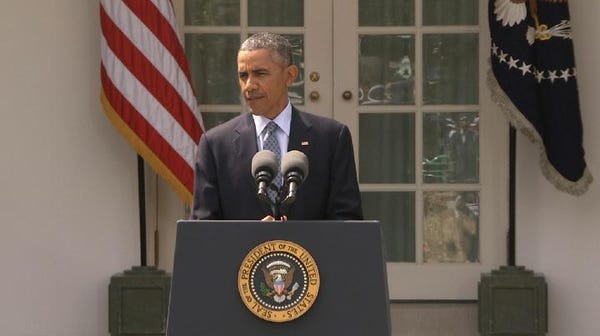
President Obama on Iran nuclear agreement: 'It is a good deal'


President Barack Obama just gave a speech reacting to the framework for a nuclear deal with Iran that was reached by negotiators on Thursday.
"Today, after many months of tough, principled diplomacy, we have achieved the framework for that deal. And it is a good deal," Obama said.
Obama delivered his statement from the Rose Garden where he described it as an "historic" agreement. He said he is "convinced" that, if the framework leads to a final agreement, "it will make our country, our allies, and our world safer."
"This has been a long time coming. The Islamic Republic of Iran has been advancing its nuclear program for decades," Obama said. 
Obama, who described the framework simply as a "good deal," alluded to critics who have been skeptical of the negotiations when he said they "succeeded exactly as intended."
"Iran has met all of its obligations," Obama said. "It eliminated its stockpile of dangerous nuclear material."
Obama said the framework sets the stage for an agreement that "would cut off every pathway Iran could take" to a nuclear weapon. He also stressed any final agreement would include strict measures to verify Iran is complying.

"Iran has also agreed to the most robust and intrusive inspections and transparency regime," he said. "This deal was not based on trust. It's based on unprecedented verification." 
The president's statement came hours after negotiators in Lausanne, Switzerland announced that they had reached a framework for a deal that would curb Tehran's ability to produce a nuclear weapon in exchange for the US and other powers rolling back sanctions against Iran.  The negotiations included Iran and the so-called P5+1 powers, the US, Russia, China, the United Kingdom, France, and Germany. 
Negotiators originally set a deadline of March 31 for a political framework agreement, but they extended the talks and have spent much of the week engaged in late night negotiations.  Any deal must be signed by June 30, which was the ultimate deadline established by the deal that allowed for the talks. 
Obama stressed that today negotiators have merely reached the framework for a final agreement. He noted "key details" of the agreement "will be finalized over the next couple months." The president went on to detail some of the specifics of the framework, which were also outlined in a fact sheet that was distributed by the White House.  
"Iran will not build a new heavy-water reactor. And Iran will not reprocess fuel from its existing reactors, ever. Second, this deal shuts down Iran's path to a bomb using enriched uranium," Obama said. "Iran will not enrich Uranium with its advanced centrifuges for at least 10 years. ... Iran has agreed that it will not stockpile the materials needed to build a weapon."
Obama described the deal outlined in this framework as "the best possible defense against Iran's ability to pursue a nuclear weapon covertly."
"If Iran cheats, the world will know it. If we see something suspicious, we will inspect it," Obama said. "With this deal, Iran will face more inspections than any other country in the world. So, this will be a longterm deal that addresses each path to a potential Iran nuclear bomb."
Obama also addressed the sanctions relief Iran will get in exchange for an agreement.
"Iran will never be permitted to develop a nuclear weapon. In return for Iran's actions. the international community has agreed to provide Iran relief from certain sanctions," he explained. "This relief will be phased as Iran takes steps to adhere to the deal. If Iran violated the deal, sanctions can be snapped back into place. Meanwhile, other American sanctions against Iran ... will continue to be fully enforced."
Israeli Prime Minister Benjamin Netanyahu has been a staunch critic of a potential nuclear deal with Iran. Netanyahu has said an agreement will help Iran's efforts to obtain a nuclear weapon. Many Republicans have also opposed the deal and there have been legislative proposals to require any final agreement to be authorized by US lawmakers. 
According to CNN's Wolf Blitzer, Israeli intelligence officials released a statement shortly after the framework was announced wherein they criticized the negotiations as "disconnected from reality." Blitzer described this as the first reaction to the framework from the Israeli government. 
Obama acknowledged both American and Israeli critics of the negotiations in his statement.
"I welcome a robust debate in the weeks and months to come. I am confident that we can show this deal is good for the security of the United States, for our allies, and for the world," Obama said.


Read more: http://www.businessinsider.com/president-obama-statement-iran-nuclear-deal-2015-4#ixzz3WBB8bMd4

Iran and world powers agree on parameters of Iranian nuclear deal


By Carol Morello and William Branigin

Negotiators from Iran and major world powers reached agreement Thursday on a framework for a final agreement to curb Tehran’s nuclear program in exchange for relief from international sanctions, participants in the marathon talks said.

They said the sides, including the United States and its key European allies, would promptly start drafting a final accord to be completed by a June 30 deadline.
“Big day,” tweeted Secretary of State John F. Kerry. He said the European Union, the six major world powers and Iran “now have parameters to resolve major issues on nuclear program. Back to work soon on a final deal.”
“Today we have taken a decisive step,” said Federica Mogherini, the foreign policy chief of the European Union. “We have reached solutions on key parameters of a joint comprehensive plan of action.”


In a statement read to reporters, Mogherini and Iranian Foreign Minister Mohammed Javad Zarif said Iran would limit the operation of uranium-enrichment centrifuges to one site — Natanz — and would convert its controversial Fordow enrichment site into a center for nuclear physics and technology research. The Fordow site, which Iran secretly built deep inside a mountain near Qom, had raised alarm because it was less vulnerable to attack if used to produce fissile material for nuclear weapons.
“There will not be any fissile material at Fordow,” Mogherini said in English. Zarif read the same statement in Farsi.
They also said that a heavy-water nuclear reactor at Arak would be rebuilt so that it could not be used to produce any weapons-grade plutonium. “There will be no reprocessing, and the spent fuel will be exported,” they said.
In return, nuclear-related sanctions against Iran will be terminated by the European Union and the United States, subject to verification that Iran is meeting terms of the agreement, the statement said.
The breakthrough came after an all-night session, followed by further talks a few hours later, in a last-ditch effort to get a preliminary agreement to constrain Iran’s ability to produce nuclear weapons in return for an easing of the sanctions that have severely crimped the Iranian economy.
“Found solutions. Ready to start drafting immediately,” tweeted Zarif. Iranian President Hassan Rouhani followed that up with a tweet from Tehran saying: “Solutions on key parameters of Iran #nuclear case reached. Drafting to start immediately, to finish by June 30th.”
“Good news,” said a tweet from Mogherini.
The German Foreign Ministry tweeted, “Agreement for framework for final agreement reached.”
The negotiators have been keeping the kind of hours usually reserved for college students cramming for exams, working double-overtime after pushing past their own self-imposed Tuesday midnight deadline.
Kerry and the top foreign envoys from Britain, Germany and the European Union were joined late Wednesday by French Foreign Minister Laurent Fabius, who had flown home to Paris earlier in the day but then returned unexpectedly.
Fabius is usually the one who takes the firmest stance on Iran’s nuclear program, frequently insisting that Iran must make many more concessions before an agreement can be reached.
But on his arrival, he sounded a slightly more optimistic note for the fate of this phase of talks, which aim to reach a preliminary agreement that will guide three more months of negotiations on complex and difficult issues revolving around nuclear technology.
“We are a few meters from the finishing line, but it’s always the last meters that are the most difficult,” he told reporters. “We will try and cross them. We want a robust and verifiable agreement, and there are still points where there needs to be progress, especially on the Iranian side.”
Iran’s chief negotiator, Zarif, sounding hoarse and sleep-deprived when he spoke briefly with reporters Thursday morning, said the negotiators would be doing an overview of the progress made so far. He said he expected that he and Mogherini would issue a joint statement afterward.
“There will be a statement to the press, which should be announced, but the text still has to be worked on,” he said.
At around 6 a.m. local time Thursday, State Department spokeswoman Marie Harf tweeted that the talks had recessed after the marathon all-night session but would resume after only a a short break.
The day’s first meeting then began five hours later — shortly before 11 a.m. — involving the full contingent of diplomats from Iran, the United States and its five negotiating partners, plus the European Union.
The U.S. State Department said late Wednesday that enough progress had been made in meetings between Kerry and Zarif to warrant continuing the tricky talks into Thursday morning. But the short period appeared to reflect lasting difficulties between the negotiators.
Iran and the six world powers, which also include Russia and China, had cited progress in abandoning their March 31 deadline for the basic understanding that would prepare the ground for a new phase of negotiations on a substantive deal.
The talks appeared to be on ever-more-shaky ground as Wednesday elapsed. The White House said Iran had not made commitments about its nuclear program in the sessions Wednesday, and Iran’s foreign minister described negotiations with the West as “always problematic.”
Though the talks continued, Germany’s foreign minister said it was possible they could collapse.
“It is clear the negotiations are not going well,” two prominent Republican senators who have been wary of an agreement — John McCain (Ariz.) and Lindsey O. Graham (S.C.) — said in a joint statement. “At every step, the Iranians appear intent on retaining the capacity to achieve a nuclear weapon.”
The Obama administration had sought a broad political framework for an agreement by Tuesday, with three additional months to negotiate the technical details. But a deadline that perhaps was intended to pressure Iran to make concessions came and went as the country’s representatives bargained hard. A temporary nuclear agreement with Iran remains in effect until June 30.
Diplomats and politicians sounded exasperated Wednesday, even as they acknowledged they were still exploring proposals to find a way out of their impasse.
In Washington, White House press secretary Josh Earnest said the talks were productive but that there were unresolved details. He said the United States would not arbitrarily end the negotiations if they were making progress, “but if we are in a situation where we sense that the talks have stalled, then yes, the United States and the international community is prepared to walk away.”
In Lausanne, German Foreign Minister Frank-Walter Steinmeier said new proposals would be considered but that the two sides were still far apart.
When asked whether the talks could collapse, Steinmeier told German reporters: “Naturally. Whoever negotiates has to accept the risk of collapse. But I say that in light of the convergence [of views] that we have achieved here in Switzerland, in Lausanne, it would be irresponsible to ignore the possibility of reaching an agreement.”
Steinmeier said he would reassess on Thursday morning whether to stay or return home.
Zarif, Iran’s chief negotiator, was critical of his counterparts when he was approached by reporters as he strolled along the shores of Lake Geneva.
“I’ve always said that an agreement and pressure do not go together; they are mutually exclusive,” he said. “So our friends need to decide whether they want to be with Iran based on respect or whether they want to continue based on pressure. They have tested the other one. It is high time to test this.”
Earlier, speaking to Iranian reporters outside the Beau Rivage Palace, where talks are being conducted, Zarif sounded weary with the approach taken by the multiple negotiating teams on the other side of the table.
“The negotiations’ progress depends on political will,” he said, according to Iran’s Mehr News Agency. “The other party’s political will has always been problematic.”
With the departure of several foreign ministers who had arrived over the weekend, Kerry was joined at the table by the British and German foreign ministers and the European Union’s foreign policy chief. France, China and Russia were represented by their ministers’ deputies.
The Obama administration and its negotiating partners are seeking an agreement that will sharply limit Iran’s ability to build nuclear weapons for at least a decade and maintain lesser restrictions in subsequent years. Iran says that its nuclear program is for peaceful, civilian purposes. It is seeking the lifting of international sanctions that have battered its economy.
The day’s negotiations started amid hopes of a preliminary agreement on at least some issues.
Iranian Deputy Foreign Minister Abbas Araghchi said he expected the talks to end late Wednesday with a statement “announcing progress.” That was quickly contradicted by diplomats from other countries.
Araghchi also offered some insight into Iran’s position on two central issues — the lifting of sanctions and the future of Iran’s research on centrifuges to enrich uranium.
“We insist on lifting of financial and oil and banking sanctions immediately,” he told Iranian state television, adding that the pace for lifting other sanctions was still being negotiated.
“We insist on keeping research and development with advanced centrifuges,” he added, referring to Iran’s desire to eventually replace its outdated centrifuges with more modern technology that enriches uranium more quickly. The United States and its negotiating partners want to keep restrictions on Iran’s nuclear research through the final years of a potential 15-year accord. They also want economic sanctions lifted more gradually.
The Obama administration had become increasingly adamant that it wanted a political agreement on the negotiations by the end of March. That marker was set when the negotiations were last extended in November. Kerry had said then that “at the end of four months, if we have not agreed on major elements at that point in time and there is no clear path forward, we can revisit how we then want to proceed.”
For months, the State Department avoided the word deadline, a term that was used in Congress and the press. Officials called it a goal. In recent weeks, though, even U.S. diplomats began using the term.
“We’ve said that March 31st is a deadline; it has to mean something, and the decisions don’t get easier after March 31st,” Harf said Monday.
Some say the White House should never have adopted the “D” word.
“It was a mistake to set the March 31 deadline in the first place, because we need a positive outcome more than anyone else,” said Gary Samore, a former nuclear arms adviser to President Obama. “Naturally, the Iranians are taking advantage and playing hard ball.”
Israeli Prime Minister Benjamin Netanyahu kept up his unrelenting criticism of an agreement with Iran.
“Yesterday, an Iranian general brazenly said, and I quote, Israel’s destruction is nonnegotiable. But evidently giving Iran’s murderous regime a clear path to a bomb is negotiable,” he said in a statement from Jerusalem.
House Speaker John A. Boehner (R-Ohio), who was visiting Israel on Wednesday with a congressional delegation, said in an appearance with Netanyahu: “Regardless of where in the Middle East we’ve been, the message has been the same: You can’t continue to turn your eye away from the threats that face all of us.”

Tehran and world powers reach solutions on Iran nuclear program

Iran and six international powers have reached “solutions on key parameters” of Tehran’s nuclear program following eight-day talks in Switzerland, according to a joint statement issued by the negotiators on Thursday.
During the media conference EU foreign policy chief Federica Mogherini said the deal achieved as a result of the talks creates the basis of a future comprehensive nuclear agreement between Iran and six powers which is to be concluded by a June 30 deadline.
The agreement envisages the Fordow facility being converted into a nuclear physics center with no fissile material. It was agreed that the Natantz facility would remain as the only nuclear power plant in the country. Under the deal Tehran was obliged to refrain from creating nuclear weapons.
US and EU are to lift Iran sanctions after the signing of the deal on June 30 and after IAEA verification, said Iran's Foreign Minister Javad Zarif.
UN Security Council resolutions on Iran will be also terminated under the future comprehensive deal, Zarif added.
Iranian President Hassan Rouhani earlier said on Twitter that drafting of the agreement is to start immediately, with a June 30 deadline for finishing the process.
“Found solutions. Ready to start drafting immediately,” Iran's Foreign Minister Javad Zarif wrote on his Twitter ahead of the press conference on the results of the talks in Switzerland on Thursday.The group of countries known as “P5+1” – the US, Russia, China, Britain, France and Germany – have been trying hammer out an accord with Iran to restrict the country’s nuclear program in return for a lifting the economic blockade imposed by the UN for nearly 18 months.
The talks in the Swiss city of Lausanne finished on their eighth day on Thursday.

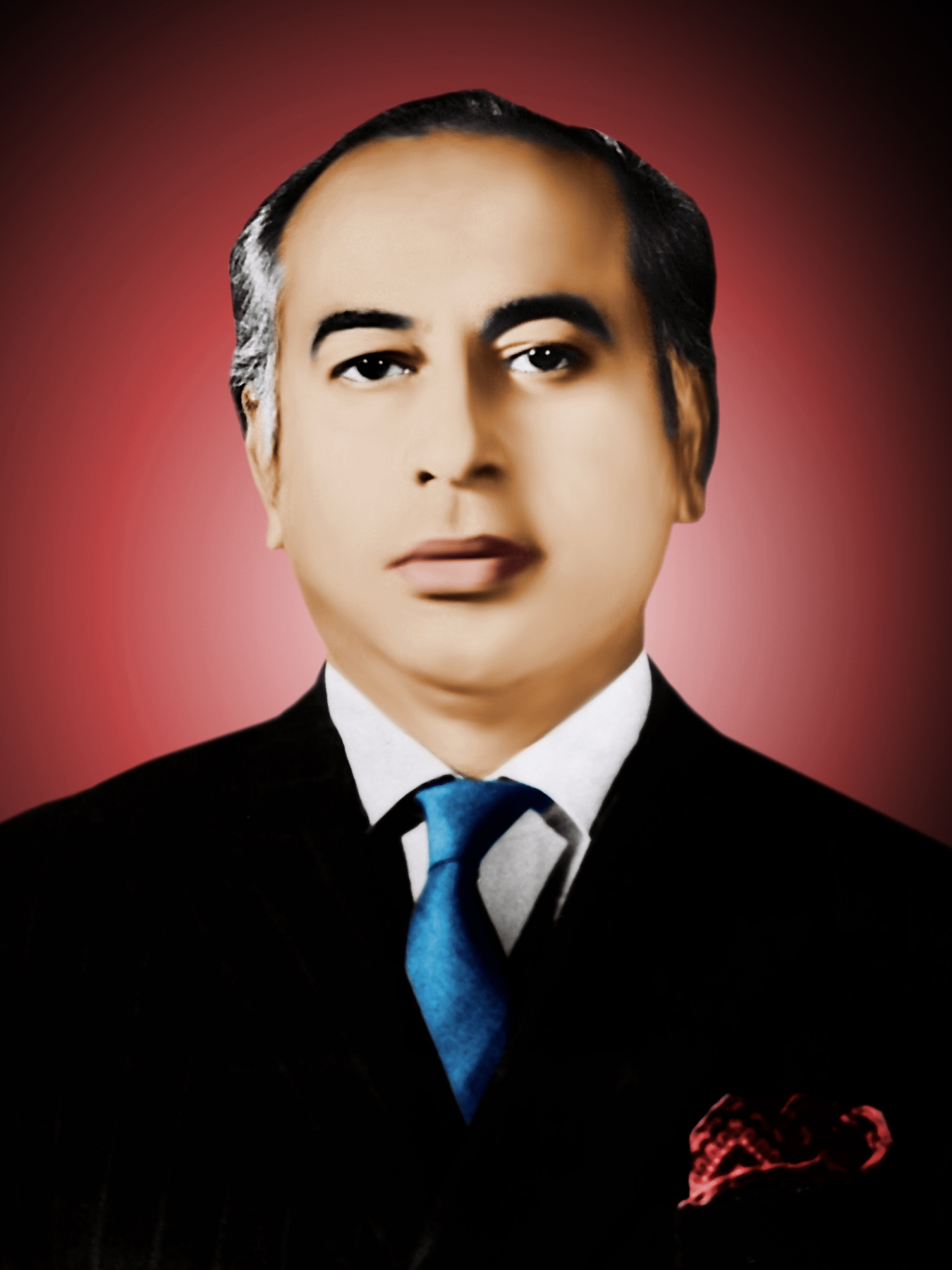
PPP all set to observe Zulfiqar A. Bhutto’s 36th death anniversary


Pakistan Peoples Party has finalized arrangements for 36th death anniversary of its founder Zulfiqar Ali Bhutto on April 4 at Garhi Khuda Bakhsh, Larkana.
PPP chairman Bilawal Bhutto-Zardari, according to sources, will not be attending the anniversary of his grandfather. The young PPP leader also missed death anniversary of his mother, Benazir Bhutto, on 27th December last year.
The party sources say the ceremony, likely to be attended by thousands of party supporters, will be held at day time for security reasons.On the other hand, security arrangements have been finalized.
SSP Larkana, Kamran Nawaz, reviewed security arrangements while chairing a high level meeting of district police officers on Wednesday.

Music Video - PPP Song - Dila teer Bija