30 years old Ahmadi man reported killed in Karachi today was a reputable youth leader who may have been the target of a death threats campaign incited through wall-chalking in Model Colony in Malir Town.
A man very popular among his peers for his big heart and bravery, Noman Najam was the local president of the Rafa Ama chapter of the Ahmadiyya Muslim Youth Association (Majlis Khuddam-ul Ahmadiyya) in Malir town, Karachi.
Calling Najam "the source of our hope and living," his friends say he was a true Quranic representation of a 'legend'.
Najam was shot by unknown assailants who pumped 5 bullets into his chest while he worked at his place of business on Saturday evening (March 21) around 8:00 PM. Najam had died on the spot, it was reported.
It surfaced in the social media after the murder that a banned Islamist extremist group had reportedly sought the murder of Noman Najam on account of his Ahmadi Muslim faith.
Anti-Ahmadi wall-chalking and pamphleteering for inciting Ahmadi's murders is very common in many parts of Pakistan. Majlis Tahafuz Kham-e Nubuwwat (MTKN), a sanctuary for Islamists who are otherwise underground members of the banned Islamist outfits, leads in publishing anti-Ahmadi hate materials including hit-lists for targeting Ahmadis.
MTKN, which some claim operates like a mafia enterprise, is patronized by many religious, political and pseudo-academic personalities and groups.
Most recently, former judges, lawyers, and religio-political leaders associated with MTKN mafia have been at the forefront of defending Mumtaz Qadri, convicted killer of Punjab's governor, Sulmaan Taseer.
At their last conference in Lahore, MTKN mafia issued a warning to Ahmadis to 'abandon their faith or face consequences,' it was reported in Pakistani media.
According to a report published by The Express Tribune last month, a provincial lawmaker (MPA) from the ruling Pakistan Muslim League-Nawaz group, Muhammad Ilyas Chinioti, was joined by 'three retired judges of superior courts including former Lahore High Court chief justice Khawaja Muhammad Sharif, former LHC judge Nazir Ahmed Ghazi (both counsel for Mumtaz Qadri) and former judge of the Federal Shariat Court Khalid Mahmood,' when the 'convert, or else' warnings were issues to the Ahmadis.
It is important also to note that the Karachi Ahmadi victim of Saturday's attack, Noman Najam, comes from a family where several men have been killed for their faith. His grandfather and two uncles were murdered in Gujranwala, Punjab, during the 1974 anti-Ahmadi riots which culminated in outlawing of the Ahmadi Muslim community to appease the extremists.
http://ahmadiyyatimes.blogspot.com/2015/03/pakistan-popular-ahmadi-youth-leader.html
Monday, March 23, 2015
Pakistan - The Worst Form Of Terrorism


 A short walk down the news cycle takes one to the November 4th lynching of a Christian couple in Kot Radha Kishan, where a young man and woman were burned in a kiln by an entire enraged community in an act of premeditated murder involving clerics, mosque loundspeakers, false charges, the blasphemy law and general intrigue. In classic form, after the painstakingly slow reactions from the notoriously lethargic Punjab Police, the Supreme Court in a March 9th hearing, expressed shock at the lack of results and hinted at a judicial inquiry to probe police inaction. A fortnight later, and the Punjab Police has come back with a fresh Joint Investigation Team (JIT) to look into the matter, and investigate the incident. A police report says that the new head of the JIT has been asked to ensure “good quality investigations.”
However, here is the thing: how can a police institution, suspected to be in tandem with (or at least protective of) the perpetrators and one so historically fraught with corruption, be expected to investigate an incident that involves many of its own? Why is the Supreme Court only threatening to, but not actually forming a judicial inquiry into the investigations, which have so far yielded nothing in terms of real results. Perhaps the sordid art of this crime has been the involvement of the sheer number of people, with 101 currently under arrest. It becomes difficult to sort through the web of suspects to get to the actual instigators. There are layers of crime here, from the man who raised the first accusation to the policeman who didn’t fire his gun into the air to force the crowd to disperse. The Punjab police is simply not equipped to handle a case of such severity and deliver justice, especially not on its own.
Pakistan - Campaign against ‘radical’ seminaries going nowhere

KALBE ALI
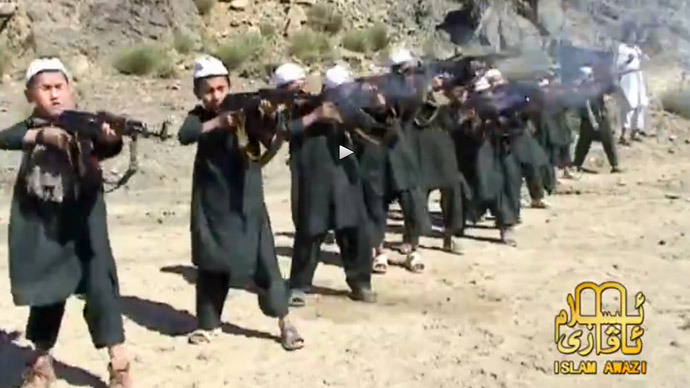
While the relevant officials in National Counter Terrorism Authority (Nacta) and the interior ministry declined to comment on the issue officially, a senior Nacta official told Dawn off the record that the Ministry of Religious Affairs was the lead coordination agency for this effort.
Similarly, an official from the interior ministry, who too was only willing to comment on condition of anonymity, said that the interior secretary had asked the religious affairs secretary to coordinate with seminaries over three matters.
Religious affairs ministry reluctant to take the lead; seminary boards resisting attempts at regulation
“These three matters are source of financing and especially foreign funding, madressah registration and monitoring,” he added.
Whether or not the government is willing to acknowledge this officially, it cannot be denied that on the face of it, the only government department which has been involved in negotiating with the seminaries publicly is the religious affairs department.
Just a religious matter?
Religious Affairs Minister Sardar Muhammad Yousuf said that his ministry was focused on reforming the religious sector, streamlining madressah registration and facilitating the seminaries.
Officially, there is no news of the interior ministry or any of its departments having met representatives from the madressahs.
This means that government efforts vis-à-vis the seminaries are no different from past measures.
“We have held the meeting of the Madressah Education Board after 11 years and there is a proposal to establish an Islamic Education Commission on the lines of the HEC,” the minister said, adding, “These steps will correct the flaws in madressahs.”
Though the minister refused to explain what exactly he meant by “flaws”, he was adamant that the Ministry of Religious Affairs had nothing to do with terrorism or checking foreign funding to seminaries.
In his media statement on December 21, 2014 the interior minister had said, “Some 90 per cent of madressahs have no connection to terrorism – based on intelligence reports.”
By saying so, he implied that at least 10 per cent did have such links, which is the reason madressah reform was a major objective in the 20-point NAP.
A month later, on January 18, 2015, he reiterated, “The religious institutions are requested to cooperate with the government to identify potential terrorists.”
He also said that if there is any indication of any terrorist activity at a madressah, stern action will be taken immediately.
His words had the seminarians bristling, who threatened to launch a mass movement in case of a crackdown.
Subsequently, the interior ministry invited the five prominent Wafaq and the Jamaat-i-Islami to discuss the issue on December 30, 2014. However, at the last minute, the gathered clergy was told that the meeting would be chaired by the minister for Religious Affairs instead of Interior Minister Chaudhry Nisar Ali Khan.
Since then, dialogue between the two sides has been no different from what happened under former president Pervez Musharraf and the PPP – bridging the gap between mainstream education and the madressah system.
But even this discussion has lost urgency as the frequency of meetings has decreased and the seminarians’ rhetoric about the consequences of these efforts has also reduced. In fact, the boards have already boycotted two meetings.
Financial questions?
It seems that like the interior ministry, the State Bank too is not interested in the nitty-gritty of shady transactions to the seminaries.
“The registration of seminaries will streamline all these issues as all madressahs will be required to have bank accounts and then, funding sources would be easy to trace,” a bank official said.
“There are two modes of legal money transfer – banking and exchange companies,” the official said, adding that the Financial Monitoring Unit (FMU) of the finance ministry is responsible for checking any abnormal transfers. Following the announcement of NAP, the FMU is said to be working closely with the interior ministry.
But chances are that seminary donations do not use traditional banking methods to receive money – it is said that their donations come via ‘hundi/hawala’ or in cash, even from abroad.
The hundi/hawala cases come under the domain of the Federal Investigation Agency (FIA), which is also supposed to check the possible presence of money in the baggage of travellers at the airport, along with the Customs department.
There is little information of any special attention being paid to seminaries by these departments. The only ‘action’ being taken is the negotiation between the religious affairs ministry and a resentful body of madaris.
“We have said it before and we have said it now to this government too – we are not responsible for any terrorist, criminal or anti-social act of any individual affiliated with madressahs that are attached to us,” said Maulana Abdul Qudus, spokesperson for the Wafaqul Madaris al Arbia, the umbrella organisation that oversees most seminaries of the Deobandi sect in Pakistan.
“But people have even been booked for installing three loudspeakers, this is wrong.”
Similarly, Maulana Abdul Mustafa Hazarvi, Central Nazim-i-Aala, Tanzeemul Madaris Ahle Sunnat Pakistan – a Barelvi alliance – said that more than 7,000 clerics or mosque committee members had been arrested in Punjab on charges of reciting ‘Durood’ and ‘Salam’ before and after Azaan.
“After all this, the Punjab government on March 9 allowed the recitation of ‘durood’ and ‘salam’ along with Azaan,” he said, adding, “But no one took action against the terrorists – even the renegade cleric who has occupied a government mosque in Islamabad and continues to enjoy more rights compared to us, who have never been involved in any anti-state activity.”
Similar views were expressed by the office-bearers of Wafaqul Madaris al Shia, and Jamaat-i-Islami, who have repeatedly asked the interior minister to specify the names of madressahs involved in terrorism.
But the government has maintained silence.
It is hard to believe that the government has no proof. For instance, a report prepared by the special branch of Islamabad and Rawalpindi police identified seminaries that had close links with the TTP and could be used as bases for attacks.
But no action has ever been taken on basis of this report, which said that “well-trained terrorists, their leaders and commanders can also slip out of their hideouts in Fata and take shelter in the hilly areas of Abbotabad, Kakul, Nathia Gali, Murree, Aliot and Phagwari (Murree)”.
“It seems that the threat perception of the government is different,” said Amir Rana, director of the Pakistan Institute of Peace Studies, adding that “there is no clarity over the issue”.
And unfortunately, the dialogue over curriculum and new registration forms for the seminaries is also going nowhere.
This is because the unified forum of five prominent boards representing seminaries affiliated with Shia, Barelvi, Deobandi and the Ahle Hadith sects and one board attached with madressahs run by the Jamaat-i-Islami have many reservations about the government’s suggestions, including the establishment of the Madrassah Education Board – a semi-autonomous body under the Ministry of Religious Affairs.
“The Wafaq does not trust the government,” said Khalid Rehman, director of the Institute of Policy Studies (IPS), adding that “if anything serious is not done, nothing will change.”
Pakistan Blocks Wordpress


Wordpress.com has been temporarily blocked in Pakistan. The Pakistan Telecommunication Authority (PTA)has reportedly asked the Internet Service Providers across the nation to disable access to the site.
The reason for blocking the site hasn't been confirmed. However, a report in TechCrunch noted that when a Wordpress site is accessed in Pakistan, an error message saying "the content is prohibited for viewership from within Pakistan" pops up.
The country is known for its strict censorship of online content and sites, including Facebook, Flickr, IMDb, Twitter, and Wikipedia. Pakistan's ban on YouTube still exists. The reason cited for temporarily blocking or banning these sites is that the content these sources carry are blasphemous and inflammatory in nature.
Local news sources in Pakistan have stated that the temporary ban on Wordpress could be lifted in a few days.
Sunday, March 22, 2015
Human rights activists call for arrest of Bahraini prince accused of torture

Human rights campaigners have presented police with a 'dossier' of new evidence against a Bahraini prince accused of torture after he revealed on social media he was staying in London.
Prince Nasser bin Hamad al-Khalifa, 27, accidentally let slip he was back in Britain on Thursday when he posted a video of himself running in Hyde Park.
The prince posted the video on Instagram alongside a squadron of the Life Guards of the Household Cavalry with the caption: 'That's how it feels and sounds when you run in Hyde Park, London.'
Today The Independent reported human rights lawyers acting for FF have delivered a 'dossier' of new evidence to Scotland Yard in a bid to have him charged following the revelation he is visiting the capital.
Previous allegations which gave rise to the diplomatic immunity row did not stick. No charges were brought against him due to a lack of evidence and both he and the government of Bahrain strongly deny the accusations.
The case arose after FF, who has been granted asylum in the UK, claims he was badly beaten - though not by the prince directly - and given a prison sentence after taking part in protests in the Gulf state in February 2011 which left dozens dead.
Following the decision to revoke his diplomatic immunity in October last year, a spokeswoman for the Government of Bahrain said: 'As the British DPP has today affirmed, an arrest would have been improper given the absence of evidence of the conduct alleged.
'As Bahrain has never sought anonymity or sovereign immunity from the English Courts for anyone in respect of this case, it expresses no view on the DPP's statement that immunity was inappropriate.
'This has been an ill-targeted, politically-motivated and opportunistic attempt to misuse the British legal system. The Government of Bahrain again categorically denies the allegations against Sheikh Nasser.'
Lawyers for Prince Nasser said: 'The police have previously declined to investigate Prince Nasser on the basis of the insufficiency of the evidence against him. The submission of this new dossier at this time coincides with other attempts by opposition activists to use the British justice system to influence UK-Bahraini relations.'
Prince Nasser, born in May 1987, is the eldest son of the King of Bahrain Hamad bin Isa Al Khalifa and his second wife, Sheia bint Hasan Al-Khrayyesh Al-Ajmi of Kuwait.
He was educated in Bahrain at the Ibn Khuldoon National School, before commissioning from Royal Sandhurst Military Academy in August 2006, two terms after Prince William.
During his Sovereign's Parade, Prince Nasser was presented with the King Hussein Medal, awarded to the overseas officer cadet considered to be the most improved recruit.
He currently serves as commander of Bahrain's Royal Guard and as president of the Bahrain Olympic Committee.
Inspired by the Arab Spring, protesters in Bahrain had initially wanted to achieve greater political freedom and equality for the Shia muslims who form the majority of the population, as opposed to the ruling Sunni royal family.
However, following an attack on protesters who had gathered at the Pearl Roundabout in Manama on February 17, 2011, demonstrators began to call for an end to Hamad bin Isa Al Khalifa's rule.
The following month 1,000 troops from Saudi Arabia and 500 troops from UAE arrived in Bahrain to quell the protests, and on March 15 the king of Bahrain declared martial law and a three-month state of emergency.
A man identified only as FF was later granted refugee status in the UK, and from there, set about trying to bring charges against Prince Nasser.
Claiming the prince should be held responsible for his beating and imprisonment during the turmoil, his accusations were stopped when the prince was granted diplomatic immunity.
In October last year, this was overturned, creating the possibility - albeit an unlikely one - that he could be charged when travelling outside Bahrain. However, these charges collapsed due to a lack of evidence.
Read more: http://www.dailymail.co.uk/news/article-3005315/Human-rights-activists-call-arrest-Bahraini-prince-accused-torture-reveals-s-staying-London-posting-Hyde-Park-selfie-Instagram.html#ixzz3VAY4iy1L
Follow us: @MailOnline on Twitter | DailyMail on Facebook
Zardari, Bilawal pay tribute to Nusrat Bhutto

Maadr-e-Jamhooriat (mother of democracy) the late Begum Nusrat Bhutto was a woman of exceptional courage who faced great challenges and gone through unspeakable tragedies in the course of democratic struggle.
This has been stated by former president Asif Ali Zardari in a message on the eve of 86th birth anniversary of Begum Nusrat Bhutto falling today.
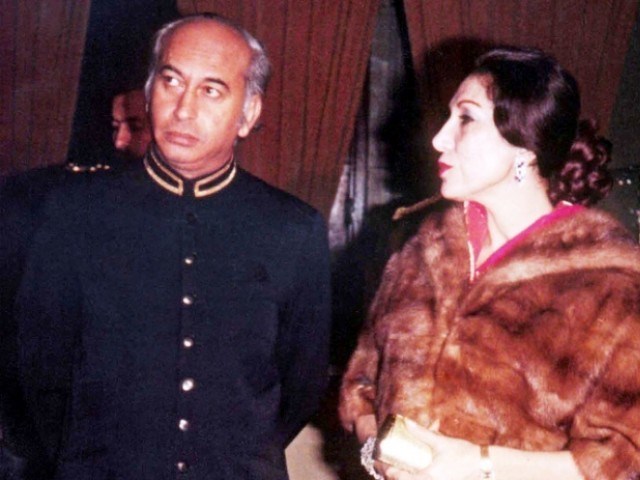 The scars of brutality and victimisation that she endured are shining today as glittering medallions ever worn by a woman in the course of democratic struggle, he said. He added that her example to lead from the front would continue to inspire generations to come, to aspire and struggle for lofty democratic ideals.
Zardari in his message said that Begum Nusrat Bhutto was not only the spouse of Pakistan’s first directly elected prime minister and the mother of twice elected and the Muslim world’s first directly elected prime minister but also a woman leader who herself led the struggle for democracy from the front. She will also be remembered for her services to the refugees pouring into Pakistan with little or no resources, he said.
Meanwhile, Bilawal Bhutto Zardari, Chairman Pakistan Peoples Party has paid glowing tributes to Madir-e-Jamhuriyat Begum Nusrat Bhutto on her 86th birthday tomorrow. In a statement, Bilawal Bhutto Zardari said sacrifices rendered by his grand-mother Begum Nusrat Bhutto during the struggle for restoration of democracy are unmatched and sources of inspiration for the Jiyalas and the masses. She suffered torture and imprisonments at the hands of dictatorial regime of Gen Zia but fought valiantly. PPP Chairman said Begum Nusrat Bhutto sacrificed almost her entire family including husband Prime Minister Shaheed Zulfikar Ali Bhutto, two sons Shaheed Mir Murtaza Bhutto and Shaheed Shahnawaz Bhutto and even her beloved daughter Benazir Bhutto.
http://www.dailytimes.com.pk/national/23-Mar-2015/zardari-bilawal-pay-tribute-to-nusrat-bhutto
Obama says it is now ‘hard to find a path’ on Israeli-Palestinian peace

President Barack Obama said that Israeli leader Benjamin Netanyahu's pre-election disavowal of a two-state solution to the Israeli-Palestinian conflict makes it “hard to find a path” to resolve the issue.
In an interview with the Huffington Post, Obama also scolded Netanyahu over his remarks about Arab Israelis voting, making clear that the deep rift in relations between Israel and the United States, its most important ally, is not ending anytime soon.
In the interview, conducted on Friday and published on Saturday, Obama described his Thursday phone call with Netanyahu, two days after the Israeli leader was re-elected.
“I did indicate to him that we continue to believe that a two-state solution is the only way for the long-term security of Israel, if it wants to stay both a Jewish state and democratic,” Obama said, in his first public comments on the issue.
“And I indicated to him that given his statements prior to the election, it is going to be hard to find a path where people are seriously believing that negotiations are possible.”
The worst crisis in decades in US-Israeli relations was worsened by Netanyahu’s declaration just before Tuesday’s election that there would be no Palestinian state on his watch. Netanyahu sought on Thursday to backtrack from that.
“Well, we take him at his word when he said that it wouldn’t happen during his prime ministership, and so that’s why we’ve got to evaluate what other options are available to make sure that we don’t see a chaotic situation in the region,” said Obama, whose administration sponsored failed talks aimed at creating a Palestinian state that would exist peacefully side-by-side with Israel.
The White House had said after Obama’s call on Thursday that the president had told Netanyahu Washington would “reassess” its options on US-Israel relations and Middle East diplomacy.
In the interview, Obama also expressed dismay over Netanyahu’s Election Day warning to his supporters about Arab Israeli voters going to the polls “in droves.”
“We indicated that that kind of rhetoric was contrary to what is the best of Israel’s traditions, that although Israel was founded based on the historic Jewish homeland and the need to have a Jewish homeland, Israeli democracy has been premised on everybody in the country being treated equally and fairly,” Obama said.
Obama underscored his support for Israel’s security, saying he would make sure that military and intelligence cooperation continues in order to keep the Israeli people safe.
“But we are going to continue to insist that, from our point of view, the status quo is unsustainable. And that while taking into complete account Israel’s security, we can’t just in perpetuity maintain the status quo, expand settlements. That’s not a recipe for stability in the region,” Obama said, referring to the current state of affairs with the Palestinians.
The United States provides $3 billion in military aid annually.
Obama will continue seeking deal with Iran
Netanyahu’s tense relations with Obama have been strained over US efforts to reach an international agreement with Iran to curb Tehran’s nuclear program. Ties worsened when Netanyahu accepted a Republican invitation to speak to the US Congress two weeks before the Israeli election to criticise Obama’s quest for such a deal. Democrats assailed the speech as an insult to the presidency and a breach of protocol.
Obama told the Huffington Post that Netanyahu’s election win would not significantly affect his defence of any deal reached with Iran.
"I don't think it will have a significant impact," Obama said.
Iran and six world powers are in negotiations to clinch a landmark deal that would have the country scale back its controversial nuclear program in return for relief from sanctions.
Western powers in London affirmed their "unity of purpose" in Iran nuclear talks Saturday, urging the Islamic Republic to take "difficult decisions."
Netanyahu opposes any accommodation with Tehran and told US lawmakers during his visit that the agreement under negotiation as a "bad deal."
Obama, however, was cautiously optimistic about the progress of the nuclear talks while acknowledging the bitterness between Iran and Israel.
"Obviously, there's significant scepticism in Israel generally about Iran, and understandably. Iran has made vile comments, anti-Semitic comments, comments about the destruction of Israel.
"It is precisely for that reason that even before I became president, I said Iran could not have a nuclear weapon," Obama added.
"What is going to have an effect on whether we get a deal done is, number one, is Iran prepared to show, to prove to the world that it is not developing a nuclear weapon, and can we verify that in an intrusive, consistent way," Obama said.
"Frankly, they have not yet made the kind of concessions that are I think going to be needed for a final deal to get done. But they have moved, and so there's the possibility."
The complex deal on the table would likely involve Iran reducing its nuclear activities, allowing tight inspections, and limiting development of new nuclear machinery.
In exchange, Iran -- which denies wanting nuclear weapons -- would get relief from the mountain of painful sanctions that have strangled its oil exports and hammered its economy.
Afghan president in U.S. today

By LYNNE O'DONNELL
As the Afghan president heads to the United States today on his first trip to Washington as head of state, the landmark visit offers a chance for both sides to start afresh and wipe the slate clean on the legacy of troubled U.S-Afghan relations.
Ashraf Ghani faces a daunting task — long-term, the visit could set the tone for years to come. More pressingly, Ghani needs firm commitment of American military support in his fight against the Taliban and other insurgent groups, including an Islamic State affiliate, which he and U.S. military leaders fear is finding a foothold in Afghanistan.
Ghani's relationship with Washington stands in stark contrast to that of his acrimonious predecessor, Hamid Karzai, whose antagonism toward the U.S. culminated in a refusal to sign security agreements with Washington and NATO before leaving office. Ghani signed the pacts within days of becoming president in September, and has since enjoyed a close relationship with U.S. diplomats and military leaders.
"It's important for Afghanistan that the United States has trust in the leaders of the country and uses this visit to show its support for the new government," said Afghan political analyst Jawed Khoistani. "A long-term American presence in Afghanistan is essential."
Ghani's week-long trip comes as the Afghan army is waging its first-ever solo offensive against the Taliban in Helmand province, their southern heartland, seeking a decisive victory ahead of the spring fighting season as evidence it can carry the battle without U.S. and NATO combat troops that withdrew from Afghanistan at the end of 2014.
Ghani, who was personally involved in planning the Helmand operation, launched in February, will ask the U.S. for enhanced backup in the offensive, including air support, several officials close to the Afghan president told The Associated Press, speaking on condition of anonymity to discuss the upcoming visit.
There are 13,000 foreign soldiers still in Afghanistan, about 9,800 American troops and 3,000 from NATO — down from a peak of 140,000 in 2009-10. Those still here are involved in training and supporting Afghan security forces, with battlefield backup only when necessary. Also, half of the U.S. troops are engaged in counterterrorism operations against the Taliban and al-Qaida.
U.S. officials have said the Obama administration is set to abandon plans to draw down to 5,500 troops by year's end, bowing to military leaders' requests. And while no final decision on numbers has been made, the U.S is expected to allow many of the American troops to remain well into 2016.
Even more important is the presence of U.S. and NATO bases, which are to be dismantled in mid-2016, according to current plans — an undertaking that would take assets away from the fight.
Afghan President Visiting U.S., To Address Congress
Afghan President Ashraf Ghani arrived in Washington on March 22 for his first official visit since taking office.
Ghani is traveling with Chief Executive Officer Abdullah Abdullah. The two men came to power in September as part of a power-sharing deal.
The two Afghan leaders are due to hold talks with U.S. President Barack Obama and Secretary of State John Kerry, who will host them at Camp David on March 23.
Talks are expected to focus on a range of issues, focusing largely on security including the withdrawal of U.S. troops, economic development, and U.S. support for the Afghan-led reconciliation process.
During the trip, Ghani will also address a joint session of the U.S. Congress.
The visit also includes a stop in New York for talks at the United Nations.
Ahead of the visit, Ghani has said his country faces a "difficult" spring in terms of security.
http://www.rferl.org/content/afghanistan-president-us-visit-congress-ghani/26914079.html
Unspoken Facts About Woman Beaten To Death and Burnt in Kabul
 A latest report about 27-year-old woman, who was beaten to death and burnt over alleged burning of Holy Quran, contributes more to her innocence as her parents revealed the facts to TOLOnews.
Farkhunda was brutally beaten to death, burnt and thrown into muddy Kabul River by a mob on Thursday in Kabul in the presence of a number of policemen after a Mullah accused her of burning Quran which led the people to attack her with stones and sticks.
The incident followed huge criticisms from inside and outside the country after the video footages showing her being beaten harshly went viral on social media.
And when the Ministry of Hajj and Religious Affairs (MoHRA) officials further disclosed that there was no evidence found to prove that Farkhunda burnt the Holy Quran, the tragic incident got new shapes, involving a Mullah of Shah-e-Do Shamshera Mosque into the case.
According to her parents, Farkhunda went to a Mullah to stop him from deceiving people by writing false Tawiz, a folded piece of paper containing the verses of Quran.
The practice of writing Tawiz is common in Afghanistan as the people wear Tawiz with a belief that it will remove any evil or affliction put on them through black magic, keep them safe and also bring them good luck.
The Mullah in order to save his job and life, reportedly began shouting and calling on people that the girl burnt the Quran.
According to the eyewitnesses, hundreds of angry civilians flocked to the mosque, dragged out Farkhunda and started beating her.
But her father engineer Nadir insisted on her daughter's innocence, saying she couldn't commit such an act because she was graduated from a religious school and also taught Quran to the children.
He called on the government to give ultimate punishment to the perpetrators.
"I want all the judicial institutions to prosecute the perpetrators," Nadir said breaking into tears. "I don't want blood of my daughter go in vain."
Farkhunda's mother also strongly denounced killing of her daughter and asked the government to ensure the safety of citizens, especially the safety of women who have already been the victim of various types of violence for decades.
"I am proud of my daughter because she didn't let my head go down," her mother said. "She sacrificed her life for the right path."
Farkhunda's relatives, who were very sad and angry, strongly criticized the government for failing to ensure the protection of citizens.
"If there was a government, the perpetrators would be asked why did they commit this crime," her neighbor said.
An eyewitness of the scene, Najmuddin, told TOLOnews that Farkhunda was killed because of unreasonable sentiments of angry citizens.
"We were asking the people to stop beating her and let us ask what religion she belongs to," Najmuddin said. "But the people didn't listen to us and kept beating her."
But the prayer leader of Wazir Akbar Khan Mosque Dr. Ayaz Niazi, Senator Zulmai Zabuli and deputy minister of information and culture Simin Hasanzada were among those who justified Farkhunda's brutal killing and, to some extent, supported it.
"At such a situation, there is no need to go and check the girl whether she is sick or okay," Niazi warned. "Be careful O people! It will be a big mistake if they [perpetrators] were sent to the jail. The people will stand against this and then they cannot be controlled."
But unlike to Niazi's sentimental remarks, the religious scholars strongly criticized murder of Farkhunda, calling it against Islam and other religions.
"People come and execute a person arbitrarily, this is totally prohibited and unlawful," a religious scholar Haji Noor Ahmad said.
The brutal killing of Farkhunda followed huge criticism worldwide including a strong reaction by the US-based Human Rights Watch (HRW) against the negligence of police in the scene.
Yesterday, the Ministry of Interior Affairs (MoI) announced that nine men have been detained including those who posted their photos on the social media, admitting to have been involved in killing and setting Farkhunda on fire.
He called on the government to give ultimate punishment to the perpetrators.
"I want all the judicial institutions to prosecute the perpetrators," Nadir said breaking into tears. "I don't want blood of my daughter go in vain."
Farkhunda's mother also strongly denounced killing of her daughter and asked the government to ensure the safety of citizens, especially the safety of women who have already been the victim of various types of violence for decades.
"I am proud of my daughter because she didn't let my head go down," her mother said. "She sacrificed her life for the right path."
Farkhunda's relatives, who were very sad and angry, strongly criticized the government for failing to ensure the protection of citizens.
"If there was a government, the perpetrators would be asked why did they commit this crime," her neighbor said.
An eyewitness of the scene, Najmuddin, told TOLOnews that Farkhunda was killed because of unreasonable sentiments of angry citizens.
"We were asking the people to stop beating her and let us ask what religion she belongs to," Najmuddin said. "But the people didn't listen to us and kept beating her."
But the prayer leader of Wazir Akbar Khan Mosque Dr. Ayaz Niazi, Senator Zulmai Zabuli and deputy minister of information and culture Simin Hasanzada were among those who justified Farkhunda's brutal killing and, to some extent, supported it.
"At such a situation, there is no need to go and check the girl whether she is sick or okay," Niazi warned. "Be careful O people! It will be a big mistake if they [perpetrators] were sent to the jail. The people will stand against this and then they cannot be controlled."
But unlike to Niazi's sentimental remarks, the religious scholars strongly criticized murder of Farkhunda, calling it against Islam and other religions.
"People come and execute a person arbitrarily, this is totally prohibited and unlawful," a religious scholar Haji Noor Ahmad said.
The brutal killing of Farkhunda followed huge criticism worldwide including a strong reaction by the US-based Human Rights Watch (HRW) against the negligence of police in the scene.
Yesterday, the Ministry of Interior Affairs (MoI) announced that nine men have been detained including those who posted their photos on the social media, admitting to have been involved in killing and setting Farkhunda on fire.
Why U.S. troops need to stay in Afghanistan beyond 2016

By Peter Bergen
The first state visit to the United States of Afghan President Ashraf Ghani and Chief Executive Officer Abdullah Abdullah, which begins this week, was supposed to take place in early March. But the visit was delayed because Republican leaders had invited Israeli Prime Minister Benjamin Netanyahu to address Congress during the same time period.
According to two Afghan government officials involved in the planning for the visit, the Afghan government believed American media attention would be largely focused on Netanyahu, so the first U.S. visit of the new Afghan president was delayed by two weeks, which is a useful reminder that there is a sound reason why congressional leaders shouldn't unilaterally extend invitations to foreign leaders.
Ghani and Abdullah arrive in Washington on Sunday.
There will be much to discuss with the Obama administration. For the Afghan government, the timetable of President Barack Obama's proposed troop withdrawal is the key issue.
Obama says that the last American troops will leave Afghanistan at the end of 2016. This happens to roughly coincide with the end of his second term in office and also fulfills his campaign promise to wind down America's post-9/11 wars.
Ghani is clearly uncomfortable with the pace of this U.S. troop withdrawal, telling CBS' "60 Minutes" in January, "deadlines should not be dogmas" and that there should be a "willingness to reexamine" the withdrawal date.
Is Obama's withdrawal plan a wise policy?
Short answer: Of course not.
One only has to look at the debacle that has unfolded in Iraq after the withdrawal of U.S. troops at the end of 2011 to have a sneak preview of what could take place in an Afghanistan without some kind of residual American presence.
Without American forces in the country, there is a strong possibility Afghanistan could host a reinvigorated Taliban allied to a reinvigorated al Qaeda, not to mention ISIS, which is gaining a foothold in the region.
Needless to say, this would be a disaster for Afghanistan. But it would also be quite damaging to U.S. interests to have some kind of resurgent al Qaeda in the country where the group trained the hijackers for the 9/11 attacks.
It would also be disastrous for the Democratic Party, should it win the presidency in 2016, to be the party that "lost" Afghanistan.
After all, the Democratic Party is viewed by some as weaker on national security than the Republicans and it is inevitable that without some kind of residual American presence in Afghanistan, al Qaeda would gain sufficient strength to launch an attack from the Afghan-Pakistan border region against American interests somewhere in the world.
There are some welcome indications that the Obama administration is already rethinking at least some aspects of its drawdown plan. Reuters reported on Thursday that key U.S. bases in Jalalabad in eastern Afghanistan and Kandahar in the south of the country may not be shut down at the end of 2015 as was previously planned.
These bases play an important role in the campaign against al Qaeda and allied groups, which are largely based along eastern Afghanistan's border with Pakistan and against the Afghan Taliban, which is concentrated in southern Afghanistan.
And on Friday the New York Times reported that the Obama administration is rethinking the overall pace of its planned withdrawal because of rising Taliban violence.
But neither or these welcome potential developments change the central issue, which is the Obama administration's withdrawal date of December 2016 for all U.S. forces.
Merely because the Obama administration will be almost out the door at the end of 2016 doesn't mean that suddenly at the same time that the Taliban will lay down their arms, nor that the Afghan army will be able to fight the Taliban completely unaided. Nor does it mean that al Qaeda -- and ISIS, which is beginning to establish small cells in Afghanistan -- would cease to be a threat.
An easy way for potential Democratic presidential candidates such as Hillary Clinton to distinguish their national security policies from Obama's would be to say that they are in favor of some kind of long-term U.S. military presence in Afghanistan and to argue that it would be needed to avoid an Iraq-style outcome.
Similarly, as the Republican Party starts ramping up for the 2016 campaign, potential candidates such as Jeb Bush can distinguish themselves from the isolationist Rand Paul wing of the party by saying that they are committed to a long-term presence in Afghanistan.
This U.S. military presence in Afghanistan doesn't have to be a large, nor does it need to play a combat role, but U.S. troops should remain in Afghanistan to advise the Afghan army and provide intelligence support.
Such a long-term commitment of several thousand American troops is exactly the kind of force that the Obama administration was forced to deploy to Iraq following ISIS's lightning advances there over the past year.
Selling a longer-term U.S. military presence in Afghanistan would be pushing against an open door with that nation's government. Consider that within 24 hours of being installed, the new Afghan government led by Ghani and Abdullah signed the basing agreement that allows American troops to stay in Afghanistan until December 2016.
Consider also that the Afghan government has already negotiated a strategic partnership agreement with the United States lasting until 2024 that would provide the framework for a longer term U.S. military presence. Consider also that many Afghans see a relatively small, but long-term international troop presence as a guarantor of their stability.
It is also not in Pakistan's interests for Afghanistan to fall to the Taliban or be thrust into another civil war. The Pakistanis have seen for themselves repeatedly the folly of allowing the Taliban to flourish on their own soil, most recently in the Taliban attack in December on the army school in Peshawar that killed 132 children.
It is in Pakistan's own interest that the Afghan army is able to fight effectively against the Taliban, which is more likely if they continue to have American advisers at their side.
Other regional powers such as the Chinese worry about Chinese Uighur separatists establishing themselves on Afghan soil. The Russians are similarly worried about Islamist terrorist groups located in Afghanistan and so will not stand in the way of a small long-term U.S. military presence in Afghanistan as that would dovetail with their own security concerns about the country.
Keeping a relatively small, predominantly U.S. Special Forces, presence in Afghanistan to continue to train the Afghan army past December 2016 is a wise policy that would benefit both Afghans and Americans.
Both the Democratic and Republican parties should adopt such a plan in their platforms as they gear up for the 2016 campaign. And Obama should do his successor a favor by leaving this important decision up to the next President.
Subscribe to:
Posts (Atom)