Sunday, March 22, 2015

Viewpoint: A clean slate for US and Afghanistan


As Afghan President Ashraf Ghani and government Chief Executive Abdullah Abdullah prepare to visit Washington, DC, the prospects are much improved for a sustainable US-Afghan partnership.
To be sure, there are risks. Afghan corruption remains serious and national governance is weak. US President Barack Obama is anxious to wrap up the US military mission to Afghanistan by the end of his own presidency.
The aid budget for Afghanistan has already been whittled away by a US Congress that finds it unusually large in light of Afghanistan's challenges in using it well, not to mention broader US fiscal pressures.
But all that said, compared with a year ago, times have changed for the better.
Whatever his contributions to his own country, and whatever the American flaws that also deserve a share of the blame for Afghanistan's enduring challenges, the previous president, Hamid Karzai, had became a major problem in Afghanistan's relationship with the West, becoming far too prickly even when there was sometimes a logic to some of his positions.
This attitude did not sit well with a United States that was sending its sons and daughters to fight and sometimes die in the Hindu Kush, while also turning Afghanistan into America's largest aid recipient.
Then, a disputed presidential race where both sides accused each other of fraud threatened the very essence of Afghan democracy while taking the country towards the precipice of sectarian conflict.
Meanwhile, Nato forces reduced their combined military strength in Afghanistan to just 10% of what it had been at peak, even as the Taliban remained resilient.
'Wise man'
Compared with all these circumstances, the situation today is much more promising in terms of American political support for the Afghan project.
There are still important tasks in front of Mr Ghani, Mr Abdullah, and American lawmakers during the visit. But the die is cast for a successful outcome.
Mr Ghani is a wise man who understands America, having lived here a long time and also having handled many aspects of the modern US-Afghan relationship in various government jobs in Kabul over the past decade and a half.
He is also a kind and gracious man who will surely thank Americans for their sacrifice on behalf of his country, and is a committed reformer who will be able to cite progress in some areas of Afghan governance, even while acknowledging that there is a great deal more work to do.
The Afghan president is a worthy commander-in-chief who appreciates not only the efforts of Nato troops, but the sacrifices made - and the tenacity displayed - by his own army and police.
I am sure he will say all these things.
Meanwhile, on a somewhat smaller but still important stage, Mr Abdullah will play his part as well.
He will embody the fact that Afghanistan continues to co-operate across ethnic and sectarian lines, despite the tensions, in a way that much of the Middle East today does not.
He too will have ideas on reform and improvement of Afghan governance - indeed, he ran for president on just such a platform in both 2009 and 2014.
The US Congress will generally like what it hears.
To be sure, it may whittle away modestly at the Afghanistan aid request, especially on the economic side, as it has before.
But with the Middle East in turmoil, and America's military departure from Iraq in 2011 looking like a clear mistake, few will be anxious to repeat the error in Afghanistan, or to cut off aid precipitously after so much joint spilling of sweat, blood, tears, and financial resources there since 2001.
US needs bases
President Obama is actually the greater challenge on the US side.
Even if he agrees to slow down the planned cuts to US forces in Afghanistan this year, his intention of taking all operational American military forces from the country by the end of next year remains on the books.
It is a big mistake, and needs to be changed.
The US needs counterterrorism tools - meaning military bases - on an enduring basis from which to strike al Qaeda, perhaps Islamic State, and other extremists in the region even after 2016.
It also needs to sustain a kind of presence, and thus leverage, that it squandered in Iraq in 2011 (admittedly, the Iraqis had a hand in that too).
With its leverage weakened, Washington was far less able to influence former Iraqi Prime Minister Nouri al-Maliki's increasingly misguided and sectarian rule.
Again, no repeat performance of such a policy is desirable in Afghanistan.
The US should keep two to three bases in Afghanistan indefinitely, as part of an enduring presence and partnership.
So while Congress is important on this one, it's the White House reaction to the Afghan leaders' visit that we should watch most closely.

Pakistan - Minority report


By Naseer Memon


With the withering State authority, violence against minorities keeps rising by the day.
Amnesty International, in its recent annual report, has berated Pakistan for its ignominious record on the rights of minorities. The report laments that “religious minorities continued to face laws and practices that resulted in their discrimination and persecution. Abuses connected with the blasphemy laws occurred regularly during the year as demonstrated in several high profile cases”.
Another international human rights body, Human Rights Watch (HRW), also lambasted Pakistan on the same account in its World Report 2015. The report underlined the plight of minorities by saying that “Pakistan’s government did little to stop the rising toll of killings and repression by extremist groups that target religious minorities”. It further reads “the government is failing at the most basic duty of government — to protect the safety of its citizens and enforce rule of law. Institutionalised discrimination fostered violent attacks on religious minorities”.
The annual report of the Human Rights Commission of Pakistan (HRCP) only reinforced the above. It notes that “Pakistan’s record in protecting members of its religious and sectarian minorities from faith-based violence and discrimination has been far from impressive in recent years. In fact, the year under review saw continuation of the recent trend of violence and impunity that seemed to reinforce each other. The growing problems for the minorities came from extremist militant groups seeking to justify violence and brutalities in the name of religion. Secondly, the challenges came from the local factors; and finally, from the government’s failure to protect members of minority religions and sects from faith-based violence or to confront hate speech, intimidation or intolerance. This year also nothing was done to weed out discrimination against non-Muslim citizens written into law or to introduce safeguards widely acknowledged to be needed in order to prevent abuse of the blasphemy law”.
While reports of national and international human rights bodies are conveniently dismissed by some sections, the Supreme Court of Pakistan’s views must be heeded in this regard. In a suo moto case regarding Peshawar Church attack incident, the Supreme Court echoed the same concerns in its verdict issued in June 2014. The verdict reads “we find that the incident of desecration of places of worship of minorities could be warded off if the authorities concerned had taken preventive measures at the appropriate time.”
Minorities impugn the rhetoric of equal citizenship. Obsession with pan-Islamism has generated a whirlwind that has made life parlous for religious minorities in Pakistan.
These observations on indolence and criminal inaction of authorities evoke the memories of the horrendous Joseph Colony incident of 2013 when a violent mob torched a Christian neighbourhood. The Punjab government admitted in the Supreme Court that the police had deliberately avoided engaging a charged and violent mob lest it snowballed into a national crisis had a Muslim been killed in the scuffle. The police also admitted that their commanding officer took refuge in a godown when the miscreants pelted them with stones. The cowardice of the police paved the way for setting ablaze more than 150 houses of the hapless Christian community by an insane swarm.
In the aforementioned verdict, the court also asked the government to establish a special police force with professional training to protect the places of worship of minorities. The court order just added one more in the long queue of yet-to-be implemented instructions.
Such kind of apathy on part of successive governments has left the minorities at the mercy of mauling mobs.
Oodles of references can be cited from the Constitution of Pakistan that proffer explicit guarantees to protect the rights of non-Muslim citizens. Article 20 reads “every citizen shall have the right to profess, practise and propagate his religion; and (b) every religious denomination and every sect thereof shall have the right to establish, maintain and manage its religious institutions”. Article 21(1) stipulates “No person attending any educational institution shall be required to receive religious instruction, or take part in any religious ceremony, or attend religious worship, if such instruction, ceremony or worship relates to a religion other than his own.”
The role of state has been categorically explained in Article 36, saying “the State shall safeguard the legitimate rights and interests of minorities.” Jinnah’s August 11 speech is a much repeated promise of the founder of Pakistan, which is violated ab initio.
In spite of constitutional and religious stipulations, minorities are constantly demonised and persecuted by a self-proclaimed sanctimonious brigade. Sectarian and religious minorities are incessantly stalked and maltreated. It is practised brazenly and justified through outrageous misinterpretations of religion. In a stunning interview, head of a proscribed group Ahle Sunnat Wal Jamaat, Maulana Ludhyanvi, did not mince a word to declare Shias as infidels by invoking edicts of unnamed clerics. He unambiguously endorsed the decree that declared Shias as infidels. Ahmadis and Bahais were already declared non-Muslim in the constitution of 1973.
A known liberal and progressive Bhutto could not withstand the commotion of political clerics and resorted to ostracism of Ahmadis and Bahais to appease and lure enraged religious parties. Whereas the Constitution generously guarantees rights of minorities, it has a glaring paradox on the right to hold the offices of the president and the prime minister. Article 25 of the Constitution promises that all citizens are equal before law and are entitled to equal protection of law. Yet in the subsequent clauses non-Muslims are denied the right to become president or prime minister of Pakistan. This untenable contradiction is incomprehensible.
Minorities genuinely impugn the rhetoric of equal citizenship. Mania for an Islamic state and obsession with pan-Islamism has generated a whirlwind that has made life parlous for sectarian and religious minorities in Pakistan. Those who have arrogated for themselves the guardianship of Islam are completely callous towards the rights of other Pakistanis as enshrined in Islam and the Constitution. They misconstrue and distort scriptures to vilify people with different faith. They legitimise extermination of minorities under flimsy excuses. From text books to pulpits, every mean is used to proliferate hate speech against minorities.
As a corollary to that, minority people are savagely targeted under unverified accusations. This vulnerability is exploited by other vested interest groups as well. There are instances when land grabbers used the decoy of blasphemy charges to evict minority communities from their ancestral abodes. Extortionists, abductors and land mafia orchestrated similar episodes to dislodge minority communities.
Desperate to emigrate, the minority communities often had to auction their prime properties to these mafias on low prices.
Religiosity, used by the establishment for decades as a foreign policy tool, has now afflicted the whole spectrum of society. India-centric foreign policy adopted since the formative years and Afghan jihad in the subsequent years have injected the venom of extremism across generations. The jihad mania has thrived on hatred for Hindus and other religious and sectarian minorities.
Official textbooks have been emblazoned with contemptuous pejoratives for Hindus to glorify an elusive two-nation theory. Invaders and plunderers are extolled as heroes of Islam. On the other hand, sectarian seminaries fuel acrimony for opposite sects. This fire of religious and sectarian animosity has insidiously engulfed every nook and corner of the country converting it into a fireball.
The authority of the State is withering with every passing moment. Consequently, the susceptibility of minorities is spiralling. Frequent grisly incidents continue to heap torment and trauma on their lives. Minorities are flagrantly ostracised and reviled by their compatriots. Thousands of their families have emigrated and the remaining ones are breathing under a perennial despair for their posterity. This treatment meted out to minorities has not just alienated them but has also blotted the image of the country among the civilised international community. 

Pakistan's Cold Heart Toward Christian Minorities: No Gov't Minister Honored Dead Church Bomb Victims


BY SHAHID KHAN 

Few years ago, I visited Youhanabad, one of the largest Christian neighborhood in Punjab, Pakistan. I remember the long terrain of endless houses that had an acute sense of love and unity in the air. Today this sense of a peaceful community has gone and instead blood, violence and destruction show their grim presence after 15 innocent people, including 7 Muslims, died last week in the wake of suicide Church bomb attacks on March 15, 2015.
The unfortunate history of minorities in Pakistan is littered with violence and institutional discrimination at all levels. Minorities receive a "step mother love" from the land they belong to. Their patriotism is questioned and their loyalty to the country is often mingled with doubt and suspicion. Are Christians alienated in their own country?
In Pakistan, the history of minorities in general and Christians in particular is reddened with blood of innocents with endless catalogues of persecution. The memories of the unspeakable horrors of 1997 in Shanti Nagar are still fresh. The attack by thousands of violent fundamentalists destroyed 785 homes and 4 churches and subsequently 2,500 people fled persecution. A similar event took place in 2009 when the Christian villages of Gojra and Korian were hit by religiously motivated violence. Nine Christians were burnt to death when their homes were attacked with chemical fire bombs locals had made themselves. The worst attack to date, took place in March 2013 in Peshawar when the All Saints Church was hit by a twin suicide bomb attack which left more than 100 dead and no less than 250 injured. In November 2014 the Christian couple Shehzad Masih and Shama Bibi were beaten to death by a Muslim mob after being accused of desecrating a copy of Koran.
In the midst of this ever-increasing persecution the terror-stricken Christians have no hope but to clamour for help to the Government which seem to have no ears at all. Christians find no protection of the law as their vulnerability is even exploited by the laws itself since they give room for the wide misuse of Pakistan blasphemy laws, which further compounds their precariousness, disillusionment and alienation.
In most liberal democracies around the world, the law of the land should be the life blood for its citizens. It protects and promotes basic and fundamental rights of its citizens regardless of race, religion, language or any other background. However, in Pakistan, laws are more often than not used to spite the weak and the vulnerable and they often support the strong.
Laws should be equally applied to everyone, but how far government has provided protection and justice to the victims of persecution? How many of those who killed Shehzad Masih and Shama Bibi have been charged with murder or terrorism? Who among the attackers of Shanti Nagar or of Gojra and Korian has ever been prosecuted? To fully understand the two-faced nature of Pakistan's approach to justice system a recent statement of Pakistan Interior Minister, Chaudhry Nisar is worth to mention here. Commenting on the post Lahore Church blasts violence which saw two Muslim men burnt to death by violent Christians Nisar said: "Lynching is the worst form of terrorism."
Without doubt it is true that no one has a right to take law in its own hand and those who perpetrated this heinous crime of lynching two men should be brought to justice. Nevertheless, it is equally important to treat all citizens with justice. True rule of law does not allow any sense of alienation or stigmatisation.
What further punctuates the sense of alienation among Christian community is the cold reaction of political elite in Pakistan who tend to disengage themselves from the horrors Christians frequently suffer. It stokes the sense of alienation which leaves millions of Christians discouraged, dispirited and disillusioned.
When terror attacks happen around the world, the government officials rush to the scenes of violence including the premiers. The iconic presence of a premier in the midst of terror stricken people provides them the moral courage they need it the most. When France faced the horrors of the attacks on Charlie Hebdo and on a Jewish Supermarket in Paris in January this year, President Francois Hollande not only showed presence at the scenes of violence he further invited other heads of government to march with him and the French people in unity against terrorism. Pakistan's Prime Minister Nawaz Sharif on contrast was more interested in celebrating a multi-million motorway project rather than to give condolences to the victims in person.
To cap it all, no government minister attended the bereaved families of Youhanabad at the time of writing these lines let alone the Prime Minister, Nawaz Sharif.
Pakistani Christians have long suffered the scars of persecution in the guise of misuse of Pakistan blasphemy laws to the terrorist bomb blasts in their places of worship, never before in the history Pakistani Christians took law in their hands, let alone killed innocent people on the whims. We have to ask ourselves and the government of Pakistan how it could come this far. Why are Christians so much alienated so that they resort to such violent acts of lynching to vent their helplessness?
Has their cup of patience overflowed or the pangs of persecution have become so unbearable that the violent acts of lynching seem to be the only chance to draw attention?
It is the first and foremost responsibility of the echelons of any state to provide legislation which serves the weak and the strong alike. They have to ensure that laws are applied equally to all citizens and that the justice system neither favors nor discriminates anyone on grounds of their race, religion, language or any other background. Only then alienation will stop and persecution be eliminated so that Pakistan as nation can find its peace and prosperity in unity to combat the challenges of the 21st century.
http://www.christianpost.com/news/pakistans-cold-heart-toward-christian-minorities-no-govt-minister-honored-dead-church-bomb-victims-136040/

No justice on lynching of Christian Children, Women and Men by Muslim mobs in Pakistan


Dr. Nazir S Bhatti, President of Pakistan Christian Congress PCC has said that Pakistani Christians are demanding answer from Chief Minister of Punjab Mian Shahbaz Sharif and Interior Federal Minister Chowdhry Nisar that where are those Muslim culprit who burnt alive 8 Christian children, women and elderly man in Gojra when Muslim mob attacked Christian Town on August 1, 2009, lynching of Christian couple in brick kiln furnace in Kot Radha Kishan on November 4, 2014 and recently another Christian young adult Sunny Masih have been burnt alive in brick kiln factory in Sheikhupura on March 20, 2015?

To burn any human being alive is a heinous crime and crime against humanity which everyone must condemn it and justice must be ensure while culprits should be punished who so ever are involved in such crimes but draw lines among Christian or Ahmadiyyia or Muslim victim is also a crime against humanity.

Mian Shahbaz Sharif was also Chief Minister of Punjab when Muslim mob attacked Christian Town Gojra on pretext to blasphemy law destroying 60 homes of Christians and burning alive 8 Christian children, women and one elderly man on August 1, 2009:

“The millions of Pakistan Christians are asking questions to Mian Shahbaz Sharif who was Chief Minister Punjab that where are those Muslims who burnt alive 8 Christians in Gogra? Was any one punished? No: The police officers who turned their eyes and gave free hand to Muslim mob to burn Christians then who promoted those Muslim police officers? Mian Shahbaz Sharif promoted those police official? Mian Shahbaz Sharif, you were chief executive of Punjab province when Muslim culprits burnt alive Christians but walked free from courts because police under your administration filed flawed charge sheets to safe Muslim criminals: Mian Nawaz Sharif you are now Prime Minister of Pakistan as leader of Pakistan Muslim League Nawaz Group PML (N) and your brother Shahbaz Sharif was Chief Minister of Punjab as leader of PML (N) and Ch. Nisar you are Federal Interior Minister of Government of Pakistan as leader of PML (N) and in 2009 when 8 Christians were burnt alive you were Member National Assembly of Pakistan from PML (N): Therefore, Ch. Nisar, Mian Shahbaz Sharif and Mian Nawaz Sharif must answer to Christians of Pakistan that where are Muslim criminals who burnt alive 8 Christians in Gojra” said Nazir Bhatti

PCC Chief said “Ch. Nisar as a Federal Interior Minister of Government of Pakistan why you not issued any statement on floor of House when Christian couple was lynched in furnace of brick kiln factory on November 2014 in Kot Radha Kishan? Why you remained silent on it because they were Christian? When Supreme Court of Pakistan took Suo Motto notice on burning of Christian couple the Attorney General of Pakistan submitted report that Muslim mob of 1200 is not responsible for lynching Christian couple but police party is responsible who not fired warning shots in air to disperse mob: Is it your justice for Christian that you safe Muslim mob who threw Christian couple in kiln furnace? Why Mian Shahbaz Sharif as Chief Minister of Punjab not ordered police to act on law and to file FIR from parents of lynched couple? Christian of Pakistan demand answer from CH. Nisar and Mian Shahbaz that why Muslim killers of Christian couple are walking free?”

Nazir Bhatti pointed out that on March 20, 2015; Christian young man named Sunny Masih was thrown in Brick Kiln furnace and burnt alive by its Kiln factory Muslim owner Jajji Dogar in Sheikhupura but PML (N) administration is silent on it because Sunny Masih is a Christian not a Muslim.

Dr. Nazir Bhatti said that Pakistani Christian want answer on burning of Christian children, women and men by Muslim mobs in one week from Ch. Nisar and Mian Shahbaz Sharif.

If Pakistan Government and Punjab government not told Pakistani Christians that what punishment is awarded to Muslim culprits who burnt alive Christian children, women and men then Pakistan Christian Congress PCC will raise issue of Christians lynching on International forums.

Dr. Nazir Bhatti warned that to treat Christians as 2nd class citizen in Pakistan will result in serious consequences and unacceptable.

Rampant Rapes Across Pakistan


Bahram Sayad

In the last five years, Pakistan has witnessed a rise in rape crimes. The cases of rape are increasing day by day and no part of the county is safe from rapists. However, Punjab is believed to be the worst effected province since most of the rape cases are registered in Punjab. Minor children are not only raped but their videos made and shared with the world. No doubt, places like schools, hospitals and streets and even mosques are all unsafe for the children of Pakistan.                                       
On this Wednesday, 18, March 2015, a ten year old boy from Gujranwala went missing and on next day his dead body was recovered from nearby area. Post mortem report of the victims proved that He was brutally raped before being killed.
A report submitted by the National Crisis Management Cell (NCMC) last year, shows that since 2008 police has registered 11,050 cases of rape across the country.  Punjab police has gotten the top position for registering 8,998 rape cases. On the other hand, 156 cases were registered in Balochistan, 386 in Islamabad, 96 in Gilgit Baltistan, and 1414 cases in Khyber Pakhtunkhwa (KP) and Sindh.
The most shocking thing is that in 20 percent of these cases, Police officials have been involved as well.  In 2005 a woman from KP claimed that she was gang raped by four police officers for refusing to pay them money so her husband would be released from prison. After being raped the woman registered a FIR against the four police officers and only one officer was arrested and three others left the city and simply disappeared.         
In 2012, three members of the border military police in Punjab were arrested and taken into custody for raping five women aged between fifteen and twenty-one. The women claimed that they were enjoying their Picnic while they were forcefully taken by police to a police station in Dera Ghazi Khan and were mercilessly raped.
In September last year, three sons of a  ruling party parliamentarian  named Mian Farooq from Faisalabad were arrested for abducting and gang raping a teen age girl. But after few days the rapists were released by the court.                      
It is really sad to say that mosque, which is considered by the Muslim as a holy place and the house of God, is thus unsafe for Pakistan’s children.  Early in last month, dead body of a six-year boy was found in a mosque after being raped repeatedly by unknown people.
It seems that rape is not a crime in Islamic Republic of Pakistan, rapists are regularly raping the innocent children and the poor victims are not only deprived of their rights, but they are blamed as well by the society.  The only way for the government to protect the society and the children from being raped, is to establish an organization which must ensure the system of justice and apprehend all the people who are involved in child raping.

Pakistan - Judicial commission: All parties must be considered, says Amir Hoti


Awami National Party K-P President Amir Haider Hoti said a judicial commission to probe alleged rigging in the 2013 general elections must be formed after taking all political parties into confidence. He said the matter concerns all political forces, not just the Pakistan Tehreek-e-Insaf and Pakistan Muslim League-Nawaz.
Addressing a convention organised by the National Youth Organisation (NYO) at the Mardan Club on Saturday evening, ANP’s provincial chief welcomed successful negotiations between the PTI and PML-N over the formation of a commission to investigate the alleged rigging. He reiterated that election reforms and rigging during polls concerned all quarters.
Hoti said ANP suffered from widespread rigging in the last general elections, adding party leaders were restricted to their homes and could not launch a proper campaign due to reported militant threats. The ANP provincial president was confident of his party’s victory in the local government polls, saying it would beat the current forces in power who “claimed their position with promises of change”.
He alleged that PTI was least interested in K-P’s issues as it leaders were busy enjoying the corridors of power in Islamabad. He vowed to live up to the dreams and aspirations of people by restoring peace if ANP came into power again. Hoti said the youth of the nation was free to make its own decisions and it was high time they spread the message of Bacha Khan to everyone in the province.
The port city’s security
Hoti said the federal government must conduct an unbiased investigation about the law and order situation in Karachi; especially in light of the revelations made by Saulat Mirza. The death row inmate claimed Muttahida Qaumi Movement chief Altaf Hussain ordered the assassination of the then Karachi Electric Supply Corporation head Shahid Hamid in the port city in 1997.
Hoti urged strict action against those involved in criminal activities and creating unrest in the financial hub of the country. He added the government should play its role in restoring peace in Karachi as it would not only benefit Sindh, but all the other provinces.
He later administered oaths to the newly-formed cabinet of the Mardan National Youth Organisation and appreciated their effort to organise such an event.
K-P ANP General Secretary Aimal Wali Khan, NYO Central President Khushal Khan Khattak, the organisation’s central general secretary Fakhruddin, former MNA Himayatulalh Mayar and several other leaders also spoke on the occasion.
Agreement  
After a tussle that spanned months, the PTI and PML-N finally agreed on the terms of reference to form a judicial commission to investigate PTI’s rigging allegations. Federal Minister for Finance Ishaq Dar, who was flanked by PTI Vice Chairman Shah Mehmood Qureshi and PTI General Secretary Jahangir Tareen, announced during a press conference in Islamabad on Friday that the commission would be formed.

Pakistan 'pushing major series of global terrorist networks onto' Afghanistan

By ANI 


Afghan President Ashraf Ghani has reportedly gone on record to say that Pakistan's military operations in Waziristan and Khyber "are pushing a major series of global terrorist networks onto us."
However, he also stressed that he considered Islamabad a "key partner" in the peace process, adding that success depended on "an enduring peace" with Islamabad, reported The Express Tribune.
Ghani made the above statement ahead of a four-day official visit to the United States.
He also added that in terms of security, Afghanistan had braved an "extraordinarily difficult" winter and the "spring" will be difficult too as the so-called "fighting season" with the Taliban began.


https://in.news.yahoo.com/ghani-says-pak-pushing-major-series-global-terrorist-064030902.html

Pakistan - Inadequate security at schools leaves parents concerned


Despite categorical instructions by the Punjab government for ensuring foolproof security of the educational institutions to ward off any threat by the terrorists, there are claims and counter claims regarding arrangements by the schools and the district education office in Rawalpindi. According to reports, hundred percent guards at government run schools are performing their duties without required arms and ammunition. In most of the cases, chowkidars have been given the task of security guards. Most of them have no weapons and are not even trained for the use of metal detectors. Due to poor security arrangements, parents say the lives of their children are at risk. The District Education Officer Qazi Zahoorul Haq in an interview has however claimed that there is foolproof security of ‘A’ and ‘B’ categories of schools and instructions have been issued that no security lapse would be tolerated. He said after approval by the provincial government, retired army security guards would be recruited and the process would be completed in a month. On the other hand Rawalpindi Head Masters Association’s District President, Dr Saghir Alam and other office bearers have demanded of the provincial government to issue arms licenses to schools according to the strength of children in schools. 

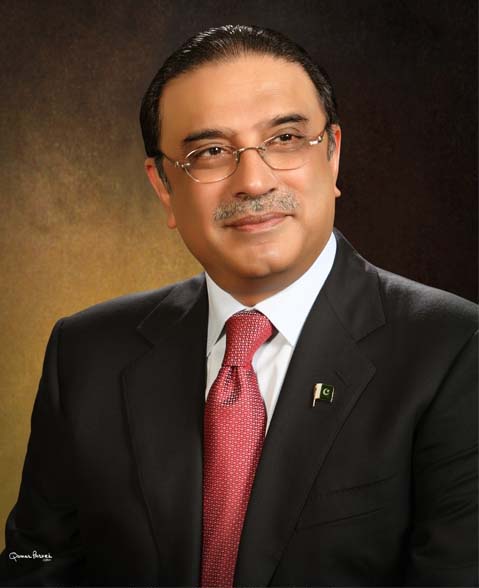
Power must flow from the people and not from gun: Co Chairman PPP Asif Ali Zardari

https://mediacellppp.wordpress.com
In a message on the eve of 75th Pakistan Day falling on Monday March 23 former President Mr. Asif Ali Zardari while urging the people to rededicate themselves to democratic ideals said that state power must flow from the will of the people and not from the barrel of the gun. The Pakistan Day is an auspicious occasion in our national calendar and I wish to greet the people of Pakistan, he said. On this day we also need to rededicate ourselves to the ideals for which Pakistan was created. These were the ideals of democracy, rule of law, constitutionalism and egalitarianism, he said. The people of Pakistan will never accept the agenda of fanatics and extremists in the name of religion and imposed through bullet. Let it be made abundantly clear that in Pakistan power must flow from the collective will of the people and not from the barrel of the gun or the dictate of the self righteous individual behind the façade of religion. On this day we also need to remind ourselves the pledge made by our founding fathers in the historic Resolution adopted in 1940 to safeguard the religious, cultural, political and all other rights of Non Muslim minorities in consultations with them. The rising incidents of intolerance and bigotry towards the Non Muslims and the misuse of certain laws against them is a matter of grave concern and we must strive to promote tolerance and religious harmony, he said. Let us honor the pledge made by our founding fathers on our behalf in safeguarding the rights and interest of the non Muslim citizens of the state, he said. May Allah bless our efforts to prove ourselves worthy of the heritage bequeathed to us by the Quaid-e-Azam.

Khurshid Shah’s press conference at PPP Punjab Secretariat

https://ppppunjab.wordpress.com/
Leader of the Opposition in the Nation Assembly Khurshid Shah said on Sunday that Muttahida Qaumi Movement target killer and death row convict Saulat Mirza should be punished as decided by court.

khurshed by abbtakktv “Even if Saulat Mirza’s statement is true, his punishment shouldn’t be postponed or converted into a life-sentence. He should be punished. His statement is on record and that can be investigated. Delaying his punishment has benefitted MQM politically,” Shah said. Addressing the media at the PPP Punjab Secretariat in Lahore, the opposition leader added that the statement of a man sitting in a death-cell should not hold any significance.
Just a few hours before his planned execution on March 17, Mirza, in a video released by a private televison channel, alleged that he received the order to kill former KESC Director Shahid Hamid from his party’s chief Altaf Hussain at MQM leader Babar Ghauri’s residence.
He also lauded the military for bringing peace to Sindh and for carrying out an operation without any discrimination. Shah elaborated that 60% of those killed in the Karachi operation so far were from Lyari, 20% were Taliban, while 8% to 10% were from the MQM and 5% to 6% were from the ANP and Sunni Tehreek.
“Lyari is PPP’s constituencies but we are not crying. The operation should be against all criminals. The military is carrying out it without any discrimination and has brought peace in Sindh to a great extent,” he maintained. ‘Bilawal to attend ZAB’s death anniversary’ PPP chairman Bilawal Bhutto will be in Pakistan for his grandfather and former prime minister Zulfiqar Ali Bhutto’s death anniversary on April 4, Shah said.
He went on to rule out any differences between Bilawal and his father Asif Ali Zardari. Earlier, a senior PPP leader has disclosed that Bilawal would not be attending the 36th death anniversary of his grandfather, to be held in in Garhi Khuda Bux.
Meanwhile, Shah further said that sit-ins were not able to achieve anything for four months and that the PPP played an important role in mediating between the Pakistan Tehreek-e-Insaf and the government. “I welcome the agreement between PTI and the government on the issue of forming a judicial commission. If Imran Khan goes for any other adventure after this, it would be devastating for him politically,” he added.

Clashes in Pakistan Kill Dozens of Militants


Ayaz Gul


Pakistan’s military said it has killed at least 80 Islamist militants and lost seven soldiers in fierce fighting near the mountainous Afghan border.
The clashes have been taking place in the remote Tirah Valley in the insurgency-plagued northwestern Khyber tribal district.
Army spokesman Major General Asim Bajwa reported “steady progress” in the counter-terrorism operation with the code name Khyber-II, saying it is aimed at clearing areas close to Pakistan’s border with Afghanistan.
“In Khyber, terrorists being dislodged from bases fleeing to border. So far, 80 terrorists killed, approximately 100 injured in this phase,” Bajwa said in a Twitter post.
The militants, officials said, belonged to the outlawed Pakistani Taliban, an alliance of extremist outfits waging an insurgency against the state. Army jets have also pounded suspected militant positions in the areas over the past two days.
A spokesman for the group claimed the army death toll is much higher.
Independent confirmation of the fighting details is not possible because journalists and aid groups have no access to the conflict zone.

Saturday, March 21, 2015

Music Video - Michael Jackson - Beat It

Video - Western powers stress unity in Iran talks, "won't do bad deal"

Video - Anti-War Protesters March in DC

Video - First Lady Michelle Obama Gives Remarks at a Peace Corps Training

President Obama's Weekly Address: It’s Time to Confirm Loretta Lynch

U.S. May Stay in Afghanistan After '16


A White House official on Friday appeared to leave open the possibility that American troops could remain in Afghanistan after President Obama leaves office, in what would be a marked shift from the administration’s insistence that only a small force based at the embassy in Kabul would remain after 2016.
With the Taliban insurgency still raging, the administration has been weighing options to slow the pullout of the roughly 10,000 American troops and thousands of contractors in Afghanistan. The number of troops was supposed to be cut by almost half at the end of this year, but officials have said in recent days that Mr. Obama was nearing a decision to keep much of the current force in place well into next year to continue training and advising Afghan forces.
While most officials have said that the 2016 deadline for a pullout remains firm, Jeff Eggers, a senior National Security Council official, said Friday that discussions about what to do in the next year or so would lead to a decision about what to do in 2017, “given the intent to maintain this ongoing dialogue” with the Afghan government.
However, he added, “it still remains the intent to consolidate and complete the retrograde down to a Kabul-based security cooperation office mission in 2017.” Retrograde is a military term for the withdrawal of troops and matériel.
Separately, Bernadette Meehan, a spokeswoman for the council, said, “President Obama has not opened the door to anything larger than an embassy force after 2016.”
Mr. Eggers’s comments are in line with what other officials say is being debated within the administration, even if Mr. Obama’s focus is currently on what to do next year, not afterward.
Like so many of the plans for Afghanistan laid out in Washington since the war’s outset in 2001, realities on the ground appear to again be forcing American officials to consider revamping their strategy for ending the war.
Peace talks appear to be a far-off possibility after a stretch in February and early March in which it appeared that the Taliban might be willing to meet with the Afghan government. So instead of talking about how to end the war, Afghan and American officials are preparing for violence to intensify as the snow melts in the high passes that separate the insurgents from their safe havens in Pakistan and what is known as the fighting season gets underway.
Afghan forces, which have done the bulk of the fighting and dying over the past two years, are still very much a work in progress. They managed to keep the Taliban from making significant gains last summer only with help from the American-led coalition.
The resilience of the remaining fighters from Al Qaeda in Afghanistan and Pakistan has also surprised the Obama administration. Officials say that many of the roughly 2,000 troops currently dedicated to counterterrorism operations in Afghanistan are going to be needed well into next year, and that a larger force will allow for bases crucial to combating Al Qaeda and collecting intelligence in southern and eastern Afghanistan to remain open.
The decision to slow the withdrawal in 2016 — and the debate about what to do in 2017 — is not being driven solely by grim battlefield assessments. Afghanistan’s new president, Ashraf Ghani, has proved to be a far more willing partner with the United States since he took over from Hamid Karzai in September, and American officials say they want to give him as much help as they can.
Mr. Ghani is making his first trip to Washington as president next week, and plans for the coming years are expected to be the focus of his meetings with Mr. Obama and other officials.
There is “a clearly positive vision now for Afghanistan that President Ghani holds,” Mr. Eggers said Friday. American officials are determined to “seize the qualitatively different relationship and that more positive vision,” he said.
Mr. Eggers added that Mr. Obama and Mr. Ghani have begun discussing Afghanistan’s desire for more “flexibility” in the American drawdown plans for 2016.
“It’s a wise move not to be boxed into a corner and commit to leaving,” said Seth Jones, an Afghanistan expert at the RAND Corporation.
Still, former officials close to the Obama administration have sought to portray any residual presence in Afghanistan as in line with the president’s desire to leave office having ended the two wars he inherited in 2009.
“The president wants his legacy to be ending overly long, overly costly and inadequately effective wars,” Vikram Singh, a former Pentagon official in the Obama administration.
Mr. Singh said that having a longer-term troop presence in the country does not necessarily mean that the United States would be “at war” in Afghanistan, citing American military training missions in Uganda and the Philippines that have gone on for years.

Pakistan's selective hangings: A means to harass opponents?


Shamil Shams
Pakistan has hanged 21 people in the past two days, taking the toll to 48 since a moratorium on the death penalty was lifted in December. Experts say the government is executing opponents in the garb of fighting terror.
When Prime Minister Nawaz Sharif's government decided to resume capital punishment four months ago, it justified the move by claiming it was a much-needed step to curb terrorism in the country. The government officials argued that fast-track executions were necessary to combat extremist attacks. There was also considerable support among the public for the lifting of the unofficial moratorium, which had lasted between 2008 and 2014.
The decision followed the Taliban attack on the Army Public School in Peshawar on December 16 which shocked and horrified the nation. The militants' assault and siege of the school left more than 130 children dead. The people demanded the strictest action from the government and the resumption of executions was claimed to be one of the many actions required to punish the terrorists.
However, most of the people whom the government hanged in the first months of this year were not involved in the Peshawar massacre. Instead, they carried out failed assassination attempts on former president and army chief, Pervez Musharraf, who is currently detained on treason charges. At the same time, a number of incarcerated militants, including Zaki-ur-Rehman Lakhvi, a key suspect in the 2008 Mumbai attacks, are still alive and are yet to stand trial.
On Tuesday, March 10, the government went a step further and lifted the moratorium on the death penalty in all capital cases, thus strengthening criticism that Islamabad was not serious in punishing the Taliban and other jihadists.
'A knee-jerk reaction'
More than 8,000 Pakistanis, including juveniles, are currently on death row, according to rights group Amnesty International (AI), which has sharply condemned the recent executions.
"Amongst those executed was Muhammad Afzal, who was 16 years old when he was sentenced to death," AI said in a press release on March 17. "Pakistan is turning itself into one of the world's top executioners – a shameful club no country should aspire to join. The government must immediately re-impose the moratorium on the death penalty with a view to its eventual abolition," it added.
Shafqat Hussain, a minor, was to be hanged on March 19 for a crime he allegedly committed when he was 14 years old, however, after an aggressive civil society campaign the government decided to put his execution on hold.
In a DW interview, Amnesty International's Deputy Asia Pacific Director, David Griffiths, says that by expanding the scope of the death penalty further and opening up for executions of non-terror convicts, Pakistan is using the death penalty as a quick-fix solution to tackling crime, when in reality there is no evidence to support that it works as a deterrent.
"Lifting the full moratorium on the death penalty is a highly regressive move by the Pakistani government, which could potentially put thousands of death row inmates' lives at risk. Sadly, the authorities have since turned to the death penalty in a knee-jerk reaction to try to combat 'terrorism.'
By expanding the scope of the death penalty further and opening up for executions of non-terror convicts, Pakistan is making the same mistake we see many governments repeating - using the death penalty as a quick-fix solution to tackling crime, when in reality there is no evidence to support this claim," said Griffiths.
Political victimization?

He also said that the decision to lift the moratorium was imposed on the civilian government by the military leadership: "The proof is that the people who have been hanged so far are those who attacked the military headquarters in Rawalpindi, Pervez Musharraf, or other military officials. So the hanging is controlled by the military and not the civilian government," Shah told DW.Islamabad-based civil society activist and researcher, Salim Shah, fears that after hanging a few criminals the government will go after political opponents.
On the other hand, the analyst argues that the authorities are reluctant to execute Mumtaz Qadri, who assassinated the former governor of the Punjab province, Salman Taseer, in 2011. "His hanging would actually go against the Islamic ideology of the state. Qadri, who should have been sent to the gallows by now, is getting all privileges in prison and the media is silent about it," Shah said, adding that not a single Taliban commander had been hanged so far.
"My worry is that they (the authorities) will hang or use the hanging as a means to harass political opponents such as the nationalists in the western Balochistan province, or other political parties that are disliked by the military," he added.
Some activists point out to the case of Saulat Mirza, an alleged activist of the Muttahida Qaumi Movement (MQM) party, which has a strong hold on Pakistan's economic hub, Karachi. Mirza was convicted in murder cases in the late 1990s and has been in jail for the past 15 years. He was scheduled to be put to death on Thursday, March 19, but his hanging has now been postponed after he accused MQM chief Altaf Hussain of ordering him to assassinate political rivals – a confession he made on a video.
Observers say the government is using Mirza's execution to intimidate the MQM and to pave the way for an all-out military operation against the party.

Balochistan - Urgent Steps Required To Tackle Drought Crisis


Balochistan is home to several problems and the most recent problem to have surfaced is a drought. Provincial Disaster Management Authority (PDMA) has stated that 29 out of 32 districts of Balochistan are facing drought conditions due to fewer rainfalls last year. The scale of the impact of this drought can be catastrophic for people living in rural areas of the province. Unfortunately, neither Balochistan government nor Pakistani media has given due attention to this grave problem.
According to statistics provided by the irrigational department of Balochistan, 80% of the farmland in Balochistan is rain-fed. When less rainfall takes place during a season then it reduces the quantity of agriculture production. These products include food items such as corn, wheat and hay which is consumed by livestock. Reduction in growth of these items not only results in food shortage for Humans but livestock also starves to death. This has been the case in Noshki district of Balochistan where approximately 25 percent of the livestock has died due to lack of sufficient fodder.
Balochistan experienced a severe drought from 1997 to 2005. That drought proved to be calamity and resulted in deaths of 1.76 million livestock. According to PDMA, Rs. 25 billion was the amount of estimated damages caused by the previous drought. People of the affected areas became victims of acute malnutrition and it resulted in several deaths.
Interestingly, Agriculture is the source of livelihood for 80% people in the province. A drought would effectively destroy the economic backbone of the province. The prices of important food items would soar up and there would be a shortage of food, especially in rural areas. Death of livestock would result in increasing the prices of meat and milk multifold and that in turn will generate an excessive inflation in the province. Economically, people of Balochistan general are not doing well at the moment but after this drought poverty will further rise and so would the social evils and violence. In short, if relief operations are not conducted on time, Balochistan is all set to drift into a major catastrophic crisis of mythical proportions.
Unfortunately, disaster management and planning bodies of the Balochistan didn’t make any preparations for a new drought. As a result, PDMA is ill-equipped and under-prepared to conduct a timely need-assessment of the possible damage let alone conducting relief operations. Government of Balochistan announced Rs. 1 billion for Need assessment and emergency relief for drought victims. So far, not a single penny has been used for helping the drought victims of Balochistan. Negligence of PDMA and indifference of Balochistan government is compounding the problem that people face in the form of forthcoming devastating drought.
This issue is extremely critical in nature and requires the foremost attention of the provincial and federal governments. Balochistan government in aid with federal government should immediately release funds for the drought victims. Need assessment of the Drought affected areas should be completed on war footings and relief activities started right away. Government should provide subsidized fodder to the cattle owners so that livestock in millions can be prevented from perishing. Medical teams should be sent to the affected regions for treatment of humans as well as cattle. These steps to some extent can minimize the impact of possible damage that would be caused by this drought.
The aforementioned steps can be useful in reducing the impact of drought but it’s only a short term solution. Next year if there are fewer rainfalls again, then all problems will re-emerge. There needs to be a permanent solution for this problem. Firstly, government needs to build dams where rain water can be stored. This will help in raising the water table and preventing a drought like situation. Federal government has announced to allocate Rs. 30 Billion for dams in Balochistan. Based on past experience, it’s less likely that dams would be constructed on time and in proper way. Construction would be delayed by years and poor quality construction material would be used due to commission mafia prevalent in Balochistan. Therefore, a separate oversight mechanism should be developed before commencement of work on these dams. These dams should be treated as extraordinary projects due to the purpose that they will serve.
Improvement in the capacity of disaster management setup of Balochistan is the second thing that should be done. PDMA should be restructured and given the status of semi-autonomous institute. This can help in getting out of the shackles of corrupt bureaucratic structure of the province. Apart from that PDMA needs to improve its capacity to conduct need assessment and carry out relief operations. These steps can’t be done overnights and therefore require political commitment and priority.
Unfortunately, Dr. Malik government has proved its inability more than once to show political resolve. Rather than wasting precious resources on publicity stunts such as sports festivals, government needs to prioritize the issue of drought. Any minor negligence on the part of provincial government will result in severe humanitarian crisis that will have repercussions for entire region.