Wednesday, January 14, 2015

Afghanistan - Why the Taliban is Turning to China


By AHMAD HASIB FARHAN

After Afghan President Ashraf Ghani’s landmark visit to China in October 2014 the Chinese government announced its full support for the Afghan peace process.
Beijing’s efforts include an invitation for the Taliban to visit China, which was accepted by the Taliban. According to a leading Pakistani newspaper, two senior Afghan Taliban visited China last November. The Taliban wants China to help negotiate a political settlement with the Afghan government.
The Taliban, particularly after they closed their headquarters in Qatar, demonstrated extreme antipathy to peace talks with Kabul. This antipathy stems from an absence of a realistic peace plan from the former Afghan government under Hamid Karzai; a reluctance from neighboring countries supporting the Afghan peace process; and political uncertainty due to prolonged elections in Afghanistan.
Yet the Taliban signaled a breakthrough in efforts to start peace negotiations by visiting China and seeking Chinese support for mediation between them and the Afghan government.
Though, the outcome of the Taliban visit to China is not clear, it gives optimism to the people and government of Afghanistan that official peace talks with the Taliban may start soon. Afghans are generally optimistic for peace after the popular presidential elections and a peaceful transition of power to new the president of the country.
Yet skeptics may ask what persuaded the Taliban to entertain diplomacy?
Strong stance of the Afghan government against Taliban
Unlike President Karzai, President Ghani has adopted a strict policy in dealing with Taliban. He has given a very clear message to the Taliban. “Do not ever threaten an Afghan with violence. We will rise as one and we will face every threat the way we have taken on thousands of previous armies and conquerors,” Ghani told CBS.
“This is the moment of destiny. Work with us to transform Asia but should you threaten our existence everybody will be destroyed, not just us,” he added, smiling.
This was message not only for the Taliban but also for those who support and shelter them. President Ghani called repeatedly upon the religious clerics to denounce Taliban activities and support government, something that rarely happened under President Karzai.
In another stance, on October 9, 2015 during a visit to Afghanistan’s largest prison, Pule-Charkhi Prison, President Ghani gave a strong message to Taliban: “Those who were involved behind the killing of children, women and Afghan security forces should be punished for their crimes.”
On the other hand, Afghanistan’s First Vice President Abdul Rashid Dostum threatened the Taliban with a tough crack down. On a mission to the northern Juzjan province he gave a clear message to Taliban. “Living in peace is better that being killed.” Dostum also proclaimed that he has prepared a Special Force of 20,000 fighters to eliminate the Taliban from Afghanistan.
The Taliban realized that despite the drawdown of international security forces, General Dostum holds enough power the fight them.
Local uprisings against Taliban
Local villagers for the first time got the Taliban scrambling after they mounted a rebellion against the insurgents in the eastern province of Ghazni, back in 2012. A group of angry Afghan villagers in the Ander district of Ghazni province inflicted heavy casualties on the Taliban and succeeded in banishing them from several of villages and many districts of Ghazni Province.
Today, the uprising against Taliban has reached to Paktia, Konar, Nuristan, Laghman, Faryab, Logar and Kandahar(the birth place of Taliban) provinces. Without any doubt such uprising could spread rapidly across the country and have the potential to gain a grip in displeased communities across Afghanistan. As local villagers, under Taliban-controlled areas, are extremely frustrated from the Taliban and their followers. Closing schools, pressuring the population, atrocities, and intimidation by the Taliban is no more tolerable by millions of Afghans who wants a change.
Taliban certainly have a sharp memory to recall the consequence of local uprisings if they grip the entire country. Let’s take a close look at recent uprisings in Afghanistan.
  • In 1838, popular uprising against the Great Britain by the Afghan people resulted in the massacre of the entire British army of 15,000, save one.
  • Second Anglo-Afghan War 1878, the second uprising against Great Britain, though, brutally crushed in a pre-emptive move but finally resulted the complete withdrawal of British invaders.
  • In 1917, the invading forces of Great Britain for the third time got wind of another impending rebellion against their occupation which resulted the full independence of Afghanistan. Proclaimed by the King Amanullah Khan in 1918.
  • Last, but not the least, the uprising against the Soviet Union invasion started right after their invasion in 1978. The local uprising, backed by the Islamic world and United States not only resulted in the complete withdrawal of the Soviet Union from Afghanistan but the independence of many central Asian countries.
Local upraising undoubtedly alarmed Taliban that, there is no more space for them in the Afghan society.
Changing Pakistan
Pakistan is the Godfather of the Taliban that not only created but sheltered and supported the group since their birth in 1996.
Pakistan, which itself is already in turmoil due to rampant corruption, incompetent governance, economic crises and political tension, can no longer support a group of people that has no foundation in the Afghan society. International pressure on Pakistan to destroy the safe heavens of terrorist and put an end to its three decade-long covert war seems to have compelled the leaders of Pakistan to rethink its strategic depth policy in Afghanistan and stop supporting the Taliban.
The Taliban, who never had international support, were dealt a harsh blow in their ongoing battle in Afghanistan after losing a close ally in Pakistan. Thus it is time for the Taliban to talk about a political settlement.
Regional changes
In the 1930s, Pakistan’s poet-philosopher Allama Mohammad Iqbal characterized Afghanistan as Qalb-e-Asya (the Heart of Asia).
In his unique style, Iqbal wrote in Persian, and I translate:
“Asia is comparable to a living body. The heart that beats inside the body is the homeland of Afghans. The destruction of Afghans would be the destruction of Asia. In their [Afghan] progress and prosperity lies the well-being of Asia.”
After eight decades the major powers in Asia must believe these prophetic lines of Alama Iqbal and support Afghanistan in reaching a sustainable peace. Although India and Turkey played a key role over the past 14 years,China is emerging from the shadows to play a significant role in bringing peace to Afghanistan. The Heart of Asia Conference concurs the wind of change in Asia.
The Taliban got wind of these impending changes in Asia and embarked on a political struggle to protect their future by indicating a willingness to talk about a political solution to the Afghan crises.
Moreover, as the US and NATO military drawdown and Afghan security forces take full responsibility of security in the country, the Taliban lost the excuse of fighting against foreign forces. They can no longer justify the war against the Afghan forces.
Now that the Taliban stands at a crossroads between choosing a peaceful life and isolation, they seek China to help negotiate a political settlement with the Afghan government.

It is a strategic opportunity for the new Afghan government to use all instruments for bringing peace in the country. It’s important for the Afghan government to pressure the Taliban by supporting the local uprising and enhancing its ties with Pakistan and other regional nations. Afghans, like other nations, have the right to live in peace, and Kabul must use all means to bring peace to this war-weary nation.


Pakistan - PUNJAB NOT BEHIND IN CORRUPTION RACE


By Yasir Habib Khan 

Contrary to popular claims and concepts, corruption goes as unabated and unchecked in Punjab as in other provinces

Governmental corruption touched peaks in 2014 making public offices sick of bribery, kickbacks, embezzlements, bad governance and forgery in official record to protect big shots amid the Sharifs’ verbalization for the rule of merit and transparency in the country.
A classified report compiled by intelligence agencies unearthed creeping institutional corruption after mapping the performance of bureaucracy and government during 12 months. The report falsified smart statistics played by PML-N government taking advantage of Transparency International report.
Recent revelation of former Punjab law minister Rana Sana Ullah put a big damper on government claims of fairness after he made loud and clear that every MNA, MPA gets 16 percent kickback in all development projects.
Acting as whistleblower, intelligence agencies prepared a report on spiraling graft in public offices. The report submitted to federal interior ministry revealed that almost 71 percent government officials were found of manipulating set merits parameters. “More than 62 percent public office holders are indulged in various kinds of corruption, 30 percent receive illegal gratification directly while 42 percent government employees have various means to take bribe,” report spelled out.  The report further said that corruption had many faces and popular kind of corruption was that 55 percent were fond of getting their personal works done and bagging costly gifts in return of those works that could never be executed under government prescribed terms and conditions.
CM Punjab secretariat senior official on the condition of anonymity said “It has also been uncovered through the report that files and data prepared against corrupt officials were misplaced, disappeared, hushed up or burnt under mysterious circumstances. Later demerits changed into merits and officials implicated in graft cases got off the hook.”
As per report, Punjab government has topped in the list of departmental corruption. KP, Sindh and Balochistan are rated as second, third and forth in corruption index. Report includes all big guns including DMGs, Chief Secretaries, Secretaries, Commissioners, DCOs, EDOs and Directors. Report pinpointed worst condition of corruption in the domains of Police, Health, Education, Food, Local Governments, Water, Infrastructure, Irrigation, Information Technology and Power.
In a distasteful move, Punjab government flaunted the rules and regulations and smashed all level of transparency when it ordered to purchase seven new vehicles despite strict ban. Four have been purchased costing Rs.10.5 million and three are on the way. Chief Secretary Syed Mubashar Raza sent a summary to CM Punjab Shahbaz Sharif after Finance Minister Mujtaba Shuja Rehman thumped up the purchase. CM bent the rules and vehicles were bought.
Taking cognizance of mounting graft situation, Punjab Finance department put on hold all funds that were to be released to various department including Live Stock, C & W, Housing, Public Health, Irrigation, Highway and others. It also suspended development share that was due to be doled out to local governments.  So much so, grants and funds that had to be handed out to MPAs to complete the development works have been stopped till further orders. Source privy to development disclosed that in order to check rampant financial irregularities, decision was under review to release the funds in installments instead of one go.
In recent Past, National Accountability Bureau (NAB) declared Punjab responsible for 65 percent corruption in the country.  Information Minister Pervaiz Rashid termed the claim as fabricated saying it was old report engineered by PPP.
Even during current Punjab Assembly session, PML-N’s own lawmakers burst out their outrage against rapid rise of corruption in government departments. Shaikh Allauddin slammed secretaries for not being present in their offices. PML-N MPA Khalil Ahmed Sindhu deplored that Punjab Civil Secretariat was aimed to ease out people’s problems but secretaries preferred doing work of their own choices.
One-year performance report compiled by Pakistan Institute of Legislative Development and Transparency (PILDAT) exposed PML-N government appearing soft on corruption at governmental level.
PILDAT survey said that the in the eye of public, PML-N government at center was not transparent, honest or accountable in its policies and projects. With a view to regain the trust of people, government has to fade away perceptions of corruption and irregularities in its management from head to toe, it added. The opinion polls also said Prime Minister Nawaz Sharif received 52 per cent negative rating as people dubbed his performance in the last year as bad to very bad.
Punjab government Spokesperson Zaeem Qadri refuted such reports and said that government had taken everybody by surprise by clamping down cartel of corruption. “We earned our wing and Transparency International report certified our efficiency,” he claimed.
Since corruption is rife, Sharifs and their financial wizards like to use jugglery of statistics to showcase pseudo performance. Experts branded it as statistical corruption. Former governor of the State Bank of Pakistan Dr Muhammad Yaqub in his report said that annual report of the State Bank of Pakistan for fiscal year 2014, was full of contradictory statements and it had to be designed with a view to avoid government resentment.
The report said that growth rate claimed to be 4.1 percent in 2014 but the Institute for Policy Reforms head Dr Hafiz Pasha described it exaggerated and claimed that it was actually lower than even the previous year.
Under the wired situation, many question marks have appeared on the report on Transparency International (TI) which is now being capitalized by PML-N government in projecting its lofty claims against lowering down corruption. Report said that a steep decline has been monitored in the rate of corruption in Pakistan as it stood at 126th position in an index of 175 countries.
TI Report, surprisingly, claimed Pakistan ranking up to 126th position by getting 29 point scored on the basis of corruption, misuse of power, hidden transaction and bribery from zero. The country has never got this distinction since the first CPI was released in 1995, it said
However, hidden fact testifies true picture of rampant corruption that is badly affecting flow of billions of dollars of investment and foreign aid. UK set the condition of releasing the aid of a $6.7 billion IMF aid programme on checking the corruption.
S & GD official, in reaction to report, said that thousands of inquires had been initiated against corrupt officials. Usually, some inquiries stay alive for a while and later are thrown on back burner. Whether new corruption files would let the corrupt mafia be brought to book or spared unhurt as happened in most of cases, all hinged on government resolve to root out corruption and to be true with statistics.

Unemployed Graduates In Balochistan Are Waiting For Internships For Two Years


Unemployed graduates in Balochistan are waiting for internships two years after submission of applications.
Federal government had announced an internship program for youth of Balochistan in 2013. Government of Balochistan accepted applications for internship of graduates of all the districts.
Thousands of unemployed graduates submitted applications of internships in their respective Deputy Commissioner Offices.
Almost two years have passed and applicants are still waiting for any progress in the application process.
“Balochistan government has deceived the youth by first accepting their applicants and then putting them in cold storage,” said Naeem Ahmad, an applicant of Internship Program.
Another applicant, Sadiq Ali lamented, “Internship issue is one of the many unfulfilled promises of the Balochistan government.” He added “It’s idiotic to expect anything positive form this government.”

Local Government Demolishes Homes of 13 Pakistani Christian Families who Refuse to Serve as Bonded Labourers


Village officials in Chak No. 216 GB, Samundri, in the Punjab province of Pakistan, demolished the homes of 13 Christian families in early December after they refused to serve as bonded labourers at a brick kiln. The Muslim owners of the brick kiln succeeded in pressuring municipal administrators into destroying the family homes on the pretext that the land was needed to build a new village hospital. 
All of the Christian families living in the village were forced to live in a separate area away from the Muslim residents. While the village is Muslim-majority, there are around 72 Christian families who live there. Professor Anjum James Paul, chairman of the Pakistan Minorities Teachers Association, has condemned the incident, reminding government officials of their constitutional duty to provide shelter to all citizens, especially now that these Christian families are without homes in the cold winter.
According to the Professor, Pakistani Christians are unable to receive a fair hearing from their members of parliament as politicians will inevitably favour their Muslim-majority community members. Since 2002, the 10 seats reserved for non-Muslim representatives are filled by delegates selected by the majority parties, making it impossible for Christians to choose their Christian representatives. Previously, Christians could vote only for representatives of the seats assigned for non-Muslim minorities, with no say over the majority parties. Although the previous system was generally held to be unfair to religious minorities, the 2002 reform has not brought any improvements to the electoral process for Christians.
According to the Centre for Legal Aid Assistance and Settlement (CLAAS) most bonded labourers in Pakistan work in the brick kiln industry. Impoverished families who require urgent finances in family crises, "effectively hand their lives over to the employer in order to repay the loan in labour". They are then unable to leave the brick kiln until the entire debt has been repaid; this is almost impossible for them to achieve with the low wages that they earn. Owners may sell their labourers to other factory owners. Despite the fact that bonded labour was declared unconstitutional in 1989, persistent injustice and lack of political will has meant that there are currently at least 1.8 million bonded labourers in Pakistan, many of them Christians.
Bonded labour often involves the whole family, with an estimated 75 per cent of Pakistan's bonded labourers known to be children, and debts are passed from generation to generation. Living in basic housing without proper sanitation, labourers are compelled to work long hours each day in return for a miserable wage, and are often the victims of violence and sexual assault.


Read more: http://www.crossmap.com/news/local-government-demolishes-homes-of-13-pakistani-christian-families-who-refuse-to-serve-as-bonded-l-15555#ixzz3OpTWGl7p

Pakistan - Religious freedom and diplomacy More than a luxury


JOHN KERRY, the American secretary of state, has been in Pakistan over the past couple of days, on a tough assignment. He had to show the proper degree of sympathy over last month's terrible massacre of schoolchildren by the Pakistani Taliban, and urge his hosts to draw the logical conclusion: they must fight all violent Islamist groups instead of picking and choosing between them. And above all, they must crack down on groups which threaten India, although they are precisely the ones which have often found discreet sponsors in high places.  
As though that wasn't tricky enough, a rather unusual piece of advice was sounding in Mr Kerry's ears as he began his Pakistani sojourn. A broad and ideologically mixed array of Washingtonian south Asia wonks, including ones who don't normally pay much attention to things spiritual, urged him in an open letter to put religious freedom much higher on the agenda. That's more than a call for motherhood and apple pie. With a country like Pakistan, where America's wish list is long and its traction is finite, there are hard choices to be made. The issue doesn't feature explicitly in the "strategic dialogue" which the two countries are supposed to be having; that focuses more on things like energy, the economy and non-proliferation. And then there is the future of Afghanistan after the withdrawal of most Western troops.
So why add religious freedom to an already long list? First, say the letter's signatories, because trends in this area are so terrible. Things are getting worse and worse for minorities like the Christians, the Shias, the Ahmadiyya community and the Hindus.  Aasia Bibi, a Christian woman, faces a death sentence on an absurd blasphemy charge, arising out of a petty local quarrel over drinking water, and at least 37 other people are in jail for alleged blasphemy. An extremist cleric last month denounced the Ahmadiyya as the "enemy" on television and at least one person died as a result. Also late last year, two Christians were lynched and a Shia was killed while in custody by a policeman. 
And here's a hard political fact: if Ms Bibi is hanged, that will create a backlash in the United States that will make it much harder for the administration to justify aid to Pakistan. Moreover, as religious-freedom campaigners always say, a country where horrible acts of religious persecution take place won't in the long run be a great strategic ally. And of course, many of the worst persecutors of vulnerable minorities are precisely the armed groups which threaten the region's stability. Diplomatic pressure could certainly make a difference to the fate of Ms Bibi, says Lisa Curtis of the Heritage Foundation, a signatory and prime mover of the letter.
Another point the signatories might have made is this: whenever America has ignored the religious implications of its foreign policy in that part of the world, the consequences haven't been good. The influence of hard-line clerical forces in Pakistan started growing in the time of President Zia ul-Haq , whose Islamist leanings didn't seem important in those cold war days when fighting the Soviet Union was the main priority. More attention should have been paid, and cities like New York, Paris and London would be safer places now if anyone had foreseen the consequences of that oversight.

UNHCR: Supplies running short as more people flee North Waziristan


As Pakistan's army steps up its offensive against Islamic militants in Waziristan, Bo Schack, UNHCR representative in Afghanistan, tells DW many displaced families may soon struggle to gain access to basic services.
Pakistan's military has vowed to avenge the Peshawar school massacre, in which some 150 people, mostly children, were killed. Since the Taliban assault on December 16, the army has carried out numerous ground and air strikes on Islamist militants in the restive Waziristan region close to the Afghan border.
The new offensive is a continuation of the military's operation "Zarb-e-Azb," which started in June last year. The Pakistani government claims to have killed over 1000 militants in the area. However, there have been reports of collateral damage and civilian killings as well. The South Asian country's authorities deny these claims, and due to the fact there is no access for independent journalists to the area, it is difficult to confirm civilian casualties.
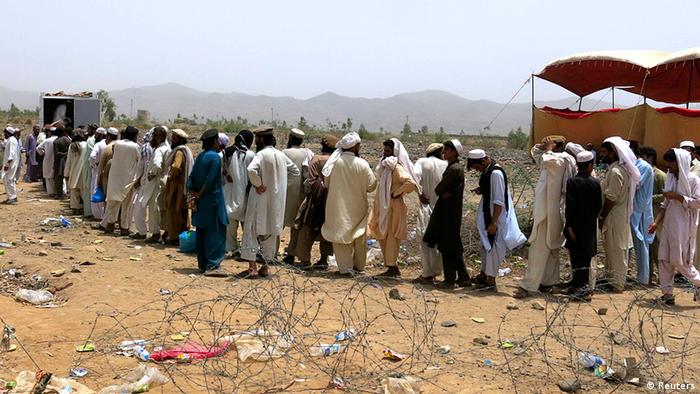
Hundreds of thousands have fled their homes in South and North Waziristan since the start of the operation. It is believed that some of the region's most feared militants use Waziristan as a launching pad for attacks within Pakistan as well as against NATO forces in neighboring Afghanistan.
Bo Schack, UNHCR representative in Afghanistan, says in a DW interview that with the arrival of winter and the number of refugees increasing far beyond initial estimates, it has become much more difficult for communities hosting the refugees, for instance, in Afghanistan, to help arriving families meet their basic needs.
DW: How many people have left Pakistan's tribal area of North Waziristan since Islamabad launched a military offensive in mid-June targeting Islamist militants?
Bo SchackIt is hard to estimate exactly how many people have been displaced in North Waziristan. As for the arrivals into Afghanistan, the current estimate and preliminary registration figure amounts to more than 39,000 families or some 280,000 individuals.
Where have they gone to in Afghanistan?
Almost 29,000 families have been registered in Khost province, in the southeastern region of Afghanistan, while more than 10,000 are registered in Paktika province, just to the south of Khost.
Host communities in these provinces share tribal and cultural links with the refugees, and have been quick to make resources available to meet the basic needs of arriving refugee families.
With the number of refugees increasing far beyond initial estimates and the arrival of winter, however, this has become more difficult. A close cooperation of support has been developed between the communities, the authorities, UNHCR and other UN agencies, as well as a number of important NGOs both international and national.
What is the current situation of the displaced families?
The majority of refugees are currently living in host communities in Gurboz, Matun and Spera districts in Khost and Barmal in Paktika, with over 6,000 families living in the only established camp, Gulan in Gurboz district. With the onset of winter, refugees have required additional assistance.
More than 16,000 refugee families have thus far received winterization items from UNHCR and other humanitarian organizations, which include tents, shelter kits, warm clothing, wood stoves, blankets, and other assistance, depending on need.
The ability of host communities to support the high number of refugees, however, is expected to decrease as resources are exhausted and available shelter is limited during winter months. Also, providing support to these communities to enable them to continue hosting refugees and preventing secondary displacement is crucial.
How high is the risk of the polio virus spreading in these communities?
Both the government and the humanitarian community have been cognizant of the risk of polio from the beginning of the refugee influx. Health actors, including WHO, UNICEF, IMC, and HNITPO deployed mobile teams to the border and set up permanent teams in affected districts in order to ensure comprehensive vaccination coverage for the population of children under 10 years old. Since July 2014, almost 47,000 children under the age of 10 have been vaccinated against polio at the border by these teams.
Separate polio vaccination campaigns have covered 180,000 children under the age of five from both the refugee and hosting communities in Khost and Paktika provinces. A few cases were identified in the very early days of the arrivals but since then there have been no polio cases.
Clearly, the important response by all health entities has been very effective in terms of making sure that there is adequate intervention to avoid any further spread of polio.
Is the military offensive triggering a humanitarian crisis?
UNHCR and partners as humanitarian actors are carrying out a response to the civilian communities and individuals having arrived in Afghanistan. We cannot comment on triggering factors.
What do the refugees need most?
The most important needs as highlighted by the refugee communities are particularly shelter, food, and other utensils to support daily life. In addition, medical care, water and sanitation are needed. The hosting communities have also obtained assistance for education of the children, another important issue for the refugee communities. This has been made possible by involving trained teachers among the refugees as well as other individuals with experience in education.
Pakistan Massenflucht aus Nord-Waziristan vor Offensive gegen Islamisten
Schack says that since July 2014, almost 47,000 children under the age of 10 have been vaccinated against polio at the border
In December 2014, a mission was conducted in Khost province to identify specific concerns related to sexual and gender-based violence. Concerns noted included women's and children's welfare and access to services, in particular to medical services, and the establishment of referral pathways to respond to specific gender-based needs. Similarly, the mission noted that women's isolation, resulting from restrictive cultural attitudes, presented a particular concern.
Findings from focus group discussions held with refugee women indicated the possibility of increased domestic violence as a result of stress caused by the conditions in the camp. The difficulty of creating gender-segregated living spaces within extended family compounds in the camp and in host communities was further noted as contributing substantially to feelings of stress and shame felt by male and female refugees.
What can the international community do to help?
The international community has already been involved through support to the communities, authorities and agencies involved in the response. Needs though are much larger than the current response with about half of the initial appeal for 25 million USD funded covering the period to the end of 2014. With arrivals continuing the need remains very important and a new appeal has been issued as part of the broader humanitarian appeal for Afghanistan in 2015.

Pakistan - Ex-president Zardari distributes cheques among families of police martyrs

http://www.dailytimes.com.pk/


Former president and Pakistan People’s Party (PPP) Co-chairman Asif Ali Zardari on Wednesday expressed the resolve to meet all the necessities of the families of the Sindh Police martyrs.

Speaking at a ceremony held to distribute cheques among families of police martyrs on Wednesday, Zardari said that he considers the children of slain policemen as his own. He said that he would stand by the police and not let them feel alone in whatever the circumstances will be. He added that the PPP stands by the families of the martyrs and will meet their demands.

He said that the people who love Bhuttoism do not fear martyrdom. He added that nobody could forcefully impose his thinking on them. He expressed a resolve to provide free education to the children of martyrs. He regretted the delay in release of payment, but he said that non-registration caused the hurdle. “I pay tribute to the brave youth of Sindh police,” he said. “Our government will fulfill all the needs of families of martyred policemen.”

See What Was Censored From Pakistan’s Version of the New York Times


The first issue of Charlie Hebdo since the massacre at the satirical newspaper’s Paris offices a week ago had an initial print run of 3 million copies, with the cover featuring an image of theProphet Muhammad holding a “Je suis Charlie” sign.
Images of the new cover have been restricted in many majority-Muslim countries, but in Pakistan, even an article in the New York Times’ international edition simply reporting on the new cover — not showing it — was blanked out.
A Pakistani edition of the International New York Times in Islamabad on January 14, 2015, shows a blank section of a page that if printed, would report on the first issue of French satirical magazine Charlie Hebdo since a jihadist attack decimated its editorial staff last week. A statement at the bottom of the section reads 'The article was removed by our publishing alliance in Pakistan. The International New York Times and its editorial staff had no role in its removal'. The French satirical magazine published a picture of a weeping Mohammed under the title 'All is forgiven', holding up a sign reading 'Je suis Charlie' ('I am Charlie') in its first issue since many of its staff were killed in a gun attack last week in Paris. AFP PHOTO / AAMIR QURESHI
Aamir Qureshi/AFP/Getty Images
Beneath the blank space was the explanation: “The article was removed by our publishing alliance in Pakistan. The International New York Times and its editorial staff had no role in its removal.”
The full caption from Getty Images:
A Pakistani edition of the International New York Times in Islamabad on January 14, 2015, shows a blank section of a page that if printed, would report on the first issue of French satirical magazine Charlie Hebdo since a jihadist attack decimated its editorial staff last week. A statement at the bottom of the section reads ‘The article was removed by our publishing alliance in Pakistan. The International New York Times and its editorial staff had no role in its removal’. The French satirical magazine published a picture of a weeping Mohammed under the title ‘All is forgiven’, holding up a sign reading ‘Je suis Charlie’ (‘I am Charlie’) in its first issue since many of its staff were killed in a gun attack last week in Paris.

Pakistan school attack: Suspects arrested in Afghanistan

Five men suspected of involvement in last month's massacre at a school in Peshawar, Pakistan, have been arrested across the border in Afghanistan.
The arrests came after Pakistan supplied information to the Afghan government.
Afghan officials denied reports that the five had been handed over to Pakistan, saying they would be questioned in Afghanistan first.
Taliban gunmen killed at least 150 people, mostly children, in the attack.
An Afghan security official said the five had been arrested in an eastern province.
The arrests confirm there has been a recent thaw in relations between the Afghan and Pakistani governments, the BBC's David Loyn reports from Kabul.
Afghan President Ashraf Ghani made a successful trip to Pakistan soon after coming into office last October and both sides have promised better cross-border co-operation.
Afghan security officials believe the five arrested were indirectly involved in the school massacre on 16 December. All seven gunmen were killed.
They had cut through a wire fence to gain entry to the Army Public School and then went from class to class, killing at least 150 people - 133 of them children - and injuring more than 120.
The Taliban said the attack was in response to a government offensive in North Waziristan and the nearby Khyber area that began in June 2014.
The killings were condemned across the world and the Afghan Taliban also criticised them.
This week pupils and teachers returned to the school for the first time since the attack.
In another development, the leader of Pakistan's opposition PTI party, Imran Khan, was barracked by parents of the victims on a visit to the Peshawar school.
A small group of parents blocked his motorcade and shouted slogans accusing him of failing to show real concern.
The PTI initially accused rival political parties of engineering the protest but the other parties denied any involvement and correspondents said the outburst appeared to be an expression of genuine anger.

Video - #PeshawarAttack - Imran Khan Ko Dhakay Dey Kar Yahan Se Nikal Do - APS Student


Imran Khan Ko Dhakay Dey Kar Yahan Se Nikal Do... by sm_raza1

Education Crisis In Balochistan

It is difficult to imagine a bright future for Balochistan considering the dire state of education in the insurgency-hit province. Data shared by Sardar Raza Muhammad Barrech, Advisor to Balochistan Chief Minister on Education, reveals that almost half of the population of the province does not have access to education. There are only 12,500 schools – 7,000 amongst them with only one room and one teacher – for over 22,000 human settlements spread across the province. According to Mr Barrech, the enrollment rate amongst boys is no more than 35% and the figure decreases by 50% as far as girls are concerned. While 1.1m children receive primary education, only 50,000 manage to complete matriculation. A mere 30,000 students go on to receive higher education. These statistics ought to alarm those concerned about the future of Balochistan and its people, especially its children.
Mr Barrech claims that the province requires Rs 25bn to bridge the massive gap between what is being delivered and what is actually required. There is a serious need to spend more on education, not just in Balochistan but also across the country. Recent budgets show that the governments are attempting to spend more, but the increase is not at all sufficient. Increased spending for education alone however, will not solve Balochistan’s education crisis. The state of education represents the state of the entire province. It has for decades now been deprived of infrastructural development and economic activity compared to other provinces. The ongoing separatist insurgency has only contributed further towards worsening conditions. Peace is instrumental for social and economic uplift.
Prime Minister Nawaz Sharif’s government appears to feel vindicated of its responsibilities towards the province having paved the way for Chief Minister Abdul Malik’s to form the provincial government following the 2013 election. A Baloch CM and a Pashtun Governor – there ought to be more depth in the federal government’s policy towards Balochistan. The PM was quite enthusiastic about what he foresaw as the beginning of a new era. But the following months apparently served as a wake up call, prompting the PM to keep his leaps sealed on matters beyond his control. The military remains at the helm of affairs related to Balochistan, with members of the provincial government often found lamenting the lack of power they enjoy. Health, education, law and order – all aspects of governance require attention and reform. As of now, there aren’t many encouraging indicators, which would make one feel optimistic about the whole situation.

Pakistan - Doctors demand justice


Now that military courts have become a reality for terror-struck Pakistan, there will be no shortage of cases for them to try. Doctors belonging to different organisations, predominant among them the Pakistan Medical Association (PMA), have demanded that the murders of two Shia doctors on January 10 this year, child specialist Dr Akbar Ali and homeopath Dr Yawar Hussain, be tried in the country’s newly minted military courts so that a speedy decision be reached without fear and hesitation. Both doctors were shot in their clinics, no doubt for the ‘crime’ of belonging to the Shia sect. These murders are gruesome reminders that terrorism in Pakistan comes in all forms. It is not only terrorism in which militant groups or organisations like the Tehreek-e-Taliban Pakistan (TTP) claim responsibility; sectarian violence is a primary source of terrorism in this country and has been so for a number of years.

There has been a slow genocide of the Shia minority in Pakistan for years now and prominent victims have included doctors just like these two. Doctors are valued and respected members of any community and their loss is felt sorely. By targeting members of such a noble profession, the killers are depriving the community of valued and noble professionals. They have been picked off with so much frequency over the years that uncountable numbers of Shia doctors have fled from Pakistan, leaving a big gaping hole where these educated minds should have been. The PMA has been demanding justice for a long time but their pleas have routinely fallen on deaf ears. That is why this body is now banging on the doors of the military courts. There exists utter disappointment in the civilian judicial system with murderers never being caught and those who are being let off scot-free to kill again with impunity. The system fails to punish those who deserve it the most. That is why there is just no let up in sectarian violence.

These doctors are absolutely right to go to the military courts and ask for their case to be taken up on an urgent basis. There has to be some sort of limit to the injustice prevailing in our society. There needs to be redress of woes and complaints, and there is no bigger woe than to be the victim of wanton violence. Despite whatever reservations we may have about the military courts, our sympathies lie with the doctors who need to know that, for once, the state is on their side. No one should be allowed to flaunt sectarianism on their sleeve like this. No one should get away with murder. That is the rationale for the establishment of military courts that, it must be admitted, ultimately undermine the civil judicial process.

'I am Malala' incorporated in George Washington University curriculum


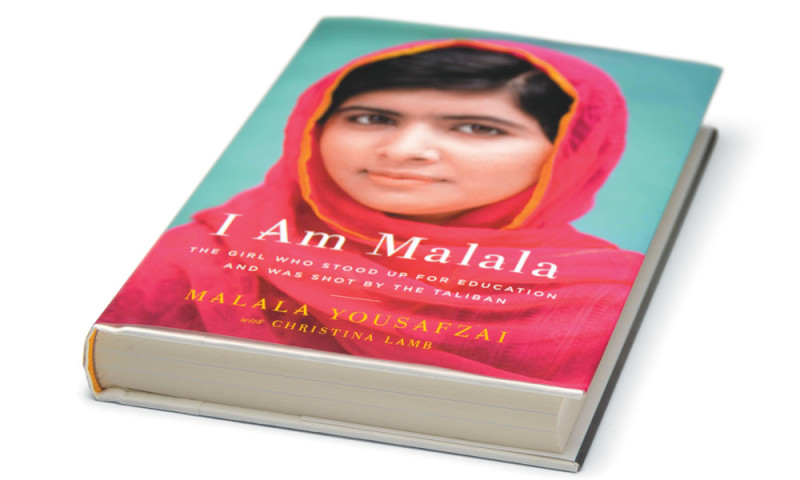
Pakistani teenage activist Malala Yousufzai’s inspirational memoir, 'I am Malala: The Story of the Girl Who Stood Up for Education and was Shot by the Taliban' has compelled George Washington University's Leadership Program to incorporate it into its Summer Reading Series Symposium, according to the university's website.
To further expand the reach of Malala's memoir, the GWU, in collaboration with the Malala Fund, has also developed a resource guide for high school, college and university students. Launched in Nov 2014 with Malala's father Ziauddin Yousufzai in attendance, the resource guide supports global efforts to mobilise people to address girls’ rights to an education.
In order to ensure that the resource guide does justice to Malala’s story, the Global Women’s Institute has convened a committee comprising GW faculty with expertise in a wide range of disciplines — including international affairs, media studies, language and literature, religion, history, women’s studies, leadership studies and education.
Malala was 15 when a Taliban gunman shot her in the head as she travelled on a school bus in response to her campaign for girls' education.
Although her injuries almost killed her, she recovered after being flown for extensive surgery in Birmingham, central England.
She has been based in England with her family ever since, continuing both her education and activism.
Last year, the 17-year-old became the youngest recipient of the Nobel Peace Prize in Oslo. She won the prize along with Indian campaigner Kailash Satyarthi, 60, who has fought for 35 years to free thousands of children from virtual slave labour.

Pakistan - Parents of slain APS students reject Imran, Reham visit


Pakistan Tehreek-e-Insaf (PTI) Chairman Imran Khan and his wife Reham Khan encountered protests by angry parents outside the gates of Army Public School (APS) in Peshawar on Wednesday.

The parents of deceased students who lost their children in the APS tragedy- chanted “Go Imran Go” while holding placards rejecting Imran Khan's visit.

Protesters claimed that Khyber Pakhtunkhwa Chief Minister Pervaiz Khattak and Asad Qaiser had hurled abuse at them.
An emotionally agitated mother said, “when Imran Khan was making false promises, I grabbed him by the collar.”

“150 students lost their lives here and nothing is being done about it,” another parent protested.


APS Parents reject Imran Khan's visit to Army... by GeoNews
Parents said they would protest against the government after the chehlum of the martyred children. "We will definitely avenge the martyred, we do not need anyone to do that," said a parent.


Parents express their anger on Imran Khan's... by GeoNews
The parents were overcome by anger and grief and criticised Khan for politicising the attack. “Do not pour in politics all over the blood of our children,” said an angry parent.

Once inside the school, Imran Khan was greeted by students who were eager to get his autograph. However, due to the presence of angry parents outside, Imran Khan was forced to leave the school from the rear exit.

Over 150 people including more than 132 children were killed in a Taliban attack at the Army Public School in Peshawar on December 16.

Video - #PeshawarAttack - Students chant GO Imran GO at APS


Students chant GO Imran GO at APS by dawn-news

Video - Imran visits APS as parents stage protest


Imran visits APS as parents stage protest by dawn-news