Sunday, January 4, 2015

A Wake-Up Call for Pakistanis

Pakistan's Shia Genocide : 5 Shias martyred in a blast at playground in Orakzai


At least five Shia Muslims were martyred and 10 others injured in a blast at a playground in Kadda Bazaar area of Kalya, the agency headquarters of the Lower Orakzai Agency on Sunday.
The blast occurred at Hussainia ground during a volleyball match. However, nature of the explosion could not be confirmed as yet. Political Tehsildar Khiasta Akbar said the blast appeared to be carried out through a planted device.
The political administration said that there was a match going on between Mani Khel and Farangi Kalley teams at the time of the explosion.
The incident appears to be an act of target killing with sectarian motives, they added.
Orakzai is one of Pakistan’s seven semi-autonomous tribal regions in the northwest, where Pakistani Taliban and Al Qaeda-linked militants are said to have carved out strongholds.
It was a key abode of former Tehreek-i-Taliban Pakistan (TTP) chief Hakimullah Mehsud before he was killed in a US drone strike in North Waziristan in 2013.
Pakistani military has intensified its operations against militants in the tribal areas bordering Afghanistan in the aftermath of deadly Taliban attack on an army-run school in Peshawar that killed 150 people, mostly children in December.

Pakistan has reined in LeT: U.S.


SUHASINI HAIDAR

Certification comes ahead of Obama’s India visit.

U.S. Secretary of State John Kerry will visit Pakistan this month, shortly after certifying the Pakistan government’s “action against” Lashkar-e-Taiba (LeT) and Jaish-e-Mohammad (JeM).
The authorisation is likely to spark outrage in India. Mr. Kerry is due to visit the Vibrant Gujarat summit, which begins in Gandhinagar on January 11, ahead of President Barack Obama’s visit on January 24.
Mr. Kerry will lead the Strategic Dialogue in Islamabad later in January, the Pakistan Foreign Ministry announced this week.
Despite the fact that both the LeT and JeM have resurfaced visibly in the past year in Pakistan and the founders of both, Hafiz Saeed and Masood Azhar, have held public rallies in Pakistan in 2014, the U.S. Secretary of State has signed off on a certification that the Pakistan government has “prevented al-Qaeda, the Taliban and associated terror groups such as Lashkar-e-Taiba and Jaish-e-Mohammad from operating in the territory of Pakistan” for the year.

Civilian aid

The certificate is a condition for the U.S. to disburse funds under the Kerry-Lugar Bill for civilian aid to Pakistan that was co-authored by Mr. Kerry in 2009. This year’s grant of $532 million to Pakistan will be disbursed shortly, as the Congress gave its nod to President Obama, the U.S. Ambassador to Pakistan Richard Olson disclosed.
According to official agency APP, Mr. Olson met Pakistan’s Finance Minister Ishaq Dar to finalise the agenda for Mr. Kerry’s upcoming visit . Significantly, the Kerry-Lugar Bill lapsed in September 2014, but only about half of the $7.5 billion outlay has been disbursed so far.
According to Section 203 of the Bill, which is formally called the Enhanced Partnership with Pakistan Act (S.1707), there are limitations on clearing the annual $1.5 billion assistance to Pakistan based on actions in the “preceding financial year.”
The authorisation required is that the Pakistan government and military have “ceased support” to extremist and terror groups, that they have “prevented” groups like the LeT and JeM from operating in Pakistan, and carrying out attacks against its neighbours, while dismantling their bases in Muridke, FATA and Quetta.

Takfiris are real behind the scene rulers of Pakistan - ISLAMABAD SSP SUSPENDED FOR DETENTION OF TAKFIRI CLERIC


Senior Superintendent of Police (SSP) of Pakistan’s capital Islamabad was suspended for arrest and detention of notorious Deobandi takfiri cleric Mufti Tanveer Alam Farooqi, President of the outlawed ASWJ (also known as ASS or LeJ), District Rawalpindi chapter.

In fact, the notorious terrorist cleric of banned outfit was intercepted at a check post of Pakistan Rangers at Trimari (or Tramarhi) Chowk Islamabad on Thursday. All the takfiri fanatics were handed over to the Shahzad Town Police Station of Islamabad with the illegal weapons.
The same police officer was presented as hero by the government when he took action against Sunni Bralevis of Pakistan Awami Tehrik and Sunni Ittehad Council and their allied Shia Muslim supporters of Majllis-e-Wahdat-e-Muslimeen alongside Imran Khan’s PTI activists who were staging a peaceful sit-in in Islamabad. So, the suspension vindicated the notion takfiris are real behind the scene rulers of Pakistan because they massacred around 70,000 Pakistanis and also caused more than 100 billion dollars losses to Pakistan but no tit-for-tat comprehensive action has so far been taken to crush their networks.
Mufti Tanveer Alam Farooqi was accompanied by 8 takfiris including a guard in civil clothes who claimed to be from police. Armed with heavy arms and ammunition, they were boarding a Pick up Double Cabin vehicle. Rangers’ cops said that Hasnaat son of Ibrahim was in civil cloths and said he was police guard of the takfiri cleric.
One submachine gun (SMG) with 2 magazines and 60 rounds, 2SMGs of 44 bore with 3 magazines and 68 rounds, one 12 bore repeater with 2 magazines and 5rounds, two 9mm pistols with 2 magazines and 22 rounds.

http://www.shiitenews.org/index.php/shiitenews/pakistan/islamabad-ssp-suspended-for-detention-of-takfiri-cleric-with-illegal-arms

Pakistan's media must stop pandering to extremists

This is stating the obvious, but sadly it cannot be underlined enough - Pakistan is driven by brutal, wild inequalities.
And once again, its media is on the back-foot for failing to tackle hate-filled, biased televangelists.
In these times of war, tears and blood, Geo Television, the top channel in the country, faced serious flak for a breakfast show where the notoriously bigoted cleric, Amir Liaquat, allowed other members of his community to voice repellent allegations against the already tormented and targeted sect of Ahmadis. 
The programme ignited mass protests by human rights groups, civil society, the press corps and the social media, forcing the media regulatory body to issue a show cause notice to the channel. 
A hasty apology ensued, which stated that opinions cannot be controlled in live programming. 
First, this is a ridiculously feeble excuse from a media conglomerate that has just emerged from state-inflicted censorship on allegations of blasphemy. 
Second, anything is controllable through techniques such as time lags, commercial interventions, the stringent selection of guests, and most importantly, policy guidelines. 
In the post-Peshawar scenario, the Pakistani media can ill-afford the mildest of slip ups; it has to honour its influence and connection with the populace more than ever before. 
Especially when the killing of an Ahmadi five days after the said show is being linked to the divisive views relayed and endorsed in it. 
At present, the media would do well to both cash in on and sustain the current deluge of fury and structure a counter-narrative that silences all ideological prejudice to embolden an otherwise tolerant citizenry.
For this reason, the public demand for a black-out of discordant voices, extremist views and faces must be honoured. 


Read more: http://www.dailymail.co.uk/indiahome/indianews/article-2893883/Pakistan-s-media-stop-pandering-extremists.html#ixzz3NsKXRa00
Follow us: @MailOnline on Twitter | DailyMail on Facebook

Pakistan - Mob storms Lahore vigil held in memory of slain governor Salmaan Taseer


A mob armed with sticks stormed a candlelight vigil held by members of the civil society and journalists in memory of slain Punjab governor Salmaan Taseer at Lahore’s Liberty Roundabout on Sunday evening.
Reportedly, no one was seriously hurt and the police controlled the situation after arriving at the scene. The vigil resumed again afterwards.
The mob comprising unidentified men was carrying sticks and bricks in their hands and they beat up some of the vigil attendees including women, children and elders before police forced them to flee the scene.
The vigil was held to mark 4th death anniversary of former governor Punjab Salman Taseer who was killed by his own security guard Mumtaz Qadri after accusing him of blasphemy.
Taseer was vocal against abuse of country’s blasphemy laws.

Pakistan - Lal Masjid’s expansionism, militant links alarms agencies


Security agencies have warned the government due to his links with known militant groups and his anti-government rhetoric that the resurgence of Lal Masjid cleric Abdul Aziz poses a security threat to the law and order situation in the capital.
They also stressed the need for a check on the growing number of madressahs in Rawalpindi and Islamabad who also have overt and covert links with militant groups.
A report entitled ‘Activities of Maulana Abdul Aziz’, forwarded to the interior ministry by the country’s primary intelligence agency, says that the “Lal Masjid mafia” has links with militant groups and land grabbers and is currently reorganising the Ghazi Force militant group spawned by his own followers after the Lal Masjid operation.
“Activities of Maulana Abdul Aziz and Lal Masjid administration, if not checked / contained can subsequently create [a] serious law and order situation in [the] twin cities,” the report said.
The report, a copy of which is available with Dawn, highlights the links between the Taliban and the Lal Masjid cleric, stressing the importance of the Taliban choosing Maulana Abdul Aziz as a representative on the committee formed to negotiate with the government on their behalf.
The report names “notorious land grabber” Taji Khokhar as someone who has been arranging land for the construction of seminaries, funded by the Lal Masjid administration, and also assists them with their court cases. The report also names property tycoon Malik Riaz and former MNA Shah Abdul Aziz of Karak as the controversial cleric’s “sympathizers”.
Dawn tried to contact Malik Riaz’s spokesperson for a response to these allegations, but they did not care to comment.
The report says that Riaz is “financially supporting the [seminaries] of Maulana Abdul Aziz for payment of utility bills and supported the cleric in building a mosque in Bahria Town that has been renamed Jami Hafsa.
The former MNA Shah Abdul Aziz was arrested in 2009 for allegedly helping a Taliban militant escape from Islamabad. The man was said to be hiding in Maulana Abdul Aziz’s G-6 residence.
‘Lal Masjid mafia’
The report points out that a small all-girls seminary – the Jamia Syeda Summaya in Sector G-7/3 – is managed by the Lal Masjid administration and has already been renamed ‘Jamia Hafsa’. “They are reportedly planning to grab Al-Falah Mosque, located adjacent to this seminary, as the management of Al-Falah Mosque has resisted and filed a case against them in court.” Maulana Abdul Aziz is currently residing in the same Jamia Hafsa.
Similarly, the report refers to the construction of another Jamia Hafsa branch in the Mal Pur village, against the wishes of local residents.
Residents of Mal Pur had lodged a complaint with the Islamabad deputy commissioner, signed by 181 locals, saying that the Lal Masjid management were trying to disrupt the peaceful atmosphere of their village.
The complaint by the locals said, “First, they tried to grab Jamia Masjid Quba Ghausia, [but] as a result the mosque was sealed by the administration.”
“Barelvis and Shias have been living here in peace for centuries, but the first thing they did was to create differences among our communities with the help of outsiders,” said Sibtul Hassan Bukhari, a local political activist. “What can we do except file complaints with the authorities,” he asked, rhetorically.
On the other hand, the authorities seem to prefer sticking to their traditional blame game, instead of acting as the situation demands.
ICT administration officials told Dawn that the issues such as the illegal expansion of madressahs or mosques in G-7 and other sectors is the purview of the Capital Development Authority (CDA).
“However, as far as the Mal Pur case is concerned, or any law and order situation related to Lal Masjid – we require policy guidelines from the interior ministry,” the official said.
Incidentally, a CDA spokesperson told Dawn that all encroachments are cleared with the help of ICT administration and police.
“We will look into any illegal expansion by any mosque or madersa, but without the help of the police department, no action can be taken,” he added.
Meanwhile, a former commissioner of Islamabad said that the situation has changed and the Lal Masjid cleric no longer enjoyed public sympathy.
“Al-Falah Masjid falls under the ICT’s jurisdiction and the committees of all the mosques in Islamabad are registered with ICT,” the retired commissioner said, adding, “If they failed to deliver anything now there will not be any more chances to establish the writ of law here.”
Return of the cleric
On Friday, Maulana Abdul Aziz returned to lead the Friday congregation at the Lal Masjid and delivered a sermon demanding implementation of Sharia in the country.
With a heavy contingent of police and rangers personnel posted outside, Abdul Aziz presented a charter of demands, calling for the implementation of Sharia law in the country, the establishment of a strong committee of senior clerics to ‘Islamise’ existing laws of country and abolish traditions which, according to him, were un-Islamic.

Pakistan - Datta Khel: Six killed in fresh US drone strike


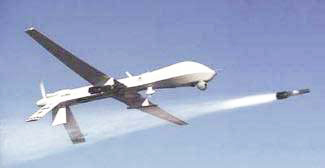
At least six people died in a fresh drone strike today (Sunday) in Datta Khel, North
Waziristan, Dunya News reported.

As per details, first drone strike of 2015 occurred in Datta Khel that has resulted in killing as many as six people.

Sources reported that the drone attack targeted the centers of Hafiz Gul Bahadur and an Uzbek commander Usman.

Video - Zulfiqar Ali Bhutto Speaks on Shimla pact

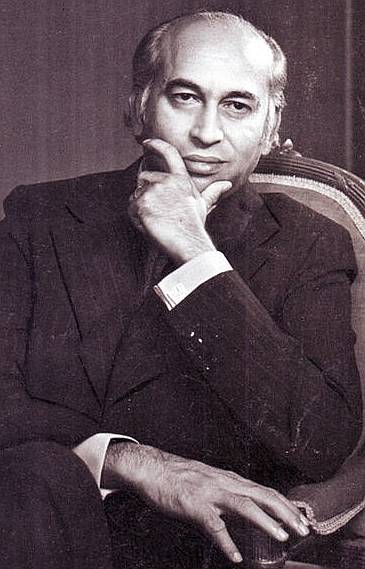
Z A BHUTTO’s anniversary: Subdued anniversary celebrations today to focus on fighting militancy, Pledges that Nation and Bhutto legacy will live on

 http://mediacellppp.wordpress.com/


Today on the eve of the 87th birth anniversary of the founder of the Pakistan People’s Party Shaheed Zulfikar Ali Bhutto let us vow to eradicate the greatest existential threat to the country namely extremism and militancy so that the nation and Bhutto’s legacy lives. 
This was stated by Co-Chair PPP Asif Ali Zardari in a message on January 5 the birth anniversary of Shaheed Zulfikar Ali Bhutto “the Sword of Ali”. 
It is reassuring that on the eve of his 87thbirth anniversary the nation has unsheathed its swords against these sworn enemies of the state to exterminate them from our midst, he said. 
“The flower of humanity can blossom only in an environment of tolerance and freedom. We must therefore banish from our midst intolerance; we will”. 
Mr. Asif Ali Zardari said that the extremists and terrorist groups rose in the wake of the overthrow of the democratically elected government of Quaid e Awam and his judicial execution two years later. 
The joining of hands by the dictator’s clique and religious fanatics altered the nation’s course, he said adding that today the state was reeling from the consequences of a brutal dictatorship and trained religious extremists joining hands to fight wars across national borders. 
It is a measure o f the patriotism of the political leadership of the country to have buried their differences in taking some most difficult and unpopular decisions to fight the monster created and nurtured by dictatorship, and not by them.
Now the challenge is to keep a watch on the implementation of our collective decision for rooting out militants so that it is not misused. 
We must also be resolute in eliminating not only militants directly threatening our state and society but also those using our soil to launch so called jehad in other countries, the former President said. 
Paying tributes he said that Shaheed Zulfikar Ali Bhutto came to liberate people from backwardness, illiteracy and poverty. He set out to build a modern state by giving a federal, democratic, egalitarian and unanimous Constitution rooted in the teachings of Islam. Petty cowards and dictators feared Quaid-e-Awam in life as well as from his grave, he said. 
Let us renew our pledge to continue our fight against the militants and extremists and not permit them to foist their obscurantist agenda through force, he said. 
The anniversary celebrations of Quaide Awam this year comes at a time of national mourning in the wake of assassination of over 140 innocent school children and their teachers in a senseless mayhem in Peshawar, he said. 
The Party therefore observes the occasion today with simplicity and prayers for the martyrs of Peshawar tragedy and all those martyred in fighting militancy. “On this anniversary of our founder Chairman the Party reiterates its pledge to do whatever it takes to ensure that the nation and his legacy will live on in an environ of peace and security”.

Video - Zulfiqar Ali Bhutto's nuclrear policy statement

Z A BHUTTO - Dilan Teer Beja

Z A BHUTTO - kitne maqbool hain

Saturday, January 3, 2015

Video Report - Protesters, police clash after Washington criticizes Bahrain arrest

U.S - Weekly Address: Make 2015 the Year for Quality, Affordable Health Insurance

Afghanistan - Wedding bloodbath


Afghanistan has become a country where no one knows when one would be harmed by landmines, suicide attacks, or other happenings. The Afghans live in a land where life resources are few but the causes of death are abundant. Haplessness is visible everywhere while happiness is missing. And why shouldn’t it be when the Afghans have been at war for the past four decades? The recent incident where 20 people were killed as mortars hit a wedding party in Helmand province is something that will haunt not only the province but also the country for a long time. It is not the first time a wedding party has been attacked inadvertently. Before it was the NATO forces that were involved in such bloodbaths, now it is the Afghan forces that have killed innocents. The victims of the mortar attack say they seek presidential intervention and until President Ashraf Ghani in person visits the locality, they will remain on hunger strike. The ill-fated bride, who was also injured and whose wedding party was devastated by the attack, succumbed to her injuries in hospital. Six Afghan National Army (ANA) troops have been detained in connection with the incident.

The tragedy appears to be the outcome of an attack by the Taliban when they hit an ANA outpost and then infiltrated the wedding party where people were busy in celebrations. ANA troops pounded the house with mortars thinking the participants of the wedding were also Taliban who had gathered for a coordinated attack. This is the biggest ever human intelligence failure. There should be a serious investigation into the matter. Though a few officers have been arrested, unless there is a thorough investigation and those responsible are punished, such incidents will keep occurring and undermine the writ of the government. The government also needs to provide speedy justice to the victims. It is really hard to forget the pain of the loss of their near and dear ones. The government should try to heal the scars of the tragic incident and soothe the grief and anger of the victims’ families. The Taliban should be taught a lesson so that they know that they too will not find peace if they go on killing. This macabre slaughter of the wedding party should be an incident for turning enmity into brotherhood, bloodshed into peace. This will be possible only when the Taliban realise their warpath is misguided because in this war, Afghans are the worst losers and the only victims.

Pakistani Political Party Leaders Visit Kabul on Ghani Invitation


President Ashraf Ghani has invited a number of leaders from Pakistani political parties to meet with him in Kabul to discuss strengthening relations between the two neighboring countries and their mutual struggle with terrorism.
President Ghani's spokesman has said that the goal of these discussions is to encourage opportunities for cooperation between Afghanistan and Pakistan in combatting terrorism and securing their shared border region, which has been a hotbed of militancy in the region for decades.
According to Pakistani media, the meeting is expected to take place on January 8.
Former Afghan President Hamid Karzai visited Pakistan over 20 times during his presidency without any significant results. Experts have long said support from Islamabad is the only way the Taliban insurgency and al-Qaeda threat can be fully addressed in the region. Yet it is only since President Ghani has taken office that ties between Afghanistan and Pakistan seem to have actually advanced toward that goal.
"Meetings will be held between the political parties heads and tribal elders of both sides of the Durand, and the main goal is to strengthen the relationships between the two countries, improving security and fighting against terrorism," presidential spokesman Nazifullah Salarzai said on Saturday.
A number of political analysts in Pakistan welcomed the move by President Ghani. "It is beneficial for both countries, Pakistan must participate in this meeting and stand on its decisions," Pakistani political analyst Safdar Hayat told TOLOnews.
Others emphasized the mutuality of responsibility for addressing regional security problems. "It is very important and there is a need for reaching a result; both countries must agree that there are terrorist cells in both countries, which must be eliminated and both sides must work jointly toward security and peace," Pakistani analyst Naser Mahmood said.
A number of Afghan House of Representative members, who recently met with Pakistani Prime Minister Nawaz Sharif and other senior Pakistani officials, have said that it was international community pressure, especially from China, along with growing violence inside Pakistan, that forced the hand of the Pakistani government into greater cooperation.
"Whether Pakistan is committed or not, there is a lot of pressure from the international community, especially China," MP Shir Wali Wardak said. "The heads of political parties that are coming here have an agenda for how both sides can work toward peace."
MP Gul Pacha stressed the importance of conveying to the Pakistani political leaders that they must ensure the Taliban's Shura Council - believed to be based in the city of Quetta - is dismantled. "The concerns of Afghanistan are that the four terrorist Shuras active in Pakistan must be eliminated," he said.
With the formation of the national unity government in Kabul, along with the Taliban's massacre of over 130 children at a school in Peshawar last month, the two neighbors seem more galvanized than ever before, moving closer to the honest partnership they have often paid lip-service to.

Pakistan - #PeshawarAttack - Death of innocence


By ADNAN SATTAR


Teaching children to glorify wars and belittle other faiths is also a form of violence.

It struck you in the pit of your stomach. The pain was gut-wrenching. You felt as if the ground beneath your feet had parted. Your mind was blown into a million little pieces. How do you cope with the images of schoolchildren, some as young as 11 and 12, their school uniforms drenched in blood, their faces peering out of coffins? Mothers wailing inconsolably, fathers with a vacant stare in their eyes; eyes that looked like dried-up wells in the middle of a parched desert. Mirrors to souls wounded so deeply that life itself had ceased to have any meaning.
The massacre of 141 people, including 133 children, at Army Public School in Peshawar on December 16, 2014, was, at first, beyond comprehension. The grief and pain of the parents and siblings, many of whom had just managed to escape the orgy of killing at the school, defies rendering in ordinary language.
The initial shock soon gave way to an all-consuming rage. Pakistan’s military and civilian leadership, which had hitherto been unable to see eye to eye on how to deal with the Taliban, met in Peshawar and declared to the citizens of their beleaguered country that ‘enough was enough’. Significantly, Prime Minister Nawaz Sharif, flanked by opposition leaders, including erstwhile cricketer Imran Khan — known to be a Taliban apologist — told newsmen that there would be no distinction made any more between ‘good Taliban’ and ‘bad ones’.
Surely, moral outrage and anger are all too natural in the face of such a gruesome incident. If calculated murder of over 10 dozen children does not make us angry, perhaps nothing will. However, anger also blunts your capacity to see things in perspective. It engenders a tunnel-vision manifested in the punitive overdrive the Pakistan government went into immediately after the Peshawar massacre. The unofficial moratorium on the death penalty, which had been in place since 2008, was lifted. The hangmen were called up and at least six convicted terrorists were executed by December 21, 2014, despite urgings by international human rights groups to the contrary.
Almost everyone in Pakistan today is saying they want to stand true to the memory of children slaughtered in Peshawar. That seems to be the least common denominator across the political and societal divide. Exceptions are rare. These include increasingly jittery Taliban supporters, such as Maulana Abdul Aziz, the head Imam of the Red Mosque in Islamabad that was stormed by the Pakistan Army in 2008 following a prolonged standoff. Underneath this common resolve, however, lie fundamentally divergent worldviews and ideologies, currently concealed by shared grief and anger.
The struggle of man against power, wrote Milan Kundera, is the struggle of memory against forgetting. The key question today is what is it that you decide to remember and how? You could view Peshawar as an isolated incident, a total aberration in an otherwise acceptable state of affairs. Or, you could see it as the extreme end of a spectrum of violence that defines contemporary religious terrorism. The conceptual choice has significant consequences for how the public thinks about an event like this and how policymakers respond to it.
What happened in Peshawar has no exact parallels. Yet, children falling prey to terrorism and violence is now so common — and in such a wide variety of contexts — that it hardly strikes you as something unusual. Violence against children is now part of what Hannah Ardent memorably called the ‘banality of evil’.
The Taliban, for one, have made a career out of blowing up schools on both sides of Durand Line, the official border dividing Pakistan and Afghanistan. Children, let us not forget, also find themselves within the ranks of suicide-outfits from Boko Haram in Nigeria to the Taliban in Pakistan. Some of these children themselves witnessed extremes of physical violence before being duped or coerced into becoming soldiers of jihadist Islam.
Malala Yusufzai, mature beyond her years, nailed it when she said recently: “I tell my story, not because it is unique, but because it is not.” To transcend your own suffering and to connect it with that of others is indeed a sign of a beautiful mind and a spacious soul.
Now that we have decided to remember, let us also remember that, as Malala fought for her life after being shot in her school van, many in Pakistan had the temerity of calling her a Western stooge. She had herself shot to gain popularity and find herself a foreign passport. So went a shamelessly repeated conspiracy theory. How is that for denial and moral depravity?
In her Nobel Prize acceptance speech, Malala remembered schoolchildren killed by the Taliban in Afghanistan — children who in official accounts in Pakistan are dry statistics, if anything at all. The truth is, children caught in violence, children blown up in suicide attacks, as well as children orphaned by acts of terrorism are all victims. Seldom do we pause to think that children within the folds of the Taliban, who blow themselves up having been brainwashed into believing that it is the shortest route to paradise, are victims too. So are Afghan refugee children in Jolazai and Mosazai camps at the outskirts of Peshawar, whose only fault is that they were born on the wrong side of the border. Yet, as Pakistan mourns the Peshawar massacre, many hyper-patriotic politicians and TV anchors are demonising refugees and demanding that they be driven out supposedly because refugee camps serve as sanctuaries for the Taliban.
Consider also the suffering of Esha, 14, who has problems walking and speaking, and Esham, 13. They are the children of Asiya Bibi, a Pakistani Christian woman who has now spent four years on death row for allegedly insulting the prophet of Islam. She was framed and convicted — as the standard practice goes, on instigation by local extremists — under Pakistan’s notorious Blasphemy law bequeathed to the nation by dictator Zia-ul-Haq. In the apparently evolving consensus against the Taliban in Pakistan, no one has dared to openly suggest the following: Let us now repeal this draconian and blatantly discriminatory law. Enough is enough.
To me, as a Pakistani and as someone who has worked with children across the country, including Peshawar, this is not the way to honour the memory of little souls butchered by the Taliban on December 16, 2014. Sure, responsibilities must be fixed. Those involved in planning and abetting the massacre must be caught and put on trial. Fixing individual criminal responsibility, however, does not imply that you can wriggle out of collective failures.
The ‘we shall not forget Peshawar’ pledge, ringing out across Pakistan today, must also encompass an acknowledgment of a million guises that violence parades in. We must also promise our children, all children, that militants will never be used as strategic assets. We must also acknowledge that teaching children to glorify wars and belittle those who do not happen to share their own faith or nationality is also a form of violence, albeit not as spectacular as the cold-blooded mass murder we witnessed in Peshawar. We have no choice but to become fully conscious of the brutalisation of children in conflict zones, on its peripheries, and in seemingly normal settings. Only then will we cease to pass on violence blindly to future generations.

CHINA: THE RISE OF THE DRAGON AND LESSONS FOR PAKISTAN – OPED


By Ghous Bux Khan Mahar
“Let China sleep, when she wakes up, will shake the world”, once said Napoleon. If we take a look at contemporary China, the Napoleonic prediction has turned out to be a tangible reality as China has woken up from its long slumber and has emerged as an economic powerhouse of the world.
The awakening of dragon has triggered tectonic shift in global geo-political and economic order, marking the beginning of the era of a multipolar world order. The remarkable economic rise of China has transformed it into the second largest economy in the world. Its economy is poised to position itself as the largest economy by around 2030, dislodging the US from its current economic supremacy. What is important to note is that China has an illustrious past as well. It is the world’s oldest surviving civilization with many innovations and inventions to its credit. For instance, paper, the compass and gunpowder are among the greatest Chinese inventions and contributions to the human civilization.
Back in 1980, I happened to visit China. In sharp contrast to the China of today, I found my host country no markedly different from any typical third world country. Poverty and underdevelopment was palpably visible there. Even its capital Beijing was not that modern unlike any western capital. The city was devoid of world class infrastructure and basic features of any modern city. There were single or two-floor old buildings, no cobweb of modern roads or avenues and no skyscrapers at all. On the basis of my profound observation, I can say with confidence that Karachi and Islamabad were ahead of Beijing in terms of modern infrastructure and amenities at that time. The Great Wall of China, the most iconic tourist destination of the country, was also deprived of much facilities. It was still a poor country with a fragile economy and fractured international relations.
Recently, I visited China in 2013. To my amazement, it was not the same country I had visited in 1980. I was immensely amazed to find it transformed beyond any recognition as China had built itself anew. This time around, I was welcomed by a new China born out of dazzling economic development. I found myself in a rich and
modern China with booming economy growing at double digit figure. Beijing was diametrically different from what I saw back in 1980s. The capital of the nation, was lively with modern and sophisticated infrastructure comparable to any western capital. There were gleaming high-rises, state of art road and rail network and world-class luxury hotels to welcome millions of visitors every year. Shanghai, the commercial capital was even more dazzling and true reflection of the exceptional progress and prosperity made by China over last few decades. The city’s skyline was dotted with eye-catching skyscrapers and other marvellous landmarks like bridges, highways, amusement parks, shopping malls, high-speed train terminals and so on. It was pulsating with modern life. Moreover, the financial capital of China, stood as the monumental testimony and tribute to the Chines nation’s dynamism, energy, hard work, vision, commitment, determination and dedication to the socio-economic development of the country. Furthermore, the country was breaking new grounds from space exploration to development of stealth technology.
Undoubtedly, the rapid and remarkable rise of China can be characterised as an economic miracle which has baffled both her friends and foes alike. During my last visit, I was naturally awe-struck by the overall advancement of the country whose giant leap from being a third world country to the emergence as a great nation on the global horizon, gave birth to a logical question in my mind.
What is the secret behind the enviable economic success of China? As I moved around, explored and observed the different dimension of the country, the riddle of China’s unmatched economic achievement began to unravel itself answering the question resonating in my mind. Thus, I was led to the cogent conclusion that in addition to the mobilisation of man and material resources, it is the competent and sincere leadership, the national spirit of hard work, honesty of purpose, national cohesion and consensus, unflinching commitment, unwavering dedication and steel-strong determination that is the real moving spirit or driving force behind the economic revolution that has transformed China into an engine of global economy.
The 21st Century is being called as the Asian century symbolized by the breath-taking and meteoric rise of China as a global power. The centre of economic and political gravity has significantly shifted from The West to the East. The phenomenal economic advent of China has provided the nation with unprecedented confidence and capabilities to proactively secure and safeguard its geo-strategic and economic interests around the globe. The subsequent growth in her global clout, rapid build-up of offensive and defensive capabilities and increasingly assertive foreign policy posture in the Asia Pacific and beyond, has sowed immense and unprecedented fear in the American strategic community that view China as the main challenger and strongest threat to the American global supremacy.
In the strategic response to counter and contain China in its track, US has shifted its geo-strategic focus away from Europe and Middle East to Asia-Pacific region, what has come to be called as US Asia-pivot characterized by the relocation of US naval power to Asia-Pacific region, revitalization of the existing alliances and cultivating the new ones to put up a formidable security alliance against China. Like any rising power, China also aspires to carve what China calls the rightful place in the world matching its great power status and progress. These China’s aspirations and American apprehensions and the consequent geo-strategic, military and economic rivalry are going to be the very shapers of the 21st century.
As far Pakistan, the advent of China as a world power is a welcome development as the new global power is not only our next-door neighbour but also our all-weather friend and strategic security partner. We need to learn a result-oriented lesson from China’s inspiring and impressive economic success in order to put our country on the path to progress and prosperity.
Pakistan continues to languish under the siege of socio-economic and political problems. The country’s economy is in freefall, poverty is pervasive and illiteracy is rampant across the country. Pakistan is geo-strategically located at the confluence of central Asia, South Asia and Middle East. Thus the country has potential to emerge as the trade and energy corridor for China bordering Pakistan through its Xinjiang province that will stand to benefit from the Gwadar deep sea port. China has been building the Gwadar port as vital link of the maritime silk route. The fully functional silk route is likely to usher in an era of unprecedented peace and prosperity for the underdeveloped regions of both countries, like Baluchistan, northern areas of Pakistan and Xinjiang region of China.
However, what remains to be seen is how skilfully and wisely the new power (China) and the established power (America) accommodate each other taking full advantage of opportunities of convergence by dexterously dodging the areas of divergence. Arguably, the benefits of economic cooperation, integration and interdependence are greater than those of geo-strategic and military rivalry or adventurism that pose an existential threat to the entire humanity in this age of nuclear weapons.