Monday, December 1, 2014

Pakistan: Sharjeel says won’t allow Imran to shut down Karachi


Sindh Minister for Information Sharjeel Inam Memon Sunday said the provincial government will not allow Pakistan Tehreek-e-Insaf (PTI) Chief Imran Khan to paralyze the metropolitan city.
He expressed these views in reaction to Imran Khan’s warning of shutting down first the three major cities including Lahore on December 4, Faisalabad on 8 and Karachi on 12 and finally the entire country on December 16.

Sharjeel Memon said Imran Khan and his party’s protests had already caused losses of billions and, thus, the Sindh government will not allow any such move that results in the provincial capital’s shut down.

Pakistan: No progress on CEC appointment, says Khursheed Shah

Following the Supreme Court’s deadline to fill the post of the top election chiefwithin the next 24 hours, Leader of the Opposition in the National Assembly Khursheed Shah on Monday met Prime Minister Nawaz Sharif to discuss the name of a permanent head of the Election Commission of Pakistan.
Speaking to media representatives after a meeting with the premier, the leader of the opposition said a name for the post has not been finalised as yet, while also refusing to share names discussed during the meeting with the PM, fearing they might refuse to take up the post.
“If I tell you the names, respectable nominees will run away,” he said, adding, “We will meet again to discuss and finalise a name.”
The government and the opposition have been in a quandary over the appointment of the chief election commissioner as earlier their common nominees for the position, Justice (retd) Rana Bhagwan Das and Justice (retd) Tassaduq Hussain Jilani, declined the offer owing to widespread criticism of the post.
Further, sources said Jillani had refused to accept the post after Imran Khan voiced his reservation over the choice in a public rally in Rahim Yar Khan.
The CEC post had fallen vacant following the resignation of Justice (retd) Fakhruddin G Ebrahim on July 30, 2013 – a day after the presidential elections, which had become controversial after opposition parties blamed the ECP for failing to conduct them in an impartial manner.
However, he assured a name for the post will be finalised before December 5, the deadline from the Supreme Court to withdraw a top court judge who is acting as an interim chief election commissioner.
On November 24, directing the government to name a permanent head of before December 5, Chief Justice Nasirul Mulk withdrew the services of acting CEC Justice Anwar Zaheer Jamali and notified this to the ECP secretary, according to a declaration of the Supreme Court.
Justice Jamali is the third consecutive interim chief of the top polls body in less than one year. Before Justice Jamali, the incumbent chief justice, Justice Nasirul Mulk, and his predecessor, Tassaduq Hussain Jillani, had also served as acting CEC.
Shifting his focus to the current political crisis, Shah said he has urged the premier to initiate a dialogue with the protesting Pakistan Tehreek-e-Insaf.
Responding to a question regarding PTI chairman Imran Khan’s threat of a countrywide shutdown on December 16 if his longstanding demand for an independent audit of the May 2013 elections is not accepted, Shah said, “No one has the power to shut down my country.”

PAKISTAN-RUSSIA RELATIONS: WAY TO SCO MEMBERSHIP – OPED

By Nasurullah Brohi
In the wake of the visit of Russia’s Defense Minister General Sergey Shoigut to Pakistan — resulting in unprecedented defense cooperation agreements — relations between the two countries is improving.
Pakistan’s relationship with the Russian Federation has suffered greatly in the past, as a result of Pakistan’s alignment to Western interests that demanded the country to become an ally. Now, however, the future brings immense opportunities for both countries to collectively exploit the wherewithal of their valuable and efficient collaboration for larger mutual developments. During the Soviet era, Pakistan greatly benefited from the mega-cooperation projects such as the Pakistan Steel Mills in 1970. Recently, the Russian Magnitogorsk Iron and Steel Factory (MMK) has expressed interest in increasing production and the up-grading of the Pakistan Steel Mills. Russia also offers Pakistan with highly needed solutions to its energy crisis by investments through Russian energy giant Gazprom. Moreover, Russia also plans to satisfy region’s energy needs through connecting the Central Asia, Afghanistan and Pakistan by a power strip.
In addition, Pakistan is eagerly pursuing its full membership in the the great economic and energy potential of Russia-China led Shanghai Cooperation Organization (SCO). Pakistan’s role in Afghanistan and its pledge as an eventual energy and trade corridor for the region, its close strategic and economic associations with China and developing relations with Russia are among the greatest aspects favoring Pakistan’s chances of becoming a permanent member of the SCO.
The current political scenario in the South and Central Asia, along with other states in the Eurasian region, finds many of these countries enthusiastically seeking opportunities of binding themselves in collective beneficial cooperation organizations such as the SCO. The SCO holds significant importance in the development and cooperation currently taking place in the Asian and Central Eurasian region. The cooperation mainly covers the areas of security, economic, energy, bilateral and multilateral ties between the SCO member states. In the contemporary regional and international political scenario, China and Russia both have leading, ambitious roles aimed at becoming dominant global political players and their collective effort for the reason makes the SCA a golden opportunity for the small states of the region who can more easily pursue their national policy objectives collectively.
The SCO, formerly known as Shanghai Five that was originally created in 1996 with the signing of the Treaty on Deepening Military Trust in Border Regions by the heads of states of China, Russia, Kazakhstan, Tajikistan and Kyrgyzstan, and was also a turning point in Sino-Russian relations and a new global economic and political order to counter the security and other challenges to region and specially to the member states.
SCO as a regional body is also likely to become a counter balance to NATO. The SCO incorporates cooperation on economic, cultural, security, military, intelligence sharing, and counterterrorism. Pakistan is one of the most important countries falling in the SCO region – having immense geo-political and politico-economic capabilities. Pakistan has an excellent relationship with China, whereas, looking at the Pakistan-Russia relations, both countries have a variety of common interests that could go further in the strengthening of trust and be of mutual benefit. Pakistan stands by the auxiliary enhancement of cooperation with other countries of the region, through the SCO forum to meet its economic and energy challenges and counter the threats of terrorism, radicalization and drug trafficking. Both sides stress the need for the persistence of impetus grown in the wake of the Moscow conference and share similar views over the majority of international and cross­-regional issues.
The strong ties between Pakistan and Russia are in the best interests of regional stability and prosperity. As energy politics is gaining momentum across the world, the SCO’s initiative mainly taken by Russia for providing support to energy projects in different countries, is a benign opportunity for Pakistan. At present, gas politics is also gaining across the world and the establishment of the energy club is being actively backed by Russia and China under the SCO umbrella. Russia is keenly willing to support Pakistan in implementing energy projects, but due to the US influencing attitude, the projects have so far gained a cold response. The question now is, whether  membership in SCO will also assist in the resolution of explosive flashpoints in Asia such as Afghanistan and Kashmir, which are key national and foreign policy objectives for Pakistan.

India and Pakistan: A Debilitating Relationship

In early November, a suicide bomber detonated himself at a checkpoint on the Pakistani side of the Wagah border, killing sixty people. Immediately after, Hamid Gul, the former chief of the ISI, Pakistan’s powerful military-controlled intelligence agency, gave an interview on Pakistani television accusing India of being behind the attack. “We offered our hand in friendship, and this is how they repay us,” he said. Despite the fact that the attack was claimed by three different militant groups based in Pakistan, many Pakistanis shares Gul’s sentiments. And given how bad relations between the two countries have been recently, that should not surprise.
For a brief moment after Indian Prime Minister Narendra Modi’s election victory, there was optimism in both India and Pakistan. In an unprecedented move, Modi invited his Pakistani counterpart Nawaz Sharif to attend his inauguration ceremony. The previous year, when Sharif was contesting his own elections, he made bettering relations with India – “normalization” as both Pakistan and India call it – a campaign promise. Many thought that with two governments both interested in normalization, both having secured solid majorities in their respective election victories and facing little domestic political opposition, it was finally time for the nuclear-armed rivals to move forward.
Unfortunately, it has all been downhill since. Modi has virtually ignored Pakistan, scuttling scheduled talks on the pretext that Pakistan was communicating with separatists from the disputed Kashmir region. He issued a series of statements accusing Pakistan of “waging a proxy war of terrorism,” including a speech in the Kashmiri town of Kargil, where both countries fought a mini-war in 1999. An opportunity to meet in New York on the sidelines of the UN General Assembly in September was spurned; both countries have been tight-lipped over a possible meeting at the upcoming SAARC summit in Kathmandu next week, neither showing much optimism.
The diplomatic fallout has had lethal consequences. Within the past few months, border security forces have engaged in heavy shelling across the border, killing dozens of civilians and security personnel, shattering a ceasefire that has held for the better part of a decade. Given the initial optimism, why has the relationship soured so quickly?
Pakistan’s Domestic Troubles
The smiles and handshakes at Modi’s inauguration notwithstanding, perhaps a more prescient symbol of the relationship was on display in Herat, where four heavily armed gunmen attacked India’s consulate on the eve of the inauguration. Both Indian and Afghan security officials blamed militant groups backed and based in Pakistan, which has a history of using militant outfits as a tool of foreign policy in both Afghanistan and the disputed region of Kashmir. Many suggested that the attack was a message from the Pakistani military not just to India, but to the Sharif government as well, namely that it is the military, which relies on its rivalry with India to justify its disproportional budget, that ultimately decides Pakistan’s foreign policy – not Sharif. It is hard to argue with that: Under military pressure, Sharif reneged on a promise to grant India “most-favored nation” status despite renaming it “non-discriminatory market access,” a policy meant to deregulate and increase bilateral trade.
The military’s unwillingness to improve relations also reflects just how deeply antipathy towards India is embedded within its ranks. Despite a concerted military campaign against the Taliban in Pakistan’s tribal areas, the military is unwilling to dismiss its policy of patronizing militant groups that target India. The policy, known derisively as “good Taliban, bad Taliban” by critics, asserts that the Pakistan military is only interested in fighting militants that threaten it directly. Others, like the Haqqani Network, which primarily targets  NATO and Afghan forces, or Lashkar-e-Taiba, which primarily attacks India, are either tolerated or, in some cases, provided with support. Hafiz Saeed, the leader of Lashkar-e-Taiba, which conducted the 2008 Mumbai attacks that killed 162 people, roams freely in Lahore with a security detail granted by the government despite repeated calls from India and the United States for his arrest (the United States has even put a $10 million bounty on his head). His continued freedom encourages India to believe that Pakistan is still not serious about tackling its various militants, particularly those who target India.
Sharif has also been severely weakened by protests across the country led by opposition politicians Imran Khan and Tahirul Qadri, both accusing Sharif of rigging last year’s elections and calling for his ouster. Protesters staged a sit-in for months right in front of parliament, leading to a cancellation of many foreign visits, including one by Chinese President Xi Jinping (who still went to India, his next scheduled stop). Sharif has lost much of his legitimacy and political capital, and is unable to carry out many of his proposed policies, given the strength of the opposition.
‘Muscular’ Foreign Policy
Modi’s party, the Hindu nationalist BJP, had always accused the previous Congress government of being “soft” on national security, and promised to conduct a more “muscular” foreign policy once in power. This meant a less friendly approach to Pakistan than that of his predecessor, Manmohan Singh, who was seen as more amenable to a deal. Since coming to power, Modi’s administration has been combative in its statements, especially in the wake of the cross-border shelling. His right-hand man and the BJP’s current president Amit Shah said the Indian government would give “a befitting reply” to the shelling that the Indian government alleged was started by Pakistan. While the fiery speeches might reflect domestic concerns – the BJP faces tough competition from the ruling National Conference party in local elections next month – they have had an adverse impact on Pakistani diplomatic efforts, which have been discouraged by what they see as a lack of reciprocation.
Modi also seems to be more preoccupied with his other campaign promise, making India a global power. Since he became prime minister, Modi has made significant efforts to improve relations with the United States, Japan, China and most recently Australia, where he recently attended the G-20 summit. Given that his stated priority is improving and liberalizing India’s economy, Modi may have concluded that spending precious political capital on Pakistan is useless unless Pakistan is fully committed to peace, which it simply cannot be as long as its military is interfering in politics. Given India’s superior military and its significant presence in Kashmir, and given the relative infrequency of terror attacks, Modi perhaps believes that India can afford to ignore Pakistan for the time being while he focuses on bagging trade deals and investment contracts from elsewhere.
Persistent Tensions
The tensions come at a time when other links between the two countries are growing. Numerous Pakistani television and movie stars have crossed over the border to find sustained commercial success in Indian movies; musicians perform to packed audiences, and Bollywood remains ever-popular in Pakistan. Citizens on both sides make regular cross-border visits. Even the 2014 Nobel Peace Prize was jointly awarded to Malala Yousufzai and Kailash Satyarthi, a Pakistani and an Indian. (Malala invited both Sharif and Modi to attend the ceremony in Oslo.)
The two governments, however, remain immune to this bonhomie. The impasse comes at a inopportune time. Climate change threatens precious water resources India and Pakistan share, as well as the ability of both countries to feed their citizens. Despite (or perhaps because of) India’s heavy military presence, Kashmir continues to simmer, always close to boiling over. As NATO forces leave Afghanistan, regional powers including Iran, China, Pakistan and India jostle for influence. With both Indian and Pakistani military budgets – and nuclear stockpiles – increasing, South Asia is heading towards a nuclear arms race, endangering the stability of the region and its economic integration. All of these issues have direct repercussions for South Asia’s security and well-being, and will require concerted and protracted negotiation and cooperation. In the current circumstances, that seems very unlikely.

Pakistani security forces seize truck with 5,000 kg explosives

A truck loaded with 5,000 kilograms of explosives was seized by Pakistani security forces in the country's restive Balochistan province, a provincial minister said on Monday.


The forces raided the vehicle near the provincial capital Quetta, apparently the destination of the explosives.

Home Minister Sarfraz Bugti said that terrorists were trying to enter the province after the military operation in tribal region which had killed over 1,200 rebels.

"Our forces and intelligence agencies foiled their nefarious designs to smuggle weapons into the province," he said.

He rejected the claims that Islamic State (IS) also known locally by its Arabic acronym 'Daish' was present in the province.

He said forces also recovered a large number of weapons during raids and searches conducted in Quetta, Panjgur and Zhob areas of the province.

He said the weapons seized during the raids included landmines, improvised explosives devices (IEDs), rocket launchers, mortar bombs and a large number of AK-47 rifles along with thousands rounds of ammunition.

He said the forces had dug trenches at the porous Pak-Afghan border to prevent infiltration. 

Pakistan - imran - A bull in the china shop

Ansar Abbasi


He is illogical, irrational and unreasonable. He demands that four constituencies should be re-opened for recounting and verification of votes. Otherwise, the PTI would close down Lahore on December 4, Faisalabad on December 8, Karachi on December 12 and the entire Pakistan on December 16. Khan and his party also pressed for the setting up of the judicial commission to probe the alleged rigging in the 2013 elections.

His demands relate to either the election tribunals or the Supreme Court. His plan C desires to irritate Nawaz Sharif, but it would actually be troublesome for the people, their businesses and the country.

No one except the election tribunals could order the re-opening of the four constituencies. This is what the Constitution says, and this is what the Supreme Court has repeatedly ruled in different election petitions during the last 16 months.

Neither Prime Minister Nawaz Sharif nor the government could deliver what Imran Khan demands in regard to the four constituencies. Even Parliament has no such right in the present constitutional structure. Such an out of box demand could be met by the government only if the Constitution is amended by two third majority of the parliament.

Khan is also anxious to see the judicial commission constituted at the earliest to probe the PTI’s election rigging charges. He curses the government for not setting up the commission but conveniently forgets that the request for the setting up of the commission was sent to the Supreme Court’s chief justice in August. However, the request remains unanswered even after the lapse of three months.

Many constitutional experts argue that in the presence of Article 225 and following repeated Supreme Court judgements, it would not be within the constitutional limits to allow a judicial commission to probe electoral rigging disputes. It is believed that for some reason, the Chief Justice of Pakistan, Justice Nasirul Mulk, has not responded to the prime minister’s request.

Imran Khan has no confidence in the Election Commission of Pakistan; he has no faith in the judiciary; he does not trust Parliament and he simply hates Nawaz Sharif. Khan’s problem is that he wants the solutions of his choice irrespective of the legal and constitutional means. He thinks what he alleges is the reality and those not agreeing to his recourse are against him and the PTI, and are thus blocking justice.

For the same reason, he has attacked those whom he has been publicly admiring in the past. This list of IK and PTI’s hero-to-zero include Fakhruddin G Ebrahim, ex-Chief Justice Iftikhar Muhammad Chaudhry, ex-Justice Khalilur Rehman Ramday and former Chief Justice Tassaduq Hussain Jillani and Jang Group.

For many in public, Imran Khan’s narrative of “massively rigged” elections is impressive. The PTI has also made many among masses to believe that Nawaz Sharif had stolen the 2013 mandate of PTI.

But as the Supreme Court recently observed in one of the election petitions that elections can’t be nullified on the basis of hearsay and public statements but on the basis of concrete evidence that the PTI is required to produce before the Election Tribunals.

Two Faces Of Pakistan


Sarwar Jahan Chowdhury
It's not easy to understand a sizable country of 180 million with some diversity which is fraught with multifarious complex problems and also some bit of underlying hope. The country in question here is Pakistan. The Pakistani society often seems to embody the worrying version of Sunni Islam, although it's   an apparently democratic or quasi-democratic nation. In the whole world only one or two Middle Eastern countries like Saudi Arabia and Pakistan's neighbor Afghanistan are perhaps in the similar category in terms of religious orthodoxy.
The modern state- traditional society dichotomy is acute in Pakistan and these two are often at loggerheads. The primitivism of the dominant Sunni Islamic segment of the society is increasingly seeping in to the somewhat modern state left behind by the colonial modernizers and carried forward by their native nationalist counterparts. Even Jinnah's “Two Nation Theory” emphasized the cultural and historical distinctiveness of sub-continental Muslims and not on religion per se. He never meant Sunni Sharia Laws to come in force and the deplorable laws like 'Blasphemy Act' etc.
The nation is in regression in many senses and involvement of major powers in the geo-strategic games in the Pakistan-Afghanistan sub-region for many decades now, has worsened the situation. In fact, the Western powers are now in an attempt to contain the fallout of that game. The outcome though is inconclusive. The jury is still out on who would prevail in that sub-region , the militant Sunni Islamists or whatever moderate mainstream political forces still exists. 
We often get horrified, and rightfully so, hearing the news of death penalty of people, mostly non-Muslims, for blasphemous act against Islam. Further terrifying is the news of radical mob in the interiors taking up the law in their own hands and lynching people accused of or, more plausibly, tricked to blasphemy.  The simple thing is, situation in Pakistan is no way as such that the tiny and frightened minorities would dare insulting Islam in any way. But the mob act goes on. Some day back they snatched a mentally unstable man, accused of discarding the Quran, from the police custody and lynched him to death. Recently  a Christian couple met the same fate. They were severely beaten and then burned alive to death in a brick kiln. In both cases the mob were called out from the local mosque through its mike.  Few years back Governor of Punjab Salman Tasheer and Federal Minister for Minority Affairs Shahbaz Bhatti, a Christian himself, were assassinated for speaking against this highly controversial blasphemy law. Any criticism of the orthodox rendition of Islam is almost becoming a social taboo in Pakistan.
Apart from these , we know and keep hearing occasionally  about the persecution against all possible minorities – the Hindus, the Sikhs, the Shiites, the Ahmadis, the Christians. Massive numbers of Hindus and Sikhs, due to the conditions in Pakistan, migrated to India over the decades since independence. There is a plethora of radical factions and their cadres brainwashed to insanity for murder and martyrdom. Even, it appears that, a sizable part of ordinary Pakistanis has turned more orthodox due to the relentless endeavor of these outfits.
But if we conclude here and make a final judgment on Pakistani society, we are doomed to be wrong. 
If someone travels to Pakistan, he or she will see a lot of normal modern Pakistanis getting along with their jobs and life , which are  largely modern as well. They are dressed in shirts and trousers and the privileged ones in suits. They are interested in normal things like commodity, entertainment, career or business success. There are university going students both males and females. The latter although modestly dressed more in Pakistani attires like Salwar-Kamiz-Dopatta  and not in western jeans and tops or skirts. But one can notice the touch of beauty, subtlety and aesthetics even in those native dress ups.  There are quite some people like journalists, professors, public servants, intellectuals, civil society members, scholars and other professional who are of moderate views and who don't buy extremist ideology.  These people talk sensibly most of the times and appear to have some rationality and sense of proportion. Although these educated middle and upper class people have certain national characteristics which are not fully comparable to western liberals or similar in some parts of the East, you get a feeling watching them that it's not a nation entirely crazy as depicted by certain portrayals.
These people uphold the hope, if any at all, for Pakistan. They are the ones who perhaps can reverse or prevent the regression of increasing radicalization. They need certain leverage for bringing about the changes and for that they will require both internal unity amongst themselvens and perhaps some forms of external help. No national society can be divorced from the international community anymore in this era of globalization. It is to be seen whether these latter kind of Pakistanis and the free world international community involved in Pakistan can work in effective sync to bring about positive changes in that troubled nation.

Pakistan - Gwadar Port and The Baloch

By Mariyam Suleman Baloch
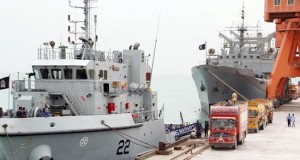
Gwadar with its massive economic strategies not only for this region but for post-Soviet space as well as for Eurasia and Africa at the entrance of Omani and Persian Gulf, a route that bridges distances between nations for most of the world’s oil trade and where warm-water deep-sea port exists through out the year as a vital asset for the economic growth of the region.
 However due to the political turbulence and lack of resources in the region, the port has not been completely functional yet. Hence the future of Gwadar port relentlessly relies on infrastructure and political stability of Balochistan which the major concerns for the Pakistani, the Chinese and the interested world powers at present are.
 Gwadar port is not today’s discovery. The history of Gwadar as a natural port dates back to fifteenth and sixteenth centaury. The importance of this coast was revealed in the fifteenth centaury when the Portuguese tried to occupy this region. Reflecting those anecdotes of Baloch history, the Baloch hero Meer Hammal Jeayand of Kalmat Gwadar led the war against the Portuguese and defended Gwadar from being occupied. Even after constructing their forts in Jivani and some other parts of Gwadar, they couldn’t invade the Baloch coast.
Later by the end of the eighteenth centaury, the Khan of Kalat Meer Naseer Khan I granted the charge of some areas of district Gwadar beginning from Karwat in the east to Robar in the west and Dramb hills in north to coast in the south to the Sultanate of Oman under a treaty. Due to its important location, Gwadar had one of the busiest ports of the region during that era. It was used for national and international trade and was linked with most of the Middle Eastern countries as well as with a few north East African countries, India and the Britain.
Before the mid of 1950s, Gwadar district was discovered as a magnificent spot for a sea-port. This increased Pakistan’s interest toward the Baloch coast. However because most other parts of this district were under the control of Oman, Pakistan considered Jivani suitable for this project in the beginning.
Later Jivani was regarded as unsafe because of being very near to the Iranian boarder, thus Gwadar remained the center of attention for Pakistan. On 8th September 1958, Pakistan paid $3 million to the Sultanate of Oman to get the control of entire district Gwadar for a period of twenty years through a treaty among Pakistan, Britain and Oman. This mega economic project remained pending until the charge of Gwadar was completely given to Pakistan in 1988.
After getting the complete charge, Pakistan constructed a small port in Gwadar but the construction plan of the strategic Gwadar port was initiated by Nes Pak in 1995 as one of the goals for the eighth Five year plan in 1993. The plan of Gwadar port was officially acknowledged in 2000. China Harbor Engineering Company (CHEC) took over the charge for its construction. As the major investor China spent $248 million in the first phase of developing Gwadar Port which eventually topped $2.2 billion and was handed over to the Pakistani government in 2002.
In 2007 by the former president Musharaf, Gwadar port was handed over to Port of Singapore Authority (PSA) with the 40 years’ contract. But this contract could not be implemented completely therefore it was concluded in 2012. In February 2013 Pakistan officially handed the Deep-sea port operations to China. The Over Seas Company of China got the authority of the port in June 2014. So far only 1.4% work of the port’s functionality has been completed and the remaining 98.6% is still on its way.
China plans to replicate the model of Shanghai Free Trade Zone (SFTZ) in Gwadar. Since it has been used for countless economic and social reforms in China and had lent a hand in scoping economic growth of the country. It is regarded a perfect model to be implemented at Gwadar too according to the president of Pakistan-China Chamber of Commerce and Industry.
In a visit to Gwadar Press Club, the Chairman of Gwadar Port Authority Meer Dosteen Khan Jamaldeeni shared that this specific port is one of deepest sea ports in the world hence its dept makes it a safe port for the huge cargo ships.
The Government yet has to facilitate the port with basic facilities in agreement with the master plan but along with some other hindrances lack of resources has been a great hindrance to make the port fully functional. Port also requires infrastructure as roads, railway line and international airport hence working for those projects is still imminent.
According to the Chairman, Gwadar port as a major economic project can open new doors for development. Fully functionality of this mega project means more job opportunities and a better standard of life for Gwadaris. It can facilitate the central Asian countries, north western parts of India, most of the Arabian countries along with the Central European and north eastern African countries for cargo shipment and massive trades.
It will indeed be one of the safest international ports that will link various countries and will be able to serve large merchantmen for the up coming fifty years or more. Although China seems to be determined for the functionality of the port but the reality can’t be denied that fully functionality of Gwadar Port still remains a dream.
However, before making the port fully functional, the Chinese government intends to develop the social sector in Gwadar. Because through some level China is aware about the situations of Balochistan as a result with the intention to develop an understanding at the ground level, some Chinese officials have been meeting local representatives from social sectors from time to time to find out the concerns of the local people living here.
Through the years, Gwadar Port emerged both as a positive and a negative asset for the region. On one end it narrowed the distances between the metropolitan of Karachi by the Makran Coastal High way but on the other side it increased the restlessness among the nationalists and the Baloch militant organizations. The first blast in the history of the peaceful harbor town of Gwadar in 2004 killed three Chinese Engineers on the Fish Harbor Road followed a number of such attacks that disturbed the peace of the emerging town.
Besides being one of the reasons for the rise of political disturbances, Gwadar port had also been one of the reasons for land erosion in the near by areas of Gwadar. Due to the dept of the edges of Gwadar port, the waves don’t break in the south eastern part any more where the port has been constructed instead the high pressurized waves travel to the northern villages such as Sur Banden and other areas of the district. It has been the biggest reason for land erosion in the region for about seven years.
Fisheries as the key economic activity in the district, is the biggest source of income for the majority of the population in Gwadar. It has been a decade since the west bay of Gwadar had been blocked with large rocks as so called protection wall.
 According to the master plan, in the coming years the west bay will completely be blocked and population living near the west bay will also be relocated to the northern areas of Gwadar because the Chinese Government intends to construct railway track “Express Way” from Gwadar to China. Many Gwadaris already had to leave their ancestral habitations and had been relocated to further places.
The protection wall had already been a hindrance for the fisher men folk. Their boats had been breaking due to the wind, rocks and lack of ecological corridors for placing the boats. Further as the “Express Way” project starts the west bay will completely be blocked affecting the deprived fishermen of Gwadar.
What the nationalists and the Baloch militant groups say is that they don’t oppose the port because it will bring the air of development in Balochistan but what they are concerned with are the destructions it will bring for the Balochs. They believe that when businessmen from other parts of Pakistan invest in Gwadar, the actual habitants of the region will eventually change into minorities.
2003-2005 are remembered as “The Years of Acre Boom” in Gwadar when half of Gwadar was purchased by large merchantmen. It will be another mega project of Balochistan that will benefit the federal government of Pakistan and besides being an easier way to reach the hot—water sea port; China will get the bigger economic revenue. It will be another example of the “Saindak’s  Copper and Gold mine Project” and “The Sue Southern Gas project” as they say. According to them when those two mega projects didn’t bring any changes in Balochistan other than becoming huge pillages of Baloch resources and benefiting federal government, Punjab and the China, Gwadar Port does not set any expectations for the Balochs either.
Gwadar port can not only be an important seaport for the world but it can be a great advantage for the development of Gwadar and Balochistan as a whole. The successful functionality of Gwadar port is only possible if the bigger share of the revenue generated from the port is invested for the social, educational, infrastructure and economic evolution of poverty tackled province of Balochistan, the human right issues are solved and the Government of Balochistan, the local people and Baloch nationalists are taken in confidence and are heard.

NAYA KPK - Worth your time?: Delayed proceedings become norm in Khyber-Pakhtunkhwa Assembly

The rhetoric of change has become the talk of the town; from people on the streets to primetime television, the mantra has taken current affairs by storm.
However, the ones playing the tune have done little to put ‘change’ to effect on their own turf, the Khyber-Pakhtunkhwa (K-P) Assembly. For dwellers of the promised ‘Naya K-P’, punctuality of lawmakers could have been a symbolic reference towards the slogans that echo in the house.

But perhaps once they reach the corridors of power, such efficiencies seem too frivolous for those who claim to shoulder the responsibility of shaping the war-torn province’s destiny.
Time wasted, delayed starts and pending caucuses have become routine with the treasury and opposition alike in the house. It has in fact become a revered tradition to start assembly sessions over an hour late.
At times some of the parliamentarians do complain, however, the concerns fail to make an impression on the majority.
[Not] on time
The session kicked off at 3:17pm on Friday, after a delay of about an hour and 17 minutes after the scheduled start time. The cogs were hardly in motion when the mandatory tea break arrived, coupled with a recess for prayers.
After the break, only a single calling attention notice was discussed. Another notice on the agenda could not be taken up due to the absence of the mover, while three bills were put on hold after an agreement between the treasury and opposition benches. The next important issue on the agenda was a general discussion on an adjournment motion moved by QWP leader Sikandar Hayat Sherpao who too was absent for the hearing. All in all, the session lasted for hardly an hour at most and was adjourned till Monday.
QWP lawmaker Miraj Humayun Khan complained about time being wasted on a point of order and told the speaker that during the ongoing session spanning over 36 days, the house has held only 13 sittings. “Our questions are not being taken up due to an extended number of holidays,” complained Khan.
Similarly on November 24, the session had started at 3:25pm instead of 2pm. On the day’s agenda, there were three questions, all from JUI-F lawmaker Mufti Fazl Ghafoor. The questions, however, lapsed as the mover arrived after the speaker had asked for the questions to be tabled.
ANP lawmaker Syed Jaffer Shah told the speaker on a point of order that most of the people usually arrive at around 2pm, but the session is delayed an hour or two every time.
“Journalists, officials and assembly staff all arrive on time and wait for the session to start,” Shah said.
Speaker Asad Qaiser concurred with him and said that lawmakers should ensure punctuality.
He said that he himself has to wait in his chamber until at least 40 members arrive, before he can start the session.
Lawmakers were perhaps in a rush on November 17 when the session hardly lasted for over 50 minutes. Following the break, the house was short of quorum and hence adjourned.
Surprisingly, there is no bar on the length of the break as the announced duration of 10-15 minutes can linger on for about 45 minutes at the ease of elected representatives.
It seems lawmakers from either side of the aisle have little interest in the way the house functions.

Pakistan: The AIDS denial - Social taboos: Patients choose quiet death over treatment

Of the estimated 100,000 HIV/AIDS patients in the country, only 9,865 have sought treatment while the rest live in isolation fearing registration with the National AIDS Control Programme (NACP) will bring a bad name to them and their families.
Such patients prefer to gradually die from the disease at home instead of reaching out to health facilities because of the stigma associated with the illness. They live secluded lives boycotted by society and disowned by their own families.
According to data available with the provincial health department, the total number of HIV/AIDS cases in Khyber-Pakhtunkhwa (K-P) is 16,000 with only 1,747 patients receiving medical assistance at established centres. Of these 1,239 are men, 427 women while the remaining are children.
The provincial capital has 228 registered patients receiving treatment in HIV/AIDs care centres, followed by 110 patients in Bannu, 76 in Lower Dir, 75 in Charsadda, 69 in Swat, 57 in Upper Dir and 53 in Swabi. Similarly, Hangu has 45 registered patients, Lakki Marwat 44, Nowshera 38, Mardan 34 and Kohat has 33.
As per the provincial health department’s data, 27.2% of the registered patients were infected while sharing syringes to inject drugs. Nearly 7.2% caught the disease due to sexual relations with men and transgenders.
Countering perceptions
Health experts are of the opinion that awareness is imperative to counter the disease’s perception and its spread.
Dr Fazle Maula, former project director of HIV/Aids Control Programme, Peshawar told The Express Tribune the Global Fund and National AIDS Control Programme are putting all their efforts towards creating awareness about the fatal disease.
“The main method of contraction is shared syringes among drug users. This group is not aware about the repercussions and continue with the lethal practice,” said Maula.
According to Maula, the social stigma associated with HIV/AIDS causes patients to remain silent and not seek treatment. “Sometimes even doctors are reluctant to socialise with such patients and ignore them,” he said.
“Awareness campaigns need to be conducted for people to know the disease is not transmitted by shaking hands or having meals with a patient, but because of carelessness and ignorance,” he added.
Dr Maula explained the estimated cost of treating an HIV/AIDS patient is around Rs22,000 per month. “The Global Fund has been helping us cover this cost, however, our contract ends in 2016 and the government needs to get ready to fight the disease on a war-footing.”
Where to go
According to the NACP website, there are 15 HIV treatment and care centres nationwide. These centres provide comprehensive HIV care services including free antiretroviral therapy, free advanced HIV diagnostics, management of HIV-related opportunistic infections and counselling services to HIV-positive people in the country.
Two of these centres are in K-P; one in Hayatabad Medical Complex while another is at District Headquarters Hospital Kohat. Using latest technology for diagnosis, they provide medical assistance to HIV/AIDS patients as well as services of Prevention of Parent to Child Transmission.
The provincial government has also been working on setting up HIV/AIDS screening centres for injected drug users. Recently, screening tests were also conducted inside the Central Prison Peshawar.

Pakistan: Newborn deaths in Sargodha hospital

After the media spotlighted the high rate of newborn babies' deaths in Sargodha district hospital, Chief Justice Nasirul Mulk took suo motu notice ordering the Punjab government to submit a report explaining reasons for the death of 19 babies within a few days. The report presented before the court on Thursday, based on a five-member committee's findings, makes appalling revelations. 50 babies - 18 of them needing oxygen to breathe - were all crammed onto just 12 beds. There were only seven oxygen outlets, each one of them was manipulated in a non-professional manner to create multiple oxygen supply sources; there was no ventilator. Only four of the six baby warmers and three phototherapy units functioned. The investigation committee noted that "most of the children at the DHQ teaching hospital, Sargodha, had died due to prematurity, low birth weight, septicaemia (blood poisoning) and birth asphyxia (suffocation)." In short, poor medical facilities and weak maternal health contributed to the loss of so many lives. 

Considering that it happened in a teaching hospital, expected to be well-resourced, in one of the province's major cities, conditions in small town government-run hospitals could not be any different, if not worse. Unfortunately, like in various other fields, medical practitioners and administrators are not resistant to malpractices and inefficiency plaguing most government departments. In the present case, the health department had enough evidence to suspend the hospital's medial superintendent and initiate disciplinary proceeding against him under the Punjab Employees Efficiency, Discipline and Accountability Act, 2006. Going by some recent examples, it is a matter of time before some of his colleagues start agitating for his reinstatement. Unlike the past, the government must stay firm and hold all responsible to account so that others remain mindful of performing their professional duties as best as possible. The case should also serve as reminder for provincial authorities to improve conditions in other hospitals. 

At least for now the situation in DHQ Sargodha has stirred the provincial government into action. According to the report presented before the court, seven committees consisting of experts and public representatives have been formed to indentify problem areas and make recommendations for the improvement of health facilities. The recommendations are to be completed within a week and placed before the Chief Minister. Hopefully, speedy action will follow. Other provinces also need to keep an eye on the exercise and look for ideas to improve health facilities under their own jurisdiction. All must also pay urgent attention to their respective mother and child healthcare programme, with an emphasis on reproductive health. 

Nawaz’s govt is better than dictatorship: Zardari

While the Pakistan Tehreek-e-Insaf (PTI) stepped up pressure on the governmentfor an audit of the 2013 elections, Pakistan Peoples Party (PPP) Co-chairman Asif Ali Zardari on Sunday reaffirmed his support for Prime Minister Nawaz Sharif, saying that the worst kind of democracy is better than even a benign dictatorship.
“Nawaz Sharif’s government is better than the rule of ‘my-dear-countrymen’,” he said referring to the previous marshal laws in the country. “The PPP will not become a part of the conspiracy to derail democracy,” he told PPP supporters at a ceremony marking the party’s 47th foundation day at Bilawal House, Lahore.
“The PML-N wicket will fall when the PPP desires,” the former president said and asked his supporters to “let the Kaptaan play for now. The PPP will play on its own pitch”. He was referring to Imran Khan’s ongoing campaign against the government.
Charged PPP workers shouted ‘Go Nawaz, Go’ and ‘Ro Imran, Ro’ (cry Imran cry) when Zardari started his speech. “I like these slogans but we supported democracy irrespective of our political interests,” he told the audience.
Zardari said he has learnt the art of politics from his late wife, Benazir Bhutto, who, according to him, had a great vision. “She knew the intricacies of world politics and understood ground realities very well,” he added. “Imran Khan doesn’t have any understanding of international politics.”
The PPP co-chairman said that Imran talked about the ‘third umpire’ in all his speeches which “makes me believe that his entire cricketing career was based on the support of third umpire”. Zardari added that he spent 13-14 years in jail and faced trials and tribulations for the sake of democracy.
Zardari said that he could not “set fire to the boat of democracy which has been kept afloat by the supporters of Zulfikar Ali Bhutto and Benazir Bhutto”. The derailment of democracy would pave way for another dictatorship, he said. “And I believe the worst kind of democracy is better than a benign dictatorship.”
Referring to Imran, the PPP leader said “a wolf has been camping in Islamabad and polluting [the political] environment in the country”. “There is a huge difference between his and our style of politics. His politics is myopic, while we are answerable to Garhi Khuda Bukhsh for our politics,” he said referring to the hometown of the Bhutto family.
The PTI chief claims that the 2013 elections were massively rigged in favour of the PML-N and he has been calling for an audit of the elections. Zardari said his party also had reservations about the elections but he didn’t react in a way that could undermine the country.
“They [PTI leaders] are unaware of the international conspiracy against the state of Pakistan,” Zardari said. “He [Imran] doesn’t know what is happening in Afghanistan, Iraq, Libya and other Islamic states could have implications for Pakistan. To understand these things, he [Imran] should learn politics from a master politician,” he added. He said that on the occasion of PPP’s foundation day he pledged to continue to defend democracy for future generations.
Earlier, PPP Punjab President Mian Manzoor Ahmad Wattoo had to cut his speech short as the jiyalas shouted “Go Wattoo, Go” during his speech. Watto praised the PPP co-chairman for his politics of reconciliation and said that his [Zardari’s] policies would revive the party in Punjab.
The PPP was routed in Punjab in the 2013 parliamentary elections, triggering serious soul-searching in the party leadership.
The stage secretary, Senator Jehangir Badr, also had to face the wrath of the workers who were unhappy with his strategy and also raised slogans against him.
Earlier, a cake was also cut to celebrate the 47th foundation day of the PPP. Former prime minister Syed Yousaf Raza Gilani, Aitzaz Ahsan, Opposition Leader in the National Assembly Syed Khurshid Shah, Manzoor Wasan and other senior leaders of the party attended the ceremony. A resolution was unanimously passed that expressed confidence in the leadership of PPP Chairman Bilawal Bhutto and Co-chairman Asif Ali Zardari.
Chief Minister Sindh Syed Qaim Ali Shah, Rehman Malik, Manzoor Wassan, Qamar Zaman Kaira, Mehreen Raja and Raja Riaz were also present at the ceremony.

Pakistan - Fanatics in political parties more dangerous than Taliban: Nasim Wali

Begum Nasim Wali has said that the Taliban are bad for sure but what is more dangerous is the hidden fanatics in political parties which do not speak up against terrorism.
Speaking at a meet the press organised by the Karachi Press Club on Sunday, the senior most member of the Awami National Party, now divided into two factions; spoke candidly about the prevailing issues the party faces in the province in particular and the country in general.
Looking frail and petite, Begum Wali asked members of the press to stop calling her Begum Sahiba and remarked: “It makes me sound like a Begum who is a drawing room politician,” and asked them to address her as Mor [mother] Bibi.
Flanked by a party member on stage, who repeated questions to her from time to time in case of a communication problem with the press, she took all the questions head on, answering each one of them in detail.

Says she has brought Ghaffar Khan’s message of peace and non-violence to Karachi


She began by speaking about her visit to Karachi adding that she had come to the city with a message of peace and non-violence which used to be the hallmark of Khan Abdul Ghaffar Khan’s politics in the subcontinent.
She then spoke about the ANP as a party and how it ended up where it did. “There were corruption charges against our MPAs which had never happened before. Also, there were cases of use of violence, which is completely against the teachings of Bacha Khan. This is something which I and some of our members couldn’t tolerate and so we decided to launch our own party — ANP-Wali.”
This other faction of the party, launched in February this year, met with a lot of criticism from the present members of the ANP.
Speaking about it she said: “I don’t care how my actions are perceived because they are in line with the principles of the party which was founded by Khan Abdul Wali Khan.”
She said that her party wanted to correct the actions of the past and aimed to reach out to everyone. “The ANP is considered to be a party for the Pakhtuns only. I want to tell everyone that our party is open to all progressive and non-violent people.”
Begum Wali was sidelined from party politics in 2005 on the pretext of her old age and internal conflicts the party was going through at the time. Her troubled relationship with her stepson, Asfandyar Wali Khan, and the impact it left on her was apparent when she remarked: “He always called me his father’s wife and never a mother.”
During the question and answer session, she was asked about the ongoing sit-ins in the country and her opinion of it, she replied smiling: “We never organised a dharna rather arranged massive rallies whenever we felt it was needed. I organised the party when Wali Khan was in jail.”
Explaining further, she said: “I have immense respect for Imran Khan as a social worker and think that he is doing politics the way he knows best. I do politics the way I think best. I don’t want to impose my ideologies on him and expect the same from him as well.”
Answering a question about the continuing violence in Khyber Pakhtunkhwa and the number of victims it claims every other day, she said: “The extremist forces are getting stronger because those with a progressive mindset are not united.
The Taliban are bad for sure, but what’s more dangerous is the hidden fanaticism in political parties which don’t speak up against terrorism.”
Apart from a few members of the ANP, the meet the press was attended by old members from the Movement for the Restoration of Democracy days, who had come to listen to Begum Wali talk about the party and the way forward.