In November 2011, with the Arab Spring uprisings in full tilt and Europe rocked by a debt crisis, President Barack Obama flew to Asia to promote a shift of America’s military, diplomatic and business assets to the region. His then Secretary of State, Hillary Clinton, declared in the same year that the 21st century would be "America's Pacific century". Fast-forward to today: as Obama flies to Asia on Sunday, Washington's “pivot” to the region is becoming more visible. It includes deployment of American Marines in Darwin, Australia, stepped up U.S. naval visits to the Philippines and many more joint drills with that nation's armed forces, as well as the lifting of a ban on lethal weapons sales to Vietnam. But just as Washington seeks to expand American interests in Asia as a counterpoint to China’s growing influence, some U.S. partners have shown less willingness to challenge Beijing. That may mean China will have a freer hand to assert its authority in the resource-rich South China Sea, where its territorial claims overlap those of Taiwan and four Southeast Asian countries. The drubbing Obama's Democrats took in this week's mid-term elections, defeats that were blamed by many on his leadership, will hardly strengthen his position in discussions with China or with allies in the region. Obama will have less room for maneuver on foreign policy now he has a Republican-controlled Senate to deal with, and the political focus in Washington is already starting to turn to the 2016 presidential election. Although several countries, notably the Philippines and Vietnam, have sought closer U.S. ties as a defense against what they see as China's aggression in pursuit of its claims in the South China Sea, other long-established alliances have become less robust. Beijing's increasing economic influence is a major reason. Southeast Asia's trade with China is up four-fold over the past decade to $350 billion last year and is forecast to reach $1 trillion by 2020. DOMESTIC REFORMS Indonesia, traditionally a leading voice and strong U.S. ally in Southeast Asia, has signaled a foreign policy shift away from international activism following this year’s election of a populist President Joko Widodo, who said in his election campaign that his focus would be on domestic affairs. Rizal Sukma, a foreign policy adviser to Widodo, told Reuters there would be a shift in priorities from high-profile diplomacy, though Indonesia would continue to play a role in the South China Sea and support freedom of navigation and trade. On the South China Sea, Widodo is unlikely to act without a crisis, said Greg Fealy, an Indonesia expert at the Australian National University. "The U.S. may well find it much more difficult to get any leverage,” he said. In Thailand, a military coup in May has shaken up its relationship with the United States. Since the coup, Washington has scaled back diplomatic contacts and reduced joint military exercises. And Malaysia, next year’s chair of the 10-nation Association of Southeast Asian Nations, has seen a wave of Chinese trade and investment and is working with Beijing on upgrading an ASEAN-China free-trade agreement. "I think there is every reason to be concerned,” over whether ASEAN will stand up to China, said Joseph Liow, a Southeast Asia expert at Washington's Brookings Institution think tank. During his trip, Obama will attend the Nov. 10-11 Asia Pacific Economic Cooperation forum in Beijing and the Nov. 13 East Asia Summit in Myanmar. Perhaps most importantly, he will hold talks with Chinese President Xi Jinping on Nov. 11-12. U.S. officials say he plans to press Xi about China's aggressive behavior in pursuit of maritime claims in Asia. "We are going to have to speak very directly and candidly about some of our concerns and our areas of disagreement," a senior U.S. administration official told Reuters. U.S. PROGRESS Washington has had its recent successes in the region. In April, the U.S. and the Philippines signed a new 10-year security pact allowing for a larger U.S. military presence. In July, another U.S. ally, Japan, revised its interpretation of a pacifist postwar constitution to allow Japanese troops to assist a friendly state under attack. And Washington has also agreed to boost defense ties with Australia and agreed with India to negotiate a 10-year extension of a bilateral military cooperation deal. Perhaps most eye-catching of all, nearly 40 years after the end of the Vietnam War, the United States last month partially lifted a long-time ban on lethal weapon sales to Vietnam to help Hanoi improve maritime security. That followed tensions between China and Vietnam that flared in May after China's state-run CNOOC oil company parked a deepwater rig off Vietnam’s coast in what Hanoi said was its exclusive economic zone, sparking the worst breakdown in ties between the two since a border war in 1979. Joint U.S.-Philippine drills and exercises have more than quadrupled in the past two years, the Philippine military said. Its Subic Bay port saw 100 U.S. naval ship visits in the first 10 months of this year, up from 54 in 2011. The Pentagon says it now has 1,150 Marines in Darwin, in northern Australia, up from an initial 200 in April 2012. It plans to lift that force to 2,500 in two years, pending an agreement with the Australian government. A vital component of Obama's rebalance - a 12-country Trans-Pacific Partnership trade pact - has yet to be concluded. Obama has said he wants to see TPP progress as a result of his trip, but U.S. officials say they do not expect a deal given major outstanding issues. China is not one of those negotiating the TPP, but is open to joining one day. "There's no country in the region, given China's rise ... who isn't essentially a strong supporter of America remaining strategically engaged in the region," said Russell Trood, an adjunct professor of U.S. studies at the University of Sydney. "And yet when you ask them to stand up and nail their colors to the masthead, as it were, few are prepared to do it to the degree to which Washington would no doubt be reassured."BY DAVID BRUNNSTROM AND RANDY FABI
Saturday, November 8, 2014
As Obama visits Asia, old alliances face new strains in face of China's influence

Expanded US role in Iraq? Not without Congress' OK
Congress members returning to Capitol Hill next week will face a debate over President Barack Obama's new $5.6 billion plan to expand the U.S. mission in Iraq and send up to 1,500 more American troops to the war-torn nation. Obama authorized the deployment of advisory teams and trainers to bolster struggling Iraqi forces across the country, including into Iraq's western Anbar province where fighting with Islamic State militants has been fierce. His decision comes just three days after bruising midterm elections for his Democratic Party. But the deployments hinge on whether Obama can get the funding approved in Congress' lame-duck session, so that advisers can begin deploying to Iraq, particularly to Anbar where Sunni tribes have persistently requested help. Obama's plan could boost the total number of American troops in Iraq to 3,100. There are currently about 1,400 U.S. troops there, out of the 1,600 previously authorized. The Iraqi government, members of Congress and others have called for troops in Anbar in western Iraq, where extremists have been slaughtering men, women and children. Congress hopes to complete the defense policy bill in the postelection, pre-holiday session and will consider the Iraq funding along with the administration's request for billions more for military operations overseas. Lawmakers are still pressing the White House for additional details on how the money would be spent. Rear Adm. John Kirby, the Pentagon press secretary, said the military will set up several sites across Iraq to train nine Iraqi Army brigades and three peshmerga brigades, which are made up of Iraqi Kurdish forces. The military will also establish two operations centers where small advisory teams can work with Iraqi forces at the headquarters and brigade levels. Kirby said one of those centers will be in Anbar province, where U.S. troops fought al-Qaida extremists in brutal fighting in 2004 to 2007, costing more than 1,000 American lives and 9,000 Iraqi lives, mainly in the cities of Fallujah and Ramadi. He added that the U.S. also is considering training of some of the Sunni tribes. In 2007, Sunni Arab tribes in Anbar joined forces with Americans — in what was called the Anbar Awakening — and dealt a blow against the insurgents that many credit with turning the tide in that conflict. The new Iraqi leaders have pledged to be more supportive of the Sunni tribes than the previous Shiite government was, although Kirby said it's unclear whether the Baghdad government will provide them with weapons. Kirby said the expansion was based on a request from the Iraqi officials, the U.S. military's assessment of Iraqi military progress and as part of a campaign plan "to defend key areas and go on the offensive against the Islamic State of Iraq and the Levant," another name for IS. The U.S. troops will not be in combat roles but will train Iraqi forces in protected locations around the country. Until now, U.S. troops have largely been confined to Baghdad and Irbil, including two operations centers in those cities. Of the 1,500 troops, Kirby said that about 630 would be used for the advisory teams, including support and security forces, and the rest would be for the training mission. Troops could begin deploying as soon as this month, if Congress approves the funding, but it will take a couple months to get the training sites ready, and the actual training will take six to seven months. The funding request followed a meeting among Obama and congressional leaders on Friday, which included a military briefing. Of the approximately $5 billion for the Pentagon, about $3.4 billion would support ongoing operations and strikes on the Islamic State, and $1.6 billion would support the training and equipping mission for the Iraqis. The remainder is State Department funding to support diplomatic efforts. Kirby said Iraq and other coalition nations will contribute money, and other countries will also send trainers. Secretary of Defense Chuck Hagel met with the Danish Minister of Defense Nicolai Wammen on Friday at the Pentagon, and Kirby said the minister committed to sending up to 120 trainers for Iraqi forces. The U.S. has been launching airstrikes on Islamic State group militants and facilities in Iraq and Syria for months, as part of an effort to give Iraqi forces the time and space to mount a more effective offensive. Early on, the Islamic State group had gained ground across Iraq. Lately, however, with the aid of the U.S. strikes, IS has suffered a number of losses in Iraq, where it is fighting government forces, peshmerga and Shiite militias aided by Iran and the Lebanese Hezbollah group. Last week, Iraqi forces recaptured the town of Jurf al-Sakher. IS also lost a string of towns near the Syrian border last month. Besieged Iraqi troops have also managed to maintain control of Iraq's largest oil refinery outside the town of Beiji north of Baghdad, despite numerous attempts by the Islamic State group to capture it. Rep. Howard P. "Buck" McKeon, R-Calif., the chairman of the House Armed Services Committee, said Friday that he has "long been concerned that the president has underfunded our combat operations against terrorists." He said he will give the funding request fair consideration, but added, "I remain concerned that the president's strategy to defeat ISIL is insufficient. I would urge the president to reconsider his strategy and clearly explain how this additional funding supports a new direction. Such clarity is more likely to find swift congressional approval." ISIL is one of several acronyms for the Islamic State group.By LOLITA C. BALDOR

Afghanistan: President Ghani pledges robust investment on girls education

Afgh - China: Two Birds with One Afghanistan
Frank Sieren
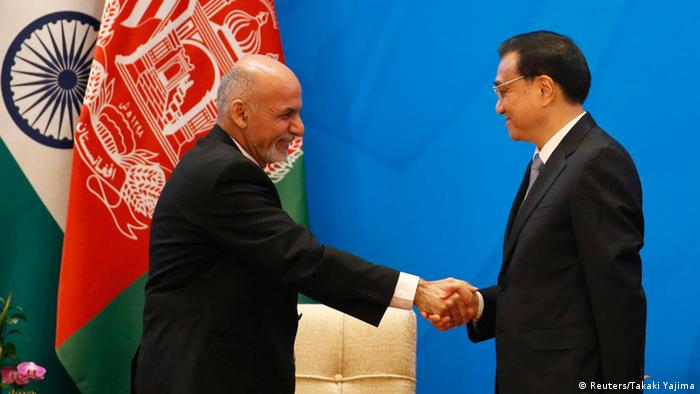
The newly burgeoning relationship between China and Afghanistan is of mutual benefit, says DW columnist Frank Sieren.If you want to see who is Afghanistan’s new friend, all you have to do is look at the new president’s travel schedule. Ashraf Ghani had hardly been in office for a month when he took off on his first foreign visit. Where did he go? To China of course - which is, politically and economically, the strongest of Afghanistan’s neighbors. The Chinese leader and Party boss Xi Jinping received the Afghan president in Beijing last week. And not only was it Ghani’s first state visit, his final day in Beijing happened to coincide with the opening day of the Istanbul Process 2014. This was China’s first time as host for the coming together of 14 Asian states, including Afghanistan, Azerbaijan, China, India, Iran, Kazakhstan, Kyrgyzistan, Pakistan, Russia, Saudi Arabia, Tajikistan, Turkey, Turkmenistan and United Arab Emirates. China has fostered close ties to Pakistan for decades. Now it is building a friendship with Afghanistan. The country is simply too strategically important for China to ignore. It is indeed of such significance that in the 19th century, the British tried to bring the divided land under their control, followed by the Russians in the 20th century and the Americans and NATO in the 21st.
Pakistan: Bilawal Bhutto strongly condemns killing of Allama Nasir Abbas
https://mediacellppp.wordpress.com


Opinion: The West must demand changes to Pakistan's blasphemy laws

By - Grahame Lucas
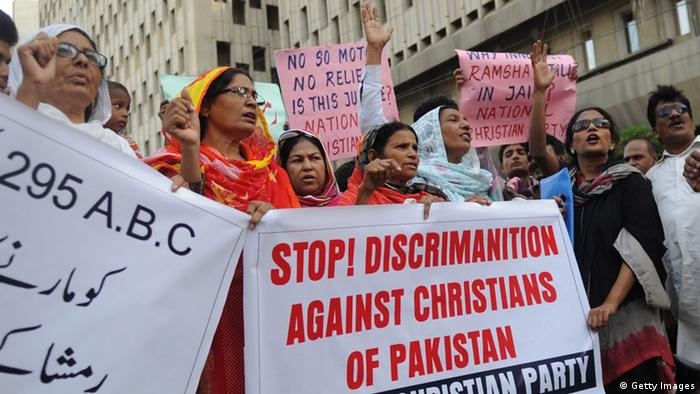
Once again terrible news is coming out of Pakistan. The country's strict blasphemy laws are once more at the focus of attention after yet another spate of recent extra-judicial killings, writes DW's Grahame Lucas.In the last few days, the continuing abuse of Pakistan's blasphemy law has been there for all to see. Again. A Pakistani policeman, whose job it is to uphold law and order, bludgeoned a man accused of insulting companions of the Prophet Mohammad to death in a holding cell in a police station in the city of Gujrat. By way of an excuse, the police claimed the accused was mentally imbalanced. But there can never be an excuse for such a blatant violation of human rights. A proper judicial investigation into the incident is unlikely to go anywhere.
Pakistan: Bhagwandas refuses to take up CEC job
http://www.dailytimes.com.pk/Former judge Justice (retd) Rana Bhagwandas, who emerged as front runner for the position of Chief Election Commissioner (CEC), on Saturday refused to assume the job. According to the sources, Senator and Pakistan People’s Party senior leader Mian Raza Rabbani met Bhagwandas to convince him to take the charge of CEC if political parties reach consensus on his name. Earlier, Minister for Information and Broadcasting Pervaiz Rashid disclosed that consensus has been found among various political parties on name of Bhagwandas for the CEC slot.
Pakistan: Over 250 minority members murdered during Shahbaz Sharif’s reign as CM Punjab


Pakistan: ‘Blasphemy’ murders: Relatives of slain Christian couple object to FIR
A Kasur additional district and sessions judge on Thursday sought comments from Kot Radha Kishan police on a petition seeking the court’s directive to change the complainant of the FIR registered after the killing of a Christian couple accused of blasphemy. Mukhtar Masih, father of Saima alias Shama, filed the petition objecting to Sub-Inspector Muhammad Ali being named as complainant. He requested the court that the incident be investigated fairly and thoroughly. Press conferenceBy Rana Yasif

Pakistan People’s Party condemns Wagah blast, Christian couple’s killing


Pakistan's blasphemy law - ''Time for repeal''

Thousands of Pakistani NICs issued to foreigners in Balochistan

Pakistan: blasphemy allegation - Senseless bloodletting
Pakistan: Power outage escalates as shortfall reaches 5,000 MW


What Will Happen to Aasia Bibi?
Mehr Tarar

Horror in Pakistan: Christians Burned Alive
http://www.themoralliberal.com/
JAY SEKULOW, ACLJNovember 4, a Muslim mob in Pakistan burned to death a young Christian couple, including a pregnant mother of four children. Their alleged crime? Blasphemy. At the ACLJ we’re still learning the details, but here’s the on-the-ground report from our European Centre for Law and Justice affiliate in Pakistan: Shahzad, his wife, Shama, and parents had been working and living at the brick kiln of Yousaf Gujjar for the last thirteen years. On November 3, 2014, while cleaning the house, Shama found some papers that belonged to her father-in-law who had died a week prior to this incident. She gathered all those papers; some of the papers were printed in Arabic. Shama was illiterate and did not know whether those papers were from the Qur’an. She burnt all of them together (a common way of disposing of papers). Her Muslim neighbors, Shakoor and Inayat saw her burning the papers. They informed Khawar Yousaf, son of Yousaf Gujjar (owner of the brick kiln) that Shama burnt the Qur’an. Khawar called Shama and Shahzad to his office, locked them inside and beat them. One of the brick kiln laborers told our legal team that a fruit vendor named Muhammad Ramzan used to come to the brick kiln. On November 3, 2014, he passed by the garbage corner where he also saw some partially burnt pages that had Arabic written on them. He found out that a Christian couple had burnt the Qur’an and they were in the custody of the brick kiln owner. Outraged, Ramazan went to his village’s mosque and told the cleric Maulvi Muhammad Hussain that the Qur’an had been desecrated. Muhammad Hussain sent out a message to the adjacent villages’ mosques and also made an announcement at his own mosque. All told, about six to seven villages were informed that a Christian couple had burned the Qur’an. On November 4, 2014 at about 6:30 a.m., an enraged mob of about four thousand Muslims attacked at the brick kiln. They attacked the office where the couple was detained. The mob beat the couple with clubs. Soon the couple fell unconscious; the mob took them on top of the brick kiln and lay them down on the openings from where coal is thrown to increase the fire. The Muslims also put an iron sheet on them which was about 7 feet long and 3 feet wide to press them in order to keep them from moving. While the couple was being burnt, the Muslims were chanting slogans of Allah-o-Akbar (Allah is great). They remained there until the couple was completely burnt. During the visit at the brick kiln, our legal team learned from a police officials that the police received the information and arrived at the site but due to the huge number of people they could not intervene. However, the police registered the crime report and about 50 people have been arrested so far. The Christian eyewitnesses told that the Muslims also burnt the Bible and threatened the Christians that they would burn the Christian houses and church in the village. They also said that Khawar Yousaf had demanded 150,000 Pakistani rupees (roughly $1471) from the couple to let them escape from the village. But the poor couple was unable to pay. During our meeting with the family of Shahzad, the family informed our team that Shama was in the second trimester of her pregnancy. At the ACLJ, we’ll continue to monitor developments. Pakistan is one of the top recipients of American foreign aid.
http://www.themoralliberal.com/2014/11/06/horror-in-pakistan-christians-burned-alive/
Pakistan: Murder of Christian couple 'worst hate crime in country's history'
By: John Newton and Joop KoopmanA senior Dominican in Pakistan condemned the murder of a man and his pregnant wife for blasphemy as the worst religiously motivated hate crime in the country’s history. Speaking to Aid to the Church in Need, Fr James Channan OP said: “The barbaric act by fanatic Pakistani Muslims of burning alive a poor Christian couple is a crime against humanity. It is the worst crime in the history of Pakistan committed in the name of religion.” On Tuesday 4 November, a mob killed Shama Bibi, who was four months pregnant, and her husband Shahbaz Masih, accusing them of burning pages of the Qur’an. After beating the couple they incinerated their bodies in a brick kiln. Reports state that Shahbaz Masih was still alive, although badly wounded, when he was thrown into the kiln. The couple were bonded labourers at the brick factory where they were killed near Kot Radha Kishan village, Punjab province, 28 miles south of Lahore.
Fr Channan, the former Vice-Provincial of the Dominican order in Pakistan and the country’s coordinator for the United Religions Initiative, told ACN that the problem was Pakistan’s blasphemy law. He said: “Muslims and Christians alike are victimised by controversial blasphemy laws that stipulate life imprisonment for desecrating the Qur’an and the death sentence for defaming or insulting the Prophet of Islam. “The problem with these laws is that most often they are used to settle personal scores, such [as] business disputes. In any case, who in their sound mind would burn pages of the Qur’an or insult the dignity of the Prophet Mohammed?” The blasphemy laws – sections 295 and 298 of the criminal code – impose severe penalties for offences against Islam. According to section 298, deliberately “wounding the religious feelings of any person” is an offence that can warrant imprisonment or a fine. Fr Channan said: “Most problematic is that these laws are very vague – plus most Pakistanis are illiterate – hence, the application of the law is very easily abused, with people taking matters into their own hands, as happened in Kot Radha Kishan.” As the Dominican priest pointed out, while all religious minorities are affected by these laws – including Muslims from the Shi‘a minority – Christians are frequently subjected to violence following blasphemy accusations. He said: “The Christian community is most vulnerable, since an accusation levelled against a single individual can provoke violence aimed at his or her family as well as the entire local community. Homes are attached, churches are burned down and people are killed.” In the case of the Masihs’ deaths police figures describe the mob as being 2,000 strong – although some reports suggest up to 4,000 people were involved. Fr Channan highlighted the problem of extra-judicial vengeance following blasphemy accusations. He said “These laws are so dangerous that once a person is accused his or her life in Pakistan has become impossible. Even if the courts eventually declare an individual innocent, radical Muslims may still murder the person, which is considered an act worthy of praise.” The Dominican called on the international community to exert pressure on the government of Pakistan. “The UN should get involved and condemn such crimes against humanity, while appointing fact-finding commissions to investigate matters on the ground. These are but some of the measures that may help to put an end to such barbaric acts as the cruel killing of the Christian couple and their unborn child.”
http://www.indcatholicnews.com/news.php?viewStory=25950
F.B.I. Is Investigating Retired U.S. Diplomat, a Pakistan Expert, Officials Say
F.B.I. counterintelligence agents are investigating a veteran American diplomat suspected of taking classified information home from the State Department, and have searched her house and office for evidence, government officials said Friday. The diplomat, Robin L. Raphel, is a retired ambassador and an expert on Pakistan who until recently was an adviser to the State Department’s special representative for Afghanistan and Pakistan. The officials said that after the F.B.I. searches, Ms. Raphel was put on leave and her contract was allowed to expire. The nature of the investigation is unclear, but officials said the F.B.I. was trying to determine why Ms. Raphel apparently brought classified information home, and whether she had passed, or was planning to pass, the information to a foreign government. F.B.I. counterintelligence agents have a broad mandate — including tracking foreign spies inside the United States, investigating American citizens suspected of spying for other nations, and examining the mishandling of classified information. The officials, who spoke on the condition of anonymity because they were not authorized to discuss an ongoing investigation, did not give details about why they were examining Ms. Raphel’s activities. Nor did they say whether she was officially a target of the investigation. It is extremely rare for the F.B.I. to open a counterintelligence investigation into such a prominent Washington figure. Any decision by the Justice Department to open the inquiry would have had to take into account that an investigation — whatever its outcome — will have a lasting impact on Ms. Raphel’s ability in the future to operate within American diplomatic circles. One official said on Friday that Ms. Raphel had been stripped of her security clearances as part of the investigation. Jen Psaki, the State Department spokeswoman, said in a statement that the department was “cooperating with our law enforcement colleagues on this matter.” “Ms. Raphel’s appointment expired,” Ms. Psaki said. “She is no longer a department employee.” Andrew Rice, a spokesman for Ms. Raphel, said that she had not been informed whether she was a target of the investigation, adding that “her nearly 40 years of public service at the highest levels of U.S. diplomacy speak for themselves.” “I’m confident this will be resolved,” Mr. Rice said. The Washington Post first reported the investigation on its website Thursday night. Ms. Raphel, 67, is a fixture in Washington foreign policy circles and is one of the State Department’s highest-ranking female diplomats. She served as ambassador to Tunisia and as assistant secretary of state for South Asian affairs in the Clinton administration. The 9/11 Commission interviewed Ms. Raphel about her experiences dealing with Pakistan’s government and about her official meetings with the Afghan Taliban. According to the commission’s report, Ms. Raphel “noted how Washington used one ideology, radical Islam, to defeat another, communism, in Afghanistan.” “This, she cautioned, while successful in the short run, came back to haunt the U.S.,” the report said. “As a result, policy makers should consider the dangers when working with highly ideological movements.” Ms. Raphel retired from the Foreign Service in 2005 and joined Cassidy & Associates, a firm that has done lobbying work for the government of Pakistan. In 2009, the American Embassy in Pakistan hired her to help administer billions of dollars of development aid to the country. She returned to Washington in 2011 as a senior adviser on Pakistan issues for the State Department’s special representative for Afghanistan and Pakistan. In 1988, Ms. Raphel’s former husband, Arnold L. Raphel, then the American ambassador to Pakistan, was killed in a mysterious plane crash with Gen. Mohammad Zia ul-Haq, the president of Pakistan. There are numerous theories about the cause of the crash, including that it was an assassination and that nerve gas in a canister hidden in a crate of mangoes was dispersed in the plane’s air-conditioning system. News of the investigation into Ms. Raphel was greeted with apprehension in Islamabad, where she is viewed by many as one of the few American officials sympathetic toward Pakistan’s government, which has had a turbulent relationship with Washington since the Sept. 11, 2001, attacks. There was even speculation that Pakistan’s adversaries — whether Indian officials or powerful Indian-Americans living in the United States — had played a part in helping to open the investigation. Najam Sethi, a political analyst and talk-show host on GEO TV, said Ms. Raphel “was friendly toward Pakistan, a reason she was disliked in India.” “This is not a good development for Pakistan,” he said.By MARK MAZZETTI and MATT APUZZO

Friday, November 7, 2014
Bahrainis hold new protest against Al Khalifa rule
 Thousands of people in Bahrain have held another anti-regime demonstration, calling on the ruling Al Khalifah regime to relinquish power.
The Bahrainis participated in the protest rally which was held in the Persian Gulf state’s northeastern island of Sitra on Friday.
The demonstrators chanted slogans against Bahraini King Hamad bin Isa Al Khalifa during the protest rally.
Bahraini people have staged several protests over the past few days to voice their anger at the Al Khalifa regime’s recent clampdown on the Shia mourners commemorating the martyrdom anniversary of Imam Hussein (PBUH), the third Shia Imam.
On November 4, Bahraini soldiers in armored vehicles roamed the streets in the village of Nuwaidrat, situated about 10 kilometers (six miles) south of the capital Manama, as people marched through the streets to observe the rituals of Ashura, the 10th day of the lunar month of Muharram.
Bahraini regime forces in riot gear then engaged in scuffles with the mourners and fired tear gas canisters to disperse them.
Bahraini forces also targeted the mourners in several villages across the country on November 1, removing all banners, flags and black cloths commemorating the Ashura anniversary.
Imam Hussein, the grandson of Prophet Muhammad (PBUH), and 72 of his loyal companions, were martyred on Ashura in the battle of Karbala against the second Umayyad caliph, Yazid I, in 680 AD. Imam Hussein was killed after he refused to pledge allegiance to the tyrant ruler.
Bahrain’s Shia community has long complained of discrimination in the Shia-dominated Persian Gulf island state.
Since mid-February 2011, thousands of anti-regime protesters have held numerous demonstrations in the streets of Bahrain, calling for the Al Khalifa royal family to relinquish power.
Thousands of people in Bahrain have held another anti-regime demonstration, calling on the ruling Al Khalifah regime to relinquish power.
The Bahrainis participated in the protest rally which was held in the Persian Gulf state’s northeastern island of Sitra on Friday.
The demonstrators chanted slogans against Bahraini King Hamad bin Isa Al Khalifa during the protest rally.
Bahraini people have staged several protests over the past few days to voice their anger at the Al Khalifa regime’s recent clampdown on the Shia mourners commemorating the martyrdom anniversary of Imam Hussein (PBUH), the third Shia Imam.
On November 4, Bahraini soldiers in armored vehicles roamed the streets in the village of Nuwaidrat, situated about 10 kilometers (six miles) south of the capital Manama, as people marched through the streets to observe the rituals of Ashura, the 10th day of the lunar month of Muharram.
Bahraini regime forces in riot gear then engaged in scuffles with the mourners and fired tear gas canisters to disperse them.
Bahraini forces also targeted the mourners in several villages across the country on November 1, removing all banners, flags and black cloths commemorating the Ashura anniversary.
Imam Hussein, the grandson of Prophet Muhammad (PBUH), and 72 of his loyal companions, were martyred on Ashura in the battle of Karbala against the second Umayyad caliph, Yazid I, in 680 AD. Imam Hussein was killed after he refused to pledge allegiance to the tyrant ruler.
Bahrain’s Shia community has long complained of discrimination in the Shia-dominated Persian Gulf island state.
Since mid-February 2011, thousands of anti-regime protesters have held numerous demonstrations in the streets of Bahrain, calling for the Al Khalifa royal family to relinquish power.
‘ISIS Sees Turkey as Its Ally': Former Islamic State Member Reveals Turkish Army Cooperation
A former member of ISIS has revealed the extent to which the cooperation of the Turkish military and border forces allows the terrorist group, who now control large parts of Iraq and Syria, to travel through Turkish territory to reinforce fighters battling Kurdish forces. A reluctant former communications technician working for Islamic State, going by the pseudonym ‘Sherko Omer’, who managed to escape the group, told Newsweek that he travelled in a convoy of trucks as part of an ISIS unit from their stronghold in Raqqa, across Turkish border, through Turkey and then back across the border to attack Syrian Kurds in the city of Serekaniye in northern Syria in February, in order to bypass their defences. “ISIS commanders told us to fear nothing at all because there was full cooperation with the Turks,” said Omer of crossing the border into Turkey, “and they reassured us that nothing will happen, especially when that is how they regularly travel from Raqqa and Aleppo to the Kurdish areas further northeast of Syria because it was impossible to travel through Syria as YPG controlled most parts of the Kurdish region.” Until last month, NATO member Turkey had blocked Kurdish fighters from crossing the border into Syria to aid their Syrian counterparts in defending the border town of Kobane. Speaking to Newsweek, Kurds in Kobane said that people attempting to carry supplies across the border were often shot at. National Army of Syrian Kurdistan (YPG) spokesman Polat Can went even further, saying that Turkish forces were actively aiding ISIS. “There is more than enough evidence with us now proving that the Turkish army gives ISIS terrorists weapons, ammunitions and allows them to cross the Turkish official border crossings in order for ISIS terrorists to initiate inhumane attacks against the Kurdish people in Rojava [north-eastern Syria].” Omer explained that during his time with ISIS, Turkey had been seen as an ally against the Kurds. “ISIS saw the Turkish army as its ally especially when it came to attacking the Kurds in Syria. The Kurds were the common enemy for both ISIS and Turkey. Also, ISIS had to be a Turkish ally because only through Turkey they were able to deploy ISIS fighters to northern parts of the Kurdish cities and towns in Syria.” “ISIS and Turkey cooperate together on the ground on the basis that they have a common enemy to destroy, the Kurds,” he added. While Newsweek was not able to independently verify Omer’s testimony, anecdotal evidence of Turkish forces turning a blind eye to ISIS activity has been mounting over the past month. Omer, the son of a successful businessman in Iraqi Kurdistan, initially went to Syria to join the Free Syrian Army’s fight against Bashar al-Assad, but found himself sucked in to ISIS, unable to leave. He was given a job a communication technician, and worked at the ISIS communications bureau in Raqqa. “I have connected ISIS field captains and commanders from Syria with people in Turkey on innumerable occasions,” said Omer. “I rarely heard them speak in Arabic, and that was only when they talked to their own recruiters, otherwise, they mostly spoke in Turkish because the people they talked to were Turkish officials of some sorts because ISIS guys used to be very serious when they talked to them.” Omer was then transferred to a battalion travelling to fight Kurdish forces in Serekaniya, north-eastern Syria, and describes travelling through Turkey in a convoy of trucks, staying at safehouses along the way, before crossing back into Syria at the Ceylanpinar border crossing. Before crossing the border back into Syria, he says: “My ISIS commander reassured us once again that it was all going to be all right because cooperation had been made with the Turks. He frequently talked on the radio in Turkish.” “While we tried to cross the Ceylanpinar border post, the Turkish soldiers' watchtower light spotted us. The commander quickly told us to stay calm, stay in position and not to look at the light. He talked on the radio in Turkish again and we stayed in our positions. Watchtower light then moved about 10 minutes later and the commander ordered us to move because the watchtower light moving away from us was the signal that we could safely cross the border into Serekaniye." Once in Serekaniye, Omer says he surrendered to Kurdish forces when they attacked his camp. He was held for several months before his captors were convinced that he had not been a fighter in ISIS and had not taken part in violence.By Barney Guiton

China may see hard-line US post-midterm
 The Republicans have come out the big winners from the US midterm election on Tuesday. The party now has a majority in the Senate, meaning it has control over both houses of Congress. As a result, US President Barack Obama will become a lame duck.
It is Obama who will have to swallow the bitterest pill. The election can be seen as a referendum on his political achievements, one in which most voted "no." He will feel more restrained in the last two years of his tenure.
The Americans have elected a Congress that counters the president. The US, even though a master of Western-style democracy, cannot manage the situation well. In the next two years, perhaps the US will not make any major decisions. Washington will be the stage for a showdown between the president and Congress.
As for policies on China, Congress, which has often bashed China, may take an even tougher line in the future. Moreover, it may turn its dissatisfaction with the president into provoking China.
But the Chinese people have become familiar with the American-style political farce. Changes in Sino-US relations will not be the biggest concern among all the other outcomes of the midterm elections.
Besides Obama, it could be Hillary Clinton who worries most about the election results. US mainstream media regards her as the most likely Democratic candidate in the next presidential elections. However, since the Obama-led Democrats were defeated in the midterm election, she may have to bear the consequences.
Past elections show that when the incumbent does not seek another term, the party that wins the midterms is likely to win the presidential elections.
When the US apparently needs political determination to push forward domestic reforms, US systems continue to waste the country's political resources on partisan struggles. Is it something the US should be proud or shameful of? Even the Americans are debating this.
Across the Pacific, China has been undergoing extensive reforms. The two countries have set a sharp contrast. In both countries, there are firm supporters for their countries as well as those who envy the systems of the other. Only time will tell the answer.
Major changes will not occur in Washington any time soon. This is perhaps an opportunity for countries that have the ability to change. China should be one of them. More dissatisfaction with a changing China may result in more rivalry, but the current system in the US will not encourage a radical change in its China policies.
Obama's pivot to Asia strategy has brought China many troubles. But generally, Obama's foreign policies can be seen as moderate. Sino-US relations may not degrade so much that they disintegrate, but a taste of bitterness will always linger.
The Republicans have come out the big winners from the US midterm election on Tuesday. The party now has a majority in the Senate, meaning it has control over both houses of Congress. As a result, US President Barack Obama will become a lame duck.
It is Obama who will have to swallow the bitterest pill. The election can be seen as a referendum on his political achievements, one in which most voted "no." He will feel more restrained in the last two years of his tenure.
The Americans have elected a Congress that counters the president. The US, even though a master of Western-style democracy, cannot manage the situation well. In the next two years, perhaps the US will not make any major decisions. Washington will be the stage for a showdown between the president and Congress.
As for policies on China, Congress, which has often bashed China, may take an even tougher line in the future. Moreover, it may turn its dissatisfaction with the president into provoking China.
But the Chinese people have become familiar with the American-style political farce. Changes in Sino-US relations will not be the biggest concern among all the other outcomes of the midterm elections.
Besides Obama, it could be Hillary Clinton who worries most about the election results. US mainstream media regards her as the most likely Democratic candidate in the next presidential elections. However, since the Obama-led Democrats were defeated in the midterm election, she may have to bear the consequences.
Past elections show that when the incumbent does not seek another term, the party that wins the midterms is likely to win the presidential elections.
When the US apparently needs political determination to push forward domestic reforms, US systems continue to waste the country's political resources on partisan struggles. Is it something the US should be proud or shameful of? Even the Americans are debating this.
Across the Pacific, China has been undergoing extensive reforms. The two countries have set a sharp contrast. In both countries, there are firm supporters for their countries as well as those who envy the systems of the other. Only time will tell the answer.
Major changes will not occur in Washington any time soon. This is perhaps an opportunity for countries that have the ability to change. China should be one of them. More dissatisfaction with a changing China may result in more rivalry, but the current system in the US will not encourage a radical change in its China policies.
Obama's pivot to Asia strategy has brought China many troubles. But generally, Obama's foreign policies can be seen as moderate. Sino-US relations may not degrade so much that they disintegrate, but a taste of bitterness will always linger.
No Evidence of Russia’s Alleged Incursion Into Ukraine: Pentagon
 There is no evidence confirming Kiev reports that Russia has allegedly moved tanks and artillery into eastern Ukraine, the Pentagon says.
"I don't have any independent operational reporting that would confirm that report, that these formations have crossed the border," Pentagon Press Secretary Rear Adm. John Kirby said at a press briefing Friday.
Earlier on Friday, US State Department spokesperson Jen Psaki told reporters that Washington does not have independent confirmation of Kiev's claims that Russian tanks and artillery have allegedly moved into the Luhansk region.
Since the beginning of the military conflict in eastern Ukraine in April, Kiev and the West have repeatedly accused Russia of intervening in the Ukrainian crisis, going as far as to claim that Moscow has sent troops and weapons to independence supporters in the Donetsk and Luhansk regions. However, the United States and its partners have never supported their accusations with any evidence.
The Ukrainian crisis escalated in mid-April, when Kiev launched a military operation against independence supporters in the country's southeastern regions, who refused to recognize the new government, which came to power as a result of the February coup.
There is no evidence confirming Kiev reports that Russia has allegedly moved tanks and artillery into eastern Ukraine, the Pentagon says.
"I don't have any independent operational reporting that would confirm that report, that these formations have crossed the border," Pentagon Press Secretary Rear Adm. John Kirby said at a press briefing Friday.
Earlier on Friday, US State Department spokesperson Jen Psaki told reporters that Washington does not have independent confirmation of Kiev's claims that Russian tanks and artillery have allegedly moved into the Luhansk region.
Since the beginning of the military conflict in eastern Ukraine in April, Kiev and the West have repeatedly accused Russia of intervening in the Ukrainian crisis, going as far as to claim that Moscow has sent troops and weapons to independence supporters in the Donetsk and Luhansk regions. However, the United States and its partners have never supported their accusations with any evidence.
The Ukrainian crisis escalated in mid-April, when Kiev launched a military operation against independence supporters in the country's southeastern regions, who refused to recognize the new government, which came to power as a result of the February coup.
Obama, Republicans Seek Common Ground
 Citing the need to get work done in Washington, U.S. President Barack Obama sat down with Republican congressional leaders after their party’s sweep of midterm elections earlier this week.
Going into Friday’s lunch at the executive mansion, the president and Republican congressional leaders stood firm and on opposite sides of at least on one issue, immigration.
With Obama on Wednesday vowing to use his executive authority to reform the system…
“What I am not going to do is just wait. I think it is fair to say that I have shown a lot of patience," said President Obama.
Republican House Speaker John Boehner warned the president not to take such action.
“I have made clear to the president that if he acts unilaterally on his own, outside of his authority, he will poison the well, and there will be no chance for immigration reform moving in this Congress," said Boehner.
In a statement, Boehner repeated that sentiment during Friday’s lunch with President Obama, fellow Republican and likely Senate Majority Leader Mitch McConnell and Democratic leaders.
To begin the meeting, President Obama struck a conciliatory tone and emphasized the need to work together.
“I think they are frustrated by the gridlock. They would like to see more cooperation. And I think all of us have the responsibility, me in particular, to try to make that happen," said Obama.
The president noted he is interested in good ideas, regardless of what party they come from, to build on the country’s economic momentum. He cited an unemployment rate that has dropped to 5.8 percent - the lowest in six years.
In a statement issued after the lunch, Boehner also named jobs and the economy as a top priority of the American people.
Earlier, Obama repeated possible areas of common ground with congressional leaders including on infrastructure and trade.
“…whether that is putting people back to work through stronger manufacturing here in the United States, and selling more to countries around the world, one of the major topics that we are going to be discussing during my Asia trip next week," said Obama.
But after the more than two-hour meeting, there were no public remarks from the president or congressional leaders.
Lawmakers heard from top U.S. military commanders - who briefed them on the fight against the Islamic State militant group in Iraq and Syria.
President Obama on Friday authorized the deployment of an additional 1,500 non-combat troops to Iraq to help train local forces. In a statement issued after the lunch, the White House said the president requested another $5.6 billion to support the strategy against the Islamic State.
The president also called for Congress to approve emergency funding for another fight - this one against Ebola in West Africa. Both issues, along with passing a budget, remain top priorities in the coming weeks, as Obama and a new Congress try to forge a new way forward.
Citing the need to get work done in Washington, U.S. President Barack Obama sat down with Republican congressional leaders after their party’s sweep of midterm elections earlier this week.
Going into Friday’s lunch at the executive mansion, the president and Republican congressional leaders stood firm and on opposite sides of at least on one issue, immigration.
With Obama on Wednesday vowing to use his executive authority to reform the system…
“What I am not going to do is just wait. I think it is fair to say that I have shown a lot of patience," said President Obama.
Republican House Speaker John Boehner warned the president not to take such action.
“I have made clear to the president that if he acts unilaterally on his own, outside of his authority, he will poison the well, and there will be no chance for immigration reform moving in this Congress," said Boehner.
In a statement, Boehner repeated that sentiment during Friday’s lunch with President Obama, fellow Republican and likely Senate Majority Leader Mitch McConnell and Democratic leaders.
To begin the meeting, President Obama struck a conciliatory tone and emphasized the need to work together.
“I think they are frustrated by the gridlock. They would like to see more cooperation. And I think all of us have the responsibility, me in particular, to try to make that happen," said Obama.
The president noted he is interested in good ideas, regardless of what party they come from, to build on the country’s economic momentum. He cited an unemployment rate that has dropped to 5.8 percent - the lowest in six years.
In a statement issued after the lunch, Boehner also named jobs and the economy as a top priority of the American people.
Earlier, Obama repeated possible areas of common ground with congressional leaders including on infrastructure and trade.
“…whether that is putting people back to work through stronger manufacturing here in the United States, and selling more to countries around the world, one of the major topics that we are going to be discussing during my Asia trip next week," said Obama.
But after the more than two-hour meeting, there were no public remarks from the president or congressional leaders.
Lawmakers heard from top U.S. military commanders - who briefed them on the fight against the Islamic State militant group in Iraq and Syria.
President Obama on Friday authorized the deployment of an additional 1,500 non-combat troops to Iraq to help train local forces. In a statement issued after the lunch, the White House said the president requested another $5.6 billion to support the strategy against the Islamic State.
The president also called for Congress to approve emergency funding for another fight - this one against Ebola in West Africa. Both issues, along with passing a budget, remain top priorities in the coming weeks, as Obama and a new Congress try to forge a new way forward.
President Obama authorizes 1,500 more troops for Iraq
 President Barack Obama is authorizing the U.S. military to deploy up to 1,500 more troops to Iraq as part of the mission to combat the Islamic State group.
Obama is also asking Congress for more than $5 billion to help fund the fight.
The White House says the troops won't serve in a combat role, but will train, advise and assist Iraqi military and Kurdish forces fighting IS.
White House press secretary Josh Earnest says Obama has also authorized the additional personnel to operate at Iraqi military facilities outside Baghdad and Erbil. Until now, U.S. troops have been operating a joint operation center setup with Iraqi forces there.
The announcement is part of a $5.6 billion funding request to Congress and came just after Obama met with congressional leaders Friday.
President Barack Obama is authorizing the U.S. military to deploy up to 1,500 more troops to Iraq as part of the mission to combat the Islamic State group.
Obama is also asking Congress for more than $5 billion to help fund the fight.
The White House says the troops won't serve in a combat role, but will train, advise and assist Iraqi military and Kurdish forces fighting IS.
White House press secretary Josh Earnest says Obama has also authorized the additional personnel to operate at Iraqi military facilities outside Baghdad and Erbil. Until now, U.S. troops have been operating a joint operation center setup with Iraqi forces there.
The announcement is part of a $5.6 billion funding request to Congress and came just after Obama met with congressional leaders Friday.
Subscribe to:
Posts (Atom)