 Every year, on the second Monday in October, the United States celebrates a federal holiday honoring a man who freely admitted committing atrocities against the native people of the Americas, including cutting off their hands, noses or ears to keep them in line, and sexually enslaving girls as young as nine, gifting them to his men.
“There are plenty of dealers who go about looking for girls,” Christopher Columbus wrote in his journal in 1500. “Those from nine to ten are now in demand.”
When Columbus arrived in the Bahamas (he never actually set foot in the contiguous United States) on Oct. 12, 1492, he noted the peaceful and hospitable nature of the native Arawaks, Lucayans and Taínos.
“They were well-built, with good bodies and handsome features….They do not bear arms, and do not know them,” he wrote. “They would make fine servants….With fifty men we could subjugate them all and make them do whatever we want.”
Which is exactly what he did. Columbus enslaved the natives, setting them to work in his gold mines. Those who didn’t collect enough of the valuable dust had their hands chopped off and tied around their necks to send a message to their fellow workers.
More than four centuries later, the idea of a day to honor the explorer was conceived by the Knights of Columbus, a Catholic Fraternal organization that wanted a Catholic hero role model for its children. In 1937, U.S. President Franklin D. Roosevelt signed the law that made Columbus Day a federal holiday.
Today, most government employees have the day off. Banks, the bond market, and many schools are closed. Twenty-three states and the District of Columbia give their workers a paid holiday on Columbus Day, according the Council of State Governments.
However, over the years, the explorer’s controversial legacy has led many U.S. cities and states to temper the celebrations surrounding his namesake holiday.
In Columbus, Ohio, Columbus Day used to be a big event, but it’s been 16 years since the last parade.
New York City’s Columbus Day parade still draws around a million spectators and 35,000 marchers, but the event is now billed as an annual celebration of Italian-American Heritage. Many Italian-Americans see Columbus Day as celebration of their heritage.
A couple of weeks ago, the school board in Seattle, in Washington State, decided to have schools observe Indigenous Peoples’ Day on the same day as Columbus Day. Minneapolis, Minnesota and Berkeley, California, have also designated that day as Indigenous Peoples’ Day. Hawaii celebrates Discoverers’ Day, which pays tribute to the Polynesian discoverers of the nation’s 50th state.
Meanwhile, in South Dakota, Columbus Day has been known as Native American Day since 1990.
Mary Bordeaux, curator and director of Cultural Affairs for the Indian Museum of North America in South Dakota, would like to see the trend away from Columbus Day continue.
“It’s taking something that has traditionally been in America the celebration of what I see as the annihilation of the native population and trying to bring more awareness to the truth of our history in America,” she said. “By switching it to Indigenous Day or Discoverer’s Day, it starts a conversation about native people. It kind of opens up a dialogue.”
Bordeaux, a Native American who grew up on a reservation (an area of land managed by a Native American tribe under the U.S. Bureau of Indian Affairs), would like to see real action result from that discourse. High on her list is the rewriting of U.S. school textbooks that continue to glorify Columbus and discredit Native Americans.
“We still are the only minority in the United State that has to enroll, that has to get a number from the United States government to claim to be Native American,” Bordeaux said, “and so to continue celebrating and glorifying Christopher Columbus, we’re just continuing to support [the idea] that the people who were here before weren’t people, that they weren’t anything.”
Every year, on the second Monday in October, the United States celebrates a federal holiday honoring a man who freely admitted committing atrocities against the native people of the Americas, including cutting off their hands, noses or ears to keep them in line, and sexually enslaving girls as young as nine, gifting them to his men.
“There are plenty of dealers who go about looking for girls,” Christopher Columbus wrote in his journal in 1500. “Those from nine to ten are now in demand.”
When Columbus arrived in the Bahamas (he never actually set foot in the contiguous United States) on Oct. 12, 1492, he noted the peaceful and hospitable nature of the native Arawaks, Lucayans and Taínos.
“They were well-built, with good bodies and handsome features….They do not bear arms, and do not know them,” he wrote. “They would make fine servants….With fifty men we could subjugate them all and make them do whatever we want.”
Which is exactly what he did. Columbus enslaved the natives, setting them to work in his gold mines. Those who didn’t collect enough of the valuable dust had their hands chopped off and tied around their necks to send a message to their fellow workers.
More than four centuries later, the idea of a day to honor the explorer was conceived by the Knights of Columbus, a Catholic Fraternal organization that wanted a Catholic hero role model for its children. In 1937, U.S. President Franklin D. Roosevelt signed the law that made Columbus Day a federal holiday.
Today, most government employees have the day off. Banks, the bond market, and many schools are closed. Twenty-three states and the District of Columbia give their workers a paid holiday on Columbus Day, according the Council of State Governments.
However, over the years, the explorer’s controversial legacy has led many U.S. cities and states to temper the celebrations surrounding his namesake holiday.
In Columbus, Ohio, Columbus Day used to be a big event, but it’s been 16 years since the last parade.
New York City’s Columbus Day parade still draws around a million spectators and 35,000 marchers, but the event is now billed as an annual celebration of Italian-American Heritage. Many Italian-Americans see Columbus Day as celebration of their heritage.
A couple of weeks ago, the school board in Seattle, in Washington State, decided to have schools observe Indigenous Peoples’ Day on the same day as Columbus Day. Minneapolis, Minnesota and Berkeley, California, have also designated that day as Indigenous Peoples’ Day. Hawaii celebrates Discoverers’ Day, which pays tribute to the Polynesian discoverers of the nation’s 50th state.
Meanwhile, in South Dakota, Columbus Day has been known as Native American Day since 1990.
Mary Bordeaux, curator and director of Cultural Affairs for the Indian Museum of North America in South Dakota, would like to see the trend away from Columbus Day continue.
“It’s taking something that has traditionally been in America the celebration of what I see as the annihilation of the native population and trying to bring more awareness to the truth of our history in America,” she said. “By switching it to Indigenous Day or Discoverer’s Day, it starts a conversation about native people. It kind of opens up a dialogue.”
Bordeaux, a Native American who grew up on a reservation (an area of land managed by a Native American tribe under the U.S. Bureau of Indian Affairs), would like to see real action result from that discourse. High on her list is the rewriting of U.S. school textbooks that continue to glorify Columbus and discredit Native Americans.
“We still are the only minority in the United State that has to enroll, that has to get a number from the United States government to claim to be Native American,” Bordeaux said, “and so to continue celebrating and glorifying Christopher Columbus, we’re just continuing to support [the idea] that the people who were here before weren’t people, that they weren’t anything.”
Monday, October 13, 2014
U.S. - Does Columbus Day Honor a Monster?
Every year, on the second Monday in October, the United States celebrates a federal holiday honoring a man who freely admitted committing atrocities against the native people of the Americas, including cutting off their hands, noses or ears to keep them in line, and sexually enslaving girls as young as nine, gifting them to his men.
“There are plenty of dealers who go about looking for girls,” Christopher Columbus wrote in his journal in 1500. “Those from nine to ten are now in demand.”
When Columbus arrived in the Bahamas (he never actually set foot in the contiguous United States) on Oct. 12, 1492, he noted the peaceful and hospitable nature of the native Arawaks, Lucayans and Taínos.
“They were well-built, with good bodies and handsome features….They do not bear arms, and do not know them,” he wrote. “They would make fine servants….With fifty men we could subjugate them all and make them do whatever we want.”
Which is exactly what he did. Columbus enslaved the natives, setting them to work in his gold mines. Those who didn’t collect enough of the valuable dust had their hands chopped off and tied around their necks to send a message to their fellow workers.
More than four centuries later, the idea of a day to honor the explorer was conceived by the Knights of Columbus, a Catholic Fraternal organization that wanted a Catholic hero role model for its children. In 1937, U.S. President Franklin D. Roosevelt signed the law that made Columbus Day a federal holiday.
Today, most government employees have the day off. Banks, the bond market, and many schools are closed. Twenty-three states and the District of Columbia give their workers a paid holiday on Columbus Day, according the Council of State Governments.
However, over the years, the explorer’s controversial legacy has led many U.S. cities and states to temper the celebrations surrounding his namesake holiday.
In Columbus, Ohio, Columbus Day used to be a big event, but it’s been 16 years since the last parade.
New York City’s Columbus Day parade still draws around a million spectators and 35,000 marchers, but the event is now billed as an annual celebration of Italian-American Heritage. Many Italian-Americans see Columbus Day as celebration of their heritage.
A couple of weeks ago, the school board in Seattle, in Washington State, decided to have schools observe Indigenous Peoples’ Day on the same day as Columbus Day. Minneapolis, Minnesota and Berkeley, California, have also designated that day as Indigenous Peoples’ Day. Hawaii celebrates Discoverers’ Day, which pays tribute to the Polynesian discoverers of the nation’s 50th state.
Meanwhile, in South Dakota, Columbus Day has been known as Native American Day since 1990.
Mary Bordeaux, curator and director of Cultural Affairs for the Indian Museum of North America in South Dakota, would like to see the trend away from Columbus Day continue.
“It’s taking something that has traditionally been in America the celebration of what I see as the annihilation of the native population and trying to bring more awareness to the truth of our history in America,” she said. “By switching it to Indigenous Day or Discoverer’s Day, it starts a conversation about native people. It kind of opens up a dialogue.”
Bordeaux, a Native American who grew up on a reservation (an area of land managed by a Native American tribe under the U.S. Bureau of Indian Affairs), would like to see real action result from that discourse. High on her list is the rewriting of U.S. school textbooks that continue to glorify Columbus and discredit Native Americans.
“We still are the only minority in the United State that has to enroll, that has to get a number from the United States government to claim to be Native American,” Bordeaux said, “and so to continue celebrating and glorifying Christopher Columbus, we’re just continuing to support [the idea] that the people who were here before weren’t people, that they weren’t anything.”
U.S - Instead of Columbus Day, some U.S. cities celebrate Indigenous People's Day
Columbus Day often brings to mind the Nina, the Pinta and the Santa Maria. This Monday, some cities and states would rather you think of the Sioux, the Suquamish and the Chippewa. For the first time this year, Seattle and Minneapolis will recognize the second Monday in October as "Indigenous People's Day." The cities join a growing list of jurisdictions choosing to shift the holiday's focus from Christopher Columbus to the people he encountered in the New World and their modern-day descendants. The Seattle City Council voted last week to reinvent the holiday to celebrate "the thriving cultures and values of Indigenous Peoples in our region." The Minneapolis City Council approved a similar measure in April "to reflect upon the ongoing struggles of Indigenous people on this land, and to celebrate the thriving culture and value that Dakota, Ojibwa and other indigenous nations add to our city." The Seattle School Board followed suit along with Portland Public Schools, where officials say Indigenous People's Day will not replace Columbus Day but supplement it. Schools across the country have been working for years to clarify Columbus' role in history. "It's not about one or the other, it's about how do we get a complete picture to understand where we're at in history, and how we got there?" said Portland School Board member Greg Belisle, according to the Oregonian. In many cities, Columbus Day is a celebration of Italian-American heritage, leading to opposition to the recasting of Columbus Day. "Italian-Americans are deeply offended," Lisa Marchese, a lawyer affiliated with the Order Sons of Italy in America, told The Seattle Times."By this resolution, you say to all Italian-Americans that the city of Seattle no longer deems your heritage or your community worthy of recognition." President Benjamin Harrison established a celebration of Columbus Day in 1892, the 400th anniversary of Columbus' landing in the Bahamas in 1492. The holiday started being celebrated on the second Monday in October in 1971. Today, 16 states, including Alaska, Hawaii and Oregon, don't recognize Columbus Day as a public holiday. South Dakota has celebrated Native American Day since 1990. Berkeley, California, is thought to be the first city to adopt Indigenous People's Day in 1992, building on international efforts to end the celebration of Columbus' "discovery" of the New World. The International Day of the World's Indigenous People is celebrated on August 9 thanks to a 1994 United Nations General Assembly resolution. The Italian explorer and his namesake holiday have long been controversial. Despite what American schoolchildren may have learned about when "Columbus sailed the ocean blue," supporters of Indigenous People's Day believe Columbus should not be celebrated for "discovering" America. Indigenous people had been living in the "New World" for centuries by the time he arrived, and his voyages established lasting connections between Europe and Americans that paved the way for its colonization, leading to the subjugation and decimation of the indigenous population. "Learning about the history of Columbus and transforming this day into a celebration of indigenous people and a celebration of social justice ... allows us to make a connection between this painful history and the ongoing marginalization, discrimination and poverty that indigenous communities face to this day," Seattle Councilmember Kshama Sawant said.By Emanuella Grinberg

Pakistan: 6th death anniversary of Badar Munir observed

Under pressure: FR Peshawar’s girls schools see fewer students, teachers
http://tribune.com.pk/A majority of girls schools in Hassan Khel have only been partially functional over the last two years in the absence of teaching staff, residents told The Express Tribune. Most women are reluctant—even fearful—to go teach classes even though they are residents of the area. This has adversely affected student attendance and academic activities at schools. “In one middle school for girls, the number of students has dropped to just 190. There were initially 350 students at the school,” a local elder told The Express Tribune. Conflict of information “I don’t know about any school in Hassan Khel where teachers are reluctant to come to work,” said FR Peshawar assistant political agent (APA) Muhammad Arif. “However, if we receive any complaints, we will ensure action is taken against teachers.” According to Arif, there were 11 girls schools in Bora and Asho Khel areas which were initially closed but reopened this September. Under attack There are 150 schools in FR Peshawar, out of which seven schools in Asho Khel, Mosa Darra and other areas were attacked by militants in 2010. Some schools were closed down in fear of retaliation from militants. These were reopened in 2013 after a large contingent of security personnel were deployed in different parts of the region. Nevertheless, most private schools for girls have been closed due to militant threats in the region over the past two years. However, according to Arif, a high school in Sara Dargai is being reconstructed while six others have yet to be rebuilt. Till then, makeshift arrangements have been made at nearby schools to teach students. Tents have been set up in schools in the absence of buildings to educate children, added Arif. FR Peshawar and FR Kohat were at the forefront of women’s education until a few years ago when all girls schools were destroyed by militants in Darra Adam Khel.
HRCP Expresses Concern On Human Rights Violation In Balochistan
 Human Rights Commission of Pakistan (HRCP) has expressed concern over human rights violation in Balochistan, on Sunday.
HRCP delegation led by its chairperson, Zohra Yousaf, visited Balochistan and met with lawyers, journalists and politicians.
HRCP chairperson addressed a press conference in Quetta Press Club on Sunday. According to Miss. Yousaf, Poverty is driving factor behind the increase in militancy in already turbulent province of Balochistan.
Dr. Malik led government has failed to solve the issue of missing persons and killing and dumping in the province, added Miss Yousaf.
HRCP also expressed concerns for the minorities that are being targeted in Balochistan.
It must be noted that HRCP has visited Balochistan after a long time. Analysts believe that HRCP has failed to highlight the human rights violations in Balochistan properly.
Human Rights Commission of Pakistan (HRCP) has expressed concern over human rights violation in Balochistan, on Sunday.
HRCP delegation led by its chairperson, Zohra Yousaf, visited Balochistan and met with lawyers, journalists and politicians.
HRCP chairperson addressed a press conference in Quetta Press Club on Sunday. According to Miss. Yousaf, Poverty is driving factor behind the increase in militancy in already turbulent province of Balochistan.
Dr. Malik led government has failed to solve the issue of missing persons and killing and dumping in the province, added Miss Yousaf.
HRCP also expressed concerns for the minorities that are being targeted in Balochistan.
It must be noted that HRCP has visited Balochistan after a long time. Analysts believe that HRCP has failed to highlight the human rights violations in Balochistan properly.
Pakistan: PTI making excuses regarding resignations:

Pakistan: Report blames PTI for stampede

The ‘confidential’ document, titled “Incident Report”, claims that following the initial melee, an assistant sub-inspector was sent to the PTI stage to make an announcement asking people not to move towards the eastern gate. “The ASI met Dr Akhtar Malik, Makhdoom Shah Mehmood Qureshi and Malik Aamir Dogar at the stage…however, no announcement was made as Imran Khan was making a speech at that time. (The ASI) was told that the speaker cannot be interrupted,” the report states. The report, signed by City Police Officer Sultan Ahmed Chaudhry and District Coordination Officer Zahid Saleem Gondal, says that two people were killed on the spot whereas five others died of their wounds later. Describing the sequence of events leading up to the stampede, the report states: “Imran Khan…addressed the audience at about 7:30pm. During his speech, after approximately 10 to 15 minutes, the people/audience started to go out from the stadium towards different gates.”

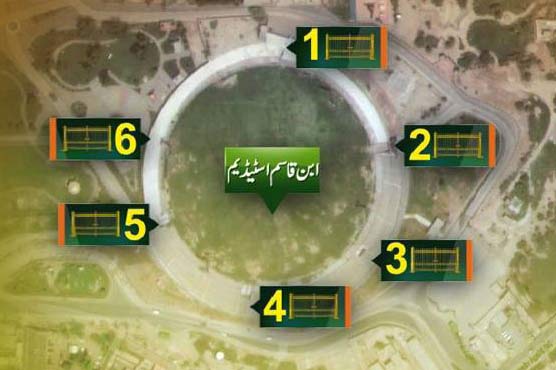
“Due to (the) unmannered rush of people and (the ensuing) stampede, some participants slipped and fell down on the ground, (and the) crowd ran over them. Consequently, two persons expired at the spot, whereas, 38 persons were injured,” reads the report. The Jalalpur Pirwala sub-divisional police officer (SDPO), who was on duty at this gate, “immediately started (a) rescue operation … and started shifting the injured along with Rescue 1122.” The report says that the SDPO also made announcements via megaphone, telling people to stay away from the gate where the stampede took place. “The rescue operation team of Rescue 1122 (and the) fire brigade service made water spray at the gate in order to stop people from (exiting) the said gate and to save their lives”, the report claims. Through the report, the city police chief and the DCO have held the PTI responsible for the stampede and the resulting deaths of seven people, following an otherwise impressive show of strength by the party at Multan’s Qasim Bagh Stadium. The NoC for the public meeting was issued after on the submission of an undertaking by Ijaz Hussain Janjua, the PTI district president. The report states: “During the meeting, an undertaking was obtained from the applicant mentioning all the terms and conditions consisting of 26points for holding a peaceful public meeting after deliberation with all the stakeholders. Among the conspicuous points, it was agreed by the applicant that the organiser i.e. PTI, will be responsible for arranging search and security, arrangements for lights on the backside of the stage as well as in and outside of the (stage). It was also one of the conditions that all the agreed terms will be fulfilled until the Jalsa is finished and workers/participants are dispersed peacefully and reach their respective places.” According to the report, there were only five exit gates, which were not sufficient for such a large gathering of people and states that about 2,200 police personnel were deployed at the stadium.

Pakistan: No asylum
Pakistan: The anti-Malala sentiment
By Yasser Latif Hamdani


Pakistan: Malala — pride of the nation
“My world has changed, but I have not changed,” she wrote in her autobiography, I Am Malala. In an NDTV interview a year ago, she told Barkha Dutt that she is afraid of ghosts, not of the Taliban. Now, two years after the shot from the gun that targeted her was heard around the world, the Swat-cum-Birmingham schoolgirl is the recipient of a Nobel Peace Prize “for her struggle against the suppression of children and young people, and for the right of all children to education”. One would think that there is little to take issue with, as far as Malala’s rise to fame is concerned. However, for the virtual sceptics and conspiracy theorists, Malala is undeserving of recognition, or rather, is the main protagonist of an elaborate publicity stunt. Following the announcement of her win, the distinction between Western and Pakistani reactions was clear: those in the West lauded the youngest-ever Nobel Peace Prize winner, while some Pakistani reactions were replete with cynicism. I ask, is the advocacy of peace not a universal belief? In some ways, this reactionary backlash against Malala is partly understandable. It is certainly true that she was only one of many schoolgirls in Taliban-controlled areas who struggled for their right to education. However, doesn’t her vocal call for change and improvement embody the voices of her peers, struggling to be heard? If a class has been dismissed for her former classmates, can’t she speak for them? During Pervez Musharraf’s era of enlightened moderation, the General struggled to show the rest of the world, Pakistan’s ‘soft face’. In a 2004 Washington Post op-ed, he explained this new approach: “It is a two-pronged strategy. The first part is for the Muslim world to shun militancy and extremism and adopt the path of socioeconomic uplift. The second is for the West, and the United States in particular, to seek to resolve all political disputes with justice and aid for the socioeconomic betterment of the deprived Muslim world.” The General’s domestic agenda included a cultural liberalisation — pop and rock concerts, fashion shows and the celebration of art and culture became routine. Musharraf himself jumped onto the stage at a 2001 concert held in Karachi. Alas, Pakistan’s soft face became mutilated by stories of assassinations, suicide bombings and the elephant in the room, the military dictator himself. Those with an intense distaste for Malala’s status as a ‘roving ambassador’ believe that her claim to fame affirms all of these things about Pakistan. I disagree. While the circumstances in which Malala rose to prominence are unfortunate, her campaign is against a very vocal and radical minority, not against Pakistan itself; her detractors need to recognise this and come to terms with the fact that the schoolgirl is here to stay. As Pakistanis and believers in peace, we should stand by her and not worry about a supposed loss of credibility in the world’s eyes. When Sharmeen Obaid-Chinoy won the Academy Award for Saving Face in 2012, there was nothing but applause for the Oscar winner. Malala’s detractors — those who fear our reputation will somehow become tainted by the idea of bringing to light the threat of the Taliban to our stability — probably didn’t realise that a documentary on acid attack victims could have the same effect. Regardless, Obaid-Chinoy’s win is something that I, as a Pakistani, will continue to be proud of, just as I am proud of Malala’s struggle for education in a part of the world that is still dealing with the gaping wound of intolerance and radicalisation. While she may only be afraid of ghosts, this gaping wound is a genuine fear for the majority of Pakistanis. Through Malala’s courage and determination, may we find the ability to stand upright once again, to show the world that the narrative of our nation is not one of oppression and cruelty; may we then be recognised and applauded for something other than exposes on acid attack victims, or shot schoolgirls campaigning for basic human rights.By Mohammad Zia Adnan
Pakistan : Congratulations Malala Yusufzai
http://www.dailytimes.com.pk/Malala Yusufzai is a star of rare talent and humility. Her straightforward views and honest courage are a refreshing and important addition to the world stage, where she has proved to be an accomplished performer. Already she sounds more mature, lucid and intelligent than many Pakistani political leaders and representatives. She has added something invaluable and almost unquantifiable to the global discourse on Pakistan — a directness of purpose many thought lost — and has made women’s education not only her priority but through her a global priority. She continued to speak for her rights when faced with death and even after the Taliban put a bullet in her head, which she narrowly survived. She refused to become a victim of violence and instead became an even stronger voice for the causes she supports. These were among many reasons she was awarded the 2014 Nobel Peace Prize on Friday, sharing it with Indian child rights activist Kailash Satyarthi. Malala was tipped for the Prize before but taken together with a veteran Indian activist with shared aspirations, the decision was broader than one person. Satyarthi has worked to end bonded and child labour for thirty years in India yet this pairing does not seem unnatural. Malala and Satyarthi appear synonymous with the struggle of people in India and Pakistan for their rights and the rights of others. Satyarthi’s quiet labour and Malala’s shining defiance complement each other in the interests of peace, and that of course is what the Peace Prize is about. A man and a woman, Indian and Pakistani, Hindu and Muslim, older person and child: these differences seem irrelevant in light of the spirit that drives them. Say what one will about Barack Obama’s 2009 award, one cannot fault the Nobel committee this year. Not only has Malala spoken and written prolifically about her experiences and the need to promote education in Pakistan, her presence has grown and she has charmed and impressed people who are giants in their fields. Her acceptance speech, delivered with the same humility that has endeared her to millions, showed how quickly she has learnt the importance of events like the Nobel Prize ceremony and how they can be used to bring together world leaders. Saying that she had spoken to her Indian counterpart, Malala used the opportunity to invite the Pakistani and Indian Prime Ministers to attend the ceremony in Stockholm on December 10 and find ways to lower tensions between the two countries. Malala reportedly received the news while sitting in her chemistry class. One can imagine the excitement of a 17-year-old girl in this situation, which reminds us that the award is a huge burden for one so young. It is an affirmation not of her past but of her future and she will need the support of Pakistanis to carry it. Many are willing, particularly girls from poor families for whom Malala has become an example of what is possible. One would expect every Pakistani woman to appreciate Malala’s struggle but many do not. Conspiracy theorists say she is a foreign ‘agent’ or dismiss her as part of a public relations campaign. How terrible that the sense of oppression has created the habit of lethargy. More women should recognise that Malala has pioneered a path for them to progress. She has brought global attention to the cause of Pakistani women. Educating Pakistani girls has become a primary development focus. Women’s rights and empowerment have become powerful ideas in Pakistan. This is an opportunity for Pakistani women to grasp and work together to fight for their rights. Some assert that the Nobel Prize does not matter. However, the Nobel Prize is important. In scientific and intellectual circles it is a sign of which issues are seen as the most important, of who to watch for as much as who to praise, and as an endorsement of purpose. Despite the criticism, Malala remains firmly Pakistani, and owns this country as her home. We must strive to make it a place she can return to without fear.
PPP Human Rights Central Cell congratulates Malala Yusofzai on winning the Prestigious Nobel Award
http://mediacellppp.wordpress.com/
PPP Human Rights Central Cell congratulates Malala Yusofzai on winning the Prestigious Nobel Award for her exemplary and courageous work on promotion of education for girls.“Malala, you are 17, and you may be the youngest girl to receive the Nobel award but you are the bravest daughter of Pakistan and indeed the world for you have braved bullets but continued to stand up for what is right and what is a right: education.” Says Dr Nafisa Shah Central Coordinator PPP Central Cell. “You have fought with extremism like no other, using the most peaceful means -education-and therefore you have inspired the whole world. Pakistan is proud of you, all the girls and boys who want to go to school but are deprived will follow your example for all times to come. ” she added. Indeed, education is the most powerful weapon against violence, militancy and extremism, that is what this 17teen year old has taught the world. Hope that all of us back home while celebrating the award, take a lesson from Malala’s vision and help the millions of girls and boys who are out of school to get education. “

Sunday, October 12, 2014
US President Obama Orders Rapid Investigation of Ebola Infection Case in Texas

 US President Barack Obama has instructed US Secretary of Health and Human Services Sylvia Burwell to conduct an investigation into the case of Ebola virus infection in Texas, the White House press service said in a Sunday statement.
“The President during the conversation [with Secretary Burwell] directed that … The Centers for Disease Control and Prevention’s [CDC] investigation into the apparent breach in infection control protocols at the Dallas hospital move as expeditiously as possible,” the press release read.
Obama also stressed the importance for the additional personnel CDC to be sent to the area to work closely with state and local authorities to review infection control procedures, adding that the lessons learned from the inquiry must be shared quickly and broadly.
The US President also ordered at a federal level to ensure the readiness of hospitals to follow protocols should they encounter an Ebola patient.
A Liberian national Thomas Eric Duncan, the first person diagnosed with Ebola on the US territory, died on Wednesday. A health worker, who helped to care for Duncan has been tested positive for the deadly virus on Sunday.
The Ebola epidemic in West Africa broke out in southern Guinea in February, and later spread across Liberia, Sierra Leone, Nigeria, and Senegal. According to the World Health Organization (WHO), the death toll from the epidemic has surpassed 4,000. There is currently no officially approved cure for Ebola, however, several nations, including Russia, the United States, the United Kingdom and Japan are working on a vaccine.
US President Barack Obama has instructed US Secretary of Health and Human Services Sylvia Burwell to conduct an investigation into the case of Ebola virus infection in Texas, the White House press service said in a Sunday statement.
“The President during the conversation [with Secretary Burwell] directed that … The Centers for Disease Control and Prevention’s [CDC] investigation into the apparent breach in infection control protocols at the Dallas hospital move as expeditiously as possible,” the press release read.
Obama also stressed the importance for the additional personnel CDC to be sent to the area to work closely with state and local authorities to review infection control procedures, adding that the lessons learned from the inquiry must be shared quickly and broadly.
The US President also ordered at a federal level to ensure the readiness of hospitals to follow protocols should they encounter an Ebola patient.
A Liberian national Thomas Eric Duncan, the first person diagnosed with Ebola on the US territory, died on Wednesday. A health worker, who helped to care for Duncan has been tested positive for the deadly virus on Sunday.
The Ebola epidemic in West Africa broke out in southern Guinea in February, and later spread across Liberia, Sierra Leone, Nigeria, and Senegal. According to the World Health Organization (WHO), the death toll from the epidemic has surpassed 4,000. There is currently no officially approved cure for Ebola, however, several nations, including Russia, the United States, the United Kingdom and Japan are working on a vaccine.
Obama hangs tough on migrant detention despite slowing influx
The surge in child migration from Central America is receding but the United States is aggressively pushing ahead with plans to expand detentions, a little-publicized part of a broader campaign to deter illegal migrants. Under pressure from opposition Republicans to stem the unprecedented flow of children earlier this year, the Obama administration beginning in June pledged to speedily return them to their home countries and help better secure borders in Mexico and Central America.BY RICHARD COWAN AND JULIA EDWARDS

 But a third leg of that strategy has quietly created a network of family detention centers to lock up some children and their parents rather than freeing them pending deportation hearings.
The centers, which were opened this summer to receive families with children, are in Artesia, New Mexico and Karnes, Texas. Another one in Texas is scheduled to open in coming months. With little public debate, they have effectively become flagships of the Obama administration's "get tough" campaign to discourage future border crossings.
These augment a Pennsylvania facility that has been in operation since 2001, but holds only small numbers of people.
It represents a U-turn for the Obama administration, which for five years favored less restrictive programs, such as ankle bracelets and telephone check-ins, for keeping tabs on families while they awaited court decisions on whether or not they would be deported.
In 2012, the administration noted these programs saved "many millions of dollars."
"The Obama administration in 2009 decided that it was going to turn away from family detention ... the turn back is really alarming," said Carl Takei of the American Civil Liberties Union.
The White House referred briefly to "increased detainment" in a fact sheet it issued on July 8 on an emergency funding request to Congress. But the policy change, which immigration groups characterize as a major shift for the administration, has not been laid out in detail.
SIGNIFICANT EXPANSION
The big expansion of detention beds, from only 90 last year to about 3,700 by the end of this year, comes amid data showing that the seasonal migration wave has receded. The number of families coming over the border declined to 3,295 in August, from 16,329 in June.
"These (family detention) facilities will help ensure more timely and effective removals that comply with our legal and international obligations, while deterring others from taking the dangerous journey and illegally crossing into the United States," a U.S. Immigration and Customs Enforcement spokeswoman said.
Human rights groups counter that the new policy is badly misguided. Michelle Brane, director of a migrant rights program at the Women’s Refugee Commission, said children, some of them infants and toddlers, cannot be properly cared for in large detention centers.
The policy shift on detention centers, which has not been debated much in Congress, follows President Barack Obama's warning last summer to illegal migrants from Central America that they would be detained and promptly shipped back home if they attempted to make the dangerous journey.
Immigration advocates argue that many of these children have valid claims for asylum and flee to the United States because their governments cannot protect them from both gang and domestic violence.
The detention centers are intended to discourage another migrant wave that some fear will start early next year, said Marshall Fitz, an immigration specialist at the Center for American Progress, which has close ties to the White House.
March to June, when it is neither dangerously cold nor hot, have been peak months for children, either traveling alone or with their parents, to brave the journey to the U.S. border by foot and atop trains.
"We could see the same thing come back again and I want to build against that," Department of Homeland Security Secretary Jeh Johnson said on Thursday.
POOR CONDITIONS
Advocacy groups and defense lawyers donating their services to detainees complain of unsafe conditions, poor medical care and inadequate access to lawyers at the government-run center in Artesia and the Karnes facility, which is operated by the GEO Group, a for-profit operator of prisons.
Responding to allegations of sexual assault at Karnes, ICE said the agency was "committed to ensuring all individuals in our custody are held and treated in a safe, secure and humane manner" and that it has a "zero-tolerance policy for all forms of sexual abuse or assault." GEO has denied the allegations.
A Department of Homeland Security inspector general report this month said that while conditions in Artesia were improving, more progress was needed.
Congress could weigh in on the new detention policy later this year when it debates a bill to fund agencies administering the program.
But a third leg of that strategy has quietly created a network of family detention centers to lock up some children and their parents rather than freeing them pending deportation hearings.
The centers, which were opened this summer to receive families with children, are in Artesia, New Mexico and Karnes, Texas. Another one in Texas is scheduled to open in coming months. With little public debate, they have effectively become flagships of the Obama administration's "get tough" campaign to discourage future border crossings.
These augment a Pennsylvania facility that has been in operation since 2001, but holds only small numbers of people.
It represents a U-turn for the Obama administration, which for five years favored less restrictive programs, such as ankle bracelets and telephone check-ins, for keeping tabs on families while they awaited court decisions on whether or not they would be deported.
In 2012, the administration noted these programs saved "many millions of dollars."
"The Obama administration in 2009 decided that it was going to turn away from family detention ... the turn back is really alarming," said Carl Takei of the American Civil Liberties Union.
The White House referred briefly to "increased detainment" in a fact sheet it issued on July 8 on an emergency funding request to Congress. But the policy change, which immigration groups characterize as a major shift for the administration, has not been laid out in detail.
SIGNIFICANT EXPANSION
The big expansion of detention beds, from only 90 last year to about 3,700 by the end of this year, comes amid data showing that the seasonal migration wave has receded. The number of families coming over the border declined to 3,295 in August, from 16,329 in June.
"These (family detention) facilities will help ensure more timely and effective removals that comply with our legal and international obligations, while deterring others from taking the dangerous journey and illegally crossing into the United States," a U.S. Immigration and Customs Enforcement spokeswoman said.
Human rights groups counter that the new policy is badly misguided. Michelle Brane, director of a migrant rights program at the Women’s Refugee Commission, said children, some of them infants and toddlers, cannot be properly cared for in large detention centers.
The policy shift on detention centers, which has not been debated much in Congress, follows President Barack Obama's warning last summer to illegal migrants from Central America that they would be detained and promptly shipped back home if they attempted to make the dangerous journey.
Immigration advocates argue that many of these children have valid claims for asylum and flee to the United States because their governments cannot protect them from both gang and domestic violence.
The detention centers are intended to discourage another migrant wave that some fear will start early next year, said Marshall Fitz, an immigration specialist at the Center for American Progress, which has close ties to the White House.
March to June, when it is neither dangerously cold nor hot, have been peak months for children, either traveling alone or with their parents, to brave the journey to the U.S. border by foot and atop trains.
"We could see the same thing come back again and I want to build against that," Department of Homeland Security Secretary Jeh Johnson said on Thursday.
POOR CONDITIONS
Advocacy groups and defense lawyers donating their services to detainees complain of unsafe conditions, poor medical care and inadequate access to lawyers at the government-run center in Artesia and the Karnes facility, which is operated by the GEO Group, a for-profit operator of prisons.
Responding to allegations of sexual assault at Karnes, ICE said the agency was "committed to ensuring all individuals in our custody are held and treated in a safe, secure and humane manner" and that it has a "zero-tolerance policy for all forms of sexual abuse or assault." GEO has denied the allegations.
A Department of Homeland Security inspector general report this month said that while conditions in Artesia were improving, more progress was needed.
Congress could weigh in on the new detention policy later this year when it debates a bill to fund agencies administering the program.
Afghanistan: Bar Rights Abusers From Top Posts

Afghanistan - First Lady Rula Ghani aims to elevate Afghanistan's women
As the wife of the newly elected president, Rula Ghani stands to be the first publicly visible wife of an Afghan leader in nearly a century.By ALI M. LATIFI


Political differences likely to grow in Afghanistan
Times of Oman
BY SUJEET SARKARAfghanistan may be rejoicing with the formation of a unity government after a month of political deadlock and uncertainty, the same may not augur well for the country in the long run. That the unity government in Afghanistan will implement the decisions of the government, and fire on all cylinders, is highly improbable. With their political ambition set to ride the 2019 presidential election it is but obvious that both the camps would like to pitch their thinking differently on every issue, to preserve their political identity, hereon. In fact in order to safeguard their political interests they would refrain from submitting themselves completely to the decision of the unity government. They have to look different because of their political compulsion. And this political difference is likely to increase with each passing year. It is no brainer that the growth and economy of the nation would be the final casualty. At the outset there is likely to be a major scuffle over the appointment of key strategic positions such as peace chair, key political advisors, etc. Critical issues (such as an ailing economy, relationship with Pakistan, engagement with Taliban, poppy eradication, advancing peace process, etc.), which cry for assertive and definitive direction from the new government, will hit a deadlock every now and then because of the simmering political and ideological differences, within the new Government. Whether, both the camps would be able to resolve these differences by showing political maturity, contrary to Afghan politics, will remain an area of acid test for this newly formed government. Whether, they would stitch up a meaningful working formula, or allow the political tension to throttle the functioning of the new government, has to be seen. Further, for the government to prosper, the role of a strong Opposition cannot be ruled out in any democratic dispensation. The role of a constructive and objective Opposition becomes all the more important in fragile settings, where the institutions of the state are nascent and are often not neutral. A strong opposition's demand for excellence and effectiveness of the government can hold them accountable. It also helps to balance out power and avoid the excesses, which lead to the abuse of power in such settings. By co-opting the opposition into the fabric of the unity government, the space of opposition has been completely wiped out in Afghanistan. This would severely influence the functioning of the government and undermine democracy, as a whole. Even though the international analysts are busy fathoming the reason behind the acceptance of the unity government formulae in Afghanistan, it has a mark of US influence. It also needs to be analysed why the Abdullah Abdullah camp resorted to accepting defeat last time, after almost leveling the same set of charges against the outgoing president, Karzai. It is true that the US was not overtly intrusive in the recent election in Afghanistan. But that is only part of their larger strategy to facilitate the transition from a democratic government to a unity government in this embattled country. Of late think tanks in Pentagon have been working overnight to test the hypothesis if a unity government is better suited to conflict-prone countries than a democratic government. This sad realisation has kicked in after the rise of Isis and failure of the democratically elected Maliki government in Iraq. The Pentagon strategist believes that a unity government has better chances of survival in a war-torn nation. Hence instead of rallying for a democratic government as the only solution they are indirectly influencing a unity government in such settings. By remaining silent in the entire Afghan election episode they have clearly expressed their choice to the two warring presidential candidates. Zeroing on best solution for the country and its citizens amid diverse political ideologies and opinions remains an arduous task. Giving concessions to competing candidates in the backdrop of power sharing arrangement further requires higher degree of political understanding and ability. It would be interesting to see how the balance of power pans out and the various institutions of the unity government interact among themselves. This arrangement couldn't have come at worse time. The US forces are packing up for an exit and the herculean task of providing security to Afghan citizens rests on the rudimentary Afghan army, in the backdrop of a resurgent Taliban. The economy of the country is reeling under serious problems and the misery of the common man is increasing with the sky rocketing inflation. But as people in rural Afghanistan say, hope is the only way forward for this country embattled with terrorism and civil strife, for more than three decades. Let us hope that the new government sets aside its inherent differences and ego tussles in the larger interest of Afghanistan and delivers for its struggling citizens.
Pakistan - Who caused Multan tragedy? Dunya News brings facts to surface
Dunya News-Multan tragedy leaves behind... by dunyanewsDunya News on Saturday brought the facts about who caused Multan tragedy on surface through its investigative report.The report revealed that Pakistan Tehreek-e-Insaf (PTI) had turned the central gate into stage and closed it down. The second gate was reserved for the VIPs only and the third gate was reserved for families only. It further revealed that the administration did not break open the two reserve gates in time and thousands of people had to exit from only one gate which caused the stampede and the tragedy that left seven dead and several injured. The report also revealed that the stadium had the capacity of 25,000 people but it was over crowded multiple times of the original capacity.
Pakistan Christian Congress Condemns Government For Ignoring Christian Asylum Seekers Abroad

Pakistan Christian Congress PCC has issued a press note, condemning scheme of ruling party Pakistan Muslim League Nawaz Group PML (N) targeting Pakistani Christian asylum seekers in Sri Lanka, Malaysia and Thailand who fled from Pakistan for safety of their lives after persecution fearing for their lives. The gathering of Pakistani Christian asylum seekers in Sri Lanka and their applications to UNHCR was never appreciated by government of Pakistan, PCC stated. - See more at: http://www.christiansinpakistan.com/pakistan-christian-congress-condemns-government-for-ignoring-christian-asylum-seekers-abroad/#sthash.sh8qnMrI.dpuf
Pakistan - Bilawal Bhutto stresses on resolution of Kashmir issue

Pakistan People’s Party (PPP) patron-in-chief Bilawal Bhutto Zardari has once again stressed on the resolution of Kashmir dispute and said there is no peace in the region due to this issue, Geo News reported.

We are the 9/11 Generation-Bilawal-12 Oct 2014 by GeoNews Addressing students’ ceremony in the Sindh Assembly, Bilawal Bhutto said: “Non resolution of Kashmir issue is clear evidence of failure of United Nations.” He urged the world body to get its resolutions on Kashmir implemented. He said Pakistan respects human rights and international law. “We ourselves are responsible for prevailing crisis and can blame anyone else,” Bilawal said and added, “there is need to assess where we stand and it is time to be mature now.” PPP Chairman said he did not want to be recognized by concerts and laptops.
Pakistan - Zarb-e-Azb: 10 terrorists killed in fresh air strikes in NW
Peshawar - Three more polio cases reported in Peshawar, Sheikhupura

Pakistan : Imran should first build paradise in Khyber Pakhtunkhwa


Pakistan: PTI responsible for stampede deaths, say police

Pakistan: Christian delegation calls on Wattoo
 A delegation of Christians hailing from Lahore, Gujranwala, Sialkot and Narowal called on Punjab PPP President Manzoor Ahmed Wattoo on Saturday to apprise him about the problems the community was facing in the respective regions. They however appreciated the 5 percent quota reserved for the minorities in the government services by the PPP previous government that meant for their social upward mobility.
Wattoo said that the PPP considered the minorities as Party’s natural allies because of the progressive and liberal orientation of the political philosophy of the party.
He added that the PPP declared the 11 August as the Minority Day each year according to vision of the Quaid-e-Azam who declared that the citizens of Pakistan would enjoy equal rights regardless of their creed.
Wattoo said that the PPP previous government covered a lot of groundwork to legislate for providing representation to the minorities in the Parliament in accordance with the population. He further said that PPP reserved four seats for minorities in the Senate which was a leap forward for bringing them in the mainstream politics of the country.
He also said that it was the PPP government that decided to observe two religious functions of minorities officially each year.
Later, Abdul Qadir Shaheen, the newly appointed coordinator for minorities in Punjab, urged them that they should focus to organize at the district and Tehsil levels in view of the forthcoming local bodies’ elections.
Suhail Milk, senior vice president PPP, Punjab, organized the meeting.
In another meeting of PSF and the youth wing, Wattoo said that they should work for ensuring the maximum participation of them in the October 18 rally in Karachi.
They assured the PPP president that they were already on it and the level of participation of youth in the rally would please him.
The delegation praised the PPP governments for lifting the ban on student unions.
A delegation of Christians hailing from Lahore, Gujranwala, Sialkot and Narowal called on Punjab PPP President Manzoor Ahmed Wattoo on Saturday to apprise him about the problems the community was facing in the respective regions. They however appreciated the 5 percent quota reserved for the minorities in the government services by the PPP previous government that meant for their social upward mobility.
Wattoo said that the PPP considered the minorities as Party’s natural allies because of the progressive and liberal orientation of the political philosophy of the party.
He added that the PPP declared the 11 August as the Minority Day each year according to vision of the Quaid-e-Azam who declared that the citizens of Pakistan would enjoy equal rights regardless of their creed.
Wattoo said that the PPP previous government covered a lot of groundwork to legislate for providing representation to the minorities in the Parliament in accordance with the population. He further said that PPP reserved four seats for minorities in the Senate which was a leap forward for bringing them in the mainstream politics of the country.
He also said that it was the PPP government that decided to observe two religious functions of minorities officially each year.
Later, Abdul Qadir Shaheen, the newly appointed coordinator for minorities in Punjab, urged them that they should focus to organize at the district and Tehsil levels in view of the forthcoming local bodies’ elections.
Suhail Milk, senior vice president PPP, Punjab, organized the meeting.
In another meeting of PSF and the youth wing, Wattoo said that they should work for ensuring the maximum participation of them in the October 18 rally in Karachi.
They assured the PPP president that they were already on it and the level of participation of youth in the rally would please him.
The delegation praised the PPP governments for lifting the ban on student unions.
Pakistan: Tragedy in Multan rally
It had to happen one day in the long drawn out saga that comprises of the dharnas (sit-ins) and jalsas (rallies) that first took over the capital city of Islamabad and are now becoming a prominent happening in almost every major city in Pakistan. The Pakistan Tehreek-e-Insaaf (PTI) rally in Multan on Friday saw a huge turnout in the number of people cheering on their leader Imran Khan. When the rally ended, however, the jubilation turned to tragedy as a stampede erupted when the crowd tried to leave the stadium in which the jalsa was being held. As many as eight people were crushed and more than 40 injured when the people tried to leave through the five exits out of the stadium. There are reports that the stairs leading to and out of the open exits were also strewn with water, leading many people to slip and be stepped on by thousands of others. As can be expected, a blame game has exploded between the PTI, district administration and federal government with no one side taking any responsibility for the human cost involved.
First let us wonder about the organisers of the rally, the PTI itself. The rally was, ultimately, one held under the banner of Imran Khan’s party and much of the arrangement must have fallen upon its shoulders. During the rally, there were reports of young people fainting due to the heat and dehydration. Add to this exasperation the fact that, once the rally ended, the people may have really wanted to go home and may have made a mad dash for the exits. Could this not have created a panic in our already panic-prone people? Maybe the attendees did not follow protocol and leave in an orderly fashion. Maybe there was too much jostling and pushing. However, one must consider that the PTI is accusing the District Coordination Officer (DCO) of Multan of being behind allegedly sealing a few exits and not letting the people use them. This may very well have contributed to the panic being felt by the people. The DCO denies this and says that all exits were very much open. The PTI is now crying itself hoarse over how this tragedy has been orchestrated by the powers that be to limit attendance at their rallies. It has also rejected a three-member investigative committee formed by the Punjab government, calling it a “drama”. It has announced a financial compensation for the victims. Who is at fault one cannot say but one can comment on the inevitability of such a sorry situation. The people of the subcontinent do not have the necessary restraint to stay safe in poorly arranged gatherings. These are haphazard, hurriedly arranged events and safety protocol does not garner much priority. Amid the charges and counter-charges, it must be made clear who is to blame for the rally that turned into misfortune.
Bilawal Bhutto invites Malala to work for Sindh education
 Chairperson, Pakistan People’s Party (PPP) Bilawal Bhutto Zardari congratulated Malala Yousafzai over telephone on winning the prestigious Nobel Peace Prize and invited her to work with him for transformation of education system in Sindh.
In a telephonic conversation, Bilawal said Shaheed Benazir Bhutto was alive in the shape of Malala and added every girl of Pakistan has the potential to become Benazir Bhutto, said a statement. He said education is the best tool to eradicate extremism from the society and Malala could play a pivotal role in this regard as the torch-bearer of education for each girl and boy movement. Bilawal said Malala Yousafzai has given hope to me and entire country and she is the voice of real youth of Khyber Pakhtoonkhwa and Pakistan. "This daughter of Pakistan is the Ambassador of Peace and our national heroine," he stated.
Chairperson, Pakistan People’s Party (PPP) Bilawal Bhutto Zardari congratulated Malala Yousafzai over telephone on winning the prestigious Nobel Peace Prize and invited her to work with him for transformation of education system in Sindh.
In a telephonic conversation, Bilawal said Shaheed Benazir Bhutto was alive in the shape of Malala and added every girl of Pakistan has the potential to become Benazir Bhutto, said a statement. He said education is the best tool to eradicate extremism from the society and Malala could play a pivotal role in this regard as the torch-bearer of education for each girl and boy movement. Bilawal said Malala Yousafzai has given hope to me and entire country and she is the voice of real youth of Khyber Pakhtoonkhwa and Pakistan. "This daughter of Pakistan is the Ambassador of Peace and our national heroine," he stated.
Former President Asif Zardari pays glowing tributes to Malala
http://mediacellppp.wordpress.com/
 PPP Co-Chairman former President Asif Ali Zardari has felicitated Malala Yousafzai and the people of Pakistan and said that by winning the Nobel Peace Prize Malala had made every Pakistani proud.
In a message the former President said that the award of Nobel Peace Prize is recognition of Malal’s courage in standing up to the bigot and narrow minded.
It is also a stinging rebuff to the extremists and militants who reject girls’ education and tormented Malala for seeking right to education for herself and for girls like herself.
This young, innocent, and courageous daughter of my country was attacked by forces of darkness only because she aspired for education.
The people of Pakistan are grateful to God for having spared her life and also grateful to the international community for honoring her with the Nobel Peace Prize.
It demonstrates the resolve of the international community to support to the cause of education for girls everywhere particularly in Pakistan.
The award today is a reminder that the fight in Pakistan today is the battle between good and evil and between forces of light and the forces of darkness. The enlightened and the moderates are fated to win this battle against extremists, fanatics and the agents of death, destruction and ignorance.
Malala’s survival and the honor shown to her teach us that extremism can best be fought through collective action. The resolve to provide education to all, in particular to the millions of out-of-school girls is the best strategy to defeat extremism.
Extremists are abusing the name of Islam in seeking to hamper our progress. They are doomed to be defeated.
During the PPP government Pakistan took a giant leap when education for all girls and boys, between 5 to 16 years, was declared a fundamental right and a constitutional right. We have over 50 million school-age children but only about half of them go to school. The key challenge is access to education.
The Nobel Peace Prize to Malala strengthens national resolve to fight its battle against the bigots and fanatics with democracy, political commitment and support of the international community. It will be decisive in winning this existential war. It is a giant leap forward to put every Malala in school. Congratulations Malala Yousufzai.
PPP Co-Chairman former President Asif Ali Zardari has felicitated Malala Yousafzai and the people of Pakistan and said that by winning the Nobel Peace Prize Malala had made every Pakistani proud.
In a message the former President said that the award of Nobel Peace Prize is recognition of Malal’s courage in standing up to the bigot and narrow minded.
It is also a stinging rebuff to the extremists and militants who reject girls’ education and tormented Malala for seeking right to education for herself and for girls like herself.
This young, innocent, and courageous daughter of my country was attacked by forces of darkness only because she aspired for education.
The people of Pakistan are grateful to God for having spared her life and also grateful to the international community for honoring her with the Nobel Peace Prize.
It demonstrates the resolve of the international community to support to the cause of education for girls everywhere particularly in Pakistan.
The award today is a reminder that the fight in Pakistan today is the battle between good and evil and between forces of light and the forces of darkness. The enlightened and the moderates are fated to win this battle against extremists, fanatics and the agents of death, destruction and ignorance.
Malala’s survival and the honor shown to her teach us that extremism can best be fought through collective action. The resolve to provide education to all, in particular to the millions of out-of-school girls is the best strategy to defeat extremism.
Extremists are abusing the name of Islam in seeking to hamper our progress. They are doomed to be defeated.
During the PPP government Pakistan took a giant leap when education for all girls and boys, between 5 to 16 years, was declared a fundamental right and a constitutional right. We have over 50 million school-age children but only about half of them go to school. The key challenge is access to education.
The Nobel Peace Prize to Malala strengthens national resolve to fight its battle against the bigots and fanatics with democracy, political commitment and support of the international community. It will be decisive in winning this existential war. It is a giant leap forward to put every Malala in school. Congratulations Malala Yousufzai.
Pakistan : A letter from Dr Abdus Salam to Malala
By Faraz Talat
Disclaimer: the blog post below is an imagining of what Dr Abdus Salam would convey to Malala today.
Dear Malala,Despite all that occurred, I’d always lugged around with me a sliver of optimism. They referred to me as Pakistan’s ‘only’ Nobel laureate; I insisted on being called the “first”. I was born in a small town called Santokh Das; arguably not as beautiful as your Swat valley, but it did have much to offer. I grew up in Jhang, a city now tainted by its name’s association with dangerous groups. My father was an education officer working for the Punjab government. I have a feeling your father would've liked him. Like you, I took a keen interest in my studies. I enjoyed English and Urdu literature, but excelled at mathematics. At a very young age, I scored the highest marks ever recorded then, in my matriculation exam. My education, however, was never as politically challenging as yours. I did not have to contend with the Taliban destroying my school, or forbidding boys from receiving education. But whatever barriers they constructed in your way, you bravely broke through them. In fact, you continue to defy them with every breath you take. Winning the Nobel prize has enraged your attackers, as it has annoyed many of your countrymen. It takes courage to walk through it all, and knowing you, courage is not in short supply. Not a lot has changed in this country. You were mocked and alienated by your countrymen, when you did nothing wrong. I know something of that. As a nation, we do not want to be celebrated. What we wish for, is to be pitied. They were pleased with you as long as you were another local victim. But then, you cast off your victimhood and emerged as a hero, a beacon of hope for young girls around the world. That’s where you lost them. We don’t like heroes, Malala. We like battered souls that we can showcase to the world. We want to humiliate the ‘colonialists’ and the ‘imperialists’ for their crimes, real or imagined, against the Muslims of the subcontinent. We want them to acknowledge the Iqbalian paradise we lost to the plots and schemes of the ‘outsiders’. Any mention of the incalculable harm caused by perpetrators within us, does not assist that narrative. We do not want to acknowledge the bigotry within, of which I know something too. This is not something I had fully realised the day I received my Nobel prize. Standing in ceremonial Punjabi garb among a group of men in tuxedos, I was proud to represent my country, though my country was far less thrilled being represented by me. I was demonized and successfully disenfranchised for my religious beliefs; I was not allowed to offer lectures in certain universities due to threats of violence; my work was belittled by my own people. I decided that working abroad was better than being treated as foreigner in my own homeland. That only gave further wind to the hurtful theories about me being a ‘traitor’ to my country. Now, the mantle passes to you, dearest child. And with it, I regret to pass onto you the heart-wrenching burden it brings. You are the new 'traitor'. You are presented with the dire challenge of bringing peace and pride to a country, that doesn't want your gift. Like a mother of a particularly rebellious child, you must find a way to love them nonetheless. Eventually, I pray, they will understand. I had the privilege of being the first to offer this country a Nobel Prize. But now there are two of us. And, I’m still counting. Yours truly, Abdus Salam

Subscribe to:
Posts (Atom)