The TTP Ameer, Mullah Fazlullah’s, announcement to send fighters to help the Islamic State (IS) militants in Iraq and Syria is a disturbing development for Pakistan as the move shows that after extending its area of influence in the Middle East, the radical militant group is expanding its ideological boundaries to South Asia, mainly Pakistan. The pledge by the Pakistani Taliban follow the Islamic State’s taking control of large parts of Iraq and Syria. The rapid advance of the Islamic State — which was formerly known as the Islamic State of Iraq and Syria (ISIS) or Daish — has already prompted the United States and its allies to carry out air strikes in Iraq to stop it from moving ahead. But the most worrying development from Islamabad’s point of view is that the fanatic ideology of the Islamic State has found resonance in Pakistan where a number of Jihadi groups have already announced their support for the group. In the most recent development, the Pakistani Taliban have vowed to send fighters to help the IS militants in Iraq and Syria, adding that the group should set aside its differences with other militant organisations in that (South Asian) region. Shahidullah Shahid, the spokesman for al-Qaeda-linked Tehrik-e-Taliban Pakistan, has urged [on behalf of his Ameer Mullah Fazlullah] all militant organisations fighting in the Middle East to unite for the greater good. “From the very beginning, when the IS did not exist, we are helping and supporting the Mujahideen of Iraq and Syria. Our group (TTP) had sent between 1,000 and 1,500 fighters to the (Middle Eastern) region so far. We are with you in this hard times and will help you as much as possible. We advise you to be patient and determined at such a hard time and stay united, as your enemies stand united against you.” The subject of sending Pakistani fighters to Syria and Iraq is touchy for Islamabad as the Pakistani authorities have repeatedly denied that any such movements have ever taken place. In reality, however, in a clear bid to broaden its influence in Pakistan, the IS had even distributed pamphlets in Peshawar last month, declaring that the caliphate led by Abu Bakar Al Baghdadi, was planning to expand its boundaries from Iraq and Syria, to Khorasan [which includes Pakistan, Afghanistan and parts of India]. Distributed in the first week of September in Peshawar and in the Afghan refugee camps on the outskirts of Peshawar, the booklet titled Fatah (victory) was published by the IS in Pashto and Dari languages. The logo of the pamphlet carried the Kalma, the historical stamp of Prophet Muhammad (PBUH) and a Kalashnikov assault rifle. Introducing itself as Daulat-e-Islamia (Islamic State) in the pamphlet, the IS made an appeal to the local people to support its struggle to establish an Islamic caliphate. Besides distributing its literature and pamphlets, some of the ISIS supporters also made wall chalking in Peshawar, asking the local population to join and support the group. The distribution of the IS pamphlets in Pakistan as well as on the Afghan border shows that the ultra-radical Islamist group is trying to inspire militants even in the strongholds of Taliban and al-Qaeda. Following the rise of the IS in the Middle East and its proclamation of a caliphate, the al-Qaeda leadership has clearly distanced itself from the group, chiding it for its violent and brutal expansion. As things stand, it appears both al-Qaeda and the IS are competing for support from Islamist militants. While al-Qaeda is being led by Dr Ayman Al Zawahiri, a firebrand Sunni cleric Abu Bakar Al Baghdadi leads the IS and wants to topple the Shia-run Iraqi government. In fact, the TTP is not the first Pakistani militant group to have extended support to the Islamic State. A previously little known Jihadi outfit — Tehrik-e-Khilafat — considered to be a part of the Pakistani Taliban and having claimed responsibility for several terrorist attacks in Karachi, was the first one to pledge allegiance to Abu Bakar Baghdadi on July 12, 2014 while vowing to raise the Islamic State’s flag in South Asia. The group became the first Jihadi outfit in South Asia to break ranks from al-Qaeda and declare allegiance to the Islamic State. “Sheikh Abu Bakar al-Baghdadi shall consider Tehrik-e-Khilafat as one of the arrows among his arrows which he has kept for his bow. We are praying to Almighty Allah to give us chance to see in our lives the expansion of the Islamic State’s boundaries toward the Subcontinent and Khorasan region in order to hoist the flag of Islamic State here,” a group spokesman said. Khorasan is the historic name used by Islamic militants for an area covering, Pakistan, Afghanistan and some parts of India. Another interesting thing is that the IS map shows Afghanistan and Pakistan as part of the Islamic State’s Khorasan province. Al-Qaeda and Taliban linked militants believe that the movement for the establishment of the Islamic state of Khorasan will emerge from the region comprising the Kunar and Nuristan provinces of Afghanistan and the Malakand region of Pakistan. They consider Khorasan as the base camp of international Jihad from where they will be expanding the Islamic state boundaries into other non-Muslim lands. After the Tehrik-e-Khilafat, it was the turn of the Jamaatul Ahraar, a splinter group of the TTP, to declare its support to the Islamic State on September 4. “IS is an Islamic Jihadi group working for the implementation of Islamic system and creation of the caliphate,” Jamaatul Ahraar leader and a former Taliban spokesman, Ehsanullah Ehsan, had stated. “We respect them. They are our Mujahideen brothers. If they ask us for help, we will look into it and decide.” Under these circumstances, it seems that the Islamic State, headed by a fairly young leader, is already drawing a measure of support among younger Jihadi fighters, mostly Sunnis, in South Asia including Pakistan because al-Qaeda’s ageing leaders, most of whom are holed up in Pak-Afghan tribal belt to save themselves from drones, are more and more seen as tired, ineffective and uninspiring. It was probably the diminishing influence and appeal of al-Qaeda in this region that prompted the fugitive al-Qaeda Ameer Ayman Zawahiri to announce on September 4 the establishment of an Indian franchise headed by a Pakistani commander Asim Umar to raise the flag of Jihad across South Asia. More than two years since the beginning of the uprising against Syrian President Bashar al-Assad, thousands of holy warriors from various Muslim countries, including Pakistan, have reportedly traveled to Syria to fight with the al-Qaeda-linked ISIS. And going by some latest media reports, hundreds more holy warriors belonging to the TTP and LeJ have reached Iraq to join hands with the forces of the Islamic State of Syria and Iraq. An Iraq-based Jihadi group — the Ansarul Islam — has already released a video showing training activity at a Jihadi camp dedicated to the memory of Maulana Abdul Rasheed Ghazi, one of the two cleric brothers who took centre-stage during the Lal Masjid standoff in July 2007. Therefore, terrorism experts believe that the rise and success of the IS could play an inspirational role in Pakistan where 100-plus al-Qaeda and Taliban-linked Jihadi groups are currently operating.Amir Mir
Monday, October 6, 2014
TTP’s support for IS disturbing for Pakistan
Sunday, October 5, 2014
Qatar and Saudi Arabia 'have ignited time bomb by funding global spread of radical Islam'
By David Blair
General Jonathan Shaw, Britain's former Assistant Chief of the Defence Staff, says Qatar and Saudi Arabia responsible for spread of radical IslamQatar and Saudi Arabia have ignited a "time bomb" by funding the global spread of radical Islam, according to a former commander of British forces in Iraq. General Jonathan Shaw, who retired as Assistant Chief of the Defence Staff in 2012, told The Telegraph that Qatar and Saudi Arabia were primarily responsible for the rise of the extremist Islam that inspires Isil terrorists. The two Gulf states have spent billions of dollars on promoting a militant and proselytising interpretation of their faith derived from Abdul Wahhab, an eighteenth century scholar, and based on the Salaf, or the original followers of the Prophet. But the rulers of both countries are now more threatened by their creation than Britain or America, argued Gen Shaw. The Islamic State of Iraq and the Levant (Isil) has vowed to topple the Qatari and Saudi regimes, viewing both as corrupt outposts of decadence and sin. So Qatar and Saudi Arabia have every reason to lead an ideological struggle against Isil, said Gen Shaw. On its own, he added, the West's military offensive against the terrorist movement was likely to prove "futile". "This is a time bomb that, under the guise of education, Wahhabi Salafism is igniting under the world really. And it is funded by Saudi and Qatari money and that must stop," said Gen Shaw. "And the question then is 'does bombing people over there really tackle that?' I don't think so. I'd far rather see a much stronger handle on the ideological battle rather than the physical battle." Gen Shaw, 57, retired from the Army after a 31-year career that saw him lead a platoon of paratroopers in the Battle of Mount Longdon, the bloodiest clash of the Falklands War, and oversee Britain's withdrawal from Basra in southern Iraq. As Assistant Chief of the Defence Staff, he specialised in counter-terrorism and security policy. All this has made him acutely aware of the limitations of what force can achieve. He believes that Isil can only be defeated by political and ideological means. Western air strikes in Iraq and Syria will, in his view, achieve nothing except temporary tactical success. When it comes to waging that ideological struggle, Qatar and Saudi Arabia are pivotal. "The root problem is that those two countries are the only two countries in the world where Wahhabi Salafism is the state religion – and Isil is a violent expression of Wahabist Salafism," said Gen Shaw. "The primary threat of Isil is not to us in the West: it's to Saudi Arabia and also to the other Gulf states." Both Qatar and Saudi Arabia are playing small parts in the air campaign against Isil, contributing two and four jet fighters respectively. But Gen Shaw said they "should be in the forefront" and, above all, leading an ideological counter-revolution against Isil. The British and American air campaign would not "stop the support of people in Qatar and Saudi Arabia for this kind of activity," added Gen Shaw. "It's missing the point. It might, if it works, solve the immediate tactical problem. It's not addressing the fundamental problem of Wahhabi Salafism as a culture and a creed, which has got out of control and is still the ideological basis of Isil – and which will continue to exist even if we stop their advance in Iraq." Gen Shaw said the Government's approach towards Isil was fundamentally mistaken. "People are still treating this as a military problem, which is in my view to misconceive the problem," he added. "My systemic worry is that we're repeating the mistakes that we made in Afghanistan and Iraq: putting the military far too up front and centre in our response to the threat without addressing the fundamental political question and the causes. The danger is that yet again we're taking a symptomatic treatment not a causal one." Gen Shaw said that Isil's main focus was on toppling the established regimes of the Middle East, not striking Western targets. He questioned whether Isil's murder of two British and two American hostages was sufficient justification for the campaign. "Isil made their big incursion into Iraq in June. The West did nothing, despite thousands of people being killed," said Gen Shaw. "What's changed in the last month? Beheadings on TV of Westerners. And that has led us to suddenly change our policy and suddenly launch air attacks." He believes that Isil might have murdered the hostages in order to provoke a military response from America and Britain which could then be portrayed as a Christian assault on Islam. "What possible advantage is there to Isil of bringing us into this campaign?" asked Gen Shaw. "Answer: to unite the Muslim world against the Christian world. We played into their hands. We've done what they wanted us to do." However, Gen Shaw's analysis is open to question. Even if they had the will, the rulers of Saudi Arabia and Qatar may be incapable of leading an ideological struggle against Isil. King Abdullah of Saudi Arabia is 91 and only sporadically active. His chosen successor, Crown Prince Salman, is 78 and already believed to be declining into senility. The kingdom's ossified leadership is likely to be paralysed for the foreseeable future. Meanwhile in Qatar, the new Emir, Tamim bin Hamad al-Thani, is only 34 in a region that respects age. Whether this Harrow and Sandhurst-educated ruler has the personal authority to lead an ideological counter-revolution within Islam is doubtful. Given that Saudi Arabia and Qatar almost certainly cannot do what Gen Shaw believes to be necessary, the West may have no option except to take military action against Isil with the aim of reducing, if not eliminating, the terrorist threat. "I just have a horrible feeling that we're making things worse. We're entering into this in a way we just don't understand," said Gen Shaw. "I'm against the principle of us attacking without a clear political plan."

Pakistan : Message of Co-Chairman PPP Former President Asif Ali Zardari On the Occasion of Eid-ul-Azha
Co-Chairman Pakistan Peoples Party former President Asif Ali Zardari has felicitated Muslims throughout the world on the eve of Eid ul Azha falling. Following is the text of his message: “Eid-ul-Azha has a two-fold theme for the Muslims throughout the world. First the willingness and readiness to offer the highest sacrifice in the cause of Allah and second the unity of the Muslims. “I greet the Muslims throughout the world in general and of Pakistan in particular on this auspicious occasion. “Eid-ul-Azha should serve to remind us that we have an obligation to our community through which we attain a higher purpose in life. “So while we celebrate and rejoice let us also pause and ponder over the plight of our less fortunate brethren. “On the festive occasion of Eid-ul-Azha I therefore urge my countrymen to also remember the families of those who have laid down their lives and suffered grievously in the fight against militancy. “The internally displaced persons of North Waziristan who have left their homes and hearth for the sake of peace country deserve our special attention. We must also not forget on this festive occasion those whose lives have been uprooted by devastating floods. We must also remember those deprived of the most ordinary things of life due to poverty. We must therefore share our bounties with them and strive to end poverty and exploitation wherever we see it. “The message of Islam is the message of social justice and of the rights of the weak and the dispossessed. We have an obligation to our community through which we attain a higher purpose in life. “The celebrations today should focus on this aspect of the message of Islam”.http://www.ppp.org.pk/
Pakistan : Drone strike kills five in South Waziristan

 A suspected US drone strike in South Waziristan tribal region's Shawal area on Sunday killed at least five persons.
Official sources say the drone fired two missiles on a compound in Kand Ghar area of Shawal district, which stretches across both North and South Waziristan tribal regions.
Some local sources said that a high level target is among those killed in the attack but the identity is yet to be ascertained.
The drones reportedly hovered above the area for some time, causing panic and fear among the locals.
These details could not be independently verified since the media's access is severely restricted in the troubled region.
South Waziristan is among Pakistan’s seven tribal districts near the Afghan border which are rife with homegrown insurgents and are alleged to be strongholds of Taliban and Al Qaeda operatives, among others.
The tribal region was once the main stronghold for the Pakistani Taliban. The military launched a large offensive against militants there in 2009 and an operation launched this year is currently underway, but insurgents still operate in the area and periodically stage attacks.
Pakistan : The Killing of the Sikhs
By Ammara Ahmad

Rising attacks and religious desecrations are forcing Pakistan’s Sikhs from their homes.On September 6, Harjeet Singh was sitting in his herbal medicine store in the Nothia Bazaar area of Peshawar when two armed men entered the shop and opened fire. Harjeet, 30 and a member of Pakistan’s Sikh minority, succumbed to his injuries while his attackers escaped. Peshawar is the capital of Pakistan’s north-west province of Khyber Pakhtunkhwa (KPK), which has become the epicenter of militancy and violence in Pakistan over the last decade. Just two days before this attack, another Sikh was stabbed to death in Mardan, another city in KPK. Amarjeet Singh was at his cosmetics shop, when the shutters were pulled down. He was found later that evening by his son- stabbed to death in the warehouse adjacent to the shop. In early August, two unidentified men fired on three members of the Sikh community in Peshawar. One teenager, Jagmot Singh, was killed and two others were injured. “Sikhs are under attack because they can be distinguished from other people because of their turban,” says Haroon Sarab Diyal, chairman of the All Pakistan Hindu Rights Movement,. “We are in no position to name the culprits but we know these are attempts to further destabilize Pakistan and frighten the community.” In a report issued by Minority Rights Group International (MRG) in 2014, Pakistan was declared one of the most dangerous countries in the world for religious minorities. The report mentioned militant groups like Sipah-e-Sahaba Pakistan (SPP), Lashkar-e-Jhangvi (LeJ), Tehreek-e-Taliban Pakistan (TPP) and Jaishul Islam, which attack, threaten and abduct minorities. According to a U.S. State Department Report on religion in 2008, there are some 30,000 Sikhs residing across Pakistan, many in the north-western provinces of KPK and Federally Administered Tribal Areas. “Sikhs are not sending their children to schools or to their businesses now,” says Haroon Sarab Diyal. “The evening and night prayers are not held any more. We all know it is because of the attacks. If they give a statement or witness testimony, they will be in trouble.” Following Pakistan’s general election in 2013, there was a new government in KPK. The new ruling party, Pakistan Tehreek-i-Insaaf (PTI), is led by the cricketer-turned-politician Imran Khan, who came to office opposing an operation against militants, proposing dialogue instead, and claiming that Pakistan’s army cannot win this “American war.” Khan even suggested that the Taliban should be allowed to open an office in KPK. Critics of his party believe that this has given the militants a free hand in the province and made minorities more vulnerable. “This is the seventh attack in seven months,” says Amarjeet Malhotra of the Awami National Party, the main opposition to PTI. “PTI’s government has no writ in KPK. Now TTP and Taliban are free to do anything. There is no one to stop them. Six Sikhs have been killed.” Outlawed TTP militants from neighboring areas have infiltrated the Tirah valley (also in the north-west of Pakistan). Some of the roughly 40,000 people who were internally displaced from the valley were Sikhs. In 2013, the Pakistan military launched operation in an attempt to establish control there for the first time. The army now claims that the area is free of militants. Many of the Sikhs displaced from the Tirah Valley have adopted Pashtun traditions and culture. Most of them dealt with herbal medicine, spices, groceries, or were farmers. Since their displacement they are in a hurry to return home and restart their businesses. But these internally displaced Sikhs have not been able to return to the lush green Tirah valley, which is still not secure. “After the Sikhs were killed in Peshawar this August, Al Qaeda took responsibility,” said Amarjeet Malhotra, a senator from KPK. “The government did nothing. These parliamentarians are a weight on our country. They do nothing.” Sikhs are also exposed to kidnapping threats from militant groups. The kidnappers demand unaffordable sums and then kill the victim if not paid. In February this year, two Sikh businessmen were kidnapped in Dera Ismail Khan. They were released after allegedly paying a hefty ransom of Rs. 4 million ($38,953), although one of the victims denied paying. In January 2013, a 40-year-old Sikh was kidnapped by the militant group Lashkar-e-Islam in Khyber Agency (tribal areas in the north-west of Pakistan). He was later beheaded and his mutilated body was dumped in a sack with a note accusing him of spying for a rival group. Asked about the attacks on the Sikhs in KPK, Suran Singh, minister of Minorities for the province and a member of the ruling PTI, fumes. “Did you ask Sindh and Punjab (other provinces in Pakistan) what they have done for the minorities? Our province is on the frontlines of the war on terrorism. We have a border thousands of kilometers long near Peshawar through which militants can enter. We have limited the drone attacks in the first 14 months of our government and there have been no suicide bombings.” Meanwhile, the Sikhs have also clashed with other minorities. In March last year, a rift emerged between the Hindu and Sikh communities in Shikarpur, Sindh. Sikh students were in uproar after the head of Shikarpur’s Jai Samadha Ashram was photographed holding the Sikhs’ holy book without his head covered, drawing symbols on it. Photos of the act, considered disrespectful to the book, circulated on social media. The outraged Sikh community eventually received an apology. In Pano Aqil, meanwhile, a group of Hindus tore Sikh scriptures placed in a Hindu temple in mid June. They were later arrested because under Pakistani law, destroying any religious scripture is considered blasphemy. A compromise was subsequently reached, after the head of the temple apologized. Pakistan Sikh Council Chairman Sardar Ramesh Singh confirmed that the desecrations have taken place in other parts of Sindh, like Shikarpur, Mirpur Mathelo and Dadu. “Many Hindus in Sindh consider Guru Nanak as their guru and are now converting to Sikhism,” explains Pakistani Punjab’s first Sikh MP, Ramesh Singh Arora. “There is a lobby that wants to stop that and therefore dishonored the Guru Granth Sahib.” This week, at least five Sikh families have decided to move to India because of the security situation. However, the Indian visa requirements have become tougher. Most pilgrims have to submit a written document saying they will not seek asylum in India and will return to Pakistan before their visas expire. The Pakistani Sikh community, which has lived in Pakistan since partition and has been affiliated with a violent separatist movement in the Indian Punjab in the 1980s, is not welcome in India. Since last month, the PTI has been on a sit-in in Islamabad, protesting what it claims was vote rigging in last year’s general election. Many of PTI’s leaders, including Imran Khan, have been seen in Islamabad more often than in KPK. Opposition members, including Senator Amarjeet Malhotra, have been critical of the PTI’s absence and alleged neglect during this period. However, Suran Singh rebuffs the criticism. “We fixed the police which had third-rate equipment, no protection jackets or CCTV cameras. The chief minister of KPK and I met the victim’s family, attended their funerals and gave them compensation. I went to the murder site, picked up the bodies myself, and went for their prayers. The minorities are not the only ones in danger, everyone is.”
Balochistan : Innocent and peaceful people are harassed in name of search operations
 Balochistan National Party (BNP) has condemned the arrest of innocent people in connection with hand grenade attacks.
According to BNP, Search operations are nothing more than an attempt to harass the peace loving people who have nothing to do with any sabotage activity.
Security forces inadequately treat women and children during these search operations, lamented BNP leaders.
Earlier, Security forces conducted raids in Killi Kirani, Eithiad Colony, Sariab, Nawa Killi, Pashtunabad, Killi Geo and Khiljibada and arrested 80 people.
According to a security official, who talked to a newspaper on condition of anonymity, search operations were conducted after a tip off that perpetrators of hand grenade attack of 1st October were possibly hiding in those areas.
In Past, culprits have mostly never been arrested using large scale indiscriminate operations. Most of the accused arrested in previous search operations have been released.
Pakistan - ''HYPOCRITE'' Leaders - Imran follows VIP culture norms for CNIC renewal

Pakistan: State blamed for complicity in persecution of minorities

Shia genocide continues unabated in Pakistan - 3 Bomb attacks in last 72 hours

by Naseem Chaudhary
Shia genocide continues unabated in Pakistan: 3 Bomb attacks in last 72 hours, on Shias returning to their homes in Gilgit and Parachinar for Eid holidays.This is the third bomb attack massacre of Shia muslims in Pakistan in the last 72 hours but not a peep from Pakistan’s Pro Taliban kleptocrat Interior Minister, Chaudhary Nisar. Similarly, hardly any notable mention from the so-called secular Pashtun nationalists whose Deobandi sectarian idenity clearly trumps any human rights concerns of the Shia Pashtuns facing Genocide at the hands of the Deobandi Taliban-ASWJ alliance. PTI, which is in government in Khyber Pakhtunkhwa need to be condemned. However, secular Pashtun nationalists always assume the high moral ground when it comes to opposing the Taliban but where are they on the ongoing Shia genocide of fellow Pashtuns at the hands of the Taliban? Like the rest of Pakistan’s drawing room elite liberals, they also continue to misrepresent Shia Genocide in the dishonest Sunni-Shia proxy war theory. Two separate buses travelling to Shia majority areas were attacked by Deobandi ASWJ terrorists with bombs yesterday. Scores of Shias were killed and wounded including women and children. Their only fault – returning from major urban centers like Peshawar to their homes in Gilgit and Parachinar in Pakistan’s Northern Areas. The attacks had all the ruthless and bloodthirsty hallmarks of Deobandi terror organizations like ASWJ-LeJ and the Taliban. These attacks have continued unabated in Pakistan and the few arrested suspects have either been let of in jail breaks or by Pakistan’s Pro Taliban judiciary. The ruling PML N is in an open alliance with ASWJ-LeJ who are the ones committing Sunni, Sufi and Shia genocide in Pakistan. ASWJ-LeJ and other Deobandi terrorist organizations are also linked to ISIS. Twenty four hours have passed and not a single arrest has been made by either the Federal PML N government or the Provincial PTI government under whose jurisdiction in Peshawar one of the blasts took place. The typical hollow and vague condemnations have followed which hide both the identity of the victims as well as the perpetrators. This is what life in Pakistan has been reduced to. Aside from the odd mention by a few columnists, Shia Genocide has now been accepted as a routine activity. The ruling PML N does not care, the PPP is spineless, MQM is too faced while PTI is too busy conducting politics to care about the carnage against Shias that is regularly occurring in Khyper Pukhtunkhwa. As for Pakistan’s (fake) Civil Society and human rights champions, the less said the better. Between misrepresenting Shia Genocide to ignoring it altogether, most have played a negative role. Pakistan’s premier human rights activist, Asma Jehangir is more passionate about defending her Pro Taliban client, Nawaz Sharif, than worrying about the plight of Pakistan’s vulnerable and targetted communities who are being targeted by her clients friends and allies.
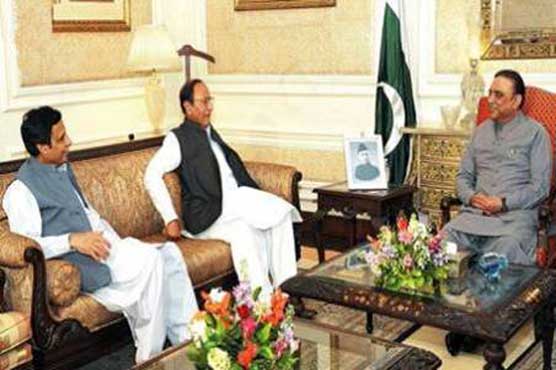
Asif Ali Zardari : Solution to crises given in Constitution:

Pakistan : Ending the sit-in standoff
 While PTI Chairman Imran Khan continues to hang on to his maximalist position refusing to call off the sit-in until the acceptance of his demand for the Prime Minister's resignation, his party's protest politics partner, PAT chief Tahirul Qadri, is slowly but surely opting for the compromise route. The latter told supporters from Lahore, Gujranwala, Faisalabad and Karachi on Friday they could go home. Even though PAT's stated objective, aside from staging a revolution, was also to seek the PM's resignation, he made no mention of it in his speech. Instead the shrewd operator that he is, Qadri proclaimed victory and announced a new plan of action. He declared, "we succeeded to create awareness among the people and brought a change in their mindset", telling PAT activists to go and make preparations for the party's upcoming rallies in Faisalabad and Lahore "because the struggle for revolution and the campaign for elections will continue side by side." In other words, he is saying the sit-in has served its purpose and the way forward and hence out of the current stalemate - contrary to his earlier stance that the system is so rotten it is useless to participate in elections - is to continue struggle for revolution from within the electoral system.
The PTI, on the other hand, seems to have painted itself into a corner with its hardliner position. Indeed, Imran is getting an overwhelming response from the public with his daily anti-status quo rhetoric and 'go Nawaz go' slogans. But while his daily harangues are irritating for the government, unconditional support it received from a joint parliamentary session offers strength and reassurance to the ruling party. Aware that the sit-ins and rallies cannot force him into resigning the PM has dug in his heels. Yet the stalemate cannot last forever. If the two sides fail to resolve it, something else will. A direct military intervention is not possible anymore; but an indirect intervention is not completely outside the realm of possibility. Already, certain political leaders have been dropping hints about installation of a technocratic government to preside over fresh elections. If that unsavoury suggestion turns into reality, excuses will be invented to delay elections, under one pretext or the other, for at least a couple of years. In such an eventuality all genuine political forces, the PML-N and PTI included, will be the losers.
Notably, talks between the two parties on electoral reforms and constitution of a judicial commission to investigate alleged electoral rigging broke off when the PTI along with PAT marched on to the Parliament building and the Prime Minister House, and the PTI blamed the government for resorting to crackdown on its workers. Both sides since have continued to accuse one another for the standoff. Meanwhile, political uncertainty is causing serious harm to an already struggling economy. Needless to say, the situation does not serve the interest of genuine political players. It is good to note that the six parliamentary parties' jirga is continuing to try and bring the two sides to the negotiating table. According to a press report, the jirga has the go-ahead from both PTI and PAT to take the dialogue process forward. Hopefully, the government will also show flexibility to resolve the situation as soon as possible.
Pakistan : Kidnapped ANP leader Arbab Zahir Kasi recovered from Peshawar
 Kasi tribe chief and Awami National Party Balochistan Chapter’s former president Arbab Zahir Kasi, who was abducted in October 2013, was recovered from Peshawar on Sunday, Express News reported.
Confirming Kasi’s release, ANP leader Sardar Asghar Khan Achakzai said he was recovered without payment of ransom.
“Tribal leaders played a crucial role in his release,” Achakzai added.
On October 23, 2013, Arbab Zahir Kasi was kidnapped from Quetta while on his way to visit his relatives in the downtown area of the city.
A group of armed men had intercepted his vehicle near an intersection of Patel Road and after manhandling his driver and, snatching his mobile phone and car keys, the kidnappers took Kasi away, leaving the driver and the car behind.
Bilawal Bhutto condemns the murder of Qadir Baloch
Chairperson of Pakistan Peoples Party Bilawal Bhutto Zardari has strongly condemned target killing of PPP worker Qadir Balouch son of Khan Muhammad in Madho Village of Karachi East and termed the killing as terrorist act aimed at intimidating the democratic workers.
In a press statement, Bilawal Bhutto Zardari said that such brutal killings can’t desist the brave workers of Pakistan Peoples’ Party, from carrying out the mission of our martyred leadership to bring democracy and equal rights to all Pakistanis.
He sympathized with the members of family of Baloch and assured them that PPP will continue to strive for the rights of common people and no terrorist act can deter it from continuing its struggle.
Pakistan - Leaving Imran behind
 The country has been held hostage by two parties — Pakistan Tehreek-e-Insaaf (PTI) and Pakistan Awami Tehreek (PAT) — for weeks now but the deadlock finally seems to be breaking and progress is visible as one of the protesting parties will be leaving the sit-in site. PAT leader Dr Tahirul Qadri on the 51st day of the sit-in allowed his supporters to go back to their homes to celebrate Eidul Azha, who were in any case debilitated by camping for so long outside parliament without making any headway. The condition however, was put on them to go back and motivate the public in their respective cities to attend the rallies that PAT has announced will take place in Faisalabad, Lahore and Karachi. The decision to let the workers leave the protesting sight came a day after Qadri announced to contest the next general elections and therefore choosing a democratic way of bringing about the ‘revolution’ he wants. It is reportedly being said that the PAT has secretly signed a deal with the government to get a “face saving” exit. The government will now probably withdraw most of the anti-terrorism cases filed against PAT workers and leaders. Whether such reports hold any weight or not, it as a good sign that belatedly though it may be, the parties have come to a peaceful agreement. As a matter of fact, the government quite early conceded to the doable demands put up by the PAT leadership but the deadlock persisted only due to the unreasonable demands. Nonetheless, the government still has to broker a deal with Imran Khan who has vowed to spend his Eid at D-Chowk.
it was written on the walls that no matter how unwavering and disgruntled these protestors from the twin parties might be, the material conditions would not allow them to stay much longer and it was inevitable that the crowd will dwindle. Therefore, the strategy by both the leaders — Imran Khan and Tahirul Qadri — to shift their protests elsewhere was nothing but the outcome of sagging morale of the waning supporters and the on-ground logic demanded them to do so in order to save themselves from any public embarrassment. Nevertheless, the decision made by Qadri to leave the sit-in and take part in the next elections is a welcome sign that the political logjam is finally breaking.
Pakistan : Polio: our badge of shame
THE sorry tale of Pakistan’s abysmal performance in practically all global development and welfare indicators is equalled, perhaps, only by the state’s stubborn, almost criminal, refusal to undertake the task at hand.
Nothing, it seems can bestir the administrators of this country, regardless of whichever party is in power, into taking their responsibilities seriously.
Consider, for example, the fact that Pakistan made history on Friday: it broke its own record of polio cases, with eight additional cases being reported on this day, bringing this year’s tally — so far — to 202. The last time we saw such a high number of confirmations was in 2000, when 199 cases were recorded.
This regression is all the more distressing when it is considered that hardly 10 years ago, the indications were that the spread of the crippling virus was being brought under control in the country and there was hope that soon Pakistan too would join the majority of the globe’s nations that had proved themselves polio-free.
That this sorry state of affairs comes after international authorities concluded that Pakistan is in danger of reintroducing the virus to other countries, and the World Health Organisation recommended travel restrictions on unvaccinated travellers from Pakistan, is a damning indictment of the authorities’ lackadaisical attitude.
Almost all figures in political and bureaucratic circles have, at some point or the other, over the months past professed their recognition of the issue and their commitment to eradicating polio.
The fact that none of these people have subsequently put in any sustained action, or organised concerted and meaningful efforts, means that they were simply using it as a photo-op.
From Imran Khan to Maulana Samiul Haq, from Aseefa Bhutto Zardari to Maryam Nawaz, to say nothing of those directly involved such as the heads of the prime minister’s focal team for polio and the officials of the health department — all have professed their commitment to protecting future generations from this dreaded disease. And yet, there has been no sustained action at all; if anything, the issue only continues to worsen.
The travel advisory constitutes a reminder of the pariah status Pakistan faces if polio is not brought under control. While funds from international donors have been pouring in to bolster Pakistan’s own efforts and resources, all they have elicited are promises that have proved false and half-baked measures, such as the non-functional system of checking for vaccination certificates at airports.
The world could be forgiven for wondering what it will take to get Pakistan to put its own house in order in this regard. There is, perhaps, only one thing left to say now. The political classes are once again mulling over the shape of the country’s future; they need reminding that no future at all is possible with a crippled population.
Pakistan- Zardari refuses to take on PML-N
 Pakistan Peoples Party Co-Chairman Asif Ali Zardari has rejected some party leaders’ suggestion that the party should abandon its support to the PML-N as it was affecting its popularity in Punjab. Mr Zardari said he was at present more interested in protecting democracy than party politics because the nation was going through testing times.
“We are supporting the PML-N to protect democratic system. I don’t agree that our policy of reconciliation is damaging the PPP, particularly in Punjab,” he told the party’s office-bearers from southern Punjab and Lahore at a meeting in Bilawal House on Saturday.
Some of the participants had expressed concern over the PPP’s policy of “overtly” supporting the PML-N government. A participant told Dawn that some office-bearers spoke their mind freely before Mr Zardari, saying the party’s reconciliation policy was costing it dearly in Punjab.
“The Pakistan Tehreek-i-Insaf is filling the vacuum left by the PPP. We are conceding space to the PTI. We should start openly taking on the PML-N government and its leadership on issues of public importance and play the role of an active opposition,” an office-bearer was quoted as saying.
Mr Zardari listened to their concerns, but told the office-bearers: “This is no time for such politics. The PPP will not compromise on democracy and supremacy of the constitution and parliament.”
He said he would visit other parts of Punjab soon to strengthen the PPP in the province. It was no more a stronghold of the PML-N as people were ready to take to the streets in protest against its policies, he agreed with the workers..
Mr Zaradri deplored the defection of Malik Aamir Dogar, secretary general of the PPP’s south Punjab chapter. “The late father of Mr Dogar had told him that he should never quit the PPP, but he did not follow his advice,” he said.
Mr Dogar had refused to accept PPP ticket for by-elections in the NA-149 constituency (Multan) scheduled for Oct 16. He is contesting the polls as an independent candidate with the PTI’s support. His main rival is veteran politician Javed Hashmi, who has backing of the PML-N.
In an apparent reference to Imran Khan and Dr Tahirul Qadri, Mr Zardari said: “Those fostering anarchy will not succeed. The country cannot afford the politics of sit-ins. Dialogue, and not street politics, is a solution to all problems.”
He said it was not good to put one’s own or the party’s interest above the country’s .
“They criticise our children who are Pakistani citizens though theirs are foreign nationals,” he said in a veiled reference to Imran Khan.
He said Bilawal Bhutto Zardari had decided to address a rally to be held in Karachi on Oct 18 to observe the seventh anniversary of the Karsaz tragedy. PPP workers from across the country will participate.
“Except the PPP which had a rich history of political struggle and sacrifices, all other political parties are a product of the establishment,” Mr Zardari asserted.
Some participants complained that Mr Zardari’s political secretary Rukhsana Bangash did not allow them to meet him. He said he would look into the matter.
Prominent among the participants were former prime minister Yousuf Raza Gilani and PPP leaders Qamar Zaman Kaira, Sherry Rehman, Sardar Latif Khosa, Makhdoom Shahabuddin, Samina Ghurki, Shaukat Basra and Faisal Mir.
Talking to reporters after the meeting, Mr Gilani said the PML-N could not fulfil its promises. “Protests and sit-ins are part of democratic process and an objection cannot be raised to them.”
Had the PML-N government adopted the Zardari style of politics, it would not have faced the problems it was confronted with, he said.
Mr Gilani said the PPP had raised voice against rigging soon after last year’s general elections but nobody supported it.
“We want to uphold supremacy of democracy, not of the government or a person,” he said and demanded that local body polls be held in the country.
Saturday, October 4, 2014
China : Hong Kongers' free will shall not be held hostage to protestors
 Hong Kong's prosperity and stability are hard-won and should be treasured, while Hong Kongers' free will shall not be held hostage to those organizers of the Occupy Central movement who have ulterior motives, critics appealed.
Yin Haoliu, a Chinese American freelancer, wrote in an open letter to three initiators of the illegal movement: "Democracy is a step-by-step process that can not be approached in haste, otherwise it will bring about troubles."
"What's wrong with the Communist Party of China which hopes to see a person who loves China and loves Hong Kong elected as Hong Kong's chief executive? Are you willing to choose a chief executive that sells Hong Kong and the whole country?" Yin asked in the letter.
"You should know that on your opposite side are the silent majority... if Hong Kong falls into chaos, you could flee to foreign countries, but how about the ordinary Hong Kongers that are left behind?" he said.
"Christopher Francis Patten said the decision by the Standing Committee of the National People's Congress on Aug. 31 that granted universal suffrage in Hong Kong was false...then was he himself as the governor of Hong Kong elected by the Hong Kong people?" the retired doctor said.
Yin said Hong Kong had tided through numerous difficulties with full support of the Chinese mainland since the Basic Law was put into practice, so the initiators of Occupy Central should treasure the city's current prosperity and stability.
On Friday, the Russian Foreign Ministry said Moscow hopes that stability will resume as soon as possible in Hong Kong.
"Events in Hong Kong belong to China's internal affairs. Russia hopes the stability of the Hong Kong Special Administrative Region (HKSAR) would be resumed as soon as possible," the ministry's information and press department told Xinhua.
Singapore's Foreign Minister Kasiviswanathan Shanmugam said in an interview with Lianhe Zaobao that many reports on Hong Kong made by the Western media were untrue and biased to China.
They intentionally ignored a fact that Hong Kong had never implemented a democratic system under the British rule for some 150 years, he said, adding that Beijing's plan has granted Hong Kong much more democratic space than what Hong Kongers got in the times of British-ruled Hong Kong.
"Everyone shall be clear about one point, that is, what the central government did conforms with Hong Kong's Basic Law," the foreign minister said.
He said Hong Kong is deeply dependent on the Mainland, including employment and livelihood.
Even though a little anti-Mainland sentiment appeared in Hong Kong, the central government is still generous to Hong Kong, he added.
Jeff Bader, who ran Obama's first term White House East Asia policy, told the Washington Post that for Beijing, there is no room for compromise on issues such as Chinese stability and the leadership of the Communist Party of China.
He also mentioned that millions of Hong Kongers will not support or tolerate the protest that grinds the city to halt for days.
The negative impact of Occupy Central includes a bit of a brain drain, Bader predicted.
Hong Kong has been partially paralysed by the large-scale protests that started on Sept. 28.
A large number of Occupy protesters have taken over major streets in Mong Kok, one of the city's most bustling areas, for at least four days, which has seriously affected businesses of local shops, restaurants and vendors, and forced schools and banks to be closed.
Friday afternoon, some anti-Occupy people clashed with Occupy protesters in Mong Kok and Causeway Bay, Hong Kong's two major commercial areas. Several people were injured during the clashes.
Hong Kong Chief Executive Leung Chun-ying gave an urgent TV broadcast Friday evening, calling on all citizens, no matter what attitude they may have toward the Occupy movement, to keep calm and not to use violence or disrupt public order under any circumstances.
China - Firmly safeguard rule of law in :Hong Kong People's Daily
 Democracy and the rule of law are interdependent, and a democracy without the rule of law will only bring havoc, says a commentary to be carried by Saturday's People's Daily.
In recent days, protests have been staged in Hong Kong in the name of seeking "real universal suffrage," causing traffic jams, less tourists, the stock market plunging and the suspension of schools and stores.
"All these chaotic scenes have caused worries and irritation among Hong Kong citizens," says the commentary on the flagship newspaper of the Communist Party of China Central Committee.
According to the article, the so-called "Occupy Central" protests are aiming to realize political intentions that violate Hong Kong's Basic Law through unlawful means, and however the organizers and instigators labeled such acts as "peaceful" or "nonviolent," they cannot change the illegal nature of the protests.
"These acts will undoubtedly end up with the rule of law violated, severely disrupted social orders, huge economic losses and possible casualties," says the opinion piece.
The protests attempt to force the central authorities to change the decision made by the Standing Committee of the National People's Congress (NPC), China's top legislature, on Hong Kong's electoral system. The decision made on Aug. 31 granted universal suffrage in the selection of the Hong Kong Special Administrative Region (HKSAR)'s chief executive on the basis of nomination by a "broadly representative" committee.
Noting that one essence of the rule of law is absolute abidance by the law and the punishments on violators, the article says nobody is able to disregard the law or take exception to it. "Young students should also abide by the law."
It also says that the measures of Hong Kong police to cope with the protests are necessary to ensure the rule of law, and they only used teargas when left without choices against protesters who bumped police defences and even poked police with umbrella.
"Hong Kong police are very professional, and the actions they took were necessary, appropriate and moderate. There are no reasons to criticize their law enforcement acts," it says. "A democratic society should respect the opinions of the minorities, but it doesn't mean those minorities have the right to resort to illegal means.
"Democracy can only be prosperous and the rule of law developed when we express opinions and seek consensus under the framework of law," the article says, urging protesters to return to reason and the rule of law as the common responsibilities of all Hong Kong residents who truly love Hong Kong.
Anti-corruption drive to boost Afghan president's credibility
In a bid to keep his promise of tackling corruption, President Ghani has reopened a probe into a massive banking fraud scandal. Experts say the new leader is seeking to prove himself to Afghans and the global community.President Ashraf Ghani Ahmadzai, who has promised a fight against rampant graft, reopened an inquiry into the notorious Kabul Bank case on Wednesday, October 1. The commercial bank collapsed in 2010 after media reports exposed massive high-level corruption and the misappropriation of more than 900 million USD - most of which was deposited by international donors. In a presidential decree, Ghani ordered Afghanistan's Supreme Court to launch a new investigation into the case within 45 days. He also ordered the Attorney General's Office to arrest all the suspects within three days and keep them in detention until the court investigation is fully concluded. "We promised to combat corruption comprehensively, on a full scale and in a principled manner and it is time for action," Ghani said after signing the decree. The new president wants to prove himself to Afghans and the international community by taking on what is known as the biggest corruption scandal in the country, said Said Massud, economics lecturer at Kabul University, who was present during the signing of the decree. "It is a very interesting move by the president and a test for the new government. If the administration can solve this case and track the missing money, it will gain credibility and international prestige," Massud told DW. Lingering doubts Many of those who are suspected to be involved in the scandal are related to former or current high-ranking Afghan officials, including brothers of former President Hamid Karzai and his then first vice-President Mohammad Qasim Fahim. In total, 21 people were convicted in the case, including the bank's founder Sher Khan Fernod and chief executive Haji Khalil Ferozi, who were sentenced to five years in jail. However, Karzai's brothers and one of his vice-presidents were not sent to jail due to a presidential decree that granted immunity to shareholders who returned stolen funds. Massud expresses concern over the 45-day deadline set for the Supreme Court to carry out an investigation into the case, as he doubts the capacity of institutions that will execute President Ghani's decree. The analyst believes the powerful people behind the scandal will be another big challenge for the new president. "It is to be seen if the Afghan government is powerful enough to put the people involved in the Kabul Bank case behind bars because many of them belong to very powerful families," Massud stressed.
 Seeking attention
International community, which has been funding Afghanistan since 2001, has demanded Afghan officials to tackle widespread corruption.
Many countries including Afghanistan's biggest donor, the United States, have warned they will cut their financial aid to the war-torn nation if it does not take concrete actions against graft.
Kabul Bank scandal was described as "one of the largest banking failures in the world" by the country's anti-corruption watchdog.
The case triggered a financial crisis and shook Afghans' confidence in banking, which was a booming economic sector until 2010. Experts believe the country's new government needs to do more to eliminate the practice of corruption, which would go a long way in retaining international financial support.
There were three immediate priorities for Ghani after taking over the reins, Massud noted. These included: a security pact with the US, agreement on NATO's new training mission in Afghanistan and tracking Kabul Bank's stolen money, the lecturer underlined. "President Ghani has already completed the first two. He will gain international credibility if he can achieve the third goal," he added.
Decisive move
Many experts believe success in the fight against corruption will give Ghani's new government the support and the credibility it needs from the people, particularly after the country's disputed presidential election and a controversial political agreement between Ghani and his former electoral rival Abdullah Abdullah. Abdullah is now the Afghanistan's Chief Executive.Massud says the new president should deliver results as a failure to do so would put his future plans at risk. He is of the view that Abdullah's support will be crucial to achieve success.
"If Ghani wants to govern well in the coming five years, he should make sure that the probe into Kabul Bank scandal succeeds. Otherwise, he will face huge problems as people will question his authority," Massud said.
Afghan Watchdog Says Ex-Leaders' Brothers Owe In Bank Scandal
 A corruption watchdog in Afghanistan says the brothers of former President Hamid Karzai and one of his vice presidents are among 19 people and companies that still owe a total of $663 million from a 2010 loan fraud scandal at Afghanistan's biggest commercial bank.
The Independent Joint Anticorruption Monitoring and Evaluation Committee announced the figures released on October 2 -- a day after newly inaugurated President Ashraf Ghani relaunched investigations into the Kabul Bank scandal.
Mahmud Karzai, the brother of the former president, was listed as owing $22.2 million on loans from Kabul Bank and having paid back only $13.4 million.
But he denied he still owed money, saying he paid back all his loans with interest.
The watchdog says Abdul Haseen Fahim, brother of former First Vice President Mohammad Qasim Fahim, still owes $4.4 million after paying back nearly $36 million.
Fahim could not be immediately reached for comment.
Rashed Behroz, executive director of the Monitoring and Evaluation Committee, said the government's new inquiry should consider new prosecutions in the case.
"Regardless of the political and personal affiliations of the people who have been involved in this matter, these people should be prosecuted and we hope that we will soon be able to see the results of this," he said.
The two brothers of the former Afghan leaders are both shareholders of Kabul Bank.
They were spared prosecution under a decree by former President Karzai that granted immunity to those who returned the funds.
The $935 million fraud case nearly brought about the collapse of the country's largest commercial bank in 2010.
The two former heads of the bank, founder Sher Khan Fernod and former chief executive Haji Khalil Ferozi, were convicted of taking $810 million out of the $935 million that was stolen.
Both received five-year prison sentences.
Much of the missing money has yet to be recovered.
Ten other Kabul Bank insiders were also convicted in the case and received sentences ranging from six months to five years.
Ghani, who was inaugurated on September 29, ordered Afghanistan's Supreme Court on October 1 to reopen the Kabul Bank case, saying, "The time for action has come, and as we had pledged, the fight against corruption will be done in a thorough and systematic way."
Afghanistan's courts were criticized for imposing light sentences against those convicted in the case and for allegedly failing to bring to justice the masterminds of a scheme that diverted hundreds of millions of dollars in fraudulent loans to bank insiders.
Kabul Bank had handled about one-third of Afghanistan's banking and most of the government payroll -- including salaries for the army and security forces.
It was renamed New Kabul Bank after a government bailout.
Pakistani Taliban Declares Allegiance To Islamic State
The Pakistani Taliban has announced that it has declared allegiance to Islamic State militants and has ordered its fighters to help the militant extremist group try to set up a global Islamic caliphate.
The announcement by Taliban spokesman Shahidullah Shahid on October 4 comes after Al-Qaeda leader Ayman al-Zawahri said in September that he had named former Taliban commander Asim Umar as the "emir" of Al-Qaeda’s new South Asia branch.
Shahid’s statement came despite recent speculation that the leadership of Pakistan’s Taliban is wary of IS fighters, who are driven by different ambitions that have little to do with South Asia.
Although there has been little evidence of a firm alliance between IS militants and Al-Qaeda-linked Taliban commanders, IS activists have been spotted recently in Pakistan’s northwestern city of Peshawar distributing pamphlets that praise the group.
http://www.rferl.org/content/pakistani-taliban-islamic-state-allegiance/26620750.html
Pakistan : Developing a counter-narrative
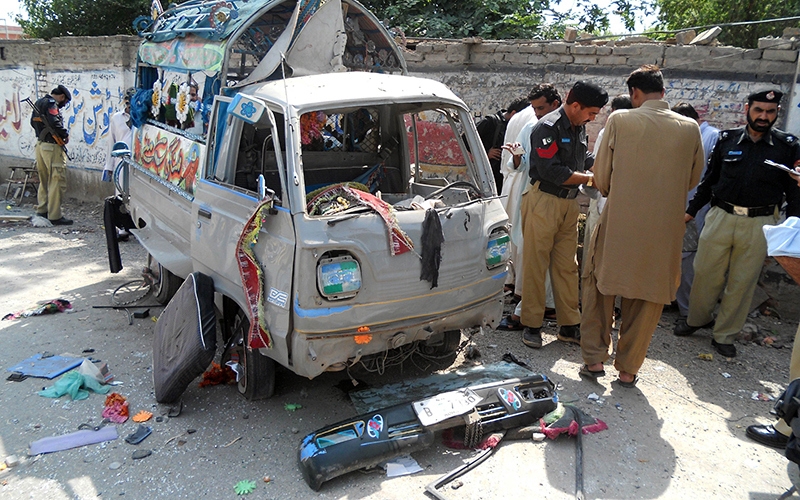
As incidents of terrorism torment the people of Khyber Pathunkhwa, the federal and provincial governments appear to be in a state of extended hibernation. In the last 24 hours, nine separate terrorist incidents were reported, the most serious of which was a bomb placed on a passenger van heading from Peshawar to Parachinar in Kurram Agency, which exploded on the Kohat Road, killing 10 people and injuring 12 others. Witnesses agree that the bomb was placed by a man who entered the van carrying a bag and exited after several stops leaving the bag in the van. The device exploded several minutes later. Police say they are investigating whether it was a timed or remote control device, which may yield a clue about the terrorist group responsible. A vehicle was targeted by an Improvised Explosive Device (IED near Aalim Bridge on the road to Gilgit, killing three people. Militants attacked a police check post in Bannu; police responded and four militants were killed. In Peshawar, terrorists attacked an electricity transmission tower and gunned down Assistant Sub-Inspector (ASI) Asifur Rehman in the vicinity of Yakatut police station. The body of a missing policeman was found decapitated in his home in Madyan, Swat, while the decapitated body of a local official was found in Ghallanai, Mohmand Agency. Security officials also discovered several bullet-riddled corpses in areas known for militant activity in the tribal Agencies. The picture this collection of incidents paints, coupled with growing numbers of attacks in and around Peshawar over several weeks, is of a classic terrorist campaign that escalates slowly, but with increasing bloodiness and vindictiveness. The purpose of the strategy is not only to inflict damage on the security forces, but to the psyche and motivation of people to resist. Portraying the state as impotent and themselves as able to strike at will is how terrorists use fear to influence the political discourse. Attacks will increase in size and potency as the campaign progresses. The government’s inability to create a counter-narrative by educating people about how to stay safe or the role they can play in combating terrorism verges on gross negligence.
This is a severe problem at both the federal and provincial level. The federal government should be formulating the strategy for an awareness campaign that informs people about the need to fight the terrorists. Is it possible to point to one piece of information on state broadcasting that gives details of the losses caused by terrorism, or the reason terrorists must be fought and how? On the contrary, at the height of the terrorist campaign earlier this year, terrorists were regularly monopolising broadcast space to present their warped point of view. Shahidullah Shahid and Eshanullah Ehsan, terrorist spokespersons, became virtually household names, assisted by a rapacious ratings-driven media that is immune to the idea of presenting facts and information in the national interest. Instead of denying terrorists the oxygen of publicity, mass media acted like the bellows in a forge. The provincial government has abdicated its responsibility to prepare people who are on the front lines against terrorism for the inevitable blowback of Operation Zarb-e-Azb, conveniently passing the buck to the army. Should an ASI who was specifically targeted by terrorists have been allowed to roam around without protection? As we have seen, the terrorists believe that police and paramilitary forces are weak links in the security chain and have relentlessly pursued individuals they believe are crucial in urban anti-terrorism efforts. Has public awareness been built about checking abandoned luggage and bags? A lackadaisical bureaucratic attitude that people ‘will not learn anyway’ permeates the government’s thinking. This attitude also prevents highlighting successes. Prior to the attacks in Peshawar, police say that bomb disposal squads defused six other explosive devices throughout the city, a triumph of intelligence, courage and competence that is lost in the media glare. Without even attempting to make citizens aware of the possible repercussions of the operation, the government is effectively turning them into human shields. Perhaps they feel that with a population of millions, a few thousand deaths are meaningless, but for the terrorist strategy of bringing down the government by attacking citizens, this attitude is victory in itself.
Pakistan: More blood in Balochistan
Once again Quetta witnessed unnerving attacks when back-to-back grenade explosions killed eight and injured 10 other people. Unidentified assailants on motorcycles tossed grenades at two hairdressers’ shops and later opened fire on them. The attacks seem random without any real motive behind them except to create terror. However, considering that the attacks took place in Balochistan, the most volatile and strife-riddled province, what appears on the surface is never really the whole story.
We are hearing now of regular attacks such as this in Balochistan; just the other day a bomb attack in Sibi targeting a security forces vehicle killed one and injured scores more. These are just a couple of examples in a long sequence of such events. According to some reports, the owners of the shops were Punjabi, lending this attack an ethnic colour. Allegedly, the Balochistan Liberation Front (BLF) has claimed responsibility for the attack. It is so unfortunate that the genuine grievances of the people of Balochistan have taken on such a frustrated and violent hue. The insurgents are angry. They have been left out in the cold with a provincial government that does not represent them sincerely and a government at the Centre that does not extend its hand to the Baloch for an offer of political dialogue to resolve their issues. The tragic consequence of war, especially one based on nationalist sentiment, is that it enshrouds all those who come in contact with it. The hairdressers may have been Punjabi and they have become the unfortunate collateral damage in a war where the actual oppressors of the Baloch typically belong to that ethnic group.
The Baloch are tired of being suppressed by the paramilitary Frontier Corps (FC), which they believe is ruling them with an iron fist. Not only are the Baloch denied any access to the immense wealth or resources buried in their soil, they are victims of the ruthless kill and dump policies of terrifying agencies they believe to be the FC. The missing persons are none other than the Baloch; imagine being an ethnic Baloch and having a loved one snatched away from you, never to be heard from again. That is their reality every day. We cannot condone violence in any form whether it comes from the nationalists who are resorting to terror tactics to get their voice heard or the oppressors of the Baloch who have abducted them, tortured and shot them. This is a protracted nationalist insurgency and must be dealt with through a political solution, not with the sort of blood for blood tactics we have been seeing of late.
Pakistan: Blast in Quetta Hazara town; several reported injured
A large explosion occurred in Quetta's Hazara Town area on Saturday, with initial reports suggesting several people were injured in the blast. According to DawnNews, the blast took place near a girls' school in the Aliabad area of Hazara Town, a locality populated mainly by the ethnic Hazara Shia minority which has been targeted by extremist militant groups in the past. Initial reports suggested several people were wounded in the blast. Emergency was imposed at all hospitals in Quetta following the blast. Police and rescue teams were on their way to the site of the explosion.
Pakistan - Terrorists Strike Back
Bilawal Bhutto is a reflection of ZA Bhutto and Benazir Bhutto

Pakistan _ Explosion in passenger van kills six in Kohat
Pakistan: Thousands of govt schools in KP without electricity, potable water, washrooms


Subscribe to:
Posts (Atom)