Pakistani leaders are hopeful to develop good neighborly relations with the new Afghan government as the years of tensions have proved unhelpful to effectively counter serious security challenges. In his farewell speech last week, former President Hamid Karzai blamed both the United States and Pakistan for the continuing war with the Taliban insurgents. This blame game continued for a long time over the cross-border shelling, lack of cooperation to jointly fight terrorism and alleged hideouts of the Taliban militants in both countries. The lack of trust harmed all efforts for reconciliation with the Afghan Taliban and Karzai admitted his failure to carry forward the reconcilary process. Karzai also pointed out that peace with the Taliban is not possible without the help of the U.S. and Pakistan. Cross-border attacks have caused a serious blow to bilateral relations and Afghan Foreign Minister Zarar Ahmad Osmani raised the issue of the alleged Pakistani "rocketing into Afghanistan" at his U.N. General Assembly's address last week. This shows a deterioration in bilateral relations, as Kabul preferred an international forum rather than using bilateral diplomatic channels. Kabul claims Pakistani rockets affect "civilians" in eastern Kunar province. Pakistan, however, denies it fired rockets into civilian areas and says its forces only target positions of the militants who attack Pakistani border posts. Karzai seemed to be upset at what he described as, "Pakistan' s lack of cooperation" to encourage the Taliban to enter into peace talks with his government. Islamabad, for its part, added that they do not have control over the Taliban and that it can only play the role of a facilitator. Pakistani officials insist they have freed over 50 Taliban detainees, including some senior leaders and former ministers, at the request of Karzai and his peace council to accelerate the reconciliation process, however, all the freed Taliban refused to join the intra-Afghan dialogue. For its part, Pakistan says it is disappointed at "Afghanistan' s failure to stop the Pakistani Taliban from entering the Afghan side of the border." Security officials insist that many Pakistani Taliban fighters who have fled to Afghanistan following military operations in the tribal regions and Swat valley, now operate from the Afghan border region. Afghanistan-based Pakistan Taliban insurgents are being blamed for cross-border attacks on check post and villages. Pakistan military spokespeople have claimed that the Afghan gov' t has not helped to stop fleeing militants from crossing the border from North Waziristan tribal region, where the security forces are battling local and foreign militants. Pakistani forces launched the biggest offensive in the region in June to flush out the militants from their last major sanctuary. Afghanistan itself and the U.S. had also been calling for the operation, as they claimed al-Qaeda and the Haqqani Network also had hideouts in North Waziristan. As political tensions had a negative impact on bilateral relations over the past 13 years, the two countries now have a good opportunity to bury the hatchet and deal with the post-NATO situation. Any instability in Afghanistan will directly affect Pakistan's fragile security situation. Pakistan made the wise decision to represent itself at the highest level in attending the swearing-in ceremony for President Ashraf Ghani on Monday. President Mamnoon Hussain was the only head of the state among the nearly 200 foreign guests who attended Afghanistan's historic first ever democratic transition. President Mamnoon Hussain held separate meetings with President Ashraf Ghani and Chief Executive Dr. Abdullah Abdullah and " conveyed Pakistan's commitment to working closely with the new government for the promotion of common goals," the Foreign Ministry said late Monday at the conclusion of his day-long visit to Kabul. "Underlining the importance Afghanistan attached to its relations with Pakistan, President Ashraf Ghani reiterated his perspective that both countries should have a 'special relationship,'" a Foreign Ministry statement said. Dr. Abdullah also expressed his desire for the new government to forge a cooperative and forward-looking relationship with Pakistan. Statements from the leadership of the two countries have raised hopes for a new tension-free beginning, as their cooperation could enable them to meet the ongoing serious security challenges they would be facing after the foreign troops withdraw from Afghanistan in less than three months.by Muhammad Tahir
Tuesday, September 30, 2014
News Analysis: Pakistan eyes tension-free, strong relationship with Afghan new gov't

SHOOTING OF PASTOR IN PAKISTAN HIGHLIGHTS GROWING CHRISTIAN PERSECUTION
By JORDAN SCHACHTEL

Pakistan: Origins of Baloch Insurgency
 Tariq Kakar
The true Origin of Baloch insurgency dates back to partition era when the Colonial masters decided to leave the Indian sub-continent and divided according to their will. According to the partition plan, India and Pakistan were independent while the princely states were allowed to join either of the newborn states or remain independent. Kalat declared its independence on 11 August 1947.This independence lasted 9 months and then the Kalat state was forcibly acceded to Pakistan. The Baloch retaliated and initiated insurgency plans under command of Prince Karim, younger brother of Khan of Kalat; Mir Ahmed Yar Khan, but it was curbed soon and prince Karim was imprisoned for 10 years. Four phases of insurgencies followed this event.

Pakistan : Opposition leader Khurshid Shah suggests mid-term elections
 Opposition leader in the National Assembly Syed Khurshid Shah on Tuesday recommended holding of mid-term elections to resolve prevailing political crisis.
Talking to media in Islamabad, Khurshid Shah stated that it will be better for the system if Prime Minister Nawaz Sharif announces mid-term polls.
The PPP leader stated that it is not appropriate to force the premier on ‘going point’ to take this action.
We want survival of the system and parliament, he added.
Khurshid Shah suggested that investigation of election rigging should be carried out through the Supreme Court of Pakistan. He said opposition jirga should hold direct talks with the leadership of Pakistan Tehreek-e-Insaf (PTI) and ruling Pakistan Muslim League Nawaz (PML-N) to end the deadlock.
Shah said Nawaz Sharif is an constitutionally elected prime minister and he was felicitated by former president Asif Ali Zardari and PTI chief Imran Khan over his victory.
Thousands of anti-government protestors led by Imran Khan and Tahirul Qadri have staged sit-ins in the federal capital s Red Zone to oust Prime Minister Nawaz Sharif.
Imran Khan alleges the 2013 elections were rigged in a conspiracy led by nawaz Sharif, acting with the Election Commission, the judiciary, the interim provincial government in Punjab, and a private news channel. However, they have all denied the allegations.
Pakistan: Too little too late?: 20 FC men deployed to guard bomb-wrecked refugee camp

 In the wake of a devastating bomb blast that killed at least eight people on Sunday, the district police deployed around 20 Frontier Constabulary (FC) officials at Khwaja Muhammad camp for internally displaced persons (IDP) in Hangu.
Hangu DPO Nazir Kundi, while talking to journalists, confirmed that IDPs housed in the camp were the main target. He said an FIR of the blast was registered at Saddar police station against unidentified militants under sections 302 and 324 of the Pakistan Penal Code and Section 7 of the Anti-Terrorism Act.
Kundi said FC officials were deployed inside and outside the camp, adding five more personnel could be stationed for added security. The DPO added four suspects had been rounded up from within the camp limits during a search operation after the blast and moved to an undisclosed location for interrogation.
Last rites
Grief-stricken relatives took the bodies of their loved ones to their hometown in Upper Orakzai Agency for burial. Camp residents said not a single political figure or government official visited to offer condolence or a shoulder to cry on.
Lal Badshah, whose seven and eight-year-old sons—Lal Wali and Sher Wali—were killed while playing in the makeshift camp market, said he had to take the bodies to his hometown early in the morning.
“We could not find a place to bury them in Hangu.”
Badshah said the loss of his two young sons had a devastating impact on him and his wife. He recalled they had only recently visited the market to buy clothes for Eidul Azha.
“Their mother is constantly looking at the clothes we bought them for Eid; she hasn’t stopped crying,” he added.
A bike bomb
According to DPO Kundi, a motorcycle was rigged with explosives and parked within the camp limits to cause “maximum damage”.
Around seven kilogrammes of explosives were used in the explosive device, bomb disposal unit official Asadullah told The Express Tribune. The attack spread further fear and panic among camp residents, who had recently been threatened by militants to vacate the premises.
“Not a single person living in the camp did anything which would provoke militants to attack us, yet we were targeted,” said Muhammad Sadiq, one of the people wounded in the blast. “We have to battle for survival even though we have nothing to do with this fight.”
Khyber-Pakhtunkhwa Chief Minister Pervez Khattak ordered an enquiry against the blast and directed senior officials to submit a detailed report. He also directed the police and district administration to launch a crackdown and contact the border authorities of Orakzai Agency.
On June 10, unidentified militants fired rockets and hurled grenades at the camp for IDPs from Orakzai in Hangu. The attack followed upon earlier threats asking IDPs to vacate by June 11.
Pakistan : Three injured in attack on polio team in Gujranwala
The Express Tribune
Three people were injured on Tuesday when a polio team was attacked in Gujranwala, Express News reported. On August 31, the Gujranwala district health office had announced that a polio vaccination campaign would be launched on September 29. Despite the number of polio cases increasing with each passing day, the authorities have failed to put a concrete plan in place. Polio workers are frequently targeted in the country, while many parents refuse to let health workers administer polio drops to their children. For this year alone, the total number of reported polio cases stands at 174 in Pakistan - one of only three countries in the world where polio is still endemic.
Pakistan: Protecting our IDPs

Pakistan - Bilawal Bhutto to launch career from place where Benazir attacked in 2007

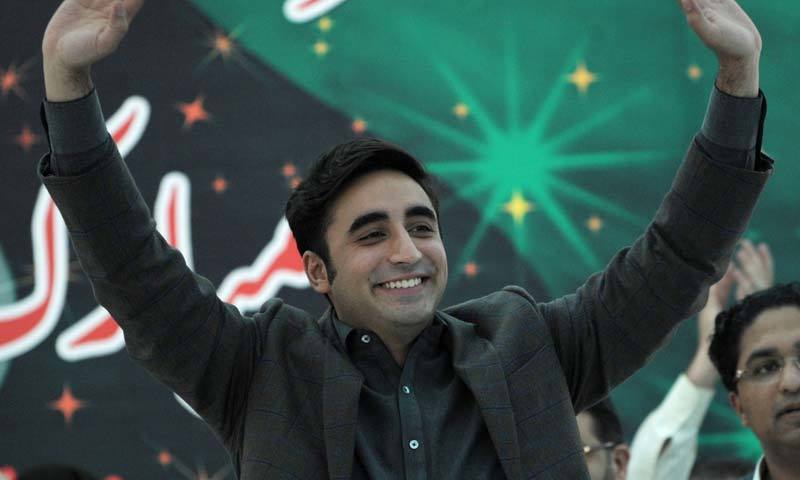
 Pakistan Peoples’ Party (PPP) Chairperson Bilawal Bhutto Zardari would restart the journey from the point where his mother, former prime minister Benazir Bhuuto’s caravan was attacked on October 18, 2007.
On the day PPP would hold a public gathering at the mausoleum of Quaid-i-Azam. Speaking after his party’s core committee meeting at the Bilawal House, former prime minister and senior PPP leader Yousaf Raza Gilani said the 2007 Karachi bombing occurred two months before Benazir was assassinated. The bombing resulted in more than 120 deaths and 425 injuries. Most of the dead were members of the PPP. “October 18 reminds us that the PPP leadership and it workers have always sacrificed their lives for democracy,” he stated. Earlier addressing the meeting, Bilawal Bhutto Zardari, who chaired the meeting, said that the PPP would again be made a party of the masses by mobilisation of the cadres across the country.
Gilani said Benazir returned for the restoration of constitution, independence of judiciary and media. “Even though she was warned of danger, but she followed the footsteps of her father Shaheed Zulfikar Ali Bhutto,” Gilani said. He said today the nation is looking towards the leadership of Bilawal and his decision is of prime importance. “Under the leadership of Bilawal, PPP would flourish and regain. The party would bring stability in the country and institutions would be strengthened.” The former premier said Bilawal would come with the vision of Benazir and Zulfikar Ali Bhutto.
Gilani said party office-bearers and workers had remained part of party. Asked if Bilawal’s apology to the party workers was not a charge sheet against the previous PPP government, the former premier replied diplomatically, saying “there is always room for improvement”. When asked whether Bilawal was referring to Pakistan Tehreek-e-Insaf (PTI) when he asked party workers not to move to other parties, Gilani explained that the statement had nothing to do with the PTI.
“As far as Imran Khan’s party is concerned, they have their own manifesto. They have never come to power before, whereas we have been there many times,” he said. also speaking on the occasion, former premier Raja Pervez Ashraf said people would see real reflection of his mother and his grandfather in Bilawal.
Bilawal Bhutto - Apology and after
In an open letter, he has apologised to those who may have reason to part ways with the PPP and has asked the disillusioned to stay put a while longer, making it incumbent upon himself and Asif Ali Zardari to take some drastic steps towards the party’s revival. The PPP has not only been reduced to a regional party, more or less confined to Sindh, its support is considered emotionally inspired. It has drawn widespread criticism for not keeping pace with the people who have far more at stake today than backing a political party purely out of their love for the ‘martyrs’ the party has produced. Declaring one’s intention to take up where Ms Benazir Bhutto left off can only be meaningful if the PPP is willing to back its words with reorganisation along practical, result-oriented lines all over the country. The old stories about how the PPP once swayed Pakistanis across various divides are now mere opium that can only make those at the party’s helm oblivious to the current realities. It was easier for the PPP in the 1960s during the years leading to its founding. The repair now is a much more sensitive job, not least because others have been more inventive and mobile than the PPP, and the debate about whether or not they have moved in the right direction is a luxury which Bilawal Bhutto Zardari cannot afford at the moment. The simple reality is that the people have found themselves choices and a new force to challenge the long-time PPP opponent — the PML-N — that had over all these decades provided an automatic justification for the existence of the PPP. The PTI is a challenge to grapple with. Imran Khan appears to have eaten deep into the PPP support base particularly in Punjab comprising anti-PML-N pockets — and the PPP’s policy of playing the appendage of PML-N is further harming its cause. To say that apologies are solutions would be as futile as dismissing this message by the PPP chairman as an instrument of surrender. For whatever it is worth, his letter does provide broad lines of policy and identifies the PPP with the ‘left-wing’ forces. It falls short of stating the obvious about who controls the politics in the country, but at the same time does promise resistance to “right-wing parties” that “appease” the extremists. For practical reasons, the edgy PPP jiyala would be hoping that these appeasers in the new party rule book would include both the PTI and PML-N. Though this is a dangerous course, this ideological focus is as crucial to Bilawal Bhutto Zardari and his party’s rise as to the effort to organise at the grass roots.PPP Chairman Bilawal Bhutto Zardari’s message to party workers and followers is reminiscent of the sentiments of a general who is striving to keep his troops together for the next battle.
Pakistan: 16,000 children missed out in polio drive due to parents’ refusal
Though a nationwide campaign to vaccinate 34.16 million children started on Monday, 16,757 children could not be vaccinated in Peshawar city on the first day because of refusal by their parents. However, National Manager Expanded Programme on Immunisation (EPI) Dr Rana Safdar said data about the parents had been collected and these children would be vaccinated by involving influential personalities of the city. Secretary Ministry of National Health Services (NHS) Ayub Ahmed Sheikh inaugurated the control centre at the EPI building here. The centre is the initial form of the emergency operation cell (EOC) recommended by the Independent Monitoring Board (IMB) which works on behalf of the international donor agencies. The EOC will be operating at the federal and provincial level to collect real-time data from the field and ensure a quick response. Mr Sheikh said 38.26 million doses of vaccine had been supplied to the provinces for the campaign. “The federal government is fully committed to ensuring support to the provinces to reach out to each and every child during the campaign,” he said. However, by evening, data gathered by the control centre became shocking. An official of the ministry, requesting not to be identified, said in Peshawar due to security reasons the polio campaign was reduced to just one day. He said past experiences had shown that polio teams were usually attacked on the second or third day of the campaigns. “During the one-day campaign in Peshawar, 84 per cent children (635,378 out of 754,383) were vaccinated while 28,934 children were not available at their addresses. But the shocking thing was that 16,757 children could not be covered because their parents refused to vaccinate them,” he said. Dr Rana Safdar, while talking to Dawn, said the refusal cases were not unusual. “Out of the 97 union councils (UCs) in Peshawar, 45 have been declared high security risk areas. So only one-day campaign was launched there. However, there will be two catch-up days during which we will try to vaccinate the children which could not be covered,” he said. “The data on children is available; now it will be analysed to ascertain their tribe, language and school of thought. After that, influential personalities of the area will be involved to vaccinate the children. The number of refusal cases will be reduced in the catch-up phase,” he claimedBy Ikram Junaidi
Pakistan: PPP to hold public meeting in Karachi on October 18: Gilani
 The Pakistan Peoples Party (PPP) would hold a public meeting at Mazar-e-Quaid in Karachi on October 18, the party’s leader and the former Prime Minister Syed Yousaf Raza Gilani said on Monday.
Gilani was briefing newsmen along with other party leaders after core committee meeting of the PPP in Karachi on Monday afternoon.
The former prime minister said that the PPP workers and leaders rendered great sacrifices for the cause of democracy.
The sources said that it was decided in the PPP core committee meeting that the party would launch mass contact campaign from October 18.
The meeting decided that the PPP would hold public meetings in all provincial capitals as part of its mass contact program.
Monday, September 29, 2014
What Bilawal Bhutto must do...

By Sarmad Palijo
Seeing Bilawal walk among the people (as against his previous public appearances, which saw him sitting on top of distant stages), was indeed heart warming and a welcome sign during the increasingly partisan polarisation in national politics. A few weeks ago, I wrote on these pages about Thar’s disastrous famine and voiced the people's desire to see Bilawal personally going to them to bring them hope and support. Surely, now, the trip to Multan and Chiniot has corrected the balance lost in Thar. This increased interaction in Punjab between the people and the Chairman of the PPP feels like a breath of fresh air amidst the stale politics of Right vs Right that has been playing out in Islamabad. Bilawal’s move in Punjab will give life to the diminishing Left and also allow Punjab, and in extension, the whole country to have a more vibrant and pluralistic political landscape.For the last few days, we’ve been reading much about Bilawal Bhutto Zardari’s trip to South Punjab’s flood affected areas. This, after the announcement of his plans to contest the 2018 general elections from his family constituency in Larkana, is seen by many as the launch of his own political career.

Bilawal visits Chiniot flood-hit areas by dawn-news Indeed, while the Right, including PML-N and PTI, was pushing for dialogue with the Taliban, it was young Bilawal who, stood on the historic Makli Hills, and called for national action against unrelenting extremist militancy. One hopes that Bilawal's foray into Punjab is not as calculated as PPP’s critics allege and that his interaction with the people of South Punjab was not a stage managed photo op; because only a genuine connection with the public who have been left at the mercy of old feudal politics can save PPP from a complete rout in the region.
Polls rigged from Karachi to Khyber, says Bilawal by dawn-news The road to political glory for Bilawal in Pakistan’s complex and dangerous politics lies not only in Karachi, Lahore and Peshawar, but also through the old broken mud houses and flooded fields of Sindh, Punjab, KPK and Balochistan; for Bilawal, it lies not through the high walls of the big houses of Defence and Bahria Town, but through the broken hearts of unfortunate millions of brick kiln workers and fishermen of the Ravi and Keti Bandar. It was they who carried Benazir in their hearts through hell and high water, and it is them who will follow Bilawal to all ends if he chooses to follow them too, through their miserable existence and be with them in person and heart. Roman emperor Julius Caesar once famously sat under a towering statue of Alexander the Great, in Spain, and cried because at 35 years of age, Caesar thought, he had not achieved anything compared to Alexander, who had conquered the known world at a younger age. Similarly, at 26 years of age, expecting Bilawal Bhutto Zardari to fix our problems is a deeply flawed aspiration. But then, logic dictates that those with the best of opportunities must be expected to present the best results. Unlike Caesar’s conquests, we need Bilawal to conquer the hearts and minds of Pakistan. We need a Bilawal who is more Soreh Badshah, (Sibghatullah Shah Rashdi, who challenged the British during the famous Hur uprising at a very young age) and less Rahul Gandhi, who has failed to inspire India. And we also need a Bilawal who, despite the huge burden of expectations, builds his political career brick by brick, mile by mile, by visiting all corners of Pakistan and listening to the people he wants to serve; and also by distancing himself from advisors who themselves stay behind high walls and armoured vehicles. While Bilawal wears the golden handcuffs of privilege and position that don’t allow him easy access to the common man, he must know that in Sindh, under the PPP government, development has been dismal; that sometimes, up to 80% of development funds are distributed among the corrupt bureaucrats, politicians and contractors; that even the remaining 20% funds, at times, are misused to satisfy a stakeholder in some form and shape. Sindh is fast losing infrastructure and hope. If the PPP is to impress Punjab, which has seen better development under the Punjab CM Shahbaz Sharif, it must drastically change its public development policy and curtail massive corruption within its ranks.
Pakistan fails to curb polio, 10 more cases surface
Pakistan has completely failed to curb the menace of polio virus in the country as 10 new cases of the deadly epidemic have emerged in the country. So far 184 kids have been affected by the virus this year in Pakistan. According to Ministry of Health, Polio virus has been detected in 10 more kids.
2 of the kids belong to Khyber Pakhtunkhawa (KPK), 2 from FR Bannu, 2 from Karachi while 4 belong to Khyber Agency. In Gadap Town Karachi, polio virus has been found in a 12-month-old boy and 2-year-old girl while the kids belonging to Khyber Agency are aged 6, 7, 12 and 15 months. In 2000, 200 cases of polio were registered in Pakistan. Pakistan is just 16 cases short of breaking its 14-year old record.
Kurds say Turkey not doing enough to stop Islamic State
A crowd stands within earshot of the gunbattles raging between the Islamic State and Kurdish militias across the border in Syria. With a scarf concealing his face, one young man helps peel back the last set of barbed wire that divides Turkey and Syria. He, like many in this crowd of thousands here, is itching for a fight. As fierce battles rage over the mainly Kurdish city of Kobane, the West is worried it could be the next Syrian city to fall to Islamic State militants. Villagers with family on both sides of the border are worried about their loved ones and are fed up with how Turkey is handling the situation, saying the government has mainly focused on keeping the Kurdish minority from aiding fellow Kurds in Syria. "We would protect the people in Kobane and fight the Islamic State, but the Turkish police are helping the Islamic State — by preventing people from crossing the border," said Memet Sipan, a professional singer at the border trying to get across. Another villager at the border, Suleyman Celik, 55, said, "The Islamic State is slicing babies, burning villages, they are killing children, they are beheading people. They do this is the name of Islam, but they are not Muslims." U.S. airstrikes have targeted the Islamic State in nearby villages since Saturday, destroying a building held by militants and two armed vehicles at the Kobane border crossing, the Pentagon said. While Turkey's rhetoric against the Islamic State has increased, it continues to keep its territory off-limits to the U.S.-led coalition conducting airstrikes against the militants. This is causing friction with both Washington and Turkey's Kurdish minority. Villagers here blame Turkey's earlier open-door policy for jihadists wanting to topple Syria's regime with actually ending up helping the Islamic State rise to power — from a local militia in Iraq to a powerful force threatening the entire region and the West. These allegations underline the deep mistrust of the Turkish government among the Kurdish population on both sides of the border. This stems from a guerrilla war in Turkey between the outlawed Kurdistan Workers' Party (PKK) since the 1980s that has killed tens of thousands of soldiers and civilians from all sides. Kurdish leaders in Turkey insist that Turkey must allow their people to cross into Syria to fight the Islamic State and deliver humanitarian aid. "At first people were frightened of the Islamic State because of the horrible images in the media, like beheadings and such," said Kamuran Yuksek, 34, a leader in the pro-Kurdish Democratic Regions Party, on a visit to the nearby administrative capital Suruc. "But now people are becoming desensitized, and they are willing to fight them." A precarious cease-fire remains on a knife's edge between Turkey and the outlawed PKK — listed as a terrorist group by the U.S. and Turkey. And Turkey distrusts the Kurdish militias that operate in its borderlands. That tension is coming to a head. On Friday, a small group of Turkish soldiers on the border allowed some people in the crowd to cross into Syria. The soldiers were outnumbered by demonstrators bused-in from cities across Turkey by pro-Kurdish political parties. Within an hour, Turkish soldiers re-sealed the border after hundreds of riot police arrived and fired tear gas at crowds on both sides of the wire. Friday's clashes were among several in recent weeks along the border and towns with ethnic Kurdish majorities. Turkey proposed a buffer zone of troops to help insulate the population, but Kurdish leaders are wary that the real purpose is to keep the PKK from strengthening in Syria. That was alluded to Sunday when Turkish President Recep Tayyip Erdogan called the Islamic State, also known as ISIL or ISIS, a rising threat. He also warned of the dangers of a rising Kurdish militancy by the outlawed PKK. "Hey world, if you openly speak out against ISIS as a terrorist organization, why don't you openly speak out against PKK as a terrorist organization," Erdogan said at the World Economic Forum in Istanbul. Local Kurdish leaders decry Turkey's comments about fighting religious extremism but barring people from joining the fight. "Instead of helping the people with their fight for democracy, the (Turkish) government is attacking them," said local pro-Kurdish party leader Ismail Kaplan, whose town of Suruc has taken in more than 150,000 refugees in the past week. "This doesn't come to us as a surprise, as we know their ideology."Jacob Resneck

Fury as Obama blames intelligence agencies for Isil surprise
By Peter Foster

With his foreign policy approval ratings at a historic low, Barack Obama meets furious reaction after blaming US intelligence agencies for failing to predict rise of Isil in Syria.President Barack Obama was facing a fierce political backlash on Monday night after he blamed US intelligence chiefs for being caught by surprise by the sudden rise of the Islamic State (Isil) terror movement in Iraq and Syria. In a highly unusual step, Mr Obama singled out James Clapper, his director of national intelligence, when asked by a television interviewer whether he had underestimated the threat posed by Isil after its fighters burst across the Syrian border into Iraq this summer, capturing large swathes of territory. “I think our head of the intelligence community, Jim Clapper, has acknowledged that they underestimated what had been taking place in Syria,” Mr Obama told CBS News. The president’s apparent unwillingness to take responsibility for his administration’s failure to foresee the threat was met with disbelief by both policy experts and senior Republicans, who have long warned of the risks of ceding strategic space to the jihadists in Syria. “This was the ‘dog ate my homework speech’,” Senator John McCain, the former Republican presidential candidate who has long called for Mr Obama to arm moderate rebel forces in Syria, told Fox News, adding that Mr Obama should follow other presidents and admit his mistake. Every president in history had made a mistake, acknowledged it and then moved on. President Reagan with Iran contra, President Clinton in Bosnia, President George W Bush after the debacle in Iraq, when he started the surge - but it doesn’t seem to be in this president’s DNA,” he said. Mr Obama’s foreign policy approval ratings are at a historic low, with almost 60 per cent of American disapproving of his handling of foreign policy – a number that has not improved since the president began implementing his strategy to “degrade and destroy” Isil. Frederic Hof, the former State Department special adviser on Syria now with the Rafik Hariri Center in Washington, who argued for greater support for the rebels but later resigned in the face of White House opposition to the policy, said the intelligence community was not to blame. “I very much doubt that the intelligence community was asleep at the switch while Isil was gaining strength in Syria,” he told The Telegraph, “None of this was exactly hidden from view. “No doubt President Obama and his advisors were perplexed when it came to policy options, and no doubt the scope and speed of the Isil thrust into Iraq were surprising. But I doubt that the US intelligence community is to blame for any policy shortfalls." The White House denied that Mr Obama was trying to shift the blame away from himself and onto the intelligence community. “That is not what the president’s intent was,” said Josh Earnest, the White House press secretary, adding the president had “the highest degree of confidence” in the intelligence community. However Mr McCain warned of ‘blowback’ from the intelligence community which already appeared to be moving to defend itself, with a former senior Pentagon official who worked on Isil intelligence assessments telling the Daily Beast website: “Either the president doesn’t read the intelligence he’s getting or he’s bullsh------.”
Afghanistan : UN congratulates President Ghani on inauguration

Afghanistan's New President : Ashraf Ghani's Struggle
BY SUNE ENGEL RASMUSSEN


The iconoclastic anthropologist is taking over Afghanistan’s presidency with high hopes and big ideas.hraf Ghani has this shtick that he performs for journalists who visit him: He opens his palms to you and says: "This hand is clean from corruption. The other is clean from blood." In Afghanistan, that is saying something. However, Ghani's reputation is no longer squeaky clean. A three-month-long election crisis sparked by widespread fraud allegations ended on Sept. 21; Ghani was officially sworn in as president on Sept. 29. But the issues that prompted the grueling gridlock in the first place have not been entirely resolved.

U.S. troops to stay in Afghanistan after historic transfer of power
Afghanistan's new government plans to sign a strategic agreement Tuesday with the United States that would allow for approximately 10,000 U.S. troops to remain in the country after the U.S.-led NATO coalition’s mandate expires in December.By ALI M. LATIFI
U.S. officials say the extended troop presence is needed to continue training Afghan’s 350,000 soldiers and police, and to conduct counter-terrorism operations.The pact – which outgoing Afghan President Hamid Karzai refused to sign in his final months in office, fueling tensions with Washington – is expected to be signed by U.S. Ambassador James Cunningham and a senior member of the Afghan government. Ashraf Ghani was inaugurated Monday as the country's new president, ending a months-long election dispute with the first democratic transfer of power in the nation’s modern history. In his inaugural speech, Ghani pledged to fight corruption and called on the Taliban and their allies to join the political process and end more than a decade of war.
But the occasion was marred by a Taliban suicide bombing elsewhere in the capital, underscoring the challenges Ghani will face. Seven people were killed in the incident, which took place at a security checkpoint near Kabul’s international airport shortly before Ghani was sworn in.
“I am your leader, but I am no better than you,” Ghani said, quoting Islam’s first caliph, Abu Bakr Seddiq. “I err; hold me to account.”Ghani, a former Afghan finance minister and World Bank official, thanked Karzai for his role in the transition -- including helping to broker a compromise after a disputed runoff election marred by fraud-- and for respecting Afghanistan’s constitution during his 13 years as president.
“Our people have shown that they desire peace and order,” Karzai said at a ceremony at the presidential palace in Kabul.As president, Ghani will head a government of national unity that will see Abdullah Abdullah, his election rival, take the new post of chief executive. Ghani said the unity government would be one of “representation” and thanked Abdullah for joining in the leadership. Secretary of State John F. Kerry, who struck the deal to form a unity government in an urgent visit to Kabul in July, praised both men as "patriots" committed to the success of their country. “Afghans have taken a moment of challenge and turned it into a moment of real opportunity,” Kerry said in a statement. Following the oaths of office, Ghani signed an executive order naming Abdullah as chief executive and Ahmad Zia Massoud as special representative to the presidency. Massoud is the brother of slain former militia commander Ahmed Shah Massoud, who fought the Taliban and was close to Abdullah. Until Monday morning it remained unclear whether Abdullah would participate in the inauguration. Members of his team were reportedly angered by the Ghani campaign’s decision last week to release results of the runoff election, which Abdullah maintains was marred by widespread fraud. The results, following a United Nations-supervised audit of all 8 million ballots, showed Ghani winning 55% of the vote. Mohammad Khan and Mohammad Mohaqeq, who will take on the roles of deputies to the chief executive, were also sworn in by Ghani. President Obama dispatched a delegation headed by John Podesta, his special counselor, to the inauguration. Other dignitaries attending included India's foreign minister, the president of Pakistan and representatives from Qatar, the United Arab Emirates, the Maldives and China.
PAKISTAN: LEFT BEHIND IN NORTH WAZIRISTAN – ANALYSIS

Pakistan's VIP culture: Youth shoved by Governor Punjab’s security men

Pakistan: The attack on Karachi police

Pakistan: Blast in Tirah Valley kills 5, injures 3
The Express Tribune
A blast in Tirah Valley in Jamrud tehsil of Khyber Agency left five people dead and three others injured, Express News reported on Monday. The explosion took place in the house of a suspected terrorist. The scenic Tirah Valley has long been plagued by a turf war between rival extremist groups. The fighting has forced thousands of tribesmen out of the valley. Many of them are now sheltering in Peshawar and other tribal regions bordering Khyber Agency. In January, ten people, including three members of the outlawed Lashkar-e-Islam, were killed when a mortar shell exploded in the the Dars Jumat area of the same valley.
Pakistan: PTI In Lahore

Pakistan: Aitzaz advises Sharifs to avoid exposure in public
http://nation.com.pk/Senior leader of Pakistan People’s Party Aitzaz Ahsan has said that the sit-ins seem to pose no threat to the government. Aitzaz, a senior lawyer, talking to newsmen outside Lahore High Court Bar office, advised Prime Minister Nawaz Sharif and Chief Minister Shahbaz Sharif to avoid public exposure, adding that the ‘Go Nawaz Go’ slogan emerges whenever they are seen in public. Aitzaz said that Pakistan Muslim League-Nawaz (PML-N) had been a big business party, while People’s Party represents the working classes. He said the PML-N policies are against poor, downtrodden masses, while the PPP makes policies to protect poor countrymen. Replying a question, PPP senator said that he don’t want to respond to any utterance of Shaikh Rashid. He remained minister in each government, Aitzaz said. Imran Khan was initially saying that he would not offer even a peon’s job to Shaikh Rashid, while now he is his aide and advisor.
Pakistan: Attack in Sibi
Pakistan : Punjab police living up to their brutal reputation?
Ali Khan Swati had only heard of police brutality; on TV, in newspapers and from anecdotal chats with politically-inclined family members and friends. But the 25-year-old was not prepared for what befell him when he stumbled onto a Punjab police checkpoint, near the H-9 weekly bazaar, on Wednesday.
Ever since Imran Khan and Dr Tahirul Qadri brought their protests to town, the capital has been overrun with policemen from different parts of the country.
Most notorious among them are the contingents of the Punjab police, sent to Islamabad to maintain order and fear on the streets.
Punjab police have an unsavoury reputation when it comes to highhanded tactics. Citizens of the capital, who are used to the courteous ways of the Islamabad police, usually find the unnecessary violence of the burly brutes from Punjab appalling.
 But nothing could prepare Mr Swati for what he was about to experience at the hands of these ‘guardians of the peace’.
His car, which is adorned with a Pakistan Tehreek-i-Insaf flag, was flagged down by a policeman at a checkpoint. Swati stopped and duly submitted to an inspection of his vehicle. When the policeman opened the boot, he was confronted with a stash of flags and buntings.
“Coming back around, he reached in the driver’s side window and pulling the keys out of the ignition, asked me to step out,” said Swati, who is an MBA student at a local university. “I had left my home in Sector I-8 and was on my way to F-11. It was around 10pm,” he recalled.
“That’s when he kicked me in the stomach. While I was still reeling from this blow, he began pushing me toward a prison van parked nearby. I began to run, because I wanted the kicking and shoving to stop,” he said, adding that all around him, he could see policemen rounding up young men on motorcycles and cars.
Once inside the prison van, he requested the policeman guarding the door that he needed to call home and explain what had happened. The policeman, an official of the capital police, obliged and that was how Ali Khan Swati’s parents found out that their son was on his way to Ramna Police Station.
In the meanwhile, Swati had told his captors he was related to former Senator Azam Khan Swati. Upon hearing this, the policemen took him out of the prison van and, telling him to get back in his car, got in the back seat and made him drive to the police station in sector G-11. This was around 11:30pm.
Half an hour later, three prison vans showed up at the police station to unload some 30 to 35 prisoners, all young men. Outside the station, a few worried parents paced restlessly.
Inside, in the small lawn, Ali Khan Swati and the other prisoners were kept on their feet for hours.
He said they were not allowed to drink water, use the toilet or move from the spot. All the while, they were taunted and abused by the Punjab policemen.
“Then they shoved us into a small cell that already had three other occupants. I was among the 15 who spent the night standing while another 17 sat until nearly 7:30am,” he said.
They found some respite when the station house officer, Jamshed Khan, returned to duty in the morning and let them out. “He was polite and allowed us to mingle,” he said.
The bunch that had been rounded up was a motley crew. There were four 10th graders, aged no more than 15 or 16. They had been returning from the Centaurus mall in a cab after an evening out when they were picked up. Ali Swati also recognized a chaat wallah, often seen at D-Chowk. The police had also booked both his sons and a nephew, who were also in their early teens.
“Two grade 18 government officers were also with us. They were over 30 and were the centre of attention for everyone. The Punjab policemen had roughed them up good. Their clothes were completely torn and their bodies were marked all over with bruises,” Swati said.
Mohammad Rizwan is another hapless citizen who suffered at the hands of the brutal policemen from Punjab. He and two friends - supporters of the Jamiat Ulema-i-Islam (Fazl), were returning from prayers at the Lal Masjid in G-6 when they were picked up and bundled into a prison van.
Around 2pm on Thursday, the youngsters and some 25 others were taken to the Islamabad High Court. Ali Swati and five others were released after posting bail, set at Rs5,000.
Officers at the Ramna Police Station, when asked for a comment, told Dawn, “We had orders to make more arrests. We picked up anyone and everyone we could get our hands on,” he said.
A senior official, asking not to be named, said that the police department was worried by complaints of brutality against Punjab police personnel, adding that these complaints were being “looked into”.


Pakistan: No end in sight
IT’S a strange kind of impasse the country is trapped in. The PML-N government is trying to limp on from the ongoing crisis, but in a peculiar way: the government appears to think that if it ignores the PTI and PAT protesters, they will disappear in time.Meanwhile, the PTI and PAT have been busy adjusting their anti-government protest strategy, with Imran Khan switching his attention from the sit-in on Constitution Avenue to a travelling protest each week in various parts of the country. Clearly, the big loser in all of this is the country and any prospect of governance taking centre stage anytime soon. Consider that a summer of turmoil has morphed into an autumn of discord – and still there is no end in sight. Surely, this is not a sustainable scenario for a state and society contending with deep and complicated problems that only keep growing with time. Part of the problem was and remains the PML-N itself. Even when it attempts to create a veneer of semi-normality, the government seems to be undone by itself. The UN trip of Prime Minister Nawaz Sharif last week could have been an opportunity to put forward a confident face, to show that the government is thinking long-term about economic, political and social issues back home. Instead, the trip was lacklustre with little real planning or foresight seeming to have gone into it. Perhaps that was because the trip was not a certainty until the last moment and most work at the UN General Assembly’s annual session is planned weeks and months in advance. But it does betray a larger point about the government’s performance so far: the promise and expectation has been so much higher than actual delivery. In area after area, be it the power sector or administrative reforms or parliamentary performance, the PML-N simply seems mired in old ways, unable or perhaps unwilling to forcefully move the democratic project ahead. Unhappily, the PML-N still does not appear to understand that as the chief custodian of the democratic project, the onus falls on the party to strengthen democracy and improve governance in a manner that can address the wellspring of discontent among the population. Yet, for all its shortcomings and placidity, the PML-N is in truth confronted by an opponent who is difficult to contend with. For all his claims about wanting to rewrite the social contract and to improve governance, Imran Khan’s quest comes down to a single issue: ousting the PML-N from power so that the PTI has another shot at capturing power. Raging against injustices – of which there are many, pillorying an under-delivering state – which it does, excoriating a government for not truly being democratic in spirit – which it isn’t, is all well and good, but it leaves a fundamental question unanswered: what is Mr Khan’s concrete and measurable plan for change? It’s not even that the PTI-led Khyber Pakhtunkhwa government’s performance has been less than stellar, but that Mr Khan does not even attempt to flesh out how, on what time scale and in which areas reforms would be prioritised and delivered. Without any of that, how is the PTI any different from the status quo it lambastes?
Subscribe to:
Posts (Atom)