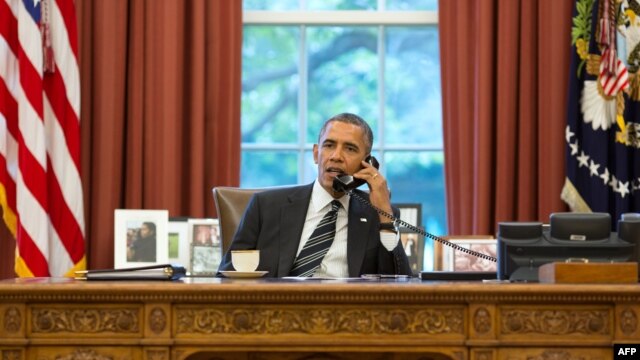
Monday, September 1, 2014

Pakistan: Hard choices for the PML-N

Having survived a tumultuous, disastrous weekend, the PML-N government somehow still has the opportunity to try and salvage the situation and save the democratic system from collapse.
Whether it will be able to do so will in large part depend on whether Prime Minister Nawaz Sharif is willing to lead from the front and act decisively and quickly.
There are at least two things Mr Sharif needs to do: rally the democratic forces in the country to save the democratic system; and approach Imran Khan and Tahirul Qadri to bring them back to the negotiating table.
In calling a joint session of parliament for Tuesday, the PML-N will be hoping to once again demonstrate that the political class is emphatically and solidly on the side of democracy – and that the unconstitutional and unjust demands of the anti-government protesters should not be given in to. While the mainstream political parties in the country are largely in agreement with the government on the need to protect the democratic system, there is a great deal of unease at the PML-N’s continuing mishandling of the political crisis.
Rather than grab the initiative and control the evolving political narrative, the PML-N strategy is a defensive one: the government continues to insist it is open to talks with the PTI and Mr Qadri but, especially when the possibility of a negotiated settlement recedes, seems far too comfortable relying on heavy-handed tactics by the law-enforcement agencies to repel street pressure.
Right or wrong, the time has passed when the PML-N could escape the present situation without making any concessions.
The PML-N will now have to make some big concessions – so why not approach the PTI and Mr Qadri with the big concessions that could entice them back to the negotiating table?
Despite their maximalist positions, both Mr Khan and Mr Qadri surely have various pressures that may make them amenable to a negotiated exit.
As the falling out between Mr Khan and PTI president Javed Hashmi yesterday demonstrated, Mr Khan cannot simply keep increasing the pressure on the government in any way possible without experiencing some kind of backlash from his base.
As if to underline that the PML-N leadership can and should do better, the army leadership put out a statement late last evening deploring the violence that occurred over the weekend and encouraging the government to seek a negotiated settlement.
If anything, it indicates that the army leadership is willing to give the prime minister a little more time before imposing a solution of its own.
Perhaps what the prime minister and his team need to absorb is that the country has witnessed scenes far worse than what occurred on Saturday and yet seasoned and mature politicians have eventually found a way to resolve many past political crises.
Where there’s a will there’s usually a way.

Balochistan: Turbulent Turbat

The operation in Turbat that led to the death of twelve militants and one member of the FC Corps poses a plethora of questions regarding the stability of the region. Which group did these militants belong to? Did they have anything to do with the attack on the office of the Online News Agency? How much control did they have in Gomazi, the area in which they were found? Pockets of militancy are spread out over all of Balochistan, and their presence, coupled with the armed forces, the tribes and the separatists makes the entire province more volatile than most other areas in Pakistan.
Twelve militants is no small number, and the three hours that it took to end the operation means that it was no walk in the park. Khan Wasay, the spokesperson for the FC Corps, also stated that a huge cache of arms and ammunition was recovered from the militants, although this could not be confirmed by any independent sources. The lack of information that comes out of Balochistan makes every instance such as this very murky, and the armed forces are hardly the most reliable source of information when Balochistan, or even North Waziristan, is concerned.
Given the presence of the security forces, their neglect of the voice of Balochis and their treatment of all those they consider to be dissenters, any operation that fails to specify who was targeted leaves a lot of room for skepticism. Has Balochistan become a police state? Political activists, journalists, students and professors have all been killed time and again for dubious reasons. It has become a narrative that we have just started accepting, that there were X or Y number of deaths and all of these death were of militants. With the government as an idle bystander, if not an active participant in most cases, the people of Balochistan are bereft of any hope of justice.

PTV assaulted again, this time by PTI and PAT protestors

http://www.nation.com.pk/assets/thenation/images/client/logo.png
PTI and PAT protestors attacked and took over the Pakistan Television office today in Islamabad. Roughly two thousand anti-government protesters stormed the state television’s building and held the staff hostage. According to details, army has also been called in to control the situation. Pakistan Army and Rangers have reached the spot. They also forced the staff to shut down PTV's transmission, before they started clashing with the police. The protestors also attacked the Pakistan Secretariat and the cars in front of the PM House. On the arrival of the Pakistan Army and Rangers, the attackers started escaping the building. According to latest reports PTV's live transmission has resumed.

Pakistan state TV back on air after protesters storm offices

Pakistan's national television channel is back on air after security forces removed anti-government protesters from its headquarters in Islamabad.
Troops were sent in to regain control from demonstrators who had forced their way into the PTV offices.
Earlier, fresh clashes erupted between protesters and police in the capital.
Protesters loyal to opposition leader Imran Khan and cleric Tahirul Qadri want PM Nawaz Sharif to resign. He denies corruption and electoral fraud.
Both Mr Khan and Mr Qadri have urged calm and asked their supporters to co-operate with the army.
A number of policemen are reported to have been injured in Monday's violence as thousands of demonstrators - some wielding batons and throwing stones - moved on the main building housing Pakistan's federal bureaucracy and Prime Minister's House.
Riot police were forced to retreat from the main road in front of parliament, Constitution Avenue.
Protesters attacked vehicles and set fire to shipping containers placed on the street as roadblocks.
On Sunday night protesters used trucks to smash through the outer fence of the parliament building, even though the building was guarded by troops, the BBC's M Ilyas Khan in Islamabad reports.
Demonstrators have been taking part in a sit-in in the centre of the capital for two weeks.

Pakistan: Imran knew 2014 poll plan for a year

Waseem Abbasi
After shocking revelations of Pakistan Tehrik-e-Insaaf (PTI) President Javaid Hashmi, more voices are emerging from the party to indicate that PTI chairman Imran Khan was following a well scripted plan, chalked out as early as last year to oust Nawaz Sharif’s government.
Party insiders told The News that the plan was partially conveyed to a parliamentary party meeting held at Imran Khan’s residence at Bani Gala three months after May 11, 2013 elections. “The meeting of PTI parliamentarians were told by the Chairman (Imran Khan) to prepare for the elections in 2014 as the Nawaz government will not last more than a year,” said the party MNA from Karak, Nasir Khan Khattak.
Referring to the meeting held soon after the UK visit of the PTI Chairman after 2013 polls, Khattak said the party MNAs were directed to go to their constituencies as next elections will be held in 2014. “We did not take this advice very seriously at that time but current developments have proven that everything was scripted,” he said.
He endorsed the claims of PTI President Javaid Hashmi that PTI chairman was following some “external” directions.Khattak is one of the party MNAs who are facing expulsion from PTI for refusing to resign from the National Assembly.
He went on to say that by calling for mutiny and attacking the state symbol, PTI Chairman has lost the right to lead the party so he must step down and face the legal action under Article 6 of the Constitution.
“The attack on the parliament and the Prime Minister House by the PTI Chairman is a declaration of war against the state,” he said adding that majority of PTI leaders are against the current dictatorial policies of Mr Khan. The PTI MNA said he will contact Javaid Hashmi and other party leaders to chalk out the future strategy for the party.
He claimed that there are 21 MNAs who are unwilling to resign from the Assembly as the decision was taken by the unconstitutional core committee of the party without consulting the parliamentarians.
While addressing the protesters on Sunday, PTI chairman announced to expel three dissident MNAs for not complying with his orders.However the party constitution does not have any provision to expel any member through public announcement.
Khattak who was elected from NA-15 Karak of Khyber Pakhtunkhwa said decision of resignation from National Assembly was discriminatory as PTI government in KP is still functional and only the MNAs are asked to quit the parliament.
Nasir Khan Khattak said that there was no democracy in the party as it was hijacked by two powerful persons namely Jehangir Tareen and Shah Mehmood Qureshi who were making all the key decisions without consulting others. He said that the PTI resignations in current situation would only pave the way for martial law in the country.

Pakistan Army cleared PTV building from protesters without taking any action against them

First time in the history of Pakistan, State run Pakistan Television Corporation (PTV) building was taken over by violent mob and protesters of Pakistan Tehrik-i-Insaaf (PTI) and Pakistan Awami Tehrik (PAT) took over State run television station in Islamabad and transmissions were suspended. It was noted that Pakistan Army that was responsible to protect state building under article of 245 of Pakistan constitution did not stop mob.
After 30 minutes or so, Pakistan army troops reached PTV building and asked protesters to clear the building but did not take any action against people who taken over the building and no arrests were reported and mob was allowed to leave PTV building without any action against them.
“State Run Pakistan Television building was taken over by protesters and Pakistan Army now cleared the building and let protesters left the building without any action against them”, said one PTV worker while talking to Dispatch News Desk.
PTV staff said that Maj Sarfaraz of Pakistan Army talked to protesters and asked them to leave. “it looked there is some understanding with Pakistan army and PTI and PAT leadership otherwise nobody could enter PTV building without fear of being shot dead”, claimed one staffer who was trashed by mob.

Pakistan: Our darkest hour

Saturday night was a dark time in Pakistan’s history. Spurred on by Tahirul Qadri and Imran Khan, workers from the Pakistan Awami Tehreek (PAT) and Pakistan Teheek-e-Insaaf (PTI) formed a mob and attacked the Prime Minister’s (PM’s) House and the fenced compound that encloses the houses of parliament and the presidency. Veteran human rights campaigner Asma Jehangir, whose moral stature towers above these two riot instigators, had it right when she told a local television channel: “There is no such thing as peaceful banditry.” Imran Khan and Tahirul Qadri, despite their numerous claims of wanting peaceful protest, engaged instead in one of the most disgusting spectacles of mob violence this country has had the misfortune of seeing. Saturday night’s events have already become obscured by controversy, but the sequence of events shows precisely where responsibility lies for the injuries and deaths among rioters and the police, and the destruction of public property. After presenting yet another deadline to the government for the PM’s resignation, Tahirul Qadri led from behind and ordered his workers to march towards the PM’s House while he sat in his car. Imran Khan had previously said he would not join in the invasion, making promises to the government and the military that these areas would remain sacrosanct. However, at the last minute, and reportedly against the majority consensus in his party, he decided to join his workers to Tahirul Qadri’s. They also told their workers to begin protests in other cities. The combined mob began to press towards the PM’s residence, but diverted and began leaping over and breaking the gates and fences surrounding parliament and the presidency. After the police retreated literally to the doors of the presidency, this was the line drawn in the sand that the government could not ignore and when the mob turned towards the buildings, the police were forced to teargas them and drive them off the premises. The mob responded by attacking the police, using batons and rocks and the situation soon devolved into a full scale riot on the presidency grounds. Reportedly the protestors tried to force their way into the National Assembly (NA) but retreated when they saw the doors were guarded by army and Rangers personnel. No doubt they were told by their leadership not to engage the military. However, engaging the police was more than enough to turn the parliament grounds and Constitution Avenue into a veritable warzone, with rioters bent on causing destruction after being left with no clear goal in mind. In Lahore a mob assembled at Liberty Roundabout and began trashing storefronts and looting.
The riot in Islamabad lasted well into the morning though by then the mob of several thousand had dwindled to several hundreds. Three people were killed and hundreds injured, some by rubber bullets but most from exposure to teargas. Through it all Imran Khan was visible on top of his container, loudspeaker in hand, exhorting workers to charge the police, fight, and attack parliament. It was a sight so putrid that it beggars belief he has the gall to stand in front of the Pakistani nation again today and claim he is the victim. Apparently this realisation is dawning on PTI leaders too. Javed Hashmi and Shah Mehmood Qureshi were reportedly against the decision to join the riot and have not appeared beside Imran Khan since. After calling for a joint session of parliament for Tuesday, it is hoped that the government can quell the riots and bring the perpetrators to justice after imposing Section 144 in Islamabad, which prohibits large public gatherings, but one cannot rule out the possibility that fresh elections become inevitable, despite the PM’s legal mandate. The country is now poised on the brink of an uncertain future and the situation is grave enough that COAS General Raheel Shareef moved up a corps commanders meeting to Sunday evening to discuss it. He must order the army to do its duty and protect the official residence of its commander-in-chief. With another battle in Islamabad looming, the next 24 hours may decide the future of this country.

Pakistani protesters push closer to PM house, force TV off the air

BY SYED RAZA HASSAN AND MARIA GOLOVNINA
Pakistani protesters pushed closer to the prime minister's house in central Islamabad on Monday in their bid to force his removal and forced national television off the air after clashes turned violent over the weekend.
Some broke into the PTV national television's headquarters in central Islamabad, the channel reported. It showed live footage of a crowd of men streaming into the building after breaking through its gate.
The army had been called in to restore order at the station, other channels reported.
Police fired occasional tear gas canisters at protesters outside the prime minister's house, but were seen retreating as protesters, many carrying wooden clubs, pushed closer to Prime Minister Nawaz Sharif's official residence.
It was not clear if he was at home at the time.
Protests led by Imran Khan, a renowned cricketer before entering politics, and fiery cleric Tahir ul-Qadri, erupted last month and descended into deadly chaos on Saturday, with at least three people killed in clashes with police.
In a nation where power has often changed hands through military coups rather than elections, the army is bound to play a key role in how the conflict unfolds but it has not directly intervened, apart from talking to the protagonists and calling on them to show restraint.
On Monday, despite heavy rain, crowds of protesters fought running battles with retreating police after breaking the main gate into the Pakistan Secretariat area which houses government ministries as well as Sharif's residence.
The protesters could be seen beating motorcycles and cars with their sticks as they advanced closer to their target. They had tried to storm Sharif's house on Saturday night but were beaten back by police.
The head of Islamabad police and another senior police officer were lightly wounded in the clashes, media reported.
Sharif, who swept to office last year in Pakistan's first democratic transition of power, has refused to resign. He is due to address both houses of parliament on Tuesday in an apparent effort to show that he is firmly in control.
ARMY WARNING
But Sharif looks increasingly cornered in the conflict, and even if he survives the crisis he is likely to remain significantly weakened for the rest of his tenure and sidelined by the army on key issues such as foreign policy and security.
The protesters out on Monday appeared to be from Qadri's camp.
Khan, who has refused to hold negotiations, says he would not call off the protests until Sharif resigns, calling on his people to avoid any form of violence.
"I call upon my workers to remain peaceful," Khan said from atop a shipping container at the main rally site. "Do not carry out any acts of violence. God has given us victory."
In a warning to police, the military said any further use of force to resolve an escalating political crisis would only worsen the situation. But it has also said the crisis had to be solved through talks, in a clear message to Khan and Qadri.
As protesters charged towards police lines in the so-called Red zone - home to the prime minister's house, parliament and many foreign embassies - security forces could be seen retreating, with police huddled in groups and avoiding direct confrontation.
Reflecting concern about security in the capital, all schools were closed on Monday, the start of a new academic year.

Pakistan Protests: Naked ambitions

Pakistan faces its biggest political catastrophe in well over a decade. Imran Khan and Tahirul Qadri started their marches with high-flying talk of democracy and freedom. They are looking to end it with bloodshed. The decision to storm the PM House does not count as legitimate protest. Imran has constantly evoked the ideals of democratic protest in the west but anyone who tried to break into the White House or 10 Downing Street armed with sticks and forklifts would be detained immediately or shot at if resisting arrest. So far three people have been killed as Islamabad descended into anarchy. The scenes that we saw as the marchers clashed with police were horrible. Women carrying infants and fleeing the clouds of teargas or evading batons is a sight we would never wish to see. The chief responsibility for that lies with Imran and Qadri who, safely hiding in their containers, charged up their supporters with openly violent rhetoric and hypocritical talk of peace, and sent them to the frontlines. With Imran stating there would be further action, for which his ‘tigers’ are well prepared, things seem rather ominous. His lack of responsibility is shocking. There was a lot of uncertainty surrounding a corps commander meeting yesterday. The statement released by the ISPR may temporarily soothe frayed nerves. It reaffirmed the army’s commitment to democracy – stressing a political approach to the crisis and warning against the harm that violence may bring. Earlier in the day, PM Sharif too had expressed a similar approach with his directions to protect state buildings without loss of lives and calling for more talks with the PTI and PAT. The army also says it is tasked with protecting sensitive buildings in the capital. The imposition of Article 245 by the government does increase the army’s authority. How that authority may be used since both Imran and Qadri are still baying for blood is unclear.
Imran’s sudden decision to take the protest to the PM House shows him to be a rash, unstable figure not cut out for democratic politics. The only question that remains is if he is acting on his own. Disgruntled PTI president Javed Hashmi, who has now been expelled from the party for speaking his conscience and spilling a few beans, says the party had decided not to move from D-Chowk but Imran unilaterally overruled everyone after he found himself ‘compelled’ on receiving a message from somewhere. This happened at a time when it was clear that negotiations with the government could lead to a breakthrough and PTI leader Shah Mehmood Qureshi had announced that a deal had almost been reached. Many now are wondering more openly if Imran and Qadri are the sole screenwriters of this drama or if there other unaccredited authors. The Javed Hashmi episode further exposes the true state of democracy within the PTI itself. That Imran has chosen to be influenced by the whispers of Sheikh Rasheed over the words of Javed Hashmi says a lot about the direction his politics has taken.
That a motley crew flanked by a few thousand supporters may throw us back by decades says a lot about how fragile the state of our civilian affairs is. The political forces have failed badly in preventing the disarray that has broken out with democracy teetering once more on the brink. The government has been mostly missing in action. Let alone being pro-active. The PML-N has not even been able to react effectively to unfolding events, giving the impression of a deer frozen in the headlights. The other political parties have mostly been opportunistically waiting to see how events play out and what may be in it for them. They, too, should be blamed for bringing us to a situation where the fate of the democratic system hangs in the balance. Figures like Aitzaz Ahsan and Asma Jahangir in their comments have shown the rare but much needed clarity that, if pursued uncompromisingly by our body politic, can make Qadri and Imran see the unreason in their ambitions instead of thriving on the present lack of a united and unambiguous front. If for nothing else but the sake of its own survival, the PML-N has to take the nation into confidence, truthfully explain what is going on and reveal what it will do next. After weeks of silence and half-truths from every side we now need to demand more from our political class.

Pakistan: Shots fired at cargo plane at Peshawar airport

Shots were fired at a cargo plane which arrived from Kabul Peshawar Airport, Geo News reported. Airport authorities said a single bullet hit the aircraft and they were examining the plane. According to reports, the plane had landed at the airport for refueling.

Pakistan: Back to October 1999?

Those who promised to create ‘Naya Pakistan’ and bring about a ‘revolution’ have ended up putting the country on an all too familiar way that leads to controlled democracy. Lust for power accompanied by impatience led the two leaders to act as pawns on behalf of the offstage players. The protest leaders were unscrupulous in the choice of the means for the achievement of their sordid ends. Use of women, children, and even infants as human shields was highly reprehensible.
Nowhere in a democracy are protesters allowed to storm the Parliament House or try to attack the Prime Minister’s official residence. It is inconceivable in Europe or the US for club-wielding and brick-batting crowds to go berserk. Whenever this happens the police takes recourse to highly repressive methods. Why did the Prime Minister agree to give the army the role of a facilitator? Both the Houses of Parliament had already pledged support for a constitutional resolution of the crisis and vowed not to yield to any unconstitutional demand of the protesters. The Wall Street Journal claims that the military had seized on Sharif’s weakened status during the political crisis to strike a deal in which the civilian leadership would cede control over foreign policy and other important areas to the military. Were the two marches, the sit-in and the storming of Parliament House meant to create grounds for a soft coup?
The completion of a full term by a democratically elected government followed by a peaceful transfer of power had given birth to an expectation that it would lead to a redefinition of relations between the army and the civilian government, with the elected administration taking key policy decisions and government departments, including the DoD, implementing these policies. The claim that the ‘referee’ was about to raise his finger and the glee on the face on Imran Khan when called by those who matter indicated that there was more to the affair than met the eye.

Pakistan: PPP delegation visits pims hospital

http://mediacellppp.wordpress.com/
On the instructions of Co-Chairman Pakistan Peoples Party Asif Ali Zardari, a PPP delegation visited PIMS hospital lead by former MD Pakistan Baitul Mal Zamurd Khan. The delegation enquired about health about medical facilities extended to injured men, women, children and police officials who were injured in clashes at red zone Islamabad.
Zamurd Khan assured them of every cooperation and also said that party workers will arrange blood donation for injured. Children of Sweet Home accompanied Zamurad Khan. District Islamabad President PPP Sibtul Haider Bukhari, Incharge PPP Central Secretariat Islamabad Amer Fida Paracha and other noted PPP leaders of twin city were included in delegation.

Paying the price: Gulf eyes Iranian gas as Pakistan delays imports

The Express Tribune
By Zafar Bhutta
The real war between Iran and the United States, which is supported by many European countries, appears to be over energy supply deals. Under some projects, Iran will be connected to European states, Oman, Iraq and Kuwait by sharing its vast energy reserves.
Iran and Oman have sealed a $60-billion agreement under which Muscat will purchase natural gas from Tehran over the next 25 years. The project includes laying a pipeline costing $1 billion across the Gulf.
The agreement was reached during the visit of Iranian President Hassan Rouhani to Muscat in March this year. Around 50% of the gas to be exported to Oman, will be transported onwards to Japan, South Korea and India.
In June, Kuwait became the second country in the Gulf that announced its desire to buy natural gas from Iran, which sits on one of the largest gas reserves in the world.
The eagerness for energy cooperation comes in the backdrop of a historic deal between Iran, the US and five other world powers over the former’s nuclear programme on November 24 last year. Iran accepted strict constraints on the nuclear programme for the first time in a decade in exchange for partial relief from sanctions.
Later in December, Turkish Energy Minister Taner Yildiz said in a statement Iran was planning to lay a pipeline to ship gas to European nations that were interested in imports. If the programme is agreed and the US and other world powers reach some arrangement with Iran, Pakistan’s long-standing hopes of importing Iranian gas may be finally buried.
The Iran-Pakistan (IP) gas pipeline has been stuck for years in the wake of US threat of sanctions. Though Islamabad sought some concessions from the US to clear the way for building the pipeline, but the request was rejected outright.
The deadline – December 2014 – for the start of gas flow under the IP project is approaching fast and Pakistan may face penalties of millions of dollars every day in case of failure to complete its part of the pipeline. Iran has laid its portion of the pipeline.
In place of Iranian gas imports, the US has suggested that Pakistan should consider purchasing liquefied natural gas (LNG) from Qatar and other sources, but it is not a cheaper source of energy.
Crucial talks in Sept
The PML-N government, however, is trying to make some arrangements with Iran to win an extension in the deadline and keep the project alive. The two sides are expected to meet next month to discuss some important proposals, which may pacify the Iranian government, which is upset over failure of Islamabad to start work on the project.
Pakistan insists that it could not press ahead with the project due to the lingering threat of sanctions. Now, it has proposed to Tehran to construct the pipeline from the Gwadar Port under the guise of LNG export, which could be connected to Iran after the sanctions are lifted.
According to an official assessment, the gap between demand and supply of gas is widening in Pakistan and production is expected to drop to about half the existing levels by 2020 if new reserves are not tapped and output is not increased from existing fields.
Gas production will fall from the current 4.47 billion cubic feet per day (bcfd) to 2.53 bcfd in 2019-20 if fresh supplies are not injected into the system.
Experts are of the view that Pakistan should tackle the issue strategically and take it up again with US authorities. They ask why Islamabad is being pressurised when other countries are clinching deals with Iran.
These countries have made economic policies part of their foreign policies and Pakistan should also follow them in securing energy supplies. Otherwise, it will lose an opportunity to secure cheaper gas imports and its economy will collapse under the weight of energy shortages.

Imran to be held responsible if democracy derailed: Hashmi

Pakistan Tehreek-e-Insaaf (PTI) President Javed Hashmi has said that Imran Khan’s decision of marching towards PM house was against the party discipline.
Talking to media, Hashmi said the party leadership unanimously decided that they will not go further but Imran Khan imposed his decision. He said he asked Imran Khan to wait till the end of talks but Imran emphasized that he had to move forward.
Hashmi said Imran Khan has become the follower of Tahirul Qadri, adding that Khan will be held responsible if democracy was derailed.
He said that Imran Khan told him to leave if he had reservations against his decisions. PTI president said Imran Khan promised him that he will not go further from a certain point, adding that children and women were our responsibility. He urged the government to immediately stop barbarism. He said he was very tensed over the current situation.
Fearing martial law, he said it wasn t very far from us now. He asked Imran Khan to take his party out of this embarrassment, adding that such protests are not even allowed in Washington and London. Following the news, Maryam Nawaz Sharif termed Javed Hashmi as the only sane person in the PTI.

Islamabad, Protesters storm into Pak secretariat

Hundreds of protesters attempted to force their way into Pak secretariat on Monday morning.
Clashes between demonstrators and FC personnel resumed after the tear gas shells became unproductive due to rain.
The protesters are reportedly hurling stones on police and making their way.
According to reports, the protesters have broken the gate of Pak secretariat. It is important to mention that Pak army is also present inside the building.

Sunday, August 31, 2014

Germany: Steinmeier reveals plans for military aid in Iraq

Obama to Reassure NATO Baltic States

http://www.voanews.com/
President Barack Obama leaves Tuesday for a trip to Estonia and later Wales, in Britain, for a gathering of leaders of NATO countries. Russia's latest actions in Ukraine are making the trip an especially important one.
The arrival of U.S. troops in Estonia last April was a concrete sign of American support for Baltic nations feeling threatened by Russia's aggression in Ukraine.
Obama's stop in Estonia -- a NATO member -- is meant to reaffirm America's defense commitments.
“Part of the reason I’ll be going to Estonia is to let the Estonians know that we mean what we say with respect to our treaty obligations,” said the president.
Fresh violence and evidence that Russia is sending hundreds of troops into Ukraine means Obama's visit comes at a critical time.
Estonia, like Ukraine, is a former Soviet Republic, and also like Ukraine, has a large Russian minority. These factors make Estonians feel vulnerable.
Heather Conley, a former Deputy Assistant U.S. Secretary of State, said, “There has always been a great fear in the Baltic states that if push came to shove, they question whether NATO would really have their back. And I think it’s very clear, not only with words and our solidarity, but we’ve actually put U.S. soldiers, hardware, in the Baltic states.”
But NATO's capacity to fulfill its commitments is another question. With European members cutting their defense budgets, much of the burden of providing equipment and personnel for alliance missions is falling on the U.S.
The president plans to call on member nations to do more.
“Part of the reason I think this NATO meeting is going to be so important is to refocus attention on the critical function that NATO plays to make sure that every country is contributing in order to deliver on the promise of our Article 5 assurances,” said Obama.
U.S. officials hope the crisis in Ukraine will be enough of a wake-up call for NATO members to realize they should boost their contributions.

Bahrain detains Shi'ite rights activist on arrival at airport

Bahraini authorities detained prominent human rights activist Maryam al-Khawaja on Saturday on her arrival at the Gulf state's airport, her mother told Reuters.
Maryam is the daughter of Shi'ite Muslim activist Abdulhadi Abdulla Hubail al-Khawaja, who has been detained in the Sunni monarchy since 2011 and is on hunger strike.
"Maryam told me that she will be transferred to the court tomorrow," her mother, Khadija al-Musawi, told Reuters, adding that her daughter, who holds dual Bahraini and Danish citizenship, was coming back from Denmark.
Charges against al-Khawaja include insulting Bahrain's king, and assaulting a policewoman at the airport, her mother said.
Bahraini authorities were not immediately available to comment but state news agency BNA cited chief prosecutor of al-Muharraq province, Abdullah al-Dossary, as saying that the public prosecution had begun an investigation into a complaint by Bahrain airport's police.
The complaint said that an "accused woman" had been detained at the airport based on a previously issued arrest warrant. It said that the accused had assaulted a lieutenant and a policewoman after she refused to hand over her phone during a search. The report did not name Khawaja.
Dossary was cited as saying that the accused was charged with assaulting a public employee while carrying out his official duty and would be detained for seven days pending an investigation.
Bahrain, a base for the U.S. Navy's Fifth Fleet, has been in turmoil since protests led by Shi'ite Muslims erupted in 2011 after similar unrest in Egypt and Tunisia.
Shi'ites, who make up the majority of Bahrain's population, complain of political and economic materialization, an accusation the government denies. Talks between the government and opposition have failed defuse the political tensions.
In July, Bahrain declared U.S. Assistant Secretary of State for Democracy, Human Rights and Labor Tom Malinowski, persona non grata after he met opposition figures in the kingdom.
Under criticism from human rights groups, the government invited an independent inquiry to examine its handling of the trouble in 2011. Its report said the authorities had used widespread and excessive force, including torture to extract confessions.
The Bahraini government says it has taken steps to address the problems by dismissing those responsible and introducing cameras at police stations.

Putin Calls for Talks Inside Ukraine, Not Giving Statehood to Novorossiya - Spokesman

Russian President Vladimir Putin in his Sunday’s interview called for inclusive negotiations inside Ukraine, not granting statehood to Novorossiya, the union of Donetsk and Luhansk republics in the east of the country, the Russian leader’s spokesman Dmitry Peskov said.
"The inclusive negotiations, which should determine the relationships [of Kiev] with eastern regions, that is, negotiations inside Ukraine on the internal Ukrainian order with respect for the interests of the country’s eastern regions, the interests of Novorossiya - the way, extent and mechanisms of this process. That’s what the president meant," Peskov said. The Kremlin spokesperson added that giving some status to Novorossia was totally out of the question, which “becomes clear after reading the president’s statement.”
“The president, as a matter of fact, was referring to the need of the inclusive talks, the earliest beginning of which had been emphasized way back in documents and signed in various formats, including the document signed by foreign ministers in Berlin,” Peskov added.
Earlier in the day, Putin talked about Ukraine in an interview with Russia’s Channel One television channel. The president called on Kiev to start substantial talks on deescalating the crisis in Ukraine, cease hostilities and start infrastructure rehabilitation works in southeastern regions to prevent winter deaths.

More chance of dying from work than going to war - Intl Labor Organization

Going to war may seem one of the most hazardous ordeals on the planet, but perhaps not. The International Labor Organization (ILO) says there is more chance of dying from work than fighting for your country on the battlefield.
The admission was made by Guy Ryder, the ILO’s director-general, who was speaking at the 20th World Congress in Frankfurt to participants from 141 countries in what is the world’s largest occupational safety event.
“The challenge we face is a daunting one. Work claims more victims around the globe than does war: an estimated 2.3 million workers die every year from occupational accidents and diseases,” said Ryder, in an article published on the organizations website.
Ryder believes that work related deaths should get more attention than they currently do in the mass media.
“Ebola and the tragedies it is causing are in the daily headlines – which is right. But work-related deaths are not. So, the task ahead is to establish a permanent culture of consciousness,” he said.
While health and safety around the work place is improving, this is certainly not the case around the globe. In 2013, over 1,100 laborers died in a Bangladeshi factory after the building where they were working collapsed. Ryder believes it is unacceptable that people are forced to work in such conditions, where their lives are unnecessarily put at risk.
This puts safety and health alongside forced labor, child labor, freedom of association and discrimination, which were recognized in the ILO Declaration of Fundamental Principles and Rights at Work.”
Ryder mentioned that total of cost of work related illnesses and accidents are a staggering $2.8 trillion around the globe. He also stressed the importance of investing in safety procedures and insurance, saying, “every dollar that is invested pays in.”
The head of the ILO said that it is imperative that better data is logged to record accidents at the work place, to help prevention and also give target figures to help reduce the number of mishaps: “We live in the Information Age where policy-makers have access to data on most issues. But in relation to occupational safety and health we lack data to design and implement evidence-based policies and programs. That’s a failure – also of political will.”
The ILO is a body of the United Nations and is based in Switzerland. It was founded in 1919 in response to the horrors of the First World War, as part of the Treaty of Versailles with the belief that lasting peace can only be achieved through social equality. Its purpose is to try and achieve better working, social and economic conditions for workers around the globe and to ensure that safety is paramount.

Video Report: U.S. airstrikes target Islamic State in Iraq

As Iraqi troops help liberate the besieged town of Amerli, Australia joins the U.S. and other Western nations in carrying out airdrops of humanitarian aid and military equipment to Kurdish fighters in northern Iraq.

U.S., foreign fighters in Syria pose 'very serious threat' to U.S.: lawmaker

Hundreds of U.S., British and Canadian citizens who have trained with Islamic State fighters trying to carve out their own state in Iraq and Syria pose a "very serious threat" to the United States, a top Republican lawmaker said Sunday.
Representative Mike Rogers, chairman of the House Intelligence Committee, urged the Obama administration to aggressively prosecute U.S. citizens who had trained overseas as it weighed options for how to respond to escalating violence by Islamic State militants in Iraq.
He said an attack on the Jewish museum in Brussels in May had shown a new push by extremist groups to carry out attacks on Western targets, and growing efforts to recruit backers on social media.
"I'm very concerned because we don't know every single person who has gone and trained and learned how to fight," Rogers told "Fox News Sunday."
The United States carried out three air strikes on Saturday against Islamic State fighters near the besieged Shi'ite town of Amerli in northern Iraq and airdropped more than hundred additional bundles of humanitarian aid to civilians trapped there, the Pentagon said.
President Barack Obama last week authorized the new military action, broadening U.S. operations in Iraq amid an international outcry over the threat to Amerli's mostly ethnic Turkmen population. Washington is seeking to build an international coalition to fight against Islamic State forces.
Rogers said he believed hundreds of U.S. citizens had trained with Islamic State at least once, in addition to an estimated 500 British citizens and hundreds more from Canada, with their passports essentially allowing them "free travel" to the United States to carry out extremist attacks.
"The chances of error are greater than our ability to track every single area. It's a very serious threat," he said, noting that U.S. intelligence agencies were also tracking "pretty serious" threats of planned attacks in the West by al Qaeda.
Concerns about Americans associating with Islamic State militant fighters have grown in recent weeks after the deaths of two U.S. citizens in Syria.
U.S. Attorney General Eric Holder said in July dozens of Americans were among roughly 7,000 foreign fighters that U.S. intelligence agencies estimate to be operating in Syria, out of roughly 23,000 violent extremists.
Rogers said the number of Americans who had traveled and trained overseas at least once was considerably higher.
He said U.S. efforts to tamp down on such travel by U.S. citizens needed to be handled carefully to avoid restricting the ability of other Americans to travel overseas.
But aggressive prosecution of those who trained with extremist groups could have a deterrent effect, he said.
Representative Dutch Ruppersberger, the top Democrat on the House Intelligence Committee, echoed Rogers' concerns.
"The biggest threat that I see to the United States right now are Americans and Brits who have passports that have the ability to come into our country without getting a visa," Ruppersberger told CNN's "State of the Union" program.
"We had the suicide American bomber who was radicalized, came home to visit his parents, went back and then killed himself. Now, that could have happened in the United States," Ruppersberger said.
A 22-year-old man from Florida carried out a suicide bombing in Syria's Idlib province in May. A Denver woman was arrested in July on suspicion of trying to fly to Syria to help insurgents, and two men in Texas were arrested on similar charges in June.

Elusive Deal With Iran Could Yield Foreign Policy Legacy for Obama

Catherine Maddux
A 15-minute phone call made just under a year ago may be what historians say set the stage for a landmark nuclear agreement with Iran – if one is achieved by a November 24 deadline.
The call between Presidents Barack Obama and Hassan Rouhani marked the first direct contact between the United States and Iran since 1979.
The subject was Tehran’s disputed nuclear program, and it opened up the door to renewed talks between Iran and the so-called P5 + 1 countries — the United States, Russia, China, the United Kingdom and France, all members of the U.N. Security Council, plus Germany.
The resumption of talks last October led to an interim deal reached in January. The Joint Plan of Action (JPA) froze Iran's enrichment, in return granting Tehran some relief from Western-imposed economic sanctions.
The entire process is delicate as illustrated by the latest round of U.S. sanctions and Tehran's sharp response. The penalties — which, according to media reports, are not new, but meant to enforce existing sanctions —target businesses and inviduals the Obama administration says are involved in expanding in Iran's nuclear program. Rouhani described them as a "crime against humanity," reflecting a comparatively tougher stance towards the United States.
Still, the negotiations have raised the possibility of a historic agreement with Iran. Observers say that would provide a legacy moment for the president, whose approval ratings on foreign policy are dismally low.
From ‘rogue states’ to ‘outliers’
While the opening with Iran didn’t come until Obama’s second term in office, a shift in strategy toward Tehran began shortly after he was sworn in, said Robert Litwak, author of "Iran's Nuclear Chess: Calculating America's Moves.”
The president’s first administration “jettisoned the term 'rogue state,'” instead referring to countries such as Iran and North Korea as “outliers,” said Litwak, who directs security studies at Washington’s Woodrow Wilson International Center for Scholars. "And that really was the heart of the reset: reframing the challenge posed, in this case, particularly by Iran, not in terms of some unilateral American concept of rogue state, but rather in terms of conduct that violates established international norms."
The Obama reset was informed in part by a serious misstep by former President George W. Bush, said Peter Galbraith, a former ambassador to Croatia who also held several senior positions at the United Nations.
"Let's be clear with what happened with the Bush administration in Iran," said Galbraith, a senior diplomatic fellow at the Center for Arms Control and Non-Proliferation in Washington. "In April of 2003, the Iranians made an offer to give up on their nuclear program in its entirety. And the Bush administration's response was 'we don't negotiate with evil.' "
Galbraith said that refusal gave the Iranian government eight years to perfect its uranium enrichment, allowing it to make what he described as "great strides" toward nuclear weapons capability.
But by the time the president began his first term, the option of diplomacy was already on the table, said Robert Einhorn, who participated in the P5 + 1 talks and served as former Secretary of State Hillary Clinton’s special adviser for non-proliferation and arms control.
"The Bush administration approach had evolved considerably," with representatives "prepared to take part in discussions with the Iranians in the P5 + 1 process," said Einhorn, now a senior fellow at the Brookings Institution.
A key part of the shift was allowing Iran to enrich uranium, a decision that critics say is a grave mistake.
"Obama was prepared to participate in the P5 + 1 talks without making enrichment an issue,” Einhorn said. “He was willing to approach diplomacy in a more creative way.”
With Rouhani’s June 2013 election, Obama could reach out to a decidedly less hostile and more moderate leader than former Iranian leader Mahmoud Ahmadinejad.
Enrichment saga
Iran is a signatory of the 1970 Nuclear Non-Proliferation Treaty. As such, it argues it retains the right to enrich low-level uranium for nuclear power plants.
But the United States and a long list of other countries suspect Tehran’s civil nuclear program is a cover for its real endgame: to acquire the capability to build a nuclear weapon. Iran’s leaders have repeatedly denied the charge.
"The Iranians have mastered the nuclear fuel cycle," putting the United States in a negotiating bind, Litwak said. "Those centrifuges that spin to create low-enriched uranium for reactors can keep spinning to generate highly rich uranium that could be used in a weapon."
So the focus for the Obama administration has been on bounding, or limiting, Iran’s nuclear program and allowing some enrichment.
That negotiating position has critics – including Hillary Clinton, Obama’s former secretary of state.
During an interview with The Atlantic, widely scrutinized after publication, Clinton made it clear she supported a far harder line with Iranians in the current negotiations.
"I’ve always been in the camp that held that they did not have a right to enrichment," she was quoted as saying. "Contrary to their claim, there is no such thing as a right to enrich. This is absolutely unfounded. There is no such right."
Clinton went on to tell The Atlantic that no enrichment is "not an unrealistic position. I think it’s important that [the P5 + 1 negotiators] stake out that position."
Others, like Galbraith, argue that approach is a nonstarter. "Of course, there should be no enrichment," he said. "But the question is, how do you get there?" Galbraith points out that though sanctions have imposed real economic hardships on Iranians, they haven’t led Iran’s government or its ultimate power holder, supreme leader Ayatollah Ali Khamenei, to abandon enrichment. A military option is not realistic, in Galbraith’s view. "If you produce a deal that allows for some enrichment, that also allows for clear inspection to demonstrate that Iran is not breaking out and going ahead and making a nuclear weapon, I think that is a significant achievement," he said. "Is it perfect? Absolutely not." Breaking out There remains a major roadblock that could easily derail reaching an agreement by the November deadline, which was extended from July. The Obama administration is acutely aware that Iran may try to stall for time to build a bomb while appearing to scale back its enrichment capacity, according to Einhorn. He and other non-proliferation experts say the amount of time Iran would need to "break out" a nuclear weapon – that is, to switch gears from energy production – is a crucial concern. "Iran says it wants a fairly large enrichment capacity to supply its Russian-built reactor at Bushehr" nuclear power plant by 2021, Einhorn said. "The United States worries that that level of capacity would give Iran a rapid breakout." So, negotiators are making the case that Iran's enrichment capacity must be limited for a long time. The ideal would be making sure the window for a possible breakout for Iran doesn’t exist, Litwak said. Or, failing that, making sure there is enough time to do something about it. "You want to have confidence that the amount of time Iran would need to generate highly enriched uranium for a bomb would [also] … provide ample time for the U.S. to generate a collective response," he said. "The rule of thumb is that we need at least one year."
Identity crisis
The very tough and challenging details aside, experts say the talks reveal an existential struggle inside Iran – a kind of identity crisis.
"The real question is whether Iran wants to be counted as a non-nuclear power," said Daniel Serwer, a senior professor at Johns Hopkins School of Advanced International Studies and a scholar at the Middle East Institute in Washington.
"Why would it want to do that? Well, because a nuclear Iran is a very dangerous place where there is a lot risk to Iranians. A non-nuclear Iran is a much safer place for Iran," Serwer said. "… But ultimately, that [comes] down to what the Iranians think."
From Litwak's point of view, the talks represent a proxy for Iran’s continued and, up to now, unresolved debate over whether it wants to be a revolutionary state or merely an ordinary country.
"It is an identity crisis and it's not one that they have been able to resolve now 35 years after the revolution," Litwak said.
Furthermore, Litwak points out, it’s unclear whether supreme leader Khamenei – pressured by sanctions on Iranian society and the resulting economic dislocations – will agree to nuclear limitations that ensure it’s "not a military program masquerading as a civil program."
Most policy experts said the odds for reaching a nuclear agreement with Iran are 50-50. Einhorn, who recently wrote an open letter to Iranian negotiators, said the fast-approaching deadline simply does not allow enough time to sort out all the remaining disputes.
"I think a deal is going to be hard to reach because the gaps are so large," he said. "It will be an uphill effort."

Pakistan: Changing Prime Minister is logical given current circumstances

Muttahida Qaumi Movement (MQM) leader Farooq Sattar said on Sunday that changing Prime Minister is a logical option considering the ongoing political crisis, Dunya News reported.
Addressing the media, Sattar said that all four pillars of the state are under attack, alleging that the government has failed to prevent the worst.
MQM leader said that it is vital to save the system and constitution at the moment by changing the Prime Minister, adding that this is a constitutional and legal option.
Condemning the police brutality, Farooq Sattar said that the government has raised serious question over its mandate by launching the operation against civilians.

Afghanistan: Karzai planning to leave presidential palace on Tuesday, IECC says

The Independent Electoral Complaints Commission (IECC) officials have said that President Hamid Karzai is planning to leave the presidential palace on coming Tuesday.
IECC chief, Abdul Satar Saadat, told reporters that Presidnet Hamid Karzai has insisted that the next presidential inauguration should taken place on coming Tuesday.
Saadat further added that President Karzai is planning to leave the palace if the presidential inauguration did not take place on Tuesday.
He urged President Karzai not leave the palace and wait until his successor has been elected and the presidential inauguration takes place.
According to Saadat, the president is considering to transfer the power to the vice-presidents. However, he said there are no guarantees that the vice-presidents would transfer the power to the elected president.
However, the presidential palace officials have rejected the remarks by IECC officials and said the president will not abandon the palace until the next president is not sworn in.

Afghanistan: Increase in the Number of Girls in Khost Schools

Local officials have reported that the number of girls attending school in eastern Khost province has increased to 115,000 as education awareness rises within families since the fall of the Taliban regime.
In the past years, the girls in Khost were not allowed to go to school beyond the sixth grade because families believed it would taint the honor of the family. However, in recent reports many girls have surpassed the sixth grade and some have even graduated from high school.
"I am currently in the eighth grade," Mujhghan, one of the many girls attending school, said. "My family encourages me to go to school."
Gul Pekai, another student, said that attitudes toward education have changed in society, showing appreciation toward her family and friends who have encouraged her to further her education.
Deputy Head of the Education Department of Khost, Bakht Noor Bakhtyar, said that the number of girls attending school increases every day.
Khost Governor Abdul Jabar Naeemi has expressed optimism over the recent developments in the education sector, especially for girls.
"Families are encouraged to let their daughter graduate from high school," Naeemi said. "We encourage families to allow their daughters to continue after the sixth grade."
The province of Khost has witnessed a positive change in the education sector and attendance of aspiring young girls, but the rest of the country has recently seen a decrease in the attendance of girls because of the deteriorating security issues.

Nawaz Sharif has killed innocent people

Pakistan Tehreek-e-Insaf chief Imran Khan on Sunday demanded immediate resignation of Pakistan Prime Minister Nawaz Sharif and blamed him for the killing of innocent people.
"Police action against innocent people should be condemned. We will fire an FIR against Nawaz Sharif," said Imran Khan.
"Nawaz has killed innocent people. We will won't budge till Sharif resigns," said Imran.
Earlier, demanding immediate resignation of Pakistan Prime Minister Nawaz Sharif, thousands of protesters led by Imran Khan and Tahir-ul-Qadri had running battles with police and paramilitary forces in Islamabad in the wee hours, resulting in injuries to more than 300 people.
The clashes started after orders by Khan and Qadri on Saturday to shift their protest venue to the official residence of Sharif to force him resign immediately.
At least 308 injured were brought to Polyclinic and Pakistan Institute of Medical Sciences, the two premier state-run hospitals, a Pakistani channel Duniya TV reported.
Hundreds of protesters entered the lawn of Parliament but they were stopped at the main entrance of the building where army soldiers were deployed.
Khan and Qadri are with protesters and exhorting their supporters to force their way towards the PM House.
Information Minister Pervaiz Rashid said that protesters had committed a crime by attacking parliament which is a "symbol of democracy".
The clashes were continuing as police pushed them back with intense shelling of tear gas and rubber bullets.
The situation was very tense in the capital as a number of demonstrators refused to budge from the protest site.
Both the leaders are agitating since August 14 against alleged rigging during the last year general elections.
"I will lead the march to the PM House. All my supporters should follow me," Khan said asking women and children to stay behind until asked by him to join the march towards the PM House.
Khan's announcement came soon after a similar decision by Qadri.
Thousands of police and paramilitary personnel were deployed blocking all the roads leading to the PM residence.
Khan asked his supporters to remain peaceful and asked law enforcement agencies not to stop the agitators.
As tension mounted, Sharif left for Lahore. A late night government announcement categorically ruled out Sharif's resignation and there is no threat to his life.
Read more at: http://indiatoday.intoday.in/story/pakistan-protests-nawaz-sharif-imran-khan-tahir-ul-qadri-islamabad/1/380042.html

Javed Hashmi: Imran to be held responsible if democracy derailed

Pakistan Tehreek-e-Insaaf (PTI) President Javed Hashmi has said that Imran Khan’s decision of marching towards PM house was against the party discipline.
Talking to media, Hashmi said the party leadership unanimously decided that they will not go further but Imran Khan imposed his decision. He said he asked Imran Khan to wait till the end of talks but Imran emphasized that he had to move forward. Hashmi said Imran Khan has become the follower of Tahirul Qadri, adding that Khan will be held responsible if democracy was derailed.
He said that Imran Khan told him to leave if he had reservations against his decisions. PTI president said Imran Khan promised him that he will not go further from a certain point, adding that children and women were our responsibility. He urged the government to immediately stop barbarism. He said he was very tensed over the current situation. Fearing martial law, he said it wasn't very far from us now.
He asked Imran Khan to take his party out of this embarrassment, adding that such protests are not even allowed in Washington and London.

Pakistan: Politicians should have not asked army to mediate - HRCP

The Human Rights Commission of Pakistan (HRCP) on Saturday said that the politicians should have not asked the army to mediate between the government and the protesting parties.
In a statement, HRCP Chairwoman Zohra Yusuf said that there should be no two views about the fact that the day when political discord needed adjudication from the army was an exceeding gloomy day for Pakistan.
“It is unfortunate that the day is upon us now. This is exactly what the civil and all pro-democracy forces had feared and cautioned against.”
According to the statement, “Developments in the last few days prove that the democratic transition that had been prematurely celebrated is a long way off yet. We had hoped against hope that the politicians would live up to their commitments and avert being pushed towards the precipice.”
The statement also read, “The closing of ranks among the politicians to protect democracy and the constitution from this latest ambush has been the most pleasant outcome of the circus going on in Islamabad. It has also done the country a service by bringing together under one umbrella all the actors who will stop at nothing to give the so-called umpire yet another chance to intervene.”
“There is no doubt any longer about who played the dirty part in this sordid affair. Notwithstanding all the mistakes that Prime Minister Nawaz Sharif might have committed and his inept handling of the situation, it seems more clear than ever that Imran Khan and Tahirul Qadri — who rejected efforts and observations from the executive, judiciary and parliament, including PTI’s own coalition partners in a provincial government — had come to Islamabad with the solitary objective to do all they could to invite a role from the military. Nawaz Sharif is now being painted as having given them that pleasure.”
“HRCP joins civil society and all pro-democracy elements in mourning this sad development.
It must at the same time make it clear that the army’s role must end with the closure of this most unsavoury chapter in Pakistan’s history and normal functioning of the elected government resumed.
The government must continue to strive to end the standoff while avoiding the use of force against participants of the sit-ins as long as they remain peaceful,” the statement read.

Pakistan: Zardari condemns police torture in Islamabad

Former President Asif Ali Zardari has condemned police torture and tear gas shelling on protesters in Islamabad.
In a statement he said that torture on women and children was intolerable.
He urged the government and the protesters to resolve their issues through talks.
He also condemned shelling on Shujaat Hussain and telephoned Pervez Elahi to inquire about the health of the PML-Q

Video Report: Chaos, clashes in Pakistan: Protesters storm PM’s office, hundreds injured

Pakistani protests turn deadly as prime minister refuses to resign

By Sophia Saifi
Pakistani protesters took to the streets for another day Sunday demanding a solution to a political crisis that has gripped the nation.
At least two people died overnight, according to Dr. Ayesha Isani, a spokeswoman for the Pakistan Institute of Medical Sciences in Islamabad.
Prime Minister Nawaz Sharif has vowed to stay put despite protests against his government. Police fired tear gas on protesters Saturday after thousands threatened to march on the Prime Minister's house in Islamabad. At least 158 people were hospitalized, including one critically.
Sharif has failed to negotiate a solution with the protesters, and last week asked the military for help brokering an end to the crisis.
"Tear gas is a normal practice undertaken all over the world to disperse a crowd. It is something that is an alternative to using force," Pakistan Defense Minister Khwaja Asif said. "The situation had precipitated to a point that if action had not been taken then it would have been a free fall for the government."
At least 8,000 people have rallied in the city's center after allegations of vote-rigging during last year's election. Negotiations between Sharif's government and his opponents, some of whom are calling for his resignation, have reached an impasse. Sharif has said he will not resign -- a demand he has called "unconstitutional."
Imran Khan -- an enigmatic former cricket star who leads one of Pakistan's largest political parties -- has led the two-week protests. Khan is demanding new elections.
As the protests have grown in size and scope, the army has stationed personnel at government buildings in case protesters try to occupy them.

Pakistani Protester Dies in Clashes With Police

Pakistani police on Sunday clashed with scattered pockets of anti-government protesters trying to advance on the prime minister's residence after a night of violence that saw hundreds wounded and the first death in more than two weeks of demonstrations.
The violence has raised the stakes in a political standoff, in which cricketer-turned-politician Imran Khan and cleric Tahir-ul-Qadri have led twin protests demanding the resignation of Prime Minister Nawaz Sharif, alleging massive voting fraud in the election that brought him into office last year in the country's first democratic transfer of power.
Backed by parliament and many political parties, Sharif has refused to step down. Government negotiators have tried to convince Qadri and Khan to end their protests.
Senior hospital official Dr. Wasim Khawaja said Qadri supporter Naveed Razzaq drowned in a ditch after he was in a crowd that was bombarded with tear gas. Hundreds of people were wounded overnight as police battled protesters with tear gas, batons and rubber bullets near the premier's official residence and the adjacent parliament building.
The protesters started regrouping at daybreak Sunday and made repeated attempts to make their way through heavy deployment of police and barricades to reach the premier's residence. Police strengthened their lines and responded by lobbing tear gas canisters.
Scores of protesters, including women, carrying hammers and iron rods broke down a fence outside the parliament building late Saturday, enabling hundreds of people to enter the lawns and parking area, according to an Associated Press photographer at the scene.
Islamabad police chief Khalid Khattak said the protesters were armed with large hammers, wire cutters, axes and even a crane.
More than 300 people — including women, children and police officers — were admitted to two government hospitals in the Pakistani capital, medics and police said. The injured had wounds from tear gas shells, batons and rubber bullets, said Dr. Javed Akram, who heads the capital's main hospital.
Akram said 182 people, including 37 police officers, were treated at the Pakistan Institute of Medical Sciences. Another 152 people were brought to a government hospital near the scene of the clashes, said another physician, Dr. Tanvir Malik.
The protests began with a march from the eastern city of Lahore on Independence Day, Aug. 14, that eventually reached Islamabad. Khan and Qadri had called for millions of protesters to join, but crowds have not been more than tens of thousands.
The protesters' presence and heightened security measures have ground much of the capital to a halt. On Saturday similar marches were held in Lahore and Karachi, and on Sunday small demonstrations were held in other towns.
Riot police initially showed restraint during Saturday's march, but when the crowd started removing shipping containers used as barricades, they fired salvos of tear gas canisters that forced the crowds back.
Interior Minister Nisar Ali Khan visited the scene of the protests late Saturday to boost police morale.
"A group wanted to capture the prime minister's house and other buildings. We are under oath, and the police as well, to protect the state assets," he told reporters.

Pakistan: Bilawal Bhutto condemns attacks on media persons in Islamabad

http://www.ppp.org.pk/
Bilawal Bhutto Zardari, Patron-In-Chief, Pakistan Peoples Party has strongly condemned attacks on Reporters of different news channels by the protesters and police during Islamabad riots since last night.
In a press statement issued here, PPP Patron-In-Chief said that brutal manhandling and torture of Reporters from Dawn, Samaa, ARY, Dunya, Din, Geo TV and other news channels at the hands of rioters and the police were highly condemnable acts and democratic forces won’t tolerate such incidents.

Video Report: Pakistan: Imran Khan calls for people's "war" against government

Video Report: Pressure mounts on Pakistan's premier to quit

Pakistan: Clashes between police, protesters continue, 498 injured

Around 498 people have been wounded in clashes between police and protesters in Pakistan's capital Islamabad, hospital officials said Sunday, as a fortnight-long political impasse took a violent turn.
The violence, which began late Saturday and continued early Sunday, erupted after around 25,000 people marched from parliament to the prime minister's house, where some attempted to remove barricades around it with cranes, an AFP reporter at the scene said.
Police responded with tear gas and rubber bullets.
Islamabad police chief Khalid Khattak told AFP that police exercised restraint but the protesters were armed with axes, wire cutters and hammers.
"They had a crane and drove it until the entrance of the presidency. We are using only tear gas and firing rubber bullets where needed," Khattak said.
Railways minister Khawaja Saad Rafique said protesters tried to uproot the entry gate of the prime minister's house.
The protesters, led by cricketer-turned-politician Imran Khan and populist cleric Tahir-ul-Qadri, had been camped outside parliament house since August 15 demanding Prime Minister Nawaz Sharif quit amid allegations of vote rigging. The injured were rushed to Islamabad's two main hospitals, and the number of casualties is expected to rise as clashes continue.
Demonstrations have also erupted in the eastern city of Lahore and the port city of Karachi. Khan and Qadri claim the 2013 elections which saw Sharif sweep to power were massively rigged.

Lahore: PTI workers protest against Islamabad crackdown

Clashes between police and Pakistan Tehreek-e-Insaf workers erupted here after Imran Khan and Tahiurl Qadri announced to shift their sit-ins in front of the prime minister house, prompting police to use tear gas and rubber bullets to keep the protesters at bay, Abbtakk reported.
Enraged political workers took to the streets in Lahore against use of force in Islamabad.Police try to stop dispres the protesters by doing baton charge and use tear gas which for the time being disperse the protesters but they returned and start protesting again once the police took back step.
The workers vandalized shops and burned tires on the road near Liberty Chowk.

Pakistan: Mystery phone call to Khan led to PTI marching orders: report

An anchorperson of a private news channel, has claimed that Pakistan Tehreek-e-Insaf (PTI) Chairman Imran Khan’s decision to march toward Prime Minister’s House had shocked even the top PTI leadership as a breakthrough had been made in the talks with the government.
The TV journalist claimed that a senior PTI leader had told him that members of the PTI Core Committee including Shah Mahmood Qureshi, Jehangir Tareen and Asad Umar had briefed Khan about the progress in talks in which the government had agreed that Prime Minister Nawaz Sharif would proceed on a month’s leave to pave the way for a fair probe into alleged election rigging.
The TV anchor claimed that the PTI members told their chairman that the government had in return demanded that Khan should make public the deal to his supporters from atop the luxury container but at that very moment the PTI chairman received a call on his phone and within a spur of a moment the cricketer-politician announced to his supporters that they would march toward PM’s House, stunning even his close aides.
As soon as he made the announcement, a visibly upset PTI President Javed Hashmi had an exchange of words with Khan ostensibly over his sudden decision to march toward PM House, after which he stepped down from the container.
The journalist’s claim can be substantiated from the TV footage of Khan’s address in which he apologised to Hashmi saying, “I could not keep my promise to you.”
Khan also changed his earlier stance by announcing that this time the men amongst PTI protesters would march forward while the women and children should follow or go home, all the while reiterating that the protesters would remain peaceful.
No PTI leader was available to confirm the TV journalist’s claim regarding the unilateral decision of Khan.

Pakistan: Protests turn ugly

Hundreds got injured on Saturday night as thousands of charged protesters of Pakistani Awami Tehreek (PAT) and Pakistan Tehreek-e-Insaf (PTI) clashed with police on their way to the Prime Minister’s House.
Protesters entered the Parliament House by hitting the outer fence with a mini truck. However, they did not enter the building of the Parliament House until the filing of this report.
PTI Chairman Imran Khan remained inside his container along with party leaders late in the night hours, and he rallied the workers around and vowed to reach the next destination of the sit-in outside the PM’s House. Several feet away, Dr Qadri also remained inside his vehicle as scores of women and male workers surrounded his vehicle. The Interior Ministry sources said police would finally arrest both Imran Khan and Dr Tahirul Qadri if they continued to march towards the PM’s House.
Meanwhile, Defence Minister Khawaja Asif told media that the protesters would not be allowed to regroup at the respective sit-in venues at Constitution Avenue. A spokesman of Pakistan Institute for Medical Sciences (PIMS) said the hospital had received around 50 injured, including women and children.
Dr Khurram, a spokesman of Polyclinic Hospital, said they have received 70 injured, including 20 women and most of them have received rubber bullet injuries. The PAT leadership claimed that one of its woman workers got killed in clashes with police, a development not confirmed by hospital sources and administration.
The Interior Ministry sources said the new strategy of police and administration was to get the sit-in venues vacated at Constitution Avenue and not to let PAT and PTI workers regroup. As the protesters continued to clash with the police, most of the families sitting along the PTI sit-in camp at the parade ground near D-Chowk left the place in a panic.
Kaptaan tried to address his dispersed workers from atop his container several times, but failed due to heavy clouds of tear gas. Police continued to fire tear gas shells after small intervals as security officials continued air surveillance through two helicopters that continued to hover over Constitution Avenue for several hours.
The action started as Qadri and Imran Khan asked the twin sit-in marchers to join hands and camp outside the PM’s House late on Saturday night. Both the leaders, however, asked workers time and again to remain peaceful and march towards the PM’s House by aligning themselves in disciplined lanes. Imran Khan, however, restricted the women and children to proceed towards their destination, and instead join the male marchers once they establish a sit-in camp outside the PM’s House. But this was not the scene in the PAT camp as hundreds of women, girls, and even small children, were part of the contingent that marched on the road as Dr Qadri was tucked in between his procession riding his car.
A government spokesman said the shelling was ordered as some baton wielding protestors tried to break the main gate of the Presidency after crossing the first layer of barriers. He said the protesters would not be allowed to enter PM’s House or any other government building.
Interior Minister Chaudhry Nisar Ali Khan visited Constitution Avenue as soon as the police action started. He told media that the protesters wanted to enter government buildings.
Islamabad DIG Dr Sultan Azam Taimuri said it had also been decided that PAT and PTI protesters would not be allowed to enter offices in Red Zone.
Separately, the Muttahida Qaumi Movement (MQM) announced to observe day of mourning on Sunday (today). MQM leader Haider Abbas Rizvi said, “The situation at the moment is extremely painful. There is no Pakistani right now whose hand is not on his heart.”
Later, MQM chief Altaf Hussain demanded Nawaz to voluntarily resign from his position, according to reports.
Protests erupted across the country in the wake of police crackdown in Islamabad.

Hashmi leaves sit-in to protest PTI’s joining forces with PAT

Minutes before PTI Chairman Imran Khan’s announcement to move the sit-in from D-Chowk to the Prime Minister’s House, an unhappy Javed Hashmi left the venue as a mark of protest over the party’s decision to join forces with Dr Tahirul Qadri’s Pakistan Awami Tehreek.
When contacted soon after the supporters of PTI and PAT started moving towards the PM House, Mr Hashmi said: “Right now, I am at my residence at Parliament Lodges.”
When asked why he had left his colleagues at a crucial time, the PTI president said he would speak on this matter later.
Sources close to Mr Hashmi told Dawn that the veteran leader was unhappy over his party’s decision to join hands with the PAT because he feared it could lead to a violent situation.
During a meeting of the PTI’s core committee held in Imran Khan’s container after the talks with the government representatives on Saturday, Mr Hashmi registered his protest over the party chief’s rushing to the Army House after receiving a call from Chief of Army Staff Gen Raheel Sharif on Thursday.
Mr Hashmi was of the view that the army should not be dragged in politics no matter who had asked it to become a facilitator.
Mr Khan’s speech earlier in the day confirmed that there were differences between him and Mr Hashmi, when he said: “Hashmi Sahib, I am sorry. But I assure you that Imran Khan will not let democracy down.”
Mr Hashmi, who is known as an “angry man” in the party, had left Lahore for his hometown Multan a day before the start of the party’s long march on Aug 13 to protest against Mr Khan’s statement in which he had demanded installation of a government of technocrats. He was brought back by senior PTI leaders who assured him that it was just a personal view of Mr Khan and that the party would not include this in its charter of demands.
Mr Hashmi, who joined the PTI about six months before the 2013 general elections, was the acting president of the PML-N when Nawaz Sharif was living in exile during the Musharraf regime. He had left the PML-N due to some differences within the party.

Pakistan: A disastrous turn of events

LAST evening the political crisis that has captivated this country for three weeks boiled over.
First, there were indications that somehow the government had acceded to the most extraordinary and wretched of capitulations: Prime Minister Nawaz Sharif was, according to feverish rumour, to go on a month-long enforced vacation while a senior minister ran the government and the Supreme Court-led judicial commission investigated the allegations of so-called widespread fraud in last year’s election.
If the allegations were found to be true, again according to the mooted deal, the National Assembly would be dissolved and fresh elections would be held. That the deal was rumoured to have been reached just hours after Mr Sharif had spoken scornfully of the protesters and their number and impact in Islamabad suggests that the government had already lost all control of the situation.
Then, late into the evening, came another spectacular, shocking turn of events. Imran Khan, Tahirul Qadri and their respective protesting camps decided to move from their venue outside parliament towards Prime Minister House.
Know more: PTI, PAT protesters clash with security forces
That suggested a deal – any kind of deal – was off and that the government’s foes were going for the political kill. In retaliation, the government bared its teeth against the protesters and mayhem ensued as tear gas shells were fired and the civilian-run police – not the military – were used to repulse the protesters onwards movement. Never – never – has the capital witnessed such scenes in its history and events, at the time of writing these lines, could well end up as a disaster.
Surely though the events of Saturday evening were highly choreographed and scripted by some power other than Imran Khan and Tahirul Qadri.
The very idea that a few thousand baton-wielding protesters can march towards Prime Minister House without some explicit assurances behind the scenes is absurd. Quite what those assurances are and what the endgame ultimately is will be known soon, perhaps overnight or in a day or two.
The biggest question: can Nawaz Sharif survive? The answer, in these frantic hours, must surely be a miserable, despondent no.
If that is in fact the case – if Mr Sharif’s third term as prime minister is at or near an end – what does that say about the PML-N supremo? Is he a failed leader or a political martyr? Piecing together the events over the last year and especially over the past few months, the answer seems to be Mr Sharif is a failed leader.
This was a political crisis that was mishandled from the outset. Too much confidence, too much scorn, too much arrogance – and very little nous. For five years, from 2008 to 2013, Mr Sharif mostly said and did the right things.
The democratic project had apparently – and thankfully – become larger than Mr Sharif’s whims. But one year into his term, in his handling of the forces determined to undo the project, Mr Sharif has proved himself a leader very much out of his depth.

Pakistan: Bilawal Bhutto Zardari visits Shanghai Metro and Power Plant

http://www.ppp.org.pk/
Chairman PPP Bilawal Bhutto Zardari visited Shanghai Metro today. He visited the monitoring room of entire Shanghai city and appreciated the Metro System. He also visited the Shanghai train station. He was briefed about the project that Shanghai Metro is a rapid transit system in Shanghai, China. The first line opened in 1993, making Shanghai the third city in mainland China, after Beijing and Tianjin, to have a rapid transit system. Since then, the Shanghai Metro has become one of the fastest-growing rapid transit systems in the world, with several lines still under construction.
Overall, there are 14 metro lines and 329 stations with an operating route length of 538 kilometres (334 mi), making it the longest in the world. The Shanghai Metro ranks third in the world in annual ridership, with 2.5 billion rides delivered in 2013. It set a daily ridership record of 9.381 million on April 30, 2014. On a normal weekday over 8 million people use the Shanghai Metro.
On 16 October 2013, with the extension of Line 11 into Kunshan, Jiangsu province, Shanghai Metro became the first rapid transit system in China to connect two provincial-level administrative divisions. There are plans to further connect the Shanghai Metro with the metro systems of Suzhou and Wuxi.
Chairman PPP Bilawal Bhutto Zardari also visited Pucheng Power Shanghai. This power station generates 12 MW electricity from the municipal garbage. He was told that the garbage of entire Shanghai is used in this power station as fuel which not only solves the problem of waste but also generates electricity. Chairman PPP hoped to get the benefits from Chinese technology in Karachi city. Chief Minister Sind Syed Qaim Ali Shah, Sherry Rehman, Sindh Minister for Finance Syed Murad Ali Shah, Chairman Board of Investment Ali Arshad Hakeem was also present with the Chairman PPP.