 Three people including two journalists were killed in a firing incident in Quetta, the capital of Balochistan province on Thursday evening, police said.
Unidentified armed militants barged into the office of news agency, Online and gunned down Irshad Mastoi, the Bureau Chief of agency. Mastoi's reporter Ghullam Rasool and accountant Muhammad Younas were also killed by armed militants.
“All victims received multiple bullets,” Razaq Cheema, the Capital City Police Officer (CCPO) Quetta said.
Despite crowd and high security zone, the assailants managed to escape unhurt from the spot.
Police and Frontier Corps personnel reached the office and started an initial investigation into the incident.
Irshad Mastoi was working as bureau chief of Online news agency and assignment editor ARY.
Dead bodies of the victims were rushed to Civil Hospital in Quetta. A large number of journalists reached the hospital and chanted full-throated slogans against the cold blooded murder of journalists.
Balochistan Union of Journalists (BUJ) strongly condemned the incident and termed it an attack at freedom of expression. Irfan Saeed, the BUJ President announced a three-day mourning to bewail the killings.
Pakistan is ranked by rights groups and watchdogs as the world's most dangerous country for journalists and reporters.
According to media watchdog Reporters Without Borders (RSF), seven reporters lost their lives in the line of duty in 2013 in the country.
Placing Pakistan as the 158th country out of 180 on its Press Freedom Index, a report by the RSF had noted earlier this year:
“The government appears powerless in the Taliban... and the military establishment, which is known as a 'state within a state' among many international observers.”
Three people including two journalists were killed in a firing incident in Quetta, the capital of Balochistan province on Thursday evening, police said.
Unidentified armed militants barged into the office of news agency, Online and gunned down Irshad Mastoi, the Bureau Chief of agency. Mastoi's reporter Ghullam Rasool and accountant Muhammad Younas were also killed by armed militants.
“All victims received multiple bullets,” Razaq Cheema, the Capital City Police Officer (CCPO) Quetta said.
Despite crowd and high security zone, the assailants managed to escape unhurt from the spot.
Police and Frontier Corps personnel reached the office and started an initial investigation into the incident.
Irshad Mastoi was working as bureau chief of Online news agency and assignment editor ARY.
Dead bodies of the victims were rushed to Civil Hospital in Quetta. A large number of journalists reached the hospital and chanted full-throated slogans against the cold blooded murder of journalists.
Balochistan Union of Journalists (BUJ) strongly condemned the incident and termed it an attack at freedom of expression. Irfan Saeed, the BUJ President announced a three-day mourning to bewail the killings.
Pakistan is ranked by rights groups and watchdogs as the world's most dangerous country for journalists and reporters.
According to media watchdog Reporters Without Borders (RSF), seven reporters lost their lives in the line of duty in 2013 in the country.
Placing Pakistan as the 158th country out of 180 on its Press Freedom Index, a report by the RSF had noted earlier this year:
“The government appears powerless in the Taliban... and the military establishment, which is known as a 'state within a state' among many international observers.”
Thursday, August 28, 2014
Pakistan: Two journalists among three gunned down in Quetta
Three people including two journalists were killed in a firing incident in Quetta, the capital of Balochistan province on Thursday evening, police said.
Unidentified armed militants barged into the office of news agency, Online and gunned down Irshad Mastoi, the Bureau Chief of agency. Mastoi's reporter Ghullam Rasool and accountant Muhammad Younas were also killed by armed militants.
“All victims received multiple bullets,” Razaq Cheema, the Capital City Police Officer (CCPO) Quetta said.
Despite crowd and high security zone, the assailants managed to escape unhurt from the spot.
Police and Frontier Corps personnel reached the office and started an initial investigation into the incident.
Irshad Mastoi was working as bureau chief of Online news agency and assignment editor ARY.
Dead bodies of the victims were rushed to Civil Hospital in Quetta. A large number of journalists reached the hospital and chanted full-throated slogans against the cold blooded murder of journalists.
Balochistan Union of Journalists (BUJ) strongly condemned the incident and termed it an attack at freedom of expression. Irfan Saeed, the BUJ President announced a three-day mourning to bewail the killings.
Pakistan is ranked by rights groups and watchdogs as the world's most dangerous country for journalists and reporters.
According to media watchdog Reporters Without Borders (RSF), seven reporters lost their lives in the line of duty in 2013 in the country.
Placing Pakistan as the 158th country out of 180 on its Press Freedom Index, a report by the RSF had noted earlier this year:
“The government appears powerless in the Taliban... and the military establishment, which is known as a 'state within a state' among many international observers.”
U.S. moves prisoners from Afghanistan to Pakistan, Yemen
 The United States has moved 11 new prisoners out of a military prison near the Afghan capital, the Pentagon said on Wednesday, as the Obama administration seeks to shut down a controversial detainee program in Afghanistan ahead of its troop withdrawal.
Nine prisoners were repatriated to Pakistan last week from the Parwan detention center, located on a military base near Kabul, said Lieutenant Colonel Myles Caggins III, a U.S. military spokesman.
Another two prisoners were sent to Yemen this week, Caggins added. The prisoners were handed to the governments of their home countries.
The Obama administration has been quietly moving prisoners out of the secretive prison as the United States and its NATO allies wind down their long military mission in Afghanistan.
All U.S. troops are set to leave Afghanistan, in the grips of a political crisis following a disputed presidential election, by Jan. 1, 2015 unless the country finalizes a deal that would permit some foreign soldiers to stay behind.
But in closing Parwan, like the much larger Guantanamo Bay U.S. military prison in Cuba, the Obama administration risks political backlash from several directions.
Human rights advocates have criticized long detentions for suspects in U.S. military prisons since 2001, most of whom have never been charged with a crime. Such groups also express concerns about turning over prisoners for further detention in countries with poor human rights records.
Republicans have condemned the Obama administration's release of other detainees, who critics say could easily return to militant activity.
The identities of the detainees at Parwan, who have also included citizens of Tunisia, Russia and Jordan, have largely been a mystery, as has the reason for their imprisonment.
The Yemeni Human Rights Ministry said earlier this year that one of the two men sent back to Yemen last week was captured in Thailand.
The International Justice Network, which challenged the two men's detention in U.S. courts, said in a statement on its website that both of them were taken prisoner outside of Afghanistan and were "coercively interrogated" at "secret prisons" before being sent to Afghanistan.
The United States has moved 11 new prisoners out of a military prison near the Afghan capital, the Pentagon said on Wednesday, as the Obama administration seeks to shut down a controversial detainee program in Afghanistan ahead of its troop withdrawal.
Nine prisoners were repatriated to Pakistan last week from the Parwan detention center, located on a military base near Kabul, said Lieutenant Colonel Myles Caggins III, a U.S. military spokesman.
Another two prisoners were sent to Yemen this week, Caggins added. The prisoners were handed to the governments of their home countries.
The Obama administration has been quietly moving prisoners out of the secretive prison as the United States and its NATO allies wind down their long military mission in Afghanistan.
All U.S. troops are set to leave Afghanistan, in the grips of a political crisis following a disputed presidential election, by Jan. 1, 2015 unless the country finalizes a deal that would permit some foreign soldiers to stay behind.
But in closing Parwan, like the much larger Guantanamo Bay U.S. military prison in Cuba, the Obama administration risks political backlash from several directions.
Human rights advocates have criticized long detentions for suspects in U.S. military prisons since 2001, most of whom have never been charged with a crime. Such groups also express concerns about turning over prisoners for further detention in countries with poor human rights records.
Republicans have condemned the Obama administration's release of other detainees, who critics say could easily return to militant activity.
The identities of the detainees at Parwan, who have also included citizens of Tunisia, Russia and Jordan, have largely been a mystery, as has the reason for their imprisonment.
The Yemeni Human Rights Ministry said earlier this year that one of the two men sent back to Yemen last week was captured in Thailand.
The International Justice Network, which challenged the two men's detention in U.S. courts, said in a statement on its website that both of them were taken prisoner outside of Afghanistan and were "coercively interrogated" at "secret prisons" before being sent to Afghanistan.
Pundits Split Over Long-Term US Role in Afghanistan
Afghanistan: Karzai warns he will quit despite Afghanistan deadlock
By Damien McElroy

Power vacuum looms for Afghanistan as UN delays date for result of presidential elections to mid-September despite Karzai's plans to leave office next week.Afghanistan faced the prospect of a constitutional power vacuum after Hamid Karzai, its president since 2002, warned that he would step down imminently despite a deadlock over his successor. Mr Karzai said his bags were packed and he was determined to quit office as he presses for his successor to be sworn in on Tuesday. However the UN delegation in Kabul has said it will not declare the results of an audit of voting until September 10. The announcement came hours after David Cameron demanded a power-sharing government to preserve the gains made in Afghanistan since the deployment of Nato troops during phone calls with Ashraf Ghani and Abdullah Abdullah, the rival candidates. Mr Karzai has already taken over another house in the city and is already overseeing the transfer of his personal possessions. "The president has packed up already, days ago," Aimal Faizi, Mr Karzai's spokesman said. "A lot of the furniture is staying as it belongs to the palace, but his personal belongings, everything and especially his books, which are very dear to him, are packed. He has a good collection of books, all kind of new and very old historic books - that is already put in cartons and they are all ready to leave the palace, but they haven't gone to the next place yet." Jan Kubis, the UN representative in Afghanistan said "not possible" to finish an audit of a disputed election by September 2, Mr Karzai's office said. The UN is supervising the audit of votes from a run-off ballot between the two candidates, Mr Abdullah and Mr Ghani. They have both claimed victory in the election intended to mark the country's first democratic transfer of power. The deadline was abandoned despite a Nato summit in Britain next Thrursday and Friday that will consider future support for Afghanistan after the 13-year US-led combat mission ends this year. Nato wanted a new president should be in place before the summit to prove that the country has becoming a functioning state after receiving billions of dollars of military and civilian aid assistance. Mr Abdullah has formally withdrawn his backing for the review of all ballots that had been set up to resolve the stalemate over who won the June 14 election. Preliminary results suggested Mr Abdullah lost by a million votes to Mr Ghani, triggering accusations of massive electoral fraud. Following Mr Cameron's calls, a Downing Street spokeswoman said: "He emphasised the enormous prize at stake for the Afghan people - to secure their democratic future - and that he hoped that the process could be completed by the Nato summit. "The Prime Minister said that the summit represented an opportunity to reflect on the progress made in Afghanistan over the last 10 years and to look at how Nato allies could work with the new government to support Afghanistan in the future. Mr Karzai, 56, who lives in the palace with his wife Zinat and their three children, is banned from standing for a third term in office and he often said that he is looking forward to retirement and to becoming a "citizen of Afghanistan" who is ready to help his successor if asked. The withdrawal undermined a US-brokered deal in which both candidates agreed to accept the audit and for the winner to then form a national unity government. Negotiations over the unity government have also struggled, while officials deny reports that some current ministers planned to break the impasse by setting up a "interim administration" to take power.
Pakistan: PPP demands resignation from CM Punjab
 Pakistan People’s Party (PPP) Punjab President Manzoor Ahmad Wattoo has demanded from Chief Minister Punjab Shahbaz Sharif to tender his resignation.
Holding a press conference today (Thursday), Former Chief Minister Punjab Manzoor Wattoo said that Shahbaz Sharif had announced that he would resign if found guilty in the Model Town incident. He said that protesters have nothing to lose; therefore, government must make sacrifice in order to resolve the political crisis prevailing in the country.
“PPP stands firm with democracy and the constitution”, said President PPP Punjab. Ansar Abbas Bhatti also announced to join PPP on this occasion.
Pakistan People’s Party (PPP) Punjab President Manzoor Ahmad Wattoo has demanded from Chief Minister Punjab Shahbaz Sharif to tender his resignation.
Holding a press conference today (Thursday), Former Chief Minister Punjab Manzoor Wattoo said that Shahbaz Sharif had announced that he would resign if found guilty in the Model Town incident. He said that protesters have nothing to lose; therefore, government must make sacrifice in order to resolve the political crisis prevailing in the country.
“PPP stands firm with democracy and the constitution”, said President PPP Punjab. Ansar Abbas Bhatti also announced to join PPP on this occasion.
Pakistan:- US dubs Lahore money-changer ‘terrorist’ for LeT links
 The US labelled a Lahore-based money-changer a “global terrorist” Wednesday, saying he provided financial services to militant group Lashkar-e-Taiba, blamed for the deadly 2008 attacks in Mumbai.
The US Treasury said Muhammad Iqbal, who owns and runs the Asma Money Exchangers in Lahore, conducts financial transactions on behalf of Lashkar-e-Taiba and its affiliates.
It said he is a founding member and finance secretary of the charity Falah-i-Insaniat Foundation, which the US named as a front for Lashkar-e-Taiba in 2010. In this role and as owners of Asma Money Exchangers, Iqbal solicited donations for and sent money to officials of Lashkar-e-Taiba, it said.
“As a result of today’s action, all property and interests in the United States or in the possession or control of US persons in which Iqbal and Asma Money Exchangers have an interest are blocked, and US persons are prohibited from engaging in transactions with them,” the Treasury said.
Lashkar-e-Taiba was blamed for the 2008 attacks by gunmen in Mumbai which killed 166 people and triggered a complete breakdown in ties between New Delhi and Islamabad.
The US labelled a Lahore-based money-changer a “global terrorist” Wednesday, saying he provided financial services to militant group Lashkar-e-Taiba, blamed for the deadly 2008 attacks in Mumbai.
The US Treasury said Muhammad Iqbal, who owns and runs the Asma Money Exchangers in Lahore, conducts financial transactions on behalf of Lashkar-e-Taiba and its affiliates.
It said he is a founding member and finance secretary of the charity Falah-i-Insaniat Foundation, which the US named as a front for Lashkar-e-Taiba in 2010. In this role and as owners of Asma Money Exchangers, Iqbal solicited donations for and sent money to officials of Lashkar-e-Taiba, it said.
“As a result of today’s action, all property and interests in the United States or in the possession or control of US persons in which Iqbal and Asma Money Exchangers have an interest are blocked, and US persons are prohibited from engaging in transactions with them,” the Treasury said.
Lashkar-e-Taiba was blamed for the 2008 attacks by gunmen in Mumbai which killed 166 people and triggered a complete breakdown in ties between New Delhi and Islamabad.
Pakistan: How Zulfikar Ali Bhutto handled a sit-in
Capt (r) Amir ud din Sheikh

Hard-Line Splinter Group, Galvanized by ISIS, Emerges From Pakistani Taliban
The Pakistani Taliban has suffered its second major split in three months, with militant leaders this week confirming the emergence of a hard-line splinter group inspired by the success of the Islamic State in Iraq and Syria. The new group, known as Jamaat-e-Ahrar, is composed of disaffected Taliban factions from four of the seven tribal districts along Pakistan’s border with Afghanistan, according to a video released by the group. Counterterrorism experts said the group was effectively controlled by Omar Khalid Khorasani, an ambitious Taliban commander with strong ties to Al Qaeda. Mr. Khorasani’s faction, which is based in the Mohmand tribal agency near Peshawar, had emerged as one of the most active Taliban elements this year. It is believed to have carried out a bombing in Islamabad that sought to derail peace talks between the Taliban and Prime Minister Nawaz Sharif’s government.By IHSANULLAH TIPU MEHSUD and DECLAN WALSH

The formation of Jamaat-e-Ahrar is one of the most serious internal threats to the Pakistani Taliban, officially known as Tehrik-e-Taliban Pakistan, since it was formed seven years ago.In a lengthy video statement explaining the decision to break away, Mr. Khorasani said the Taliban had become undisciplined and suffered from factional infighting. “This was devastating for our movement,” he said. The new group also represents a challenge to the authority of the main Taliban leader, Maulana Fazlullah, who gained control of the insurgency last year after his predecessor, Hakimullah Mehsud, was killed in an American drone strike. Ehsanullah Ehsan, a spokesman for the new group, which is formally called Tehrik-e-Taliban Pakistan Jamaat-e-Ahrar, said the new group had become “the real T.T.P.” and would refuse to take orders from Mr. Fazlullah. “Now the T.T.P. is ours, not theirs,” Mr. Ehsan said in a phone interview. Mr. Fazlullah’s Taliban faction has come under heavy assault by the Pakistani military in the North Waziristan tribal district. The army said that since the start of the offensive in June, it had killed over 500 militants, although the figures could not be independently confirmed. On Aug. 15, a senior Pakistani general said that the operation was in its “final stages” and that most of the area had been cleared of militants. The internal threat to the Taliban comes from ideological arguments and power struggles. Mr. Khorasani has long been seen as one of the movement’s most ideological commanders, and his separation from the main Taliban branch prompted speculation among experts over an alliance with ISIS, which has captured a vast section of territory across Syria and Iraq and has declared itself the new Islamic caliphate. Muhammad Amir Rana, director of the Pak Institute for Peace Studies in Islamabad, said that Mr. Khorasani and Mr. Fazlullah had differed in their ambitions. “Khorasani felt that Fazlullah had a narrow vision,” Mr. Rana said. “Khorasani wants an Islamic movement to rise from this region and believes that Fazlullah is only interested in the tribal belt.” But Mr. Khorasani’s ambitions may be constrained by his ties to Al Qaeda, which is a sworn enemy of the Islamic State. Mr. Khorasani identified his deputy, Maulana Qasim Khorasani, as the nominal leader of Jamaat-e-Ahrar. That may be intended to keep him slightly aloof from the new group, possibly in deference to Qaeda sensitivities. Khorasani is a sort of nom de guerre, referring to the ancient territory of Khorasan. The spokesman, Mr. Ehsan, said in the phone interview that while the new group admired the Islamic State, it did not intend to formally pledge allegiance to it. The Pakistani Taliban has always been a loose and often conflicted coalition of smaller cells. But it faced a huge public setback in May when a major segment of the Mehsud tribe broke away amid factional fighting in the mountains of Waziristan. But in recent weeks, Mr. Fazlullah has worked to reunite with the Mehsud factions, and some Taliban representatives began signaling this week that he seemed to be making progress. Further splits in the Taliban may be bad news for stability inside Pakistan, said Mr. Rana, the analyst. “The militant landscape remains broadly the same, and this new group could be even more brutal,” he said. “Security-wise, it may not be good news.”
Skirmishes Put Feeling of Wartime on India-Pakistan Border
The habits of wartime have crept back into life here along the border between India and Pakistan. In the mornings, villagers stitch up shrapnel wounds on the hides of their water buffalo, and climb up to the rooftops to examine gouges left behind by exploding shells. Desperate for a night’s sleep, some have descended into concrete-reinforced bunkers that were nearly forgotten after 2003, when the two countries agreed to a cease-fire. It is not clear what has caused the rise in nightly artillery firing across the border, which intensified in mid-August and, according to officials, has killed two Indian civilians and four Pakistani civilians, and injured dozens more. On Wednesday, there was hope that a de-escalation had begun. Two rare nights had passed without gunfire, and junior commanders from both countries met in a first step toward bringing down tensions. Each side blames the other for shooting first: Indian officials say Pakistani rangers are launching the attacks to provide cover for militants hoping to cross into India. Pakistani officials say the Indians are firing without provocation, perhaps to retaliate for Pakistani successes against Afghan-based militants who, they claim, are supported by India. The crisis comes at a moment of shifting policy in each of the nuclear-armed neighbors. India’s new prime minister, Narendra Modi, this month abruptly canceled talks with Pakistan to protest its contact with separatists in Indian-administered Kashmir, and his national security adviser is a counterterrorism specialist well known for his hawkish stance. The United States’ pullout from Afghanistan looms in the months ahead, a shift that some Indian analysts fear will swing militants’ focus toward India. Meanwhile, Pakistan’s prime minister, Nawaz Sharif, has squabbled with Pakistani military leaders over policy toward India. Mr. Sharif wants to build business ties between the two countries to stimulate Pakistan’s ailing economy. But the generals, who have a long history of wrecking civilian-led peace initiatives, have resisted — a possible factor, analysts say, in the increased shelling. Stephen P. Cohen, who last year published a book on the India-Pakistan conflict, said border exchanges like this one have repeatedly led the two countries to the brink of conflict, and that it is all but impossible to trace their origins. “On one or the other side, a local commander gets a little nervous and starts firing at what he thinks is someone crossing over,” he said. “Or, secondly, a local commander could be ambitious. Or, thirdly, you could have a deliberate policy choice by the government on either side.” This section of the 1,800-mile border between India and Pakistan runs through rich farmland, close enough for workers to look up at the enemy watchtowers from their rice paddies. Civilians here have become accustomed to small-arms fire, but in recent weeks villages have seen nighttime attacks with long-range 81-millimeter mortars, some of them striking in the heart of residential areas. The chief of India’s border security force, D. K. Pathak, who made an impromptu visit to the Jammu region on Tuesday, said the exchanges began with Pakistani sniper fire in mid-July, making it the most intense and prolonged stretch since two countries went to war in 1971. This year, he said, “we have been told very clearly to respond appropriately.” “Our response,” he said, “will not be less, it will be equal or more. But not less.” Asked what had set off the crisis, he said that he believed Islamic militants were gathering on the Pakistani side, waiting for the chance to cross into India. In Pakistan, Brig. Mateen Ahmad Khan, the commander of Chenab Rangers, dismissed that claim, saying the flat, bare terrain in the area made it an unfavorable crossing-point for guerrilla fighters, and noting that India has erected a double fence equipped with sound detectors, and illuminated after dark. “There is no jungle, no forest,” he said. “Everyone is looking at everyone. Why haven’t the Indians killed or captured anyone who is trying to infiltrate? No crosser has been killed. It is simply because there is nothing like that.” He also disputed Mr. Pathak’s claim that the episode began with Pakistani sniper fire. “These are lame excuses,” he said. “They lie with flat faces.” On Wednesday, two nights without firing had allowed some people to relax a little. At a border post on the Pakistani side, an officer of the Chenab Rangers peered through binoculars toward the Indian position half a mile away, and spotted a shadow near the pinkish post. He sent out a subordinate to tell a Pakistani farmer to come in from his rice fields. “He could come under fire,” he said. “Tell him to have patience for a few days, until things normalize.” Settlements on both sides remained largely deserted, and those who remained behind were eager to show visitors the punctured ceilings and deeply gouged walls. In Jora Farm, a cattle-herding village about 20 miles south of the city of Jammu, a patch of soft mud covers the spot where Mohammad Akram Hussain and his son, Aslam, who was said to be 6, were killed by a mortar. Before dawn on Saturday, firing on the village had become so heavy that Mr. Hussain, 30, and his family worried that their thatched roof would catch fire, so they crept outside and sat against a wall, thinking it was safer there. The children climbed into the adults’ laps. That is how Mr. Hussain and his son were sitting when a mortar round fell about five feet away, shearing off part of Mr. Hussain’s face and slicing through his son’s leg and arm, relatives said. At a funeral gathering this week, elders discussed how to evacuate the whole settlement — 800 people and 5,000 heads of cattle — a measure they have not taken since 1999, when the two armies faced off in a monthlong conflict. Salamuddin, an elder who uses one name, said the attacks this month were of the same scale. “For us, it is a war,” he said. “What else worse will we see in a war? Two members of our family have been killed.”By ELLEN BARRY and SALMAN MASOOD

Pakistan: Shia Trader Critically Injured In Takfiri Terrorist Attack In Karachi
http://shiapost.com/Pro-Taliban takfiri terrorists of banned Sipah-e-Sahaba shot injured a Shia trader in Karachi’s district east on Wednesday. Abid Hussain was sitting at his confectionary shop when Yazidi takfiri nasbi terrorists of outlawed outfit arrived there. They showed them as buyers and asked him to show confectionary to them. When he turned inside, the ferocious terrorists opened fire on his back, he received six bullets Yazidi takfiri terrorists fled the scene. Injured Shia trader was rushed to a private hospital. The team Shiite News appealed to people to pray for his recovery. Shia parties and leaders have condemned the targeted attack on Shia trader in Karachi. They demanded capital punishment to the terrorists.
Pakistan: Not economic, nor security: our troubles are political
 Is the country headed for a civil war? We ask this question because the civil society appears to be sharply divided. There appears to be a profound split within the establishment. Those who claim that they believe in the rule of law and constitutionalism argue that a change cannot be brought about through mobocracy. Change in government needs to be effected within the constitutional limits. Others, however, argue that the present dispensation ie, within the constitutional parameters, will only bring back the electables and that the 1973 Constitution has not and will not bring about a socio-political change that is direly needed.
The leadership of the All-India Muslim League successfully persuaded a great majority of Muslims of undivided India that socio-economic change for their betterment cannot be achieved, as desired, because the Hindu majority mainly due to its myopic vision would not allow it. But now the question that is being asked is why the socio-economic indicators (health and education) have not improved. Even countries that overthrew the colonial rule later than 1947 are way ahead of Pakistan in terms of per capita income and GDP.
Comparing city states with a heterogeneous country can't be a fair comparison; however, our collective failure to create a large middle class - the combination of the labour, aristocracy, professionals and white-collar workers - is a direct consequence of our failure to achieve and sustain a democratic dispensation. First past the poll system and long years of military rule have reduced legislators to local councillors trying to meet the desire of their constituencies for drainage, utilities and other civic amenities.
Practising democracy is not just holding of elections with regularity; nor does it mean tyranny of the majority. Inclusiveness of opposing views is definitely needed in a democratic dispensation. The failure of the Morsi government in Egypt to treat all groups equally and without exception is a recent example. Also in sharp contrast is the success of PPP-led dispensation, from 2008 to 2013, which successfully completed its five-year term, held general elections and handed over the reins of government to another civilian set-up as the first civilian transition in the history of the country. This is indeed a success of the inclusive policy followed by the then President Asif Ali Zardari. However, the system failed to deliver in terms of improvement of socio-economic conditions of the masses.
Everyone and most of all a leader is expected to learn from his past mistakes as well as replicate success of others. Unfortunately, however, Prime Minister Nawaz Sharif is a different person. He tends to repeat a mistake with a view to convincing others that the mistake he had earlier committed was no mistake. His present predicament is testament to this. It is widely believed that besides a close coterie of advisors, his other party members do not have access to him. His failure to give importance to Parliament or his Cabinet has isolated him further.
Business Recorder is indeed troubled with the rest of the country as growing uncertainty is badly hurting the national economy. Politicians have to come up with solutions of political issues. Courts or the Army/Civil bureaucracy cannot do it. Trying to settle differences between political forces through court challenges is not the answer.
Societal division at present is clearly reflected in the division of media as well as the country's political class. Packing off the Parliament and the Courts; and using force to restore order by the Army through martial law has been imposed far too many times in the past. And that too did not eradicate the malaise. The situation in Fata and Balochistan was different then. Military might was used to quell the uprising in the then East Pakistan. The result of that folly haunts us all till this day. Let us avoid a repetition of previous mistakes; otherwise the portents are too grim to be speculated about. That the country is in an extraordinary ferment is a fact that has found its best expression in an estimated Rs 800 billion loss to the national economy in less than one month. The question is: Who cares if all of us have decided to torpedo our own ramshackle economy? Is anybody out there listening?
Last but not least, army chief General Raheel Sharif and prime minister Nawaz Sharif met yesterday amid grave political crisis and reportedly discussed solutions. According to Prime Minister's office, the army chief and the prime minister agreed to resolve the issue "expeditiously in the best national interest". Their meeting seems to have provided this beleaguered nation with some grounds for optimism.
Is the country headed for a civil war? We ask this question because the civil society appears to be sharply divided. There appears to be a profound split within the establishment. Those who claim that they believe in the rule of law and constitutionalism argue that a change cannot be brought about through mobocracy. Change in government needs to be effected within the constitutional limits. Others, however, argue that the present dispensation ie, within the constitutional parameters, will only bring back the electables and that the 1973 Constitution has not and will not bring about a socio-political change that is direly needed.
The leadership of the All-India Muslim League successfully persuaded a great majority of Muslims of undivided India that socio-economic change for their betterment cannot be achieved, as desired, because the Hindu majority mainly due to its myopic vision would not allow it. But now the question that is being asked is why the socio-economic indicators (health and education) have not improved. Even countries that overthrew the colonial rule later than 1947 are way ahead of Pakistan in terms of per capita income and GDP.
Comparing city states with a heterogeneous country can't be a fair comparison; however, our collective failure to create a large middle class - the combination of the labour, aristocracy, professionals and white-collar workers - is a direct consequence of our failure to achieve and sustain a democratic dispensation. First past the poll system and long years of military rule have reduced legislators to local councillors trying to meet the desire of their constituencies for drainage, utilities and other civic amenities.
Practising democracy is not just holding of elections with regularity; nor does it mean tyranny of the majority. Inclusiveness of opposing views is definitely needed in a democratic dispensation. The failure of the Morsi government in Egypt to treat all groups equally and without exception is a recent example. Also in sharp contrast is the success of PPP-led dispensation, from 2008 to 2013, which successfully completed its five-year term, held general elections and handed over the reins of government to another civilian set-up as the first civilian transition in the history of the country. This is indeed a success of the inclusive policy followed by the then President Asif Ali Zardari. However, the system failed to deliver in terms of improvement of socio-economic conditions of the masses.
Everyone and most of all a leader is expected to learn from his past mistakes as well as replicate success of others. Unfortunately, however, Prime Minister Nawaz Sharif is a different person. He tends to repeat a mistake with a view to convincing others that the mistake he had earlier committed was no mistake. His present predicament is testament to this. It is widely believed that besides a close coterie of advisors, his other party members do not have access to him. His failure to give importance to Parliament or his Cabinet has isolated him further.
Business Recorder is indeed troubled with the rest of the country as growing uncertainty is badly hurting the national economy. Politicians have to come up with solutions of political issues. Courts or the Army/Civil bureaucracy cannot do it. Trying to settle differences between political forces through court challenges is not the answer.
Societal division at present is clearly reflected in the division of media as well as the country's political class. Packing off the Parliament and the Courts; and using force to restore order by the Army through martial law has been imposed far too many times in the past. And that too did not eradicate the malaise. The situation in Fata and Balochistan was different then. Military might was used to quell the uprising in the then East Pakistan. The result of that folly haunts us all till this day. Let us avoid a repetition of previous mistakes; otherwise the portents are too grim to be speculated about. That the country is in an extraordinary ferment is a fact that has found its best expression in an estimated Rs 800 billion loss to the national economy in less than one month. The question is: Who cares if all of us have decided to torpedo our own ramshackle economy? Is anybody out there listening?
Last but not least, army chief General Raheel Sharif and prime minister Nawaz Sharif met yesterday amid grave political crisis and reportedly discussed solutions. According to Prime Minister's office, the army chief and the prime minister agreed to resolve the issue "expeditiously in the best national interest". Their meeting seems to have provided this beleaguered nation with some grounds for optimism.
Pakistan on tenterhooks as protesters gear up for 'decisive day'
 Pakistan slipped deeper into crisis on Thursday after talks between the government and the opposition failed and protesters prepared for what their leaders declared would be a "deciding day" in their bid to bring down the prime minister.
Pakistan has been gripped by mass protests for two weeks, with thousands of demonstrators led by cricketer-turned-politician Imran Khan and firebrand cleric Tahir ul-Qadri camped outside parliament in a country prone to military coups.
In a bid to resolve the standoff, government representatives have held sporadic talks with protest leaders, but the latest round of negotiations ended inconclusively.
Qadri, who has a huge following and runs a network of Islamic schools and hospitals, told his supporters to prepare for a decisive day in their campaign.
"Thursday will be Revolution Day," he told a roaring crowd. "We will not go forward from tomorrow as it will be the deciding day."
Khan has also promised an important statement for Thursday.
Both Qadri and Khan have made many dramatic statements about their intentions since the start of the protests, most of which have not materialized. Several ultimatums have passed without action and Sharif has rejected their call for his resignation.
But the atmosphere in Islamabad, the Pakistani capital, was nervous on Thursday, with security visibly beefed up in the center of the city.
Dozens of large blue police vans drafted in from all over Pakistan patrolled the central thoroughfare to the protest site.
Pakistan has swung between democracy and military rule for decades and the army's position is key to what happens next.
Although many expect the protests to fizzle out, there is still scope for trouble if events take a more violent course.
The demonstrations come at a difficult time for Pakistan, already plagued by an Islamist insurgency, sectarian tension and recurrent power shortages, with many people deeply unhappy with the government's performance in the past year.
But few expect the army to try to grab power again. So far it has stayed out of the stand-off, providing security for Sharif and key government installations and calling on all sides to show restraint and solve the dispute through political means.
Two weeks since they swept into the area outside parliament, thousands of protesters seem determined to stay on despite the heat and occasional monsoon downpours. The site is now littered with garbage and a putrid smell of human waste hangs in the air.
In a show of defiance, some protesters have dug graves in the capital's Constitution Avenue to show they are prepared to die for their cause.
Khan, an outspoken former cricket hero and Oxford graduate, wants Sharif to step down because he believes the prime minister rigged last year's election. Sharif won the vote by a landslide, taking 190 of the 342 seats in the national assembly.
The ballot was the first democratic transfer of power in Pakistan's history and also propelled Khan from a fringe player to the head of the country's third-largest legislative bloc.
Qadri wants Sharif to step down because he says the system is corrupt. He has promised free housing for the homeless, and welfare and subsidized food and electricity for the poor.
Pakistan slipped deeper into crisis on Thursday after talks between the government and the opposition failed and protesters prepared for what their leaders declared would be a "deciding day" in their bid to bring down the prime minister.
Pakistan has been gripped by mass protests for two weeks, with thousands of demonstrators led by cricketer-turned-politician Imran Khan and firebrand cleric Tahir ul-Qadri camped outside parliament in a country prone to military coups.
In a bid to resolve the standoff, government representatives have held sporadic talks with protest leaders, but the latest round of negotiations ended inconclusively.
Qadri, who has a huge following and runs a network of Islamic schools and hospitals, told his supporters to prepare for a decisive day in their campaign.
"Thursday will be Revolution Day," he told a roaring crowd. "We will not go forward from tomorrow as it will be the deciding day."
Khan has also promised an important statement for Thursday.
Both Qadri and Khan have made many dramatic statements about their intentions since the start of the protests, most of which have not materialized. Several ultimatums have passed without action and Sharif has rejected their call for his resignation.
But the atmosphere in Islamabad, the Pakistani capital, was nervous on Thursday, with security visibly beefed up in the center of the city.
Dozens of large blue police vans drafted in from all over Pakistan patrolled the central thoroughfare to the protest site.
Pakistan has swung between democracy and military rule for decades and the army's position is key to what happens next.
Although many expect the protests to fizzle out, there is still scope for trouble if events take a more violent course.
The demonstrations come at a difficult time for Pakistan, already plagued by an Islamist insurgency, sectarian tension and recurrent power shortages, with many people deeply unhappy with the government's performance in the past year.
But few expect the army to try to grab power again. So far it has stayed out of the stand-off, providing security for Sharif and key government installations and calling on all sides to show restraint and solve the dispute through political means.
Two weeks since they swept into the area outside parliament, thousands of protesters seem determined to stay on despite the heat and occasional monsoon downpours. The site is now littered with garbage and a putrid smell of human waste hangs in the air.
In a show of defiance, some protesters have dug graves in the capital's Constitution Avenue to show they are prepared to die for their cause.
Khan, an outspoken former cricket hero and Oxford graduate, wants Sharif to step down because he believes the prime minister rigged last year's election. Sharif won the vote by a landslide, taking 190 of the 342 seats in the national assembly.
The ballot was the first democratic transfer of power in Pakistan's history and also propelled Khan from a fringe player to the head of the country's third-largest legislative bloc.
Qadri wants Sharif to step down because he says the system is corrupt. He has promised free housing for the homeless, and welfare and subsidized food and electricity for the poor.
Pakistan: ‘Ex-CJP interfered in electoral process’- Former Minister
http://www.nation.com.pk/The knots covering the rigging in previous general elections, are unraveling one after the other, as a minister in the last caretaker setup Shahzad Ahsan Ashraf claimed that former Chief Justice of Pakistan Iftikhar Muhammed Chaudhry meddled in the electoral process, adding its written evidences can be found in the law ministry. Talking to Private TV, former federal minister for industry and production pointed out that the former Chief Election Commissioner Fakhruddin G. Ebrahim was perhaps not so strong to restrain former CJP Chaudhry; however, he added the rigging charges will stand substantiated, if investigations are conducted. “If anyone has doubts, they can go to the law ministry and personally view the written evidences of former CJP Chaudhry’s interferences in the election process,” he asserted. The minister in former caretaker government maintained that Iftikhar Chaudhry was applauded for the May 11, 2013 general elections.
Pakistan: Going round and round in circles
 Upholding the decision of a Sessions Court, Lahore, the Lahore High Court’s (LHC’s) Justice Mahmood Maqbool Bajwa has instructed the police to register a murder case against the prime minister, Punjab’s chief minister and 19 other officials in connection with the June 17 Model Town incident. Four ministers of Pakistan Muslim League-N (PML-N) had filed a petition in the LHC against the August 16 judgment of an Additional District and Sessions Judge that directed the police to lodge an FIR and arrest the above-mentioned ministers. Delineating the purpose of a FIR — to set the criminal law machinery in motion and to obtain firsthand information of the occurrence, the court ruled that no immediate arrest of the accused is required unless investigation reveals sufficient evidence to justify it. In its short order, Justice Bajwa observed that the petitioners have failed to establish their case. The petitioners have alleged that the Sessions Court issued its order in haste without viewing the investigation reports of the joint investigation team and police. Terming the application filed by Minhajul Quran as politically motivated and based on misconceptions, the petitioners had wanted the constitution of a larger bench to determine the legality of the Sessions Court’s order for the registration of a murder case against them. The joint investigation report that surfaced on Tuesday set a tone of confusion and distrust as according to the dissenting note to the report, the chain of command has not been properly interrogated while discrepancies and inconsistencies were found in the statements of the officials concerned. The affidavit submitted by the chief minister Punjab, and the facts collected on ground about disengaging the police had no relevance to one another. The report has laid the entire blame of the Model Town bloodshed on the police. The former law minister Punjab, Rana Sanaullah has come out as the leading character giving orders to the police and initially deciding on removing the barricades from the Minhajul Quran secretariat. The Punjab government has thus far refused to endorse the report, terming it incomplete and inconclusive.
Whatever be the reservations of the Punjab government, the fact is that the Model Town incident happened, killing 14 innocent people, including two women. The fact is that someone was responsible for ordering the slaughter and bringing the country to a virtual political impasse. Those who had planned this incident perhaps had thought that the language of force and coercion would prevail. They seem to have been unaware of the changed times and the presence of the media to pick up every single sound bite and footage, all of which has tripped them up badly. Unfortunately, the people of this country generally, and its leaders particularly, have a penchant of not learning either from history or from the experiences of themselves or others. The leaders of the Pakistan Tehreek-e-Insaaf (PTI) and Pakistan Awami Tehreek (PTA) are now repeating the same mistake made by the government in the first place. The choice of words of both the leaders and their threatening tone towards the state and its institutions cannot get them justice. Tahirul Qadri is making a legitimate demand that the FIR of the Model Town incident should be registered, but indulging in frivolous talk and rigidly sticking to a do-or-die stance against the government might eventually put Dr Qadri in the dock. We have virtually made a mockery of the constitution, state institutions and democracy. It will be a setback if the political forces could not break this deadlock and the military had to intervene. The resumption of talks between the government and the PTI and PAT is said to be the result of the military’s intervention. The squabbling parties have been given the ultimatum to sort out things in a week’s time. Though the government played it wise and did not allow tempers to run high, the fact that it could not budge Imran or Qadri in spite of making many concession reveals that the PML-N is still playing on a weak wicket. Any attempt by the military to strengthen Prime Minister Nawaz Sharif’s present position will go a long way in making him a weak prime minister for the rest of his tenure. In the meantime, if the prime minister and the chief minister Punjab think going abroad at this crucial time will give them some relief, they need to think again.
Upholding the decision of a Sessions Court, Lahore, the Lahore High Court’s (LHC’s) Justice Mahmood Maqbool Bajwa has instructed the police to register a murder case against the prime minister, Punjab’s chief minister and 19 other officials in connection with the June 17 Model Town incident. Four ministers of Pakistan Muslim League-N (PML-N) had filed a petition in the LHC against the August 16 judgment of an Additional District and Sessions Judge that directed the police to lodge an FIR and arrest the above-mentioned ministers. Delineating the purpose of a FIR — to set the criminal law machinery in motion and to obtain firsthand information of the occurrence, the court ruled that no immediate arrest of the accused is required unless investigation reveals sufficient evidence to justify it. In its short order, Justice Bajwa observed that the petitioners have failed to establish their case. The petitioners have alleged that the Sessions Court issued its order in haste without viewing the investigation reports of the joint investigation team and police. Terming the application filed by Minhajul Quran as politically motivated and based on misconceptions, the petitioners had wanted the constitution of a larger bench to determine the legality of the Sessions Court’s order for the registration of a murder case against them. The joint investigation report that surfaced on Tuesday set a tone of confusion and distrust as according to the dissenting note to the report, the chain of command has not been properly interrogated while discrepancies and inconsistencies were found in the statements of the officials concerned. The affidavit submitted by the chief minister Punjab, and the facts collected on ground about disengaging the police had no relevance to one another. The report has laid the entire blame of the Model Town bloodshed on the police. The former law minister Punjab, Rana Sanaullah has come out as the leading character giving orders to the police and initially deciding on removing the barricades from the Minhajul Quran secretariat. The Punjab government has thus far refused to endorse the report, terming it incomplete and inconclusive.
Whatever be the reservations of the Punjab government, the fact is that the Model Town incident happened, killing 14 innocent people, including two women. The fact is that someone was responsible for ordering the slaughter and bringing the country to a virtual political impasse. Those who had planned this incident perhaps had thought that the language of force and coercion would prevail. They seem to have been unaware of the changed times and the presence of the media to pick up every single sound bite and footage, all of which has tripped them up badly. Unfortunately, the people of this country generally, and its leaders particularly, have a penchant of not learning either from history or from the experiences of themselves or others. The leaders of the Pakistan Tehreek-e-Insaaf (PTI) and Pakistan Awami Tehreek (PTA) are now repeating the same mistake made by the government in the first place. The choice of words of both the leaders and their threatening tone towards the state and its institutions cannot get them justice. Tahirul Qadri is making a legitimate demand that the FIR of the Model Town incident should be registered, but indulging in frivolous talk and rigidly sticking to a do-or-die stance against the government might eventually put Dr Qadri in the dock. We have virtually made a mockery of the constitution, state institutions and democracy. It will be a setback if the political forces could not break this deadlock and the military had to intervene. The resumption of talks between the government and the PTI and PAT is said to be the result of the military’s intervention. The squabbling parties have been given the ultimatum to sort out things in a week’s time. Though the government played it wise and did not allow tempers to run high, the fact that it could not budge Imran or Qadri in spite of making many concession reveals that the PML-N is still playing on a weak wicket. Any attempt by the military to strengthen Prime Minister Nawaz Sharif’s present position will go a long way in making him a weak prime minister for the rest of his tenure. In the meantime, if the prime minister and the chief minister Punjab think going abroad at this crucial time will give them some relief, they need to think again.
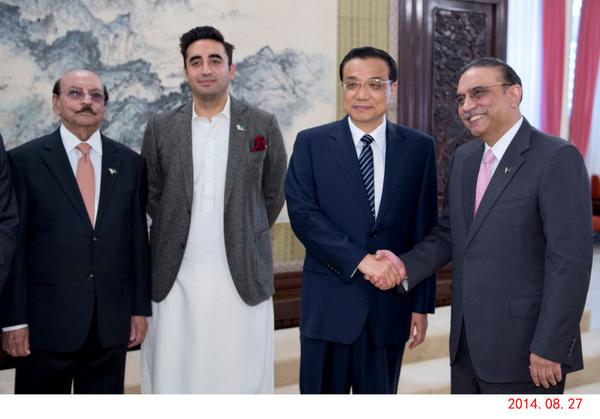
Zardari invites Chinese investors to Pakistan
Former president Asif Ali Zardari and Pakistan People’s Party Chairman Bilawal Bhutto attended the Sindh business conference in Beijing in which prominent investment companies and groups also participated.
Addressing the conference, Zardari invited Chinese investors to invest in Pakistan for mutual advantage. Sindh Chief Minister Qaim Ali Shah also addressed the conference. Before the conference, three memorandums of understanding were signed between the Sindh government and the Chinese transports groups.
One memorandum was signed for the mass transit train in Karachi and other two regarding transport in Sindh.
Nawaz is reaping what he had sown, says Gilani
Former premier Yousuf Raza Gilani has said that Nawaz Sharif is responsible for the crisis.
"Had Nawaz Sharif given due respect to supremacy of the parliament, the situation would have been different today. He is reaping what he had sown," Gilani said while talking to Dawn here on Wednesday.
"Nawaz Sharif would not have faced this situation had he shown due respect to the ruling of the speaker when I was prime minister. Nawaz in fact had weakened the parliament during my tenure and now he must realise his mistake," he said.
Commenting on Sharif's speech in the National Assembly, Mr Gilani said the prime minister was articulating that since he had the full support of the parliament, therefore it was not possible for him to resign as there was no such provision in the Constitution.
"I remind Mr Sharif that the members of his party chanted slogans 'go Gilani go' despite the fact that I enjoyed support of the house and the ruling of the speaker in my favour," he said.
The former prime minister said the PML-N undermined the institution of parliament at that time by not honouring the speaker's ruling who was the custodian of the house in the parliamentary system of democracy.
He said he had made all the state institutions accountable to the parliament and the record of the parliamentary history of that period was witness to the fact. On the contrary, Mr Sharif hardly showed up in the lower and upper houses.
Wednesday, August 27, 2014
OSCE shares Moscow's concerns over Ukraine’s nuclear deal with US
http://rt.com/The Organization for Security and Cooperation in Europe shares Moscow's concern on world nuclear safety and the potential threat that possible US atomic fuel supplies to Ukraine might cause as the country remains in crisis. The head of the OSCE and Swiss president Didier Burkhalter says he is concerned about nuclear safety in connection with the US intention to supply the country with nuclear fuel, according to a reply letter to Deputy Chairman of the State Duma Committee on Industry Vladimir Gutenev. Switzerland “shares the view concerning nuclear safety,” Burkhalter wrote, as cited by Itar-Tass, “Nuclear safety is a key concern of the Swiss nuclear policy,” he added. In this regard, the Swiss leader recalled the proposal to amend the Convention on Nuclear Safety in order to avoid long term contamination in the event of a nuclear accident. “We would be delighted to welcome the strong support of the Russian Federation in respect of the preparation process, as well as strengthening the Convention on Nuclear Safety,” said Burkhalter. However, in Burkhalter’s opinion, the question should also be “discussed between the operator and the regulator of nuclear facilities, namely national security authority of Ukraine.” “When a country has concerns about nuclear safety due to another country, one needs to result to bilateral negotiations, or, if not possible, to other appropriate authorities, such as the IAEA,” the letter said according to Tass. Rivne nuclear power plant's watercooling facilities, Ukraine (Reuters)Rivne nuclear power plant's watercooling facilities, Ukraine (Reuters) In early June, Gutenev sent a letter to Burkhalter warning of security threats that European nations will face in case of a potential industrial nuclear disaster at one of Ukraine's power plants, as Kiev is planning to sign a contract with American Westinghouse Electric Company. He highlighted the fact that Soviet made nuclear plants are not compatible with fuel assembly type TBC-W offered by the Americans, as previous trials have shown. “The nuclear reactors in Ukraine are of Russian (Soviet) design, which are only designed for fuel that has passed a special certification. Therefore, further attempts to use non-adapted fuel assemblies of American production without a corresponding adjustment increase the risk of failure of the Ukrainian reactors and dramatically increase the likelihood of man-made disasters,” Gutenev wrote in June, calling on the OSCE to consider the issue. In 2005, six experimental Westinghouse fuel assemblies, adopted for use in USSR-developed reactors, were tried at the South Ukraine plant in one reactor together with Russian fuel rods. By 2008 Ukraine signed a contract with Westinghouse on fuel rod supply. However, the experiment showed that Westinghouse assemblies deformed during exploitation and got stuck in the core. The reason is simple – Russian nuclear fuel rods are hexagonal in section, while Americans produce fuel assemblies of square section. By 2012, after the failed test, exploitation of US nuclear fuel was banned in Ukraine and the fuel rods were returned to the producer “to get fixed” while Russian scientists came to the rescue. The Energoatom Company of Ukraine lost an estimated $175 million in this trial. Now the Kiev regime has renewed the 2008 nuclear fuel deal till 2020, to replace 25 percent of the Russian-made fuel rods with an option to “provide more if needed.” Ukraine has 4 nuclear power plants with 15 nuclear reactors that generate at least 50 percent (over 13 megawatt) of all electric power in Ukraine. All nuclear fuel for Ukrainian reactors has been produced in Russia, which also recycles Ukraine’s nuclear waste. In order to reduce its dependency on Moscow, Kiev has announced the beginning of construction of a Central Spent Fuel Storage Facility in which the used fuel will be stored in double-walled stainless steel canisters in the southeast of the Chernobyl nuclear power plant, within the Exclusion Zone. It is scheduled to be completed in 2017 to service nine of Ukraine's reactors.
Obama to convene UNSC meeting on foreign fighters: White House
http://www.thehindu.com/
 U.S. President Barack Obama will convene a meeting of the U.N. Security Council next month on the threat posed by foreign fighters in Syria and Iraq, the White House has said, amidst reports that another American jihadi has died in Syria fighting for Islamic State of Iraq and the Levant (ISIL).
It is estimated that foreign fighters from about 50 countries, including from India and about 100 from the U.S. are fighting for the ISIL, the terrorist outfit that has gained control over a large part of Syria and Iraq in the last couple of months.
“U.S. President, Barack Obama, is going to convene a meeting of the U.N. Security Council to discuss the threat that’s posed by foreign fighters,” White House Press Secretary Josh Earnest said on Wednesday.
“That will be an important opportunity for the President to discuss with the leaders of the world what can be done cooperatively to try to counter the threat that those individuals with Western passports might pose to Western governments,” he said.
There are thousands of foreign fighters from up to 50 countries who have travelled to Syria to take up arms alongside ISIL, he said.
“We are very concerned about the risk that those individuals pose to the 50 countries from which they travelled. In many cases, these are individuals that have Western passports. They have some freedom of movement in our modern transportation system,” he noted.
He said the U.S. was working with Interpol and other law enforcement agencies as well as the homeland security agencies in the West and in the region to try to monitor the movements of the ISIL militants to mitigate the threat.
“These are individuals who have been radicalised. These are individuals who’ve received some military training. In some cases, they’re battle tested, and they’ve demonstrated, as McCain did, a willingness to die for their cause,” he said.
Mainstream U.S. media reported that a coalition of Syrian opposition, Nahrawan of Syria, announced that its forces had killed another unnamed American.
“We’re aware of media reporting and social media activity indicating that a second American citizen associated with ISIL has been killed in Syria,” said Caitlin Hayden, Spokesperson of the National Security Council at the White House.
“At this point, we are not in a position to confirm those reports. Should that change, we will provide an update,” Ms. Hayden said.
A day earlier, the U.S. confirmed the death in Syria of U.S. citizen Douglas McAuthur McCain.
“We previously were aware of his presence in Syria and his affiliation with ISIL. Without getting into too many more specifics, we of course use every tool we have to disrupt and dissuade individuals from travelling abroad for violent jihad and to track and engage those who return,” State Department Spokesperson Jen Psaki said.
She said this was a reminder of the growing concern that the U.S. and many countries in the world have about the thousands of foreign fighters engaged in Syria.
According to Pentagon, there could be about 100 American passport holders in Syria fighting for ISIL.
“I don’t know that we have a precise number. I certainly have seen a number of upward of 100. Certainly, we believe several dozens are involved in this kind of activity. And, frankly, there could be more. These kinds of people with these kinds of intentions, they’re not going to make them well-known,” Pentagon Press Secretary, Rear Admiral John Kirby, told the CNN.
“It is the foreign fighter threat that is something that definitely concerns us here in the Pentagon. And when we talk about the immediacy of the threat that ISIL poses, this is one of the factors that we’re talking about,” he said.
U.S. President Barack Obama will convene a meeting of the U.N. Security Council next month on the threat posed by foreign fighters in Syria and Iraq, the White House has said, amidst reports that another American jihadi has died in Syria fighting for Islamic State of Iraq and the Levant (ISIL).
It is estimated that foreign fighters from about 50 countries, including from India and about 100 from the U.S. are fighting for the ISIL, the terrorist outfit that has gained control over a large part of Syria and Iraq in the last couple of months.
“U.S. President, Barack Obama, is going to convene a meeting of the U.N. Security Council to discuss the threat that’s posed by foreign fighters,” White House Press Secretary Josh Earnest said on Wednesday.
“That will be an important opportunity for the President to discuss with the leaders of the world what can be done cooperatively to try to counter the threat that those individuals with Western passports might pose to Western governments,” he said.
There are thousands of foreign fighters from up to 50 countries who have travelled to Syria to take up arms alongside ISIL, he said.
“We are very concerned about the risk that those individuals pose to the 50 countries from which they travelled. In many cases, these are individuals that have Western passports. They have some freedom of movement in our modern transportation system,” he noted.
He said the U.S. was working with Interpol and other law enforcement agencies as well as the homeland security agencies in the West and in the region to try to monitor the movements of the ISIL militants to mitigate the threat.
“These are individuals who have been radicalised. These are individuals who’ve received some military training. In some cases, they’re battle tested, and they’ve demonstrated, as McCain did, a willingness to die for their cause,” he said.
Mainstream U.S. media reported that a coalition of Syrian opposition, Nahrawan of Syria, announced that its forces had killed another unnamed American.
“We’re aware of media reporting and social media activity indicating that a second American citizen associated with ISIL has been killed in Syria,” said Caitlin Hayden, Spokesperson of the National Security Council at the White House.
“At this point, we are not in a position to confirm those reports. Should that change, we will provide an update,” Ms. Hayden said.
A day earlier, the U.S. confirmed the death in Syria of U.S. citizen Douglas McAuthur McCain.
“We previously were aware of his presence in Syria and his affiliation with ISIL. Without getting into too many more specifics, we of course use every tool we have to disrupt and dissuade individuals from travelling abroad for violent jihad and to track and engage those who return,” State Department Spokesperson Jen Psaki said.
She said this was a reminder of the growing concern that the U.S. and many countries in the world have about the thousands of foreign fighters engaged in Syria.
According to Pentagon, there could be about 100 American passport holders in Syria fighting for ISIL.
“I don’t know that we have a precise number. I certainly have seen a number of upward of 100. Certainly, we believe several dozens are involved in this kind of activity. And, frankly, there could be more. These kinds of people with these kinds of intentions, they’re not going to make them well-known,” Pentagon Press Secretary, Rear Admiral John Kirby, told the CNN.
“It is the foreign fighter threat that is something that definitely concerns us here in the Pentagon. And when we talk about the immediacy of the threat that ISIL poses, this is one of the factors that we’re talking about,” he said.
Obama and Congress Play Hot Potato with War Powers in Syria
Jay Newton-Small

Few savor the idea of voting for military action with the midterm elections looming.White House photographer Pete Souza tweeted a photo of President Barack Obama and Chief of Staff Dennis McDonough taking a meditative walk on the White House grounds Monday. It was a small reminder of the infamous walk the pair took nearly a year ago when Obama decided to go to Congress for permission to bomb Syria. That proposition turned out badly: Congressional support cratered and Obama was left to scramble a diplomatic solution. On a gorgeous Monday evening nearly a year later, the pair in their shirtsleeves could have been discussing almost the same dilemma: How does Obama continue to bomb Iraq and begin aerial strikes on Islamist militants in Syria without permission from Congress? There are some in Congress who are calling on Obama to push through a War Powers Resolution. Article II of the Constitution grants the President the power to defend the country. But Article I gives only Congress the power to declare war. So, what in a post-War-on-Terrorism era constitutes an actual war? In 1973, afraid of Vietnam mission creep, Congress passed the War Powers Act, which requires the President to consult Congress 60 days after engaging in hostilities. If you count bombing a foreign country as hostile—as the U.S. did against militants in northern Iraq on Aug. 7—than the 60 days expires Oct. 7. Theoretically, if Congress cares about not further weakening its oversight of the President’s ability to bomb whatever country he pleases, lawmakers will move to pass a War Powers Resolution in the next month. Presidents, including Obama, have argued that the War Powers Act is unconstitutional. But a turf fight over who gets to go to war is the last thing on Congress’ mind weeks before the midterm elections. “Congress does not have the political will to approve a War Powers Resolution when the American people have very little appetite for war,” said Ron Bonjean, a former senior Republican congressional aide. “Getting the approval of Congress before the November elections to bomb ISIS targets in Iraq would likely require an attack on American soil or a very imminent threat of danger. Members of Congress want to secure their own reelections and this type of vote could be the defining factor in several tight Senate races across the country.” Thus far, the Armed Services and Foreign Relations Committees in the House and Senate, which would have jurisdiction over a War Powers resolution, have been waiting to hear what Obama wants to do. Congress has a spotty history of authorizing hostilities under this President. The House only succeeded on its third try in passing a tepid authorization for action in Libya—more than three months after U.S. involvement in Libya actually began. On Syria, both chambers balked at authorizing hostilities after Obama asked for support in the wake Syrian strongman Bashar Assad’s use of chemical weapons against his own people. When congressional support disappeared, Obama was forced to make a deal with Russian President Vladimir Putin to rid Syria of chemical weapons, rather than using force against Assad. Few Republicans, a Senate Republican aide told TIME, want to vote to support the President, especially in election season. If Obama were to ask for money for his actions—a back-door way of showing congressional support for military action without having to outright condone it—that vote would be easier as it would be a vote for the troops, the aide said. “The GOP must fear losing what feels like big momentum right now with the chance that the President will get a rally around the flag effect,” said Michael O’Hanlon, a foreign policy expert at the Brookings Institution. “I don’t sense that, through the midterm prism, the Democrats’ concern would be as great.” Still, voting to expand hostilities in Iraq isn’t the most popular thing with Democrats either: Obama got elected in part because of his early and strong opposition to the war in Iraq—a “clean break from the failed policies and politics of the past,” as then-candidate Obama called it in a March 2008 speech. It’s ironic that before his last midterm election fight, he finds himself struggling to persuade Congress to return to a country he prided himself on leaving. The most likely path here is that Obama will continue to do what he’s been doing, and probably expand attacks into Syria, using the Article II justification. As the White House has argued, he’s protecting Americans in Erbil, the Kurdish capitol in northern Iraq. By that measure, wherever America has an embassy, or citizens in peril, Presidents in the future will now have the precedent to engage in hostilities to protect them. Last year, as Obama paced the grounds with McDonough, the Constitutional-law-professor-in-chief damned the politics and worried about going beyond previous precedent. A year later, and he’ll have no choice but to bow to the realpolitik of midterm elections.
Pakistan: Gilani urges PM not to undermine state institutions
Former Prime Minister Syed Yousuf Raza Gilani lamented that Prime Minister Nawaz Sharif did not utter a single word on Model Town tragedy. In an exclusive chat with SAMAA by phone, the former premier said that Nawaz Sharif played a dirty game against him in the Parliament.
“I wish that Nawaz Sharif would have respected the supremacy of the Parliament when I was disqualified,” Gilani said.
To a question, he said that the prime minister wasted too much time to resolve this crisis.
“We have always supported democracy, law and constitution,” he stated.
About the prime minister’s speech, Gilani was of the view that Nawaz Sharif should undermine state institutions.
He said that he had not wasted a single second and stepped down after the Supreme Court’s ruling.
Chief Minister Shahbaz Sharif should have resigned after the Model Town incident, he added.
In an exclusive chat with SAMAA by phone, the former premier said that Nawaz Sharif played a dirty game against him in the Parliament.
“I wish that Nawaz Sharif would have respected the supremacy of the Parliament when I was disqualified,” Gilani said.
To a question, he said that the prime minister wasted too much time to resolve this crisis.
“We have always supported democracy, law and constitution,” he stated.
About the prime minister’s speech, Gilani was of the view that Nawaz Sharif should undermine state institutions.
He said that he had not wasted a single second and stepped down after the Supreme Court’s ruling.
Chief Minister Shahbaz Sharif should have resigned after the Model Town incident, he added.

Former President Asif Ali Zardari called on to Chinese Prime Minister
http://www.ppp.org.pk/
Pakistan: (PML) ‘N’ rallies ‘ill-conceived’, ‘self-defeating’: Wattoo
Pakistan People’s Party (PPP) Punjab President Mian Manzoor Ahmed Wattoo has rejected PML-N’s decision of holding rallies in the country and called such rallies “ill-conceived” and “self-defeating.” In a statement on Tuesday, Wattoo said that the government rallies would tantamount to fuelling political fire by throwing gasoline on it, adding it would aggravate the volatile political environment in the country. The ruling party must not vitiate the environment and instead undertake all possible steps to assuage the ongoing confrontation between the parties that had made the nation hostage of their ego. He predicted that the bloody clash between the agitating parties leading to loss of lives would pose the greatest danger to democracy and the inevitability of political redundancy of the fighting political parties. He called upon the government to register case against those who have been accused of murdering PAT workers in Model Town and injuring many others by bullet shots on June 17. Delay in this regard was raising the question of indiscriminate application of law in the province of Punjab, he observed. Wattoo said that the PPP would not compromise on the future of democracy come what may, adding that the party leadership was deeply concerned about political situation prevailing in the country. He said that former president Aief Ali Zardari’s recent visit to Lahore where he met with important leaders was reflective of his keenness to get the conflict resolved through dialogue in the interest of the federation, democracy and the constitution. About PPP’s central executive committee meeting held in Karachi on Monday, Wattoo said that the decision to from a committee mandated to get in touch with all of the stakeholders in order to defuse political deadlock reflected the sincerity of the party and its leadership to extricate the nation out of the crippling stalemate.www.ppp.org.p

Pakistan: Theatre of the absurd
By Zahid Hussain
US ambassador says fraud committed on both sides in Afghan election

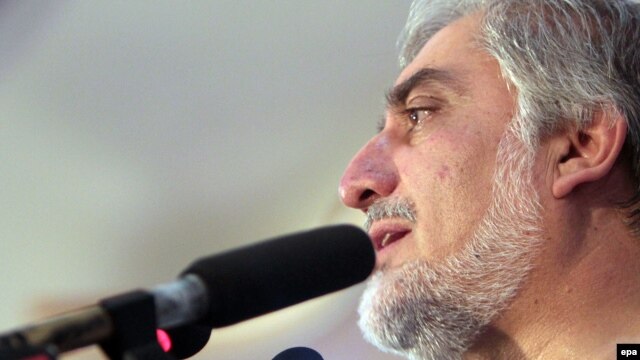
Afghan Presidential Candidate Abdullah Pulls Out Of Election Audit

INDIAN MILITARY MODERNIZATION AND CONSEQUENCES FOR PAKISTAN – OPED
 By Yasir Hussain
On July 10, Arun Jaitley, who is both the Defense Minister and the Finance Minister in the new BJP government, presented the budget to the Indian parliament. The worrying issue about BJP’s maiden budget is that it has boosted defense budget to 12 percent that makes $38.35 billion (2.29 trillion Indian rupees). This huge sum makes 50 Billion rupees more than what the previous government presented in an interim budget earlier. Most importantly, Modi government has further opened the domestic weapons industry to foreign investment in order to modernize and re-build gigantic military. The foreign direct investment in defense sector has been increased from 29% to 49% that will have positive impact on indigenous defense industry.
This major hike in defense sector will enable Indian military to pursue its long-ambitious procurement deals of Rafale fighter-bombers, submarines, ultra-light howitzer, Javelin anti-tank guided missile and night vision equipment. Besides that New Delhi has been tremendously increasing fissile material (Plutonium and Uranium) stockpiles that will empower India to build more nuclear devices in near future. It has also been aspiring to get sophisticated space technology from both United States and Israel to develop Ballistic Missile Defense Shield that will enable India to intercept missile before it hits the target ( though, it is highly costly with maximum uncertainty).
India has been world’s top arms buyer for the last three years according to a report released by the Stockholm International Peace Research Institute (SIPRI). The unbridled spending in military sector has reached to the peaks during last three years. Unfortunately, this blind drive for the arms accumulation and military modernization unleashes an unending arms race in South Asia which resulted in deterioration of prevalent strategic stability between India and Pakistan.
Western governmental and private arms manufacturing companies are rushing towards India with the hope of landing multi-billion dollars and New Delhi is aiming to leverage some of that buying power to get transfer of technology and end the overwhelming reliance on imports. For westerns, India has emerged as new lucrative market for arms export. This situation will certainly lead to the emergence of neo-military Industrial complex in India which will surely affect existing state of affairs between India and Pakistan.
Such developments in Indian military have paved a way towards doctrinal shift from defensive-defense to the offensive-defense.
Ironically, Indian policy makers have been trying to convince global powers that such military modernization is directed to check Chinese influence in South East Asia as well as in Indian Ocean. Even Washington sees India as a balancer in South Asian fragile environment. But critical analysis of the given rationale shows that India never desires to pose a military challenge to gigantic China rather, 70% of its military have been deployed on western sides and certainly during era of crisis the accumulated arms will be used against Pakistan.
The repercussions of Indian military developments on Pakistan are crystal clear. Pakistan has to rely on its own military muscle to prevent India’s threat of use of force or actual use of force. Having weak economy, Pakistan cannot compete with India in arms race. Pakistan has allotted only Rs 700billionfor defense purposes which is far lesser in comparison with Indian defense budget which is 2.29 trillion Indian rupees. With such a grave asymmetry, Pakistan can never be indulged into any arms race with India.
Although, Pakistan is facing number of issues at national, regional and international level that ranges from military operations in tribal areas to hostile border skirmishes on eastern and western borders. Pakistani troops have been fighting against insurgents since a decade. The price each and every Pakistani soldiers pay in the struggle against insurgents is real and high that should be recognized internationally.
Under these grave circumstances, however, Pakistan being nuclear power has successfully maintains balance of power. Regional adversaries with accelerative military strength and offensive military doctrines always pose serious threats for the survivability of Pakistan. By looking at the changing international and regional security environment it is essential for Pakistan to secure its territorial integrity, sovereignty both internally and externally. Nuclear weapons in this regard, play a vital role.
By Yasir Hussain
On July 10, Arun Jaitley, who is both the Defense Minister and the Finance Minister in the new BJP government, presented the budget to the Indian parliament. The worrying issue about BJP’s maiden budget is that it has boosted defense budget to 12 percent that makes $38.35 billion (2.29 trillion Indian rupees). This huge sum makes 50 Billion rupees more than what the previous government presented in an interim budget earlier. Most importantly, Modi government has further opened the domestic weapons industry to foreign investment in order to modernize and re-build gigantic military. The foreign direct investment in defense sector has been increased from 29% to 49% that will have positive impact on indigenous defense industry.
This major hike in defense sector will enable Indian military to pursue its long-ambitious procurement deals of Rafale fighter-bombers, submarines, ultra-light howitzer, Javelin anti-tank guided missile and night vision equipment. Besides that New Delhi has been tremendously increasing fissile material (Plutonium and Uranium) stockpiles that will empower India to build more nuclear devices in near future. It has also been aspiring to get sophisticated space technology from both United States and Israel to develop Ballistic Missile Defense Shield that will enable India to intercept missile before it hits the target ( though, it is highly costly with maximum uncertainty).
India has been world’s top arms buyer for the last three years according to a report released by the Stockholm International Peace Research Institute (SIPRI). The unbridled spending in military sector has reached to the peaks during last three years. Unfortunately, this blind drive for the arms accumulation and military modernization unleashes an unending arms race in South Asia which resulted in deterioration of prevalent strategic stability between India and Pakistan.
Western governmental and private arms manufacturing companies are rushing towards India with the hope of landing multi-billion dollars and New Delhi is aiming to leverage some of that buying power to get transfer of technology and end the overwhelming reliance on imports. For westerns, India has emerged as new lucrative market for arms export. This situation will certainly lead to the emergence of neo-military Industrial complex in India which will surely affect existing state of affairs between India and Pakistan.
Such developments in Indian military have paved a way towards doctrinal shift from defensive-defense to the offensive-defense.
Ironically, Indian policy makers have been trying to convince global powers that such military modernization is directed to check Chinese influence in South East Asia as well as in Indian Ocean. Even Washington sees India as a balancer in South Asian fragile environment. But critical analysis of the given rationale shows that India never desires to pose a military challenge to gigantic China rather, 70% of its military have been deployed on western sides and certainly during era of crisis the accumulated arms will be used against Pakistan.
The repercussions of Indian military developments on Pakistan are crystal clear. Pakistan has to rely on its own military muscle to prevent India’s threat of use of force or actual use of force. Having weak economy, Pakistan cannot compete with India in arms race. Pakistan has allotted only Rs 700billionfor defense purposes which is far lesser in comparison with Indian defense budget which is 2.29 trillion Indian rupees. With such a grave asymmetry, Pakistan can never be indulged into any arms race with India.
Although, Pakistan is facing number of issues at national, regional and international level that ranges from military operations in tribal areas to hostile border skirmishes on eastern and western borders. Pakistani troops have been fighting against insurgents since a decade. The price each and every Pakistani soldiers pay in the struggle against insurgents is real and high that should be recognized internationally.
Under these grave circumstances, however, Pakistan being nuclear power has successfully maintains balance of power. Regional adversaries with accelerative military strength and offensive military doctrines always pose serious threats for the survivability of Pakistan. By looking at the changing international and regional security environment it is essential for Pakistan to secure its territorial integrity, sovereignty both internally and externally. Nuclear weapons in this regard, play a vital role.
Pakistan: Qadri demands hanging of Nawaz, Shahbaz over Model Town tragedy
Pakistan Awami Tehreek (PAT) chief Tahirul Qadri on Tuesday further upped the ante by demanding the hanging of Prime Minister Nawaz Sharif and Punjab Chief Minister Shahbaz Sharif over the Model Town deaths.
The cleric said the resignations of the brothers would not resolve the problem now. “Now the issue is not just limited to the resignations of both the Sharifs, rather the hanging of both of them will deliver the real justice, as a report of the tribunal investigating Model Town carnage has declared Shahbaz Sharif and Punjab government murderers,” the firebrand clerk shouted while addressing his charged supporters and devotees who have been staging a sit-in for the last many days on the Constitution Avenue in the sensitive Red Zone of the capital.
Qadri, whose ultimatum to the government was to expire in 24 hours, said that only one day is left in his ultimatum to rulers. “Your are not safe any longer,” he told the rulers. The PAT chief held both Sharif brothers responsible for the Model Town tragedy and urged they be punished. “Nawaz and Shahbaz must resign and present themselves to accountability,” he demanded. “The martyrs have won while the murderers have lost,” Qadri said.
Outlining his thoughts about democracy, Qadri said that democracy means justice for everyone, enough safe drinking water, bread to eat and health facilities. To him, he said, democracy should bring prosperity to the poor and smiles on the faces of the oppressed and hopeless people. He said he and his party will bring such democracy where there will be no lootings, and lives and properties of each and every citizen will be safe. He said enough bread, safe drinking water, honourable shelter for everyone, mechanism to help and support the poor should be available.
Pakistan: Model Town probe report says police acted on govt orders
The judicial commission investigating the June 17 Model Town incident has held the government responsible for it and said police acted on government orders which led to the bloodshed.
The report has said the affidavits of Chief Minister Shahbaz Sharif and former law minister Rana Sanaullah contained contradictions regarding the orders they reportedly issued to police to disengage, and declared that what happened on the ground did not match such claims.
Contents of the report, which the government says is secret, were first revealed by anchor of a private television channel on Tuesday and were confirmed to Dawn by independent sources.
Quoting the report, the sources said decisions taken at a meeting presided over by Mr Sanaullah before the incident led to the worst kind of bloodshed.
According to the report, Mr Sharif claimed in his affidavit that he had ordered police to disengage in Model Town. However, the chief minister did not mention this in the press conference he addressed after the fiasco.
“It seems the word ‘disengagement’ was an afterthought to save the chief minister,” the sources quoted the report as saying.
The report said the action in Model Town was taken under the orders of the government, said the sources. It also said the police were totally responsible for it.
A Punjab government spokesman said the report of the judicial tribunal was received and examined. It was observed that it required further analysis, as it was inconclusive.
He said that because the report was based on some documents, statements and affidavits which were not provided with it a request was immediately made to the high court for the provision of the documents so that the report might be reviewed and necessary action taken.
“Meanwhile, the government has constituted a committee to carry out a detailed analysis of the report and make recommendations and a way forward accordingly. The moment the subject missing documents are received, the report shall be referred to the committee and further necessary action would be taken in the light of its recommendations,” the spokesman added.
Sources in the Punjab government did not contradict the claims made by the television anchor or by those who talked to Dawn. But they insisted that the report was inconclusive.
The commission did not have the mandate to give findings or fix responsibility and its presiding officer, Justice Ali Baqar Najfi, mentioned this to media while handing over the report to the provincial home department.
They said that during the proceedings the commission did not object to the affidavit of the chief minister in which he had said that he had asked police to disengage.
His was the only affidavit which was not read out before the commission. Also, the chief minister was not cross-examined by the commission.
“Under the law, the objections are highlighted during cross-examination of the provider of an affidavit. And changes are shown to the supplier and his or her signatures are sought on it.
“If this is not done, the affidavit is considered to be accepted. And this is what happened with the chief minister’s affidavit,” a source said.
The sources said the Punjab government had sought affidavits and other documents from the commission exactly for this purpose. They said Mr Sanaullah ordered removal of the encroachments in front of Dr Tahirul Qadri’s residence after receiving reports that they were illegal. “He did not order action against anything legal.”
Official sources said the findings of any judicial commission were not binding on the government. And in this case there were no findings.
Giving findings and fixing responsibility were the job of the government. The government would fix the responsibility only after examining the supporting affidavits and other documents being sought from the commission, they added.
Pakistan: Derailment of democracy may threaten federation
http://ppppunjab.wordpress.com/
 The Pakistan People’s Party believes that the prevailing political situation has the potential of derailing democratic process and eventually posing a threat to the federation.
Resolutions adopted at a meeting of the party’s central executive committee held at Bilawal House here on Monday said that the Pakistan Tehreek-i-Insaf, Pakistan Awami Tehrik and the PML-N would be held responsible if something untoward happened to democratic system.
The meeting called upon the three parties to rise above their egos, demonstrate patience and sense of accommodation and engage in meaningful result-oriented talks to work out a solution in accordance with the constitution. It said that dialogue was the only way out of the impasse.
It warned that no adventure, like wrapping up the democratic system or an unconstitutional move in any form, would be allowed.
Holding peaceful gathering and protests are fundamental rights guaranteed by the constitution. Freedom of expression and diversity of thought are essential for democratic growth and should not be curbed by the state.
A resolution called for investigation of allegations of election rigging by superior judiciary.
It said that last year’s general elections were not transparent and, therefore, electoral reforms within a specific timeframe were necessary.
The meeting urged registration of an FIR about the June 17 Model Town incident to pave the way for free, impartial and independent investigation.
The meeting reposed confidence in the PPP leadership and decided that the party would play a role for defusing the political tension through dialogue to save democracy. In the event of democracy becoming a victim of an adventure, the party would be in the forefront of struggle against it.
It recalled the relentless struggle and sacrifices rendered by the nation for democracy, federalism, provincial autonomy, parliamentary form of government, independent judiciary and rule of law.
It said the government had failed to solve problems being faced by the country. Masses continued to suffer because of electricity loadshedding, price hike, inflation, deteriorating healthcare, lack of education facilities, unemployment, massive corruption and bad governance.
It supported the Zarb-i-Azb military operation and called upon the nation to help the displaced persons, who were suffering as a result of the fight to eradicate terrorism.
The Pakistan People’s Party believes that the prevailing political situation has the potential of derailing democratic process and eventually posing a threat to the federation.
Resolutions adopted at a meeting of the party’s central executive committee held at Bilawal House here on Monday said that the Pakistan Tehreek-i-Insaf, Pakistan Awami Tehrik and the PML-N would be held responsible if something untoward happened to democratic system.
The meeting called upon the three parties to rise above their egos, demonstrate patience and sense of accommodation and engage in meaningful result-oriented talks to work out a solution in accordance with the constitution. It said that dialogue was the only way out of the impasse.
It warned that no adventure, like wrapping up the democratic system or an unconstitutional move in any form, would be allowed.
Holding peaceful gathering and protests are fundamental rights guaranteed by the constitution. Freedom of expression and diversity of thought are essential for democratic growth and should not be curbed by the state.
A resolution called for investigation of allegations of election rigging by superior judiciary.
It said that last year’s general elections were not transparent and, therefore, electoral reforms within a specific timeframe were necessary.
The meeting urged registration of an FIR about the June 17 Model Town incident to pave the way for free, impartial and independent investigation.
The meeting reposed confidence in the PPP leadership and decided that the party would play a role for defusing the political tension through dialogue to save democracy. In the event of democracy becoming a victim of an adventure, the party would be in the forefront of struggle against it.
It recalled the relentless struggle and sacrifices rendered by the nation for democracy, federalism, provincial autonomy, parliamentary form of government, independent judiciary and rule of law.
It said the government had failed to solve problems being faced by the country. Masses continued to suffer because of electricity loadshedding, price hike, inflation, deteriorating healthcare, lack of education facilities, unemployment, massive corruption and bad governance.
It supported the Zarb-i-Azb military operation and called upon the nation to help the displaced persons, who were suffering as a result of the fight to eradicate terrorism.
Subscribe to:
Posts (Atom)