Sunday, August 3, 2014

Why worry about Gaza when you have Pakistan?

By Anam Khan
The recent collision between Israel and Gaza has struck a nerve in various parts of the world, causing people far and wide to religiously follow the crisis. They are eager to know every tragic detail of a war that has turned into a vicious cycle of repeated mistakes and mounting grievances. Nowadays, Twitter and Facebook newsfeeds are being inundated with horrifying images of weeping Palestinian families embracing a deceased child, parent or friend. We are aware that the world is becoming a hurtful place. The rising death toll in Gaza is devastating. The unresolvable differences between Israel and Gaza are infuriating. However, it is easy to lose sight of predicaments at home while intensely focusing on controversial disputes abroad. Pakistan, for instance, is grappling with sectarian violence, limited electricity, belligerent political gangs and inadequate governance. Militants are besieging the country’s foundation and infrastructure. Many Pakistanis are grieving over the loss of innocent lives in Gaza, and rightfully so. Yet, it is important to remember the murderous rampages and human rights violations being perpetrated within our own borders. It is essential to mourn for our own men, women, children and soldiers who are dying in multitudes.
On July 28, 2014, two minors and one woman were killed after their house was set on fire by an angry mob. The mob was initially pursuing a man who was accused of sharing a blasphemous picture, but managed to douse another house in flames during their fit of rage.
On June 8, 2014, 10 militants infiltrated Jinnah International Airport with the intent to create havoc. Several people were killed on site, including security personnel who gave their lives to defend the bustling terminal. Another unpleasant recollection from that restless night was the government owned channel, PTV, airing footage of PM Nawaz Sharif’s Metro train project while news was breaking about the attack on Jinnah International Airport on other channels. PTV’s blatant disregard for the turmoil at the Karachi airport plays a role in signifying the government’s indifferent approach to tackling the widespread militant activity in Pakistan. In addition to mismanaging the armed extremist groups, the current government, which is also the supposed exemplar of a budding democracy, has succeeded in conducting poorly orchestrated negotiations with a group of people who are least interested in our country’s welfare.
On April 3, 2014, the government announced the release of 16 TTP prisoners in an attempt to encourage peace talks with the militant group. Another 100 prisoners on the Taliban’s list were being prepared for release in the following days. This is an appalling example of a productive negotiation process. Even though the government is trying to boost reconciliation efforts, it should have also asked for the return of kidnapped civilians in exchange for the discharged Taliban prisoners. Negotiations should not be focused on constantly giving without receiving any concessions in return, which is how the government seems to be proceeding with its diplomatic efforts.
These are just a few examples of the local concerns that need to be addressed on an immediate basis. Our PM recently announced his solidarity with the Palestinians, gallantly proclaiming that he is “saddened and disappointed to note the silence of the international community.” He also added that, “The world must stop Israel from this naked and brutal aggression.” It would make more sense if he voiced a similar degree of fury against the radical militants who are threatening and killing individuals in a country he was elected to lead. It is easy to use external struggles as a scapegoat to distract us from the rampant mayhem at home. The fact of the matter is that our government has been unable to protect us, the Taliban are still a threat, minority communities are still abused and electricity prices are still doubling. Enraged social media updates centered on Gaza and Israel are expected to trend. However, we are Pakistanis at the end of the day. Our country needs an equal amount of attention and devotion, if not more.

Pakistan: A wholly avoidable ‘crisis’

The sense of anticipation (and dread) regarding the coming August 14 Independence Day sets a new bar in Pakistan’s history of avoidable crises. The dramatis personae on the stage seem increasingly to be converging into two camps. In the left corner, a seemingly panicky and beleaguered government attracts fewer and fewer supporters amongst the political parties, while in the right corner, the challengers from the opposition, led by a recalcitrant Imran Khan and his PTI, seem to be acting as a magnet in greater or lesser measure for all parties that have some grouse against the government or see opportunity in the ‘siege’ it is under. Although Imran Khan’s logically inexplicable aggressive posture must top the list of factors responsible for creating this polarisation, the government’s inept handling comes a close second in the responsibility stakes. As August 14 nears, the PTI has dug its heels in, refusing overtures for dialogue with the government and reiterating firmly its intention to hold the march to Islamabad come what may. In the PTI’s wake, marginalised parties such as the PML-Q and Sheikh Rasheed’s one-man party hope to cash in on the eddies created by the long march. MQM has flirted with the PTI’s ‘ally’ the PAT of Tahirul Qadri, but seems undecided after a meeting with the Maulana in Lahore on Friday. JUI-F’s Maulana Fazlur Rehman has his own axe to grind against PTI in the context of the politics of Khyber Pakhtunkhwa, hence his critique of Imran’s ‘absurd’ logic of agitation against the whole democratic edifice on the basis of four allegedly rigged seats. The PPP intriguingly has latched onto the use of Article 245 to deploy the army in Islamabad as the main counterpoint in its taking the government to task for mishandling the Imran challenge.
The political context of what the country is facing needs to be kept in mind. According to the government’s version, it is embarked on a ‘long march’ to development and prosperity, and no other (political) ‘long march’ is either justified or can halt this momentum. As a diversion, the government has announced a month-long independence celebration in an age-old tactic: if you cannot give the people bread, regale them with circuses. These repeated claims from the PML-N leadership however, increasingly unconvincing as they sound, can be subjected to a critical look, given that the prioritisation of the government’s focus is, to put it mildly, questionable. The two greatest challenges facing the country when the PML-N government came to power last year were terrorism and the energy crisis. On the first, the government wasted a year in pursuit of the will-o’ the-wisp of talks with the terrorists, finally surrendering reluctantly to the logic of the situation that required firm military action in North Waziristan. Reservations about the strategy, conduct and end results of the operation aside, the fact that action has been taken, albeit belatedly and after unnecessarily alerting the militants, cannot but be welcomed as a recognition of reality and necessity.
On the energy crisis, the government has been hoist by its own petard of tall claims during the election campaign and after coming to power to solve the crisis in a matter of days, no weeks, no months, no years, (and finally) no solution (the preceding list reflecting the government’s ‘sliding’ statements regarding the timeframe for a solution, ending with supplications to the Almighty). Instead of focusing all its attention first and foremost on the energy crisis, on which a revival of the economy and the welfare of citizens so critically depend, the government has chosen to indulge its penchant for ‘showpiece’ projects such as metro buses and other transport infrastructure. While such expensive projects may win a few brownie points in the short term, they are likely to drag finances and the government’s credibility into the dust in the future.
Belated appeals to and contacts with Imran Khan and his ‘friends’ to either call off the August 14 march or arrive at a modus vivendi to avoid a clash have fallen seemingly on the deaf ears of the Khan’s known stubbornness beyond reason. Contradictory statements and reports indicate the government torn between preparations to pre-empt the march by the traditional tactics of arrests of PTI leaders and workers to pressurising transporters not to lend the march logistical capability, and advice to let the march go ahead peacefully to wither on the vine in D-Chowk of its own accord. One step the government would be strictly advised against is dragging the armed forces into the middle of the fray and causing an even more serious political crisis that could derail not only the government but hard won democracy too.

Pakistan: Wattoo terms invoking of article 245 as unwarranted, unpopular:Demands its withdrawal forthwith

http://mediacellppp.wordpress.com/
Mian Manzoor Ahmed Wattoo, President Punjab PPP, has called upon the government to immediately withdraw article 245 because almost all the politicalleadership of the country and the civil society had opposed it bitterly describing it as unwarranted and most unpopular decision. He said this in a statement issued from the Party headquarters here Friday.
He argued that the situation in Islamabad was not worst than Peshawar and Quetta adding how come the government found it appropriate to invoke the article in the federal capital. He urged the government to cut its political losses by lifting the article 245 from the federal capital because its continuation entailed the suspension of fundamental rights of the citizens who would not like it.
The possibility of the clash of the institution with the people with devastating consequences could not be ruled out, he added. He argued that it also implied that the government and its law enforcement agencies had failed to secure the federal capital reflecting poorly on the ability of the government regarding its acumen of crisis management. He said that it could be stetted without the fear of contradiction that the government had taken the decision in panic adding such decision having far reaching implications must be taken after threadbare discussions at the Parliamentary forum so that its ownership could be taken by all across the political divide.
He maintained that it seemed that the ruling Party had not abandoned the temptation of taking solos flight regardless of its inevitability of violent turbulences with the prospects of crash landing. In this case, they are ironically descending to the same ill- fate if better sense does not prevail earlier, he predicted. He said that denying the relevance of the collective wisdom in a democratic dispensation by mandarins was indeed repudiating the democratic ethos by any criterion by them. He said that the ruling Party was unfortunately averse of taking the other political parties into confidence on matters of national importance and in the process had created political rift, not good for the promotion and strengthening of democratic institutions in the country. He pointed out that ongoing military operation in Wazirstan was launched without taking into confidence the Parliament and the political leadership alike and the Prime Minister had not till this time took the trouble of bringing the Parliamentarians in the loop.

Pakistan: PM Nawaz can step down to avert big damage

http://abbtakk.tv/
Muttahida Qaumi Movement (MQM) Chief, Altaf Hussain Saturday said Prime Minister Nawaz Sharif should step down in case there is a fear of things leading to damage the country. In a statement issued here, Altaf Hussain urged for adoption of a path which could prove to be a win-win for all the stakeholders. “Adopt a constitutional course that leaves everyone’s honour intact,” he called upon the political leaders, adding, if there is a fear of protests causing damage to the country then Nawaz Sharif should announce to step aside. “For Allah’s sake, save the country,” he called upon the Prime Minister. Altaf Hussain asked the Prime Minister Nawaz Sharif to have an in depth analysis of the situation and called for holding result oriented talks to reconcile differences.
http://abbtakk.tv/eng/pm-can-step-down-to-avert-big-damage-altaf/

Pakistan: PML-N’s faulty track

A REARGUARD action has begun, with the PML-N deploying Interior Minister Nisar Ali Khan, known for his good relations with PTI chief Imran Khan over the years, to try and appease the PTI. Meanwhile, Prime Minister Nawaz Sharif has reached out to non-politician friends for advice on matters political.
With a National Assembly session scheduled to begin tomorrow, the PTI pressing ahead with rally preparations, the army distancing itself from perceived attempts by the PML-N to drag it onto the PML’N side in the political arena and the country returning to work after Eid, the days ahead will be packed. We will witness a familiar political frenzy and churning of waters that will require all hands on deck for the PML-N and a need to keep sight of the bigger picture and the larger goals.
Yet, it is far from clear that the PML-N leadership, as well as the brain trust it relies on or looks to for navigating political crises, has grasped the present situation properly. In reaching out to Imran Khan and the PTI, the government has made it clear that its foremost concern is to somehow prevent the Aug 14 rally to Islamabad that the PTI is preparing for. That necessarily suggests electoral reforms — the issue that Mr Khan and his party are agitating for — are only an issue to the extent the PTI cares about it, rather than a genuine and serious matter from a systemic and democratic perspective.
Why not, for example, use the start of the next National Assembly session on Monday to have the prime minister himself give a speech that takes ownership of electoral reforms and gives a clear vision of how the PML-N will nudge the electoral system towards greater transparency and fairness? Does the Aug 14 PTI rally matter more or do democracy-enhancing reforms? If it is the former for the PML-N, then surely the party’s leadership is on the wrong track — with either immediate or later consequences to be faced.
Similarly, a report in this newspaper yesterday on a summit of close friends that Prime Minister Sharif convened at his Raiwind residence recently indicates that Mr Sharif is working from an old mould of politics and is perhaps even in self-denial.
If Mr Sharif is waiting for March 2015 when the PML-N’s Senate seat count will more than double, but still fall far short of a majority, it sounds suspiciously like the excuses that executive action was hamstrung under former chief justice Iftikhar Chaudhry and more governance and leadership would be visible after his retirement. That clearly has not happened. And what of the suggestion that somehow external interference, implicitly by the US, is constraining Mr Sharif’s government? It sounds suspiciously like the government is looking for scapegoats rather than undertaking some serious self-scrutiny.

Genocide Of Pakistan's Minorities : ‘And they got horrifically bloodthirsty’

By Amina Jilani
Thus read a sentence from Rabia Mehmood’s report on the Gujranwala mob madness posted on the Dawn website on Shawwal 1, quoting an eyewitness. The Gujranwala rampage, killing and arson took place on the auspicious date of Ramazan 28 during the month when the Faithful, in their state of holiness, observe a fast coupled with abstention (though in actual fact, it is more of a feast and indulgence). But in this Islamic republic, there can be no abstention from violence when it comes to the possibility of having a good go at members of the Ahmadi community. It’s all built in, ignorant (and not-so-ignorant) mobs, incited by their religious mentors into a state of hatred, can resist no temptation — and yes, there is blood lust.
So, when an Ahmadi boy was accused of committing alleged blasphemy by posting a photograph on Facebook, there was no holding back. As usual, no one has mentioned what the photograph was — in all cases of alleged blasphemy by word, we are never given details because the actual motive probably has nothing to do with blasphemy. There were deaths — a woman and children — there was destruction and then displacement. The police stood by, inactive, of similar mindset.
The news was picked up by the international media a day before Eid and by our media on Eid day itself. Full marks to the English language press publications and their editorials: “Ahmadis burnt to death”, “Attack on Ahmadis”, “Riot in Gujranwala” and “Eid this time”, which opened up — “There is precious little for Pakistanis to celebrate Eid this year.” The Gujranwala savagery “as we know all too well is not an isolated incident. Many of us feel so insecure in their faith and our exploitation of religion is so blatant that they can justify killing children without any provocation in the name of religion. From Hazara Shias to Ahmadis and everyone else in between, minorities live in fear of their lives like never before.” Absolutely spot on!
But sadly, only a pathetic minority of the some 200 million would have reacted with shame and repugnance. What exactly is the fear among those who are part of the mob, citizens of a state bristling with nuclear weapons, with a massive army marching under the banner of faith? What danger do a few million minority citizens pose? Are the Christians, Hindus, Ahmadis in any position to shake the foundations of the great citadel? The same goes for the Shias — why the obsession with their elimination? Why the need for the laws that can easily be manipulated to target the minorities, and which no great leader can dare touch — certainly not the present one who is more concerned with his own afterlife than with the happenings in his country here on earth?
Well, it’s a sorry story. Apart from the present scenario in the Muslim world, at war with itself under varied sectarian banners, which is certainly not conducive to any spread of tolerance or lessening of bigotry-inspired violence, we have to go back to the beginning. We need to look at the mullah fraternity, those who opposed the creation of this country. A minority themselves, they forced the Objectives Resolution to be declared by the paralysed politicians of 1949 and the rot set in, to grow and grow, spread and spread, until it was enshrined in the nation’s Constitution and the white stripe on the flag became irrelevant, just a nasty joke.

‘Pakistan democracy will win when intolerance ends’

By Darshana Ramdev
On July 27, 150 enraged Sunni extremists attacked a peaceful community of Ahmadiya families living in central Pakistan. Three Ahmadiyas - one woman and two young children, both girls - lost their lives in the fire that burned down eight houses. The mob's anger was sparked by a blasphemous image on Facebook. Police in Gujranwala, where the incident took place, said no arrests were made.
Pakistan might have maintained a stony silence over the brutal killings that took place in full public view. The mob ravaged, murdered and burned down their homes as authorities sat back and let it happen. However, one voice rose above the din - that of Farahnaz Ispahani, former member of the Pakistan Parliament and the wife of Husain Haqqani, the former Pakistani Ambassador to Washington.
The couple have been in self-imposed exile for several years now, but Farahnaz Ispahani, who was in charge of the media under former president Asif Ali Zardari's government, and continues to work with them, albeit from outside, will not let anything stand in the way of a faith that can only be described as idealism.
What stands out most about her, apart from that distinct air of quiet breeding, is that no matter how bad things get, she will not stop believing.
Her faith in a democracy for Pakistan, the end of the military regime and the age of intolerance remains unchanged, relentless. Will the extremist military outfits in Pakistan be the nation's downfall? "We're making progress. This is our second democratic government, we can only grow stronger," she said in an exclusive interview with Deccan Chronicle. The military that has held the country in a death grip for decades cannot do so forever, she believes.
Both Ispahani and her husband are hopeful of better ties between the two countries saying, ‘‘Prime Minister Narendra Modi made a wonderful gesture by inviting Nawaz Shariff to his swearing-in ceremony. This was outside of the military establishments and if things continue to go in this direction, the extremist groups will find themselves weakened.’’
Is former military leader Pervez Musharraf, who was charged with the murder, conspiracy to murder and facilitation of murder Benazir Bhutto, being victimized? ‘‘Victimized is a strong word,’’ said Ispahani, although she added, ‘‘There were security lapses, the UN Commission Report proved that. Benazir Bhutto had been promised safety in Pakistan, by Musharraf himself. That promise was not kept. The charges against Musharraf are not 'victimising' him in anyway.’’
Good relationships with neighbouring countries is the way forward for Pakistan by developing relationships with other regional nations. Less terror, more trade!’’,she said.
Does the PPP have a future under Bilawal Bhutto Zardari, or will it fall apart as the Congress did, when the bastion was handed to Rahul Gandhi? ‘‘For one, Bilawal is only 25, not 45, like Rahul Gandhi,’’ Ispahani retorted with a laugh. ‘‘The two do have a lot in common, though, they’re both bound by dynasty politics, both have lost a parent to terror, they're both moderate voices. That said, Bilawal is a remarkable young man, and he can help restore the party, but there is much to be done still. Pakistan needs to put its intolerance aside, like the Afghans did. They said that whoever you are, whatever your religious beliefs, Afghanistan comes first. That is the Pakistan we want to see.’’

Russia’s Strategic Pakistan Play

By Saurav Jha
It decision to end its embargo on weapons sales to Pakistan could have multiple benefits for Moscow.
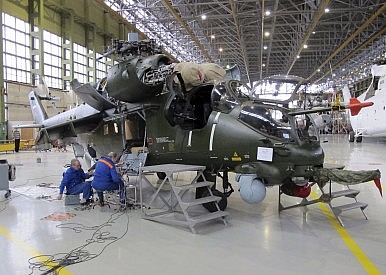
Russia’s decision to go ahead with the sale of Mi-35 attack helicopters to Pakistan, even in the face of official Indian concerns, is being seen by some quarters as evidence of a “major” regional re-alignment in the wake of the American drawdown in Afghanistan.
In fact, the Russia-Pakistan dialogue for regional integration has been underway for some time now and beyond security cooperation, it is more fundamentally driven by Moscow’s push towards ‘southern” markets and Pakistan’s need for a capable yet politically “manageable” strategic sector trade and investment partner. The Mi-35 sale (if it does materialize) reflects the fact that the geo-economic stakes for both sides are now high enough for them to make a concerted push towards a long term compartmentalized working relationship in a manner not dissimilar to the way in which their more traditional partners – India for Russia and America for Pakistan – deal with each other. Indeed, in a world characterized by both competition and cooperation the heady rhetoric of “strategic partnership” means little and it is the transactional content that weighs on any relationship. Far more than cooperation in counter-terrorism, Russia and Pakistan will have to move forward quickly on Putin’s commitment to invest in the latter’s energy and metallurgy sectors for their relationship to be meaningful.
It could be argued that it was actually America’s entry into the region a decade ago that ultimately accentuated the circumstances that impel Russia and Pakistan closer to each other. Pakistan’s counter-terrorism cooperation with America salved with military aid has been toxic for domestic stability, as the situation in FATA and Waziristan reveal. As the tempo of internal stability operations has increased, Pakistan is keen to diversify away from America for certain classes of weaponry to a source that can supply cheaper and more rugged alternatives with a much smaller political price on the domestic front. The Mi-35 fits that bill and is likely to prove useful for Pakistani operations against the Tehrik-i-Taliban Pakistan (TTP) in mountainous areas, given its pedigree from the Afghan theater. At the moment Pakistan is using AH-1 Cobra Gunships that were originally obtained from America for use against Indian armoured formations in the plains and are proving expensive to use in operations against the TTP. Pakistan may not wish to be saddled with too much expensive American equipment that it can”t afford without generous aid.
Russia until recently was “reluctant” to transfer equipment that could be labelled as offensive in nature such as the Mi-35, and was holding back probably with an eye on a number of Indian military procurement tenders such as the multi-billion dollar medium multirole combat aircraft (MMRCA) competition. In 2010, Russia’s UAC, which was participating in the tender, even made noises about blocking the re-export of 150 KlimovRD-93 turbofans from China for Pakistan Air force’s future mainstay, the JF-17, on the grounds that it would compete with the Russian Mig-29 in international markets. By 2013, however, with Russia having lost out on the MMRCA tender and other Indian competitions, the Russians reiterated their commitment to continue supplies of the RD-93 and the JF-17 Block II commenced production in late 2013. So while much is being made of the Mi-35 sale, the fact is the Pakistanis seem set to rely on Russian engines for a majority of their fleet in the coming decades. When seen along with the fact that Russia supplied IL-78 MP refuelling tankers to Pakistan between 2009 and 2012, it is clear that comfort levels on both sides have been growing for quite a while now.
However, Russia is now willing to supply tactical equipment to Pakistan, especially in categories such as attack helicopters, where India either has domestic projects or may buy American. In many of these categories, though Pakistani spending ability given relatively cheaper Russian equipment is not insignificant, the pull for the Russians also comes from securing greater Pakistani willingness to help the Russians maintain security over energy infrastructure transiting areas like Eastern Afghanistan.
Once again, the American push to set up energy transit corridors from Central Asia to India such as the Turkmenistan-Afghanistan-Pakistan-India (TAPI) gas pipeline has created a situation of Russia-Pakistan commonality. Russia has for some time expressed an interest in joining the TAPI project and is now pushing decisively for it even while proposing new oil pipelines next to it. Russia is also eager to partner in the Iran-Pakistan-India pipeline project, opposed by the Americans, but with clear potential if Pakistan agrees to guarantee delivery of gas to the India border. Of course, besides military supplies, Russia can also offer Pakistan a lot of useful intelligence in the latter’s fight against the TTP given that group’s link with various Central Asian terrorist organizations.
For Pakistan, the opening of Russia as a source for weapons greatly increases Pakistan’s leg room vis-à-vis American pressure at the strategic level. Moreover while Pakistan is certainly eager to get involved in trilateral military projects with Russia and China like the JF-17 (which may now even be exported to Myanmar), direct Russian weapon sales are also coveted since the Pakistani military does not want to field only Chinese weapons either.
In fact, as terrorist activities in Xingjiang increase and Pakistan’s internal security situation worsens, the Chinese have been rather selective in their Pakistani investments. For instance, Pakistan’s decrepit railways have actually had to turn to India for help and are looking to lease up to 50 diesel engines as rolling stock. While Indian industry has been making overtures to Nawaz Sharif’s government to open up to cross border investment, the Pakistani military is still looking to a politically less sensitive prospect to shore up the flagging core sectors of the Pakistani economy clearly in need of reliable foreign capital.
Of course, if former Pakistani Army Chief General Kayani’s views are anything to go by, the military understands that there can be no Pakistan without a viable economy. While in uniform, it was Kayani who made a couple of visits to Russia and today the Russians are being wooed as a source for investment in Pakistan’s flagship Thar Coal Project as well as a strategic partner for upgrading the South Asian country’s moribund steel industry. Chechnya it seems is more distant than Kashmir or even Xingjiang and Russia could yet prove a politically acceptable partner for meeting an energy crisis ridden Pakistan’s requirements in quite a few sectors.
For Russia the benefits of succeeding in Pakistan are worth the risk, since it could leverage influence over Af-Pak to reach Indian shores. Indeed, even Pakistan’s Gwadar port, much touted as a Chinese “pearl” could actually host a LNG liquefaction facility that could send cheaper gas supplies than Qatar to import terminals in South India. However, both Russia and Pakistan will have to work quicker to remove long-standing trade disputes for a more conducive environment.
India will of course watch closely to see whether the Russians are indeed able to use the dependencies they are creating in Pakistan for closer regional energy integration. That the Russians are increasing strategic options for their neighbor when even the Saudis are handing over Lashkar-e-Taiba terrorists will obviously be of concern to New Delhi. That is especially so since the Pakistanis themselves are masters at selective counterterrorism at a time when many jihadists in Syria and Afghanistan may soon be looking for a re-direct.

Pakistan: PPP will no longer be ‘friendly opposition’ in Parliament

http://mediacellppp.wordpress.com/
Main opposition party in parliament Pakistan Peoples Party has announced to end its role of “friendly opposition” in the Parliament.
“We would now act as the opposition and not as the friendly opposition that we did in Parliament in order to save parliamentary democracy,” Leader of the Opposition in National Assembly Syed Khurshid Ahmed Shah told Dawn over telephone from his hometown of Sukkur.
Shah castigated the government for invoking Article 245 of the Constitution which the latter has employed to deploy the army in the federal capital and termed it “a political blunder” by the Prime Minister Nawaz Sharif.
“Neither the Parliament, nor the political parties were taken into confidence over a decision as important as this,” Shah said.
“An in camera joint session of the Parliament should have been called before invoking this article,” Shah remarked. He said the prevailing political situation had led the government to behave in a confused manner, adding that it had also closed dialogue with other political forces, a situation which Shah said was resulting in chaos.
“The government should urgently restart dialogue with varying political forces otherwise I fear that the democratic system may become jeopardised,” Shah warned.

Saturday, August 2, 2014

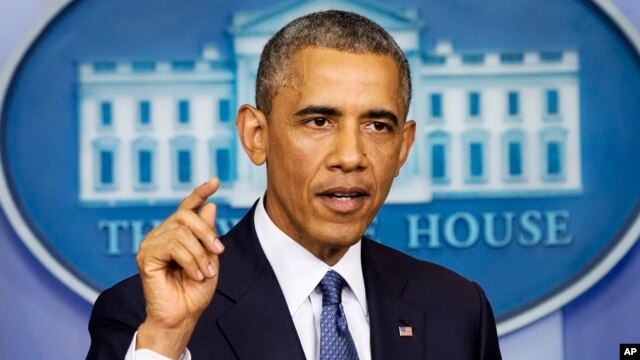
Obama Says He Will Act Alone on US Border Crisis, Slams Congress

As House Republicans leaders scrambled to toughen up their border bills to win the support of their most conservative members, Democratic President Barack Obama blasted Congress for failing to send him an emergency funding measure to sign before lawmakers leave for a five-week August recess.
House Republicans began Friday with a closed meeting in the basement of the U.S. Capitol, one day after a failed effort to pass a supplemental funding bill in response to an influx of children from Central America. Even the most conservative members emerged optimistic that the two border bills would now be changed to win the 218 votes needed to pass. Republican lawmaker Michele Bachmann said the bills now do what a core group of conservative Republicans wants:
“Stopping the invasion of illegal foreign nationals into our country,” she said.
No action in Senate
The Democratic-run Senate left town without passing a border bill. Senate Majority Leader Harry Reid blasted House Republicans for adding to the agenda a second border bill that would end an Obama administration policy of allowing hundreds of thousands of young undocumented immigrants who came to the U.S. as children years ago to stay.
“House Republicans will vote to deport children who have been living in the United States their entire lives, all in a pathetic attempt to appease the Tea Party,” he said.
President Obama criticized House members for crafting border legislation they know will never be taken up in the Senate and that he has said he would veto.
“House Republicans, as we speak, are trying to pass the most extreme and unworkable versions of a bill that they already know is going nowhere,” he said.
The president said Congress is leaving him no choice but to act on his own.
“I am going to have to act alone because we don’t have resources. We have already been very clear, we have run out of money,” he said.
Stopping the flow
Republican lawmakers blame the president for contributing to the influx of 57,000 children from El Salvador, Guatemala and Honduras this year, saying his rhetoric about immigration reform has caused confusion, which criminal trafficking gangs have exploited. Republican Congressman Tom Cole said the right thing to do is to send a clear signal to deter children from making the dangerous journey to America.
“So we need to stop this flow. We need to do in a humane and appropriate way,” he said.
House Democrats took to the floor in large numbers to oppose the border bills, calling them harsh and mean-spirited towards desperate children. Democratic Congressman Luis Gutierrez said Hispanic voters would remember the way Republicans treated the Central American children for many elections to come:
“Because the way you treat one of us today is the way you have treated all of us, and we will remember that,” he said.
Analysts say the president will likely have to shift funds to provide food and shelter for the children at the border, and that members of Congress will likely face the border issue again when they return in September.

President Obama's Weekly Address: It’s Time for Congress to Help the Middle Class

"Muj Se Pehli Si"- Malika Taranum Noor Jehan

"Premature to name Afghan leader for the Wales Summit"

Javed Hamem Kakar
The North Atlantic Treaty Organization NATO has stated that it was premature to say who would represent Afghanistan in the forth coming NATO Summit in the Wales next month.
The Wales in the UK would host the two day summit from September 4, 2014. President Hamid Karzai has been attending NATO summits so far but his term in the office has ended and Afghanistan expects a new president to take charge soon. In the 2012 Chicago Summit, NATO assured lasting aid to Afghanistan. These gatherings of the world leaders are of vital importance to the ware ravaged Afghanistan.
An official in the NATO headquarters Brussels told Pajhwok Afghan News on Saturday that it was too early to say who would represent Afghanistan in this summit.
NATO would devise its future Afghan strategy in the Wales Summit. Earlier it was hoped that the new Afghan president would have signed bilateral security pacts with the United States and NATO prior to this summit pawing a way for the two to chalk out their post 2014 aid and assistance strategies.
Hamid Karzai had been reluctant to sign the security pacts while both the presidential candidates Ashraf Ghani and Abdullah Abdullah have expressed willingness to sign the agreements.
Afghan election process has come to a standstill at a crucial time when two important global conferences are about to resume. Few weeks after the NATO’s Wales Summit, the United Nations General Assembly would convene its annual meeting. It is becoming an increasingly pressing and awkward question for NATO, seeking to withdraw most of its troops, as who, if anyone, will represent Afghanistan at next month's NATO summit.
The news agency quoted some diplomats as saying that President Karzai could be invited, or pick who represents the country, at Celtic Manor in Wales on Sept. 4-5, but the prospect of Karzai's participation raises technical problems – the constitution deems his term is already complete.
It also risks upsetting the United States, with whom Karzai has had a fraught relationship, and complicating the signing of two agreements that would allow the United States and NATO to keep some soldiers in Afghanistan for training and counter-insurgency operations.

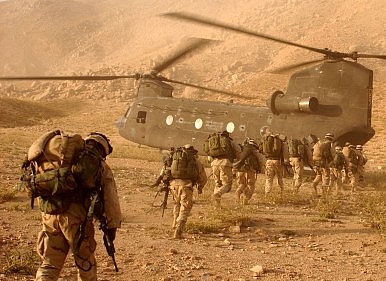
Why the US Spent More on Afghanistan Than on the Marshall Plan

By Akhilesh Pillalamarri
There are several reasons the U.S. has spent as much as it has in Afghanistan, to so little avail.
Recently, it has emerged in a report that the United States has spent more on reconstruction efforts in Afghanistan than it spent on the Marshal Plan, which resuscitated Europe after the Second World War.
According to the U.S. Special Inspector General for Afghanistan Reconstruction (SIGAR), congressional appropriations for reconstruction in Afghanistan have reached $109 billion in today’s dollars. On the other hand, the Marshall Plan delivered $103 billion in today’s dollars to 16 European countries between 1948 and 1952. However, reports comparing reconstruction efforts in Afghanistan and the Marshall Plan do not generally take into account the fact that the Marshall Plan appropriations constituted a much greater proportion of the U.S. economy in the 1940s than Afghanistan reconstruction efforts do today. While the U.S. has spent $109 billion out of a $13-15 trillion economy on Afghanistan over 13 years, in 1948-1952, it spent $103 billion out of a $2 trillion dollar economy (adjusted) in only four years.
Nonetheless, the fact that the U.S. spent so much money on Afghanistan while getting so little from its efforts shows that many obstacles must yet be overcome for Afghanistan to fully stabilize. More than half of the money, $62 billion has been spent on building up the Afghan military, which essentially had to be built from scratch. The Marshall Plan, on the other hand, aided the economies of European countries and not their militaries directly.
Unfortunately, much of the American money in Afghanistan has been misspent or thrown at projects without first judging their viability or necessity. For example, a $2.89 million storage facility has gone unused for over a year. This goes to show that the U.S. solution of throwing money at problems, both domestically and internationally, has its limitations. Using money effectively to come up with desired outcomes is more important than spending large amounts of it on token projects.
Major worries regarding the Afghan army include lax oversight of weapons, many of which cannot be tracked, and which could find their way to the Taliban. More importantly, an army’s effectiveness or lack thereof often comes down to morale and discipline, factors that extend beyond how much money it gets. Emphasizing morale and discipline, so that the Afghan army does not go the way of some Iraqi units in northern Iraq, involves local, tribal and social factors in Afghanistan. These are not simply matters of pay. Additionally, the solution to Afghanistan’s security issues will need the cooperation of Pakistan, which is a political issue.
The report’s findings also go to show that decisions on how to spend money are best made by people on the ground with detailed knowledge of the needs of Afghanistan instead of being made by planners in the U.S. One of the most glaring examples of mistakes made by U.S. planners involved the U.S. Department of Agriculture spending $34.4 million towards a soybean project in the face of evidence that the crop was “inappropriate for conditions and farming practices in northern Afghanistan, where the program was implemented.”
Ultimately, Afghanistan has to do more to strengthen itself and its weak state. The Afghan state’s anticipated revenue this year is $2.8 billion while its expenditures will be $7.6 billion. Consequently, it will be dependent on foreign aid for years to come as it struggles to increase its revenue. Admittedly, this is difficult in a state that has little presence in many parts of the countryside and in a country where few people actually pay their taxes. Nonetheless, it is imperative that Afghanistan gradually increase its revenue base while finding ways to use the money it has more effectively.
The Pentagon has estimated that Afghan forces will require 370,000 people, which will cost more than three times as much as the Afghan government’s entire domestic revenue. Given this fact, in a country where a strong nation state has not yet fully taken hold, both Afghan and U.S. figures should be open to the idea of talking to tribes and militias and using them as a supplement to the national army in order to improve stability. Although risky, manipulating and playing different groups against each other is a skill that is necessary for the success of Afghanistan and one that any successful leader of the country must have in order to survive, as Afghan President Hamid Karzai pointed out.
Perhaps the U.S. spent so much money to little avail in Afghanistan because it channeled its efforts through ineffective and little-trusted state institutions in a country where the state has not been fully accepted and implemented as the dominant form of political organization. As Jennifer Brick Murtazashvili notes over at Foreign Policy, Karzai is correct in arguing that Afghan citizens feel closer to and trust traditional authorities more than state institutions. Customary authority is more likely than state building to ensure development and stability for Afghanistan. One should remember that it took many European countries hundreds of years to evolve state institutions out of complex feudal structures, so it is naïve to expect otherwise of Afghanistan.

Afghanistan: Reports of Taliban surge are exaggerated, says incoming ISAF commander

The incoming NATO-led International Security Assistance Force (ISAF) commander, Gen. John F. Campbell has called reports regarding the surge of Taliban militants as exaggerated. Gen. Campbell is expected to succeed Gen. Joseph Dunford as ISAF commander and take over commander of the NATO combat mission in Afghanistan.
The General suggested that the reports suggesting that the Taliban militants are gaining ground as U.S. troop levels fall and Afghan soldiers take on more fighting duties, are more about PR than battlefield realities. Speaking to reporters in Pentagon, Gen. Campbell said many of the claims were based on propaganda by the insurgents trying to intimidate the Afghan public into supporting them.
“A lot of what you’re getting on how bad it may have been down in the south, or this attack there, or some of the things in the east, is we have kind of lost the information war here,” Gen. Campbell quoted by Star and Stripes said. He said, “The Taliban are trying to go do what they couldn’t do for the elections with these spectacular attacks.” The remarks by Gen. Campbell comes as reports suggest that the Taliban militants surged out of strongholds in remote areas of the south and taken over strategic territory around Kabul as well as elsewhere in the country.
Campbell acknowledged the Taliban are making Afghanistan pay a heavy price. “It’s not much ado about nothing. There is very much some concern because of the numbers of civilians that have been attacked and killed is much higher,” he said. However, he insisted that there’s a fundamental difference between the war now and when he last commanded troops in Afghanistan in 2011.
Campbell said the improved Afghan security forces are usually able to retake lost ground quickly as the Taliban could take and hold positions.

Humaima Mallick Proud Of Romantic Scenes In ‘Raja Natwarlal’

Pakistani model-actress Humaima Malick says she may have shot steamy and passionate kissing scenes with her co-star Emraan Hashmi for her forthcoming Bollywood debut “Raja Natwaral” but there is no vulgarity in the movie.
“There is no vulgarity in the film at all. In fact, I am very proud that we have done many romantic scenes in the film and have shot beautifully,” Humaima said here Wednesday at the launch of a song from the film.
Directed by Kunal Deshmukh, “Raja Natwaral”, also featuring Paresh Rawal and Kay Kay Menon, will hit the theatres Aug 29. “Everyone can watch the film with his/her kids and family,” she added.

Pakistan: Food for thought, Mian Sahib(Nawaz)

BY INAYATULLAH
If one goes by the tongue-in-cheek observations of some TV talk show anchors, the PML-N’s days are numbered. It is implied that massive rallies and dharnas in Islamabad are bound to create a situation that will force incumbent governments to agree to mid-term elections.
Imran Khan has upped the ante by asserting that because of rigging in the 2013 elections, the present government cannot be considered legitimate and polls under their auspices will mean a repetition of the farce of another (rigged) election. Hence this government has to go and a new electoral set-up forged for electing the real representatives of the people.
Looking back, Imran had given the PML-N a month to provide answers to his four questions relating to the way the 2013 elections were held. Characteristically, Nawaz Sharif did not take this notice seriously. Imran’s challenge was thus practically ignored giving him the excuse and opportunity of declaring that time had run out and the goal-post shifted. As for Tahir-ul-Qadri’s threat of launching a revolution, the government, weakened as it was after the Model Town incident, resorted to subject Qadri to tax-default notices. According to him, he and his organization have been asked to pay more than 700 million rupees to the FBR. Undeterred, Qadri has stuck to his resolve to wipe the government out on account of corruption, and for its failing to abide by certain provisions of the Constitution.
Instead of rising to the occasion to take Imran Khan seriously and somehow finding a way to engage him with a view to finding a solution to the problem, the government let the matter drift and the situation deteriorate from bad to worse. Valuable time was lost.
It is puzzling how most of the TV channels are vying with each other to project the PTI and PAT. Mr. Qadri has often been seen waxing eloquence, quoting scriptures and Articles of the Constitution of Pakistan to convincingly establish his case for the Inqilab. He claims the people have the right to rise and do away with an “incompetent, corrupt and cruel” administration.
There has hardly been a befitting response on the electronic media to the vilification campaign raging against the government. Sheikh Rasheed is often found firing broadsides from almost every channel. Thus the electronic media reinforces the noise raised by the opposition. (Geo, in spite of repeated assurances by the minister for information, has not yet been restored.) The government’s near-paralysis is inexplicable.
Too much is at stake; the incumbent government and democracy itself.
The regime’s deeply unfortunate behaviour in Model Town has been condemned even by the PPP, which has joined the rest of the opposition in denouncing the federal government for extended load-shedding inflicted on citizens. This, coupled by Zardari’s utterances about the PML-N leadership, and an indication of support for Imran Khan, has added to the government’s discomfiture. There is speculation that the PPP may make a common cause with Imran Khan, at some stage.
There is little doubt that the Sharif brothers have been found wanting in facing the odds stacked against them confidently. Instead of resolving to unite, or to demonstrate strength, there have been fissures in the party high command itself.
How could the Prime Minister, for instance, fly away to another land for ten days in the midst of complete political chaos and a war with over a million displaced people?
Yet another surprise was sprung. Without consulting the leader of the opposition, the army was asked to take over security of Islamabad under Article 245 of the Constitution on the grounds that a terrorist blow-back was imminent. It is widely believed that the army has been called in to help the government deal with the PTI (and possibly the PAT) rallies and dharnas. It appears that the government has done so, in panic, and not out of prudence to ward off a Taliban strike.
A word about the civil-military relations. The Musharraf trial is an issue of real contention. The fact remains that the government had a good case. The top brass was to be convinced that a bitter pill had to be swallowed to uphold the supreme law of the land. The Geo episode further added to the misunderstandings. Above all, the lethargic handling of talks with the Taliban resulted in the shifting of the initiative to the army which went ahead to start off the military operation in North Waziristan. In the Indian Express, C. Raja Mohan a veteran journalist, in a recent column, has reviewed two new books on the Pakistan Army. One is authored by Christine Fair, titled “Fighting to the End.” The second is titled “The Army and Democracy: Military Politics in Pakistan,” by Aqil Shah.
Mohan says, “Few armies in the world attract the kind of policy and scholarly attention that the Pakistan army does. Rightly so, for its institutional primacy at home and strategic influence abroad have few parallels. Many armies have run their countries, but most of them had to eventually yield to democratic change and civilian control. The Pakistan army however, exercises extraordinary power, whether in the barracks or the chancelleries. It controls Pakistan’s nuclear arsenal, manipulates its domestic politics, shapes its internal security and runs the critical accounts of the country’s foreign policy with India, Afghanistan, China, the Gulf and the United States.” Speaking of Aqil Shah’s book, he further states, “Like Fair, he (Shah) too delves deep into the Pakistan army’s mindset and its self perception as the guardian of the nation… he poses two important questions: One, can the army really be pushed back to the barracks? And two, who will guard the guardians? Therein is much food for thought for Mian Sahib.

Pakistan:Two new polio cases in Peshawar, Bara, take total to 104

http://www.nation.com.pk/
The unvaccinated children in Khyber Pakhtunkhwa and tribal areas continued to thwart global efforts to eradicate polio as National Institute of Health, Islamabad confirmed two new polio cases today.
The new cases took the nationwide polio count to 104 this year alone for ahead of last year tally of 93. Pakistan has recorded highest number of polio cases among the three endemic countries.
One newly-infected child is the residents of the violence-wracked Bara subdivision of Khyber Agency. Polio virus detected in eight month old Hafsa resident of Bara. One year old Salma, resident of Peshawar was also found infected with virus.

File of case registered against PML-N MPA goes missing

http://tribune.com.pk/
The file of a case registered against Pakistan Muslim League – Nawaz (PML-N) MPA Rana Shoaib Idrees in January 2013 for allegedly attacking a police station and torturing policemen has gone missing, Express News reported on Saturday. A case has been registered against ASI Umar Daraz and Inspector Ghazanfar for allegedly being responsible to cause the file to go missing.
Idrees was caught on tape attacking a police station in Faisalabad on July 19. The PML-N MPA and his accomplices allegedly attacked Khurarianwala police station in order to free their companions. They also reportedly tortured and injured Sub Inspector Riyasat Ali and other police officials, and damaged official property of the station. The Khurarianwala police had registered a case under various sections of the Anti-Terrorism Act and Pakistan Penal Code against nine identified and 50 unidentified men for taking the law in their own hands, damaging the police station, rioting and injuring policemen.
However, the Lahore High Court (LHC) had granted Idrees protective bail till August 11. At this point, Idrees had defended himself, saying the footage that the police presented as evidence against him was over a year old, of an incident that occurred before the May 11 general elections – the file of this case is now missing.

Pakistan's Load Shedding: Losing power

Despite a year of talk, the facts remain the same. Losses in the power sector are at the same level they were last year when the government made what it called a one-time retirement of the circular debt.
That extraordinary measure was taken to create some breathing room in which to implement the necessary reforms and bring down the losses, a goal that has evaded the government so far.
The latest round of figures compiled by the power bureaucracy in its monthly report of operational data show that the gap between the amount of electricity provided to the distribution companies and the amount of units billed is just under 19pc in the fiscal year ended June 2014, the same level they were at last year.
And this figure tells only half the story. In financial terms this means that electricity worth Rs211bn was lost in the last fiscal year. When recovery losses — the gap between the units billed and the amount of money actually recovered against those bills — are added to this tally the figure doubles, bringing us close to the approximate total of Rs550bn of the circular debt.
A closer look at the data compiled by the power bureaucracy shows that all distribution companies of the country are contributing their fair share to these overall losses.
For a while, the minister of state for water and power tried to peddle the story that the chief reason for the circular debt was that Punjab pays its bills but that Sindh and Khyber Pakhtunkhwa do not.
The data provided by the power bureaucracy belies this claim; it shows that more than half the losses occurred in distribution companies in Punjab with the remaining half shared by those from Sindh, KP and Balochistan.
It seems that inefficiency and incompetence do not have an ethnicity, and all apparent attempts to paint one province as superior in the matter of billing recoveries or distributional efficiency are without foundation.
Why is this data not made public? The power bureaucracy is required to produce monthly reports of its operational data which includes details of all the electricity generated and provided to all the distribution companies in the country.
The result is a report with 150 or so pages of detailed data on where the electricity is coming from and where it is going. There is no reason to keep this information out of the public domain, and the water and power secretary should seriously consider making the document available online, along with all back issues.
In addition, financial data should be similarly gathered and disseminated, including cash flow statements, so that claims about operational efficiencies can be verified.
There should be accountability of the power bureaucracy, and allowing some daylight into the dark corners where discretionary decision-making power lurks is the best way to ensure this.

Pakistan: Army to be visible in Islamabad soon

Army troops would soon be guarding sensitive buildings in Islamabad, and patrolling the streets later, as the federal government’s decision to deploy them in aid of the civil administration came into effect on August 1.
Interior Minister Chaudhry Nisar Ali Khan had sent shockwaves across the country last week by revealing that the government had issued a notification on July 24 to requisition services of the armed forces under Article 245 of the Constitution.
A day after a military spokesman disclosed on July 26 that the decision to call army was taken in a meeting, on the launch of the military operation against militants in North Waziristan, held on June 15, the minister accused those criticising the decision were making army controversial in a war-like situation. He said 352 troops were being requisitioned to assist police and other civic agencies secure Islamabad.
“Army soldiers will be all over the city and will be able to reach a hotspot in case of an emergency within 10 minutes. The army will coordinate with police and Rangers directly and through the district administration,” he said.
Senior Superintendent of Police Mohammad Ali Nekokara told Dawn that deployment of the soldiers under Article 245 will be finalised after consultation with the district administration.
“I believe that collaboration between the Army, police and district administration became necessary for national security in the wake of Operation Zarb-i-Azb. Police have been collaborating with all agencies. That is why not a single untoward incident has been reported in the federal capital since the launch of Operation Zarb-i-Azb,” he said.As of now SSP Nekokara did not feel the need to put troops on patrol duties in the city, however.
“They can be called to that duty if and when required,” he said.

Pakistan:PPP asks govt to withdraw army

http://mediacellppp.wordpress.com/
The Pakistan People’s Party has asked the government to immediately withdraw Article 245 because the entire political leadership of the country and civil society have opposed it.
“The PML-N government is mishandling a political issue. It has complicated the matter of a political protest by calling in army in the federal capital,” former prime minister Yousuf Raza Gilani said here on Friday.
Mr Gilani said during his tenure as a premier he had not called in the army to stop the lawyers march to restore the judiciary. He said the government should not have set this precedent. He said PTI’s long march should be peaceful. Punjab PPP President Manzoor Wattoo said the situation in Islamabad was not that bad to invoke the article. He said the government should withdraw the army because there was a possibility of a clash of the institution.
He argued that it also implied that the government and its law-enforcement agencies had failed to secure the federal capital reflecting poorly on its ability to handle a political issue.
Wattoo said the PML-N government was taking a solo flight. He said the ongoing military operation in North Wazirstan was launched without taking parliament into confidence.
Lahore PPP President Samina Ghurki said the government should not use force to deal with political issues.

Friday, August 1, 2014

Miley Cyrus - Party in The U.S.A.

Video: Soviet drone used by Ukraine govt downed & found in Donetsk field

Republicans' immigration plans "extreme", says Obama

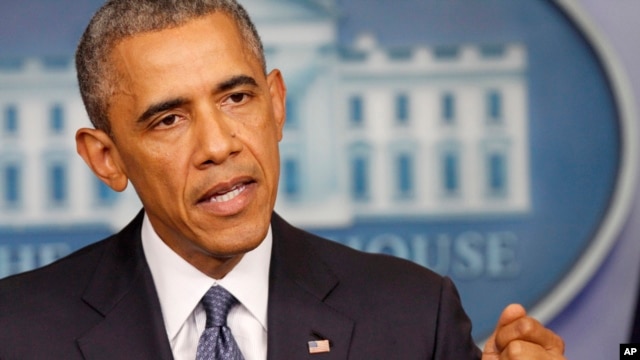
Obama Defends Handling of Gaza, Ukraine Conflicts

http://www.voanews.com/
President Barack Obama is defending his handling of conflicts in Gaza and Ukraine as fighting in both places shows no signs of letting up, despite intense U.S. diplomatic efforts this week.
At a White House briefing Friday, the president hoped to focus on positive job growth numbers. Instead, he dealt with questions on the failure of U.S. diplomatic efforts to secure a cease-fire in Gaza and stop Russia's intervention in Ukraine, where fighting raged as Russian forces continued their buildup on the border.
In Gaza, a cease-fire brokered with U.S. help collapsed moments after it was announced, when two Israeli soldiers were killed and a third was captured.
Obama said stopping the fighting is going to be a challenge. “I think it's going to be very hard to put a cease-fire back together again if Israelis and the international community can't feel confident that Hamas can follow through on a cease-fire commitment.”
When a reporter asked the president if he had lost his influence in the world, Obama said U.S. diplomatic efforts will take time, and he pointed to what he said is progress in pressuring Russia to resolve the Ukraine crisis.
European nations joined Obama this week in imposing tougher new sanctions on key Russian sectors, something the U.S. administration had been threatening for months. Short of going to war, he said there are going to be constraints in terms of what the U.S. can do to stop Russian interference in Ukraine.
“What we've done is imposed sufficient costs on Russia that objectively speaking, they should -- President Putin should -- want to resolve this diplomatically, get these sanctions lifted, get their economy growing again, and have good relations with Ukraine; but, sometimes people don't act rationally,” he said.
Obama said he called Putin on Friday and reiterated his deep concerns about Russia's increasing support for separatists in Ukraine. Obama said he told the Russian leader he prefers a diplomatic solution, and the two agreed to keep channels of communication open.

Iraq violence kills over 1,700 in July, UN says

The United Nations says more than 1,700 people have been killed in Iraq during violence in July as the country grapples with a crisis caused by ISIL Takfiri terrorists.
The UN said on Friday that at least 1,737 people, mostly civilians, were killed in the crisis-hit country last month.
The death figure includes 551 members of Iraqi security forces and 1,186 civilians.
"I am concerned about the rising number of casualties in Iraq, particularly among the civilian population. Children and women are most vulnerable," said Nickolay Mladenov, the UN envoy to Iraq, on Friday.
The July figure brings the total death toll of the year to at least 6,700.
Earlier in the day, at least 17 Iraqi soldiers were killed in clashes with militants in a town south of the capital Baghdad.
"Seventeen soldiers were killed and three wounded during clashes with insurgents in Jurf al-Sakhar that lasted two hours this morning," said an Iraqi army lieutenant.
At least 2,400 deaths were recorded in June, when Takfiris launched a massive blitz capturing parts of the country.
The ISIL Takfiri militants took control of Mosul, in a lightning advance on June 10, which was followed by the fall of Tikrit, located 140 kilometers (87 miles) northwest of Baghdad.
More than a million people have been displaced in Iraq so far this year, according to the UN.
The ISIL has vowed to continue its raid towards Baghdad. Iraqi Prime Minister Nouri al-Maliki has said that the country’s security forces would confront the terrorists, calling the seizure of Mosul a “conspiracy".
Soldiers of the Iraqi army have been engaged in heavy fighting with the militants on different fronts and have so far been able to push back militants in several areas.
Maliki has said Saudi Arabia and Qatar are responsible for the security crisis and growing terrorism in his country, denouncing the Al Saud regime as a major supporter of global terrorism.

Japan's naming of islands illegal, invalid: China

China on Friday opposed Japan's naming of five islets belonging to the Diaoyu Islands, saying the move is illegal and invalid.
"China resolutely opposes Japan's move to undermine its territorial sovereignty as the Diaoyu Island and its affiliated islands are China's territory and have been already named by the country," Foreign Ministry spokesman Qin Gang said in a statement.
Qin's comments came hours after Japan named five isles belonging to the Diaoyu Islands.
"Japan's unilateral measure is illegal and invalid and cannot change the fact that the Diaoyu Island and its affiliated islands are part of China's territory," the spokesman said.
China-Japan relations have soured since the Japanese government's "purchase" of the Diaoyu Islands in September 2012.

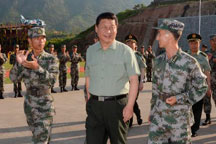
China: Xi vows strike on military corruption

Chinese President Xi Jinping has pledged a harsh strike against military corruption as the People's Liberation Army (PLA) prepares for the 87th anniversary of its establishment on Friday.
Xi, who heads the Central Military Commission (CMC), urged troops to strengthen their ties with the people and avoid undesirable work styles such as formalism, bureaucracy, hedonism and extravagance.
The president made the remarks during a Wednesday visit to the headquarters of the military region of Fujian, where he worked for 17 years.
Xi stressed the need for military to be loyal to the Communist Party of China (CPC), saying "the Party's absolute leadership over the army should be unswervingly adhered to."
While addressing officers, he called for intensified drills to improve troops' fighting abilities and ensure they can win battles.
The president has showed his determination to root out pervasive military corruption in order to safeguard the integrity of the PLA. The CPC last month announced that Xu Caihou who retired as vice chairman of the CMC last year, had been expelled from the Party for bribery and may face prosecution.
Investigation found that Xu took advantage of his post to assist the promotion of other people and accepted bribes personally and through his family members.
Before the downfall of Xu, Gu Junshan, a former senior military logistics officer, was charged with embezzlement, bribery, misuse of state funds and abuse of power. The case was filed to a military court in March.

WHO: Ebola Spread Outpaces Control Effort

What You Need to Know About the Ebola Outbreak

By Denise Grady, Josh Keller, Heather Murphy and Sergio Peçanha.
How many people have died?
More than 1,300 people in Guinea, Liberia and Sierra Leone have contracted Ebola since March, according to the World Health Organization, making this the biggest outbreak on record. More than half of those infected have died. Nigeria also reported one probable case: a Liberian man who traveled there and died on July 25.
How does this compare to past outbreaks?
It is the deadliest, eclipsing an outbreak in 1976, the year the virus was discovered.
How contagious is the virus?
You are not likely to catch Ebola just by being in proximity with someone who has the virus; it is not airborne, like the flu or respiratory viruses such as SARS. Instead, Ebola spreads through direct contact with bodily fluids. If an infected person’s blood or vomit gets in another person’s eyes, nose or mouth, the infection may be transmitted. In the current outbreak, most new cases are occurring among people who have been taking care of sick relatives or who have prepared an infected body for burial. Health care workers are at high risk, especially if they have not been properly equipped with or trained to use and decontaminate protective gear correctly. The virus can survive on surfaces, so any object contaminated with bodily fluids, like a latex glove or a hypodermic needle, may spread the disease.
Why is Ebola so difficult to contain?
In some parts of West Africa, there is a belief that simply saying “Ebola” aloud makes the disease appear. Such beliefs create major obstacles for physicians from groups like Doctors Without Borders, which are trying to combat the outbreak. Some people even blame physicians for the spread of the virus, and turn to witch doctors for treatment. Their skepticism is not without a grain of truth: In past outbreaks, hospital staff who did not take thorough precautions became unwitting travel agents for the virus.
How does the disease progress?
Symptoms usually appear about eight to 10 days after exposure, according to the Centers for Disease Control and Prevention. At first, it seems much like the flu: a headache, fever and aches and pains. Sometimes there is also a rash. Diarrhea and vomiting follow.
Then, in about half of the cases, Ebola takes a severe turn, causing victims to hemorrhage. They may vomit blood or pass it in urine, or bleed under the skin or from their eyes or mouths. But bleeding is not usually what kills the patient. Rather, blood vessels deep in the body begin leaking fluid, causing blood pressure to plummet so low that the heart, kidneys, liver and other organs begin to fail.
How is the disease treated?
There is no vaccine or cure for Ebola, and in past outbreaks the virus has been fatal in 60 to 90 percent of cases. All physicians can do is try to nurse people through the illness, using fluids and medicines to maintain blood pressure, and treat other infections that often strike their weakened bodies. A small percentage of people appear to have an immunity to the Ebola virus.
Where does the disease come from?
Ebola was first discovered in 1976, and it was once thought to originate in gorillas, because human outbreaks began after people ate gorilla meat. But scientists have since ruled out that theory, partly because apes that become infected are even more likely to die than humans.
Scientists now believe that bats are the natural reservoir for the virus, and that apes and humans catch it from eating food that bats have drooled or defecated on, or by coming in contact with surfaces covered in infected bat droppings and then touching their eyes or mouths.
The current outbreak seems to have started in a village near Guéckédou, Guinea, where bat hunting is common, according to Doctors Without Borders.

Putin to Obama: US Sanctions Against Russia Hurt Bilateral Relations

Continuing sanctions pressure on Moscow is counterproductive and seriously harms Russia-US relations, President Vladimir Putin told his US counterpart, Barack Obama, in a phone call on Friday.
«The sides discussed several aspects of Russia-US relations. Putin described Washington’s drive to strengthen sanctions pressure [on Moscow] as a counterproductive move that seriously harms bilateral cooperation and global stability as a whole," the Kremlin said in a statement.
The presidents agreed that the current state of affairs is not in the interest of either country…and discussed prospects of the Russian-American dialogue in light of the current standoff," the statement said.
Last month, the United States introduced the so-called Sectoral Sanctions Identification List that affects companies and institutions in defense, energy and banking sectors of the Russian economy. The new economic sanctions targeting three major banks — VTB Group, Bank of Moscow and Russian Agricultural Bank, or Rosselkhozbank - went in effect July 29. The European Commission followed by publishing on Wednesday the names of eight individuals and three additional Russian entities targeted by sanctions over Russia's alleged role in the escalation of the Ukrainian crisis.
The sanctions came after the Malaysia Airlines plane crash in eastern Ukraine, which is largely controlled by independence supporters, on July 17. The European Union and the United States both claim Russian responsibility in supplying the independence supporters with the weapons, used to shoot down the airliner with 298 people on board. Moscow denies weapon transfer arms to the self-defence forces.
Washington, however, is seeking a number of Asian countries to back new US and EU economic sanctions against Russia, Wall Street Journal reported Wednesday citing a senior State Department official.
The first round of sanctions against Russia was implemented by the United States and the European Union back in March as a response to Crimea’s reunification with Russia following a referendum.

Music: HABIB WALI MOHAMMAD - AAJ JANE KI ZID - BADAL AUR BIJLI

Pakistan: Govt made situation complicated unnecessarily

Former prime minister Yousuf Raza Gilani has said that the government had made the situation complicated unnecessarily, Geo News reported. Talking to media here Friday, Gilani said there is space for dialogues in the politics at anytime. Former premier said Pakistan People’s Party (PPP) had not called in army during the lawyers’ long march. He said whether it is long march or something else, it should be peaceful. He said they wanted protection of rights of the masses. Gilani was of the view that the government could be ousted because of its own mistakes and not by any long march. He said there was no need to invoke article 245, adding the government could still handle the situation. He said PML-N government had itself launched long march, therefore, it should allow others to hold peaceful march.

Pakistan: PTI denies govt’s claims of contacts over Aug 14 march

Pakistan Tehreek-i-Insaf (PTI) vice chairman Shah Mehmood Qureshi on Friday strongly denied claims of the ruling Pakistan Muslim League - Nawaz (PML-N) that the government is in touch with certain PTI leaders to call off the 'million march' on Islamabad scheduled for August 14.
"Chief Minister Punjab Shahbaz Sharif wanted to have a word with Imran Khan but the PTI chief refused to talk to him and there is also no other contact between government and the party leaders,” he told Dawn.com over telephone from his native home town, Multan.
Qureshi said time for talks with the government has gone past and the decision of going ahead with the long march is final.
"Some of government ministers are spreading rumours to confuse our workers,” he claimed.
"The government, by calling Pakistan Army in Islamabad, wants to scare PTI workers but we are determined to carry on with the Aug 14 march,” he said, adding that, “our workers won't clash with military or any other security force.” When his attention was drawn to the fact that an electoral reforms committee has been constituted, Qureshi said the PTI would extend full cooperation to the committee. However, he added that the government was not serious in reforming the country’s electoral process
Earlier, Political Secretary to Prime Minister Nawaz Sharif Dr Asif Kirmani had told Dawn that the government has established contact with the PTI leadership in a bid to convince them to call off the long march.
“Some of our party leaders are in touch with PTI leaders for holding a dialogue in order to call off their long march," said Kirmani.
He said the government's door was open for talks with PTI and that party chief Imran Khan was requested to discuss issues on a dialogue table instead of launching the long march. Sources said that Interior Minister Chaudhry Nisar Ali Khan has been tasked to woo Imran to call off his party's million-man long march. They added that as a result of background contacts, both Nisar and Imran are expected to meet on Aug 4 to discuss the issues and demands of the PTI.

Pakistani women flee fighting but are denied aid

Thousands of women displaced by fighting in Pakistan are struggling to get food and other aid because they lack identity cards and conservative Muslim elders have forbidden them from going to distribution centers.
The women are among nearly a million people who registered for aid after the army began an offensive against the Pakistani Taliban in North Waziristan, a mountainous region on the Afghan border.
The army ordered most civilians to leave before the offensive began in June. Many ended up in Bannu, a small city on the main road out of the semi-autonomous tribal region.
No census has been conducted in North Waziristan for years, so no one knows the true scale of the problem. Government figures, however, show almost three-quarters of those seeking aid are women and children.
There's plenty of food to go around, with the World Food Program handing out nearly 5,000 tonnes and many other aid groups active.
But women face two problems: the lack of identity cards and an edict from elders of their Pashtun tribes forbidding them from going out to get aid. Conservative tribal traditions demand women stay at home and men fetch the food.
The same traditions prevent many women from getting identity cards. Some families also find the idea of a woman being photographed or fingerprinted for cards highly intrusive, even though the national identity agency runs women-only centers. Others simply lived in areas too remote to get cards.
For now, women and children without male relatives are largely dependent on handouts from neighbors who are themselves dependent on aid. Even women who have husbands may face problems, since many men have multiple wives depending on them.
"I HAVE NO CHANCE"
One woman sobbed behind her veil as she waited outside the main sports stadium in Bannu last week, watching men with wheelbarrows carry out sacks of flour and containers of water.
"They are not letting me in," the woman said. "I have no chance to enter."
The woman, Basmira, had no identity and no male relative. She stood near a cluster of women in all-covering burqas beseeching stick-wielding police and army guards to let them into the stadium.
Another woman, Maimoona, said her husband was killed by a stray bullet three months ago.
"You see those sticks in their hands? They will beat us if we try to go in," said 30-year-old Maimoona, who like many in Pakistan uses only one name.
Two other women said they were also widows and one said her son was a drug addict.
A soldier at the gate said women were welcome to go to other distribution sites around the city, but Reuters found that women were also being denied entry at four other centers.
"This lack of ID cards is a major problem for widows, second wives, and many women whose husbands are not here," said Yasmin Akhtar, regional manager for Khwendo Kor, an aid group helping about 1,000 of the women.
Muhammad Abbas Khan, the commissioner for displaced families in Bannu, was exasperated.
"We tried to resist the elders but it was like talking to a brick wall," he said. "This conservative culture overrides religion, it overrides ethics and it overrides human rights."
The government says it will set up a women-only distribution point in the next few weeks but until then, women have to rely on handouts from other hungry families.
That generosity is keeping many people fed at Bannu's Government School Number 3, where hundreds of displaced live in concrete classrooms partitioned by cotton sheets.
Shashparizada, 45, and her co-wife are at the school with their 12 children and husband, a frail 70-year-old with a long white beard. He lay on a rope bed with a fan nearby, too weak to stand.
"He is so old, it is hard for him to wait in line," Shashparizada said. "We do not have ID cards and he cannot go, so there is nothing for us."

Beyoncé - Countdown

Mismanagement of $104 Billion Aid in Afghanistan

Over the past 13 years Afghanistan has received the largest sum of international aid in its modern world history.
In a recent report, the U.S. Special Inspector General for Afghanistan Reconstruction (SIGAR) claimed that Afghanistan has received $104 billion in financial assistance in the past 13 years. This is the most the U.S. has spent on a nation-building project since the Marshall Plan, 1948—implemented to rebuild Western Europe after World War 2—had only cost an inflation-adjusted, $103 billion.
SIGAR stated that Afghanistan's economic condition remains fragile in spite of all the aid, raising questions about the aid system in the country.
Experts have said mismanagement is the main reason behind the alleged misappropriation of the funds.
"Afghanistan has lost major economic opportunities due to mismanagement," university professor Syed Jawad Hussaini said. "If the money was managed and used properly, Afghanistan would have already reached the same levels of stability and construction as the other countries in the region."
Moreover, the government's inadequacies as well as lack of transparency and accountability in the system have been criticized as factors playing into the mismanagement.
"The lack of harmony between the government and the international community, the lack of monitoring of the legislative body and the silence of the civil society and the public are the main factors that have led to embezzlement," commentator on economics Syed Massoud said.
Meanwhile, the report indicates that the aid to Afghanistan was not allocated to the establishment of security forces only—just as the case was with the Marshall Plan in Europe.
From the total amount of $104.1 billion in Afghanistan, 62 billion was allocated for structuring the army and the police forces and $7.6 billion was allocated to counter-narcotic initiatives. SIGAR asserted that despite the large sum of money distributed to combating narcotics, drug smuggling remains a big problem.
The pressure is now on the next government as the inability to combat corruption could potentially lead the country toward an economic recession. The next government will have to make up for the misconduct of international aids as it deals with a fragile economy and decrease of international aids.

Disabled By Polio, Afghan Official Hopes For Better Opportunities For All

Sayed Hamid Daqiq was partially paralyzed by polio at an early age, but with a little assistance from family and friends, he has risen to a high-level post in Afghanistan's Finance Ministry. Daqiq hopes that recent legislation promising improved access and resources for disabled Afghans will allow many more people to meet their full potential. (Produced by Malali Bashir; camera by Wali Sabawoon and Farishta Mursal, RFE/RL's Radio Free Afghanistan)

Pakistan's Semi Martial Law: Army deployed in Islamabad from today

The federal government’s decision to deploy the army in Islamabad under Article 245 of the Constitution is in effect from today, with the military mandated to aid civilian law-enforcement agencies in securing the capital for the next three months.
Five companies of the army have been deployed in various parts of Islamabad to secure main offices of the judiciary, Parliament House, Presidency and Prime Minister Houses, foreign missions, foreign office and other important installations, sources said.
One army company was deployed at Margalla Hills and on the road that connects the province of Khyber Pakhtunkhwa with Islamabad, they added.
According to the security plan, the army would work in close coordination with the police, Rangers and administration for ensuring fool proof security for Islamabad.
However, the Pakistan Peoples’ Party (PPP) has decided to take up the matter in the National Assembly session starting from August 4.
t is being largely deemed that the government is calling for military assistance as it is apparently panicking in the face of Pakistan Tehreek-i-Insaf’s (PTI) upcoming long march on Independence Day.
An interior ministry spokesperson had elaborated that the capital was not being ‘handed over’ to the army and in fact a contingent from the military would assist the police and civil administration at sensitive installations and serve as a rapid response force.
Earlier, Information Minister Pervaiz Rasheed had downplayed the impression that the decision had anything to do with the upcoming PTI long march.
The PTI has rejected the government’s decision to invoke the article and a statement issued by the party's central information secretary had stated that resorting to Article 245 signals an admission of failure to govern.
Meanwhile, the PPP has been strongly opposing the decision to deploy the army in the capital, saying summoning the army under the said article has ‘grave implications for political stability and civil-military relations in the country.

John Kerry meets Narendra Modi in prelude to Washington summit

http://timesofindia.indiatimes.com/
President Barack Obama is looking forward to a summit with Prime Minister Narendra Modi in September to set an "ambitious new agenda" to chart a new course in the bilateral ties, top US functionaries John Kerry and Penny Pritzker said on Friday.
Kerry, US secretary of state, and Pritzker, secretary of commerce, conveyed this during a meeting here with Modi who said the two countries should prepare for concrete outcomes during the summit to take the relationship to "an entirely new level on the basis of vision, strategy and action plan."
Modi is expected to travel to Washington in September-end for his first summit meeting with Obama.
During the hour-long meeting, the two visiting secretaries briefed the Prime Minister on the India-US strategic dialogue that took place here on Thursday.
Conveying that Obama attaches great priority to relations with India, both for bilateral cooperation and global partnership, they said he looks forward to a "productive and fruitful" summit in September to "set an ambitious new agenda to chart a new course in the relationship", a PMO statement said.
Modi said there was broad convergence of views and interests between the two countries.
He conveyed his appreciation for Obama's "thoughtful and detailed letter" and asked both sides to prepare for "concrete outcomes during the summit to take the relationship to an entirely new level, on the basis of vision, strategy and action plan", the statement said. Modi outlined his vision for India and for the partnership between the world's two largest democracies in addressing global challenges, promoting peace and stability in the world and supporting India's own economic transformation.
The Prime Minister highlighted the opportunities for partnership in trade, investment, clean energy, innovation, education, skill development, agro-processing, youth empowerment, among others.