The Express TribuneAdviser to Chief Minister on Health Khwaja Salman Rafiq on Monday ordered that every child displaced from North Waziristan must be vaccinated against polio. The adviser chaired a meeting to review anti-polio arrangements in the Punjab. He asked health officials to vaccinate children in Attock, Mianwali, Bhakkar and Dera Ghazi Khan on priority. Rafiq asked the officials to immediately hold a meeting of the Provincial Task Force for Polio Eradication. Earlier, World Health Organisation representative Ubaidul Islam presented a report on the polio situation. He said a special polio drive should be launched in the cities where internally-displaced persons were staying. He said a one-day polio campaign on July 17 in 23 “high risk” union councils of Lahore had been a huge success. He said 90 per cent of the designated areas were covered in the campaign. Aslam Chaudhry from the Melinda Gates Foundation, Health Services Director General Zahid Pervaiz and Health Executive District Officer Zulfiqar Ali attended the meeting. Health Secretary Ijaz Munir on Monday presided over a meeting to review progress on the development of Government Shahadra Teaching Hospital. The secretary ordered posting of doctors to make the hospital functional by August 15. He said the hospital provided healthcare services not only to the people of Shahdara but also in adjoining areas.
Tuesday, July 22, 2014
Pakistan: Fighting polio: Vaccinate displaced children, says WHO
Pakistan: Hindus, Buddhists and Baha’is among IDPs
The Express TribuneA total of 165 families of non-Muslims have been displaced from North Waziristan, according to the latest count by the Fata Disaster Management Authority (FDMA). Data gathered by the National Database and Registration Authority (NADRA) states that 114 Christian, 29 Hindu, 10 Baha’i and 4 Buddhist families are among those displaced. Additionally, 10 families have been classified as belonging to ‘other’ religions. “The number of ethnic or religious minorities who were living in North Waziristan may increase as we receive more data,” a senior FDMA official told The Express Tribune. Registration of those displaced from North Waziristan has now ended in Bannu and Peshawar. In the second phase of the registration process, the government says it aims to transfer compensation to the registered families while also pinpointing marginalised groups who require assistance. NADRA has verified 82 families as permanent residents of NWA, while 51 have not been verified as their addresses on their CNICs do not match; 32 families have not been verified due to ‘family rejection’. The names and addresses of these families have been kept confidential for security reasons. The earliest references to Buddhist settlements in North Waziristan come from historian and archeologist Dr Ahmad Hassan Dani, who discovered the first Kharosthi (an ancient script used by the Gandhara culture) script in North Waziristan as well as a stupa in Speenwam Tehsil in 1966. A senior official from the provincial archeology department who wished to remain anonymous said there is scattered information regarding archeological sites in North Waziristan. “It is an unexplored area and my only hope is that the valuable treasures here survive the conflict,” he said. The number of registered families has dropped from 92,702 to 49,857 after NADRA’s verification process. Acting DG FDMA Abdul Majeed said the number may rise to 60,000. A number of people registered themselves multiple times and those living outside the agency also registered themselves as IDPs, he said. Majeed added that arrangements have been made for women or children who have travelled without a male relative or family and tribal elders are assisting political agents in identifying those without CNICs. While the registration process has been hampered by a lack of preparedness and a political tussle between the provincial and federal governments, officials in Bannu say that even though there has been a delay in relief efforts, competition between the governments has results in an increasing cash flow to IDPs.
HIV/Aids mortality rate rising by 11pc annually in Pakistan: report

The AKU was also represented by Dr Mohammad Imran Nisar, senior instructor of the department of paediatrics and child health. Globally, HIV/Aids and tuberculosis kill fewer people than they have in the past and the decline in new cases and deaths from these diseases have accelerated since 2000. Worldwide, deaths from HIV/Aids declined at a rate of 1.5 per cent between 2000 and 2013, while tuberculosis deaths declined by 3.7pc. Pakistan, however, is experiencing the opposite with HIV/Aids, according to the study. “Increasingly, more people have died from HIV/Aids since 1990. From 2000 to 2013, the country averaged a 15 per cent annual increase in rates of new HIV/Aids infections, ultimately rising from less than 1 case per 100,000 to 6.7 per 100,000. “Far more Pakistanis die from TB each year (nearly 37,500 were killed by TB in 2013), but the country’s ongoing progress in reducing TB mortality rates starkly contrasts with its burgeoning HIV/Aids burden,” the study says. After adjusting for differences in population size and ages across time, researchers found that there were 277 cases of TB per 100,000 people in Pakistan for 2013. In terms of new cases, Pakistan recorded 151 TB cases per 100,000 that year. Mortality rates from HIV/Aids in Pakistan (1.5 deaths per 100,000), according to the study, were higher than what was found in Afghanistan and Iran for 2013 (each were fewer than one death per 100,000) but remained lower than in India (6.6 deaths per 100,000). TB death rates in Pakistan (32 deaths per 100,000) were lower than those in India (58 deaths per 100,000), but were much higher than the TB mortality rates in Iran for 2013 (2.8 deaths per 100,000). “With progress in reducing HIV/Aids at the global level, success in particular countries and regions varied as their HIV epidemics peaked and declined at different times. “The rise in the rates for HIV/Aids in Pakistan, at a time when most countries are recording progress against the disease, exemplifies this finding and underscores the need for action. But since HIV/Aids still claims fewer lives in Pakistan than other infectious diseases, namely tuberculosis, the country may have the opportunity to halt its epidemic earlier than other places could in the past,” it says. Earlier and more effective treatment, the study points out, has also helped shorten the duration of tuberculosis infections worldwide. However, the authors note that aging of the population will lead to higher numbers of cases and deaths. In both Pakistan and at the global level, the bulk of tuberculosis deaths tend to occur in older age groups. The study also assessed trends in annual malaria cases and deaths throughout the world. From 2000 to 2013, Pakistan reduced its malaria mortality rates by an average of 4.6pc each year, recording 3,160 malaria deaths in 2013. Pakistan also had reductions, although less pronounced, in malaria cases, dropping 2.9pc annually between 2000 and 2013. In comparison to many countries in sub-Saharan Africa and Southeast Asia, where malaria claims tens of thousands lives each year (over 260,000 people died from malaria alone in Nigeria last year), malaria claims relatively fewer lives in Pakistan. The global malaria epidemic peaked in the early 2000s, at 232 million cases in 2003 and 1.2 million deaths in 2004. There were 164.9 million malaria cases and 854,566 deaths due to malaria in 2013 worldwide.
Pakistan: Supply of clean drinking water suspended in several sectors

The residents of several sectors of the capital stand deprived of the facility of clean drinking water during the holy month of Ramazan as the filtration plants are out-of-order. The Capital Development Authority (CDA) has not bothered to change the filters of several filtration plants in some sectors and this negligence on the part of civic body has rendered the filtration plants out-of-work. This way, the water supply has been suspended to the citizens. In certain sectors, including F6, G7, and G6, the old defective filters have not been replaced and the maintenance work on these plants has not been executed since the last several years therefore, they are now in shambles and are on the way to deterioration. The citizens of the capital have demanded of the CDA chairman to take notice of the situation and institute immediate measures for providing filters for the dysfunctional filtration plants.
Pakistan: Acid thrown on 4 women in Quetta
Unidentified armed men doused four women with acid in the suburbs of the provincial capital leaving the victims’ hands and faces burnt severely, on Monday. The women were returning to their homes at noon from the shopping centre for Eid shopping in Birave area of Killi Kamalu, a suburb, when the motorcycle riding unidentified men intercepted and threw acid, according to the Sariab Police. As a result, the four women, identified as Bibi Zulekha, Bibi Noor Jan, Bibi Safia and Bibi Ayesha, suffered deep burns on the faces and hands. Eyewitness accounts recounted the women’s ordeal who screamed after the attack as the attackers fled. The women were shifted to the Civil Hospital. The Kechi Baig Police reached the site shortly. Capital Police Officer Abdul Razaq Cheema took immediate notice of the incident and formed a committee under the administrative leadership of Sariab ASP Imran Shiekh who would analyse the incident and investigate the women’s families to reach a conclusion. The police concerned of the area have also been issued directives to make the arrests of those responsible at the earliest. It may be mentioned that acid-throwing incidents had been condemned by social, political and religious and tribal quarters.Faces and hands of victims severely burnt in attack near a shopping centre

Pakistan: Surendar Valasai for a truly representative National Council for Minority Rights instead of a rendezvous of millionaires
Surendar Valasai, Advisor on Minority Affairs to Bilawal Bhutto Zardari, Patron-In-Chief, Pakistan Peoples Party has asked the Federal government to keep in mind the diversity and ratio of population of the minorities in Pakistan before announcing National Council for Minority Rights. “It is a step in right direction and minorities are grateful to outgoing Chief Justice Tassaduq Hussain Jillani for the verdict, but Prime Minister Nawaz Sharif and PML-N government should not establish a rendezvous of billionaires and millionaires instead the Council should portray as truly representative of all minorities including Christians, Hindus, Dalits, Sikhs etc as per their strength,” Surendar Valasai stated in a statement released here. He said terms of references of the Council should be discussed thoroughly with the Leader of Opposition Syed Khursheed Ahmed Shah and other Parliamentary leaders and the Council should not be a toothless tool and a mere formality. “Council must have clear powers to protect the rights of the downtrodden masses of minorities in real sense and punish those who deliberately victimize the minorities hiding behind fake and fictitious pretexts or personal enmities,” he added. Surendar Valasai said country needs such an institution urgently to take up the growing issues of victimization of minority communities and desecration of their places of worship all over the country. “From misusing laws to settle personal scores against the individuals of the minority communities to turning their places of worship into grazing grounds, the Council should have the scope to cover and offer remedy for every issue.” He appreciated the efforts and actions of PPP Chairman Bilawal Bhutto Zardari for the protection of rights of minorities and his directives to the Sindh government for establishment of Police Task Force to guard temples, churches and gurdawaras in Sindh besides implementation of 5% job quota in letter and spirit.http://mediacellppp.wordpress.com/

Former Pakistan President Zardari to have Iftar with US vice president
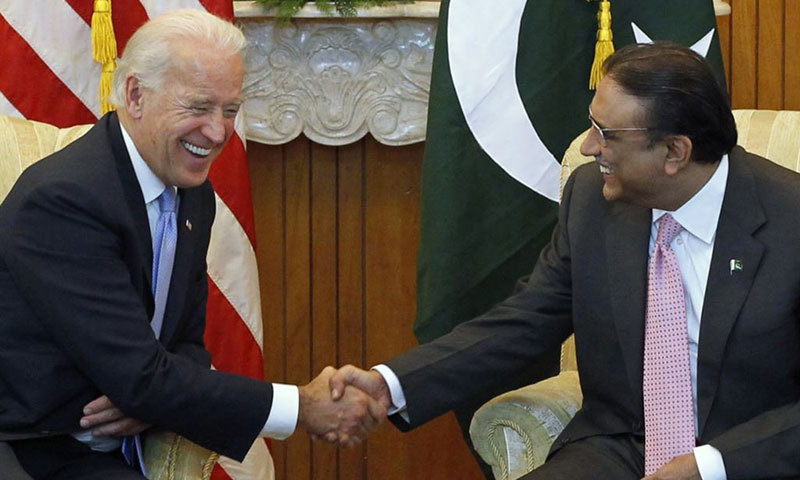
Monday, July 21, 2014
Chinese FM welcomes UN resolution on MH17, urges independent, fair, objective probe

Chinese Foreign Minister Wang Yi said Monday that Beijing welcomes the just passed UN resolution on the recent crash of Malaysia Airlines Flight MH17 in eastern Ukraine. Wang, who is accompanying Chinese President Xi Jinping in an ongoing Latin America tour, made the comments shortly after the UN Security Council adopted a resolution demanding safe and unrestricted access of international experts to the crash site. The resolution is in line with China's consistent position that an independent, fair and objective international probe be carried out to find out the truth, said the minister, noting that China played a constructive role in the deliberations and unanimous passage of the resolution. Stressing that the tragedy, which claimed 298 lives, should not be repeated, Wand said the current priority is to implement the resolution, especially to give international investigators full access to the crash site. The International Civil Aviation Organization should be allowed to play a key role in the investigation and its professional expertise be brought into full play, he said. Before the result is produced, he stressed, all parties concerned should refrain from making conjectures and prejudgment and, more importantly, avoid politicizing the issue. The crash further suggests that an early settlement of the Ukraine crisis is the fundamental way to maintain regional peace and stability, Wang said. "We urged all Ukrainian parties concerned to cease fire as soon as possible and conduct dialogue and consultation so as to seek a comprehensive, lasting and balanced political solution," Wang said.
Ukrainian Su-25 fighter detected in close approach to MH17 before crash - Moscow

The Russian military detected a Ukrainian SU-25 fighter jet gaining height towards the MH17 Boeing on the day of the catastrophe. Kiev must explain why the military jet was tracking the passenger airplane, the Russian Defense Ministry said.
“A Ukraine Air Force military jet was detected gaining height, it’s distance from the Malaysian Boeing was 3 to 5km,” said the head of the Main Operations Directorate of the HQ of Russia’s military forces, Lieutenant-General Andrey Kartopolov speaking at a media conference in Moscow on Monday.

“[We] would like to get an explanation as to why the military jet was flying along a civil aviation corridor at almost the same time and at the same level as a passenger plane,” he stated. “The SU-25 fighter jet can gain an altitude of 10km, according to its specification,” he added. “It’s equipped with air-to-air R-60 missiles that can hit a target at a distance up to 12km, up to 5km for sure.” The presence of the Ukrainian military jet can be confirmed by video shots made by the Rostov monitoring center, Kartopolov stated. At the moment of the MH17 crash an American satellite was flying over the area of eastern Ukraine, according to Russia’s Defense Ministry. It urged the US to publish the space photos and data captured by it.
In addition, MH17 crashed within the operating zone of the Ukrainian army’s self-propelled, medium-range surface-to-air ‘Buk’ missile systems, the Russian general said. “We have space images of certain places where the Ukraine’s air defense was located in the southeast of the country,” Kartapolov noted.The first three shots that were shown by the general are dated July 14. The images show Buk missile launch systems in about 8km northwest of the city of Lugansk – a TELAR and two TELs, according to the military official. Another image shows a radar station near Donetsk.


While the third picture shows the location of the air defense systems near Donetsk, he explained. In particular, one can clearly see a TELAR launcher and about 60 military and auxiliary vehicles, tents for vehicles and other structures, he elaborated.

“Images from this area were also made on July 17. One should notice that the missile launcher is absent [from the scene]. Image number five shows the Buk missile system in the morning of the same day in the area of settlement Zaroschinskoe – 50km south of Donetsk and 8km south of Shakhtyorsk," the Kartapolov said
The question that has to be answered is why the missile system appeared in the area controlled by the local militia forces shortly before the catastrophe, he stated. Images taken on July 18 show that the missile systems left the area of the MH17 crash, the military official said.Kartapolov also pointed to the fact that on the day of the plane crash Ukraine’s military increased activity on the part of Ukraine’s Kupol-M1 9S18 radars, which are part of the Buk system. "..there were 7 radars operating on July 15, 8 radars operating on July 16, and 9 radars operating on July 17 in the area. Then, starting with July 18, the intensity of radar activities radically decreased, and now there are no more than two or three radars operating a day. The reason behind this is yet to be found." In response to Moscow’s evidence, Kiev said on Monday it had proof the missile that brought down a Malaysian airliner last week came from Russia. "There is evidence that the missile which struck the plane was fired by terrorists, who received arms and specialists from the Russian Federation," spokesman for Ukraine's Security Council Andrey Lysenko told a news conference. "To disown this tragedy, [Russia] are drawing a lot of pictures and maps. We will explore any photos and other plans produced by the Russian side." Ukrainian President Petro Poroshenko said on Monday that Kiev has “strong evidence” of the causes of the MH17 crash. “We know exactly the place [the surface-to-air missile was] launched, we know exactly the place where it hit the civilian plane and the place where the plane crashed.” Kiev is ready to hand the information to the international investigation commission, according to the presidential press-service.

Fear of Afghan forces attack on Pakistan prompted Achakzai’s trip


America’s Never-Used $2.89 Million Food Processing Facility in Afghanistan
http://www.nationalreview.com/The Pentagon spent $2.89 million to build a food processing facility in Helmand Province in Afghanistan, a project of the Department of Defense’s Task Force for Business and Stability Operations. This morning the Special Inspector General for Afghanistan Reconstruction unveiled a review finding that the facility has never been used and is not being maintained. The report from Inspector General John Sopko says the facility “could have been a success story.” Once a bombed cotton factory site in Helmand province, the aim was to turn the site into a cold and dry storage warehouse and packing facility – allowing the farmers of the province to ship and process their crops and produce and sell to more faraway markets. The Pentagon’s Task Force for Business and Stability Operations began the project in 2010 and then passed it to the Army Corps of Engineers – hiring a contractor to build one cold storage and one dry storage warehouse, demolish two existing structures, make road improvements; provide on-site power generation and an electrical distribution system, a new water well and to remove mines and unexploded ordnances from the site. All of the work presumed that, upon completion, the Afghan government would be able to find a buyer or manage the facility itself. In May 2013, the U.S. Army Corps of Engineers approved the contractor’s finished work — 243 days behind schedule, but up to specifications. The contractor blamed the delays on security concerns, including “threatened and actual Taliban violence, difficulties transporting needed equipment across the border into Afghanistan, and difficulty getting experts on the installation and operation of the facility’s equipment to come to Afghanistan.” The facility, providing approximately 10,000 square feet of cold storage and 13,000 square feet of dry storage, was transferred to the Afghan government in September 2013. And then… not much happened. As the IG report notes, “potential investors told [the Pentagon’s Business and Stability Operations task force] that the Afghan district governor had asked for money from the investors and the construction contractor before leasing the property.” One potential buyer had his Kabul-based cold storage facility unexpectedly damaged and could not generate the funds to purchase the U.S.-built one. The Afghanistan government says it is still looking for potential buyers. Helmand Province is one of the world’s biggest sites for opium production and a region that frequently endures fierce fighting between the Taliban and its foes. In fact, it’s not clear who can get to the facility safely right now. SIGAR inspectors attempted to visit the Gereshk storage facility on two occasions—January and March 2014; both times International Security Assistance Force denied the request to visit the facility, citing high insurgent activity in the area. The Pentagon, in its written response to the IG report, noted that its own Task Force for Business and Stability Operations personnel “have been unable to travel to the site for more than one year.”
The Inspector General’s report recommends, “before approving future investment projects of any kind, [the Pentagon ensure there “are willing investor(s) capable of assuming ownership of and responsibility for maintaining constructed facilities; or, in the absence of investors, that the Afghan Ministry of Commerce and Interior is willing and able to assume those responsibilities itself.”
China will not fill U.S. void in Afghanistan: official
China does not seek to fill a void left in Afghanistan by the withdrawal of U.S. troops but will play a "huge" commercial role in helping rebuild the country, a newly appointed Chinese special envoy said on Monday. China, which is connected to Afghanistan by a narrow, almost impassable mountain corridor, has been quietly preparing for more responsibility there after the bulk of U.S.-led troops pull out by the end of this year. Some Western officials have said China is likely to emerge as a strategic player in Afghanistan but Sun Yuxi, who was appointed special representative to the country on Friday, said China's involvement would remain largely commercial. "This idea about filling a void after the withdrawal of troops, I think it doesn't exist," Sun told reporters in Beijing before heading to Afghanistan on Tuesday for talks. Some Western officials have criticized China for piggy-backing off the U.S.-led security operation that has eliminated an al Qaeda enclave on China's door-step and opened up Afghanistan's resources to international exploitation. China's commitment to Afghan reconstruction since the ouster of a hardline Islamist regime in 2001 has been a relatively paltry $250 million and its security support has been mostly limited to counter-narcotics training. But a consortium of Chinese investors is involved in a landmark $3 billion deal to produce copper in Afghanistan although work on the deposit, among the world's largest, has been largely halted by insurgent attacks. Sun said China looked forward to much more economic involvement which he said was essential for stability. "In the long-term, an even greater portion of our cooperation and participation in economic rebuilding will be carried out in a commercial way. This amount will be huge," he said. "Preserving Afghanistan's stability is not a matter of adding troops but of helping Afghanistan to quickly rebuild. We hope to see a rapid decrease in weaponry and a rapid increase in wealth." 'HIGHLIGHTS' Sun, a veteran diplomat with experience of Afghanistan since the late 1970s, said U.S.-China cooperation on Afghanistan had been one of the "very bright highlights" in ties between the powers, whose relations are often testy. He welcomed the withdrawal of the bulk of U.S.-led troops and also welcomed the expected maintenance of a small, residual U.S. force. "The new Afghan government should mainly be responsible for security. The United States is preparing to withdraw, and we welcome that," he said. "We also welcome the United States retaining some military bases to observe for a time and cooperate to help the Afghan people and government fight terrorism." A major worry for China is that ethnic Uighur separatist militants from its western Xinjiang region will take advantage if Afghanistan again descends into chaos.BY MICHAEL MARTINA
Uighur fighters are believed to be based in militant strongholds in ungoverned stretches of the Afghan-Pakistani border. Sun said he did not know how many were there but there had been hundreds before the U.S. invasion of Afghanistan to oust the Taliban in 2001.
"At the peak, there was about 1,000 people training there," Sun said, adding that many were killed or captured in fighting but most had fled. China says Islamist militants were behind a spate of recent attacks there in which about 200 people have been killed. Exiled Uighur groups and human rights activists say repressive government policies in Xinjiang, including controls on Islam and on Uighur culture, have provoked unrest. China dismisses that.
Video: Undocumented Immigrants Face Perilous Journey to US, No Guarantees
Every day, hundreds of undocumented immigrants from Central America attempt the arduous journey through Mexico and turn themselves over to U.S. border patrol -- with the hope that they will not be turned away. But the dangers they face along the way are many, and as Ramon Taylor reports from the Rio Grande Valley in Texas, their fate rests on more than just the reception they get at the US border.
Havens Are Few, if Not Far, for Palestinians in Gaza Strip
As civilian casualties mounted on Sunday in the Israeli ground invasion of the Gaza Strip, Israel’s military reminded the world that it had warned people living in targeted areas to leave. The response from Palestinians here was unanimous: Where should we go? United Nations shelters are already brimming, and some Palestinians fear they are not safe; one shelter was bombed by Israel in a previous conflict. Many Gaza residents have sought refuge with relatives, but with large extended families commonly consisting of dozens of relatives, many homes in the shrinking areas considered safe are already packed. Perhaps most important, the vast majority of Gazans cannot leave Gaza. They live under restrictions that make this narrow coastal strip, which the United Nations considers occupied by Israel, unlike anywhere else.By ANNE BARNARD
Prime Minister David Cameron of Britain in 2010 called Gaza “an open-air prison,” drawing criticism from Israel. But in reality, the vast majority of Gazans are effectively trapped, unable to seek refugee status across an international border. (Most, or their descendants, are already refugees, from what is now Israel.)A 25-mile-long rectangle just a few miles wide, and one of the most densely populated places in the world, Gaza is surrounded by concrete walls and fences along its northern and eastern boundaries with Israel and its southern border with Egypt. Even in what pass for ordinary times here, Israel permits very few Gazans to enter its territory, citing security concerns because suicide bombers and other militants from Gaza have killed Israeli civilians. The restrictions over the years have cost Palestinians jobs, scholarships and travel. Egypt has also severely curtailed Gazans’ ability to travel, opening its border crossing with the territory for only 17 days this year. During the current fighting between Israel and the Hamas militants who control Gaza, only those with Egyptian or foreign passports or special permission were allowed to exit. Even the Mediterranean Sea to the west provides no escape. Israel restricts boats from Gaza to three nautical miles offshore. And Gaza, its airspace controlled by Israel, has no airport. So while three million Syrians have fled their country during the war there, more and more of Gaza’s 1.7 million people have been moving away from the edges of the strip and crowding into the already-packed center of Gaza City.
A 25-mile-long rectangle just a few miles wide, and one of the most densely populated places in the world, Gaza is surrounded by concrete walls and fences along its northern and eastern boundaries with Israel and its southern border with Egypt. Even in what pass for ordinary times here, Israel permits very few Gazans to enter its territory, citing security concerns because suicide bombers and other militants from Gaza have killed Israeli civilians. The restrictions over the years have cost Palestinians jobs, scholarships and travel. Egypt has also severely curtailed Gazans’ ability to travel, opening its border crossing with the territory for only 17 days this year. During the current fighting between Israel and the Hamas militants who control Gaza, only those with Egyptian or foreign passports or special permission were allowed to exit. Even the Mediterranean Sea to the west provides no escape. Israel restricts boats from Gaza to three nautical miles offshore. And Gaza, its airspace controlled by Israel, has no airport. So while three million Syrians have fled their country during the war there, more and more of Gaza’s 1.7 million people have been moving away from the edges of the strip and crowding into the already-packed center of Gaza City.
On Sunday, families were fleeing artillery barrages on foot, or being killed in their homes, as the Israelis pushed into the city’s Shejaiya neighborhood in an operation the military says aims to locate and destroy tunnels used by Hamas militants to enter Israel and carry out attacks. The chaos has made some outside observers ask why people did not leave earlier, before the ground offensive neared them. The Israeli military has said it has given Gazans every opportunity to avoid injury by calling on them to evacuate neighborhoods it is about to target. Leaflets were dropped in Shejaiya on Saturday, residents said, and a senior military official said warnings had begun days earlier. “Staying at home when you’re 100 percent sure there’s going to be fighting there is much worse,” the official said. “Be out for two or three days; it’s better than being in the battlefield.”
Still, many fled only when shells began flying. Israeli officials speculate that Hamas militants have threatened people with retaliation if they leave, using them as human shields. Gazans did not mention such threats as a factor — though some said that they did not feel free to criticize Hamas. Such fears did not seem to deter 81,000 people who have already fled to United Nations shelters, and tens of thousands more who have gone to relatives’ homes. But Hamas may have misled people into a false sense of safety. It proclaimed on radio and television that the Israeli warnings were part of a psychological operation, and urged people to ignore them. Some were surprised at how far west into the areas that received warnings the Israelis pushed on Sunday, having reasoned that only the eastern areas, closer to the border, would be seriously threatened. Another factor is that Gaza’s extended families can include dozens of people — half of all residents of Gaza are children — and moving is not as simple as packing a bag and running. Families are deeply rooted in their neighborhoods, and many lack potential hosts elsewhere. The Attars thought of selling their farmland near the Israeli border, to move somewhere safer, but they could not afford apartments in Gaza City, where the scarcity of land, especially near the sea, drives prices high. Also, the family depends on the land, growing vegetables and raising poultry for food and to make a living. And, Ms. Attar said, “It’s not just a house to sell and buy another; it’s our life and our grandparents’ life.” Under fire in Shejaiya, some residents said they simply did not want to heed the orders of a foreign government they consider an occupier, and preferred to stay in their homes. One man on Sunday, having escorted his family out from under shelling, declared, “I’m going back, I’m not afraid,” and began marching back into the smoking neighborhood. Only after his sister ran after him, pleading, did he reconsider.
Hamas Has Become a Millionaires' Club
by Israel Today
 In 2006 legislative elections, the Palestinian street overwhelmingly voted Hamas to counter rampant financial corruption in the Palestinian Authority. Now, after years of war-profiteering, it seems Hamas itself has become the premier Palestinian millionaires’ club.
Very soon after seizing control of the Gaza Strip in 2007, Hamas and its allies began escalating rocket fire against the Jewish state. Given the severity of the Israeli reprisals, that wouldn't seem very good for business. But, in fact, it is.
Over the past seven years, Hamas’ leadership has pulled in outrageous sums of money thanks to the Israeli blockade of Gaza. Most of the profits were the result of exorbitant taxes on the goods smuggled from Egypt in tunnels running under the Gaza border, or grossly overcharging for subsidized Egyptian fuel.
Neither of those revenue streams would be possible without violently provoking Israel to lay siege to Gaza.
Similarly, Hamas profits are threatened by the enormous quantities of humanitarian aid and other goods that Israel and the international community pump into Gaza every month, which is why numerous reports suggest Hamas blocks that aid from ever reaching local residents.
In 2006 legislative elections, the Palestinian street overwhelmingly voted Hamas to counter rampant financial corruption in the Palestinian Authority. Now, after years of war-profiteering, it seems Hamas itself has become the premier Palestinian millionaires’ club.
Very soon after seizing control of the Gaza Strip in 2007, Hamas and its allies began escalating rocket fire against the Jewish state. Given the severity of the Israeli reprisals, that wouldn't seem very good for business. But, in fact, it is.
Over the past seven years, Hamas’ leadership has pulled in outrageous sums of money thanks to the Israeli blockade of Gaza. Most of the profits were the result of exorbitant taxes on the goods smuggled from Egypt in tunnels running under the Gaza border, or grossly overcharging for subsidized Egyptian fuel.
Neither of those revenue streams would be possible without violently provoking Israel to lay siege to Gaza.
Similarly, Hamas profits are threatened by the enormous quantities of humanitarian aid and other goods that Israel and the international community pump into Gaza every month, which is why numerous reports suggest Hamas blocks that aid from ever reaching local residents.
At the same time, Hamas leaders have proved wildly successful fund-raisers in their travels abroad. And, since Hamas’ raison d’etre is the destruction of Israel, it would be kind of hard to solicit financial backing without lobbing a few missiles at the Jews every once in a while. So, where does all this money go? In recent media interviews, Professor Ahmed Karima of Al-Azhar University in Egypt noted that in recent years Hamas has blossomed into a movement of millionaires. According to Karima, Hamas can boast no fewer than 1,200 millionaires among its leadership and mid-level officials. That assertion was backed up by Palestinian leader Mahmoud Abbas, who in 2012 estimated the number of Gaza millionaires to be 800. In particular, overall Hamas leader Khaled Mashal has amassed a fortune of $2.6 billion, the Jordanian media reported. A year ago, when Hamas’ parent organization, the Muslim Brotherhood, was ruling Egypt, the group’s Gaza leadership was less wary of flaunting its wealth, and the luxury real estate market was booming as a result. All of this is happening as many Gazans wallow in poverty and struggle with a 40 percent unemployment rate. Imagine how many new jobs could be created by all that money Hamas collects. Instead, the terror group is well pleased to see the people of Gaza suffer, both economically and as a consequence of its violence against Israel, all in service to Hamas’ ultimate goal.
Israeli Muslim: We Must Destroy Hamas
by Israel Today
 An Israeli Muslim Arab has written to Prime Minister Benjamin Netanyahu stressing that if the Jewish state truly wants peace, it must remove from power the terror groups that current hold sway over the Palestinian population, and instead deal directly with average Arabs who just want to live quietly.
In a post on his Facebook page, Ali Shaban, who volunteered for combat service in the IDF and continues to do reserve duty to this day, urged Netanyahu to “act now, do not waver or fear. The Palestinians understand only force, and if you do not attack now, then you and me and all Israelis will pay a dear price.”
Like many Israelis, Shaban wondered, “Why are you [Netanyahu] waiting? Are you waiting for more deaths? Are you waiting until the missiles hit Tel Aviv? Are you waiting for approval from Obama?”
This Muslim’s recommendation? “Conquer Gaza. Conquer the West Bank. Overthrow Hamas and [Palestinian leader Mahmoud Abbas’] Fatah. Establish and support a new leadership for the Palestinian people, a leadership that will seek peace and a better life for us all.”
On Tuesday, Shaban was invited to appear on the popular Channel 10 morning show “Orly & Guy,” where he was asked about his unusual position.
In truth, Shaban corrected his interviewers, a great many Arabs think like him.
During his army service, Shaban said he has “met countless Palestinians at checkpoints and elsewhere in the disputed territories that told me they support peace and are fed up with the situation. But, they are afraid to speak because anyone who voices such an opinion is immediately labeled a traitor…and will be publicly executed.”
When told by Orly that his letter sounds as though it were written by an extremist Jew, Shaban responded:
“When I say that they only understand force, I am talking about the terror groups that are writing the rules of engagement. I do not know of a terror group that has an agenda of peace. They want to harm Jews, to destroy the State of Israel. Their eyes see only blood. …It is not possible to make peace with terror groups.”
An Israeli Muslim Arab has written to Prime Minister Benjamin Netanyahu stressing that if the Jewish state truly wants peace, it must remove from power the terror groups that current hold sway over the Palestinian population, and instead deal directly with average Arabs who just want to live quietly.
In a post on his Facebook page, Ali Shaban, who volunteered for combat service in the IDF and continues to do reserve duty to this day, urged Netanyahu to “act now, do not waver or fear. The Palestinians understand only force, and if you do not attack now, then you and me and all Israelis will pay a dear price.”
Like many Israelis, Shaban wondered, “Why are you [Netanyahu] waiting? Are you waiting for more deaths? Are you waiting until the missiles hit Tel Aviv? Are you waiting for approval from Obama?”
This Muslim’s recommendation? “Conquer Gaza. Conquer the West Bank. Overthrow Hamas and [Palestinian leader Mahmoud Abbas’] Fatah. Establish and support a new leadership for the Palestinian people, a leadership that will seek peace and a better life for us all.”
On Tuesday, Shaban was invited to appear on the popular Channel 10 morning show “Orly & Guy,” where he was asked about his unusual position.
In truth, Shaban corrected his interviewers, a great many Arabs think like him.
During his army service, Shaban said he has “met countless Palestinians at checkpoints and elsewhere in the disputed territories that told me they support peace and are fed up with the situation. But, they are afraid to speak because anyone who voices such an opinion is immediately labeled a traitor…and will be publicly executed.”
When told by Orly that his letter sounds as though it were written by an extremist Jew, Shaban responded:
“When I say that they only understand force, I am talking about the terror groups that are writing the rules of engagement. I do not know of a terror group that has an agenda of peace. They want to harm Jews, to destroy the State of Israel. Their eyes see only blood. …It is not possible to make peace with terror groups.”
Israel and Saudi Arabia: Forging Ties on Quicksand
By James M. Dorsey

Distrust of the US and questions about the reliability of the US as an ally have persuaded Saudi Arabia and Israel to go public with their tacit alliance
Long gone are the days when Saudi Arabia was the only Arab country that had visa rules barring Jews from entering the kingdom and Saudi Foreign Minister Prince Saud al Faisal gave visiting US Secretary of State Henry Kissinger the Protocols of Zion, a 19th century anti-Semitic tract, as a gift. Saudi Arabia still declines to forge official ties with Israel as long as it refuses to withdraw from territories it conquered during the 1967 war. But perceptions of common threats have expanded long-standing unofficial ties to the point that both countries feel less constrained in publicly acknowledging their contacts and signalling a lowering of the walls that divide them.As states, Saudi Arabia and Israel share few, if any common values, despite some cultural values that are common to Wahhabism, the austere form of Islam adopted by the kingdom, and ultra-orthodox Jews. But they increasingly have common interests despite Israel’s current assault on Gaza attempting to crush the Islamist Hamas militia, an offshoot of the Muslim Brotherhood. Both states perceive Iran, particularly one that is a nuclear power, as an existential threat; both also share a determination to defeat the Muslim Brotherhood as well as Al Qaeda-inspired groups and defend as much of the political status quo in the region as possible against change that threatens to replace autocratic regimes with ones dominated by Islamist militants.Breaching secrecy A series of recent events indicate that those common interests have made Saudi Arabia, which projects itself as a the leader of the Arab world, less sensitive about going public about relations with Israel in the absence of a settlement of the Palestinian problem. Israel, which has long accommodated a Saudi need for secrecy, is also becoming more public about cooperation between the two states. “Everything is underground, nothing is public. But our security cooperation with Egypt and the Gulf states is unique,” said General Amos Gilad, director of the Israeli defence ministry’s policy and political-military relations department. “This is the best period of security and diplomatic relations with the Arab. Relations with Egypt have improved dramatically” since last year’s military coup against Egypt’s first democratically elected president, Mohammed Morsi, a Muslim Brother. Describing Israel’s security border with Jordan, the only Arab state alongside Egypt to have signed a peace treaty with Israel, as the border between Jordan and Iraq, Gilad added: “The Gulf and Jordan are happy that we belong to an unofficial alliance. The Arabs will never accept this publicly but they are clever enough to promote common ground.” Despite repeated Saudi denials of any links to Israel and official adherence to an Arab boycott of anything Israeli, the kingdom signalled a relationship in recent weeks with an encounter in Brussels between former intelligence chiefs of the two countries and the first time a Saudi publisher has published an Arabic translation of a book by an Israeli academic. Step by step The exchange in late May between Prince Turki bin Faisal al Saud, a full brother of Foreign Minister Prince Saud who headed Saudi intelligence for 24 years, and General Amos Yadlin, a former Israeli military intelligence chief, constituted the most high profile Saudi acknowledgement of relations. Saudis and Israelis have met before in public but Prince Turki went out of his way this time to promote a 2002 Saudi-sponsored peace plan that offers Arab recognition of the Jewish state in exchange for a full Israeli withdrawal from occupied territory and a solution for the Palestinians as a step-by-step process rather than a take-it-or-leave-it proposition. The exchange followed the controversial publishing of an Arabic translation of ‘Saudi Arabia and the New Strategic Landscape’ by Joshua Teitelbaum, a professor at Bar Ilan University’s Begin-Sadat Center for Strategic Studies. While Saudi newspapers have long published columns by left-wing, dovish Israeli writers opposed to their government’s policy, Teitelbaum’s book was the first by a mainstream Israeli writer published by a Saudi publisher.
China warns officials against aping Western morality

China's ruling Communist Party will step up ideological education of officials to prevent them from aping Western moral standards and strengthen their faith in communism to help in the fight against pervasive corruption, state media said. "Profound social-economic changes at home and abroad have brought multiple distractions to officials who face loss of faith and moral decline," the official Xinhua news agency cited a statement from the party's powerful Organisation Department, which oversees personnel decisions. "The conviction and morals of officials determine the rise and fall of the Communist Party and the country," Xinhua added, in a report late on Sunday. "Officials should keep firm belief in Marxism to avoid being lost in the clamor for western democracy, universal values and civil society," it said. The party has warned repeatedly that its members should not be lead astray by Western concepts of human rights and democracy, saying that China has the right to promote its own interpretation of such ideas to better suit its national condition and level of economic development. President Xi Jinping has mounted a sweeping campaign against deeply-rooted corruption since assuming office last year, warning, like others before him, that the party's rule could be threatened if it does not stop the rot from graft. The party has sought to curtail everything from bribery and gift-giving to lavish banquets to assuage public anger over graft and extravagance, and state media has published lurid accounts of officials with multiple mistresses and illegally amassed wealth. However, the party has shown no sign of wanting to set up an independent body to fight graft, and Xi has also overseen a tough crackdown on those who seek to challenge the party's right to govern or push for more freedoms. Xinhua said that party officials would have to receive education that "strengthens their political, ideological and emotional identity in socialism with Chinese characteristics". Officials will have to be "noble, pure and virtuous persons who have relinquished vulgar tastes", it added. "Chinese officials should safeguard the spiritual independence of the nation and avoid becoming an echo of western moral values," Xinhua said.
Pakistan: 'Independence Day'
 First things first: why is Pakistan’s Railways Minister suddenly the man calling all the shots? We left a railways man in charge of air traffic control on the fateful day Tahir ul Qadri was to land in Pakistan. He’s the one assuring everybody of a vote recount, and he’s the one appealing to Imran Khan to change the day and venue of his demonstration.
In the latest in his long list of extracurricular activities, Khawaja Saad Rafique is letting the nation know that the government doesn’t plan to use any force on the day of the PTI Long March. Apart from a gentle reminder to the government and the honourable minister of his actual designation and what it entails, let us focus on his latest statement for a moment: “the government will not use force to stop the PTI march.”
The government will not need to sponsor the use of any force; force will be shown. Violence and chaos will ensue. It is a huge mistake the government is making- pitting PML-N workers and PTI activists against each other in the same place, at the same time, for seemingly “opposed” ideologies. The atmosphere will inevitably be charged and passionate from both sides. Emotions will run high, and like a band of puppeteers, government leaders behind their bullet proof shields will be able to manoeuvre the gathering into a mob that might cause more damage than any of us can imagine. On any given Independence Day, the spirit of a public holiday combined with the passions of the young, result in chaos and hooliganism on the streets. And once locked in a single arena, the “patriots” vs. the anti-heroes, could be dangerous to life and property. If the aim is the reaching of some form of theatrical conclusion, whereby two “armies” stand against each other in a face-off, it is a badly thought out gimmick. The government is advised in the interests of public safety if nothing else, to take the high road. If the PTI is not budging from its stance, the burden of responsibility falls squarely on the PML-N. Let the day begin and end quietly, without the indignities of a mob going at one another.
First things first: why is Pakistan’s Railways Minister suddenly the man calling all the shots? We left a railways man in charge of air traffic control on the fateful day Tahir ul Qadri was to land in Pakistan. He’s the one assuring everybody of a vote recount, and he’s the one appealing to Imran Khan to change the day and venue of his demonstration.
In the latest in his long list of extracurricular activities, Khawaja Saad Rafique is letting the nation know that the government doesn’t plan to use any force on the day of the PTI Long March. Apart from a gentle reminder to the government and the honourable minister of his actual designation and what it entails, let us focus on his latest statement for a moment: “the government will not use force to stop the PTI march.”
The government will not need to sponsor the use of any force; force will be shown. Violence and chaos will ensue. It is a huge mistake the government is making- pitting PML-N workers and PTI activists against each other in the same place, at the same time, for seemingly “opposed” ideologies. The atmosphere will inevitably be charged and passionate from both sides. Emotions will run high, and like a band of puppeteers, government leaders behind their bullet proof shields will be able to manoeuvre the gathering into a mob that might cause more damage than any of us can imagine. On any given Independence Day, the spirit of a public holiday combined with the passions of the young, result in chaos and hooliganism on the streets. And once locked in a single arena, the “patriots” vs. the anti-heroes, could be dangerous to life and property. If the aim is the reaching of some form of theatrical conclusion, whereby two “armies” stand against each other in a face-off, it is a badly thought out gimmick. The government is advised in the interests of public safety if nothing else, to take the high road. If the PTI is not budging from its stance, the burden of responsibility falls squarely on the PML-N. Let the day begin and end quietly, without the indignities of a mob going at one another.
Pakistan: Rape and the law
 Pointing to a glaring injustice, PPP Senator Sughra Imam told the Senate Standing Committee on Law and Justice recently that the conviction rate for rape cases filed during the last five years has been zilch. A press report quoting the Human Rights Commission of Pakistan report for 2013, says that 2,576 rape cases were registered in Punjab, 127 cases of rape and three of gang-rape in Khyber Pakhtunkhwa, and 27 gang rapes in Sindh. Yet no one was brought to book. Frustrated with the situation female members of the Senate staged a protest walkout from the House last December. It is good to see that they have not given up on the issue. Talking to journalists after a roundtable discussion with representatives from bar councils, the committee chairman, Senator Kazim Khan, said "we will first determine why the conviction rate is zero and whether [there is something] in the laws, the judiciary or the legal procedure itself."
Senator Imam has proposed amendments to the existing laws that deal with investigation recommending that any public servant who fails to carry out proper investigation in breach of his duties should be punished "with imprisonment of either description for a term which may extend to three years, or with fine, or with both." Furthermore, she wants to strengthen the law pertaining to disclosure of a rape victim's identity, and to make breach liable with punishment with up to three years of imprisonment and fine. These changes should be helpful, but the real reason the conviction is so hard to achieve arises from a different source. As women's rights groups have been pointing out for several years, under the Zia era Hadood Ordinance a rape victim has to produce four pious male witnesses to prove the crime or risk being accused of fornication. Common sense suggests that no one will commit rape in the presence of four pious male witnesses. Hence, the intent of the Islamic command could not be what the law makes it out to be. It in fact protects a rape victim from false accusations of fornication. Which is obvious from the relevant Quranic verse that reads: "those who defame chaste women and do not bring four witnesses should be punished with eighty lashes, and their testimony should not be accepted afterwards, for they are profligates." Unfortunately, however, those who framed the law for Zia turned around the intent of the command to favour the perpetrator instead of the victim.
The sad reality is that many in this society do not think much of this heinous crime against women. In fact, every now and then village councils order gang-rape of women as a way of keeping the weak and powerless in their place. A well-known example is that of Mukhtaran Mai. Also fresh in public memory is Dr Shazia Khalid rape case, which led to a major confrontation between the Bugti tribe hosting her as a guest doctor, and the federal government protecting an alleged uniformed rapist. In order to lead a normal life the victim had to take refuge in Canada. In comments reflective of a typical mindset the then president General Pervez Musharraf had outraged civilised sensitivities at home and abroad when he told a Washington Post interviewer "This [rape] has become a money-making concern. A lot of people say if you want to go abroad and get a visa for Canada or citizenship and be a millionaire, get yourself raped." This mindset that trivialises the crime of rape needs to be changed. If the laws are strong enough to make conviction possible, attitudes will also change with the passage of time. Towards that end, the Hadood laws need to be brought in line with the true spirit of Islam. The Council of Islamic Ideology ought also to act in the same spirit rather than remaining insistent on a literalist approach and review its decision not to allow DNA evidence for proving rape.
Pointing to a glaring injustice, PPP Senator Sughra Imam told the Senate Standing Committee on Law and Justice recently that the conviction rate for rape cases filed during the last five years has been zilch. A press report quoting the Human Rights Commission of Pakistan report for 2013, says that 2,576 rape cases were registered in Punjab, 127 cases of rape and three of gang-rape in Khyber Pakhtunkhwa, and 27 gang rapes in Sindh. Yet no one was brought to book. Frustrated with the situation female members of the Senate staged a protest walkout from the House last December. It is good to see that they have not given up on the issue. Talking to journalists after a roundtable discussion with representatives from bar councils, the committee chairman, Senator Kazim Khan, said "we will first determine why the conviction rate is zero and whether [there is something] in the laws, the judiciary or the legal procedure itself."
Senator Imam has proposed amendments to the existing laws that deal with investigation recommending that any public servant who fails to carry out proper investigation in breach of his duties should be punished "with imprisonment of either description for a term which may extend to three years, or with fine, or with both." Furthermore, she wants to strengthen the law pertaining to disclosure of a rape victim's identity, and to make breach liable with punishment with up to three years of imprisonment and fine. These changes should be helpful, but the real reason the conviction is so hard to achieve arises from a different source. As women's rights groups have been pointing out for several years, under the Zia era Hadood Ordinance a rape victim has to produce four pious male witnesses to prove the crime or risk being accused of fornication. Common sense suggests that no one will commit rape in the presence of four pious male witnesses. Hence, the intent of the Islamic command could not be what the law makes it out to be. It in fact protects a rape victim from false accusations of fornication. Which is obvious from the relevant Quranic verse that reads: "those who defame chaste women and do not bring four witnesses should be punished with eighty lashes, and their testimony should not be accepted afterwards, for they are profligates." Unfortunately, however, those who framed the law for Zia turned around the intent of the command to favour the perpetrator instead of the victim.
The sad reality is that many in this society do not think much of this heinous crime against women. In fact, every now and then village councils order gang-rape of women as a way of keeping the weak and powerless in their place. A well-known example is that of Mukhtaran Mai. Also fresh in public memory is Dr Shazia Khalid rape case, which led to a major confrontation between the Bugti tribe hosting her as a guest doctor, and the federal government protecting an alleged uniformed rapist. In order to lead a normal life the victim had to take refuge in Canada. In comments reflective of a typical mindset the then president General Pervez Musharraf had outraged civilised sensitivities at home and abroad when he told a Washington Post interviewer "This [rape] has become a money-making concern. A lot of people say if you want to go abroad and get a visa for Canada or citizenship and be a millionaire, get yourself raped." This mindset that trivialises the crime of rape needs to be changed. If the laws are strong enough to make conviction possible, attitudes will also change with the passage of time. Towards that end, the Hadood laws need to be brought in line with the true spirit of Islam. The Council of Islamic Ideology ought also to act in the same spirit rather than remaining insistent on a literalist approach and review its decision not to allow DNA evidence for proving rape.
Pakistan: PML-N’s poor governance
Pakistan Today
MALIK TARIQ ALIPM Nawaz has been in power for almost 14 months, and other than mere announcements of mega projects, such as building highways, motorways etc, there has neither been structural reforms to revamp a decadent bureaucracy, improve tax collection, police reforms, nor investment in neglected and inadequate health and education sector. It has taken this government more than a year to appoint High Commissioner to the UK and there seems to be no intent to fulfill electoral promises of providing qualified and highly competent specialists to head state corporations, financial and regulatory bodies. It is this lack of decision making capacity which has led to further accumulation of losses and inefficiency in white elephants like PSM, PIA, CAA, EOBI, Railways, power distribution sector, FBR, NHA etc. The fact that PML-N inherited a collapsed infrastructure from its predecessor required them to take quick tough decisions, if economic recovery is to be achieved. Unless tax collection is increased, national debt will continue to pile, deficit will increase and this country cannot invest in development of human resources, which have shown a rapid deterioration in the past two decades and provided perfect environment for breeding terrorism. In sharp contrast Modi has embarked upon plans to change decadent bureaucratic setup that existed in the past 67 years to suit dynastic policies of Nehru family, under which institutionalised corruption had become a cancer. In just 30 days Modi has ordered building a fast track road with 50 posts along disputed China border and a $2 billion extension of Karwar Naval Base in Karnataka and radar stations in Andaman and Nicobar islands in Bay of Bengal. The Modi government has approved stalled decision to raise Narmada Dam height to 455 feet for more water storage, while approving free X-rays, CT scans and MRIs for the poor in all government hospitals.
In a move to keep a check on bureaucracy the government has ordered them to repeal all laws which hinder good governance, transparency and delays in file movement, while withdrawing all powers from gazetted officers for attesting documents following complaints of misuse. It has also issued instructions that in future only scientists and technical associates will be allowed to attend scientific and technical conferences in India and abroad, putting a total ban on any minister or bureaucrat to be part of such delegations.
In a move to fulfil his election manifesto PM Modi has ordered planting of 200 crore trees along one lakh kilometres of national highways, to provide jobs to 30 lakh poor youth, to put in place best qualified CEOs on merit to head almost every state owned enterprise or corporation. He has also approved revised strategy for kickstarting ambitious national optical fibre network to link 2.5 lakh panchayats and lower judiciary by March 2017.
PTI, PPP express concern over growing ‘lawlessness’ in Punjab
Pakistan Tehreek-e-Insaf (PTI) and Pakistan Peoples Party (PPP) have strongly condemned the ruling party Pakistan Muslim League Nawaz (PML-N) workers’ for an attack on the Faisalabad police. Commenting on the attack by the MPA’s supporters on a local police station in Faisalabad to get his men freed who were the proclaimed offenders and were arrested by the police, the PTI and PPP provincial leaders said that the arrested persons were wanted in serious crimes under the terrorism act. PTI backed the opposition leader in the Punjab Assembly while criticising the PMLN workers attack on the police and has announced to file a call attention notice in the assembly secretariat. He also termed it in a statement on Sunday as a result of bad governance of the Punjab chief minister who is not paying attention to the provincial law and order situation. While PPP Punjab Secretary General Tanveer Ashraf Kaira, in a statement, said that the law and order situation is getting worst as the days are passing and the law makers of the ruling party are equally responsible for taking the law into their hands. Kaira said that the flouting of the law by the ruling party’s MPA, apparently without legal consequences, shows the bad governance of the Punjab government that was running on expensive media campaign from the taxpayer’s money, to project its unsubstantiated performance. He said that the government of Punjab’s track record in other sectors was equally appalling.He referred to the disaster of the Nandipur Power Project that was lying idle after its inauguration with lot of fireworks, adding that it was no more contributing even a single MW in the national grid system. He reiterated that the Punjab chief minister had to eat a ‘humble pie’ when he recently announced that the PML-N would try to control load shedding by 2017. It may be recalled that during the election campaign, he committed publicly that he would control it in months and not in years. He observed that the credibility of this government had reduced to needle-point and the people were appreciating the PPP led previous coalition government when the load shedding duration was less than what they are facing now. He maintained that the Ramazan package of the Punjab government had also proved an utter disappointment because either the subsidised items were not available to the people and if they were available, they were of the low quality and not fit for human consumption.
Pakistan: Time for truth, not triumphalism
One would imagine that after his recent ‘religious’ experience, Minister for Defence, Water and Power Khawaja Asif would have learnt the importance of not making absurdly optimistic claims, as himself stated in the context of load shedding. But it appears he has not. On Saturday the minister told the press that the terrorist command and control centre based in North Wazrisitan (NW) had been crippled and that the operation was proceeding as planned. However, given that the military has encountered relatively little resistance so far aside from isolated pockets, we have to wonder what the plan is. So far the military says it has cleared Miranshah and made inroads into Mirali while retaking and clearing the villages of Boya and Degan in the surrounding area. Four hundred militants have reportedly been killed but in the absence of independent verification, doubts are beginning to surface about whether the operation is as effective as is being claimed. The capture of Adnan Rashid, a high-value terrorist commander, in South Waziristan (SW) several days ago indicates that despite a tight military cordon of NW, many terrorists managed to escape, some to other Agencies, others across the border to Afghanistan. If true, this means that instead of being disabled completely, the terrorist strategy and planning infrastructure has moved as well, presumably to Afghanistan where the military says several of the Pakistani Taliban’s top commanders have fled, including its leader Mullah Fazlullah. While the military achieved the element of surprise in its targeted strikes before the operation, dealing a series of blows to the terrorists that were noticeably devastating, Zarb-e-Azb was trumpeted well beforehand, giving the militants time to disperse. Guerilla strategy is based on the principle of retreating in the face of overwhelming force; survival is in itself a victory for the asymmetrical fighter. It seems clear that while the operation has managed to deal a blow to the terrorists, it is not quite a coup de grace. Khawaja Asif’s triumphalism seems ill advised in light of this and with fear of backlash in the cities growing after the discovery of a terrorist hideout just a few miles away from the Prime Minister’s (PM’s) residence in Raiwind. From what we know about the terrorists, they are capable of operating in discrete and independent cells, designed to spread terror or strike high-value targets as they present themselves. If many have managed to escape then the operation is just beginning, Khawaja Asif’s claims notwithstanding. Speculation about the conduct and goals of the operation is also growing after a US drone strike on Saturday destroyed a militant training camp in Datta Khel, 40 kilometers north of Miranshah. Military officials denied that there was any coordination between the US and Pakistan but the resumption of drone strikes at the same time as the launch of the operation is conspicuous by its timing. Officials say that 15 members of the Punjabi Taliban and four Uzbek fighters were killed in the strike, including two “important” commanders. In the past such strikes were routinely condemned by the military and the government before reports emerged that Pakistan had on occasion asked the US to launch drones when high-value targets were identified. This caused uproar among the public about violations of Pakistani sovereignty, hence denials since then of cooperation between the two countries are largely seen as meant for public consumption. This should tell the government and military that the lack of information being given to the public is beginning to have a negative effect on the conduct of the operation itself. Polls say that most Pakistanis now view terrorism as a greater threat than the US. With NATO poised to exit Afghanistan, many people will be worried that without help from across the border, terrorism may not be eliminated. It is time for the military and the government to let the public know what they know and be clear about the results, goals, and concerns the operation has engendered. They must trust the Pakistani people because this is part of building the narrative against terrorism and creating a viable alternative to militant ideology. We do not want to see militants disappear from NW today only to reappear in Islamabad or Lahore tomorrow.
Sunday, July 20, 2014
John Kerry To Go To Cairo To Push Israel, Hamas Ceasefire
ecretary of State John Kerry is heading back to the Middle East as the Obama administration attempts to bolster regional efforts to reach a ceasefire and sharpens its criticism of Hamas in its conflict with Israel. The State Department said Kerry would leave early Monday for Egypt where he will join diplomatic efforts to resume a truce that had been agreed to in November 2012. In a statement Sunday evening, department spokeswoman Jen Psaki called the U.S. and international partners "deeply concerned about the risk of further escalation, and the loss of more innocent life." The Obama administration has toned down its earlier rebuke of Israel for attacks on the Gaza Strip that have killed civilians, including children, although both President Barack Obama and Kerry expressed concern about the rising death toll. The U.S. will urge the militant Palestinian group to accept a cease-fire agreement that would halt nearly two weeks of fighting with Israel. More than 430 Palestinians and 20 Israelis have been killed in that time. Cairo has offered a cease-fire plan that is backed by the U.S. and Israel. But Hamas has rejected the Egyptian plan and is relying on governments in Qatar and Turkey for an alternative proposal. Qatar and Turkey have ties to the Muslim Brotherhood, which is also linked to Hamas but banned in Egypt. Making the rounds of Sunday talk shows, Kerry pointed to Hamas' role in the violence. "It's ugly. War is ugly, and bad things are going to happen," Kerry told ABC's "This Week." But, he added, Hamas needs "to recognize their own responsibility."
Both Obama and Kerry said Israel has a right to defend itself against frequent rocket attacks by Hamas from the Gaza Strip. Kerry accused Hamas of attempting to sedate and kidnap Israelis through a network of tunnels that militants have used to stage cross-border raids. He said on CNN's "State of the Union" that Hamas must "step up and show a level of reasonableness, and they need to accept the offer of a cease-fire." Then, Kerry said, "we will certainly discuss all of the issues relevant to the underlying crisis." The nearly two-week conflict appeared to be escalating as U.N. chief Ban Ki-moon was already in the region to try to revive cease-fire efforts. Obama, in a telephone call Sunday, told Israeli Prime Minister Benjamin Netanyahu that Kerry was coming to the Mideast and condemned Hamas' attacks, according to a White House statement. The U.N. relief agency in Gaza estimates that 70,000 Palestinians have fled their homes in the fighting and are seeking shelter in schools and other shelters the United Nations has set up. The relief agency's top director in Gaza, Robert Turner, told CNN's "State of the Union" that the U.N. has run out of mattresses for refugees and few hygiene and medical supplies are left, although fresh food and water remain available. "People are scared," Turner said. "They don't feel safe at home, they don't feel safe with their families or neighbors. They feel relatively safe in our installations. ... We frankly have been overwhelmed by the numbers." He said more than 1,000 homes in Gaza have been destroyed or damaged beyond repair, and at least 13,000 lightly damaged. U.S. officials made clear, however, that Hamas could bring relief to the Palestinian people if it agrees to a cease-fire proposed by Egypt — a view that Netanyahu is pushing as well. Republican Sen. Lindsey Graham, a member of the Senate Armed Forces Committee, urged Israel to "stay as long as you need to stay, go wherever you need to go, do deal with a viper's nest called Hamas." "If it's left up to Hamas, thousands of Israelis would be dead," Graham, R-S.C., told NBC's "Meet the Press." Netanyahu agreed. In an ABC interview, he said Israel has tried to avoid killing Palestinian civilians through phone calls, text messages and leaflets dropped on their communities. But Hamas doesn't "give a whit about the Palestinians," Netanyahu said. "All they want is more and more civilian deaths." The prime minister said his top goal is to restore a sustainable peace, but then will ask the international community to consider demilitarizing Gaza to rid Hamas of its rockets and shut down the tunnels leading into Israel. Netanyahu brushed off a question about giving concessions to Hamas as a step toward peace, including releasing Palestinian prisoners or loosening border crossings. "Hamas doesn't care," Netanyahu said. "I think the last thing you want to do is reward them." Kerry also said any cease-fire agreement must be without conditions or "any rewards for terrorist behavior." He did not mention the Qatari or Turkish efforts. Kerry also blamed the latest wave of violence on what he called Israel's "legitimate" efforts to pursue and punish those who last month kidnapped and killed three Israeli teenagers whose bodies were found in the West Bank. Their deaths were followed almost immediately by what authorities believe was a retribution attack on a Palestinian youth who was strangled, beaten and burned to death. Tensions between Israel and Palestinian authorities have been simmering for years. They threatened to boil over this spring when Israel shelved nearly nine months of peace negotiations that were being personally shepherded by Kerry after Palestinian President Mahmoud Abbas agreed to create a unity government with Hamas. "No country could sit by and not take steps to try to deal with people who are sending thousands of rockets your way," Kerry said. Kerry spoke Sunday on all five major news network talk shows: NBC's "Meet the Press," CNN's "State of the Union," ABC's "This Week", CBS' "Face the Nation" and "Fox News Sunday." ___
John Kerry's Hot Mic Reaction To Gaza: 'Hell Of A Pinpoint Operation'
U.S. Secretary of State John Kerry sounded exasperated during a candid moment between interviews on Sunday as he discussed the ongoing conflict in Gaza with an off-camera aide."It's a hell of a pinpoint operation. It's a hell of a pinpoint operation," Kerry, apparently unaware he was being recorded, said to the aide. "We've got to get over there ... I think, John, we ought to go tonight. I think it's crazy to be sitting around." "Fox News Sunday" host Chris Wallace confronted Kerry with the clip, calling it "an extraordinary moment of diplomacy" and asking if Kerry thought Israel had gone too far in its military operations against Hamas militants. (Wallace prefaced the clip by saying Kerry was reacting to 14 Israelis who've been killed in the conflict.) After weeks of aerial bombardment in response to rocket attacks, Israel has sent troops into Gaza in an effort to shut down Hamas supply tunnels. "I reacted obviously in a way that, you know, anybody does with respect to young children and civilians," Kerry said. "But war is tough. I said that publicly, and I'll say it again. We defend Israel's right to do what it is doing in order to get at those tunnels." "Israel has accepted a unilateral ceasefire, accepted the Egyptian plan, which we also support," Kerry continued. "And it is important for Hamas to now step up and be reasonable and understand that you accept the ceasefire, you save lives, and that's the way we can proceed to have a discussion about all of the underlying issues, which President Obama has clearly indicated a willingness to do." Kerry's Fox interview was one of several the secretary of state gave Sunday. He didn't respond to Wallace's question about whether he'd be traveling to Israel later on Sunday.
#MH17 probe must steer clear of politics
The whirling aftermath of the crash of Malaysia Airlines flight MH17 is now upon us, with Western-led international opinion turning the spotlight on Russia. We believe that the entire case must be investigated fairly and thoroughly. The United Nations or the International Civil Aviation Organization must play a leading role, and all sides must coordinate without preconditions or preconceptions. US Secretary of State John Kerry and Russia Foreign Minister Sergei Lavrov have agreed that all evidence from the downed plane should be made available for international investigation, and that experts should be given access to the site. This is good news. Moscow must take a proactive stance toward this investigation. The West has fingered Russia as the main suspect in the tragedy. Under such circumstances, any hesitation on Russia's part will provoke more blame from the West. If there is no result to the investigation, Russia will, by default, be named the perpetrator. Therefore, letting the facts of the case speak suits Russia's interests. The Western rush to judge Russia is not based on evidence or logic. Russia had no motive to bring down MH17; doing so would only narrow its political and moral space to operate in the Ukrainian crisis. The tragedy has no political benefit for Ukrainian rebel forces, either. Russia has been back-footed, forced into a passive stance by Western reaction. It is yet another example of the power of Western opinion as a political tool. Politically speaking, shooting down a passenger jet would be ridiculous. It could have been an error, the precondition for which is the chaos within Ukraine. The truth is the most persuasive tool of all. As the targeting of civilian air traffic is a mortal threat to all air passengers, a fair investigation is in the interest of all sides. The investigation process must steer clear of any political interference. The truth must be made public once it is found out. Without a doubt, we live in a highly politicized world. Political zealotry has always been part and parcel of revolutionary passions. The West has successfully put itself in a position to dictate "political correctness" in international discourse. Those unwilling to work with Western interests will often find themselves in a tough position. The crash of MH17 is a tragedy of immense proportions. But the discussion swirling around this event has centered around three positions: shock at and condemnation of the event itself, quibbling over the Ukrainian crisis, and defining the opposition between Russia and the West. The first seems to be overwhelmed by the latter two, disrupting any investigation into the tragedy. We sincerely hope the investigation will stick to factual and technological questions. People need the truth rather than another geopolitical rivalry.
Moscow Surprised by Countries Voicing Theories on Boeing Crash Before Investigation

Russian Foreign Ministry said Saturday it was baffled by several countries imposing pressure on investigators by voicing their theories about the causes of the Malaysia Airlines Boeing-777 crash in eastern Ukraine. "It is baffling that even before the start of the investigation, official representatives of a range of countries rushed to groundlessly announce their theories on the causes of the accident, thus putting pressure on the investigation process. The Russian side addresses both sides of the Ukrainian conflict with an urgent call to do everything possible for the access of international experts to the area of the plane crash to carry out all the actions necessary to investigate the mentioned air crash," the ministry said in a statement. The ministry underlined that Russia was the first to call for an independent and transparent investigation into the cause of the crash, with an international format that would allow avoiding unilateral evaluations. "It [the investigation] must be international and conducted with the decisive participation of ICAO [International Civil Aviation Organization], and other international institutions, including the Interstate Aviation Committee (IAC), which involves Russian and Ukrainian representatives along with others," said in the statement. A Malaysia Airlines Boeing 777 flying from Amsterdam to Kuala Lumpur crashed near the town of Torez in the Donetsk Region on Thursday, killing all the 283 passengers and 15 crew members on board. US President Barack Obama said Friday there was evidence confirming that the plane was shot down by a missile fired from an area controlled by anti-Kiev militia. Earlier the same day, US Ambassador to the United Nations Samantha Power said that the Malaysia Airlines Flight MH17 was «likely downed by a surface-to-air missile operated from a separatist-held location in eastern Ukraine." On Friday, Australian Prime Minister Tony Abbott said that Russia would bear a heavy share of responsibility for the loss of 28 Australians on board the plane, if it was proved that the aircraft had been "brought down by a Russian-supplied surface-to-air missile." Kiev also blamed independence supporters in the turbulent Donetsk Region for downing the passenger plane with a surface-to-air missile. The leader of the Donetsk People’s Republic, however, said local militia did not have the required technologies to shoot as high as 10,000 meters (33,000 feet) in the air. Russia’s President Vladimir Putin said Friday that Kiev should take responsibility for tragedy and that “the circumstances around the aircraft disaster need to be investigated carefully and objectively.” Ukraine and Malaysia Airlines are already investigating the accident at the site, with the help of the Organization for Security and Cooperation in Europe (OSCE), which ensures international presence.
Putin: Taskforce at Malaysia MH17 crash site not enough, full-scale intl team needed
The tragic Malaysian MH17 flight crash must not be politicised and the international experts on the scene should be able to carry out their work in complete safety, Russian President Vladimir Putin said. “There are already representatives of Donetsk and Lugansk working there, as well as representatives of the emergencies ministry of Ukraine and others. But this is not enough,” Putin said officially commenting on the tragic event on Sunday. “This task force is not enough,” Putin emphasized. “We need more, we need a fully representative group of experts to be working at the site under the guidance of ICAO, the relevant international commission.” “We must do everything to provide security for the international experts on the site of the tragedy,” Putin stressed, adding that Russia will also do everything in its power to help shift the Ukrainian conflict from a military phase into a political discussion. “We need to do everything to provide its [ICAO commission’s] safety, to provide the humanitarian corridors necessary for its work,” Putin added. “In the meantime, nobody should and has no right to use this tragedy to achieve their ‘narrowly selfish’ political goals,” Putin stated. “We repeatedly called upon all conflicting sides to stop the bloodshed immediately and sit down at the negotiating table,” the President reminded. “I can say with confidence that if military operations were not resumed on June 28 in eastern Ukraine, this tragedy wouldn’t have happened.” According to the latest figures from the Donetsk authorities, 247 out of 298 bodies have been recovered from the crash site. OSCE confirmed that a train with bodies of the victims is being stationed at a railway station in Torez and is set to depart for Donetsk. The bodies are being kept in especially refrigerated cars. A team of ISCE experts and four Ukrainian forensics analysts are the only experts who have so far reached the area and are working on the investigation. A team of 12 Malaysian experts is yet to arrive at the crash site. Experts from other European nations, including the Netherlands, France. Germany and the UK are en route to Donetsk.
The OSCE team has claimed that the black boxes have not been recovered, yet Aleksandr Boroday, the republic’s prime minister, told reporters that DPR might potentially be in possession of the MH17 black boxes. "What we have is just some components of the plane. We are not experts; we think that they may be black boxes but we're not sure."
Video: Claire Danes Navigates A Violent Pakistan In First 'Homeland' Season 4 Trailer
http://www.indiewire.com/
It's quite the big day for ShowTime's Emmy and Golden Globe-winning "Homeland," which is gearing up for an internal reboot after last season's shocking season finale dramatically shook up the groundwork of the hit series. Following in the footsteps of the new Season 4 poster is the political thriller's debut trailer.
The clip provides fans with their first look at the new season, which relocates the adventures of CIA officer and new mom Carrie Mathison (Emmy winner Claire Danes, a nominee again this year for her work last season) to a violent Pakistan. With tons of fast-paced explosions and political intrigue, the trailer hopes to reroute fans back to the series after two uneven seasons. Will it work? Potentially, especially with old favorites Mandy Patinkin and Rupert Friend returning and new cast additions such as Corey Stroll filling in the absences from last season. The new season of "Homeland" premieres Sunday, October 6 at 9pm.
Pakistan: 28 more militants killed in North Waziristan operation: ISPR
At least 28 militants have been killed as jet fighters struck militant hideouts in the Shawal tehsil of North Waziristan, the ISPR stated.An ISPR press release said that six militant hideouts were destroyed in the strikes. The ISPR also said that the dead militants include local and foreign fighters. The claims however could not be verified from independent sources. Most of the militants from Miramshah and Mir Ali have escaped to the Shawal valley which stretches across both North and South Waziristan Agency. Former spokesman of the outlawed Tehreek-i-Taliban (TTP) Ehsanullah Ehsan, when contacted by Dawn.com, said that the claims made by the military are exaggerated. Ehsan claimed the jets were bombing civilians who were being cited as "terrorists killed". This information could not be independently verified. The media has no access to the agency, making it difficult to verify the claims of either the military or militant sources.

Afghan election vote audit suspended following disagreements
According to reports, the audit of presidential votes have been halted due to misunderstandings between the electoral teams of Dr. Abdullah Abdullah and Dr. Ashraf Ghani Ahmadzai. The audit process was suspended on Saturday evening and the process has still not started. Preliminary reports suggest the audit was suspended after Abdullah’s team urged to disqualify ballot boxes which have over 600 votes. However, Dr. Ashraf Ghani Ahmadzai’s team opposed to the request by Dr. Abdullah’s team. There are also reports that Dr. Ashraf Ghani Ahmadzai’s observers have abandoned the place where vote audit was conducted, and efforts have been put in place to resume the audit process. In the meantime, Noor Mohammad Noor, spokesman for the Independent Election Commission of Afghanistan (IEC), told reporters that the audit process has been halted temporarily due to technical issues in audit process. Noor further added that the observers of the two teams had disagreements regarding the ballot papers which were signed by the voters.
10-year-old Afghan rape victim could face honor killing
A 10-year-old Afghan girl who was raped by a mullah in northern Afghanistan is at the risk of honor killing. According to reports, the family of the young rape victim is under the pressure by village elders, who are insisting to kill the girl because “she had brought shame to them.” The girl was reportedly protected in a women’s shelter in Kunduz province but was returned to her family on Tuesday. According to an official indictment, the rape was so brutal and had nearly died because treatment as delayed. She had suffered a break in the wall between the vagina and rectum, the New York Times reported. In the meantime, the 45-year-old Mullah has claimed that the girl had promised to marry him and rejected that she is 10-year-old. The mullah has claimed that the girl was 17-year-old, but the mother of the victim has said she was only 10-year-old. Hospital records indicate the child weighed just 40 pounds and had yet to start menstruating.
Pakistani: Water shortage hits Rawalpindi
Rawalpindi- Severe water shortage has hit several localities of city aggravating the miseries of the residents in the hot weather After load shedding of Gas and Power in different areas, the severe shortage of water has hit several areas of Rawalpindi including Dhok Kala Khan, Madina Colony, Cantonment Areas, Tench Bhata, Dhok Saydan, Dhok Chaudhrian, Range Road, Dhok Banaras, Masrial, Dhery Hassan Abad, Gulistan Colony and adjoining areas Protestants asked the former MNA Hanif Abbasi for help but he refused to give any assistance while sitting MPA of area Raja Hanif has also refused to cooperate in this regard. Tube wells of respective area have malfunctioned for some time and no alternate solution has been provided.
Subscribe to:
Posts (Atom)