Saturday, July 19, 2014

Malaysian Airliner Disaster in Ukraine Must Be Investigated Objectively – Putin

Russian President Vladimir Putin conveyed his condolences to Dutch Prime Minister Mark Rutte over the Malaysia Airlines passenger plane that crashed in eastern Ukraine and said the tragedy needs to be investigated objectively.
“The head of the Russian state emphasized that the tragedy that occurred once again confirms the necessity of a quick peaceful settlement to the acute crisis in Ukraine and said that all of the circumstances around the aircraft disaster need to be investigated carefully and objectively,” the Kremlin’s press service said.
Earlier, Putin also expressed his condolences to Malaysian Prime Minister Najib Razak.
A Malaysia Airlines Boeing 777 flying from Amsterdam to Kuala Lumpur crashed near the town of Torez in the Donetsk Region on Thursday. There were 283 passengers and 15 crew members on board.
Various sources speculated that the plane was shot down by a Buk surface-to-air missile.
Soon after the crash, an adviser to the Ukrainian Interior Minister wrote on his Facebook page that a Buk surface-to-air missile system was indeed used to down the plane, but insisted that the independence supporters had done that. Ukraine has repeatedly accused Russia of supplying arms to resistance forces in the east of Ukraine, although there has been no evidence to this effect.
Ukrainian authorities and Malaysia Airlines are investigating the incident.

World pays tribute to passengers of Malaysian airliner

The Rise of Apostasy and Blasphemy Laws

By Vishal Arora
A number of Islamic and Muslim-majority nations impose brutal punishments for apostasy and blasphemy. Reports of Muslims and non-Muslims being sentenced to years in prison and even death are becoming increasingly common in the media. Are these laws relevant only to Muslim societies? Or should they be an international concern? Asking these questions, and others, The Diplomat recently spoke with Dr. Paul Marshall, a Senior Fellow at the Center for Religious Freedom of the Hudson Institute in Washington, D.C., in the United States.

President Obama's Weekly Address: Equipping Workers with Skills Employers Need Now and for the Future

Shakib and Laili Zahidi - Dilam Afghan Music

China Announces Special Envoy for Afghanistan

By Ankit Panda
China’s foreign ministry claims the envoy will “ensure lasting peace, stability and development for Afghanistan.”
As the United States prepares to withdraw troops from Afghanistan at the end of the year, China is increasingly interested in developing its diplomatic relationship with the Islamic Republic. Earlier this year, Chinese Foreign Minister Wang Yi made a rare trip to Kabul to meet with his counterpart. During that encounter, both sides highlighted the importance of stability in Afghanistan not only for economic reasons, but for security outcomes in Central Asia — including China’s restive Xinjiang province. To that end, Beijing announced on Friday that it had appointed a special envoy for Afghanistan, under the Ministry of Foreign Affairs. The special envoy’s role will be primarily to ensure that China does all it can to ensure that Afghanistan does not become a safe-haven for South-Central Asian militants that may end up destabilizing China’s western provinces.
The appointee to the new position is Sun Yuxi, a Chinese diplomat with ambassadorial experience in Afghanistan and India. He is familiar with Afghanistan, having established a rapport with the government there. A Chinese Foreign Ministry statement noted that ”China and Afghanistan are traditional friendly neighbors. China pays great attention to developments in Afghanistan and is committed to deepening both countries’ strategic partnership, and so decided to appoint a special envoy.” China has used special envoys in the past to manage its diplomacy in the Middle East. It appointed a special envoy “on the Middle East Issue” in 2002 to help facilitate the Arab-Israeli peace process. The incumbent in that position is Wu Sike. China has also appointed special envoys to Africa and Myanmar.
The Foreign Ministry’s announcement justified the creation of a special envoy position by stating that it would ”ensure lasting peace, stability and development for Afghanistan and the region.” The statement did not provide any specifics on how Sun could possibly achieve this bilaterally.
China’s diplomatic plan for Afghanistan post-2014 does not just include bilateral cooperation with the Afghan government. It has also hosted trilateral diplomatic meetings with Russian and Indian representatives on how their three countries might cooperate in Afghanistan following a U.S. withdrawal. All three powers support the signing of the delayed Bilateral Security Agreement (BSA) between the governments of Afghanistan and the United States as that agreement will allow a small contingency of U.S. troops to stay on in Afghanistan. China’s investments in Afghanistan over the past decade have largely benefited from the presence of U.S. and NATO troops. A big concern for China with the pending troop withdrawal is whether Afghanistan’s indigenous security forces will be robust enough to prevent a resurgence of the Taliban in the country.
The issue of Uighur militancy in the Pakistan-Afghanistan borderlands will necessitate cooperation from the Pakistani government as well. China and Pakistan have begun to broach the subject of counter-terrorism cooperation. It is likely that Sun’s role as special envoy will also involve some interaction with Pakistan.

Terror Group Back on the Offensive in Afghanistan

By CARLOTTA GALL
With two high-profile attacks in the past three days — first on Tuesday, when a huge truck bomb killed at least 72 at a market in this remote eastern district, then on Thursday, when suicide attackers fired volleys of grenades on the Kabul airport — the feared Haqqani militant network has gone back on the offensive, Afghan intelligence and security officials said Thursday.
The officials said that after a relative lull in recent months during the Afghan presidential election, both attacks carried all the signatures of the Haqqanis, close allies of the main Afghan Taliban branch. The resource-rich terrorist group is largely based in Pakistan, but has focused on staging dramatic attacks on Afghan cities and against Afghan and international security forces.
An Afghan police officer walks past bloodstains on a wall after Taliban fighters stormed a government compound in Kandahar on Wednesday.Ground Battles in Afghanistan Contribute to Surge in Civilian Casualties, U.N. SaysJULY 9, 2014 Haqqani fighters may be enjoying more freedom to move within Afghanistan than ever. Local and tribal officials interviewed here on Wednesday, a day after the devastating truck bombing, said that more and more militants began moving in over the past year as American units began leaving border outposts.
Now, they said, the Taliban and its allies have taken over at least two former United States bases in the border area of Paktika Province, near Urgun.
“I told the chief of staff and minister of defense to post army units there or the Taliban would take over, and that is what happened,” said Juma Din, a member of Parliament from Paktika, whose own district of Giyan is entirely under Taliban control. “And we told the Americans, ‘If you are going to leave, you are going to open a gate for the Taliban,' ” he said.
“They made a free zone for the Taliban,” said an Afghan tribal elder from the region. “Pakistani and Afghan Taliban are coming over to this side.” He spoke on the condition of anonymity out of fear of retribution from the Taliban.
For the Taliban, Paktika, which shares a long border with Pakistan’s tribal areas, is a particular prize. With its remote, largely unpoliced areas, the province provides the insurgents with staging areas and access to central Afghanistan with roads running into several adjoining provinces, and also links to a corridor that runs to Kabul.
Thursday’s attack in Kabul was the sort of thing the Haqqani network has been staging for several years, sending in small groups of suicide bombers to blast their way into government buildings or compounds and fight to the death, creating as much damage and publicity as possible.
Five fighters exploded a truck at the entrance to a construction site of residential apartment buildings opposite the military part of Kabul airport, according to witnesses and the police. They killed a guard and raced to the top of a building near the military side of the international airport, where they fired rocket-propelled grenades down into the compound, disrupting flights for hours. After a four-hour fight with Afghan special forces, the last attacker was killed.
In Urgun, the huge bomb blast that rendered a busy bazaar into a pile of rubble and bodies was the second to strike here in two weeks.
In the first, a suicide bomb attack wounded the local Afghan special forces commander, Azzizullah Karwan, and killed several police officers, including the district’s deputy commander.
Then came the truck bomb. It exploded near a religious school, but locals believe the bomber may have been heading for the district governor’s office nearby, or to the compound for the National Directorate of Security, the main Afghan intelligence agency.
“This is the result of the free zone,” the tribal elder said. “In a few days, they will try to take power in Urgun.”
Urgun has been one of the best-guarded spots in Paktika: It is home to a large Afghan Army base, and to C.I.A.-trained counterterrorism units now run by the directorate.
The leader of those units here, whose name was withheld by government request, is from the Waziri tribe that lives on both sides of the Afghan-Pakistan border, and wears his hair long in a style favored by the Taliban. He shrugged off concerns that the Taliban would take over Urgun, but acknowledged that things had become much more difficult since the units’ American mentors pulled out a year ago.
Lwara has a Taliban flag,” he said, naming one important former American base on the border. Another base, in the village of Marga, is now “like Miram Shah,” he said, referring to the Taliban’s longtime center of operations in North Waziristan. Foreign fighters, including Uzbeks and Pakistani Taliban, were now using the Marga base, he said.
Officials say there has been an increased flow of militants into the Afghan side of the border regions in recent months. That is likely to continue as the Pakistani Army maintains its push into the militant stronghold of North Waziristan right on the other side.
Reports from Waziristan say that many armed militant fighters left the region well ahead of the offensive, and are escaping the brunt of it. Afghan civilians and security officials who were interviewed are convinced that the Pakistani military, which has long maintained ties to Afghan-focused militants, is purposefully trying to spare the Afghan Taliban and Haqqani fighters as it advances, despite its promises to disrupt all militant groups in Waziristan.
Pakistani officials insist that Taliban militants focused on attacking the Pakistani government and military have found a safe haven on the Afghan side.
The Afghan Army still maintains two outposts on the Afghan side in Paktika, and the counterterrorism units have two bases on the border. Yet, the commander said, the situation has become increasingly difficult. He said Pakistani militants were moving in quickly, occupying an outpost on Tuesday that used to be maintained by the Afghan Army. The commander’s unit had information that a suicide bomber, a boy of only 11 or 12, had crossed in from Pakistan, but the military failed to find him in time. Two more bombers were also on their way, he said.
A full day after the truck bombing, townspeople here rained curses on the district governor and police chief when the officials visited the bomb site with journalists, accusing them of failing to secure the town and its citizens. The bomb gouged a crater four yards across in the road, smashed rows of shops and splintered trees. Twisted wrecks of a dozen cars were flung aside.
“There were no cars, no ambulances, people were just lying wounded here on the ground and everyone was trying to help,” said Amin Gul, 30, who stood in the wreckage of his pharmacy. “Day by day, the security situation is getting really bad,” he added. “We do not believe in the governor, he is a thief.”
President Hamid Karzai was expected to visit Urgun this week. But in a sign of how dangerous the area is, the presidential protective service was ambushed on Thursday on its way here to coordinate security for the visit, officials said. Three soldiers who were escorting them were killed and four were wounded, said Gen. Zulmai Oryakhail, police chief of Paktia Province.

International Airlines planning to suspend Afghanistan flights

Unconfirmed reports suggest that international airlines are planning to suspend flights to Afghanistan over deteriorating security situation.
An official in the Ministry of Transportation and Aviation of Afghanistan has confirmed that there are rumours regarding the suspension of flights by international airlines to Afghanistan.
Hikmatullah Qwanch, a spokesman for the Ministry of Transportation and Aviation told Reuters ther are rumours that Turkish Airlines, FlyDubai and Emirates also want to suspend their flights to Afghanistan until the security situation gets better.
Qwanch further added, “If there are more attacks on the airports and Afghanistan’s sky is not safe, then it will soon affect operations.”
This comes as the Indian airline – SpiceJet temporarily halted flights to capital Kabul following Thursday’s failed attack on Kabul airport which ended with the death of assailant militants only and no damages were incurred to the airport.
However, a Turkish Airlines official has told Reuters for now there were no such plans, while an Emirates official said all flights were operating normally.
“If the situation gets worse or attacks on Kabul airport become routine then we will stop our flights to Kabul,” the Emirates official said.


Unease in Congress, Region Over Obama Afghan Plan

Afghanistan's disputed election and Iraq's unraveling are giving members of Congress and U.S. allies in the region reason to think President Barack should rethink his decision to withdraw virtually all Americans troops from Afghanistan by the close of 2016.
The White House says Afghanistan is different from Iraq, mired in sectarian violence since shortly after U.S. troops left, and that the drawdown decision a done deal.
Some lawmakers, however, are uncomfortable with Obama's plan, which responds to the American public's war fatigue and his desire to be credited with pulling the U.S. from two conflicts. Ten senators, Republicans and Democrats, raised the drawdown issue at a congressional hearing Thursday.
They argued that it's too risky to withdraw American troops out so quickly, especially with the Afghan presidential election in the balance. They don't want to see Afghanistan go the way of Iraq, and they fear that the Afghan security force, while making substantial gains, won't be ready for solo duty by the end of 2016.
Under Obama's plan, announced in May before Sunni militants seized control of much of Iraq, some 20,200 American troops will leave Afghanistan during the next five months, dropping the U.S. force to 9,800 by year's end. That number would be cut in half by the end of 2015, with only about 1,000 remaining in Kabul after the end of 2016.
Marine Gen. Joseph Dunford, the top U.S. commander in Afghanistan, testified this past week before the Senate Armed Services Committee. He spoke highly of the 352,000-strong Afghan security force that assumed responsibility for the country in June 2013 and lauded them for keeping violence down during the recent election.
"We had over 300 campaign events involving thousands of people, some as large as 20,000," Dunford said. "The Afghan forces secured all of those campaign events."
The U.S. withdrawal plan, however, is based on being able to fix the Afghan security force's shortcomings by the end of 2016.
Dunford described gaps in planning, programming, budgeting, delivering spare parts, fuel payment systems — things the U.S. military takes for granted. Afghanistan also needs to brush up its intelligence operation and develop the nascent air force.
Dunford laid out his best-case scenario under the current plan:
—The Afghan presidential election is resolved.
—Afghan security forces continue to improve and are sustainable by 2017 so a small U.S. presence inside the U.S. Embassy in Kabul — a "security cooperation office" — is sufficient.
—Shortfalls in the Afghan forces are addressed.
—The U.S. and other donor nations continue to fund the Afghan government, security forces and development projects.
—Afghan-Pakistani relations improve and the two nations have adequate capabilities — and the will — to counter terrorism.
His worst-case scenario: The election remains unresolved; Afghan-Pakistan relations sour and both countries fall short of battling extremist militants; al-Qaida or other militant groups regain their footing in the border region and plot attacks against the U.S.
Sen. Lindsey Graham, R-S.C., a critic of Obama's plan, said trying to meet the goals for a successful outcome was like "kicking a 65-yard field goal into the wind."
"There's a disaster in the making to our homeland and to losing all the gains we fought for inside of Afghanistan by drawing down too quick and not being able to help the Afghans in a reasonable fashion," Graham said.
Earlier this month, Obama's special envoy to Afghanistan and Pakistan, James Dobbins, told the Senate Foreign Relations Committee that despite declining security in Iraq, the president was not "presently disposed to reconsider the decision."
"Afghanistan isn't Iraq," Dobbins said. "In Iraq, the people didn't want us, and not a single Iraqi politician was prepared to advocate our staying. In Afghanistan, the people overwhelmingly want us to stay, and every single contender in the presidential election said they would sign the bilateral security agreement" with the United States.
"In Iraq, they could get along without us, at least temporarily, because they had plenty of money. In Afghanistan they can't possibly get along without us," he said.
Sen. Robert Menendez, the committee chairman, said it was still hard not to draw the comparison.
"When the administration announced plans to completely draw down forces from Afghanistan by 2016, I was concerned about the plan, and I still have concerns," said Menendez, D-N.J.
Tennessee Sen. Bob Corker, the top Republican on the committee, said he was happy that Obama had decided to leave 9,800 troops in Afghanistan next year. But Corker was against putting a two-year timeline on a virtual complete withdrawal.
"It's amazing. When we talk to people within the administration that know things like this — and are pretty tuned in — they say, 'Hey guys, don't worry about this, this is just a plan, we're going to reassess.' But you're telling me, as a special envoy, this is concrete — right now this is not just a plan, but this is the way it's going to be."
"I think this reflects the president's intentions," Dobbins said. He acknowledged that other countries in the region support the continuation of a U.S. and NATO military mission in Afghanistan for at least several more years.
"Pakistan, Uzbekistan and China all fear Afghanistan becoming a safe haven for their own hostile militant groups," he said. "India fears Afghanistan again becoming a training ground for terrorist groups targeting them. Russia remains concerned about the flow of narcotics. Iran and Pakistan fear new floods of refugees."
A senior Pakistan defense official, visiting Washington last week, told The Associated Press that the entire basis of the drawdown has not been met.
The official, who spoke on condition of anonymity because he wasn't authorized to comment publicly on U.S. policy, said the withdrawal plan was based on having a peaceful transition from outgoing Afghan President Hamid Karzai to a new government, Afghanistan signing the security agreement and assurances the Afghan security forces will be able to hold the country together once the international forces leave.
"Tell me, has any one of them been met?" he asked.
He said he had come to Washington carrying a message: Pakistan wants the president to take another look.

Pakistan: PPP demands end to outages at IDP camps

http://mediacellppp.wordpress.com/
The Pakistan People’s Party on Friday demanded better facilities from internally displaced persons of North Waziristan in Bannu, end to power outages at their camps and dispatch of Frontier Constabulary troops to the district for better security.
The demand came during a visit of PPP leaders led by former prime minister Yousaf Raza Gilani to the district. Other visitors included Syed Khursheed Shah, Qamar Zaman Kaira, Khanzada Khan, Faisal Karim Kundi, Zamarud Khan, Nafeesa Begum, Robina Khalid, Fakhar Azam.
They visited IDP camps, distributed relief goods to displaced persons, attended a briefing at the Commissioner’s House and addressed a tribal jirga in the district. The PPP delegation reached Bannu on the directives of party chairman Bilawal Bhutto Zardari by a helicopter from Islamabad to evaluate the needs for IDPs.
Gilani told reporters here that the mass displacement from North Waziristan was a national issue, which could be addressed if the nation remained united. He said there was a need to mitigate the sufferings of IDPs.
The former prime minister said armed forces and IDPs were rendering great sacrifices for the future of the motherland. He urged the government to end loadshedding in Bannu forthwith, deploy FC personnel in the district for better security and send more policemen to maintain law and order in the wake of the arrival of over one million IDPs from North Waziristan.
Gilani said PPP would stand by displaced tribesmen in the current testing times and would help them in every possible way. He announced the party would ensure repair of 25 faulty tubewells and hand pumps for IDPs, while money would be provided to the administration for sinking more tubewells and pressure pumps to supply potable water to the displaced families. The former prime minister also demanded uninterrupted supply of water and power at IDP camps. He also appealed to the international community to come forward for the help of IDPs. Other PPP leaders, too, expressed concern over the lack of facilities at IDP camps and problems faced by displaced persons.
They urged the government to exempt Bannu district from loadshedding saying around 50 IDPs lived in a room, which has the capacity for five people only.
The PPP leaders said their party’s federal government had provided all possible facilities to the people displaced from Swat and Malakand due to military operation against militants in those areas.
They said the PPP government ensured completion of Swat operation in 90 days and ensured the IDPs’ honourable return to their homes. The PPP leaders urged the government to ensure early end to the North Waziristan operation and the subsequent speedy repatriation of IDPs.
They appreciated the Bannu residents for hosting one million IDPs. Earlier, a tribal jirga from North Waziristan apprised PPP leaders about the IDPs’ problems.
Khursheed Shah said he would take up the matter with Prime Minister Nawaz Sharif for corrective measures, while his party would provide every possible help and assistance to the displaced persons.

Pakistan's persecution

http://www.ocregister.com/
By DOUG BANDOW
The world is aflame, and religious minorities are among those who suffer most from increasing conflict. Pakistan is notable for its failure to protect religious liberty, the most basic right of conscience.
The U.S. State Department recently reported on Pakistan that, “The constitution and other laws and policies officially restrict religious freedom and, in practice, the government enforced many of these restrictions. The government’s respect for and protection of the right to religious freedom continued to be poor.”
Minority faiths frequently face violent attack. Although Islamabad does not launch these assaults, it does little to prevent or redress them. “The government’s limited capacity and will to investigate or prosecute the perpetrators of increasing extremist attacks against religious minorities and on members of the Muslim majority promoting tolerance, allowed the climate of impunity to continue,” explained the State Department.
The most common tool of persecution may be the charge of blasphemy which, explained the U.S. Commission on International Religious Freedom, is used to “target members of religious minority communities and dissenting Muslims and frequently result in imprisonment.”
The blasphemy laws are made for abuse: “The so-called crime carries the death penalty or life in prison, does not require proof of intent or evidence to be presented after allegations are made, and does not include penalties for false allegations,” according to the commission.
With evidence unnecessary, the charge is routinely used in personal and business disputes. Between 1986 and 2006, 695 people were charged with blasphemy. Three Christians have been sentenced to death in the last few months. Many other Pakistanis are in prison awaiting trial.
Penalties are not limited to the law. Explained the group Freedom House: “Regardless of the motives behind their charges and the outcome of their cases, those accused of blasphemy are subject to job discrimination, ostracism from their communities and neighborhoods, and even physical violence and murder at the hands of angry mobs, forcing many to live in fear.” Since 1990 at least 52 people charged with blasphemy have been killed before reaching trial.
Judges who acquitted defendants and politicians who talked of reforming the blasphemy laws also have been assassinated. In May, gunmen killed a human-rights lawyer who was defending a professor accused of blasphemy.
Although Pakistan is not alone in punishing religious free speech, it has jailed more people for blasphemy than any other nation.
Freedom House published a detailed report on the detrimental impact of blasphemy laws: these measures “impose undue restrictions on freedom of expression” and are “prone to arbitrary or overly broad application, particularly in settings where there are no checks and balances in place to prevent abuses.” In March the Commission issued a special report entitled “Prisoners of Belief: Individuals Jailed Under Blasphemy Laws.”
Pakistan remains a particular problem. The government of dictator Mohammed Zia ul-Haq not only criminalized blasphemy, but, noted Freedom House, also imposed “harsh Shari’a punishments for extramarital sex, theft, and violations of the prohibition of alcohol.”
The impact of such laws fell most heavily on religious minorities and liberals. Noted Freedom House: “It is clear that Pakistan’s blasphemy laws are used politically and applied disproportionately to non-Muslims. Although many other countries have laws against blasphemy, the situation in Pakistan is unique in its severity and its particular effects on religious minorities.” Unfortunately, there are spillover impacts from abusive blasphemy prosecutions. Warned Freedom House: “Pakistan’s blasphemy laws foster an environment of intolerance and impunity, and lead to violations of a broad range of human rights, including the obvious rights to freedom of expression and freedom of religion, as well as freedom from arbitrary arrest and detention; the right to due process and a fair trial; freedom from torture and cruel, inhuman, and degrading treatment; and the right to life and security of the person.”
Obviously, there is little the U.S. can do directly about policy in Pakistan. However, the International Religious Freedom Act empowers the State Department to designate countries as Countries of Particular Concern. A government which fails to protect the right of individuals to respond to their belief (or unbelief) in God is more likely to leave other essential liberties unprotected. And a society in which life and dignity of the human person is not respected is more likely to become a hothouse for hostile ideas and beliefs.
As we see in Pakistan today. Rising religious extremism, exemplified by abusive blasphemy prosecutions, threatens the integrity of the Pakistani state – and the security of its nuclear program. Although Americans cannot control policy in Pakistan, they can help highlight a problem that threatens people in that nation and around the world.

Pakistan’s Struggle Against Polio

The campaign in Pakistan to contain an uncontrolled outbreak of polio hit an alarming point this week when the nation’s tally of new cases exceeded last year’s total of 93, with months to go in the emergency effort to vaccinate children over fierce opposition from the Taliban.
Fifty-five of the 94 cases reported thus far have occurred in North Waziristan, a Taliban stronghold along the Afghanistan border where hundreds of thousands of people have become refugees since the Pakistani government began a crackdown last month to root out militants.
Reports suggest that the refugees are compounding the problem by avoiding special government camps where vaccination is offered, preferring sanctuary with scattered relatives. For the past two years, parents and health workers have been intimidated by Taliban leaders who banned vaccination under threat of death in retaliation for America’s drone strikes against militant leaders.
Dozens of vaccination workers have been murdered by Taliban gunmen. Wary parents are repeatedly reminded that American intelligence faked a vaccination program in the search for Osama bin Laden, a practice the White House has promised will never be used again. The worsening refugee crisis is turning the polio threat into a global health emergency, the World Health Organization says. Experts warn that neighboring India, which succeeded in shedding its label as a polio-endemic nation three years ago, could face serious cross-border infection.
Sensibly, Pakistan is requiring travelers, young and old, to be vaccinated at hundreds of emergency transit stations when leaving the country. But medical teams are clearly unable to make thorough rounds on trains, according to a recent report in The Guardian. Meanwhile, many parents remain susceptible to propaganda demonizing vaccination as a Western plot to undermine the nation. Far more attention is required from the international community if this health threat is to be contained.

Pakistan: FIVE MORE POLIO VICTIMS CONFIRMED

TOTAL NUMBER OF INFECTED IN FIRST SEVEN MONTHS OF 2014 NOW AT 99, COMPARED TO 91 IN ALL OF 2013.
Pakistan’s National Institute of Health (NIH) on Saturday confirmed that five new cases of the poliovirus had been discovered, raising the total number of infected so far this year to 99, compared to 91 in all of 2013.
The new cases consist of a 24-month-old child who was administered three doses of the polio virus vaccine, and an 18-month-old who was never vaccinated from North Waziristan; an 18-month-old from South Waziristan who was never vaccinated; a 24-month-old from Khyber-Pakhtunkhwa province whose family refused to allow health workers to administer the oral polio vaccine; and a 21-month-old from Karachi who was administered five doses of the polio vaccine.
The Prime Minister’s Polio Monitoring and Coordination Cell has warned that the polio outbreak in Pakistan can only be beaten back if health workers are allowed access to children in the country’s tribal areas with the support of all relevant stakeholders. Polio vaccination campaigns have been suspended in the North and South Waziristan tribal agencies since June 2012 due to the ongoing security threat.
The military launched Operation Zarb-e-Azb on June 15, causing over 900,000 residents of North Waziristan to seek refuge in Bannu. Army checkpoints on the route administer polio vaccinations to all incoming tribesmen. However, the polio vaccine administered at the checkpoints is merely the first dose for the majority of fleeing tribesmen. Public health officials say this is insufficient to respond to the outbreak.
According to the polio monitoring cell, there have been 73 cases of polio reported from the tribal areas—six in South Waziristan, 57 in North Waziristan, eight in Khyber Agency, and two in Bannu—with another 17 from Khyber-Pakhtunkhwa province, and nine from Sindh province.
On June 1, Pakistan adopted new guidelines recommended by the World Health Organization and now requires travelers visiting or leaving Pakistan to be vaccinated for polio at least four weeks prior to any tour.
http://newsweekpakistan.com/five-more-polio-victims-confirmed/

Pakistan's Minority: As A Religious Minority Member I Feel 200 Percent More Insecure Than An Ordinary Muslim Pakistani

by Madeeha Bakhsh
A Pakistani Christian writes a letter to a national newspaper expressing his insecurities as one alienated from the society.
A copy of his letter is below:
Sir,
Social evils destroy societies. Pakistan is amongst one of those countries that are facing various social evils affecting national harmony and peace.As a religious minority member, I feel 200 percent more insecure than an ordinary Muslim. Heinous crimes have been committed against the religious minorities lately, such as violence in the name of blasphemy, rape, extrajudicial killings and burning down of slums. Justice is still pending in countless cases while the state has failed to deliver equality and justice for all. Development is not the function of economic growth only. Where is Pakistan ranked as a nation fulfilling its constitutional duties towards the minorities? Sometimes I feel nothing can stir the conscience of the people.
The Supreme Court of Pakistan has ordered the federal government to form a National Council of Minorities’ Rights (NCMR) for the protection of minority rights and ensuring religious harmony. The order further stated that those responsible that those responsible for hate speech on social media must be brought to justice and children who face harassment at schools because of their religious beliefs should be protected. The apex court also ordered the formation of a special force to protect the places of worship of the minorities.Chief Justice (CJ) Tassaduq Hussain Jillani ordered the federal and provincial governments to fulfil the employment quota for minorities in all services. The court asked the registrar to form a three-member bench to ensure the order is carried out. The new bench will also take up any case related to discrimination against minorities. The said rulings were made in the detailed judgment of a suo motu case taken on the suicide bombing attack on a church in Peshawar in September 2013. Pakistani Christians have welcomed the CJ’s orders. We can only hope that after clear instructions from the CJ, the government takes positive steps towards making minorities feel secure in the country.
- See more at: http://www.christiansinpakistan.com/as-a-religious-minority-member-i-feel-200-percent-more-insecure-than-an-ordinary-muslim/#sthash.wMKWy4Ax.dpuf

PAKISTAN: Minorities hoodwinked yet again

www.humanrights.asia
Shortly before the end of his seven month term and following the Peshawar Church bombing last year which left more than 100 people dead, the Chief Justice of Pakistan, Justice Tassadduq Hussain Jillani, in a case suo motu ( of his own accord) on the 19th of June 2014 , issued a landmark judgment concerning the rights of religious minorities in Pakistan. In the 32-page judgment, Justice Jillani takes a tough stand against “hate speech and abuses perpetrated on citizens, based on their faith”. The Supreme Court judgement ordered the government to establish a National Council for the Rights of Minorities and set up a special “Task Force” to protect the places of worships of religious minorities. The judgement also instructs the government to put in place immediate measures for registering criminal cases against desecrators of places of worship and prepare appropriate and religiously unbiased curricula used in schools and colleges across the country.
The importance of the verdict is the formation of the National Council to safeguard the rights of minorities, which should be an independent state body that will duly monitor the status of ethnic and religious minorities in Pakistan along with cases of violence and discrimination against them.
In pursuance to the Supreme Court verdict, the government of Prime Minister Nawaz Sharif has commenced a process to establish the National Council on Minorities’ rights. The government and the opposition have reached a consensus on the framework including the number and names of its members. The National Council will consist of 10-members with four Muslim members, and is to be announced shortly. However to the amusement of many, the government has finalized the entire process without having consulted key stakeholders being neither the representatives nor the minority groups themselves. Religious minority groups have termed such a move as undemocratic on the part of the Sharif government as well as the opposition. The religious minorities, particularly Christians and Hindus have deep reservations regarding the entire process of the formation of the National Council on the minorities. Their apprehensions are based upon similar such Commissions and councils set up on several previous occasions by several successive regimes in Pakistan.
Minority groups in Pakistan have always expressed reservations on such commissions; the likes of the Commission established by the then Prime Minister Zulfikar Ali Bhutto and which he chaired in 1973; yet another one was headed by Ijazul Haq (son of the former military dictator Zia ul Haq); and the one set up by the previous government of Pakistan People’s Party under joint chairmanship of Prime Minster Yousaf Raza Gillani and Federal Minister on minorities, Shahbaz Bhatti who was later assassinated by the Muslim militants.
The main objective of the above-mentioned Commissions was to promote the soft image of Islam and Pakistan – which objective proved futile in the efforts of protecting the rights of the minority groups in Pakistan. Further, all such previous commissions established since 1973 were against the principles enumerated in the Liaquat-Nehru Pact signed in 1950 – a treaty to guarantee the rights of minorities in both countries after the partition of India. The Pact was meant to constitute Commissions headed by Supreme Court Judges. Following the pact, India, immediately formed a Minority Commission under Chairmanship of the Supreme Court and Muslim leaders made presentation before the Commission to safeguard their personal laws, religious freedoms and requested an equal share in the resources of the states. Pakistan on the contrary, never constituted a Minority Commission nor provided any chance for minorities’ leaders to make any representations nor demands for their rights.
Minorities in Pakistan fear that the latest initiative by the government following the Supreme Court judgement in this regard, from the Prime Minister Sharif’s government seems to be a similar such futile effort, to hoodwink the minority in the name of minorities’ protection. Therefore, the main objective of the Council being established this time around, is merely to promote interfaith, harmony and promoting the soft image of Pakistan , which is a complete disregard to the and averts the deeper objectives enumerated in the judgement which is to safeguard the rights of the minorities in Pakistan.
The Asian Human Rights Commission (AHRC) cautions the government of Pakistan, for the National Council being established not be another attempt, to continue the persecution of minority groups of religious minorities – hence such a council will neither be able to protect minorities and nor will help improve their rights situation. The process of formation of the National Council has yet to consider holding consultations with religious minority groups such as the Hindu communities, Christians, Ahmadia Muslims groups and other such ethnic groups.
The AHRC therefore urges the government to put into effect a mechanism, for the National Council to monitor the practical realization of the rights and safeguards of the religious and other minority groups in Pakistan as specifically provided for in the Constitution of Pakistan.
The Council must be based on the philosophy behind the speech of Mohammad Ali Jinnah - founder of Pakistan who on August 11, 1947, categorically said;
“You are free; you are free to go to your temples, you are free to go to your mosques or to any other place or worship in this State of Pakistan. You may belong to any religion or caste or creed that has nothing to do with the business of the State. Now I think we should keep that in front of us as our ideal and you will find that in course of time Hindus would cease to be Hindus and Muslims would cease to be Muslims, not in the religious sense, because that is the personal faith of each individual, but in the political sense as citizens of the State”.
The newly formed Council must also have the mandate to frame policy recommendations for safeguarding and protecting minority rights by all the provincial and federal governments.
The government of Pakistan must show its sincerity about establishing an independent and autonomous council in line with the verdict of the Supreme Court of Pakistan to resolve the minorities’ issue for good which can only be done, through a meaningful and a consultative process of all stakeholders in the establishment and in the working of this National Council.

Pakistan must crack down the Haqqanis or have $300 million sliced off: U.S. lawmakers

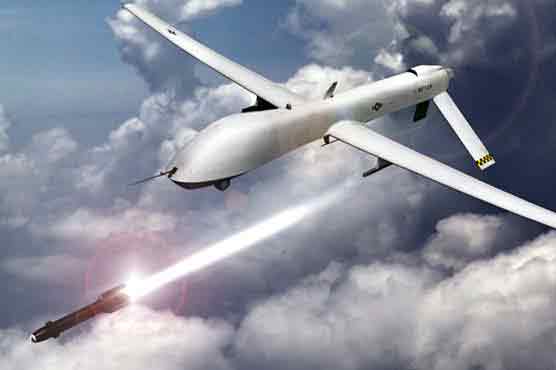
A U.S. drone strike in volatile northwestern Pakistan killed 11 militants today, a Taliban commander and security officials said, as Pakistani security forces press ahead with an offensive in a Taliban stronghold near the Afghan border.
Two missiles slammed into a house in the village of Doga Madakhel of the Datta Khel area in the border region of North Waziristan, intelligence officials said.
Drone strikes in Pakistan resumed in June after a hiatus of six months, during which the Pakistani government pursued peace talks with the Taliban. Pakistan announced an anti-Taliban offensive in North Waziristan within days of the resumption.
The United States has long urged Pakistan to crack down on the Taliban stronghold in remote, mountainous North Waziristan. The Taliban use the region to prepare bombs, hold kidnap victims, stage public executions, and as a launching pad for attacks on Afghan and NATO troops across the border.
The military ordered the entire civilian population of North Waziristan to leave before launching the ground offensive but residents said most of the militants also moved out.
U.S. lawmakers have said Pakistan will have to prove it is cracking down on the Haqqanis or have $300 million sliced off its military aid package.
Datta Khel is controlled by Hafiz Gul Bahadur, a Taliban commander who is considered friendly to Pakistani forces but supports attacks in Afghanistan. He announced a ceasefire against Pakistani troops after they said they would clear North Waziristan of Taliban fighters.
Before Saturday’s attack, the Bureau of Investigative Journalism, which tracks drone strikes using media reports, said at least 35 people had been killed in drone strikes in Pakistan since they restarted in June.

Pakistan's Polio : 8th polio case reported in Karachi

Another case of polio virus reported here on Saturday, bringing the toll to eight in the city this year. According to police, a child, resident of Gadap Town UC 8 Sultanabad, was detected with the polio virus.

Pakistan: Army and IDPs are sacrificing for country

Former Prime Minister Syed Yousuf Raza Gilani has visited IPDs camps in KPK and said that Pakistan’s armed forces and Internally Displaced Persons (IDPs) are sacrificing for the future of the country.
Speaking to media representatives after visiting camps in Bannu town, he said there was a need to help the IDPs to mitigate their sufferings, adding that it was a national issue.
Gilani was part of a Pakistan Peoples Party (PPP) delegation that reached the KP’s town via a helicopter from Islamabad to evaluate necessities for the IDPs of North Waziristan Agency in the camps.
Opposition Leader in the National Assembly, Syed Khurshid Shah and former information minister Qamar Zaman Kaira were also present.
Within the past month, nearly a million people have been displaced due to the military operation, Zarb-e-Azb and have been living in various refugee camps or with host families in various parts of Khyber Pakhtunkhwa mainly in Bannu.
There IDPs are facing acute shortage of basic necessities.
The former prime minister also appealed the international community to extend assistance to the IDPs, saying there was a need of an uninterrupted supply of water and power in the refugee camps.
Khurshid Shah, on the occasion vowed to bring the problems being faced by the IDPs into Prime Minister Nawaz Sharif’s notice.
He said the operation-affected would also be provided help and assistance from the PPP platform.
- See more at: http://www.saach.tv/2014/07/18/army-and-idps-are-sacrificing-for-country-says-gillani/#sthash.Cw9WSX2X.dpuf

Pakistan: Raiwind raid

THE killing of two suspected militants and the arrest of another during a raid by security forces on their hideout in the outskirts of Lahore on Thursday morning has removed at least one link in the long and still largely unrecognised terror chain. The security personnel must be commended for a job well done. But does this make the people of Lahore, of Punjab or, for that matter, the rest of the country any safer today than they were before? This is a tough question, made more difficult by the usual official resort to reticence in discussions about militancy and terrorism. That the suspects were living in a house in close proximity to the Raiwind residence of Prime Minister Nawaz Sharif for about two months without raising suspicion is a sign of danger. Of late there has been some improvement in how the police and other security agencies approach this serious issue. Both the security and intelligence agencies are visibly more active than before since the militant groups warned of reprisal attacks against the ruling party’s leadership and its political base following the launch of the military operation in North Waziristan. These efforts are said to have led to some successes in the shape of arrests of individual suspects that later led the intelligence outfits to Raiwind Road. However, the police and intelligence agencies are still to achieve a major breakthrough and cause a big dent in the militants’ network in Punjab. Simply put, the gang is far from busted.
In Punjab, the government of Chief Minister Shahbaz Sharif has repeatedly been accused of not acting against militant groups for fear of a backlash. There is also no dearth of critics who argue that Mr Sharif’s policy of ‘appeasing’ groups with links to the Taliban in the tribal area and parts of Khyber Pakhtunkhwa has turned parts of the province, especially some of its southern districts, into nurseries for militant groups. The government denies these allegations, but its reluctance to root out militant outfits shows through its inaction. The Raiwind raid shows the expanse and reach of the problem, spelling out a clear threat not only to ordinary people but also to the leadership of the ruling PML-N.
The raid must lead to a drive aimed at rooting out dangerous elements whose presence is alarming not only for Punjab, but for the entire country.

Pakistan: North Waziristan: US drone attack kills 11 in Data Khel

http://dunyanews.tv/
A US drone strike targeting a Pakistani Taliban compound on Saturday killed eleven insurgents in Data Khel area of North Waziristan near the border with Afghanistan, officials said. The attack came in North Waziristan, where for the past month the Pakistani military has been fighting to wipe out longstanding bases of Taliban and other militants.
"The drone fired eight missiles on the compound around 2:00am (2100 GMT) on Saturday killing eleven members of the Punjabi faction of the Pakistani Taliban," a senior security official in the region told AFP. The official said the dead included two "important" commanders of the Pakistani Taliban, but he refused to reveal their identities. An official had earlier given a lower death toll of eight militants dead. The strike took place in the Mada Khel village of tehsil Data Khel, a town that lies around 22 miles (36 kilometres) west of North Waziristan's capital Miranshah. US drone strikes have picked up since the military offensive in Waziristan after a near six month hiatus. Since 12 June at least four drone strikes have been reported in the tribal areas. The assault by Pakistan's military was launched after a dramatic attack by militants on Karachi airport which killed dozens of people and marked the end of a faltering peace process with the Pakistani Taliban. More than 400 militants and 25 soldiers have been killed in the assault so far, according to the military, though the area is off-limits to journalists, making it impossible to verify the number and identity the dead independently. Pakistan routinely protests against US drone strikes, which have been targeting militants in the tribal areas since 2004, saying they are a violation of sovereignty and counterproductive in the fight against terror. Military officials have also strongly denied suggestions that there has been collusion with the US on drone strikes. More than 800,000 people have been forced to flee from North Waziristan by the assault, with most ending up in the nearby town of Bannu. There have been fears that many top militants also fled, including fighters from the feared Haqqani network which is blamed for numerous bloody attacks in Afghanistan.

Friday, July 18, 2014

Editorial : Military conflicts shot down MH17

Passenger flight MH17 crashed on Thursday from a height of 10,000 meters, with all 298 onboard killed. All sides agreed it was shot down by a missile. But no one has claimed responsibility for the disaster.
Russia pointed its fingers at the Ukraine government, while Kiev claimed that the militias were to blame. The militias declared that they were not capable of shooting down a plane from that height. The Western media are already relating the tragedy to Russia, with British newspaper The Sun blaring on its front page that it was "Putin's missile."
So far, all these accusations are in line with the political stance they have always been adhering to. But no indisputable evidence has been provided.
The real culprit to blame, in fact, is the chaotic situation in Ukraine following the Crimea crisis. What Putin has said, that the tragedy would not have happened had there been peace in Ukraine, does make some sense.
Similar cases in the past involving civil passenger aircraft being shot down were also related to political tensions during those times. In 1983, at the height of the Cold War, a Soviet fighter jet blew a South Korean passenger flight out of the sky. In 1988, during the Iran-Iraq war, the US navy shot down an Iranian civil airliner near the Strait of Hormuz.
People thought such tragedies had become history. Now they have appeared again on the new "battlefield" in eastern Ukraine.
The fact is that humans can never control the extent of irrationality and destruction during political and military conflicts. Once the evil of war comes out of Pandora's box, it is very difficult to put it back in.
The US army has mistaken civilian sites as military targets many times in Afghanistan, Iraq and Pakistan, causing huge civilian casualties. But each time the US simply apologized, or just ignored it, and got away with it. That is the nature of war.
While feeling sorry for Ukraine's current situation, we believe the way to permanently prevent tragic disasters of this kind is to restore peace to this country.
The Western countries have been active in advocating and supporting the "democratic revolution" in Ukraine, so as to lure the country to become the frontier outpost of the West's geopolitical expansion.
Ukraine has paid a huge price.
We sincerely hope a thorough investigation can be conducted over the MH17 incident, and the culprits behind the tragedy are revealed.
The political factors of the tragedy also need deep examination. Pointing fingers at each other will not help solve problems. Ukraine and the world need peace more than anything else.

Video Report: Pres. Obama addresses situation in Ukraine after Malaysia Airlines plane shot down

Malaysian Airliner Disaster in Ukraine Must Be Investigated Objectively – Putin

Russian President Vladimir Putin conveyed his condolences to Dutch Prime Minister Mark Rutte over the Malaysia Airlines passenger plane that crashed in eastern Ukraine and said the tragedy needs to be investigated objectively. “The head of the Russian state emphasized that the tragedy that occurred once again confirms the necessity of a quick peaceful settlement to the acute crisis in Ukraine and said that all of the circumstances around the aircraft disaster need to be investigated carefully and objectively,” the Kremlin’s press service said.
Earlier, Putin also expressed his condolences to Malaysian Prime Minister Najib Razak.
A Malaysia Airlines Boeing 777 flying from Amsterdam to Kuala Lumpur crashed near the town of Torez in the Donetsk Region on Thursday. There were 283 passengers and 15 crew members on board.
Various sources speculated that the plane was shot down by a Buk surface-to-air missile.
Soon after the crash, an adviser to the Ukrainian Interior Minister wrote on his Facebook page that a Buk surface-to-air missile system was indeed used to down the plane, but insisted that the independence supporters had done that. Ukraine has repeatedly accused Russia of supplying arms to resistance forces in the east of Ukraine, although there has been no evidence to this effect.
Ukrainian authorities and Malaysia Airlines are investigating the incident.

Ukrainian government should be responsible for investigation of MH17 incident: Malaysian official

Malaysian Transport Minister Liow Tiong Lai said here Friday in a press conference that according to the International Civil Aviation Organization's Annex 13, the Ukrainian government should institute an investigation into the circumstances of the deadly MH17 incident, and be responsible for the conduct of the investigation.
He said Malaysia would offer its full and unqualified support to the investigation. "Malaysia has been formally invited to participate, and will send two senior accredited representatives to assist." Malaysia Airlines flight MH17, a Boeing 777-200, was flying from Amsterdam to Kuala Lumpur when it crashed Thursday in eastern Ukraine with 298 passengers and crew aboard, including 43 Malaysian citizens. No survivors have been found. Liow said Malaysia welcomed calls for an independent international investigation into the incident, and insisted that the integrity of the crash site should be preserved.
The minister promised that Malaysia Airlines would take its responsibilities to the next of kin of the victims seriously, adding the company had arranged about 40 staff to be flown to Amsterdam to support the families.
"In total, 62 people -- 30 SMART team members, 15 medical staff, 10 Royal Malaysia Air Force representatives, five Malaysia Airlines staff, two Department of Civil Aviation staff -- are traveling to Kiev," he said. Liow also gave an update on the nationalities of the passengers on board the aircraft, saying there were still 20 remaining to be verified.
According to a latest list given by him, there were 173 people from the Netherlands, 44 Malaysians, 27 Australians, 12 Indonesians, nine British, four Germans, four Belgians, three Filipinos, one Canadian, and one New Zealander. "Once all families have been contacted, the passenger manifest will be released," he said, adding that Malaysia Airlines would release the cargo manifest later Friday.
As to the flight path of MH17, Liow said it was approved by the International Civil Aviation Organization, and by the countries whose airspace the route passes through. "And the International Air Transportation Association has also stated that the airspace the aircraft was traversing was unrestricted," he added. He said 15 out of 16 airlines under the Association of Asia Pacific Airlines fly this route over Ukraine, and European airlines also used the same route, and traversed the same airspace.
"In the hours before the incident, a number of other passenger aircraft from different carriers used the same route," he added. The minister also said there were no last minute instructions given to the pilots of MH17 to change the route of the flight. Liow said officials in the United States and Ukraine had indicated that MH17 was shot down. "Should this be confirmed, it would contravene international law, and be an outrage against human decency," he stressed.
Liow said Malaysia condemned any such action in the strongest possible terms, and called for those responsible to be swiftly brought to justice.
When asked whether the Malaysia Airlines chose this flight path in a bid to save fuel cost, he said such reports were not true.

أغنية تركية أكثر من رائعة Turkish Music

Turkey’s Rampant Domestic Violence Problem

By Emily Feldman
Violence against women continues to plague Turkey, and a pioneering new female political party blames Erdogan's machismo.
Residents of an upscale Istanbul neighborhood flocked to their windows this month to watch a neighbor brutally beat his wife. One onlooker—a European woman—recounted the woman’s screams and her neighbors’ apathy in a post to an Istanbul Facebook group.
“I asked one of the neighbors to call the police but she refused and continued watching, like it was a soap opera,” the woman wrote. “It seems violence is a normal thing here, and nobody cares!!”
The post generated more than 100 comments, many from fellow Westerners who said that they too had been disturbed by violent scenes they couldn’t imagine unfolding back home: diners and waitstaff politely ignoring a man slapping his date in the face; pedestrians strolling past a public assault on a woman; a shopkeeper shrugging off a news report about a man slicing his wife’s nose off her face. “That’s Turkey,” a woman recalled the vendor saying.
Violence against women is a pervasive problem in Turkey that affects nearly 40 percent of the country’s female population, according to widely cited 2009 study. It is behind 20 percent of divorces, according to a recent government survey, and has claimed at least 120 lives since January 1 alone, an increase from the same period last year, according to several Turkish NGOs and data from Bianet, a news site that tallies killings reported in the media. It spans class and location, even making its way onto mainstream TV, as it did in May when a dating game show contestant revealed, on air, that he had killed his wife and later axed his lover to death.
Turkey’s chronic domestic violence was among the frustrations that prompted a group of women’s rights activists—seven women and two men—to escalate their fight for gender equality last month by launching what could become the country’s first-ever women’s political party to participate in general elections.
The founding members of Kadin Partisi, or Women’s Party, reasoned the country was in need of a radical cultural shift that would only happen with more women in positions of power. As traditional activists, they could only do so much—aid women after they had been beaten; fight discriminatory policies after they had been written; offer advice and hope it might be heeded. But a party that could fill the seats of government with women, they believe, could finally balance a masculine culture that permeates the rest of the country.
“We are 50 percent of the population,” Fusun Yurtman, a founding board member, said in an interview with The Daily Beast. “Yet males are making decisions about women’s issues from the moment they’re born. Even from conception,” she added, referring to government attempts to limit access to abortions.
Turkey’s political system is overwhelmingly male, with women accounting for just 14 percent of the seats in parliament and an even smaller sliver of local government positions, according to data from Kader, a group that tracks women’s participation in politics. Men also dominate the judiciary and police force—which should be strong lines of defense for victims of domestic violence, but which critics instead characterize as boys’ clubs that go easy on men when it comes to “family disputes.”
“The problem is in the application, the interpretation of law,” said Fatma Aytac, another founding member, adding that cops and courts tend to view men as the head of the family and take their word over their wives’. “Police come from this culture. Everyone comes from this culture.”
The party also points a reproachful finger at Turkey’s populist prime minister, Recep Tayyip Erdogan, for perpetuating the country’s machismo through routine off-the-cuff morality rants: about how abortion is murder, C-sections are unnatural, co-ed dorms are breeding grounds for vice, and how every woman should have three children. These statements, the party founders say, serve as a disturbing model for Erdogan supporters, whether his opinions find their way into policy or not.
Whatever Erdogan’s influence on Turkey’s masculine culture may be, the country’s gender fault lines long predate his time in power. Domestic violence, for example, has provided thematic fodder for generations of writers and filmmakers. Turkish author Elif Shafak begins her novel Honor, a story about women murdered for shaming their families, with a childhood memory about a neighbor who beat his wife. “In the evenings we listened to the shouts, the cries, the swearing. In the morning we went on with our lives as usual. The entire neighborhood pretended not to have heard, not to have seen.”
More recently, however, Shafak has expressed optimism about a growing grassroots movement in Turkey to acknowledge and end violence against women. “More and more public figures are coming out to say that domestic violence is everyone’s business and we should, as a society, interfere,” she wrote in a 2011 Guardian article.
Zeynep Kandur, who works for the women’s branch of Erdogan’s Justice and Development Party, has also observed many improvements over the years. “Twenty years ago you wouldn’t report domestic violence,” she said. “You wouldn’t tell your own mother-in-law.” Through the bleakness of rising domestic violence statistics, she sees a positive sign: More women and families are now reporting these sorts of crimes rather than sweeping them under the rug.
he also defends Erdogan against accusations of machismo, arguing that he has consistently pushed for more women in the party and that, since he took power in 2003, female representation in parliament has increased from 4 to 14 percent.
The founders of Kadin Partisi, however, see women in male-dominant political parties as subordinate to the parties’ masculine agendas. “They apply the parties’ policies, they collect the votes for men,” Yurtman said.
The Women’s Party itself, the founders point out, does not plan to simply turn the tables and exclude men from their agenda. While boosting female representation in politics is a top priority, the party bills itself as a body striving for universal equality and eager to fight discrimination in any form.
To realize their vision, the party will first have to raise enough money to build branches across the country—a necessity if they want a shot at participating in next year’s parliamentary elections. A pioneering women’s party established in Turkey in the 1970s failed to cross this critical threshold.
On a recent sweltering Thursday afternoon several founders hunched over a table brainstorming how to do exactly that. They had launched too late to prepare for the country’s August presidential elections—which Erdogan is expected to win, extending his influence for at least another five years—but were optimistic, looking ahead to 2015.
They said they had been well received by women on visits throughout the country and they reasoned that if they could get just one supporter per household, they’d be in business. “We can easily convince them,” Aytac said.

Pakistan:Gunmen kill three policemen, passerby in Peshawar

Three policemen and a passerby were killed and three others injured when unidentified gunmen attacked a police party in Pishtkhara area on the outskirts of the Khyber Pakhtunkhwa capital on Friday.
Superintendent of Police (SP) Cant, Muhammad Faisal confirmed that three policemen and a civilian have been killed and three including two cops and another passerby wounded in the ambush.
“The policemen were breaking their fast at a local restaurant at Landi Akhun Ahmed neighbourhood on the outskirts of the city when unknown assailants opened indiscriminate firing on their van killing three policemen and a waiter of the restaurant on the spot,” he said.
The dead and the injured have been shifted to the Khyber Teaching Hospital.
An official of the KTH hospital said that seven injured were brought to the hospital where two policemen including ASI Noor Muhammad and driver of the police mobile van Baz Muhammad succumbed to their injuries.
The eyewitnesses said that the policemen were staying for Iftar near a roadside restaurant when the attackers riding a car opened fire on them resulting in the death of three cops and wounded four others.
Peshawar police chief Ijaz Ahmed confirmed to the media that policemen were having Iftar out in the open when targetted by the miscreants riding a white car. He also confirmed the number of casualties.
Meanwhile, the bomb disposal squad defused a bomb near Khyber police checkpost in Hayatabad. Sources said that two kilograms of homemade explosive material was recovered and seized near the checkpost.
Nobody has claimed responsibility for the incident but the Tehreek-i-Taliban Pakistan (TTP) have been wedging an ongoing war against the state.
Earlier in the morning, a police van was blown up with an improvised explosive device (IED) at the centre of the city killing one police official. Pakistan launched a long-awaited operation in the North Waziristan tribal district last month aimed at eliminating Taliban and other militant bases after a dramatic attack on Karachi airport which marked the end of a faltering peace process with the Pakistani Taliban.
Nearly a million people have been forced to flee from North Waziristan by the offensive.
Analysts have warned that the operation would likely lead to reprisal attacks in Pakistan's major cities at the hands of sleeper cells of militant outfits linked to the Taliban.
Thousands of civilians have died since the militants rose up against the Pakistani state more than a decade ago.

Pro Saudi Terrorist group ISIL butchers 1000s of Iraqi civilians: UN

The UN says over 5,500 civilians have been killed and thousands more injured in the foreign-backed militancy across Iraq so far this year.
The UN mission to Iraq said in a new report on Friday that at least 5,576 civilians were killed and another 11,665 wounded in Iraq since January across the crisis-hit country.
This comes as the mission has put last month’s death toll at over 2,400 across the crisis hit country. The figure also makes June the deadliest month so far in 2014.
The report is the UN’s latest detailed account of the impact of months of violence by the ISIL militants in Iraq's north.
“The fighting has inflicted untold hardship and suffering on the civilian population with large-scale killings, injuries," the report noted, adding that another 1.2 million people have been driven from their homes by the ongoing al-Qaeda-linked militancy.
The developments come as rights groups say hundreds of thousands have fled their homes in Mosul, Iraq’s second-biggest city, fearing abductions and killings. The city has been under militant control since last month.
Recently, several gruesome videos were released, purportedly showing members of the Takfiri ISIL group brutally killing Shia Muslims in drive-by shootings in Iraq. The terrorist group has links with Saudi intelligence services and is believed to be indirectly supported by the Israeli regime.
Iraqi Prime Minister Nouri al-Maliki has blamed Saudi Arabia and Qatar for the security crisis and growing terrorism in his country, denouncing Riyadh as a major supporter of global terrorism.

Iraq Christians told to convert or face death

Islamic State group tells Christian community in Mosul they face death if they do not embrace Islam or pay tax.
The Islamic State group has threatened Christians in the Iraqi city of Mosul with death if they do not to convert to Islam or pay a tax, Al Jazeera has learned.
The Sunni rebel group issued the orders in a letter after Friday prayers. The document, obtained by Al Jazeera, states that the order was issued after Christian leaders failed to attend a meeting called by the group.
In response, the group says in the letter that Christians must either convert to Islam, pay a special tax on non-Muslims known as jiziya, or face death "as a last resort".
Mosul, Iraq's second largest city, was overrun by the Islamic State group and allied rebel groups last month.
The Iraqi army units stationed in the city, most of whom were Shia, fled after the group crossed from Syria and attacked the north of Iraq.
Before the attack, Mosul's Christian community was estimated at 3,000. Many are believed to have already fled the city as part of an exodus of up to one-third of the population. Churches and Christian-owned shops in the city were reported smashed by those who fled.
The Islamic State's leader, Abu Bakr al-Baghdadi, held a sermon in Mosul's grand mosque two weeks ago, calling on all Muslims to unite behind his group.
The Islamic State, formerly known as the Islamic State of Iraq and the Levant, has issued similar demands in areas in control in Syria, and has posted pictures of Christians being crucified for disobeying orders in Raqqa.
Church leader‎s in Iraq have not responded to the threats officially.
Nickolay Mladenov, the head of the UN assistance mission In Iraq, condemned the order.
"Any persecution of minorities constitutes a crime against humanity and we urge all sides to protect civilians. We have produced a report listing attacks on civilians ‎and have brought this up at the highest levels of the Iraqi government."

Ho Ke Juda - Pakistani Film Song

Pakistan: ‘Outsourcing’ CM-ship diametrically opposed to democracy

http://mediacellppp.wordpress.com/
Criticising the ruling style of the Sharif brothers, Pakistan People’s Party (PPP) Punjab Secretary General Tanvir Ashraf Kaira has said that “outsourcing” the chief ministership by Shahbaz Sharif is an hierarchical inclination that diametrically runs against the democratic culture.
Clarifying in a statement on Thursday that PPP’s support to the PML-N government should not be taken for granted, Kaira added that the rulers should focus on providing relief to the people instead of compounding their miseries through neglect and inaptness.
Kaira said that PPP Co-Chairman Asif Ali Zardari accepted the results of May 2013 elections for the sake of continuity of political system despite his serious reservations on the fairness and impartiality of the electoral process but that did not give carte blanche to the ruling party to trample on the aspirations of the people with total impunity.
He said that the hours-long electricity outages, skyrocketing food inflation, worsening law and order and abject neglect of the health and education sectors have made the lives of the people miserable and the apathy of the government was appalling that could not be condoned by the PPP, which strictly believed in the people’s politics.
The PPP leader said that the PML-N government should jettison the family style of governance, adding their intimidation of elected representatives and ministers alike would not bear fruit.
He said that the prime minister and the chief minister should conduct their government affairs in harmony with the elected representatives of the people in real sense of the word. The highest public offices should not be treated as family fiefdom, he observed.
Kaira called upon the government to accept the demands of the PTI and immediately initiate the process of thumbprints verification in four constituencies of Lahore to avoid the clash in August. He expressed the hope that good thinking would prevail at the end of the day. He pointed out that the manoeuvring/delaying thumbprints verification through procedural lacunas by the PML-N leaders would not help to shy away the possibility of gathering a political storm with terrible consequences for the system and the country.
He maintained that consistent engagement with the opposition was the best policy in any functioning democracy because opposition was the integral part of any democratic set-up. “The opposition is treated as a government-in-waiting and accepted as such,” he added.

Pakistan: Gillani visits IDPs camps at Bannu

Former Prime Minister Syed Yousuf Raza Gillani payed a visit to the camps of Internally Displaced Persons (IDPs) at Bannu on Friday, ARY News reports. Pakistan Peoples Party (PPP) representatives Syed Khursheed Ahmad Shah, Qamar Zamar Kaira and other party members accompanied Syed Yousuf Raza Gillani on the tour. PPP members asked the displaced persons about the problems they were facing. They also distributed ration amongst the IDPs. Gillani, while speaking to media on the occasion, said that he was happy that the federal government and Sindh Government are working together.
- See more at: http://arynews.tv/en/gillani-visits-idps-camps-at-bannu/#sthash.iGz7c7TP.dpuf

Pakistan and China: A Precarious Friendship?

By Alessandro Rippa
In contrast to the public posturing, the relationship on the ground is more complex and multilayered.
What do a Communist state and an Islamic Republic have in common? Not much, perhaps, and yet in the fast-changing world of international relations, China and Pakistan have managed to maintain a strong friendship from the 1960s onward. Today, despite its growing isolation on the international stage, Pakistan can still counts on China as its closest ally. Particularly as the country’s troubled relation with the United States seems to deteriorate by the day, China has emerged in the eyes of many Pakistanis to the image of a peaceful, supportive neighbor. As a recent survey has shown, 81 percent of Pakistanis view China favorably, second in this special chart only to China itself. Recurrent protestations of friendship and reciprocal approval seem to reinforce this view, as do public announcements of triumphal development projects such as the China-Pakistan economic corridor, the Gwadar Port, and other initiatives.
On a different note, however, some analysts have pointed out that the waters beneath the surface of this relation might, in fact, be much more agitated than the public displays would suggest. In particular, it has been argued that the alleged presence of Uyghur militants in North Waziristan, which Beijing hold responsible for several terrorist attacks on its soil, might represent a source of tension between the two countries. In this sense Mushahid Hussain, head of the Defense Committee of the Pakistani Senate and chairman of the Pakistan China institute, in a recent interview seemed to imply that Chinese pressure played some kind of role in the ongoing military operation in Pakistan’s North Waziristan, where several ETIM militants are allegedly based. And yet, in this as in other public statements by Pakistani and Chinese officials, always the “convergence of interest” between the two countries, and a mutual appreciation of each other’s efforts, are underlined. The issue of Uyghur militants in Pakistan, moreover, seems of little concern for Pakistan’s general public, rather concerned with an Islamist threat in its own country and with the US’s activities along its borders.
Recently, however, a few stories show a different side to this relationship, one that is not always considered when it comes to the heights and depths of the two countries’ “all-weather” friendship. The first is the story, widely reported and discussed in Pakistan, of the Chinese government banning Xinjiang officials from fasting during Ramadan. The news sparked an array of surprised and angry responses, but also a more interesting debate on the value of Pakistan’s friendship with China. Many, like Rafia Zakaria for Dawn, have called out Pakistan’s hypocrisy in its relations with China, accusing the country of being eager to stand up to injustices committed against Muslims only when those are not perpetrated by its “friends.” In a late – and rather paltry – move, the Pakistani government eventually adopted a public stance, in which it allied itself, once again, with the Chinese government. Asked about the issue, Foreign Office spokesperson Tasnim Aslam was reported as saying that “The Chinese have clarified that there is no such ban on fasting and that they respect the freedom of religion,” adding that these reports were just rumors and factually incorrect. Few, however, seemed convinced by those words.
The other two news items, on the other hand, didn’t attract much attention either within Pakistan or abroad, perhaps because they originated from the remote (geographically and politically) Gilgit-Baltistan region, near the Chinese border. The first was reported by Pamir Times, a small internet blog established in 2006, which has rapidly become the most important online news portal in Gilgit-Baltistan. The article, entitled “Locals in Gojal Valley demand more responsible behavior from Chinese workers” raises an important issue for many inhabitants of Gilgit-Baltistan, where many Chinese workers are involved in construction projects, such as the realignment of the Karakoram Highway. As I had the chance to hear personally during my fieldwork in the area in 2013, many locals accuse the Chinese workers of not respecting the local cultures, of selling alcohol, causing incidents and, at times, of not bringing anything to the local economy. As I was often told in the region, if the Chinese workers’ attitude was to be taken as an indicator of the quality of China’s friendship, then Pakistan shouldn’t really trust its “all-weather” ally.
The second bit of news, first reported by an even smaller internet blog, Sost Today, was on the other hand centered on the Sost Dry Port “drama,” as Pamir Times defined it. The Dry Port was set up in 2001 in Sost, Pakistan’s border town along the Karakoram Highway, to facilitate and enhance trade relations with the People’s Republic of China. The administration of the Dry Port is for the 60 percent in the hand of the Chinese Sino-Trans Company, and for the 40 percent in the hand of local investors, a situation which had led to numerous scandals in the past. On this most recent occasion the Dry Port was closed by its Chinese administrators demanding protection of the “interests of Chinese” in a note posted on the sealed gates. The note, allegedly, followed a brawl which saw the new Pakistani chairman of the Dry Port assaulted by – or assaulting, it’s still not clear – a Chinese official in his office. The incident, although it remains quite murky, signals a certain tension between the two parties, and seems to point toward well-established mutual accusations and suspicions. The Express Tribune, running the story a few days later, significantly titled it “bad for business,” a concern that seems shared by many in the area.
In the course of my fieldwork along the Karakoram Highway, in both Xinjiang and Pakistan, I was often confronted with similar issues. Some Chinese traders and officials were eager to highlight the laziness and inefficiency of the Pakistanis; while on the other side many Pakistani businessmen despised the Chinese for cheating and for their arrogance. On a more general level, the situation appeared complex and multi-layered. For many Pakistanis, China remained a trustworthy fried. For others: it is another external power that simply aims at using Pakistan for its own advantages. For many, at least in Gilgit-Baltistan, it appeared as a necessary evil, an economic power with the ability to develop infrastructure and trade, yet with the potential to eventually lead the whole region toward unpredictable, and negative, future outcomes.
On the ground, then, the trope of “China-Pakistan friendship” seems more complex than anything revealed by the official statements of the two governments. As these recent news items suggest, Pakistani’s favorable attitude toward the PRC should not be taken for granted. On the other hand, it could be argued that for as long as Pakistanis see the United States as the overarching cause of almost all of the country’s problems, China’s position is not likely to change. And yet, as Germany and the United States have recently demonstrated over the espionage row, even a long-lasting friendship can abruptly take a turn for the bad. Maybe it’s time for somebody to start worrying about the possibility of losing a friend.

Balochistan faces 1110 MW shortfall of electricity

Balochistan faces 1110 Mega Watts shortfall as its demand has touched a mark of 1600 MW while available supply is 950 MW. Sources said that 5 to 6 hours daily load shedding is made in Quetta city. However, due to system overloading sometimes there is tripping and low voltage. According to the sources daily 10 hours supply is made in Pishin, Killa Abdullah, Mastung, Kalat, Zhob, Killa Saifullah and all city feeders in different timings while Jaffarabad, Nasirabad, are supplied 12 hours and Sibi 18 hours daily. All rural and agri feeders are supplied for 7 hours daily because owning to extensive overloading of system more than 7 hours supply is not possible.

Pakistan's Shia Genocide: Shia Noha Reciter Martyred In Takfiri Terrorist Attack In Peshawar

shiapost
Shia noha khwan (noha reciter) embraced martyrdom when takfiri terrorists of banned Sipah-e-Sahaba and Taliban opened fire upon him in Peshawar, capital city of Khyber Pukhtoonkhwa province.
Sabah Ali was on way back to home from his Khams Jeweller shop when notorious takfiri terrorists ambushed him. He was noha khwan of Ganj Shaheed Matami Sangat. His namaz-e-janaza will be held at Imam Bargah Pathar Wala Ganj today.
Shia parties and leaders have condemned the unabated genocide against Shiites across Pakistan. Talking to the Shiite News, they demanded military operation to eliminate the takfiri terrorists.

Pakistan: 4 people killed outside the Mosque in Quetta

At least four people were shot dead when unidentified gunmen opens fire outside a mosque near Mehmudabad area after Friday prayers. According to initial investigation by police, the firing incident took place after Friday prayers, dead include three family members (grandfather, father and son) who were returning home. Rescue teams arrived at the scene soon after the incident and shifted the dead bodies to hospital for legal formalities. According to police sources, armed men opened fire at the people as they were leaving mosque in Mehmoodabad locality of Quetta after offering Friday prayers. Four injured succumbed to their injuries while on the way to hospital, sources said. Police and relief agencies personnel reached to the crime scene after the bloody incident.