Pakistan Tehreek-i-Insaf (PTI) leader, Shah Mehmood Qureshi Tuesday welcomed the Co-chairman Pakistan People’s Party (PPP), Asif Ali Zardari’s backing of his party’s demand for a vote recount.
Talking to Samaa TV, Shah Mehmood Qureshi said if Asif Zardari deems PTI’s demand legitimate then he and his party workers should come out in response to PTI’s call for a long march on Islamabad on August 14.
Qureshi also invited all other parties to take part in the long march.
Earlier today, PPP Co-chairman Asif Ali Zardari said what harm would transpire if ballot recount is conducted in four constituencies.
“Be it Punjab or Sindh, a vote recount should be undertaken,” Zardari had asserted.
Former President Asif Ali Zardari asks Nawaz Sharif to stop interfering in provincial matters and reminding him that he was democratically elected Prime Minister, not a ‘King’.
The Pakistan Peoples Party co-chairperson also said that the prime minister, leader of the ruling Pakistan Muslim League-Nawaz, should take into account the demands made by the Pakistan Tehreek-e-Insaf (PTI) regarding the re-counting of votes in four constituencies.
Zardari said that the premier should not be afraid to go ahead with the re-counting of the votes.
He said Nawaz had made several promises to the public, which he has been unable to keep, adding that the public is suffering with water, power and gas shortages.
Zardari, comparing the PPP and PML-N governments, said that load-shedding and circular debt had increased with the present government.
 http://mediacellppp.wordpress.com/
Former President Asif Ali Zardari has expressed surprise and dismay over the continued foot dragging by the government on the demand to recount votes in four constituencies in Lahore saying “heavens will not fall down if the demand was accepted”.
Recounting of votes in constituencies where there are complaints and demands voiced for it should be carried out whether such constituencies are in Punjab or Sindh or elsewhere, Spokesperson Senator Farhatullah Babar quoted the former President as saying in a statement today.
The Spokesperson said that the former President made these remarks feeling anguished about the deepening controversy over recounting in four constituencies in Lahore and wondered as to why the Prime Minister felt so nervous about it.
Recounting in forty constituencies may be carried out if needed instead of the four as demanded at present he said.
People had elected Mian Nawaz Sharif as the Prime Minister of the country and not as absolute monarch or to interfere in other provinces, he said.
He said that the PPP has accepted the poll results for the sake of democracy and democratic process but it cannot abandon the people who are undergoing unimaginable hardships compounded by load shedding and water shortages in sweltering heat and the crisis in the industrial sector due to continued load shedding.
 Doug Bandow
The world is aflame. Religious minorities are among those who suffer most from increasing conflict. Pakistan is one of the worst homes for non-Muslims. The U.S. government should designate that nation as a “Country of Particular Concern” for failing to protect religious liberty, the most basic right of conscience.
Religious persecution is a global scourge. Many of the worst oppressors are Muslim nations. Iran, Saudi Arabia, Indonesia, Bahrain, Iraq, and Egypt are all important international actors. All also mistreat, or acquiesce in the mistreatment of, anyone not a Muslim. Some of them even victimize Muslims—of the wrong variety. (In Syria it is opponents of the government which do most of the persecuting.)
Islamabad is another frequent offender. The most recent State Department report on religious liberty in Pakistan noted that “The constitution and other laws and policies officially restrict religious freedom and, in practice, the government enforced many of these restrictions. The government’s respect for and protection of the right to religious freedom continued to be poor.”
Minority faiths face violent attack. Believers are killed, churches are bombed, buses are attacked, homes are destroyed, social gatherings are targeted. Warned the U.S. Commission on International Religious Freedom in its recent report: “In the past year, conditions hit an all-time low due to chronic sectarian violence targeting mostly Shia Muslims but also Christians, Ahmadis, and Hindus.” Last year the Commission cited a spike in violence against Shiites as well as “numerous attacks against innocent Pakistanis” of other religions.
Although Islamabad did not launch these assaults, it did little to prevent or redress them. Even when scores or more are killed at a time there often is no effective response. Explained State: “The government’s limited capacity and will to investigate or prosecute the perpetrators of increasing extremist attacks against religious minorities and on members of the Muslim majority promoting tolerance, allowed the climate of impunity to continue.” Indeed, top government officials have been gunned down for defending freedom of conscience.
The most common tool of persecution may be a charge of blasphemy. Said USCIRF: “The country’s blasphemy laws, used predominantly in Punjab province, but also nationwide, target members of religious minority communities and dissenting Muslims and frequently result in imprisonment.” Two years ago a mentally handicapped 12-year-old Christian girl was charged; after an international outcry even the authorities became embarrassed and the case was dismissed, an unusual outcome.
The blasphemy laws are made for abuse. Explained the Commission, “The so-called crime carries the death penalty or life in prison, does not require proof of intent or evidence to be presented after allegations are made, and does not include penalties for false allegations.” In fact, courts hesitate to even hear evidence, lest doing so also be considered another act of blasphemy. With evidence unnecessary, the charge has become a weapon routinely used in personal and business disputes, including a means to exact revenge for imagined offenses.
Between 1986 and 2006 695 people were charged with blasphemy. Today 16 people are on death row and another 20 are serving life sentences. Three Christians have been sentenced to death in the last few months. Many other Pakistanis are in prison waiting for trial, including English professor Junaid Hafeez, accused of blaspheming the Prophet Mohammed. Penalties are not limited to the law. Explained the group Freedom House: “Regardless of the motives behind their charges and the outcome of their cases, those accused of blasphemy are subject to job discrimination, ostracism from their communities and neighborhoods, and even physical violence and murder at the hands of angry mobs, forcing many to live in fear.” Since 1990 at least 52 people charged with blasphemy have been killed before reaching trial.
Judges who acquitted defendants and politicians who talked of reforming the blasphemy laws also have been assassinated. In May gunmen killed Rashid Rehman, a human rights lawyer who was defending Hafeez. Previously fellow attorneys threatened Rehman, “You will not come to court next time because you will not exist any more.” A pamphlet circulated after the murder asserting that Rehman met his “rightful end.” He was the first defense lawyer killed. He probably won’t be the last.
Pakistan has jailed more people for blasphemy than any other nation, but it is not the only country which punishes religious free speech. An incredible 14 of 20 countries in the Middle East and Northern Africa criminalize blasphemy. Nine of 50 in the Asia Pacific, seven of 45 in Europe and three of 48 in SubSaharan Africa also do so. Eleven of 35 nations in the Americas have blasphemy laws. In the U.S. several states, including Massachusetts and Michigan, retain blasphemy laws, though they do not enforce them.
The group Freedom House published a detailed report on the detrimental impact of blasphemy laws on human rights. Put simply, these measures “impose undue restrictions on freedom of expression” and are “prone to arbitrary or overly broad application, particularly in settings where there are no checks and balances in place to prevent abuses.” Freedom House highlighted Algeria, Egypt, Greece, Indonesia, Malaysia, and Poland, as well as Pakistan.
In March the Commission made much the same point, issuing a special report entitled “Prisoners of Belief: Individuals Jailed Under Blasphemy Laws.” Victims include three atheist bloggers in Bangladesh, numerous Iranian Bahai’s, Christians, and Sufi and Sunni Muslims, 63 Sunnis and Christians in Egypt, an atheist writer in Kazakhstan, scores of Indonesians, and a Saudi blogger. Even Greece and Turkey have charged people with blasphemy.
The Arab Spring was supposed to bring liberty to the Mideast, but it had the opposite effect in some countries. For instance, in Kuwait, perhaps the most liberal Gulf State, the Islamist-dominated Assembly elected in early 2012 voted to impose the death penalty on Muslims convicted of blasphemy. The Emir blocked the law and later changed the election rules, resulting in election of a more moderate legislature.
Blasphemy prosecutions have been initiated in post-revolution Egypt and even Tunisia, viewed as the most successful participant in the Arab Spring. USCIRF commissioners Zuhdi Jasser and Katrina Lantos Swett wrote: “Rather than giving rise to greater individual liberty, this trend could turn the Arab Spring into a repressive winter, with forces of intolerance and tyranny dashing hopes for genuine freedom and liberal democracy.”
Nevertheless, Pakistan remains a particular problem. The country’s founder, Mohammed Ali Jinnah, emphasized the importance of religious liberty. But Pakistan became more Islamic over time, a process accelerated by dictator Mohammed Zia ul-Haq. His government not only criminalized blasphemy, but, noted Freedom House, enacted new laws which imposed “harsh Shari’a punishments for extramarital sex, theft, and violations of the prohibition of alcohol.”
The impact of such laws fell most heavily on religious minorities and liberals. Discrimination, intolerance, and violence have become pervasive. Noted Freedom House: “it is clear that Pakistan’s blasphemy laws are used politically and applied disproportionately to non-Muslims. Although many other countries have laws against blasphemy, the situation in Pakistan is unique in its severity and its particular effects on religious minorities.” Intolerance has become the norm.
Unfortunately, there are spillover impacts from abusive blasphemy prosecutions. Blasphemy laws are bad in Western nations. They are far worse in the Muslim world. The problem is particularly severe in Pakistan. Warned Freedom House: “Pakistan’s blasphemy laws foster an environment of intolerance and impunity, and lead to violations of a broad range of human rights, including the obvious rights to freedom of expression and freedom of religion, as well as freedom from arbitrary arrest and detention; the right to due process and a fair trial; freedom from torture and cruel, inhuman, and degrading treatment; and the right to life and security of the person.”
Obviously, there is little the U.S. can do directly about policy in Pakistan. However, the International Religious Freedom Act empowers the State Department to designate countries as Countries of Particular Concern. Noted USCIRF: “Pakistan represents the worst situation in the world for religious freedom for countries not currently designated” as CPCs. State should remedy that lapse.
For some, religious liberty is but an afterthought, an esoteric principle with little practical impact. However, the willingness of foreign governments to respect freedom of conscience acts as the famed canary in the mine. A state which fails to protect the right of individuals to respond to their belief (or unbelief) in God is more likely to leave other essential liberties unprotected. And a society in which the life and dignity of the human person is not respected is more likely to become a hothouse for violent ideas, beliefs, and actions.
As we see in Pakistan today. Rising religious extremism, exemplified by abusive blasphemy prosecutions, threatens the integrity of the Pakistani state—and the security of its nuclear weapons. Although outsiders cannot reform policy in Pakistan, they can highlight a problem that endangers people not only in that nation but ultimately in many others around the world, including America.
http://mediacellppp.wordpress.com/
Co Chairman Pakistan Peoples Party former President Asif Ali Zardari has called upon the government to give up its callous attitude towards the internally displaced persons (IDPs) of North Waziristan stranded in camps in Bannu and gear up the relief and rehabilitation work on a war footing.
The IDPs are our national heroes in the war against terror and neglecting them in this hour of trial is a criminal and callous act that will not be condoned under any circumstance and Spokesperson Senator Farhatullah Babar quoted the former President as saying in a statement today.
Asif Zardari said that their neglect by the government on the one hand and the reports that some charity organizations of defunct militant groups are secretly engaged in indoctrinating the vulnerable displaced people using the cover of philanthropy is a sure recipe to turn the IDPs into sympathizers of militants and extremists.
This is a grim prospect Pakistan can ill afford, the former President warned.
Recalling the IDP crisis faced by the PPP coalition government in 2009 as a result of action against militants in Swat and the way the crisis was handled and the refugess safely rehabilitated in their homes in a matter of few months the former President said there is no reason why the challenge posed by the displacement of people from NWA cannot be handled.
The PPP Co Chair said that in the wake of horrendous floods and huge displacements caused by it in 2010 the PPP government had invited Secretary General UN ban Ki Moon who launched a global appeal to help the flood victims.
He said that war against terror is a global fight and if the international community is supposed to assist Pakistan in it there is no reason why the international community must not be asked to help in the rehabilitation of the IDPs in accordance with the recognized principles of such assistance.
The government should shed its ego and invite the civil society, the NGOs and indeed mobilise the entire nation to assist in the relief and rehabilitation of IDPs, he said.
Special attention must be paid to the vulnerable groups among the IDPs including women and children, prevention of epidemic and trauma rehabilitation, he said.
The Co Chairman PPP also reiterated his call to the Party rank and file to reach out to the displaced families and provide them relief, the Spokesperson said.

Europe is not interested in maintaining the current crisis situation in Ukraine. Russia's permanent representative to the EU Vladimir Chizhov expressed his point of view in an exclusive interview to the Itar-Tass correspondent.
"I believe that maintaining the current crisis situation in Ukraine is not in the interest of Europe. I will not speak for the United States, but in some respects it is more aligned to their interests. However, it is clear that it is not in the interests of Europe, including the European Union, because for Europe, Ukraine is not just a playground for geopolitical games, as to some other countries, but is a serious large neighboring country with great potential," he explained. According to Chizhov, "some members of the European Parliament understand it." "Others might need more time to realize it," he added.
Permanent representative expressed the hope that the first resolution of the newly elected European Parliament in Ukraine, which is expected to be adopted in the upcoming Thursday, will be more objective than the previous statements of the members of European Parliament. "I hope to call for an early end of the violence, and this requires a cessation of hostilities and the beginning of the negotiation process, without any preconditions. Perhaps this is the only thing that is necessary in the current situation," said Chizhov. However, he pointed out that "if the EP wants to take the role of mediator in the political situation in the south-east of Ukraine, then it should take at least equidistant position" with respect to both conflicting parties.
Permanent representative also commented on the recent sanctions against leaders of the People's Republics. Those sanctions "do not contribute to the atmosphere that is necessary for political dialogue". "Nowadays, I think everyone already know and recognize, including the European Union that Ukraine's problem has no military solution. Solution can only be political, but a political solution can only be achieved through a political dialogue. And it turns out that those people with whom this political dialogue should be conducted and who are really controlling the situation in the east are subject to sanctions. What is the logic? These measures are deprived of any logic," he added.
Read more: http://voiceofrussia.com/news/2014_07_14/Current-Ukrainian-crisis-is-not-in-Europes-interests-Russian-envoy-to-EU-6073/

Former President of Pakistan Asif Ali Zardari has said that the Internally Displaced Persons (IDPs) are our national heroes, says media report.
In a statement, Asif Ali Zardari said that the government of Pakistan Peoples Party (PPP) handled the IDPs issue properly during the Swat Operation and they were sent home early.
He also stated that they took care of the people during the floods and took United Nations (UN) Secretary General Ban Ki-moon on board.
Zardari said that war on terrorism is the conflict of the entire world and the international community should come to Pakistan’s help.
The former President added that the government should leave their ego behind and mobilize the NGOs, civil society and the entire nation.
- See more at: http://www.saach.tv/2014/07/14/idps-are-our-national-heroes-asif-ali-zardari/#sthash.b1zno6PU.dpuf

The independent election commission (IEC) officials informed of a delay regarding the full audit of votes from the runoff presidential election.
IEC Chief, Ahmad Yousuf Nuristani said the independent election commission could not start the full audit of the votes as the agreement between the two presidential contenders was reached without considering the issues of the election commission.
Nuristani further added that the UN mission in Afghanistan has also requested to delay the audit of the votes until the international election observers arrives.
He said the audit of the votes is expected to start on Wednesday once the international election observers arrives in Kabul.
Nuristani also added that the election commission is busy with the preparation of the operational programs for the audit fo the votes.
The agreement to fully audit the runoff election votes was reached between the two presidential contenders following the mediation of the US Secretary of State John Kerry.
The two candidates agreed that the audit process should take place in Kabul and all the votes from the capital and other provinces will be audited in Kabul.
Nuristani said the preparations for the operational launch of the votes audit will be completed by Tuesday and practical audit will be launched on coming Wednesday.
The observers of the two electoral teams will also monitor the votes audit and the two candidates have vowed to abide by the results of the extensive audit.
http://en.shiapost.com/
Three Pakistani Shia judges of the Lahore High Court have received death threats from a banned sectarian organisation prompting the government to enhance their security.
A senior Punjab police officer said that the three Shia judges of High Court here had recently received threatening letters from unnamed person or organisation.
“However, the law enforcement agencies are suspecting anti-Shia organisation – Lashkar-e-Jhangvi – behind the threats to Justice Ali Baqar Najfi, Justice Muzahir Ali Naqvi and Justice Mazhar Iqbal,” he said.
Additional police personnel have also been deployed at the court’s entry and exit points and outside the courtrooms.
“The Elite Force commandos have also been deployed for the security of the three judges,” the official said.
According to the Lahore police, top Shia professionals have threats to their lives.
“There has been a general threat perception to top Shia professionals. The police could only provide security to those who have received threats from any sectarian group,” the official said.
Three eminent Shia figures, an eye surgeon, a chartered accountant and a lawyer, were recently killed in Lahore.
Shia organisation, Majlis Wahdat-e-Muslimeen spokesman Muzahir Shigri told PTI that the three Shias died in targeted killings, pointing a finger at the LeJ.
“All the prominent Shia personalities including professionals are under threat from the banned sectarian groups especially LeJ and government must provide them security and take action against it (LeJ),” he said.
Shias make up about 20 per cent of Sunni-majority Pakistan’s population. They face religious persecution as many consider them to be heretics.


A primary Human Rights Group calls on the Sri Lankan government to halt its moves to deport the Pakisani asylum seekers arrested in the country.
Human Rights Watch has urged the Sri Lankan Government to suspend moves to deport Pakistani asylum seekers arrested in the country. These Pakistani Assylum seekers include troubled Pakistani Christians and Muslims fleeing from Pakistan as result of growing persecution on religious bases.
Human Rights Watch said: at least 142 Pakistanis arrested in police raids in Sri Lanka in June 2014 are at risk of deportation. The Sri Lankan Controller General of Immigration and Emigration should not deport members of Pakistani minority groups until the UN refugee agency (UNHCR) has had full access to them and determined their need for international protection. The majority of them are members of the Ahmadiyya minority, though the detainees also include Christians and Shia Muslims. UNHCR has not had access to the detainees, who are being held in Boosa detention centre.
Significantly, the UN refugee agency has previously acknowledged at least six of the group as refugees. Conversely, some of the media reports quoted the Immigration Controller Chulananda Perera as saying: the government was able to deport the detained Pakistanis because it had not given them permission to register asylum claims.
Bill Frelick-Director for refugees at Human Rights Watch said: Sri Lankan authorities are threatening Pakistani minority group members with deportation at the very time when persecution of these groups is escalating in Pakistan, preventing asylum seekers from lodging claims in no way absolves Sri Lanka from its duty not to return them to possible persecution.
However, under the principle of ‘non-refoulement’ in international law, governments are forbidden to force the refugees to return to the places where they would be at severe risk of persecution or other serious harm. Nonetheless, the Sri Lankan government has taken effective moves to deport these Pakistanis which are manifestly against the principle which may cause the deported asylum seekers some serious harm upon return.
- See more at: http://www.christiansinpakistan.com/human-rights-watch-urges-sri-lanka-not-to-deport-pakistani-christian-asylum-seekers/#sthash.5w1W0WSb.dpuf
The victim, 38 years old Imtiaz Ahmad, was standing in front of a business he owned in Trunk Bazar when he was struck by a bullet to his head.
An Ahmadi man was murdered today in Nawabshah, a town 170 miles northeast of the Pakistani port city of Karachi in the Sindh province.
According to a statement issued via the micro-blogging website, Twitter, the press department of the Ahmadiyya Muslim Community in Pakistan said that the victim, 38 years old Imtiaz Ahmad, was standing in front of the business he owned in Trunk Bazar when he was struck by a bullet to his head.
Nawabshah, situated in Shaheed Benazir Abad District (so named after the murder of Benazir Bhutto, former Prime Minister of Pakistan) has a bloody history with numerous Ahmadī murders.
Although the cause of Imtiaz Ahmad’s murder has not been formally determined, the victim’s family has endured faith-based murders in the past.
Victim’s uncle, Seth Muhamad Yousaf was gunned down in Nawabshah because of his faith after the airing of a TV episode, Aalim Online, where an infamous hate preacher had facilitated issuance of a fatwa to murder Ahmadīs because they were apostates.
Seth Yousaf was the local Ahmadiyya community president when he was murdered in September 2008.
According to local reports, Seth Yousaf’s son, Asif Daud, was also targeted a few months ago but luckily he escaped the murder attempt.

There is no respite for the residents of Lahore in the holy month of Ramzan as unannounced load shedding continues in the city.
Residents of the city and surrounding areas have to face 14-16 hours of unannounced load shedding. The power outages are taking place during Sehri and Iftar despite promises made by the government.
People complain that due to a lack of sleep at night and businesses remaining closed during the day they are falling victim to mental distress.
Residents of Lahore say that even if there is electricity they cannot operate any machines due to low voltage.

By AMY ROBACH
ABC News | ABC Sports News
The most famous schoolgirl in the world, Malala Yousafzai, is bringing worldwide attention to the plight of the more than 250 young girls kidnapped by terrorist group Boko Haram in Nigeria.
Arriving in Abuja on her 17th birthday, Malala had a series of meetings Sunday with desperate parents and with girls who had escaped the kidnapping. Her one birthday wish: "Bring back our girls, now and alive."
Parents of the missing girls made a 20-hour journey through dangerous territory in northern Nigeria, risking their lives to meet with the Pakistani teen who was shot by the Taliban for wanting to go to school.
In an emotional meeting, 11 fathers and one mother shared their grief and frustrations that their daughters had not been found after 90 days in the forest. They described going into the forest themselves, with bows and arrows, to rescue their daughters, but being told to turn back because they might not come back alive.
"All they are asking for is for the government to search for their daughters," Hadiza Usman of the Bring Back Our Girls movement said. "They feel neglected and abandoned."
Many of the parents sobbed as they talked of their missing daughters, saying they were so worried they couldn't work or even eat. Malala's father, Ziauddin Yousafzai, cried, too, remembering how it felt to almost lose his own daughter.
"When she was shot, her mother said it would have been worse if they had kidnapped her," he said. "But there is hope. We must be hopeful."
Malala said, "When I was hearing the story of the girls being kidnapped on Twitter, it was everywhere, but I did not really know what the parents would be feeling. And then I came here and I met the parents and all of them crying. And it just made me cry and my father was crying as well."
A Message for the President
Malala, who now lives in Great Britain for her safety, promised the desperate parents that she would be their voice when she meets with Nigerian President Goodluck Jonathan today.
The president has been widely criticized for being unable to contain a string of terrorist attacks by Boko Haram, or find any of the more than 250 missing schoolgirls.
Despite the pressure of being just a 17-year-old girl going before the president of a country to speak her mind, Malala expressed optimism that she will be able to have an effect.
"I'm very hopeful that my voice will have an impact and it will reach to the President and he will take action, and I'm hopeful that the voice of those parents who were crying and those girls who were sharing their feelings with me," Malala said. "I'm hopeful that he will listen to it carefully and I'm feeling a bit confident because these people are with me. And I'm representing the people -- the people of Nigeria."
Malala was also representing the girls abducted by Boko Haram. On Sunday she spoke with five school girls, ages 16 to 18, who escaped shortly after they were kidnapped. They shared their devastating stories.
Kauna Bitrus, 16, described how her father was shot and killed by Boko Haram; her mother and sister were also shot and injured. Hauwa, 18, said she still limps after jumping from the speeding Boko Haram truck that was taking her away. She says she has nightmares every night, but wants to go back to school to become a lawyer.
Rebecca Ishaku, 18, said she is afraid to go to school, even though she wants to learn. She said she still has hope that her classmates will be found.
She also talked about what it meant to her and the others who escaped the kidnappers to have Malala speaking to the president.
"She makes us happy because of what she said," Ishaku said. "She goes and tell our president, 'Bring back our girls.'"
Malala to Boko Haram: 'Think About Your Sisters'
But Malala said that she not only had a message for the president, she had one for Boko Haram, if they were listening to her words.
"My simple message to Boko Haram is to think about your own sisters. ... They should understand that what they are doing is badly impacting, badly affecting the name of Islam," Malala answered. "It's not the real Islam. So they should think about their own sisters and they should release those girls. It's a request. It’s a request. Please."
But instead, Boko Haram marked the third month of the girls’ captivity by releasing a video Sunday showing its leader, Abubakar Shekau, standing in front of armored vehicles, flanked by masked militia, mocking the Bring Back Our Girls movement.
He claimed responsibility for three bombings last month, and said the schoolgirls would not be freed until the Nigerian government released the “army” of Boko Haram extremists in jail, saying sarcastically, "Oooh, bring back our army."
In the end, Malala said she believes words are stronger than armies.
She is launching a new hashtag today, #StrongerThan, celebrating the courage and sacrifice of the kidnapped girls.
"My voice and the voice of these girls here in Nigeria and the voice of the parents is more powerful than any weapon here on earth," Malala said.
"And it was our voice that defeated terrorism in Pakistan in Swat Valley and here it is going to be our voice that will defeat all the terrorist activities and all the terrorism here."

An Afghanistan court has sentenced a Pakistani journalist to four years imprisonment after finding him guilty of traveling to Nangarhar province without proper documentation, according to an official spokesman for the Embassy of Pakistan in Kabul.
“A court in Nangarhar informed the embassy that Faizullah Khan, working for ARY News as a reporter, has been sentenced to four years imprisonment for entering Afghanistan without proper documentation,” said Akhtar Munir.
According to Munir, Khan was arrested in April. “Afghan officials have informed Abrar Hussain, Pakistan’s ambassador to Afghanistan, that Khan was arrested by police in Nangarhar province in April 2014 after he failed to prove that he had entered Afghanistan with proper documentation,” he added.
“Khan had also been accused of espionage but the court dropped those charges and instead found him guilty of illegal entry to Afghanistan,” said Munir. The spokesman said the embassy was pursuing the case and would provide legal assistance to Khan to secure his freedom. “The ambassador has met cabinet members from Nangarhar … we are positive we can secure his release,” he added.
Akbar Achakzai, an Afghan journalist, said Khan had entered Nangarhar province to interview senior members of the Taliban, and was detained by police shortly after his arrival.
Both the International Federation of Journalists (IFJ) and the Pakistan Federal Union of Journalists (PFUJ) have condemned Khan’s detention and called on Islamabad and Kabul to ensure his safe return.

Two soldiers and a captain were killed and two more soldiers wounded in an attack on a check post in the Bajaur tribal Agency from across the border by about two dozen militants armed with sophisticated weapons on Saturday. The pre-dawn attack was reportedly initiated by a rocket attack that hit the check post and led to the deaths and injuries. Although an unnamed senior government official bravely claimed that the militants were forced to flee after troops resisted, the truth probably lies in the very nature of such guerilla attacks, which are broken off after the element of initial surprise is exhausted and before the military can call for an effective response locally as well as through reinforcements, including the possibility of air power. The way such attacks play out therefore is more likely to be a swift, short assault, followed by a breaking off and retreat before the military can bring its superior force to bear. Although there is so far no claim of responsibility, it is reasonable to assume that the Tehreek-e-Taliban Pakistan (TTP) is behind the attack. The reason this assumption has weight is that such attacks are not new. After Mulla Fazlullah fled Swat in the wake of the military operation in 2009 and found refuge across the border in Afghanistan, reportedly thanks to the ‘generosity’ of the Haqqani network, cross-border attacks by much larger contingents have been mounted from time to time. If the reports about thousands of TTP fighters having crossed over into Afghanistan in anticipation of Operation Zarb-e-Azb are correct, it is logical to assume that the Haqqani network may have extended their hospitality to the new arrivals like the old and offered them safe havens from which they can operate against the Pakistani military across the border. It should not be forgotten that Mulla Fazlullah, formerly the leader of the Swat Taliban, today is the anointed chief of the TTP. As far as Operation Zarb-e-Azb is concerned, the initial euphoria regarding the military’s long overdue offensive has quickly dissipated because of concerns regarding the manner in which the operation has been mounted and is being pursued. The loud announcements of the offensive even before it began lost for the military the element of surprise. The cordon thrown around areas of concentration of the Taliban suffered from being too little too late and unable to completely close the trap. The result was that many TTP fighters moved into other tribal Agencies, just like they did during the 2010 South Waziristan offensive, or made their way across the Afghan border in order to live to fight another day. Like in previous military campaigns in FATA, the failure to secure and cut off escape routes for the guerrillas on a theatre-wise basis may turn out once again to prove a fatal flaw in the strategy. It can be surmised that the reported falling out of the military establishment with the Haqqani network may have had something to do with the latter’s earlier protection accorded to Mulla Fazlullah, and now the current crop of fleeing fighters. If this analysis is correct, Pakistan must brace for more such attacks, perhaps on a bigger scale and with increasing frequency, a campaign helped immeasurably by the long, porous border and the forbidding terrain.
Given the above, this promises to be a long war, irrespective of the military’s claims that it has by now cleared Miranshah, the main town in North Waziristan. If the pictures of the main bazaar of Miranshah after the military’s endeavours are perused, it looks like a shell-shocked moonscape, with no sign of human or any other form of life. Retreat in the face of superior force is a sine qua non for guerrilla warfare. One more reason why cross-border attacks may increase is the situation inside Afghanistan in the run up to the withdrawal of foreign troops. As that presence thins incrementally, the Taliban will mount probing attacks on the Afghan army as they have done in recent days in Helmand and Kandahar. Not only is the Afghan army’s resilience a big question mark, the current impasse over the Afghan presidential run-off elections, despite the mediatory efforts of US Secretary of State John Kerry in getting the rival candidates to accept a UN-supervised recount of the disputed results, can feed into ethnic divisions that may eventually impact the ranks of the Afghan army too. With already tenuous control over most of its territory, including the Afghanistan-Pakistan border areas, it seems ironic if not laughable for the Pakistan foreign office to wax indignant over the attack and ‘call’ upon the Afghan authorities to prevent such attacks and cooperate with Pakistan’s ongoing operation against the TTP. Even were they able, it is not clear the Afghan authorities have any love lost for what they see as their Pakistani tormentors of long standing. Pakistan therefore will have to rethink its defence of its western border on its own.
http://www.dailytimes.com.pk/
Victims reveal horror that awaited them at Dubai
Zunera, 16 once dreamed of becoming a computer engineer. Instead, the bright-eyed girl was tricked into prostitution in the UAE, beginning a four-year nightmare of cruelty, violence and rape.
Pakistan has long been an important source of cheap labour for the Gulf state, particularly its booming construction sector. But campaigners and officials say hundreds of young Pakistani women are also trafficked every year to supply the thriving sex trade in the brothels and nightclubs of Dubai.
Zunera and her sister Shaista were two of them. More than a year after she escaped, Zunera's pain is still etched into her stumbling, hesitant voice – and also into her body, which bears the marks of countless beatings. Vivid, angry scars run the length of her legs from ankle to hip, reminders of a botched operation after she was shot three times by the gang who trafficked her.
Zunera and Shaista managed to escape their tormentors in 2013 but still live in hiding in a two-room house in a slum, fearing revenge attacks. AFP is withholding their full names and precise whereabouts for their safety. Their ordeal began in her hometown in Punjab province, when the family got into money trouble and a neighbour named Ayesha offered the sisters domestic work.
After a while Ayesha suggested she take the sisters to Dubai to work in her beauty parlour, getting fake papers to help the underage Zunera leave Pakistan. Shaista is so traumatised by her experiences she can barely recount her harrowing ordeal. Fighting back tears, Zunera revealed the horror that awaited them at Dubai.
“Ayesha took us to the lavatories at the airport and told us that we will be serving her clients for sex,” Zunera told AFP. "We started crying and then she told us that we travelled on fake documents and if we said anything we would be handed over to police right there." Faced with no alternative, the sisters went with Ayesha, thinking they could just avoid having sex with the clients.
"The first time, she herself was present in the room and made us do what the clients wanted. We were raped in front of her and with her assistance," Zunera said. After that, Ayesha told the clients to keep their cell phones connected to her number during the intercourse so she could hear what was happening – and if they were refusing to cooperate.
"She used to torture us whenever we refused to perform certain sexual acts, and she told us that she knew whatever had happened inside the bedroom," Zunera said. The women were not allowed to go out or even speak to one another freely. They could speak to their family in Pakistan by phone occasionally, but under duress.
"She used to beat one of us and ask the other sister to talk on phone to our parents, threatening to kill us if we revealed anything about the brothel," Zunera recalled. From time to time, Ayesha brought the women back to Pakistan to renew their visas, frightening them into silence by telling them she would kill their whole families if they revealed the life they had been tricked into.
But eventually in March 2013 the sisters plucked up the courage to share their ordeal to their elder sister Qamar, who eventually obtained their freedom – but at a cost. "The brother of Ayesha and the younger brother of her husband came to our house. They fired three shots which hit me,” Zunera said. "In hospital, she sent policemen who harassed me and asked me to start walking despite the fact that my leg had undergone surgery.”
The family fled from the hospital and went into hiding because their neighbours also started abusing them for being prostitutes. Zunera's family approached a court to try to crack trafficking ring run by Ayesha and her husband Ashfaq. The court ordered the Federal Investigation Agency (FIA) to act but the case has since made little progress.
Lawyer Zulfiqar Ali Bhutta, who is fighting Zunera's case, says the trafficking gangs often have influential connections to politicians and the police. "Several gangs smuggle dozens of young girls from Pakistan to Dubai for prostitution every week. Nobody takes action against them," Bhutta said. "The main accused in this case, Ashfaq, fled from the court in front of FIA officials. They did not arrest him despite the court cancelling his bail," he said.
A recent US State Department report on people smuggling said the UAE government was making significant efforts to tackle sex trafficking, pointing to prosecutions and protection offered to victims. In 2013, the US report said the UAE government identified 40 victims and referred them to state-funded shelters.
But if the UAE authorities are keen to confront the problem in Pakistan indifference reigns. "It is true that hundreds of girls are being taken to Dubai for work in beauty parlours, in music and dance troupes, but there is no proof that any of them has been smuggled for prostitution," said Syed Shahid Hassan, deputy director at FIA Faisalabad. For Zunera and Shaista, their ordeal has abated but not ended.
Ayesha has surrendered to a court but been freed on bail. The sisters now live in constant fear that a gunman will come back for them.
http://mediacellppp.wordpress.com/
The opposition leader, Syed Khursheed Shah has urged the government and Imran Khan not to politicize the August 14-like national day.
Talking to media at his residence in Sukkur, he said, “We will not become a part of any protest, we have already mentioned this thing and if we are invited at any function by the government on the day then we will think about it.”
He said, “We took a political decision and brought down the dictator (Musharraf) from power. The decision was democratic and all our decisions will be democratic.”
He further said that if PML-N had registered a case against Pervez Musharraf under Article 6 from October 12, 1999 then it would not see such days.
Talking about aggression of Israel, he said that PPP condemns the bombardment of Israel in Ghaza and requested the government to denounce it and raise the issue in the United Nations.
ABC News | ABC Sports News
ABC News' Amy Robach interviews Malala Yousafzai on her 17th birthday.

U.S. State Secretary John Kerry convinced Afghanistan's feuding presidential candidates on Saturday to agree to a total recount of last month's presidential election, which has threatened to split the country along ethnic lines.
After two days of intense talks between Kerry, Abdullah Abdullah and Ashraf Ghani, all parties agreed that the best way out of the acrimonious and protracted deadlock was to delay the inauguration and recount all the ballots from scratch.
 Preliminary results from the run-off vote on June 14 put Ghani, a former World Bank official, well ahead but Abdullah rejected the result, claiming widespread fraud and calling the outcome a "coup" against the Afghan people.
In a joint news conference with Kerry held just before midnight, the two rivals agreed to abide by the outcome of a U.N.-supervised recount.
"Both candidates have committed to participate in and abide by the results of the largest and most comprehensive audit," Kerry said. "Every single ballot that was cast will be audited... This is the strongest possible signal by both candidates of the desire to restore legitimacy to the process."
The recount was scheduled to begin within 24 hours, but was likely to take several weeks, meaning that a presidential inauguration scheduled for Aug. 2 will have to be postponed.
The dispute has raised concerns about a smooth transition of power in Afghanistan just as U.S.-led troops are leaving after 12 years of fighting the Taliban.
The stakes are high for the United States. Washington hopes to settle the dispute quickly so it can sign a security pact with Afghanistan allowing a contingent of U.S. troops to stay in the country beyond this year.
Unlike incumbent Hamid Karzai, both Abdullah and Ghani have both promised to sign the deal promptly, but the standoff over the vote has delayed the process.
After his own talks with Kerry, Karzai said he welcomed the initiative and hoped the full audit would start quickly:
"The people of Afghanistan have been patient and they are in a hurry and would like to hear as soon as possible the result of the election and witness their next president."
Abdullah's support is mainly in the north, among the Tajik minority, while Ghani is supported by Pashtun tribes in the east and south.
Observers have warned that if the dispute is not resolved quickly, Afghanistan could split along ethnic lines, with further violence likely.
WHAT NEXT?
Karzai, catapulted to the presidency 12 years ago by Western powers after the ousting of the Taliban, is expected to retain influence after stepping down, and Abdullah has accused him of rigging the vote in favor of Ghani.
Abdullah and Ghani had not met in person since the vote but Kerry managed to bring them together at a U.N. compound in central Kabul to give a joint news conference.
"This audit will be conducted in accordance with the highest international standards," said Kerry, flanked by both candidates. As he announced the total recount, many in the audience gasped.
"The auditing will be internationally supervised in a manner proposed by the U.N. assistance mission; the candidates' campaigns will each provide joint oversight of the audit."
In a show of unity after months of bitter bickering, Ghani kissed Abdullah on the cheek after addressing reporters.
"Since we have agreed to a 100 percent audit of ballots, I request from President Karzai to postpone inauguration of a new government," Abdullah said.
In comments to reporters on Friday, Kerry said Afghanistan's transition to a self-reliant state hung in the balance unless the legitimacy of the election could be restored.
Washington has warned of repercussions if either side declares victory and tries to grab power illegitimately.
The United States is in the process of withdrawing its forces from Afghanistan after more than a decade of fighting Taliban insurgents, but the country remains dependent on foreign aid, principally from Washington, its biggest foreign donor.
 Naser Schruf
Escalating violence between Israelis and Palestinians will only give more impetus to radical forces across the entire region, says DW's Naser Schruf. Voices of reason are getting lost in the uproar.
 Who wouldn't understand the suffering of the parents of the three murdered young Israelis and the Palestinian teenager, found burned alive a few days later. But revenge and collective retribution are the wrong answers to the doings of ideologically deluded extremists.
The mutual attacks on Gazan and Israeli cities haven't managed to alleviate human suffering, and they won't do so in the future. To the contrary: the suffering is getting worse, and so are the feelings of hatred on both sides. If the escalation continues, it's likely there will be even more parents who grieve for their murdered children - not less.
Rockets don't guarantee safety
Neither air strikes nor ground offensives will bring peace and safety to the Holy Land. Israel made an attempt along those lines in early 2009, when troops marched into Gaza in the framework of the Cast Lead operation. Three weeks later, the Israelis were forced to withdraw under increasing international pressure.
The outcome was shocking: More than 1,500 dead on the Palestinian side alone, and destruction to an extent that has not been remedied to this day. Despite use of state-of-the-art weapons systems, Israel's 2009 and 2012 military operations neither solved the conflict, nor noticeably increase Israel's safety.
Radicalizing the region
Every rocket fired - regardless of which side it comes from - will increase radicalization and the readiness to use violence. Extremist and terrorist groups in the entire region will profit from this.
Groups like the jihadist ISIS, with its self-proclaimed "caliphate," already consider themselves the true winners of the Arab revolutions. They're omnipresent - in Iraq and Syria, as well as Yemen and Somalia - or even in Egypt on the Sinai Peninsula, just a stone's throw from Gaza.
Radical groups on Sinai have the closest ties to their ideological allies in Gaza, and are already rubbing their hands in anticipation. Armed conflict with Israel - what could be better for recruiting jihadists who are prepared to use violence? This comes flanked with images of dead women and children flooding social networks and the television screens of the major pan-Arabic broadcasters.
Unfortunately, the situation for many Palestinians is so frustrating that voices of reason get lost in the babble. This includes systematic expansion of settlements in Palestinian regions, continual mass arrests, strengthening of hardliners in Israeli politics over the past decade, as well as dwindling prospects for any sort of peace agreement.
Such factors weaken moderate forces, like Palestinian President Mahmud Abbas, benefiting hardliners and extremists in the entire Mideast.
Impotent cries from the West
And the West? Powerless pleas are all that come internationally. The European Union and United States warn of further escalation, and call for restraint from the parties involved in the conflict. We've heard this a thousand times - but it actually occurs far too rarely.
Instead, what is needed is decisiveness and a sense of urgency: In light of the unpredictable situations in Iraq and Syria, it's time for the West to realize that the entire region could sink into chaos, especially if the "ancient conflict" in the Holy Land escalates further, providing fodder for extremists in the whole region.
There are no two ways about it: Palestinians and Israelis must come back to the negotiating table as quickly as possible. And both sides must be pressured - equally.
A CNN journalist has visited a Ukrainian refugee camp. He noted that the people were so frightened by what the Ukrainian army has done that they never intend to return to their homeland. Refugees are convinced: the Kiev authorities are to blame for all their sufferings.
Ukrainian refugees' fear of their homeland is so great that many have decided to become Russian citizens, according to the CNN news item.
The American TV channel's correspondent, Phil Black, visited a temporary accommodation camp and learned from Ukrainians why they left their homeland and why they believed there will be no return for them. Refugees told him they did not intend to go back, because they no longer saw a future, either for themselves or their children, in Ukraine.
According to official data, since Kiev's military operation began to gain momentum, government troops began to take back large areas from the Lugansk and Donetsk militia. This had a profound effect on the number of refugees crossing the border from Ukraine into Russia.
The journalist talked to newly arrived refugees. Elena, her daughter Anna and their dog were among them. Elena said that they had fled from battles, explosions, airplanes and tanks that frightened her daughter. She plans to stay in the refugee camp for a few days. Conditions there are simple, the reporter notes, but people are grateful even for that. They say it is quiet and safe for their children.
A temporary accommodation point is where they can think over the dramatic events that have changed their lives forever. Everybody there blames the Ukrainian government. One refugee showed a shell fragment, which was, according to her, fired by the Ukrainian military and which she found in her yard. Women cried while expressing the belief that Ukrainian authorities simply don't value their lives at all.
"What for? Why do we suffer?" one of them wonders.
The correspondent met people who were leaving the camp. Their fear of their own homeland is so great that they decided to accept refuge and offers of work in a remote Arctic region, the journalist notes. "I will probably never return to Ukraine, because my children have no future there. They've broken our lives," refugee Natalia said.
According to official data, nearly half a million Ukrainians have found refuge in Russia, the journalist concludes.
Read more: http://voiceofrussia.com/news/2014_07_12/Kiev-has-broken-our-lives-Ukrainian-refugees-to-foreign-media-7903/

Armed separatist groups and pro-Kiev forces have abducted, then beaten and tortured activists, protesters and journalists in eastern Ukraine in the last three months, Amnesty International said in a report published on Friday.
No thorough or reliable data is available on the number of abductions, the rights group said. But figures from Ukraine's interior ministry show there were almost 500 abductions between April and June, and the UN Human Rights Monitoring Mission for Ukraine reported 222 cases in that time, it said.
"The bulk of the abductions are being perpetrated by armed separatists, with the victims often subjected to stomach-turning beatings and torture," said Denis Krivosheev, Amnesty International's deputy director of Europe and Central Asia.
"There is also evidence of a smaller number of abuses by pro-Kiev forces," he added.
In the report Amnesty cites pro-Ukraine activist Hanna, who was abducted by armed men in Donetsk in May, as saying: "At the end of the interrogation [he said] 'Pray now - I'm going to kill you', and then he slit [the back of] my neck with the knife."
It also says an unnamed local government official in Mariupol reported having heard a captured separatist fighter "wailing in pain at the hands of pro-Kiev forces who were seemingly trying to extract information about the separatists".
Amnesty said a research team that went to Kiev and southeastern Ukraine and spoke with self-help groups had a list of more than 100 civilians who had been abducted and said in most of these instances allegations of torture had been made.
Amnesty said people including officials, the military, the police, politicians, electoral commission members and business people had been abducted in the Donetsk and Luhansk regions.
It said the majority of abductions were being carried out for political reasons, though some were intended to instil fear in the local population and others were for ransoms.
It cites one 19-year-old pro-Ukraine activist who was taken captive by separatists at gunpoint as saying: "They beat me with their fists, a chair, anything they could find. They stubbed out cigarettes on my leg and electrocuted me. It went on for so long I couldn't feel anything anymore, I just passed out."
Pro-Russian separatists have been fighting government forces in the Russian-speaking east since April. More than 200 Ukrainian troops have been killed as well as hundreds of civilians and rebels.
http://www.nation.com.pk/
Pakistan Peoples Party( PPP) is not under obligation of holding the fort of PML(N) government, if it continues to dismantle it through its own egregious ways, said Mian Manzoor Ahmed Wattoo, President Punjab PPP, while addressing an Iftar dinner hosted in his honor by PPP chapter, USA, in New York.
He added that the mandarins' administrative inaptness was analogous to naivety as how they handled the Model Town incident by using brute police force in which 14 innocent PAT workers were killed and about hundred maimed.
Moreover, he said the people are still waiting to get subsidized food items under Ramzan Package. He further criticized Punjab CM for mishandling energy issues in the country.
http://www.pakistantoday.com.pk/
A top United States general has expressed concern over the terrorist havens in Pakistan but said the US will continue to work with the country.
“I am concerned about the (terrorist) sanctuary in Pakistan,” said US General John F Campbell, who has been nominated by US President Barack Obama to be International Security Assistance Force (ISAF) commander in Afghanistan.
During his confirmation hearing before the US Senate Armed Services Committee, Campbell said there is a great opportunity for military engagement between Afghanistan and Pakistan.
“They got to continue to work that,” he said.
US Admiral William Gortney, nominee for US Northern Command (NORTHCOM) commander, told lawmakers that it is critical to have a partnership with Pakistan and also to have mil-to-mil between Afghanistan and Pakistan.
Earlier, in a written response to questions, General Campbell said that Pakistan is postured to occupy a significant role in the security situation in Afghanistan.
“Pakistan’s first priority is its eastern border with India, but it also continues to be concerned over growing Indian influence in Afghanistan. Pakistan is and will continue to be a critical partner in the region,” he said.
“The stability of the entire region requires cooperation between Pakistan and Afghanistan. Both nations face common threats that attack their civilian populations and threaten their long-term development,” he said.
“Both nations must work together to reduce cross border militancy and resolve conflicts to enhance the security of each nation and the region as a whole. I will continue to work with both nations to support a constructive bilateral relationship to support these two allies and enhance long-term stability throughout the region,” Campbell said.
“To safeguard US interests in Afghanistan, we must maintain and improve our capacity to track and disrupt threat finances originating in Afghanistan, Pakistan, and from the Persian Gulf states. Future efforts need to be focused on targeting sources of terrorist funding and providing evidence to support criminal indictments and law enforcement prosecutions,” he said.

The Pakistan Tehreek-e-Insaf (PTI) has planed to expose Pakistan Muslim League-Nawaz (PML-N) government’s mismanagement and irregularities in different power projects, especially Nandipur Power Project, in the long march.
For the purpose, the party has started collecting details of all power projects and energy centers as well as policies of the PML-N government regarding generation and distribution of electricity from the national grid to exclusive areas, especially residences-cum-camp offices of the prime minister and chief minister in the cities of Lahore, Murree and Islamabad.
According to party sources, PTI Chairman Imran Khan has directed Punjab Assembly Opposition Leader Mian Mehmoodur Rasheed to get details of all power projects run by the PML-N government, especially the Nandipur Power Project that has been damaged by using wrong fuel.
The sources also said that Imran Khan had given a special task to Rasheed to collect each and every detail about the projects as these details could be highlighted in the PTI’s long march against wrongdoings of the PML-N government.
Pertinent to mention here that Rasheed has already highlighted the issue of development of a malfunction in the Nandipur Power Plant, saying that the machinery of the plant had been destroyed by using diesel instead of furnace oil. Terming the development of malfunction a “negligence” of the government, Rasheed also demanded an inquiry into it.
The sources informed Daily Times that Imran Khan has tasked Rasheed with exposing the government’s failure in overcoming electricity outages besides exposing its slogans like ‘good-governance’ and ‘sincere efforts to bring outages to an end’.
The sources also said that Imran Khan took this point seriously and asked Rasheed to work on all power plants run by the government and point out mismanagement in their operations.
They said that Rasheed has started working on Imran’s guidelines by constituting a personal team. Rasheed is also consulting energy sector experts besides collecting data from PEPCO and Ministry of Water and Power about resources, generation, and distribution of electricity. Details of tariff and taxes in electricity bills as well as details of privileged areas and personalities are being collected.
The sources also said that the PTI had come to know that Jati Umra – a locality near Raiwind where residences of the prime minister and the chief minister are situated – was also exempt from outages. They said that report on Nandipur and other power projects would be prepared within next two weeks.
Low quality fruits, vegetables and some other edible items are being sold at Town Ship Ramazan Bazaar at the price of top quality products with nominal subsidy, citizens told Daily Times during a visit to the ‘fair price market’ on Friday.
The shopkeepers’ dealing with the buyers or visitors was also unsatisfactory as they were treating the fast-observing citizens in totally uncivilised manner at the sugar stall, one of the main attractions for the visitors.
A citizen named Muhammad Iqbal said: “We have come from a long distance to benefit from the Ramazan subsidy; however, only Rs 3-5 subsidy is available on most of the items and one has to wait for and stand in long queues to get 1-kg sugar for Rs 47 that is also in powdered form,” he remarked.
Another citizen, Ali Arshad, said that tomato was available for Rs 41 per kg as compared to the Rs 40 same quality tomato available in the open market. He said that sweet potatoes were being sold for Rs 62 per kg as compared to fine quality potatoes available in the market for Rs 65-70 per kg.
When contacted, a dates vendor said how could they sell dates at low rates when they were purchasing them at very high rates from the market. “We have already reduced our profit keeping in view the market completion,” he said, adding that the government should control the price at wholesaler’s end if it really wanted to control the price chain. Another citizen, Illyas Hussain, also criticised the policy of selling only one kg of sugar to a single customer. He said that at least 5-kg sugar sale to one individual should be allowed to facilitate citizens because sugar was one of the most sought after commodity during Ramazan for its use in Iftar drinks.
Meanwhile, Chief Secretary Naveed Akram Cheema has issued directives to district coordination officers to ensure provision of good quality and subsidised daily-use items to citizens at Ramazan bazaars.
When Operation Zarb-e-Azb was declared against militant strongholds in North Waziristan last month, the federal government made a very surprising announcement: it said that it does not wish to receive any international foreign aid from donor agencies, the UN and other non-governmental organisations (NGOs) for the management and care of the Internally Displaced Persons (IDPs) who were fleeing from their homes in North Waziristan. With the number of IDPs rising fast — latest estimates put them at close to one million — the government has once again reiterated its position on the subject of international aid with the Foreign Office announcing that no appeal had been made to the international community for help in meeting expenditures concerning the IDPs. One wonders why the PML-N government is so adamant about this point seeing that we can ill-afford to pass up any chance in which we are helped in the IDP crisis. We need money, rations, food items, clothing, shelter and all sorts of rehabilitation tools to aid in the timely relief of the many hundreds of thousands who are homeless and resourceless in the wake of the ongoing operation where their homes used to be.
This is a mindboggling decision of the government. Operation Zarb-e-Azb is an ongoing war against the militants without any specific timeline or schedule. It is a full-scale operation for which the army has brought out its big guns: air strikes and ground offensives. When the battle is as big as this, the trauma being faced by the IDPs is bound to go on for an indefinite amount of time. Where are all these people supposed to go? How are they supposed to survive? The government’s track record really does not provide any solace to the people when it comes to taking care of their welfare. We still have IDPs from the army’s offensives in South Waziristan and Swat who are suffering without homes and relief. We even have flood-affected IDPs from the catastrophic floods of 2010 stuck without a hope in the world. How on earth is the government going to cater to this new influx without welcoming all the help it can get with open arms?
The Nawaz government has to come clean on why it is snubbing potential international efforts to help the IDPs. They are our people who have sacrificed their homes and peace of mind for the security of the nation. How is the government planning on doing them justice? While it is being reported that the UAE is donating to the IDP cause, we need to make a concerted effort to appeal to the international community to help the IDPs. It is the least we can do.

Zarb-i-Azb updates :Military air strikes kill... by dawn-news
Air strikes were launched early morning today killing 13 suspected terrorists and destroying seven hideouts after rockets were fired on a security forces check post in Mirali from inside Mirali town, according to a statement released by the Inter Services Public relations (ISPR) on Saturday.
The details could not be independently verified as the access to media persons is severely restricted in the region.
Most of the terrorists killed in strikes are foreigners while a huge cache of arms and ammunition was also destroyed, the statement added further details of which are given below.
Six motorcycle-borne-improvised explosive devices (IEDs) and two vehicle-Borne-IEDs, two 12.7 mm guns, one 14.5 mm gun, three vehicles, 11 suicide jackets and huge cache of arms and ammunition were recovered during last 24 hours in area Khar Warsak and Zartangi.
Three terrorists including one Uzbek were apprehended from Boya area.
During the operation two suicide bombers were identified and chased who exploded themselves when encircled close to Boya.
Two explosive laden vehicles were destroyed through Aviation strike at Degan.
Consolidation of cleared area in Miranshah and Miranshah- Dattakhel road was still underway.
Meanwhile, the relief operation for internally displaced persons (IDPs) at Bannu, DI Khan, Tank and Peshawar continues at full pace.
So far 96,533 ration packs each of 110 kilogram have been distributed among IDPs.
Moreover, 1,012 ton rations have been collected so far at 59 relief collection points established by Pakistan Army throughout the country, bulk of which have been transported to Bannu.
Army doctors, specially moved to reinforce local medical effort at Bannu, were also busy in providing relief to the patients.
So far 12,587 Patients have been treated at the Field Medical Hospital established at Khalifa Gul Nawaz hospital Bannu by Army.
The military operation named Zarb-i-Azb was launched by the Pakistan Army on June 15 follownig a brazen Taliban-claimed attack on Karachi's international airport and failure of peace talks between government and Tehreek-i-Taliban Pakistan negotiators.
At least 800,000 persons from North Waziristan triba; region have been displaced so far in the wake of the operation, according to figures released by the Fata Disaster Management Authority (FDMA).
 By Akhilesh Pillalamarri

Escalating tensions in a remote territory threaten to drag Pakistan into yet another conflict.
As if Pakistan doesn’t have enough problems in the Federally Administered Tribal Areas (FATA) and in Balochistan, it now faces unrest in the territory of Gilgit-Baltistan.
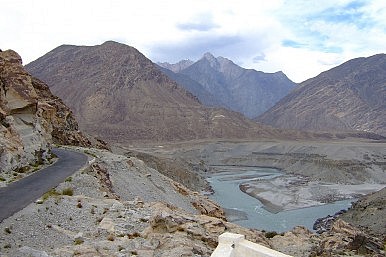
Gilgit-Baltistan is a mountainous territory in the Himalayas in the far northeast corner of Pakistan. It is home to 12 of the world’s 30 tallest mountain peaks, including K2 and Nanga Parbat. Pakistan considers it to be of extreme strategic importance because it borders ally China and is home to the only land route between the two countries. This route is the breathtakingly beautiful Karakorum Highway, the highest paved international road in the world. The region is also quite distinct from the rest of Pakistan, and indeed the world, in terms of its people. While Gilgit is inhabited by various groups that are related to but distinct from Kashmiris, Baltistan is inhabited by the Balti, who are a Tibetan Muslim group. Additionally, the Burusho people of the Hunza Valley speak a language unrelated to any other in the world. Most of the people of Gilgit-Baltistan are Shia Muslims, unlike the rest of Pakistan, which is mainly Sunni, making Gilgit-Baltistan the only majority Shia province or territory in Pakistan.
The remoteness and distinctiveness of Gilgit-Baltistan in relation to the rest of Pakistan fuel both a sense of uniqueness and aloofness from the problems that have engulfed the rest of the country. This, however, has started to change recently. In June 2013, the effects of the Taliban insurgency suddenly spilled over into the territory, when about a dozen heavily armed Pakistani Taliban militants executed 10 foreign mountain climbers, including a U.S. citizen, at the base of Nanga Parbat. The tourist industry, one of the major sources of revenue for the region, has all but collapsed since then.
This has increased the economic stress of the people in the region and brought out other grievances. Throughout last week, people in the region have been protesting the central government of Pakistan’s decision to withdraw subsidies as well as general governmental neglect. Pakistan has failed to invest in the region and provide even the most basic services such as education and healthcare. Many of these protests have made demands as simple as demanding ambulances for a town. At the heart of these grievances though is the frustration of the people of Gilgit-Baltistan due to their inability to make their own political decisions. The region is a territory and not a full province, like Sindh or Punjab. This means that the region does not have full control over key issues such as taxation, tourism, and the utilization of its natural resources. Its token assembly is largely symbolic, as its decisions must be approved by Pakistan’s federal government. Furthermore, the region receives none of the revenue generated by trade and customs duties with China — valued at half a billion dollars. As a result, many in the region feel as though they are being exploited like a colony.
Pakistan justifies its treatment of the region by arguing that it does not make sense to fully integrate it into its system until its final status is resolved. The territory is disputed with India because it was a part of the erstwhile princely state of Jammu and Kashmir that is claimed in its entirety by both Pakistan and India. Nonetheless, Gilgit-Baltistan was very loosely tied to Kashmir and has a largely separate culture and administrative history, which is why its inhabitants believe that it should be made a separate, full province of Pakistan.
The people of the region want Pakistan to make Gilgit-Baltistan a province so that they can enjoy full representation in Pakistan’s political system as well as a fair share of the revenue generated by their territory. They also want their borders opened up to trade with neighboring Afghanistan and India. Barring any move by the Pakistani government towards these ends, many in the region demand that they be granted independence instead. While this is highly unlikely given the strong Pakistani military presence there, Pakistan can ill afford yet another revolt in yet another region. Tensions are likely to continue to escalate if the region faces continued neglect. The Pakistani government would be wise to meet the aspirations of the people of Gilgit-Baltistan and make the region a full province. This would satisfy the people of the region and remove a major potential catalyst for revolt. At the same time, Pakistan has little to lose by doing so; the neighboring region of Azad Kashmir, also a vital border region administrated by Pakistan and also disputed with India, has a fully empowered legislature and government. Thus, there is no reason why Gilgit-Baltistan cannot be given the same treatment as Azad Kashmir or one of the four provinces of Pakistan.

IT IS impossible to defeat an insurgency, an American commander of NATO’s forces in Afghanistan once said between clenched teeth, when the insurgents enjoy an inviolable sanctuary in a neighbouring country. The problem has plagued the 13-year military effort in Afghanistan. Foreign and Afghan forces have been unable to deal a knockout blow to the Taliban when so much of their infrastructure remains intact just across the border, in the badlands of north-western Pakistan.
Now, it is Pakistan’s turn to feel the frustration. Its army is in the thick of long-awaited operations to clear Pakistani militants from North Waziristan, one of the tribal agencies bordering Afghanistan. This week it appears to have regained control of the remote region’s capital, Miranshah. But the government in Islamabad is crying foul over the presence of militant safe havens on Afghan soil. The Pakistani army has renewed calls for Afghanistan to catch Mullah Fazlullah, leader of the Tehreek-e-Taliban (TTP). Known also as the Pakistani Taliban, the TTP is an umbrella grouping of violent Islamists and is Pakistan’s gravest threat (it is reckoned to have few formal links to its Afghan namesake). Mr Fazlullah could be hiding in Kunar or Nuristan, two of Afghanistan’s eastern provinces.
Many Afghans regard the call as exceptional cheek from a country that for years has done little to clear its vast swathe of north-western territory of workshops making bombs destined for Afghanistan and radical madrassas indoctrinating Afghan fighters. The senior leadership of the Afghan Taliban, the Quetta Shura, is even named after the Pakistani city in which most of its members live.
Indeed, many in the Pakistani establishment have actively assisted a movement regarded as useful in Pakistan’s obsessive struggle to lessen Indian influence in Afghanistan. Pakistan has other reasons to resent Afghanistan, which voted against Pakistan’s membership of the UN in 1947. It thinks Afghanistan vies for the affections of ethnic Pashtuns living in Pakistan. Many of them live in a part of Pakistan that Afghanistan claims the British Raj took unfairly. For all these reasons, since the mid-1970s Pakistan has backed Islamist militants as proxies in Afghanistan.
Many Pakistanis think Afghanistan is now getting its own back. In cahoots with India, they say, Afghanistan is both helping the TTP and stoking rebellion in the restive Pakistani province of Balochistan. Western diplomats say this view is overblown. In both instances Afghan assistance is marginal at best. It is also unclear what Afghanistan’s hard-pressed security forces could do about Nuristan, a place so tough that NATO abandoned it in 2010 after failing to subdue it.
But perhaps Afghanistan has tried playing its own double game. In late 2013 American soldiers arrested a senior TTP commander after he was tracked to a secret meeting with Afghan intelligence officers. A diplomat likens the situation to a devilish game-theory puzzle. Mutual co-operation would produce the best outcome for all. But players seem unable to resist striking each other.
An optimistic view is that Pakistan’s decision to launch Operation Zarb-e-Azb (loosely translated: “strike of the Prophet’s sword”) on June 15th in a bid to clear North Waziristan of militants suggests it has at last understood that a shocking increase in domestic terrorism far outweighs any possible advantages from the long-standing policy of backing militants. And though army officers have been notably reluctant to identify Afghan insurgent groups by name—and the deadly Haqqani network in particular—they insist the operation will make no distinction between foreign and domestic terrorists. Many analysts remain sceptical, however. After all, Afghan insurgents in North Waziristan seem to have had ample time to make themselves scarce before the operation began.

Militants killed a Pakistan army captain and two soldiers in an attack early Saturday in a tribal region near its border with Afghanistan, authorities said, as an airstrike killed 13 suspected extremist fighters.
A group of some 60 militants who crossed over from Afghanistan attacked an army post in the Ghakhi area of the Bajur tribal region, said Shah Nasim, a senior government administrator in Bajur.
He said another soldier and a civilian cook were injured in the attack, which took place when troops had a pre-dawn Ramadan meal before fasting. A later statement from the Pakistani army, however, said the militants attacked a vehicle killing the two, not an army post. The conflicting accounts could not be immediately reconciled.
Khan said the attackers later escaped to Afghanistan's Kunar province but a retaliatory attack injured some of them.
Pakistan's army largely has cleared the Bajur tribal region of militants but its posts often come under cross-border attacks. In June, militants killed 20 soldiers in three attacks. Pakistani troops killed some 50 attackers in retaliatory attacks.
Pakistan has asked Afghanistan's government to take action against the Pakistani militants who escaped a recent military offensive in the Swat Valley and elsewhere for safe havens in eastern Afghanistan.
In a separate statement, the military said it killed 13 suspected militants Saturday in latest airstrikes targeting Mir Ali, a town in the North Waziristan tribal region, where the military last month launched a major operation against militants there. It said the strikes also destroyed seven militant hideouts. The military's claim could not be independently verified as reporters are not allowed to work due to the offensive.
Pakistan army launched its operation against Pakistani Taliban and foreign militants in North Waziristan on June 15.
The military says so far it has killed more than 400 terrorists, though activists and locals say civilians also have been killed.
Since the start of the operation, more than 800,000 people have fled the region, raising fears of a humanitarian crisis.
 By Colin Freeman
Exclusive: Malala Yousafzai, the Pakistani girls' education campaigner, will seek a meeting with President Goodluck Jonathan
Malala Yousafzai, the girls' education campaigner who was shot by the Taliban, is on her way to Nigeria to campaign on behalf of the schoolgirls abducted by Boko Haram.
Ms Yousafzai, 17 who was an early backer of the #BringBackOurGirls social media campaign, is due in the Nigerian capital, Abuja, on Sunday. As well as meeting relatives of the kidnapped girls, she is expected to seek an audience with President Goodluck Jonathan.
Her visit to Nigeria takes place almost three months to the day since the abduction of the girls, who were taken by Boko Haram militants from a boarding school in Chibok, in north-east Borno State, on April 14.
The presence of such a high-profile women's rights campaigner will add to the pressure on the Nigerian government, which was accused in the early days of the kidnapping of not doing enough to resolve it.
In recent weeks there has been claims that the trail has effectively gone cold in the hunt for the girls, despite help from Britain, America and France.
Officials believe the hostages have been split up into different groups and hidden in the vast Sambisa forest region, an area roughly twice the size of Belgium. Some may also have been taken over the border into neighbouring Cameroon and Chad. Around 223 girls are believed to be missing in total.
It was in early May that Ms Yousafzai first joined the #BringBackOurGirls campaign, which successfully focused international attention on the girls' plight. She posed with a picture on her Twitter feed and described the girls as "sisters".
Ms Yousafzai was shot by the Taliban as she boarded her school bus in the valley of Swat, northwest Pakistan after she spoke publicly about girls' rights to education.
She was transferred to Britain for hospital treatment, and currently lives in the West Midlands along with her family.
Russian President Vladimir Putin has changed the schedule of his Latin American tour and arrived in Nicaragua for a brief working visit. On his way from Cuba to Argentina on Saturday, the Russian leader decided to make a stopover in Managua, where he had been officially invited earlier. At the Managua airport, he was welcomed by Nicaraguan President Daniel Ortega.
"Much is yet to be done to develop our relations, especially in the area of economy, but we have good base for that," Putin said, adding that Russia and Nicaragua had long-standing good relations. "We admire out personal courage and the courage of your people," he told Ortega. The Russian leader reminded that the year 2014 is a jubilee one for Russia and Nicaragua, which established diplomatic relations 70 years ago.
The Nicaraguan leader called Putin’s visit to his country a historic event. "This is the first-ever visit by the Russian president to Nicaragua, and we are very happy to welcome you here," he said.
Ortega reassured Putin that Nicaragua supported Russia's peace efforts. "We are ready to take part in Russia’s initiatives in maintaining peace in the entire planet and in its regions," he said. "Conflict settlement lies not in bombing but in reasonable approaches. The most vital thing is to lend an ear to the will of the people."
The Russian delegation to the talks included Russian Foreign Minister Sergei Lavrov, Russian president’s aide Yuri Ushakov, and CEO of Russia’s oil major Rosneft, Igor Sechin.
Nicaragua's delegation included Nicaraguan president's envoy for trade-and economic and investment cooperation with Russia Laureano Ortega, Deputy Foreign Minister Valdrak Jaentschek, who is a co-chairman of the Russian-Nicaraguan intergovernmental commission on economic and research-technical cooperation, Commander-in-Cgief of the Nicaraguan Army Julio Cesar Aviles, and President of the energy company Enatrel Salvador Mansell.
Read more: http://voiceofrussia.com/news/2014_07_12/Putin-makes-unplanned-visit-to-Nicaragua-2461/