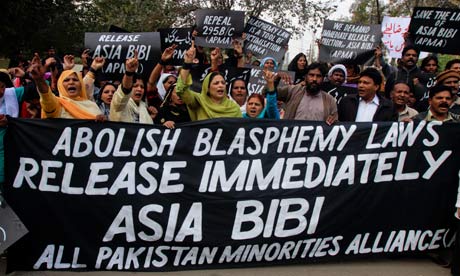
Supporters of blasphemy convict Asia Bibi urge Pakistani courts to hear Asia Bibi’s appeal against death sentence.
Multitudes rallied to uphold Asia Bibi’s cause, a 45-year-old Pakistani Christian woman facing a death sentence on “blasphemy” charges. Her supporters have sternly demanded the courts to hear her appeal in spite of an “unexpected delay” which is unlawful. According to sources: many a times hearing on her appeal has been repeatedly delayed because the courts have been ordered not to hear her case predominantly because of fear of provoking a backlash by the extremist groups who have demanded her execution.
Asia Bibi was born and raised in Ittan Wali, a village in District Sheikhupura. Prior to her detention, Asia worked as a farmhand in Sheikhupura to support her family. She married Ashiq Masih, a brick labourer. Notably, Asia and her family were the only Christians in Ittan Wali. Acccording to some sources, prior to her imprisonment, she was repetitively urged by her fellow workers to convert to Islam, which she refused, provoking the anger of the other villagers. It was in June 2009, when Asia was harvesting falsa berries with her fellow-workers in a field in Sheikhupura. She was asked to get water from a nearby well; she complied but stopped to take a drink with an old metal cup she had found lying next to the well. A neighbour of hers, who had been involved in a running dispute with her family about some property damage, saw her and bitterly told her that it was forbidden for a Christian to drink the same water as a Muslim. A dispute broke in between Asia and her fellow workers later on local cleric was informed that Asia had committed blasphemy. As consequences an infuriated mob stormed at her house dragging her in the public, beating Ais and her family members until she was seized by the police. An FIR under Section 295-C was filed against her. However, she had to wait for over a year before her case was heard in a local court proceeding when finally she was sentenced to death.
Asia’s death sentence provoked anger and strong condemnation from international community and various human rights groups such as Amnesty International and Human Rights Watch who believe country’s blasphemy laws as a legal platform to settle personal disputes and to persecute religious minorities demanding eliminate these laws. In a statement, Pope Benedict XVI called for forgiveness for her and urged that the human dignity and fundamental rights of everyone in similar situations be respected.
- See more at: http://www.christiansinpakistan.com/asia-bibis-cause-upheld-worldwide/#sthash.7TOuuyuY.dpuf

The United Nations Refugee Agency has expressed concerns over the possible outbreak of diseases among the Internally Displaced Persons (IDPs) currently residing in Bannu and other parts of Khyber-Pakhtunkhwa. The sudden influx of over 500,000 people in Bannu alone within two weeks has been overwhelming for responsible authorities and ministries, to say the least. Very few people are staying at the camps set up by the government. Most are either living with relatives, renting houses, or staying in schools which are temporarily available due to summer vacations. Due to the absence of proper medical services, sanitation facilities, portable water, and unhealthy living conditions, the IDPs are facing serious risks.
Time is of the essence. There is plenty that is required and it has to be delivered as soon as possible. Accommodation is just one aspect of the larger problem. The IDPs need a consistent supply of basic necessities such as food, household items, medicine and clothes. Currently, 1,209 schools are occupied by them. Where will they go once the next session begins in a few months? Those currently staying with relatives are definitely not in a sustainable position either. Alternatives need to be developed fast. A weak local infrastructure and limited government resources cannot be expected to cope with the situation.
The government needs all the help it can get. This is certainly no time for chest beating and making false claims of being self-sufficient. A visit to Bannu makes it quite clear that things are neither well nor are they heading in the right direction. Perhaps while the government mobilises local resources, it should also facilitate NGOs and international aid organisations in playing their part. This crisis will not end in a day or two. That is not to suggest that they be given a free hand to do as they see fit. Instead, a mechanism should be evolved to enable co-operation between the government and NGOs. Even if we miraculously tackle the immediate challenges all by ourselves, there are many phases that lie ahead such as the rehabilitation of people once they return to the piles of debris they once called home.

An explosion took place on Peshawar's Kohat Road in front of the residence of a local leader of the Pakistan Peoples Party (PPP) on Thursday.
The Bhana Mari police said no loss of life was reported in the explosion but the front gate of Misbahudin’s house in Peshawar’s Amin Colony had been damaged.
Moreover, rescue teams were dispatched to the site of the blast that took place near Technical College.
Misbahudin had contested election on a PPP ticket from NA-4.

Missiles from a U.S. drone slammed into a mud house and killed six suspected militants in Pakistan's rugged northwest on Thursday, officials said, as the Pakistani military said it had seized control of 80 percent of a key city from the Taliban.
Drone strikes in Pakistan resumed after a six-month hiatus, days before the military launched an air campaign on June 15 to drive Pakistani Taliban militants out of the remote border region of North Waziristan.
Thursday's strike in the Datta Khel district killed six militants and injured two, security officials said. The site of the strike was about 45 km (28 miles) west of the regional capital of Miranshah, near the Afghan border.
A senior officer took reporters on a tour of the region on Wednesday to underscore what the military says is a successful offensive to bring under control 80 percent of Miranshah, North Waziristan's main town.
The region, the base of some of the country's most feared al Qaeda linked terrorists, has been sealed off and there is no way to verify the military's accounts or casualty figures. But the presence of many senior officers during the tour suggested that the army had secured broad control over the area.
Reporters were led through sites ranging from dingy two-room shops to large buildings piled high with cylinders and explosives, all described as workplaces to manufacture bombs.
Also on display was a complex of a couple of dozen rooms with a courtyard, described as a training site for suicide bombers.
"North Waziristan had transformed into a hub and safe haven for terrorists of all colours and creeds," General Zafarullah Khan, the region's commander, said the military's sprawling headquarters.
"But with the operation, 80 percent of Miranshah and the adjoining areas has been cleared."
FAILED NEGOTIATIONS
The army launched the offensive after months of failed negotiations between the government and the militants, punctuated by Taliban attacks. A brazen assault last month on the airport in the southern city of Karachi killed 34.
The army responded by dispatching fighters to bomb suspected militant hideouts in North Waziristan. It ordered the region's entire civilian population - estimated at about half a million - to leave and pushed on with a ground offensive on June 30.
Pakistan's army had previously operated strictly within its Miranshah headquarters. The rest of the city, including homes, schools, shops and even hospitals, was under Taliban control.
Since the air operation began, 400 militants have been killed and 130 injured, the military's public relations wing said. Twenty-four soldiers had been killed and 19 injured. The extent of civilian casualties is unclear.
Khan said the insurgents, many of them ethnic Uzbeks and Chinese Uighurs as well as indigenous fighters, were on the defensive.
"We have set up 250 military checkposts to seal off their movements," he said. "We have found 11 (bomb) factories in Miranshah alone and 23,000 kg of explosive material. The militants' communications and operational capabilities have been greatly reduced."
Residents, however, suggest that many militants moved out of the area before it was secured and Khan agreed some fighters may have escaped the onslaught.
"It’s not militarily possible to create airtight security from where individual terrorists can’t escape," he said.
"It will be wrong to say some leaders didn’t escape. They smelt the operation and left. But their exodus on a large scale was denied."

Iranian Assistant Foreign Minister for Arab and African Affairs Hossein Amir Abdullahian described as “not constructive” the role of the Saudi Arabia in the latest developments in the region, especially in Iraq and Syria.
In an interview to al-Alam TV on Sunday, Abdullahian said the Saudi officials tend to issue media statements instead of holding a serious and transparent dialogue over issues of the region.
He stressed that if any country was destabilized, all neighboring countries would not be safe or stable.
President Barack Obama urged Congress on Wednesday to pass his request quickly for $3.7 billion in funds to address the influx of unaccompanied migrant children from Central America crossing the U.S. border.
After meeting with Texas Governor Rick Perry, Obama said he would consider deploying the National Guard to the border as Perry and other Republicans have requested.
Obama told reporters he urged Perry to press Texas lawmakers in the U.S. Congress to support the White House's funding request.
The president also rejected criticism that he did not visit the border during his Texas visit.
"This isn't theater. This is a problem," Obama said.

Pakistan on Wednesday announced its full support for peaceful democratic transition in Afghanistan and called for a peaceful and negotiated settlement of differences over the runoff election..
The Foreign Office of Pakistan following a statement said, “In this regard, we took several measures to enhance vigilance and security along the border, during the first and second round of elections on 5 April and 14 June 2014, respectively.”
Tasnim Aslam, spokesperson for the Foreign Office, quoted in the statement said, “We have seen the announcement by the Independent Election Commission regarding preliminary results of the second round and noted the statement that these are not final and it is our earnest hope that all related issues would be resolved peacefully, through dialogue, in a timely manner and within the framework of Afghanistan’s constitution and laws.”
“We would continue to support all endeavours that help advance the cause of peace, stability and development in Afghanistan,” she said.
The call by Islamabad comes a day after presidential candidate Dr. Abdullah Abdullah rejected the preliminary results, which has raised concerns about a looming political crisis.
Abdullah accused the government and electoral bodies for being invovled in massive fraud in favor his rival Dr. Ashraf Ghani Ahmadzai who secured lead in preliminary vote results for the runoff election.
The supporters of Dr. Abdullah and his close allies suggested that the massive fraud has paved the way for the announcement a parallel government.
 Emma Graham-Harrison
Number of civilians killed or injured in first six months of 2014 rises by quarter, with more than 1,000 of those children
Afghanistan's war is getting deadlier for its civilians with the toll from crossfire and ground battles rising sharply, the United Nations has said in a report.
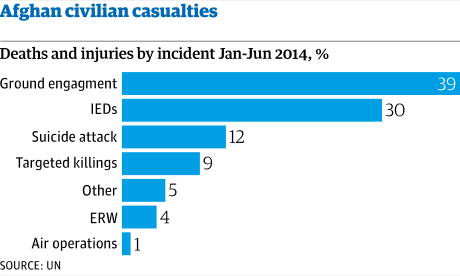
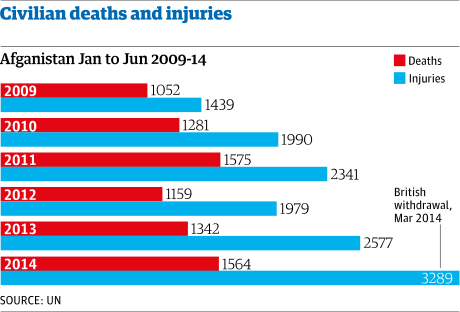
The number killed or injured in the first six months of the year rose by a quarter from 2013 levels to nearly 5,000 people, the bloodiest total since the UN began keeping records in 2009. Women and children are particularly badly affected.
It was also the first time that ground fighting has proved more dangerous for civilians than the often indiscriminate homemade bombs that have become a key Taliban weapon, a worrying sign that the conflict may only get more bloody as Nato forces head home.
The withdrawal of well-equipped and heavily armed foreign troops from most districts has made it easier for insurgent forces to infiltrate towns and villages, so battles more often take place among houses, shops or government buildings, the report says.
 Both sides often use weapons like mortars and rockets that allow them to keep their distance from enemy fighters, but are very risky for civilians in the area, the bi-annual Report on the Protection of Civilians in Armed Conflict says.
"In 2014, the fight is increasingly taking place in communities, public places and near the homes of ordinary Afghans, with death and injury to women and children in a continued disturbing upward spiral," said Georgette Gagnon, the UN's director of human rights in Afghanistan.
"More efforts are needed to protect civilians from the harms of conflict and to ensure accountability for those deliberately and indiscriminately killing them."
More than 1,000 of those killed or injured were children, about a third more than the previous year, and the number of women caught up in the violence rose by a quarter to 440.
Most of the casualties were caused by the Taliban, even though the insurgent group have officially ordered their fighters to avoid harming Afghans who are not fighting.
 The UN called on the group to stop attacks from or in civilian areas including homes, restaurants and government buildings, and end the use of indiscriminate roadside bombs, the second biggest cause of death and injuries.
The government and its supporters have managed to nearly halve the civilian deaths they caused compared with 2009, to 158 people, mostly by being more careful when using air strikes, the report found.
The UN attributed three-quarters of the deaths and injuries to insurgent fighters and said just one in 10 were caused by Afghan forces or their foreign backers. Around 12% of victims were hit by unidentified attackers during battles between insurgents and government troops.
"The long-term trend shows that anti-government elements are responsible for an increasingly large share of civilian casualties in the conflict," said UN envoy Jan Kubiš, using the UN term for insurgent fighters.
"While all parties to the conflict – including Afghan national security forces – must do more to uphold their obligations under international law to avoid harm to civilians, the onus is clearly on the Taliban and other anti-government elements to reverse this trend."
The UN also said there had been a rise in the small but worrying number of attacks and abuses of civilians by pro-government armed groups, with 30 people killed and injured. There is a "lack of accountability" for human rights abuses by these groups, the report says, with local authorities turning a blind eye and "failing to investigate, prosecute and punish perpetrators".
 By Bina Shah
The terrible kidnapping of the 200 Nigerian schoolgirls by Boko Haram, a Nigerian armed group, has evoked disgust and condemnation from people all over the world. The incident happened more than a month and a half ago, yet nothing has happened to help these girls except for a Twitter hashtag campaign and the reported arrival of a British spyplane in Nigeria to help the Nigerian Army in the search.
While human rights activists and other informed commentators recognise the political roots of the conflict between Boko Haram, the Nigerian government and its innocent citizens, others, most notably Islamophobic online pundits, have wasted their time using the Boko Haram disaster to further their agenda of defaming Islam by quoting Quranic verses out of context to prove that Islam condones the shameful practice of sex slavery.
Instead of recognising that the right of girls to go to school is under global assault, they look at what life was like in seventh century Arabia and crow that Sharia or Islamic law promotes keeping girls and women uneducated and imprisoned by their evil Muslim overlords (read: fathers, husbands, brothers, sons). Educated Muslims have fought back against the blame game with their own responses, including Pakistani education activist Malala Yousafzai, who made a public statement that Boko Haram had clearly “never read the Quran”, for if they had, they would understand that their actions are a violation against everything it teaches.
All of this rhetoric serves only to direct justifiable anger and ire in the wrong direction. It is a distraction from the reality that “Islamist” movements use the most powerful tool in their arsenal – not physical weapons, but the firm belief that their fight is sanctioned by God – to provide justification for their illegal, violent and deplorable actions. Not only do they direct this tool inwards to their own psychological delusions (witness the Boko Haram leader declaring in a videotaped statement that God had told him to “sell women”) but they direct this tool outwards, to the rest of the world watching them, in order to intimidate and silence everyone around them. What we see in these afflicted areas is the enactment of psychological warfare by Islamists on people’s sensibilities, playing on their fears and vulnerabilities as well as their genuine love for their religion.
Western observers and pundits who react to this provocation on the same level are just playing the opposite end of the game: They are taking the claims of Boko Haram and other extremist groups and reacting as if they are actually true, and shared by every Muslim in the universe. They do this to suit their own agendas outwardly and inwardly, to justify their own hatred of Islam and their labelling of Muslims as “the other”.
''Boko Haram in Balochistan''
Harming young girls who want an education and are willing to risk their lives in doing so has resonance for those of us in Pakistan who see similar threats being made against young schoolgirls in restive areas of the country. Everyone knows the story of Malala Yousafzai, who was shot in 2012 for speaking up about education for girls, but even more recently, an extremist group called Tanzeem-ul-Islami-ul-Furqan has been making threats against educating girls in the Panjgur district of Balochistan.
Writing in “Boko Haram in Balochistan”,journalist Yousaf Ajab Baloch reports: “This terrorist outfit has issued pamphlets warnings all private schools in the district to shut down girls’ education or to face the consequences. The pamphlets declare female education as haram, an Islamic term referring to things forbidden in Islam.” A bus taking girls to the Oasis School, a well-known private school in Panjgur, came under attack by the militants, who burnt the bus and subjected its driver, the school’s head, retired Major Hussain Ali, to a violent beating. In reaction to the attack, all private schools have shut down temporarily in the district.
This in turn echoes the grim situation facing girls when the Taliban had overrun the Northern Areas, particularly Swat. Schools were similarly shut down, girls forbidden from pursuing their education. In Balochistan, the location of a continuing conflict between the government and Baloch separatists, Islamist groups are seeing opportunities to gain power; they are doing so by attacking the most vulnerable population and robbing them of their chance to make a better future for themselves. As Baloch reports, they are “using religious extremism to push the secular and civilised Baloch society toward ignorance and backwardness through use of force”.
Despite an outcry by Baloch human rights and educational organisations, and an outcry by the parents of girls affected by the threats to the Panjgur schools, many of which have shut down out of fear of violent attacks, little international attention has been given to this alarming situation. If any comment is passed on similar trends anywhere in the Islamic world, it is only to assert that Muslims are silent, they secretly desire the most hard-core interpretation of Sharia to be enacted all over the world, and that only in the western world can girls truly find emancipation and education – all of which are patently untrue.
When situations like the Boko Haram kidnapping, or the shooting of Yousafzai, or any other assault on the human rights of girls are used to drive home points about Islam’s deficiencies, we are playing a game in which there are no winners, only losers. Such commentary will not make Islam “reform” itself, nor will it chase away the grim spectre of Sharia being misunderstood by both Islamists and Islamophobes on every level.
Let’s not turn the kidnappings and assaults on young girls going to school into a debate that nobody can win. Instead, let’s focus on the issue and how to resolve it whether it is bringing home the Nigerian girls, or keeping Balochistan’s girls schools open, or keeping all children secure and in school. It’s not hard to see which avenue will be appreciated more by the girls of Nigeria and Balochistan and the entire Muslim world.
By Bina Shah
The terrible kidnapping of the 200 Nigerian schoolgirls by Boko Haram, a Nigerian armed group, has evoked disgust and condemnation from people all over the world. The incident happened more than a month and a half ago, yet nothing has happened to help these girls except for a Twitter hashtag campaign and the reported arrival of a British spyplane in Nigeria to help the Nigerian Army in the search.
While human rights activists and other informed commentators recognise the political roots of the conflict between Boko Haram, the Nigerian government and its innocent citizens, others, most notably Islamophobic online pundits, have wasted their time using the Boko Haram disaster to further their agenda of defaming Islam by quoting Quranic verses out of context to prove that Islam condones the shameful practice of sex slavery.
Instead of recognising that the right of girls to go to school is under global assault, they look at what life was like in seventh century Arabia and crow that Sharia or Islamic law promotes keeping girls and women uneducated and imprisoned by their evil Muslim overlords (read: fathers, husbands, brothers, sons). Educated Muslims have fought back against the blame game with their own responses, including Pakistani education activist Malala Yousafzai, who made a public statement that Boko Haram had clearly “never read the Quran”, for if they had, they would understand that their actions are a violation against everything it teaches.
All of this rhetoric serves only to direct justifiable anger and ire in the wrong direction. It is a distraction from the reality that “Islamist” movements use the most powerful tool in their arsenal – not physical weapons, but the firm belief that their fight is sanctioned by God – to provide justification for their illegal, violent and deplorable actions. Not only do they direct this tool inwards to their own psychological delusions (witness the Boko Haram leader declaring in a videotaped statement that God had told him to “sell women”) but they direct this tool outwards, to the rest of the world watching them, in order to intimidate and silence everyone around them. What we see in these afflicted areas is the enactment of psychological warfare by Islamists on people’s sensibilities, playing on their fears and vulnerabilities as well as their genuine love for their religion.
Western observers and pundits who react to this provocation on the same level are just playing the opposite end of the game: They are taking the claims of Boko Haram and other extremist groups and reacting as if they are actually true, and shared by every Muslim in the universe. They do this to suit their own agendas outwardly and inwardly, to justify their own hatred of Islam and their labelling of Muslims as “the other”.
''Boko Haram in Balochistan''
Harming young girls who want an education and are willing to risk their lives in doing so has resonance for those of us in Pakistan who see similar threats being made against young schoolgirls in restive areas of the country. Everyone knows the story of Malala Yousafzai, who was shot in 2012 for speaking up about education for girls, but even more recently, an extremist group called Tanzeem-ul-Islami-ul-Furqan has been making threats against educating girls in the Panjgur district of Balochistan.
Writing in “Boko Haram in Balochistan”,journalist Yousaf Ajab Baloch reports: “This terrorist outfit has issued pamphlets warnings all private schools in the district to shut down girls’ education or to face the consequences. The pamphlets declare female education as haram, an Islamic term referring to things forbidden in Islam.” A bus taking girls to the Oasis School, a well-known private school in Panjgur, came under attack by the militants, who burnt the bus and subjected its driver, the school’s head, retired Major Hussain Ali, to a violent beating. In reaction to the attack, all private schools have shut down temporarily in the district.
This in turn echoes the grim situation facing girls when the Taliban had overrun the Northern Areas, particularly Swat. Schools were similarly shut down, girls forbidden from pursuing their education. In Balochistan, the location of a continuing conflict between the government and Baloch separatists, Islamist groups are seeing opportunities to gain power; they are doing so by attacking the most vulnerable population and robbing them of their chance to make a better future for themselves. As Baloch reports, they are “using religious extremism to push the secular and civilised Baloch society toward ignorance and backwardness through use of force”.
Despite an outcry by Baloch human rights and educational organisations, and an outcry by the parents of girls affected by the threats to the Panjgur schools, many of which have shut down out of fear of violent attacks, little international attention has been given to this alarming situation. If any comment is passed on similar trends anywhere in the Islamic world, it is only to assert that Muslims are silent, they secretly desire the most hard-core interpretation of Sharia to be enacted all over the world, and that only in the western world can girls truly find emancipation and education – all of which are patently untrue.
When situations like the Boko Haram kidnapping, or the shooting of Yousafzai, or any other assault on the human rights of girls are used to drive home points about Islam’s deficiencies, we are playing a game in which there are no winners, only losers. Such commentary will not make Islam “reform” itself, nor will it chase away the grim spectre of Sharia being misunderstood by both Islamists and Islamophobes on every level.
Let’s not turn the kidnappings and assaults on young girls going to school into a debate that nobody can win. Instead, let’s focus on the issue and how to resolve it whether it is bringing home the Nigerian girls, or keeping Balochistan’s girls schools open, or keeping all children secure and in school. It’s not hard to see which avenue will be appreciated more by the girls of Nigeria and Balochistan and the entire Muslim world.
shiapost.com
Relatives of a female student of Jamia Hafsa have complained against Islamabad’s said Deobandi seminary for forcing the girl student to jihad against the will of the parents.
Brother of a 26 year old female student had reached Jamia Hafsa to foil the bid of the management to send his sister to ‘jihad’ but the seminary’s administration tortured him severely. Islamabad police arrived to help but admin told them that they would produce the student in the court of law.
Shaikh Abdul Qayoom, father of the girl student, told reporters that he was dismayed because his daughter told him that her coffin was ready and she was to go to jihad. Hence, he lodged complaint against the Jamia Hafsa. Police has also registered complaint of torture on student’s brother.

 Abduction and forced conversion of Christian women on rise in the country according to local organisation.
According to a Pakistani non-governmental organization Movement for Solidarity and Peace (MSP), there has been a sharp rise in the incidents of abduction and later forced conversion of Christian women oftentimes by giving them in marriage to Muslims. There has been a caustic increase in gender based violence against the religious minorities. Women from religious minorities specifically Christians and Hindus are being targeted. The organization states: every year between 100 to 700 Christian women,usually between the ages of 12 and 25 are abducted, converted to Islam, and married to the abductor or third party.
The organization has prepared a report titled, “Forced Marriages & Forced Conversions in the Christian Community of Pakistan.” The Movement for Solidarity and Peace has diagnosed a particular tendency. It says: in most of these abduction cases the parents of Christian victims file a police report, but in response the abductor’s relatives or friends file another police complaint on behalf of the abducted Christian woman, claiming that she wilfully married and converted to Islam, and that her parents are now “harassing” her unlawfully.
The report further points out: after kidnapping, these Christian women experience tormenting such as, “sexual violence, rape, forced prostitution, human trafficking and sale, or other domestic abuse.” Subsequently, when these victimized women are produced before the court and asked to testify if they were abducted, these women (and sometimes children) give a statement in favour of their captors for fear of threats to their life, and those of their family.
On the other hand, Movement for Solidarity and Peace says: the report is based on field research compiled by legal expert Emad Ansari during the summer of 2012; it includes numerous interviews with local CSOs, national policymakers and diverse stakeholders from amongst the Pakistani judiciary. The organization’s research has been markedly supported by nationally acknowledged daily newspaper “Dawn.” The news paper exposed an investigative account of one such incident: a Hindu girl whose parents filed a police complaint about her forced conversion. Hindus also suffer abduction of their women and forcible conversion to Islam.
The investigation shows that it is quite difficult to actually say whether the marriage was contracted with complete wilful consent.
However, this issue was also highlighted in a USCIRF report. The report underlined that Pakistani Christians are an afflicted and socio-economically deprived community, about 80 per cent of which leads life in miserable poverty. The report states that as a consequence of their lesser number and poor financial status they are subjected to human trafficking and sale through debt transfers, physical abuse, and economic exploitation. Under these circumstances, the abuse of Christian women is much easier and the crimes go unpunished with impunity. The report however, does not rule out wilful conversions due to socio-economic reasons.
- See more at: http://www.christiansinpakistan.com/abduction-and-forced-conversion-of-christian-women-on-the-increase/#sthash.W88EdW3g.dpuf

When the US decided to resist Moscow’s occupation of Afghanistan during the Cold War, it was not Afghanistan that the US had come to save. It was just another move in Washington’s anti-communist worldwide campaign, the ill-advised Soviet intervention providing a heavan-sent opportunity. The US supported jihadi insurgents as a weapon to defeat the Soviet Union and communism generally. With hindsight, the jihadi seeds planted in that war eventually grew into the hopelessly crooked trees of al Qaeda, the Afghan Taliban, and other terrorist groups.
This is exactly what has happened in Syria. Without learning any lessons from the Afghan conundrum, the US and its allies, both in the west and amongst Arab states, fed to the anti-Bashar al-Assad forces an uninterrupted flow of weapons. Al Qaeda affiliated groups were supported in Libya and Syria. This policy stoked a new wave of anti-American sentiments across the Muslim world and gave the Islamists another filip, thanks to the US and its allies. In a matter of a few years, the proxies fighting for the US broke up into various factions, each having its own agenda to pursue in the cauldron of the Syrian war. It then became difficult to either control them or know what to do about this simmering fundamentalist swamp. Now that it has been revealed that Muslims from Europe and the US were heading to Syria, Somalia to participate in jihad, the alarm bells have gone off.
European Union (EU) officials are increasingly worried about the stream of Europeans joining the extremists in Syria, where they are trained and radicalized in special camps. Some officials fear these freshly trained Europeans will return home as ticking time bombs. According to EU Home Affairs Commissioner Cecilia Malmstrom, the foreign fighters in Syria are “very dangerous people”. EU Counterterrorism Coordinator Gilles de Kechove said even a small number of determined jihadists “pose a high security threat”. To stem the flow of home-grown jihadists, the EU has agreed to prevent young fighters from leaving and to monitor returnees.
Empires wage wars to expand their influence and strike terror in the hearts of weaker countries. They tend to operate on the wrong assumption that the sun can never set on them. The intoxication of power makes them do things that eventually become the reasons for their own downfall. The question is, will all this monitoring and laws prevent the west from receiving a taste of its own concocted medicine?
The Express Tribune News
The Sindh Government has decided to recruit youth from minority community for the security and protection of minorities and their worship places.
Talking to a delegation of Christian community led by Haroon Mehraj at Chief Minister House in Karachi on Wednesday, the Chief Minister Sindh Syed Qaim Ali Shah said the provincial government has principally decided to recruit the youths from minority communities in Sindh Police and to depute them for the security of minorities’ and their worship places. They would be deputed after providing them with necessary training, said Shah.
During the meeting, the chief minister directed the Sindh police and all district administrations to provide security to all minorities including Christian’s community within their respective areas.
“PPP represents minorities and its government will protect their rights at any cost,” said CM Sindh.
The Provincial Minister for Minorities Gian Chand Esrani and Special Assistant to CM Rashid Rabbani were also present during the meeting.
Responding to the security concerns of the visiting delegation, Shah directed DIG Karachi East to resolve the security problem and ensure security to the Christian community at Essa Nagri, Gulishan-e-Iqbal Town Karachi. He also issued directives to commissioner Karachi for resolving the problems being faced by Christian community in Karachi.
The chief minister also said that he has already issued strict instruction to the higher authority of Sindh Police and all district administrations for providing security and launching other social upliftment programs within their jurisdictions.
The meeting was also informed that many development schemes have also been included in the current annual development plan 2014-15.
The minister for minorities said that he would personally monitor the on going development schemes in the rural Sindh to get the first hand information about the problems being faced by minorities and ensures qualitative work and protection of the worship places.
He assured the Christians community that he would visit Essa Nagri to observe the issues that they faced first hand.
http://tribune.com.pk/
After a long period of speculation, which also included attempts at peace talks, Pakistan on June 15 launched a military operation against militants in the troubled North Waziristan agency of Federally Administered Tribal Areas (Fata).
On its 15th day, a new phase of the offensive began, with the military launching a ground operation in Miramshah – the main town of North Waziristan.
As the Pakistan Army embarks on this critical mission, get all the updates of the operation, code-named Zarb-e-Azb, here.
All stories relating to Zarb-e-Azb can be found on this trend page as well.
Below is an interactive Google map of North Waziristan, which follows the Zarb-e-Azab Operation, and will be updated as information flows in.
Navigate military strikes and areas of influence from the key on the left. To get details of individual attacks, hover over the pins and click them. Zoom in for a closer look, change the display type or switch extra layers off .
The yellow pins mark recent drone strikes that have occurred in the region, while blue pins mark suicide attacks.

By Anna Mahjar-Barducci
Every country in the Islamic world has its own Boko Haram. As in Nigeria, where Boko Haram stands for "Western education is forbidden”, extremists in Balochistan, Pakistan's largest province, are saying "no" to education. Last May, the little-known armed group Tanzeem-ul-Islam-ul-Furqan (TIF) had warned all private schools imparting co-education and Western education to immediately shut down in the Panjgur district. The movement started an anti-West campaign, targeting 23 English-language learning centers to shut down and stop imparting co-education and teaching in English, which they say is "Haram (prohibited) in Islam."
Actually, according to TIF's rhetoric, not only should boys and girls be segregated in school, but they should not even learn English. The English language is perceived by the group as a vehicle to introduce Western values in Pakistan, and thus dangerous to learn. English is considered particularly dangerous for female students, as it can corrupt their moral principles. TIF actually invites parents to enroll their daughters in public schools, which teach only Urdu (Pakistan's official language).
The anti-West operation started last May, when the group's armed masked men barged into one language center. The men destroyed the school’s furniture and tore textbooks. A few days later, a bus taking female students to the Oasis School, a well-known private school in Panjgur, was attacked by the militants, who burned the bus and subjected its driver and the school's head to a violent beating. They threatened the owner with dire consequences if he did not shut down the school. Then they escaped, flashing victory signs in the presence of security forces. In reaction to the attack, all private schools have shut down temporarily in the district.
The Islamic extremists also circulated a threatening pamphlet warning parents to keep their daughters away from English language centers. The pamphlet read:
For 15 years, Western and European people have tried to promote their mindset and culture to Muslims, and have introduced private schools and English language centers[.] ... [This mindset] has led our daughters and sisters towards vulgarity[.] ... We have seized mobile phones from so-called teachers and in them we have seen girls' phone numbers and messages from them as well as offensive videos. So we request all parents to kindly keep their daughters away from such so-called schools. We strictly order van and car drivers not to take any girls to school from now on, and request that parents enroll their daughters in public schools rather than private schools. We also request these [private] schools' staff to stop teaching girls immediately. ... If anyone does not follow our requests, then they will be faced with a critical situation. Signed, Tenzeem Islami Al-Furqan.
U.S. officials identify Balochistan as a critical center of Taliban and al-Qaeda activity. In fact, in recent years, the province has experienced the exponential growth of Islamic radical groups, which have been mushrooming around the country. Moreover, many observers believe that high-profile al-Qaeda figures and ranking Taliban members, including Afghan Taliban leader Mullah Muhammad Omar, have fled Afghanistan or Pakistan’s tribal areas for sanctuary in Balochistan. The provincial capital of Quetta is believed to serve as a critical hub for financing and organizing Taliban and al-Qaeda operations.
Some rallies were organized in protest of the attacks on English centers. Girls and women marched in protest in Panjgur and other towns of Balochistan, asking to “break the silence.” However, these protests were hardly heard. According to Balochistan News, the core problem is that the presence of religious terrorists is encouraged by the same Pakistani authorities who are supposed to fight them. The Balochi media outlet stresses that TIF enjoys the protection of the Pakistan Inter-Services Intelligence (ISI), often accused of being behind jihadi-inspired groups in Pakistan.
Balochistan News says that the ISI's long-term plan is to create an illiterate generation in Balochistan, in order to curb the region's separatist demands. In particular, the ISI wants to minimize the role of women in the Balochi nationalist movements. Not allowing girls to learn English will make it easy to control them. They will manage to read only propaganda newspapers in Pakistan and won't be able to access foreign media outlets. Furthermore, in Pakistani public school, girls will be brainwashed with misogynist views. A Balochi English teacher at the Baam English Learning Centre in Panjgur, which shut down recently, explains the following: "English is essential for our girls’ future. You have to be able to speak it to go to college. Since our school opened in 2005, many girls received scholarships and went on to study universities all over Pakistan. Apparently, this threatens these men, who are surely uneducated and would prefer girls to be backwards."
Balochistan News writes that Pakistan and ISI are worried about the "growing educational consciousness" among Baloch youth. "Today, Baloch youth including girls […] are rejecting obsolete system of state and ISI backed feudal lords, but this is not acceptable to ISI because they see the involvement of Baloch females in Baloch national movement for independence as their demise."
English and women are elements of emancipation in the Balochi society. The international community should stand up – before Balochistan, which was known in the past for its entrenched secularism, is turned into another Islamist beacon.
 By Kyla Ryan
After a particularly shocking case, will Pakistan finally revise its laws?
In Pakistan, when a person is believed to have brought shame to a family’s name, they can be subject to what is known locally as karo-kari, or an “honor-killing.”
The majority of honor killing victims are women, for reasons such as committing adultery, marrying without the family’s consent, refusing to marry a man chosen by the family, and sometimes even for being a victim of rape. The United Nations estimates that perhaps up to 5,000 honor killings occur each year worldwide, with around 1,000 victims in Pakistan alone. In fact, the number may be even higher because most honor killings occur in rural areas, where they often go unreported.
A recent case that could trigger change in Pakistan occurred on May 27. Pakistani woman, Farzana Parveen was three-months pregnant when she was stoned to death by her family outside the high court of Lahore, the country’s second largest city. Her father called it an “honor killing,” because his daughter was planning to marry a man whom her family was against, bringing “shame” to the family. In fact, man she intended to marry had killed his previous wife in order to propose to Parveen.
An amendment to Pakistani law in 2004 held that honor killings should be treated as regular murders. However, under Pakistan’s Hudood Ordinance, adopted in 1979, the status of women remains inferior to that of men, putting women at serious disadvantage inside the justice system.
The Hudood Ordinance was adopted as part of the “Islamization” of the country, and is a set of laws that criminalizes adultery and non-marital sex. This blurs the line between rape and adultery, especially since under these laws a woman’s testimony is only worth half as much as a man’s. In court, a woman’s testimony needs to be backed by four men. Therefore, victims of rape can be accused of adultery or fornication if they cannot provide sufficient evidence of the rape.
Pakistan’s amendment to the law regarding honor killings also does not address the fact that the offender can make deals with the victim’s family, or be forgiven in the name of God, in which case the offenses are dropped, and the offender can go unpunished.
The Hudood Ordinance may have been adopted to establish an Islamic society, but it does not have universal support among Islamic authorities. For example, the Federal Shariat Court ruled in 2006 that a female should not be charged for adultery without evidence, and that this was not acceptable based on the Qur’an. Earlier, in 2002, the Council of Islamic Ideology recommended that the Hudood Ordinance be amended, arguing for instance that an offender should still be sentenced even in the absence of male witnesses.
Article 9 of Pakistan’s Constitution, “Security of Person,” states that no person should be deprived of their life or their rights unless as a consequence of the law. Article 8 states that the government cannot enforce a law that denies basic rights. Little wonder, then, that critics consider the Hudood Ordinance unconstitutional.
Pakistan’s Prime Minister Nawaz Sharif called the stoning of Parveen “totally unacceptable.” It remains to be seen whether the atrocity will bring lasting change.

The Philippines' Department of Foreign Affairs raises alert level 3 in Afghanistan because of 'heightened tensions' after the presidential elections
The Philippine government urged its nationals in Afghanistan on Tuesday, July 8, to leave the Central Asian country as violence increased during the presidential elections.
In a statement, the Philippines' Department of Foreign Affairs (DFA) advised voluntary repatriation by raising crisis alert level 3 in Afghanistan.
The DFA cited “the heightened tensions in that country following the conduct of the presidential elections last June 14.”
The DFA said: “Alert level 3 is declared when violent disturbances or external aggression occurs in a limited area of a country. With this announcement, Filipinos in Afghanistan are strongly encouraged to volunteer to return to the Philippines.”
It added that the Philippine government “maintains a total ban on the deployment of Filipino workers to Afghanistan.”
The DFA “continues to monitor the political and security developments in Afghanistan,” it added.
An estimated 4,000 Filipinos are now working for US contractors in Afghanistan, DFA spokesman Charles Jose told Agence France-Presse.
The Philippines does not maintain an embassy in Kabul, with its diplomatic representation in that country under the Filipino mission in Pakistan, he added.
Instability feared
The DFA's warning came after former World Bank economist Ashraf Ghani won Afghanistan's presidential election, according to preliminary results Monday, July 7.
Ghani's poll rival, Abdullah Abdullah, rejected the outcome as “a coup against the will of the people.”
Fraud allegations immediately sparked a dispute and stoked concerns of instability after the figures showed Ghani collected 56.4% of the run-off vote against ex-foreign minister Abdullah's 43.5%.
Afghanistan's international backers have lobbied hard to try to ensure a smooth election process, but the contested outcome realized their worst fears and risks, setting back gains made since the fall of the Taliban in 2001.
The deadlock has already tipped Afghan politics into a crisis at the same time that the Taliban have underlined their strength with a major offensive in the southern province of Helmand.
The insurgents, who see the election as a plot of the United States to control Kabul, threatened to target voters, and violence spiked on both polling days, but there was no major militant attack.
Afghanistan has been battered by decades of conflict, and any power struggle would undermine claims that the hugely costly US-led military and civilian mission has helped to establish a functioning state.

Kamran Khan, host of Geo News programme ‘Aaj Kamran Khan Kay Sath’, said on the programme on Monday that the prestige of Pakistan Muslim League-Nawaz (PML-N) is at the lowest ebb. The number of terrorist incidents in the country has decreased because of the massive action against the terrorists. Arsalan Iftikhar’s allegation can have serious repercussions on Imran Khan’s future.
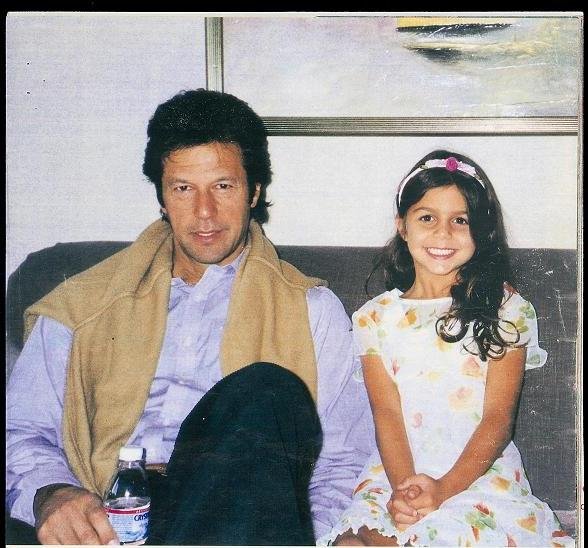
 Kamran Khan, while commenting on Arsalan Iftikhar’s allegations against Imran Khan, said that the allegation against the chief of the Pakistan Tehreek-e-Insaf, Imran Khan, has been an old one, but it has once again been levelled forcefully. The allegation is that Imran Khan is the father of a 20-year-old young woman who lives in the USA, and that she was born out of wedlock; that Imran Khan has confessed to being her father, and that a US court has also given its verdict in this regard.
Kamran Khan said that this time round, the allegation has been levelled by Arsalan Iftikhar, the son of Imran Khan’s latest target, former chief justice Iftikhar Muhammad Chaudhry. Kamran Khan said that this is a very serious charge which, if proved, can have some very adverse effects on the future of Imran Khan and the PTI.
Arsalan Iftikhar has filed an application with the Election Commission of Pakistan asking the ECP to provide him with a copy of Imran Khan’s nomination papers on the basis of which he (Arsalan Iftikhar) wants to file a reference under Article 62/63 of the Constitution in which he would take the plea that Imran Khan had mentioned the names of his two sons in the nomination papers, but he did not give the name of, what Arsalan Iftikhar alleges to be, “his daughter who was born out of wedlock”. Therefore, Imran Khan’s membership of the Parliament be suspended and action taken against him.
In a different segment of the programme, Kamran Khan said that what happened in the last 30 days — from the Karachi airport attack to the political hibernation of federal Interior Minister Chaudhry Nisar and to his having been persuaded to come out of his hibernation and into the mainstream — has dealt the government’s reputation with a severe blow.
In order to save Pakistan from the terrorists a decisive action is underway, and the Chief of the Army Staff, General Raheel Sharif, is visiting the frontline.
Kamran Khan said that nobody can doubt the fact that the future of the country rests on the Pakistan Army’s Operation Zarb-e-Azb against the terrorists.
The Chief of the Army Staff, General Raheel Sharif, is visiting the frontline where the war for Pakistan’s survival is being fought. This is a very important visit of General Raheel Sharif.He met the officers and Jawans and gave them a pat on the back for a job well done and told them that their next step is to completely destroy all the centres of terrorism in and around North Waziristan.
Kamran Khan said that as a result of the massive operation against terrorism, there has been a substantial decrease in the number of terrorist incidents inside Pakistan.
In a still different segment of the programme, Kamran Khan said that the events of the last one month have badly tarnished the image of the leadership of the PML-N and that of the government as well. Serious differences among the stalwarts of the ruling party have come to light. The media spotlight in this regard has been on the very important leader of the PML-N, Chaudhry Nisar Ali Khan, about whom media reports have been saying for the last three weeks that he had chosen to isolate himself due to his differences with some fellow cabinet members. Ch Nisar remained absent from Parliament for some time. However, Ch Nisar had a meeting with Prime Minister Nawaz Sharif on Sunday, and on Monday he issued a written statement in which he denied the news about differences, but he did say a few words about those one or two ministers who had a grudge against him.
Kamran Khan said that the writ of the government was affected and especially on June 20 when Pemra decided that it was revoking the ban on Geo News and at the same time it also decided to impose a ban on ARY News, but despite the Pemra decision ARY News transmission continued uninterrupted throughout and even the cable operators turned a deaf ear to the Pemra decision, but, ironically, Geo News and other channels of Geo Network remained shut contrary to Pemra decision. This example clearly shows that the government is losing its writ. Government ministers did not have the courage to get Pemra orders implemented. Geo News remained off air despite government orders to restore its transmission while the channel that was supposed to be off air remained on in contravention of government orders.
Kamran Khan said that the Lahore Model Town incident was a major incident that substantially damaged government’s reputation. The way the police attempted to remove barriers from outside the house of Tahir-ul-Qadri upon his return to the country and the killing of ten people there severely damaged the reputation of the government.
Kamran Khan, while commenting on Arsalan Iftikhar’s allegations against Imran Khan, said that the allegation against the chief of the Pakistan Tehreek-e-Insaf, Imran Khan, has been an old one, but it has once again been levelled forcefully. The allegation is that Imran Khan is the father of a 20-year-old young woman who lives in the USA, and that she was born out of wedlock; that Imran Khan has confessed to being her father, and that a US court has also given its verdict in this regard.
Kamran Khan said that this time round, the allegation has been levelled by Arsalan Iftikhar, the son of Imran Khan’s latest target, former chief justice Iftikhar Muhammad Chaudhry. Kamran Khan said that this is a very serious charge which, if proved, can have some very adverse effects on the future of Imran Khan and the PTI.
Arsalan Iftikhar has filed an application with the Election Commission of Pakistan asking the ECP to provide him with a copy of Imran Khan’s nomination papers on the basis of which he (Arsalan Iftikhar) wants to file a reference under Article 62/63 of the Constitution in which he would take the plea that Imran Khan had mentioned the names of his two sons in the nomination papers, but he did not give the name of, what Arsalan Iftikhar alleges to be, “his daughter who was born out of wedlock”. Therefore, Imran Khan’s membership of the Parliament be suspended and action taken against him.
In a different segment of the programme, Kamran Khan said that what happened in the last 30 days — from the Karachi airport attack to the political hibernation of federal Interior Minister Chaudhry Nisar and to his having been persuaded to come out of his hibernation and into the mainstream — has dealt the government’s reputation with a severe blow.
In order to save Pakistan from the terrorists a decisive action is underway, and the Chief of the Army Staff, General Raheel Sharif, is visiting the frontline.
Kamran Khan said that nobody can doubt the fact that the future of the country rests on the Pakistan Army’s Operation Zarb-e-Azb against the terrorists.
The Chief of the Army Staff, General Raheel Sharif, is visiting the frontline where the war for Pakistan’s survival is being fought. This is a very important visit of General Raheel Sharif.He met the officers and Jawans and gave them a pat on the back for a job well done and told them that their next step is to completely destroy all the centres of terrorism in and around North Waziristan.
Kamran Khan said that as a result of the massive operation against terrorism, there has been a substantial decrease in the number of terrorist incidents inside Pakistan.
In a still different segment of the programme, Kamran Khan said that the events of the last one month have badly tarnished the image of the leadership of the PML-N and that of the government as well. Serious differences among the stalwarts of the ruling party have come to light. The media spotlight in this regard has been on the very important leader of the PML-N, Chaudhry Nisar Ali Khan, about whom media reports have been saying for the last three weeks that he had chosen to isolate himself due to his differences with some fellow cabinet members. Ch Nisar remained absent from Parliament for some time. However, Ch Nisar had a meeting with Prime Minister Nawaz Sharif on Sunday, and on Monday he issued a written statement in which he denied the news about differences, but he did say a few words about those one or two ministers who had a grudge against him.
Kamran Khan said that the writ of the government was affected and especially on June 20 when Pemra decided that it was revoking the ban on Geo News and at the same time it also decided to impose a ban on ARY News, but despite the Pemra decision ARY News transmission continued uninterrupted throughout and even the cable operators turned a deaf ear to the Pemra decision, but, ironically, Geo News and other channels of Geo Network remained shut contrary to Pemra decision. This example clearly shows that the government is losing its writ. Government ministers did not have the courage to get Pemra orders implemented. Geo News remained off air despite government orders to restore its transmission while the channel that was supposed to be off air remained on in contravention of government orders.
Kamran Khan said that the Lahore Model Town incident was a major incident that substantially damaged government’s reputation. The way the police attempted to remove barriers from outside the house of Tahir-ul-Qadri upon his return to the country and the killing of ten people there severely damaged the reputation of the government.

After months of tension caused by cyber security and maritime disputes, an annual meeting between senior Chinese and US officials, which starts Wednesday in Beijing, is hoped to put the brake on a downward spiral in Sino-US relations.
The sixth China-US Strategic and Economic Dialogue (S&ED), which aims to address problems between the world's two largest economies, will be held until Thursday.
Among the issues the two sides are expected to discuss are the ongoing tensions in the South China Sea, denuclearization of the Korean Peninsula, the valuation of the Chinese yuan, and an ongoing deadlock in negotiations over updates to a 16 year-old World Trade Organization Information Technology Agreement.
Chinese State Councilor Yang Jiechi and US Secretary of State John Kerry will co-chair the strategic track of the dialogue, while China's Vice Premier Wang Yang and US Treasury Secretary Jacob Lew will jointly head the economic track.
This year's S&ED comes at a critical time, as the Washington Post noted that "the US-China relationship is facing its stiffest test since then US president Richard Nixon traveled to Mao Zedong's China in 1972."
Washington has sided with Tokyo, which is locked in a territorial dispute with Beijing in the East China Sea, by sending fighter jets to an Air Defense Identification Zone set up by China and voicing explicit support for Japan during Obama's East Asia visit.
In May, the US indictment of five Chinese military officers over so-called cyber espionage further irked China, which halted a China-US cyber security working group due to meet under the framework of the S&ED.
Even before the S&ED formally starts, the two sides have already traded blame.
On Monday, China's Assistant Foreign Minister Zheng Zeguang told a press briefing that the US "has made some wrong remarks and acts on maritime issues and cyber issues, bringing negative impact on bilateral relations."
Zheng also dismissed the charges against the five Chinese officers as "intentionally fabricated by the US."
A US official, who briefed reporters en route to Beijing, said Tuesday China's claim to the South China Sea is "problematic," and the tensions are "very relevant to the United States as a Pacific power," reported AFP.
Yuan Zheng, a research fellow with the Institute of American Studies at the Chinese Academy of Social Sciences, partly agreed that bilateral ties are at a low ebb.
"While it seems the threat of a confrontation looms, past experiences in China-US relations proved that whenever a confrontation is about to break out, the two leaderships will pull back from hostility," Yuan told the Global Times on Tuesday.
Da Wei, director of the Institute of American Studies at the China Institute of Contemporary International Relations, cited the "strategic interdependency" between China and the US, saying that neither country can afford mutual destruction to their economy or security.
Some people have said a clash between China and the US is inevitable due to the structural problems between an established power and a rising power.
China holds the view that Washington's Asia pivot aims to constrain its development, while the US suspects that China wants to push it out of the region.
"No one can deny the existence of structural problems, but if we let the structural problems dominate bilateral ties, there will be a lose-lose situation," said Yuan. "Both countries realized the problem, so they decided to build a new type of great power relations, which stresses no confrontation or conflict."
"In the past seven months, bilateral ties went through a downward spiral, but I don't think the bottom has fallen out of the structure," he said.
A similar view was also voiced by the US side on Tuesday.
"The US-China relationship is a motion picture. It shouldn't be looked at as a snapshot," a second US official traveling with Kerry was quoted as saying by Reuters. "It is that grand epic big Hollywood motion picture in which there are a lot of actors and a lot of interests at stake, and the trajectory of any particular issue takes time to play out."
The current round of the S&ED will provide a platform for candid and even blunt exchanges between the two sides. The economic track, which might see progress on the Bilateral Investment Treaty, is expected to help stabilize the relationship.
"What really matters isn't the agreement list delivered after the S&ED. It is the positive momentum injected into bilateral ties by the dialogue following the negative trajectory of the past months," Da said.
Yuan shared similar sentiments, noting Washington has already started pulling back. "Both sides will use the S&ED and Barack Obama's visit to Beijing in November to create a favorable atmosphere for warming ties."
Prior to the start of the S&ED, the fourth China-US Strategic Security Dialogue was held in Beijing on Tuesday. The meeting was chaired by China's Vice Foreign Minister Zhang Yesui and US Deputy Secretary of State William Burns.
Chinese President Xi Jinping will attend the opening ceremony of the S&ED events and deliver a speech. Xi and Premier Li Keqiang will meet the US delegations.
 By MICHAEL D. SHEAR and JEREMY W. PETERS
President Obama urged Congress on Tuesday to quickly provide almost $4 billion to confront a surge of young migrants from Central America crossing the border into Texas, calling it “an urgent humanitarian situation.”
But the request immediately became entangled in the fierce political debate over immigration: Republicans said they were wary of Mr. Obama’s request and could not immediately support it, given what they called his administration’s failure to secure the Mexican border after years of illegal crossings. Mr. Obama could face resistance from members of his own party as well.
The president said he needed the money to set up new detention facilities, conduct more aerial surveillance and hire immigration judges and Border Patrol agents to respond to the flood of 52,000 children. Their sudden mass migration has overwhelmed local resources and touched off protests from residents angry about the impact on the local economy. In a letter to congressional leaders, Mr. Obama urged them to “act expeditiously” on his request.
Republican lawmakers who have long demanded tougher enforcement of immigration laws along the border expressed cautious support on Tuesday for beefing up the federal presence in the Rio Grande Valley, where most of the children have been crossing into the United States.
But many Republicans, especially in the House, remain deeply suspicious of the president’s commitment, a mistrust that led to a stalemate on a broader immigration overhaul and now threatens to at least delay speedy passage of Mr. Obama’s $3.7 billion spending request.
“Let’s remember, this administration went around for years saying the border has never been more secure than it is now,” said Senator Marco Rubio of Florida, a potential Republican presidential candidate in 2016. “I think that’s been exposed as a fallacy over the last three weeks.”
Speaker John A. Boehner said the president’s plan failed to deploy the National Guard, an idea the White House said would not be effective. And Representative John Carter of Texas said he was wary of any measure that gave Mr. Obama too much autonomy.
“The president caused this self-inflicted crisis on the border by refusing to enforce the law,” said Mr. Carter, a senior member of the House Appropriations Committee, which is likely to be asked to approve the request. “And now he is requesting a $3.7 billion bailout from the taxpayers to rectify his mistakes.”
Some Democrats, like Senator Robert Menendez of New Jersey, have expressed strong misgivings about any plan that would allow for unaccompanied children to be sent back home to dangerous situations.
The charged politics will shadow a long-planned trip that Mr. Obama began on Tuesday and will include a two-day stop in Texas. The trip will underscore the difficulties for the White House on immigration. The president is calling for immediate action on the border even as he remains under pressure by activists to relax deportations.
After insisting that Mr. Obama had no plans to visit the Texas-Mexico border, White House officials said he would meet with Gov. Rick Perry.
Mr. Perry, who is considering a second run for the Republican presidential nomination, had declined to participate in a photo opportunity with Mr. Obama in front of Air Force One, prompting a last-minute offer by the White House for the two to meet.
A Perry spokesman said they would meet privately and attend a round-table discussion with religious leaders and local officials.
The president’s funding request is certain to revive legislative passions that prompted Mr. Obama to promise sweeping executive actions to get around Republican opposition to a bill that would provide a path to citizenship for 11 million illegal immigrants. Republicans in both chambers hinted Tuesday that they might insist on corresponding spending cuts or make other demands that Mr. Obama and his allies are likely to oppose.
Senator John Cornyn of Texas, the chamber’s No. 2 Republican, said that Mr. Obama’s request lacked the substantive policy changes needed to deal with issues like detaining those who cross the border illegally and ensuring that they show up for court dates once they are apprehended.
“Apparently the president has given up on any effort to effect the kind of reforms that he knows and his administration knows are necessary,” Mr. Cornyn said.
White House officials said the president was not backing away from a request last week for more flexibility in how enforcement agents treat the Central American migrants who are surging across the border. A 2008 law aimed at combating human trafficking requires officials to provide extra legal protections for migrants from countries that do not share a border with the United States.
Those protections are not provided to Mexicans, who are often quickly returned home after being caught trying to enter the United States illegally. White House officials said they would like Congress to allow officials to process migrants from places like Honduras and Guatemala as quickly as Mexicans. One White House official said the administration was seeking to have “one approach to children coming from the region.”
Officials pressed members of Congress on Tuesday to consider the funding request separately from the changes in legal authority. But some lawmakers suggested that they wanted to deal with both issues together. The resulting clash could end up as a replay of the gridlock that prevented the bipartisan immigration bill that passed the Senate in 2013 from being considered in the House.
Senator John McCain, Republican of Arizona, said that Congress needed to repeal the 2008 human trafficking law. “The message has to be, ‘If you cross our border illegally, you will be returned immediately,’ ” he said.
Others have called for an even more aggressive deportation plan than the president’s
Senator Jeff Flake, Republican of Arizona, said the Department of Health and Human Services, which takes in many of the unaccompanied children, needed to be cut out of the process so that law enforcement officials could ship them home more quickly.
Mr. Cornyn said Congress should look at allowing the United States armed forces to stop drug and human trafficking.
An email to supporters from Heritage Action for America, a political action committee, signaled the kind of difficulty that Mr. Obama’s request might face from Tea Party conservatives. The group called it “a nonstarter because it seeks to address the symptoms, not the cause.”

India continues to battle poverty, child and maternal deaths, according to a United Nations report on the Millennium Development Goals (MDG) that said while several key global targets have been met, more sustained effort is needed to cover disparities by the 2015 deadline.
 The ‘Millennium Development Goals Report 2014’, launched by U.N. Secretary-General Ban Ki-moon here on Monday, said many global MDG targets on reducing poverty, increasing access to improved drinking water sources, improving the lives of slum dwellers and achieving gender parity in primary schools have already been met.
Many more goals are within reach by their 2015 target date, the report said, adding that if current trends continue, the world will surpass MDG targets on malaria, tuberculosis and access to HIV treatment.
The report is the most up-to-date “global scorecard” on efforts to achieve the eight mostly anti-poverty goals agreed by world leaders at a UN summit in 2000.
It, however, said that some MDG targets related to largely preventable problems with available solutions, such as reducing child and maternal mortality and increasing access to sanitation, are slipping away from achievement by 2015, despite major progress.
“We know that achievements have been uneven between goals, among and within regions and countries, and between population groups,” Mr. Ban said, adding that unless imbalances are addressed through bolder and more focused interventions, some targets will not be met, including in key areas such as childbirth, maternal mortality, universal education, and environmental sustainability.
The overwhelming majority of people living on less than 1.25 dollars a day belong to Southern Asia and sub-Saharan Africa, with one third of the world’s 1.2 billion extreme poor living in India alone in 2010.
India also had the highest number of under-five deaths in the world in 2012, with 1.4 million children dying before reaching their fifth birthday.
While Southern Asia has made “strong and steady” progress in reducing child deaths by more than halving its under-five mortality rate, yet nearly one in every three deaths still takes place in the region.
Despite progress in all world regions, the maternal mortality ratio in developing regions - 230 maternal deaths per 1,00,000 live births in 2013 — was 14 times higher than that of developed regions, which recorded only 16 maternal deaths per 1,00,000 live births in 2013.
Highlighting the extreme differences in maternal mortality among countries, the report said that almost one-third of all global maternal deaths are concentrated in the two populous countries — India and Nigeria.
India has an estimated 50,000 maternal deaths (17 per cent) while Nigeria has an estimated 40,000 maternal deaths (14 per cent).
The report further stated that despite a large increase in sanitation coverage, with an additional two billion people gaining access to an improved sanitation facility, it seems unlikely that the MDG target of 75 per cent coverage will be met by 2015.
“In 2012, a billion people still resorted to open defecation, a practice that needs to be brought to an end, as it poses a huge risk to communities that are often poor and vulnerable already,” the report added.
“Open defecation is most prevalent in Southern Asia, Oceania and sub-Saharan Africa. The vast majority — 82 per cent — of people practicing open defecation now live in middle-income, populous countries, such as India and Nigeria,” it said, adding that nearly 60 per cent of the one billion people practicing open defecation live in India.
With the 2015 deadline for achieving the landmark goals less that 550 days away, the report said many of MDGs have been met or are within reach. Among the targets that have been met is that the world has reduced extreme poverty by half.
In 1990, almost half of the population in developing regions lived on less than 1.25 dollars a day. This rate dropped to 22 per cent by 2010, reducing the number of people living in extreme poverty by 700 million.
Efforts in the fight against malaria and tuberculosis have shown results with an estimated 3.3 million deaths from malaria being averted between 2000 and 2012 due to the substantial expansion of malaria interventions.
The intensive efforts to fight tuberculosis have saved an estimated 22 million lives worldwide since 1995.
“If the trends continue, the world will reach the MDG targets on malaria and tuberculosis,” it said.
Access to an improved drinking water source became a reality for 2.3 billion people and the target of halving the proportion of people without access to an improved drinking water source was achieved in 2010, five years ahead of schedule.
In 2012, 89 per cent of the world’s population had access to an improved source, up from 76 per cent in 1990.
Hunger also continues to decline, but immediate additional efforts are needed to reach the MDG target, the report said.
The proportion of undernourished people in developing regions decreased from 24 per cent in 1990-1992 to 14 per cent in 2011-2013. However, progress has slowed down in the past decade.
“Meeting the target of halving the percentage of people suffering from hunger by 2015 will require immediate additional effort, especially in countries which have made little headway, the report added.
Launching the final push towards the United Nations targets, Mr. Ban appealed to member states that the global post-2015 objective must be to “leave no one behind”.
Mr. Ban said the world is “at a historic juncture, with several milestones before us.”
Citing gains made in the fight against malaria and tuberculosis and access to HIV treatment, Mr. Ban underscored that the report makes clear “the MDGs have helped unite, inspire and transform...and the combined action of Governments, the international community civil society and the private sector can make a difference.”
“Our efforts to achieve the MDGs are critical to building a solid foundation for development beyond 2015. At the same time, we must aim for a strong successor framework to attend to unfinished business and address areas not covered by the eight MDGs,” said the U.N. chief.
The ‘Millennium Development Goals Report 2014’, launched by U.N. Secretary-General Ban Ki-moon here on Monday, said many global MDG targets on reducing poverty, increasing access to improved drinking water sources, improving the lives of slum dwellers and achieving gender parity in primary schools have already been met.
Many more goals are within reach by their 2015 target date, the report said, adding that if current trends continue, the world will surpass MDG targets on malaria, tuberculosis and access to HIV treatment.
The report is the most up-to-date “global scorecard” on efforts to achieve the eight mostly anti-poverty goals agreed by world leaders at a UN summit in 2000.
It, however, said that some MDG targets related to largely preventable problems with available solutions, such as reducing child and maternal mortality and increasing access to sanitation, are slipping away from achievement by 2015, despite major progress.
“We know that achievements have been uneven between goals, among and within regions and countries, and between population groups,” Mr. Ban said, adding that unless imbalances are addressed through bolder and more focused interventions, some targets will not be met, including in key areas such as childbirth, maternal mortality, universal education, and environmental sustainability.
The overwhelming majority of people living on less than 1.25 dollars a day belong to Southern Asia and sub-Saharan Africa, with one third of the world’s 1.2 billion extreme poor living in India alone in 2010.
India also had the highest number of under-five deaths in the world in 2012, with 1.4 million children dying before reaching their fifth birthday.
While Southern Asia has made “strong and steady” progress in reducing child deaths by more than halving its under-five mortality rate, yet nearly one in every three deaths still takes place in the region.
Despite progress in all world regions, the maternal mortality ratio in developing regions - 230 maternal deaths per 1,00,000 live births in 2013 — was 14 times higher than that of developed regions, which recorded only 16 maternal deaths per 1,00,000 live births in 2013.
Highlighting the extreme differences in maternal mortality among countries, the report said that almost one-third of all global maternal deaths are concentrated in the two populous countries — India and Nigeria.
India has an estimated 50,000 maternal deaths (17 per cent) while Nigeria has an estimated 40,000 maternal deaths (14 per cent).
The report further stated that despite a large increase in sanitation coverage, with an additional two billion people gaining access to an improved sanitation facility, it seems unlikely that the MDG target of 75 per cent coverage will be met by 2015.
“In 2012, a billion people still resorted to open defecation, a practice that needs to be brought to an end, as it poses a huge risk to communities that are often poor and vulnerable already,” the report added.
“Open defecation is most prevalent in Southern Asia, Oceania and sub-Saharan Africa. The vast majority — 82 per cent — of people practicing open defecation now live in middle-income, populous countries, such as India and Nigeria,” it said, adding that nearly 60 per cent of the one billion people practicing open defecation live in India.
With the 2015 deadline for achieving the landmark goals less that 550 days away, the report said many of MDGs have been met or are within reach. Among the targets that have been met is that the world has reduced extreme poverty by half.
In 1990, almost half of the population in developing regions lived on less than 1.25 dollars a day. This rate dropped to 22 per cent by 2010, reducing the number of people living in extreme poverty by 700 million.
Efforts in the fight against malaria and tuberculosis have shown results with an estimated 3.3 million deaths from malaria being averted between 2000 and 2012 due to the substantial expansion of malaria interventions.
The intensive efforts to fight tuberculosis have saved an estimated 22 million lives worldwide since 1995.
“If the trends continue, the world will reach the MDG targets on malaria and tuberculosis,” it said.
Access to an improved drinking water source became a reality for 2.3 billion people and the target of halving the proportion of people without access to an improved drinking water source was achieved in 2010, five years ahead of schedule.
In 2012, 89 per cent of the world’s population had access to an improved source, up from 76 per cent in 1990.
Hunger also continues to decline, but immediate additional efforts are needed to reach the MDG target, the report said.
The proportion of undernourished people in developing regions decreased from 24 per cent in 1990-1992 to 14 per cent in 2011-2013. However, progress has slowed down in the past decade.
“Meeting the target of halving the percentage of people suffering from hunger by 2015 will require immediate additional effort, especially in countries which have made little headway, the report added.
Launching the final push towards the United Nations targets, Mr. Ban appealed to member states that the global post-2015 objective must be to “leave no one behind”.
Mr. Ban said the world is “at a historic juncture, with several milestones before us.”
Citing gains made in the fight against malaria and tuberculosis and access to HIV treatment, Mr. Ban underscored that the report makes clear “the MDGs have helped unite, inspire and transform...and the combined action of Governments, the international community civil society and the private sector can make a difference.”
“Our efforts to achieve the MDGs are critical to building a solid foundation for development beyond 2015. At the same time, we must aim for a strong successor framework to attend to unfinished business and address areas not covered by the eight MDGs,” said the U.N. chief.

British Foreign Secretary William Hague told Afghanistan's leaders on Tuesday they should learn from crisis-hit Iraq's failures and ensure an orderly transfer of power.
"It's important that Afghanistan's leaders work together," Hague told reporters during a trip to New Delhi, hours after presidential candidate Abdullah Abdullah claimed victory in the disputed Afghan election despite preliminary results favouring his rival Ashraf Ghani.
"We look to them to ensure there is an orderly, legitimate and constitutional transfer of power to a new president in Afghanistan," he said.
The Afghan election stand-off has sparked concern that protests could spiral into ethnic violence at a time when Iraq has been struggling to form a new government amid a raging Sunni Islamist insurgency.
"Iraq has suffered from the failure to have a sufficiently inclusive government in recent years," Hague said, referring to the political polarisation over a new government aimed at countering the militant onslaught in Iraq.
"I hope Afghanistan will learn from that failure."
Afghanistan faces a difficult transfer of power after President Hamid Karzai's 13-year rule ends and as 50,000 US-led troops wind down their battle against Taliban insurgents.
COAS General Raheel Sharif does not like terrorists. This seems clear from his consistent stance on terrorism, stretching back to his time as IG Training and Evaluation. Reportedly he played an important role in convincing other senior officers that assorted militants inside Pakistan are a greater threat than India. While he was patient with the government’s negotiations policy, since the go ahead was given he has relentlessly said that operation Zarb-e-Azb will target all terrorists irrespective of their affiliations to former ‘strategic assets’ such as the Haqqani network. On examination most statements by the military contain a clever loophole, that any terrorist who “takes up arms against Pakistan” will be targeted. However, on the face of it, the army is moving wholesale against terrorists of “all hues” and the COAS has forcefully pushed for complete eradication of all foreign and domestic terrorists. His statement to troops in Miranshah on Monday that the army will “chase and hunt down terrorists across the country” is a welcome development. If General Sharif’s statements are any indication, increasingly the sense in the security establishment is that the operation will only be successful once the terror infrastructure spread throughout the country is destroyed. This was an infrastructure established during the 1980s Afghan war, which was left in place because of its potential strategic value but that has turned into this country’s most significant existential threat. Defence Minister Khawaja Asif reiterated this point in an interview on Monday when he said that entering the Afghan war was “a mistake” and that the government has recognised and abandoned the policy of ‘good versus bad Taliban’.
The question is whether the rest of the establishment recognises that the network of radicalisation does not stop with extremist terrorist groups but includes sectarian organisations engaged in homicide and hate-propaganda. Indeed groups like Lashkar-e-Jhangvi and others may not be as vocal as the tribal area terrorists but it is clear they support the terrorist goals of a religiously homogenous state with control based on their perverted interpretation of Islamic law, and are willing to use violence to achieve that end. They have certainly cultivated links to the global jihadist movement inspired by al Qaeda, which terrorists in the tribal areas are fully a part of. It was recognition that our former ‘assets’ were now being controlled by ‘Jihadist global’ that forced the establishment to re-evaluate its ties with them. Violent sectarian movements in Pakistan will inevitably go down that road soon; it is built into their DNA. Their ‘loyalty’ to Pakistan is a matter of convenience and will be abandoned when opportunities for greater power present themselves. This infrastructure must be disabled and the army is the only institution in the country capable of doing the job. Whether this is General Sharif’s intent remains to be seen, his encouraging statements to that effect notwithstanding.

Germany inflicted a historic 7-1 rout on hosts Brazil on Tuesday to reach the World Cup final as Miroslav Klose became the all-time leading scorer in the history of the tournament.
Brazil have never suffered such a big defeat in any international tournament and never put on such a shambolic defensive performance as during an 18 minute first half period when Germany scored four goals, three of them in just 179 seconds.
Thomas Mueller scored in the 11th minute, Klose after 23 to take his World Cup total to 16, Toni Kroos in the 24th and 26th minutes, Sami Khedira after 29 and substitute Andre Schuerrle in the 69th and 79th minutes. Oscar scored Brazil's goal in the 90th minute.

The U.S. Secretary of State John Kerry says any action to take power by extra-legal means will cost Afghanistan the financial and security support of the U.S.
"We call on all Afghan leaders to maintain calm in order to preserve the gains of the last decade," he said. "There is no justifiable recourse to violence...or for resort to extra-constitutional measures or threats of the same."
In a statement, the U.S. State Department Spokeswoman, Jen Psaki said a full investigation of fraud allegations was needed to ensure confidence in the final outcome.
"A full and thorough review of all reasonable allegations of irregularities is essential to ensure that the Afghan people have confidence in the integrity of the electoral process and that the new Afghan president is broadly accepted inside and outside Afghanistan," it said.
On Monday, the Independent Election Commission (IEC) announced preliminary results of the runoff presidential election Monday evening with Ashraf Ghani Ahmadzai leading with 56.44 percent.
Presidential candidate Abdullah Abdullah fell behind with 43.56 percent. Monday's results were made up of 100 percent of votes cast across the country.
Head of IEC Ahmad Yousuf Nuristani said the total number of voters announced this evening was eight million; exactly 8,109,403.
Mr. Ahmadzai led the preliminary results with exactly 4,485,888 votes, with Mr. Abdullah trailing behind with 3,461,639 votes; a difference of exactly 1,024,249 votes between the two candidates.
The final result of the election will announce on July 22.

Afghan presidential candidate Abdullah Abdullah has claimed victory in the country's disputed presidential election and blamed fraud for putting him well behind rival Ashraf Ghani in preliminary results.
"We are proud. We respect the votes of the people. We were the winner," Abdullah told thousands of cheering supporters in a giant tent in central Kabul on July 8.
"We will not accept a fraudulent result -- not today, not tomorrow, never," he added.
But Abdullah called for the country to remain unified.
"We don't want civil war. We don't want a crisis," he said. "We want stability, national unity, not division."
Abullah told supporters that he had held talks on the crisis by phone with U.S. President Barack Obama and Secretary of State John Kerry. He said Kerry will visit Kabul on July 11 to discuss the election.
Earlier, Abdullah supporters chanted "Death to Karzai!" They tore down a large portrait of the outgoing president and replaced it with an image of Abdullah.
Dozens of Abdullah supporters also tore down a portrait of President Hamid Karzai at Kabul's international airport.
Ghani, a former finance minister, and Abdullah, a former foreign minister, have accused each other of trying to manipulate the results.
Earlier on July 8, in a sharply worded statement, Kerry warned that any attempt to seize power in Afghanistan "by extra-legal means" would cost the country its international aid.
Kerry voiced the "gravest concern" about reports of suggestions of a "parallel government" and said Washington expected Afghan electoral institutions to investigate "reasonable allegations of irregularities."
Some Abdullah supporters have suggested his camp should declare victory and form a parallel government.
Abdullah did not appear to address such calls in his remarks to supporters on July 8.
In a July 8 statement, the Russian Foreign Ministry called on Abdullah and Ghani to refrain from steps that could aggravate the situation and wait until the final results are announced later in the month.
Afghanistan’s Independent Election Commission (IEC) said on July 7 that preliminary results from the June 14 second-round ballot show Ghani with 56.44 percent of the vote compared to 43.56 percent for Abdullah.
Commission Chairman Ahmad Yusuf Nuristani stressed that the results could change after taking into consideration allegations of fraud or a review of votes that could later be invalidated.
The hotly contested outcome of the election has sparked concerns about a wider split along ethnic lines in Afghanistan.
Ghani attracts support from Pashtuns in the south and east, while Abdullah's loyalists are Tajiks in the north -- echoing the ethnic divisions of the civil war in the 1990s.
The international community had pressed for a smooth transition of power in Afghanistan ahead of the planned withdrawal of international forces by the end of 2014.
Rhetoric rarely matches reality but, even allowing for government exaggeration, the gap between what was promised to the IDPs when the operation in North Waziristan was launched and what has been provided to them is far too large. The government has so far released Rs330 million which may sound like an impressive number but, given that there are well over 700,000 IDPs, amounts to little more than Rs470 per person. The distribution of food aid has been equally poor, with only 4,500 tons of relief goods being disbursed so far. The government had promised all necessary aid to people who have been left homeless through no fault of their own but it has failed to keep its word. Part of the problem is funding. We need to make up a shortfall of $235 million but the only foreign donors who have come to our rescue are the US, who pledged $31 million and the UAE, who said they will give us $20.5 million. All our other usual allies are missing, perhaps because they feel that since we are fighting an internal war it should be up to us to account for all the problems that arise from the military operation. Finance Minister Ishaq Dar, has, however, announced that no formal request will be made for donations from other countries and the government has so far allocated Rs2 billion for the IDPs.
The most shocking response has come from the provinces, with the Khyber Pakhtunkhwa and Punjab governments offering $5 million, Sindh offering $0.5 million and Balochistan unable to contribute anything. In the case of Khyber Pakhtunkhwa the reticence is understandable since it is hosting most of the IDPs and has been suffering the economic fallout of militancy since 2011. But Punjab and Sindh should have done better. The impression the rest of the country is giving to the IDPs is that we have launched military action in their areas and now washed our hands off the problem. Out of the over half a million IDPs, only 2,700 have come to Punjab and even that has the provincial government worried. As the richest and most powerful province in the country, Punjab perhaps feels that it can shield itself from the problems that afflict the rest of Pakistan. It should instead be using its wealth to help out the most vulnerable. With the federal and Punjab governments willing to spend tens of millions of dollars on white elephant construction projects surely they can spare more funds for the IDPs. If we don’t even take care of their basic needs now how will we ever be able to rehabilitate the IDPs after the operation is over? And what happens to the much-talked about goal of winning the hearts and minds of the tribal people who have long been oppressed by those wielding guns and purveying ruthlessness?
http://www.pakistantoday.com.pk/
Two-hundred non-Muslim families include the about 62,251 families that have left North Waziristan in the wake of the military offensive against terrorists in the tribal region, the United Nations High Commissioner for Refugees (UNHCR) said.
These families particularly include Christian and Hindu residents of North Waziristan who lived in solidarity with local tribesmen and are currently taking refuge in school buildings across Khyber Pakhtunkhwa that are hosting the internally displaced population from the region.
Upon the Pakistani government’s official request, the UNHCR began aiding these IDPs with critical relief products. The UNHCR has provided approximately 10,574 family kits of essential needs that included jerry cans, buckets, mosquito nets, mats, blankets, kitchen sets, plastic sheets, sanitary cloths and soap.
Other agencies and NGOs were also providing victuals, medical facilities, clean water, as well as assistance to satisfy other vital requirements of the displaced.
Jet fighters carried out airstrikes on suspected militant hideouts destroying seven of them while 13 militants were also killed on Tuesday during the Zarb-i-Azb operation in the North Waziristan tribal region.
The Inter-Services Public Relations (ISPR) confirmed that the airstrikes were carried out early morning in the Degan area of North Waziristan.
Army sources further claimed that seven militant hideouts were destroyed and 13 militants, including foreigners, were killed in airstrikes in Degan.
The death toll, however, could not be independently verified.
The strikes came a day after Chief of Army Staff General Raheel Sharif visited the troops in North Waziristan.
 http://mediacellppp.wordpress.com/
It is common knowledge that there is a shortage of water in the city. People don’t have enough clean drinking water – or even dirty water to use for their daily chores.
So considering that the situation is bad within the city limits, it’s only safe to assume that it is worse on the islands that surround the city. Wrong.
While the islands around Keamari, Baba and Bhit, have been neglected by the government and city administration time and again, there are people taking an initiative to ensure that the people living there have access to safe and clean drinking water. These people include the patron-in-chief of the Pakistan Peoples Party (PPP) Bilawal Bhutto Zardari, his father and uncle.
Feeling parched
The seawater along the coasts of these islands is filthy and full of garbage. Three months ago Pak Oasis Pvt Ltd set up and is currently running a water filteration plant for the islands. They manage to distribute water to the entire village – about 17,000 people. Eventually, the adjoining village will also receive water and they will be able to provide another 15,000 people with clean water.
This project is being run under the Shaheed Benazir Bhutto Water Schemes for Lyari and Keamari. The reverse osmosis plant – RO2 – was initiated in 2010 was finally completed last year and became functional three months ago when the water board gave it access to water. The plant runs at a cost of Rs140 million and is generating about 0.1million gallons of water for the village.
Bilawal Bhutto took a special interest in setting up the project when he visited the plant nearly four years ago. At the time, he said he wanted to build a village which would serve as a model for others. This village, he claimed, he would monitor himself to make sure that there was running water available for fishermen.
A water expert from Dubai, David James, was visiting the islands for monitoring purposes and claimed that this was a model project and should be replicated all over the city.
“The desalination plants here use the latest reverse osmosis technology to provide safe drinking water to everyone on the island,” he said. “Despite the high levels of pollution in the seawater, it goes through a pretreatment and water conditioning process to ensure that it meets the World Health Organisation standards.
The water expert claimed that this water was better than bottled water.
Thirsty for more?
With access to clean water, many villagers claim they can finally relax.
Bashir said that being a fisherman, he knew that life was tough but having access to an unlimited supply of water was nothing short of a miracle. “Now my children can bathe with clean water whenever they want,” he said. “My wife can cook meals without running across the village to get water.”
According to another villager, Salma, she used to send her youngest daughter to get a can of water for Rs40 every day. “My husband would bring Rs50 or Rs100 home every day and more than half of the money would go on purchasing a limited amount of water.”
Nargis, a lady health worker who lives on the islands, said that the project had been a blessing for them as they didn’t have to worry about water any more.
The president of the Pakistan Fishermen Union, Dr Yousuf, claimed that since the plant was installed, more than 99% of their thirst for water had been quenched.