Kamran Khan, host of Geo News programme ‘Aaj Kamran Khan Kay Sath’, said on the programme on Monday that the prestige of Pakistan Muslim League-Nawaz (PML-N) is at the lowest ebb. The number of terrorist incidents in the country has decreased because of the massive action against the terrorists. Arsalan Iftikhar’s allegation can have serious repercussions on Imran Khan’s future.
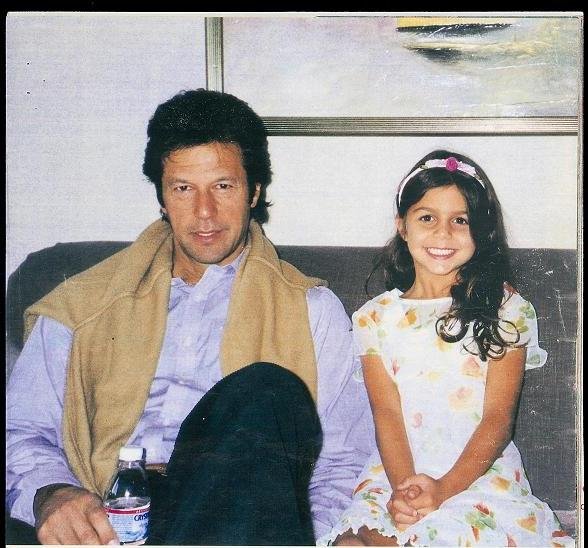
 Kamran Khan, while commenting on Arsalan Iftikhar’s allegations against Imran Khan, said that the allegation against the chief of the Pakistan Tehreek-e-Insaf, Imran Khan, has been an old one, but it has once again been levelled forcefully. The allegation is that Imran Khan is the father of a 20-year-old young woman who lives in the USA, and that she was born out of wedlock; that Imran Khan has confessed to being her father, and that a US court has also given its verdict in this regard.
Kamran Khan said that this time round, the allegation has been levelled by Arsalan Iftikhar, the son of Imran Khan’s latest target, former chief justice Iftikhar Muhammad Chaudhry. Kamran Khan said that this is a very serious charge which, if proved, can have some very adverse effects on the future of Imran Khan and the PTI.
Arsalan Iftikhar has filed an application with the Election Commission of Pakistan asking the ECP to provide him with a copy of Imran Khan’s nomination papers on the basis of which he (Arsalan Iftikhar) wants to file a reference under Article 62/63 of the Constitution in which he would take the plea that Imran Khan had mentioned the names of his two sons in the nomination papers, but he did not give the name of, what Arsalan Iftikhar alleges to be, “his daughter who was born out of wedlock”. Therefore, Imran Khan’s membership of the Parliament be suspended and action taken against him.
In a different segment of the programme, Kamran Khan said that what happened in the last 30 days — from the Karachi airport attack to the political hibernation of federal Interior Minister Chaudhry Nisar and to his having been persuaded to come out of his hibernation and into the mainstream — has dealt the government’s reputation with a severe blow.
In order to save Pakistan from the terrorists a decisive action is underway, and the Chief of the Army Staff, General Raheel Sharif, is visiting the frontline.
Kamran Khan said that nobody can doubt the fact that the future of the country rests on the Pakistan Army’s Operation Zarb-e-Azb against the terrorists.
The Chief of the Army Staff, General Raheel Sharif, is visiting the frontline where the war for Pakistan’s survival is being fought. This is a very important visit of General Raheel Sharif.He met the officers and Jawans and gave them a pat on the back for a job well done and told them that their next step is to completely destroy all the centres of terrorism in and around North Waziristan.
Kamran Khan said that as a result of the massive operation against terrorism, there has been a substantial decrease in the number of terrorist incidents inside Pakistan.
In a still different segment of the programme, Kamran Khan said that the events of the last one month have badly tarnished the image of the leadership of the PML-N and that of the government as well. Serious differences among the stalwarts of the ruling party have come to light. The media spotlight in this regard has been on the very important leader of the PML-N, Chaudhry Nisar Ali Khan, about whom media reports have been saying for the last three weeks that he had chosen to isolate himself due to his differences with some fellow cabinet members. Ch Nisar remained absent from Parliament for some time. However, Ch Nisar had a meeting with Prime Minister Nawaz Sharif on Sunday, and on Monday he issued a written statement in which he denied the news about differences, but he did say a few words about those one or two ministers who had a grudge against him.
Kamran Khan said that the writ of the government was affected and especially on June 20 when Pemra decided that it was revoking the ban on Geo News and at the same time it also decided to impose a ban on ARY News, but despite the Pemra decision ARY News transmission continued uninterrupted throughout and even the cable operators turned a deaf ear to the Pemra decision, but, ironically, Geo News and other channels of Geo Network remained shut contrary to Pemra decision. This example clearly shows that the government is losing its writ. Government ministers did not have the courage to get Pemra orders implemented. Geo News remained off air despite government orders to restore its transmission while the channel that was supposed to be off air remained on in contravention of government orders.
Kamran Khan said that the Lahore Model Town incident was a major incident that substantially damaged government’s reputation. The way the police attempted to remove barriers from outside the house of Tahir-ul-Qadri upon his return to the country and the killing of ten people there severely damaged the reputation of the government.
Kamran Khan, while commenting on Arsalan Iftikhar’s allegations against Imran Khan, said that the allegation against the chief of the Pakistan Tehreek-e-Insaf, Imran Khan, has been an old one, but it has once again been levelled forcefully. The allegation is that Imran Khan is the father of a 20-year-old young woman who lives in the USA, and that she was born out of wedlock; that Imran Khan has confessed to being her father, and that a US court has also given its verdict in this regard.
Kamran Khan said that this time round, the allegation has been levelled by Arsalan Iftikhar, the son of Imran Khan’s latest target, former chief justice Iftikhar Muhammad Chaudhry. Kamran Khan said that this is a very serious charge which, if proved, can have some very adverse effects on the future of Imran Khan and the PTI.
Arsalan Iftikhar has filed an application with the Election Commission of Pakistan asking the ECP to provide him with a copy of Imran Khan’s nomination papers on the basis of which he (Arsalan Iftikhar) wants to file a reference under Article 62/63 of the Constitution in which he would take the plea that Imran Khan had mentioned the names of his two sons in the nomination papers, but he did not give the name of, what Arsalan Iftikhar alleges to be, “his daughter who was born out of wedlock”. Therefore, Imran Khan’s membership of the Parliament be suspended and action taken against him.
In a different segment of the programme, Kamran Khan said that what happened in the last 30 days — from the Karachi airport attack to the political hibernation of federal Interior Minister Chaudhry Nisar and to his having been persuaded to come out of his hibernation and into the mainstream — has dealt the government’s reputation with a severe blow.
In order to save Pakistan from the terrorists a decisive action is underway, and the Chief of the Army Staff, General Raheel Sharif, is visiting the frontline.
Kamran Khan said that nobody can doubt the fact that the future of the country rests on the Pakistan Army’s Operation Zarb-e-Azb against the terrorists.
The Chief of the Army Staff, General Raheel Sharif, is visiting the frontline where the war for Pakistan’s survival is being fought. This is a very important visit of General Raheel Sharif.He met the officers and Jawans and gave them a pat on the back for a job well done and told them that their next step is to completely destroy all the centres of terrorism in and around North Waziristan.
Kamran Khan said that as a result of the massive operation against terrorism, there has been a substantial decrease in the number of terrorist incidents inside Pakistan.
In a still different segment of the programme, Kamran Khan said that the events of the last one month have badly tarnished the image of the leadership of the PML-N and that of the government as well. Serious differences among the stalwarts of the ruling party have come to light. The media spotlight in this regard has been on the very important leader of the PML-N, Chaudhry Nisar Ali Khan, about whom media reports have been saying for the last three weeks that he had chosen to isolate himself due to his differences with some fellow cabinet members. Ch Nisar remained absent from Parliament for some time. However, Ch Nisar had a meeting with Prime Minister Nawaz Sharif on Sunday, and on Monday he issued a written statement in which he denied the news about differences, but he did say a few words about those one or two ministers who had a grudge against him.
Kamran Khan said that the writ of the government was affected and especially on June 20 when Pemra decided that it was revoking the ban on Geo News and at the same time it also decided to impose a ban on ARY News, but despite the Pemra decision ARY News transmission continued uninterrupted throughout and even the cable operators turned a deaf ear to the Pemra decision, but, ironically, Geo News and other channels of Geo Network remained shut contrary to Pemra decision. This example clearly shows that the government is losing its writ. Government ministers did not have the courage to get Pemra orders implemented. Geo News remained off air despite government orders to restore its transmission while the channel that was supposed to be off air remained on in contravention of government orders.
Kamran Khan said that the Lahore Model Town incident was a major incident that substantially damaged government’s reputation. The way the police attempted to remove barriers from outside the house of Tahir-ul-Qadri upon his return to the country and the killing of ten people there severely damaged the reputation of the government.

After months of tension caused by cyber security and maritime disputes, an annual meeting between senior Chinese and US officials, which starts Wednesday in Beijing, is hoped to put the brake on a downward spiral in Sino-US relations.
The sixth China-US Strategic and Economic Dialogue (S&ED), which aims to address problems between the world's two largest economies, will be held until Thursday.
Among the issues the two sides are expected to discuss are the ongoing tensions in the South China Sea, denuclearization of the Korean Peninsula, the valuation of the Chinese yuan, and an ongoing deadlock in negotiations over updates to a 16 year-old World Trade Organization Information Technology Agreement.
Chinese State Councilor Yang Jiechi and US Secretary of State John Kerry will co-chair the strategic track of the dialogue, while China's Vice Premier Wang Yang and US Treasury Secretary Jacob Lew will jointly head the economic track.
This year's S&ED comes at a critical time, as the Washington Post noted that "the US-China relationship is facing its stiffest test since then US president Richard Nixon traveled to Mao Zedong's China in 1972."
Washington has sided with Tokyo, which is locked in a territorial dispute with Beijing in the East China Sea, by sending fighter jets to an Air Defense Identification Zone set up by China and voicing explicit support for Japan during Obama's East Asia visit.
In May, the US indictment of five Chinese military officers over so-called cyber espionage further irked China, which halted a China-US cyber security working group due to meet under the framework of the S&ED.
Even before the S&ED formally starts, the two sides have already traded blame.
On Monday, China's Assistant Foreign Minister Zheng Zeguang told a press briefing that the US "has made some wrong remarks and acts on maritime issues and cyber issues, bringing negative impact on bilateral relations."
Zheng also dismissed the charges against the five Chinese officers as "intentionally fabricated by the US."
A US official, who briefed reporters en route to Beijing, said Tuesday China's claim to the South China Sea is "problematic," and the tensions are "very relevant to the United States as a Pacific power," reported AFP.
Yuan Zheng, a research fellow with the Institute of American Studies at the Chinese Academy of Social Sciences, partly agreed that bilateral ties are at a low ebb.
"While it seems the threat of a confrontation looms, past experiences in China-US relations proved that whenever a confrontation is about to break out, the two leaderships will pull back from hostility," Yuan told the Global Times on Tuesday.
Da Wei, director of the Institute of American Studies at the China Institute of Contemporary International Relations, cited the "strategic interdependency" between China and the US, saying that neither country can afford mutual destruction to their economy or security.
Some people have said a clash between China and the US is inevitable due to the structural problems between an established power and a rising power.
China holds the view that Washington's Asia pivot aims to constrain its development, while the US suspects that China wants to push it out of the region.
"No one can deny the existence of structural problems, but if we let the structural problems dominate bilateral ties, there will be a lose-lose situation," said Yuan. "Both countries realized the problem, so they decided to build a new type of great power relations, which stresses no confrontation or conflict."
"In the past seven months, bilateral ties went through a downward spiral, but I don't think the bottom has fallen out of the structure," he said.
A similar view was also voiced by the US side on Tuesday.
"The US-China relationship is a motion picture. It shouldn't be looked at as a snapshot," a second US official traveling with Kerry was quoted as saying by Reuters. "It is that grand epic big Hollywood motion picture in which there are a lot of actors and a lot of interests at stake, and the trajectory of any particular issue takes time to play out."
The current round of the S&ED will provide a platform for candid and even blunt exchanges between the two sides. The economic track, which might see progress on the Bilateral Investment Treaty, is expected to help stabilize the relationship.
"What really matters isn't the agreement list delivered after the S&ED. It is the positive momentum injected into bilateral ties by the dialogue following the negative trajectory of the past months," Da said.
Yuan shared similar sentiments, noting Washington has already started pulling back. "Both sides will use the S&ED and Barack Obama's visit to Beijing in November to create a favorable atmosphere for warming ties."
Prior to the start of the S&ED, the fourth China-US Strategic Security Dialogue was held in Beijing on Tuesday. The meeting was chaired by China's Vice Foreign Minister Zhang Yesui and US Deputy Secretary of State William Burns.
Chinese President Xi Jinping will attend the opening ceremony of the S&ED events and deliver a speech. Xi and Premier Li Keqiang will meet the US delegations.
 By MICHAEL D. SHEAR and JEREMY W. PETERS
President Obama urged Congress on Tuesday to quickly provide almost $4 billion to confront a surge of young migrants from Central America crossing the border into Texas, calling it “an urgent humanitarian situation.”
But the request immediately became entangled in the fierce political debate over immigration: Republicans said they were wary of Mr. Obama’s request and could not immediately support it, given what they called his administration’s failure to secure the Mexican border after years of illegal crossings. Mr. Obama could face resistance from members of his own party as well.
The president said he needed the money to set up new detention facilities, conduct more aerial surveillance and hire immigration judges and Border Patrol agents to respond to the flood of 52,000 children. Their sudden mass migration has overwhelmed local resources and touched off protests from residents angry about the impact on the local economy. In a letter to congressional leaders, Mr. Obama urged them to “act expeditiously” on his request.
Republican lawmakers who have long demanded tougher enforcement of immigration laws along the border expressed cautious support on Tuesday for beefing up the federal presence in the Rio Grande Valley, where most of the children have been crossing into the United States.
But many Republicans, especially in the House, remain deeply suspicious of the president’s commitment, a mistrust that led to a stalemate on a broader immigration overhaul and now threatens to at least delay speedy passage of Mr. Obama’s $3.7 billion spending request.
“Let’s remember, this administration went around for years saying the border has never been more secure than it is now,” said Senator Marco Rubio of Florida, a potential Republican presidential candidate in 2016. “I think that’s been exposed as a fallacy over the last three weeks.”
Speaker John A. Boehner said the president’s plan failed to deploy the National Guard, an idea the White House said would not be effective. And Representative John Carter of Texas said he was wary of any measure that gave Mr. Obama too much autonomy.
“The president caused this self-inflicted crisis on the border by refusing to enforce the law,” said Mr. Carter, a senior member of the House Appropriations Committee, which is likely to be asked to approve the request. “And now he is requesting a $3.7 billion bailout from the taxpayers to rectify his mistakes.”
Some Democrats, like Senator Robert Menendez of New Jersey, have expressed strong misgivings about any plan that would allow for unaccompanied children to be sent back home to dangerous situations.
The charged politics will shadow a long-planned trip that Mr. Obama began on Tuesday and will include a two-day stop in Texas. The trip will underscore the difficulties for the White House on immigration. The president is calling for immediate action on the border even as he remains under pressure by activists to relax deportations.
After insisting that Mr. Obama had no plans to visit the Texas-Mexico border, White House officials said he would meet with Gov. Rick Perry.
Mr. Perry, who is considering a second run for the Republican presidential nomination, had declined to participate in a photo opportunity with Mr. Obama in front of Air Force One, prompting a last-minute offer by the White House for the two to meet.
A Perry spokesman said they would meet privately and attend a round-table discussion with religious leaders and local officials.
The president’s funding request is certain to revive legislative passions that prompted Mr. Obama to promise sweeping executive actions to get around Republican opposition to a bill that would provide a path to citizenship for 11 million illegal immigrants. Republicans in both chambers hinted Tuesday that they might insist on corresponding spending cuts or make other demands that Mr. Obama and his allies are likely to oppose.
Senator John Cornyn of Texas, the chamber’s No. 2 Republican, said that Mr. Obama’s request lacked the substantive policy changes needed to deal with issues like detaining those who cross the border illegally and ensuring that they show up for court dates once they are apprehended.
“Apparently the president has given up on any effort to effect the kind of reforms that he knows and his administration knows are necessary,” Mr. Cornyn said.
White House officials said the president was not backing away from a request last week for more flexibility in how enforcement agents treat the Central American migrants who are surging across the border. A 2008 law aimed at combating human trafficking requires officials to provide extra legal protections for migrants from countries that do not share a border with the United States.
Those protections are not provided to Mexicans, who are often quickly returned home after being caught trying to enter the United States illegally. White House officials said they would like Congress to allow officials to process migrants from places like Honduras and Guatemala as quickly as Mexicans. One White House official said the administration was seeking to have “one approach to children coming from the region.”
Officials pressed members of Congress on Tuesday to consider the funding request separately from the changes in legal authority. But some lawmakers suggested that they wanted to deal with both issues together. The resulting clash could end up as a replay of the gridlock that prevented the bipartisan immigration bill that passed the Senate in 2013 from being considered in the House.
Senator John McCain, Republican of Arizona, said that Congress needed to repeal the 2008 human trafficking law. “The message has to be, ‘If you cross our border illegally, you will be returned immediately,’ ” he said.
Others have called for an even more aggressive deportation plan than the president’s
Senator Jeff Flake, Republican of Arizona, said the Department of Health and Human Services, which takes in many of the unaccompanied children, needed to be cut out of the process so that law enforcement officials could ship them home more quickly.
Mr. Cornyn said Congress should look at allowing the United States armed forces to stop drug and human trafficking.
An email to supporters from Heritage Action for America, a political action committee, signaled the kind of difficulty that Mr. Obama’s request might face from Tea Party conservatives. The group called it “a nonstarter because it seeks to address the symptoms, not the cause.”

India continues to battle poverty, child and maternal deaths, according to a United Nations report on the Millennium Development Goals (MDG) that said while several key global targets have been met, more sustained effort is needed to cover disparities by the 2015 deadline.
 The ‘Millennium Development Goals Report 2014’, launched by U.N. Secretary-General Ban Ki-moon here on Monday, said many global MDG targets on reducing poverty, increasing access to improved drinking water sources, improving the lives of slum dwellers and achieving gender parity in primary schools have already been met.
Many more goals are within reach by their 2015 target date, the report said, adding that if current trends continue, the world will surpass MDG targets on malaria, tuberculosis and access to HIV treatment.
The report is the most up-to-date “global scorecard” on efforts to achieve the eight mostly anti-poverty goals agreed by world leaders at a UN summit in 2000.
It, however, said that some MDG targets related to largely preventable problems with available solutions, such as reducing child and maternal mortality and increasing access to sanitation, are slipping away from achievement by 2015, despite major progress.
“We know that achievements have been uneven between goals, among and within regions and countries, and between population groups,” Mr. Ban said, adding that unless imbalances are addressed through bolder and more focused interventions, some targets will not be met, including in key areas such as childbirth, maternal mortality, universal education, and environmental sustainability.
The overwhelming majority of people living on less than 1.25 dollars a day belong to Southern Asia and sub-Saharan Africa, with one third of the world’s 1.2 billion extreme poor living in India alone in 2010.
India also had the highest number of under-five deaths in the world in 2012, with 1.4 million children dying before reaching their fifth birthday.
While Southern Asia has made “strong and steady” progress in reducing child deaths by more than halving its under-five mortality rate, yet nearly one in every three deaths still takes place in the region.
Despite progress in all world regions, the maternal mortality ratio in developing regions - 230 maternal deaths per 1,00,000 live births in 2013 — was 14 times higher than that of developed regions, which recorded only 16 maternal deaths per 1,00,000 live births in 2013.
Highlighting the extreme differences in maternal mortality among countries, the report said that almost one-third of all global maternal deaths are concentrated in the two populous countries — India and Nigeria.
India has an estimated 50,000 maternal deaths (17 per cent) while Nigeria has an estimated 40,000 maternal deaths (14 per cent).
The report further stated that despite a large increase in sanitation coverage, with an additional two billion people gaining access to an improved sanitation facility, it seems unlikely that the MDG target of 75 per cent coverage will be met by 2015.
“In 2012, a billion people still resorted to open defecation, a practice that needs to be brought to an end, as it poses a huge risk to communities that are often poor and vulnerable already,” the report added.
“Open defecation is most prevalent in Southern Asia, Oceania and sub-Saharan Africa. The vast majority — 82 per cent — of people practicing open defecation now live in middle-income, populous countries, such as India and Nigeria,” it said, adding that nearly 60 per cent of the one billion people practicing open defecation live in India.
With the 2015 deadline for achieving the landmark goals less that 550 days away, the report said many of MDGs have been met or are within reach. Among the targets that have been met is that the world has reduced extreme poverty by half.
In 1990, almost half of the population in developing regions lived on less than 1.25 dollars a day. This rate dropped to 22 per cent by 2010, reducing the number of people living in extreme poverty by 700 million.
Efforts in the fight against malaria and tuberculosis have shown results with an estimated 3.3 million deaths from malaria being averted between 2000 and 2012 due to the substantial expansion of malaria interventions.
The intensive efforts to fight tuberculosis have saved an estimated 22 million lives worldwide since 1995.
“If the trends continue, the world will reach the MDG targets on malaria and tuberculosis,” it said.
Access to an improved drinking water source became a reality for 2.3 billion people and the target of halving the proportion of people without access to an improved drinking water source was achieved in 2010, five years ahead of schedule.
In 2012, 89 per cent of the world’s population had access to an improved source, up from 76 per cent in 1990.
Hunger also continues to decline, but immediate additional efforts are needed to reach the MDG target, the report said.
The proportion of undernourished people in developing regions decreased from 24 per cent in 1990-1992 to 14 per cent in 2011-2013. However, progress has slowed down in the past decade.
“Meeting the target of halving the percentage of people suffering from hunger by 2015 will require immediate additional effort, especially in countries which have made little headway, the report added.
Launching the final push towards the United Nations targets, Mr. Ban appealed to member states that the global post-2015 objective must be to “leave no one behind”.
Mr. Ban said the world is “at a historic juncture, with several milestones before us.”
Citing gains made in the fight against malaria and tuberculosis and access to HIV treatment, Mr. Ban underscored that the report makes clear “the MDGs have helped unite, inspire and transform...and the combined action of Governments, the international community civil society and the private sector can make a difference.”
“Our efforts to achieve the MDGs are critical to building a solid foundation for development beyond 2015. At the same time, we must aim for a strong successor framework to attend to unfinished business and address areas not covered by the eight MDGs,” said the U.N. chief.
The ‘Millennium Development Goals Report 2014’, launched by U.N. Secretary-General Ban Ki-moon here on Monday, said many global MDG targets on reducing poverty, increasing access to improved drinking water sources, improving the lives of slum dwellers and achieving gender parity in primary schools have already been met.
Many more goals are within reach by their 2015 target date, the report said, adding that if current trends continue, the world will surpass MDG targets on malaria, tuberculosis and access to HIV treatment.
The report is the most up-to-date “global scorecard” on efforts to achieve the eight mostly anti-poverty goals agreed by world leaders at a UN summit in 2000.
It, however, said that some MDG targets related to largely preventable problems with available solutions, such as reducing child and maternal mortality and increasing access to sanitation, are slipping away from achievement by 2015, despite major progress.
“We know that achievements have been uneven between goals, among and within regions and countries, and between population groups,” Mr. Ban said, adding that unless imbalances are addressed through bolder and more focused interventions, some targets will not be met, including in key areas such as childbirth, maternal mortality, universal education, and environmental sustainability.
The overwhelming majority of people living on less than 1.25 dollars a day belong to Southern Asia and sub-Saharan Africa, with one third of the world’s 1.2 billion extreme poor living in India alone in 2010.
India also had the highest number of under-five deaths in the world in 2012, with 1.4 million children dying before reaching their fifth birthday.
While Southern Asia has made “strong and steady” progress in reducing child deaths by more than halving its under-five mortality rate, yet nearly one in every three deaths still takes place in the region.
Despite progress in all world regions, the maternal mortality ratio in developing regions - 230 maternal deaths per 1,00,000 live births in 2013 — was 14 times higher than that of developed regions, which recorded only 16 maternal deaths per 1,00,000 live births in 2013.
Highlighting the extreme differences in maternal mortality among countries, the report said that almost one-third of all global maternal deaths are concentrated in the two populous countries — India and Nigeria.
India has an estimated 50,000 maternal deaths (17 per cent) while Nigeria has an estimated 40,000 maternal deaths (14 per cent).
The report further stated that despite a large increase in sanitation coverage, with an additional two billion people gaining access to an improved sanitation facility, it seems unlikely that the MDG target of 75 per cent coverage will be met by 2015.
“In 2012, a billion people still resorted to open defecation, a practice that needs to be brought to an end, as it poses a huge risk to communities that are often poor and vulnerable already,” the report added.
“Open defecation is most prevalent in Southern Asia, Oceania and sub-Saharan Africa. The vast majority — 82 per cent — of people practicing open defecation now live in middle-income, populous countries, such as India and Nigeria,” it said, adding that nearly 60 per cent of the one billion people practicing open defecation live in India.
With the 2015 deadline for achieving the landmark goals less that 550 days away, the report said many of MDGs have been met or are within reach. Among the targets that have been met is that the world has reduced extreme poverty by half.
In 1990, almost half of the population in developing regions lived on less than 1.25 dollars a day. This rate dropped to 22 per cent by 2010, reducing the number of people living in extreme poverty by 700 million.
Efforts in the fight against malaria and tuberculosis have shown results with an estimated 3.3 million deaths from malaria being averted between 2000 and 2012 due to the substantial expansion of malaria interventions.
The intensive efforts to fight tuberculosis have saved an estimated 22 million lives worldwide since 1995.
“If the trends continue, the world will reach the MDG targets on malaria and tuberculosis,” it said.
Access to an improved drinking water source became a reality for 2.3 billion people and the target of halving the proportion of people without access to an improved drinking water source was achieved in 2010, five years ahead of schedule.
In 2012, 89 per cent of the world’s population had access to an improved source, up from 76 per cent in 1990.
Hunger also continues to decline, but immediate additional efforts are needed to reach the MDG target, the report said.
The proportion of undernourished people in developing regions decreased from 24 per cent in 1990-1992 to 14 per cent in 2011-2013. However, progress has slowed down in the past decade.
“Meeting the target of halving the percentage of people suffering from hunger by 2015 will require immediate additional effort, especially in countries which have made little headway, the report added.
Launching the final push towards the United Nations targets, Mr. Ban appealed to member states that the global post-2015 objective must be to “leave no one behind”.
Mr. Ban said the world is “at a historic juncture, with several milestones before us.”
Citing gains made in the fight against malaria and tuberculosis and access to HIV treatment, Mr. Ban underscored that the report makes clear “the MDGs have helped unite, inspire and transform...and the combined action of Governments, the international community civil society and the private sector can make a difference.”
“Our efforts to achieve the MDGs are critical to building a solid foundation for development beyond 2015. At the same time, we must aim for a strong successor framework to attend to unfinished business and address areas not covered by the eight MDGs,” said the U.N. chief.

British Foreign Secretary William Hague told Afghanistan's leaders on Tuesday they should learn from crisis-hit Iraq's failures and ensure an orderly transfer of power.
"It's important that Afghanistan's leaders work together," Hague told reporters during a trip to New Delhi, hours after presidential candidate Abdullah Abdullah claimed victory in the disputed Afghan election despite preliminary results favouring his rival Ashraf Ghani.
"We look to them to ensure there is an orderly, legitimate and constitutional transfer of power to a new president in Afghanistan," he said.
The Afghan election stand-off has sparked concern that protests could spiral into ethnic violence at a time when Iraq has been struggling to form a new government amid a raging Sunni Islamist insurgency.
"Iraq has suffered from the failure to have a sufficiently inclusive government in recent years," Hague said, referring to the political polarisation over a new government aimed at countering the militant onslaught in Iraq.
"I hope Afghanistan will learn from that failure."
Afghanistan faces a difficult transfer of power after President Hamid Karzai's 13-year rule ends and as 50,000 US-led troops wind down their battle against Taliban insurgents.

COAS General Raheel Sharif does not like terrorists. This seems clear from his consistent stance on terrorism, stretching back to his time as IG Training and Evaluation. Reportedly he played an important role in convincing other senior officers that assorted militants inside Pakistan are a greater threat than India. While he was patient with the government’s negotiations policy, since the go ahead was given he has relentlessly said that operation Zarb-e-Azb will target all terrorists irrespective of their affiliations to former ‘strategic assets’ such as the Haqqani network. On examination most statements by the military contain a clever loophole, that any terrorist who “takes up arms against Pakistan” will be targeted. However, on the face of it, the army is moving wholesale against terrorists of “all hues” and the COAS has forcefully pushed for complete eradication of all foreign and domestic terrorists. His statement to troops in Miranshah on Monday that the army will “chase and hunt down terrorists across the country” is a welcome development. If General Sharif’s statements are any indication, increasingly the sense in the security establishment is that the operation will only be successful once the terror infrastructure spread throughout the country is destroyed. This was an infrastructure established during the 1980s Afghan war, which was left in place because of its potential strategic value but that has turned into this country’s most significant existential threat. Defence Minister Khawaja Asif reiterated this point in an interview on Monday when he said that entering the Afghan war was “a mistake” and that the government has recognised and abandoned the policy of ‘good versus bad Taliban’.
The question is whether the rest of the establishment recognises that the network of radicalisation does not stop with extremist terrorist groups but includes sectarian organisations engaged in homicide and hate-propaganda. Indeed groups like Lashkar-e-Jhangvi and others may not be as vocal as the tribal area terrorists but it is clear they support the terrorist goals of a religiously homogenous state with control based on their perverted interpretation of Islamic law, and are willing to use violence to achieve that end. They have certainly cultivated links to the global jihadist movement inspired by al Qaeda, which terrorists in the tribal areas are fully a part of. It was recognition that our former ‘assets’ were now being controlled by ‘Jihadist global’ that forced the establishment to re-evaluate its ties with them. Violent sectarian movements in Pakistan will inevitably go down that road soon; it is built into their DNA. Their ‘loyalty’ to Pakistan is a matter of convenience and will be abandoned when opportunities for greater power present themselves. This infrastructure must be disabled and the army is the only institution in the country capable of doing the job. Whether this is General Sharif’s intent remains to be seen, his encouraging statements to that effect notwithstanding.


Germany inflicted a historic 7-1 rout on hosts Brazil on Tuesday to reach the World Cup final as Miroslav Klose became the all-time leading scorer in the history of the tournament.
Brazil have never suffered such a big defeat in any international tournament and never put on such a shambolic defensive performance as during an 18 minute first half period when Germany scored four goals, three of them in just 179 seconds.
Thomas Mueller scored in the 11th minute, Klose after 23 to take his World Cup total to 16, Toni Kroos in the 24th and 26th minutes, Sami Khedira after 29 and substitute Andre Schuerrle in the 69th and 79th minutes. Oscar scored Brazil's goal in the 90th minute.

The U.S. Secretary of State John Kerry says any action to take power by extra-legal means will cost Afghanistan the financial and security support of the U.S.
"We call on all Afghan leaders to maintain calm in order to preserve the gains of the last decade," he said. "There is no justifiable recourse to violence...or for resort to extra-constitutional measures or threats of the same."
In a statement, the U.S. State Department Spokeswoman, Jen Psaki said a full investigation of fraud allegations was needed to ensure confidence in the final outcome.
"A full and thorough review of all reasonable allegations of irregularities is essential to ensure that the Afghan people have confidence in the integrity of the electoral process and that the new Afghan president is broadly accepted inside and outside Afghanistan," it said.
On Monday, the Independent Election Commission (IEC) announced preliminary results of the runoff presidential election Monday evening with Ashraf Ghani Ahmadzai leading with 56.44 percent.
Presidential candidate Abdullah Abdullah fell behind with 43.56 percent. Monday's results were made up of 100 percent of votes cast across the country.
Head of IEC Ahmad Yousuf Nuristani said the total number of voters announced this evening was eight million; exactly 8,109,403.
Mr. Ahmadzai led the preliminary results with exactly 4,485,888 votes, with Mr. Abdullah trailing behind with 3,461,639 votes; a difference of exactly 1,024,249 votes between the two candidates.
The final result of the election will announce on July 22.

Afghan presidential candidate Abdullah Abdullah has claimed victory in the country's disputed presidential election and blamed fraud for putting him well behind rival Ashraf Ghani in preliminary results.
"We are proud. We respect the votes of the people. We were the winner," Abdullah told thousands of cheering supporters in a giant tent in central Kabul on July 8.
"We will not accept a fraudulent result -- not today, not tomorrow, never," he added.
But Abdullah called for the country to remain unified.
"We don't want civil war. We don't want a crisis," he said. "We want stability, national unity, not division."
Abullah told supporters that he had held talks on the crisis by phone with U.S. President Barack Obama and Secretary of State John Kerry. He said Kerry will visit Kabul on July 11 to discuss the election.
Earlier, Abdullah supporters chanted "Death to Karzai!" They tore down a large portrait of the outgoing president and replaced it with an image of Abdullah.
Dozens of Abdullah supporters also tore down a portrait of President Hamid Karzai at Kabul's international airport.
Ghani, a former finance minister, and Abdullah, a former foreign minister, have accused each other of trying to manipulate the results.
Earlier on July 8, in a sharply worded statement, Kerry warned that any attempt to seize power in Afghanistan "by extra-legal means" would cost the country its international aid.
Kerry voiced the "gravest concern" about reports of suggestions of a "parallel government" and said Washington expected Afghan electoral institutions to investigate "reasonable allegations of irregularities."
Some Abdullah supporters have suggested his camp should declare victory and form a parallel government.
Abdullah did not appear to address such calls in his remarks to supporters on July 8.
In a July 8 statement, the Russian Foreign Ministry called on Abdullah and Ghani to refrain from steps that could aggravate the situation and wait until the final results are announced later in the month.
Afghanistan’s Independent Election Commission (IEC) said on July 7 that preliminary results from the June 14 second-round ballot show Ghani with 56.44 percent of the vote compared to 43.56 percent for Abdullah.
Commission Chairman Ahmad Yusuf Nuristani stressed that the results could change after taking into consideration allegations of fraud or a review of votes that could later be invalidated.
The hotly contested outcome of the election has sparked concerns about a wider split along ethnic lines in Afghanistan.
Ghani attracts support from Pashtuns in the south and east, while Abdullah's loyalists are Tajiks in the north -- echoing the ethnic divisions of the civil war in the 1990s.
The international community had pressed for a smooth transition of power in Afghanistan ahead of the planned withdrawal of international forces by the end of 2014.
Rhetoric rarely matches reality but, even allowing for government exaggeration, the gap between what was promised to the IDPs when the operation in North Waziristan was launched and what has been provided to them is far too large. The government has so far released Rs330 million which may sound like an impressive number but, given that there are well over 700,000 IDPs, amounts to little more than Rs470 per person. The distribution of food aid has been equally poor, with only 4,500 tons of relief goods being disbursed so far. The government had promised all necessary aid to people who have been left homeless through no fault of their own but it has failed to keep its word. Part of the problem is funding. We need to make up a shortfall of $235 million but the only foreign donors who have come to our rescue are the US, who pledged $31 million and the UAE, who said they will give us $20.5 million. All our other usual allies are missing, perhaps because they feel that since we are fighting an internal war it should be up to us to account for all the problems that arise from the military operation. Finance Minister Ishaq Dar, has, however, announced that no formal request will be made for donations from other countries and the government has so far allocated Rs2 billion for the IDPs.
The most shocking response has come from the provinces, with the Khyber Pakhtunkhwa and Punjab governments offering $5 million, Sindh offering $0.5 million and Balochistan unable to contribute anything. In the case of Khyber Pakhtunkhwa the reticence is understandable since it is hosting most of the IDPs and has been suffering the economic fallout of militancy since 2011. But Punjab and Sindh should have done better. The impression the rest of the country is giving to the IDPs is that we have launched military action in their areas and now washed our hands off the problem. Out of the over half a million IDPs, only 2,700 have come to Punjab and even that has the provincial government worried. As the richest and most powerful province in the country, Punjab perhaps feels that it can shield itself from the problems that afflict the rest of Pakistan. It should instead be using its wealth to help out the most vulnerable. With the federal and Punjab governments willing to spend tens of millions of dollars on white elephant construction projects surely they can spare more funds for the IDPs. If we don’t even take care of their basic needs now how will we ever be able to rehabilitate the IDPs after the operation is over? And what happens to the much-talked about goal of winning the hearts and minds of the tribal people who have long been oppressed by those wielding guns and purveying ruthlessness?
http://www.pakistantoday.com.pk/
Two-hundred non-Muslim families include the about 62,251 families that have left North Waziristan in the wake of the military offensive against terrorists in the tribal region, the United Nations High Commissioner for Refugees (UNHCR) said.
These families particularly include Christian and Hindu residents of North Waziristan who lived in solidarity with local tribesmen and are currently taking refuge in school buildings across Khyber Pakhtunkhwa that are hosting the internally displaced population from the region.
Upon the Pakistani government’s official request, the UNHCR began aiding these IDPs with critical relief products. The UNHCR has provided approximately 10,574 family kits of essential needs that included jerry cans, buckets, mosquito nets, mats, blankets, kitchen sets, plastic sheets, sanitary cloths and soap.
Other agencies and NGOs were also providing victuals, medical facilities, clean water, as well as assistance to satisfy other vital requirements of the displaced.
Jet fighters carried out airstrikes on suspected militant hideouts destroying seven of them while 13 militants were also killed on Tuesday during the Zarb-i-Azb operation in the North Waziristan tribal region.
The Inter-Services Public Relations (ISPR) confirmed that the airstrikes were carried out early morning in the Degan area of North Waziristan.
Army sources further claimed that seven militant hideouts were destroyed and 13 militants, including foreigners, were killed in airstrikes in Degan.
The death toll, however, could not be independently verified.
The strikes came a day after Chief of Army Staff General Raheel Sharif visited the troops in North Waziristan.
 http://mediacellppp.wordpress.com/
It is common knowledge that there is a shortage of water in the city. People don’t have enough clean drinking water – or even dirty water to use for their daily chores.
So considering that the situation is bad within the city limits, it’s only safe to assume that it is worse on the islands that surround the city. Wrong.
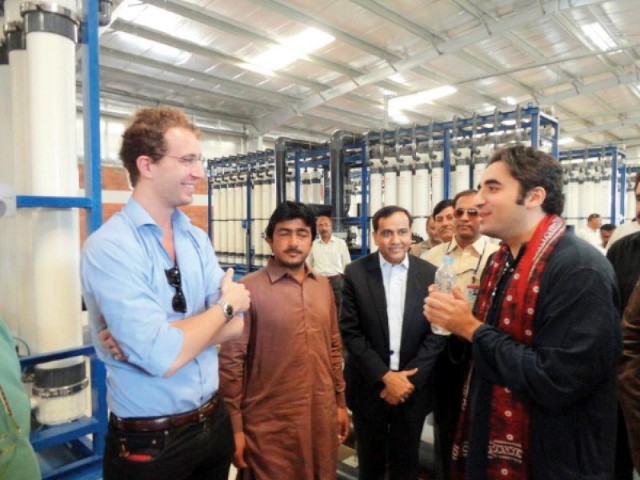
While the islands around Keamari, Baba and Bhit, have been neglected by the government and city administration time and again, there are people taking an initiative to ensure that the people living there have access to safe and clean drinking water. These people include the patron-in-chief of the Pakistan Peoples Party (PPP) Bilawal Bhutto Zardari, his father and uncle.
Feeling parched
The seawater along the coasts of these islands is filthy and full of garbage. Three months ago Pak Oasis Pvt Ltd set up and is currently running a water filteration plant for the islands. They manage to distribute water to the entire village – about 17,000 people. Eventually, the adjoining village will also receive water and they will be able to provide another 15,000 people with clean water.
This project is being run under the Shaheed Benazir Bhutto Water Schemes for Lyari and Keamari. The reverse osmosis plant – RO2 – was initiated in 2010 was finally completed last year and became functional three months ago when the water board gave it access to water. The plant runs at a cost of Rs140 million and is generating about 0.1million gallons of water for the village.
Bilawal Bhutto took a special interest in setting up the project when he visited the plant nearly four years ago. At the time, he said he wanted to build a village which would serve as a model for others. This village, he claimed, he would monitor himself to make sure that there was running water available for fishermen.
A water expert from Dubai, David James, was visiting the islands for monitoring purposes and claimed that this was a model project and should be replicated all over the city.
“The desalination plants here use the latest reverse osmosis technology to provide safe drinking water to everyone on the island,” he said. “Despite the high levels of pollution in the seawater, it goes through a pretreatment and water conditioning process to ensure that it meets the World Health Organisation standards.
The water expert claimed that this water was better than bottled water.
Thirsty for more?
With access to clean water, many villagers claim they can finally relax.
Bashir said that being a fisherman, he knew that life was tough but having access to an unlimited supply of water was nothing short of a miracle. “Now my children can bathe with clean water whenever they want,” he said. “My wife can cook meals without running across the village to get water.”
According to another villager, Salma, she used to send her youngest daughter to get a can of water for Rs40 every day. “My husband would bring Rs50 or Rs100 home every day and more than half of the money would go on purchasing a limited amount of water.”
Nargis, a lady health worker who lives on the islands, said that the project had been a blessing for them as they didn’t have to worry about water any more.
The president of the Pakistan Fishermen Union, Dr Yousuf, claimed that since the plant was installed, more than 99% of their thirst for water had been quenched.
 BY MIRWAIS HAROONI AND MARIA GOLOVNINA
Afghan presidential contender Abdullah Abdullah's camp rejected preliminary results of last month's run-off election on Monday as a "coup" against the people, putting him on a dangerous collision course with his rival, Ashraf Ghani.
The Independent Election Commission on Monday announced that Ghani won the June 14 second round with 56.44 percent of the vote, according to preliminary results. The tally might change when the final official numbers come out on July 22.
Abdullah's camp responded angrily, saying the result was invalid as it did not throw out all the fraudulent votes.
"We don't accept the results which were announced today and we consider this as a coup against people's votes," said Mujib Rahman Rahimi, a spokesman for Abdullah's campaign.
His rejection sets the stage for a possible bloody standoff between ethnic groups or even secession of parts of the fragile country, which is already deeply divided along tribal lines.
Abdullah, a former anti-Taliban resistance fighter, has long alleged widespread fraud in the messy and protracted vote and insisted results should be delayed until all problematic poll stations have been audited.
Son of a Pashtun father and a Tajik mother, he draws much of his support from the Tajik minority in northern Afghanistan and is capable of drawing massive crowds who are likely to be equally enraged by Monday's announcement.
Ghani, for his part, has strong support from Pashtun tribes in the south and east. In the southern city of Kandahar, hundreds of people took to the streets late on Monday to celebrate.
Officials warned this was not the final result, however.
"The announcement of preliminary results does not mean that the leading candidate is the winner and there is possibly the outcome might change after we inspect complaints," IEC chief Ahmad Yousuf Nuristani told reporters.
The United States echoed the view.
"We have seen today’s announcement of preliminary results and note that these figures are not final or authoritative and may not predict the final outcome, which could still change based on the findings of the Afghan electoral bodies," State Department spokeswoman Jen Psaki said in a statement.
"Serious allegations of fraud have been raised and have yet to be adequately investigated."
The deadlock over the vote has quashed hopes for a smooth transition of power in Afghanistan, a concern for the West as most U.S.-led forces withdraw from the country this year.
Earlier on Monday, rival camps tried to find a last-minute compromise to keep Afghanistan from sliding into a protracted period of uncertainty.
Nuristani said the commission had received a request from Abdullah's camp to review ballot papers from more than 7,000 polling stations on suspicion of fraud - which could significantly alter the result if recounted.
"We announced preliminary results today and it is now the complaints commission's duty to inspect this case," he said. "We are ready to provide any assistance until the end of the process.”
DANGEROUS STANDOFF
The vote to pick a successor to Hamid Karzai was intended to mark the first democratic transfer of power in Afghan history, a crucial step towards stability as NATO prepares to withdraw the bulk of its troops by the end of the year.
Western powers, particularly the United States, had hoped for a trouble-free process that would show that 12 years of their military involvement in Afghanistan were not in vain and contributed to the country's nation-building.
But the process has been fraught with accusations of cheating from the start.
Without a unifying leader accepted by all sides, Afghanistan could split into two or more fiefdoms along tribal fault lines, or even return to the bloody civil war of the 1990s.
Abdullah has accused Karzai, also a Pashtun, of playing a role in the alleged rigging in Ghani's favour and says he would accept the vote only if he saw firm evidence that fraudulent votes had been thrown out and the final result was clean.
Taliban insurgents remain a formidable security risk after vowing to disrupt the election process. On Monday, they killed a district police chief in the western city of Herat and attacked a check point in northern Afghanistan.

The Independent Election Commission (IEC) announced preliminary results of the runoff presidential election Monday evening with Ashraf Ghani Ahmadzai leading with 56.44 percent.
Presidential candidate Abdullah Abdullah fell behind with 43.56 percent.
Tonight's results were made up of 100 percent of votes cast across the country.
Head of IEC Ahmad Yousuf Nuristani said the total number of voters announced this evening was eight million; exactly 8,109,403.
Of the, little over eight million votes, 62.37 percent of the voters were male and 37.63 percent were female.
Dr. Ghani-Ahmadzai led the preliminary results with exactly 4,485,888 votes, with Dr. Abdullah trailing behind with 3,461,639 votes; a difference of exactly 1,024,249 votes between the two candidates.
During the announcement Nuristani said that the IEC accepts the fact that there were technical problems as well as frauds that took place in the election process.
He emphasized, after the announcement of the results, that these are not the final results.
"The announcement preliminary result does not mean the winner has been announced," Nuristani said. "The investigation of votes could have impacts on the final results, so we demand the candidates and their supporters to stay calm."
He added that on Election Day a total of 928 polling sites were closed, of which 579 were closed prior to elections, 299 sites votes were not cast and 50 stations were declared closed by the election commission because of security reasons.
In reaction to the preliminary results, Mujib Rahman Rahimi, spokesman to Abdullah's electoral camp, said they expected a total of seven million votes including frauds, but IEC chairman's announcement of eight million votes was unexpected.
"We do not accept the results announced this evening by the IEC," Rahimi told TOLOnews.
According to the IEC runoff election timeline, the publication of the final results will be July 22.
 A new report terms Pakistan as one of the most dangerous countries in the world for religious minorities.
In line with a recent report publicized by Minority Rights Group International (MRG): Pakistan is one of the most dangerous countries in the world for religious minorities. The Minority Rights Group International sent this report to Fides Agency which was released to create Human Rights violation awareness. This report sent by the Minority Rights Group International notes: since 1980, attacks on minority groups (Christians, Hindus, Muslims, Shiites and Hazaras) have been on the rise and also the “targeted killings” have reached unprecedented levels.
This report was based on the official figures and facts thus available to the organization. Their report further discussed that: the attacks against Shiite and Hazaras communities have a “disturbing level” (700 Shiites killed in 2013). The organization termed the Pakistani Government’s counter-action as “totally inadequate” response of the Pakistani government, which “should send a clear message, showing that such attacks are unacceptable and do not go unpunished. The organization further state in this report that: Turning a blind eye to the atrocities, the government legitimizes a culture of impunity among the militant groups, while minorities live in fear everyday. If criminals are not brought to justice quickly, more mass violence on minority groups is likely to happen.
Furthermore, the report states that: most of the attacks are carried out by three militant groups Sipah-e-Sahaba Pakistan (SSP), Lashkar-e-Jhangvi (LEJ) and Tehreek-e-Taliban Pakistan (TPP). The main targets are, above all, professionals, doctors, lawyers, politicians, businessmen, religious leaders and human rights activists. According several interviews of local Human Rights activists conducted by the Minority Rights Group International, these attacks are designed to depress and sideline the religious minority communities living in Pakistan; causing massive exodus of the Christians from Pakistan. The report highlights that the “climate of fear” is being stimulated with hate campaigns conducted in mosques, schools, public spaces and social media.
- See more at: http://www.christiansinpakistan.com/a-recent-report-tags-pakistan-as-dangerous-country-for-religious-minorities/#sthash.NHHkezKe.dpuf

Most of the problems the PML-N faces are caused by the prime minister’s highly personalised style of governance. The PML-N has no party life, no decision making bodies, no internal discussion and debate. The party chief keeps party members at arm’s length. Not to speak of ordinary lawmakers, even cabinet ministers cannot turn to him for help or advice. Nawaz Sharif continues to retain several portfolios, relying on bureaucrats instead of sharing his responsibilities with party colleagues. The cabinet meetings are infrequent as key decisions are taken by a kitchen cabinet that mostly comprises family members.
As there are no clear policy directions, one hand in the government does not know what the other is doing. Cabinet ministers openly contradict each other. A few months back Ch Nisar publicly ridiculed Sartaj Aziz on his statement regarding Washington’s assurance to suspend drone strikes. While Nisar called most TTP leaders patriots, some of his colleagues described them in TV shows as criminals and cutthroats who were out to destroy the country.
Instead of reconciling the differences between important leaders, there has been a tendency to look the other way as they fought against each other. The struggle for influence and power led some of the party old timers to form factions. Nawaz Sharif’s policy of promoting different leaders at different times further strengthened the tendency. This has led to the ongoing face-off between the interior minister and the party leadership.
The prime minister is reportedly going to expand the cabinet. The step is welcome as it would remove one of the old grievances among the ruling party parliamentarians. What is needed on Sharif’s part is to run the party on democratic lines. Decisions should be taken at proper forums after thorough discussions instead of being made arbitrarily and at the spur of the moment. None should be allowed to defy them. Differences within the party are useful only if they are expressed at proper forums and kept within manageable limits.
The Express Tribune
First the Khan of the hujra used to beat me, and now the cleric beats me.
These are some of the simplified lines from poet Heran Mohmand that, despite their misery, resist by virtue of naming and shaming the perpetrator of violence.
Nearly a decade of militancy and violence has hardened the poets from North Waziristan Agency. The bloodshed and insecurity has taken a toll on their work while simultaneously painfully turning it into fodder for their writings which reflect the chaos they witness every day, says poet Saleem Zaheer.
The tribal poet, a member of the Wahdat Adabi Tolna of Miranshah, has written several war poems that emanated out of his first-hand experience of the conflict in North Waziristan.
“Poets jot down what they observe in their surroundings and their work is rife with personal experiences and perspectives on their environment,” he says. This is why the poetry of Waziristan is markedly different from what you will find in parts of Khyber-Pakhtunkhwa which speak more of resistance. “Us Waziristanis are suppressed from all sides,” Zaheer says. “Not only are we victims of militancy but of Pakistani society as well.”
But despite living in deplorable circumstances, the agency’s poets have long managed to organise a monthly meeting in which they recite poetry on peace, which is the need of the hour. These gatherings emerged from the tradition of reciting poetry at events like weddings. Abdul Nasir Makhdoom, a Pashto poet from Bannu, is one person who has regularly visited North Waziristan for such gatherings. A large number of people show up, he says. “If there is peace they will write about peace and if there is war the poet will write on war,” he explains. There is no escaping your environment.
According to Makhdoom, many poets who regularly wrote war poems have come to Bannu and seen the miseries of the people displaced from the agency. “They have changed their minds and want to write about peace now,” he claims. The poets seem to understand that they can do something to lift spirits and push for peace in the area. They felt bound by the realities of war. Their conscience did not allow them to turn away from it; they had to write about it. But now they understand that resistance in the form of imagining peace is also important. In the words of one poet:
“The words brought to me by the Zephyr are clear. The message of the massacre in every village is clear. By telling lies, the conscience pricks, if you tell the truth, you will know your fate.”
They feel, however, that their contributions are generally neglected by the media. Zaheer laments that the government and the people of Pakistan have neglected tribal poets for decades. “Neither the government nor any civil society organisation has arranged any platform for poets to showcase their work,” he adds.
The good news is that in Bannu, the Wazir tribes of the agency have their own literary societies and have decided to hold a gathering on Eid for internally displaced poets,” adds Makhdoom. “The agenda will be peace.”
 Although this year too, as usual, the PPP held seminars to condemn the July 5, 1977 military coup against Zulfikar Ali Bhutto’s government, it was inescapable that the party commemorated arguably one of the most important days in its history more with a whimper than a bang. Seminars reiterating the party’s adherence to the democratic system, going to the extent of promising support to the incumbent PML-N government against all attempts to destabilise democracy and replace it with some ‘doctored’ dispensation that would be essentiality a back door anti-democratic dispensation, were held in Islamabad, Lahore, Karachi and Quetta. The PPP reiterated its stance despite what it described as differences with the government. Senator Raza Rabbani stretched logic by arguing that the recent revelations of the US’s National Security Agency’s (NSA’s) spying on the PPP when it was in power in the last government proved that not only reactionary internal forces but also foreign imperialists were behind Bhutto’s overthrow and eventual hanging by General Ziaul Haq. Whereas the argument that the US was hostile to Bhutto because of his efforts to unite the Muslim world and give Pakistan a nuclear deterrent hold weight, to extrapolate backwards in a completely different context and time the NSA’s ‘universal’ spying on governments, political parties, organisations and even individuals as proving the point of imperialist hostility is a tenuous case. Of course the PPP’s argument that the country is suffering from religious extremism, sectarianism and terrorism because of General Zia’s ‘contributions’ to these phenomena is difficult to disagree with.
The thrust of the PPP leaders and speakers’ speeches on the day centred on proving the credentials of the PPP as a democratic, anti-imperialist party. The first part is proved by the track record of the PPP since the restoration of democracy in 1988 and again in 2008. However, the latter description, including what was once the PPP’s progressive or even socialist bent, would be difficult to trace in the party’s pronouncements or practice for long years now. That bent owed much to the spirit of the 1968-69 movement against Ayub Khan’s dictatorship in which the demand for the restoration of democracy was underlined with very many radical formulae in the direction of a socialist order. All that has been history for a very long time now and the PPP currently, despite its exertions, would be hard put to it to establish itself as a party of the left currently. The main reason for this decline, and the weakening of the party generally, is the loss of its once redoubtable fortress of Punjab. How the mighty have fallen if one recalls that in the 1970 elections, the received wisdom was that even if the PPP put up a lamppost as a candidate in the 1970 elections in Punjab, it would win against all comers. Bhutto’s overthrow in 1977 and subsequent hanging by General Zia in 1979 was of course a body blow to the PPP and forced it to struggle for survival against the military dictatorship’s repression as well as struggle for the restoration of democracy, the high point of which was the MRD movement of 1983. The crushing of that movement sounded with hindsight the death knell of the PPP’s left wing orientation as well. The PPP’s subsequent political trajectory under Ms Benazir Bhutto reflected a pragmatic acceptance of the currents of the time, centred on liberal democracy and neo-liberal economics. That of course left little or no room for left wing ideas. Not only did the PPP as an organisation decline in its stronghold Punjab since 1977 because of extreme repression, its subsequent leadership in Punjab never proved equal to the task of survival, revival and dynamism required in Punjab on the basis of the original programme of the rights of workers, peasants and the common man. Incremental abandonment of the party’s left ideology has rendered it, apart from leadership issues, weak and ineffective in Punjab. The results of last year’s elections prove the point, in which the PPP was virtually wiped out in Punjab, where the contest was largely between the right wing PML-N and the PTI. The party has been reduced to a rump party with support only in Sindh.
To restore its glory days, the PPP will have to return to its left roots, especially in Punjab, and bring in a leadership in the province capable of inspiring the demoralised ranks of its workers and supporters.
Although this year too, as usual, the PPP held seminars to condemn the July 5, 1977 military coup against Zulfikar Ali Bhutto’s government, it was inescapable that the party commemorated arguably one of the most important days in its history more with a whimper than a bang. Seminars reiterating the party’s adherence to the democratic system, going to the extent of promising support to the incumbent PML-N government against all attempts to destabilise democracy and replace it with some ‘doctored’ dispensation that would be essentiality a back door anti-democratic dispensation, were held in Islamabad, Lahore, Karachi and Quetta. The PPP reiterated its stance despite what it described as differences with the government. Senator Raza Rabbani stretched logic by arguing that the recent revelations of the US’s National Security Agency’s (NSA’s) spying on the PPP when it was in power in the last government proved that not only reactionary internal forces but also foreign imperialists were behind Bhutto’s overthrow and eventual hanging by General Ziaul Haq. Whereas the argument that the US was hostile to Bhutto because of his efforts to unite the Muslim world and give Pakistan a nuclear deterrent hold weight, to extrapolate backwards in a completely different context and time the NSA’s ‘universal’ spying on governments, political parties, organisations and even individuals as proving the point of imperialist hostility is a tenuous case. Of course the PPP’s argument that the country is suffering from religious extremism, sectarianism and terrorism because of General Zia’s ‘contributions’ to these phenomena is difficult to disagree with.
The thrust of the PPP leaders and speakers’ speeches on the day centred on proving the credentials of the PPP as a democratic, anti-imperialist party. The first part is proved by the track record of the PPP since the restoration of democracy in 1988 and again in 2008. However, the latter description, including what was once the PPP’s progressive or even socialist bent, would be difficult to trace in the party’s pronouncements or practice for long years now. That bent owed much to the spirit of the 1968-69 movement against Ayub Khan’s dictatorship in which the demand for the restoration of democracy was underlined with very many radical formulae in the direction of a socialist order. All that has been history for a very long time now and the PPP currently, despite its exertions, would be hard put to it to establish itself as a party of the left currently. The main reason for this decline, and the weakening of the party generally, is the loss of its once redoubtable fortress of Punjab. How the mighty have fallen if one recalls that in the 1970 elections, the received wisdom was that even if the PPP put up a lamppost as a candidate in the 1970 elections in Punjab, it would win against all comers. Bhutto’s overthrow in 1977 and subsequent hanging by General Zia in 1979 was of course a body blow to the PPP and forced it to struggle for survival against the military dictatorship’s repression as well as struggle for the restoration of democracy, the high point of which was the MRD movement of 1983. The crushing of that movement sounded with hindsight the death knell of the PPP’s left wing orientation as well. The PPP’s subsequent political trajectory under Ms Benazir Bhutto reflected a pragmatic acceptance of the currents of the time, centred on liberal democracy and neo-liberal economics. That of course left little or no room for left wing ideas. Not only did the PPP as an organisation decline in its stronghold Punjab since 1977 because of extreme repression, its subsequent leadership in Punjab never proved equal to the task of survival, revival and dynamism required in Punjab on the basis of the original programme of the rights of workers, peasants and the common man. Incremental abandonment of the party’s left ideology has rendered it, apart from leadership issues, weak and ineffective in Punjab. The results of last year’s elections prove the point, in which the PPP was virtually wiped out in Punjab, where the contest was largely between the right wing PML-N and the PTI. The party has been reduced to a rump party with support only in Sindh.
To restore its glory days, the PPP will have to return to its left roots, especially in Punjab, and bring in a leadership in the province capable of inspiring the demoralised ranks of its workers and supporters.
 By Lasanda Kurukulasuriya
 Pakistani asylum seekers in limbo as authorities get tough. A view from Sri Lanka
While asylum seekers have been known to originate from Sri Lanka in large numbers seeking a better life in western countries, it is a little unusual for the island to make the news for hosting them. An influx of asylum seekers from Pakistan to Sri Lanka has created such a situation, and has caught the UN High Commission for Refugees (UNHCR) and others unprepared, it seems.
The suspension a week ago of the visa-on-arrival facility for Pakistani nationals travelling to Sri Lanka signalled that the issue had reached a turning point with immigration authorities. The arrest and detention of 142 Pakistani asylum seekers and refugees last month came without warning, and has created a climate of fear and insecurity among the community of 1,433 asylum seekers and 185 refugees who are Pakistani nationals, currently in Sri Lanka. Most of them are from the Ahmadi community, considered apostate in Pakistan, while there are some Christians and Sunni Muslims too. The steep increase in arrivals took place in 2013.
In 2012, asylum seekers of all nationalities totaled just 200, and refugees 103, according to the UN refugee agency.
While there have been media reports that suggest those arrested are to be deported, the agency’s Colombo office says there were no deportations as of June 30, 2014. The UNHCR has not been informed of the government’s intentions with regard to the detainees, nor the charges against which the arrests were made. It has reminded the Sri Lankan government of its obligation to observe the principle of ‘non-refoulement,’ which forbids the handing over of victims of persecution to their persecutors.
“Sri Lanka is not a signatory to the 1951 Convention Relating to the Status of Refugees or its 1967 Protocol,” according to Dushanthi Fernando, a spokesperson for UNHCR. “The cooperation with UNHCR is based on the agreement signed between the UNHCR and the government of Sri Lanka in 2005 that contains references to UNHCR Statute, 1951 Convention and 1967 Protocol. In addition, Sri Lanka is bound by observance of the principle of non-refoulement that has attained the status of international customary law.
The Ministry of External Affairs (MEA) says the visa- on-arrival facility, which allows a 30-day stay with the possibility of extension, was designed to promote tourism, but has been abused by some Pakistanis who used it to gain entry to the country and then walked into the UNHCR to claim refugee status. “We don’t want such people to come here and be a nuisance to the local community,” says A.M.J. Sadiq, Director General of Public Communications MEA.
The MEA maintains that immigration authorities made the policy change decision.
Repeated attempts to reach the Controller of Immigration for comment were unsuccessful.
“No one wants to leave their motherland. All we want is safety for our lives and for our children to have a future,” says Maria (56), a physiotherapist who has been living for over a year with her husband and son (17) in the coastal town of Negombo, 38 kilometres north of Colombo where most of the community is concentrated.
Speaking on the phone, she says, she was a Christian who engaged in evangelism and faced death threats in Pakistan. She ran a clinic back home, but had to keep shifting and eventually had to close it. “We have religious freedom in Sri Lanka” says Maria (not her real name).
The task of ascertaining the genuineness of an asylum claim is said to take up to two years. The UNHRC says once people are recognised as refugees the agency supports them “until a durable solution is found for them”.
This usually means relocation in a third country ready to accept them.
The asylum seekers in Negombo are partly supported by a Netherlands-based organisation called Pakistani European Christian Alliance (PECA) that pays their rent, it is learnt. The local mosques and churches in this predominantly Catholic town also assist them.
“My concern is for the children — there are about 60 — with no proper school education,” says Fr. Terrence Bodiya Baduge, the parish priest of St. Sebastian’s church. He had arranged informal classes for the children with volunteers from among the asylum seekers, but the school had to close when three of its five teachers were arrested during the recent roundup and taken to a detention centre in Boossa, the pastor adds. An Urdu language mass held twice a month was also discontinued, as people no longer came because of fear.
He observes, it is possible that not all asylum seekers’ cases are genuine, but humane considerations take precedence. “I’m helping them because they are human beings,” he says.
Given the suddenness of the visa policy change and arrest of the Pakistani nationals with no reasons given, the media have also speculated on the realpolitik dimension of these developments. Reports point out that when India’s new Prime Minister Narendra Modi met Sri Lanka’s President Mahinda Rajapaksa for bilateral talks following his swearing in ceremony in New Delhi in May, one of the concerns he raised was the possibility that Pakistani terrorist groups were using Sri Lanka to plan attacks against India.
“The Sri Lankan administration is in danger of falling between two stools, in its inept handling of its relations with India and Pakistan,” says political analyst Dr Dayan Jayatilleka. “The possibility of deportation of Pakistanis seems to me to be a Sri Lankan sop to a neighbouring Cerberus.” Elaborating, he says, Indo-Lanka relations have been eroded by several issues, above all the non-fulfillment of the Sri Lankan leadership’s pledge to the government of India to fully and expeditiously implement the 13th amendment to the constitution which makes for devolution of power to the provinces, most pertinently the Tamil dominated Northern Province. “…The Sri Lankan ruling elite seems to have settled on assuaging India’s security threat perceptions with relation to the use of Sri Lanka as a transit point or staging post by Islamic extremists. The crackdown on Pakistani immigrants takes place against this backdrop.”
 By Tushar Ranjan Mohanty
Security Forces (SFs) involved in the ongoing military operation, Zarb-e-Azb [Sword of the Prophet], in the North Waziristan Agency (NWA) of the Federally Administered Tribal Areas (FATA), have so far killed a total of 391 alleged terrorists. 19 troopers have also lost their lives during the Operation that began at 01:30am [PST] on June 15, 2014. A total of 61 terrorist hideouts have been neutralized.
By Tushar Ranjan Mohanty
Security Forces (SFs) involved in the ongoing military operation, Zarb-e-Azb [Sword of the Prophet], in the North Waziristan Agency (NWA) of the Federally Administered Tribal Areas (FATA), have so far killed a total of 391 alleged terrorists. 19 troopers have also lost their lives during the Operation that began at 01:30am [PST] on June 15, 2014. A total of 61 terrorist hideouts have been neutralized.
 Reports suggest that the Operation has primarily targeted the Hafiz Gul Bahadur faction of the Tehrik-e-Taliban Pakistan (TTP-Hafiz Faction), which has just come out of the truce pact with the Government signed back in 2006, and the Islamic Movement of Uzbekistan (IMU). While the TTP-Hafiz Faction has been targeted because it has turned renegade, the IMU is being targeted because of its blatant claim to having attacked the Karachi Airport on June 8-9, 2014, in which at least 33 persons, including all ten attackers, were killed, as well as its recent record.
Claiming responsibility for the attack, the IMU posted a statement that read, “…This is revenge for the killing of civilians, migrant women and their children. This is revenge for the violence of the corrupt Pakistani Government.” The statement signed by Usman Ghazi, IMU emir, concludes, “The jihad already in place in Afghanistan should be extended to Pakistan’s territory as well. Jihad in Pakistan should be fought by the entire Muslim Ummah and not just a few people or groups.” Pakistani Major General Rizvan Akhtar, speaking on the day of the attack, had claimed that there were Uzbeks among the suicide fighters in Karachi, and some reports claimed that most of the slain terrorists were Uzbeks. TTP had also claimed responsibility for the attack.
It was claimed that the attack on Karachi Airport was retaliation against the May 21, 2014, aerial attack by the military in NWA. At least 60 terrorists, mostly Uzbek, were killed in those attacks.
The Karachi Airport attack was not first of its kind in which direct involvement of Uzbek terrorists had been established. Prominent among such attacks were the following:
July 30, 2013: At least 24 persons, including 12 Policeman and four prisoners, were killed and nine others were injured when around 150 terrorists, including Uzbeks, stormed the Central Prison at Dera Ismail Khan in the Khyber Pakhtunkhwa (KP) Province. More than 243 prisoners were set free. Police later re-arrested 48 prisoners.
December 15, 2012: Nine persons, including five terrorists and four civilians, were killed and another 40 were injured, when a group of terrorists, including Uzbeks, attacked Bacha Khan International Airport in Peshawar, KP.
April 15, 2012: Around 200 terrorists, including Uzbeks, stormed a prison in Bannu town in Bannu District of KP and freed 384 inmates, including one on death row for trying to assassinate former President General (Retd.) Pervez Musharraf. KP Home Secretary Azam Khan later disclosed that, out of the 384 prisoners who had fled the jail, 108 had voluntarily returned while another 35 had been arrested by law enforcement agencies.
May 22, 2011: 18 SF personnel were killed when four Uzbek terrorists orchestrated a suicide attack on the PNS Mehran at Shahrah-e-Faisal in Karachi, the provincial capital of Sindh. Two P3C-Orion surveillance aircraft of the Pakistan Navy were destroyed, while a third was damaged in the attack.
Though the IMU has declared no particular ideological hostility towards the Pakistan Army or Government, their continuous association with the TTP and al Qaeda fraternity, and the losses they have suffered during military operations, have pitted them against the state.
Even as Operation Zarb-e-Azb was launched, Pakistani authorities began to proclaim its ‘success’. On June 16, 2014, an unnamed Pakistan intelligence official stated, “Up to 150 people were killed during the strikes early Sunday [June 15]. These strikes were carried out based on confirmed reports about the presence of Uzbek and other terrorists in the area.” An Inter Services Public Relations (ISPR) Press Release asserted that terrorists linked to the attack on Karachi Airport were present in the hideouts that had been bombed. Abu Abdur Rehman Almani, a key ‘Uzbek commander’, and alleged mastermind of the Karachi Attack, was killed in the first day of Operation Zarb-e-Azb. There has been no independent verification of these claims.
According to the Foreign Military Studies Office, a research and analysis centre for the US Army, the IMU was established by Tahir Yuldashev and Juma Namangani in 1998 in Uzbekistan, and declared jihad against the Governments of Uzbekistan and Kyrgyzstan. Their ultimate goal was to overthrow the secular government of President Islam Karimov and establish an Islamic caliphate in Uzbekistan. The IMU later established links with the Afghan Taliban as well as al Qaeda. After moving to Northern Afghanistan, following Uzbek Army raids on their bases, Yuldashev took an ‘oath of allegiance’ to Afghan Taliban chief Mullah Omar. Juma Namangani was killed in Afghanistan in November 19, 2001, while fighting for Kunduz town. His death left Yuldashev solely in command. The IMU managed to survive US air strikes after 9/11, although it was considerably weakened. Tahir Yuldashev successfully re-organised the group in the tribal areas of North and South Waziristan over subsequent years.
Having initially settled in South Waziristan, Yuldashev became “a star speaker” in local mosques. He adopted al Qaeda’s agenda and turned the IMU into one of the strongest non-Arab al Qaeda groups. The IMU also established close ties with the TTP.
In 2007-08, with the backing of the Pakistan Army, pro-government TTP leader Mullah Nazir (the then South Waziristan TTP chief) started fight against IMU militants in South Waziristan Agency. During the period, at least 250 Uzbeks were killed and hundreds fled to NWA and Afghanistan.
On August 27, 2009, Tahir Yuldashev was killed in a US drone attack in South Waziristan. His ‘deputy’ Abu Usman Adil became new IMU head, but was also killed in a drone attack on April 29, 2012, in Miranshah, NWA. According to The Long War Journal, Adil augmented IMU’s profile in Pakistan and Northern Afghanistan after Yuldashev’s death and developed strong ties with TTP. After Adil’s elimination, his ‘second-in-command’, Usman Ghazi took control of IMU, and currently heads the outfit.
After Mullah Nazir was killed in a US drone attack on January 2, 2013, Uzbek terrorists once again started regaining strength in SWA.
Based on its relations with TTP, IMU now has sanctuaries in the Mir Ali area of North Waziristan. Both terrorist groups have joined hands to launch deadly attacks in Pakistan. Worryingly, media reports indicate, more than 5,000 Uzbek terrorists from the IMU have taken shelter in the North and South Waziristan Agencies. Indeed, former Inter-Services Intelligence (ISI) official, Asad Munir, tweeted on June 25: “Mosakai, a village in Mir Ali area of NWA had so many Uzbek, that the village was known as Uzbekistan.”
As with past military operations against terrorist formations in Pakistan, sufficient prior warning was available, and a mass exodus of foreign, especially Uzbek, terrorists began before the start of Operation Zarb-e-Azb, creating the danger of these terrorists simply shifting to other parts of the country. Balochistan, which shares a porous border with the region, is under imminent threat. Naveed Khalid, a senior intelligence official based in Islamabad, conceded, “Our internal security wing … revealed that a large number of IMU terrorists have fled [North Waziristan] and reportedly entered Balochistan to hide among traders, merchants and labourers in Zhob and adjacent areas in the Province… We have intercepted several calls … which disclosed that the IMU has provided suicide bombers to Tehreek-e-Taliban Pakistan (TTP)-linked terrorists in Balochistan and they had planned new attacks on their targets.” Another intelligence official, Ahed Khan, stated, “The TTP and the IMU have long been collaborating with each other and conducting joint terrorist operations. … They have carried out several attacks in Balochistan, targeting security forces, [other] Muslims and top government officials.”
Balochistan Home and Tribal Affairs Secretary Akbar Hussain Durrani, however claimed, “Our forces are highly able to combat foreign terrorists in the region. All law enforcement agencies have been directed to keep an eye on those areas [containing a number of Tajiks and Uzbeks] to foil any expected terrorist activity. We have also deployed additional troops on the entry points in Balochistan close to … Waziristan, and our bordering districts are under strict surveillance to ensure the checking of each individual crossing into the province.” “As wth Quetta is a hub for Uzbeks and Tajiks, and thousands of these foreigners are living in and around the city,” he informed. There are an estimated 70,000 Uzbeks in Pakistan.
Characteristic of past counter-terrorist operations in Pakistan, the present Operation Zarb-e-Azb has displaced large civilian populations, with Pakistan’s Army relying overwhelmingly on aerial attacks, and using long range weapons, rather than genuinely engaging on the ground. The operations also left wide open spaces for terrorists to escape the area in the guise of Internally Displaced Persons (IDPs), with a belated ‘ground offensive’ commencing on June 30, a full fifteen days after the start of the Operation. Reports indicate that, by July 4, the number of people displaced from NWA as a result of Operation Zarb-e-Azb had crossed 570,000, including 240,000 children. Meanwhile, a report titled, ‘An Eyewitness Account of Pakistan’s War in North Waziristan’, published on June 26, 2014, observed, “We tried hard to probe the impact of Pakistani air strikes. In interviews with dozens of North Waziristan residents, including those in villages targeted by sorties, it became apparent that few militants were killed in the aerial bombing strikes, and most victims were civilians.”
The IMU is another of Pakistan’s favoured terrorist formations, at one time, integral to Islamabad’s Afghan strategy, as were an array of other foreign terrorist groups. It has now gone renegade and turned on its one-time masters. While it may be forced to shift location from time to time as a result of the Army’s reluctant Counter Terrorism (CT) operations, it has now demonstrated its capacities to strike with devastating impact virtually across the country, and has created a complex web of linkages with other terrorist formations across the AfPak region.
Reports suggest that the Operation has primarily targeted the Hafiz Gul Bahadur faction of the Tehrik-e-Taliban Pakistan (TTP-Hafiz Faction), which has just come out of the truce pact with the Government signed back in 2006, and the Islamic Movement of Uzbekistan (IMU). While the TTP-Hafiz Faction has been targeted because it has turned renegade, the IMU is being targeted because of its blatant claim to having attacked the Karachi Airport on June 8-9, 2014, in which at least 33 persons, including all ten attackers, were killed, as well as its recent record.
Claiming responsibility for the attack, the IMU posted a statement that read, “…This is revenge for the killing of civilians, migrant women and their children. This is revenge for the violence of the corrupt Pakistani Government.” The statement signed by Usman Ghazi, IMU emir, concludes, “The jihad already in place in Afghanistan should be extended to Pakistan’s territory as well. Jihad in Pakistan should be fought by the entire Muslim Ummah and not just a few people or groups.” Pakistani Major General Rizvan Akhtar, speaking on the day of the attack, had claimed that there were Uzbeks among the suicide fighters in Karachi, and some reports claimed that most of the slain terrorists were Uzbeks. TTP had also claimed responsibility for the attack.
It was claimed that the attack on Karachi Airport was retaliation against the May 21, 2014, aerial attack by the military in NWA. At least 60 terrorists, mostly Uzbek, were killed in those attacks.
The Karachi Airport attack was not first of its kind in which direct involvement of Uzbek terrorists had been established. Prominent among such attacks were the following:
July 30, 2013: At least 24 persons, including 12 Policeman and four prisoners, were killed and nine others were injured when around 150 terrorists, including Uzbeks, stormed the Central Prison at Dera Ismail Khan in the Khyber Pakhtunkhwa (KP) Province. More than 243 prisoners were set free. Police later re-arrested 48 prisoners.
December 15, 2012: Nine persons, including five terrorists and four civilians, were killed and another 40 were injured, when a group of terrorists, including Uzbeks, attacked Bacha Khan International Airport in Peshawar, KP.
April 15, 2012: Around 200 terrorists, including Uzbeks, stormed a prison in Bannu town in Bannu District of KP and freed 384 inmates, including one on death row for trying to assassinate former President General (Retd.) Pervez Musharraf. KP Home Secretary Azam Khan later disclosed that, out of the 384 prisoners who had fled the jail, 108 had voluntarily returned while another 35 had been arrested by law enforcement agencies.
May 22, 2011: 18 SF personnel were killed when four Uzbek terrorists orchestrated a suicide attack on the PNS Mehran at Shahrah-e-Faisal in Karachi, the provincial capital of Sindh. Two P3C-Orion surveillance aircraft of the Pakistan Navy were destroyed, while a third was damaged in the attack.
Though the IMU has declared no particular ideological hostility towards the Pakistan Army or Government, their continuous association with the TTP and al Qaeda fraternity, and the losses they have suffered during military operations, have pitted them against the state.
Even as Operation Zarb-e-Azb was launched, Pakistani authorities began to proclaim its ‘success’. On June 16, 2014, an unnamed Pakistan intelligence official stated, “Up to 150 people were killed during the strikes early Sunday [June 15]. These strikes were carried out based on confirmed reports about the presence of Uzbek and other terrorists in the area.” An Inter Services Public Relations (ISPR) Press Release asserted that terrorists linked to the attack on Karachi Airport were present in the hideouts that had been bombed. Abu Abdur Rehman Almani, a key ‘Uzbek commander’, and alleged mastermind of the Karachi Attack, was killed in the first day of Operation Zarb-e-Azb. There has been no independent verification of these claims.
According to the Foreign Military Studies Office, a research and analysis centre for the US Army, the IMU was established by Tahir Yuldashev and Juma Namangani in 1998 in Uzbekistan, and declared jihad against the Governments of Uzbekistan and Kyrgyzstan. Their ultimate goal was to overthrow the secular government of President Islam Karimov and establish an Islamic caliphate in Uzbekistan. The IMU later established links with the Afghan Taliban as well as al Qaeda. After moving to Northern Afghanistan, following Uzbek Army raids on their bases, Yuldashev took an ‘oath of allegiance’ to Afghan Taliban chief Mullah Omar. Juma Namangani was killed in Afghanistan in November 19, 2001, while fighting for Kunduz town. His death left Yuldashev solely in command. The IMU managed to survive US air strikes after 9/11, although it was considerably weakened. Tahir Yuldashev successfully re-organised the group in the tribal areas of North and South Waziristan over subsequent years.
Having initially settled in South Waziristan, Yuldashev became “a star speaker” in local mosques. He adopted al Qaeda’s agenda and turned the IMU into one of the strongest non-Arab al Qaeda groups. The IMU also established close ties with the TTP.
In 2007-08, with the backing of the Pakistan Army, pro-government TTP leader Mullah Nazir (the then South Waziristan TTP chief) started fight against IMU militants in South Waziristan Agency. During the period, at least 250 Uzbeks were killed and hundreds fled to NWA and Afghanistan.
On August 27, 2009, Tahir Yuldashev was killed in a US drone attack in South Waziristan. His ‘deputy’ Abu Usman Adil became new IMU head, but was also killed in a drone attack on April 29, 2012, in Miranshah, NWA. According to The Long War Journal, Adil augmented IMU’s profile in Pakistan and Northern Afghanistan after Yuldashev’s death and developed strong ties with TTP. After Adil’s elimination, his ‘second-in-command’, Usman Ghazi took control of IMU, and currently heads the outfit.
After Mullah Nazir was killed in a US drone attack on January 2, 2013, Uzbek terrorists once again started regaining strength in SWA.
Based on its relations with TTP, IMU now has sanctuaries in the Mir Ali area of North Waziristan. Both terrorist groups have joined hands to launch deadly attacks in Pakistan. Worryingly, media reports indicate, more than 5,000 Uzbek terrorists from the IMU have taken shelter in the North and South Waziristan Agencies. Indeed, former Inter-Services Intelligence (ISI) official, Asad Munir, tweeted on June 25: “Mosakai, a village in Mir Ali area of NWA had so many Uzbek, that the village was known as Uzbekistan.”
As with past military operations against terrorist formations in Pakistan, sufficient prior warning was available, and a mass exodus of foreign, especially Uzbek, terrorists began before the start of Operation Zarb-e-Azb, creating the danger of these terrorists simply shifting to other parts of the country. Balochistan, which shares a porous border with the region, is under imminent threat. Naveed Khalid, a senior intelligence official based in Islamabad, conceded, “Our internal security wing … revealed that a large number of IMU terrorists have fled [North Waziristan] and reportedly entered Balochistan to hide among traders, merchants and labourers in Zhob and adjacent areas in the Province… We have intercepted several calls … which disclosed that the IMU has provided suicide bombers to Tehreek-e-Taliban Pakistan (TTP)-linked terrorists in Balochistan and they had planned new attacks on their targets.” Another intelligence official, Ahed Khan, stated, “The TTP and the IMU have long been collaborating with each other and conducting joint terrorist operations. … They have carried out several attacks in Balochistan, targeting security forces, [other] Muslims and top government officials.”
Balochistan Home and Tribal Affairs Secretary Akbar Hussain Durrani, however claimed, “Our forces are highly able to combat foreign terrorists in the region. All law enforcement agencies have been directed to keep an eye on those areas [containing a number of Tajiks and Uzbeks] to foil any expected terrorist activity. We have also deployed additional troops on the entry points in Balochistan close to … Waziristan, and our bordering districts are under strict surveillance to ensure the checking of each individual crossing into the province.” “As wth Quetta is a hub for Uzbeks and Tajiks, and thousands of these foreigners are living in and around the city,” he informed. There are an estimated 70,000 Uzbeks in Pakistan.
Characteristic of past counter-terrorist operations in Pakistan, the present Operation Zarb-e-Azb has displaced large civilian populations, with Pakistan’s Army relying overwhelmingly on aerial attacks, and using long range weapons, rather than genuinely engaging on the ground. The operations also left wide open spaces for terrorists to escape the area in the guise of Internally Displaced Persons (IDPs), with a belated ‘ground offensive’ commencing on June 30, a full fifteen days after the start of the Operation. Reports indicate that, by July 4, the number of people displaced from NWA as a result of Operation Zarb-e-Azb had crossed 570,000, including 240,000 children. Meanwhile, a report titled, ‘An Eyewitness Account of Pakistan’s War in North Waziristan’, published on June 26, 2014, observed, “We tried hard to probe the impact of Pakistani air strikes. In interviews with dozens of North Waziristan residents, including those in villages targeted by sorties, it became apparent that few militants were killed in the aerial bombing strikes, and most victims were civilians.”
The IMU is another of Pakistan’s favoured terrorist formations, at one time, integral to Islamabad’s Afghan strategy, as were an array of other foreign terrorist groups. It has now gone renegade and turned on its one-time masters. While it may be forced to shift location from time to time as a result of the Army’s reluctant Counter Terrorism (CT) operations, it has now demonstrated its capacities to strike with devastating impact virtually across the country, and has created a complex web of linkages with other terrorist formations across the AfPak region.
http://mediacellppp.wordpress.com/
The top leadership of the Pakistan People’s Party (PPP) has directed all the district heads of the party to arrange for the emergency provision of relief goods for displaced persons from North Waziristan Agency (NWA).
A number of truckloads of essential items have been arranged by PPP leaders belonging to Rawalpindi, Islamabad, Attock, Jehlum and Chakwal. This was said by PPP Divisional Head Raja Imran Ashraf, former federal minister Sardar Saleem Haider and PPP Punjab Council member Gulzar Awan during a meeting held here on Thursday, said a press release.
Ashraf and Haider said that all the district heads were directed by the party leadership to make immediate contact with affluent party workers to help the IDPs. They said that the PPP would provide urgent humanitarian aid and food supplies to more than 50,000 families living in camps in Bannu. Haider said that a team of doctors along with medicines would also be arranged to provide healthcare facilities to the IDPs. He also appealed to the philanthropists to come forward and shoulder their responsibilities to help the displaced persons.
Awan said that the war against terrorists in the NWA was to create a safer future for the country. “As the numbers of internally displaced persons are swelling, our top leadership has directed us to step forward to provide relief to the IDPs,” he added.
Awan said that clean potable water, lifesaving drugs, crockery, tents, food items and other essential goods would be provided to the displaced persons. He said that a number of trucks carrying relief items would be send as first consignment in the next few days.
“We will not leave the IDPs alone and helpless. We will take care of them till the operation against terrorists is over and the people are able to return to their homes,” Awan stated.
http://www.pakistantoday.com.pk/
Registration process repeatedly disturbed due to a large number of IDPs, closed two hours before announced time
Mismanagement in the registration process for Internally Displaced Persons (IDP’s) of North Waziristan has irked the applicants, leading to skirmishes between the IDPs and personnel of the law enforcement agencies.
Following the military offensive, Operation Zarb-e-Azb, launched in NWA to eliminate terrorists, many tribesmen from NWA have shifted to Peshawar and other cities and town.
FATA Disaster Management Authority (FDMA) initiated IDPs’ registration at Government College for Commerce and Management, Hayatabad, Peshawar on Monday, seeking to enable the displaced tribesmen to get assistance. FDMA Deputy Director Dr Haseeb said that the registration process will continue till July 14.
According to reports, the first day was allocated for tribesmen from Miranshah but tribesmen from all over NWA thronged the registration centre. They arrived before well before 8am, the official starting time for the registration process, and formed long queues to get registered.
Due to the excessive load of people and mismanagement, the registration process was repeatedly disturbed and law enforcers were called in to control the people. The registration process was finally suspended at 2pm, two hours before the official closing time.
Akhtar Rasool, a tribal elder from NWA who is living in Islamabad, said that he arrived at around 7am and remained part of the queue till 2pm. “Due to the rush and mismanagement, I was unable to get myself registered,” he said.
A similar complaint was made by Muhammad Shah hailing from Shawa tehsil of NWA. He alleged kickbacks in the process of registration, demanding that the government streamline the process.
The FDMA deputy director has attributed the mismanagement to the “race amongst reporters of various news channels media for getting the best footages”.
“The reporters and cameramen were trying to get as close as possible to the registration booths to cover the process,” he said, adding that the media personnel crowded the registration booths, hampering the process.
The FDMA deputy director said another reason for the overcrowding and resultant mismanagement was that “many of the tribesmen who showed up for registration were already registered but insisted on getting themselves registered at Peshawar”.
The FDMA deputy director insisted that the arrangements were complete and comprehensive. He said that 12 booths were established for males and four for females.
He said that a private telecommunication company is issuing specials SIMS to the IDPs which can be used by the IDPs to receive cash assistance. Haseeb said that the scrutiny of SIMS and registration cards is in progress, adding that the IDPs would get the cash amount in the next few days.
Besides Peshawar, the registration process of NWA IDPs is also in progress at Bannu.
According to the FDMA, the number of registered IDPs has swelled to 752,320 individuals from 58,663 families and the number is expected to increase as thousands of tribesmen are now approaching the IDP registration centers.
http://gulfnews.com/
By Mohsin Ali
General Raheel Sharif commends chain of command for efforts in North Waziristan
Visiting troops on the front lines in North Waziristan tribal region Monday, Pakistan army chief General Raheel Sharif “once again emphasised on the officers and men to eliminate all local and foreign terrorists and their sanctuaries”.
According to a press release issued by the military’s public relations wing, the army chief talked to “valiant troops in the middle of operation in Miranshah,” the main town in North Waziristan.
Alluding to the end objective, he affirmed that terrorists “will be chased and hunted down across the country till their final elimination.”
He lauded the troops for their “courage, dedication and high state of morale” and expressed his satisfaction over the progress achieved so far since the start of the operation on June 15
The Chief of Army Staff (COAS) commended the entire chain of command for their determined efforts in planning, preparation, mobilisation and execution of the operation.
“He acknowledged and appreciated the support of the entire nation and avowed that Inshallah (God willing) with unflinching national resolve and clear direction, we will accomplish our mission and rid Pakistan of the scourge of terrorism,” the Inter-Services Public Relations said.
General Raheel Sharif especially paid tribute to Shuhada (soldiers killed in battle) and those wounded.
Paying tribute to the internally displaced persons (IDPs) for their sacrifices to restore writ of the state, he acknowledged the national spirit and support for them from across the country.
The general reaffirmed that the army will not abandon tribal brethren in their hour of need and all possible assistance will be rendered to the government and various organisations in bringing maximum relief to IDPs.
The COAS also assured of the army’s role in rebuilding and restoring normalcy in the restive North Waziristan region after the completion of the operation.
According to the latest official report 572,529 IDPs have been registered since the evacuation of the civilian population from North Waziristan began after the launch of the operation.
Camps for the IDPs have been set up in neighbouring Bannu district and other places in northwestern Khyber Pakhtunkhwa province, where Imran Khan’s Pakistan Tehreek-e-Insaf (PTI) party runs the regional government.
Khan, speaking to tribal elders during a visit to Bannu on Sunday, urged the Pakistan army to allow foreign aid agencies to do relief work for the displaced families.
The PTI leader said the required no-objection certificates should be immediately issued to NGOs so that they could bring relief goods from abroad.
Khan said he along with the provincial chief minister would talks to the army chief to permit donor agencies’ access to IDPs.
In an interview to BBC, Khan described the events of the last few weeks as an “unfolding human tragedy” and emphasised that without NGOs assistance his party’s government in the region would not be able to cope with the situation.
Hundreds of terrorists have been killed over the past three weeks in North Waziristan, most in air strikes on their hideouts, according to the military.
The operation was launched after breakdown of peace talks between the government and the outlawed Tehreek-e-Taliban Pakistan involved in a bloody insurgency since 2007.
Defence Minister Khawaja Asif told the media that the operation in North Waziristan was continuing successfully with the backing of the nation.
He said the government wanted early completion of the operation, though no time frame had been set for this.
 Phelim Kine
The group of around 300 Shia Hazara pilgrims who had been visiting religious shrines in neighboring Iran never knew what hit them. Within minutes after they arrived at the Pakistani border town of Taftan on June 9, the heavily-armed gunmen from the Sunni Islamist militant group Jaish –ul-Islam rampaged through their hotel.
The attackers – including suicide bombers – raked the pilgrims with machine gun fire and tossed hand grenades. At least 30 died, including at least nine women and a child. After a prolonged firefight, Pakistani security forces killed the attackers.
For Pakistan’s beleaguered Shia, who constitute 20 percent of the country’s overwhelmingly Muslim population, the incident was gruesome déjà vu. An attack on a Shia pilgrim bus convoy travelling to Taftan, in southwestern Balochistan province, from Iran on January 21 killed at least 22 pilgrims and injured dozens of others. The government has not arrested any suspects in that incident.
That earlier attack was claimed by the Sunni militant group Lakshar-e-Jhangvi (LeJ), a Pakistani-Taliban -affiliated organization that views Shia Muslims as heretics and their killing as religiously justified. Pakistani media reported that the government had ignored intelligence warnings of an impending attack ahead of the June 9 massacre. Interior Minister Chaudhry Nisar Ali Khan responded to the attack by banning Shia pilgrims from traveling by road between Quetta and the Iranian border, saying it was impossible to “fully secure” the route.
The Taftan attacks – and the Pakistan government’s failure to adequately protect the Shia or to apprehend their killers – are scandalously symptomatic of an epidemic of violence that has claimed the lives of thousands of Pakistani Shia since 2008. Human Rights Watch has recorded the killing of 850 Shia by Pakistani Sunni militants in 2012 and 2013 alone. As international attention focuses on the growing threat of Sunni-Shia sectarian violence in Iraq following the incursion of the militant group the Islamic State in Iraq and Syria (ISIS), a Human Rights Watch report released on June 30 documents an ongoing vicious campaign of violence against the Shia in Pakistan.
There has been sporadic sectarian violence between Pakistan’s Sunni and Shia militant groups for decades. But in the past five years, that violence has become overwhelmingly one-sided as groups including Jaish –ul-Islam and the LeJ have waged an increasingly brutal campaign against Pakistan’s Shia. Balochistan has become the epicenter for this slaughter due to its 700-mile porous border with Afghanistan. That proximity to Afghanistan has made the province a nexus of Taliban militancy, fostering the emergence of domestic Sunni extremist groups as the LeJ.
Following the US invasion of Afghanistan in 2001, Balochistan’s Hazara community has borne the brunt of the Sunni militant violence due to their distinctive facial features, which easily identify them as Shia and Hazara. More than 500 Hazara have been killed in sectarian attacks in Balochistan since 2008.
Since 2009, LeJ killings of Shia Hazara have morphed from the targeting of individuals including Hazara police personnel, doctors, bureaucrats and business people, to mass bombing attacks that have killed dozens. Two attacks in January and February 2013 by LeJ militants against Hazara in Balochistan’s provincial capital, Quetta, which is home a half-million Hazaras, resulted in the highest death tolls for individual acts of sectarian violence in Pakistan since Pakistan’s wrenching partition from India in 1947.
On January 30, a LeJ suicide bombing of a Quetta snooker club frequented by Hazaras killed 96 and injured at least 150. Many of the dead and injured were victims of a car bomb that detonated near the club 10 minutes after the initial blast, striking those who had gone to assist the injured. On February 17, a bomb detonated in a vegetable market in a predominantly Hazara neighborhood in Quetta killed at least 84 Hazara and injured more than 160. LeJ militants had rigged hundreds of kilograms of explosives to a water tanker truck, which they detonated in the middle of the crowded shopping district.
The Pakistani government’s response to this violemce suggests incompetence, indifference or possible complicity by security forces and other state personnel with the extremists. Authorities have failed to apprehend or prosecute members of militant groups, including the LeJ, that have claimed responsibility for such attacks. While Pakistan and Balochistan authorities claim to have arrested dozens of suspects linked to attacks against Shia since 2008, only a handful have been actually charged with any crimes.
The poster child of Pakistani impunity for killings of Shia Hazara is Malik Ishaq, the operational chief of the LeJ since 2002. In October 1997, Ishaq admitted to an Urdu language newspaper his involvement in the killing of over 100 people. He has faced prosecution for alleged involvement in some 44 incidents of violence involving killings of 70 people, the majority Shia. However, the courts have not convicted him for any of those killings and have acquitted him in 40 terrorism-related cases. They include three acquittals by a Rawalpindi court on May 29 on the basis that “evidence against Ishaq was not sufficient for further proceedings.”
That culture of impunity has traumatized Quetta’s Hazara community, and safety concerns have effectively ghettoized them. Since 2012, Quetta’s Hazara have been compelled to limit their activities to the Hazara-dominated neighborhoods of Marriabad and Hazara Town. That has imposed increasing economic hardship on the community and limited their freedom of movement and safe access to education. Hazara unwilling to endure such economic and social privation have fled Pakistan to seek refuge in other countries.
Until the Pakistan government takes all necessary measures to stop that campaign of violence, the slaughter of Shia in Balochistan will continue with a vengeance.