By Dan Balz and Philip Rucker


The Express Tribune


http://pakobserver.net/

The Express TribuneAll private schools and English-language centres in Panjgur district of Balochistan have been closed for an indefinite period following an ultimatum by a militant outfit opposed to co-education and Western-style learning. Threatening with dire consequences, the armed group, Tanzeem-ul-Islam-ul-Furqan (TIF), had warned all private schools imparting co-education and Western education to immediately shut down. The schools were closed on May 13 for an indefinite period. The little-known TIF has become a source of terror for the people of Panjgur. On May 13, the outfit made a blatant show of power as four of its armed men intercepted the van of Major Hussain Ali, the head of a private school in Panjgur. “They forced the female students to get off the van and set it on fire. They said: ‘You are spreading obscenity by promoting the culture of co-education’,” Major Hussain told The Express Tribune. “Earlier, we had taken their threats lightly. However, after seeing the confidence of these armed men roaming the road with impunity, I realised they can do anything and even kill me or my daughters,” he said. In Panjgur, there are around 23 private institutions, including schools and English language centres, which had been receiving threats since April 25. In the letters, the outfit cited the names of some of the leading educationists of the area. After frequent attacks on private schools by masked men armed with Kalashnikovs and pistols, the private schools and English-language centres were first closed on April 30. After remaining closed for three days, the schools were reopened on May 3. However, following the incident of May 13, the heads of all educational institutions decided to shut down for an indefinite period. The heads of private schools also held a meeting with the district police officer, deputy commissioner and local clerics. “The clerics said they never opposed co-education or learning of English language,” said Major Hussain, who attended the meeting. The Panjgur police have lodged an FIR against unknown armed men under the Anti-Terrorism Act after the noisy protest held by teachers, political parties and students in front of the DC Panjgur office. They gave the cell-phone number to the police from which the threatening messages were sent. According to the Panjgur police, the culprits involved in threatening the teachers will soon be behind bars. “We have reached very close to the group and will soon arrest them,” said Muhammad Murad, SHO Panjgur police station. “The government and law enforcing agencies are doing nothing to arrest the culprits, who stayed an hour on the main intersection and threatened schoolteachers,” Hussain said. The Baloch Students Organisation (BSO) also condemned the attacks and said it is an attempt to radicalise the society. The Balochistan government has also taken notice of the issue and directed the authority concerned to submit a report. “The government is very serious about this issue and has asked senior officials to investigate the incident,” Balochistan government spokesperson Jan Buledi told The Express Tribune.
The Express TribuneSouth Waziristan, the largest of the seven tribal agencies, chronicles the telling symptoms of war. Modest schools that were once part of the rugged landscape have been reduced to dusty debris. Hospitals, roads and simple housing localities are skeletal remains of once inhabited spaces. For displaced Mehsud tribesmen, who comprise 70% of the local population, South Waziristan is no longer a place they call home, but instead a safe haven for Taliban militants mired in a decade-long battle with security forces.





BY AGHA IQRAR HAROONNew governments in Kabul and New Delhi will strongly oppose any truce of Pakistan with Tehrik-i-Taliban Pakistan (TTP) and will blame Pakistan for using terrorists’ against them if anything happens inside India or Afghanistan. Forthcoming new President of Afghanistan, Abdullah, will have zero tolerance for the TTP or Taliban inside Afghanistan. Taliban who are 100% Pushtun had allegedly been involved in manslaughter of soldiers of the Northern Alliance and the massacre of people of Hazara, Tajik, and Uzbek communities, and these are ethnic groups Abdullah represents. The old narrative of Pukhhun Bhai (Pushtun brothers) will not work for Pakistan now, and the TTP will have a low acceptance level within Afghanistan from where it is operating right now. These are observations of political experts who are dealing with regional issues. Pakistan went for general elections in 2013, while its two neighbors - one at its eastern border and the second on its western border - have also gone for elections this year. Pakistan’s foreign policy for the last 3 decades has been Pushtun Jihad centric at its western border and Jihadi centric at its eastern border. The formation of Lashkars (Islamic Corp of fighters for Islam), importing and exporting Jihadis from and to all over the world and justifying radicalism has not only ruined the entire social fabric of Pakistan and killed around 55,000 people, it has damaged Kashmir’s cause internationally. It is unfortunate to say that protests rallies in favor of the Pakistan army against Geo Television had been organized mostly by banned organizations. It was done by these banned organizations to get support of the Pakistan army or to malign the Pakistan army - nobody understands for sure, because the Pakistan Army is fighting against terrorism and banned organizations and sacrificing its soldiers with every sunrise in tribal areas of Pakistan. Modi is a popular leader having popular support, so he will act as a custodian of the people and will demand Pakistan to share investigations and proceedings of the Mumbai attack. One cannot compare Manmohan Singh with Modi. They are two different mind-sets and personalities. On the western borders, if Abdullah Abduallah comes into power, he will demand Pakistan to stop cross-border terrorism. Abduallah is half Pushtun and half Tajik, because his father was a Pushtun, but his mother was Tajik, and he has been fighting against the Taliban and Pushtuns since he joined politics. He is not Hamid Karzai who had a soft corner for Pushtun Afghan leaders. Abduallah is a very clear-minded person having a long affiliation with one party that the international media and Pakistan has been calling the Northern Alliance, but actually there was no Northern Alliance, but rather an alliance that should be called the “Anti-Pustun Alliance.” Pakistan should remember that its Pushtun-centric foreign policy can be harmful for Pakistan. Abdullah Abduallah will continue to have a trust deficit if Pakistan continues to post Pushtuns at important assignments as well as in the Ministry of Foreign affairs, Ministry of Defense, and Ministry of Interior. Non-Pushtun Afghans blame Pakistan that Pakistan always operates inside Afghanistan in internal affairs of Afghanistan through Pushtun operators who have personal, family, and ethnic relations within Afghanistan and work for the cause of Pakistan. Abdullah Abduallah will strongly object any truce of Pakistan with Tehrik-i-Taliban Pakistan (TTP) and will blame Pakistan using TTP inside Afghanistan if the TTP and the government of Pakistan joins handouts of any deal between them. The Pushtun Taliban in the past were allegedly involved in mass slaughtering of the Northern Alliance soldiers, so the Abdullah government will have a zero level of tolerance for the Taliban of both sides.

http://mediacellppp.wordpress.com/

سینیٹ میں قائد حزب اختلاف اعتزاز احسن نے دینی مدارس کو انسداد پولیو مہم میں بڑی رکاوٹ قرار دیتے ہوئے کہا ہے کہ شکیل آفریدی کی مہم کے باعث پولیو ورکرز پر حملہ جہاد قرار دے دیا گیا، انسداد پولیو مہم میں حصہ لینا اصل جہاد ہے۔ جہادی سوچ اور ذہنیت پاکستان کو پتھر کے دور میں دھکیل رہی ہے، حکومت پولیو کی بیماری سے متعلق شعور اجاگر کرنے کے لیے بھرپور مہم چلائے اور پولیو ورکرز کی یومیہ اجرت میں 10 گنا اضافہ کیا جائے۔ جمعے کو سینیٹ میں ملک سے پولیوکے خاتمے سے متعلق حکومتی اقدامات اور عالمی ادارہ صحت کے فیصلے سے متعلق تحریک التوا پر بحث میں حصہ لیتے ہوئے سینیٹ میں قائد حزب اختلاف اعتزاز احسن نے کہا کہ ایک مخصوص مائنڈ سیٹ پولیو کے خاتمے کی راہ میں رکاوٹ بن چکا ہےٴ اس کو تبدیل کرنے کی ضرورت ہے۔ انہوں نے کہا کہ پولیو ورکرز موجودہ صورتحال میں انتہائی مشکل حالات میںپولیو کے خاتمے کی مہم کو آگے بڑھا رہے ہیں۔ حکومت پولیو ورکرز کو تحفظ فراہم کرنے میں ناکام ہو گئی ہے۔ ملک سے پولیو کا خاتمہ انتہائی ضروری ہےٴ اس کے بغیر ہم عالمی سطح پر اپنے ملک کا تشخص بہتر نہیں بنا سکتے۔ اگر پولیو وائرس پر کنٹرول نہ کیا گیا تو پاکستان پر عالمی پابندیاں لگ جائیں گی۔ اعتراز احسن نے کہا کہ پولیو سے متعلق جو بھی سرٹیفکیٹ جاری ہو جعلی نہ ہو، ہمارے ہاں جعلسازی بہت ہوتی ہے۔ سینیٹر روبینہ خالد نے کہا کہ پولیو کے معاملے پر تشویش ہے یہ بڑا مسئلہ ہے، اس معاملے کو سنجیدگی سے لینا چاہیے۔ جے یو آئی ٟفٞ کے سینیٹر حمد اË نے کہا کہ ہر چیز میں مدارس اور جہاد کو مورد الزام ٹھہرانا درست نہیں۔ آپ ہر بات پر جہاد اور مدارس کا ذکر کر کے کسے خوش کرنا چاہتے ہیں۔ ریمنڈ ڈیوس اور شکیل آفریدی کے حوالے سے کیوں خاموش ہیں۔ وزیر مملکت برائے قومی صحت سائرہ افضل تارڑ نے کہا کہ ولیو کی صورتحال یہ ہے کہ فاٹاٴ شمالی وزیرستانٴ پشاور اور کراچی میں گڈاپ یونین کونسل ہے۔ پولیو ویکسین کا مکمل کنٹرول صوبوں کے پاس ہے۔ پولیو کی سب سے بڑی وجہ روٹین کی ویکسی نیشن کا نہ ہونا ہے۔ انہوں نے کہا کہ آمریت نے جو کانٹے بوئے ہیں وہ ہم کاٹ رہے ہیں۔ تمام صوبوں کو پولیو سرٹیفکیٹ کارڈ جاری کر دیے گئے ہیں تاکہ جعلسازی نہ ہوسکے۔ 27 ہزار افراد روزانہ بیرون ملک جاتے ہیں جن میں سے 17 ہزار افراد ہوائی راستے سے بیرون ملک جاتے ہیں۔ یکم جون کے بعد پولیو ویکسی نیشن کارڈ بیرون ملک جانے کیلیے لازمی ہو جائے گا۔ انہوں نے کہا کہ پاکستان کا 90 فیصد علاقہ پولیو سے پاک ہو چکا ہے۔ تمام سیاسی جماعتوں اور متعلقہ فریقین کو پولیو کے خاتمے کے لیے حکومت سے تعاون کرنا چاہیے۔ دریں اثنا سینیٹ میں اپوزیشن جماعتوں نے پی آئی اے کی نجکاری سے متعلق اطمینان بخش جواب نہ دینے پر شدید احتجاج کرتے ہوئے ایوان سے علامتی واک آئوٹ کیا جبکہ ڈپٹی چیئرمین صابر بلوچ نے پی آئی اے کی نجکاری سے متعلق سوال موخر کر دیا۔
Waqar Gillani
Being one of the three polio endemic countries, Pakistan is in the limelight again for all the wrong reasonsThe World Health Organization (WHO) has put a restriction on all travellers from Pakistan to carry a polio vaccination certificate. After the initial confusion on whether this was a restriction or recommendation, the government has now announced that this international recommendation will be put into effect on all travellers from the country from June 1, 2014. The WHO restriction came in the wake of evidence that Pakistan has become the largest global source of polio infections. Pakistan is among the three countries that have received this directive — the other two being Syria and Cameroon. Together the three countries are said to have exported the virus recently. According to reports, the prime minister has taken some administrative measures internally, after meeting with the National Coordinator for Polio Eradication Ayesha Raza Farooq. He has decided to seek help of the army to regulate the movement of people from Fata to settled districts only after polio drops have been administered to them. At the moment, only three countries in the world — Pakistan, Afghanistan and Nigeria — are polio endemic, putting the rest of the world at risk. The World Health Organisation’s (WHO) travel restriction is the first of its kind because of polio in the three countries. Syria and Cameroon too are facing restrictions for polio outbreak. The current rise of polio in Syria is said to be because of Pakistan, while Nigeria imported that from Cameroon. Only this year, the number of polio cases in Pakistan has gone up to 62 till mid May, with a majority of them from North Waziristan while the rest belonging to Khyber Pakhtunkhwa and Karachi. The spread of polio in Pakistan has been a big worry for the past few years. The number of polio cases in 2013 was 93. There has been a gradual rise in polio cases in Pakistan since 2007. “Pakistan was the first country to face travel restriction because of failure to eradicate polio. Pakistan will have serious social and economic implications because of these restrictions. We will stand isolated in the world,” says Dr Tariq Bhutta, Chairman Pakistan’s National Immunisation Technical Advisory Group and member of two WHO regions on polio eradication certification commission. The WHO had been warning Pakistan for the past two years but our governments did not take it seriously, he says. “A country like Somalia has controlled polio virus but we have failed.” The virus strain of polio found in the country has affected many countries over the past two years, becoming a serious threat to the rest of the world. Pakistan is said to have transmitted polio virus to Middle East, Central Asia, and China. According to reports, China had to spend US$45 million to control that virus while the Middle East has spent several million dollars so far. According to WHO findings, Pakistani polio virus has been found in Tajikistan, China, Palestine, Israel, Syria, Egypt and Iraq. It is turning into an epidemic in Syria and Iraq while it has been controlled in other countries because of high immunisation rate. It is also said to have travelled from Pakistan to Afghanistan because of the porous border, though some Pakistani authorities believe that it is Afghanistan that is exporting it to Pakistan. The problem was compounded by the killing of Osama bin Laden on May 2, 2011 followed by the arrest of Dr Shakil Afridi, a Pakistani doctor who allegedly helped CIA through a spy vaccination campaign for Hepatitis. Prior to this incident, the Taliban were only opposing the administering of polio drops to children but since December 2012 they have started killing the polio workers. As many as 40 polio workers and security officials have been killed during anti-polio campaigns in the past several months. Pakistan’s health ministry and WHO have, in a joint statement, announced that all Pakistani travellers will be required to carry a valid polio vaccination certificate from June 1, 2014. A template for the required vaccination certificate has been prepared. According to the health ministry, people travelling out of Pakistan can get vaccinated against polio from major public hospitals in cities as well as from District Health Offices, airports, seaports and cross-border checkpoints of neighbouring countries. The polio certificate issued to any one will be valid for one year. The Minister of State for National Health Services, Saira Afzal Tarar, says the government would try to address the concerns of the WHO so that by the next assessment which is scheduled to be reviewed after three months the condition improves. “We don’t take such matters of health seriously. Security concern and accessibility are two major reasons for this spread,” Dr Bhutta says. He maintains Taliban added to this crisis barring polio workers in tribal areas in 2012. He says among reasons of failure to eradicate polio, security is one. Pakistan has not provided vaccine to every child despite having sufficient dozes because Taliban have banned the entry of polio workers in many areas. Rahimullah Yusfzai, a senior journalist based in KP, believes that accessibility due to lack of security is the main reason why tribal areas and parts of KP have become major polio reservoirs. He says vaccinators are under threat and banned from entering areas like North Waziristan. “I don’t think we cannot achieve hundred per cent target in the current situation but we have to do maximum. Such restrictions are aimed at putting more pressure on Pakistan to evolve a comprehensive strategy to eradicate this disease.” For those who travel frequently from Pakistan, it is an embarrassing situation after the allegations of exporting drugs and terrorism. The Punjab and Sindh governments have prepared plans for setting up special counters for polio drops administration at district level and give free certification, which will be valid for one year. “We have been put in an awkward situation,” says Tahir Hussain, a Lahore based regular international traveller. He hopes that there would be a transparent procedure for this certification. He fears there can also be a problem if people start getting fake certificates, alarming the embassies to come up with their own system to make sure the procedure is transparent. According to the reports of Ministry of National Health Services, despite all the efforts, the December 2013 reports claim that more than 47,099 children failed to get polio drops in Pakistan because their parents refused vaccination. The real issue is Pakistan is to access its every child for vaccination. A few years ago, polio vaccination was put under the prime minister’s office for greater oversight but that too did not help. Dr Bhutta says, “A neighbouring country like Iran’s routine immunisation coverage is above 95 per cent and India has become polio-free. In Pakistan, routine immunisation coverage is 55 per cent, and less in many areas like Balochistan.” Recently, wild polio virus has been found in sewerage in environmental sampling in the heavily populated cities of Lahore and Karachi. “It might take years to improve the situation,” says Dr Bhutta. Dr Altaf Bosan, national focal person of prime minister’s polio cell tells TNS that all the affected areas in the country are somehow conflict zones including Karachi were an operation is going on. “The new strategy includes negotiations with those refusing or resisting vaccination, effective coordination from national to local level with greater role for the provinces.” He says strict accountability mechanism would be evolved in districts where the vaccination ratio will be low to make sure a quality campaign. “If we make effective and serious efforts to targeting polio reservoir zones, we can overcome the endemic situation in a year,” Bosan hopes.

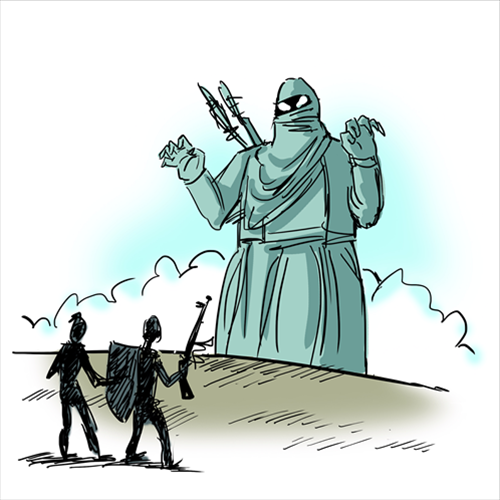
 Terrorist group the East Turkistan Islamic Movement (ETIM) was behind the attack that killed three people and injured 79 others at a train station in Urumqi, capital of Northwest China's Xinjiang Uygur autonomous region, last month, authorities said on Sunday.
According to the region's publicity department, the attack was planned by ETIM member Ismail Yusup outside China. On April 22, he ordered 10 partners in Xinjiang to prepare to strike.
The 10 set off explosives and slashed people with knives at the exit of the South Railway Station of Urumqi at around 7:10 pm on April 30. Two members of the mob, Saderdin Sawut and Memetabudula Ete, were killed by the explosion, and the eight others were caught by police.
Investigation shows that the main members of the gang started to preach Islamic extremism in 2005. Ismail Yusup fled abroad after becoming wanted by police for making explosives, and joined the ETIM in 2013.
Police are hunting Ismail Yusup in cooperation with the International Criminal Police Organization.
Terrorist group the East Turkistan Islamic Movement (ETIM) was behind the attack that killed three people and injured 79 others at a train station in Urumqi, capital of Northwest China's Xinjiang Uygur autonomous region, last month, authorities said on Sunday.
According to the region's publicity department, the attack was planned by ETIM member Ismail Yusup outside China. On April 22, he ordered 10 partners in Xinjiang to prepare to strike.
The 10 set off explosives and slashed people with knives at the exit of the South Railway Station of Urumqi at around 7:10 pm on April 30. Two members of the mob, Saderdin Sawut and Memetabudula Ete, were killed by the explosion, and the eight others were caught by police.
Investigation shows that the main members of the gang started to preach Islamic extremism in 2005. Ismail Yusup fled abroad after becoming wanted by police for making explosives, and joined the ETIM in 2013.
Police are hunting Ismail Yusup in cooperation with the International Criminal Police Organization.
The politically correct term of “developing countries” has long turned out to be a euphemism, as the post-Cold War eulogy about the global rise of liberal democracies has ended up a sham. The bitter truth is that the so-called “developing countries” enforced economic growth policies not only at expense of more social-economic inequality and worsening working conditions, but also at the expense of a deficit in democracy. Some of the most shining examples of post-Cold War “economic miracles” are also examples of “social misery” and “political malady,” from major China to minor Singapore. The most recent election victory of the Bharatiya Janata Party (BJP) in India is another bad omen for the global retreat from democracy, another promise for an economic miracle at the expense of social misery. The story of Turkey is neither “peculiar” nor “surprising,” as many claim. Turkey is another “banal” case of rising “illiberal democracies.” In the case of Turkey, it is the combination of conservative political authoritarianism, economic liberalism and a “temporary” alliance with Western political interests. Besides, Turkey has proven to be one of the most compelling cases to review the delusion about a “Muslim democracy” - a peculiar democracy model for Muslim countries. In fact, it was the idea of “non-Western modernities” that paved the way for “rethinking democracy” in terms of different cultures. The rising economies of Southeast Asia were presented as a success story of the combination of liberal economics with “Asian values” in the 1990s, before the talk of combining Muslim culture and liberal economics started to be presented as the best solution for Islamic countries. The politics of multiculturalism empowers the experience of democracy only as long as it enforces more cultural freedoms; otherwise it turns to be an intellectual excuse for curbing individual rights and hindering political criticism. This is the case for countries like ours. It is only after the cruel suppression of the Gezi protests, the suppression of judicial inquires into graft investigations, and now the tragedy in the Soma mines, that the standards of democracy, political freedoms, judicial independence and working conditions in Turkey are starting to be questioned by the Western world. The most disturbing aspect of this awakening is the pretense of “surprise.” Not only Western observers of Turkish politics, but also some in Turkey seem to be wondering, “Why has it turned out to be so disastrous?” “Why has the process of democratization regressed?” and “What happened to Prime Minister Recep Tayyip Erdoğan?” One must look back to find answers; it is easy to observe the footprints of rising authoritarian politics, especially after the 2011 election. I am not one of those who was ever not skeptical about the democratic credentials of the conservatives and Erdoğan, or the prospects of democracy in Turkey. Besides, I have no intention of putting all of the blame of the democratic retreat in Turkey on the conservative government or on Erdoğan’s personality. In fact, the basic reason for the deficit of democracy in Turkey is deeper; and it should be debated at length elsewhere. In short, in the end Turkey has not been able to adjust itself to the post-Cold War times and, as a result, has slid first toward political instability and then toward a new authoritarian politics, like in many other countries since the 1990s. It seemed that there was a chance for Turkey to transform, but it failed, and the fatal blow came with the delusion of democratization at the hands of conservatives, who were already drifting away from democratic politics. The final excuse for many is to turn a blind eye to this naked truth has been the Kurdish peace process led by Erdoğan. Indeed, this could have been justified, if only it was possible to consider “peace” and “democracy” to be totally separate issues. After all, not only the Kurdish peace process, but such issues as the working conditions in mines or elsewhere cannot be separated from the major issue of the retreat of democracy in Turkey. The bitter truth should not have to be reminded by tragedies such as the losing of more than 300 lives in Soma. At this point, we should also think about the dangers of falling into the trap of the government’s politics of separating the Kurdish peace process from democracy, as this may cost many more lives.NURAY MERT
http://www.nydailynews.com/
Obama announced in his weekly radio address that he will be at the Baseball Hall of Fame in Cooperstown, N.Y. on Thursday.President Obama says he’s heading to the Baseball Hall of Fame to stress how tourism can lead to good-paying jobs. In his weekly radio address, Obama says he will be in Cooperstown, N.Y., on Thursday. “Because believe it or not, tourism is an export. And if we make it easier for more foreign visitors to visit and spend money at America’s attractions and unparalleled national parks, that helps local businesses and grows the economy for everyone,” Obama said. Read more: http://www.nydailynews.com/news/national/obama-visit-baseball-hall-fame-stress-tourism-leads-jobs-article-1.1796677#ixzz327wblc9Z


Dr. Nazir S Bhatti, President of Pakistan Christian Congress (PCC) expressed apprehensions, on May 16, 2014, on double standards of implementation of Blasphemy law on citizens of Pakistan and demanded immediate release of blasphemy accused Christians.Dr. Nazir S Bhatti, President of Pakistan Christian Congress (PCC) expressed apprehensions, on May 16, 2014, on double standards of implementation of Blasphemy law on citizens of Pakistan because when any Muslim commits blasphemy on electronic media watched by millions then he is pardoned on an simple apology note but when a Christian or Ahmadiyyia community member is allegedly accused of blasphemy by one Muslim spectator then he faces death sentence no matter how repeatedly he sworn that he has not defiled name of Holy Prophet of Muslims. He further said, “All Christian victims of blasphemy laws after arrests have publically denied committing blasphemy but not any court or complainant have pardoned them but when a Muslim cleric or any Muslim very openly defiles name of Prophet Mohammad then uproar of Islamic decrees appear to Pardon these Muslims.” Nazir Bhatti showed grief while commenting on a morning show of GEO TV in which a lady host committed blasphemy along with many other Muslim participants which was seen by millions of viewers but no FIR was lodged. Furthermore, Muslim clerics issued decree that registration of case under blasphemy law is not necessary after apology of show host. On the contrary, when a Christian woman Asia Bibi, mother of five children, was blamed for blasphemy by her Muslim co-workers, she was tortured and arrested despite her repeating statement that “She has not uttered any word to defile Prophet Mohammad but no one comes forward to Pardon her.
A woman was killed while six Levies officials were injured in a bomb explosion in Khaar, Bajaur Agency, Express News reported on Sunday. According to initial details, a Levies vehicle was the target of the attack. The remote controlled bomb went off when the vehicle passed by, injuring the officials and killing a woman who was going to work in the fields nearby. There is no information as to how intense the explosion was.
The Sindh cabinet has decided that a separate Counter Terrorism Department will be established and legislation will be made to purge police of black sheep besides providing advanced training to the personnel of Rapid Response Force. The Sindh cabinet in a meeting presided over by Chief Minister Syed Qaim Ali Shah at the CM House here on Saturday also acceded the decisions of the meeting chaired by the Prime Minister in Karachi on May 14 to expedite the ongoing targeted operation and maintain law and order situation in the city. The cabinet recommended the federal government for providing a financial package of up to Rs. 27 billion for the up gradation of police stations, strengthening and equipping the Sindh police, enabling it to take the targeted operation to its success. The cabinet meeting was attended by all the provincial ministers advisers and special assistants chief secretary Sindh, home secretary, all secretaries of other departments and Senior Member of Revenue. The cabinet discussed the matters relating to law and order issues of illegal immigrants, drafts on first power policy of the provincial government and eradication of polio, measles and rubella virus in detail and made decisions with consensus. The cabinet expressed satisfaction over the performance of law enforcement agencies in implementing targeted operation in Karachi against terrorists, extortionists and kidnappers without any discrimination. Declaring 26 police stations of Karachi and three prisons (Karachi, Hyderabad and Larkana Central prisons) sensitive, the cabinet approved the decision of the provincial government for increasing salaries of police force deployed at the sensitive police stations and strengthening security with structures and more force at the sensitive central jails. The cabinet directed the IGP Sindh for providing foolproof security to all mosques, Imam barghas and temples minorities specially in the interior Sindh.http://mediacellppp.wordpress.com/

 What is happening to Pakistan? We seem to be spiralling out of control, where anyone whose name resembles that of a religious persona can allege that blasphemy has occurred if he is insulted, e.g. the police officer in Jhang, Umar, who claims lawyers protesting against him and his abuse of power were insulting his namesake! One thinks twice before saying anything now as murderers roam free, killing off blasphemy accused with impunity. To illustrate this horrifying reality, on Friday a teenager just walked into a police station in Sheikhupura and shot dead an Ahmedi man accused of blasphemy. How could this happen? Where was the police? Where was security for the accused? One finds it hard to swallow that the police were not in collusion with the killer. A full judicial investigation must be conducted as the police department cannot be trusted here.
It is against this volatile backdrop that our independent media takes on the role of judge, jury and executioner. In a race for ratings, other media channels have chastised the media house and its morning show, going all out and accusing it of blasphemy. Do these anchors not know how dangerous it is for all the employees of that channel, for the hundreds who are part of the media group under attack? In this media race, are these anchormen and women really ready to live with the consequences of playing the blasphemy card and, in effect, signing the death warrants of many? Media freedom is all well and good but where on earth is media responsibility? It is time for the blithering media to take stock and understand that we are living in dangerous times; adding fuel to the fire will only end up in all getting burned.
What is happening to Pakistan? We seem to be spiralling out of control, where anyone whose name resembles that of a religious persona can allege that blasphemy has occurred if he is insulted, e.g. the police officer in Jhang, Umar, who claims lawyers protesting against him and his abuse of power were insulting his namesake! One thinks twice before saying anything now as murderers roam free, killing off blasphemy accused with impunity. To illustrate this horrifying reality, on Friday a teenager just walked into a police station in Sheikhupura and shot dead an Ahmedi man accused of blasphemy. How could this happen? Where was the police? Where was security for the accused? One finds it hard to swallow that the police were not in collusion with the killer. A full judicial investigation must be conducted as the police department cannot be trusted here.
It is against this volatile backdrop that our independent media takes on the role of judge, jury and executioner. In a race for ratings, other media channels have chastised the media house and its morning show, going all out and accusing it of blasphemy. Do these anchors not know how dangerous it is for all the employees of that channel, for the hundreds who are part of the media group under attack? In this media race, are these anchormen and women really ready to live with the consequences of playing the blasphemy card and, in effect, signing the death warrants of many? Media freedom is all well and good but where on earth is media responsibility? It is time for the blithering media to take stock and understand that we are living in dangerous times; adding fuel to the fire will only end up in all getting burned.
By Zachary Keck
Narendra Modi and the Bharatiya Janata Party’s victory may ultimately work out in Pakistan’s favor.As others have reported today, the Bharatiya Janata Party (BJP) won a landslide victory in India’s parliamentary elections this month. It’s the first time that a single party has won a clear majority in an Indian election in three decades. The BJP’s victory will bring Narendra Modi to power as India’s next prime minister. As Ankit and I talk about on the podcast today, Modi and the BJP’s victory are in many ways a nightmare for Pakistan. The BJP is a Hindu nationalist party, and both Modi and the BJP have been perceived as being especially hardline when it comes to Pakistan. Ankit, for instance, pointed out that Modi has suggested that India might conduct covert cross-border raids targeting specific Pakistan-based anti-India terrorists. Another harrowing possibility is that Pakistan-based terrorists, at least assumed to be working in cohort with Pakistani terrorists, will carry out another major terrorist attack in India in the mold of the 2001 bombing of the Indian Parliament building or the siege of Mumbai in 2008. A BJP government under Modi is unlikely to act with the same restraint that the outgoing UPA government has shown in these incidents. Even if incidents as dramatic as these don’t materialize, Modi and the BJP’s victory could put the brakes on the nascent Indo-Pakistani détente. As The Diplomat has reported, since Nawaz Sharif’s assumption of power in Pakistan in 2013, India and Pakistan have made small but notable progress in expanding trade and people-to-people ties. It’s possible that Modi will reverse course on this front, which is probably one reason Sharif has been so quick to reach out to Modi and congratulate him on his victory. Although none of these possibilities should be dismissed, it’s possible that Modi will actually become an asset for Pakistan on a couple of fronts. First, the BJP in general and Modi in particular have been widely criticized as being anti-Muslim. Most notably, many believe Modi either acquiesced in or actively encouraged the anti-Muslim riots in Gujarat back in 2002. At the very least, Muslims in India are extremely wary of Modi and the BJP at present. If actions and rhetoric in the ensuing months and years confirm their current suspicions, Indian Muslims and other non-Hindu Indians are likely to become extremely dissatisfied. Moreover, if the Indian government enacts egregious anti-Muslim policies, or condones anti-Muslim actions (especially something like the Gujarat riots in 2002), this will hurt India’s image in the international community, particularly among Western nations like the U.S. and Muslim nations in the Middle East. Pakistan will have opportunities to exploit this dissatisfaction among Indian Muslims, although it will have to tread carefully so as not to provoke Delhi into a kinetic conflict. At the same time, it will benefit from India’s image suffering in the court of international opinion. Second, Modi’s premiership might push China even closer to Pakistan. As Ankit discussed on the podcast today, it’s not clear that Modi will take a hard line against China, especially given the importance he places on economic growth. Still, if history is any guide a BJP prime minister is likely to see China with greater alarm than a Congress Party leader. And if India adopts more hardline policies towards China, Pakistan becomes a bigger asset in the eyes of Beijing. This would be extremely beneficial to Islamabad, given its desperate need for Chinese assistance and aid in numerous areas, especially as the U.S. is likely to reduce its own aid to Pakistan as it withdraws from Afghanistan. Thus, while on the surface Modi’s electoral victory is unsettling to Pakistan, it may ultimately work out in its favor.

 If your romantic partner pointed you to an application for a one-way trip to Mars, would you be upset -- or thrilled?
When Dr. Leila Zucker's husband sent her such an e-mail last spring, he said that he didn't want her to go but that he'd be a lousy husband if he didn't tell her about it.
Fast-forward to today: Zucker has made it past the first round of cuts for Mars One, a nonprofit organization that aims to send four people to the Red Planet in 2024 and subsequent groups in later years.
"Most of us want to explore, want to go new places, and then it's just a question of: How much are you willing to give up to do it?" she said.
Zucker is one of 705 candidates selected from a pool of 200,000 applicants for the mission. The select group has been narrowed from 1,058 people as some prospective astronauts dropped out for personal or medical reasons, Mars One said recently.
All of the remaining candidates will be interviewed by the Mars One selection committee.
Eventually, only four will be picked for the first trip. Apparently, none of them is scared off by the idea that, because of technological and financial limitations, Mars One astronauts would probably never come home.
It might not actually happen
Despite growing excitement surrounding this effort, it is not clear that sufficient money will be raised to follow through. Mars One CEO Bas Lansdorp has said the company is looking at "a range of funding scenarios."
A reality TV concept is one way Mars One may make good on its $6 billion budget for getting the first four humans to Mars. Lansdorp hopes the unprecedented video opportunities will attract sponsors, partners and media coverage.
But since no one has ever been to Mars, the technology to fly people there and keep them alive has not been tested there, either. Lansdorp said last year that "no new inventions are needed to land humans on Mars," and the website says the "plan is built upon existing technologies available from proven suppliers." But the company will need to show that key systems involved in transportation and life support will work in untraversed territories.
Mars One announced in March that it will soon begin constructing the first of its "simulation outposts" to train selected astronauts and teams, giving them experience in an environment made to feel like a Martian home.
Zucker, 46, an emergency medicine physician in Washington, is doubtful that Mars One will deliver on the trip at all. But if it does happen, she is on board. "There's no question."
Settling away from your spouse
You might think that trying to emigrate from our planet might put some pressure on Earth-based relationships.
Zucker and her husband have been married for 21 years and have no children. If she goes to Mars, she said, she will probably offer her husband a divorce but will wear her wedding ring regardless. He doesn't want her to go, she said, but supports her following her dreams.
"Both of us are space enthusiasts," she said. "Humanity needs to expand off Earth if we expect the human race to succeed in any way beyond just basic survival."
Dan Carey, 52, another candidate, also believes humans should be spreading to other planets -- but his wife is not happy about Carey taking part in the mission. The couple, married 28 years, has two college-age children.
"She's concerned that she's going to have to watch me die on television," Carey said of his wife.
It's hard for Carey to think about leaving his wife and kids behind forever and never meeting future grandchildren. Still, he likes the idea of making history and seeing things that no one has seen directly before.
Sachin Desai and his wife, Ankita Ritwik, are getting around the marital tension issue by applying together. Desai says he could not go to Mars without her. Sure, Mars might challenge their marriage, but enough marriages are strained on Earth already, he said.
"One thing we do really well together is travel, and this would be a trip lasting the rest of our lives. I think we also are very good at helping each other out when we are stressed; I would be a far worse space cadet without her."
A 'social experiment'
When you live far from people you've known for a long time, you manage to make friends in your immediate area, and that's what Marina Santiago thinks will happen on Mars. The Harvard University Ph.D. student says Mars One crew members may take the place of friends, family and significant others.
Even if Mars One doesn't land people on Mars in 2025, it serves as a "social experiment" to get people talking and thinking about a Mars mission, she said.
"What I learned in grad school is that you never really know what problems you're going to come across until you actually try and do something. And the fact that they're actually trying to plan it, means that they'll come across the problems," she said. "I believe that there are no problems humanity can't solve."
Some candidates draw analogies to the early waves of European settlers in North America. Immigrants didn't have a rover on Plymouth Rock telling them about local conditions before they arrived, says Gregory Sachs.
"You even couldn't necessarily send a letter back to your family," Zucker said. "You were leaving everything for good. We at least will have the ability to use e-mail."
Still, it's a hard sell for friends of Brian Robles', a Mars One candidate who studies public health at Rutgers University.
"Usually, every time I tell somebody about the trip, they say it's a 'suicide mission' and 'you're going to die on Mars,' " Robles said. "Well, we're going to die here, too. So might as well live your whole life to the fullest."
Funny he should mention that: The United Arab Emirates' religious watchdog, the General Authority of Islamic Affairs & Endowments, recently issued a fatwa to warn Muslims against the mission because "the chances of dying are higher than living."
Mars One responded in a statement, asking the authority to cancel the fatwa. "The Fatwa prohibits Muslims from going to Mars, but not from applying to Mars One's mission or training for the mission. In the next ten years, Mars One is open to working with the GAIAE to assess the risk of the mission as the unmanned settlement is under construction," Mars One said.
Sachs is hopeful that his trip wouldn't actually be one-way. He believes it would be in the best interest of the mission to send the astronauts back: "Imagine only the cost and tax on resources to care with someone elderly on a Mars One colony," he said.
But the way that the mission is currently set up -- with no return plan -- he's still interested.
Making happy Martian meals
Spending the rest of your life on another planet might make a person miss certain Earthly conveniences like favorite foods.
Carey said he'd lose weight just to be able to take more chocolate with him, since there would be a limit of how much weight each person could contribute to the mission.
Michael McDonnell, another applicant, said he wants to make the first pizza on Mars. Zucker would miss hamburgers but has high hopes for being able to grow them herself, perhaps from cow stem cells using a technique demonstrated last year.
How test-tube meat could be the future of food
"The first hardest thing to give up would obviously be my husband," Zucker said. "The second hardest thing would be meat."
But for this opportunity, she would kiss them both goodbye.
If your romantic partner pointed you to an application for a one-way trip to Mars, would you be upset -- or thrilled?
When Dr. Leila Zucker's husband sent her such an e-mail last spring, he said that he didn't want her to go but that he'd be a lousy husband if he didn't tell her about it.
Fast-forward to today: Zucker has made it past the first round of cuts for Mars One, a nonprofit organization that aims to send four people to the Red Planet in 2024 and subsequent groups in later years.
"Most of us want to explore, want to go new places, and then it's just a question of: How much are you willing to give up to do it?" she said.
Zucker is one of 705 candidates selected from a pool of 200,000 applicants for the mission. The select group has been narrowed from 1,058 people as some prospective astronauts dropped out for personal or medical reasons, Mars One said recently.
All of the remaining candidates will be interviewed by the Mars One selection committee.
Eventually, only four will be picked for the first trip. Apparently, none of them is scared off by the idea that, because of technological and financial limitations, Mars One astronauts would probably never come home.
It might not actually happen
Despite growing excitement surrounding this effort, it is not clear that sufficient money will be raised to follow through. Mars One CEO Bas Lansdorp has said the company is looking at "a range of funding scenarios."
A reality TV concept is one way Mars One may make good on its $6 billion budget for getting the first four humans to Mars. Lansdorp hopes the unprecedented video opportunities will attract sponsors, partners and media coverage.
But since no one has ever been to Mars, the technology to fly people there and keep them alive has not been tested there, either. Lansdorp said last year that "no new inventions are needed to land humans on Mars," and the website says the "plan is built upon existing technologies available from proven suppliers." But the company will need to show that key systems involved in transportation and life support will work in untraversed territories.
Mars One announced in March that it will soon begin constructing the first of its "simulation outposts" to train selected astronauts and teams, giving them experience in an environment made to feel like a Martian home.
Zucker, 46, an emergency medicine physician in Washington, is doubtful that Mars One will deliver on the trip at all. But if it does happen, she is on board. "There's no question."
Settling away from your spouse
You might think that trying to emigrate from our planet might put some pressure on Earth-based relationships.
Zucker and her husband have been married for 21 years and have no children. If she goes to Mars, she said, she will probably offer her husband a divorce but will wear her wedding ring regardless. He doesn't want her to go, she said, but supports her following her dreams.
"Both of us are space enthusiasts," she said. "Humanity needs to expand off Earth if we expect the human race to succeed in any way beyond just basic survival."
Dan Carey, 52, another candidate, also believes humans should be spreading to other planets -- but his wife is not happy about Carey taking part in the mission. The couple, married 28 years, has two college-age children.
"She's concerned that she's going to have to watch me die on television," Carey said of his wife.
It's hard for Carey to think about leaving his wife and kids behind forever and never meeting future grandchildren. Still, he likes the idea of making history and seeing things that no one has seen directly before.
Sachin Desai and his wife, Ankita Ritwik, are getting around the marital tension issue by applying together. Desai says he could not go to Mars without her. Sure, Mars might challenge their marriage, but enough marriages are strained on Earth already, he said.
"One thing we do really well together is travel, and this would be a trip lasting the rest of our lives. I think we also are very good at helping each other out when we are stressed; I would be a far worse space cadet without her."
A 'social experiment'
When you live far from people you've known for a long time, you manage to make friends in your immediate area, and that's what Marina Santiago thinks will happen on Mars. The Harvard University Ph.D. student says Mars One crew members may take the place of friends, family and significant others.
Even if Mars One doesn't land people on Mars in 2025, it serves as a "social experiment" to get people talking and thinking about a Mars mission, she said.
"What I learned in grad school is that you never really know what problems you're going to come across until you actually try and do something. And the fact that they're actually trying to plan it, means that they'll come across the problems," she said. "I believe that there are no problems humanity can't solve."
Some candidates draw analogies to the early waves of European settlers in North America. Immigrants didn't have a rover on Plymouth Rock telling them about local conditions before they arrived, says Gregory Sachs.
"You even couldn't necessarily send a letter back to your family," Zucker said. "You were leaving everything for good. We at least will have the ability to use e-mail."
Still, it's a hard sell for friends of Brian Robles', a Mars One candidate who studies public health at Rutgers University.
"Usually, every time I tell somebody about the trip, they say it's a 'suicide mission' and 'you're going to die on Mars,' " Robles said. "Well, we're going to die here, too. So might as well live your whole life to the fullest."
Funny he should mention that: The United Arab Emirates' religious watchdog, the General Authority of Islamic Affairs & Endowments, recently issued a fatwa to warn Muslims against the mission because "the chances of dying are higher than living."
Mars One responded in a statement, asking the authority to cancel the fatwa. "The Fatwa prohibits Muslims from going to Mars, but not from applying to Mars One's mission or training for the mission. In the next ten years, Mars One is open to working with the GAIAE to assess the risk of the mission as the unmanned settlement is under construction," Mars One said.
Sachs is hopeful that his trip wouldn't actually be one-way. He believes it would be in the best interest of the mission to send the astronauts back: "Imagine only the cost and tax on resources to care with someone elderly on a Mars One colony," he said.
But the way that the mission is currently set up -- with no return plan -- he's still interested.
Making happy Martian meals
Spending the rest of your life on another planet might make a person miss certain Earthly conveniences like favorite foods.
Carey said he'd lose weight just to be able to take more chocolate with him, since there would be a limit of how much weight each person could contribute to the mission.
Michael McDonnell, another applicant, said he wants to make the first pizza on Mars. Zucker would miss hamburgers but has high hopes for being able to grow them herself, perhaps from cow stem cells using a technique demonstrated last year.
How test-tube meat could be the future of food
"The first hardest thing to give up would obviously be my husband," Zucker said. "The second hardest thing would be meat."
But for this opportunity, she would kiss them both goodbye.


