
Thursday, May 8, 2014
PAKISTAN: AHRC condemns the assassination of a prominent human rights defender and places the responsibility on the government of Punjab
Pakistan: Hunger Strike till Death, lives at Risk

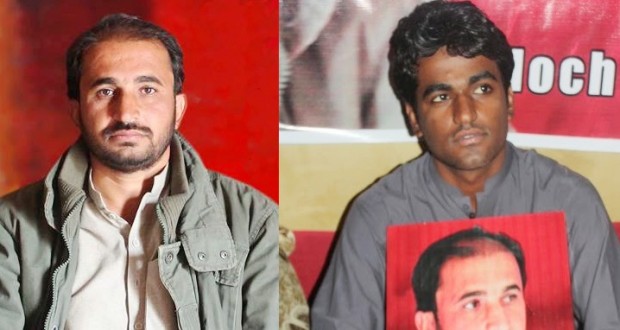
Pakistan: Blast in Quetta kills two

A remote controlled bomb exploded at Double Road near NADRA office. Two people have died and six got injured amid the incident. Rescue teams reached the site and the injured were shifted to the hospital.
Eight security personnel martyred in North Waziristan roadside blast
http://dunyanews.tv/At least eight security personnel embraced martyrdom and several others got injured in a roadside blast in troubled North Waziristan tribal area bordering Afghanistan, Dunya News reported on Thursday. According to Inter Services Public Relations (ISPR), an IED (Improvised Explosive Device) had been planted by terrorists on Miranshah-Ghulamkhan road. The bomb exploded as a military convoy passed in the village of Ghulamkhan. Several security forces personnel were also critically injured in the explosion, ISPR reported. Local military officials confirmed the incident and said troops called in air support and launched a search operation in the area after the attack..
Malala Says Kidnapped Nigerian Schoolgirls Are Her 'Sisters'
Yousafzai, a remarkable figure who was a contender for the Nobel Peace Prize and was invited to the White House, called on the world to speak out against the brutal Islamic extremist group Boko Haram, which bragged about abducting more than 200 girls and threatened to sell them. "We should all stand up together and we should speak," she said.
Although the Nigerian crisis is unfolding a world away from where she was ambushed on a school bus in the Swat region of Pakistan, Yousafzai saw disturbing parallels between the two situations. "It is what happened in Swat as well. In Swat we were suffering … girls were banned from going to school and banned from going to market, and the same is happening in Nigeria," she said. "They were in schools trying to study thinking about their future, and then suddenly some people came and abducted them." She added, "I think it is beyond our imagination and a very horrible situation, so it is like another kind of terrorism." Yousafzai was just 11 when she outraged the Taliban with a speech entitled, “How dare the Taliban take away my basic right to education?” Despite the danger, she continued to speak out about girls' right to schooling. She was on a bus on her way home from an exam when a gunman stormed on and shot her point-blank in the head. Even though her insistence on speaking out nearly cost Yousafzai her life, she feels she has no choice but to join the international chorus calling for increased pressure on the Boko Haram to release the Nigerian girls.
"It is my duty that I will speak even if no one is listening to me," she said. "I will continue … until people take action. "I have learned from my life when you are speaking from truth, when you are speaking from justice, then no one can defeat you. And this is what I believe in." Protesting against the abductions is the only hope of preventing more of them, she said: "The thing is, if you want to protect other girls as well, then we have to speak." Yousafzai runs a foundation in her name and she said its next project will be focused on secure education for girls in Nigeria. "I think this is just a small globe," she said.
Pakistan: Unblock YouTube
 Several times during the last eleven months there were indications from the government that it was going to remove the ban on YouTube. But fearing strong reaction from its extremist sympathisers, each time the government developed cold feet and postponed the decision. The PML-N leadership needs to come to terms with the fact that we live in a global society where bans of the sort can only isolate the country. What is more they feed extremist tendencies. YouTube is a treasure trove of information and is an important part of the social media. With its numerous videos on myriads of subjects including the various branches of science, history, geography and even mathematics, it has been of immense use for the student community and the teachers. For music lovers, from soul music to classical, semi classical, folk and pop, everything is available at a few clicks. It has helped budding artists to learn drawing without the help of expensive tutors. The political parties had started to rely increasingly on YouTube to engage with their followers. To block it amounted to cutting off one’s nose to spite one’s face.
The rationale behind blocking the YouTube is questionable. The site does not force the viewers to visit controversial uploads. Those who complain of injurious material should resist the temptation to access it. Bans are of no use as viewers keen to access banned sites can do so, albeit through a somewhat tedious process.
YouTube was banned in Pakistan in September 2012 when a man with a diseased mind uploaded on it the trailer of a highly substandard movie called “Innocence of Muslims”, which injured the feelings of the Muslim community all over the world. If no note was taken by the anti-blasphemy brigade, few would have ever known about the existence of the movie and even those who opened the site would have found it more repulsive than entertaining. Banning the YouTube is like closing down an entire library which happens to have just one objectionable book.
On Tuesday, the National Assembly unanimously supported a resolution presented by a PPP MNA to unblock the YouTube. The government however continued to harp on the so called ‘sensitivity’ of the issue. Is Pakistan the only Muslim country where people have sensitivities? What about Saudi Arabia where viewers watch three times as much YouTube as their peers in the US? Turkey only banned it this year not on account of public sensitivities but for leaking recordings considered politically damaging by the administration. After the National Assembly has called for lifting the ban, the PML-N should pick up the courage and unblock the site. Appeasing the extremists has already done the country enough harm. It’s time the government dropped the policy.
Pakistan: More travel bans
 As if things could not get any worse for our image abroad, Pakistanis look set to face even more restrictions and bans when it comes to travelling abroad. The World Health Organisation (WHO) has implemented its threat to impose strict curbs on Pakistanis’ travel to foreign lands. An emergency committee of the WHO made its recommendations and, on Monday, the announcement was made to stop the spread of the poliovirus by slapping travel bans on Pakistan, Cameroon and Syria where the disease was most reported. Out of the many recommendations, in all probability, it will be made mandatory for all international travellers to have a polio vaccination certificate verifying that the traveller has had polio drops administered at least four weeks prior to travel. If anyone is travelling urgently, then the vaccine should be taken by them at the earliest before departure. The Pakistan government has responded by saying that it will set up immunisation points at airports and all points of exit in the country. How they actually plan to do that — a mammoth undertaking — is a big question. Besides, will immunisation immediately prior to departure at airports be acceptable to other countries? The planning, coordination and organisation of our government authorities, especially in matters of social welfare, are abysmal. We have been unable to curb the spread of the disease in our own country where 59 cases have already sprung up in this year alone.
Would it not have been better for those in charge to have taken responsibility and prevented this outcome where Pakistan is being ostracised internationally? Instead of having to go through what will no doubt be debilitating repercussions for all of Pakistan’s citizens, should the government not have taken the spread of polio seriously? Should those in charge not have come down hard on the militants who were first spreading lies and propaganda about the vaccines and then resorting to murderous campaigns against health workers risking their lives to immunise children? Should we not have acted then? It is all very good that now we are thumping our chests and assuring the international community that we will set up check points and administer drops to all travellers but should we not have avoided this calamity? Even if we digress from talking about international travel, when will we consider the toll this is taking on our children who are being crippled by the spread of this disease? We are becoming a heartless nation for not helping them, and the world is now recognising that sad reality.
Khyber Pakhtunkhwa acutely short of polio vaccine
 Khyber Pakhtunkhwa faces acute shortage of oral polio vaccine and thus, struggling to implement the World Health Organisation recommendation for vaccination of all those traveling abroad from there, it is learnt.
The provincial government is required to administer OPV to people approaching the Bacha Khan International Airport, Peshawar for international travel.
“The government has decided to implement the WHO recommendations and administer anti-polio drops to all people traveling abroad from the province. However, it’s not possible until the federal government supplies the required stock of vaccine,” a relevant official told Dawn on Wednesday.
On Monday, the WHO had recommended travel restrictions on Pakistanis traveling abroad to prevent polio transmission to the countries long declared free of the crippling disease. The recommendation is about vaccination of all those traveling aboard against polio irrespective of their ages.
Until now, the Khyber Pakhtunkhwa health department has been administering OPV to children up to five years of age.
The department had already anti-polio counter at the Bacha Khan International Airport, Peshawar, where children under five years of age are being provided OPV before traveling abroad.
However, the province will need an additional 50,000 doses of the OPV to be able to provide to the about 2000 people traveling through the airport every day.
Only this year, we have administered OPV to 479,000 children under five year at the Bacha Khan International Airport, officials said.
The WHO declaration came after back-to-back polio cases from Fata, Khyber Pakhtunkhwa, Karachi and emergence of positive environmental water sample from Lahore with a view to protect polio-free countries from re-infection.
The province has enough human resources to implement the recommendations in letter and spirit but it requires around 600,000 additional doses per year.
The provincial government has conveyed to the relevant authorities about the desired quantity of OPV. After the 18th Constitutional Amendment, it was the responsibility of the provinces to procure vaccine but the federal government had taken it upon itself to make sure that the provinces receive OPV.
In this light, the health department is waiting the supply of vaccine before embarking on the implementation of the WHO recommendation.
The province’s existing stock is supposed to be given to the children to the under-five children during campaigns.
Under the plan, the people planning to travel abroad within next forty days could get vaccination at the district headquarters hospitals and teaching hospitals and a certificate by the relevant medical superintendents, while those visiting foreign countries within few days could be given OPV on the counter at the airport.
When contacted, provincial health minister Sharam Khan said travel restrictions were initially for three to six months and that the polio vaccine certificate would be valid for one year.
“We are fully prepared to implement the WHO recommendation and continue our efforts to eradicate polio,” he said.
The minister said the government had made marked progress towards polio eradication due to the Sehat Ka Insaf programme and that efforts were underway to continue vaccination in other districts, too.
“We have also requested the federal government to ensure vaccination of children in Fata and put brakes on the transportation of virus to Khyber Pakhtunkhwa. Similarly, request to Afghan government has also been sent through federal government to immunise children in areas located nearby Pak-Afghanistan border,” he said.
The minister said the Indian government had already made it mandatory for Pakistanis to get vaccinated against polio before traveling to its territories two months ago.
Pakistan: Rights advocate Rashid Rehman Khan gunned down in Multan
Human Rights Advocate Rashid Rehman Khan was gunned down by unidentified attackers in Multan, DawnNews reported late on Wednesday night.
Initial reports suggest that Khan was targeted by two gunmen inside his office at Kachehri Chowk.
Sources told Dawn.com that two clean-shaven young men barged into Advocate Khan's office and shot him dead. They also injured his two lawyer friends, identified as Nadeem Parwaz and Afzal.
Injured were taken to Nishtar Medical Center where Parwaz is said to be in a critical condition.
“Armed gunmen stormed the chamber of Rashid Rehman and started indiscriminate firing on Wednesday evening, injuring Rehman and two of his associates present there,” senior police official Zulfiqar Ali told AFP.
Advocate Rashid Rehman Khan was a coordinator for the Human Rights Commission of Pakistan (HRCP). The senior lawyer was defending a university lecturer accused of blasphemy and had complained that he had been receiving threats on his life.
The HRCP had voiced serious concern over the threats extended to Khan.
The Supreme Court advocate had submitted an application with the District Bar Association president Sher Zaman Qureshi last month, saying he was threatened by two lawyers and two other persons who asked him not to appear in the case he was representing.
Rehman was representing Junaid Hafeez, a lecturer at Bahauddin Zakariya University.
Hafeez was known for his liberal views at the university and the case of blasphemy was registered after pressure from right-wing student groups, said a student, who wished not to be named.
Pakistan has strict laws against defaming Islam, including the death penalty for blasphemy, and rights campaigners say they are often used to settle personal disputes.
A recent report from a US government advisory panel said Pakistan used blasphemy laws more than any other country in the world, listing 14 people on death row and 19 others serving life sentences for insulting Islam.
Wednesday, May 7, 2014
Nigerians in US Rally for Kidnapped Girls Back Home
 The threat by the Islamist militant group Boko Haram to sell the scores of school girls it says it kidnapped three weeks ago has sparked outrage around the world and prompted calls for action.
The United States says it will send a team of experts to Nigeria to help in the search for the more than 250 girls and Britain is offering help as well. Eight more girls were reported kidnapped this week.
Meanwhile, rallies were held Tuesday in Washington and New York to press for their freedom.
They marched and brandished signs in front of the Nigerian Embassy in Washington, calling for action.
Nicole Lee, a human rights lawyer, said just because the kidnapping happened in Nigeria doesn’t mean people shouldn’t care.
“Everybody, no matter what our race or citizenship, needs to really care and understand that if it can happen there, it can happen here. Human trafficking is all over the planet,” said Lee.
Nigerian Omolola Adele-Oso, the lead organizer of Tuesday's rally, called on her government to do more.
“It’s your responsibility to keep your citizens safe. It’s also the responsibility of the government that everyone should get a fair education and not live in fear,” said Adele-Oso.
In a video released Monday, Boko Haram leader Abubaker Shekau claimed responsibility for the mid-April abduction of several hundred school girls and threatened to sell them.
"Just because I took some little girls in [getting a] Western education, everybody is making noise… I took the girls and I will sell them off," he threatened.
The announcement dismayed relatives and generated widespread outrage. U.S. Secretary of State John Kerry said Tuesday he spoke to Nigerian President Goodluck Jonathan and promised help.
“Our embassy in Abuja is prepared to form a coordination cell to provide expertise on intelligence and hostage negotiations and to help facilitate information sharing and victim assistance. President Jonathan was very happy to receive this offer and is ready to move on it immediately,” said Kerry.
Yet some Nigerians have been critical of the government, saying President Jonathan's administration has not done enough to secure the girls' release.
And for Nigerians living abroad, the frustration of feeling helpless is tangible. At a New York rally, there were more calls for action. Bukola Oreofe, executive director of the Nigeria Democratic Liberty Forum was among the participants.
“What [President Jonathan] has to do is summon his security agencies, his armed forces, the intelligence agencies and go after Boko Haram,” said Oreofe.
Nigeria just recently became Africa's biggest economy; outpacing South Africa’s. It hoped to highlight the sub-Saharan country's potential investment destination as it prepares to host its first World Economic Forum in a few days. But the event will most likely be overshadowed by the recent bombings and kidnapping incidents by the militant group Boko Haram. Right now what's trending on social media is not the WEF but the hashtag #BringBackOurGirls.
Ukraine crisis: Russia's Putin 'backs' 25 May election

 Russia's President Vladimir Putin says Ukraine's presidential election on 25 May is a step "in the right direction".
But he said the vote would decide nothing unless the rights of "all citizens" were protected.
Mr Putin also urged pro-Russian activists in south-eastern Ukraine to call off a series of independence referendums planned for this weekend.
It comes amid high tension between Russia and Kiev, and its allies in the West, over the crisis in Ukraine.
Moscow says it will protect the rights of the largely Russian-speaking people in the south and east against what it calls an undemocratic government in Kiev.
 Kiev has rejected pro-Russian activists' demands for greater autonomy, fearing it could lead to the break-up of the country, and has sent in troops in recent weeks to seize back official buildings occupied by rebels.
Earlier on Wednesday, pro-Russian separatists took back the city hall in the southern Ukrainian port of Mariupol after it was briefly taken over by Ukrainian government forces.
'Conditions for dialogue'
President Putin was speaking after talks in Moscow with Didier Burkhalter, the Swiss president and current chairman of the Organization for Security and Co-operation in Europe (OSCE).
In what appeared to be a softer stance than in recent weeks, Mr Putin said he had pulled back Russian forces from the border with Ukraine after "we were told constantly about concerns" over their positioning.
He said the troops were now "in places of regular exercises, at training grounds", but a Nato official told the BBC it had "not seen any significant change to the disposition of troops along the border".
Mr Putin also said he had appealed for the referendums on greater autonomy planned for 11 May in southern and eastern Ukraine to be postponed "in order that conditions necessary for dialogue are created".
On the forthcoming presidential elections, he said: "I would like to stress that... while they are a move in the right direction, [they] will not decide anything if all the citizens of Ukraine fail to understand how their rights are protected after the elections are held."
Shortly before Mr Putin spoke, UK Foreign Secretary William Hague repeated the West's view that Russia was "trying to orchestrate conflict and provocation" in Ukraine's east and south.
Tensions have been high since Kremlin-backed forces seized control of the Crimean peninsula, which then voted to join Russia in a March referendum that Kiev and the West deemed to be illegal.
That followed the ousting of Ukraine's pro-Russian President Viktor Yanukovych in February by pro-Western protesters.
Bilawal Bhutto prays for early recovery of Edhi
http://mediacellppp.wordpress.com/
Pakistan: PARLIAMENT VOTES TO LIFT BAN ON YOUTUBE

NON-BINDING RESOLUTION SEEN AS IMPORTANT SYMBOLIC MOVE BUT GOVERNMENT MAINTAINS BAN CANNOT BE LIFTED WITHOUT COURT ORDERS.
http://newsweekpakistan.com/Parliament on Tuesday voted unanimously to lift a ban on YouTube, in a non-binding resolution that was nonetheless welcomed by free speech campaigners as an important symbolic move. The video-sharing website has been blocked in Pakistan since September 2012 over its hosting of the Innocence of Muslims movie that sparked furious protests around the world. A U.S. appeals court in February ordered Google, which owns YouTube, to remove the film after a lawsuit brought by an actress who says she was tricked into appearing in it, but the Pakistani ban remains in place. Shazia Marri, a lawmaker from the opposition Pakistan Peoples Party (PPP) who put forward the resolution, said students and researchers were suffering as a result of the blackout. “We have been disconnected from the world by the ban on YouTube,” she said. The deputy speaker of the house Murtaza Javed Abbasi later read out the resolution and all the lawmakers voted in its favor. “The house resolves that government may take immediate steps for opening of YouTube,” he said. Responding to the resolution, state health minister Saira Afzal Tarar said the government was in favor of lifting the ban but it was in the hands of the courts. “YouTube has been banned on the orders of Supreme Court and there is another case regarding the ban in Lahore High Court and the matter is sub judice. However the House can suggest names to form a committee to work on the issue,” she said. After the vote, Marri said it was time for Pakistan to give up what she termed its “double standard.” “The Pakistani Taliban launches their website and the [government] does not take action against it, but it maintains a ban on YouTube,” she said. It was the PPP government that initially imposed the ban. Marri defended this, saying religious hardliners at the time were “outraged.” Though the resolution is not legally binding, it was seen as a positive step by anti-censorship campaigners. Shahzad Ahmed, director of a group called Bytes for All that campaigns against Internet censorship and has asked a court to overturn the ban, said it was a “very welcome” move. “It’s great news and I think it’s time for the political leadership to take the lead in resolving the issue,” he said. But some observers remained doubtful. Newspaper columnist and commentator Harris Khalique said the government was reluctant to lift the ban as it doesn’t want to confront the religious groups. “Slapping a ban on YouTube was purely political but garbed in respect for religion,” he said. “It is a ridiculous way of appeasing the orthodox religious groups who are in a minority but create a huge nuisance.” Free speech campaigners in Pakistan have long complained of creeping censorship in the name of protecting religion or preventing obscenity. In November 2011 the telecommunications authority tried to ban nearly 1,700 “obscene” words from text messages, which included innocuous terms such as “lotion,” “athlete’s foot” and “idiot.” In 2010 Pakistan shut down Facebook for nearly two weeks over its hosting of allegedly blasphemous pages. It continues to restrict thousands of online links.
Indian Foreign Policy Under Narendra Modi
The frontrunner in the Indian elections has revealed little on foreign policy. How would it change? The likely defeat of the Congress Party in India’s 16th general election has prompted considerable debate about the impact a change of guard in Delhi will have on foreign policy. What would India’s foreign policy look like in the event of the Hindu nationalist Bharatiya Janata Party (BJP) government coming to power, either on its own or with the support of allies? Many in India and abroad believe that India’s foreign policy is poised for a “sea change” under a BJP government, especially one headed by the strident Narendra Modi. According to Sreeram Chaulia, professor and dean at the Jindal School of International Affairs in Sonipat, India, foreign policy under Modi-led government will see greater emphasis on commercial diplomacy, “more assertive actions in response to [Pakistan backed] cross-border terrorism,” greater attention to long-term policy planning with a view to formulating grand strategy for scenarios in 2020 and beyond, “a bigger role for the military in shaping India’s national security and formulating doctrines,” and a greater say for the states in the government’s formulation and execution of foreign policy. Not much is known of Modi’s foreign policy thinking. Even the BJP’s election manifesto, which is said to carry his “definite imprint,” sheds little light; just a over a page of the 52-page document is devoted to foreign policy. A controversial and polarizing figure, Modi has often poured scorn on the Congress-led United Progressive Alliance (UPA) government’s “soft” response to terrorist attacks emanating from Pakistan and to Chinese incursions into Indian territory. This has contributed to a widely held perception that he will be tough in his response to Pakistan-backed terrorism and would not baulk at the use of force. Modi is also expected to take a tougher stand in dealing with India’s territorial disputes with Pakistan and China. What “tough” might mean in practice is unclear at this point, and how far Modi will go is hotly debated. Some have even argued that he may reserve the right to use tactical nuclear weapons against Pakistan in response to a major terrorist attack. Most, of course, don’t go that far. According to Chaulia, in dealing with terrorism emanating from Pakistan, Modi could go for “clinical counter-strikes” and covert operations, including targeted assassinations of key figures in the Pakistan-based, anti-India terrorist network. But he “will try to avoid war with Pakistan at all costs because of the obvious danger of nuclear exchange,” he says. While agreeing that Modi will appear tough with Pakistan, T P Sreenivasan, a former diplomat who spent 37 years with the Indian Foreign Service, argues that “this toughness will not go beyond a point” as he will realize soon that with “war not an option anymore, a tough approach will go only so far.” In fact, foreign policy under Modi, Sreenivasn says, “will not change in any significant way.” It would be “continuity rather than change, because former diplomats would be advising Modi, foreign policy not being his forte.” Changes if any will be in nuance and not fundamental in nature. Indeed, a striking feature of India’s foreign policy is its continuity. Certainly there have been shifts, but as Manjari Chatterjee Miller points out in a recent article in Foreign Affairs, “the broad shape of Indian foreign policy has remained the same for nearly five decades.” Even when shifts do occur, they are not “sudden,” “have rarely, if ever, been political,” and “have had little to do with the prime minister’s political ideology.” It is in emphasis and style rather than substance that the Modi government’s foreign policy will differ from that of the UPA. Modi will be less patient with Pakistan and can be expected to base his relations with all of India’s neighbors (and not just Pakistan and China) on reciprocity. But like another BJP prime minister, Atal Bihari Vajpayee (1998-2004), Modi would try to reach a final settlement with Pakistan on Kashmir, Chaulia says. In fact, Modi is reported to have already reached out to Pakistan by sending his emissaries to confer with its leadership. Vajpayee was assertive in his conduct of foreign policy. Within three months of coming to power, his government conducted a string of nuclear tests, declared India to be a nuclear weapon state, and abandoned the decades-old policy of nuclear ambiguity. His government’s relations with Pakistan were often tense; the two countries fought a near-war at Kargil in 1999 and tensions soared repeatedly over major terrorist attacks in India. Following a terrorist attack on India’s parliament in 2001, the Vajpayee government ordered a massive, year-long mobilization of the security forces along the India-Pakistan border to push Pakistan to dismantle the anti-India terrorist network on its soil. This toughness notwithstanding, Vajpayee also set in motion a peace process with Pakistan, engaged in dialogue with it at the highest level, reached a ceasefire agreement that remains in force and initiated a direct bus service between the two countries. So will Modi mix toughness with talks in dealing with Pakistan as did Vajpayee? Modi’s critics point out that unlike Vajpayee he is not liberal in his outlook and has not demonstrated the vision that would be required to pursue a lasting peace. What could force Modi to moderate his positions, however, is the priority he is expected to give economic development at home. That will require regional stability if it is to succeed and could force Modi to tone down his confrontationist approach and reach out to India’s neighbors. Sreenivasan says that Modi’s emphasis on economic matters will require him to adopt a “soft policy towards the rich countries.” In this, the U.S. will be of “primary interest” to the Modi government, he says. Indeed, shared economic interests will see Modi and the U.S. put aside past differences – since 2005, the U.S. has denied Modi a visa over his complicity in the Gujarat riots of 2002 – and do business with each other. However, it is with Asian powers such as Japan, China and Singapore that Modi’s economic diplomacy will be the most energetic. Having established strong economic ties with these countries as chief minister of Gujarat, he is likely to build on this foundation. In this Japan will hold special appeal to Modi. Not only is it a rich non-Western country in Asia, and thus more acceptable to the BJP’s thinking, but Japanese Prime Minister Shinzo Abe’s own nationalistic and militaristic policies will strike a chord with Modi. Modi’s efforts to attract foreign investment to Gujarat are revealing of his likely economic diplomacy as prime minister. As chief minister he built a strong relationship with China, visited it at least four times and successfully attracted Chinese investment into Gujarat. Neither his nationalist outlook nor national security concerns stood in the way of his wooing of Beijing. As prime minister, he can be expected to court China for investment, setting aside the “expansionist attitude” with which he has labelled Beijing. Modi is expected to allow state governments a greater say in the formulation and execution of foreign policy. He has said that states that have special links with other countries, whether due to shared borders, historical links, or cultural commonalities should be consulted in framing policies and crafting strategies with that country. He has spoken of India’s 30 states as partners in his government’s execution of foreign policy and of wanting to entrust them with “the task of forging beneficial foreign relations with at least 30 corresponding partner countries.” However, it is doubtful that Modi would treat non-BJP state governments, especially those of the Congress, as partners in his foreign policy execution. He may cede to demands from non-BJP regional parties in power in the states that are his allies in government. For instance, should the All-India Anna Dravida Munetra Kazhagam, the party in power in Tamil Nadu, join his government, Modi could be expected to allow its views to prevail in the crafting of India’s policy to Sri Lanka. But much will depend on how dependent he is on the AIADMK. Overall, Modi is likely to be comfortable with federalizing foreign policy only with regard to the states courting foreign investment. On other matters it will be his government that calls the shots. Of course, all this assumes that Modi will be able to form a government, on its own or with allies. Should that assumption prove false, then India may well end up with a coalition of regional and national parties. Such a coalition is very likely to be unstable, with little in common among its constituents. Preoccupied with survival and pulling in different directions, expect Indian foreign policy to be somewhat chaotic, lacking the robustness or purpose that could be expected of a strong BJP government.By Sudha Ramachandran

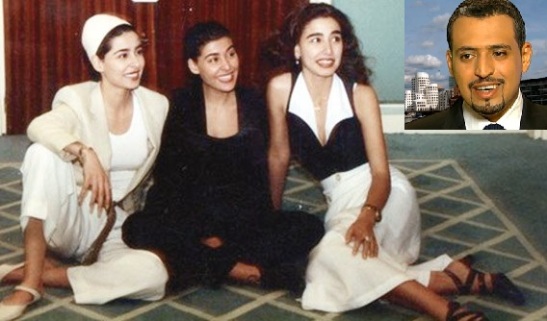
The confinement of four Saudi princesses is a reminder that the Gulf states are evil empires, especially if you are a woman
In the country where Islam’s most precious shrine is located, there is no equality, no dignity, no basic humanity extended to daughters, sisters, or mothers A story appeared this weekend which has really shaken me up. It was about four Arab princesses – Sahar, 42, Jawaher, 38, Maha, 41, and Hala, 39 – daughters of the ailing King Abdullah of Saudi Arabia, who have, allegedly, been held under palace arrest, for 13 years. He has given his sons control over the captives. They are allowed no visitors or staff. Two are held in one gilded, echoing cage, the other two in another. Their mother Alanoud Alfayez, 57, lives in London and has been trying all these years to free her daughters who are unmarried, childless and fading away. Hala has serious mental problems. Two of the sisters contacted the British-Lebanese Sunday Times writer, Hala Jaber, via email and she wrote about their cruel incarceration. Jaber is an inspiring award-winning investigative journalist. I am in awe of her, more so now than ever before. She did what I should have. She proved herself a worthy, honourable journalist; I failed. About eight years ago (I think) I was contacted by Alanoud Alfayez. I invited her to my home and she arrived with a big bunch of flowers. She was in her forties and incredibly beautiful. Her perfume overpowered the scent of the pink lilies she’d brought. She told me about her life, a fairy tale. She was from a well-connected Jordanian family and they had arranged for her to marry Abdullah when she was only 15. He was then a top chap in the army, much older, handsome and urbane. He won her heart and she became his second wife. In time he became the ruler. Afterwards he took several other wives and fathered over 30 children. She had her daughters, one after another. She must have been pregnant for most of those years. The girls were beautiful, loved and spoilt by their father. Unusually, he allowed them to travel, to go on skiing trips and filled their lives with money and things. They went to college, developed ambitions and discovered talents. And then, suddenly, their mum was set adrift – her husband decided to divorce her and did, just by telling her, the way they can in Islam. She went to Jordan with her children. Abdullah wooed her back, didn’t keep his promises and he divorced her again, but kept the daughters. She fled to London in 2002. When we talked, I felt she still loved him. He is punishing her for going away, by slowly letting his daughters lose their heads and hopes. I listened and witnessed her distress. Then I gave her contact details for Anthony Lester, QC, now a peer. Perhaps he could give her legal advice, I said, and maybe find a way of helping to release her daughters. I thought she had got what she prayed for because she never contacted me again. Now all these years have gone by. I think perhaps I thought someone who was so wealthy and privileged would find a way. I want to apologise to this mother for the careless assumptions I made. Saudi Arabia is an evil empire, as are other Gulf States. In these nations the oppression of women is institutionalised and embedded. A Human Rights Watch report states unambiguously that Saudi rulers have failed to protect nine million females and nine million foreign workers. Although there is now the first ever female editor of a newspaper, Samayya Jabari, Saudi Arabia is a hellhole, its rules and rulers – best mates with our politicians – monsters. When Muslims go on pilgrimage to Mecca, men and women perform the rituals together, dressed the same. They are all the same and equal in the sight of God. But in the country where Islam’s most precious shrine is located, there is no equality, no dignity, no basic humanity extended to daughters, sisters, mothers and grandmothers. Saudi feminists say their mothers and grandmothers could travel without permission. Now they can’t. Last July a car chased by the religious police crashed. The driver was killed. His wife needed her hand amputated but doctors couldn’t operate because no male relatives had authorised the procedure. When I taught English as a foreign language, a student, another princess, killed herself in London because she didn’t want to go back home. She turned on the gold taps in her bath and got in after taking an overdose. She left me a gold pendant with the name of Allah, which a servant smuggled to me. He told me, “She will have a happy life in paradise. Not easy to be a princess in my country.” Economic and resource dependency have made our politicians cowardly. They say nothing about these violations or the Saudi takeover of Islam in Britain. Please, let some of them speak up for these four sisters before they too float off to paradise.YASMIN ALIBHAI BROWN

Defected Saudi Prince also Supports the Call of the Imprisoned Princesses to support the Uprising

Pakistan-Backed Indian Mujahideen: Down But Certainly Not Out! – Analysis
http://www.eurasiareview.com/By Ajai Sahni The Indian Mujahideen (IM) has been declared by many as one of the most lethal Pakistan-backed Islamist terrorist organisations operating in India, and has been the most prominent presence in terrorist attacks outside Jammu and Kashmir (J&K) after 2008. At the same time, there is speculation that the organisation is now teetering on the edge of collapse, with much of its top leadership in jail and the remaining principals in Pakistan. This latter perception has gained greater currency with the string of arrests between August 2013 and March 2014, and indeed, Union Home Minister Sushilkumar Shinde has made the claim that, “The Indian Mujahideen cadre is almost finished with the capture of prominent IM leaders.” According to partial data compiled by the South Asia Terrorism Portal, at least 219 Students Islamic Movement of India (SIMI) and IM cadres have been arrested since 2008 (data till April 15, 2014) in cases relating to terrorism. The most significant of a recent spate of arrests has included Yasin Bhatkal, IM’s ‘operations chief’ in India, officially arrested on Aug 28, 2013, in Bihar’s Raxaul town on the Indo-Nepal border; Zia-ur-Rahman aka Waqas, a Pakistani and the organisation’s ‘top bomb maker’, officially arrested from Ajmer in Rajasthan on March 22, 2014; and Tehseen Akhtar, Yasin Bhatkal’s successor as ‘operations chief’ in India, officially arrested on March 25, 2014, from Naxalbari in Darjeeling District, West Bengal. It is significant that each of these three arrests involved crucial assistance from security agencies in Bangladesh or Nepal, indicating a high measure of counter-terrorism (CT) cooperation between India and these countries. Nevertheless, neither assessment – that the IM is the most dangerous Islamist terrorist group in India, or that it is now ‘almost finished’ – is an accurate reflection of the situation on the ground. The former conclusion is based on a singular misreading of the data. On the surface, of course, an overwhelming proportion of all Islamist terrorist attacks outside J&K over the past few years have been engineered by, or are believed to have involved, the IM. These include several high-profile urban attacks, prominent among which are the repeat attacks in Hyderabad and Delhi, and major explosions in Ahmedabad, Bangalore, Varanasi, Mumbai, Pune and Jaipur, among others. In all, however, just 15 attacks have been claimed by or attributed to IM since the Nov 27, 2007, serial bombings in courts in Varanasi, Faizabad and Lucknow, with a total of 312 fatalities (some earlier attacks have also been arguably attributed to the group by a few commentators). Between 2007 and 2014 (till April 27), Pakistan-backed Islamist terrorist attacks resulted in a total of 3,114 fatalities, including 2,598 in J&K and 516 across the rest of India. Significantly, the more recent of IM’s attacks have been far from effective. The twin blasts of Feb 21, 2013, in Hyderabad killed 17. However, the April 17, 2013, bomb blast in Bangalore injured 17, but resulted in no deaths. On July 7, as many as 13 bombs were planted in and around the Bodh Gaya temple complex, of which 10 exploded, but there were no fatalities and just two people were injured. On Oct 27, 2013, 10 explosions (and another two devices that failed to detonate) targeting densely crowded areas in Patna, including Bharatiya Janata Party’s prime minister designate Narendra Modi’s Hunkar Rally resulted in just seven fatalities. No terrorist threat should be underplayed, but in the current profile of Pakistan-backed Islamist terrorism in India the IM has played, at worst, a limited role. Other groups, particularly the Lashkar-e-Taiba, Jaish-e-Muhammad and Harkat-ul-Jihad Islami have had a much more devastating profile, and retain far greater strike capabilities even today. These groups are, however, being held in abeyance for the time being by their Pakistani handlers due to a range of extraneous factors, including most prominently international pressure on Pakistan post-26/11, the country’s own difficulties with domestic terrorism, the tactical decision to project an ‘Indian’ face to terrorism in India, and the strategic priority the Inter Services Intelligence (ISI) currently ascribes to its Afghan campaigns, as against the Indian operations, which have been calibrated downwards. Nevertheless, IM’s potential is far from negligible or neutralized, and while significantly damaged by the arrest of much of the operational leadership on Indian soil, its capacities for renewal and future terrorism remain substantial. This is particularly the case because of the location of its entire top leadership and a significant fraction of its operational cadres, in Pakistan; and continuous and generous support to the organisation from the ISI, including the facilitation of linkages with a range of other Islamist terrorist formations. Some commentators have drawn solace from disclosures suggesting a split – possibly a three-way division – in the organisation in Pakistan, but this may prove deceptive. The reported fracture into splinters headed, respectively, by the Bhatkal brothers, Amir Reza Khan and Mohammad Sajid aka Bada Sajid, may in fact lead to greater operational diversification and independence under a loose coordinating arrangement administered by the ISI. Crucially, the Pakistan-based IM factions continue to exercise some influence over elements in the widely dispersed network of the Students’ Islamic Movement of India (SIMI), and have drawn cadres and operatives from it. However, this network is clearly not yielding any overwhelming armies of enthusiastic recruits, and the recent spate of IM arrests have included Pakistani nationals Zia-ur-Rehman aka Waqas, Muhammad Fahim and Muhammad Abdul Walid, indicating that the ISI has been forced to fall back on Pakistani recruits. Like other Islamist terrorist groups operating in India, IM is a pawn of Pakistan’s military-intelligence complex, and its potential for escalation will remain as long as its leaders and cadres are located in complete safety in Pakistan, and as long as the Pakistani establishment continues to use terrorism as an instrument of state policy.
How We Should Protect Girls’ Schools in Balochistan
The Baloch Hal
@MalikSirajAkbarA couple of recent attacks on private schools and a widely circulated threatening letter from a covert religious extremist group has triggered restlessness among school administrators, female student and their parents in Panjgur district. A relatively unknown religious extremist group has asked all private schools to stop educating girls. The reason provided by the armed group is the same as used across the world by extremist outfits to justify banning girls’ education: the “corrupting influence” western education causes on girls’ character. These warnings are alarming considering that fact that Panjgur has remained one of Balochistan’s more advanced places in terms of education. A number of private schools run by local teachers and administrators have earned a great reputation for impartial quality education among male and female students in the Pakistan-Iran bordering town. The warnings to the schools come in the wake of a robust military operation conducted by the Frontier Corps and its affiliated paramilitary partners in the district against what the F.C. describes as “Baloch militants”. (It’s illegal and unacceptable to call anyone a “militant” or a “terrorist” until proven guilty by a court of law and that principle is being flagrantly violated in Panjgur). In one such fresh attack, the F.C. Killed 10 local residents. Hence, the issue of threats to private schools fails to gain ample attention of the local authorities and community leaders amid a massive confrontation between the security forces and the Baloch nationalists. The threat to women’s education was not entirely unexpected considering the Pakistani government’s robust efforts to promote radical Islam as a tool to fight Baloch nationalism that has rapidly penetrated in the area. What eventually happened was the logical culmination of support for extremist Islam. Whenever and wherever extremist religious movements have emerged, women’s rights, their mobility and access to education have become the first casualty. The groups that are seeking an end to girls’ education in Panjgur seem to have an agenda beyond stopping girls’ education. If they are not discouraged and disrupted at this point, they will emerge as a potential threat to the Baloch society. Any calls against girls’ education are absolutely unacceptable and it is the responsibility of the Balochistan government to take immediate notice of these threats. Panjgur is the home district of Mr. Sabir Baloch, the Deputy Chairman of the Senate of Pakistan and Mr. Rehmat Baloch, Balochistan’s Health Minister. These senior officials should play their role in immediately addressing the matter. In February 2010, this newspaper, after speaking to the heads of a private school in Gwadar, reported similar threats from a Baloch nationalist group that had described co-education at private schools contradictory to the Baloch code of conduct. Once the society at large denounced such a conservative approach adopted by the nationalists, the armed group was immediately compelled to disown its approach and make a public statement saying that it had not issued such a warning in the first place. While Baloch nationalists have not been hostile to girls’ education, the very concept of “Baloch honor” has oftentimes obstructed women’s access to education and freedom. The use of religion and nationalism to contain women’s access to education and mobility is both dangerous. Had the Baloch nationalists included women’s education and empowerment among their core values (such as ‘freedom”, “justice” etc.), Baloch women richly benefit from the ongoing nationalist movement. The only antidote to religious restrictions on women’s education is to include women’s rights and powers as a core component of the Baloch progressive philosophy. The more we glorify and champion the cause of women’s education, equal right to employment and socio-economic empowerment, the more we will provide our society with a viable mechanism to thwart obscurantist ambitions. The future of Baloch progress and prosperity heavily depends on education and empowerment of our women and we must keep it on the top of the list of our social and political responsibilities.
Pakistan: PPP opposes acquisition of fertile lands for installing power plants
 >http://mediacellppp.wordpress.com/
Pakistan's failure in eradicating polio
Pakistan grapples with polio fight
 More than a month ago, the public health community celebrated the polio-free certification of Southeast Asia including India, viewed as a hopeful step toward global eradication.
But the euphoria has waned as concerns grow the virus is making a comeback and re-appearing in countries that had previously eliminated the disease within their borders.
Pakistan has seen major challenges in recent years, reporting 80% of polio cases this year.
The country faces challenges within its health system including restricted access to its federally administered tribal areas and violence against polio campaign health workers. Vaccine workers have been tortured, shot, bombed, and even have had their family members kidnapped.
"You have disruption of health services, vaccination services are broken where areas are no-go because there is mistrust and health teams are not allowed within the conflict area," said Dr. Zulfiqar Bhutta, who is co-director of The Hospital for Sick Children in Canada and also works in Pakistan. "In that particular circumstance, to imagine that business would be as usual is naïve."
While Pakistan faces hurdles, India's polio program has been lauded as a model for tackling polio.
India's program "was largely internally funded, strongly managed," said Bhutta.
Once considered the hardest place to end polio, India boosted disease surveillance and immunization efforts to vaccinate hard-to-reach communities. To counter rumors and misgivings about the vaccine, social mobilizers, religious leaders and parents were included to increase understanding about immunizations."In Pakistan, that political will in terms of making this a national priority hasn't existed," Bhutta said. "They haven't invested enough in routine immunizations, which are critical to eradicating polio. You've got to get people aware of the importance of preventive strategies." In 2014, the World Health Organization confirmed 74 new cases of polio -- 59 of them were in Pakistan. Within Pakistan, 46 of these cases have been from its restive Federally Administered Tribal Areas, which is located along the Pakistan-Afghanistan border and retains internal autonomy. The country with the second highest number of polio cases is Afghanistan, which reported four cases. But all of these are related to viruses that originated from Pakistan, according to the WHO.
Emergency measures recommended
On Monday, the WHO recommended emergency measures for three of the countries deemed as the greatest risk for further exporting the virus -- Syria, Cameroon and Pakistan. The organization called for residents of these countries to get vaccinated and show proof of polio immunization before international travel. It also calls for the head of state to declare polio a national public health emergency. "If the situation as of today and April 2014 went unchecked, it could result in failure to eradicate globally one of the world's most serious vaccine preventable diseases," said Dr. Bruce Aylward, assistant director-general for polio, emergencies and country collaboration at the WHO. Pakistan has been establishing vaccination booths at its land borders with Afghanistan, China, India and also Iran, according to the WHO.Bhutta said he wasn't surprised by the WHO's move, but worried the recommendation was a "Band-Aid measure" that's "not going get to the root of the problem." This may divert the vaccines and human resources from Pakistan communities that need them the most, to the huge number of travelers, Bhutta said. "I'm concerned that will take away from the main polio control program and that's the last thing anybody wanted." Pakistan is considered the only country that is "off track" in meeting its target to stop polio transmission, according to the WHO. Militants in Pakistan have targeted anti-polio campaigns since U.S. intelligence officials used a fake vaccination program to aid their hunt for Osama bin Laden in 2011. Since then, militant groups, with connections to the Pakistani Taliban, have been opposing polio vaccinations and accusing health workers of pursuing a political agenda. Dozens have been killed in acts of violence carried out against polio vaccine workers. Pakistan has tried to protect its health workers from violence. In Peshawar, authorities banned the riding of motorcycles during vaccine campaigns to prevent attacks, said Aylward. Polio, which can cause permanent paralysis in hours, has been reported in 10 countries: Afghanistan, Equatorial Guinea, Ethiopia, Iraq, Israel, Somalia, Nigeria, Pakistan, Cameroon and Syria.
Tuesday, May 6, 2014
India election 2014: Narendra Modi say India and Pakistan should be allies in war on poverty
India and Pakistan should be allies in the war on poverty, says Narendra Modi, the Hindu nationalist leader expected to become India's next prime minister.Narendra Modi has offered a new era of economic cooperation with Pakistan, if it stops terrorist attacks on India from its territory. In an interview with The Times of India, the Bharatiya Janata Party leader and chief minister of Gujarat said both countries faced a common enemy in widespread poverty which they could tackle to together if a new trust could be established. If he becomes prime minister when the results of the biggest election in history are announced next week, on May 16, he is ready to write a "new chapter" in relations between the nuclear neighbours if Islamabad can first demonstrate its commitment to peace by stopping terrorist attacks being launched from its soil. His comments will be welcomed in Pakistan, where senior officials last month told The Telegraph they would like Mr Modi to become prime minister because they believe only an Indian government under a strong leader will be able to reopen talks and make progress towards normalising relations. India and Pakistan have fought four wars since their independence from Britain and partition from one another in 1947. Relations had been improving until the 2008 Mumbai attacks when Lashkar e Taiba terrorists sailed to India's commercial capital by sea from Karachi and massacred more than 160 people in a three-day rampage. Dr Manmohan Singh, the Indian prime minister, accused elements within Pakistan's security apparatus of supporting the attacks, which brought the enemies close to a fifth war.
Pakistan:YouTube ban: Resolution unanimously passed in National Assembly
The Express Tribune
 A resolution seeking the removal of the ban on YouTube was unanimously passed in the National Assembly on Tuesday, Express News reported.
Pakistan Peoples Party (PPP) MNA Shazia Mari presented the resolution in the session of the National Assembly today.
The government had blocked the video-sharing website YouTube in Pakistan on September 17, 2012, following a controversial film.
During the session, State Minister for National Health Services, Regulations and Coordination Saira Afzal Tarar suggested that a committee be formed to decide whether the ban should be removed or not.
Mari protested against the ban, demanding immediate action from the government in this matter and said it affected students and businessmen negatively.
She criticised the government for not taking any steps to unblock the website, saying “YouTube is essential to get advanced knowledge and information, but the government is pushing the people towards darkness by putting a ban on this important facility.”
PPP MNA had previously stated, “It is really disappointing that the government is ignoring this issue and trying to shift responsibility. YouTube is a source of knowledge for a large population of Pakistanis, particularly students and young professionals.”
“The distribution of laptops sans technologically advancement would not serve any objective of this scheme”, she stated. “It is the duty of the Pakistan Telecommunication Community (PTA) to filter the controversial sites and open useful content for the growing number of internet users”, she maintained.
Today, Tarar further stated that government wanted to lift the ban on YouTube and said that it was not possible to remove all the content considered ‘objectionable’ from the internet or YouTube.
“The government is as interested as the opposition to come to a solution for unblocking YouTube, but it is a sensitive issue,” Tarar said.
Government will not be an obstacle in this and will support the initiative to lift the ban, claimed Tarar.
She said that the Supreme Court has even asked the government to lift the ban by blocking all the controversial movies, but it is not possible technically.
No date has been given as to when the ban would be removed as yet.
Other countries
“Pakistan is the only Islamic country where YouTube services are blocked,” Mari told The Express Tribune.
Other Islamic countries like Afghanistan, Bangladesh and Saudi Arabia who had also imposed a ban on the video-sharing site for the same reason unblocked it after taking necessary measures, she explained asking for an uplift of the ban.
She further added that after launching next generation services such as 3G and 4G there is no reason to block YouTube.
Pakistan: Polio-related travel ban
WHAT had looked likely for months has now become a reality: yesterday, after a meeting of the International Health Regulations Emergency Committee concerning the international spread of wild poliovirus, WHO said in a statement that the conditions for a “Public Health Emergency of International Concern” have been met. “This situation,” it said, “could result in failure to eradicate globally one of the world’s most serious vaccine-preventable diseases.”
Pakistan finds itself in the dock yet again. It remains one of the world’s three remaining polio-endemic countries, and the Pakistani strain of the virus has been detected in several other countries. Notwithstanding all the work put in by the polio immunisation campaign over more than two decades, the situation continues to worsen. From the passive refusal to let the Oral Polio Vaccine be administered, we now have active and brutal aggression. Vaccinators have been attacked and murdered, health teams work under siege conditions, there are problems with the cold-chain storage and doubts over the efficacy of the vaccine. In the TTP-dominated tribal areas, a ‘ban’ on the vaccination has been imposed, and in other areas tribal elders have tried to use it as a bargaining chip. It’s hardly any wonder, then, that WHO has finally advised that restrictions be placed on people travelling from countries that could export wild poliovirus, which includes Pakistan. The measure was first proposed in 2011 by the Independent Monitoring Board for Polio Eradication, and India implemented it early this year.
The way forward is what it has always been: Pakistan needs to get its house in order, urgently. The means and motivation have to be found to further the OPV initiative. While adults stand a small chance of contracting the disease, it is children with whom this crippling virus has an affinity, and in immunising every child — with starter and follow-up doses of the vaccine — lies the only hope for eradication. The state must not only better organise the logistics involved in reaching every child, it must also accomplish the task that is perhaps just as daunting: taking control of the narrative. No other country is at a comparable place, ie witnessing a seeming resurgence of the disease, and therefore the bulk of medical research refers to risk-assessment in the context of a falling, or halted, incidence of polio. The travel restriction advisory means that more challenges have been created. The various political elements that declaim their passion for the ‘national interest’ need reminding that the best way of achieving this lies in closing ranks. They must if they are to ensure that future generations don’t face being crippled, and that Pakistan is not an international pariah because of its inability to control the spread of a disease that, just a year ago, had very nearly been globally eradicated.
Asif Ali Zardari calls for rooting out militants opposed to polio vaccination, also urges WHO to review travel ban decision
Co-Chairman Pakistan Peoples Party former President Asif Ali Zardari has expressed grave concern over the travel restrictions imposed on Pakistan by the World Health Organization (WHO) because of the continuous rise in polio cases in the country. In a statement today the former President called upon the authorities concerned in the federal and provincial governments to step up efforts to contain the spread of polio virus and deal with an iron hand the militants and bigots opposing polio vaccination. The polio spread has been caused in no small measure by the armed opposition to it by militants and bigots, he said. “The travel ban resulting in increasing our isolation should serve to remind every one that the policy of appeasing militants will cost the country dearly”, he said. The militants opposing polio vaccination want to incapacitate the future generations and we owe it to our children to root out the extremists, the zealots and the bigoted militants before it is too late”. Mr. Asif Ali Zardari also called upon the Party workers and the civil society to protect the polio workers from any harm by the militants. “We salute those courageous men and women who have laid down their lives or suffered grievously in reaching out to the children to vaccinate them against polio. They are our national heroes and heroines and must be protected and honored”. He said that the PPP is committed to end this crippling disease from the country and save the children. He recalled that Shaheed Mohtarma Benazir Bhutto had personally led the country wide campaign beginning with administering polio drops to her own daughter Aseefa Bhutto Zardari who later became Pakistan’s Ambassador on polio eradication. Unfortunately the distinction of a polio free country that Pakistan earned during her time did not last long and the crippling disease has reared its head again. The former President also called upon the WHO to review its decision. Polio knows no boundaries and fighting polio is a global responsibility that must be shared by the international community. The imposition of travel ban will only increase Pakistan’s isolation and not advance the global fight against polio, the former President said.
Pakistan's Hindus, other minorities face surge of violence
The mob arrived at around midnight, brandishing clubs. They smashed statues, looted gold artifacts and then set the Hindu temple in Pakistan ablaze. An accusation of blasphemy sparked the attack in the town of Larkana, human rights activists said, part of a spike in violence against Hindus in predominately Muslim Pakistan. March was the worst month for attacks on Hindus in 20 years with five temples attacked, up from nine during the whole of 2013, said Life for All, a Pakistani rights group. But it's not just Hindus who feel victimized. All of Pakistan's minorities - Hindus, Christians, Ahmadis and even Shi'ite Muslims - feel that the state fails to protect them, and even tolerates violence against them. Many complain the problem has become worse since Prime Minister Nawaz Sharif, who is seen as more conservative and indulgent of Islamists than his predecessor, came to power last year. This raises questions about the state's pledge to rein in the militants who launch attacks into India and Afghanistan. The neighbors say the extremists act with the complicity of Pakistan's security agencies. Islamabad denies thatBY SYED RAZA HASSAN

Non-Muslims make up a small fraction of the 180 million people in nuclear-armed Pakistan. Muhammad Ali Jinnah, the hero of the country's creation as a haven for the sub-continent's Muslims, ushered in independence in 1947 with a promise to minorities that they would enjoy freedom of worship and equality without discrimination. But for many members of Pakistan's minorities those words ring hollow. The U.S. Commission on Religious Freedom said in a recent report that conditions in Pakistan had "hit an all-time low" and governments had failed to adequately protect minorities and arrest perpetrators of crimes against them. "Pakistan is increasingly failing to protect its minorities for two broad reasons: principally, rising religious intolerance and the space ceded to violent ideologies," said Sherry Rehman, who was a government minister and ambassador to the United States under the previous Pakistani administration. The security establishment has used Islamists for decades, against political opponents at home and to pursue aims in Afghanistan and against old rival India. But some militants, like the Pakistani Taliban, have turned on the state since Pakistan joined the U.S.-led war on militancy. The government launched peace talks with the Taliban in February and rights activists fear that they and other militants have been emboldened by the talks to step up attacks on their minority-group enemies. Activists also say the tolerance of militancy provides cover for opportunist attacks by those who just want to grab land, homes or businesses of minority neighbors under the guise of religion. Hindus and members of other minorities say the situation has worsened since Sharif won an election last year. Sharif has close ties with Saudi Arabia, whose brand of conservative Wahhabi Islam is preached by many of the people who denounce minorities. Saudi Arabia, the center of Sunni Islam, sees Pakistan as a bulwark against Shi'ite Muslim Iran and it has long supported hardliners in Pakistan. It recently gave the country a gift of $1.5 billion. "IMPUNITY" Whatever the cause of the surge of violence and abuse, many Pakistani Hindus in the richest province of Punjab are feeling beleaguered and increasingly looking to get out. More than 100 families are leaving for India each month, rights groups say. Among those who have gone were Munawar Jee's brothers and their families after his married sister was kidnapped last year. Her abductors got her certified as a Muslim convert and re-married her off the next day. Recanting Islam would mean she could legally be put to death. "Losing my sister is the biggest regret of my life," Jee told Reuters at his shoe shop in Punjab's Rahim Yar Khan district. He said he would soon join his family in India. Hindus say their women are easy targets for rape or forced marriage. Temples are attacked and looted. Accusations of blasphemy, punishable by death, are increasingly being used to drive Hindus from their homes, they say. Punjab, the prime minister's heartland, had until recently been a refuge for Hindus compared with some other areas. But the province has also become a power base for militant groups, many of which have been nurtured by the security agencies and appeased by the politicians seeking votes. "The militant groups work with impunity as they enjoy support from the state functionaries. They cannot work without some level of support," said veteran rights campaigner I.A. Rehman. If the militants' treatment of minorities can be seen as a reflection of the state's acceptance of the groups, then people hoping the security forces will follow through on government vows to crack down on those responsible for violence would seem wise to be cautious. "It is difficult to say if the security establishment has come out of its 'good Taliban'/'bad Taliban' mindset," said prominent lawyer and human rights campaigner Asma Jahangir, referring to the military's propensity to accept some groups while fighting others. Federal Information Minister Pervaiz Rashid did not return calls seeking comment on policy towards minorities. A Punjab government spokesman rejected the suggestion that authorities were not doing enough to help Hindus. "The government is committed to protect its religious minorities," said Shoaib Bin Aziz, adding he was not aware of an increase of Hindus leaving. He denied that the provincial government was soft on militancy. "Terrorists are not friends of anyone," he said. "The Punjab government does not have soft corner for any terrorist organization." Hindu activist Kirshan Sharma said such reassurances meant little. The government was talking to the Taliban but refused to protect Hindus, he said. "Pakistan has kneeled before the Taliban by holding talks," Sharma said. "What hope can Hindus see in the country's future?"
Monday, May 5, 2014
WHO: Polio Vaccine Mandatory for Departing Pakistanis
The World Health Organization has slapped travel restrictions on Pakistan, Cameroon and Syria in an effort to control the spread of the crippling polio virus. Pakistan is moving quickly to make polio vaccines mandatory for all those planning to travel out of the country.
WHO says those three nations should ensure all residents and long-term visitors get a polio vaccination prior to international travel.
WHO’s Assistant Director General Bruce Aylward said the polio virus had been found widely circulating in other countries in 2013.
Pakistan has the highest incidence of polio in the world, and the virus has been found in sewage water in Israel, Egypt and West Bank-Gaza, as well as in Iraq and Syria.
Immunization plan
Pakistan Minister of National Health Services Saira Afzal Tarar told VOA the government is putting an immunization plan in place.
“We are concerned about our international responsibility regarding the spread of polio, and we were already considering, along with our provincial governments, that we should make sure that all Pakistanis, before leaving Pakistan, should have these polio drops,” said Tarar.
The WHO is recommending anyone traveling out of Pakistan should be vaccinated four weeks to 12 months prior to travel, and provide proof of inoculation.
Pakistan, Nigeria and Afghanistan are the three remaining countries in which the virus remains endemic.
Because of a Taliban ban on vaccinations, and its deadly attacks on anti-polio health teams, national eradication efforts in Pakistan have suffered critical setbacks, and the virus continues to spread.
Taliban deterrent
Tarar said those areas inaccessible to health workers are the main reservoirs of the polio virus. A heavy Taliban presence has all but denied access to the tribal area of North Waziristan.
Pakistan’s prime minister has asked the country’s military to help protect polio vaccination workers in the insurgency-plagued northwest.
Although not legally binding, the WHO recommendation carries a lot of weight, said the organization's acting representative in Pakistan, Nima Saeed Abid.
“Expectations are many countries will implement, but it depends on the member state to implement," said Abid. "I do not think member states would ignore these recommendations.”
The World Health Organization said the spread of the polio virus is a public health emergency of international concern.
The travel measures announced Monday are expected to remain in place until six months have passed without polio virus exportations.
Subscribe to:
Posts (Atom)