 AT present, the pervasive characteristic of Pakistan’s security policies — regarding the TTP, Afghanistan and India — is reactive incoherence.
TTP: Despite the TTP’s escalated violence, the government has persisted in its preference for ‘talks’. The objectives sought to be achieved are unclear. Obviously, the government cannot accommodate any of the main demands of the TTP without compromising Pakistan’s Constitution and the country’s progress and prosperity. What is required in essence is the TTP’s surrender. Can this be achieved through talks and at this time?
The right time to negotiate with the TTP would be once it is militarily and politically on the defensive. This is the lesson of other successful counter insurgencies. Islamabad has reversed this order.
Nor can negotiations succeed unless these are conducted with the ‘principles’. Neither of the negotiating committees contains these. The TTP is a hydra-headed monster, which includes a score of extremist parties and groups, with diverse aims, composition, locations and affiliations. A large number of its members are foreigners — Arabs, Uzbeks and Afghans. Its affiliations are complex: Al Qaeda supports it; Afghan intelligence collaborates with it, and Indian intelligence has infiltrated it. Can negotiations succeed with these elements? Perhaps the government is smarter than presumed and will utilise these talks to divide the TTP into the good, bad and ugly. Perhaps it needs to go through the motions of these talks to justify the military action that will be inevitably required to defeat the TTP. Whatever the policy, it needs to be clearly articulated and secure public support. Else, it will fail.
Afghanistan: The ongoing transition in Afghanistan is likely to be messy and potentially dangerous for Pakistan. Yet, Islamabad is strangely silent on the developments next door. There has been no concerted response to President Karzai’s repeated diatribes against Pakistan and its security forces and agencies. Nor has any view been expressed on the US plans to leave behind a rump force in Afghanistan post-2014.
Even if Washington secures Afghan agreement to this, sustaining this reduced force will be difficult. Thus, unless a negotiated peace is achieved, Afghanistan is likely to descend into civil war. This will spread to Pakistan and also compromise Pakistan’s goal of neutralising the TTP.
Pakistan is well placed to promote a negotiated peace in Afghanistan. But to do so, it has to exercise its reputed influence with the Afghan Taliban; separate them from the TTP; build confidence with the successors of the Northern Alliance; promote dialogue with Iran, Saudi Arabia, Russia and China to forge regional support for a negotiated settlement.
India: The Pakistan government has made several gestures and pleas for good relations with India. These overtures have not been reciprocated. New Delhi has refused to engage with Pakistan except on terrorism and trade. It is obviously a tactical imperative for Pakistan to ease tensions with its eastern neighbour, particularly while it is preoccupied with internal security challenges and the difficult situation on its western border. But the gestures made to India need to be calculated and well-timed. Above all, these should not compromise Pakistan’s vital interests or positions.
The thesis that trade is the panacea for resolving Pakistan’s problems with India is naive and fallacious. Policies should not be adopted merely to ‘look good’. Offering MFN status to India on the eve of its elections and while the US and EU are filing WTO complaints against Indian trade restrictions, is to say the least, bad timing.
Islamabad needs to recognise, as New Delhi has, that Pakistan-India relations will remain adversarial. The primary requirement is to manage relations in ways that avoid crises and conflicts. Two issues are central to such management: Kashmir and the military balance. India’s ongoing repression in Kashmir can erupt at any time into widespread violence and spark a crisis. Pakistan needs to deploy its diplomacy to halt Indian excesses in Indian-held Kashmir and draw world attention to the legitimate aspirations of the Kashmiri people. Absent this, the Indian narrative of ‘Pakistan-sponsored terrorism’ will gain greater credibility.
Second, the international community must be made to realise that India’s feverish arms build-up is likely to create a situation where a future crisis or conflict between Pakistan and India can escalate quickly to the nuclear level. Unfortunately, this danger was not projected by Pakistan at the recent Nuclear Security Summit in the Hague.
The management of relations with India will become immensely more difficult if Narendra Modi becomes prime minister. Being business friendly is Modi’s slogan; in essence he remains a Hindu supremacist. His animus towards Pakistan, and Indian Muslims, may soon become visible. How will Pakistan respond?
There are three preconditions for policy clarity and their effective implementation.
One, a strategic vision. Is Pakistan’s leadership still guided by Jinnah’s vision of Pakistan as a democratic, progressive and tolerant state? If so, our policy direction should be clearly opposed to that of the religious extremists. Two, effective and professional institutions. Unfortunately, barring pockets of brilliance, Pakistan’s institutions of governance have steadily deteriorated over the past six decades. Three, consultation and coordination. Unless the executive and its ministries, parliament and the judiciary, as well as the armed forces, operate in unison, incoherence will not be overcome in policy formulation or execution.
Pakistan needs to get its policy house in order. The Ukraine crisis has illustrated how internal confusion, corruption and chaos can quickly become an existential threat to a nation.
AT present, the pervasive characteristic of Pakistan’s security policies — regarding the TTP, Afghanistan and India — is reactive incoherence.
TTP: Despite the TTP’s escalated violence, the government has persisted in its preference for ‘talks’. The objectives sought to be achieved are unclear. Obviously, the government cannot accommodate any of the main demands of the TTP without compromising Pakistan’s Constitution and the country’s progress and prosperity. What is required in essence is the TTP’s surrender. Can this be achieved through talks and at this time?
The right time to negotiate with the TTP would be once it is militarily and politically on the defensive. This is the lesson of other successful counter insurgencies. Islamabad has reversed this order.
Nor can negotiations succeed unless these are conducted with the ‘principles’. Neither of the negotiating committees contains these. The TTP is a hydra-headed monster, which includes a score of extremist parties and groups, with diverse aims, composition, locations and affiliations. A large number of its members are foreigners — Arabs, Uzbeks and Afghans. Its affiliations are complex: Al Qaeda supports it; Afghan intelligence collaborates with it, and Indian intelligence has infiltrated it. Can negotiations succeed with these elements? Perhaps the government is smarter than presumed and will utilise these talks to divide the TTP into the good, bad and ugly. Perhaps it needs to go through the motions of these talks to justify the military action that will be inevitably required to defeat the TTP. Whatever the policy, it needs to be clearly articulated and secure public support. Else, it will fail.
Afghanistan: The ongoing transition in Afghanistan is likely to be messy and potentially dangerous for Pakistan. Yet, Islamabad is strangely silent on the developments next door. There has been no concerted response to President Karzai’s repeated diatribes against Pakistan and its security forces and agencies. Nor has any view been expressed on the US plans to leave behind a rump force in Afghanistan post-2014.
Even if Washington secures Afghan agreement to this, sustaining this reduced force will be difficult. Thus, unless a negotiated peace is achieved, Afghanistan is likely to descend into civil war. This will spread to Pakistan and also compromise Pakistan’s goal of neutralising the TTP.
Pakistan is well placed to promote a negotiated peace in Afghanistan. But to do so, it has to exercise its reputed influence with the Afghan Taliban; separate them from the TTP; build confidence with the successors of the Northern Alliance; promote dialogue with Iran, Saudi Arabia, Russia and China to forge regional support for a negotiated settlement.
India: The Pakistan government has made several gestures and pleas for good relations with India. These overtures have not been reciprocated. New Delhi has refused to engage with Pakistan except on terrorism and trade. It is obviously a tactical imperative for Pakistan to ease tensions with its eastern neighbour, particularly while it is preoccupied with internal security challenges and the difficult situation on its western border. But the gestures made to India need to be calculated and well-timed. Above all, these should not compromise Pakistan’s vital interests or positions.
The thesis that trade is the panacea for resolving Pakistan’s problems with India is naive and fallacious. Policies should not be adopted merely to ‘look good’. Offering MFN status to India on the eve of its elections and while the US and EU are filing WTO complaints against Indian trade restrictions, is to say the least, bad timing.
Islamabad needs to recognise, as New Delhi has, that Pakistan-India relations will remain adversarial. The primary requirement is to manage relations in ways that avoid crises and conflicts. Two issues are central to such management: Kashmir and the military balance. India’s ongoing repression in Kashmir can erupt at any time into widespread violence and spark a crisis. Pakistan needs to deploy its diplomacy to halt Indian excesses in Indian-held Kashmir and draw world attention to the legitimate aspirations of the Kashmiri people. Absent this, the Indian narrative of ‘Pakistan-sponsored terrorism’ will gain greater credibility.
Second, the international community must be made to realise that India’s feverish arms build-up is likely to create a situation where a future crisis or conflict between Pakistan and India can escalate quickly to the nuclear level. Unfortunately, this danger was not projected by Pakistan at the recent Nuclear Security Summit in the Hague.
The management of relations with India will become immensely more difficult if Narendra Modi becomes prime minister. Being business friendly is Modi’s slogan; in essence he remains a Hindu supremacist. His animus towards Pakistan, and Indian Muslims, may soon become visible. How will Pakistan respond?
There are three preconditions for policy clarity and their effective implementation.
One, a strategic vision. Is Pakistan’s leadership still guided by Jinnah’s vision of Pakistan as a democratic, progressive and tolerant state? If so, our policy direction should be clearly opposed to that of the religious extremists. Two, effective and professional institutions. Unfortunately, barring pockets of brilliance, Pakistan’s institutions of governance have steadily deteriorated over the past six decades. Three, consultation and coordination. Unless the executive and its ministries, parliament and the judiciary, as well as the armed forces, operate in unison, incoherence will not be overcome in policy formulation or execution.
Pakistan needs to get its policy house in order. The Ukraine crisis has illustrated how internal confusion, corruption and chaos can quickly become an existential threat to a nation.
Sunday, March 30, 2014
Pakistan: 'No policy clarity'
AT present, the pervasive characteristic of Pakistan’s security policies — regarding the TTP, Afghanistan and India — is reactive incoherence.
TTP: Despite the TTP’s escalated violence, the government has persisted in its preference for ‘talks’. The objectives sought to be achieved are unclear. Obviously, the government cannot accommodate any of the main demands of the TTP without compromising Pakistan’s Constitution and the country’s progress and prosperity. What is required in essence is the TTP’s surrender. Can this be achieved through talks and at this time?
The right time to negotiate with the TTP would be once it is militarily and politically on the defensive. This is the lesson of other successful counter insurgencies. Islamabad has reversed this order.
Nor can negotiations succeed unless these are conducted with the ‘principles’. Neither of the negotiating committees contains these. The TTP is a hydra-headed monster, which includes a score of extremist parties and groups, with diverse aims, composition, locations and affiliations. A large number of its members are foreigners — Arabs, Uzbeks and Afghans. Its affiliations are complex: Al Qaeda supports it; Afghan intelligence collaborates with it, and Indian intelligence has infiltrated it. Can negotiations succeed with these elements? Perhaps the government is smarter than presumed and will utilise these talks to divide the TTP into the good, bad and ugly. Perhaps it needs to go through the motions of these talks to justify the military action that will be inevitably required to defeat the TTP. Whatever the policy, it needs to be clearly articulated and secure public support. Else, it will fail.
Afghanistan: The ongoing transition in Afghanistan is likely to be messy and potentially dangerous for Pakistan. Yet, Islamabad is strangely silent on the developments next door. There has been no concerted response to President Karzai’s repeated diatribes against Pakistan and its security forces and agencies. Nor has any view been expressed on the US plans to leave behind a rump force in Afghanistan post-2014.
Even if Washington secures Afghan agreement to this, sustaining this reduced force will be difficult. Thus, unless a negotiated peace is achieved, Afghanistan is likely to descend into civil war. This will spread to Pakistan and also compromise Pakistan’s goal of neutralising the TTP.
Pakistan is well placed to promote a negotiated peace in Afghanistan. But to do so, it has to exercise its reputed influence with the Afghan Taliban; separate them from the TTP; build confidence with the successors of the Northern Alliance; promote dialogue with Iran, Saudi Arabia, Russia and China to forge regional support for a negotiated settlement.
India: The Pakistan government has made several gestures and pleas for good relations with India. These overtures have not been reciprocated. New Delhi has refused to engage with Pakistan except on terrorism and trade. It is obviously a tactical imperative for Pakistan to ease tensions with its eastern neighbour, particularly while it is preoccupied with internal security challenges and the difficult situation on its western border. But the gestures made to India need to be calculated and well-timed. Above all, these should not compromise Pakistan’s vital interests or positions.
The thesis that trade is the panacea for resolving Pakistan’s problems with India is naive and fallacious. Policies should not be adopted merely to ‘look good’. Offering MFN status to India on the eve of its elections and while the US and EU are filing WTO complaints against Indian trade restrictions, is to say the least, bad timing.
Islamabad needs to recognise, as New Delhi has, that Pakistan-India relations will remain adversarial. The primary requirement is to manage relations in ways that avoid crises and conflicts. Two issues are central to such management: Kashmir and the military balance. India’s ongoing repression in Kashmir can erupt at any time into widespread violence and spark a crisis. Pakistan needs to deploy its diplomacy to halt Indian excesses in Indian-held Kashmir and draw world attention to the legitimate aspirations of the Kashmiri people. Absent this, the Indian narrative of ‘Pakistan-sponsored terrorism’ will gain greater credibility.
Second, the international community must be made to realise that India’s feverish arms build-up is likely to create a situation where a future crisis or conflict between Pakistan and India can escalate quickly to the nuclear level. Unfortunately, this danger was not projected by Pakistan at the recent Nuclear Security Summit in the Hague.
The management of relations with India will become immensely more difficult if Narendra Modi becomes prime minister. Being business friendly is Modi’s slogan; in essence he remains a Hindu supremacist. His animus towards Pakistan, and Indian Muslims, may soon become visible. How will Pakistan respond?
There are three preconditions for policy clarity and their effective implementation.
One, a strategic vision. Is Pakistan’s leadership still guided by Jinnah’s vision of Pakistan as a democratic, progressive and tolerant state? If so, our policy direction should be clearly opposed to that of the religious extremists. Two, effective and professional institutions. Unfortunately, barring pockets of brilliance, Pakistan’s institutions of governance have steadily deteriorated over the past six decades. Three, consultation and coordination. Unless the executive and its ministries, parliament and the judiciary, as well as the armed forces, operate in unison, incoherence will not be overcome in policy formulation or execution.
Pakistan needs to get its policy house in order. The Ukraine crisis has illustrated how internal confusion, corruption and chaos can quickly become an existential threat to a nation.
Pakistan: Calling Us Dollar Hungry and Fake Liberals
Femen shows up in Turkish PM Erdoğan’s constituency on election day


Ukraine crisis: US and Russia set for Paris talks

Russian Foreign Minister Sergei Lavrov has set out demands for a neutral and federal Ukraine, ahead of crisis talks with his US counterpart in Paris.Sunday evening's meeting with Secretary of State John Kerry was hastily arranged after President Vladimir Putin phoned Barack Obama on Friday. Russia has annexed Crimea and there are reports of thousands of Russian troops massed close to Ukraine's borders. Mr Lavrov has categorically denied any plans for an invasion. But he has stressed Moscow will protect the rights of ethnic Russians and Russian speakers, after pro-EU protests in Kiev led to the ousting of Ukraine's President Viktor Yanukovych. He had faced months of protests after pulling out of an association deal with Brussels. Hours before the Paris talks were due to take place at the Russian ambassador's residence, Mr Lavrov told Russian state TV that Ukraine should come up with a new constitution "providing for a federal structure" and neutrality.

The Russian foreign minister said Moscow, the US and European Union should act as a support group for Kiev to begin a nationwide dialogue that did not involve the "armed radicals". Moscow claims that fascists have taken power in Ukraine, jeopardising the safety of Russian speakers. In an interview on Saturday, he said Russia had been deceived after being promised "there would be no movement of Nato military infrastructure closer to our borders". Nato's outgoing Secretary-General Anders Fogh Rasmussen warned on Sunday that Russia's government was "[flouting] the principle that every state is sovereign and free to choose its own fate". Mr Putin is also thought to be demanding that Washington accepts Crimea's independence from Ukraine. Separately, Moscow is keen to tackle the issue of Trans-Dniester, a pro-Russian separatist region of Moldova on the south-western border of Ukraine. It accuses Ukraine and Moldova of "blockading" the area while the EU and the US stay silent.
US officials are divided over whether Mr Putin is seeking to ease tensions or is still planning further military action, BBC Paris correspondent Christian Fraser reports. The Pentagon believes Moscow has massed tens of thousands of troops close to Ukraine's eastern border. Food, medicines and a field hospital are said to be among the supplies moved into position, officials say, which would not be necessary for any spring military exercise.
Jimmy Carter Issues 'Call to Action' to Stop Abuse Against Women
Turkey: Clashes erupt during municipal elections, six dead
Six people were killed on Sunday in clashes between groups backing rival candidates in Turkey's municipal elections, which turned into a referendum on the rule of Prime Minister Tayyip Erdogan.
Security officials said four people were killed in a gun fight between two families in the village ofYuvacik in the eastern province of Sanliurfa, which borders Syria. Such clashes have occurred at previous local elections.
In Hatay province, also bordering Syria, two people died in a gunbattle between relatives of two candidates in Golbasi village, the officials said. Candidates in the voting for these local officials are not party-affiliated.
Tensions rose in Turkey in the build-up to the elections, with Erdogan trying to fight off graft allegations and stem a stream of damaging security leaks.
Read more: http://voiceofrussia.com/news/2014_03_30/Turkey-Clashes-erupt-during-municipal-elections-six-dead-6575/
Cricket: Bangladesh crash out of World T20
Bangladesh crashed out of the World Twenty20 after going down to a 50-run defeat to Pakistan in their Group 2 tie of the Super 10 on Sunday.


Afghan women say peace key to their lives
Afghan women voters want peace and stability so they can defend the freedoms they've gained since the fall of the Taliban.
Afghanistan's Karzai Steps up Pakistan Accusations
 In a phone call with U.S. Secretary of State John Kerry, Hamid Karzai accused Pakistan of being behind a recent series of attacks and of blocking his government from striking a peace deal with the Taliban, the Afghan president's office said Sunday.
Karzai routinely makes such accusations against Islamabad, but his tone in recent days has been particularly pointed and direct. They come after run of three attacks in five days in the capital Kabul, the latest a Saturday machine-gun and rocket-propelled grenade barrage of the country's electoral commission ahead of general elections set for next week.
Karzai told Kerry on Saturday the attacks were complex in nature and stage-managed by "foreign intelligence agencies," a reference to Pakistan's Inter-Services Intelligence. He also told Kerry that he did not accept U.S. arguments that it had no influence "over countries that support terrorism," and said U.S. refusal to go after the Pakistani intelligence agency could further hurt U.S. relations with Afghanistan.
The Taliban have claimed responsibility for the recent violence in Kabul. Islamabad has a long and complicated relationship with the group, but few analysts accept Karzai's allegations that Pakistani intelligence agencies and not the Taliban are staging attacks. Pakistan denies that it is assisting the Taliban.
Karzai is not allowed to run for re-election in the April 5 ballot, as he is barred by the constitution from seeking a third term in office. He is seen as positioning himself for life after the presidency, depicting himself as a tough-speaking nationalist.
Karzai has also refused to sign a Bilateral Security Agreement with the United States which would allow for the U.S. and NATO to leave behind a residual force of about 12,000 soldiers after the final withdrawal of international combat troops takes place at the end of this year. Despite widespread support for the agreement, Karzai says he first wants the U.S. to move forward with a peace pact with the Taliban, presumably by putting pressure on neighbor Pakistan.
During the telephone conversation, according to the Afghan presidency, Karzai told Kerry that the Taliban were willing to talk to his High Peace Council, an 80-member body tasked by the president to spearhead reconciliation with his armed opposition, but Pakistan was preventing them.
The presidency did not provide further details.
The Taliban has denied any talks with Karzai and says it does not want to speak with the Afghan president. However several Taliban leaders have met with members of Karzai's High Peace Council in the United Arab Emirates, according to both Taliban and high peace council members, who have previously spoken to The Associated Press on condition of anonymity so as not to disrupt the delicate diplomacy.
Also on Sunday, a roadside bomb killed a service member with the international military coalition in Afghanistan in a southeastern province, said Coalition spokesman Capt. Patrick Simmons.
The bomb was set off by remote control as a convoy reached the outskirts of Qalat, capital of Zabul province, said district governor Abdul Khaliq Ayubi. He said another three troops were wounded.
NATO usually waits for member countries to announce the nationalities of casualties.
Most of Afghanistan's security is now in the hands of the Afghan National Security Forces ahead of the withdrawal of international combat troops at the end of December. Still, international service personnel occasionally patrol troubled areas and assist Afghan troops when requested.
A stubborn insurgency still rages in Afghanistan's south and east.
In a phone call with U.S. Secretary of State John Kerry, Hamid Karzai accused Pakistan of being behind a recent series of attacks and of blocking his government from striking a peace deal with the Taliban, the Afghan president's office said Sunday.
Karzai routinely makes such accusations against Islamabad, but his tone in recent days has been particularly pointed and direct. They come after run of three attacks in five days in the capital Kabul, the latest a Saturday machine-gun and rocket-propelled grenade barrage of the country's electoral commission ahead of general elections set for next week.
Karzai told Kerry on Saturday the attacks were complex in nature and stage-managed by "foreign intelligence agencies," a reference to Pakistan's Inter-Services Intelligence. He also told Kerry that he did not accept U.S. arguments that it had no influence "over countries that support terrorism," and said U.S. refusal to go after the Pakistani intelligence agency could further hurt U.S. relations with Afghanistan.
The Taliban have claimed responsibility for the recent violence in Kabul. Islamabad has a long and complicated relationship with the group, but few analysts accept Karzai's allegations that Pakistani intelligence agencies and not the Taliban are staging attacks. Pakistan denies that it is assisting the Taliban.
Karzai is not allowed to run for re-election in the April 5 ballot, as he is barred by the constitution from seeking a third term in office. He is seen as positioning himself for life after the presidency, depicting himself as a tough-speaking nationalist.
Karzai has also refused to sign a Bilateral Security Agreement with the United States which would allow for the U.S. and NATO to leave behind a residual force of about 12,000 soldiers after the final withdrawal of international combat troops takes place at the end of this year. Despite widespread support for the agreement, Karzai says he first wants the U.S. to move forward with a peace pact with the Taliban, presumably by putting pressure on neighbor Pakistan.
During the telephone conversation, according to the Afghan presidency, Karzai told Kerry that the Taliban were willing to talk to his High Peace Council, an 80-member body tasked by the president to spearhead reconciliation with his armed opposition, but Pakistan was preventing them.
The presidency did not provide further details.
The Taliban has denied any talks with Karzai and says it does not want to speak with the Afghan president. However several Taliban leaders have met with members of Karzai's High Peace Council in the United Arab Emirates, according to both Taliban and high peace council members, who have previously spoken to The Associated Press on condition of anonymity so as not to disrupt the delicate diplomacy.
Also on Sunday, a roadside bomb killed a service member with the international military coalition in Afghanistan in a southeastern province, said Coalition spokesman Capt. Patrick Simmons.
The bomb was set off by remote control as a convoy reached the outskirts of Qalat, capital of Zabul province, said district governor Abdul Khaliq Ayubi. He said another three troops were wounded.
NATO usually waits for member countries to announce the nationalities of casualties.
Most of Afghanistan's security is now in the hands of the Afghan National Security Forces ahead of the withdrawal of international combat troops at the end of December. Still, international service personnel occasionally patrol troubled areas and assist Afghan troops when requested.
A stubborn insurgency still rages in Afghanistan's south and east.
If Narendra Modi becomes PM, China, Pakistan can expect a more muscular, tough India

India will get tougher on territorial disputes with China and in its old rivalry with Pakistan if Bharatiya Janata Party's (BJP) leader Narendra Modi becomes the prime minister in May after a general election, two of his aides said. Modi, who is the front-runner to win the five-week Lok Sabha election starting on April 7, has taken an aggressive tone against the two neighbouring nations. On the campaign trail, he has warned Beijing to shed its "mindset of expansionism" and in the past he has railed against Pakistan for attacks by militants in India.
"I swear in the name of the soil that I will protect this country," Modi said at a rally in Arunachal Pradesh last month, a region claimed by China. India, China and Pakistan are all nuclear powers. They are also jockeying to take positions in Afghanistan as Western troops start to withdraw from the war-torn nation after a 12-year insurgency. India has fought three wars with Pakistan and had a 1962 border skirmish with China. It came close to a fourth war with Pakistan in 2001 but since then, its foreign policy has been mostly benign. Modi has painted the Congress party, which has been in power for more than 50 of the 67 years since India became independent, as weak on national security. However, India is one of the top buyers worldwide of military hardware, purchasing about $12.7 billion in arms during 2007-2011, according to the Stockholm International Peace Research Institute, everything from basic military goods to an aircraft carrier. Modi's two advisers said that while his foreign policy would be muscular, it would also aim to keep a lid on regional tensions to allow a focus on reviving the economy. "Ours will be an economy-driven foreign policy and the whole idea is to build India's economy so solidly that you can deal with other countries on our own terms," said a strategist involved in formulating the manifesto of Modi's Bharatiya Janata Party (BJP).
As leader of the economic-powerhouse state of Gujarat for more than a decade, Modi has courted investment from China. As prime minister, the advisers say, he would seek to steer a course between defending India's security interests and growing business links with the world's second-biggest economy. Modi has never clearly spelled out his foreign policy vision, but he has praised former BJP prime minister Atal Behari Vajpayee - who ordered a series of nuclear tests in 1998 - for adopting a strategy based on both 'Shakti' and 'Shanti', Sanskrit for power and peace. "The Chinese will understand the new PM is not a wimp and they won't do anything adventurous," the BJP strategist said. Hundreds of intrusions According to India, China has made hundreds of intrusions along their disputed border in recent years. China denies crossing into Indian territory. Adding to disquiet in India are China's forays into the Indian Ocean and its involvement in building a string of ports stretching from Pakistan's Gwadar to Chittagong in Bangladesh. The BJP wants a rapid naval build-up and a firmer response to border violations. It also plans to speed up construction of roads and communication lines along the land border to narrow the gap with China's infrastructure on the Tibetan plateau. The advisers, who spoke on condition of anonymity because the BJP's manifesto is still under wraps, said Modi would move quickly to lay out India's core security interests in its neighbourhood, replacing what they dismissed as a reactive policy under the Congress party.
Topping the list will be an early settlement of the border dispute with China, an assertion of India's primacy in the Indian Ocean, and a low tolerance of militancy that India believes is often backed by Pakistan. "You will see a more nationalistic approach on issues relating to terrorism in our neighbourhood. It is a much more hard view of these things," said one of the advisers. Prime Minister Manmohan Singh has pushed for peace with Pakistan, and had hoped to visit his birthplace in Pakistan's Punjab province in a final gesture of reconciliation before leaving office. But his efforts were stymied by opposition at home over Islamabad's failure to act against those India holds responsible for masterminding a 2008 attack on the city of Mumbai in which 166 people were killed by 10 gunmen from Pakistan. Rajiv Dogra, a former Indian ambassador to Pakistan, expects a more forceful policy under a BJP government, both because of domestic pressure and an uncertain regional environment as the United States pulls out troops from Afghanistan. "So far there has been a consensus in India - irrespective of the complexion and change in government - on the broad foreign policy contours," he said. "But this time, if there is a change in government, I do expect a break from that tradition."
Pakistan: Victory for female nurses, humiliating defeat for Punjab Government

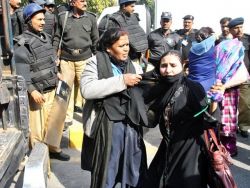
2800 female nurses have won their struggle against the government in Punjab. Despite their brutal and vicious tactics, the government had to face a humiliating defeat.On 11 March, ad hoc nurses from different government hospitals in Lahore started a protest, in front of office of the Punjab Director General Health. They were protesting the recent dismissal of 2800 nurses. But not only did the Punjab Government refuse to accept the demands of the nurses, on 14 March it deployed the police to baton charge the protest. nurses-2In this violent and brutal attack a seven months pregnant nurse was severely injured and only narrowly escaped death. Instead of defeating the movement though, this brutal act of state violence only served to escalate the struggle. The initial offer from the government negotiating team - led by Punjab Health Adviser, Khawaja Salman Rafiq - only offered the nurses minor concessions. However, the nurses defied the violence and refused to accept this offer. Instead they escalated and broadened their movement.
My impression of Pakistan as a white, western woman
Linda Berger
In the movies, half naked or totally naked women run around happily showing their assets, but that is not the case in the ‘land of the pure’. Men are frustrated that they cannot have intimate relations any time they wantPakistan, the strange country that no westerner can really understand. So many contradictions and so many half-truths — what is Pakistan really and how can a westerner comprehend this? How can a westerner, especially a woman, understand Pakistan? Is it possible without the language? Yes, one can read about the culture, religion and moral values. So what are the moral values of the young generation in Pakistani? Where is the truth and were are the lies? I would venture to say: somewhere in between the two. They evoke God but they do not follow true Islam; it is almost as if religion is the last resort and turning to God can alleviate all sins. They do not pray five times a day. I have seen this again and again and I do question their relationship to God, a relationship they use all the time. It seems almost ironic that one can praise God and lie at the same time at a minute’s notice. It is a phenomenon that I have observed during my four visits to Pakistan. First of all, every foreigner is a CIA agent. They do not have any concept of an academic who wants to learn and see how real Islam works and what it truly means. As a western, white woman one can be a novelty, a toy to play with and almost a showcase for some. At times, one can feel like a strange animal in a zoo: “Come take a look! She is dressed in our national clothing.” Until you scratch deeper, you never really see the truth and that is rather puzzling from the western point of view. Of course, you are their guest and, as a guest, you will receive a present as a way of being welcomed. It is hard to compare this young generation, which wants so desperately to be western, to anything I have ever seen. They critique the west, especially the US, since its drones kill their people but, at the same time, they love western clothing, western music and slang, which they have learned from western movies. They do not have an understanding of slang, I will venture to say. “Nigger” seems to be in style and, on numerous occasions, I have tried to tell these youngsters that if they used this word they would offend not only black people but also most Americans. My words of caution usually fell on deaf ears. Then again, one has to be tolerant since many young people in Pakistan have never been to the west, and the west of the movies is so totally different from western culture. In the movies, half naked or totally naked women run around happily showing their assets, but that is not the case in the ‘land of the pure’. Men are frustrated that they cannot have intimate relations any time they want. Sex is a taboo and, of course, it is done behind closed doors. At times, I wonder what their knowledge of sex is — it is so different from the way we view sex here. It seems to me that men here do not understand what a woman needs; how could they? They have never had sex education in school and they are taught that sex is the biggest sin in Islam. Many young women will pretend that they are virgins when it comes time for them to get married. The contrast with the way men treat their sisters and the women they sleep with is a paradox. One does not marry without a parent’s permission. Young men who in the west are considered to be grown up, act like teenagers here with the mentality to match. It is hard to believe that any one society could produce so many mentally crippled men. They are so afraid of their parents that the truth becomes a lie in the name of respect. For young people in Pakistan, the future is bleak: no promising jobs and no opportunities. Many young man do emigrate to seek them and a few of them are lucky enough to go. At times, I felt ashamed to be so privileged and have so much: the education, the trust of friends and no fear of the truth and the whole wide world open to me. However, here in Pakistan, I had to take a deep breath, look around and realise that this was not the Islam I was prepared to see. There are lies, which produce more lies and it becomes like a maze. At times I feel as if nobody knows anymore what the truth is and what the lie is — they merge all into one. Of course, I am being a bit overly general here but on the whole it is the norm.
Pakistan: The terrorist threat
The horrific incident of an attack on Express TV’s anchor Raza Rumi in Lahore on Friday night underlines the precarious condition of security for the media in Pakistan. Two motorcyclists, who Rumi thinks were waiting to ambush his car, opened fire with submachine guns while he was on his way home from work. The hail of bullets killed his driver and wounded his police guard. Fortunately Rumi received only minor cuts and abrasions. Reports say the killers had obviously been carrying out reconnaissance on Rumi’s routine. The media group he works for has had more than its share of unwanted attention from violent elements of late. This attack in Lahore is the fifth on the group since last August. Two attacks on the group’s offices in Karachi last year wounded five people, three of its employees were murdered in cold blood when their TV van was ambushed in Karachi, a bomb planted outside the group’s Peshawar bureau chief’s residence was fortunately disabled, and now this first of its kind attack in Lahore has yielded one death and injuries. The question arises why the group has been targeted in this manner. One explanation on offer is that the media group’s policies have annoyed extremist elements that are now seeking to silence it. Certainly this can be claimed in the case of Raza Rumi without fear of contradiction since he is well known for his outspoken views against the Taliban. Rumi himself did not speculate about the identity of the attackers when speaking to media after the incident, but did point to the reports of a hit list prepared by the Taliban to target media they considered ‘hostile’. Given this background, the cast of usual suspects is headed by the Taliban, specifically the Tehreek-e-Taliban Pakistan (TTP), which ironically is engaged these days in ‘peace’ negotiations with the government. The TTP, as we have repeatedly argued in this space, is playing a tactical game of ostensibly engaging in peace negotiations while ‘sorting out’ some of its perceived enemies, particularly in the media. These actions are not only not claimed by the TTP, they are denied and ascribed to ‘rogue’ or ‘splinter’ groups such as the Ahrarul Hind (claimed to have been responsible for the Islamabad courts complex attack but which some reports say was ordered by the TTP). While the Lahore attack has been roundly condemned by everyone from top to bottom of the government, political parties, traders, lawyers, doctors and other citizens, the journalists’ bodies had resolved to carry out protests on Saturday.Unfortunately, these bodies too have ‘woken up’ late to the threat posed to the media in Pakistan. A number of journalists have been killed over the years, earning Pakistan the dubious title of the most dangerous country in the world. According to Reporters Without Borders, seven journalists were killed in Pakistan over the last year alone. Alarmingly, neither the media industry itself nor the authorities seem to have any plan in mind to protect and secure journalists. Pakistan’s other dubious distinction, despite its lively media, is that it occupies 158th position out of 180 countries in press freedom rankings. This status is owed to pressures from powerful state and non-state actors, both of whom often use muscle when ‘persuasion’ fails to get their way. It must be admitted though that the terrorist threat is not confined to the media alone. PPP patron-in-chief Bilawal Bhutto Zardari has revealed that he has received a threat from the Lashkar-e-Jhangvi (LeJ), and said if anything happened to him, the Punjab government would be held responsible for its alleged soft attitude towards groups like the LeJ, widely believed to be based in Punjab and enjoying relative freedom of movement and action from there. It is good that Punjab Chief Minister Shahbaz Sharif has responded to the report by ordering an investigation into the matter. The Punjab government has faced criticism over the last six years for allegedly allowing sectarian groups like the LeJ safe havens and operational freedom in Punjab, which arguably has fed into their sectarian horrors against the Hazara Shia in Quetta and Shias generally. The greatest illusion regarding groups like the TTP and LeJ is that they would be ‘grateful’ for such concessions, if any, and repay the ‘generosity’ by keeping their ‘base’ peaceful. Any attempt to keep one province an oasis of peace while the rest of the country burns is not something likely to enjoy a long shelf life, thanks to the predilections of the terrorists.
Pakistani Journalists Under Fire
On Friday, Raza Rumi, a well-known TV anchor on Pakistan's Express News, narrowly escaped an assassination attempt in the center of Lahore. His driver, shot 11 times by two gunmen, died at the hospital. Raza, a friend, had just left the television studio when two men on a motorcycle rode up next to his car, unleashing a volley of bullets. Raza was sitting in the back seat, and he plunged his body onto the floor. "I jerked my head under the seat which was quickly filling with shattered glass," he told me when I visited his house shortly after the incident. "I suffocated myself in order to survive." Raza's 25-year-old-driver Muhammad Mustafa was completely exposed in the front. "He used to play football with my kids," Raza told me. "He was married just a year ago." We have been here before. When Benazir Bhutto, Pakistan's first female prime minister, was assassinated in 2007, I was getting ready to go to a wedding, as I was on March 28 when Raza was shot at. I remember the evening clearly: "She's dead, she's dead," cried my mother, her earrings jangling against her cheek. When Salmaan Taseer, the governor of Pakistan's largest province and a family friend, was assassinated three years later, I was home reading the newspaper he published. Journalists have declared Saturday a day of protest in response to Friday's attack, but one wonders what difference it will make. A February 2014 report by the South Asia Free Media Association listed Pakistan as one of the five most dangerous places in the world for journalists. The attack on Raza was the fourth attack on journalists from the Express Media Group. At his house, Raza told me the attack was likely linked to a recent hit list circulated by the Taliban. There are 15 names on the list, including Raza's, and my father's, the journalist Najam Sethi. "The tragedy is that the state cannot protect us," Raza told me, "I should say, if the state doesn't kill you, nonstate actors will." It made me think: In the good old days, repressive governments bullied, blackmailed and imprisoned journalists. But at least you got out alive. In modern Pakistan, the government is immobilized by a clutch of sectarian organizations and terrorist groups. This is a Pakistan in which one of the most popular politicians, Imran Khan, labels those who want the government and army to fight the Taliban, like those on the hit list, as "American agents" who are "dollar-fed." In recent months, as the liberal (as in non-sectarian) Pakistani media have closed ranks against the Taliban, the media have been threatened and attacked. The Taliban, who obsessively monitor opinion and news content, know exactly who speaks out loudest against them. Raza is one of these people. He is a "liberal"—a term almost uniformly used as a pejorative in modern-day Pakistan.By MIRA SETHI
http://online.wsj.com/news/articles/SB10001424052702303779504579467751565852432?mg=reno64-wsj&url=http%3A%2F%2Fonline.wsj.com%2Farticle%2FSB10001424052702303779504579467751565852432.html
Pakistan: Raza Rumi Attackers: Another attack on the media
THE motive for attacking Raza Rumi, a liberal and outspoken national commentator on politics and society, is relatively easy to guess: it was meant to silence his voice forever and to send a message to anyone else espousing similar views in the public sphere. For the media as a whole, the attack in Lahore on Mr Rumi, in which a driver lost his life and a guard was injured, is yet another ominous sign that the pressure building on the media may be about to reach the point of explosion. While individuals, including Mr Rumi, have been named in militant hit lists, the signs are that something far bigger and terrible in scale and impact against the media may be imminent. Quite what that may be is difficult to know, but the lethality and ferocity of the militants and their willingness to kill and intimidate must never be underestimated.
The challenge really is for the media now to band together and figure out an effective strategy to counter the militants’ pressure. The Express Media Group, which had been targeted four times, tried the tactic of muting any criticism of the TTP and sundry militant groups after three of its employees were killed in January, but that has clearly not worked. In truth, there is little individual media houses or under-threat journalists can do on their own to ensure the safety of all who work in their organisations. However, collectively there is much that can be done — if owners, editors and heads of news channels sit down together and urgently work out both a set of demands and recommendations. The state is not entirely powerless and the militant groups are aware of the power of the media to inform the public and shape national discourse — which means a united front by the media can help win back the space that has been eroded for an independent and free media to operate in. The stakes could not be higher. A democratic polity in which the rule of law, civil society and democratic institutions dominate is only possible when the media is free to inform and act as a watchdog. Whatever the flaws of the media, surely a frightened and intimidated community of journalists is a disservice to everyone.
Saturday, March 29, 2014
Damascus requests UN probe into Turkey’s ‘incursion plan’ leak

The Syrian government has asked the UN to conduct an investigation into the leaked record, in which top Turkish officials are allegedly discussing a plan to stage a false flag attack to justify a military operation against Syria. The audio file was uploaded on YouTube and prompted Ankara to ban the service in Turkey in response, citing national security concerns.
Turkey’s most chaotic elections
More than 50 million Turks will cast their votes on Sunday, March 30, in the country’s most chaotic election ever, but unfortunately it will unlikely diffuse the political tension. We’ll all have the results of the election by Sunday night, but we’ll wake up to a much more polarized country where rival political groups will continue their fight, this time for the upcoming presidential elections. Here are important issues that will continue to dominate Turkey’s agenda in the post-election era: Corruption: Turkey will continue to discuss the corruption and graft claims after the elections, probably in a more tense way, as a parliamentary investigation committee will be established in April. The decision for opening such a commission was made on March 19, when a summary of proceedings about four former ministers was discussed at the General Assembly. According to Parliament’s internal regulations, the commission should be established before May 3, but the government will do its best to prevent the commission being turned into a court. On the other hand, hopes for an effective and indiscriminative prosecution of corruption and graft claims engulfing Cabinet ministers and some leading businessmen are likely to fade in the post-election period. More leaks: For many, phone recording leaks and other sorts of illegal recordings of Prime Minister Recep Tayyip Erdoğan will continue in the post-election period. Aiming to tarnish Erdoğan’s image in the eyes of public opinion, these leaks could become more frequent throughout the presidential elections. The Gülen-Erdoğan fight: The fight between Erdoğan’s government and the “Hizmet movement” of U.S.-based Islamic scholar Fethullah Gülen, will likely intensify. The two sides will use all their means to hurt the other while there are speculations that the government will remove more pro-Gülen bureaucrats from their positions. More pressure on pro-Gülen media and businessmen are also seemingly in the pipeline. Espionage: The release of an illegal recording of a high-level security meeting had a game-changing impact on the Gülen-Erdoğan fight. The prime minister implied that what he called a treacherous espionage was carried out by the “parallel state” and vowed to “walk into their den.” A prosecution of the espionage has already been kicked out and will likely include some incidents from the past, like the stopping of intelligence trucks by the gendarmerie in Adana in January. Espionage is one the heaviest crimes and accusing someone of spying would bring about the heaviest of sentences, if found guilty. The government and security forces are expected to go to any lengths to find the plotters of what they call serious espionage. Twitter-YouTube: Bans of Twitter and YouTube have already been taken to the courts, but they will continue to ruin the country’s international image. One expectation is that the government will decide to lift the ban in few days after the elections, but the continuation of such leaks would delay this. International concerns and reactions would complicate the situation for Turkey, especially from the European Union, which has already expressed its serious disturbance about restrictions on freedom of expression and the right to communicate. The post-election period is not going to be very pleasant for Turkey if it insists on such undemocratic bans. Presidential elections: The results of Sunday’s polls will tell us more about what one should expect with regard to the presidential elections in August. The election process will begin in June, only two months after local polls, but discussions about it will immediately begin March 31. A vote less than 42 percent for the ruling party will make it really hard for Erdoğan to win the presidency in popular elections, which require a 50 percent majority in the first leg. Peace process: Pro-Kurdish political parties seem to have made a strategic decision to support the government in its fight against the Gülen movement, believing that they can only get what they want under Erdoğan’s rule. However, Kurds will not wait until forever and the government’s unwillingness in meeting some very important demands from the Kurds could cause the derailment of the process.SERKAN DEMİRTAŞ
Statement on Threat to Bilawal Bhutto Zardari and Death Sentence against Sawan Masih
PPP Human Rights Cell Central Coordinator Dr Nafisa Shah has strongly condemned threats by a banned outfit to Bilawal Bhutto Zardari and demanded comprehensive action by Government of Punjab on its safe havens. The Cell has also condemned attack on commentator and TV anchor Raza Rumi. It is clear that ceasefire is a red herring while terrorists are working on their agenda while government is either unwilling or unable to fight terrorism or address the fundamental problems of internal security, says Dr Nafisa Shah. The HR cell has further called the award of death sentence to Sawan Masih of Joseph colony an apparent miscarriage of justice which will further marginalize the minorities. The Central Coordinator Dr Nafisa Shah said that “This seems to be a case of adding insult to injury, or might is right, as instead of punishing those behind the Joseph colony conflagration the courts have punished someone through a law that is usually misused against minorities. ”A hundred plus houses, besides schools, hospitals were torched and no one seems to have been punished for these cruel acts, “Says Dr Nafisa Shah. ‘This will only encourage mob extremism against the minorities as the recent example of Dharamshala in Larkana and Mandir in Hyderabad demonstrates, she added. It is universally agreed that in most cases the present blasphemy law made during Gen Zia’s dictatorship has been misused against the Minorities. It is therefore no surprise that the State institutions including judiciary seem to be surrendering to the fanaticism and bigotry generally. The HR cell has called upon all political parties to devise legislation to stop the misuse of the blasphemy laws and particularly called upon the legal community to ensure right to fair trial is ensured and that minorities are protected against discrimination in such cases.http://mediacellppp.wordpress.com/
Sawan Masih : Victim of Pakistan's Draconian blasphemy law

Hate > Human lives: Sawan Masih

Today Sawan Masih an innocent Pakistani Christian sweeper was sentenced to death under the allegations that he had blasphemed against Prophet Muhammad after waiting for an year for a verdict.This took place after Sawan Masih and his Muslim friend got into an argument. What better way to win the argument then to blame the poor christian of blasphemy! Not only was Sawan put into prison an old christian neighborhood Joseph Colony was burnt down by a mob of 300 angry Muslims in reaction to this “blasphemy”. Poor christian families lost their houses and savings in split seconds. According to the Pakistani constitution the blasphemy laws are in place to protect Islamic authority. But who are we kidding ever since the induction of these laws who has this law protected?? Instead it has been used as a weapon to take revenge and fulfill hateful greed. It has suffocated the essence of freedom of speech creating an environment of fear and restlessness. There is a constant threat when non Muslims are around Muslims that anything could trigger an incident that could lead to being accused of blasphemy. Christian children are told to be mindful of everything they say around their Muslim friends every day. There are so many examples that can be pulled out of daily lives of minorities in Pakistan which can prove how exposed their lives are to the threats of draconian laws like the blasphemy laws that sanction death or life imprisonment to anyone who as little as gestures or creates a sound that hurts the feelings of a Muslim. While there is a growing number of liberal Muslims that are speaking up along with the religious minorities against these laws and are calling for their repeal. The people that hold power and influence are still narrow minded Islamists who are adamant on keeping these laws as a weapon to sabotage minorities asking for equality and to keep them bent under the heavy burden of fear. Even though it does not meet the threshold of the “most serious crimes”, which are the only crimes for which the death penalty can be imposed under international law. According to a poll by a famous Pakistani English newspaper “The Nation” 68% of the Pakistanis believe that blasphemy laws should be repealed. Today we are witnessing the death of an innocent man like so many innocent lives that are being lost in Pakistan due to various forms of religious intolerance and hate. But if we remain silent in response to these injustices for fear of our lives we are going to let our land drown in innocent blood and we will be accountable for not raising our voices for our persecuted brothers and sisters. The youth of Pakistan is the NOW of Pakistan. It is in our hands to stop these evil forces that have hijacked our country. We need to uphold and share the message of tolerance, love and peace. Lets us write, speak and act to stop laws like blasphemy from being practiced in our country. I read a quote once and it has become one of my beliefs: It does not take a majority to prevail, but rather an irate, tireless minority keen on setting bush fires of freedom in the minds of men. David Griffiths, Amnesty International’s Deputy Asia Pacific Director said today, “This is a travesty of justice. There are serious concerns about the fairness of his trial, and an argument between two friends is not a basis for sending anyone to the gallows. Savan Masih must be released immediately and unconditionally”. Let us raise our voice and campaign for the release of Sawan Masih. It is time we value human life more then ancient doctrines that have been incorporated into our system not to uphold any faith but to use them as instruments of fear and persecution. There are very slim chances that we maybe successful but we will have done our duty for justice and humanity. - See more at: http://www.christiansinpakistan.com/hate-human-lives-sawan-masih/#sthash.abrt8Ljy.dpuf

Pakistani Shiites Stage Protests Against Desecration Of Holy Shrines In Syria
shiapost.comShia Muslims stage rallies here on Friday to protest against the bomb attacks by the terrorists that destroyed the sacred shrine of Hazrat Uwais Qarni (RA) and Hazrat Ammar Yasir (RA) in al-Raqqa, Syria. The rallies and demonstrations were staged outside Shia mosques after Friday prayers under the aegis of Majlis-e- Wahdat-e-Muslimeen (MWM) and Imamia Students Organization (ISO). The protestors raised slogans against the foreign-funded takfiri terrorists and their masters for sacrilege of the sacred shrines of the loyal companions of Hazrat Mohammad (Peace Be upon Him). They also carried banners and placards to express their anger and displeasure against the despotic rulers who, they said, were playing proxy war of the Zionist Lobby in the region. Such rallies and demos were held outside Jamey Masjid Darbar-e-Hussaini Malir, Jamey Masjid Bu Turab (AS) Azizabad, Jamey Masjid Jafaria North Karachi, Jamey Masjid Imam Moosa Kazim (AS) Korangi Crossing and Aza Khan-e-Sughra. Allama Shafqat Sheerazi, Allama Hassan Salahuddin, Maulana Baqar Zaidi, Yaqoob Hussaini, Maulana Ali Anwar, Mubashir Zaidi, Ahsan Abbas, Ali Hussain Naqvi, AhleSunnat Cleric Qazi Ahmed Noorani Siddiqui and other officials of the MWM spoke to the protestors. They denounced the takfiri terrorists groups for desecration of the holy shrines saying that those trying to hide their ugly face in the name of the sanctity of companions of Hazrat Mohammad (PBUH) in Pakistan never condemned their al-Qaeda affiliated allies in Syria and Iraq for sacrilege of the holy shrines. They urged the world conscience and human rights groups to take notice of the worst and heinous crimes of the ferocious terrorists and press the United Nations, OIC and Arab League to change their pro-terrorists policies that was tantamount to their complicity in these crimes. They urged Pakistan government to desist from becoming a party to the Syrian internal affairs by joining pro-Israel U.S.-led alliance of unelected regimes of some Arab Muslim countries. They demanded that either Pakistan supports anti-Zionist camp publicly or remain neutral. They warned that there was no third option for Pakistan in this war of terrorists on innocent Muslims. They demanded that Prime Minister Nawaz Sharif, his government and Pakistani parliament should condemn the bombardment on the sacred shrines of Hazrat Uwais Qarni (RA) and Hazrat Ammar Yasir (RA) forthwith.
Pakistan: Ahmadi muslim mother, son brutally stabbed to death in Islamabad
Ahmadiyya Times
The blood stains around the residence indicate that a fierce struggle took place at the residence and the assailants faced strong resistance from the victims.Two members of an Ahmadī family were discovered violently murdered in G-11 area of Islamabad, the capitol city of Pakistani, it is reported. According to some relatives and family friends of the victim family, the double murders of Rana Mubashar Ejaz Ahmed and his mother, Bushra Ahmad took place around 8 pm yesterday when his Father and elder brother were not at home. Ahmad's elder brother returning late from a business travel found the victims tied and brutally stabbed to death with knife wounds. Further according to the initial reports, the blood stains around the residence indicate that a fierce struggle took place at the residence and the assailants faced strong resistance from the victims. As of this report the motive has not been established and the family is cooperating with investigators. Victim Mubashar Ijaz was doing his PhD as well as teaching at a university, it is reported in social media. Family members, relatives and students of victim expressed their sorrow in the social media.
In Local Election, a Referendum on Turkey’s Leader
As the campaign bus moved through Istanbul’s traffic, the cityscape blurred: construction cranes, new shopping malls and boutiques, a billboard for the luxury department store Harvey Nichols — all signposts of a city more populous than some European countries, vastly reshaped under the Islamist government of Prime Minister Recep Tayyip Erdogan. Inside the bus was a secular candidate to be the next mayor, Mustafa Sarigul who for years has led Istanbul’s most affluent district, Sisli, and is now the greatest hope among Mr. Erdogan’s opponents. They see Sunday’s mayoral elections as the first step in loosening the hold that Mr. Erdogan’s Justice and Development Party, known as the A.K.P., has over Turkish politics. Normally, local elections in Turkey are minor affairs — hinging on parochial concerns like zoning laws and municipal services. Yet these are anything but ordinary times in Turkey, as a corruption scandal and unrest in the streets have threatened the rule of Mr. Erdogan, in power more than a decade, and plunged Turkish politics into turmoil. The outcome of the elections could determine Mr. Erdogan’s political future. Along for the ride with Mr. Sarigul were some of his old friends. Conspicuously absent, however, were any members of the local news media. They were apparently cowed by Mr. Erdogan, who in one of many leaked telephone conversations on social media was heard urging a local news executive to ignore Mr. Sarigul’s campaign. “The media is scared of being on this bus,” Mr. Sarigul said in an interview. “If they came on this bus, they would be fired.” The growing scandal, being played out in a series of embarrassing leaks on social media, has exposed a rift between Mr. Erdogan and his onetime ally, the Islamic preacher Fethullah Gulen, whose followers occupy positions in the judiciary and the police and are said to be behind the corruption investigation. Mr. Gulen lives in self-imposed exile in Pennsylvania, and his millions of supporters in Turkey are likely to vote for opposition candidates on Sunday, including Mr. Sarigul in Istanbul. In a written response to questions, Mr. Gulen denied that his followers were targeting the government, saying, “Neither my friends nor I have been or ever will be part of a plan or conspiracy against those who govern us.” Still, he left no doubt that his followers have withdrawn support for the A.K.P., saying, “The power consolidated in the hands of the ruling party’s elite is unprecedented in Turkish history.” The nationwide municipal elections on Sunday, the first time Turks will vote since last summer’s antigovernment demonstrations, are seen as a referendum on Mr. Erdogan’s tenure as he struggles to survive the scandal with authoritarian countermeasures, including purges of the police and the judiciary; a crackdown on the press; restrictions on access to Twitter and YouTube, where most of the damaging leaks have first appeared; and a new law that gives the government more control over the courts. While many analysts, as well as polling data, predict that the A.K.P. will win a plurality nationwide, the percentage is most important. Anything substantially less than 40 percent — roughly what the party won in the last local elections, in 2009 — would be considered weak. The effects could intensify dissatisfaction in the party toward Mr. Erdogan that could ultimately lead to his exit from politics. A strong showing, though, could embolden him to seek the presidency in an election later this year or, alternatively, seek to alter his party’s term-limit rules and run for a fourth term as prime minister. Turkey is a member of NATO and a mostly Muslim country of 76 million people whose economic prosperity and, until recently, democratic progress, had been welcomed by many in the West, including President Obama, as an exemplar of stability in a region in turmoil. Turkey also had been seen as an important strategic ally of the United States and Europe in managing the region’s many complex problems, including the civil war in Syria and Iran’s nuclear program. But with Turkey preoccupied by an internal mess, and its leaders blaming the United States and other foreign powers for destabilizing the country, Turkey’s reliability as an ally to the West is increasingly in doubt. Mr. Erdogan, of course, will not be on any ballot Sunday, but he has campaigned as if he were, crisscrossing the country in recent weeks and holding multiple rallies, underscoring the degree to which Turkish politics — even when it comes to local municipalities — revolves around his personality. At his rallies, if he is not blaming foreign provocateurs for his problems, he is taking swipes at the news media, putting an already intimidated press further back on its heels. But the news media is pushing back, and in an unusual move the editors of the daily newspaper Hurriyet published an open letter to Mr. Erdogan, writing, “Whatever percentage of the votes you get, it should be your and all of your duty to defuse the dangerous polarization and tensions that has spread throughout the whole country.” Mr. Erdogan’s campaign is focused on Istanbul, where he was once mayor. “Whoever wins Istanbul wins Turkey,” Mr. Erdogan said at a recent rally. Istanbul is also where the money is: The city has long been important to the financing of political parties in Turkey. The party that controls the city is able to distribute lucrative contracts to construction firms, and in exchange, money from those firms flows to party coffers, experts say. It is a form of corruption that has flourished under the A.K.P., say analysts, and is at the heart of an inquiry that has focused on Mr. Erdogan and his inner circle. “Istanbul is to the A.K.P. what oil is to Saudi Arabia,” said Henri J. Barkey, a Turkey expert who is a professor at Lehigh University. Mr. Erdogan still commands deep loyalty among the religiously conservative masses that form his base of support. Those voters, who represent a class oppressed by the secular elite before the A.K.P.’s ascendance, will weigh the corruption allegations against the improvements in their own lives over the past decade, measured in rising incomes and gains in services and health care. For many, Mr. Erdogan’s charisma, and his status as hero to the underclass, trump any allegations of corruption. In the Black Sea coastal city of Rize, where Mr. Erdogan, who is 60, spent much of his childhood, the prime minister’s face appears on banners draped over buildings. Although many residents of Rize say they have not seen a marked improvement in services or economic development, their support for Mr. Erdogan is unquestioned. “He is honest, hard-working, affectionate and has won the hearts of the nation,” said Omer Koroglu, a childhood friend and classmate. Another resident, Havva Kaya, a 42-year-old tea industry worker, said, “no one here believes Erdogan is corrupt.” An enormous A.K.P. rally in Istanbul held recently seemed like a religious revival, underscoring the vast support Mr. Erdogan enjoys in the city he once led and the challenges his opponents face.By TIM ARANGO and CEYLAN YEGINSU
Mine Kamis, a tailor who comes from the conservative neighborhood of Fatih, an A.K.P. stronghold, echoed sentiments expressed by many pious Turks: “The A.K.P. has been the first party to serve us. They built roads, houses and transportation systems, making us first-class citizens. How could we support anyone else?” While polls showed the A.K.P. still leading in Istanbul, the gap was narrowing, giving Mr. Sarigul a chance. The incumbent mayor, the A.K.P.’s Kadir Topbas, has kept a low profile. Mr. Erdogan, though, has campaigned so aggressively that by Thursday afternoon his voice had weakened to a squeak. Back on the campaign bus, Mr. Sarigul said, simply, “My opponent is Erdogan.”
Kerry cancels US return en route from Mideast
 Halfway home from Saudi Arabia, U.S. Secretary of State John Kerry has abruptly changed course and will stay in Europe for talks on the Ukraine crisis.
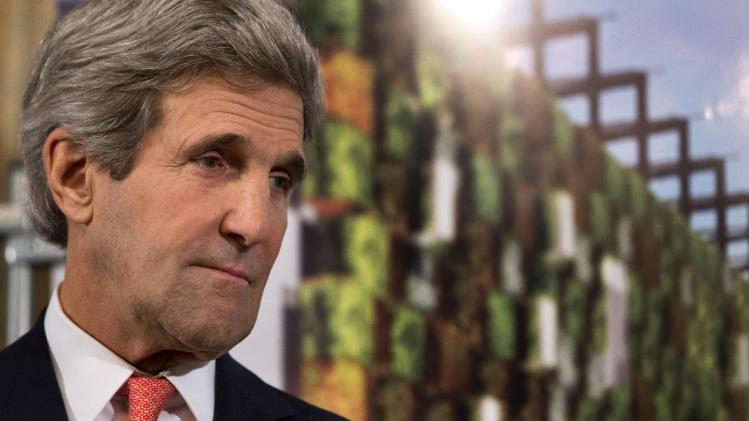 Flying from Riyadh to Shannon, Ireland, for a refueling stop on Saturday, Kerry decided to turn his plane around and was traveling to Paris for a meeting with Russian Foreign Minister Sergey Lavrov as early as Sunday or Monday. Kerry spoke to Lavrov on the flight after President Barack Obama and Russian President Vladimir Putin agreed in a call on Friday to have their foreign ministers meet to discuss a possible diplomatic resolution to the Ukraine situation.
Kerry had already been due to return to Europe on Tuesday for a NATO foreign ministers meeting and had been considering returning to the Middle East to continue a press to salvage foundering Israeli-Palestinian peace talks. Kerry aides said the option of going to Israel, the Palestinian territories or Jordan remained a possibility.
Kerry had been in Riyadh, as well as Rome and The Hague, with President Barack Obama this week but is traveling on his own plane.
He had made a side trip to Amman, Jordan, on Wednesday to meet with Palestinian President Mahmoud Abbas while Obama visited Brussels. Kerry has also had several conversations with Israeli Prime Minister Benjamin Netanyahu since he left Washington last Monday.
Flying from Riyadh to Shannon, Ireland, for a refueling stop on Saturday, Kerry decided to turn his plane around and was traveling to Paris for a meeting with Russian Foreign Minister Sergey Lavrov as early as Sunday or Monday. Kerry spoke to Lavrov on the flight after President Barack Obama and Russian President Vladimir Putin agreed in a call on Friday to have their foreign ministers meet to discuss a possible diplomatic resolution to the Ukraine situation.
Kerry had already been due to return to Europe on Tuesday for a NATO foreign ministers meeting and had been considering returning to the Middle East to continue a press to salvage foundering Israeli-Palestinian peace talks. Kerry aides said the option of going to Israel, the Palestinian territories or Jordan remained a possibility.
Kerry had been in Riyadh, as well as Rome and The Hague, with President Barack Obama this week but is traveling on his own plane.
He had made a side trip to Amman, Jordan, on Wednesday to meet with Palestinian President Mahmoud Abbas while Obama visited Brussels. Kerry has also had several conversations with Israeli Prime Minister Benjamin Netanyahu since he left Washington last Monday.
Gun fight near Afghan election HQ ends, all militants killed: official

Turkey: CHP deputy Şafak Pavey granted secularism award of UK-based NGO

Russia: Only way for Ukraine to reach settlement is to sign federal agreement – Lavrov


Russia believes that the only way for Ukraine to reach a settlement is to sign a federal agreement, Russian Foreign Minister Sergei Lavrov said in an interview with the anchor of the News on Saturday with Sergei Brilev TV programme earlier today. "The current developments in Ukraine have resulted from a deep statehood crisis, triggered, among other things, by the inability (I’d hate to think of reluctance) of every next leader coming to power to reconcile the interests of Ukraine’s western region and Ukraine’s South-East", the Russian Foreign Minister said. "This cannot continue that way anymore"."We are certain that Ukraine needs a profound constitutional reform. In all fairness, we can’t see any other way to ensure a stable development of Ukraine but signing a federal agreement", Lavrov said. "Some may know better and are, perhaps, capable of finding some magic spell to ensure living in a unitary state, with people in the West, on the one hand, and the South-East, on the other, celebrating different holidays, honouring different heroes, developing different types of economy, speaking differing languages, thinking differently and gravitating towards different European civilization culture. But I think it’s pretty difficult to live in a unitary state like this", Lavrov said. "We suggested that things be put right in all areas at once, the more so since an obligation to that end was signed by Vitaly Klitshcko, Arseniy Yatsenyuk, Oleg Tyagnibok, and the Foreign Ministers of Germany, France and Poland. We further suggested that a constitutional reform be launched at once, one that would prove comprehensive and would involve every single political force and region, with equal voting rights. We suggested that they start negotiating a federation that would grant each region sweeping powers in the fields of the economy, finances, culture, language, and education, as well as external economic and cultural ties with neighbouring countries or regions, where all minorities’ rights would be ensured", Foreign Minister Lavrov said. "Given the share of the indigenous Russian population, we are certain that there is no other way to reach a settlement, the more so since some presidential candidates in Ukraine have repeatedly suggested that Russian should be made a second official language and that each of the federation’s territorial entities should guarantee the rights of minorities’ languages in keeping with the European Charter for Regional or Minority Languages", Lavrov said. Russia’s topmost diplomat pointed out that a constitutional reform should be approved by a referendum and should reflect the interests of all regions, the interests that should be mutually agreed on, so that once the constitutional reform is approved by a plebiscite, presidential and parliamentary elections could be held, as well as the elections of regional legislatures, the executive authorities and governors, so that these are elected, rather than appointed". The West is no longer dismissing Russia's arguments that Ukraine should become a federation through a constitutional reform, Russian Foreign Minister Sergei Lavrov said. "I can say that 'federation' is no longer a taboo word in our negotiations. I am sure we should insist on this not just because we want this but because this is a demand by the southern and eastern regions [of Ukraine]," Lavrov said. The West has taken heed of Moscow's arguments in favor of Ukraine's federalization and the second official language, and Russia expects that Kyiv will be informed of these ideas through Western partners, Lavrov said. "This is actually the only thing I hope for, because the current Ukrainian government can hardly be suspected of independence," Lavrov said sarcastically. Read more: http://voiceofrussia.com/2014_03_29/Only-way-for-Ukraine-to-reach-settlement-is-to-sign-federal-agreement-Lavrov-1757/
Putin Calls Obama to Discuss Ukraine, White House Says
But it remained uncertain whether Mr. Putin was seriously interested in a resolution that would go far enough to satisfy the United States, Ukraine and Europe, or instead was seeking a diplomatic advantage at a time when he has been isolated internationally. While the White House account of the call emphasized the possible diplomatic movement, the Kremlin’s version stressed Mr. Putin’s complaints about “extremists” in Ukraine and introduced into the mix of issues on the table the fate of Transnistria, another pro-Russian breakaway province outside his borders. Neither American nor European officials expect Mr. Putin to easily reverse his seizure of Crimea, the largely Russian-speaking Ukrainian peninsula Moscow annexed last week after Russian troops took control there. Indeed, the Kremlin statement made no mention of Crimea, suggesting Mr. Putin considers the matter a fait accompli that is no longer up for discussion. Analysts said the Russian leader may be seeking some sort of de facto acceptance of that new status quo in exchange for not sending troops massed on the border into eastern Ukraine. Mr. Obama took the call from Mr. Putin at the Ritz-Carlton Hotel in Riyadh, Saudi Arabia, after finishing a two-hour dinner with King Abdullah to discuss Iran, Syria and other security issues. Amid intelligence reports warning of a further Russian incursion into Ukraine, American officials were trying to puzzle through the situation on Friday night, unsure what Mr. Putin was up to, but deeply suspicious. “President Obama underscored to President Putin that the United States continues to support a diplomatic path in close consultation with the government of Ukraine and in support of the Ukrainian people with the aim of de-escalation of the crisis,” the White House said in a statement. “President Obama made clear that this remains possible only if Russia pulls back its troops and does not take any steps to further violate Ukraine’s territorial integrity and sovereignty.” In its statement posted on its official website, the Kremlin said Mr. Putin “drew Barack Obama’s attention to continued rampage of extremists who are committing acts of intimidation towards peaceful residents, government authorities and law enforcement agencies in various regions and in Kiev with impunity.” “In light of this,” it added, “the president of Russia suggested examining possible steps the global community can take to help stabilize the situation.” Neither the Kremlin nor the White House said what those steps might be. The White House said Mr. Putin was responding to an American proposal that Secretary of State John Kerry presented to Foreign Minister Sergey V. Lavrov during a meeting at The Hague earlier in the week, a proposal developed in consultation with Ukraine’s interim government and European allies. Mr. Kerry and Mr. Lavrov have been passing a “working document” back and forth that explores ways for the Russians to pull back militarily, as well as ideas for how the international community could support constitutional reform in Ukraine. Among other things, it could include guaranteeing more autonomy for certain regions, disarming the militias that have emerged and defining Ukraine’s relationship to international alliances like NATO. In citing extremist action, Mr. Putin sought to capitalize on a tense internal showdown in Kiev. Members of an ultranationalist group, Right Sector, have surrounded the Ukrainian Parliament over the last two days, demanding the resignation of Ukraine’s acting interior minister over the shooting death of one of the group’s leaders earlier this week in western Ukraine. The presence of masked, armed demonstrators threatening to storm the Parliament building offered the Russian government an opportunity to bolster its contention that the ouster of President Viktor F. Yanukovych, a Moscow ally, after pro-European street protests last month was an illegal coup carried out by right-wing extremists with Western encouragement. In fact, the nationalist groups, largely based in western Ukraine, had formed just one segment of a broad coalition of demonstrators who occupied the streets of Kiev for months demanding Mr. Yanukovych’s ouster.President Vladimir V. Putin of Russia reached out to President Obama on Friday to discuss ideas about how to peacefully resolve the international standoff over Ukraine, a surprise move by Moscow to pull back from the brink of an escalated confrontation that has put Europe and much of the world on edge. After weeks of provocative moves punctuated by a menacing buildup of troops on Ukraine’s border, Mr. Putin’s unexpected telephone call to Mr. Obama offered a hint of a possible settlement. The two leaders agreed to have their top diplomats meet to discuss concrete proposals for defusing the crisis that has generated the most serious clash between Russia and the West since the end of the Cold War.
The Ukrainian Parliament voted Friday to create a special commission to investigate the death of the Right Sector leader, Oleksandr Myzychko, who was also known as Sashko Bely and was shot to death in the city of Rivne on Tuesday, apparently as law enforcement authorities tried to arrest him. Parliament decided not to vote on a proposal calling for the resignation of the interior minister, Arsen Avakov, until the commission makes its report. Members of Right Sector said they were not satisfied with that decision, but would only picket the Parliament building and not try to go inside as some had threatened. Some of the group’s members carried clubs and axes.Despite the weaponry, the atmosphere outside the building by Friday afternoon was relaxed, with many of the demonstrators having returned to Independence Square, the central gathering point during more than three months of civil unrest in Kiev. While not mentioning Crimea, the Kremlin drew attention to Ukraine’s blockade of Transnistria, a breakaway, pro-Russian region of Moldova, another former Soviet republic to the south. Frozen for years in an international limbo, neither accepting Moldova’s rule nor formally part of Russia, Transnistria has relied on land access through Ukraine for crucial imports. The Kremlin said a new blockade would “significantly complicate the living conditions for the region’s residents, impeding their movement and normal trade and economic activities,” and it urged negotiations to address the situation. Russia has more than 1,000 troops in Transnistria, the remnants of a peacekeeping force deployed since 1992, and it has relied on overland access through Ukraine to supply them. The next talks on the conflict are scheduled for Vienna on April 10 and 11. Some officials in the region have asked to follow Crimea and become part of Russia. Moldova has been working toward the same sweeping political and free trade agreements with the European Union that prompted Russian opposition in Ukraine. American officials and analysts saw Mr. Putin’s reference to Transnistria as an ominous sign and possible prelude for Russian intervention, just as Moscow cited unsubstantiated threats to Russian speakers in Crimea when it ordered troops to seize the peninsula. Mr. Putin’s willingness to negotiate suggested some confidence that he will be dealing with the West from a position of strength, having consolidated his grip on Crimea and largely dispersed the remaining Ukrainian military units that had been holed up awaiting instructions from Kiev. The Ukrainian government this week formally ordered a withdrawal. But American officials hoped that the move reflected a growing realization that much of the world was against Mr. Putin. Although sanctions imposed by the United States and Europe so far have been limited largely to individual Russians and a Russian bank, Moscow has found little if any support for its actions, even among allies like China. Other members of the Group of 8 advanced states responded by suspending Russia as a member.
Subscribe to:
Posts (Atom)