M WAQAR..... "A man's ethical behavior should be based effectually on sympathy, education, and social ties; no religious basis is necessary.Man would indeed be in a poor way if he had to be restrained by fear of punishment and hope of reward after death." --Albert Einstein !!! NEWS,ARTICLES,EDITORIALS,MUSIC... Ze chi pe mayeen yum da agha pukhtunistan de.....(Liberal,Progressive,Secular World.)''Secularism is not against religion; it is the message of humanity.'' تل ده وی پثتونستآن
Tuesday, February 11, 2014
Illegal hunting on the rise in Afghanistan
Security Fears Threaten US Future in Afghanistan
Judge orders to demolish slum settlements of Christians in Capital of Pakistan
pakistanchristianpost.com
By:Shamim MasihLife is so precious, and everyone in the world would love to live safe and sound life but the people living suburb in Islamabad (slum areas) are forced to live this kind of life there. I feel pity to think of the circumstances they are living in, how ignorant they are of the harsh realities of life, and the struggling future they have to face, may be they would not ever get the chance to see the bright colors of life. I had been visiting the slum areas since 2009, I used to imagine about slums and people living there, all I can say, it’s pathetic life they will with. It is really eye opening to actually see how people live over there. Houses are made of mud and some with bricks and cement, unpaved streets and the living conditions are outrageous, which differentiate it from the normal living places. People inhale the toxic gases from the nearby ganda naala (seasonal drainage) and God knows how they tolerate its foul smell. Most of the inhabitants are Christians, migrated from different parts of the country and have been settled here in search of jobs and for better future for three decades. These people don’t take care of their health and hygiene. No organization work for the children like sponsoring a child’s education and nutrition expenses. On Friday, a local court ordered the Capital Development Authority – CDA official to remove all illegal “katchi Abbadi”. Justice Shaukat Aziz Siddique of the Islamabad High Court – IHC directed the CDA to clear all settlements from the capital within a month. There are ten colonies (slum settlements) in different sectors of the capital, like Tent colony, 66 quarters, 48 quarters, katchiabadi G-8/1, 100 quarters, France colony, Essa Nagri, Dhuke Najju, Haq bhahu, and Muslim colony. The CDA official estimated that there would be around 5000 families in and around these slums. I wonder that if the Capital Development Authority will take action as per the High Court Judge, where these five thousands families will settle. There is a need to promote responsibility and healthy behaviors among the people so as to improve the social and economic status of the people of the community. Instead they are going to demolish and wanted to remove them. Human rights worker, Basharat Khokher met CDA manager, Amir Ahmed Ali and requested him to take care of the necessary measures for the displaced families. If it happens, UNHCR should come in front and should manage the IDPs
Pakistan’s Walk towards “Sharia”
by Sunny Gill
Negotiators representing Pakistani Taliban insurgents said that there could be no peace until Pakistan embraces Islamic Sharia Law and US-led forces withdraw completely from the neighboring Afghanistan. Sami ul Haq, founder of Harkat-ul-Mujahideen and the head of the TTP’s three man talks team, said that there could be no peace in the region while there is NO SHARIA but democracy. The tough conditions appear to deal a blow to hopes that peace talks with the Pakistani government could end the TTP insurgency that has rocked the country since 2007.Religion is not meant to be – and never was – forced upon an individual against his or her own will. Unfortunately, Pakistan is facing terrorism and some Islamic fundamentalists want to impose their rigid rituals and rights on non-Muslims. The Pakistani government is in a state of confusion about whether to confront them, which could lead to even more rabid mobs in the short-term, or allow the terrorizing of innocents to continue. Amidst all of this turmoil, government is again wasting time in attempting to negotiate, all the while knowing that this process will bring no solid result. Taliban peacekeeping troops and Pakistani government negotiators are meeting to devise a strategy for formally kick-starting a much-awaited dialogue process. The Taliban had nominated five prominent figures – Pakistan Tehreek-e-Insaf; PTI Chairman, Imran Khan, Jamiat Ullma-e-Islam JUI-S; Chief Maulana Sami ul Haq, Jamaat-e-Islamai JI leader; Prof. Mohammad Ibrahim, JUI-F politician Mufti Kifayat ullah; and Lal Masjid prayer leader Maulana Abdul Aziz – to act as intermediaries between them and the government’s negotiating team. Imran Khan strongly opposes the military operation in North Waziristan. He is also leading the campaign in Pakistan against US Drone attacks of terrorist outfits. Earlier, Tehreek-i-Taliban Pakistan (TTP) spokesperson Shahidullah Shahid has said that Pakistani people have been fed-up with the anti-Islam system of democracy and are looking toward the Taliban for “change”. He further stated that Taliban have spilled out to different cities of Pakistan and now their aim is to make Islamabad the stronghold of Islam. This would mean every decision being made according to Sharia law. TTP fellow negotiator Maulana Abdul Aziz also said the TTP’s long-held commitment to imposing Sharia law across Pakistan was not open to debate. Without Sharia law, the Taliban won’t accept (the talks) even one percent. Terrorism in Pakistan has become a highly vicious reality in recent years. The annual death toll from terrorist attacks has risen up to approximately 60,000 in last 13th years. According to the government of Pakistan, the direct and indirect economic costs of terrorism from 2000-2010 was $68 billion. Former Presidents Asif Ali Zardari, and Gen. Pervaiz Musharraf, had to admit that terrorist outfits were “deliberately created” and looked after by previous governments as a policy to achieve some short-term strategic objectives. This began with Muhammad Zia-ul-Haq’s controversial ISLAMIZATION policies of the 1980s, under which conflicts were started against Russian involvement in Afghanistan. Zia’s tenure as president included when Pakistan’s involvement in the Afghan-Soviet War was well under way, which led to a greater invasion of ideologically driven Mujahideen into the Tribal areas (“FATA”) of Pakistan; it amplified the Kalashnikov Culture and drugs from Golden Crescent. Zia, who was an extremist Muslim while he was the president of Pakistan, tried to impose Sharia in Pakistan. He was even the person who introduced the famous Blasphemy Law in Pakistan. He wishes and desires that Pakistan should be a State under the Sharia. When Zia took over in 1977, he used religion as a tool to oppress people and to punish anyone who dared to speak against him. It was during his reign that hundreds of people – including journalists – were publicly lashed. It was on his instructions that the Hudood Laws were formulated. He is the one who started the process of changing things for the worse. In 1984, he instructed the textbook boards to prepare books which showed that ‘Pakistan was not formed on the basis of race, language or geography but based on a common religious experience’. Students should be told about how Pakistan was created on Islamic Ideology. He also instructed them to eliminate the role of Minorities from the books. In 80s he welcomed Mujahideen from Arab, Chechnya, Uzbekistan, Indonesia and other part of world to fight against the USSR. He puts Pakistan into fire by establishing thousands of Mudassa’s to train these Mujahideen. This was the time When Osama Bin laden along with thousands of Arab terrorist enters in Pakistan. And Pakistan becomes the nursery of Muslim extremists. Zia made every possible effort to make Pakistan pure Sharia country. Even after the Afghan-soviet war these Mujahideen were never disarmed, later on these groups were activated as Lashkar-e-Taiba, Harkut-ul-Mujahideen, Saipa-e-Shaba and some of them join the Al-Qaeeda led by Bin Laden. In 1996, Afghanistan was taken over by these Mujahideens (Talibans). They spread from Pakistan into Afghanistan and formed a Government as the ISLAMIC EMIRATE OF AFGHANISTAN. It gained the Diplomatic recognition from Pakistan, Saudi Arabia and the United Arab emirates. Mohammad Omar (Mullah Omar) who was the Spiritual leader of Taliban, becomes its Amirul momineen. Al-Qaeda supported the Taliban with thousands of fighters from Pakistan and other parts of the Arab world. They were financially supported by Saudi Arabia. The Taliban and their allies committed massacres against Afghan civilians, denied UN food supplies, burned vast areas of fertile land and destroying tens of thousands of homes during their rule from 1996 to 2001. After the 9/11 tragedy, the U.S. and its allies declared war against the Taliban (Terrorists) and called it a “war on terror”. In December 2001, they were removed from power by the U.S. and its allies. The Taliban fled and went into hiding only to later regroup as an insurgency movement against the Karzai Administration and the NATO-led International Security Assistance force (ISAF). After 9/11 Pakistan also supported the U.S. The Pakistani Army and political government supported the U.S. and its allies in the fight against the Taliban. On 28th March, 2013 Pakistani Intelligence agencies told the Supreme Court that Pakistan has lost 49,000 lives since the attacks on World Trade Center and Pentagon in the United States on September 11, 2001. More than 24,000 people, both civilians and troops were killed in terrorist attacks during the period between 2001 and 2008. The last five years have proved costlier, in human terms. Another 25,000-plus people died during military offensives against Taliban insurgents in the restive tribal regions since 2008. At least 49,000 people, armed forces have suffered 15,681 casualties while fighting Taliban militants in the tribal areas since 2008 – with 2009 being the deadliest year for them. Since 2008, almost 9,000 people and security men were killed by bombers. As many as 5,152 civilians have been killed, 5,678 injured, in bomb blasts and suicide attacks since 2008. According to the report, there have been 235 suicide hits, 9,257 rocket attacks and 4,256 bomb explosions in the last five years. More than 200 members of tribal peace committees, or Peace Lashkars – including volunteers and chieftains – were also killed along with 275 wounded in targeted attacks by Taliban in the last three years. The report also revealed that 1,030 schools and colleges were destroyed by Taliban insurgents in Khyber-Pakhtunkhwa from 2009 to 2013. Since 2008 to 2013, 1,479 soldiers were killed and 5,745 others were injured. The report said that those who died include 675 men of the paramilitary Frontier Corps while 1,978 others were injured. A total of 1,717 policemen lost their lives in five years. Suffering of Religious Minorities in Pakistan, After 9/11 The Original Constitution of Pakistan did not discriminate against Religious minorities in Pakistan but the Amendments made by the Military ruler Zia-ul-Haq has awakened the Islamization and promotes extremism in the society. The controversial Hudood Ordinance and Sharia Courts have given so much strengthen to all the radical Muslims. Later on, when Muhammad Nawaz Sharif took charge as elected Prime Minister of Pakistan, he enforced Shariat Bill in May 1991, and promoted the Anti-Christian Elements in the society. The Amendment made by Zia-ul-Haq – and empowerment provided by the Sharif’s Government – created new war between the Religious minorities in Pakistan. This whole system de-stabilized the peace and harmony, putting Christians and other Religious minorities into a hellish situation. Minorities who were already in a grave situation after these implications were put into fire. After 9/11, Christians and other minorities went through a hard time. Muslim extremists backed by the Taliban ideology, made their lives miserable. Hundreds of attacks have been faced by Christians, Hindu’s, Ahemdi’s and Shia’s in last 5 years. Christians who played a vital role in the development of Pakistan are now leaving Pakistan for the security of their lives. During the last 8 months, thousands of Christians left Pakistan and took refuge in THAILAND, SRILANKA, MALAYSIA and other South Asian countries, waiting for the decision of UNHCR. Thousands of Hindus migrated to India last year. Hundreds of thousands of Shia- and Ahmedis have already left Pakistan and the rest are making efforts to leave the country. How dialogues will effect Religious Minorities in Pakistan. A country, which has a long history of Brutal killings of innocent people and targeting and demolishing places of worship of Minorities, is now heading towards the enforcement of Sharia demanded by the Taliban, which has a history of hating other Religions / faiths. The Taliban is now actually having serious dialogue with the current Government of Pakistan. One of the examples of their hatred for other religion is that while they were in the power in Afghanistan, they destroyed the Buddha statues: If these talks will be successful, then there will be no Church or any place of Worship for the Minorities, just like in Saudi Arabia, which is ruled by the same Sharia law the Taliban would like to impose on Pakistan. Saudi Arabia, which is providing the financial support to the Taliban, want to create an Islamic Emirate State in accordance with Sharia and the Taliban is their agent. Over the last few years, it has been observed that several cases of blasphemy have been registered against the minorities in Pakistan. If the Sharia law is imposed – as demanded by the Taliban – there will be no end to the persecution of these innocent people. Those who have already been falsely accused of blasphemy and who are sitting in jails, will be given death sentences without any further trials. We have even seen the extremism at its peak in this modern time. Two Christian brothers were shot in the courtyard, two died while in the police custody. One Lahore High court judge Arif Iqbal Hussain Bhatti was killed on 17th October, 1997 after acquitting Salamat Masih, 14, and Rehmat Masih, 46, on February 23, 1995 of having committed blasphemy. My apprehension is that after the implementation of the Sharia demand by Taliban, there will be no place for minorities in Pakistan. Even the Modern Muslim will be in great trouble. - See more at: http://www.christiansinpakistan.com/sharia/#sthash.0XmCpkDn.dpuf
Life on the razor’s edge in Pakistan
Speaking up against the blasphemy law in Pakistan often has fatal consequences as the few who do speak up face death threats
When 69-year-old British Pakistani, Mohammad Asghar came to Rawalpindi in 2010, he was shocked to find that one of the two properties he owned there was occupied by a notorious land grabber. He filed a complaint against him before leaving for the Haj pilgrimage but it was Asghar who was arrested on his return. His crime was that he claimed to be the Holy Prophet and wrote letters in his name and even printed visiting cards, for which he was charged with blasphemy, a criminal offence punishable with death under Section 295-C of the Pakistan Penal Code (PPC).While awarding the death sentence on January 23, 2014, the sessions court which conducted the trial in Adiala jail disregarded his extensive medical records from Scotland in which it is evident he was diagnosed with paranoid schizophrenia. An affidavit in June 2011 submitted to the court by Dr. Jane McLennan, a consultant psychiatrist of Royal Victoria Hospital in Edinburgh, where Asghar lived with his family, says that he was her patient in February and March 2010. Records showed that in 1993, he was first referred to psychiatric services and treated for depression. In 2000 he suffered a cerebrovascular stroke and as a result walked with a limp, needing the support of a walking stick. He also suffered from psychiatric symptoms after the stroke which included depression and delusionary beliefs of a paranoid and grandiose nature. He had auditory hallucinations and persecutory delusions, believing that his home was bugged by the Pakistani and international media and that he was being persecuted for having written to Prime Minister Blair and President Bush, telling them the Iraq war was wrong, the affidavit said. He was admitted to a psychiatric hospital on February 17, 2010, under an emergency detention certificate after expressing paranoid delusions regarding a Pakistani TV network and the police. He was diagnosed as suffering from paranoid schizophrenia by Dr. McLennan when he was admitted to the Royal Victoria Hospital. She stressed that though he presented a good social facade, those without sufficient professional training might miss the indicators of his illness. This does not detract in any way from the severity of his illness or nullify the mental illness diagnosis, she said. He also had no insight into his illness and did not think he needed treatment and could not see his beliefs and actions were not rational. When he was discharged from hospital on March 18, 2010, he required vigorous and ongoing treatment as he remained mentally unwell. However, neither he nor his family had any insight into his mental illness and the need for treatment and neither he nor they engaged with ongoing treatment. When he was visited by his community psychiatric nurse in March 2010, he was clearly exhibiting symptoms of paranoid psychosis. Dr. McLennan said that it seems unlikely that Asghar continued with his medication after he travelled to Pakistan. Even during his time in the Scotland hospital, he often referred to himself as being a very holy man. “If his condition worsened, as it seems to have done, he may have described himself in more exaggerated terms, while not meaning to commit blasphemy,” she said. He was receiving basic medication and his condition would deteriorate as long as he remained in prison, she pointed out in the affidavit. The probability of him attempting to take his own life is significant and may be increased if he remains in prison, she added, while recommending a comprehensive treatment and rehabilitation plan. Sure enough, Asghar tried to commit suicide on January 8, 2012 and had to be hospitalised. However, the trial court did not take evidence from the hospital into account, and a hastily summoned medical panel certified him as normal. His lawyers were thrown out in October 2013 and not allowed to be present when the verdict was pronounced. There has been much outrage in the U.K. and elsewhere after this latest conviction. Under Section 295-C of the PPC “Whoever by words, either spoken or written, or by visible representation or by any imputation, innuendo, or insinuation, directly or indirectly, defiles the sacred name of the Holy Prophet Muhammad (peace be upon him) shall be punished with death, or imprisonment for life, and shall also be liable to fine.” Asghar’s lawyers say that all the evidence against him was produced by the complainant in the form of letters and visiting cards in which he claimed to be the Holy Prophet. While an appeal against the conviction has been filed in the Islamabad High Court, there are serious concerns about his health after his lawyers finally managed to meet him in jail. Other convictions This is not the first case where a mentally ill person has been convicted for blasphemy. Two years ago, a mentally ill girl Rimsha Masih was sentenced to death for blasphemy but she was finally acquitted by the court in 2012 and granted asylum in Canada. Her fellow Christian neighbours were forced to flee their homes in Meherabad and live in precarious housing conditions in Islamabad. Rimsha’s persecutor, a cleric, was acquitted in 2013 of filing false charges. Aasia Bibi, a Christian from the Punjab province, became the first woman in the country’s history to be sentenced to death for blasphemy in 2010, according to Human Rights Watch. In 2011, Punjab Governor Salman Taseer and former federal minister, a Roman Catholic, Shahbaz Bhatti were killed for anti-blasphemy law statements and for supporting Aasia Bibi who continues to languish in jail. Her appeal is yet to be heard by the High Court. Taseer’s killer, Mumtaz Qadri, is lodged in the same jail as Mr. Asghar and his death sentence is yet to be confirmed by the High Court. Former U.S. Ambassador Sherry Rehman faced threats after she proposed a bill banning the death penalty for blasphemy. Targeting minorities According to media reports, over 1,200 people have been charged with blasphemy from 1986 till 2010. The Human Rights Watch World Report 2014 says that abuses are rife under the country’s blasphemy law, which is used against religious minorities, often to settle personal disputes. Dozens of people were charged with the offence in 2013. At least 16 people remained on death row for blasphemy, while another 20 were serving life sentences. In its State of Human Rights in 2012 report, the Human Rights Commission of Pakistan (HRCP) says, “Abuse of the blasphemy law continues to take a heavy toll in terms of human lives and harassment of citizens. A well thought-out plan should be put into place to make the citizens aware of the havoc that the abuse of this law has caused and how important it is to insert safeguards that can prevent that abuse.” Sections 295 to 295-C of the PPC are generally referred to as the blasphemy code. The punishments for offences under these provisions include death (under Section 295-C), life imprisonment, imprisonment for various periods and a fine. Pakistan has not executed anyone under Section 295-C. However, many of the accused have been killed by extremists outside the courts or in prisons, according to the HRCP. Speaking up against the blasphemy law often has fatal consequences and the few who do speak up, face death threats. With little chance of the law being amended, minorities and those who stand up for them continue to live on an unrelenting razor’s edge.
Pakistani Taliban Talks To Taliban: 'Committees can do only as much'
'Committees can do only as much'
Those who thought Taliban are down and out and the talks exercise was launched to let them slip away from the back door must review and revise their thinking. Taliban are neither down nor out; they are very much there and want to be accepted as Pakistan's principal stakeholder. Met even halfway a laundry list of demands their leadership is said to have handed over to their interlocutors, we would be a carbon copy of Mulla Omar-ruled Afghanistan. Of these, the three that are of critical importance to the cause of peace in the country are (1) release all prisoners including foreigners and drop criminal charges against Taliban, (2) withdraw army from tribal areas and close down checkpoints and (3) replace democratic system with Islamic system. If these are the 'some encouraging response' from the TTP Shura, as Maulana Samiul Haq would like us to believe, what more the TTP could have demanded. And all of this, he says, is nothing but a 'breakthrough' because the Taliban leadership is ready to hold talks within the 'constitutional limits'. The government is talking to the outlaws who not only question the very basis of our constitutional edifice but want complete amnesty for the horrendous brutality they committed against the people of Pakistan - what a joke. The Irfan Siddiqui-led committee is not the government itself as some would like to argue it is nothing but hogwash. We don't know if some people want to see Nawaz Sharif as Pakistan's Amirul Momineen, but would be definitely moving a step closer to this honorific position though he decides to meet the TTP even halfway. Earlier when Maulana Samiul Haq met the prime minister and claimed he was tasked to initiate peace parleys with Taliban, his claim was rebuffed by the prime minister office. But a month later he is at the head of a team appointed by the Taliban now. What is all this cooking up in the government kitchen?
Before the so-called peace talks with the Tehreek-e-Taliban proceed any further Prime Minister Nawaz Sharif is expected to take the nation into confidence, at least on the following points. One, what rationale is for the apparent move to concede Fata to the Taliban, like Swat was handed over to Maulana Fazlullah. And is it what majority of the tribal people want? Two, what guarantee is that with peace deal cut with Fazlullah-headed TTP its myriad affiliates active elsewhere will too give up on their armed struggle against democratic Pakistan. This is an important issue given the fact that even as the committees of the two sides are in talks the welter of terrorism refuses to abate. One would also like to know if such a deal will secure the life and limb of the Hazaras. Three, if thanks to its terrorist record the TTP in being approached for peace talks why not other terrorists and outlawed entities' like the ones in Balochistan. Can government accommodate their demands also, some of which are as critical as of the TTP in terms of their acceptance under the constitution? No wonder then as the government seems to be surrendering to the dictates of sword-wielding Taliban others with identical but had taken the back seat have returned to the field to demand their slice of the pie. By holding peace talks with the Taliban the government may have initiated a whole new ballgame - which it cannot win at least in the present circumstances. In fact it can backfire, particularly if what the government committee agrees is not upheld by the people and endorsed by the parliament. Consider the complexity of the issue: even the Pakistan Tehreek-e-Insaf which was never short on the need to talk to the Taliban is not prepared to be their representative. Before the committees go any further it would be in the fitness of things that the parliament should get involved. It wants talks with Taliban but is it ready to agree to its demands as reported by the media. Meeting these demands would demand a constitutional cover and that only the parliament can give. The parliamentary resolutions in support of talks with Taliban, yes these are there on record. But now the situation dictates moving beyond the non-binding resolutions and to evolve a hard-nosed, realistic approach to rid Pakistan of demons of extremism and terrorism once for all - of course, not forgetting that military operation is the second best option.
Pakistan: Dead in the water
Pakistan: Real stakeholders not part of peace talks
Bilawal Bhutto condemns Peshawar cinema blasts
Patron-in-Chief of Pakistan Peoples Party Bilawal Bhutto Zardari has strongly condemned the terrorist attacks on a cinema in Peshawar today, which resulted into loss of precious human lives and called it an inhuman and beastly act.
In a statement, Bilawal Bhutto Zardari said that mosques, schools, hospitals, cinemas and other public places are being attacked by the terrorists to keep the people illiterate, maimed and spiritually hollow to hold the masses of Pakistan captive. “Terrorists need to be dealt with an iron hand instead of appeasing them to protect Pakistan and its founding ideology”, he added.
PPP Patron sympathized with the families of victims who lost their lives and limbs in the blasts and expressed solidarity with them. He also stressed that special arrangements should be made for timely treatment of all those injured in the attack.
Peshawar cinema hit by deadly Pakistan blasts
Pakistan: Asking for moon
Pakistan: Talks only with those who accept constitution, state: PPP, ANP
Pakistan People’s Party (PPP) and Awami National Party (ANP) have demanded of the government to hold talks only with those who accept the Constitution and the state of Pakistan.
Speaking on point of order during the Senate session presided by Nayer Hussain Bukhari, Senator Raza Rabbani called for taking all the political parties on board over Taliban talks besides setting up a parliamentary committee to be briefed daily on progress of dialogue process.
ANP Senator Haji Adil warned of opposition if talks were held with those who don’t recognize the Constitution.
Monday, February 10, 2014
China urges int'l alarm over Japanese comments
The international community needs to be alarmed by Japan's right-wing moves and resolutely safeguard historical justice, a Chinese Foreign Ministry spokeswoman said on Monday.
Hua Chunying said at a regular press briefing that China noticed the remarks of a Japanese media official on the atomic bomb attacks on Japan and the United States' response.
Naoki Hyakuta, a board member of Japan's national broadcaster NHK, recently said Americans staged the post-war trial of Japanese leaders to cover up their own war crimes, including the atomic bombings of Hiroshima and Nagasaki. A U.S. Embassy spokesman called the charges preposterous and expressed hope that people in positions of responsibility in Japan would avoid comments that inflame tensions in the region.
Hua said Japan's recent false statements on historical issues aimed at whitewashing Japanese militarist aggression in the past and challenging the results of World War II as well as the post-war international order.
People should always be alarmed by this history, Hua said, noting that Japan's right-wing political force is on a retrograde track regarding historical issues and has adverse impacts on regional peace and stability.
She emphasized that the international community should be highly alarmed and resolutely safeguard historical justice, the post-war international order and regional peace and stability.
Hua also said that Japanese leaders' recent mistakes on historical issues have provoked conflict between Japan and the victims of World War II, including China and the Republic of Korea.
It is clear that Japanese leaders are running contrary to the trend of world peace and stability, a move which has been opposed by the international community, according to the spokeswoman.
China hopes all people who love peace and prize justice can work together to safeguard the results of World War II as well as world stability, she added.
Sochi to become an all-year-round resort after Olympics – Putin
http://voiceofrussia.com/Russian president Vladimir Putin thinks that the booming interest in Sochi due to the Olympics should become a permanent trend. “It’s very important to use everything that has been created there during the last six-seven years efficiently. One has to take into account the number of tourists will increase,” Putin said Monday at a Sochi-2014 Public Council meeting. He pointed out that the number of freighted vessels, able to carry 2,500 to 3,000 people on board, has reached 86 about twice as much as a few days ago. “That means that Sochi is gaining in popularity. We should find other features, apart from Olympic buildings to attract tourists,” Putin added. The president thinks that the Olympics are only a primary impetus which should be developed further. The president pointed out that the infrastructure, created during the last years, provides an opportunity to do this. For example, the number of hotel apartments has increased twice. “Big hotel chains began to build hotels there, thus redirecting people from other resorts of the Black Sea to Sochi,” Putin said. ”These are economic and not administrative means of attracting tourism. I think that we will manage to turn Sochi into an all-year-round resort,” Putin concluded.
EU urges Turkey to change internet law
Turkey's crackdown on the internet raises "serious concerns" and "needs to be revised in line with European standards," the European Commission has said.
The commission's spokesman on enlargement, Peter Stano, on Thursday (6 February) noted that the new regime “would lead to a further reduction in internet freedom.” "Turkish people deserve more freedom of information and transparency, not more restrictions," he added. The bill also attracted criticism from European Parliament President Martin Schulz, who described the bill on Twitter as a “step back in an already suffocating environment for media freedom.”The law, which was passed by the Turkish parliament late on Wednesday, allows a government agency, the Telecommunications Communications Presidency (TIB), to block access to websites without a court order if they are deemed to violate privacy or seen as having "insulting” content. Personal browser histories will also be kept for two years, with no judicial review of the measures. The new law amends 2007 legislation which was used to stop Turkish people from using YouTube for two years and which caused the shutdown of thousanfs of websites. The European Court of Justice in Strasbourg in 2012 already ruled the old law to be in breach of the European Convention of Human Rights. For its part, the Vienna-based Organisation for Security and Co-operation in Europe (OSCE) has warned that the latest amendments put "a disproportionate burden on internet service and hosting providers,” and would harm investigative journalism by potentially exposing reporters’ sources. At the start of Turkey’s parliamentary debate on Wednesday, opposition lawmaker Hasan Oren compared Prime Minister Recep Tayyip Erdogan to Adolf Hitler. “When you came to power you talked of enhancing democracy in Turkey, Now you are trying to implement fascism … Remember that Adolf Hitler used the same methods when he rose to power,” Oren said. The crackdown is the latest in a series of measures designed to quash a corruption affair involving Erdogan’s inner circle. He already faced EU rebukes in January for sacking hundreds of police officers and prosecutors investigating the allegations and for putting judicial appointments under political control. More broadly, Turkey last year topped world rankings for jailing journalists. The EU candidate country recently restarted accession talks after a long pause. German foreign minister Frank-Walter Steinmeier this week urged the EU to also open talks on chapters relating to justice and human rights issues in light of Erdogan’s actions, but Cyprus is vetoing the move amid its 40-year-old frozen conflict with Turkey.
Afghanistan polio: First case in Kabul since 2001
Video: Hollande and Obama at Monticello
U.S. President Obama and French President Hollande visited Monticello, the home of America's third president Thomas Jefferson.
U.S: Health Insurance Enforcement Delayed Again for Some Employers
Taliban Killing Greater Numbers of Children in Afghanistan as Prison Breaks Swell Ranks
http://guardianlv.com/By Melissa Roddy Taliban fighters previously held in Afghan and Pakistani prisons have returned to wage jihad, killing more of Afghanistan’s civilians in 2013 than in any year since 2009. The United Nations Assistance Mission for Afghanistan (UNAMA) issued a report on February 8, 2014 showing a 34 percent increase last year in the number of children killed or wounded over 2012. The UNAMA report attributed only three percent of casualties to international forces. The lion’s share (74 percent) was caused by anti-government elements (AGE), with 11 percent attributed to Afghan National Security Forces. Of the 2,959 civilian deaths reported, over half were caused by civilians stepping on or driving over improvised explosive devices (IEDs). Other civilians suffered in the 962 battles between security forces and groups identifying as Taliban, including members of the Haqqani Network, Hezb-e-Islami Hekmatyar and the Islamic Movement of Uzbekistan. Three large prison breaks from 2011 to 2013 have resulted in the return to Afghanistan of over 1,000 Taliban jihadists responsible for the killing of far greater numbers of Afghan children in 2013 than in 2012. Two of the breaks were from Pakistani prisons and one from an Afghan prison. Last July 248 prisoners broke out of jail in the western Pakistani town of Dera Ismail Khan (DI Khan). In April 2012, in the town of Bannu, located in northern Pakistan, 384 prisoners escaped from jail, and a year earlier, the Taliban liberated 541 of their fellow militants by digging a tunnel 360 meters (1,181 feet) under the prison in Kandahar, Afghanistan. Guards and other employees at the Bannu jail, located in Khyber-Pakhtunkhwa Province, reported that 150-200 men stormed the prison, engaging in a two-hour pitched battle with prison guards. The fighters and escapees then departed in over 50 trucks, which had been parked on the main highway near the jail. Shahab Khan, the prison telephone operator, claimed throughout the battle, he sent requests to the Pakistani military for backup. Every time he was told that help would be there soon, but reinforcements never arrived. Dozens of trucks loaded with escaped prisoners and fighters then drove through Bannu and into nearby North Waziristan, passing unimpeded through numerous military checkpoints in the city and along the highway. Last summer a very similar event occurred in DI Khan, also located in Khyber-Pakhtunkhwa Province, just southeast of North Waziristan. This time, the military and provincial governments received advance warning that a jailbreak would occur, complete with numerous details about the attack, including how many vehicles to expect, where they would be parked and which prison barrack was the intended target. In the midst of the bust-out, the attackers stopped to enjoy a leisurely pizza with some of the guards. While inside, they also took time out to find and behead four ethnic Shia inmates. Pakistan’s media reported the attackers and escapees melted into the surrounding city and countryside. Local witnesses, however, described a very different sight. Over a dozen trucks loaded with fighters and prisoners were said to have roared through the streets and up the highway, whooping, hollering and shooting into the air “like a wedding parade,” again blowing unimpeded past numerous military checkpoints, on their way to Taliban-controlled North Waziristan. With so many Taliban fighters returned from prison to the field, it is not surprising that Afghanistan suffered the killing of hundreds more women and children in 2013.
Afghanistan: Anti-Taliban sentiments at its apex
Pakistan: Our Sharia enforcers
BABAR SATTARIS enforcement of a certain conception of Sharia the TTP’s precondition for peace or that of its apologists who view the terror threat as an opportunity to enforce their skewed ideology and worldview on Pakistan? The demand for Nizam-i-Adl in Swat was understandable. Swat had experienced a swift justice system under the Wali-i-Swat. After being absorbed by Pakistan their justice system became as dysfunctional as that of the rest of Pakistan and they wanted amends. But why is Sharia an issue in Fata? Fata doesn’t have the common law justice system that is criticised for being un-Islamic. It still functions under the FCR and the jurisdiction of Pakistani courts is specifically ousted. Disputes within and amongst tribes are settled through jirgas on the basis of tribal riwaj and not common law. How is the state of Pakistan preventing Fata residents from leading their lives in accordance with Islam? The key demand of the pro-enforcement brigade is not that they are unable to lead their lives in accordance with their faith. These zealots are demanding that others should lead lives in accordance with their interpretation of Sharia. This isn’t about the freedom of those seeking Sharia enforcement to practise their religion, but about curbing the freedom of thought, action, choice and faith of everyone else, coupled with the suggestion that those who disagree are no Muslims at all. The enforcement brigade tells us that in not ‘enforcing’ Sharia on their fellow Muslim citizens the state is acting in breach of Article 2A (the Objectives Resolution) and the Principles of Policy laid down in Part II of the Constitution. Article 2A does state that “principles of democracy, freedom, equality, tolerance and social justice as enunciated by Islam shall be fully observed” and that “Muslims shall be enabled to order their lives in the individual and collective spheres in accordance with the teachings and requirements of Islam”. But it also states for example that, “adequate provision shall be made for the minorities to profess and practise their religions and develop their cultures”. The point is that the Constitution embodies various principles. How they are to be read in conjunction and given effect is a matter of interpretation. But in the realm of religion what our Constitution emphasises is enablement and not enforcement. Whether it is Article 2A, Article 20 (the right of every citizen to profess, practise and propagate religion) or Article 28 (the right of citizens to preserve and protect their language or culture), our Constitution embraces diversity and the individual right not to be dictated to by others on how to practise one’s faith. Our Constitution is minimalist and not maximalist when it comes to religion. It mandates that none of our laws must breach Islamic injunctions, but doesn't require the state to ‘enforce’ Sharia. Islamic provisions in Part IX only require that Pakistani citizens be ‘enabled’ and ‘encouraged’ to live their lives in accordance with Islamic principles. And inherent in the composition of the Council of Islamic Ideology (CII) under Article 228 is the assumption that there exist legitimate differences of opinion between various schools of Islamic thought on what living in accord with Islamic principles might mean. To state the obvious, the Constitution also leaves no room open for vigilantism when it comes to matters of faith. It provides two formal mechanisms to prevent breach of injunctions of Islam: one, the CII which can advise parliament on how to encourage Muslims to practise Islamic principles or opine on what laws are repugnant to Islam; and two, the Federal Shariat Court, which can issue mandatory judicial pronouncements. The claim by any other entity, group or citizen that Islam is under threat in a 97pc Muslim country can only be personal opinion. Article 31 with the Principles of Policy in Chapter II also speaks only about enablement and not enforcement of Islam. Those who cry themselves hoarse over the breach of Principles of Policy must also read Articles 29 and 30 that unambiguously establish that these non-judicially enforceable principles are like a statement of purpose meant to guide citizens and state organs alike and not to be shoved down their throats. That some consume alcohol in Pakistan despite it being a punishable crime, that some women dress in ways that bigoted men find disagreeable, or that the Sharia court is still considering whether or not all forms of interest are exploitative and amount to riba are not the burning issues posing an existential challenge to Pakistan. It is the education and population emergencies, our energy crisis, governance and justice system meltdown, violent insurgencies and terror all across Pakistan that paint a bleak future for our country and our kids. Our salvation lies not in the moral outrage of cavemen backed by threats of violence but in real life solutions proposed by serious people focused on and trained to address complex problems of a 21st-century polity. The pro-enforcement brigade threatening to reconvert by force the Muslim majority of Pakistan into better Muslims is no outcome of 9/11. This tendency of some to declare other Muslims apostates and liable to be killed in the name of religion is much older than Pakistan. Can there be a bigger irony that in a country created to enable Muslims to practise Islam freely, the overwhelming Muslim majority now lives in mortal fear of being killed in the name of the same religion that they claim to profess, practise and love?
Pakistan: Sindh Festival: Basant celebrations electrify the Karachiites
The Seaview of Karachi woke up to a sunny weekend with normal winds as a large number of people turned up at the beach to fly kites.
The sky was dotted with scores of kites at Karachi beach, as Saturday and Sunday saw the Basant celebrations to mark the Sindh Festival with shouts of ‘boo-kata’.
Sindh Festival is being celebrated from February 1-15 at multiple cities of the province to promote the Sindhi culture. The two-week festive season began with an opening ceremony at ruins of Mohenjodaro.
For all participants, children and adults, the joy of flying kites mattered most with ultimate goal to keep their kites high up in the sky.
With string in their hands, people mostly from nearby areas, had geared up for kite-flying sessions to participate in ‘Basant Festival’ celebrations in a fun and frolic atmosphere.
Participants queued up before a makeshift stall, which was set up to provide coloured kites and threads free of cost. The dominant colours remained red and white with ‘Sindh Festival’ printed logos on them.
However, many participants preferred to bring colourful objects of their own.
“I am flying the kite fore the first time ever in my life. It is a great experience,” said Hassan Abbas who had come there along with his peers.
“We have brought around 40 kites,” said Hassan. His friend Usman Shakil lauded the previous day’s musical concert. “Last night’s performances of Shazia Khushk and Komal Rizvi were superb,” said Usman who had come there on the second consecutive day.
Another family, headed by Dr Ali, was roaming around. “It is good to see and witness such a colourful and sparkling event,” said Ali who had arrived here from Hill Park Society area.
Shahroze Sabzwari, another participant, had a different tale to tell.
“Kite-flying is a rare sight in Karachi nowadays. I wish I could see more kite flying events in the coming days,” said Shahroze.
The entire area had been decked up with Sindh Festival wooden frames of kites. The two-day ‘Basant Mela’ was held in Karachi on Saturday and Sunday.
The participants, especially children, had other reasons to celebrate too – camel and horse riding and the glorious mascots that left a lasting memory on kids’ minds.
However, a number of families, who were least concerned with kite flying, were seen enjoying and having snacks while kids were seen playing games.
The two-day celebrations also witnessed the brilliant singing performances by Sukhbir Singh, Shazia Khushk, Humera Arshad, Ainee, Komal Rizvi and Hassan Jahangir.
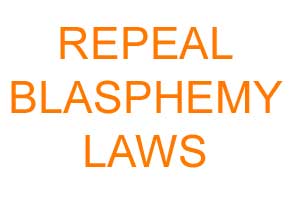
Pakistani Blasphemy Laws Escort To Discrimination Of Minority Groups
Blasphemy law in Pakistan is becoming more and more strong weapon for Muslim extremists. Even though there has never been a death sentence under the act, vigilantes repeatedly deceive and from time to time kill believers of minority faiths blamed of blasphemy.According to U.S.-based Human Rights Watch criticize Pakistan’s documentation of defending its religious minorities, says that 2014 world report shows that “mistreatment has extensively risen under Pakistan’s offensive blasphemy law, which is used against minority faiths, often to settle personal quarrel. They enclose an environment of terror, power terrified judges into pending court conferences within prisons and preventing eyewitnesses to give statement to the protection of those on trial.The national religious affairs ministry has denied the statement. Government officials did not responded on the comment. Secretary-general of Jamiat Ulma-e-Islam, Maulana Abdul Rauf Farooqi abandoned the accusation that the law is generally altered to settle personal issues, although he said he supports a thorough police inquiry before accuses are filed. He said those who were actually harassed had conveyed the aggression upon themselves by enraging Muslims’ emotions. According to the Human Rights Commission of Pakistan, last year 34 people were charged with blasphemy. As per of government statistic 27 were charged in 2012. At least 16 people are presently on death sentence for blasphemy, while another 20 are serving life imprisonment, according to Human Rights Watch. Rescue Christians, a U.S.-based charity working for four years in Pakistan, its head Keith Davies stated that “In the last three years we have seen a large increase in the number of cases of blasphemy” Pakistan is not the only state with such commandment on the books. Blasphemy felony are punished in more than 30 nations, including some with majority of Christian populations, such as Poland and Greece, as well as Muslim countries like Indonesia and Pakistan, according to a 2012 report by the Interfaith Center of New York. The majority of Pakistan’s 180 million people are Sunni Muslims, who don’t support the militants’ interference or their loathing for religious minorities. On the other hand, the minorities, as well as Muslims who belong to the Shiite section of Islam, say even the smallest argue can let them in jail on fabricated blasphemy charges. The hostility connected with Pakistan’s blasphemy law has been vicious. Three years ago, moderate Govt. Salman Taseer was gun downed by his own security guard for defending a Christian woman accused with blasphemy. In a separate attack, militants assassinated Minority Affairs Minister Shahbaz Bhatti after he operation for modification in the law. Last year in July, two brothers charged with insulting Islam’s prophet were murdered as they stepped out of a court. A Christian, Tariq is presently in hidden after authorities accused him with blasphemy charges. He said the charges came over a fight he had with two customers who bought defective firecrackers from him. When he refused to apologize, he said the customers went to the police in Lahore and lied that he had stuffed the firecrackers with pages from the Quran. Fearing capture by Pakistani forces he seeks asylum outside of the country. - See more at: http://www.christiansinpakistan.com/pakistani-blasphemy-laws-escort-to-discrimination-of-minority-groups/#sthash.5mdXjb5L.dpuf
Former President Asif Ali Zardari condemns attack on faith healer place in Karachi
Former President Asif Ali Zardari has strongly condemned attack on Sunday night at a place of a faith healer in Baldia town Karachi. Nine people have been reported killed and ten injured. In a statement former President said that it is most unfortunate that people performing their faith are being targeted by terrorists who want to impose their own political and religious agenda. These attacks cannot and will not weaken the resolve of the people and our security forces to fight these terrorists till the finish. Asif Ali Zardari prayed to Almighty Allah for grant of eternal peace to the departed souls and for early recovery of injured. He also prayed for courage and strength to the bereaved families to bear this irreparable loss with equanimity.http://mediacellppp.wordpress.com/
Shrine of Sufi poet set afire in Pakistan
indiatimes.comThe shrine of Pakistani Sufi poet Mast Twakali, revered across the subcontinent, has been set afire by unknown persons in the restive Balochistan province. The shrine, visit by hundreds of devotees each day, has been partially damaged in the fire, authorities in Kohlu district said. Kohlu deputy commissioner Ejaz Haider said some unknown persons had entered the shrine on Saturday and set it afire. "But because people of the area gathered quickly and put out the fire the shrine was saved but a big portion has been damaged," Haider said. Five suspects have been arrested in connection with the case, he added. Towaq Ali Mast - popularly known as Mast Twakali - was born in 1828. He spread the message of love for the humanity through his poetry. The Tehreek-e-Taliban Pakistan and other militant groups, which consider going to shrines as un-islamic, have in the past targeted them.
Pakistan suicide bomber kills four women in Peshawar
Pakistan: Shariah already exists in country
Busniess RecorderFormer Prime Minister and Pakistan People’s Party (PPP) senior leader Syed Yusaf Raza Gilani has said Shariah already existed in the country in the form of 1973 Constitution as no legislation could be made repugnant to the Islamic teachings. Talking to media persons at his Lahore residence after his meeting with Chief Minister Gilgit-Balistan Syed Mehdi Shah on Sunday, Yusaf Raza Gilani said that the Taliban had come up with three major demands including enforcement of Shariah in the country, release of Taliban prisoners and withdrawal of troops from militancy hit areas and it is up to the government either to accept or not these demands. He said that PPP and other political parties gave mandate of peace talks to the government and now we have to wait for the results of dialogues with banned outfit. Gilani said that he had talked to Prime Minister Mian Nawaz Sharif six months ago asking him to play his role for release of his abducted son Ali Haider Gilani. He hoped that now when the issue of release of Taliban prisoners was raised, the PM would remember his son also, he added. The former premier said PPP government during its era gave provincial status to GB besides facilitating people with equal rights enjoyed by people of other provinces of country. Speaking on the occasion CM GB Mehdi Shah said that PPP led government spared no efforts to resolve problems faced by the people and it was hoped that his party will clean sweep in general elections scheduled in December 2014.
Pakistan: Kaira expresses reservation on negotiation committee
Pakistan People’s Party information secretary Qamar Zaman Kaira has said that his party is supporting efforts to eliminate terrorism and extremism from the country. Talking to newsmen here on Sunday, he said that the PPP would continue to support the government for ensuring peace in the country. He, however, expressed his reservation on the negotiation committee and ceasefire with Taliban. Kaira particularly referred to Major (retd) Aamir, who according to him, was notorious for his anti-democracy stance. He said that it was deplorable that some ministers of the ruling PML-N were supporting defunct outfits. He said that his party would support the government for continuation of the democratic system in the country. He said that the PPP believed in fair trial of former President Gen (retd) Pervez Musharraf. He threatened the PPP would stage demonstrations outside courts if Musharraf trial was not made on merit. He said that the PML-N government came to power with promises to bring down prices of essential commodities and to end gas and power loadshedding, but it had so far failed to fulfill any of its promises. Later, Kaira visited the residence of PPP city president Akhtar Hussain Butt and condoled with him over the death of mother, who had died recently. Earlier, he inaugurated a store on Alipur Road.http://mediacellppp.wordpress.com/
Subscribe to:
Posts (Atom)