Thursday, January 30, 2014

Pakistan: TALKING TO YOUR KILLERS

http://newsweekpakistan.com/
BY FEISAL NAQVI
Decision by Nawaz Sharif to send a four-member peace committee to parley with the Taliban has produced much head-scratching in the pundit community, most of whom had already prepared drafts of their columns welcoming the federal government’s decision to finally teach the damn Tangos a lesson. I have a different question: how exactly will these negotiations work? I know how negotiations normally work (i.e., you talk, I talk, and we agree to meet halfway), but my question is more about procedure than substance. Who will represent the Tehreek-e-Taliban Pakistan? And where will the negotiators meet? Let’s start with the first question. Apart from a few odd names, we don’t know who represents the Taliban. Our leaders keep on telling us that the Taliban are not a monolithic entity but are made up of 50-odd groups. If so, how do we know that the person who shows up for talks actually represents those 50-plus groups? This is not a frivolous question. Back in 2010, the United States spent many months and many millions of dollars negotiating with someone who purported to be Mullah Akhtar Muhammad Mansour, a senior Taliban leader; except, of course, he wasn’t. And as the Americans ruefully acknowledged later, “We gave him a lot of money.” If history is any guide, about half of Peshawar is currently scowling in the mirror and perfecting their Mullah Fazlullah impression. Which leads me to my second question: where will we meet these Johnnies? I seriously doubt that Mullah Radio and his cohorts will be traipsing down for meetings to the Serena in Islamabad (though they will be no more disreputable than the normal guests there). On the other hand, given the age and physical frailty of most of our negotiating team, we can hardly expect them to hike off into the wilderness. I understand that normal operating procedure is that both sides troop off to neutral territory for meetings. If so, what exactly constitutes neutral territory? Kabul? Doha? Vegas? I don’t know of any country which has ever expressed anything less than 100 percent revulsion for the Taliban. How are the Taliban negotiators going to communicate back with their leaders and, more importantly, how will they get back to North Waziristan? Is there some sort of an agreed protocol involved here in which the Pakistan Army turns its back while the representatives of their killers go and hide in the bushes? I understand that the Taliban minions are not the most logical bunch of people. But isn’t negotiating on behalf of the Taliban much the same thing as painting a large bulls-eye on your back? Presumably, we will find out all these answers and more in the weeks to come. One option is that given the master class in public groveling recently performed by a “senior analyst,” the talks will actually be hosted by local TV channels. After all, we don’t want our new masters to get too angry, do we?

Peshawar’s governance paralysis

The Express Tribune
By Imtiaz Gul
Peshawar, the once fabled capital of Khyber-Pakhtunkhwa (K-P), symbolises the decline that major Pakistani towns and cities have endured in the last few decades. The deterioration in the violence-stricken north-western regions is more telling than that in most towns of Punjab or Sindh (except, of course, Karachi).
Overcrowded, broken or potholed roads, incomplete overhead bridges, dysfunctional street lights and plumes of dust rising from the under-construction sites are heart-wrenching sights for visitors, particularly for those who know the city for decades and have seen it fall victim, not only to the geopolitics of the Afghan jihad and the war on terror, but also to a governance model that is British in nature, elitist in practice and is visibly out of sync with modern-day realities. On January 26, for instance, Peshawar suffered one of the worst paralysis in recent history, which offered a glimpse into the city’s non-innovative administrative machinery and the fact that self-serving politicians have dealt with pressing public interest issues.
The occasion was a rally that the Jamiat Ulema-e-Islam-Fazl had organised to protest the ‘extortion, corruption and obscenity’ in K-P. The administration’s decision to close down several points at GT Road, Ring Road and some other arteries virtually choked the dusty city and disrupted traffic in a big way. Countless women, children, old and young, who were on the move from different directions on the day, fainted for the simple reason that they had been on the road for hours, without food or water — a depressing state of affairs indeed.
This disruption forced us to look for alternative routes and thus offered us an opportunity to observe the roads, the state of traffic and the administration’s crowd management capacity. For instance, barricading crucial road links, without prior warnings, is a usual practice all over Pakistan, which often inconveniences the public at large more than the VIPs themselves. Peshawar, at the moment, appears to be in a mess wherever one goes. The Ring Road, for instance, which had become the most crucial hub for the Afghanistan-bound or Karachi-bound US-Nato supplies, is at present tattered at places, with a number of parking terminals wearing either deserted looks or overflowing with containers that were once in use for these supplies. Many of the roughly two dozen terminals and the affiliated service centres are either out of work or only partially busy for lack of business. The capital city also represents contradictions that are typical to many other cities too: inadequate street lights on the roads in the heart of the town, potholed footpaths and haywire traffic reflect another sort of chaos, which is symptomatic of a lack of respect for law and order.
The perennial state of conflict has only further exacerbated the contradictions rearing their heads because of the squabbling political parties and a disinterested administrative structure that hardly betrays vision or willingness for change. And this works to the disadvantage of a party that rode into power promising change. The party, we are told, is currently grappling with internal challenges. One of them is a certain level of dissent on the anti-drone campaign that Imran Khan had kicked off with great valour. He had begun the Nato supplies blockade in the name of ‘human dignity’ and the ‘national pride of Pakistanis’, but the protests have, perhaps inadvertently, caused difficulties to some people.
“The previous government was perhaps better in the sense that the ministers accepted bribes and, at least, some economic activity was going on,” said one of the close confidants of the K-P chief minister, perhaps, jocularly. Peshawar and other K-P towns, it seems, continue to remain hostage to some policy contradictions, inexperience, inaction, inexpediency and the shenanigans of a bureaucracy that lacks a modern-day governance vision and readiness to work for the public. Some insiders insist that Peshawar and K-P as a whole appear to be caught up in a governance paralysis.

Pakistan's rulers are too afraid of Islamist extremists to pardon the 'blaspheming' Briton

By Rob Crilly
So Baroness Sayeeda Warsi is working the phones as part of efforts to bring home an elderly British man convicted of blasphemy in Pakistan last week. That's a good thing. Mohammad Asghar is an old man with a history of mental illness, convicted in the dodgiest of circumstances. He needs all the help he can get.
Baroness Warsi knows what she is doing. I was one of a handful of foreign hacks camped in the lobby of the Khartoum Hilton in 2007 when she and Lord Nazir Ahmed – a Labour peer – arrived on a Muslim mercy mission to free Gillian Gibbons, a British teacher jailed for blasphemy when her class named a teddy bear Mohammed.
They were granted audiences with President Omar al-Bashir to press their case. It worked. A man who seized power in an Islamist coup, who welcomed Osama bin Laden to his country, and whose forces were then engaged in a brutal repression in Darfur – a campaign that earned him arrest warrants from the International Criminal Court for genocide and crimes against humanity – saw sense and did the pragmatic thing. She was granted a presidential pardon and released.
Could that happen in the case of Mr Asghar? Almost certainly not.
Although it has a democratically elected government and benefits from hundreds of millions of pounds in British aid, such is the febrile atmosphere surrounding blasphemy that a sensible debate is impossible. Court cases are obscured by lawyers fearful of repeating contentious statements even in court and by journalists afraid of reporting them. Everyone knows there is almost always a property dispute or a personal slight at the centre of things, yet it is still a brave judge – and one not much longer for this earth – who finds a defendant not guilty.
Such is the fear of the extremists that they can claim victories on a daily basis without lifting a finger. Book launches are cancelled, newspaper stories toned down and debate stifled either by Islamist sympathisers or sensible people who have forgotten that we shouldn't bow down before terrorists.
Suggest reform of the draconian, Colonial-era laws and you will be accused of wanting to let the blasphemers run riot. One of the people on Baroness Warsi's call list was the chief minister of Punjab. He will need no reminder of what happens to Pakistani politicians who get involved in cases like these. Three years ago the governor of Punjab – the president's representative in the province – was shot dead for taking up the cause of a Christian woman sentenced to death for blasphemy, a case revealed by The Telegraph. His killer was showered with rose petals as he arrived in court and today remains in Adiala Jail, the same prison where Mr Asghar is detained in a fragile mental and physical state. Ironic? More like tragic.

Pakistan's march to theocracy

Ayesha Siddiqa
There are growing concerns that the country was fast moving toward a theocratic order.
It was a quick call from my editor's office in Karachi informing me not to bother writing anymore about the Tehreek Taliban Pakistan (TTP) or any other militant outfit, religious party or even the cricketer-turned-politician's Pakistan Tehreek-e-Insaaf (PTI). I was told I couldn't even mention TTP and its other sister organisations. The call came in the wake of an attack on a vehicle carrying staff of a media group which killed three people and injured another four.
The TTP was quick to take responsibility. The spokesman of the militant outfit Ehsanullah Ehsan even appeared on a television program and warned the media group about giving the TTP bad press. The channel's anchor Javed Chaudhry had to promise a "balanced" representation of views about the militants and their agenda. Furthermore, Ehsan claimed the attack was an attempt to force Pakistan to meet the promise of imposing Sharia law in the country.
A day later on January 19, another 20 Frontier Corps (FC) soldiers were killed and about 30 injured in a suicide attack in Bannu Cantonment in the northern province of Khyber Pakhtunkhwa (KPK). This was followed by an attack on January 20 in Rawalpindi Cantonment near the Pakistan Army's GHQ, bringing the death toll up to 33 and the number of wounded to 63. Not to mention the constant targeting of polio workersacross the country.
These attacks happen despite the civilian government's claim to engage the Taliban in a dialogue to end the violence. The first attack on the television channel came the same day as the statement by the TTP spokesman announcing his group's willingness to talk with Pakistan's government as long as the latter ensured the implementation of Sharia law in the country.
Country divided
Such statements, followed by attacks, tend to divide the country and society into two camps. While there are those who are frustrated by the government's inaction against the Taliban, others have a similar feeling but for a different reason. A number of young men and women I spoke with in urban centers of South Punjab sympathise with the TTP rather than their own soldiers. Their reason, as one young woman stated: "What's wrong with the Taliban asking for implementation of Sharia? If fighting is the only way they force the government to do what people want, then so be it."
Islamabad reacted to the attack in Bannu with an aerial bombardment of North Waziristan. This reportedly killed a prominent Taliban commander, Adnan Rashid, a former soldier linked with the attack on Pakistan's former President General Pervez Musharraf.
But many wonder if the attack on North Waziristan - considered a sanctuary for the TTP - is enough to solve the problem. There are three issues in solving the problem of violent extremism in the country. First, there appears to be a lack of consensus on talking to the Taliban. While right-wing parties or others with a strong right-wing flavor like the PML-N and PTI support the idea of talking to the TTP, others like Benazir Bhutto's Pakistan People's Party (PPP), the ethnic Awami National Party (ANP) and the Mutahida Qaumi Movement (MQM), contest the idea.
Second, even if a consensus were reached on talking to the TTP, it is not clear what the government would negotiate. Will it agree to implement Sharia law in the country? Would Islamabad release about 4,500 imprisoned militants as per TTP demand a few months ago? Or will the government find a way to stop American drone attacks in tribal areas?
Third, if a method were found to fight the Taliban, then a larger problem would be that of not having the capacity to do so. Here, the notion of capacity does not refer exclusively to the military's physical capability but also the aggregated will of the nation to fight militancy and wipe out violent extremism from the country. The gradual strengthening of the right-wing ideology in the state and society hampers the ability to udnertake such a battle.
The militancy problem has grown far bigger than imagined. The two main parties at the moment, which made gains in the 2013 elections - the PML-N and PTI - have militant sympathisers in their ranks at significant levels. The Punjab government is even known for paying militant madrassas from the government exchequer. The PPP and the MQM in Sindh vociferously condemn violent extremism.
Low conviction rate
However, they suffer from a shallow assessment of the issue. Skeptics also point a finger at the judiciary, which is unable to punish those convicted of terrorism. Pakistan has a very low conviction rate, which some believe is not just out of fear, but because many judges are sympathetic to extremist ideology or such groups. Although it is popularly imagined that the army opposes talks with the Taliban, some sources claim there are TTP and "jihadi" sympathisers even within the armed forces.
In Pakistan, it is fashionable to say that the American and NATO withdrawal from Afghanistan will end violence in the country and the region at large.
However, it is no longer an easily solvable problem considering that militancy has numerous faces and is spread throughout the country - not just confined to the north. The provinces of Punjab and Sindh are rife with militant groups popularly labeled as Punjabi Taliban. Insider sources believe that at least two to three groups act as state proxies.
Allegedly, some of their breakaway factions have turned against the state like the Sipah-e-Sahaba Pakistan (SSP), Lashkare Jhangavi (LeJ) and Lashkare Khorasan (LeK). Due to the absence of a clear policy, coupled with the complicity of the state, these groups and many other factions have now spread far and wide. Traveling around the country and spotting extremist elements, it comes as a surprise to see the police and intelligence holding back from cracking down on these elements. The police, whose information is mostly collected through human intelligence, feel frustrated over their inability to electronically monitor the movement.
For one, the police cannot intercept and track phone calls or Internet communication. The military intelligence that has this capability refuses to share it. The Nawaz Sharif government seems to be working on a new counter-terrorism policy which is inherently flawed. The new approach aims at disbanding the existing structure and creating a new one which many believe might not deliver.
Replacing police officers with army personnel is not likely to help eradicate violent extremism. Meanwhile, militants continue to kill and threaten. They attack religious minorities including Shias, and do not even spare the majority Barelvi sect. In the past month, there were two incidents of dead bodies found near Sufi shrines in Karachi with a warning that people must stay away from such places. On January 21, a renowned playwright, Asghar Nadeem Syed, was shot and wounded in Lahore. He was probably not killed in order to serve as a reminder to other Shias and the larger population that the state of Pakistan must now prepare to become an ideological theocracy.

Call for release of Briton sentenced to death in Pakistan blasphemy case

By Saima Mohsin and Sophia Saifi
The family of a mentally ill British man sentenced to death in Pakistan for blasphemy is calling on authorities to release him. A court in the city of Rawalpindi last week handed down the punishment to Muhammad Asghar, 69, over charges alleging that he wrote letters claiming to be a prophet. But his family, his lawyer and a British legal aid group say the court failed to take into account the mental state of Asghar, who has been diagnosed with paranoid schizophrenia. The sentencing hearing took place last week behind closed doors without his legal team's knowledge, they say, and his lawyer has been blocked from visiting him since. "We are really upset and concerned that they will never release him and that he will die in jail," his family said in a statement released Monday by the British legal aid and advocacy group Reprieve. "He has already attempted suicide unsuccessfully."
Asghar was convicted under Pakistan's controversial blasphemy law, which human rights groups say is used to settle personal scores and persecute minorities. Now, his family and lawyer are concerned that his legal team will be prevented from meeting a key deadline this week to file an appeal that they say would keep important evidence about his mental health admissible in the case.
History of mental illness
Asghar was diagnosed with paranoid schizophrenia in 2010 in Edinburgh, Scotland, the city where he was living at the time, and kept under observation in the hospital for over a month. Later that year, he traveled with his wife to Pakistan, where he owns a number of properties. He was arrested near Rawalpindi and jailed in September 2010 on allegations that during a dispute with one of his tenants, he had sent letters claiming to be a prophet. Under Pakistani law, blasphemy against the Prophet Muhammad is punishable by death or life imprisonment. A Pakistani law firm took up his case and has been working on it for the past three years. The lawyer for the firm who has been representing Asghar spoke to CNN about the case on the condition of anonymity because of security concerns -- the firm has received threats in the past. The lawyer says Asghar denies sending the letters, describing the case as the result of a property dispute that turned bad.
'Horrific jail conditions'
Asghar's family and legal team have criticized his treatment in jail and the way the Pakistani court system handled the case.
"The dates kept being moved forward so that by the time the trial concluded he had already been in horrific jail conditions sharing a cell with several other men for three years," the family said in its statement. "Throughout this time he had minimum access to medication that might have helped his mental illness."
In early 2012, he tried unsuccessfully to commit suicide, his lawyer says, and spent time in the hospital recovering. A medical report about his mental state, provided to the court around that time, was flawed and lacked proper psychiatric assessment, the lawyer says.
Psychiatrists willing to testify in the case were deterred because of direct threats to their security, the lawyer says. An independent analysis of Mohammad Asghar's case by the Pakistan Association for Mental Health stressed the need to put him on suicide watch saying "his threats to commit suicide cannot be taken lightly."
Appeal deadline looming
The legal team that had been working on his case was replaced by a state counsel in the final stages of the trial after filing a request to have the judge replaced on the grounds of probably bias, Reprieve said. Members of the legal team have been visiting Asghar at Rawalpindi's Central Jail, known as Adiala Jail, where he is being held. But they are no longer able to get permission to see him.
That's a big issue because the lawyers have until Thursday to file an appeal before the High Court. If they don't make the deadline, an automatic "jail appeal" will be filed. In that case, Asghar's lawyers "will be barred from raising crucial evidence of Mr. Asghar's mental health and other fair trial issues on appeal," Reprieve says.
Asghar's lawyer told CNN that without a proper appeal, the case might languish in the court system for years.
The lawyer said that considering Muhammad Asghar's frail mental health and suicidal tendencies, she fears he "might not survive" that time period. His relatives say they want Pakistan to release him so "he can be treated appropriately for his medical condition." Baroness Sayeeda Warsi, a senior official at the British Foreign and Commonwealth Office, said in a statement that Britain will be raising concerns over Asghar's sentence "in the strongest possible terms with the Pakistani government." Pakistani officials weren't immediately available for comment on the matter Tuesday. Judges under pressure
Accusations of blasphemy often unleash fierce passions in Pakistan, drawing angry crowds who gather outside court hearings demanding punishment before cases have even been heard.
"So much pressure is on the police and judiciary to take action that even in the face of overwhelming evidence of innocence or shoddy evidence against the accused, no judge is willing to be seen to be lenient," Asghar's lawyer told CNN. "There was a mob outside the police station when Asghar was arrested, there was a mob outside the hospital when he was rushed there after attempting suicide,"she said. "People leak information and put pressure on the justice system." Although human rights advocates say minorities are often the targets of blasphemy charges, the Human Rights Commission of Pakistan says the majority of people accused of or imprisoned for blasphemy are Muslims. Pakistan's population is overwhelmingly Muslim.
In January 2011, Punjab Governor Salman Taseer was shot to death by one of his security guards after publicly supporting a Christian woman accused of blasphemy and calling for a change in the law.
In 2012, the case of a Rimsha Masih, a Christian teenager accused of blasphemy, caused an international outcry. Charges against her were eventually dropped, but she and her family were forced to go into hiding. That's why Asghar's lawyers are so concerned about his safety. Members of the firm representing him have faced direct threats to their safety because of the case, his lawyer said. In 2012, six people at the firm quit in one day because they were concerned for their safety. But despite the risks, the firm has stuck by him.

Pakistan & Terrorists: Back to square one

UNEXPECTEDLY, Prime Minister Nawaz Sharif went to parliament yesterday and spoke from the floor of the National Assembly about his government’s plans to combat terrorism and militancy. Then, in line with much of the hype and speculation of recent days, he proceeded to deliver a speech that appeared to be heading towards the only logical conclusion: the dialogue option was being discarded in favour of the use of force against the TTP. But, befitting a prime minister who is giving new meaning to the terms secretiveness and holding one’s cards close to one’s chest, Mr Sharif sprang a surprise that virtually no one saw coming. The government is appointing a four-member committee to give the dialogue option one more chance, the prime minister announced.
If the decision itself was a complete surprise, less surprising were the details: there were none. No deadlines, no red lines, no clarity about who will be reached out to, no specifics about the mandate of the four-member committee — virtually nothing other than the old platitudes about sincere efforts and genuine intentions on the part of the government. Mr Sharif did say that it was unacceptable for the TTP to continue its campaign of violence if the dialogue option is to remain on the table, but, given the litany of attacks since September that the prime minister himself recounted, why is the TTP now supposed to take the prime minister seriously on this count? If all the TTP violence since the dialogue option was endorsed by the APC last September has not taken talks off the table as yet, why would the government wrap up its brand new initiative were a few — even many — more attacks to occur in the days ahead?
Not only does the latest reworking of the government’s anti-militancy strategy look even less like a strategy than the dithering of the past few months, it raises some fundamental questions about the PML-N’s approach to politics and policymaking. Of the four members tasked with helping the government achieve what is by the government’s own admission its principal policy concern, not a single one is a politician. That is a quite remarkable, if implicit, indictment of the PML-N leadership’s trust and faith in the overall political class. And what of the PML-N parliamentarians themselves, who were summoned to a special parliamentary party meeting at the start of the week and whose opinion was sought on what the government needs to do now to address the terror threat? Not only was the general thrust of the PML-N parliamentarians’ advice ignored, they were clearly not even informed of their own leadership’s plans to try and reinvigorate the dialogue option. That hardly bodes well for the transparency Mr Sharif promised in the dialogue process with the TTP.

Pakistan: Cancelling I Am Malala’s book launch

Malala Yousafzai is Pakistan’s face of integrity, perseverance and victory against the extremist forces. One could say she is the symbol of all that is anti-Taliban. Therefore anyone who is even in the slightest opposed to the fight she is immersed in can be seen as a Taliban sympathiser. That unenviable title is of late being linked to the Pakistan Tehreek-e-Insaaf (PTI) because almost every move it makes is somehow in solidarity with the extremist forces. On Tuesday, the University of Peshawar was all set to officially launch Malala’s biography, I Am Malala. It was an event to commemorate the young activist’s new book and pay homage to her advocacy of female education. However, the event was unceremoniously cancelled due to reported pressure exerted by ministers from the PTI. The reason? Alleged security concerns. However, that is not the surprising thing. It is well known that any event to celebrate Malala Yousafzai comes with its own risks. After all the girl was shot by the very Taliban the state is fighting against. What is surprising is the apparent confusion being voiced by the PTI chief, Imran Khan, who has expressed - on social media networking site Twitter - that he is “lost” as to why the book launch was cancelled. In what seems like damage control, the PTI head is making it clear that he in no way condones this behaviour by his ministers no matter what the reason. Is there trouble in paradise? Apparently there is because it seems those PTI representatives who are on the ground in Khyber Pakhtunkhwa (KP) are disconnected from the political policies being practiced by the upper echelon of the party. ?One cannot help but sympathise with Imran Khan as it seems that of late his party in KP is going to great lengths to embarrass him. It happened when the whole country felt profound sadness and outrage at the death of 15-year-old Aitzaz Hasan who died at the hands of a suicide bomber in Hangu when he tried to stop him from blowing up his school, saving 2,000 innocent children from a horrible death. To honour this brave child martyr the PTI government in KP did the following: absolutely nothing. The chief minister of the province did not bother to attend the funeral of the boy, inciting much anger from the PTI chief who ordered immediate monetary compensation for Aitzaz’s family. Of course, this was too little too late and the damage had been done. Now we see the same miscommunication and detachment when it comes to Malala’s book launch. We hope the book launch will still go ahead. Meanwhile the right hand of the PTI does not seem to know what the left is doing. It is time thorough lines of communication open up between the party and its head lest we see further disquiet down the road.

Bilawal Bhutto : Sindh Festival's stage does not damage ruins of Mohenjodaro

Pakistan Peoples Party (PPP) patron-in-chief, Bilawal Bhutto Zardari said that the stage made for the launching ceremony of upcoming Sindh Festival 2014 did not damage the ruins of Mohenjodaro, SAMAA reports. Bilawal visited the site today along with archaeology experts, who gave him briefing. It is to be mentioned here that Bilawal Bhutto was strongly criticized by the people of Sindh, including writers and journalists, for damaging the ruins of Mohenjodaro in the name of culture festival. The Sindh Festival will be held from February 1-15 and its closing ceremony will be held at Keenjhar Lake, Thatta. SAMAA

Wednesday, January 29, 2014

U.S. Congressman apologies to reporter after threatening to break him 'in half'

The New York congressman who was filmed threatening a television reporter following Barack Obama's State of the Union address has apologised amid a furore over the incident comments that risks ending his political career. Staten Island representative Michael Grimm, a former FBI agent and marine, told NY1 reporter Michael Scotto that he would throw him off a balcony and break him in half after objecting to a question about an investigation into his 2010 campaign finances. The 43-year-old Republican's outburst was caught on camera and broadcast by NY1 on Tuesday night. "Congressman Michael Grimm does not want to talk about some of the allegations concerning his campaign finances," Scotto says to camera as Grimm leaves. The politician then returns. Much of the ensuing exchange is inaudible in the recording, but according to a transcript from NY1, Grimm said: "Let me be clear to you, you ever do that to me again I'll throw you off this fucking balcony." Scotto replies: "Why? I just wanted to ask you," before Grimm says, "No, no, you're not man enough, you're not man enough. I'll break you in half. Like a boy." Grimm's friend and fundraiser Diana Durand was arrested earlier this month for funnelling more than $10,000 to his campaign. Grimm is also facing an ongoing federal investigation into allegations that he or his campaign solicited cash from foreign donors. On Wednesday, as the national media repeatedly played the footage of the incident, Scotto announced on air that Grimm had called him to apologise. The reporter said he thought the apology sounded sincere, and that he had accepted it and would "move on". That apparently contrite tone was in stark contrast to the defiant statement Grimm issued after the story broke on Tuesday night. "I was extremely annoyed because I was doing NY1 a favour by rushing to do their interview first in lieu of several other requests," the statement said. "The reporter knew that I was in a hurry and was only there to comment on the State of the Union, but insisted on taking a disrespectful and cheap shot at the end of the interview because I did not have time to speak off topic. "I verbally took the reporter to task and told him off because I expect a certain level of professionalism and respect, especially when I go out of my way to do that reporter a favour. I doubt that I am the first member of Congress to tell off a reporter and I am sure I won't be the last."

Obama takes agenda on tour, urging boost in minimum wage

The president visits Costco and a steel plant, focusing on raising the minimum wage to $10.10 for employees of U.S. contractors, and creating a test program for the MyRA retirement savings account.
He has taken to saying he has a pen and a phone that he can use to work around Republicans in Congress, but President Obama also has a jet and a helicopter.
He used them both Wednesday as he set off on a two-day traveling sales tour to promote his State of the Union agenda to increase economic mobility for American workers, stopping first at a Costco store in Lanham, Md., just outside the Beltway, and then at a U.S. Steel plant here.
"Wherever I can take steps to expand opportunity for more families, regardless of what Congress does, that's what I'm going to do," Obama told steelworkers gathered on a factory floor. "I am determined to work with all of you and citizens all across this country on the defining project of our generation, and that is to restore opportunity for every single person who's willing to work hard and take responsibility in this country."
Obama called on Congress to raise the minimum wage and ensure that all working Americans have access to retirement savings accounts. But underscoring his pledge to act on his own, he said he would raise the minimum wage for some federal contract workers and he signed an order to create a new federal savings plan.
The trip, though, is also about the president's campaign to restore his credibility with the public, which slipped dramatically last year, in large part because of the disastrous rollout of his healthcare plan.
That political baggage could burden his party as it tries to hold on to the Senate this election year. With a presidential agenda focused on narrowing the gap between rich and poor, the White House hopes to empower Democratic candidates and pressure Republicans to pass some of the president's initiatives. But Obama's low approval ratings have diminished the reach of his microphone. And although most Americans say that they believe the system unfairly favors the wealthy, less than half say that reducing income inequality is a priority. "Other than the veto and executive orders, the bully pulpit may be all Obama has left to influence the course of events," said Larry J. Sabato, director of the Center for Politics at the University of Virginia. But he suggested that would take the president only so far. "In the end, a speech is just a speech. It can't change political reality, and the current reality was set in November 2012, when divided government emerged from the election." Obama plans to make frequent use of his portable pulpit, with trips around the country tentatively planned almost every week for the next few months. Moving public opinion will be a challenge, but the kinetic schedule could create an impression of an engaged leader making things happen. And when he's traveling, he's not stuck in Washington, sniping at a Congress hobbled by the partisan divide and the deep splits within the Republican Party. Republicans, who have bridled at the president's pen-and-phone rhetoric, dismissed his post-State of the Union travels. "We've seen this road show before, and it never amounts to anything but empty rhetoric and zero results," said Kirsten Kukowski, spokeswoman for the Republican National Committee, describing the president's plan for his sixth year in the White House as playing "small ball" with "rehashed ideas." But with a gridlocked Congress, Obama is intent on using whatever tools he can find. Step one: stretch the nation's momentary attention on his State of the Union address into a communique lasting several days.
On Wednesday, Obama took two of the ideas he painted in broad strokes in his Tuesday address and added more detail — or, at least, more argument.
In Maryland, he focused on a key piece of his plan to take executive action, his decision to order federal contractors to pay at least $10.10 an hour, and he called on Congress to raise the $7.25 national minimum wage. "Nobody who works full-time should ever have to raise a family in poverty," Obama told about 50 Costco employees. "That's why I firmly believe it's time to give America a raise." The president praised Costco for paying entry-level employees $11.50 an hour. He gave a shout-out to co-founder Jim Sinegal, a major Democratic donor and Obama supporter, and Chief Executive Craig Jelinek, who has backed a higher minimum wage and told Seattle Weekly this month that $15 an hour would be a fair minimum wage.
In Pennsylvania, Obama talked about his plans to establish a new retirement savings product — MyRA, a play on IRA, the abbreviation for individual retirement account. The Treasury Department does not need congressional approval to establish such accounts. They will be guaranteed by the U.S. government. Workers will be able to start an account with $25 and contribute as little as $5 through automatic payroll deductions. On the factory floor, Obama signed a presidential memorandum to set up a pilot program by the end of the year and handed it to Treasury Secretary Jacob J. Lew. "Here, here's your memo," he said. The MyRA idea fits the template for the new Obama strategy: take a small step by executive action and call on Congress to make it bigger. In a surprising sign that it might work, Sen. Ted Cruz, a conservative Texas Republican, said Wednesday, "That could be something that I would be eager to work with him on."
http://www.latimes.com/nation/la-na-obama-agenda-20140130,0,6052114.story#ixzz2rqBHrXsP

Beyoncé - Drunk in Love

Afghan Leader Reacts To Obama Speech

http://www.rferl.org/
Afghan President Hamid Karzai has welcomed U.S. President Barack Obama's new remarks about Washington's commitment to Afghanistan's future. In a statement on January 29 following Obama's State of the Union address the night before, Karzai welcomed Obama's omission of any mention of deadlines for Afghanistan to sign a Bilateral Security Agreement covering the deployment of U.S. forces in Afghanistan after 2014. Obama set no deadlines in his speech, but did urge Karzai to sign the agreement. Washington has warned it could decide to withdraw all U.S. forces from Afghanistan if the deal is not signed soon. In his statement, Karzai said that launching an Afghan peace process involving Taliban insurgents was a precondition for signing the agreement.

In Afghanistan, a war that has lost its purpose

By Richard Cohen
While watching the utterly gripping movie “Lone Survivor” recently, I comforted myself by noting that the four Navy SEALs engaged in a desperate firefight with the Afghan Taliban were all volunteers. They asked for this, I told myself. They were not draftees yanked out of civilian life and compelled to fight a war they could neither understand nor win. They had asked for this, I insisted, but I knew all the time that this was a lie. They had volunteered, but certainly not to die and certainly for no purpose.
Okay, I know this is only a movie. But it is faithful to the book of the same name , which is faithful to the 2005 mission called Operation Red Wing that was intended to take out a Taliban commander. The title “Lone Survivor” pretty much says what happened, but you owe it to the SEALs and to their families to see the movie. The ending is not in doubt, but the reason for their sacrifice undoubtedly is. Afghanistan is a war searching for a reason.
All through the movie, I kept asking myself, Why? What are these men fighting for? Once, I knew the answer. After Sept. 11, 2001, I wanted to wipe out al-Qaeda and kill its Afghan hosts, the Taliban. Even before the terrorist attack, reports of the Taliban’s treatment of women — stonings, public executions in the soccer stadium, etc. — and beheadings of men convinced me that it simply had it coming: Send in the Marines.
But U.S. fighting units have been there since 2001. The initial mission — the destruction of al-Qaeda in Afghanistan — was completed long ago. The Taliban and its allies remain, but unlike al-Qaeda they are indigenous and, seemingly, undeterred. They apparently have an unlimited supply of suicide bombers (who are these people?), and they continue to inflict mayhem on Afghans and foreigners alike. This month, the Taliban struck a Kabul restaurant that draws a Western clientele and killed at least 21 people. The attack by gunmen was preceded by a suicide bombing.
Bob Gates, in his memoir “Duty,” depicted Barack Obama as a commander in chief whose policy in Afghanistan was to do as little as possible — simultaneously ordering a surge and announcing a pull-out date. Gates, then defense secretary , was appalled: “The president doesn’t . . . believe in his own strategy and doesn’t consider the war to be his.”
Well, the war is not Obama’s. It is George W. Bush’s — one he interrupted to mindlessly chase after Saddam Hussein. But Obama embraced the Afghanistan mission and then, apparently, never knew what to do with it. I don’t blame him. Afghanistan is an arid Vietnam, a quagmire presided over by the petulant and unpredictable Hamid Karzai. For Obama, Gates wrote, “it’s all about getting out.”
The quote is pithy, but the observation is banal. It was clear back in 2009, when Obama ordered his surge in Afghanistan, that he had no stomach for continuing the war. The war goes on and on and has now become fused with the futility of Iraq — 2,307 Americans dead in Afghanistan, 4,489 dead in Iraq, an incomprehensible waste of lives.
The administration wants U.S. troops to remain in Afghanistan (the Pentagon has suggested 10,000). It has its reasons. The country was once a terrorist base and could revert. The necessary pursuit of the remaining Sept. 11 terrorists is best based in the region — as are U.S. drones — and without an American spine, the Afghan army could collapse. That would permit the return to power of the Taliban and the abandonment of women and girls to frenzied misogynists. That, though, has nothing to do with realpolitik, just real life. Soon, the music will die and we will have to avert our eyes. But as Gates insisted, Obama has failed to make these or other arguments. “He needed to say publicly why the troops’ sacrifices were necessary,” Gates said of the president. Gates made that point several times, and he is right. Maybe, though, Obama is cautioned by the experience of Lyndon Johnson. On July 28, 1965, LBJ began a news conference by addressing the question of “why we are in Vietnam.” He never supplied a satisfactory answer.
In the movie theater, I watched two films at once — “Lone Survivor” on the screen and Vietnam in my head. On the screen, as in reality, men fought and died — and, as with Vietnam, I no longer knew why. One man survived the battle. The rest were lost — as is the reason for the war itself.

US-Funded Hospital in Afghanistan Has 3 Light Bulbs, Forces Staff to Wash Newborns in River Water

The Special Inspector General for Afghanistan Reconstruction finds shocking conditions at a facility built with US taxpayer money.
A hospital in Afghanistan's Parwan province, which cost US taxpayers almost $600,000, is so ill-equipped, hospital staff are washing newborn infants using untreated river water, the Special Inspector General for Afghanistan Reconstruction (SIGAR) reported on Wednesday. SIGAR's visit, which was conducted in November 2013 (photos here), also found mold and mildew throughout the hospital; a lack of furniture and equipment; a serious risk for earthquake damage; and only enough electricity to operate three light bulbs in the entire facility.
In 2009, a local Afghan contractor, Shafi Hakimi Construction Company, was commissioned to build Salang Hospital as part of a Department of Defense-funded reconstruction program. When a US Forces-Afghanistan (USFOR-A) task force first inspected the hospital when it was under construction in 2012, they determined it had major problems and residents of Salang district wouldn't have adequate healthcare until they were fixed. In November 2012, the contractor was paid in full. But when SIGAR inspected a year later, it found "the deficiencies identified by the task force had not been corrected."
NBC News, which recently visited the facility, observed "desperate" hospital staff attempting to administer dental care to a 12-year-old girl—even though they only had access to six pieces of rusty dental equipment. As NBC described it: "The girl was shivering with fear, and began crying after the doctor gave her a shot in her gums. Another man held her still as Sarwy swiftly tilted her head back, opened her mouth and yanked out one of her teeth with a pair of pliers."
Hospital staff told SIGAR that they are paying about $18 a month of their own money to a neighbor, in order to get enough electricity to operate the three light-bulbs in the hospital. Additionally, SIGAR found that the contractor built the hospital two stories high, instead of one, without authorization from US officials or further study. "The hospital does not serve the medical needs of the people of Salang district as intended and may be a danger to its patients and staff because of the potential for the structure’s collapse in an earthquake," the report reads.
This account differs sharply with a press release put out by US Forces-Afghanistan yesterday, which argued that despite the SIGAR report, "the facility is currently providing improved medical services" and noted that, "local ministry officials are currently in the process of hiring a surgeon and other staff and have installed a solar power generation unit." John Sopko, the Special Inspector General for Afghanistan Reconstruction, told NBC, "either no one from USFOR-A has actually visited this facility recently or USFOR-A is living in an alternate reality."
Mother Jones has reached out to US Forces-Afghanistan to find out when they last visited the facility. According to a January 21 US Army document obtained by Mother Jones, US forces have been unable to conduct a physical re-inspection of the hospital since the SIGAR notified them of their findings on January 3, due to "reduced combat forces [and] threats in the area." ​

KARACHI BOMBING: Anguish in Pakistan

Four people are killed in three separate attacks in Karachi.

I am Malala : Book launch thwarted

IT is never advisable for governments to get into the business of banning books. And if the literature in question is written to counter the extremist narrative that is beginning to dominate, as Malala Yousafzai’s I am Malala attempts to do, then official obstructions to prevent the launch of such material can only be termed utterly appalling. As reported, the authorities in Khyber Pakhtunkhwa have thwarted the launch of Malala’s book which was supposed to take place yesterday at the University of Peshawar. The PTI-led KP government apparently got cold feet as ministers and university officials pressured the organisers to cancel the event. The police, too, said they would be unable to provide security. This sets a disturbing precedent, especially when we consider that a seat of higher learning was involved. As one of the organisers observed, “It is against the spirit of freedom of expression and promotion of education”. But there is an even graver problem. The KP government’s buckling under pressure reflects a sense of fear that is palpable across Pakistan — the fear of ‘offending’ the militants. The state is ceding more and more ground to the extremists, allowing them to decide what is and is not okay for public consumption. Such resignation and retreat on part of the state is unacceptable.
Malala has been feted by the world for her courageous stand against extremism and activism for women’s education. She has been welcomed in world capitals and august global forums. Should we not hang our heads in shame because she cannot be appreciated in her own country and province? Let us be clear: Malala is someone the people of KP can be proud of, a symbol of the potential of the troubled province’s youth. PTI chief Imran Khan has expressed disappointment at the cancellation of the launch. He would do well to convince the KP government to reschedule the event and facilitate it so that it goes ahead without a hitch.

Pakistan: Balochistan bleeding

By Dr Mohammad Taqi
Is the chief minister not aware that the Hazaras cannot move freely between Hazara Town and Mariabad, Quetta without risking executions? That a people are being ghettoised in the 21st century on his watch seems completely lost on Dr Baloch
The beleaguered ShiaHazara community of Quetta has dug yet another mass grave for its loved ones slaughtered in the Mastung bombing by the Lashkar-e-Jhangvi (LeJ) as they were returning from a pilgrimage in Iraq and Iran. The Hazaras, one of the most peaceful people in Pakistan, had just commemorated the anniversary of the massacre perpetrated on them by the LeJvia twin suicide bombings last January in Quetta. A hundred HazaraShias died in that attack. Before thatthe LeJ had executed 26 HazaraShias in an ambush in Mastung in September 2011 and another 15 in Quetta in June 2012 as they were returning from a pilgrimage. It seems nothing has changed for the hapless Hazaras. The then provincial and federal governments led by the Pakistan People’s Party (PPP) had promised action against the LeJ just as the Pakistan Muslim League-Nawaz(PML-N) has done now. One will have to see it to believe it. Till then, the HazaraShias are on their own.
The cavalier attitude of the Balochistan chief ministers has perhaps also remained the same. When asked about the plight of the HazaraShias, the former chief ministerAslamRaisani offered to send them a truckload of tissue papers. The current chief minister, DrMalikBaloch, was not as callous as MrRaisani and did show up at the peaceful protest organised by the HazaraShias. However, his proposed — and later enforced — solution to the ongoing tragedy was just as inconsiderate. DrBaloch said that the pilgrim buses should stop using the land route through Mastung and go to Karachi instead. He suggested a ferry service between Pakistan and Iran with the voyage starting preferably from Karachi. The television anchor asking him the question might not have known but it is just not possible that DrBaloch is not aware that the shortest route from Quetta to Karachi also goes through Mastung. Whatever the easiest way to Karachi may be, DrBaloch, a supposedly enlightened and progressive leader, was clearly taking a detour around responsibility. What does he have to say about the ShiaHazara vendors getting killed in Quetta? Is the chief minister not aware that the Hazaras cannot move freely betweenHazara Town and Mariabad, Quetta without risking executions? That a people are being ghettoised in the 21st century on his watch seems completely lost on DrBaloch.
This is not the first time DrMalikBaloch has been economical with the truth. In fact, he and his lead senator, Mir Hasil Khan Bizenjo, both have made it a habit to speak of the elusive foreign hand and Iran-Saudi proxy war whenever the ShiaHazarakillings are brought up as an issue that their government should be addressing. They never pinpoint what exactly the HazaraShias have got to do with Iran. How many Saudi proxies have ever been killed by the Hazaras? Do they have any militant outfit that has targeted civilians and blown up buses? As the leaders in charge of a terribly restive province,these gentlemen, who have been permanent fixtures in Islamabad, should be a bit more forthcoming and serious. They cannot be unaware that the LeJ and the state-backedjihadists fighting the Baloch nationalists have been consorting for quite some time. Terrorists like Usman ‘Saifullah’ Kurd, RamzanMengal, DawoodBadini and JaleelAbubakarAbabakki have been the bane of both the Baloch nationalists and the HazaraShias. Some of these men fought alongside Mullah Omar’s Taliban in Afghanistan in the 1990s and reportedly spent time in the training camps setup there by the LeJ founder,Riaz Basra. Logistics and manpower sharing between the LeJ and the state-propped death squad, the BalochMusallahDifaeeTanzeem(BMDT),cannot be hidden from the ostensibly nationalist government of Balochistan.
But, then again, till the time of this writing, DrMalikBaloch has not let out as much as a whimper about the discovery of mass graves in the Khuzdar district of Balochistan. The gruesome find has been reported by the Pakistani and international media,putting the number of bodies or remains at anywhere from 15 to 100. In all likelihood, the dead were ethnic Baloch. A member of Dr Baloch’s cabinet, MrSarfarazBugti, had the gall to tell the BBC Urdu service in one breath that the bodies were unidentified but ‘he guaranteed’ that the state was not involved. He blamed the Baloch separatists for the atrocity and alleged that the Indian intelligence agency RAW was involved. MrSarfarazBugtimay be covering up what could be a gorywar crime. DrMalikBaloch’s silence on this tragic matter speaks volumes about both his capacity and will. This is indeed a sad state of affairs under a chief minister whose election held some promise for many, if not all, in Balochistan and beyond.
To their partial credit, DrMalikBaloch and Senator HasilBizenjo have stated that any operation in Balochistan against the LeJ cannot be successful unless the theatre of action is expanded to include Punjab and even Karachi. There can be little doubt that while its tentacles reach all provinces, the body of the LeJ hydra remains in Punjab. It is quite disingenuous to not mention, even in passing, the close relationship of the LeJ with the terrorist groups unleashed to neutralise the Baloch separatists. The HazaraShia genocide is very much the outcome of the state’s policy to deploy armed groups to upend the Baloch insurgency. The state is not only aware of sectarian terrorists but some of its functionaries have reportedly been complicit in springing theLeJ ringleaders,UsmanSaifullah Kurd, DawoodBadini and Shafiq Rind, from prison. Similarly, the BMDT’s head honcho,ShafiqMengal, who recites scripture at the drop of a hat, cannot thrive without high-level patronage. The state’s strategy of countering the Baloch insurrection with jihadism is but a replication of its similar strategy to neutralisePashtun nationalists on both sides of the Durand Line with an array of fundamentalists. Sadly, the outcome in Balochistan is no less disastrous than it has been in the Pashtun lands.
A meaningful operation would entail not just including Punjab but actually abandoning the policy of using jihadist proxies at home and across the borders. Short of that,Balochistanwill unfortunately keep bleeding and its people digging more mass graves andmarching on in search of their missing loved ones buried perhapslike those found in Khuzdar.

Pakistan: PPP Human Rights Cell Press Statement on Mass Graves in Khuzdar

http://mediacellppp.wordpress.com/
The PPP Human Rights Cell Coordinator Dr Nafisa Shah has expressed grave concern at the mass graves of unidentified bodies that have been unearthed in Khuzdar in Balochistan.
“The federal and provincial governments must enquire and report to the people about this heinous incident. Such incidents will only exacerbate the alienation of the people of that province and will only make it harder both for political forces and the law enforcement agencies to curb insurgency in the area,” she stated.
It is therefore urgent that a fact finding mission by the National Commission for Human Rights is sent and a detailed report is presented before the people so that responsibilities are fixed for this crime against humanity.
On this occasion the Cell Members including Sheikh Mansoor, ShahJahan Sarfraz, Dr Zile Huma, Shazia Tehmas, and Rubina Qaimkhani also urged the government to complete the formation of the National Human Rights Commission on a priority basis as its delay was causing human rights violations in the country to remain unaddressed.

Pakistan: MWM Rejects Nawaz Speech; Demands Immediate Army Action Against Terrorists

http://en.shiapost.com/
Majlis-e-Wahdat-e-Muslmeen (MWM) Pakistan has rejected Prime Minister Nawaz Sharif’s speech today at National Assembly session at Islamabad on Wednesday. MWM Deputy Secretary General, Allama Amin Shaheedi rejected resuming talks with Tehreek-e-Taliban Paksitan (TTP) terrorists demanding ruthless operation against killer of 55,000 Pakistanis. Earlier today, Prime Minister Nawaz Sharif announced that he has made a four-member committee for negotiations with the terrorists of Tehreek-e-Taliban Pakistan (TTP). The announcement came the same day Taliban militants targeted paramilitary soldiers, killing at least three Rangers personnel in separate bomb attacks in Karachi. Tehrik-i-Taliban Pakistan (TTP) spokesman Shahidullah Shahid claimed responsibility for the attacks. On January 27, Pakistan Muslim League-Nawaz (PML-N) parliamentarians had voted in majority for an operation against the Taliban as opposed to peace talks. The parliamentarians had met in Islamabad to discuss the law-and-order situation in the country. MWM is a Shiite Muslim religio-political organization in Pakistan. The party is an anti-status quo movement advocating for an egalitarian and modern model of Islamic democratic welfare state, particularly emphasizing on Shiite-Sunni unity in the country. MWM’s agenda articulates and spells out the vision of a modern Islamic Republic that advocates individual’s welfare through community’s cooperation. It wants to set Pakistan on a course to political stability, social harmony, and economic prosperity for all religious, ethnic and racial communities.

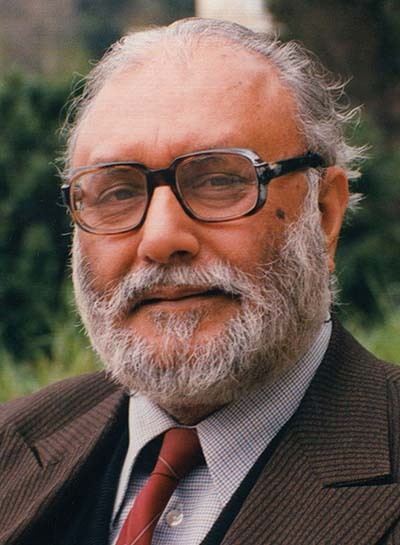
Pakistan: Abdus Salam, the Muslim Newton

Asif Arif
The day throughout Pakistan should celebrate with pride and joy the 88th anniversary of the first Muslim Nobel prize in physics, how not to write a post about this man who brought an unprecedented revolution in the world of physics. However, the impact is much broader than the intellectual revolution that has aroused. Muslim first recipient of this award, all Muslims of the world should now remember some of his memories and his work. However, we see that neither Pakistan nor the Muslim world rose, despite some intellectuals who shout loud and clear, the injustice been the memory of this revolutionary man.
Being absolutely not a physicist by training, I could here be content with a purely superfluous remark, surely absurd to some physicists to view the superficiality of it. Dr. Abdus Salam was a Pakistani physicist (1926 - 1996) known for his work on the electroweak interaction, synthesis of electromagnetism and the weak interaction. This unification has earned him alongside his counterparts Sheldon Glashow and Steven Weinberg, the Nobel Prize for Physics in 1979, provided that the contribution of each physician was very independent from each other.
Abdus Salam's contribution to the Muslim world
The contribution of Dr. Abdus Salam to the Muslim world is not only unprecedented, it is historical. It must be borne in mind that until 1979, no Muslim was awarded the Nobel Prize in Physics. The quality of work, experience and uniqueness of his research have certainly determined the consent of the Nobel Committee to award him the time this distinction in 1979, yet, as I wrote, Dr. Abdus Salam was not only the engine of an intellectual revolution, he was also responsible for a revolution in the Muslim world. Many countries, including Italy, wanted to offer Dr. Abdus Salam, before he gets the Nobel Prize (he was tipped wide) nationality. The idea was to get a Nobel prize obtained by the country which has granted citizenship to Abdus Salam upstream. His response was, however, no appeal, this Nobel Prize will go to Pakistan and any other country. This detail, which marks the commitment of Dr. Abdus Salam to his country of origin, is crucial if not critical to assess the degree of indifference of Pakistan with regard to this great man that I discuss in the last part of this post. The other major contribution of Dr. Abdus Salam to the Muslim world is that it has introduced an unprecedented spirituality in a world dominated by rationality. During his speech at the award ceremony of the Nobel Prize, Dr. Abdus Salam was traditionally dressed in a turban and Indo-Pakistani clothing.
When he had to deliver his speech, he read a passage from the Koran! Here unprecedented he left the Muslim world contribution, not only that, it was a brilliant scientist, but also that he was able to link his spirituality with his knowledge.
The contribution of Abdus Salam education Education is a universal value. It is used to fight many ailments that plague even today our world. Dr. Abdus Salam was not content to propose a theory of physics and to continue his research in his corner. He wished shared his knowledge and disseminate it worldwide. Not only did he want to spread his knowledge, but he also had the desire to disseminate the knowledge of others. He then created the institute " International Centre for Theoretical Physics "(ICTP), Italy, thinking indeed that science is" the common heritage of humanity. " This institute it possible to bring together researchers from developing countries to train and enable them to meet other researchers. The idea was thus to share scientific knowledge and encourage countries to invest in the development and research in the formation of their own researchers to be born and grow a dynamic education in these countries. He served until the end of his life, more flesh at various universities as a foreign scientist.
Pakistan and Dr. Abdus Salam
Pakistan has always maintained a relationship disdain vis-à-vis Dr. Abdus Salam. Although some steps have been taken - such as issuing a stamp with his name - it remains that Dr. Abdus Salam has not received the respect it deserves Pakistan. Large Pakistani intellectuals, including the famous Hassan Nissar, join my position. The latter was indignant contempt of Pakistan with regard to this man who has shaped his way, the world of physics. But why such disdain?
Abdus Salam was an Ahmadi Muslim. Particularly persecuted Muslim minority in Pakistan, as I have written many times in the columns of HuffPost , Ahmadis claim to be Muslims or "large Muslim families" deny him that right. since Ordinance XX, Muslims Ahmadis have no right to perform acts which are related to Muslim identity.
Institutes that Dr. Abdus Salam had established Pakistan currently fall into disrepair because the government failed to renovate and take care. The tomb of Dr. Abdus Salam, on which was written "first Muslim Nobel physics prize" has been the subject of willful damage.
Now you can read the following inscription: "first Nobel Prize in Physics" the mention of "Muslim" has been removed.

TAHIRA SYED ---- JHANGAR PHAB DI NA

Blasphemy Law Used Against Minorities in Pakistan

The elderly man's troubles started when two young men milling inside his homeopathic clinic casually asked him about his religion. He thought they were merely curious. In fact, they belonged to an outlawed militant group and were carrying hidden tape recorders.
Within hours, police officers showed up at Masood Ahmad's clinic and played back the tape in which he explained the tenets of the minority Ahmadiyya sect, rejected by mainstream Muslims because it disputes the basic tenet of their faith that Muhammad is Islam's last prophet.
Ahmad, who returned from Britain to his Pakistani homeland decades ago to open the clinic, was charged with blasphemy — which can carry the death penalty. The 72 year old has been jailed since his arrest this month, awaiting a trial that could take months or even years to begin.
He is not alone. Just last week, a Pakistani court sentenced a mentally ill British man, Mohammad Asghar, to death on blasphemy charges after he allegedly claimed to be Islam's prophet.
Pakistan's blasphemy law is increasingly becoming a potent weapon in the arsenal of Muslim extremists. Although Pakistan has never executed anybody under the law, vigilantes frequently entrap and sometimes kill adherents of minority religions accused of blasphemy. They have created a climate of fear, forcing frightened judges into holding court sessions inside jails and keeping witnesses from coming to the defense of those on trial.
"At the moment, there are more and more pending blasphemy cases," said I.A. Rahman, one of Pakistan's leading human rights activists. "Extremist organizations demonstrate and raise slogans, and judges are afraid. They agitate all the time, creating hatred, and the government is not doing anything. Successive governments have failed."
The U.S.-based Human Rights Watch chastised Pakistan's record of protecting its religious minorities, saying in its 2014 world report that "abuses are rife under the country's abusive blasphemy law, which is used against religious minorities, often to settle personal disputes." The federal religious affairs ministry refused to comment. Government officials did not return calls for comment. Maulana Abdul Rauf Farooqi, secretary-general of Jamiat Ulma-e-Islam, an organization with close ties to many members of the Afghan Taliban's leadership, rejected allegations that the law is widely misused to settle personal disputes, though he said he supports a rigorous police investigation before charges are filed. He said those who were physically attacked had brought the violence upon themselves by enraging Muslims' sentiments.
According to the Human Rights Commission of Pakistan, 34 people were charged with blasphemy last year. A government statistic says 27 were charged in 2012. At least 16 people are currently on death row for blasphemy, while another 20 are serving life sentences, according to Human Rights Watch.
"In the last three years we have seen a large increase in the number of cases of blasphemy," said Keith Davies, head of RescueChristians, a U.S.-based charity that started operations in Pakistan four years ago. Pakistan's blasphemy law predates the founding of the country in 1947, but during the 1980s the U.S.-backed military dictator, Gen. Mohammed Zia-ul-Haq, amended it to add the death penalty and single out Islam as the religion that may not be insulted, among other changes. Pakistan is not the only nation with such laws on the books. Blasphemy offenses are punishable in more than 30 countries, including some with predominantly Christian populations, such as Poland and Greece, as well as Muslim countries like Indonesia and Pakistan, according to a 2012 report by Rev. Chloe Breyer, executive director of the Interfaith Center of New York. Most of Pakistan's 180 million people are Sunni Muslims who do not support the militants' violence or their abhorrence for religious minorities. Nevertheless, the minorities, including Muslims who belong to the Shiite sect of Islam, say even the smallest quarrel can land them in jail on trumped-up blasphemy charges. Abbas Kamaili, a leading Shiite cleric, told The Associated Press that he supported the idea of a blasphemy law but criticized the Pakistani version as "ambiguous" and easily distorted by militant Sunnis who want to rid the country of Shiites. The violence associated with Pakistan's blasphemy law has been brutal. Three years ago, liberal Gov. Salman Taseer was assassinated by his own guard after defending a Christian woman charged with blasphemy. In a separate attack, militants gunned down Minority Affairs Minister Shahbaz Bhatti after he campaigned for changes in the law. Last July, two brothers charged with defaming Islam's prophet were shot and killed as they stepped out of a courtroom. Tariq, a Christian, is currently in hiding after authorities charged him with blasphemy. He said the charges came over a quarrel he had with two customers who bought faulty firecrackers from him. When he refused to apologize, he said the customers went to the police in Lahore and told them a lie that he had stuffed the firecrackers with pages torn from the Quran. Fearing capture by Pakistani authorities while he seeks asylum outside of the country, he spoke on condition that he be identified by his first name only.
The Pakistani representative of RescueChristians, speaking on condition of anonymity for his personal safety, said several Christians are waiting for travel documents to secretly leave Pakistan, while others are in jail awaiting trial and targeted for death by militant groups.
The two young men who entrapped Ahmad at his homeopathic clinic in the eastern Punjab provincial capital of Lahore belong to a banned militant group, Lashkar-e-Taiba, according to local police. Lashkar-e-Taiba and other Muslim extremist groups consider adherents of the Ahmadiyya sect to be heretics.
The Ahmadiyya sect contends that the Mehdi or savior, who is prophesized in Islam, came about 100 years ago. This belief challenges Prophet Muhammad's position as Islam's last prophet, a basic tenet of the faith. Pakistan amended its constitution in 1974 to make it a crime for Ahmadis, as they are called, to identify themselves as Muslims.
But businessmen nearby Ahmad's clinic said he never preached his religion. They said the police, who are required by a government order issued last year to rigorously investigate allegations of blasphemy before filing charges, never spoke with them or took their statements. His neighbors said they were saddened by his arrest but would not dare testify on his behalf. Mohammad Ershad, a barber, called Ahmad a "thorough gentleman," but added: "People don't want to say anything. Everyone feels it is better to save oneself."
Habib, who runs a nearby photocopying business, said he has known Ahmad for 30 years. Too afraid to be identified by his full name, he said: "No one wants to be on the target hit list of the mullahs. No one stops them. No one is safe."


I Am Malala: Politicking over pages of child activist’s memoir

The Express Tribune
At 10am on Tuesday morning, Imran Khan tweeted that he was at a loss to understand why Malala’s Peshawar book launch was stopped. He said his party, the Pakistan Tehreek-e-Insaf (PTI) believed in freedom of speech and debate, not censorship of ideas.
It was supposed to be a big day for Malala Yousafzai, Dr Sarfaraz Khan and Peshawar University’s area study centre. They were going to launch her autobiography, I Am Malala, in her home province and instead, Dr Khan spent most of the morning in the hospital dealing with high blood pressure.
Khan, who is the director of the centre, was at the hospital due to stress from the night before when he received phone calls allegedly from two provincial ministers – one from the PTI and the other from its coalition partner, to not proceed with the launch.
He had still planned to go ahead as planned but when the police called and said that they would not be able to provide security, Dr Khan had no option but to cancel.
Initially, I Am Malala, was going to be launched in Peshawar at 10am on Tuesday by the Bacha Khan Trust Educational Foundation in collaboration with the Strengthening Participatory Organisation at the University of Peshawar. While speaking to The Express Tribune via email, Malala’s father, Ziauddin Yousafzai said that even Faiz Ahmed Faiz and Rahmat Shah Sail’s work had been banned in the country before. “I feel as if we are being dragged back to the caves,” the email read. The vice chancellor of the university, Dr Rasul Jan, said that he should have been informed of details regarding the event but was not in this case.
He added that due to the current situation in the province, the administration avoids mass gathering on campus. “The launch of this book, however, is of great importance and could have helped create awareness among the students,” he said. “If they [the organisers] had given us prior notice, we would have arranged for maximum security and other details.”
The official version
Provincial Minister for Information Shah Farman issued a handout claiming that the university was not a proper venue for the book launch. “I Am Malala has nothing to do with the curriculum or extra-curricular activities,” it read. “The book should be launched at a proper venue. It is her autobiography and has nothing to do with education.” The home and tribal affairs department added that the administration had not imposed a ban on the book and the provincial government was a firm believer in the right of speech and information for its citizens. Khadim Hussain, the director of the Bacha Khan foundation, said that they had been planning this with the university’s area study department for the last 10 days. He added that the event had been cancelled due to direct intervention from the provincial government. According to Hussain, Farman and Jamaat-e-Islami MPA Inayatullah had called Dr Khan and told him to cancel the event. He said that when Dr Khan refused to do as they said on the pretext that the university came under the federal and not provincial government, the police superintendent called up saying he could not give them security cover.

Pakistan: A state of fear

TERRORISM is rule by fear and it is being used by the militants as the most powerful weapon to break the resistance of ever-expanding groups in the country. The relentless spate of killings has generated a state of fear, effectively wearing out the will to fight back.
Fear for the safety of life is driving many of our public figures, including journalists and writers, to tread a cautious path so as to not provoke the ire of the militants. Even more frightening, some have turned defenders of the militants’ cause. But can this ostrich-like behaviour or compliance be traded with security for long? Not speaking out on mindless killings makes one only more vulnerable. The only way to make ourselves secure is to break this state of fear.
It began with the politicians, most of whom kept silent when the Taliban targeted their rivals during the election campaign. They didn’t speak out when our soldiers were being beheaded. They looked the other way when the extremists massacred Shias and other religious minorities. Instead, they appeased the murderers. Now the same terrorists are coming for them too. No one will be spared, the message is loud and clear. The line is drawn: either you are with us or against us.
Now the militants have turned their guns on journalists. Some days ago, they killed three staffers of the Express TV channel in cold blood. It was not the first time that media persons were killed in violence in this country, which is rightly described as the most dangerous place for the journalists. But the latest killings in Karachi were perhaps the most gruesome.
It was a clear declaration of war by the Pakistani Taliban against those who dare to speak out against the militants’ savagery. The attack was meant to silence the voices of sanity now becoming a rare commodity in this country where freedom of expression is increasingly under threat from rising violent extremism.
The Taliban have issued a fatwa accusing the media of siding with the ‘infidels’ and have vowed to eliminate those opposing their cause. The militant outfit has also reportedly prepared a list of media houses and journalists who according to them have been inciting ‘non-Muslims’ to wage war against the ‘forces of Islam’. Before achieving the freedom it now enjoys, the Pakistani media had to work hard and long under draconian laws. But now, ironically, non-state actors and terrorists are dictating their terms for journalists to operate, once again restricting their freedom. For sure, the main objective is to terrorise the media into submission.
This presents the most serious threat to the freedom of media in the country and fear of attack has already affected the objectivity of journalism. The threat has become much more real after the Karachi incident, forcing some media houses to tone down their criticism of militancy.
One of the most bizarre spectacles was witnessed just days after the Karachi incident when an anchor got on the telephone line Ehsanullah Ehsan, a spokesman for the Tehreek-i-Taliban Pakistan, live on his television talk show. Ehsanullah not only brazenly claimed the responsibility of the murder of journalists, who ironically belonged to the same channel, but also warned of more such actions in future if the media did not stop what he described as “unfair reporting”.
Even worse was the way the anchorperson grovelled before the Taliban honcho, seeking to placate him, and sought the advice of the militant commander about what he considered ‘balanced reporting’. He promised to give the Taliban ample coverage in the future and to air their views regularly. But it would not please the militant spokesman who kept threatening dire consequences if the media group did not toe the line. Such an approach only makes journalists more vulnerable. Predictably, the fear of retaliation has caused a marked decline in the publications of articles and reports critical of the Taliban in some newspapers. What is worse, however, is that the fear of a terrorist backlash has driven some journalists to propagate the militant narrative. Some of them have even gone to the extent of publicly defending the militants’ actions.
It is so repulsive the way a section of the Pakistani media, particularly the TV channels, readily embrace the Taliban’s position and whitewash their brutalities. It is unique for Pakistan that mass killers are allowed to appear on television shows and their statements are given wide coverage in the national newspapers. Such glorification of the terrorists in effect legitimises the militancy. To be fair, one cannot pin the blame on the media and journalists alone for succumbing to the threat when the national leadership itself has surrendered to the militants. Who would want to put one’s neck out especially when there’s little faith in the state to provide security?
Another driver of insecurity for journalists is the growing religious extremism and prevailing intolerance in society. The fear of victimisation has limited the intellectual discourse in the country. It is not only the threat by militants that has affected the independence of the media, but also the campaign launched by some right-wing and pro-Taliban political parties against the liberal press.
It is certainly the most testing of times for the media and democratic freedoms. We will lose this battle if the media submits to the terrorist rule of fear. This state of fear must be broken if we want to retain our freedom and win back the soul of this nation.

Terrorism and journalists

http://www.dailytimes.com.pk/
The Taliban claimed responsibility for killing three Express News TV workers in broad daylight in Karachi on January 18. It was the third attack on the media group. Following the attack a statement was issued by the Taliban warning journalists of dreadful consequences if they kept pursuing the ‘anti-Islamic’ agenda of the government. They also released a list of journalists who according to the Taliban deserved death because of their harsh stance against the group. The list has not been made public, though certain media houses claim to have received it. Pakistan is one of the fourth most dangerous countries in the world for journalists. Journalists have been demanding protection given the kind of hostile environment they have to operate in. After the latest killing the demand grew louder, and the other day the Pakistan Federal Union of Journalists, National Press Club and Parliamentary Reporters Association boycotted the National Assembly session to register their protest. In order to restore calm, a typical sweetener was offered by Information Minister Pervez Rashid, saying that the government has formed a committee to find out solutions and means to protect journalists. This typical, run-of-the mill and mundane style of appeasing protesting groups cannot be taken seriously. These committees end up gathering dust in meeting rooms.
On the other hand the Taliban’s warning seems to have worked on some TV anchors; their broadcasts have since taken on an appeasing tone. This attempt at appeasement will only make the Tehreek-e-Taliban Pakistan bolder in its dictation to the media. It is a win-win situation for them. If their threat is responded to by appeasement, which even the government and many of our leaders are practising, then who can stop them from eventually taking over the state? The only efficacious response to this threat, as far as journalists are concerned, lies in denying the oxygen of publicity to the terrorists. A complete silence in both the print and electronic media will starve the terrorists of the publicity they require to perpetuate terror in society. The tool has been famously used in the past against the Ireland insurgents by Margaret Thatcher. Broadcasters have inadvertently lent themselves to exploitation by the terrorists, when the former kept hammering away at viewers about the terrorists’ activities through their reportage and analysis. The government, having failed to contain terrorism, will certainly not be in a position to provide protection to journalists, the Information Minister’s committee notwithstanding. The only solution left is to cut off the terrorists’ access to the media. Isolate them. This will eventually weaken them.

Bilawal asks “what are preconditions for talks?”

Following Prime Minister Nawaz Sharif’s address to the National Assembly where he announced that peace talks with the Taliban should be given another chance, PPP patron-in-chief Bilawal Bhutto Zardari took to twitter and posed questions regarding the announcement.
In a series of tweets Bilawal asked: “Has PM given a report on how successful talks have been over last 9 months? They went so well? That’s why we are giving talks another go?” Bilawal also asked “what are pre-conditions for peace talks?” The PPP patron-in-chief said he supported Nawaz Sharif tweeting “I want him to be our Churchill. Unfortunately he is becoming our Neville Chamberlain pursuing policy of appeasement.” Earlier, Prime Minister Nawaz Sharif has announced on the floor of the National Assembly that a four member committee had been formed to initiate the dialogue process with the Taliban.

Tuesday, January 28, 2014

Obama lays out go-it-alone approach in State of Union speech

President Barack Obama vowed on Tuesday to bypass a divided Congress and take action on his own to bolster America's middle class in a State of the Union speech that he used to try to breathe new life into his second term after a troubled year. Standing in the House of Representatives chamber before lawmakers, Supreme Court justices and VIP guests, Obama declared his independence from Congress by issuing a raft of executive orders - a move likely to inflame already tense relations between the Democratic president and Republicans. Obama's actions, while relatively modest, collectively amounted to an outpouring of frustration at the pace of legislative action with Republicans in control of the House of Representatives and able to slow the president's agenda. "I'm eager to work with all of you," Obama told the lawmakers gathered for the annual speech. "But America does not stand still - and neither will I. So wherever and whenever I can take steps without legislation to expand opportunity for more American families, that's what I'm going to do." Obama's orders included a wage hike for federal contract workers, creation of a "starter savings account" to help millions of people save for retirement, and plans to establish new fuel efficiency standards for trucks. He said he was driven to act by the widening gap between rich and poor and the fact that while the stock market has soared, average wages have barely budged. "Inequality has deepened," Obama said. "Upward mobility has stalled. The cold hard fact is that even in the midst of recovery, too many Americans are working more than ever just to get by, let alone get ahead. And too many still aren't working at all." Obama's strategy means he has scaled back ambitions for large legislative actions and wants to focus more on small-bore initiatives that can reduce income inequality and create more opportunities for middle-class workers. He did, however, renew appeals for actions that still await congressional approval. He called for Congress to give him the authority to speedily negotiate international trade agreements, a proposal held up by Democratic opposition. On one of his biggest priorities, immigration reform, Obama urged Congress to work together on an overhaul, but he tempered his criticism of Republicans who have held up the law, with signs of possible progress emerging in recent days among House Republicans. Obama also held back from taking a step that immigration reform advocates have called on him to take. He did not take executive action to freeze the deportations of parents of children brought to the United States illegally. "Let's get immigration reform done this year," he said.
'REFIGHTING OLD BATTLES'
On healthcare, the issue that rocked his presidency and caused many Americans to lose confidence in him, Obama defended the overhaul law he signed in 2010 but did not dwell on it, urging Americans to sign up for medical insurance coverage by a March 31 deadline. "I don't expect to convince my Republican friends on the merits of this law," Obama said. "But I know that the American people aren't interested in refighting old battles." His political objective was to create a narrative for Democrats to use as they seek to head off Republicans eager to wrest control of the Senate from Democrats in November elections and build on their majority in the House. The party in control of the White House typically loses seats in these so-called mid-term elections, but Democrats feel they stand a chance of limiting their losses or even making some gains. With three years left in office, long-standing issues still seemed to hang over his presidency. He called anew for closing the U.S. military prison at Guantanamo Bay, Cuba. "This needs to be the year Congress lifts the remaining restrictions on detainee transfers and we close the prison at Guantanamo Bay," Obama said. "Because we counter terrorism not just through intelligence and military action, but by remaining true to our constitutional ideals and setting an example for the rest of the world. He also said nothing about whether he would approve the long-delayed Keystone XL Canada-to-Texas oil pipeline that environmentalists oppose. Instead, Obama spoke passionately about the need to tackle climate change, a statement that could foreshadow more executive actions to reduce carbon emissions this year. "Climate change is a fact," he said. Republicans clambered for some of the same rhetorical ground as Obama in pledging to narrow the gap between rich and poor but staked out a different vision for doing so. "It's one that champions free markets and trusts people to make their own decisions, not a government that decides for you," Representative Cathy McMorris Rodgers, chairwoman of the House Republican Caucus, said in her party's response to Obama's speech. "It helps working families rise above the limits of poverty and protects our most vulnerable." Obama is trying to recover from a difficult fifth year in office, when immigration and gun control legislation failed to advance in Congress, his healthcare law struggled out of the starting gate, and he appeared uncertain about how to respond to Syria's civil war. Polls reflect a dissatisfied and gloomy country. An NBC News/Wall Street Journal poll released on Tuesday showed 68 percent of Americans saying the country is either stagnant or worse off since Obama took office. People used words like "divided," "troubled" and "deteriorating" to describe the state of the country, the poll showed. Obama dwelled mostly on domestic issues in his hour-long address, but warned Congress he would veto any effort to increase economic sanctions on Iran as he tries to reach a comprehensive deal with Tehran to ensure it does not obtain a nuclear weapons capability. Obama will talk up the economic themes from the speech in a two-day road trip starting on Wednesday that will include stops in Maryland, Pennsylvania, Wisconsin and Tennessee.

President Obama's 2014 State of the Union Address

Syria regime says US 'arming terrorist groups'

New supplies of weapons to Syrian conflict area lay groundwork for supporting terrorists - Lavrov

New supplies of weapons to Syria provide solid preconditions for supporting terrorists in the region, Russian Foreign Minister Sergei Lavrov said. "New supplies of lethal and non-lethal weapons to the Syrian conflict area lay groundwork for supporting terrorists," Lavrov told journalists in Brussels on Tuesday. Read more: http://voiceofrussia.com/news/2014_01_28/New-supplies-of-weapons-to-Syrian-conflict-area-lay-groundwork-for-supporting-terrorists-Lavrov-8677/