Tuesday, January 28, 2014
Amnesty International: Bahrain: Death of young detainee shot in head must be investigated
Obama to scale back in State of the Union
 President Barack Obama will lay out a strategy for getting around a divided Congress and boosting middle-class prosperity on Tuesday in a State of the Union speech that reflects scaled-back legislative ambitions after a difficult year.
Obama will make clear in his 9 p.m. address that he is willing to bypass U.S. lawmakers and go it alone in some areas by announcing a series of executive actions that do not require congressional approval.
The White House said Obama would announce he is issuing an executive order to raise the minimum wage to $10.10 an hour for federal contract workers with new contracts.
President Barack Obama will lay out a strategy for getting around a divided Congress and boosting middle-class prosperity on Tuesday in a State of the Union speech that reflects scaled-back legislative ambitions after a difficult year.
Obama will make clear in his 9 p.m. address that he is willing to bypass U.S. lawmakers and go it alone in some areas by announcing a series of executive actions that do not require congressional approval.
The White House said Obama would announce he is issuing an executive order to raise the minimum wage to $10.10 an hour for federal contract workers with new contracts.In his address, Obama will also call on Congress to pass a bill to increase the federal minimum wage for all workers to $10.10 an hour from $7.25 and index that to inflation. The executive order raising the level for federal workers, which applies to new contracts or existing contracts in which terms are being changed, will take effect at the beginning of next year, with janitors and construction workers among the beneficiaries. Issuing the order allows Obama to bypass Congress, where Republicans oppose a broad increase in the minimum wage. White House officials said Obama would also announce new executive actions on retirement security and job training to help middle-class workers expand economic opportunity. "What you'll hear in the speech tonight is very concrete, realistic proposals as it relates to wages, as it relates to education, as it relates to training, high-tech manufacturing, retirement security, those are the things that he's focused on," White House Chief of Staff Denis McDonough said on NBC's "Today Show." With three years left in office, Obama has effectively reduced for now his ambitions for grand legislative actions. Obama is expected to renew his appeal for a long-stalled immigration overhaul that has been stymied by Republicans. He will promote his signature healthcare law, four months after its disastrous initial rollout. White House officials said the president would try to work with Congress to accomplish his agenda, but would also try to advance it through executive actions if necessary. "We will continue to call on Congress - both sides of the aisle - to come up with new and fresh ideas for how we can grow our economy and create opportunities for the American people, but we aren't going to stop at that," White House senior advisor Valerie Jarrett said on MSNBC'S "Morning Joe." Congressional Republicans expressed skepticism. House of Representatives Speaker John Boehner said that while the president may have the authority to raise the minimum wage on federal contracts, the impact will be "close to zero" because it will only affect future contracts. He also said an across-the-board increase in the minimum wage could harm the economy. "When you raise the cost of something you get less of it," Boehner told a news conference after a party meeting near the U.S. Capitol. "And we know from increases in the minimum wage in the past, that hundreds of thousands of low-income Americans have lost their jobs." 'COMES DOWN TO ECONOMIC ISSUES' Obama is trying to recover from a difficult fifth year in office, when immigration and gun control legislation failed to advance in Congress, his healthcare law struggled out of the starting gate, and he appeared uncertain about how to respond to Syria's civil war. Polls reflect a dissatisfied and gloomy country: an NBC News/Wall Street Journal poll released on Tuesday showed 68 percent of Americans saying the country is either stagnant or worse off since Obama took office. People used words like "divided," troubled" and "deteriorating" to describe the state of the country, the poll showed. A central them of the address, Obama's sixth such annual speech in the House chamber, is addressing income inequality, as middle-class Americans struggle to get ahead even while wealthier people prosper in the uneven economic recovery. "It comes down to economic issues," said Andy Smith, director of the University of New Hampshire Survey Center. "The economy is going to be the thing that determines whether people have confidence in the president. If the economy is doing well, people will forgive a lot of the things the president has done or not done." Attending the speech will be a variety of Americans who will sit in the gallery with the president's wife, Michelle Obama, symbolizing issues important to the White House. They will include heroes from last year's Boston Marathon bombings, a firefighter who led the rescue response to an Oklahoma tornado, and an openly gay basketball player. One of Obama's goals is to lay out ideas that Democratic congressional candidates can adopt in the run-up to November elections as they try to hold on to their Senate majority and challenge Republicans for control of the House. Obama will talk up themes from the speech in a two-day road trip starting on Wednesday that will include stops in Maryland, Pennsylvania, Wisconsin and Tennessee.
U.S. Warns Kabul Over Prisoner Release

Karzai reportedly suspects US hand in recent Afghanistan attacks
 Afghan President Hamid Karzai reportedly believes that the U.S. government and military have been a hidden force behind recent insurgent attacks in Afghanistan, such as an attack earlier this month that killed 21 people, including three Americans, in Kabul.
The Washington Post, citing an Afghan official who it said was sympathetic to Karzai's view, reported that the Afghan leader believes that dozens of attacks blamed on the Taliban have been planned by the U.S. to weaken his government and foment instability in the country. The official did acknowledge that Karzai had no concrete evidence of American involvement in any attack.
Afghan President Hamid Karzai reportedly believes that the U.S. government and military have been a hidden force behind recent insurgent attacks in Afghanistan, such as an attack earlier this month that killed 21 people, including three Americans, in Kabul.
The Washington Post, citing an Afghan official who it said was sympathetic to Karzai's view, reported that the Afghan leader believes that dozens of attacks blamed on the Taliban have been planned by the U.S. to weaken his government and foment instability in the country. The official did acknowledge that Karzai had no concrete evidence of American involvement in any attack.The report is another sign of the deepening rift between the U.S. and Karzai, who has continued to refuse to sign a tentative security agreement allowing for American troops to remain in Afghanistan beyond 2014, preferring to leave the issue for his successor following Afghanistan's April presidential election. U.S. Ambassador to Afghanistan James B. Cunningham told the Post that Karzai's reported suspicions represented "a deeply conspiratorial view that's divorced from reality ... It flies in the face of logic and morality to think that we would aid the enemy we’re trying to defeat." Gen. Joseph Dunford Jr., the top U.S. commander in Afghanistan added, "We have spent 12 years trying to bring peace and stability to Afghanistan in the face of threats from terrorist and insurgent networks . . . to suggest otherwise does a grave disservice to those who have sacrificed for the people of Afghanistan." According to the Afghan official quoted by the Post, Karzai's theory is based on suspicions that the attacks are intended to draw attention away from civilian casualties caused by U.S. airstrikes. In addition, the official contends that attacks like that on the Kabul restaurant were "too sophisticated to be the handiwork" of the Taliban. For their part, the Taliban have rejected any possibility of the U.S. playing a role in their attacks, with spokesman Zabiullah Mujahid telling the Post, "Whatever claims [of responsibility] we make, those are attacks that have genuinely been carried out by our forces."

Afghanistan: Karzai’s Closing Act
 After remaining in power for 12 long years, President Hamid Karzai, towards the fag-end of his rule, is making his last-ditch stand against the superpower that brought him to power.
The United States of America hand -picked him out of relative obscurity in December 2001, when the Taliban regime had collapsed as a result of the American invasion of Afghanistan and made him the war-ravaged country’s president at the first Bonn Conference in Germany. The Americans had few choices then as Abdul Haq, the other favourite candidate for the job had just been killed by Taliban fighters in Logar province following his failed attempt to lead an uprising, and there wasn’t any credible challenger to Karzai, who spoke fluent English and wasn’t tainted by any scandal concerning corruption or human rights abuses. More important though was his pedigree: he was the son of a former member of parliament, Abdul Ahad Karzai belonging to the old Kandahar ruling clan of Popalzais from the Durrani Pashtun tribe.
Karzai was lucky to have survived an attempt by the Taliban to hunt him down in the central Urozgan province in those dangerous times. Loyal Durrani tribesmen came to his rescue and protected him while the Americans airlifted him to safety in a helicopter. Karzai didn’t have much experience when he assumed the difficult job of Afghanistan’s president, except for a brief stint as deputy foreign minister during the chaotic Afghan mujahideen rule after the fall of Dr Najibullah’s communist government in April 1992 and running mujahideen leader Professor Sebghatullah Mojadeddi’s office earlier in Peshawar. Prior to that, he managed an Afghan food restaurant owned by his family in the US.
However, he learned on the job and became increasingly assertive. The vast powers entrusted to Afghanistan’s president in the country’s new constitution enabled him to make and break political alliances at will and use patronage and ethnic and regional rivalries to keep warlords and tribal chiefs by his side. The parliament tried to challenge him and some of his ministers were ousted from the cabinet, but Karzai’s presidential authority ensured that he was left untouched.
His latest, and probably last, battle before the April 5, 2014 presidential election isn’t against his numerous Afghan rivals. This time he is pitted against the US, his frequent benefactor, which won’t have to do much to win over his Afghan opponents, most of whom benefited during the Karzai rule before drifting apart due to personal reasons, rather than any issue of principles or ideology. It is an unequal battle between an Afghan president, who is on his way out and doesn’t enjoy much popular support, and the US, which has the financial and military resources to keep the government in Kabul in power.
Nobody could have imagined some months ago that Karzai would put his foot down at the eleventh hour and refuse to sign the Bilateral Security Agreement (BSA) with the US. He had already signed the strategic partnership agreement with the US in 2011 and the BSA was being negotiated for a year since late 2012. The US had agreed to Karzai’s proposal to convene the traditional Loya Jirga to discuss the BSA and was hoping that the deal would be signed before the end of 2013. The 2,500 delegates at the Loya Jirga were mostly handpicked by the Karzai administration and included parliamentarians, tribal elders, members of the intelligentsia, clerics and women activists. As expected, the Loya Jirga endorsed the BSA after being exhorted by none other than Karzai to do so. However, the Loya Jirga, rather unexpectedly, advised the Afghan president to sign the security agreement before the end of the year. It was at this stage that Karzai, apparently as an after thought, declined to sign it until his conditions, both old and new, were met by the US. He also wanted the new president to be elected in the April 2014 polls to sign the security agreement.
Karzai listed a number of conditions, including the most crucial one for an end to US airstrikes and searching of homes in Afghan villages as he advocated action against militants’ sanctuaries outside Afghanistan’s border, which meant Pakistan. He also wanted more US efforts to promote the peace process involving Taliban. This also involved Pakistan because Karzai believed the US could put enough pressure on Islamabad to persuade it to bring the Taliban to the negotiating table. Another Karzai condition, which wasn’t stressed enough, was the release of all Afghan prisoners from Guantanamo Bay detention centre. It was primarily linked with the reconciliation process because all these prisoners are Taliban and their release could be termed as a major confidence-building measure to get the Taliban leadership to agree to peace and power-sharing talks with Kabul. It was interesting to know that most of these points were also advocated by the Loya Jirga, though unlike Karzai it didn’t make the signing of the BSA conditional to the acceptance of these demands.
The US termed these conditions unrealistic and insisted on early signing of the BSA under the terms already agreed to in the year-long negotiations. After insisting that the BSA must be signed by Karzai before the end of 2013 to enable the US government to plan for the post-2014 deployment of the residual troops, totalling around 10,000 according to most accounts, and secure the required funds from Congress, the Obama administration later relented and agreed to extend the deadline to February, when Nato is scheduled to hold an important meeting. Subsequently, some US officials hinted that they could even wait until April, when the presidential election would have taken place. This meant narrowing of the differences, at least on the timing of signing the security agreement, between Karzai and the US.
Karzai is under pressure from all sides to sign the security agreement. There is unrelenting pressure by the US, which has on occasions been undiplomatic in its dealings with him and has warned that it would cut off most of its aid to Afghanistan if the security agreement isn’t signed and it is forced to apply the “zero option” by withdrawing all its forces. The US also unsuccessfully tried to bypass him by proposing that Defence Minister General Bismillah Khan Mohammadi or another minister could sign the BSA if Karzai didn’t want to do so. Karzai had, in the past, bluntly accused US officials of undermining his position by accusing his late brother Ahmad Wali Karzai of involvement in drug-trafficking and raising questions about the fairness of the 2009 presidential election, accusing his government of fraud.
At home, the Loya Jirga felt offended when Karzai didn’t pay heed to its recommendation to sign the BSA. The Afghan elite and all 11 presidential candidates want the BSA to be signed. It seems Karzai would eventually have to swallow his pride and sign the BSA or risk putting the embattled Afghan government and its largely untried security forces at a disadvantage vis-à-vis the Taliban once the Nato forces leave by December 31, 2014. There were reports that Karzai was concerned about his legacy and didn’t want to be equated in history with former king Shah Shuja, who got the British forces to invade Afghanistan to install him in power, and Communist president Babrak Karmal who, in the words of his critics, came riding a Soviet tank to capture power and facilitate the Red Army takeover of the country in December 1979.
The Afghan president knows the risks he is taking by refusing to sign the BSA. He has spoken about the grave consequences for the country in case the military assistance by the US is halted because, in his view, signing the BSA was necessary for strengthening security and stability in Afghanistan. However, he has rejected the observation that not signing the BSA would lead to factional fighting or that Afghanistan would fail to survive as a nation. As if provoking the US, he argued that the Afghans had fought and defeated invaders and preserved their independence. In another provocation to the US, he visited Iran and agreed with newly-elected President Hasan Rouhani to negotiate and sign a treaty of friendship and cooperation between the two countries. This would certainly have upset the Americans because he was trying to get close to Iran at a time when he was refusing to sign the security agreement with the US. Karzai has also been trying to increase defence cooperation with India so that it could somehow fill the vacuum in Afghanistan once the US-led Nato forces are gone. However, such a move risks further alienating Pakistan, which is wary of the growing Indian influence in Afghanistan.
Abdullah_Zalmai_Ashraf_Qayyum01-14It wasn’t surprising that both the Taliban and former mujahideen leader Gulbuddin Hekmatyar’s Hezb-i-Islami backed Karzai for not signing the BSA. It was rare for the Taliban to appreciate Karzai and they encouraged him not to sign the security agreement in keeping with the glorious Afghan history of resisting foreign military presence in their homeland. Hekmatyar went a step further and offered to declare a ceasefire, stand by the Afghan security forces and take part in the elections. However, by the end of 2013 it appeared that Karzai’s resolve was weakening as he was quoted as saying that raids on suspected houses could be carried out provided Afghan forces accompanied the US troops and formal permission from a court was obtained. It seemed he wanted the US to positively respond to at least some of his demands as part of a face-saving deal, instead of categorically rejecting everything he wanted.
It is possible he is seeking a future role for himself as an elder statesman following the election of a new president. He has already acquired a home adjacent to the presidential palace, Arg, in Kabul and got it renovated so that he could live in a secure place close to the seat of power. After having announced his neutrality, he could discreetly back his elder brother Qayyum Karzai or his former foreign minister Dr Zalmai Rassoul in the election for president to continue his legacy, even though both are trailing far behind the front-runners, former foreign minister Dr Abdullah Abdullah and former finance minister Dr Ashraf Ghani Ahmadzai, in the recent public opinion surveys. It won’t be surprising if Karzai in the end shifts his support to Dr Ahmadzai, a fellow Pashtun who would be friendlier to him than Dr Abdullah, who lost to him in the bitterly fought 2009 Presidential election and turned from loyalist to bitter foe.
After remaining in power for 12 long years, President Hamid Karzai, towards the fag-end of his rule, is making his last-ditch stand against the superpower that brought him to power.
The United States of America hand -picked him out of relative obscurity in December 2001, when the Taliban regime had collapsed as a result of the American invasion of Afghanistan and made him the war-ravaged country’s president at the first Bonn Conference in Germany. The Americans had few choices then as Abdul Haq, the other favourite candidate for the job had just been killed by Taliban fighters in Logar province following his failed attempt to lead an uprising, and there wasn’t any credible challenger to Karzai, who spoke fluent English and wasn’t tainted by any scandal concerning corruption or human rights abuses. More important though was his pedigree: he was the son of a former member of parliament, Abdul Ahad Karzai belonging to the old Kandahar ruling clan of Popalzais from the Durrani Pashtun tribe.
Karzai was lucky to have survived an attempt by the Taliban to hunt him down in the central Urozgan province in those dangerous times. Loyal Durrani tribesmen came to his rescue and protected him while the Americans airlifted him to safety in a helicopter. Karzai didn’t have much experience when he assumed the difficult job of Afghanistan’s president, except for a brief stint as deputy foreign minister during the chaotic Afghan mujahideen rule after the fall of Dr Najibullah’s communist government in April 1992 and running mujahideen leader Professor Sebghatullah Mojadeddi’s office earlier in Peshawar. Prior to that, he managed an Afghan food restaurant owned by his family in the US.
However, he learned on the job and became increasingly assertive. The vast powers entrusted to Afghanistan’s president in the country’s new constitution enabled him to make and break political alliances at will and use patronage and ethnic and regional rivalries to keep warlords and tribal chiefs by his side. The parliament tried to challenge him and some of his ministers were ousted from the cabinet, but Karzai’s presidential authority ensured that he was left untouched.
His latest, and probably last, battle before the April 5, 2014 presidential election isn’t against his numerous Afghan rivals. This time he is pitted against the US, his frequent benefactor, which won’t have to do much to win over his Afghan opponents, most of whom benefited during the Karzai rule before drifting apart due to personal reasons, rather than any issue of principles or ideology. It is an unequal battle between an Afghan president, who is on his way out and doesn’t enjoy much popular support, and the US, which has the financial and military resources to keep the government in Kabul in power.
Nobody could have imagined some months ago that Karzai would put his foot down at the eleventh hour and refuse to sign the Bilateral Security Agreement (BSA) with the US. He had already signed the strategic partnership agreement with the US in 2011 and the BSA was being negotiated for a year since late 2012. The US had agreed to Karzai’s proposal to convene the traditional Loya Jirga to discuss the BSA and was hoping that the deal would be signed before the end of 2013. The 2,500 delegates at the Loya Jirga were mostly handpicked by the Karzai administration and included parliamentarians, tribal elders, members of the intelligentsia, clerics and women activists. As expected, the Loya Jirga endorsed the BSA after being exhorted by none other than Karzai to do so. However, the Loya Jirga, rather unexpectedly, advised the Afghan president to sign the security agreement before the end of the year. It was at this stage that Karzai, apparently as an after thought, declined to sign it until his conditions, both old and new, were met by the US. He also wanted the new president to be elected in the April 2014 polls to sign the security agreement.
Karzai listed a number of conditions, including the most crucial one for an end to US airstrikes and searching of homes in Afghan villages as he advocated action against militants’ sanctuaries outside Afghanistan’s border, which meant Pakistan. He also wanted more US efforts to promote the peace process involving Taliban. This also involved Pakistan because Karzai believed the US could put enough pressure on Islamabad to persuade it to bring the Taliban to the negotiating table. Another Karzai condition, which wasn’t stressed enough, was the release of all Afghan prisoners from Guantanamo Bay detention centre. It was primarily linked with the reconciliation process because all these prisoners are Taliban and their release could be termed as a major confidence-building measure to get the Taliban leadership to agree to peace and power-sharing talks with Kabul. It was interesting to know that most of these points were also advocated by the Loya Jirga, though unlike Karzai it didn’t make the signing of the BSA conditional to the acceptance of these demands.
The US termed these conditions unrealistic and insisted on early signing of the BSA under the terms already agreed to in the year-long negotiations. After insisting that the BSA must be signed by Karzai before the end of 2013 to enable the US government to plan for the post-2014 deployment of the residual troops, totalling around 10,000 according to most accounts, and secure the required funds from Congress, the Obama administration later relented and agreed to extend the deadline to February, when Nato is scheduled to hold an important meeting. Subsequently, some US officials hinted that they could even wait until April, when the presidential election would have taken place. This meant narrowing of the differences, at least on the timing of signing the security agreement, between Karzai and the US.
Karzai is under pressure from all sides to sign the security agreement. There is unrelenting pressure by the US, which has on occasions been undiplomatic in its dealings with him and has warned that it would cut off most of its aid to Afghanistan if the security agreement isn’t signed and it is forced to apply the “zero option” by withdrawing all its forces. The US also unsuccessfully tried to bypass him by proposing that Defence Minister General Bismillah Khan Mohammadi or another minister could sign the BSA if Karzai didn’t want to do so. Karzai had, in the past, bluntly accused US officials of undermining his position by accusing his late brother Ahmad Wali Karzai of involvement in drug-trafficking and raising questions about the fairness of the 2009 presidential election, accusing his government of fraud.
At home, the Loya Jirga felt offended when Karzai didn’t pay heed to its recommendation to sign the BSA. The Afghan elite and all 11 presidential candidates want the BSA to be signed. It seems Karzai would eventually have to swallow his pride and sign the BSA or risk putting the embattled Afghan government and its largely untried security forces at a disadvantage vis-à-vis the Taliban once the Nato forces leave by December 31, 2014. There were reports that Karzai was concerned about his legacy and didn’t want to be equated in history with former king Shah Shuja, who got the British forces to invade Afghanistan to install him in power, and Communist president Babrak Karmal who, in the words of his critics, came riding a Soviet tank to capture power and facilitate the Red Army takeover of the country in December 1979.
The Afghan president knows the risks he is taking by refusing to sign the BSA. He has spoken about the grave consequences for the country in case the military assistance by the US is halted because, in his view, signing the BSA was necessary for strengthening security and stability in Afghanistan. However, he has rejected the observation that not signing the BSA would lead to factional fighting or that Afghanistan would fail to survive as a nation. As if provoking the US, he argued that the Afghans had fought and defeated invaders and preserved their independence. In another provocation to the US, he visited Iran and agreed with newly-elected President Hasan Rouhani to negotiate and sign a treaty of friendship and cooperation between the two countries. This would certainly have upset the Americans because he was trying to get close to Iran at a time when he was refusing to sign the security agreement with the US. Karzai has also been trying to increase defence cooperation with India so that it could somehow fill the vacuum in Afghanistan once the US-led Nato forces are gone. However, such a move risks further alienating Pakistan, which is wary of the growing Indian influence in Afghanistan.
Abdullah_Zalmai_Ashraf_Qayyum01-14It wasn’t surprising that both the Taliban and former mujahideen leader Gulbuddin Hekmatyar’s Hezb-i-Islami backed Karzai for not signing the BSA. It was rare for the Taliban to appreciate Karzai and they encouraged him not to sign the security agreement in keeping with the glorious Afghan history of resisting foreign military presence in their homeland. Hekmatyar went a step further and offered to declare a ceasefire, stand by the Afghan security forces and take part in the elections. However, by the end of 2013 it appeared that Karzai’s resolve was weakening as he was quoted as saying that raids on suspected houses could be carried out provided Afghan forces accompanied the US troops and formal permission from a court was obtained. It seemed he wanted the US to positively respond to at least some of his demands as part of a face-saving deal, instead of categorically rejecting everything he wanted.
It is possible he is seeking a future role for himself as an elder statesman following the election of a new president. He has already acquired a home adjacent to the presidential palace, Arg, in Kabul and got it renovated so that he could live in a secure place close to the seat of power. After having announced his neutrality, he could discreetly back his elder brother Qayyum Karzai or his former foreign minister Dr Zalmai Rassoul in the election for president to continue his legacy, even though both are trailing far behind the front-runners, former foreign minister Dr Abdullah Abdullah and former finance minister Dr Ashraf Ghani Ahmadzai, in the recent public opinion surveys. It won’t be surprising if Karzai in the end shifts his support to Dr Ahmadzai, a fellow Pashtun who would be friendlier to him than Dr Abdullah, who lost to him in the bitterly fought 2009 Presidential election and turned from loyalist to bitter foe.
Afghanistan: 'Foreign Intelligence' Behind Attacks: Faizi
Taliban stance on polio threatens children worldwide
http://centralasiaonline.com/
By Ashfaq YusufzaiThe Tehreek-e-Taliban Pakistan's staunch opposition to the vaccine is a roadblock to eradication of the disease. Tehreek-e-Taliban Pakistan (TTP) opposition to polio vaccination endangers children in Pakistan and around the world, officials say. "The Taliban are proving to be bitter enemies of children, on whom our future hinges," Rafiq ul Haq, a vaccinator in Khyber Agency, told Central Asia Online. Only a few weeks into the new year, Pakistan has registered four polio cases in North Waziristan. The newly infected children live in Taliban-controlled areas and did not receive vaccine, officials said. The problem exists because militants have threatened vaccinators or forced them to leave the areas they control and also have run anti-vaccine propaganda to misguide parents. Spreading the disease The Taliban's hard-line opposition to the vaccine is preventing global polio eradication, Muhammad Saleem, an official at the Expanded Programme on Immunisation (EPI) in Mir Ali Tehsil, North Waziristan, said, noting that the thousands of unvaccinated children could transmit the virus to other parts of the country and foreign countries. In fact, Peshawar, a city adjoining the tribal areas, has become the world's largest polio virus reservoir, the World Health Organisation (WHO) says. "Not only has the Taliban's [intimidation] crippled more children, but they are responsible for transmitting the virus," Dr. Kamran Shah, an official at the directorate of health for Federally Administered Tribal Areas (FATA), said. To illustrate how the disease's prevalence in one area can make trouble elsewhere, he observed that, in 2013, more than two dozen polio cases detected in Syria and Egypt originated in Pakistan. In 2013, FATA had 65 cases (35 in Waziristan alone), followed by 10 from Khyber Pakhtunkhwa, nine in Sindh and seven in Punjab. Seven of the nine children who tested positive in Sindh matched the FATA virus, according to reports from the National Institute of Health Islamabad. "Genetic sequencing of the virus detected in seven children in Frontier Region Bannu showed a resemblance to the virus of North Waziristan," Kamran said. Crippling their own children Children in Taliban-controlled areas are vulnerable to falling ill because their parents failed to have them vaccinated, Kamran said. "We have to vaccinate all target children in FATA to be able to eradicate the disease," he said. The TTP's stance against polio has wrought suffering not only among innocent families but among its members' children too. "The Taliban's own children are among the infected lot," Saleem said. "We have not tested them, but the signs and symptoms we observed resembled those of polio-affected children." Vaccination hasn't taken place in North Waziristan for 19 months, he said, noting that he examined two children in Sara Melowa, a village and Taliban hub in North Waziristan, suffering from what appeared to be polio. "We asked the local clerics in Waziristan to encourage the Taliban to allow vaccination, but indications are that the requests will fall on deaf ears," Juma Khan, a Waziristan-based malik, told Central Asia Online. "Now our main concern is the safety of children who live in areas controlled by the Taliban because they face real risk." The adamant stance taken by the Taliban against vaccination is utterly reprehensible, Kamran said. "They don't care about their own children, so how can we expect them to care about other children?" he asked. Thwarting eradication The Pakistani Taliban are a serious threat to the country's plan to eradicate polio in 2014. "Pakistan's plan to eradicate polio will remain a distant dream as long as the Taliban's [intimidation] continues," Kamran said. FATA has been a stumbling block in the way of global efforts to eliminate polio from Pakistan, one of only three countries where polio remains endemic. In 2013, Pakistani authorities registered more than 100,000 children whose parents refused vaccination under the misconception that vaccine was formulated to render its recipients sterile. Health workers could not reach another 600,000 children because of security concerns. "We are able to vaccinate 35m children countrywide, but the unvaccinated children are the real threat to the eradication effort," Dr. Noor Shah of the WHO said. "As long as the virus remains in one child, we have to administer [oral polio vaccine] to all children."
Who killed the children of Hangu - Offer inked in children blood
 Who killed the children of Hangu - there is no claimant yet, and may never be - given inability of even the most stone-hearted to admit committing such a heinous crime. How would these kids, five boys and a girl, some of them as young as two, know that the cleverly-planted grenade was a killing machine and not a toy they felt happy to find in the street? How would they know that beyond the end of the street they lived there was a war? According to a local, "One of the minors found the device and started playing with it when it suddenly went off".
There is so much common in ignorance and innocence. The death was in their chase; their parents had migrated to Hangu from the neighbouring Orakzai tribal agency where military is fighting the Taliban. But even when there is no taker of this battle-front victory, there is this puzzling commonality between the Hangu tragedy and the attack in the vicinity of the General Headquarters (GHQ), Rawalpindi - almost simultaneous to these incidents the Tehreek-e-Taliban Pakistan offered peace talks to the government. The banned outfit's spokesman said 'they once again offer serious and meaningful dialogue to the government'. And should Pakistan government rise to the bait the spokesman promised 'positive response', as it did when Maulana Samiul Haq approached them. Is it that these two attacks were expected to gain position of strength at the negotiating table? Or, is it that having committed the murder of the innocent children the TTP is trying to avert the tit-for-tat nemesis like the one they had after the Rawalpindi attack? There can be no intelligent guess about the TTP's game plan - essentially because both the government and its political opposition tend to figure it out in the light of their myopic outlooks.
Intentionally or otherwise the government is confused, as if scared of disturbing the status quo. The opposition, on the other hand, is too vocal but sharply divided, largely along their narrow political agendas. As expected the PTI's Imran Khan has welcomed the TTP's latest peace talks offer, warning that war with Taliban would 'destroy' the Pakistan army - as if so far the terrorists have been sparing any effort not to do so. With nothing to his credit as peace-maker between the government and banned TTP Imran Khan must come up every time with some quotable quote to remain relevant.
His immediate rival Maulana Fazlur Rehman's case is not very different; he too is on the same page with Imran Khan vis-a-vis the Taliban. That despite their identical dispositions towards the TTP they are at each other's throat the reason is their tense rivalry over the power in Khyber-Pakhtunkhwa. At present there is greater bite to the Maulana's position on the Taliban offer also for the reason that the Nawaz Sharif government is not prepared to give the JUI(F) a plum ministry in the federal government. Whether the positive response the two have shown to the Taliban peace offer has any taker beyond their parties in the KP or elsewhere in Pakistan, not much is detectable. Dissatisfied both with the PML (N)-headed federal government and PTI-headed provincial government the ANP chief Asfandyar Wali Khan wants to know what is actually happening on the counter-terrorism front. Obviously, with perceptions and perspectives of the three principal stakeholders in the front-line province so much at variance the decision to accept the Taliban's offer of peace dialogue lies somewhere else. And that may be the case now, aptly reflected by the speculation rife in the Capital that a full-fledged military operation in North Waziristan is in the offing. The people's patience with atrocities committed by the terrorists and instantly owned up by the TTP is fast running out. They ask how killing six small children is Jihad, and what is that the so-called Jihadists are prepared to give up on the negotiating table. If the TTP has any agenda for peace talks Amir Muqam of Shangla, who recently escaped a deadly assassination attempt, has asked the pro-TTP parties to 'unearth' and show it to the people of Pakistan. If not, then its offer of peace dialogue makes no sense.
Who killed the children of Hangu - there is no claimant yet, and may never be - given inability of even the most stone-hearted to admit committing such a heinous crime. How would these kids, five boys and a girl, some of them as young as two, know that the cleverly-planted grenade was a killing machine and not a toy they felt happy to find in the street? How would they know that beyond the end of the street they lived there was a war? According to a local, "One of the minors found the device and started playing with it when it suddenly went off".
There is so much common in ignorance and innocence. The death was in their chase; their parents had migrated to Hangu from the neighbouring Orakzai tribal agency where military is fighting the Taliban. But even when there is no taker of this battle-front victory, there is this puzzling commonality between the Hangu tragedy and the attack in the vicinity of the General Headquarters (GHQ), Rawalpindi - almost simultaneous to these incidents the Tehreek-e-Taliban Pakistan offered peace talks to the government. The banned outfit's spokesman said 'they once again offer serious and meaningful dialogue to the government'. And should Pakistan government rise to the bait the spokesman promised 'positive response', as it did when Maulana Samiul Haq approached them. Is it that these two attacks were expected to gain position of strength at the negotiating table? Or, is it that having committed the murder of the innocent children the TTP is trying to avert the tit-for-tat nemesis like the one they had after the Rawalpindi attack? There can be no intelligent guess about the TTP's game plan - essentially because both the government and its political opposition tend to figure it out in the light of their myopic outlooks.
Intentionally or otherwise the government is confused, as if scared of disturbing the status quo. The opposition, on the other hand, is too vocal but sharply divided, largely along their narrow political agendas. As expected the PTI's Imran Khan has welcomed the TTP's latest peace talks offer, warning that war with Taliban would 'destroy' the Pakistan army - as if so far the terrorists have been sparing any effort not to do so. With nothing to his credit as peace-maker between the government and banned TTP Imran Khan must come up every time with some quotable quote to remain relevant.
His immediate rival Maulana Fazlur Rehman's case is not very different; he too is on the same page with Imran Khan vis-a-vis the Taliban. That despite their identical dispositions towards the TTP they are at each other's throat the reason is their tense rivalry over the power in Khyber-Pakhtunkhwa. At present there is greater bite to the Maulana's position on the Taliban offer also for the reason that the Nawaz Sharif government is not prepared to give the JUI(F) a plum ministry in the federal government. Whether the positive response the two have shown to the Taliban peace offer has any taker beyond their parties in the KP or elsewhere in Pakistan, not much is detectable. Dissatisfied both with the PML (N)-headed federal government and PTI-headed provincial government the ANP chief Asfandyar Wali Khan wants to know what is actually happening on the counter-terrorism front. Obviously, with perceptions and perspectives of the three principal stakeholders in the front-line province so much at variance the decision to accept the Taliban's offer of peace dialogue lies somewhere else. And that may be the case now, aptly reflected by the speculation rife in the Capital that a full-fledged military operation in North Waziristan is in the offing. The people's patience with atrocities committed by the terrorists and instantly owned up by the TTP is fast running out. They ask how killing six small children is Jihad, and what is that the so-called Jihadists are prepared to give up on the negotiating table. If the TTP has any agenda for peace talks Amir Muqam of Shangla, who recently escaped a deadly assassination attempt, has asked the pro-TTP parties to 'unearth' and show it to the people of Pakistan. If not, then its offer of peace dialogue makes no sense.
Pakistan: A crime unlike any other

 Last week, a 65-year-old British man of Pakistani origin, Mohammad Asghar, who is said have a history of mental illness, was sentenced to death for blasphemy by a court in Rawalpindi.
He had been arrested in 2010 after writing letters to several individuals in which he claimed to be a prophet.
An accusation of blasphemy — a term loosely applied to several offences that fall under Section 295 titled “Of offences relating to religion” in the Pakistan Penal Code — is fraught with risk at various levels; for the accused himself, his family, his lawyers, even the judge who grants him relief whether in the form of bail or acquittal.
“This is the only criminal offence – except perhaps treason – which when levelled, instantly stigmatises the accused and invites danger of violence,” says lawyer Faisal Siddiqi.
“That’s why it’s initiated in the first place; such an accusation makes it easy to mobilise people against the individual.”
In 2012, there were at least two cases in which mobs were instigated by exhortations of vigilante justice, over mosque loudspeakers in one instance, to attack police stations where two accused were present, and beat them to death.
As per the Human Rights Commission of Pakistan (HRCP), in the first eight months of 2013, FIRs were registered against 19 people under Section 295. Among them are at least eight Muslims, six Ahmadis and two Christians.
According to HRCP’s 2012 report, 35 cases were registered that year for offences relating to religion. Of the 39 accused, 27 were Muslim, seven were Christian and five were Ahmadi, which means that while Muslims were the main target in terms of numbers, the ratio of non-Muslims far exceeds their representation in the country’s total population.
“When the blasphemy accused is Muslim, he alone will suffer,” says Tahir Naveed Chaudhry, lawyer and chairman of the Pakistan Minorities Alliance. “But when the accused is a member of a minority, the entire community suffers.
” To illustrate his point he cites the examples of the ransacking of Gojra and Joseph Colony.
Blasphemy laws were first instituted in pre-partition India by the British in 1860. They were expanded in 1927 in response to large-scale communal clashes between Hindus and Muslims at the time.
The intention was to control religious violence by criminalising behaviour likely to wound religious sensitivities and thus enable it to be dealt with through courts in a non-violent manner.
After amendments to the blasphemy laws by General Zia-ul-Haq between 1980 and 84, the situation began to change rapidly. “It was not anticipated that from the ’80s the state itself will become party to the law in pursuing cases,” says a lawyer.
According to a report by the Centre for Research and Security Studies (CRSS), there were eight cases of blasphemy in the 40 years between ’47 and ’87. From 1987 until August 2012, a period of 25 years, 247 blasphemy cases have been filed, affecting nearly 330 people. And that may only be a partial picture: “A rough estimate of the persons that have been accused is more than 1,000…,” says the report.
Various factors have contributed to a climate of vigilante justice. As per the CRSS report, nearly 60 people accused of blasphemy have been murdered, either while they were under trial or after being acquitted.
There is also intimidation inside the courtroom from the complainant’s supporters. As a lawyer puts it, “No one ever takes up a blasphemy case for money; they only do it to uphold human rights.”
Moreover, judges are reluctant to grant bail in these cases. “They’re more likely to acquit rather than grant bail because they do not want to appear inclined to give interim relief to anyone accused of blasphemy,” says a lawyer.
This is despite the fact that many cases are triggered by personal disputes or a desire to take over property of the accused.
The risk of violence means that often, even after acquittal, anyone accused of blasphemy and his family cannot go back to where they lived before and must either put down roots elsewhere, often under assumed identities, or seek asylum abroad, as young Rimsha Masih was compelled to do recently.
In this country, there is clearly no respite for those once accused of blasphemy.
Last week, a 65-year-old British man of Pakistani origin, Mohammad Asghar, who is said have a history of mental illness, was sentenced to death for blasphemy by a court in Rawalpindi.
He had been arrested in 2010 after writing letters to several individuals in which he claimed to be a prophet.
An accusation of blasphemy — a term loosely applied to several offences that fall under Section 295 titled “Of offences relating to religion” in the Pakistan Penal Code — is fraught with risk at various levels; for the accused himself, his family, his lawyers, even the judge who grants him relief whether in the form of bail or acquittal.
“This is the only criminal offence – except perhaps treason – which when levelled, instantly stigmatises the accused and invites danger of violence,” says lawyer Faisal Siddiqi.
“That’s why it’s initiated in the first place; such an accusation makes it easy to mobilise people against the individual.”
In 2012, there were at least two cases in which mobs were instigated by exhortations of vigilante justice, over mosque loudspeakers in one instance, to attack police stations where two accused were present, and beat them to death.
As per the Human Rights Commission of Pakistan (HRCP), in the first eight months of 2013, FIRs were registered against 19 people under Section 295. Among them are at least eight Muslims, six Ahmadis and two Christians.
According to HRCP’s 2012 report, 35 cases were registered that year for offences relating to religion. Of the 39 accused, 27 were Muslim, seven were Christian and five were Ahmadi, which means that while Muslims were the main target in terms of numbers, the ratio of non-Muslims far exceeds their representation in the country’s total population.
“When the blasphemy accused is Muslim, he alone will suffer,” says Tahir Naveed Chaudhry, lawyer and chairman of the Pakistan Minorities Alliance. “But when the accused is a member of a minority, the entire community suffers.
” To illustrate his point he cites the examples of the ransacking of Gojra and Joseph Colony.
Blasphemy laws were first instituted in pre-partition India by the British in 1860. They were expanded in 1927 in response to large-scale communal clashes between Hindus and Muslims at the time.
The intention was to control religious violence by criminalising behaviour likely to wound religious sensitivities and thus enable it to be dealt with through courts in a non-violent manner.
After amendments to the blasphemy laws by General Zia-ul-Haq between 1980 and 84, the situation began to change rapidly. “It was not anticipated that from the ’80s the state itself will become party to the law in pursuing cases,” says a lawyer.
According to a report by the Centre for Research and Security Studies (CRSS), there were eight cases of blasphemy in the 40 years between ’47 and ’87. From 1987 until August 2012, a period of 25 years, 247 blasphemy cases have been filed, affecting nearly 330 people. And that may only be a partial picture: “A rough estimate of the persons that have been accused is more than 1,000…,” says the report.
Various factors have contributed to a climate of vigilante justice. As per the CRSS report, nearly 60 people accused of blasphemy have been murdered, either while they were under trial or after being acquitted.
There is also intimidation inside the courtroom from the complainant’s supporters. As a lawyer puts it, “No one ever takes up a blasphemy case for money; they only do it to uphold human rights.”
Moreover, judges are reluctant to grant bail in these cases. “They’re more likely to acquit rather than grant bail because they do not want to appear inclined to give interim relief to anyone accused of blasphemy,” says a lawyer.
This is despite the fact that many cases are triggered by personal disputes or a desire to take over property of the accused.
The risk of violence means that often, even after acquittal, anyone accused of blasphemy and his family cannot go back to where they lived before and must either put down roots elsewhere, often under assumed identities, or seek asylum abroad, as young Rimsha Masih was compelled to do recently.
In this country, there is clearly no respite for those once accused of blasphemy.
Pakistan: Electricity theft and politics
Daily TimesThere are many sides to the power crisis in the country and partisan politics has now become one of them. Accusations are being hurled from ministers in the Pakistan Tehreek-e-Insaaf (PTI) and Pakistan Muslim League-Nawaz (PML-N) at each other regarding electricity theft. Federal Minister of State for Water and Power Abid Sher Ali launched a diatribe at a recent press conference against the PTI for providing protection to the looters of electricity in Khyber Pakhtunkhwa. He went on record as saying that there are areas in the province, which is under PTI governance, that have recorded as much as 90 percent electricity losses. He also said that no one was paying any sort of electricity bill under the constituency of the provincial minister for information, Shah Farman, clearly hinting that the minister was providing a shield for electricity thieves. These allegations have reportedly inflamed the PTI, which, to settle scores, had Mr Farman and his aides raid the residence of the Peshawar Electric Supply Company (PESCO) chief. There it was discovered that the chief was receiving electricity in his home through illegal means. This has provided the PTI with enough ammunition against Mr Abid Sher Ali, under whom the PESCO chief serves. All of this mudslinging and public humiliation really is an unnecessary distraction from the task at hand. The country is going through one of its worst energy crises, with domestic consumers suffering as much as 12 hours of power outages a day. Life and industry have come to a virtual halt but our politicians still cannot get enough of their mutual point scoring. Does the PML-N minister not know that electricity theft is one of the main reasons behind the energy crunch and that the malaise can be found all over the country and not just in Khyber Pakhtunkhwa? Individual electricity thieves and bill defaulters are not the problem as they have their power supply cut when discovered. It is the government departments and institutions that resist any sort of payment; they are the real defaulters. The electricity theft problem is much bigger than Khyber Pakhtunkhwa and the petty politics of some ministers. A major cleanup operation is required to purge the entire country of electricity theft and default on bills. Deliberately targeting one province or one party is certainly not the answer.
Bakhtawar and Bilawal Bhutto’s commendable expression of support for Shia-Sunni victims of Takfiri Deobandi terrorism
by Sukaina Hazara


Balochistan Mass Graves: An International Inquiry Needed
Prime Minister Nawaz Sharif has not spoken about the mass graves found in Balochistan. Chief Minister Dr. Malik Baloch has not uttered a word either. The mainstream national media has systematically snubbed the story. Human Rights Watch and Amnesty International have not issued statements. Nevertheless, that does not help in keeping the world ignorant about the shocking mass mass graves of Balochistan in the age of social media. There is widespread anger among the people of Balochistan and those who believe in human rights across the world over such brutal acts as well as over the silence of the Pakistani government authorities and the media. They are trying to cover up the whole issue in an attempt to protect those involved in these crimes against humanity. According to the Asian Human Rights Commission, at least one hundred dead bodies have been found from these mass graves although B.B.C. Urdu has reported only 13 bodies from two mass graves. None of the dead bodies could be identified because they had been completely decomposed. It is very likely, says the A.H.R.C, that these bodies are that of the Baloch boys who had gone missing since the dictatorial days of General Pervez Musharraf. While thousands of Balochs are still reported missing, hundreds of bullet-riddled dead bodies of these missing persons were found in different parts of Balochistan after Musharraf’s departure from power. Such killings were called as ‘kill and dump’ operations by the international human rights watchdogs and the foreign media. The town from where these graves have been discovered is the stronghold of Shafiq Mengal, an ultra-religious tribal strongman connected to the Pakistani intelligence agencies. He was empowered by the State in order to counter and replace the local influence of Baloch nationalists Sardar Attaullah Mengal and his son Akhtar Mengal, both former chief ministers of Balochistan. Shafiq’s father, Naseer Mengal, a former senator, served as Pakistan’s minister for petroleum in the government of the pro-Musharraf Pakistan Muslim League (P.M.L-Quaid-e-Azam) during 2002-2006. Shafiq has remained infamous in the area as a strongman of the Pakistani agencies who is involved in kidnapping and murder of Baloch political activists. He reportedly heads the anti-nationalist outfit, the Baloch Musla-Defai Tanzeem that has claimed responsibility in the local media for hundreds of killings of Baloch nationalists, journalists and human rights activists. It is not a coincidence that Balochistan’s minister for home and tribal affairs (the local version of federal interior minister), Sarfaraz Bugti, belongs to the rival tribe of late Nawab Akbar Bugti, the former governor of Balochistan who was killed by General Musharraf in 2006. After Bugti’s killing, the Baloch revolted and waged a full-fledged insurgency while the Pakistani military empowered and patronized Nawab Bugti’s tribal opponents such as Sarfaraz Bugti. Hence, today a top rival of Nawab Bugti has been rewarded and promoted for his loyalty to the army to such an extent that he has been appointed as the province’s minister for home and tribal affairs. Hours after the discovery of the mass graves, the home minister, as expected, absurdly raised fingers at the Indian intelligence agencies for killing and dumping the Baloch youth. Such irresponsible statements on the part o the provincial minister only amounts to exempting the provincial government from its responsibilities and covering the heinous crimes for which the Pakistan army has been blamed by international human rights organizations. The recovery of the mass graves in Khuzdar has surely come as a setback to those women, children and the elderly participants of the historic long march headed by Mama Qadir Baloch whose son, Jalil Reki, also disappeared and was eventually killed in a similar fashion two years ago. The participants of the long march walked 700 miles from Quetta to Karachi to seek the release of their loved ones. For the past few weeks, they have been marching from Karachi to Islamabad to continue their peaceful struggle seeking humane treatment for their family members. The mass graves are indeed not the reward these peaceful protesters deserve. It is likely, although not confirmed, that some of the dead bodies found in these mass graves may belong to those whose family members are a part of the ongoing long march. Despite official efforts and the media’s complicit role, the story about the mass graves in Balochistan will not fade away in the coming days. A government investigation in the matter is unacceptable considering the government’s own non-serious attitude toward the whole matter as demonstrated by the home minister. The government, security forces and intelligence agencies are routinely blamed for these mass graves. Therefore, it is not possible to dig out credible findings from a probe that is conducted by the Pakistani government. Only an investigation conducted by credible organizations such as the United Nations, Human Rights Commission of Pakistan and similar international bodies known for their reliability will be acceptable. In addition, the international community, must play their role in bringing the people behind these crimes to justice. The Baloch have been suffering for decades and the international community has an inalienable obligation to end the state-sponsored crimes against our unarmed people.MalikSirajAkbar
Why Baloch Mass Graves Have Not Made Headlines in Pakistani Media
Malala book launch halted amid "political and police pressure" in Pakistan
http://www.telegraph.co.uk/

Organisers abandon event in reminder that the young education campaigner is loved more abroad than in her home countryOrganisers abandon event in reminder that the young education campaigner is loved more abroad than in her home country
Pakistani academics have been forced to cancel plans to launch Malala Yousafzai’s memoir in her home province, claiming they came under pressure from local government ministers and the police. Malala has become an international icon of resistance to the Taliban after being shot for her campaign to get more girls into school, but she is a divisive figure at home where she is widely suspected of being a Western stooge. Sarfraz Khan, director of the Area Study Centre at the University of Peshawar, said he received telephone calls from two provincial ministers asking him not to go ahead with Tuesday’s launch. They include a figure from Imran Khan’s Movement for Justice and one from its coalition partner, Jamaat-i-Islami, a religious party. Mr Khan said he had to cancel the launch after police said they would not be able to provide security and served him with an order banning the event.“All we want is a normal campus life with the free exchange of ideas,” he said, dismissing the order as illegal. “This has nothing to do with ministers or the provincial government. We are independent and autonomous. “It is part of our work to read books and discuss them.” The Pakistan Taliban claimed responsibility for the attempted assassination of the 15-year-old campaigner in 2012 as she returned from school in the Swat Valley. Commanders have also threatened to attack shops that stock her book, “I am Malala” – although it has not acted upon them. That hardline stance has permeated mainstream opinion. There is widespread envy that Malala has been allowed a visa for Britain when many other victims of terrorism have no such escape route. Many take it – along with her visits to the United Nations – as evidence that she was part of a foreign plot to introduce secular, Western values to the Muslim country. Imran Khan took to Twitter to distance his Pakistan Tehreek-e-Insaf (PTI) party from the move. “I am at a loss 2 understand why Malala's book launch stopped in Peshawar. PTI believes in freedom of speech/debate, not censorship of ideas,” he said. Inayatullah Khan, the provincial local government minister, denied putting pressure on the university. “I never spoke to anyone regarding the book launching programme,” he told Dawn newspaper.
Malala book launch scrapped at Pakistan university
indiatimes.com
Bilawal Bhutto urges Pakistan military action on Taliban


Monday, January 27, 2014
Naipaul, Malala among U.K’s most influential 500
http://www.thehindu.com/Nobel Prize-winning author of Indian-origin, Sir V.S. Naipaul, and Pakistani teenage campaigner Malala Yousafzai have been named among Britain’s 500 most influential people. The first-ever ‘Influential 500’ list, compiled by specialist publisher Debrett’s and The Sunday Times, includes personalities in 25 areas chosen by experts in their field. While Ms. Yousafzai makes the cut in the ‘charity and campaigning’ category, Sir Naipaul stands out as the only Indian-origin author to be featured in the list. “Shot in Pakistan by the Taliban, she recuperated in the U.K. Now 16, she was the youngest nominee for the Nobel Peace Prize,” the list says about Malala, now a Birmingham-based “blogger and campaigner for girls’ education.” Trinidad-born Sir Vidiadhar Surajprasad Naipaul was singled out for his Nobel Prize in Literature in 2001. Other Indian-origin professionals to make their mark include Dr. Chaand Nagpaul, chair of the British Medical Association GP Committee, in the healthcare category, architect Sunand Prasad and Anshu Jain, the Jaipur-born chief executive of Deutsche Bank, the world’s fourth-largest investment bank. Among some of the other famous names to feature include Prince Charles for his work with more than 350 charities, Victoria Beckham for fashion, novelist Hilary Mantel and Sir Elton John, for both his music and charity work. In sports, footballer David Beckham and Olympic champions Jessica Ennis-Hill and Mo Farah are named as being among the most influential figures.
Pakistan: Terrorism, parliament and the PM
 In this atmosphere full of fear when bomb blasts and targeted killing have become the norm, the silence of the government about its position on terrorism is making the environment even more eerie. The situation in the country is becoming exceedingly disappointing, while there is no policy about how to get out of the pit that is getting wider and deeper with every passing day. Yesterday’s PML-N meeting and the National Assembly’s (NA’s) session both ended on a dismal note. The former failed to decide the way forward: dialogue with the terrorists or military action. So much so that the fresh offer of negotiations by the Taliban was reportedly not even touched upon. In the NA the prime minister as usual did not bother to show up. The house was once again left at the mercy of Chaudhry Nisar. The opposition put its foot down and walked out of the session until and unless the PM comes to the house and gives a briefing on the situation in the country with a policy framework. The opposition had a valid point that the PM could participate in the PML-N parliamentary party’s meeting but did not have the time or inclination to come to the NA, especially when the country is passing through such a precarious situation. The PML-N government has a typical governance style, keeping parliament subservient to other centres of power. The PM is available for every cabinet meeting but not for parliament. His continuous absence has left the house leaderless. The opposition has demanded from the PM to either leave his post as a Member of Parliament or take the country into confidence through the house on these critical issues. The opposition has given an assurance to the PM that they would stand by the government on any decision it would take to combat terrorism. The time has perhaps arrived for the PML-N government to start giving respect to parliament and for that the PM has to show his presence there. It is strange that the mantra of the All Parties Conference (APC) keeps resonating, and people from various parties are invited for talks on terrorism with the PM or his party, but the actual sovereign forum, parliament, is avoided. All the political parties that matter are sitting in the house. Calling more APCs or contacting them personally is simply disrespecting parliament and rendering it weaker. Already parliament is not taken seriously by the restored judiciary and the powerful armed forces. With the kind of attitude shown by the PML-N when most of its ministers are also not interested in showing up, the house will lose all that it has achieved during the former PPP-led government. If nothing else, the previous PPP-led government was at least serious about giving NA the strength, reputation and decorum it deserved.
The PM himself has said that the country is passing through crucial times. There is complete consensus on the issue of the danger facing the country. However, the strategy to deal with the internal enemy effectively is nowhere to be seen. If the operation in North Waziristan is being carried out with the consensus of the government and the armed forces, then why shy away from approving it in public? Even without acknowledging this intent openly, people in the Agency are already assuming the worst and fleeing in increasing numbers to safer areas beyond North Waziristan. And if, as speculation goes, operations are being conducted in retaliation for the consistent attacks on the armed forces, even then giving it the democratically elected representatives’ support through a debate in parliament will strengthen the cause.
The change in public opinion vis-à-vis the terrorists is visible, if only the PML-N government wants to see it. The killing spree has rallied people to one option, gutting the Taliban and its terror affiliates. Talks with a splintered organisation like the TTP cannot succeed unless their back is broken, their leadership eliminated, their financial linkages are severed and they are deprived of the oxygen of publicity through the media. It is about time the PML-N leadership takes a decision along with other parties in parliament and gets down to work on scotching terrorism.
In this atmosphere full of fear when bomb blasts and targeted killing have become the norm, the silence of the government about its position on terrorism is making the environment even more eerie. The situation in the country is becoming exceedingly disappointing, while there is no policy about how to get out of the pit that is getting wider and deeper with every passing day. Yesterday’s PML-N meeting and the National Assembly’s (NA’s) session both ended on a dismal note. The former failed to decide the way forward: dialogue with the terrorists or military action. So much so that the fresh offer of negotiations by the Taliban was reportedly not even touched upon. In the NA the prime minister as usual did not bother to show up. The house was once again left at the mercy of Chaudhry Nisar. The opposition put its foot down and walked out of the session until and unless the PM comes to the house and gives a briefing on the situation in the country with a policy framework. The opposition had a valid point that the PM could participate in the PML-N parliamentary party’s meeting but did not have the time or inclination to come to the NA, especially when the country is passing through such a precarious situation. The PML-N government has a typical governance style, keeping parliament subservient to other centres of power. The PM is available for every cabinet meeting but not for parliament. His continuous absence has left the house leaderless. The opposition has demanded from the PM to either leave his post as a Member of Parliament or take the country into confidence through the house on these critical issues. The opposition has given an assurance to the PM that they would stand by the government on any decision it would take to combat terrorism. The time has perhaps arrived for the PML-N government to start giving respect to parliament and for that the PM has to show his presence there. It is strange that the mantra of the All Parties Conference (APC) keeps resonating, and people from various parties are invited for talks on terrorism with the PM or his party, but the actual sovereign forum, parliament, is avoided. All the political parties that matter are sitting in the house. Calling more APCs or contacting them personally is simply disrespecting parliament and rendering it weaker. Already parliament is not taken seriously by the restored judiciary and the powerful armed forces. With the kind of attitude shown by the PML-N when most of its ministers are also not interested in showing up, the house will lose all that it has achieved during the former PPP-led government. If nothing else, the previous PPP-led government was at least serious about giving NA the strength, reputation and decorum it deserved.
The PM himself has said that the country is passing through crucial times. There is complete consensus on the issue of the danger facing the country. However, the strategy to deal with the internal enemy effectively is nowhere to be seen. If the operation in North Waziristan is being carried out with the consensus of the government and the armed forces, then why shy away from approving it in public? Even without acknowledging this intent openly, people in the Agency are already assuming the worst and fleeing in increasing numbers to safer areas beyond North Waziristan. And if, as speculation goes, operations are being conducted in retaliation for the consistent attacks on the armed forces, even then giving it the democratically elected representatives’ support through a debate in parliament will strengthen the cause.
The change in public opinion vis-à-vis the terrorists is visible, if only the PML-N government wants to see it. The killing spree has rallied people to one option, gutting the Taliban and its terror affiliates. Talks with a splintered organisation like the TTP cannot succeed unless their back is broken, their leadership eliminated, their financial linkages are severed and they are deprived of the oxygen of publicity through the media. It is about time the PML-N leadership takes a decision along with other parties in parliament and gets down to work on scotching terrorism.
No security for Malala’s book launch
http://www.dailytimes.com.pk/The Khyber Pakhtunkhwa coalition government of Pakistan Tehreek-e-Insaf and Jamaat-e-Islami on Monday withdrew security for the launch of Malala Yousafzai’s book ‘I am Malala’, organisers said. “A senior police official told us this evening that no security for the programme can be guaranteed,” Khadim Hussain, who runs Baacha Khan Education Foundation, told Daily Times. “When the government official says no security can be guaranteed one can understand what does it mean – a plain refusal to allow holding of any programme.” The launch of Malala’s book, which made headlines after its author became a famous personality for standing up against the Taliban, was jointly organised by Baacha Khan Education Foundation, Strengthening Participatory Organisation and Area Study Centre. Khadim Hussain claimed KP Minister for Information Shah Farman and Minister for Local Government Inayatur Rehman “made direct government intervention” urging relevant authorities to not allow the programme to take place. “When the relevant authorities refused... a senior police official told the organisers the government cannot guarantee security,” he said. “We are discussing different options as to what alternative the organisers may opt for as no final decision has been taken yet,” Khadim Hussain said.
Pakistan officials warn of Taliban attacks in mountainous north
http://gulfnews.com/
The Pakistani Taliban may be planning attacks on tourists in the country’s mountainous north, where 10 foreign climbers were massacred last year, officials warned Monday. Thousands of tourists visit Gilgit-Baltistan and Chitral each year, many drawn by the area’s impressive mountains and glaciers, including the world’s second highest peak K2. Pakistan has seen a surge in militant attacks in recent weeks and officials are warning these may spread to the north as the spring tourist season gets under way. “The interior ministry has officially informed Gilgit-Baltistan that the Pakistani Taliban can strike the region,” a senior official of the Gilgit-Baltistan administration told AFP on condition of anonymity.“The interior ministry has warned of suicide bombings and attacks on tourists in the region.” Another official, also speaking anonymously, confirmed the warning. The climbing industry in northern Pakistan was badly hit by the attack on foreign mountaineers at the foot of Pakistan’s second highest mountain Nanga Parbat in June last year. It was the deadliest assault on foreigners in the nuclear-armed country for a decade. Those killed were an American with dual Chinese citizenship, three Ukrainians, two Chinese, two Slovakians, one Lithuanian and a Nepalese. A Pakistani guide was also killed. Police in Gilgit-Baltistan said they were not aware of any specific threat by the Pakistani Taliban but were remaining vigilant. “We have enhanced security as part of a routine exercise, keeping in mind the latest bout of violence throughout the country,” the deputy chief of Gilgit-Baltistan police, Sher Ali, told AFP. Police have arrested 18 people over the Nanga Parbat killings but sources in the investigation team formed to probe the matter say they have detained only three actual perpetrators.
Family appeal over Pakistan death sentence
 The family of a Scot sentenced to death in Pakistan for blasphemy have appealed to the UK government to intervene.
Mohammed Asghar, from Edinburgh, was arrested in 2010 in Rawalpindi for claiming to be the Prophet Mohammed.
His family said he suffers from mental illness and was treated for paranoid schizophrenia in Edinburgh before returning to Pakistan in 2010.
The Foreign Office said it would continue to make representations to the Pakistan government.
Mr Asghar was convicted last week. His family want him released to get medical help.
The blasphemy complaint was brought against Mr Asghar by a tenant with whom he was having a dispute.
Lawyers said they will appeal against the conviction and are worried about his mental condition and physical safety while he is in prison.
Horrific conditions
In a statement released through human rights charity Reprieve, Mr Asghar's family said: "Our father, a British citizen, has been sentenced to death in Pakistan for blasphemy despite being a confirmed paranoid schizophrenic by the doctor who was treating him in the UK.
"We, his family, want him released by the Pakistani government so he can be treated appropriately for his medical condition.
"As a result of a property dispute with one of his tenants, my father was jailed pending a trial.
"The dates kept being moved forward so that by the time the trial concluded he had already been in horrific jail conditions, sharing a cell with several other men for three years.
"Throughout this time he had minimum access to medication that might have helped his mental illness for three years."
A petition has been launched on change.org addressed to Prime Minister David Cameron and Scotland's First Minister Alex Salmond calling for Mr Asghar's release.
Scores of people have been arrested in Pakistan under the country's blasphemy laws but death penalties are rarely carried out.
Few leaders have shown willingness to tackle the issue since two prominent politicians who criticised the blasphemy law were murdered in recent years.
Consular assistance
Maya Foa, director of Reprieve's death penalty team, said: "It is an absolute disgrace that Mr Asghar's lawyers are not being allowed into the prison to see their mentally-ill client just after he has been given a death sentence.
"We are calling on the British and Pakistan governments to take all possible measures to ensure that Mr Asghar is protected and that his lawyers are given immediate access to the prison."
A spokeswoman for the Foreign and Commonwealth Office (FCO) said: "We are aware that Mohammed Asghar is facing the death penalty in Pakistan.
"The British government remains opposed to the death penalty in all circumstances and we are dedicated to doing all we can to prevent the execution of any British national.
"We will continue to provide consular assistance to Mr Asghar and his family during this difficult time.
"We have continuously made representations to the Pakistan government on behalf of Mr Asghar and we will continue to do so."
The family of a Scot sentenced to death in Pakistan for blasphemy have appealed to the UK government to intervene.
Mohammed Asghar, from Edinburgh, was arrested in 2010 in Rawalpindi for claiming to be the Prophet Mohammed.
His family said he suffers from mental illness and was treated for paranoid schizophrenia in Edinburgh before returning to Pakistan in 2010.
The Foreign Office said it would continue to make representations to the Pakistan government.
Mr Asghar was convicted last week. His family want him released to get medical help.
The blasphemy complaint was brought against Mr Asghar by a tenant with whom he was having a dispute.
Lawyers said they will appeal against the conviction and are worried about his mental condition and physical safety while he is in prison.
Horrific conditions
In a statement released through human rights charity Reprieve, Mr Asghar's family said: "Our father, a British citizen, has been sentenced to death in Pakistan for blasphemy despite being a confirmed paranoid schizophrenic by the doctor who was treating him in the UK.
"We, his family, want him released by the Pakistani government so he can be treated appropriately for his medical condition.
"As a result of a property dispute with one of his tenants, my father was jailed pending a trial.
"The dates kept being moved forward so that by the time the trial concluded he had already been in horrific jail conditions, sharing a cell with several other men for three years.
"Throughout this time he had minimum access to medication that might have helped his mental illness for three years."
A petition has been launched on change.org addressed to Prime Minister David Cameron and Scotland's First Minister Alex Salmond calling for Mr Asghar's release.
Scores of people have been arrested in Pakistan under the country's blasphemy laws but death penalties are rarely carried out.
Few leaders have shown willingness to tackle the issue since two prominent politicians who criticised the blasphemy law were murdered in recent years.
Consular assistance
Maya Foa, director of Reprieve's death penalty team, said: "It is an absolute disgrace that Mr Asghar's lawyers are not being allowed into the prison to see their mentally-ill client just after he has been given a death sentence.
"We are calling on the British and Pakistan governments to take all possible measures to ensure that Mr Asghar is protected and that his lawyers are given immediate access to the prison."
A spokeswoman for the Foreign and Commonwealth Office (FCO) said: "We are aware that Mohammed Asghar is facing the death penalty in Pakistan.
"The British government remains opposed to the death penalty in all circumstances and we are dedicated to doing all we can to prevent the execution of any British national.
"We will continue to provide consular assistance to Mr Asghar and his family during this difficult time.
"We have continuously made representations to the Pakistan government on behalf of Mr Asghar and we will continue to do so."
Sunday, January 26, 2014
Pakistan Govt Admits Punjabi Taliban’s Presence In Punjab
The federal government has finally admitted that Punjabi Taliban are present in Punjab province. Addressing a gathering at a private university here on Saturday, Federal Information Minister Pervaiz Rashid said that Punjabi Taliban were emerging in South Punjab. He, however, reiterated that government would eliminate elements, who wanted to bring about their own system by force. Responding to a question, Rashid said that PTI chief Imran Khan would be taken into confidence about government’s next strategy to deal with terrorism.http://en.shiapost.com/
Hangu: Explosion at festival kills 6 children
http://dunyanews.tv/
According to police, all six children belonged to the same family.At least six children were killed as a result of an explosion that took place at a children’s festival in Hangu on Sunday. Police and rescue personnel rushed to the site; those injured were rushed to a nearby hospital where many are in critical condition. According to police, children were playing with what looked like a toy and it exploded. All six children belonged to the same family, the police sources told. Police is still uncertain about the exact nature of blast. An investigation has been launched after cordoning off the area.
Climate change: Food security should be top priority for Pakistan
Experts from various disciplines gathered at the Climate Change Conference in Karachi stressed a dire need for research on the issue in Pakistan as it ranked amongst countries highly vulnerable to the phenomena.
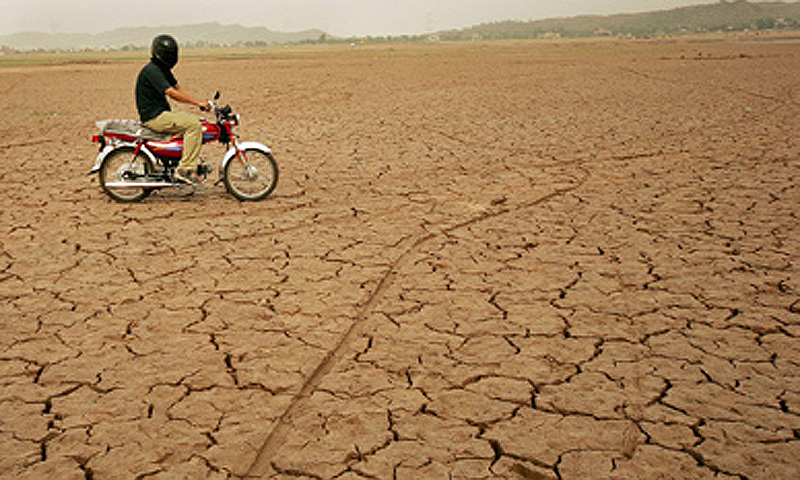 The conference, organised by Habib University, highlighted the urgent need to incorporate climate change adaptation into the national climate policy. The keynote speaker, Dr Bruce McCarl, a disitinguised professor of Agricultural Economic at Texas A&M University, sounded the alarm and advised the government of Pakistan to put a special emphasis on saving it agricultural sector, first and foremost since it was most sensitive to extreme weather.
McCarl, who was also part of the Noble Peace Prize winning team of Intergovernmental Panel for Climate Change (IPCC) in 2007, said, "From agricultural point of view, Pakistan should focus on its most staple crops like Wheat" because food security should be the top priority in the climate change scenario.
Shafqat Kakakhel, chairperson of Sustainable Development Policy Institute (SDPI) said that Pakistan was prone to natural disasters and was frequently facing an increase in floods, droughts and other extreme events.
Kakakhel also stressed the need for educational institutes to introduce climate change and environment policy in the school curriculum.
Climate change and the role of media was the subject of another important panel discussion at the conference where Rina Saeed Khan, a prominent writer on environment, said in her presentation that though Pakistan was one the lowest emitters of green house gases in the world it remained highly susceptible to the climate uncertainties.
Her presentation touched upon the hurdles of communicating climate change phenomenon to the masses in local languages without losing its impact.
Muhammad Badar Alam, the editor of Herald Magazine, was also of the opinion that there was a serious lack of credible information about climate change as the government departments were often tight lipped about the dissemination of information about the issue.
Alam had a three-point solution to address the situation. Firstly, access to viable information from the institutes and the scientists, secondly, its comprehension from the journalists, and most importantly passing that information to the masses in jargon free language.
Later in a panel discussion director World Wide Federation (WWF), Sindh, Rab Nawaz, stressed upon the need for downstream water in the Sindh delta to keep the mangroves in healthy condition.
The conference, organised by Habib University, highlighted the urgent need to incorporate climate change adaptation into the national climate policy. The keynote speaker, Dr Bruce McCarl, a disitinguised professor of Agricultural Economic at Texas A&M University, sounded the alarm and advised the government of Pakistan to put a special emphasis on saving it agricultural sector, first and foremost since it was most sensitive to extreme weather.
McCarl, who was also part of the Noble Peace Prize winning team of Intergovernmental Panel for Climate Change (IPCC) in 2007, said, "From agricultural point of view, Pakistan should focus on its most staple crops like Wheat" because food security should be the top priority in the climate change scenario.
Shafqat Kakakhel, chairperson of Sustainable Development Policy Institute (SDPI) said that Pakistan was prone to natural disasters and was frequently facing an increase in floods, droughts and other extreme events.
Kakakhel also stressed the need for educational institutes to introduce climate change and environment policy in the school curriculum.
Climate change and the role of media was the subject of another important panel discussion at the conference where Rina Saeed Khan, a prominent writer on environment, said in her presentation that though Pakistan was one the lowest emitters of green house gases in the world it remained highly susceptible to the climate uncertainties.
Her presentation touched upon the hurdles of communicating climate change phenomenon to the masses in local languages without losing its impact.
Muhammad Badar Alam, the editor of Herald Magazine, was also of the opinion that there was a serious lack of credible information about climate change as the government departments were often tight lipped about the dissemination of information about the issue.
Alam had a three-point solution to address the situation. Firstly, access to viable information from the institutes and the scientists, secondly, its comprehension from the journalists, and most importantly passing that information to the masses in jargon free language.
Later in a panel discussion director World Wide Federation (WWF), Sindh, Rab Nawaz, stressed upon the need for downstream water in the Sindh delta to keep the mangroves in healthy condition.
Pakistan struggling with polio campaign
Recent attacks on polio vaccination teams has undermined the country's efforts to rid itself of the disease.Almost 100 new polio cases have been registered in Pakistan since last year and officials are worried that number could increase if more people are not vaccinated. But the work of Pakistan's polio vaccinations teams has been hampered because they face targeted attacks.
Pakistan: Democratic histrionics
Daily Times
Lal Khan
The obscene mantra of successes of the democratic transition and respect for the mandate being propounded by the bourgeoisie are the reflection of its actual fears and predicamentsFor decades, the question of democracy verses dictatorship has been debated relentlessly in the political arena of our elites and their toadies. For capitalism and imperialism, military dictatorships and bourgeois democracy are interchangeable as long as they guarantee the continuation of their exploitative system of plunder. Since the Second World War, there has been a succession of one military dictatorship after another in ex-colonial countries. Pakistan has been no different as the military brutally imposed itself on the poor masses for more than half of the country’s history. Whenever the ruling elite was threatened with a movement against its obscene rule, it pulled out all the stops against the masses, including the most obscure tricks in the book, to pacify and divert the masses with non-issues. If this seemed unsuccessful, then quickly it leaned on its ‘B’ team, the traditional left (read PPP). Since the fall of Ziaul Haq, there have been successions of right and so-called left democratic governments in Pakistan. The current hysteria in the electronic and print media around Musharraf’s trial, the relatively ‘peaceful’ transition of the chief justice and the army chief, and the repetitive mantra of the mainstream parties’ leaders and the intelligentsia of a successful transition from one democratic government to another proves that the PML-N government is a continuation of the same age old tactic. However, this transition does not mean much for the vast majority of the people who have continuously suffered under the military and democratic rule of the ruling classes with incessant degradation and agony of economic and social exploitation and coercion. Along with these frivolous issues projected by the elite and its media, the social horizon is rocked with sensational sexual and financial scandals and juicy illicit relations of the rich and the famous. If this were not enough, the masses are inflicted by the daily terror of Islamic obscurantists and the terror of price hikes, shortages, unemployment and biblical poverty. The people of Pakistan are not duped by any of it and there is a real revolt simmering underneath the surface but, for the current period, this is blocked from all sides. The crisis of the elite has permeated into all sections of the state and politicians, some of whom are so frustrated at being left out of the structures of power and accompanying loot that they are forced to resort to calling for rebellions and revolutions, and this can only be for a regressive obscurantist dawn. The divisions, confusion, inertia and total failure of this degenerated, belated, impatient ruling class, and its dysfunctional state and structures to solve any of the fundamental problems are starkly chalked on the streets and walls of the country. Capitalist democracy, in its present condition of terminal decay, is the rule of the rich for the rich and by the rich. It is being exposed in the mass consciousness and even in the thinking of sections of the state. Not only this, the ‘democratic’ system has led to social and economic disasters for the masses and its process, methodology and political legitimacy have been severely eroded. The present regime has confessed that, if the results are verified, a majority of the results would prove to be duplicitous. The obscene mantra of successes of the democratic transition and respect for the mandate being propounded by the bourgeoisie are the reflection of its actual fears and predicaments, which could provoke a revolt against the socio-economic distress from below. This is also the basis of the policies of reconciliation and wrangling on non-issues by the different sections of the elite in crisis itself. These democratic histrionics are more doctored and planned than the impromptu fashion with which they are being depicted. The current epoch is an epoch of crisis and, as its tremors are being felt across the globe in a domino effect, it has also exposed the hollowness of bourgeois democracy and its degeneration across the world where its authenticity and relevance are being questioned by ordinary people. There are serious doubts developing, even in Europe and the US, the advanced cradles of bourgeois democracy. In one country after another these processes, elections and their outcomes are being boycotted and rejected by the opposition political parties. In the last few months we have witnessed this in Eastern Europe, Africa and near to us in Nepal, Bangladesh, Cambodia, Thailand and Malaysia. It is perhaps not so astonishing that the foremost protagonist of capitalist democracy, The Economist, had to say this in its last issue, “Those living in dictatorships often harbour the delusion that the point of democracy is that you get the government that you want. Those living in democracies soon realise that this is not the system’s most salient feature: rather, it is that voters get the government they want and are expected to put up with it until the next election.” Karl Marx could not have put it in simpler language when he wrote: “The oppressed are allowed once every few years to decide which particular representatives of the oppressing class are to represent and repress them...Necessity is blind until it becomes conscious. Freedom is the consciousness of necessity.” One of the most radical and egalitarian presidents of the US, Thomas Jefferson, was more pertinent than any of the elitist intellectuals and politicians of modern day sick capitalism. He famously wrote: “Democracy will cease to exist when you take away from those who are willing to work and give to those who would not.” The masses are extremely resourceful and, when faced with the failures of old traditions, they invent new parties and methods of struggle. The rise of the Aam Admi Party in the Indian capital of New Delhi is one reflection of this. Despite its radical programme and some actions like subsidised clean drinking water and electricity for those who are lucky to have cables and pipes running to their homes and saying no to pomp and glitter, Mr Kejriwal’s coalition had a very rude awakening of having to work within the confines of the rotten existing system. This is clearly reflected by the inability to provide water to the vast majority of Delhi’s poor and the realisation of total incapacity of reforms within the system. The real issue is that under the oligarchy and dictatorship of corporate and finance capital, there can be no genuine democracy. The masses are discovering this reality through painful experiences, betrayals and deceits, and are drawing correct lessons from this. The mass consciousness in general lags behind economic realities but once it catches up with these events, the collective consciousness takes the form of an irreconcilable class struggle. Its victory, through a socio-economic transformation, can give the masses that collective democracy from the grassroots level where they will be able to decide their own fate. Only then can human emancipation become a reality.
Subscribe to:
Posts (Atom)