President Bashar al-Assad’s interview with Agence France Presse AFP: Mr. President, what do you expect from the Geneva conference? President Assad: The most basic element, which we continuously refer too, is that the Geneva Conference should produce clear results with regard to the fight against terrorism in Syria. In particular, it needs to put pressure on countries that are exporting terrorism, - by sending terrorists, money and weapons to terrorist organisations, - especially Saudi Arabia and Turkey, and of course the Western countries that provide political cover for these terrorist organisations. This is the most important decision or result that the Geneva Conference could produce. Any political solution that is reached without fighting terrorism has no value. There can be no political action when there is terrorism everywhere, not only in Syria but in neighbouring countries as well. From the political side, it is possible for Geneva to contribute to a process of dialogue between Syrians. There has to be a Syrian process within Syria and whilst Geneva could support this, it cannot be a substitute for it. AFP: After nearly three years of devastating war and the big challenge of reconstruction in the country, is it likely that you will not be a candidate for the presidency? President Assad: This depends on two things: It depends on personal aspirations or a personal decision, on the one hand, and on public opinion in Syria, on the other. As far as I am concerned, I see no reason why I shouldn’t stand; as for Syrian public opinion, there is still around four months before the election date is announced. If in that time, there is public desire and a public opinion in favour of my candidacy, I will not hesitate for a second to run for election. In short, we can say that the chances for my candidacy are significant. AFP: In these past years, have you thought for a moment about losing the battle, and have you thought of an alternative scenario for you and your family? President Assad: In any battle, there is always the possibility of winning and losing; but when you're defending your country, it's obvious that the only choice is to win. Should Syria lose this battle that would mean the spread of chaos throughout the Middle East. This battle is not confined to Syria and is not, as Western propaganda portrays, a popular uprising against a regime suppressing its people and a revolution calling for democracy and freedom. These lies have now become clear to people. A popular revolution doesn’t last for three years only to fail; moreover, a national revolution cannot have a foreign agenda. As for the scenarios that I have considered, of course these types of battles will have numerous scenarios – 1st, 2nd, 3rd……tenth, but they are all focused on defending the country not on running away from it. Fleeing is not an option in these circumstances. I must be at the forefront of those defending this country and this has been the case from day one. AFP: Do you think you are winning this war? President Assad: This war is not mine to win; it's our war as Syrians. I think this war has, if you will, two phases. The first phase, which took the form of plans drawn up at the beginning, was the overthrow of the Syrian state in a matter of weeks or months. Now, three years on, we can safely say that this has failed, and that the Syrian people have won. There were countries that not only wanted to overthrow the state, but that also wanted to partition the country into several ‘mini-states;’ of course this phase failed, and hence the win for the Syrian people. The other phase of the battle is the fight against terrorism, which we are living on a daily basis. As you know, this phase isn’t over yet, so we can't talk about having won before we eliminate the terrorists. What we can say is that we are making progress and moving forward. This doesn't mean that victory is near at hand; these kinds of battles are complicated, difficult and they need a lot of time. However, as I said, and I reiterate, we are making progress, but have not yet achieved a victory. AFP: Returning to Geneva, do you support a call from the conference for all foreign fighters to leave Syria, including Hezbollah? President Assad: Clearly the job of defending Syria is responsibility of the Syrian people, the Syrian institutions, and in particular the Syrian Army. So, there would be no reason for any non-Syrian fighters to get involved had there not been foreign fighters from dozens of countries attacking civilians and Hezbollah especially on the Syrian-Lebanese border. When we talk about fighters leaving Syria, this would need to be part of a larger package that would see all the foreign fighters leave, and for all armed men – including Syrians – to hand over their weapons to the Syrian state, which would consequently achieve stability. So naturally, yes, one element of the solution in Syria – I wouldn’t say the objective – is for all non-Syrian fighters to leave Syria. AFP: In addition to the prisoner exchange and a ceasefire in Aleppo, what initiatives are you ready to present at Geneva II? President Assad: The Syrian initiative was put forward exactly a year ago, in January of last year. It's a complete initiative that covers both political and security aspects and other dimensions that would lead to stability. All of these details are part of the initiative that Syria previously put forward. However, any initiative, whether this one or any other, must be the result of a dialogue between Syrians. The essence of anything that is proposed, whether it's the crisis itself, fighting terrorism, or the future political vision and political system for Syria, requires the approval of Syrians. Our initiative was based on a process to facilitate this dialogue rather than a process to express the government's point of view. It has always been our view that any initiative must be collective and produced by both the political actors in Syria and the Syrian people in general. AFP: The opposition that will participate in Geneva is divided and many factions on the ground don't believe it represents them. If an agreement is reached, how can it be implemented on the ground? President Assad: This is the same question that we are asking as a government: when I negotiate, who am I negotiating with? There are expected to be many sides at Geneva, we don't know yet who will come, but there will be various parties, including the Syrian government. It is clear to everyone that some of the groups, which might attend the conference, didn't exist until very recently; in fact they were created during the crisis by foreign intelligence agencies whether in Qatar, Saudi Arabia, France, the United States or other countries. So when we sit down with these groups, we are in fact negotiating with those countries. So, is it logical that France should be a part of the Syrian solution? Or Qatar, or America, or Saudi Arabia, or Turkey? This doesn't make any sense. Therefore, when we negotiate with these parties, we're in fact negotiating with the countries that are behind them and that support terrorism in Syria. There are other opposition forces in Syria that have a national agenda; these are parties that we can negotiate with. On the issue of the vision for Syria's future, we are open for these parties to participate in governing the Syrian state, in the government and in other institutions. But as I mentioned earlier, anything that is agreed with any party, whether in Geneva or in Syria, must be subject to people's endorsement, through a referendum put to Syrian citizens. AFP: In this context, could the ceasefire agreements that have been started in Moadimiya and Barzeh be an alternative to Geneva? President Assad: The truth is that these initiatives may be more important than Geneva, because the majority of those fighting and carrying out terrorist operations on the ground have no political agenda. Some of them have become professional armed robbers, and others, as you know, are takfiri organisations fighting for an extremist Islamic emirate and things of that kind. Geneva means nothing for these groups. For this reason, the direct action and the models that have been achieved in Moadamiyeh, in Barzeh and other places in Syria has proven to be very effective. But this is separate from the political process, which is about the political future of Syria. These reconciliations have helped stability and have eased the bloodshed in Syria, both of which help pave the way for the political dialogue I mentioned earlier. AFP: Are you prepared to have a prime minister from the opposition in a future government? President Assad: That depends on who this opposition represents. When it represents a majority, let’s say in parliament, naturally it should lead the government. But to appoint a prime minister from the opposition without having a majority doesn’t make any political sense in any country in the world. In your country, for example, or in Britain or elsewhere, you can’t have a prime minister from a parliamentary minority. This will all depend on the next elections, which we discussed in the Syrian initiative; they will reveal the real size of support for the various opposition forces. As to participation as a principle, we support it, of course it is a good thing. AFP: Are you prepared to have, for example, Ahmed Jarba or Moaz Khatib, be your next prime minister? President Assad: This takes us back to the previous question. Do any of these people represent the Syrian people, or even a portion of the Syrian people? Do they even represent themselves, or are they just representatives of the states that created them? This brings us back to what I mentioned earlier: every one of these groups represents the country that created them. The participation of each of these individuals means the participation of each of those states in the Syrian government! This is the first point. Second, let’s assume that we agreed to the participation of these individuals in the government. Do you think that they would dare to come to Syria to take part in the government? Of course they wouldn’t. Last year, they claimed that they had control of 70% of Syria, yet they didn’t even dare to come to the areas that they had supposed control of. They did come to the border for a 30-minute photo opportunity and then they fled. How can they be ministers in the government? Can a foreigner become a Syrian minister? That’s why these propositions are totally unrealistic, but they do make a good joke! AFP: Mr. President, you said that it depends on the results of the elections, but how can you hold these kinds of elections if part of Syria's territory is in the hands of insurgents? President Assad: During this crisis, and after the unrest started in Syria, we have conducted elections twice: the first was municipal elections and the second was parliamentary elections. Of course, the elections cannot be conducted in the same way they are conducted in normal circumstances, but the roads between Syrian regions are open, and people area able to move freely between different regions. Those who live in difficult areas can go to neighbouring areas and participate in the elections. There will be difficulties, but it is not an impossible process. AFP: Now that opposition fighters are battling jihadists, do you see any difference between the two? President Assad: The answer I would have given you at the beginning of the events or during its various phases, is completely different to the answer today. Today, there are no longer two opposition groups. We all know that during the past few months the extremist terrorist groups fighting in Syria have wiped out the last remaining positions that were held by the forces the West portrays as moderates, calling them the moderate or secular forces, or the Free Syrian Army. These forces no longer exist. We are now dealing with one extremist group made up of various factions. As to the fighters that used to belong to what the West calls ‘moderate forces,’ these have mostly joined these extremist factions, either for fear or voluntarily through financial incentives. In short, regardless of the labels you read in the Western media, we are now fighting one extremist terrorist group comprising of various factions. AFP: Would it be possible for the army and the opposition to fight against the jihadists side by side? President Assad: We cooperate with any party that wants to join the army in fighting terrorists, and this has happened before. There are many militants who have left these organisations and joined the army to fight with it. So this is possible, but these are individual cases. This is not an alliance between ‘moderate’ forces and the army against terrorists. That depiction is false and is an illusion that is used by the West only to justify its support for terrorism in Syria. It supports terrorism under the pretext that it is backing moderation against extremist terrorism, and that is both illogical and false. AFP: The state accuses the rebels of using civilians as human shields in areas under their control, but when the army shells these areas, do you not think this kills innocent people? President Assad: The army does not shell neighbourhoods. The army strikes areas where there are terrorists. In most cases, terrorists enter particular areas and force out the civilians. Why do you think we have so many displaced people? Most of the millions of displaced people in Syria have fled their homes because terrorists forcefully entered their neighbourhoods. If there are civilians among these armed groups, why do we have so many displaced people? The army is fighting armed terrorists, and in some cases, terrorists have used civilians as human shields. Civilian casualties are unfortunately the consequences of any war. There is no such thing as a clean war in which there are no innocent civilian victims. This is the unfortunate nature of war, and that is why the only solution is to put an end to it. AFP: Mr. President, some international organisations have accused the government and the opposition of committing abuses. After this war ends, would you be ready for there to be an investigation into these abuses? President Assad: There is no logic to this claim made by these organisations. How can the Syrian state be killing its own people, and yet it is still standing three year on, despite the fact that there are dozens of countries working against it. Had the Syrian state been killing its people, they would have revolted against it long ago. Such a state could not survive for more than few months; the fact that it has resisted for three years means that it has popular support. Such talk is more than illogical: it is unnatural. What these organizations are saying is either a reflection of their ignorance of the situation in Syria, or, in some cases, it shows they are following the political agenda of particular states. The Syrian state has always defended its civilians; it is well documented, through all the videos and the photos circulating, that it is the terrorists who are committing massacres and killing civilians everywhere. From the beginning of this crisis, up until today, these organizations do not have a single document to prove that the Syrian government has committed a massacre against civilians anywhere. AFP: Mr. President, we know of foreign journalists who were kidnapped by the terrorist groups. Are there any foreign journalists in state prisons? President Assad: It would be best for you to ask the relevant, specialised agencies on this issue. They would be able to give you an answer. AFP: Would a reconciliation be possible, one day, between Syria on the one hand, and Saudi Arabia, Qatar and Turkey on the other? President Assad: Politics changes constantly, but this change depends on two factors: principles and interests. We share no common principles with the states you mention; these states support terrorism and they have contributed to the bloodshed in Syria. As for interests, we need to ask ourselves: will the Syrian people agree to shared interests with these countries after everything that has happened and all the bloodshed in Syria? I don't want to answer on behalf of the Syrian people. If the people believe they share interests with these states, and if these states change their policy on supporting terrorism, it is plausible that the Syrian people might agree to restore relations. I can’t individually as President, answer on behalf of all the Syrian people at such a time. This is a decision for the people. AFP: Mr. President, you were welcomed on the occasion of July 14 (Bastille Day) in the Elysee Palace in Paris. Are you now surprised by France's position, and do you think France may one day play some kind of role in Syria? President Assad: No, I am not surprised, because when that reception took place, it was during the period - 2008 to 2011 - where there was a attempt to contain Syria's role and Syria's policy. France was charged with this role by the United States when Sarkozy became president. There was an agreement between France and the Bush administration over this, since France is an old friend of the Arabs and of Syria and as such it is better suited to play the role. The requirement at that time was to use Syria against Iran and Hezbollah, and to pull it away from supporting resistance organisations in the region. This French policy failed, because its goal was blatantly obvious. Then the so-called Arab Spring began, and France turned against Syria after it had failed to honour the pledge it had made to the United States. This is the reason behind the French position during that period why it changed in 2011. As for France's role in future, let's talk frankly. Ever since 2001 and the terrorist attacks on New York, there has been no European policy-making to speak of (and that's if we don't look back even further to the 1990s). In the West, there is only an American policy, which is implemented by some European countries. This has been the case on all the issues in our region in the past decade. Today, we see the same thing: either European policy is formulated with American blessing, or American policy is adopted by the Europeans as their own. So, I don't believe that Europe, and particularly France, which used to lead the European policy in the past, is capable of playing any role in the future of Syria, or in neighbouring countries. There is another reason too, and that is that Western officials have lost their credibility. They no longer have double standards; they have triple and quadruple standards. They have all kinds of standards for every political situation. They have lost their credibility; they have sold their principles in return for interests, and therefore it is impossible to build a consistent policy with them. Tomorrow, they might do the exact opposite of what they are doing today. Because of this, I don't think that France will play a role in the immediate future, unless it changes its policy completely and from its core and returns to the politically independent state it once was. AFP: How long do you think Syria needs to rid itself completely of its chemical weapons stockpiles? President Assad: This depends on the extent to which the Organisation for the Prohibition of Chemical Weapons (OPCW) will provide Syria with the necessary equipment to carry out the process. So far, the process of making this equipment available has been quite slow. On the other hand, as you know dismantling and neutralizing the chemical materials is not taking place inside Syria nor by the Syrian state. A number of countries in different parts of the world have accepted to carry out that process; some have agreed to deal with the less dangerous materials, whilst others have refused completely. Since, the timeframe is dependent on these two factors - the role of the OPCW and the countries that accept to neutralize the materials on their territories – it is not for Syria to determine a timeframe on this issue. Syria has honoured its part by preparing and collecting data and providing access to inspectors who verified this data and inspected the chemical agents. The rest, as I said, is up to the other parties. AFP: Mr. President, what has changed in your and your family's daily, personal lives? Do your children understand what has happened? Do you talk to them about this? President Assad: There are a few things that haven't changed. I go to work as usual, and we live in the same house as before, and the children go to school; these things haven't changed. On the other hand, there are things which have affected every Syrian household, including mine: the sadness which lives with us every day - all the time, because of what we see and experience, because of the pain, because of the fallen victims everywhere and the destruction of the infrastructure and the economy. This has affected every family in Syria, including my own. There is no doubt that children are affected more deeply than adults in these circumstances. This generation will probably grow up too early and mature much faster as a result of the crisis. There are questions put to you by children about the causes of what’s happening, that you don’t usually deal with in normal circumstances. Why are there such evil people? Why are there victims? It’s not easy to explain these things to children, but they remain persistent daily questions and a subject of discussion in every family, including my own. AFP: Through these years, what was the most difficult situation you went through? President Assad: It’s not necessarily a particular situation but rather group of elements. There are several things that were hard to come to terms with, and they are still difficult. The first, I believe, is terrorism; the degree of savagery and inhumanity that the terrorists have reached reminds us of what happened in the Middle Ages in Europe over 500 years ago. In more recent modern times, it reminds us of the massacres perpetrated by the Ottomans against the Armenians when they killed a million and a half Armenians and half a million Orthodox Syriacs in Syria and in Turkish territory. The other aspect that is difficult to understand is the extent of Western officials' superficiality in their failure to understand what happened in this region, and their subsequent inability to have a vision for the present or for the future. They are always very late in realizing things, sometimes even after the situation has been overtaken by a new reality that is completely different. The third thing that is difficult to understand is the extent of influence of petrodollars in changing roles on the international arena. For instance, how Qatar was transformed from a marginal state to a powerful one, while France has become a proxy state implementing Qatari policies. This is also what we see happening now between France and Saudi Arabia. How can petrodollars make western officials, particularly in France, sell their principles and sell the principles of the French Revolution in return for a few billion dollars? These are only a few things, among others, which are difficult for one to understand and accept. AFP: The trial of those accused of the assassination of former Lebanese Prime Minister Rafic Hariri has begun. Do you think it will be a fair trial? President Assad: Nine years have passed since the beginning of this trial. Has justice been served? Every accusation was made for political reasons. Even in the past few days, we have not seen any tangible proof put forward against the parties involved in the case. The real question should be: why the timing? Why now? This court was set up nine years ago. Have the things produced in the last few days been uncovered only now? I believe that the whole thing is politicized and is intended to put pressure on Hezbollah in Lebanon in the same way that it aimed at putting pressure on Syria in the beginning, immediately after al-Hariri’s assassination. AFP: You have said the war will end when terrorism is eradicated. But the Syrians and everyone else want to know when this war will end. Within months? After a year? In years to come? President Assad: We hope that the Geneva conference will be able to provide an answer to part of this by exercising pressure on these countries. This aspect has nothing to do with Syria; otherwise we would have put pressure on these states from the beginning and prevented terrorism from entering Syria. From our side, when this terrorism stops coming in, ending the war will not take more than a few months. AFP: It appears Western intelligence agencies want to re-open channels of communication with Damascus, in order to ask you for help fighting terrorism. Are you ready for that? President Assad: There have been meetings with several intelligence agencies from a number of countries. Our response has been that security cooperation cannot be separated from political cooperation, and political cooperation cannot be achieved while these states adopt anti-Syrian policies. This was our answer, brief and clear. AFP: You have said in the past that the state has made mistakes. In your view, what were the mistakes that could have been avoided? President Assad: I have said that mistakes can be made in any situation. I did not specify what those mistakes were because this cannot be done objectively until the crisis is behind us and we can assess our experience. Evaluating them whilst we are in the middle of the crisis will only yield limited results. AFP: Mr. President, without Russia, China and Iran's help, would you have been able to resist in the face of the wars declared against you? President Assad: This is a hypothetical question, which I cannot answer, because we haven’t experienced the alternative. Reality has shown that Russian, Chinese and Iranian support has been important and has contributed to Syria’s steadfastness. Without this support, things probably would have been much more difficult. How? It is difficult to draw a hypothetical picture at this stage. AFP: After all that has happened, can you imagine another president rebuilding Syria? President Assad: If this is what the Syrian people want, I don’t have a problem with it. I am not the kind of person who clings to power. In any case, should the Syrian people not want me to be president, obviously there will be somebody else. I don't have a personal problem with this issue.

M WAQAR..... "A man's ethical behavior should be based effectually on sympathy, education, and social ties; no religious basis is necessary.Man would indeed be in a poor way if he had to be restrained by fear of punishment and hope of reward after death." --Albert Einstein !!! NEWS,ARTICLES,EDITORIALS,MUSIC... Ze chi pe mayeen yum da agha pukhtunistan de.....(Liberal,Progressive,Secular World.)''Secularism is not against religion; it is the message of humanity.'' تل ده وی پثتونستآن
Monday, January 20, 2014
Syrian President Assad in exclusive AFP interview
China expresses hope for at-risk Syria talks
Putin's Electoral Support Grows – Poll
Geneva 2: UN retracts Iran's invite, Syrian opposition confirms attendance
Pakistan: Former President Zardari condemns incessant killings of innocent people by terrorists
http://mediacellppp.wordpress.com/Former President Asif Ali Zardari has strongly condemned suicide attack in a market in Rawalpindi Monday morning which killed 13 people and injured over two dozens and called for effective measures to stop continuing bloodshed of defense Personnel and innocent men, women and children. In a statement former President said that the attacks on security forces and citizens and the bloodletting of innocent people cannot and must not be allowed to go on with impunity. He called for immediate, decisive and credible measures to stop this barbarism. The former President said that Pakistan People’s Party will not leave the people on the mercy of terrorists and will fight the militants with the help of the people.. In times like these we need to have a unified and firm national narrative against militancy that no one should be allowed to distort it. He prayed to Almighty Allah for eternal peace to the departed souls and early recovery for the injured. He also sympathized with the bereaved families.
Syria Peace Talks Will Be a Sham Without Iran – Russia
Iran invitation puts Syria peace talks at risk
Pakistan: No policy to fight militancy
Pakistan: Grenade attack on Rangers vehicle in Karachi
Three people have been injured including a Rangers' man in a hand grenade blast near a vehicle of the paramilitary force in Manghopir area, Geo News reported Monday. According to Karachi police chief Shahid Hayat, the incident took place in Mianwali Colony of Manghopir area where unknown assailants lobbed a hand grenade near the vehicle of Rangers. As a result, three people including one troop of the paramilitary force sustained injuries. Rescue and emergency response teams reached the site of the blast and whisked away the injured to the hospital for treatment.
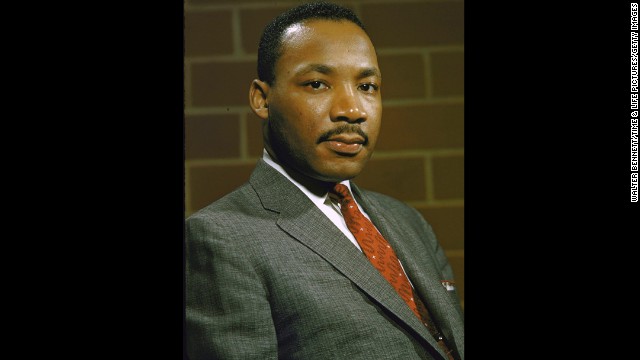
Martin Luther King Jr. and the catalyst of change
Washington PostMARTIN LUTHER King Jr. preached nonviolence, practiced it and led a great movement guided by its principles. Yet surely he knew, as did most of his followers, that what they were doing would lead to violence. One need only look at the old black-and-white photos of civil rights protests, at the hatred, scorn and, perhaps most important, fear on the faces of some of the white people there to confront the demonstrators to understand how such simple acts as sitting down in a bus or entering a restaurant, seeking the right to vote or go to a better school, could lead to the worst sorts of violence — a bitter truth that followed King to the day of his death.
Yet out of that violence came new understanding of a sort: People who had been all but invisible to much of the United States came to be seen through the newspapers and television as individual human beings : women and children being firehosed; war veterans returning home to be subjected to all the humiliations and restrictions of the time (or to be murdered, like Medgar Evers); polite young men trying to get a sandwich at a lunch counter; a dignified woman who refused to give up her seat on a bus; the children killed by a bomb in a Birmingham church. For many Americans, this marked the first time they had come face to face, or had allowed themselves to come face to face, with the cruelty of racial separation and oppression, a century after the official end of slavery.It was not a new phenomenon. Many of the men who fought to preserve the Union — probably most of them — had little interest in freeing the slaves. Yet as they moved south, saw the faces and witnessed the conditions under which many enslaved people lived, they gained a new sympathy and understanding of how awful it was. Historian Allen Guelzo writes that Union naval officers “who had some chance ashore to see the remains of the slave system for themselves experienced great awakenings.” Adm. Samuel F. Du Pont, who acknowledged that he had once been “a sturdy conservative” on the question of slavery, “was horrified by the conditions he found on the coastal plantations,” writes Mr. Guelzo. Having seen the institution of slavery in person, Du Pont wrote to a friend, “may God forgive me for the words I have uttered in its defense as intertwined in our Constitution.” The Rev. Martin Luther King Jr. was seen by some as a radical and a troublemaker. The truth is that he had considerable faith in America. He believed that when people saw the unfairness of the caste system that had grown up in their country — in a nation founded on the principles of equality before the law, the opportunity to advance in life according to one’s merits, the right to choose the people who govern us — they would understand how truly un-American it was and it would all come to an end, and much of it has.
Martin Luther King Jr: The reluctant civil rights leader
On the holiday that celebrates the Rev. Martin Luther King Jr., many will remember his sacrifices for the civil rights movement, and serve others in his memory. Because of the accolades he received after his martyrdom, King is often viewed as a charismatic leader who was responsible for the success of the campaign for civil rights reform. But many forget his international outlook, including protest of the war in Vietnam. And history reveals that before he was a civil rights leader he was, first, a preacher, committed to social and economic justice. He was only reluctantly a civil rights leader.
Rosa Parks transformed King into that leader. Chosen to lead the Montgomery bus boycott movement, he quickly gained prominence as the nation's best-known civil rights spokesperson and advocate of Gandhian nonviolent resistance to the Southern Jim Crow system. But during the six years after the boycott's successful conclusion, he never planned and carried out a campaign of civil disobedience. In 1963, King finally had an opportunity to play a leading role in sustained protests in Birmingham. But even in this campaign to pressure local leaders on the city's segregation, he came perilously close to failure.By early April 1963, his support among local black leaders had declined, and despite initial enthusiasm of the first mass protests, it became clear that he would not be able to recruit many more protesters willing to engage in civil disobedience through clashes with the forces of Police Chief Bull Conner. As Easter neared, King realized that bail funds were depleted, and few adult activists were prepared to spend long periods in jail. Even Ralph Abernathy and some of his other colleagues were unwilling to risk arrest if this meant being unavailable to deliver Easter Sunday sermons in their churches. When he made a critical, solitary decision -- his "faith act" -- to submit to arrest on Good Friday, King was not certain that this decision would result in a successful outcome in Birmingham. Many of his advisers, including his father, had tried to dissuade him from going to jail. "I don't know what will happen or what the outcome will be," he had admitted to the close associates who gathered in Birmingham's Gaston Motel. After he was arrested and placed in solitary confinement, he remembered enduring "the longest, most frustrating and bewildering hours I have lived." King regained his confidence only after he learned from his lawyer, Clarence Jones, that entertainer Harry Belafonte had raised $50,000 and promised to raise more to provide bail for those willing to go to jail. When a group of local white clergymen denounced the Birmingham protests as "unwise and untimely," King responded with the letter from his jail cell that would become the most influential defense of civil disobedience since Thoreau's essay on the subject more than a century earlier. But King's letter also expressed a philosophical commitment to nonviolent direct action that he had never previously translated into a nonviolent direction action campaign. King was not able to revive the Birmingham campaign until he allowed himself to be bailed out of jail and gave in to the urging of James Bevel, Dorothy Cotton, and other activists that he allow eager teenagers to participate in marches into Birmingham's downtown area, and thereby reinvigorate the flagging protest movement in Birmingham. When Conner responded with fire hoses and police dogs, the clashes in downtown Birmingham attracted the world's attention. In Birmingham, as had been the case in other communities, the courageous actions of young people demonstrated the effectiveness of King's ideas more than the actions of King himself. Due to the timely intervention of thousands of young people, King was able to secure a settlement with Birmingham's white business leaders. He could then claim victory rather than suffer an ignominious defeat. King's success in Birmingham marked a major turning point in his life. If he had failed, it is unlikely that he would have been invited to deliver the concluding speech at the March on Washington for Jobs and Freedom. It his even more unlikely that he would he have been given more time than the other speakers that day to share his dream that would enter the nation's collective consciousness. King's most important contribution to the modern African-American freedom struggle was as an eloquent proponent of civil disobedience, and as a visionary who understood the broader global and historical significance of the African-American civil rights movement. His oratory inspired participants in mass movements that were usually initiated and sustained by others. The Southern freedom struggle certainly would have eventually achieved major civil rights reforms even after a setback in Birmingham, but it is very doubtful whether we would be talking about King today if he had failed in Birmingham in 1963.
Taliban attack on expats in Kabul cafe is likely to accelerate disengagement
Video: Dog steals nuggets from oven, goes for 2nd round
Dog steals nuggets from oven, goes for 2nd round
Afghanistan: 9 bombers, US soldier killed in Kandahar ISAF base attack
A complex attack, involving a car bomb and gunmen in Western military uniforms with explosives strapped to their bodies, on a US military base left one coalition soldier and nine assailants dead in southern Kandahar province on Monday, officials said.
The brazen attack that occurred in the militancy-plagued Zherai district began around 11am when a suicide bomber ploughed his explosives-laden car into the wall of the joint US-Afghan troops’ forward operating base, the town’s administrative head, Haji Jamal Agha, told Pajhwok Afghan News.
He said the attack involved nine attackers and all of them were killed in an exchange of fire with foreign troops.
ISAF said it was a complex attack with a suicide vehicle-borne improvised explosive device, enemy forces with suicide vests and small arms fire.
The force also confirmed the death of one service member in the attack, saying all other ISAF personnel were accounted for.
Javed Faisal, the governor’s spokesman, also confirmed all the nine attackers involved in the coordinated assault had been killed, but he had no further details.
205th Atal Military Corps commander Gen. Abdul Hamid Hamid said the attackers descended from two cars and then of the cars laden with explosives was crashed against a wall of the base.
He said the remaining eight attackers, who were dressed in ISAF military uniforms, tried to force their way into the base but failed and were killed by ISAF and Afghan soldiers.
ISAF said the blast caused damages to the outer perimeter of the base and that the base was currently secured and all enemy forces had been killed.
Sources said investigations into the incident had been initiated and more details would be shared with media.
In a tweet, the Taliban claimed responsibility for the attack, calling it “a coordinated group martyrdom assault.”
The attack came three days after 21 people, mostly foreigners, were killed in a similar complex attack on a foreign restaurant in the heart of Kabul.
The Nation Security Council (NSC) on Sunday accused “foreign intelligence services” of being behind the attack in Kabul, saying such complex and sophisticated assault was beyond the ability of ordinary Taliban.
Afghanistan hints at spy link to Kabul attack
Afghanistan's National Security Council suggests Pakistani intelligence services were behind restaurant bombing.Afghanistan's National Security Council, which is chaired by President Hamid Karzai, has accused "foreign intelligence services" of being behind the deadly attack on a Kabul restaurant, in a veiled reference to Pakistan. Pakistan was the main supporter of the former Taliban regime in Afghanistan, and Afghan officials have long voiced suspicions about connections between the hardline movement and Islamabad's powerful intelligence services. "The NSC said such sophisticated and complex attacks are not the work of the ordinary Taliban, and said without doubt foreign intelligence services beyond the border are behind such bloody attacks," a statement released on Sunday from the palace said. "Beyond the border" is a phrase commonly used by the Afghan government to refer to neighbouring Pakistan. Taliban fighters claimed responsibility for Friday evening's suicide attack on a popular Lebanese restaurant in central Kabul in which 21 people, including 13 foreigners, were killed. Among the dead were three Americans, two British citizens, two Canadians, the International Monetary Fund head of mission, and the Lebanese owner of the Taverna du Liban, which was a popular social venue for expats. In the deadliest attack on foreign civilians since the Taliban were ousted in 2001, one attacker detonated his suicide vest at the fortified entrance to the restaurant before two other fighters stormed inside and gunned down diners and staff. Fragile ties The accusation of Pakistani involvement is likely to damage regional peace efforts as Pakistan, which has been battling the Pakistani Taliban, is seen as crucial to encouraging the Afghan Taliban to open talks. Many Afghan Taliban leaders seek shelter in Pakistan, and Islamabad's Inter-Services Intelligence (ISI) spy agency is often accused of maintaining ties to the fighters to ensure future influence in Afghanistan after US-led NATO troops withdraw. Pakistani officials were not immediately available to comment on the accusations from Kabul, but Islamabad has always denied any links with the Taliban. Karzai earlier condemned the restaurant attack and called on NATO forces "to target terrorism" in his country. Social activists and local residents held a small demonstration in Kabul on Sunday, laying flowers and placards outside the restaurant demanding peace. Daffodils and roses were laid next to placards, some written in English reading "Peace is what we want" and "We will win, terrorism will lose", outside the entrance to the Lebanese restaurant. Afghan officials vowed to investigate how the suicide attackers penetrated one of the most secure parts of Kabul. Three police chiefs responsible for the Wazir Akbar Khan district have been suspended over the security breach. United Nations chief Ban Ki-moon paid tribute to the four UN staff killed in the attack, and pledged that the UN would maintain its work in Afghanistan. The blast has led to embassies, aid organisations and international institutions re-assessing whether their staff can operate safely in the Afghan capital. NATO combat forces are withdrawing from Afghanistan this year after more than a decade of fighting the Taliban, but negotiations have stalled over a deal to allow some US and NATO troops to stay after 2014. Underlining Pakistan's own battle with rebel fighters, Pakistan army helicopters fired missiles killing three fighters in the northwest of country on Sunday after a bomb killed 22 soldiers in the same region earlier in the day.
Experts: Taliban have not changed strategy with Kabul restaurant attack
The weekend attack on a Kabul restaurant frequented by foreigners came as no surprise to international organizations on the ground. Experts don't believe the Taliban have changed their strategy to target more civilians.Dramatic scenes must have played out in the restaurant: Guests sought cover under tables as a group of terrorists shot wildly into the dining rooms. News agencies report the restaurant owner tried in vain to fend off the attackers. He was among the more than 20 people who perished, most of whom were employees at international organizations. The attackers were also among the dead. During the evening dinner rush, at 7:00 p.m. Friday (17.01.2014), one of three Taliban members detonated his explosives-laden vest and blew a breach in the highly secured restaurant. Neither the man-high blast walls, nor the secured access points with armed guards could stop the attackers. The two remaining terrorists were killed later in a firefight with security forces at the scene. No change in Taliban strategy The suicide bombing on the popular Lebanese restaurant, Taverna Du Liban, in the high-end Kabul neighborhood of Wazir Akbar Khan was the worst attack so far in 2014. Afghanistan votes for a new president in April; and the international troops are scheduled to withdraw from the country by the end of the year. Although there are plans for a small contingent to remain in Afghanistan, President Hamid Karzai first has to sign a bilateral security agreement with the United States. But he continues to play for time. In this context, the Taliban may be targeting civilians more in order to drive out not just the military coalition, but the entire international community. Yet "as horrible as this incident is, I don't see a change in strategy," said Thomas Ruttig, the co-director of the Afghan Analysts Network. Similar attacks have also been launched before, "at least 12 to 15 times in the past eight years," Ruttig said. The worst attack was in 2012 at Qargha Lake, a popular weekend destination near Kabul. More than 20 people were killed, all of them Afghans. Extensive security precautions The Taliban, which normally doesn't miss an opportunity for fiery rhetoric, hasn't declared a change in strategy. A spokesman for the Islamist militant group said the attack was retaliation for a NATO airstrike in Parwan Province, a few kilometers north of Kabul. According to an assistant of the Afghan president, seven children and one woman died in the coalition strike. "You have to carefully monitor the security situation," Nils Wörmer, head of the Konrad Adenauer Institute in Kabul, told DW. "But I think it's a bit early to talk about a change in [Taliban] strategy." Wörmer's office lies just a few hundred meters from the site of Friday's attack. He could clearly hear the explosion, which shook the window panes in his office. "It was immediately clear to me that something had happened," Wörmer recounted. But the Konrad Adenauer Institute was prepared. "We had a relatively concrete warning in the last week related to our neighborhood, and we were very cautious," Wörmer said. He met with colleagues in his secured office. Like most of the international organizations, the Konrad Adenauer Institute is also integrated into the security networks. "The security precautions are high," Wörmer said. "But that doesn't exclude the possibility that something similar could happen again." But the Afghan security forces have succeeded in preventing many attacks in the past few months, he said. Kabul residents criticize Taliban An informal, impromptu poll by DW's Kabul correspondent, Hussein Sirat, suggested the Taliban are not winning Afghan hearts and minds with such attacks. "Wherever the Taliban have killed civilians, they have not achieved their goal," said Mirwais, a pedestrian in the Kabul city center. Idris, another Kabul resident, seconded Mirwais' sentiment. "The Taliban intimidate the people so that the security agreement won't be signed," he said. "But the people won't bend to this intimidation." How the international organizations adapt to the tense security situation in Kabul will come after many conversations, analyses, and briefings in the following days. But Wörmer is not thinking about giving up. "We have a clear agenda and long-term projects, which I considered to be very sensible," Wörmer said. "I am of the opinion, as I was before, that what I'm doing here with the Konrad Adenauer Institute is worth the risks."
Pakistan: Victims Of Peshawar Church Blasts To Receive Counselling From Specially Trained Team Of Peshawar Diocese
The Diocese of Peshawar sends a seven member team for counselling training to provide counselling services to the Peshawar Church blasts victims.As CIP has learned, members of the Peshawar Diocese have undertaken counselling training for the purpose of helping the mentally distressed and traumatized victims of the September 22 suicide bombings at the All Saints Church. The members who had been trained for counselling included a team of seven who travelled all the way to Lahore for training organized by Interserve. Some of these trainees had themselves lost loved ones in the incident. Sessions included ‘Effective Listening’ and ‘Overcoming Grief’. Fehmida William one of those who has received counselling services from those trained expressed overwhelmingly that she moral support from these counsellors. She had lost her husband and two children in the blasts. As she went on to put in plain words the results these counselling sessions have had she told that she received help and support after the incident from a range of charities and Churches. She said: They all gave me moral support and financial help as well. It is worth mentioning that the Diocese of Peshawar has arranged a team of Medical professionals who provide Nursing Care, Physiotherapy, and Psychological and spiritual counselling on a regular basis. She herself sustained injuries in the attacks said: four months on, I am physically on the mend and it is my faith in God that is helping me cope with the loss of my family.I keep praying to God and he blessed me with patience and peace of heart. Although it’s a great loss, as my children and husband will never come back, the Spirit of God is with me, and it consoles me all the time. Praise the Lord! I am mobile; I can walk with the help of a walking frame. I can socialise with others, and the healing process is still going on. Hopefully, with the grace of God, one day I will be fully recovered, but I will always be in debt to all those people who helped me and my family, especially my in-laws and Diocese of Peshawar which I am sure will never abandon its people. While a spokesperson for the diocese wrote in its latest newsletter to the Anglican News: Still the Christian community of Peshawar is passing through a very difficult time full of grief after the blast at All Saints’ Church, Peshawar.They need proper comfort and counselling. The diocese has deep concern about them and is struggling to provide them with spiritual counselling and comfort.As a result the seven were sent to learn more about how to support those coming to terms with loss and injury. - See more at: http://www.christiansinpakistan.com/victims-of-peshawar-church-blasts-to-receive-counselling-from-specially-trained-team-of-peshawar-diocese/#sthash.g9cu0S9O.dpuf
Pakistan: Between the devil and the deep blue sea
By Yasser Latif Hamdani
Pakistan is a multicultural and multi-religious country. Imposition of an identity or a narrative that does not accommodate its multicultural and multi-religious nature will always be a failureMany decades ago, Faiz sahib wrote an essay on the culture of Pakistan. It was perhaps the most comprehensive vision of the Pakistani identity, which was inclusive, democratic, respectful and, I daresay, secular. It was a fascinating mosaic from pre-Islamic heritage to its Muslim identity and inspiration, with the local cultures of the Pashtun, Punjabi, Baloch and Sindhi. Tragically, today Pakistan is caught between two extremes and multiple variants, suffering for the want of that vision. What are these extremes? The first extreme comprises those who want to take Pakistan into the Middle Ages by imposing a theocracy based on their own interpretation of Islam. To them, Pakistan is the world’s sole Islamic nuclear power, which everyone is out to destroy. Islam to them is the answer to all the problems facing Pakistan. They are prone to using terms such as ‘westoxified’, ‘peons of the west’, ‘liberal fascists’ and ‘paid slaves’ for everyone they disagree with. A variant of this extreme wants to wage a 1,000 year war against India and is given to such slogans as “Bharat se rishta kiya; nafrat ka intiqam ka” (Relationship with India: hate, revenge). A slightly different variant wants to bring back the Khilafat. Inevitably, all these extremes are pro-Taliban and believe that anyone fighting the Taliban cannot be a martyr. Meanwhile, the same people support the complete extermination of the Baloch citizens of Pakistan. The second extreme consists of self-styled ‘freethinkers’. To them, everything about Pakistan is wrong, starting from its creation. Their standard of ‘liberalism’ is not a person’s position on such things as women’s rights, minorities’ rights or equality of citizenship but whether or not you are willing to denounce Pakistan as a country. Indeed, in this group, unless you reject Pakistan in toto and become a self-hating Pakistani, you cannot be considered a meaningful member of humanity. Essentially, what they want is for Pakistan to disband its army, give its nuclear weapons to India and just roll over and die. Invariably, they believe that while Waziristan should be bombed out of existence, Balochistan should be declared an independent state as soon as possible. A variant of this extreme believes that the root cause of all that is wrong with the world is Islam the religion. These two extremes have a symbiotic relationship with each other. Without one the other cannot exist. Both essentially agree with each other’s narrative without accepting it. In the process, these outspoken extremists on both sides marginalise all other opinions in the middle. Here I would like to state a few facts for both sides to consider: Pakistan exists and it is here to stay. Its disintegration is in no one’s interest. A great majority of the people of Pakistan is emotionally attached to and derive their life’s inspiration from the religion of Islam but it does not mean that they would accept the imposition of a theocratic dystopia on their heads. It also does not mean that Islam will cease to play an important role in their lives. Pakistan is a multicultural and multi-religious country. Imposition of an identity or a narrative that does not accommodate its multicultural and multi-religious nature will always be a failure. The Pakistani nation — one and indivisible — comprises Baloch, Punjabi, Sindhi, Pashtun and countless other ethnicities, all of whom are part and parcel of what makes us Pakistani. Each language that is spoken in Pakistan is a Pakistani language but Urdu is our lingua franca, our common tongue with which we communicate with each other. Islamic ideology, if there is such a thing, can only mean justice, fair play and equality, and any attempt to narrowly define this ideology would mean unmitigated disaster. Pakistanis are proud of their men and women in uniform but we shall never again accept a uniformed president. Belittling the sacrifices of our soldiers because of four unthinking generals who derailed democracy in this country is not acceptable. And, finally, Pakistan must always be a democracy. Without democracy, Pakistan ceases to be Pakistan. During the course of the few years that I have been writing on these pages, many have queried as to why I speak up for the Ahmedis. It is because in this patriotic community, I have always found a genuine love for this country despite all the persecution they have to face. They — much more than our ‘freethinkers’ who, mind you, have always been beneficiaries of this country’s lopsidedness — have genuine grievances against the country but have you ever seen an Ahmedi question the existence of the country or abuse it? Every August 14, their buildings are lit up and the flag of Pakistan flies high. The Ahmedis’ contribution to Pakistan’s creation, existence and survival are second to none. They still pray for this country because they believe that it is their own country. Though many of our countrymen hate them, it has not turned them into self-hating Pakistanis. There are many Pakistanis — many of them Christians, Hindus, Sikhs and Muslims of every kind — who reject these extremes and all their variants. Ultimately, as Pakistanis we have every right to exist as an independent and honourable people. The two extremes that hold us hostage cannot be counted upon to deliver us from this quagmire because, at the end of the day, they are too self-serving and self-engrossed to care about this country. It is us — the middle Pakistanis — who reject both those who hate the world and those who hate ourselves, who will ultimately have to take control of Pakistan’s destiny. This will be our Pakistan; the Pakistan of tomorrow.
From Bangladesh to Balochistan: Pakistan Owes an Apology
By Malik Siraj Akbar
A few prominent Bangladeshi writers have also begun to publicly endorse their government’s demand that Pakistan should apologize for the war crimes of 1971 during the country’s freedom struggle.
Tahmima Anam, a Bangladeshi novelist, sought a similar apology from Pakistan in an article in the New York Times on December 26, 2013. Interestingly, she hadn’t been born when the tragedy in erstwhile East Pakistan (now Bangladesh) occurred.
However, I still feel her pain and unconditionally support the demand she has put forward to Islamabad. What Ms. Anam termed as “history” are actually current affairs to me and the people of my generation from Pakistan’s largest province of Balochistan.
In order to properly understand why Islamabad is still reluctant to apologize to Dhaka, the Bengalis will have to understand the history, the context and the current situation in my region, Balochistan.
Before the Bengalis experienced genocide in 1971, Baluchistan, Pakistan’s gas-rich province, had already faced three full-fledged operations from the same Pakistani army that subsequently engaged in ethnic cleansing of the Bengalis.
In 1947, the secular Balochistan region, formerly known as the Kalat State, resisted itsaccession with Islamist Pakistan. Mohammad Ali Jinnah, Pakistan’s first governor general and, ironically, the legal adviser of the Kalat State, ordered a military offensive on the Kalat State. Hence. the Baluch lost their sovereignty and became a part of Pakistan on gunpoint.
Pakistan’s ruthless treatment of the Baluch should have provided the Bengalis food for thought on how the fledgling Muslim state intended to grapple with political dissent and ethnic nationalism. While the Baluchs, who resisted Karachi’s (Pakistan’s former capital) exploitation of their mineral wealth, faced deadly operations — the Bengalis at that time did not speak up in support of the Baluch. They assumed that such brutalities could only happen to smaller ethnicities, not the Bengalis who constituted the majority population in the undivided Pakistan.
While Bangladesh luckily won its freedom from Pakistan in 1971 with the military and diplomatic assistance of India and the sacrifices of around three million people, the Indians and the Bengalis never turned back to see how Pakistan continued to (mis)treat the Baluch. The Bengalis, who had faced genocide, exhibited classic selfishness by never standing with the remaining ethnic minorities in Pakistan.
Two years after the independence of Bangladesh, Pakistan unleashed another military assault on Balochistan that killed thousands of political opponents, tribesmen and professionals. During the general elections of 1970, which led to the dismemberment of Pakistan and the freedom of Bangladesh, the Baluch, just like the Bengalis, did not vote for the left-center Pakistan People’s Party. Baluch nationalists, led by the National Awami Party, won the majority seats. Pakistanis violated the Baluch mandate and imprisoned all elected parliamentarians and launched a massive operation to quell political dissent. Thousands of Baluchs were driven out of their homes and the country to languish in neighboring Afghanistan as refugees.
While Pakistan has excessively benefited from the natural gas produced from the Baluch land, it has denied them jobs and sufficient representation in all government institutions. Balochistan has some of the worst social indicators in South Asia.
When nobody objected to Pakistan’s killing of the unarmed Baluch political opponents in the first place, the world is left with no moral grounds to ask for an apology for the crimes committed against the Bengalis. In fact, the lack of Bengali protest over the state-terrorism against the Baluch encouraged Pakistan to continue with absolute impunity. It was firstly the Baluch that faced Pakistan’s military oppression and then the Bengalis. Pakistan does not apologize from Bangladesh because it is clearly convinced that it can abuse people’s rights and still get away with it.
Since 2004, Pakistan has been carrying out an unabated military operation in Balochistan. This is the fifth operation the Baluchs are facing from the army dominated by ethnic Punjabis. Thousands of Baluch political activists, students, writers and doctors have “disappeared” in a fashion similar to Argentina’s Dirty War.
Even the Bengalis did not experience such widespread disappearances. Some of the Baluchs have gone missing for nearly a decade. Hundreds of these disappeared people, aged between 18 and 24, are routinely tortured in illegal custody and their dead bodies were thrown in deserted places in what are known as “kill and dump” operations.
Abid Shah, my family doctor’s eldest son and our next door neighbor, was killed in a similar fashion. Shah, 30, and I attended an English language class for years in my native town of Panjgur on the Pakistan-Iran border. We played for the Prince Cricket Club. He was an activist of the Baloch Students Organization.
The Pakistani intelligence agents whisked Abid away with two other friends, Abdul Sattar and Safeer Baloch. Coincidentally, Abdul’s eldest son, Zaheer Iqbal, was the best student in my Urdu literature class at the Oasis School, a private institution where I taught Urdu and English literature for some years.
Safeer’s daughter, Hani, also took some language lessons. I never realized how those classes would pay off one day until I heard Hani bravely speak for her father in an interview with NPR. I felt so proud of her, but also felt devastated how Pakistan had orphaned my promising students from Balochistan.
I vividly remember every single morning how their fathers dropped them at school and stopped by our academic office to discuss their children’s progress reports. They were caring fathers. Zaheer and Hani should feel proud of their slain fathers and needless to say they were loving parents.
When the dead bodies of all these three men were found, they had been badly tortured and disfigured so much that it took their families hours to recognize them.
This is not history. This is current affairs. This is what happens in Balochistan almost every day.
Twenty-eight year old Zaheer Anwar Adil and I attended the Government Model High School in Panjgur many years ago. Adil was passionate about politics. He was a smart student and a promising political activist. Pakistan’s intelligence agencies abducted him on April 24, 2013. Adil supported the pro-free-Balochistan Baluch Republican Party. His tortured and dead body was found in June. I had jokingly promised to interview him one day if he became a popular politician. Like so many young Baluch boys, he was too young to be slain so callously.
Hundreds of young Baluch of my age have been murdered and thousands are still missing. Pakistan does not offer an apology nor does it feel accountable for its actions.
In a way, Pakistan’s confidence comes from the billions of dollars it receives from the United States. Washington deliberately closes its eyes when its South Asian ally commits human rights abuses against its ethnic and religious minorities. While the Bengalis suffered because of President Nixon’s indifference, the Baluchs are a victim of Obama’s negligence and tolerance for Pakistan’s indulgence in the Baloch massacre.
Unless the world intervenes in Baluchistan to end what American journalist Selig S. Harrison described as the “slow-motion genocide” of the Baluch, Islamabad will express no regrets with what it did with the Bengalis.
In addition, the Bengalis should not suffice with an apology. Ironically, almost every Pakistani ruler apologized to the Baluch. But everyone who apologized to the Baluch ended up killing more of them in even worse operations than ever witnessed in the past. The Bengalis, just like the Baluch, should instead ask impartial international tribunals to put Pakistani army officers and intelligence agents on trial responsible for the killing of thousands of our people. Forgiving and forgetting will only empower and emboldens human rights abusers.
Lastly, writers, intellectuals and human rights defenders from ethnic and religious minority groups across the world and in different regions should form professional alliances to highlight under-reported tragedies. It is better to save human lives by highlighting an issue on the right time instead of seeking an apology once a massacre has already taken place.
Pakistan Army planning to genocide Baloch activists as Sri-Lanka did of Tamil Tigers
http://balochwarna.com/Dr. Nazir S Bhatti, Chief of Pakistan Christian Congress PCC have expressed grave concern on adding Sri-Lanka plan of Tamil Tiger genocide in security policy of Pakistan for approval in Cabinet meeting because it is feared that it will be practiced to genocide Baloch activists who are fighting for their due rights in Balochistan province of Pakistan. According to sources close to Pakistan Christian Post in government of Pakistan, in draft of Security Policy of Pakistan, ready to be presented for approval in coming Cabinet meeting have two ideal plans; The Ireland Plan on Peace among religious sects and The Sri-Lanka Plan to end Tamil Tigers; The Pakistan government is presenting this Security Policy against terrorism in Pakistan. Dr. Nazir Bhatti said that it seems that government of Pakistan is planning to use Irish Peace Plan to compromise with Tehreek Talban Pakistan TTP and affording TTP as autonomous force in Tribal belt of Pakistan while Sri-Lankan military operation plan against Tamil Tigers to genocide Baloch activists in Balochistan. It is on record that Pakistan Army used technology provided by China to locate Nawab Akbar Bugti in mountains of Balochistan and to martyr him instead of dialogue on his demands. According to Pakistan Christian Post, the Chinese arms and technology was transported to Pakistan and then shipped to Sri-Lanka which was used in genocide of Tamil Tigers to end freedom struggle. Millions of Tamil Freedom fighters were killed in Sri-Lanka and gross human rights violations were committed by Sri-Lankan army in Tamil majority area. PCC chief said that Pakistan Government wishes Dialogues with Threek Talban Pakistan TTP who have killed more than 45 thousand innocent citizens of Pakistan and plans to award their right of Sharia Law in Tribal belt of Pakistan as an independent entity but plans to kill Baloch in Balochistan. Dr. Nazir Bhatti urged all human right activists in Pakistan to voice against such Security Policy which intends to compromise with TTP terrorists but to kill Baloch freedom fighters.
Challenge rises to Pakistan's breast cancer taboos
BY ASIF SHAHZAD
In Pakistan, a country where breast cancer kills more women than terrorist attacks, an awareness group couldn't even say the word "breast" while talking at a university about mammograms and how to check for lumps.
They had to use the euphemism "cancer of women" to discuss a disease often shrouded in social stigma in this majority Muslim nation.
One in nine women in Pakistan will face breast cancer during their life, with the country itself having the highest rate of the disease across Asia, according to the breast cancer awareness group PinkRibbon, oncologists and other aid groups.
Yet discussing it remains taboo in a conservative, Islamic culture where the word breast is associated with sexuality instead of health and many view it as immoral for women to go to the hospital for screenings or discuss it even within their family.
Now, women like breast cancer survivor and prominent Pakistani politician Fehmida Mirza and groups are trying to draw attention to the disease and break the silence surrounding it.
"There's nothing to be shy about it," Mirza told The Associated Press in a recent interview. "No woman, no woman should die of ignorance and negligence."
No national database tracks breast cancer statistics but people who combat the disease say it kills nearly 40,000 women every year in Pakistan. That's about the same rate as in the U.S., though Pakistan only has 180 million residents to the U.S.' 313 million.
With a health care system in shambles and more young women getting the disease, breast cancer rates only are expected to get worse. World Health Organization official Shahzad Aalam in Pakistan said it was difficult to determine the exact magnitude, but that the disease is rampant.
"It is the leading cancer killer among women," Aalam said.
Among Pakistani women there is very little knowledge about the disease. A study done at Rawalpindi General Hospital about breast cancer awareness among 600 women found nearly 70 percent totally ignorant of the disease, while 88 percent did not know about breast self-exams and 68 percent did not understand the significance of finding a lump in the breast.
"If women are being diagnosed with breast cancer, they don't even share the news with their family members," said Omar Aftab, who heads PinkRibbon in Pakistan, which put on the university presentation where organizers couldn't even say "breast."
"So, we're trying to break these taboos," he said.
Those cultural taboos have been one of the biggest issues preventing women from seeking treatment or even knowing about the disease. During an awareness event in Pakistan's capital, Islamabad, female students attending a breast cancer lecture demanded the men leave.
"It will take very long for us to discuss these issues openly," said one female student who requested anonymity because she feared her family wouldn't like her speaking about the issue.
Another challenge is Pakistan's abysmal health care sector that is starved for money, the latest technology and drugs. Oncologist Saira Hasan at Shifa International Hospital in Islamabad said most major hospitals lack a screening center or mammogram facility. Many patients first go to a traditional healer and by the time they visit a reputable doctor, the disease is often too far advanced to treat, Hasan said.
Women in the developing world, like Pakistan, tend to die at greater rates than in more developed countries because the disease is generally detected later and health care options aren't as good.
Hasan said several factors have contributed to the rise in the disease — above all the cultural taboos. Breast cancer survivor Sameera Raja, who owns an art gallery in southern Karachi and supports women facing breast cancer, says that it has to be changed.
"You're surprised to hear how women actually sit on things," Raja said. Recalling how a woman would feel too embarrassed to talk about it even with her husband, she said: "Don't hide behind closed doors."
Unlike in the U.S. where celebrities like singer Sheryl Crow or actress Christina Applegate have freely discussed their fight with breast cancer, few such public figures have come forward in Pakistan. That's changed with Mirza, though she had to delay her treatment for three months after she was diagnosed in March 2012 to handle her work, which included how to rule on whether a criminal conviction against the serving prime minister should disqualify him from politics.
"There was lot of pressure on me, work pressure," she said. "Everybody (would) say it's an excuse I'm using to run away."
Mirza described her friends and family being shocked by the diagnosis, as the cancer is considered by many as a death sentence. But during her diagnosis and treatment, she attended international conferences, ruled on the then-prime minister's case and later ran for re-election and won while undergoing chemotherapy.
She now uses her position in parliament to advocate for women's health issues. She plans to propose a bill making it mandatory for women to have breast cancer screenings and mammograms yearly, as well as to teach girls in schools to do breast exams themselves. She also pushed the health ministry to explain why there is no national database on breast cancer deaths.
"I think the role models will have to come forward," Mirza said. "That is one reason I had to."
Read more here: http://www.miamiherald.com/2014/01/20/3881609/challenge-rises-to-pakistans-breast.html#storylink=cpy
Pakistan: Polio perils
Soon all roads will lead away from Peshawar. The city has been implicated by the World Health Organisation as the ‘largest reservoir’ of endemic polio, with more than 90 percent of polio cases in the country traced back to strains of the virus found in the city. Since Pakistan is one of only three countries in the world – the others being Afghanistan and Nigeria – that face a polio endemic, that makes Peshawar one of the cities in the world in most urgent need of a public health intervention. The problem, as we are well aware of now, is that no vaccination campaign can be entirely successful when a powerful militant organisation is playing on our fears of western intentions to denounce polio vaccinations as a diabolical plot. That the TTP backs its rhetoric with murderous violence against those carrying out the vaccinations and those guarding them only makes the problem harder to solve. A full 10 percent of the children in Khyber Pakhtunkhwa are yet to be vaccinated while the number is much higher in the adjoining tribal areas where the TTP has even more control.
Should we continue down this losing path in the fight against polio we can expect wide-ranging repercussions. The disease travels fast, as we can already see with the migration of polio from Peshawar to other parts of the country. It has already gone as far as Syria. India, recently declared polio-free, will require travellers from Pakistan to show proof that they have been vaccinated in the last six months. That may be only the start of the likely travel bans we are to face. The world will be frustrated that a disease which can easily be eliminated through vaccinations may make a worldwide occurrence because of the propaganda and crimes of obscurants. Before they take the necessary step of preventing us from spreading the disease further, we will have to take action ourselves. Possible measures that could be taken is vaccinating children at schools, or making it a requirement for admission. Birth certificates and other forms of identification could only be issued if the child is vaccinated. Some out of the box thinking may also be needed like dropping by air polio vaccines in TTP-held areas so that they themselves can save their children. All these measures may sound coercive but eliminating polio is too urgent a need for niceties to come in the way.
Pakistan: Over 4,000 govt posts for Balochistan lie vacant
As the incumbent federal government struggles to introduce legislation to extend a lapsed regional quota system for direct recruitment, over 4,000 posts reserved for Balochistan in 52 departments are currently lying vacant, The Express Tribune has learnt. Against the 10,000 federal government posts reserved for Balochistan under the 6% quota allocated to Balochistan, only 6,141 government employees have domicile for the province, a special committee tasked to deal with issues pertaining to Balochistan has identified. Around 272 of the vacancies reserved for Balochistan in various ministries and attached departments are BPS-17 to BPS-21 positions, according to the committee’s findings, a copy of which is available with The Express Tribune.The quota system, prescribed under Article 27(1) of the Constitution, was set to expire on August 14, 2013. The federal cabinet approved measures to amend the article and extend the system three weeks before it expired. Since then, however, there has been no progress on the 23rd amendment bill, through which the government seeks to extend the quota system for 20 years. According to the committee’s findings, the bulk of these vacant posts belong to the ministry of water and power. It identified as many as 1,022 such positions in the ministry. The findings of the establishment division, however, put the number a little higher: it identified 1,459 vacant posts reserved for Balochistan in the water and power ministry. According to the establishment division, another 590 such posts belong to the defence ministry, 581 to the Ministry of Defence Production, 367 to the Postal Service, 138 to the industries ministry, 133 to the finance ministry, 125 to the Federal Tax Ombudsman’s Secretariat, 121 to the Cabinet Division, 107 to the Ministry of Commerce, 104 to Capital Administration and Development, 69 to Pakistan Railways, 49 to the petroleum ministry, 42 to the National Accountability Bureau, 28 to the ministry of overseas Pakistanis and human resources development, 24 each to the ministries of interior and narcotics control, and information, and 23 to the law ministry. Twenty posts belong to the science and technology ministry, 19 each to the ministries of education and training, and communications, 15 to the Ministry of National Food Security, 13 each to the statistics department and Ministry of Religious Affairs , 11 to the planning and development ministry, six each to the establishment division and Federal Ombudsman’s Secretariat, four to the human rights department, two each to the ministries of ports and shipping, inter-provincial coordination and information technology, and President Secretariat (public), and one each in the Election Commission and the ministries of privatisation, foreign affairs and parliamentary affairs. Interestingly, there are no jobs reserved for Balochistan in the President Secretariat (personal), Prime Minister Secretariat, Senate, National Assembly and Supreme Court, the findings of the committee on Balochistan further revealed. The government was legally bound to get the 23rd amendment bill passed by parliament before August 30, 2013, Pakistan Peoples Party Senator Raza Rabbani said. “Under current laws, there is no quota for provinces in federal government jobs,” he added. “The proposed 23rd amendment bill is currently pending with the National Assembly Standing Committee on Law and Justice,” said the committee chairman, Bashir Virk. Balochistan Chief Minister Dr Abdul Malik Baloch also wrote to the federal government last week, asking it to expedite recruitment against the 4,000-plus vacant posts reserved for the province. “The private sector [in Balochistan] is dormant and the educated youth of the province mainly relies on the public sector for employment… the process to provide [them] employment opportunities should be put on the fast track,” read the chief minister’s letter to the establishment division. “Passing the 23rd amendment will end the sense of deprivation among small provinces,” Senator Rabbani said. He criticised both the incumbent and previous governments for failing to resolve the Balochistan issue. “The Aghaz-e-Haqooq-e-Balochistan package stands nowhere… it seems it’s a forgotten chapter now,” lamented Rabbani – who looked after the multi-billion rupee project under the PPP government. Baloch MNA Syed Essa Noori said he had taken up the issue in Parliament, but in vain. “No one listens to our voice… it is utter discrimination against Balochistan,” he said. “A majority of federal government employees got their jobs after obtaining fake domiciles from Balochistan… this issue must be resolved,” he added.
Subscribe to:
Posts (Atom)