Taking part in the discussion Senator Farhatullah Babar said that the security situation in the country would get worsened as a result of the withdrawal of NATO forces, the empowerment of Taliban in Afghanistan and both Pakistan and Afghanistan believing that their worst enemies have sanctuaries in the other country. The TTP almost spontaneously rejected the renewed talks offer made by cabinet committee on national security last month. To dramatize its rejection the TTP also launched within hours a brazen suicide attack on soldiers in North Waziristan and on imambargah in Gracey lines in Rawalpindi thereby leaving no doubt about its true intentions. A complex security situation is thus in the making, he warned. He said that after the appointment of Fazlullah as TTP chief both Pakistan and Afghanistan can claim for the first time that their worst enemies have sanctuaries in each other’s country. The moment of truth has arrived and we must contend with the cross border movement of militants with impunity. He said that cross border militancy related to the security establishment and there was need for institutional mechanisms for oversight of the security establishments. As a first measure to make the security establishment accountable the Parliament should adopt a law that while giving the security agencies the powers to arrest and detain militants engaged in anti state activities also made them subject to some form of parliamentary oversight. He said that it was time to enact a law to address the issue of missing persons in the country as recommended by the Commission on Enforced Disappearances, the Senate and also observed by superior courts during the course of hearings in missing persons cases. He said that the interior minister had on June 17 last year during discussion in the senate on security situation had admitted of a serious disconnect between the civilian set up and the security establishment and promised to address it. Unless this disconnect is addressed and the security establishment is subjected to some measure of political and parliamentary oversight the security situation in Pakistan during the days ahead will deteriorate further, he said.http://mediacellppp.wordpress.com/
Monday, January 6, 2014
Pakistan: PPP Senator calls for oversight of security of establishment

Saudi Arabia root of terrorism in Mideast


Kerry urges hard compromises in Mideast
Later Sunday, Kerry met with Jordan’s King Abdullah II in Amman and Saudi Arabia’s King Abdullah in Riyadh. The two are key Arab players whose support would be crucial to making a deal stick. In Riyadh, Kerry praised the Saudi monarch’s long support for a regional peace accord that could end Israel’s many conflicts with Arab neighbors. Abdullah proposed a comprehensive Arab peace accord in 2002 that Kerry said is “part of the framework we have been piecing together.” The 2002 initiative calls for Israel to give up land taken in the 1967 war, and Israel has never accepted that as the basis for negotiations. In an important amendment last year, the proposals’ backers buttressed Kerry’s peace effort by saying that the region’s 1967 lines could be adjusted by mutual agreement. The United States is seeking agreement on an outline for a final peace deal that Kerry said he wants to forge by the end of April. He has made 10 trips to the region to push both sides to compromise on borders and other divisive issues that have calcified over decades of conflict. “I cannot tell you when, particularly, the last pieces may decide to fall into place or may fall on the floor and leave the puzzle unfinished,” Kerry said in Jerusalem. His idea for a framework agreement on which to build the final peace deal is a tough request for Israeli Prime Minister Benjamin Netanyahu and Palestinian Authority President Mahmoud Abbas. Both sides have balked at Kerry’s terms, according to Israeli and Palestinian news reports. Netanyahu and Palestinian chief negotiator Saeb Erekat each used appearances with Kerry over the past few days to accuse the other side of being the potential spoiler in the bid for a deal. Direct Israeli-Palestinian negotiations resumed in July after a three-year hiatus. The last substantive talks had broken down two years earlier. Kerry has devoted much of his first year as secretary of state to resuming talks and keeping them going. His main claim of progress is that discussions have not ceased. “This has been a productive couple of days with very, very intensive talks,” Kerry told reporters Sunday. He called the latest talks positive but acknowledged that the effort is at a difficult juncture. “These are complicated issues that involve the survival and the future of peoples. And this is a conflict that has gone on for too long, so positions are hardened. Mistrust obviously exists at a very high level, so you have to work through that and around that,” Kerry said. Netanyahu and Abbas have yet to meet face to face, and U.S. officials have said the men are unlikely to do so until their negotiators agree on a framework plan. “Now is not the time to get trapped in the sort of up and down of the day-to-day challenges,” Kerry said. “This does not lend itself to a daily tick-tock. We don’t have the luxury of dwelling on the obstacles that we all know could distract us from our goal. What we need to do is lift our sights and look ahead and keep in mind the vision of what can come, and if we can move forward.” Kerry’s call to avoid public criticism and the daily trading of barbs and threats was immediately ignored by Israeli politicians. On Sunday morning, Yuval Steinitz, Israel’s intelligence minister and a close ally of Netanyahu, told Israel Radio that Israel would not accept any peace deal based on the pre-1967 lines — a reference to the Green Line, a demarcation established after Israel’s independence that marks the boundary between Israel and the Palestinian territories. Using the pre-1967 lines with mutually agreed-upon land swaps between Israelis and Palestinians has been a core proposal for peace from the Obama administration. Ayelet Shaked, a member of the Knesset from the Jewish Home party who is part of Netanyahu’s coalition government, said Sunday, “An Israeli government that would agree to revert the national border to those of 1967 would be performing national suicide.” Possible borders for a future Palestinian state was not the only issue drawing fire within a few hours of Kerry’s departure. Israeli Foreign Minister Avigdor Lieberman told an annual gathering of Israeli diplomats that a future Palestinian state will have to absorb “hundreds of thousands of Palestinian refugees from Syria and Lebanon because these states will simply expel all of these refugees.” He also said, “I will not support any peace deal that will allow the return of even one Palestinian refugee to Israel.” His remarks were distributed by his office. Lieberman repeated one of his past proposals to give to any future Palestinian state a triangle of land in northern Israel that is populated mostly by Arab-Israelis, who make up about 20 percent of Israel’s citizens. In the triangle, he said, the Arab population would not be evicted — but the border would be redrawn and they would end up in Palestine. Lieberman called the ideas contained in Kerry’s framework agreement “clear and decisive” and said they are probably the most favorable terms Israel will see. Every alternative offered by the international community for a future peace deal will be tougher for Israel, Lieberman said.Secretary of State John F. Kerry said Sunday that five months of intensive U.S.- brokered peace talks have made progress toward resolving the hardest issues dividing Israel and the Palestinians but that a deal could slip through his hands. “The path is becoming clearer. The puzzle is becoming more defined. And it is becoming much more apparent to everybody what the remaining tough choices are,” Kerry said after three days of shuttle diplomacy in Israel and the West Bank.
5 things on President Obama, Congress' agendas
http://www.abc15.com/
 Last year ended with Congress reaching a deal on funding the government without all the end-of-the-year drama that we've come to expect. Democrats and Republicans defied the recent all-or-nothing gamesmanship and brokered a budget deal before its deadline, prompting speculation that maybe, just maybe, dogs and cats can live together.
Here are five things on both President Barack Obama's and Congress' agendas that will show pretty quickly whether breaking the partisan logjam in the capital is possible or just a fantasy.
1. Unemployment insurance
The bipartisan biodome already seems to be showing cracks in its fragile foundation on the question of whether to extend benefits for the long-term unemployed. With the Senate set to take up the measure when it returns from holiday recess Monday, Sen. Harry Reid backed his Republican colleagues into a corner with a flurry of verbal jabs. Reid told CNN the GOP demand for offsets -- corresponding cuts that would cover the $26 billion cost of a temporary extension in unemployment benefits -- is "foolishness."
Though some Republicans, including Nevada conservative Sen. Dean Heller, have said they're willing to cross the aisle on the issue, House leaders drew a line: A spokesman for Speaker John Boehner insisted the top Republican in the House won't agree to extend long-term unemployment benefits unless Democrats come up with a way to pay for them.
The White House isn't giving any ground on the matter, either. After the President scolded Republicans for being "cruel" to the Americans most in need of help, the Obama administration's top economic adviser, Gene Sperling, told CNN's Candy Crowley on Sunday that should the GOP fail to cooperate, they would hurt the country and hurt themselves at the polls in 2014.
Still, despite the growing chorus of discord and doubters, Reid remained confident he could find the 60 votes necessary to clear the first procedural hurdle in the deeply divided body on Monday.
2. Funding the government: Devil's in the details
Before lawmakers toast bipartisanship, they might want to think about re-corking the champagne. Yes, congressional negotiators did agree to a deal that would fund the government through 2015. And, yes, Sen. Patty Murray, D-Washington, and Rep. Paul Ryan, R-Wisconsin, who brokered the deal, proclaimed an end to the budget bickering that's gridlocked the capital in recent years.
But there have been a lot of bold podium proclamations that ultimately ended up as footnotes.
While the deal would set federal spending on domestic and defense programs at little more than $1 trillion for both this fiscal year and next, the budget package does little in terms of providing long-term savings and offers no sequester relief beyond 2016.
More importantly, the Ryan-Murray accord amounts to a framework, leaving Appropriations Committee staffers in a bind to flesh out the details before January 15. The omnibus behemoth also takes what's normally a steady march to the finish -- appropriators normally dole out funds in 12 separate bills -- and compresses it into a full-on sprint.
Plus, this isn't exactly mathematical mad-libs. Appropriators need to agree on just how much to parcel out to federal agencies, including those charged with implementing the much-maligned Affordable Care Act. Most are hoping a coffee-fueled cram can prevent the collapse of a major milestone and let Congress focus on more important things -- like doing away with the NFL television blackout and making sure the Treasury can't mint trillion-dollar platinum coins.
3. The coming storm: Debt ceiling
Everyone knows the stakes on this one.
The full faith and credit of the United States.
The ability of the federal government to pay its bills.
The stability of the world economy.
Just be thankful the looming consequences don't also include zombies.
Even after the brinkmanship that preceded an October compromise that gave the government fiscal breathing room until February 7, Congress and the White House seem poised to take the battle over the debt limit into the early morning hours of February 8. Republican Senate Minority Leader Mitch McConnell said he couldn't "imagine it being done clean," and Ryan slung aside his bipartisan ball cap to tell Fox News that Republicans "don't want nothing out of this debt limit."
Obama, for his part, has now uttered the line that his administration is "not going to negotiate for Congress to pay its bills" enough times to create a sizeable YouTube mashup.
Though the Treasury Department will still be able to use "extraordinary measures" to temporarily delay the onset of financial ruin, the Congressional Budget Office projects those measures would probably be exhausted in March.
4. Obamacare
The Republican-controlled House seems set on spending 2014 like it spent most of 2013: shining a white-hot spotlight on the uneven rollout of Obamacare and trying to repeal or roll back the President's signature health care law.
House Majority Leader
Eric Cantor announced Thursday the House's first order of business when it returns from its holiday break would be a vote on legislation to address potential security risks for personal information collected on the Obamacare website, HealthCare.gov.
Americans for Prosperity, which spent $16 million on anti-Obamacare television ads in the fall, will spend $2.5 million on fresh commercials that target three Democratic senators up for re-election for their support of Obamacare: Kay Hagan of North Carolina, Mary Landrieu of Louisiana, and Jeanne Shaheen of New Hampshire.
While HealthCare.gov provides a steady stream of fodder for conservatives, websites can be fixed and glitches remedied. But Republicans are banking on the idea that the "it's more than just a botched website" narrative, especially the President's broken promise on keeping your health care plan, can carry them to electoral success in the midterm elections this fall.
The latest CNN/ORC poll on Obamacare law showed opposition to it now sits at 62% and that the administration is fighting a losing battle to sell one of the Democrats' key electoral blocs -- women -- on the law's merits. Nearly two-thirds of those surveyed believe the new law will increase the amount of money they personally pay for medical care, a finding that runs counter to the White House's argument that the law is working and its favorite statistical refrain: Health care costs in the United States have grown at the slowest rate on record over since the act was signed into law.
5. The long way around: immigration reform
Speaking to supporters in San Francisco on November 25, Obama said, "It's long past time to fix our broken immigration system."
It was a major item on the President's first-term agenda and arguably the top task on his 2013 to-do list. Republicans know they must address the issue or lose the vital Latino voting bloc for generations to come. But 12 pages on the congressional calendar have been ripped off and flung in the rubbish bin, and still Congress appears no closer to finally moving on immigration reform.
Whether the House chooses to bring up immigration legislation this year largely depends on whether the GOP powers-that-be think it's a winning issue. A pair of November surveys indicated a majority of Americans favored a pathway to citizenship but said moving now on reform isn't necessarily a priority. That data could give an already-reluctant caucus even more pause in taking up the issue and may increase the velocity of the "headwinds" Republican Sen. Marco Rubio said the effort will need to overcome.
Read more: http://www.abc15.com/dpp/news/national/5-things-on-president-obama-congress-agendas#ixzz2pdDfmmtw
Last year ended with Congress reaching a deal on funding the government without all the end-of-the-year drama that we've come to expect. Democrats and Republicans defied the recent all-or-nothing gamesmanship and brokered a budget deal before its deadline, prompting speculation that maybe, just maybe, dogs and cats can live together.
Here are five things on both President Barack Obama's and Congress' agendas that will show pretty quickly whether breaking the partisan logjam in the capital is possible or just a fantasy.
1. Unemployment insurance
The bipartisan biodome already seems to be showing cracks in its fragile foundation on the question of whether to extend benefits for the long-term unemployed. With the Senate set to take up the measure when it returns from holiday recess Monday, Sen. Harry Reid backed his Republican colleagues into a corner with a flurry of verbal jabs. Reid told CNN the GOP demand for offsets -- corresponding cuts that would cover the $26 billion cost of a temporary extension in unemployment benefits -- is "foolishness."
Though some Republicans, including Nevada conservative Sen. Dean Heller, have said they're willing to cross the aisle on the issue, House leaders drew a line: A spokesman for Speaker John Boehner insisted the top Republican in the House won't agree to extend long-term unemployment benefits unless Democrats come up with a way to pay for them.
The White House isn't giving any ground on the matter, either. After the President scolded Republicans for being "cruel" to the Americans most in need of help, the Obama administration's top economic adviser, Gene Sperling, told CNN's Candy Crowley on Sunday that should the GOP fail to cooperate, they would hurt the country and hurt themselves at the polls in 2014.
Still, despite the growing chorus of discord and doubters, Reid remained confident he could find the 60 votes necessary to clear the first procedural hurdle in the deeply divided body on Monday.
2. Funding the government: Devil's in the details
Before lawmakers toast bipartisanship, they might want to think about re-corking the champagne. Yes, congressional negotiators did agree to a deal that would fund the government through 2015. And, yes, Sen. Patty Murray, D-Washington, and Rep. Paul Ryan, R-Wisconsin, who brokered the deal, proclaimed an end to the budget bickering that's gridlocked the capital in recent years.
But there have been a lot of bold podium proclamations that ultimately ended up as footnotes.
While the deal would set federal spending on domestic and defense programs at little more than $1 trillion for both this fiscal year and next, the budget package does little in terms of providing long-term savings and offers no sequester relief beyond 2016.
More importantly, the Ryan-Murray accord amounts to a framework, leaving Appropriations Committee staffers in a bind to flesh out the details before January 15. The omnibus behemoth also takes what's normally a steady march to the finish -- appropriators normally dole out funds in 12 separate bills -- and compresses it into a full-on sprint.
Plus, this isn't exactly mathematical mad-libs. Appropriators need to agree on just how much to parcel out to federal agencies, including those charged with implementing the much-maligned Affordable Care Act. Most are hoping a coffee-fueled cram can prevent the collapse of a major milestone and let Congress focus on more important things -- like doing away with the NFL television blackout and making sure the Treasury can't mint trillion-dollar platinum coins.
3. The coming storm: Debt ceiling
Everyone knows the stakes on this one.
The full faith and credit of the United States.
The ability of the federal government to pay its bills.
The stability of the world economy.
Just be thankful the looming consequences don't also include zombies.
Even after the brinkmanship that preceded an October compromise that gave the government fiscal breathing room until February 7, Congress and the White House seem poised to take the battle over the debt limit into the early morning hours of February 8. Republican Senate Minority Leader Mitch McConnell said he couldn't "imagine it being done clean," and Ryan slung aside his bipartisan ball cap to tell Fox News that Republicans "don't want nothing out of this debt limit."
Obama, for his part, has now uttered the line that his administration is "not going to negotiate for Congress to pay its bills" enough times to create a sizeable YouTube mashup.
Though the Treasury Department will still be able to use "extraordinary measures" to temporarily delay the onset of financial ruin, the Congressional Budget Office projects those measures would probably be exhausted in March.
4. Obamacare
The Republican-controlled House seems set on spending 2014 like it spent most of 2013: shining a white-hot spotlight on the uneven rollout of Obamacare and trying to repeal or roll back the President's signature health care law.
House Majority Leader
Eric Cantor announced Thursday the House's first order of business when it returns from its holiday break would be a vote on legislation to address potential security risks for personal information collected on the Obamacare website, HealthCare.gov.
Americans for Prosperity, which spent $16 million on anti-Obamacare television ads in the fall, will spend $2.5 million on fresh commercials that target three Democratic senators up for re-election for their support of Obamacare: Kay Hagan of North Carolina, Mary Landrieu of Louisiana, and Jeanne Shaheen of New Hampshire.
While HealthCare.gov provides a steady stream of fodder for conservatives, websites can be fixed and glitches remedied. But Republicans are banking on the idea that the "it's more than just a botched website" narrative, especially the President's broken promise on keeping your health care plan, can carry them to electoral success in the midterm elections this fall.
The latest CNN/ORC poll on Obamacare law showed opposition to it now sits at 62% and that the administration is fighting a losing battle to sell one of the Democrats' key electoral blocs -- women -- on the law's merits. Nearly two-thirds of those surveyed believe the new law will increase the amount of money they personally pay for medical care, a finding that runs counter to the White House's argument that the law is working and its favorite statistical refrain: Health care costs in the United States have grown at the slowest rate on record over since the act was signed into law.
5. The long way around: immigration reform
Speaking to supporters in San Francisco on November 25, Obama said, "It's long past time to fix our broken immigration system."
It was a major item on the President's first-term agenda and arguably the top task on his 2013 to-do list. Republicans know they must address the issue or lose the vital Latino voting bloc for generations to come. But 12 pages on the congressional calendar have been ripped off and flung in the rubbish bin, and still Congress appears no closer to finally moving on immigration reform.
Whether the House chooses to bring up immigration legislation this year largely depends on whether the GOP powers-that-be think it's a winning issue. A pair of November surveys indicated a majority of Americans favored a pathway to citizenship but said moving now on reform isn't necessarily a priority. That data could give an already-reluctant caucus even more pause in taking up the issue and may increase the velocity of the "headwinds" Republican Sen. Marco Rubio said the effort will need to overcome.
Read more: http://www.abc15.com/dpp/news/national/5-things-on-president-obama-congress-agendas#ixzz2pdDfmmtw
Record Cold Expected to Freeze Much of US
VOA NewsPeople in much of the United States are dealing with the coldest weather in the last 20 years. The National Weather Service is calling the air mass sweeping across the country "dangerously cold," and has posted wind chill warnings for Monday that stretch from North Dakota to New York in the north and as far south as Alabama. Carl Erickson, a forecaster with AccuWeather, told VOA that wind chills in major East Coast cities could reach 20 to 30 degrees Celsius below zero. In places like Montana and North Dakota, temperatures including wind chill could hit negative 50 degrees Celsius. "The good news is, although this is a very intense cold air mass system that we haven't seen in decades, it will not be long-lived. Even as we go into Wednesday the winds will begin to lessen, the cold air eases, and although no big warm-ups it will definitely feel a little bit better Wednesday compared to the next couple of days. Going into Thursday and Friday, looks like temperatures actually rebounding to near average levels, probably in that 5-to-10 degree above zero range in the big cities by Thursday and Friday," said Erickson. The cold, fresh snow, more than 30 centimeters of it in some places in the Midwest, has created dangerous travel conditions, forcing schools to close and airlines to cancel thousands of flights. Forecasters say the widespread chill is the result of a relatively infrequent alignment of weather conditions, allowing a so-called polar vortex to travel unusually far to the south from its normal place in northern Canada. A polar vortex is a counterclockwise rotating pool of cold, dense air. It is expected to knock temperatures in half the nation down to minus 17 degrees by Wednesday.
Khyber Agency: 9 killed in Tirah blast

 At least nine people were killed and several others injured in powerful explosion in a house in Tirah valley of Khyber Agency on Monday, a government official said.
According to political tehsildar Bara Khyber Agency Arshad Khan, people were assembled in a hujra (guest house) at Dar Jumat Akakhel - a remote border area between Orakzai and Khyber Agency - when a huge blast occurred.
As a result of blast, nine people were killed and several others got injured. The tehsildar further said it seemed that a mortar shell was blasted with a huge bang when one of the victims started to play with it.
He said identity of the victims could not be immediately ascertained. The Khasadar Force rushed to the spot and shifted the bodies to their native villages for burial while injured to hospital for treatment.
At least nine people were killed and several others injured in powerful explosion in a house in Tirah valley of Khyber Agency on Monday, a government official said.
According to political tehsildar Bara Khyber Agency Arshad Khan, people were assembled in a hujra (guest house) at Dar Jumat Akakhel - a remote border area between Orakzai and Khyber Agency - when a huge blast occurred.
As a result of blast, nine people were killed and several others got injured. The tehsildar further said it seemed that a mortar shell was blasted with a huge bang when one of the victims started to play with it.
He said identity of the victims could not be immediately ascertained. The Khasadar Force rushed to the spot and shifted the bodies to their native villages for burial while injured to hospital for treatment.
په پښتونخوا کې د غني خان سل کلن جشن لمانځل کيږي
د پېښور په ګډون د خېبر پښتونخوا په بیلا بیلو ښارونو او کوټه ښار کې د فلسفي شاعر خان عبدالغني خان د زیږون سل کلنې دستورې لمانځل کيږي.
Drug trade could splinter Afghanistan into fragmented criminal state – UN

 UN expert warns west of danger of not stepping up efforts to tackle opium production in Afghanistan after record $1bn harvest
Afghanistan's booming narcotics trade risks splintering the country into a "fragmented, criminal state" if the government and its western allies do not step up efforts to tackle opium production and the illicit economy it supports, a senior UN official warned.
Opium farming in Afghanistan, the world's main producer of the drug, hit a record high last year, with farmers harvesting a crop worth nearly $1bn (£610m) to them, and far more to the traffickers who take about four-fifths of the profit.
There are no miracle cures. A transformation of the corrupt economy could take up to two decades, and opium production is likely to climb beyond 2013's worrying levels before it falls again, said Jean-Luc Lemahieu, outgoing head of the UN office on drugs and crime in Afghanistan.
UN expert warns west of danger of not stepping up efforts to tackle opium production in Afghanistan after record $1bn harvest
Afghanistan's booming narcotics trade risks splintering the country into a "fragmented, criminal state" if the government and its western allies do not step up efforts to tackle opium production and the illicit economy it supports, a senior UN official warned.
Opium farming in Afghanistan, the world's main producer of the drug, hit a record high last year, with farmers harvesting a crop worth nearly $1bn (£610m) to them, and far more to the traffickers who take about four-fifths of the profit.
There are no miracle cures. A transformation of the corrupt economy could take up to two decades, and opium production is likely to climb beyond 2013's worrying levels before it falls again, said Jean-Luc Lemahieu, outgoing head of the UN office on drugs and crime in Afghanistan.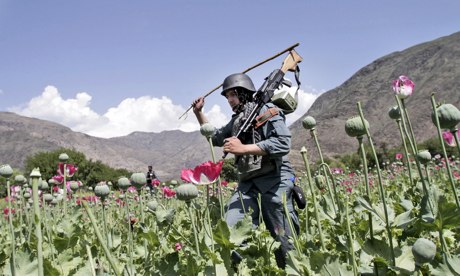
Afghanistan’s Worsening, and Baffling, Hunger Crisis
 By ROD NORDLAND
In the Bost Hospital here, a teenage mother named Bibi Sherina sits on a bed in the severe acute malnutrition ward with her two children. Ahmed, at just 3 months old, looks bigger than his emaciated brother Mohammad, who is a year and a half and weighs 10 pounds.
In another bed is Fatima, less than a year old, who is so severely malnourished that her heart is failing, and the doctors expect that she will soon die unless her father is able to find money to take her to Kabul for surgery. The girl’s face bears a perpetual look of utter terror, and she rarely stops crying. Half of the other children in the ward are crying as well, a cacophony that rarely pauses.
Afghan hospitals like Bost, in the capital of war-torn Helmand Province, have been registering significant increases in severe malnutrition among children. Countrywide, such cases have increased by 50 percent or more compared with 2012, according to United Nations figures. Doctors report similar situations in Kandahar, Farah, Kunar, Paktia and Paktika Provinces — all places where warfare has disrupted people’s lives and pushed many vulnerable poor over the nutritional edge.
Even the capital has seen an increase. “In 2001, it was even worse, but this is the worst I’ve seen since then,” said Dr. Saifullah Abasin, head of the malnutrition ward at Indira Gandhi Children’s Hospital in Kabul.
Reasons for the increase remain uncertain, or in dispute. Most doctors and aid workers agree that continuing war and refugee displacement are contributing. Some believe that the growing number of child patients may be at least partly a good sign, as more poor Afghans are hearing about treatment available to them.
What is clear is that, despite years of Western involvement and billions of dollars in humanitarian aid to Afghanistan, children’s health is not only still a problem, but also worsening, and the doctors bearing the brunt of the crisis are worried.
Nearly every potential lifeline is strained or broken here. Efforts to educate people about nutrition and health care are often stymied by conservative traditions that cloister women away from anyone outside the family. Agriculture and traditional local sources of social support have been disrupted by war and the widespread flight of refugees to the cities. And therapeutic feeding programs, complex operations even in countries with strong health care systems, have been compromised as the flow of aid and transportation have been derailed by political tensions or violence.
Perhaps nowhere is the situation so obviously serious as in the malnutrition ward at Bost Hospital, which is admitting 200 children a month for severe, acute malnutrition — four times more than it did in January 2012, according to officials with Doctors Without Borders, known in French as Médecins Sans Frontières, which supports the Afghan-run hospital with financing and supplementary staff.
One patient, a 2-year-old named Ahmed Wali, is suffering from the protein deficiency condition kwashiorkor, with orange hair, a distended belly and swollen feet. An 8-month-old boy named Samiullah is suffering from marasmus, another form of advanced malnutrition in which the child’s face looks like that of a wrinkled old man because the skin hangs so loosely.
Médecins Sans Frontières helped Bost Hospital nearly double the number of beds in the pediatric wing at the end of last year, and there are still not enough — 40 to 50 children are usually being treated each day, mostly two to a bed because they are so small. Nearly 300 other children, less severely malnourished, are in an outpatient therapeutic feeding program.
Now, M.S.F. is planning to open five satellite clinics with intensive feeding programs in Lashkar Gah to take the pressure off the overcrowded hospital.
Despite the increase in the malnutrition caseload, doctors and health officials are not sure there has actually been a sharp rise in child malnutrition that can be attributed to any single factor.
“It’s quite an unusual situation, and it’s difficult to understand what’s going on,” said Wiet Vandormael, an M.S.F. official who has helped coordinate with Bost Hospital.
In part, expansion of the hospital’s facilities has acted as a magnet, drawing more cases, Mr. Vandormael said. Unlike at other public hospitals in Afghanistan, patients and their caregivers do not have to pay for their own medicine and food at Bost. And M.S.F. has been able to ensure that it gets regular deliveries of Unicef-provided therapeutic foods used to treat malnutrition.
“Our treatment is better, so we get more patients as they hear about it,” said Dr. Yar Mohammad Nizar Khan, head of pediatrics at Bost Hospital.
Nonetheless, the numbers are still worrisome. Dr. Mohammad Dawood, a pediatrician at Bost Hospital, said there were seven or eight deaths a month there because of acute malnutrition from June through August, and five in September. Doctors around the country have reported similar rates.
Officials at Unicef and the Afghan Ministry of Public Health have declined to characterize child malnutrition here as an emergency, however. As defined internationally, that would mean severe acute malnutrition in more than 10 percent of children younger than 5; health officials in Afghanistan estimate the rate is more like 7 percent.
“Science-wise, the increase in number of children reporting to the hospitals is not an absolute evidence the situation is getting worse,” said Moazzem Hossain, head of nutrition for Unicef here. “It’s a good sign, the program is expanding, more are being screened, more are being found and treated.”
Another problem is unreliable statistics.
In January 2012, for instance, Unicef and the Afghan government’s Central Statistics Organization released a survey of more than 13,000 households showing that some provinces had reached or exceeded emergency levels, with more than 10 percent acute severe child malnutrition.
The survey caused an uproar, but Unicef and the Health Ministry repudiated it, saying it was based on faulty research. Unicef then financed a more thorough child nutrition survey, which was completed in November, but the government has yet to release the data, said Dr. Bashir Ahmed Hamid, head of nutrition for the Health Ministry. “Unfortunately, we faced some challenges with data analysis.”
Dr. Hamid said he expected the new data to show very high levels, probably more than 50 percent, of long-term or chronic malnutrition, which shows up as stunted growth in children. While acute malnutrition can be fatal, chronic malnutrition can cause multiple health and developmental problems.
Unlike malnutrition crises elsewhere in the world, this one has not been connected to specific food shortages or crop failures. In addition, parents are not showing up malnourished, even when their children are.
Doctors involved in treating the victims offer many explanations for what is happening. “There are mines in their fields, and they can’t get to their crops,” said Dr. Dawood in Helmand Province. “And they can’t get to help at local clinics, so they’re coming in very late stage in very critical condition.”
His colleague Dr. Khan blamed another problem. “The main cause of malnutrition in Afghanistan is lack of breast feeding,” he said. “They see beautiful pictures of milk cartons, and they think it’s better.”
In a country where access to clean water is difficult, and most milk is powdered, that is often a recipe for diarrhea and other conditions that can worsen malnutrition.
In addition, where women commonly have many children, often with less than a year between them, it is difficult for mothers to provide enough nourishment, by breast or bottle. Ahmed Wali, the 2-year-old Bost Hospital patient with kwashiorkor, is the ninth of 10 children of his mother, Baka Bebi, who is in her mid-30s. She weaned him onto powdered milk mixed with stream water as soon as she could.
Poverty is another factor. In Afghanistan, the poverty line is defined as a total income sufficient to provide 2,100 calories a day to each family member. Some 36 percent of Afghans are below that threshold, according to the Health Ministry.
In 2013, Unicef raised its target for providing therapeutic foods to severe acutely malnourished Afghan children, to 52,144 from 35,181. Therapeutic foods are specially made for the severely malnourished, who have difficulty digesting normal food.
But Dr. Hossain of Unicef acknowledged that those programs had experienced supply-chain problems, and Unicef is working with the Health Ministry to develop better monitoring and management systems. Shipments of therapeutic foods, mostly made by two companies in France and Norway, have been reduced because of differences between NATO and Pakistan, and sanctions on Iran, the two countries with ports closest to landlocked Afghanistan, he said.
“Managing a feeding system is difficult; there is a long way for Afghanistan to go,” he added. “But even countries like Sri Lanka, with an outstanding health system, are still struggling to manage therapeutic feeding supplies.”
Cases of acute severe malnutrition are running at more than 100 a month, including five to 10 deaths, at Indira Gandhi Children’s Hospital in Kabul, and such cases have doubled since 2012, said Dr. Aqa Mohammad Shirzad, who is in charge of pediatric malnutrition programs there.
Each of the hospital’s 17 beds for severely malnourished patients has at least two patients, and some have three. The malnutrition intensive care ward there has an incubator that does not work, one suction pump and oxygen bottles, for respiratory masks, propped up without stands or proper connections.
A 5-year-old boy who weighs less than 20 pounds was being treated recently on a bench because the infusion line would not stretch to a bed. Two window panes nearby were missing glass.
This is the country’s premier pediatric hospital, the one to which Fatima’s father was told to bring her from Bost Hospital to have heart surgery. She never arrived.
By ROD NORDLAND
In the Bost Hospital here, a teenage mother named Bibi Sherina sits on a bed in the severe acute malnutrition ward with her two children. Ahmed, at just 3 months old, looks bigger than his emaciated brother Mohammad, who is a year and a half and weighs 10 pounds.
In another bed is Fatima, less than a year old, who is so severely malnourished that her heart is failing, and the doctors expect that she will soon die unless her father is able to find money to take her to Kabul for surgery. The girl’s face bears a perpetual look of utter terror, and she rarely stops crying. Half of the other children in the ward are crying as well, a cacophony that rarely pauses.
Afghan hospitals like Bost, in the capital of war-torn Helmand Province, have been registering significant increases in severe malnutrition among children. Countrywide, such cases have increased by 50 percent or more compared with 2012, according to United Nations figures. Doctors report similar situations in Kandahar, Farah, Kunar, Paktia and Paktika Provinces — all places where warfare has disrupted people’s lives and pushed many vulnerable poor over the nutritional edge.
Even the capital has seen an increase. “In 2001, it was even worse, but this is the worst I’ve seen since then,” said Dr. Saifullah Abasin, head of the malnutrition ward at Indira Gandhi Children’s Hospital in Kabul.
Reasons for the increase remain uncertain, or in dispute. Most doctors and aid workers agree that continuing war and refugee displacement are contributing. Some believe that the growing number of child patients may be at least partly a good sign, as more poor Afghans are hearing about treatment available to them.
What is clear is that, despite years of Western involvement and billions of dollars in humanitarian aid to Afghanistan, children’s health is not only still a problem, but also worsening, and the doctors bearing the brunt of the crisis are worried.
Nearly every potential lifeline is strained or broken here. Efforts to educate people about nutrition and health care are often stymied by conservative traditions that cloister women away from anyone outside the family. Agriculture and traditional local sources of social support have been disrupted by war and the widespread flight of refugees to the cities. And therapeutic feeding programs, complex operations even in countries with strong health care systems, have been compromised as the flow of aid and transportation have been derailed by political tensions or violence.
Perhaps nowhere is the situation so obviously serious as in the malnutrition ward at Bost Hospital, which is admitting 200 children a month for severe, acute malnutrition — four times more than it did in January 2012, according to officials with Doctors Without Borders, known in French as Médecins Sans Frontières, which supports the Afghan-run hospital with financing and supplementary staff.
One patient, a 2-year-old named Ahmed Wali, is suffering from the protein deficiency condition kwashiorkor, with orange hair, a distended belly and swollen feet. An 8-month-old boy named Samiullah is suffering from marasmus, another form of advanced malnutrition in which the child’s face looks like that of a wrinkled old man because the skin hangs so loosely.
Médecins Sans Frontières helped Bost Hospital nearly double the number of beds in the pediatric wing at the end of last year, and there are still not enough — 40 to 50 children are usually being treated each day, mostly two to a bed because they are so small. Nearly 300 other children, less severely malnourished, are in an outpatient therapeutic feeding program.
Now, M.S.F. is planning to open five satellite clinics with intensive feeding programs in Lashkar Gah to take the pressure off the overcrowded hospital.
Despite the increase in the malnutrition caseload, doctors and health officials are not sure there has actually been a sharp rise in child malnutrition that can be attributed to any single factor.
“It’s quite an unusual situation, and it’s difficult to understand what’s going on,” said Wiet Vandormael, an M.S.F. official who has helped coordinate with Bost Hospital.
In part, expansion of the hospital’s facilities has acted as a magnet, drawing more cases, Mr. Vandormael said. Unlike at other public hospitals in Afghanistan, patients and their caregivers do not have to pay for their own medicine and food at Bost. And M.S.F. has been able to ensure that it gets regular deliveries of Unicef-provided therapeutic foods used to treat malnutrition.
“Our treatment is better, so we get more patients as they hear about it,” said Dr. Yar Mohammad Nizar Khan, head of pediatrics at Bost Hospital.
Nonetheless, the numbers are still worrisome. Dr. Mohammad Dawood, a pediatrician at Bost Hospital, said there were seven or eight deaths a month there because of acute malnutrition from June through August, and five in September. Doctors around the country have reported similar rates.
Officials at Unicef and the Afghan Ministry of Public Health have declined to characterize child malnutrition here as an emergency, however. As defined internationally, that would mean severe acute malnutrition in more than 10 percent of children younger than 5; health officials in Afghanistan estimate the rate is more like 7 percent.
“Science-wise, the increase in number of children reporting to the hospitals is not an absolute evidence the situation is getting worse,” said Moazzem Hossain, head of nutrition for Unicef here. “It’s a good sign, the program is expanding, more are being screened, more are being found and treated.”
Another problem is unreliable statistics.
In January 2012, for instance, Unicef and the Afghan government’s Central Statistics Organization released a survey of more than 13,000 households showing that some provinces had reached or exceeded emergency levels, with more than 10 percent acute severe child malnutrition.
The survey caused an uproar, but Unicef and the Health Ministry repudiated it, saying it was based on faulty research. Unicef then financed a more thorough child nutrition survey, which was completed in November, but the government has yet to release the data, said Dr. Bashir Ahmed Hamid, head of nutrition for the Health Ministry. “Unfortunately, we faced some challenges with data analysis.”
Dr. Hamid said he expected the new data to show very high levels, probably more than 50 percent, of long-term or chronic malnutrition, which shows up as stunted growth in children. While acute malnutrition can be fatal, chronic malnutrition can cause multiple health and developmental problems.
Unlike malnutrition crises elsewhere in the world, this one has not been connected to specific food shortages or crop failures. In addition, parents are not showing up malnourished, even when their children are.
Doctors involved in treating the victims offer many explanations for what is happening. “There are mines in their fields, and they can’t get to their crops,” said Dr. Dawood in Helmand Province. “And they can’t get to help at local clinics, so they’re coming in very late stage in very critical condition.”
His colleague Dr. Khan blamed another problem. “The main cause of malnutrition in Afghanistan is lack of breast feeding,” he said. “They see beautiful pictures of milk cartons, and they think it’s better.”
In a country where access to clean water is difficult, and most milk is powdered, that is often a recipe for diarrhea and other conditions that can worsen malnutrition.
In addition, where women commonly have many children, often with less than a year between them, it is difficult for mothers to provide enough nourishment, by breast or bottle. Ahmed Wali, the 2-year-old Bost Hospital patient with kwashiorkor, is the ninth of 10 children of his mother, Baka Bebi, who is in her mid-30s. She weaned him onto powdered milk mixed with stream water as soon as she could.
Poverty is another factor. In Afghanistan, the poverty line is defined as a total income sufficient to provide 2,100 calories a day to each family member. Some 36 percent of Afghans are below that threshold, according to the Health Ministry.
In 2013, Unicef raised its target for providing therapeutic foods to severe acutely malnourished Afghan children, to 52,144 from 35,181. Therapeutic foods are specially made for the severely malnourished, who have difficulty digesting normal food.
But Dr. Hossain of Unicef acknowledged that those programs had experienced supply-chain problems, and Unicef is working with the Health Ministry to develop better monitoring and management systems. Shipments of therapeutic foods, mostly made by two companies in France and Norway, have been reduced because of differences between NATO and Pakistan, and sanctions on Iran, the two countries with ports closest to landlocked Afghanistan, he said.
“Managing a feeding system is difficult; there is a long way for Afghanistan to go,” he added. “But even countries like Sri Lanka, with an outstanding health system, are still struggling to manage therapeutic feeding supplies.”
Cases of acute severe malnutrition are running at more than 100 a month, including five to 10 deaths, at Indira Gandhi Children’s Hospital in Kabul, and such cases have doubled since 2012, said Dr. Aqa Mohammad Shirzad, who is in charge of pediatric malnutrition programs there.
Each of the hospital’s 17 beds for severely malnourished patients has at least two patients, and some have three. The malnutrition intensive care ward there has an incubator that does not work, one suction pump and oxygen bottles, for respiratory masks, propped up without stands or proper connections.
A 5-year-old boy who weighs less than 20 pounds was being treated recently on a bench because the infusion line would not stretch to a bed. Two window panes nearby were missing glass.
This is the country’s premier pediatric hospital, the one to which Fatima’s father was told to bring her from Bost Hospital to have heart surgery. She never arrived.
Bangladesh: A predicted and hollow victory
Bangladesh ruling party wins after boycotted vote

Participation in Asia Cup not guaranteed: Pakistan
http://timesofindia.indiatimes.com/The Asian Cricket Council (ACC) may have decided to hold the Asia Cup in the strife torn Bangladesh but Pakistan is refusing to commit itself to participation in the continental tournament. The Pakistan Cricket Board (PCB) says its participation is subject to many a condition, effectively stating that there is no guarantee that it will take part. Primarily, the PCB wants to assess the situation before giving the goahead. "Pakistan will have to assess the developing situation carefully before confirming its participation if the matches are held in Bangladesh," a high level PCB official close to Pakistan board interim president Najam Sethi, told Mirror. He termed the situation in Bangladesh as adverse to the Pakistan cricket team. On Saturday, the ACC decided to go ahead with the tournament in Bangladesh despite reports of nation-wide protest in the country. Reports also said the situation in Bangladesh is volatile and Sunday's election was marred by violence and protests. The PCB said that anti-Pakistani sentiments are prevailing in Bangladesh and it cannot ignore the threat perception to its team in Dhaka. The Pakistan board has also revealed that the country's foreign office is as much concerned. "PCB and Pakistan foreign office cannot ignore the particular nature of the security threat to the Pakistan team if it is asked to play in the sort of civil strife circumstances that prevail in Bangladesh today," the official said. The official also strove to give a political colour to the issue linking the Asia Cup to the case of Quader Molla, a religious leader, who was recently executed by the Bangladesh government. "Unlike other teams, there are anti-Pakistan protests relating to the case of Quader Molla," the official stated. The ACC,led by the Board of Control for Cricket in India (BCCI), however, is confident Pakistan will participate in the tournament, that has now been upgraded to a five-nation event. Previously, only four teams - India, Sri Lanka and Bangladesh besides Pakistan - used to participate. The ACC has invited Afghanistan for the tournament. "The PCB was a party to the decision of the ACC and the Pakistan board has not objected to the decision," ACC chief executive Ashraful Huq said on Saturday. "That is our understanding. We're hopeful that Pakistan will take part," a BCCI official added. The Asia Cup is slated to be held from February 25 to March 7 in Dhaka.
Nine, including three children, killed in Khyber Agency blast

Zulfi Bhutto : A man who was born to live forever in the people’s hearts.
by Zeeba


Pakistani TV reporter murdered
Pakistani TV reporter Shan Daher (aka Dayer or Odhor) was shot on his way home from his work at the Abb Takk news channel in the Larkana district of Sindh province.
Though the shooting occurred late on 31 December Daher was pronounced dead in hospital the following day. Therefore, according to the International Federation of Journalists (IFJ), he was the first journalist killed in 2014.
The murder of 40-year-old Daher sparked protests by the Pakistan Federal Union of Journalists (PFUJ) in Karachi calling for the government to increase efforts to protect journalists.
IFJ president Jim Boumelha said: "We believe that the lack of accountability for acts of violence against journalists in Pakistan reinforces the culture of impunity. The authorities in Pakistan must take the action required to ensure that the perpetrators of such extreme acts of violence against journalists answer for their crimes."
Yesterday (5 January), the PFUJ staged a rally in Larkana demanding the arrest of those responsible for the murder of Daher, referring to him as a "martyr."
US Gun Manufacturer Refuses Sale to Pakistan
VOA NewsA U.S. gun manufacturer has turned down a multi-million dollar opportunity to sell arms to Pakistan, citing concerns the weapons would be used against American soldiers. Nick Young, founder of Desert Tech, said on his company's Facebook page that it had been approached to "legally supply" sniper systems to Pakistan. Young said the Utah-based company's "greatest fear" was that the equipment might be used against U.S. troops. He said he started the company "to protect Americans, not endanger them." He also said that his company employs several military veterans. The contract was reported to be worth as much as $15 million. Sales manager Mike Davis told local media that with the unrest in Pakistan, the company "just ended up not feeling right," about selling to the South Asian nation. He told the Deseret News that "at the end of the day, we felt our ethics are worth more than the bottom line." The rifles Desert Tech would have sold to Pakistan have the ability to change caliber within minutes and the capacity to shoot as far as 2,700 meters. Weapon sales to allies such as Pakistan are nothing new, but they can be complicated, especially in a country with an al-Qaida presence. The U.S. often targets al-Qaida, Taliban members and their Pakistani supporters in Pakistan's tribal regions. Desert Tech said on its website that the company was created "to protect the freedom of the United States of America, our allies and people by providing the most compact, accurate and reliable precision weapons systems in the world."
Pakistani Victims Of Taliban Attacks Reject Talks; Demand Operation Cleanup
shiapost.comThe participants of the convention including Sunni, Shias, Christians, Sikhs and Hindus have rejected the government initiated talks with Taliban terrorists and they demanded a huge operation cleanup, resolution was passed by the participants and leading parties. They said according to Pakistani constitution, one cannot hold talks with terrorists. If one tyring to negitiate with terrorists he breaches the law. Allama Raja Nasir Abbas of MWM, Sahib Zada Hamid Raza of SIC and Faisal Raza Abidi of Voice of Shuda were leading the convention while all minorities have been invited to attend the convention in order to condemn the terrorist activities by Taliban and Pro-Taliban banned terrorist organization. Allama Raja Nasir of MWM said, “Time has come to clean the country from terrorists, let’s take oath to save Pakistan.” He further said, “There is no space for trrorists in Pakistan, these terrorists have rejected Pakistani law and they are against Islamic education.” Faisal Raja Abidi of VoS said, “What I learned from Shaheed Arif Al Hussaini, Shaheed Fazal Kareem and Shaheed Benazir Bhutto is my moto.” He added, “Today, all martyrs families are with us and they have reject government policies towards trrorists.” Addressing to the convention Sahibzada Hamid Raza said that governmnet is supporting those trrorists who are demanding ban on Procession of Prophet Muhammad (P.B.U.H). Pakistani Government has failed to provide the security to its citizens and have taken no measure to tackle the situation and have not formed any strategy against Taliban. Prime Minister Nawaz Sharif have given assignment to Maulana Samiul Haq to initiate talks with the Taliban. Self claimed Father of Taliban, Maulana Sami has also demanded govt to stop operation in NWA against Taliban terrorist. He also demanded of the government to urgently announce withdrawal from war on terror and stop intelligence-sharing over drone attacks. “This fire can only be extinguished through dialogue process,” sources quoted Maulana. Yesterday, SIC Chairman Sahibzada Hamid Raza, MWM Secretary for Political Affairs Syed Nasir Abbas Sherazi and Voice of Shuhada-e-Pakistan spokesperson Senator Faisal Raza Abidi expressed their opposition to the talks with Taliban while addressing a joint press conference at the MWM office. Chairman, Sunni Ittehad Council (SIC), Sahibzada Hamid Raza alleged that the PML-N led government has full support of Afghan Taliban and Tehrik-e-Taliban Pakistan (TTP). Sahibzada Hamid Raza alleged that banned organizations are freely conducting meetings and conventions in the country; however, patriotic organizations are not allowed to do so. “Time has come that the government should establish its writ against terrorists,” they added. It is pertinent to mention here that Sunni Ittehad Council (SIC), Majlis Wahdat-ul-Muslimeen (MWM) and Voice of Shuhda have hosted a joint convention in Islamabad in a bid to promote interfaith harmony in the country.
Shia student Aitzaz Hussain intercepted bomber and the bomber had to blow him up before he could hit more children.
www.shiitenews.com
 A Shia student embraced martyrdom foiling the suicidal attack in his school by a terrorist in Hangu, Khyber Pukhtoonkhwa province on Monday morning.
Shiite News Correspondent reported that the gory incident occurred in Shia majority Ibrahim Zai area where a terrorist was heading to hit the school children of a government school.
Shia student namely Aitzaz Hussain intercepted him and the bomber had to blow him up before he could hit more children.
Two students were injured. Bodies of the martyr, takfiri nasbi Yazidi terrorist, and the injured victims were shifted to hospital.
Shia parties and leaders have appreciated the boldness and intrepidity of Shia minor student saying that had the government and security forces demonstrated similar spirit, terrorism would have been eliminated.
A Shia student embraced martyrdom foiling the suicidal attack in his school by a terrorist in Hangu, Khyber Pukhtoonkhwa province on Monday morning.
Shiite News Correspondent reported that the gory incident occurred in Shia majority Ibrahim Zai area where a terrorist was heading to hit the school children of a government school.
Shia student namely Aitzaz Hussain intercepted him and the bomber had to blow him up before he could hit more children.
Two students were injured. Bodies of the martyr, takfiri nasbi Yazidi terrorist, and the injured victims were shifted to hospital.
Shia parties and leaders have appreciated the boldness and intrepidity of Shia minor student saying that had the government and security forces demonstrated similar spirit, terrorism would have been eliminated.
Bilawal: No number 1 or number 2, only ‘Mother Sindh’
 Reacting to MQM chief Altaf Hussain’s Sunday speech, Pakistan People’s Party (PPP) Patron-in-chief Bilawal Bhutto Zardari said there should be no “number 1 or number 2” but only “mother Sindh”. “No50/50, No number 1 or number 2, only Mother Sindh.All men are created equal.All Pakistanis should b treated equally in the eyes of the Law,” Bilwal tweeted after Altaf proposed formation of “Sindh 1” for the populace considered as Sindhi by the PPP and “Sindh 2” for rest of the province. Bilawal also said that the MQM was consulted over delimitation of constituencies in the province. He said that he had got minutes of the meetings, deliberated over delimitation of the constituencies. He tweeted, “Uncle Altaf, your ppl are lying to u. MQM was consulted 4 delimitation. I have the minutes of the meeting. Shall send you thm.” Separately, Sindh Information Minister Sharjeel Memon also said that the PPP had never made any distinction between urban and rural population of Sindh. Talking to a private TV channel, the provincial minister said he was amazed at the statements of Altaf Hussain. He said there should be discussions on real issues and bringing up non-issues is aimed at diverting attention from the matters of importance.
Pakistan : Staggering indolence
 As at least 14 people lay dead in terrorist assaults in Karachi on Saturday, an advisor of Balochistan chief minister was left gored along with several others in Quetta in a bomb blast the same day. And the very next day, the beleaguered port city saw another four people being killed in terrorist attacks, holding hostage the wretched metropolis since times even hard to remember now. And even as the city keeps reeling from blood-soaked violence incessantly, in spite of the much-touted Ranger-led security operation now running into months, not the rest of the land is any free from the blight either.
Unrelentingly, the monstrosity remains on the prowl all over the country, hitting whatever and whenever it wants. Not a day goes by without its lethality and thuggery being unleashed in some part of the land. It slays civilians and security personnel alike in bomb blasts, terrorist strikes, target shootings, improvised explosive device explosions and suicide hits. Not it kills men and soldiers alone. It slaughters children, women and elderly persons indiscriminately as well. All are its quarries in equal measure. And it is bloodying streets, roads and public places as much as is it soaking the places of worship with streams of blood.
So much of bloodletting would shake out even the most insensate rulers from inertia and throw them headlong into action to relieve their harried citizens from the horrific bloodbath. Even outsiders look at us with both dread and pity, wishing sympathetically for our quick riddance from the lethal monstrosity. But not the incumbents, now ruling the roost in Islamabad, palpably. No strategy or action plan have they hammered out as yet to fight it out methodically and systematically, even as they have been warming the ministerial chairs now for more than seven months.
One can count not how many times has their internal security csar Nisar Ali Khan said that a national security policy is on the anvil. But that elixir still stays there, immobile and veiled. And one knows not what would it be, when from Nisar's outpourings it is more than abundantly clear that the Islamabad caboodle has not even the foggiest idea about the affliction bloodying the nation so horrendously. Their public pronouncements make it unmistakably evident that they have put all their eggs in the dialogue basket to wrestle with the stalking monstrosity. And the elements to be talked with are the tribal areas' militants, and now their Afghanistan-based chieftaincy.
But the murder brigands playing such a dreadful dance of death and destruction on this land are not just the pack of militants the dialogue-savvy honchos of Islamabad have in mind. It is a congeries of heterogeneous vile elements who love to kill and play with human lives. All manner of confessional fanatics, sectarian extremists, professional murderers, hired guns, kidnappers for ransom and foreign proxies masquerading as insurgents have ganged up to spout this evil syndicate that has forged no-lesser-worrisome nexus with the underworld. This lethal mix of terrorism and criminality has worn on murderous clutches with countrywide reach.
This clearly postulates if terrorism has to be battled with, a counter strategy has to be as multidimensional as is the prowling monstrosity. And it has to have a countrywide application as has the monstrosity the countrywide reach. That essentially means two things. First, the strategy has to be extensively broad-based. Dialogue could only be a part of its wide-range that spans over political, security, educational, development and diplomatic fronts. Secondly, it inescapably has to involve intimately both the federal and provincial hierarchies in the fight. Islamabad cannot fight alone. The provinces have to be taken aboard proactively, as unarguably the main battle they have to fight inevitably.
But neither do the lethal blight's complexities and intricacies seem to have come any compellingly to Nisar. Nor does he appear any alive to indispensable cooperation and collaboration among the federal and provincial administrations to make for an effective fight. He seems intent on a solo flight. Of course, provincial governments too do not seem to have imbibed the realisation that none can face up to the terrorist thuggery all alone but all will imperatively need full cooperation from one another as well as the centre. Not only strong linkages in intelligence have to be forged between them all but also in security operations.
But, by every reckoning, the hub of this multifarious national campaign has to be the federal government. Yet Nisar has evidently not even associated the provincial governments in the formulation of his so-far-elusive security policy. At least the current Islamabad incumbents' predecessors were more realistic on this score. A comprehensive, multifaceted national counter-terrorism strategy had they involved at a top-level meeting chaired by the prime minister. It was attended, apart from federal ministers concerned as well as top bosses of intelligence agencies, by provincial chief ministers along with their intelligence and security chiefs.
In addition to KP governor, even Azad Kashmir prime minister and Gilgit-Baltistan chief minister along with their top intelligence and security chiefs participated. It is saddening that the predecessors showed no zest in working that strategy. But the incumbents have by every indication not even thought of such a moot to evolve a really workable strategy. This indolence is really bewildering and disturbing.
As at least 14 people lay dead in terrorist assaults in Karachi on Saturday, an advisor of Balochistan chief minister was left gored along with several others in Quetta in a bomb blast the same day. And the very next day, the beleaguered port city saw another four people being killed in terrorist attacks, holding hostage the wretched metropolis since times even hard to remember now. And even as the city keeps reeling from blood-soaked violence incessantly, in spite of the much-touted Ranger-led security operation now running into months, not the rest of the land is any free from the blight either.
Unrelentingly, the monstrosity remains on the prowl all over the country, hitting whatever and whenever it wants. Not a day goes by without its lethality and thuggery being unleashed in some part of the land. It slays civilians and security personnel alike in bomb blasts, terrorist strikes, target shootings, improvised explosive device explosions and suicide hits. Not it kills men and soldiers alone. It slaughters children, women and elderly persons indiscriminately as well. All are its quarries in equal measure. And it is bloodying streets, roads and public places as much as is it soaking the places of worship with streams of blood.
So much of bloodletting would shake out even the most insensate rulers from inertia and throw them headlong into action to relieve their harried citizens from the horrific bloodbath. Even outsiders look at us with both dread and pity, wishing sympathetically for our quick riddance from the lethal monstrosity. But not the incumbents, now ruling the roost in Islamabad, palpably. No strategy or action plan have they hammered out as yet to fight it out methodically and systematically, even as they have been warming the ministerial chairs now for more than seven months.
One can count not how many times has their internal security csar Nisar Ali Khan said that a national security policy is on the anvil. But that elixir still stays there, immobile and veiled. And one knows not what would it be, when from Nisar's outpourings it is more than abundantly clear that the Islamabad caboodle has not even the foggiest idea about the affliction bloodying the nation so horrendously. Their public pronouncements make it unmistakably evident that they have put all their eggs in the dialogue basket to wrestle with the stalking monstrosity. And the elements to be talked with are the tribal areas' militants, and now their Afghanistan-based chieftaincy.
But the murder brigands playing such a dreadful dance of death and destruction on this land are not just the pack of militants the dialogue-savvy honchos of Islamabad have in mind. It is a congeries of heterogeneous vile elements who love to kill and play with human lives. All manner of confessional fanatics, sectarian extremists, professional murderers, hired guns, kidnappers for ransom and foreign proxies masquerading as insurgents have ganged up to spout this evil syndicate that has forged no-lesser-worrisome nexus with the underworld. This lethal mix of terrorism and criminality has worn on murderous clutches with countrywide reach.
This clearly postulates if terrorism has to be battled with, a counter strategy has to be as multidimensional as is the prowling monstrosity. And it has to have a countrywide application as has the monstrosity the countrywide reach. That essentially means two things. First, the strategy has to be extensively broad-based. Dialogue could only be a part of its wide-range that spans over political, security, educational, development and diplomatic fronts. Secondly, it inescapably has to involve intimately both the federal and provincial hierarchies in the fight. Islamabad cannot fight alone. The provinces have to be taken aboard proactively, as unarguably the main battle they have to fight inevitably.
But neither do the lethal blight's complexities and intricacies seem to have come any compellingly to Nisar. Nor does he appear any alive to indispensable cooperation and collaboration among the federal and provincial administrations to make for an effective fight. He seems intent on a solo flight. Of course, provincial governments too do not seem to have imbibed the realisation that none can face up to the terrorist thuggery all alone but all will imperatively need full cooperation from one another as well as the centre. Not only strong linkages in intelligence have to be forged between them all but also in security operations.
But, by every reckoning, the hub of this multifarious national campaign has to be the federal government. Yet Nisar has evidently not even associated the provincial governments in the formulation of his so-far-elusive security policy. At least the current Islamabad incumbents' predecessors were more realistic on this score. A comprehensive, multifaceted national counter-terrorism strategy had they involved at a top-level meeting chaired by the prime minister. It was attended, apart from federal ministers concerned as well as top bosses of intelligence agencies, by provincial chief ministers along with their intelligence and security chiefs.
In addition to KP governor, even Azad Kashmir prime minister and Gilgit-Baltistan chief minister along with their top intelligence and security chiefs participated. It is saddening that the predecessors showed no zest in working that strategy. But the incumbents have by every indication not even thought of such a moot to evolve a really workable strategy. This indolence is really bewildering and disturbing.
HOW PAKISTAN ALLOWED SALMAAN TASEER’S MARTYRDOM TO GO TO WASTE.
The first time I saw Salmaan Taseer was at Government College, Lahore, in 1961. He walked into the classroom with Tariq Ali, and was clearly part of Pakistan’s “gilded youth,” preordained to do something out of the ordinary. Years later, I ran into him at a hotel in Nathiagali and saw him training his toddler sons to be tough and fearless.BY KHALED AHMED


http://newsweekpakistan.com/defiant-to-the-last/
Pakistan: Social Segregation Even After Dead and buried
The Express TribuneA 70-year-old Ahmadi woman was finally buried last Sunday, a day after a dispute broke over burial in Gojra tehsil of Toba Tek Singh district. Her son Iqbal Rangha told The Express Tribune that when his family went to the local graveyard to dig up her grave, residents of the village stopped them from burying her there, just as they had stopped another Ahmadi family a week ago from burying a minor girl in the graveyard. He said Yaqoub Ranja, a Muslim resident, offered his own land. He said when the grave was dug there, some people called the police and claimed that the land was an extension of the graveyard. “They told us to take the body to Rabwa,insisting they would not let us bury her at anywhere in the area,” Iqbal Ranjha recalled. He said the police summoned a revenue official to verify the ownership of the land. When Ranjha was found to own the plot, the police allowed them to go ahead. He said the police also told him to secure the grave. Iqbal said Ahmadis had earlier been forced to cover up minarets of their places of worship. He said they had been burying their dead at the graveyard for decades but now had been stopped from using it. Rana Amjad Javed, a member of the group opposed to the burial, told The Express Tribune a panchayat had decided that Ahmadis should not be allowed to use the graveyard. He said they could take their dead elsewhere, possibly Rabwa. He said it was not “appropriate” to bury non-Muslims close to a graveyard where Muslims were buried. He said the police were favouring Ahmadis. He said the patwari who verified the ownership of the plot was also an Ahmadi. He said his group was trying to resolve the matter amicably but if it was not resolved soon, they would be willing to “embrace martyrdom for this noble cause.” Gojra Station House Officer Rana Muhammad Yar told The Express Tribune the burial was managed under tight security. He said several people had complained of aggression by Ahmadis but the police had found no illegality. He said no action had been taken against those trying to bar Ahmadis from burying their dead. Jamaat-i-Ahmadia spokesperson Saleemudin recalled that a group of extremists had recently stopped an Ahmadi family from burying their two-year-old child in the same village graveyard. He said recurrence of the problem pointed to failure of law enforcement.
Pashtun girls shine in formerly male-dominated sports
http://centralasiaonline.com/
 "I am here because of my family's support," Aqsa, the Khyber Pakhtunkhwa (KP) provincial under-16 gold medallist and under-17 silver medallist, said. "I feel I can do anything a boy can do."
Aqsa is one of many girls in KP and the tribal areas who are taking up traditionally male-dominated sports like wrestling, judo, swimming, boxing and track and field.
Parental and social opposition to the idea of girls' sports, once vehement, seems to be fading, partly because the militancy's hold over the region apparently is loosening enough that there is not as much fear as there was previously.
The sports revival in KP and the tribal areas started in mid-2011 when a cricket tournament was held at the Karwan Ground in Khar. It was Bajaur's first major sporting event since the Taliban had been driven out of the region. The Taliban, under Faqir Muhammad and Mullah Omar, had put an end to such things as public sporting events starting they held sway in the area, starting in 2005. But a lengthy military operation that started in 2008 eventually flushed out most of the militants.
"The black days of the militants are over now, and it is a bright day for youngsters who can now come out and play," said Azahar Ali, a cricket player from Inayat Kalley, where the militants had previously banned cricket.
Girls' sports participation now encouraged
With a higher level of peace in the region, authorities in the tribal areas and KP are now doing their part to encourage girls and women to take up sports.
"Now the girls in Bajaur are participating in games in school and in Peshawar, but more facilities still need to encourage them to participate," Azahar said.
The KP government is doing its part, providing facilities for female athletes and hiring trained woman coaches and other experts "to help groom young talent," KP Women's Sports Director Rashida Ghaznavi said.
"So far this year, 13 different [female] sports competitions have been held at school and college level [in KP]," Rashida said, "which is a positive sign."
The KP Sports Directorate is devoting substantially more money to female sports, Muhammad Tariq, an official at the directorate, said. "It was about Rs. 40m (US $380,000) [annually] in the past and went up by 50% [in fiscal year 2013]."
A variety of sports, ranging from badminton to martial arts to baseball, are gaining popularity among tribal girls in this encouraging new environment, Rashida said.
Female-only facilities would boost participation
Having more female-only sports facilities would encourage turnout even more and would assure parents, Nagina Khan of Dera Ismail Khan, a badminton referee and committed athlete herself, said.
"Some parents are reluctant to send their daughters to play with men; they want all-female sports grounds," she said.
"The culture is changing, but it will take time."
Parents are showing greater trust and confidence in their daughters, Gulnara, a former national-level athlete and now the in-charge of women's sports in Mardan District, said.
Building public stadia might cost too much, but schools could easily have girls-only facilities, Sittara Khan, an athlete and the in-charge of sports affairs at college level of Lakki Marwat District, said.
"It would be a great way to find talent," she said, envisioning "special scholarships for girls" and "free education for sportswomen" as ways to stimulate female participation in sports.
"Girls ... have to come and play their hearts out to break the shackles, and they are doing it," Ramza Khan, a baseball player from Peshawar, said.
"I am here because of my family's support," Aqsa, the Khyber Pakhtunkhwa (KP) provincial under-16 gold medallist and under-17 silver medallist, said. "I feel I can do anything a boy can do."
Aqsa is one of many girls in KP and the tribal areas who are taking up traditionally male-dominated sports like wrestling, judo, swimming, boxing and track and field.
Parental and social opposition to the idea of girls' sports, once vehement, seems to be fading, partly because the militancy's hold over the region apparently is loosening enough that there is not as much fear as there was previously.
The sports revival in KP and the tribal areas started in mid-2011 when a cricket tournament was held at the Karwan Ground in Khar. It was Bajaur's first major sporting event since the Taliban had been driven out of the region. The Taliban, under Faqir Muhammad and Mullah Omar, had put an end to such things as public sporting events starting they held sway in the area, starting in 2005. But a lengthy military operation that started in 2008 eventually flushed out most of the militants.
"The black days of the militants are over now, and it is a bright day for youngsters who can now come out and play," said Azahar Ali, a cricket player from Inayat Kalley, where the militants had previously banned cricket.
Girls' sports participation now encouraged
With a higher level of peace in the region, authorities in the tribal areas and KP are now doing their part to encourage girls and women to take up sports.
"Now the girls in Bajaur are participating in games in school and in Peshawar, but more facilities still need to encourage them to participate," Azahar said.
The KP government is doing its part, providing facilities for female athletes and hiring trained woman coaches and other experts "to help groom young talent," KP Women's Sports Director Rashida Ghaznavi said.
"So far this year, 13 different [female] sports competitions have been held at school and college level [in KP]," Rashida said, "which is a positive sign."
The KP Sports Directorate is devoting substantially more money to female sports, Muhammad Tariq, an official at the directorate, said. "It was about Rs. 40m (US $380,000) [annually] in the past and went up by 50% [in fiscal year 2013]."
A variety of sports, ranging from badminton to martial arts to baseball, are gaining popularity among tribal girls in this encouraging new environment, Rashida said.
Female-only facilities would boost participation
Having more female-only sports facilities would encourage turnout even more and would assure parents, Nagina Khan of Dera Ismail Khan, a badminton referee and committed athlete herself, said.
"Some parents are reluctant to send their daughters to play with men; they want all-female sports grounds," she said.
"The culture is changing, but it will take time."
Parents are showing greater trust and confidence in their daughters, Gulnara, a former national-level athlete and now the in-charge of women's sports in Mardan District, said.
Building public stadia might cost too much, but schools could easily have girls-only facilities, Sittara Khan, an athlete and the in-charge of sports affairs at college level of Lakki Marwat District, said.
"It would be a great way to find talent," she said, envisioning "special scholarships for girls" and "free education for sportswomen" as ways to stimulate female participation in sports.
"Girls ... have to come and play their hearts out to break the shackles, and they are doing it," Ramza Khan, a baseball player from Peshawar, said.
By Zahir Shah
The Pakistani Taliban had previously barred sports participation in the region; now, the tribal region is investing in facilities and children, especially girls, are finding a more conducive atmosphere for such activities.Young karate champion Aqsa Khan, like many other Pashtun girls, is energetic and strong, as she kicks her opponent in the chest during a practice session at Qayyum Sports Complex in Peshawar in October. "I feel strong and satisfied when I put on my karate uniform," Aqsa told Central Asia Online.

Zulfikar Ali Bhutto's 86th birth anniversary observed across Pakistan
http://dunyanews.tv/
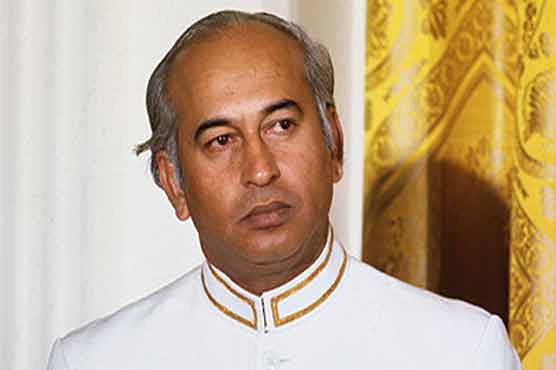
Pakistan: : Suicide attack on govt. school, student killed

Ghani Khan — the poet of beautiful contradictions
The Express Tribune
By Manzoor Ali

Sunday, January 5, 2014
Internet-connected toothbrush makes CES debut


Polish woman drugged, raped in Indian capital: police
Subscribe to:
Posts (Atom)