http://www.ibtimes.com/Press reports out of Iran have accused Saudi Arabia’s intelligence chief, Prince Bandar bin Sultan, of masterminding the late November 2013 bomb attack on the Iranian Embassy in Beirut that killed more than two dozen people and wounded 150. (On Thursday, another attack in a Hezbollah-controlled suburb of Beirut killed at least two.)Al-Alam, an Arabic news channel broadcast from Iran and owned by state-controlled media, reported that the two suicide bombers who launched deadly attacks on the Iranian Embassy in Beirut Nov. 19 took their orders from Bandar, citing unnamed sources in Lebanon. The Lebanese sources claimed to have uncovered information that Majed al-Majed, the Saudi leader of the Abdullah Azzam Brigades, a group affiliated with al-Qaeda, claimed responsibility for the attacks, under Bandar’s direction. Bandar has been a strong voice for military intervention in Syria to topple Iran’s ally, President Bashar al-Assad. Lebanese security forces have reportedly arrested al-Majed. The report asserted that al-Majed lived in a military camp in southern Lebanon, before leaving for Syria to help al-Qaeda’s al-Nusra Front fight against the military of Assad. Al Alam further noted that al-Majed returned to Lebanon, wounded, after a failed bid to seize leadership of al-Nusra. Al-Alam also indicated that al-Majed has committed “many terrorist attacks” and is a wanted man in Lebanon, Saudi Arabia and the U.S. At the time of the November attacks, the Azzam Bridges indeed took responsibility for them, tweeting: "It is a twin suicide operation by two heroes from the Sunni community in Lebanon.” The Brigades further warned that they would conduct more attacks until Hezbollah withdrew its fighters from Syria and Sunni Islamist prisoners in Lebanon were released. But both the Iranian ambassador to Lebanon, Ghazanfar Roknabadi, and Marzieh Afkham, spokeswoman for Iran’s Foreign Ministry, blamed Israel for the November attack, according to the Daily Star newspaper of Lebanon. “[The bombings are] an inhumane crime and spiteful act done by Zionists and their mercenaries," Afkham told the IRNA news agency of Iran. Iran, Syria and Hezbollah are led by Shia Muslims, while Saudi Arabia is a Sunni-dominated kingdom. A few weeks after the Beirut bombing, the chief of the Iran-supported Hezbollah in Lebanon, Seyyed Hassan Nasrallah, pointed his finger at Saudi intelligence and accused it of having forged links with the Abdullah Azzam Brigades. It is not clear if Nasrallah connected Bandar himself to the bombings. Some academics in the U.S. do not believe Iran’s latest claims about Bandar – but still hold out that the Saudis may indeed be involved in the Beirut violence, at least indirectly. “I think the Iranian regime is exaggerating that Saudi Prince Bandar was personally behind the attacks,” said Dilshod Achilov, a professor of political science at East Tennessee State University, in an interview. “Yet, in broad terms, the Saudi government is surely involved in a covert ‘cold-war’ type warfare with Hezbollah and the Iranian Al-Quds force.” Achilov added that it is unlikely that Prince Bandar personally orchestrated the bombings in Beirut. “But his money was definitely involved,” he added. Similarly, Alex Vatanka, a Middle East analyst at the Jamestown Foundation, said Iran has not provided any “hard evidence” to link Bandar directly with the Beirut suicide bombings. “But having said that, it is not out of the realm of possibility that the Saudis had a role in the incident,” he said, given that Riyadh has financed a number of radical groups in the region, including Syrian rebels and other Sunni militant factions. Achilov also adds that Iran rightly suspects the Saudis in such attacks, which target its proxies across the Middle East. “Iran is not entirely wrong to blame the Saudis, at least from financial sponsorship aspect,” he said. “The Iranian regime is blaming Bandar on the basis of the broad Sunni-Shia ‘cold-war’ rivalry that has existed for centuries in the region.” But he noted that Bandar himself does not have much to gain from complicity in the Lebanon attacks. “If implicated, Bandar’s international and regional reputation would be at stake. At the same time, however, he would gladly celebrate any damage done to Hezbollah,” Achilov stated. Iran’s English-language broadcaster Press TV even accused Bandar of promoting “Zionism” in the Middle East by allying with Israel and the United States and seeking to destabilize Syria and Yemen. “Bandar and his brother, the Deputy Defense Minister Salman bin Sultan, have been actively supervising the establishment of a new special military unit: Mohammed Army, which will act as an extraterritorial military force to the [Saudi] Kingdom and by extension its Zionist allies,” an editorial in Press TV alleged. “As Saudi Arabia lines up its dominoes, it is bent on crushing any potential contender to its power and will in the region.” But who is Prince Bandar? According to the Saudi Embassy, Bandar was appointed chief of Saudi intelligence by his uncle King Abdullah in July 2012, following seven years as head of the kingdom’s National Security Council. Now 64 years old, Bandar has had a long tenure in very high official posts. He served as the Saudi ambassador to the U.S. from late 1983 to late 2005, through four American presidencies, reportedly developing particularly close ties with the Bushes. Some called him "Bandar Bush." Gen. Brent Scowcroft, national security adviser to President George H.W. Bush, described Bandar as “flamboyant, dramatic, personable, smart, canny and probably manipulative.” Prince Bandar’s biographer, David Ottaway, said he is the perfect man to lead the Saudi kingdom’s increasingly aggressive foreign policy in the Middle East. “They have a more hawkish foreign policy and he’s the leading hawk of the House of Saud,” Ottaway was quoted as saying, according to Gulf News. Moreover, both Iran and Syria have long been concerned with how Bandar will drive Saudi foreign policy. “Damascus and Tehran are obsessed with the conspiracy theory that Gulf states are behind [the] planning and funding of such terror acts,” Ali Bluwi wrote in Arab News. “Moreover, the two countries are also obsessed with Bandar Bin Sultan. They think Prince Bandar has a firm stand against them and that his close relationship with Jeffrey Feltman [a U.S. diplomat for the Middle East] and the American political and security institutions posed a threat to them.” Bandar has an interesting genealogy -- his mother was a black African slave, while his father was Prince Sultan bin Abdul Aziz al Saud, who was crown prince before his death in 2011. Yet, despite the Saudis' extreme racism against blacks, he was able to rise very high in the kingdom’s hierarchy. Bandar has also led quite a charmed existence with much controversy, including allegations of adultery, high living and receiving massive bribes (which he has denied). The so-called "Playboy Prince" was once accused of having accepted a bribe in excess of £1 billion to help guarantee Britain gained a £43 billion arms deal with Saudi Arabia – which hardly raised an eyebrow in the Middle East. “In an absolute monarchy flush with petrodollars where the line between state and royal finances is blurred, arms deals are assumed to carry lucrative commissions,” wrote Roula Khalaf in the Financial Times, adding that Bandar is seen as “a symbol of royal excess as well as submission to the U.S.” Bandar also has a long history of successful diplomacy and covert activity – among other achievements, he helped to negotiate the end of the Lebanese civil war in 1991, he persuaded the Libyans to hand over two suspects in the 1988 Lockerbie bombing case, and even helped convince the Russians to withdraw from Afghanistan in the late 1980s. As a final note, some Iranians also accused Bandar of complicity in the recent bombings in Volgograd in southern Russia, which killed 14 people. The Iranian.com website, citing reports from the Middle Eastern news agency Al Monitor, claimed Bandar has demanded Russian President Vladimir Putin withdraw his support for Assad’s regime in Syria in exchange for certain concessions with respect to the Sochi Winter Olympics. “I can give you a guarantee [that we will help] protect the Winter Olympics next year,” Bandar allegedly told Putin, adding, “The Chechen groups that threaten the security of the games are controlled by us.” The implication was that if Putin did not pull back, Bandar (or his proxies) would escalate the Chechens' war against the Russian state.
Saturday, January 4, 2014
Bandar Bin Sultan: Is Saudi Arabia’s ‘Playboy Prince’ Behind Bomb Attacks In Lebanon?
Friday, January 3, 2014
Bahrainis hold anti-regime rally near Manama
 Bahraini demonstrators have held an anti-regime protest in the village of Shakhora, west of the kingdom’s capital city, along with the leader of the country’s main opposition party.
On Friday, Sheikh Ali Salman, who is the head of the al-Wefaq National Islamic Society, also attended the protest to condemn jailing of photographers and activists by the Al Khalifa regime.
The rally came a day after Bahrainis held protest rallies across the Persian Gulf kingdom, calling for the downfall of the regime.
Over the past months, the Bahraini regime has stepped up its heavy-handed crackdown on peaceful protesters and activists in the country.
In late December 2013, a court in Bahrain sentenced five opposition protesters to 15 years in prison on charges of being behind two bomb attacks, including one during the 2012 Formula One race. Reports say the protesters told the court that they had confessed under duress.
On December 24, 2013, the Bahrain Center for Human Rights censured the Al Khalifa regime for arresting and torturing the youth and keeping them in detention for long periods.
Bahrainis have been staging demonstrations since mid-February 2011, calling for political reforms and a constitutional monarchy, a demand that later changed to an outright call for the ouster of the ruling Al Khalifa family following its brutal crackdown on popular protests.
In October 2013, Philip Luther, Amnesty International’s director for the Middle East and North Africa, said, “The [Bahraini] authorities simply slap the label 'terrorist' on defendants and then subject them to all manner of violations to end up with a 'confession'.”
Bahraini demonstrators have held an anti-regime protest in the village of Shakhora, west of the kingdom’s capital city, along with the leader of the country’s main opposition party.
On Friday, Sheikh Ali Salman, who is the head of the al-Wefaq National Islamic Society, also attended the protest to condemn jailing of photographers and activists by the Al Khalifa regime.
The rally came a day after Bahrainis held protest rallies across the Persian Gulf kingdom, calling for the downfall of the regime.
Over the past months, the Bahraini regime has stepped up its heavy-handed crackdown on peaceful protesters and activists in the country.
In late December 2013, a court in Bahrain sentenced five opposition protesters to 15 years in prison on charges of being behind two bomb attacks, including one during the 2012 Formula One race. Reports say the protesters told the court that they had confessed under duress.
On December 24, 2013, the Bahrain Center for Human Rights censured the Al Khalifa regime for arresting and torturing the youth and keeping them in detention for long periods.
Bahrainis have been staging demonstrations since mid-February 2011, calling for political reforms and a constitutional monarchy, a demand that later changed to an outright call for the ouster of the ruling Al Khalifa family following its brutal crackdown on popular protests.
In October 2013, Philip Luther, Amnesty International’s director for the Middle East and North Africa, said, “The [Bahraini] authorities simply slap the label 'terrorist' on defendants and then subject them to all manner of violations to end up with a 'confession'.”
Waging war on Russia: Looking into Volgograd terror blasts
The heinous terrorist attacks in Volgograd in recent days are merely the latest chapter in a terrorist war aimed at destabilizing Russia politically and economically, while tearing at the very fabric of Russian society. As the families of the more than 30 dead mourn their loved ones, details of the incidents are beginning to paint an all-too familiar picture for anyone who has followed the development of jihadi groups in the Russian Caucasus. A suicide bomber detonates explosives inside a crowded railway station, killing at least 17 and wounding many more. Another bomber strikes an electric trolleybus, killing 14 and critically wounding many more, including several small children. Such scenes of carnage are nothing new to the Russian people, who have endured nearly two decades of terrorism and paid a heavy price in lives and resources. While it is always important to take time to remember the innocent lives lost, it is equally critical to examine these incidents in the broadest political and geopolitical context in order to understand how and why these tragedies occurred. Specter of Terrorism in Russia Since the fall of the Soviet Union, the Russian people have been repeatedly victimized by acts of terrorism emanating from the Caucasus region. Beginning in 1999, with the infamous apartment bombings that killed more than 300 innocent people in several cities including Moscow, there have been a number of high-profile attacks all across the country, including the bombing of airports, marketplaces, trains and bus stops, targeted assassinations of community and religious leaders, as well as the infamous Moscow theater hostage crisis of 2002. These incidents are far more than mere national tragedies to be understood in isolation from one another. Rather, they represent a continuing campaign of terror by internationally connected jihadi organizations, based in the Russian Caucasus, who are intent on waging war against the Russian people and the Russian state. While the facts surrounding the most recent bombings are still being gathered, investigators have noted that the tactics – a suicide bomber in a crowded public space – are characteristic of the terror organizations of the Caucasus, either directly or loosely affiliated with Al-Qaeda. In fact, it seems that this recent attack simply replicates the tactics of a similar attack which killed a prominent Muslim cleric in the Russian republic of Dagestan in 2012. Such incidents have become all too common in the troubled region, particularly as jihadi organizations take root in places like Syria, a mere 800 miles from the Russian Caucasus. When analyzing jihadi terrorism in Russia, the name Doku Umarov and his Imarat Kavkaz organization, will undoubtedly appear. Umarov has a long track record of organizing terrorist operations in Russia, including kidnappings, bombings and assassinations. His propaganda outfit, known as Kavkaz Center, has an extensive history of supporting and legitimizing terrorist actions throughout the region, rationalizing atrocities committed in the name of “resistance.” In fact, Kavkaz engages in perpetual upside-down logic, referring to Russians as “terrorists” and terrorists as “heroes.” This type of Goebbels-esque propaganda is the hallmark of Western imperialist projects; most recently in the conflict in Syria in which the Western corporate media and the like refer to terrorism and subversion as “rebellion and freedom-fighting.” Additionally, it is essential to note that Imarat Kavkaz (Umarov’s terrorist organization translated as “Caucasus Emirate”) has been listed by the United Nations as an organization associated with Al-Qaida. Kavkaz Center has been described by Umarov himself as “the official information organ of the Imarat Kavkaz.” This, of course, supports the claims made repeatedly by Moscow of the connection between Chechen and other extremists in the region and Al Qaeda, a claim which, until recently, Kavkaz Center continued to deny. Geopolitics of Terrorism in Russia One cannot simply focus on Umarov or any other individual terrorist group, for that would be not seeing the forest for the trees, missing entirely the larger context within which such acts of terror occur. As a world power, Russia finds itself at the forefront of some of the key geopolitical conflicts in the world today. Whether playing the role of peacemaker in Syria, oil superpower, or weapons/defense manufacturer, Russia is perpetually in conflict with Western powers who seek to further expand their hegemony throughout Eurasia even if takes form of a ‘missile shield’. In examining possible connections between the recent terror attacks and world events, the continuing conflict in Syria immediately comes to the fore. Not only has the war in Syria dragged Russia, along with other world powers, into a political conflict, it has also energized the terror networks of the Russian Caucasus. As the Huffington Post, along with a number of other mainstream media sources, has documented, Chechen (and other Caucasian) fighters constitute a sizeable contingent among the jihadi elements waging war on Assad and the Syrian people (though this has been denied by Chechnya’s leadership). Groups such as the Muhajireen Brigade, led by their commander known as Abu Omar al-Chechen, have been instrumental in maintaining the fighting in the face of the defeat of many of the Syrian and regional jihadi groups. Although terrorists from the Caucasus are having a major impact on the ground in Syria, perhaps the greater threat is their ability to freely travel back to their places of origin. Keeping in mind that Syria is only about 800 miles from the Russian Caucasus, the danger is self-evident: battle-hardened fighters returning from the war in Syria bring with them their newly acquired expertise as killers, only to turn their attention back to their perceived great enemy: Russia. Of course, the question of proximity to Syria is important for another, perhaps more frightening reason – the closest major Russian city is Sochi, site of the Olympics next month. Naturally, many have speculated that the Olympics were a motivating factor for carrying out the attacks in Volgograd, that they were intended to send a message to both Moscow and the world on the eve of the games. While the extent to which Sochi was a motivating factor is up for debate, what is undeniable is that Russia occupies a precarious space in global politics, one that often leads to conflicts, both overt and covert, with other nations and global powers. Countries such as Saudi Arabia, Qatar, and Israel, all part of the greater US-NATO sphere of influence, have a vested interest in ensuring that Russia does not cement its dominance of energy supplies to Europe in the coming decades. Any conflict between Russia and these countries, as we see currently playing out in Syria, should be understood as merely one aspect of a larger geopolitical and strategic conflict between Russia and the West (US-NATO-GCC-Israel primarily). As the Russian Caucasus has become a critical part of Russian energy delivery infrastructure, it has taken on an added importance. The South Stream Pipeline, along with a number of other projects, has positioned Russia as a principal energy source for Europe, thereby weakening the position of Western energy interests who would love to monopolize the flow of oil to Europe. As long as Saudi Arabia and other US clients continue to be a primary source of energy, their interest will always be the destabilization of Russia. Terror Lobby Although one might be able to pinpoint the terrorist group that carried out the atrocities of recent days, this is merely the first step. Far more important in the long term is an understanding of how such organizations operate and how they survive. In the Russian Caucasus, Doku Umarov and similar leaders only exist because of an elaborate network of financiers and influential policymakers who portray their war of terrorism as a “liberation struggle.” Terrorists such as Umarov are best understood by their connection to the various organs of Western intelligence. One such entity that bears scrutiny is the American Committee for Peace in the Caucasus (ACPC), previously known as the American Committee for Peace in Chechnya. As reported by Right Web at the Institute for Policy Studies: “The ACPC was founded in 1999 by Freedom House, a neoconservative organization that has worked closely with the U.S. government, receiving funds from the National Endowment for Democracy and other US democratization initiatives.” This intimate relationship between the ACPC and the US State Department indicates not merely a confluence of interests, but rather a direct relationship wherein the former is an organ of the latter. The paternalistic role of the US intelligence establishment in the ACPC is made all the more evident when one examines some of the more well-known members of the ACPC, including former National Security Advisor Zbigniew Brzezinski, former Pentagon advisor Richard Perle and other top neocons such as William Kristol, Elliott Abrams, Kenneth Adelman and Robert Kagan. What becomes apparent in even a cursory analysis of these figures is that, despite the preponderance of neoconservatives, the top members of the ACPC are pulled from both the liberal and conservative establishments. Therefore, one can see how the ACPC represents a bipartisan consensus within the US ruling class – a consensus of aggression against Russia. The ACPC has taken the lead in championing the cause of separatism and terrorism directed toward Russia, both tacitly and overtly. After having championed the cause of former Chechen Foreign Minister Ilyas Akhmadov in his quest for asylum in the United States – subsequently granted along with a generous taxpayer-funded stipend – ACPC member Zbigniew Brzezinski went so far as to write the foreward to Akhmadov’s book “The Chechen Struggle.” The alliance between political figures such as Akhmadov and terrorist leaders in the region demonstrates conclusively the partnership between the various terror networks and the ruling class in the West. Situated between Syria and Central Asia, and straddling the energy-rich Caspian region, the Russian Caucasus has become a flashpoint in world affairs. The geopolitical realities are brought into stark relief by the unimaginable grief of the families of innocents killed needlessly by these horrific acts of terrorism. In mourning the dead, we must come to understand more clearly, and on a systemic level, how international terrorism operates, and how it is used as a weapon by the forces of empire.Eric Draitser

Russia's new terror threat: Ethnic jihadis
Video:Bad weather woes for Europe and U.S.
Severe snow storms in the U.S. and flooding in Britain is causing havoc for families and businesses, while Germany and France are enjoying exceptionally mild temperatures. Hayley Platt talks to meteorologists to find out what's behind the extreme variations and if this is the pattern we should get used to.
Over 1,800 flights cancelled in US due to snow storm
US airport officials report on Thursday that over 1,800 international and local flights have been cancelled and almost 3,000 delayed in a number of northern and eastern states due to heavy snowfalls.
U.S.A: Blizzard blasts Northeast with snow, wind and bitter cold
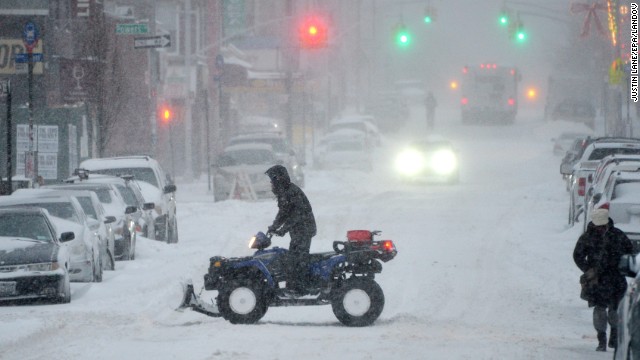
 The heavy snow falling along much of the mid-Atlantic Coast into New England is expected to taper off Friday as a nor'easter heads into Canada, leaving bitter cold in its wake, the National Weather Service said.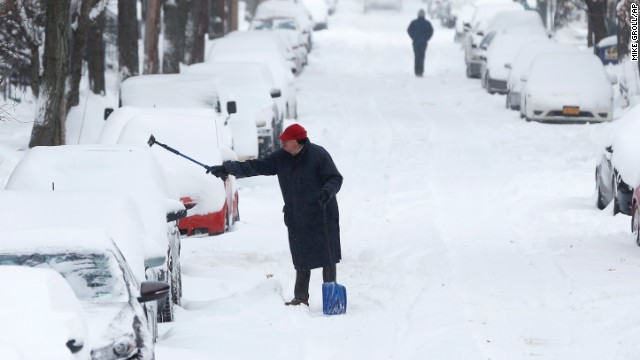
Viewpoint: Afghanistan has more to worry about than US bases


Talks could resume if there is a new president in April who is seen to have wide support and whom the Taliban could trust. But are the Americans and Nato ready to help in such talks? If these important issues are not discussed with Mr Karzai now, the consequences could be terrible. A rigged election and a continuation of the war with the Taliban could lead to thousands of casualties, tens of thousands of refugees, a humanitarian crisis and international terrorist groups returning to Afghanistan. The world will have no will to intervene once again, and the neighbouring states will pour in money and arms to try and control some of the warlords. As the Americans leave and in order to highlight these outstanding problems, what is needed is a genuine neutral mediator who can help all the elements in this complex equation reach the right conclusions. The United Nations or the European Union or individual, non-controversial countries such as Norway or Germany could play such a role. The tragedy is that the US and Nato-led war has emasculated the potential peacemakers and mediators. We need to prepare for the Western withdrawal now by building a major Western diplomatic initiative that will replace Western military force.
Bilawal Bhutto: Wait and watch what I do from Parliament
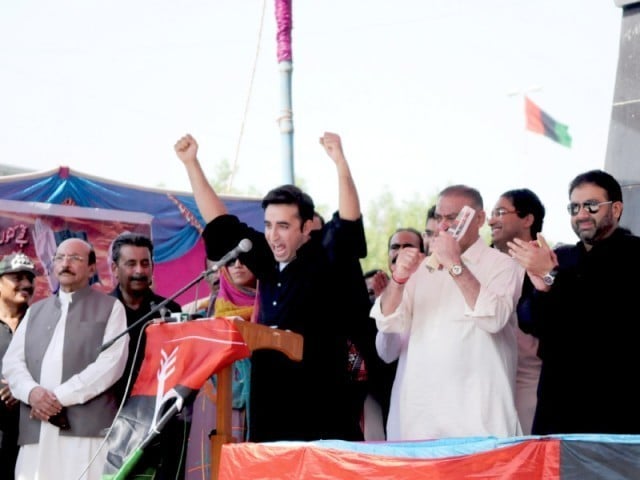
http://www.firstpost.com/Pakistan People's Party leader Bilawal Bhutto Zardari, whose posts on Twitter have been creating a storm, today cautioned his opponents that he would do much more once he is elected to parliament. "If my tweets freak you out so much wait and see what I can do from parliament," the scion of the Bhutto family said in a tweet. He became eligible to contest parliamentary polls when he turned 25 in September.
Bilawal Bhutto calls for medical board to examine Pervez Musharraf's ailment
 Pakistan Peoples Party leader Bilawal Bhutto Zardari on Thursday demanded constitution of an independent medical board to verify Pervez Musharraf's heart ailment, hours after the former military ruler was admitted to an army hospital.
"All medical excuses must be verified by an independent board of doctors. I have an ouchy is no excuses to skip your treason case," the 25-year-old Patron-in-Chief of the PPP tweeted.
"I can't believe this coward ever wore the uniform of our brave and courageous armed forces. Disgrace," Bilawal said, launching a scathing attack on Musharraf.
The 70-year-old former president's international spokesperson retaliated to Bilawal's remarks, tweeting, "How dare you make such insinuations against General Musharraf. Don't forget your father while in office was airlifted to Dubai."
Bilawal has been increasing voicing his views on various issues and has announced that he and his sisters, Aseefa and Bakhtawar, would become part of the political mainstream before the next general election in 2018.
Bilawal's sister Aseefa tweeted,"Hope for Musharraf's speedy recovery so he can finally enter the court". Musharraf who had to appear before the special treason court was rushed to a hospital on Thursday.
He left his heavily guarded farmhouse on the outskirts of Islamabad to attend the treason case hearing but on his way he complained of chest pain.
Musharraf's convoy was immediately diverted to Armed Forces Institute of Cardiology (AFIC) in Rawalpindi for a medical checkup after which he was admitted.
Aasia Ishaque, spokesperson of Musharraf's All Pakistan Muslim League (APML) party said, "He suffered a severe heart attack while he was on his way to the court."
Pakistan Peoples Party leader Bilawal Bhutto Zardari on Thursday demanded constitution of an independent medical board to verify Pervez Musharraf's heart ailment, hours after the former military ruler was admitted to an army hospital.
"All medical excuses must be verified by an independent board of doctors. I have an ouchy is no excuses to skip your treason case," the 25-year-old Patron-in-Chief of the PPP tweeted.
"I can't believe this coward ever wore the uniform of our brave and courageous armed forces. Disgrace," Bilawal said, launching a scathing attack on Musharraf.
The 70-year-old former president's international spokesperson retaliated to Bilawal's remarks, tweeting, "How dare you make such insinuations against General Musharraf. Don't forget your father while in office was airlifted to Dubai."
Bilawal has been increasing voicing his views on various issues and has announced that he and his sisters, Aseefa and Bakhtawar, would become part of the political mainstream before the next general election in 2018.
Bilawal's sister Aseefa tweeted,"Hope for Musharraf's speedy recovery so he can finally enter the court". Musharraf who had to appear before the special treason court was rushed to a hospital on Thursday.
He left his heavily guarded farmhouse on the outskirts of Islamabad to attend the treason case hearing but on his way he complained of chest pain.
Musharraf's convoy was immediately diverted to Armed Forces Institute of Cardiology (AFIC) in Rawalpindi for a medical checkup after which he was admitted.
Aasia Ishaque, spokesperson of Musharraf's All Pakistan Muslim League (APML) party said, "He suffered a severe heart attack while he was on his way to the court."
Pakistan: Musharraf’s dilemma
Pakistan: Government did not ask Samiul Haq to hold peace talks: Sources
The government did not task Jamiat Ulema-e-Islam (JUI-S) Chief Maulana Samiul Haq to revive peace talks with the Tehreek-e-Taliban Pakistan (TTP), sources told Express News on Friday.
Express News correspondent Aamir Ilyas Rana reported that sources clarified that the influential cleric had asked for Prime Minister Nawaz Sharif’s time, and after meeting him, unilaterally announced that the government had given him the task to hold peace talks.
On December 31, it was reported that Nawaz was looking to mend broken communication links with TTP, naming Haq as the government’s point man and ice-breaker in the proposed negotiations.
The recently-initiated dialogue process had collapsed after the TTP leader Hakeemullah Mehsud was killed in a US drone attack on a North Waziristan compound.
Background
It should be noted that JUI-S was not invited in the All Parties Conference in 2013, which was convened to chalk out a plan to tackle terrorism. Samiul Haq was not made a part of the government’s plans of starting dialogue with the TTP after JUI-F chief Maulana Fazlur Rehman expressed his reservations over Haq’s inclusion.
Haq is nicknamed the ‘Father of the Taliban’ and runs a madrassa where several Taliban leaders were educated.
Thursday, January 2, 2014
Saudi Arabia stokes anti-Shia sentiment
The Saudis and the regional monarchies are funding Takfirism, thereby creating a sectarian Frankenstein's monster of fanatics beyond their control, an analyst says.
In a column for The Independent, Patrick Cockburn said Takfirism, financed by Riyadh and Persian Gulf monarchies, “is creating the ingredients for a sectarian civil war engulfing the entire Muslim world.”
 “The [anti-Shia] hate propaganda is often gory and calls openly for religious war,” he wrote.
Cockburn added that “anti-Shia satellite television” stations financed mainly by Saudi regime seek to sully the image of Shias.
“Shia activists point in particular to the establishment in 2009 of two satellite channels, Safa TV and Wesal TV, which they accuse of having strong anti-Shia bias,” he wrote.
The analyst stated that Saudi clerics “have shown great skill in communicating extreme sectarian views through modern communications technology such as YouTube, Facebook and Twitter, giving them a much wider audience than they had previously enjoyed.”
He referred to a study conducted on foreign-backed militants operating in Syria, saying they mainly come from Saudi Arabia.
The great majority of the militants had joined the terrorist Islamic State of Iraq and the Levant and the al-Qaeda-linked al-Nusra Front, both of which are highly sectarian organizations, he added.
“A deeply dangerous development is that the foreign fighters, inspired by film of atrocities and appeals to religious faith, may sign up to go to Syria but often end up as suicide bombers in Iraq, where violence has increased spectacularly in the past 12 months,” wrote Cockburn.
He said Saudi Arabia and its regional allies have funded satellite television networks “central to the resurgence of al-Qaeda across the Middle East, to a degree that Western politicians have so far failed to grasp.”
Cockburn noted that the Saudi regime and other monarchies continue to support Takfiri groups “through private donations.”
Saudi Arabia has played a major role in activating the sanctuaries and safe havens for al-Qaeda in Iraq and has ensured that there would be an effective recruitment by creating the ideal environment through sectarian rhetoric and divisions.
Takfiri terrorist groups who kill Muslims, including women and children, in bomb attacks in Iraq and Syria, follow the Wahhabi ideology.
Wahhabism which is practiced in Saudi Arabia is disavowed by Shia and Sunni Muslims.
“The [anti-Shia] hate propaganda is often gory and calls openly for religious war,” he wrote.
Cockburn added that “anti-Shia satellite television” stations financed mainly by Saudi regime seek to sully the image of Shias.
“Shia activists point in particular to the establishment in 2009 of two satellite channels, Safa TV and Wesal TV, which they accuse of having strong anti-Shia bias,” he wrote.
The analyst stated that Saudi clerics “have shown great skill in communicating extreme sectarian views through modern communications technology such as YouTube, Facebook and Twitter, giving them a much wider audience than they had previously enjoyed.”
He referred to a study conducted on foreign-backed militants operating in Syria, saying they mainly come from Saudi Arabia.
The great majority of the militants had joined the terrorist Islamic State of Iraq and the Levant and the al-Qaeda-linked al-Nusra Front, both of which are highly sectarian organizations, he added.
“A deeply dangerous development is that the foreign fighters, inspired by film of atrocities and appeals to religious faith, may sign up to go to Syria but often end up as suicide bombers in Iraq, where violence has increased spectacularly in the past 12 months,” wrote Cockburn.
He said Saudi Arabia and its regional allies have funded satellite television networks “central to the resurgence of al-Qaeda across the Middle East, to a degree that Western politicians have so far failed to grasp.”
Cockburn noted that the Saudi regime and other monarchies continue to support Takfiri groups “through private donations.”
Saudi Arabia has played a major role in activating the sanctuaries and safe havens for al-Qaeda in Iraq and has ensured that there would be an effective recruitment by creating the ideal environment through sectarian rhetoric and divisions.
Takfiri terrorist groups who kill Muslims, including women and children, in bomb attacks in Iraq and Syria, follow the Wahhabi ideology.
Wahhabism which is practiced in Saudi Arabia is disavowed by Shia and Sunni Muslims.
Snow storm takes its hold on parts of U.S.
Snowy weather takes its grip on various parts of the U.S., threatening travelers and claiming lives. Gavino Garay reports.
Bilawal Bhutto: I can't believe this coward ever wore the uniform of our brave armed forces
The Express Tribune
 BilawalBhuttoZardari @BBhuttoZardari
Follow
I can't believe this coward ever wore the uniform of our brave and courageous armed forces. #disgrace
2 Jan 2014
BilawalBhuttoZardari @BBhuttoZardari
Follow
I can't believe this coward ever wore the uniform of our brave and courageous armed forces. #disgrace
2 Jan 2014
Pakistan People’s Party (PPP) chairperson Bilawal Bhutto Zardari criticised General (retd) Musharraf on Twitter after the latter was hospitalised on his way to the treason case hearing on Thursday. Musharraf was scheduled to appear before a special court but, according to government officials, he complained of pain in his heart and instead was taken to the Armed Forces Institute of Cardiology in Rawalpindi. Later during the day, Bilawal Bhutto tweeted his thoughts on Musharraf’s detour from the court to the hospital.

2014 - A year to fight the fear in Afghanistan
2014 has at last arrived and for Afghans it's more than just another year. A decisive political moment in their tortuous history is being called everything from a phobia to a syndrome. But no sooner had the clock struck midnight than the fight-back began, with a volley of hashtags on social media. #Afgwillliveon, #Who'safraidof2014? were some of the rallying cries in cyberspace to reject a negative narrative, lest it become self-fulfilling. "Let's celebrate 2014 with a spirit of #Nofear #Nophobia," wrote Borhan Osman of the Afghanistan Analysts Network on Twitter. Even in a country where every year has been called "critical," this one matters. Most foreign troops will pull out in 2014. And presidential elections are meant to usher in a peaceful transition from Hamid Karzai to an elected successor, in a country where power has long been measured on the battlefield, not ballots. Think positive These first salvos of the year were fired by young educated Afghans who've come of age since the momentous events of 2001 which ended one of the darkest periods of Afghan history under harsh Taliban rule. I asked one of the Afghans who joined this hashtag chorus to explain this defiant crescendo. "I believe Afghans have been bombarded with panic and messages of uncertainty by media during the last 12 months," replied physician Fazel Fazly in a reference to grim forecasts of civil war, financial failure, and rigged elections. "I'm a medic so my humour is medically oriented, so I call it 2014 Syndrome," he pointed out, before adding a more serious note: "Afghans can't handle widespread negativism and this can directly affect realities on the ground." Afghanistan has long been a country where perceptions of a situation can matter almost as much as realities on the ground. There's an echo of the anxiety that rippled through Kabul in the harsh winter of 1989 as Soviet troops prepared to pull out after 10 long years of war. In a capital wrapped in a blanket of snow and a swirl of rumours, there were whispered conversations about whether mujahadeen fighters in the hills around Kabul would march in once the Red Army left. Outside Afghanistan, many predicted the imminent collapse of President Najibullah's order. As a foreigner who stayed on in Kabul after Western embassies pulled out, I kept being asked by Afghans, with palpable nervousness: "What do you think will happen?" Gloom magnified Collapse only came a few years later, when Moscow drew down much of its financial and political support to its allies in Kabul. Afghanistan is a very different country now but it's still rattled by pessimistic predictions, especially since they're now magnified beyond compare by social media and the unprecedented reach of televisions and telephones. As 2013 ended, President Karzai's office was batting away yet another gloomy prognosis. The latest has come from the US National Intelligence Estimate which predicted Afghanistan would descend into chaos if Kabul fails to sign a Bilateral Security Agreement with Washington, which would keep a contingent of US troops in the country after 2104. "We strongly reject that (report) as baseless as they have in the past been proved inaccurate," asserted the President's spokesman Aimal Faizi. Even the intelligence community is divided over how fragile gains made since 2001 are. But there's no denying that Afghanistan confronts monumental challenges this year on every front. President Karzai's insistence on delaying his signature on a security pact, supported by many Afghans, has only added to this climate of uncertainty. But it also highlights the ambivalence that now marks the relationship between Afghans and their Western partners. It's a country that still needs foreign aid and security assistance. But it also needs its own soldiers to stay at their posts, its politicians to put their country, not personal interests first, and needs a people to pull together. Glass half full There is real concern about aid levels, lucrative contracts, and investment plummeting as foreign troops leave. There is unease about widespread corruption. And the Taliban are still vowing to continue the fight. Afghans have already lived through a Soviet invasion and pullout, mujahedeen infighting, strict Taliban rule, and an international engagement that helped develop their country in some areas, but disappointed in others. For many Afghans, it has always been a battle just to survive. And that's just the last three decades. No wonder some young educated Afghans, in a country where about 70% of the population is under the age of 25, are starting this year with hashtags like #glasshalffull. They know this year is a year where Afghans themselves can make the difference.Lyse Doucet
In Afghanistan, Jan. 1 is a whole lot of people’s birthday — thanks to a lack of record-keeping
 By Kevin Sieff
The first day of January isn’t celebrated as New Year’s Day in Afghanistan. But since the American invasion, it’s become a new kind of holiday — a de facto birthday for thousands of Afghans who don’t know when they were born.
During protracted wars in the 1980s and ’90s, the government didn’t have a system in place to register births. Because identification cards and driver’s licenses weren’t standard in this impoverished nation, families saw no reason to record the exact dates. Government paperwork asked only for an approximate birthday on the Islamic calendar.
But when the United States and its NATO allies arrived, they brought with them a flurry of job opportunities, visa applications and Web sites that all required a specific birthday on the Roman calendar.
“Those of us who don’t know when we were born selected January 1st,” said a U.S. Army interpreter named Tariq, who first wrote the date on his job application with the military and would repeat it when he applied for a visa, and whenever anyone asked. “It was very easy to remember.”
Like many Afghans, Tariq, who requested that his last name not be used to avoid Taliban threats, has only a vague sense of his birthday, which occurred during the country's collapse into civil war in the early 1990s.
The question of birthdays has arisen with even greater frequency as Internet access has become more widespread, with 3G networks advertised in the country’s major cities. Urban Afghans were quick to create accounts on Facebook, Twitter and Gmail, all of which ask for the registrant’s date of birth.
In the digital age, the collective birthday has become something of an inside joke here, as young Afghans send each other messages to celebrate.
“Happy birthday to 30 friends . . . whose birthdays are tomorrow on the first of January,” Barat Ali Batoor, an Afghan refugee in Australia, wrote on Facebook.
“In two days, it’s every Afghan’s birthday,” Mohammad Hassanzai, an Afghan living in London, tweeted Monday.
“I have been using the 1st of January for every online registration and social network site,” said Nazer Hussain, 23, a recent university graduate who rattled off a list of Web sites he signed up for using his fake birthday. “In the past, people weren’t well-educated enough to keep a record of birthdays.”
Some worry that the lack of official birth registration — a problem that persists today, particularly in rural parts of the country — could have serious implications.
“Birth registration is instrumental in safeguarding other human rights because it provides the official ‘proof’ of a child’s existence,” said a 2007 U.N. report on the topic. It listed Afghanistan as one of the 10 countries with the largest numbers of unregistered children.
The birth records are useful in reuniting families after conflicts or natural disasters, as well as in helping children apply for refugee status. And in the absence of a census, institutionalized birth registration can offer an estimate of the country’s population.
“In Afghanistan, even though national legislation requires registration of children at birth, 23 years of conflict decimated both the administrative mechanisms and the social institutions that support them,” the U.N. report said.
Afghanistan isn’t the only war-torn nation whose citizens have chosen Jan. 1 as a makeshift birthday. In Vietnam, Somalia and Sudan, many birth dates weren’t recorded during years of unrest and institutional upheaval. When residents applied for visas or refugee status, thousands chose the first of the year — or, in some cases, the U.S. State Department chose it for them. The department has bestowed that birthday upon more than 200,000 refugees since the Vietnam War, according to several estimates.
“These approximated birth dates allow the government to administer benefits and track and control immigration flow, but they lack both certainty and accuracy,” Ross Pearson wrote in December in the Minnesota Law Review.
Afghans didn’t wait to be assigned official birthdays. As U.S. immigration lawyers have accepted hundreds of visa applications, they noticed that many of their clients had already filled in their date of birth as Jan. 1. Many Afghans who are also unsure which year they were born offered their best guess on that line.
Most say they chose Jan. 1 because it was the easiest date to remember. But young Afghans in particular have coalesced around it — celebrating a mass birthday that is also an implicit acknowledgment of their country’s troubles.
The country’s famous actors, such as Basir Mujahid; its athletes, such as cricket player Hasti Gul Abid; and its politicians, such as Mohammad Daud Daud, the former police chief of northern Afghanistan, all publicly celebrate their birthdays on Jan. 1.
Many Afghans, particularly the young, digitally savvy generation, remain curious about their true birthdays. But their parents don’t offer much clarity, or at least enough to warrant a change.
“I’m not sure,” Hussain said about his real birthday. “I think it was sometime in the spring.”
By Kevin Sieff
The first day of January isn’t celebrated as New Year’s Day in Afghanistan. But since the American invasion, it’s become a new kind of holiday — a de facto birthday for thousands of Afghans who don’t know when they were born.
During protracted wars in the 1980s and ’90s, the government didn’t have a system in place to register births. Because identification cards and driver’s licenses weren’t standard in this impoverished nation, families saw no reason to record the exact dates. Government paperwork asked only for an approximate birthday on the Islamic calendar.
But when the United States and its NATO allies arrived, they brought with them a flurry of job opportunities, visa applications and Web sites that all required a specific birthday on the Roman calendar.
“Those of us who don’t know when we were born selected January 1st,” said a U.S. Army interpreter named Tariq, who first wrote the date on his job application with the military and would repeat it when he applied for a visa, and whenever anyone asked. “It was very easy to remember.”
Like many Afghans, Tariq, who requested that his last name not be used to avoid Taliban threats, has only a vague sense of his birthday, which occurred during the country's collapse into civil war in the early 1990s.
The question of birthdays has arisen with even greater frequency as Internet access has become more widespread, with 3G networks advertised in the country’s major cities. Urban Afghans were quick to create accounts on Facebook, Twitter and Gmail, all of which ask for the registrant’s date of birth.
In the digital age, the collective birthday has become something of an inside joke here, as young Afghans send each other messages to celebrate.
“Happy birthday to 30 friends . . . whose birthdays are tomorrow on the first of January,” Barat Ali Batoor, an Afghan refugee in Australia, wrote on Facebook.
“In two days, it’s every Afghan’s birthday,” Mohammad Hassanzai, an Afghan living in London, tweeted Monday.
“I have been using the 1st of January for every online registration and social network site,” said Nazer Hussain, 23, a recent university graduate who rattled off a list of Web sites he signed up for using his fake birthday. “In the past, people weren’t well-educated enough to keep a record of birthdays.”
Some worry that the lack of official birth registration — a problem that persists today, particularly in rural parts of the country — could have serious implications.
“Birth registration is instrumental in safeguarding other human rights because it provides the official ‘proof’ of a child’s existence,” said a 2007 U.N. report on the topic. It listed Afghanistan as one of the 10 countries with the largest numbers of unregistered children.
The birth records are useful in reuniting families after conflicts or natural disasters, as well as in helping children apply for refugee status. And in the absence of a census, institutionalized birth registration can offer an estimate of the country’s population.
“In Afghanistan, even though national legislation requires registration of children at birth, 23 years of conflict decimated both the administrative mechanisms and the social institutions that support them,” the U.N. report said.
Afghanistan isn’t the only war-torn nation whose citizens have chosen Jan. 1 as a makeshift birthday. In Vietnam, Somalia and Sudan, many birth dates weren’t recorded during years of unrest and institutional upheaval. When residents applied for visas or refugee status, thousands chose the first of the year — or, in some cases, the U.S. State Department chose it for them. The department has bestowed that birthday upon more than 200,000 refugees since the Vietnam War, according to several estimates.
“These approximated birth dates allow the government to administer benefits and track and control immigration flow, but they lack both certainty and accuracy,” Ross Pearson wrote in December in the Minnesota Law Review.
Afghans didn’t wait to be assigned official birthdays. As U.S. immigration lawyers have accepted hundreds of visa applications, they noticed that many of their clients had already filled in their date of birth as Jan. 1. Many Afghans who are also unsure which year they were born offered their best guess on that line.
Most say they chose Jan. 1 because it was the easiest date to remember. But young Afghans in particular have coalesced around it — celebrating a mass birthday that is also an implicit acknowledgment of their country’s troubles.
The country’s famous actors, such as Basir Mujahid; its athletes, such as cricket player Hasti Gul Abid; and its politicians, such as Mohammad Daud Daud, the former police chief of northern Afghanistan, all publicly celebrate their birthdays on Jan. 1.
Many Afghans, particularly the young, digitally savvy generation, remain curious about their true birthdays. But their parents don’t offer much clarity, or at least enough to warrant a change.
“I’m not sure,” Hussain said about his real birthday. “I think it was sometime in the spring.”
Time to leave Afghanistan for good
http://www.detroitnews.com/
BY DOUG BANDOWThe longest war in American history drags on, with Washington a captive of purposeless inertia. The Obama administration should bring all U.S. forces home from Afghanistan and turn the conflict over to the Afghans. After Afghan-based terrorists orchestrated the 9/11 terrorist attacks, Washington invaded the Central Asian nation. The Bush administration had little choice but to make an example of the Taliban regime as well as target al-Qaida. But the lesson that governments which allow terrorist attacks on America lose power was delivered 12 long years ago. The Bush administration soon switched to nation-building in Central Asia. President Barack Obama then made the war his own, twice increasing the number of troops in Afghanistan. Still, he promised that U.S. forces would return home. Last year Vice President Joe Biden stated simply: “We are leaving in 2014. Period.” But now the administration wants to keep between 8,000 and 15,000 troops on station for years if not forever. The newly negotiated Bilateral Security Agreement would run until “the end of 2024 and beyond.” Why? Afghanistan never was vital to America. Not even during the Cold War, when after the Soviet invasion in December 1979 the conflict offered a convenient and inexpensive (for Washington, not the Afghan people) opportunity to bleed Moscow dry. Osama bin Laden again focused U.S. attention on Afghanistan, but only the transitory terrorist connection made control of Kabul critical to America. Observed Biden: “we went there for one reason: to get those people who killed Americans, al-Qaida. … That was our purpose.” So what is Washington doing there today? A mix of nation-building, democracy-promotion, and humanitarian intervention. However, if the Afghan political system is not stable after years of allied military and financial support, the few thousand personnel the Obama administration hopes to keep in country won’t make much difference. Moreover, war is a dubious humanitarian tool. Afghanistan has been ravaged by decades of conflict. Why else should Washington stay in Afghanistan? The country’s travails are destabilizing its neighbors, most obviously Pakistan, but the conflict is the most harmful factor. Continuing war after a U.S. withdrawal could affect other local powers, including India, Iran, and Russia, but the price of conflict without America is likely to remain far less than with America. Lastly, when I visited Afghanistan in 2010 and 2011, allied commanders and officials routinely justified the Western presence as being necessary to prevent an al-Qaida revival. However, terrorists don’t need to locate in Afghanistan when they can operate in Pakistan and many other nations. Three years ago CIA Director Leon Panetta concluded: “At most, we’re looking at 50 to 100, maybe less” al-Qaida fighters in Afghanistan. Al-Qaida affiliates seem to be far more active in Yemen, Syria, and increasingly Iraq than in Afghanistan. Moreover, even a triumphant Taliban wouldn’t likely welcome back the group that brought down the wrath of America. Indeed, concluded a Washington Post story on administration deliberations: “Many of the groups that U.S. forces target in Afghanistan — most notably the Afghan Taliban — do not appear eager to attack Americans or U.S. interests outside the country.” The strongest argument against the “zero option” of no troops is that it would limit Washington’s capability to strike elsewhere, most notably in Pakistan. However, the thousands of military personnel, servicing a complex of bases, communications facilities, airfields, and out-size embassy, look more configured to act in the civil war that is likely to continue. Americans have been fighting in Afghanistan for longer than the Civil War, World War I, and World War II combined. America has overstayed its welcome. It’s time to go home. Doug Bandow is a senior fellow at the Cato Institute and a former Special Assistant to President Ronald Reagan. From The Detroit News: http://www.detroitnews.com/article/20140101/OPINION01/301010001#ixzz2pFRIajn3
Option being considered to send Musharraf abroad for treatment
 An option is under consideration to send General (retd) Pervez Musharraf abroad for medical treatment as the former military ruler suffered from “heart problem” when he was on his way to appear before the court today (Thursday), sources said.
According to the sources, the decision whether to send Musharraf abroad or to treat him in the country would be taken after the release of his medical report.
The sources further said that wife of Musharraf, Begum Sehba Musharraf has reached Armed Forces Institute of Cardiology (AFIC), where his husband is currently under treatment.
The daughter of Musharraf has also been called from Karachi to Islamabad.
Musharraf fell sick on Wednesday evening after which a team of doctors examined him, the sources added.
An option is under consideration to send General (retd) Pervez Musharraf abroad for medical treatment as the former military ruler suffered from “heart problem” when he was on his way to appear before the court today (Thursday), sources said.
According to the sources, the decision whether to send Musharraf abroad or to treat him in the country would be taken after the release of his medical report.
The sources further said that wife of Musharraf, Begum Sehba Musharraf has reached Armed Forces Institute of Cardiology (AFIC), where his husband is currently under treatment.
The daughter of Musharraf has also been called from Karachi to Islamabad.
Musharraf fell sick on Wednesday evening after which a team of doctors examined him, the sources added.
Pakistan's ‘Insufficient evidence’: Peshawar High Court grants bail to 16 suspects in Kohat arson case
The Express Tribune
The Peshawar High Court (PHC) on Wednesday granted bail to 16 suspects arrested for setting shops and other property on fire in Kohat district. The accused were allegedly protesting against the riots in Rawalpindi, where 10 people were killed during sectarian clashes on November 16. A single-member bench was informed by petitioners’ counsels Muhammad Saeed and Ibrar Alam that a case against the accused was registered in an anti-terrorism court. The FIR, however, mentions that the number of people who damaged the properties ranged from 150 to 200. Seven of the accused were directly named in the case, while others were arrested later, the defence said.

The counsels further said there is no evidence of the charges made against their clients. They argued that apart from naming them in the FIR, the police has no other proof against the 16 men. Justice Musarrat Hilali said the protesters set public property on fire, which is unacceptable. The state’s counsel asked the court to dismiss the bail application of all those who were arrested in the case. The court, however, accepted the applications of the accused and ordered their release.
Pakistan: The remaking of PPP
 THE interest a large section of society showed in Bilawal Bhutto Zardari’s speech of last Friday is understandable. The qualities of leadership he can display will be an important factor in the remaking of the Pakistan Peoples Party.
 One does not have to be a supporter of the PPP to realise that its resurrection is necessary for keeping alive the option of establishing egalitarian democracy. It is for the same reason one welcomes the signs of activism in left-of-centre groups, such as the campaign for land reforms of the Awami Workers’ Party and the decision of the Awami Party of Khyber Pakhtunkhwa and Balochistan’s National Party to work together.
These efforts are welcome because the political landscape is now almost wholly occupied by rightist formations — from right and extreme right to militant right.
In this situation there will be little room for welfarism, basic liberties will be at a discount, the space for civil society organisations is bound to shrink, and the moves to end the imbalance in civil-military relations may run aground. The rise of indigenous neo-con theorists is ominous because they have less capacity to do good than their Western godfathers while their potential for causing harm is perhaps unlimited.
Pakistan badly needs strong left-of-centre voices to prevent the state from becoming completely insensitive to the needs and aspirations of the impoverished masses. The developments in PPP are important because of the party’s past successes and since it still has a power base in one federating unit.
There was much in Bilawal’s latest speech that deserved notice. His stand on terrorism, for instance, won applause for his courage and clarity of perception. He should know that there is no possibility of a non-Muslim’s becoming prime minister for many decades, yet he lifted the hearts of non-Muslim citizens as nothing else has done since the Aug 11, 1947 speech of the Quaid-i-Azam. Still, much more has to go into Bilawal’s education and training before he can claim the mantle of his mother and grandfather.
The stress on the grooming of Bilawal seems to be part of the belief that the PPP must throw up a dominating leader who has a direct rapport with the masses. That alone will not be enough. The party has a huge leadership vacuum at the centre. Most of the dignitaries that flanked the party chief during the recent past have pushed themselves into the political wilderness and are more of liabilities than assets. In fact, the decline in the quality of the party’s central leadership has been going on for nearly two decades.
Mr Bhutto was fortunate in having around him quite a few leaders of standing in politics whom he often had to listen to. As he lost them one after another the quality of central leadership declined and Benazir Bhutto had to make do with a company in which spurious coins freely jostled with genuine currency. Bilawal will not be able to do much unless the gap at the top is filled by persons of high calibre and unimpeachable integrity.
The same holds good for the party’s leadership at the provincial level. One of the major mistakes of the PPP during the past six years or so has been its lack of interest in training good provincial leaders. It needs efficient organisers at the district and city levels too.
The PPP will do itself wrong if it does not properly analyse its latest debacle. Mr Zardari is miles off the mark when he says that the party sacrificed 100 seats in order to save its workers’ lives. The plain fact is that in the last election, the PPP had neither workers of the kind it had 10-20 years ago nor local level leaders. Worse, in the 2013 general election it suffered a hefty erosion of its vote bank, something that had never happened before.
The party has never bothered to understand why the educated middle class, the lower middle class, the artisans and petty businessmen, and the workers, on whose support the party rode to popularity in 1970, deserted it in the years that followed. This exercise has long been overdue.
The politically conscious and hordes of the poor had flocked to the PPP in 1969-70 because of what it stood for. What does it stand for now?
The slogans of 1970 have little pull today. The party in its bid to woo the affluent sections of society gave up the cause of peasants and workers long ago, a costly blunder. Punjab can no longer be seduced with the promise of a 1000-year war with India. Roti, kapra aur makan — the slogan of unmatched strength ever — does not move the have-nots because no set of rulers showed the will to fulfil its promise.
The PPP also needs to give up the habit of blaming external elements for its misfortunes. That thesis is only partly correct; for much of its undoing the party has to blame itself.
The people need a new political thesis that offers something to all the diverse elements constituting Pakistan’s pluralist society. The remaking of PPP demands a great deal of work at the grass-roots level so that the party can win back the alienated cadres and convert the youth to its point of view. Electoral politics is important but more important perhaps is the need to build the party from the village and town level up. There is more wisdom and a greater capacity for sacrifices there than at the top.
One does not have to be a supporter of the PPP to realise that its resurrection is necessary for keeping alive the option of establishing egalitarian democracy. It is for the same reason one welcomes the signs of activism in left-of-centre groups, such as the campaign for land reforms of the Awami Workers’ Party and the decision of the Awami Party of Khyber Pakhtunkhwa and Balochistan’s National Party to work together.
These efforts are welcome because the political landscape is now almost wholly occupied by rightist formations — from right and extreme right to militant right.
In this situation there will be little room for welfarism, basic liberties will be at a discount, the space for civil society organisations is bound to shrink, and the moves to end the imbalance in civil-military relations may run aground. The rise of indigenous neo-con theorists is ominous because they have less capacity to do good than their Western godfathers while their potential for causing harm is perhaps unlimited.
Pakistan badly needs strong left-of-centre voices to prevent the state from becoming completely insensitive to the needs and aspirations of the impoverished masses. The developments in PPP are important because of the party’s past successes and since it still has a power base in one federating unit.
There was much in Bilawal’s latest speech that deserved notice. His stand on terrorism, for instance, won applause for his courage and clarity of perception. He should know that there is no possibility of a non-Muslim’s becoming prime minister for many decades, yet he lifted the hearts of non-Muslim citizens as nothing else has done since the Aug 11, 1947 speech of the Quaid-i-Azam. Still, much more has to go into Bilawal’s education and training before he can claim the mantle of his mother and grandfather.
The stress on the grooming of Bilawal seems to be part of the belief that the PPP must throw up a dominating leader who has a direct rapport with the masses. That alone will not be enough. The party has a huge leadership vacuum at the centre. Most of the dignitaries that flanked the party chief during the recent past have pushed themselves into the political wilderness and are more of liabilities than assets. In fact, the decline in the quality of the party’s central leadership has been going on for nearly two decades.
Mr Bhutto was fortunate in having around him quite a few leaders of standing in politics whom he often had to listen to. As he lost them one after another the quality of central leadership declined and Benazir Bhutto had to make do with a company in which spurious coins freely jostled with genuine currency. Bilawal will not be able to do much unless the gap at the top is filled by persons of high calibre and unimpeachable integrity.
The same holds good for the party’s leadership at the provincial level. One of the major mistakes of the PPP during the past six years or so has been its lack of interest in training good provincial leaders. It needs efficient organisers at the district and city levels too.
The PPP will do itself wrong if it does not properly analyse its latest debacle. Mr Zardari is miles off the mark when he says that the party sacrificed 100 seats in order to save its workers’ lives. The plain fact is that in the last election, the PPP had neither workers of the kind it had 10-20 years ago nor local level leaders. Worse, in the 2013 general election it suffered a hefty erosion of its vote bank, something that had never happened before.
The party has never bothered to understand why the educated middle class, the lower middle class, the artisans and petty businessmen, and the workers, on whose support the party rode to popularity in 1970, deserted it in the years that followed. This exercise has long been overdue.
The politically conscious and hordes of the poor had flocked to the PPP in 1969-70 because of what it stood for. What does it stand for now?
The slogans of 1970 have little pull today. The party in its bid to woo the affluent sections of society gave up the cause of peasants and workers long ago, a costly blunder. Punjab can no longer be seduced with the promise of a 1000-year war with India. Roti, kapra aur makan — the slogan of unmatched strength ever — does not move the have-nots because no set of rulers showed the will to fulfil its promise.
The PPP also needs to give up the habit of blaming external elements for its misfortunes. That thesis is only partly correct; for much of its undoing the party has to blame itself.
The people need a new political thesis that offers something to all the diverse elements constituting Pakistan’s pluralist society. The remaking of PPP demands a great deal of work at the grass-roots level so that the party can win back the alienated cadres and convert the youth to its point of view. Electoral politics is important but more important perhaps is the need to build the party from the village and town level up. There is more wisdom and a greater capacity for sacrifices there than at the top.
Balochistan unrest: VBMP claims 161 extra-judicial killings in 2013
Voice for Baloch Missing Persons (VBMP), a non-profit rights group on Tuesday alleged that 161 Baloch political workers were subjected to extra-judicial killings in different parts of Balochistan, Pakistan's largest province in land mass, during the year 2013.
VBMP chairman Nasrullah Baloch claimed that the gross human rights violations were being committed throughout the year in various parts of the province and ethnic Baloch political workers were picked up in violation of law and constitution.
“Secret services picked up 510 Baloch political workers,” Baloch claimed.
However, the provincial home and tribal affairs department has contradicted the claims and said that the number of missing persons was less as compared to VBMS's claims.
“The number of missing persons is less than 100 across the province,” an officer of the provincial home and tribal affairs department told Dawn.com on condition of anonymity.
Nasrullah Baloch further said the Balochistan Frontier Corps (FC) chief was also issued a contempt notice by the Supreme Court with regard to the issue of missing Baloch political workers. “Intelligence and military forces consider themselves above the law,” he added.
The VBMP chairman lashed out at the elected democratic government for its failure to bring back the missing persons.
“When they were in opposition, they used to raise voice, but now they have forgotten us,” he added.
He pointed out that a new law was being framed in the country to give what he called limitless powers to intelligence agencies. Baloch urged upon the political forces, human rights organisations and civil society to join hands and stop the government from passing such a law.
The VBMP chairman stated that despite tall claims of the government, mutilated bodies of Baloch political workers were still being recovered from different parts of the province.
Pakistan: Nawaz approach to terrorism: ''Fox among the chickens''
Pakistan: Double whammy for the poor
 The Federal Board of Revenue (FBR) figures speak of the failure of the government in achieving its revenue collection targets for the period July 2013 to Dec 2013.
Even after holding back refund payments, the revenue collection fell short about Rs95 billion of the Rs1.15 trillion target. The shortfall is expected to be Rs130 billions for the whole year.
The development budget for the current year will have to be slashed from Rs580 billion to Rs430 billion, as there seems no other head where expenditure can be cut.
However the most glaring letdown is in the collection of income tax, which stand at Rs375 billion even less than the IMF's conservative target of Rs380 billion. For a healthy economy we should have at least collected twice the amount in income tax; however, instead of moving in that direction, we are regressing.
When the impact of reduction in development expenditure and the trend to collect more in indirect taxes are considered together, they are a double whammy: The Rs130 billion cut in development expenditure of the government simply means work will be started on fewer social welfare projects like roads, hospitals and schools. That will translate into fewer temporary jobs for skilled and unskilled labourers employed by government contractors and the industries which manufacture products for these projects. These millions of labourers form the poorest segment of our society.
The inability of the government to widen the income tax net and collect due taxes from the four million taxable rich and increasing reliance on indirect taxes such as on sales, will enhance the distortion in our already imbalanced economy that is tilted in favour of the rich and against the poor.
Had the government any intention of taxing the rich according to their earnings, the annual budget would have set a much higher target of revenue in direct taxes. Our Finance Minister Ishaq Dar knows that FBR has listed four million potential income tax returnees and he also would know their potential to pay hundreds of billions in income tax. But he will do nothing about it.
The PML-N government has not changed the direction of our economic policy; instead, it has further speeded the process of the rich collecting more wealth at the cost of the poor.
Add to the above two factors of decreasing development funds and increasing the share of indirect taxes in our revenue collection the ever rising trends of inflation and we can easily come to the conclusion that neither in the short nor in the long-term there is any hope for the poor and even lower-middle income segments of our population to see better days; the system is against them.
The Federal Board of Revenue (FBR) figures speak of the failure of the government in achieving its revenue collection targets for the period July 2013 to Dec 2013.
Even after holding back refund payments, the revenue collection fell short about Rs95 billion of the Rs1.15 trillion target. The shortfall is expected to be Rs130 billions for the whole year.
The development budget for the current year will have to be slashed from Rs580 billion to Rs430 billion, as there seems no other head where expenditure can be cut.
However the most glaring letdown is in the collection of income tax, which stand at Rs375 billion even less than the IMF's conservative target of Rs380 billion. For a healthy economy we should have at least collected twice the amount in income tax; however, instead of moving in that direction, we are regressing.
When the impact of reduction in development expenditure and the trend to collect more in indirect taxes are considered together, they are a double whammy: The Rs130 billion cut in development expenditure of the government simply means work will be started on fewer social welfare projects like roads, hospitals and schools. That will translate into fewer temporary jobs for skilled and unskilled labourers employed by government contractors and the industries which manufacture products for these projects. These millions of labourers form the poorest segment of our society.
The inability of the government to widen the income tax net and collect due taxes from the four million taxable rich and increasing reliance on indirect taxes such as on sales, will enhance the distortion in our already imbalanced economy that is tilted in favour of the rich and against the poor.
Had the government any intention of taxing the rich according to their earnings, the annual budget would have set a much higher target of revenue in direct taxes. Our Finance Minister Ishaq Dar knows that FBR has listed four million potential income tax returnees and he also would know their potential to pay hundreds of billions in income tax. But he will do nothing about it.
The PML-N government has not changed the direction of our economic policy; instead, it has further speeded the process of the rich collecting more wealth at the cost of the poor.
Add to the above two factors of decreasing development funds and increasing the share of indirect taxes in our revenue collection the ever rising trends of inflation and we can easily come to the conclusion that neither in the short nor in the long-term there is any hope for the poor and even lower-middle income segments of our population to see better days; the system is against them.
Pakistan's Musharraf rushed to hospital with 'heart problem'
 Pakistan's former military ruler Pervez Musharraf was rushed to hospital Thursday after suffering a "heart problem" on his way to court for a hearing in his trial for treason, police and an aide said.
The 70-year-old had been summoned to the special tribunal after failing to show up for two previous sessions due to security threats against him.
Jan Mohammad, a senior police official told the court in Islamabad that Musharraf had fallen ill while being transported to the hearing under heavy security.
"He has been shifted to Armed Forces Institute of Cardiology after he got heart problem," Mohammad said.
An aide to Musharraf, who is facing a series of criminal cases dating back to his 1999-2008 rule, told AFP the retired general was in "bad shape".
Pakistan's former military ruler Pervez Musharraf was rushed to hospital Thursday after suffering a "heart problem" on his way to court for a hearing in his trial for treason, police and an aide said.
The 70-year-old had been summoned to the special tribunal after failing to show up for two previous sessions due to security threats against him.
Jan Mohammad, a senior police official told the court in Islamabad that Musharraf had fallen ill while being transported to the hearing under heavy security.
"He has been shifted to Armed Forces Institute of Cardiology after he got heart problem," Mohammad said.
An aide to Musharraf, who is facing a series of criminal cases dating back to his 1999-2008 rule, told AFP the retired general was in "bad shape".
Balochistan: The Mama Qadeer Factor
Pakistan: Anti-Terrorism Court Approves Bail Of Five People Accused Of Chilas Shia Massacre
http://en.shiapost.com/A Court in Gilgit has acquitted five people by Al Qaeda affiliated Ahle Sunnat Wal Jamaat (ASWJ) militants who had been arrested in connection with the shooting and stoning of Shia passengers near Chilas, last year in 2012. According to details, an Anti-Terrorism Court has acquitted five people, including Maulana Muzammil Shah, Qari Qayyum, Muhammad Yasir and Mehmoodul Hassan. The decision was made by Justice Raja Shahbaz Khan of the anti-terrorism court, paving the way for the temporary release of the accused languishing in a jail in Chilas, headquarters of Diamer Valley since last year. The five accused had surrendered to police in Chilas town through a local jirga after being nominated in the sectarian violence that had gripped the whole of G-B in 2012, resulting in the killing of more than 70 people in separate incidents. The five accused were of the 11 men nominated in an FIR for attacking buses and killing 10 passengers at Gonar Farm area of Diamer Valley in June. At least six passenger buses were stopped by Al Qaeda affiliated Ahle Sunnat Wal Jamaat (ASWJ) militants in Bonar Das area in Chilas (Gilgit Baltistan), passengers were segregated by checking their identity documents, those found or believed to be Shia Muslims were shot dead and many other Shias were kidnapped. Pakistani media was given instruction to refrain from reporting the full scale and extent of Shia genocide, there is very little published information on what actually happened in Chilas. For ordinary readers, it is very difficult to get the right information about how many people have died in recent Shia massacres in Gilgit-Baltistan. Some put the numbers as high as 80. However, there are people who have received information from eye witnesses about the massacre of Shias in Chilas. One eyewitness, Aslam, is a 30 year old male who provided the following details: About three thousand (3,000) fully armed assailants intercepted a convoy of 25 buses. They pulled all the passengers down. After confiscating the luggage, the buses were then set on fire. It appeared to be all pre-planned and even the police and administration present there were either helping the assailants directly or turned a blind eye throughout the entire episode of bloodshed and mayhem. The assailants had set up a makeshift tent to host those (mostly Sunnis) who were going to be released later. The male Shia passengers were then lined up. The gunmen checked their ID cards and shot and killed many on the spot. Many bodies were riddled with bullets. Those who ran for life were then attacked by the mob with stones and bricks and killed them in that manner. The assailants pelting stones were laughing and high fiving each other upon hitting the target. A large number of Shias were also taken hostage and may be still alive. The estimated the death toll is no less than sixty (60), while at least another sixty (60) went missing. I (Aslam) was not carrying an ID card and remained associated with a Sunni family as the kind hearted elderly male guardian claimed me to be his son. Those males believed to be non-Shias were then sent to the tent along with females and the children. Later, they were sent to the house of Haji Abdul Aziz, where they were offered refreshment. At some point, the police arrived at Haji’s house and escorted me and other passengers to the few remaining buses which then took them to Gilgit. Another survivor, Zakir – a 22 year old Shia male, said: My bus was first to arrive at Buner farm, where the assailants had gathered. I claimed to be a Sunni student without an ID card upon which the assailants hurled me towards a government building along with two old ladies and three girls. There, I was able to call my family members and also contacted an influential government official in Chilas, who was later instrumental in saving my life. The official sent his police guards who escorted me away. After spending the night at the officer’s residence, I was then sent to Gilgit in a helicopter with the dead bodies of Shias. From there, I reached my hometown Skardo. The man (a Shia) sitting next to me in the bus showed his ID card to the assailants and was subsequently killed. Ilyas is the third survivor and eyewitness who stated the following: I was assisting some ladies from Khapulo during the bus journey. As the attackers approached me, one of the ladies claimed me to be his son and a Noorbakhshi by faith from Khapulo. This way, I was able to save my life with the help of that kind and brave lady. This is not first time in Pakistan that courts have released the terrorists, thousands of terrorists have already been released even they have accepted their crimes, but judges and law enforcement agencies release them due to fear of attacks on them in future, if they hanged terrorists.
Bilawal Bhutto strongly condemns Quetta blast
Patron-in-Chief of Pakistan People’s Party Bilawal Bhutto Zardari has strongly condemned the passenger bus bombing near Qambrani road in Akhtarabad area of Quetta city today, which resulted into loss of precious human lives while injuring many others.http://mediacellppp.wordpress.com/


Pakistan:One more polio case surfaces in Karachi
One more fresh case of polio has been reported in Karachi with the beginning of New Year, thus, proving that the virus has not been eradicated completely in the country, Geo News reported Wednesday.
The victim child named Fatima belongs to Karachi and is the resident of Gadap area. The National Institute of Health has verified the virus attack. The samples of the affected girl were collected on December 19.
It may be mentioned that a total number of 85 polio cases were reported in the year 2013.
Subscribe to:
Posts (Atom)