 April 1971. The then East Pakistan (the name Bangladesh has yet to be used publicly for fear of reprisal) is in the grip of brutal Pakistani military repression. Sheikh Mujibur Rahman is in military custody somewhere in West Pakistan and an exile government representing Bangladesh has been established somehow in Calcutta and India throws the lifeline to the East Pakistani Bengalis by opening up the borders. Targeted murder, random killing, torture etc. by the Pakistani army and their lackeys are all over the country. Pakistan is being supported to the hilt by America and China supports Pakistan on the basis of ‘your enemy’s enemy is your friend’.
Fast forward the situation some 42 years. The situation has not changed a lot as far as lawlessness, vandalism, torture, random killing etc. are concerned in Bangladesh at the moment. The changes that have taken place are that East Pakistan has come to be known as Bangladesh and Pakistan is in tatters both politically and economically. But the overarching socio-political-religious situation in Bangladesh remains very much the same as in 1971. The struggle that raged at that time in Bangladesh to uphold Bengali language and literature, Bengali heritage and culture, Bengali liberalism and liberty is now being replayed in earnest in 2013. The struggle that was assumed to have been won decisively in 1971 is now back to traumatise the nation – did we really win at that time? Who would have thought that the country would face the same struggle after long 42 years of independence?
Within the last 42 years Bangladesh had gone through ups and downs – politically, socially and economically. Monumental political mistakes had been made; traumatic political events had taken place; democracy had been killed and then revived; secularism had been kicked out and then brought back. Only enduring thing over the last 42 years was endemic political mismanagement and corruption. Despite all of these things, the country had progressed economically tremendously. The country is no longer or had never been the ‘basket case’ which Kissinger would have liked to see.
The central question then was, as it is now, that are we Bangladeshi first upholding Bengali language and culture followed by being Muslims or are we Muslims first upholding Pakistani or Arabic culture and then, if possible, remain Bengali? Pakistani authority suspecting our natural inclination towards Bengali-ness first wanted to force Muslim-ness on us by sheer brute force. There were many Bengali “Quislings” who had gone out of the way supporting Pakistani viewpoint and engaged jointly in undermining, brutalising and terrorising people under the tutelage of the Pakistani Army. The Razakars, al-Badr, al-Shams and many more were the fifth-column forces supporting and doing the dirty work for Pakistan. Abdul Quader Molla was one of these top ranking vicious murderers in and around Mirpur area of Dhaka.
After 42 years Abdul Quader Molla, the vicious murderer of innocent civilians in the name of Islam and Pakistan, had been brought to justice and on 11 December 2013 he was hanged in Dhaka. It was done following a legal process which lasted more than two years. Admittedly the legal process falls short of best international practice, but that does not negate the overwhelming evidence that this man was the perpetrator of murder of a number of civilians in Mirpur area and terrorising the whole area in the name of supporting Pakistan.
But what is infuriating is that the hanging of this man for war crimes during 1971 is being condemned in Pakistan parliament. This condemnation is, in fact, a testament of Pakistani government’s direct complicity with these murderous people and now the country’s parliament feels that it is letting down those gangsters. What is even more infuriating is that of all people Imran Khan, the leader of Pakistan’s Tehreek-e-Insaaf (PTI), who setup this Justice party with laudable aim of upholding justice and fairness in politics now supports the condemnation. He asserted that this man was innocent and hence should not be hanged. How does Imran Khan know whether Quader Molla was innocent or not? Could he have heard something from his uncle, General Niazi, who had the ignominy of surrendering Pakistani forces to the Indo-Bangladeshi forces on 16 Dec 1971? General Niazi who assumed the title of Tiger Niazi while killing unarmed innocent civilians in Dhaka ‘turned into a lamb’ when he faced the victorious Indian Major General Nagra. When Major General Nagra entered into Niazi’s office in Dhaka cantonment and said, “Hello Abdullah, how are you?” Niazi broke down and sought mercy (his tiger-ness had gone completely)! With an uncle like this, the nephew may easily turn from the Insaaf leader to a duplicitous politician. Imran Khan’s humanity and principles of insaaf have taken a second stage to his political Machiavellianism and jingoistic mentality. What right is there for the Pakistani parliament to condemn any action, whatever it may be, in an independent sovereign state? It would be better if Imran Khan and his fellow parliamentarians mind their own business and try to mend their broken and failed state, rather than meddle illegally in another country’s internal affairs.
Quader Molla was the demonic image portraying things against which the Liberation War was fought. The Liberation War was against the forced imposition by West Pakistan of their values (if they had any!) and culture on East Pakistan. The province was to be subjugated into total submission to the West Pakistan. Now the same aim the Islamist political parties are pursuing and trying to impose surreptitiously in Bangladesh.
This reincarnation does not stop with Pakistan’s jingoistic attitude towards Bangladesh. Even America thinks that Bangladesh should follow American liking and disliking and any other independent behaviour contrary to their wishes is unacceptable. As was in 1971, America views India’s meddling in Bangladesh’s affairs as totally unacceptable and intolerable. America supported Pakistani whisky-drinking perpetually drunk military dictator, Yahya Khan and the pathological liar, Zulfikar Ali Bhutto to the hilt right up to 16th of December 1971. Even after the independence of Bangladesh, American stated policy was not to recognise the country and not to make any contact with Bangladesh government in Dhaka unless ‘it was an emergency to save American lives’. In fact, on 20th Dec 1971 when Richard Nixon, American president, met Edward Heath, the British Prime Minister, in Bermuda, he said quite categorically, “We won’t recognise Bangladesh”. On the same day, when Bhutto took over the position of president and martial law administrator from Yahya Khan, he hallucinated by asking his subordinate, “Can the two wings yet be held together?” This was the mindset of the America/Pakistani clique in those days.
Have things changed in the intervening 42 years? Not a lot. Pakistan still thinks that it has some inalienable rights and responsibilities to enforce its will over Bangladesh! What Pakistan could not do by force in 1971, it wants to do it now surreptitiously through the transfer of millions of dollars and other currencies to Islamic organisations like Jamaat and others in Bangladesh, offering military logistics and support through its Inter-Services Intelligence (ISI) and maintaining strong links with military officers who served in Pakistan. On top of that, Saudi money to Jamaati groups including Ibn-Sina conglomerate kept coming in endlessly to propagate Wahhabism. When all these activities are put together, a situation is seen to have evolved in the country when the Islamist fundamentalism is stacked against Bengali liberalism and a conflict between the two becomes inevitable – which was precisely the situation in 1971.
With regard to American policy towards Bangladesh, it has not changed much either. America thinks that it retains the right to dictate Bangladesh what should or should not be done. America is becoming increasingly intolerant at India’s role in Bangladesh overruling American position.
The recent spat between India and America over Bangladesh is a timely reminder of foreign interference in Bangladeshi affairs. Bangladesh is regarded by these powers as nothing but a little pawn to be kicked around. Of course, Bangladesh by its incompetence, servility and perpetual corruption has rendered itself into such an ignominious position. When US ambassador to Bangladesh, Mr Dan W Mozena and the Indian High Commissioner to Bangladesh, Mr Pankaj Saran met recently in Dhaka to discuss country’s political impasse, it was not a flattering tale for an independent country like Bangladesh. Subsequent to Mr Mozena’s meetings with Indian officials in New Delhi on 16 October, when India rebuffed America by saying that India was not on the same page as America on Bangladesh, America did not like it an iota. Geo-political power game that was played in 1971 is now in full swing with vengeance.
In order to humiliate India for its insolence, America is resorting to big arm tactics. Devyani Khobragade, India’s deputy consul in New York had been arrested, hand-cuffed and strip searched in contravention of Vienna Convention on diplomatic immunity. The allegation was that it underpaid her maid she brought with her from India. Although it was a bilateral spat between India and America, Bangladesh affair may have muddied the waters. America may have lost the game to India in 1971, but this time it seems to want to humiliate India in the eyes of the world for ‘helping to create Bangladesh and steering it through’.
- See more at: http://opinion.bdnews24.com/2013/12/21/is-this-1971-reincarnation/#sthash.LLat8vSm.dpuf
Sunday, December 22, 2013
Bangladesh: Is this 1971 reincarnation?
April 1971. The then East Pakistan (the name Bangladesh has yet to be used publicly for fear of reprisal) is in the grip of brutal Pakistani military repression. Sheikh Mujibur Rahman is in military custody somewhere in West Pakistan and an exile government representing Bangladesh has been established somehow in Calcutta and India throws the lifeline to the East Pakistani Bengalis by opening up the borders. Targeted murder, random killing, torture etc. by the Pakistani army and their lackeys are all over the country. Pakistan is being supported to the hilt by America and China supports Pakistan on the basis of ‘your enemy’s enemy is your friend’.
Fast forward the situation some 42 years. The situation has not changed a lot as far as lawlessness, vandalism, torture, random killing etc. are concerned in Bangladesh at the moment. The changes that have taken place are that East Pakistan has come to be known as Bangladesh and Pakistan is in tatters both politically and economically. But the overarching socio-political-religious situation in Bangladesh remains very much the same as in 1971. The struggle that raged at that time in Bangladesh to uphold Bengali language and literature, Bengali heritage and culture, Bengali liberalism and liberty is now being replayed in earnest in 2013. The struggle that was assumed to have been won decisively in 1971 is now back to traumatise the nation – did we really win at that time? Who would have thought that the country would face the same struggle after long 42 years of independence?
Within the last 42 years Bangladesh had gone through ups and downs – politically, socially and economically. Monumental political mistakes had been made; traumatic political events had taken place; democracy had been killed and then revived; secularism had been kicked out and then brought back. Only enduring thing over the last 42 years was endemic political mismanagement and corruption. Despite all of these things, the country had progressed economically tremendously. The country is no longer or had never been the ‘basket case’ which Kissinger would have liked to see.
The central question then was, as it is now, that are we Bangladeshi first upholding Bengali language and culture followed by being Muslims or are we Muslims first upholding Pakistani or Arabic culture and then, if possible, remain Bengali? Pakistani authority suspecting our natural inclination towards Bengali-ness first wanted to force Muslim-ness on us by sheer brute force. There were many Bengali “Quislings” who had gone out of the way supporting Pakistani viewpoint and engaged jointly in undermining, brutalising and terrorising people under the tutelage of the Pakistani Army. The Razakars, al-Badr, al-Shams and many more were the fifth-column forces supporting and doing the dirty work for Pakistan. Abdul Quader Molla was one of these top ranking vicious murderers in and around Mirpur area of Dhaka.
After 42 years Abdul Quader Molla, the vicious murderer of innocent civilians in the name of Islam and Pakistan, had been brought to justice and on 11 December 2013 he was hanged in Dhaka. It was done following a legal process which lasted more than two years. Admittedly the legal process falls short of best international practice, but that does not negate the overwhelming evidence that this man was the perpetrator of murder of a number of civilians in Mirpur area and terrorising the whole area in the name of supporting Pakistan.
But what is infuriating is that the hanging of this man for war crimes during 1971 is being condemned in Pakistan parliament. This condemnation is, in fact, a testament of Pakistani government’s direct complicity with these murderous people and now the country’s parliament feels that it is letting down those gangsters. What is even more infuriating is that of all people Imran Khan, the leader of Pakistan’s Tehreek-e-Insaaf (PTI), who setup this Justice party with laudable aim of upholding justice and fairness in politics now supports the condemnation. He asserted that this man was innocent and hence should not be hanged. How does Imran Khan know whether Quader Molla was innocent or not? Could he have heard something from his uncle, General Niazi, who had the ignominy of surrendering Pakistani forces to the Indo-Bangladeshi forces on 16 Dec 1971? General Niazi who assumed the title of Tiger Niazi while killing unarmed innocent civilians in Dhaka ‘turned into a lamb’ when he faced the victorious Indian Major General Nagra. When Major General Nagra entered into Niazi’s office in Dhaka cantonment and said, “Hello Abdullah, how are you?” Niazi broke down and sought mercy (his tiger-ness had gone completely)! With an uncle like this, the nephew may easily turn from the Insaaf leader to a duplicitous politician. Imran Khan’s humanity and principles of insaaf have taken a second stage to his political Machiavellianism and jingoistic mentality. What right is there for the Pakistani parliament to condemn any action, whatever it may be, in an independent sovereign state? It would be better if Imran Khan and his fellow parliamentarians mind their own business and try to mend their broken and failed state, rather than meddle illegally in another country’s internal affairs.
Quader Molla was the demonic image portraying things against which the Liberation War was fought. The Liberation War was against the forced imposition by West Pakistan of their values (if they had any!) and culture on East Pakistan. The province was to be subjugated into total submission to the West Pakistan. Now the same aim the Islamist political parties are pursuing and trying to impose surreptitiously in Bangladesh.
This reincarnation does not stop with Pakistan’s jingoistic attitude towards Bangladesh. Even America thinks that Bangladesh should follow American liking and disliking and any other independent behaviour contrary to their wishes is unacceptable. As was in 1971, America views India’s meddling in Bangladesh’s affairs as totally unacceptable and intolerable. America supported Pakistani whisky-drinking perpetually drunk military dictator, Yahya Khan and the pathological liar, Zulfikar Ali Bhutto to the hilt right up to 16th of December 1971. Even after the independence of Bangladesh, American stated policy was not to recognise the country and not to make any contact with Bangladesh government in Dhaka unless ‘it was an emergency to save American lives’. In fact, on 20th Dec 1971 when Richard Nixon, American president, met Edward Heath, the British Prime Minister, in Bermuda, he said quite categorically, “We won’t recognise Bangladesh”. On the same day, when Bhutto took over the position of president and martial law administrator from Yahya Khan, he hallucinated by asking his subordinate, “Can the two wings yet be held together?” This was the mindset of the America/Pakistani clique in those days.
Have things changed in the intervening 42 years? Not a lot. Pakistan still thinks that it has some inalienable rights and responsibilities to enforce its will over Bangladesh! What Pakistan could not do by force in 1971, it wants to do it now surreptitiously through the transfer of millions of dollars and other currencies to Islamic organisations like Jamaat and others in Bangladesh, offering military logistics and support through its Inter-Services Intelligence (ISI) and maintaining strong links with military officers who served in Pakistan. On top of that, Saudi money to Jamaati groups including Ibn-Sina conglomerate kept coming in endlessly to propagate Wahhabism. When all these activities are put together, a situation is seen to have evolved in the country when the Islamist fundamentalism is stacked against Bengali liberalism and a conflict between the two becomes inevitable – which was precisely the situation in 1971.
With regard to American policy towards Bangladesh, it has not changed much either. America thinks that it retains the right to dictate Bangladesh what should or should not be done. America is becoming increasingly intolerant at India’s role in Bangladesh overruling American position.
The recent spat between India and America over Bangladesh is a timely reminder of foreign interference in Bangladeshi affairs. Bangladesh is regarded by these powers as nothing but a little pawn to be kicked around. Of course, Bangladesh by its incompetence, servility and perpetual corruption has rendered itself into such an ignominious position. When US ambassador to Bangladesh, Mr Dan W Mozena and the Indian High Commissioner to Bangladesh, Mr Pankaj Saran met recently in Dhaka to discuss country’s political impasse, it was not a flattering tale for an independent country like Bangladesh. Subsequent to Mr Mozena’s meetings with Indian officials in New Delhi on 16 October, when India rebuffed America by saying that India was not on the same page as America on Bangladesh, America did not like it an iota. Geo-political power game that was played in 1971 is now in full swing with vengeance.
In order to humiliate India for its insolence, America is resorting to big arm tactics. Devyani Khobragade, India’s deputy consul in New York had been arrested, hand-cuffed and strip searched in contravention of Vienna Convention on diplomatic immunity. The allegation was that it underpaid her maid she brought with her from India. Although it was a bilateral spat between India and America, Bangladesh affair may have muddied the waters. America may have lost the game to India in 1971, but this time it seems to want to humiliate India in the eyes of the world for ‘helping to create Bangladesh and steering it through’.
- See more at: http://opinion.bdnews24.com/2013/12/21/is-this-1971-reincarnation/#sthash.LLat8vSm.dpuf
Bangladesh: 'Pak move on Molla hanging unacceptable'
Speaker Shirin Sharmin Chaudhury has censured Pakistan for its parliament resolution condemning the execution of war criminal Abdul Quader Molla and expressing concern over it.
She says it is ‘unacceptable’ and ‘unexpected’.
“The war crimes verdict was executed following all legal procedures. There is no scope for any country or quarter to condemn (the execution),” she told reporters after a function at the National Museum auditorium on Sunday.
Demonstrations and protests have taken place across Bangladesh since Pakistan’s National Assembly adopted the resolution in the wake of Quader Molla’s execution.
Bangladesh’s foreign ministry summoned the Pakistan High Commission in Dhaka and sought an explanation.
The youth-driven Ganajagaran Mancha marched to the Pakistan High Commission to protest but was stopped by police. They have always favoured capital punishment for war criminals.
Pakistan’s flag and effigies of several leaders of that country were also burnt across Bangladesh to protest the move.
A spokesperson for Pakistan’s foreign ministry issued a statement on Friday saying that adopting the resolution in Parliament did not mean ‘interfering in Bangladesh’s internal matter’.
NATO starts negotiating its forces’ status in Afghanistan after 2014
 NATO has begun negotiating a Status of Forces Agreement with Afghanistan without waiting until the Karzai government signs the security deal with the US, the Pentagon and NATO have announced.
NATO Secretary General Anders Fogh Rasmussen confirmed that negotiations have begun between NATO senior civilian representative Maurits Jochems and Afghan national security adviser Rangin Spanta.
“I welcome the start of these talks today... while stressing that the NATO Status of Forces Agreement will not be concluded or signed until the signature of the Bilateral Security Agreement between the governments of Afghanistan and the United States,” Rasmussen said in a statement.
NATO’s chief added that SOFA is vital for NATO’s “mission to train, advise and assist” the Afghan army and police after 2014.
The alliance’s decision demonstrates “the international community's willingness to support Afghanistan after 2014,” Pentagon spokesman Rear Admiral John Kirby said in a statement.
“But, as both the NATO Secretary General and Secretary Hagel have made clear, the Alliance won't finalize their agreement with the Bilateral Security Agreement still hanging in the balance.”
Announcing that the US Secretary of Defense Chuck Hagel was “pleased” with the development, Kirby also stressed that the “message of the United States and its allies in Europe is clear: the Bilateral Security Agreement should be signed without any more delay.”
A status of forces agreement establishes the rights and privileges of foreign personnel in a host country and usually comes as part of a broader security arrangement. According to an unnamed Reuter’s source, NATO’s agreement would include some provisions similar to those in the US security agreement with Afghanistan.
NATO’s declared objective in Afghanistan for 84,000 soldiers, 60,000 of whom are Americans “is to enable the Afghan authorities to provide effective security across the country and ensure that the country can never again be a safe haven for terrorists.” The alliance plans to leave a training and advisory mission, expected to number 8,000 to 12,000 soldiers after 2014.
Earlier this week NATO Supreme Allied Commander Europe, US Air Force General Philip Breedlove, said that if Afghanistan fails to sign a new security pact, NATO will start planning a complete withdrawal by early next spring. Breedlove also stated that planning for the last rotation of forces would need to happen in April, and the decision on whether to leave a training force or go to a “zero option” of pulling out all its forces would have to be taken then. “That timeline I don't think is well understood by President Karzai,” Breedlove said.
For months the US has been negotiating the signing of the security agreement with Afghanistan. But so far Karzai has been stalling the process saying it can wait for the presidential elections in April and should depend on US willingness to help restart a peace process with the Taliban and stopping raids on Afghan homes.
NATO starts negotiating its forces’ status in Afghanistan for post 2014.
Pakistan: PPP does not demand mid-term polls
http://mediacellppp.wordpress.com/
Leader of the Opposition in the National Assembly (NA), Syed Khursheed Shah said on Saturday that Pakistan Peoples Party (PPP) does not demand mid-term polls in the country, SAMAA reports. Talking to newsmen here he said that Interior Minister Chaudhry Nisar is a wise poitician and he must be thinking over his words. “There should not be a matter of ego in politics.” he said. Shah hailed the judgment of the International Court of Arbitration on Kishanganga Dam.
Pakistan's Shia Genocide: Yazidi terrorists attack Shia Muslims across Pakistan
www.shiitenews.comYazidi nasbi takfiri terrorists of outlawed Sipah-e-Sahaba aggressively attacked Shia Muslims, mosques and Imam Bargahs across Pakistan during last 24 hours. Shiite News Correspondent reported on Saturday that Ilyas Chinioti group’s terrorists attacked Shia mosque in Shadi Pur Mohallah in Chiniot (Punjab). Due to their firing, 2 Shia Muslims were injured. Four of the terrorists also sustained wounds. Yazidi nasbi takfiri terrorists of outlawed Sipah-e-Sahaba attacked an Imam Bargah in Civil Lines (Tando Jahanian) Hyderabad Sindh. Shia Muslims went to police for registration of case and on their refusal they began staging sit-in in the Cantonment area. In Rawalpindi, the terrorists attacked on the house of Asghar Mubarak, defense council for innocent Shiites put behind the bars. His Brother Ali Asghar was injured due to firing. Earlier, an Imam Bargah in Daur City of Nawabshah district, terrorists desecrated the banner of Islam, alam pak and ransacked the Imam Bargah.
Members of Pakistan's oppressed sect visits Qadian for Annual Convention, enjoy 'real' religious freedom
Ahmadiyya Times‘Today we have come to know what the real freedom of religion is like,’ a sentiment many attendees of Ahmadiyya Jalsa Salana have projected who arrived here in Qadian from Pakistan to participate in the 122nd International Annual Convention of the Ahmadiyya Muslim Community. These joyous Ahmadi Muslim attendees have traveled hundreds of miles and crossed an international border to participate in the Qadian’s world-famous gathering where they will be free to acknowledge each other – or, anyone else for that matter – with proper Muslim greetings of Assalam-o Alaykun, call Adhan – the Muslim call to prayers – when it’s time for prayers, and freely recite the Holy Qur'an anytime they want to with the fear of getting arrested.The sentiments were running high in the streets of Qadian among the more than 2000 Pakistani Ahmadi Muslims who already reached here to attend the Jalsa Salana to be held from December 27th to 29th. A Journalist from Qadian, Ch. Maqbool Ahmad, reports that a Pakistani Ahmadi said on the request of anonymity, ‘when we reached Qadian which is a Holy city for us, our eyes were full with tears.’ “It is the land where our Promised Messiah Hazrat Mirza Ghulam Ahmad Qadiani was born.” “And, we are feeling very comfortable and happy here.” Some 30 thousand members of the Ahmadiyya Muslim Jam'at from 25-30 countries are expected to participate in the convention. The last session of the program will be addressed by the community's worldwide spiritual head, Hazrat (His Holiness) Mirza Masroor Ahmad, who will speak from London via a live satellite link and the proceeding will be broadcast by Muslim Television Ahmadiyya to 204 countries of the world where the community has working branches. The Jalsa Salana preparations are in full swing, journalist Maqbool Ahmad reports, and Qadian bazaars are extra vibrant with shoppers’ activities.
The historical spot, Darul Masih, is decorated with special lights with huge lines of the guests waiting outside Bait-ud Dua for their turn to enter and offer special prayer in this small, slightly raised room, where the Ahmadiyya founder spent countless nights of his life awake, praying, supplicating, and writing many of the over 80 books he authored during his life. The Qadian streets are abuzz with rhymes being read from the Psalms of Ahmad and poems praising the Ahmadi guests’ arrival in the town of Qadian, further reports Journalist Ch. Maqbool Ahmad. “Audio poems like ‘Qadian Darul Amaan’ and ‘Khusha Naseeb ki tum Qadian mayn rehtay ho’ can be heard everywhere.” Hindu, Sikh and Christian communities of Qadian also gave warm welcome to the Jalsa Salana Participants.
Pakistan still hosts largest number of refugees: UN
 The United Nations refugee agency warned on Friday that 2013 could become a record year for the highest levels of forced displacement ever seen, owing to unusually large numbers of new refugees and internally displaced people (IDPs).
 The first half of 2013 is described as “one of the worst periods for forced displacement in decades,” by the Mid-year Trends 2013 report produced by the UN High Commissioner for Refugees (UNHCR).
Some 5.9 million people were forced to flee their homes in the first six months of the year, compared with 7.6m for all of 2012. The biggest producer of new displacement was Syria.
Sharp rises were seen in the number of new refugees — 1.5m during the first six months of 2013 compared to 1.1m for all of 2012 — and in the number of people newly displaced within their own countries – 4m people compared with 6.5m for all of 2012.
Pakistan was named the largest refugee-hosting country in the world with 2.6m refugees from Afghanistan and more constantly flooding.
There were also more than 450,000 asylum applications, although this was about the same levels from the same period a year ago, said UNHCR.
Pakistan: Escalating TTP violence
 At least five soldiers were killed and 34 injured in a car bomb attack at a security checkpost in North Waziristan's Miranshah area on Wednesday. A TTP faction calling itself Ansarul Mujahideen claimed responsibility for the attack, saying it is revenge for the killing of Hakimullah Mehsud by a US drone. The group's spokesman told the media, "We will continue such attacks in future as drones continue to kill our people." Notably, Ansarul Mujahideen, before it took up the drones' issue, had been busy attacking Parachinar's Shia community. It would be hardly surprising if it has had a hand in a spate of incidents involving sectarian violence in Rawalpindi and Lahore.
This group had also claimed responsibility for suicide bombing on a Peshawar church. At the time, the TTP had distanced itself from the atrocity that drew worldwide condemnation. But then the Taliban have no qualms about lying. Several times in the past they have claimed credit for acts of terrorism with which they had nothing to do like some high profile incidents in Western countries, and denying involvement in the face of evidence. As for the drones issue, the government has been trying to persuade the US to stop the strikes for being counterproductive. Prime Minister Nawaz Sharif raised the issue in his UNGA speech as well. His government is also to move a resolution in the UNGA against unabated drone strikes which, it says, are violative of the country's sovereignty and harm its integrity. Islamabad can do little else than to put such moral pressure on the US. In any case, the TTP is not fighting the State because of drone strikes. True, the drones target its leaders too because they go into Afghanistan to participate in the war there on Afghan Taliban's side. That must hurt. But the TTP also has its own agenda of establishing a caliphate.
What the outfit's new leader Mullah Fazlullah did in Swat should leave no doubt in anyone's mind about these violent men's intentions. Still, the government has been trying to engage with them, apparently, in the hope of winning over 'reconcilable' elements through persuasion backed by a liberally-financed rehabilitation plan, reserving the use of military option for the others. The process may already be making progress, and could be the reason behind escalation in both sectarian violence and attacks on the security forces. The assault on the Miranshah checkpost came a day after a meeting of the newly-constituted Cabinet Committee on National Security (CCNS) reiterated the government's commitment to negotiate with the Taliban, and use other options only as a last resort. The same day the TTP issued an angry statement accusing the government of planning a military operation against it, saying it was ready for any action. The Miranshah bombing, amid escalation in sectarian violence, shows Mullah Fazlullah-led TTP is looking for a fight rather than a negotiated peace.
Balochistan: madressahs the fallback option
AT the age of 40, Abdul Rahim Jan earns a meagre income of Rs9,000 a month selling potatoes off a pushcart in the dusty Nawan Killi area of Quetta.
“I cannot pay school fees or buy costly books for my children,” he tells Dawn. So his nine-year-old son and seven-year-old daughter study in two seminaries. “The madressahs provide free religious education and food to them,” he says.
In Balochistan, there are thousands of families like that of Rahim Jan, pushed by a combination of religious, political and social factors into sending their children to madressahs. The madressah network, which is widely accused of recruiting ‘jihadis’ and financing militancy, is not just spreading rapidly here but is also actively discouraging formal schooling. Yet where the religious-right is manipulating the situation, the government’s shortcomings are glaring, too: over 10,000 settlements across Balochistan have no schools at all, and the province has 2.3 million children out of school.
The Balochistan government has passed a bill declaring education free and compulsory under Article 25(a) of the constitution. Yet even those who could be in a position to improve matters present an alarming picture. Sardar Raza Muhammad Bareech, for instance, is the adviser on education to the provincial chief minister. “Can you believe that there’s a high school for girls in the heart of Quetta that has no functioning toilet?” he points out. The institution to which he refers has more than 2,500 students. In Mr Bareech’s view, “we need to recruit some 60,000 new teachers and open about 13,000 new schools” to meet the target of educating all of Balochistan’s children.
Figures available with the provincial education department show that there are 57,000 teachers employed in 12,600 primary, middle and high schools in Balochistan. But the provincial secretary for education, Ghulam Ali Baloch, says that there are more than 2,000 ‘ghost’ schools with around 4,000 ‘ghost’ teachers — institutions and educationists that are dysfunctional or exist solely on paper. Independent sources and educationists put these numbers even higher: well-known educationist Nazar Muhammad Bareech, for instance, claims that there are more than 10,000 ‘ghost’ teachers. Meanwhile, according to Ghulam Ali Baloch, almost half of the 22,000 settlements across the province have no schools at all.
In the absence of schools, madressahs have mushroomed up in Quetta and in other parts of the province. After the events of 9/11, when Pervez Musharraf decided that all seminaries across the country must be registered, in Balochistan the task fell to the Department of Industries and Commerce. An officer of this department told Dawn on the condition of anonymity that around 2,500 madressahs are registered with the Balochistan government, and the number of unregistered seminaries lies at more than 10,000. “Most of them are located in the areas bordering Afghanistan,” he said.
As in other parts of the country, Islamic fundamentalism in Balochistan can be traced back to Ziaul Haq’s ‘Islamisation’ policies. But the US-led invasion of Afghanistan in the wake of 9/11 contributed significantly to boosting radicalisation in the Pakhtun-dominated areas of the province. Madressahs have been used to recruit fighters and finance militancy. But they also provide accommodation, clothes, food and books to their students, a lure that poor people, especially in isolated areas, find attractive.
Yet the challenges thrown up by religion, poverty and other factors could be countered if only there were sufficient government schools. Educationist Zubaida Jalal, a former federal minister for education, believes that “the government has failed to educate children.” She maintains that it is a myth that the sardars, or feudal lords, are an obstacle in the way of education in this province, and feels that poverty and unemployment are yet to be addressed here. “These issues are a hundred per cent behind the radicalisation,” she says.
Cumulatively, the situation is such that the demand for madressahs in Balochistan seems to be increasing. Maulana Abdul Qadir Looni, the mohtamim or organiser of the Madressah Naumania and the secretary general of the Jamiat Ulema-i-Islam-Ideological, told Dawn that his institution provides religious education to 145 students. The number of students is constantly rising at seminaries, he said, but “we have no space to give admission to new pupils.”
Pakistan at the crossroads
Peshawar: PPP rally blasts govt for price-hike, lawlessness in KP
Protesting against the growing price-hike, lawlessness and inefficiency of the rulers, the leaders and activists of Pakistan People’s Party (PPP) took out a rally on Friday asking both the federal and provincial governments to take effective measures to overcome the problems. Led by Syed Zahir Ali Shah, MPA Nighat Orakzai, Akbar Khan, Kifayat Orakzai and Malik Tehmas, the protesters started march from Hashtnagri and held a protest meeting at the Chowk Yadgar. The protesters chanted slogans against both the federal and provincial governments and held the rulers responsible for the prevailing situation.The speakers observed that the increasing price-hike, unemployment and deteriorating law and order had made the life miserable for the people but the rulers were doing nothing to facilitate them. They said they had accepted the PML-N and PTI’s mandate but could not remain silent over such problems and would continue protests to highlight problems of the masses.Zahir said the PPP leaders and workers had always rendered sacrifices but never compromised on principles.
Saturday, December 21, 2013
U.S: 9-11 families can sue Saudi Arabia, court rules
Georgians mark Soviet dictator Josef Stalin's birthday
Georgians march with portraits of late Soviet dictator Josef Stalin through his native town of Gori marking his birthday in a controversial celebration.
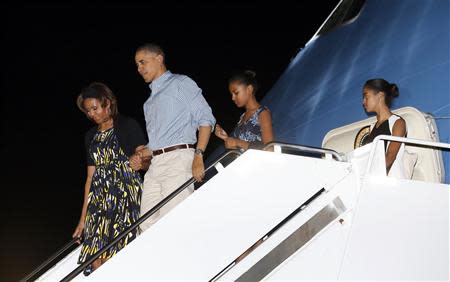
In Hawaii, Obama tries for uninterrupted vacation

Balochistan: Gwadar,The Port City Without a Standard College
The Baloch HalBy Mariyam Suleman Baloch The port city of Gwadar, widely known as a significant city of the country, does not only promise massive revenue to the federal government but also provides hope to overcome many of our economic challenges. The city is capable of transforming into a hub for future industries, development projects along with numerous other mega schemes. Considering these projects, people might assume Gwadar as a developed city. On the contrary, the city with tremendous economic potential still lives under scores of social, economic and civic challenges. Today, one of the major concerns for the residents of the area is the poor state of education. Being the most backward district among the two other (Turbat and Panjgoor) in the Meran Division, Gwadar has the lowest number of educated individuals. Gwadar reasonably deserves attention in relation to the field of education which had been ignored in the past. After the immense efforts of the former Fisheries Minister Meer Husain Ashraf and former district Commissioner Jam Mohammed for the first time an inter college was established in Gwadar on the 1st of September 1991. Officially, established for the boys in the B&R [Building and Road Department] near today’s girls’ high school, the college finally was shifted to its current location on 1st September 1996. Subsequently, after several years with special permission from the educational board of Balochistan, the college initiated classes for girls in the evening shift. However, the lecturers were never paid accordingly for the evening shift though. Remaining as the only college of the city for more than twenty-two years, the college had enlightened numerous individuals’ lives who had studied under it. This year 1,596 students are enrolled but unfortunately very few students appear in the college frequently. The reasons are countless. An institution that had been unnoticed and ignored by the government from the commencement might never be in a standard position to educate others in a highly effective method. Complaining about or blaming the dictator or so-called former democratic governments can be our imprudence but today our Balochistan’s Chief Minister Dr. Abdul Mlik who persistently sheds light on his two main priorities “Health and Education”, seems like has elapsed neighbor of his home district’s educational circumstances. With in the six months of the new government, colleges in Turbat, Punjgoor and Tump each had been funded with specific amounts but again the Degree College Gwadar had been left out or ignored. It has been ten years that the college building had its last repairs. Today cracked walls of the classrooms, horrify the students each day. The construction work of the new college building has also been shut down because of the lack of attention by the government, which has caused the half constructed building in conjunction with its extensive compound to be confined by some group. Emphatically, an entire Degree college is being run with only eight lecturers and a few professors, where as neighboring districts’ colleges have more than forty lecturers. Out of countless vacancies only a few are filled. The college lacks lecturers and professors of English, Physics, Zoology, Botany, History, Civics, Geography, Political Science, Social work, Islamiat, Statistics and Pakistan Studies. Beginning from 1998, these vacancies amplified every year but remain vacant till today. Along with the shortage of the teaching staff, the college lacks ministerial staff as well which includes clerks, superintendents and so on. Being the home to one of the largest library of the district, students are still deprived of books since the college’s library is short of librarian from more than four years. With only four rooms in the bachelor’s loge and having the only servant’s quarter in the college boundary, and comprised with problems of basic needs like water and so on, the staff members have to suffer. Two female lecturers belonging to Turbat who have recently been appointed to Gwadar College aren’t attending their duties from three to four months. One of them, having back up of National party is trying her level best to get the salary which has been restricted by the principal of the college. The college was upgraded to Degree level in April 2006 and today perhaps the critical issue that the college is struggling with is neither being affiliated with the Balochistan University Quetta nor with any other university. The college depends on Atta Shad Degree College, Turbat. The principal of Turbat College attests examination forms and university registration forms for Gwadar Degree College. This year the students had to suffer due to not getting their examination slips on time, which created serious issues for the students during exams. According to the principal of college, a letter which included a detailed report about the issues was sent to the secretary of the Education Colleges Section Balochistan, Quetta last month; however they hadn’t got any response yet. Ultimately, education is the right of every citizen in the country nevertheless inauspiciously Balochistan’s most regions along with other privileges lack this fundamental right. The district which is the home to the country’s second largest port is short of a single standardized college. The chief minister’s party had got mandates in Gwadar during the municipality elections as well, and with mandates the chief minister had got responsibilities too. It is to be seen how much attention the education will get as the priority of the chief minister.
Gunmen Kill Pakistani Polio Worker
http://www.voanews.com/Gunmen in Pakistan have killed a health worker who was administering the polio vaccine in a restive tribal region near the Afghan border. Officials say the attack took place Saturday in Jamrud in the Khyber tribal district. Local authorities say the assailants left a note with the body warning of similar consequences for anyone who continued the vaccination campaign. No group has claimed responsibility for the attack. Militants frequently attack polio workers in Pakistan, accusing them of being Western spies or part of a plot to sterilize Muslims. The disease is highly infectious and can cause irreversible paralysis. The Global Eradication Initiative says polio remains endemic in three countries - Afghanistan, Nigeria and Pakistan. The Initiative says until poliovirus transmission is interrupted in these countries, all countries remain at risk of importation of polio.
Pakistan: The War Within
By Mohammad Shehzad

 As Moharram approaches, people across the country are on tenterhooks and praying that Ashura will pass by peacefully, without any untoward incident.
Yet, year after year, Ashura is marked by violence. And so it was this year too – despite the tall claims by law enforcement personnel, of having foolproof security measures in place.
The venue was Rawalpindi’s Raja Bazar, where anti-Shia inflammatory speeches from a mosque when the Ashura procession was passing by, led to major violence in which 12 people were killed and nearly 100 shops set on fire. The violence spread to other parts of the country, threatening to develop into a full-scale sectarian war. But saner elements stepped into the fray, and doused the fire.
Has the country’s security apparatus not learnt anything from past incidents?
Every year, come Moharram and the law enforcement agencies, in their wisdom, impose a ban on pillion-riding, block cellular phone services, ban the entry of fiery clerics in certain cities or impose curfew. Be it the civilian governments of the Pakistan People’s Party (PPP) or the Pakistan Muslim League – Nawaz (PML-N), or be it the army, the national approach to fighting terrorism and sectarianism does not move beyond these futile, stop-gap measures.
In theory, we are a nuclear power and, for a majority of our population, the lone citadel of Islam and the leaders of the Islamic world. But the ground reality is that we are a state at war with itself, a state sans the state’s writ. The society is being governed by non-state actors – terrorists, religious extremists, clerics and criminals. The state has cowardly ceded its writ to non-state actors, of which the most powerful are the jihadis and sectarian outfits who are exceedingly well-organised down to the street level. The sectarian killings and riots this Ashura are a testimony to this grim truth.
Handling Ashura processions should be a routine task for societies that have an efficient law and order system and do not patronise elements that preach religious/sectarian hatred. But Ashura processions in Pakistan have posed a tough challenge to our law and order agencies since the late ’70s, when the army dictator, General Zia-ul-Haq started promoting religious/sectarian hatred as part of his state policies, in order to justify and prolong his illegitimate rule. Jihadis and sectarian vandals were given a license to kill, because they formed Zia’s main constituency. Zia nurtured them for 11 years, with financial support from Saudi Arabia and other Arab nations. All the jihadi and sectarian outfits that we see flouting the state’s writ so blatantly in every nook and corner of the country today, owe their existence and proliferation to the general.
Ironically, the secular PPP that came to power thrice after Zia’s death, could do nothing to contain their influence. In fact, by not confronting them head-on, it allowed them to flourish. As far the PML-N is concerned, it was an extension of Zia’s coterie. Hence, it was barely surprising that the Nawaz government, during its two stints, further strengthened them, possibly in the vain hope that they would support him in his desire to become the country’s ‘Amirul Momineen’ through the passage of the Shariat Bill.
It was our last army ruler, General Pervez Musharraf, who, in January 2002, banned five militant outfits: the Sipah-e-Sahaba, Lashkar-e-Taiba, Jaish-e-Mohammad, Harkat-ul-Ansar and Tehrik-e-Jafaria. But this ban was imposed not in the wake of the realisation that the growing militancy, sectarianism and religious extremism were eroding state power. Rather, his decision was a consequence of international pressure applied in the wake of an attack on the Indian parliament on December 13, 2001.
The ban was a joke. The same outlawed outfits re-emerged under new names, but with the same mission of promoting religious intolerance, hatred and militancy. In effect, the same wine was bottled in the same bottle; only the label was changed. Lashkar-e-Taiba became Jamatud Dawa; Sipah-e-Sahaba is now the Ahle Sunnat Wal Jamaat (ASWJ); Jaish-e-Mohammad is Khaddamul Islam; Tehrik-e-Jafaria is Islami Tehrik Pakistan and the Harkat ul-Ansar is now Ansar-ul-Ummah. These banned outfits obtained new declarations for their venomous publications. Additonally, they purchased new domains for the propagation of their activities on the Internet.
During the PPP rule, the jihadis/sectarian outfits started making use of the social media to extend their dangerous mission, not only in Pakistan, but across the world. However, instead of banning the provocative pages, the PPP government blocked all those Facebook pages and Twitter accounts that raised concerns about the rising militancy and sectarianism in the country. The electronic media too played a very negative role; it glorified the jihadi/sectarian militants. After the killing of 12 people in Rawalpindi in the recent sectarian violence on Ashura, Mohammad Ahmad Ludhianvi (the chief of ASWJ) was given excessive time by different TV channels to air his views. His tone against the Shias was threatening and, as a consequence, the sectarian violence spiralled out of control and reached Kohat, Hangu and Multan. This resulted in the killing of a renowned liberal educationist Shabbir Shah, a professor at Gujrat University, and several others.
Ludhianvi made a fiery speech in the presence of thousands of people in Rawalpindi on November 22, to protest against the Pindi killings. Anti-Shia slogans were chanted during this speech, but no action was taken against him. In fact, chanting the slogan ‘kafir kafir, Shia kafir (Shias are infidels)’ and chalking the same slogan on walls has become kosher in Pakistan, despite the fact that there is a law against spreading sectarian hatred. Similarly, there is a law to regulate the use of loudspeakers, which was promulgated in 1965. But it has never been implemented, just like the law against provocative literature. Even Prime Minister Nawaz Sharif was unaware about the existence of such laws. In fact, after the Pindi killing, he announced that the misuse of loudspeakers would not be allowed. The crux of the matter is when police and law enforcement agencies are afraid of religious bigots, how can the law be implemented? When militants break out of jails in Pakistan and prison guards run away and seek shelter in sewerage lines, how can terrorism and militancy be fought forcefull? Moreover, when law ministers are hobnobbing with sectarian outfits like the Lashkar-e-Jhangvi, how can one arrest the menace of sectarianism? Today, we have reached a stage where our most powerful institutions have become helpless before the terrorists and religious extremists. The death of Tehrik-i-Taliban Pakistan’s chief Hakeemullah Mehsud revealed that his house was just a kilometre away from the army headquarters in North Waziristan. The son of Jalaluddin Haqqani – Naseeruddin Haqqani – was assassinated in Islamabad and his dead body reached North Waziristan overnight. You and I, mere civilians, cannot even travel to North Waziristan. If the Nawaz Sharif government is serious about tackling terrorism and sectarianism, then as a first step, the banned outfits’ leaders, office-bearers and members should be stopped from operating another organisation under a different name, and their offices should be sealed so that they cannot be used for any acts of terrorism, militancy or sectarianism.
Pakistan: Vitriol on the streets
Curfew in N Waziristan: Hundreds stranded in Bannu for four days
The Express TribuneHundreds of tribesmen including women and children are stranded for the last four days in Miranshah Bus Stand in Bannu and different parts of North Waziristan Agency due to ongoing curfew. The agency’s political administration had imposed the curfew after an IED blast, which was followed by a suicide attack in which unknown militants had rammed an explosives-laden vehicle into check-post at Khajori and killed five security officials. Sobat Wazir, a tribesman from Miranshah, the agency headquarters, said he along with his family were stuck for the past four days in a hotel at a bus stand due to curfew and now he did not have any more money to pay for the hotel rent. “The room rent of hotels has also gone up due to the crowded lines of people” he said. Shahab Gul – who had a vehicle loaded with vegetables – said he was also stuck at a bus stand and could not move forward to the agency due to curfew. Gul said he had sustained a loss of Rs30,000 as the vegetables he had bought in Bannu had turned stale. Meanwhile the political administration on Friday relaxed the curfew from 11:00am till 1:00pm to allow the tribesmen to shift to their hometowns the injured and bodies of the people who had died in clashes between militants and security forces in Mirali and its outskirts.
Pakistan: No reimbursements if US supplies disrupted
A proposed new law that has the White House’s approval seeks to fiscally squeeze Pakistan if interruptions to the US/Nato ground supply route through Pakistan continue.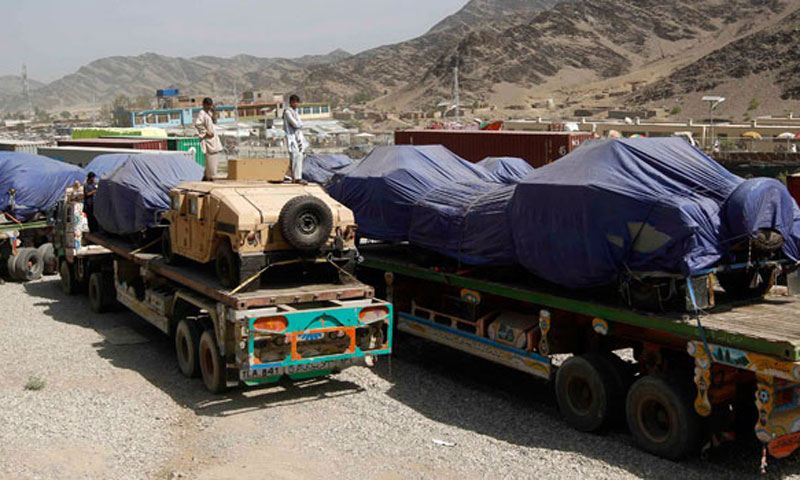
Pakistan's Shia Genocide: Beheaded Body Of Martyr DSP Altaf Hussain Durrani Shocks Mourners
The beheaded body parts of Shia Deputy Superintendent of Police (DSP).Altaf Hussain Durani has shocked Shia mourners after he was

 kidnapped 3 days ago and embraced martyrdom, The Shia Post reported.
The villagers were shocked as beheaded body parts of 50 years old martyr DSP Altaf Hussain Durrani returned in his native village Dera Ismail Khan.
Altaf Hussain Durani embracedmartyrdom. He was kidnapped from Mardan 3 days ago.
Pro-Taliban terrorists have killed thousands of Shia Muslims across the country but governmnet, law enforcement agencies and judiciary have failed to protect its citizens.
Saudi Regime Main Funder, Supporter To All World Terrorism Hotbeds
shiapost.comSyria’s Permanent Representative to UN, Dr. Bashar al-Jaafari said that the reality of events in Syria is clear-cut, pointing out to the extent of the outrageous crimes committed against the Syrian people by the armed terrorist groups, mostly linked to al-Qaeda and brought by the Saudi regime, which is “the main funder and supporter to terrorism hotbeds around the world.” Al-Jaafari ‘s remarks came in the framework of Syria’s statement prior to the UN General-Assembly’s adopting a draft resolution presented by Saudi Arabia against Syria under the title of ” human rights condition in Syria”. He said that the international legal framework which UN member states are working within is based on the principle of non-interference in any state’s internal affairs under any pretext, which was documented in several international resolution charters, on top of which the UN Charter. “Proposing such sort of politicized resolutions, which is addressing a state in particular, violates the provisions of the Charter in general and hinders the bases of a peaceful political solution that is built on an inter-Syrian comprehensive national dialogue,” al-Jaafari added. He clarified that such resolutions would encourage continuing armed violence in service of certain countries that seek feverishly to foil the convening of Geneva 2 Conference. “The Saudi regime with the help of other states and governments brought terrorists to Syria from 83 countries, most of which are Arab, Islamic and Western states participating in proposing this politicized and hostile resolution,” al-Jaafari said. He said that the exposure of the reality of events in Syria has made many countries reconsider their stances and policies with the aim of correcting the grave mistakes committed against Syria and cleaning their image lest they would be questioned by their peoples and history on their distorted policies throughout the crisis in Syria. “What is ridiculous is that the Saudi regime, which represents the pinnacle of human rights violation against its people, the Arabs and Moslems and the main exporter of the fundamentalist Takfiri terrorism to all the world starting from Afghanistan in the 80′s of last century to September 11th in New York, London, Paris, Madrid and other countries in Arab and African countries, proposes a draft resolution calling for maintaining the Syrian people’s rights.” “This paradox coincides with the Saudi regime’s persisting on interfering in Syria’s affairs with no accountability for igniting the crisis and hindering a peaceful and political solution by the Syrians,” he added. Al-Jaafari said that the Saudi regime’s stance will lead to more breading of terrorism in the world and the eruption of terrorism inside Saudi Arabia itself, as well as the continuation of Syria’s human rights violations by the Takfiri armed terrorist groups it backs. He continued to say that the armed terrorist groups are desecrating Adra, a city home to more than 70,000 employees working in 600 factories and plants, where ugliest crimes are committed against them such as slaughtering with white arms, burning in furnaces and perpetrating field executions under directives of their funders and the arrangements of sectarian sheikhs. “Could anyone explain why the Saudi-Qatari terrorist hysteria is silenced on…and for what is this unjustifiable silence of the so-called international community on the fostering of terrorism by regimes of Saudi Arabia, Qatar and Turkey,” al-Jaafari wondered. “You will hear misleading talk lamenting the death of 100,000 victims in Syria, but you will not be briefed by representatives of the regimes of Saudi Arabia, Qatar or Turkey on the reason why these victims have been killed or by whom, neither will they explain how many of victims were killed with the white arms or by suicide bombings,” he added. ” Syria’s delegation urges member states to reconsider their voting and say no to the draft resolution in order not to get dragged behind the illusions of the countries adopting it in an attempt to divert attention from their inhuman, unethical and illegal exercises.” Al-Jaafari concluded.
Saudi Arabia is our top enemy
AFPSyria now views Saudi Arabia as its number one enemy and accuses it of trying to destroy the country by arming jihadists and other rebels fighting to oust President Bashar al-Assad. The oil-rich Gulf monarchies have sided with the opposition from the start of Syria’s conflict in March 2011, with Riyadh leading calls for the fall of Assad. Syrian Deputy Foreign Minister Faisal Muqdad told AFP this week that Saudi Arabia was providing unfettered support for “terrorist groups” in Syria, while other nations had reviewed their positions.“I think that all those who supported these terrorist groups have the feeling now that they have made big mistakes,” Muqdad said in an interview on Thursday, referring to the rebels seeking to topple Assad. “The only party who is declaring the full support to the terrorist groups, to Al-Qaeda, is Saudi Arabia,” he said. Muqdad urged the world to press Saudi Arabia to halt its support for the rebels, to prevent what he said was “another 11 September incident”. “I think that if the world wants to avoid another 11 September incident, they must start telling Saudi Arabia ‘enough is enough,’” he said, referring to Al-Qaeda’s 2001 attacks on the US. Earlier this month, Assad’s government urged the United Nations to take a stand against Saudi support for Islamist groups whose influence has grown on the battlefield. “We call on the UN Security Council to take the necessary measures to put an end to the unprecedented actions of the Saudi regime, which is supporting takfiri (Sunni extremist) terrorism tied to Al-Qaeda,” the foreign ministry said in a message to UN chief Ban Ki-moon.It was the first time the Syrian government has appealed to the international body to take action against Riyadh. “Saudi Arabia is not content to merely send weapons and to finance but also mobilises extremist terrorists and sends them to kill the Syrian people,” the Syrian message said.
Friday, December 20, 2013
December 28,2013: Saudi Women Plan New Day of Defiance Against Driving Ban
New York Protest Demands Justice for Indian Housekeeper
 Domestic workers protested outside the Indian consulate in New York on Friday, calling for justice for a housekeeper allegedly mistreated by a Indian diplomat and demanding an end to slavery.
More than 30 workers and their allies took part in the spirited but peaceful protest on a sidewalk outside the mansion house used by the Indian government in New York.
"Hey, hey! Ho, ho! Slavery has to go!" chanted the group of mostly women wrapped up against the cold in hats and puffer jackets on behalf of the maid identified as Sangeeta Richard.
"Free, free domestic workers! End, end slavery!"
They called on the Indian government to recognize that the housekeeper had been "verbally abused" and called on all countries to create minimum legal standards of work for maids.
They held up homemade placards carrying slogans such as "does immunity protect human rights violations?" "justice now" and "hold diplomats accountable, justice for domestic workers."
"There are diplomats trafficking domestic workers all over this city," shouted one of the organizers. "It's been happening for years with impunity."
"We demand that the Indian government recognize that her rights were violated. We demand respect and protection for the family of this worker in India," said another.
India on Friday angrily brushed aside fresh efforts by the United States to defuse the row over the December 12 arrest of Devyani Khobragade, a deputy consul general in New York.
She was taken into custody and released on bail for allegedly defrauding a visa application, lying to U.S. officials and underpaying her housekeeper.
Revelations that she was stripped by U.S. Marshals and subjected to a body search have caused outrage in India, whose government wants Washington to drop the case and offer an apology.
The protesters condemned that Khobragade was strip-searched, but said it was a disgrace that, in one of the richest cities in the world, a housekeeper was paid as little as $3.31 an hour.
They called for justice for the maid, including a fair trial and compensation, and an end to labor trafficking.
India is trying secure full diplomatic immunity for Khobragade by shifting her to its U.N. mission in New York, although such a move needs State Department approval.
One of the protesters, Meches Rosales, told Agence France Presse that she estimated around 70 percent of domestic workers in New York City suffer from some kind of problems related to their employers.
"I would never survive on $3.31 an hour. Enough is enough. We need to end exploitation," she said.
Turkey: Questions that will hound Erdoğan
Life has all of a sudden become difficult for Prime Minister Erdoğan at the very moment he considered his political future secure. The pro-government media is rallying now to discredit the corruption investigation which involves a large number of detentions, and which includes the sons of three government ministers, one mayor from Erdoğan’s Justice and Development Party (AKP), and prominent businessmen and bankers. Everyone is wondering now what is behind this operation, and the first “suspect” to come to many minds is the Islamist Gülen movement. Tensions between this group and the AKP have been rising over the years, and boiled over recently due to the prep-school issue - a matter that has received wide media coverage. The Gülen movement denies this but the vitriol flying between daily Zaman, which is close to Gülen, and Yeni Şafak, which is staunchly pro-AKP, is enough to give one a sense of the bitter struggle involved. The former is emphasizing the rule of law now while the latter is talking about a conspiracy against Erdoğan, including the not surprising claim that Israel is somehow behind this investigation. No doubt the coming days will rake up all sorts of claims, and the rumor that the investigation covers a government minister who allegedly took a 1.5 million dollar bribe shows how ugly some of these will be. All of this is disastrous for Erdoğan who has tried to build his political reputation on combating corruption. All the lofty remarks he made on this score, especially against governments before the AKP, are now in the air. His own Minister for Interior Muammer Güler, whose son is among those detained, remarked not so long ago, in connection with Gezi Park protests, that the police would not arrest anyone without reason. The pro-Erdoğan media constantly seconded this opinion at the time, praising the police that were brutalizing demonstrators. The same police force is being vilified now by this media. Many also wonder whether Güler still feels the same about police arrests now that his son has been taken in. It is not hard to imagine how bad it looks for Erdoğan to see not just the son of his interior minister, but also the sons of his economy minister, and housing and environment minister under arrest. Nothing has been proven yet and legally everyone is presumed innocent until proven guilty. But this is Turkey where judgments, whether justified or not, come instantly. Because of this, loaded questions are flying in the air now. Many are asking if these three ministers were aware their sons were using “daddies’ influence” to line their pockets. They are also wondering if these three ministers will resign. Then there is the question of just how much Erdoğan knew about this investigation, which is said to have been going on for more than a year. If he knew about it why did he not act? If he did not know, and the charges leveled by the prosecutors are proven true, then what does this say about his competence as a party leader who is supposedly keen to combat corruption? Many are also wondering what Erdoğan and his ministers will say or do about the prosecutors in charge of this case. They cannot have them fired because they are led by the same man who initiated the Ergenekon investigation which pleased the AKP so much at the time. And finally, what political damage will all this have done to the AKP in the lead-up to crucial local elections? This question is particularly important because some of the major allegations in the current investigation involve shady dealings in the building sector, which technically cannot put one brick on another without municipal and government approval. Call it a hornet’s nest that he has walked into or a political banana peel he has stepped on, what is clear is that Erdoğan is not a very happy man today, especially when it is clear there are scores of questions that will hound him for days, weeks and months, if not years.SEMİH İDİZ

NGOs censure Bahrain for torturing journalists
 Ten international human rights groups have sent a letter to the United Nations, denouncing the arrest and torture of Bahraini journalists by the Al Khalifa regime.
The letter, which had been signed by the Media Legal Defense Initiative and the International Federation for Human Rights, among other rights groups, was sent to UN Special Rapporteur on the Promotion and Protection of the Right to Freedom of Opinion and Expression Frank La Rue, and UN Special Rapporteur on Torture Juan Méndez on Friday.
The rights groups called for a probe into the arrest, detention and capture of three Bahraini journalists Mohamed Hassan, Hussain Hubail and Qassim Zain al-Deen.
The three have been in the regime’s custody since August and face trial on charges related to their coverage of the anti-regime demonstrations across the Persian Gulf kingdom.
Since mid-February 2011, thousands of pro-democracy protesters have held numerous demonstrations in the streets of Bahrain, calling for the Al Khalifa royal family to relinquish power.
On March 14, 2011, troops from Saudi Arabia and the United Arab Emirates invaded the country to assist the Bahraini government in its crackdown on peaceful protesters.
According to local sources, scores of people have been killed and hundreds arrested.
Physicians for Human Rights says doctors and nurses have been detained, tortured, or disappeared because they have "evidence of atrocities committed by the authorities, security forces, and riot police" in the crackdown on anti-government protesters.
Obama says 'we screwed it up' on health law debut

U.N. Rights Office Protests Treatment of Saudi Reform Activist
The United Nations' human rights office raised concerns Friday over the treatment of a Saudi activist punished for advocating a constitutional monarchy in the conservative oil-rich kingdom.
"We are deeply concerned about the intimidation and sometimes prosecution of individuals in Saudi Arabia for exercising their right to freedom of expression," said Ravina Shamdasani, spokeswoman for the U.N. High Commissioner for Human Rights.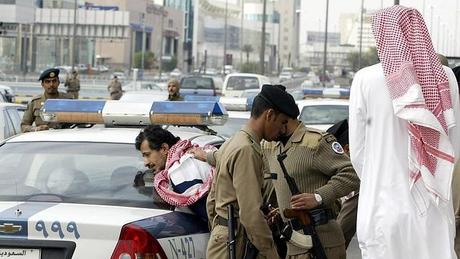
Subscribe to:
Posts (Atom)