
The Baloch HalBy Mariyam Suleman Baloch The port city of Gwadar, widely known as a significant city of the country, does not only promise massive revenue to the federal government but also provides hope to overcome many of our economic challenges. The city is capable of transforming into a hub for future industries, development projects along with numerous other mega schemes. Considering these projects, people might assume Gwadar as a developed city. On the contrary, the city with tremendous economic potential still lives under scores of social, economic and civic challenges. Today, one of the major concerns for the residents of the area is the poor state of education. Being the most backward district among the two other (Turbat and Panjgoor) in the Meran Division, Gwadar has the lowest number of educated individuals. Gwadar reasonably deserves attention in relation to the field of education which had been ignored in the past. After the immense efforts of the former Fisheries Minister Meer Husain Ashraf and former district Commissioner Jam Mohammed for the first time an inter college was established in Gwadar on the 1st of September 1991. Officially, established for the boys in the B&R [Building and Road Department] near today’s girls’ high school, the college finally was shifted to its current location on 1st September 1996. Subsequently, after several years with special permission from the educational board of Balochistan, the college initiated classes for girls in the evening shift. However, the lecturers were never paid accordingly for the evening shift though. Remaining as the only college of the city for more than twenty-two years, the college had enlightened numerous individuals’ lives who had studied under it. This year 1,596 students are enrolled but unfortunately very few students appear in the college frequently. The reasons are countless. An institution that had been unnoticed and ignored by the government from the commencement might never be in a standard position to educate others in a highly effective method. Complaining about or blaming the dictator or so-called former democratic governments can be our imprudence but today our Balochistan’s Chief Minister Dr. Abdul Mlik who persistently sheds light on his two main priorities “Health and Education”, seems like has elapsed neighbor of his home district’s educational circumstances. With in the six months of the new government, colleges in Turbat, Punjgoor and Tump each had been funded with specific amounts but again the Degree College Gwadar had been left out or ignored. It has been ten years that the college building had its last repairs. Today cracked walls of the classrooms, horrify the students each day. The construction work of the new college building has also been shut down because of the lack of attention by the government, which has caused the half constructed building in conjunction with its extensive compound to be confined by some group. Emphatically, an entire Degree college is being run with only eight lecturers and a few professors, where as neighboring districts’ colleges have more than forty lecturers. Out of countless vacancies only a few are filled. The college lacks lecturers and professors of English, Physics, Zoology, Botany, History, Civics, Geography, Political Science, Social work, Islamiat, Statistics and Pakistan Studies. Beginning from 1998, these vacancies amplified every year but remain vacant till today. Along with the shortage of the teaching staff, the college lacks ministerial staff as well which includes clerks, superintendents and so on. Being the home to one of the largest library of the district, students are still deprived of books since the college’s library is short of librarian from more than four years. With only four rooms in the bachelor’s loge and having the only servant’s quarter in the college boundary, and comprised with problems of basic needs like water and so on, the staff members have to suffer. Two female lecturers belonging to Turbat who have recently been appointed to Gwadar College aren’t attending their duties from three to four months. One of them, having back up of National party is trying her level best to get the salary which has been restricted by the principal of the college. The college was upgraded to Degree level in April 2006 and today perhaps the critical issue that the college is struggling with is neither being affiliated with the Balochistan University Quetta nor with any other university. The college depends on Atta Shad Degree College, Turbat. The principal of Turbat College attests examination forms and university registration forms for Gwadar Degree College. This year the students had to suffer due to not getting their examination slips on time, which created serious issues for the students during exams. According to the principal of college, a letter which included a detailed report about the issues was sent to the secretary of the Education Colleges Section Balochistan, Quetta last month; however they hadn’t got any response yet. Ultimately, education is the right of every citizen in the country nevertheless inauspiciously Balochistan’s most regions along with other privileges lack this fundamental right. The district which is the home to the country’s second largest port is short of a single standardized college. The chief minister’s party had got mandates in Gwadar during the municipality elections as well, and with mandates the chief minister had got responsibilities too. It is to be seen how much attention the education will get as the priority of the chief minister.
http://www.voanews.com/Gunmen in Pakistan have killed a health worker who was administering the polio vaccine in a restive tribal region near the Afghan border. Officials say the attack took place Saturday in Jamrud in the Khyber tribal district. Local authorities say the assailants left a note with the body warning of similar consequences for anyone who continued the vaccination campaign. No group has claimed responsibility for the attack. Militants frequently attack polio workers in Pakistan, accusing them of being Western spies or part of a plot to sterilize Muslims. The disease is highly infectious and can cause irreversible paralysis. The Global Eradication Initiative says polio remains endemic in three countries - Afghanistan, Nigeria and Pakistan. The Initiative says until poliovirus transmission is interrupted in these countries, all countries remain at risk of importation of polio.
By Mohammad Shehzad
 As Moharram approaches, people across the country are on tenterhooks and praying that Ashura will pass by peacefully, without any untoward incident.
Yet, year after year, Ashura is marked by violence. And so it was this year too – despite the tall claims by law enforcement personnel, of having foolproof security measures in place.
The venue was Rawalpindi’s Raja Bazar, where anti-Shia inflammatory speeches from a mosque when the Ashura procession was passing by, led to major violence in which 12 people were killed and nearly 100 shops set on fire. The violence spread to other parts of the country, threatening to develop into a full-scale sectarian war. But saner elements stepped into the fray, and doused the fire.
Has the country’s security apparatus not learnt anything from past incidents?
Every year, come Moharram and the law enforcement agencies, in their wisdom, impose a ban on pillion-riding, block cellular phone services, ban the entry of fiery clerics in certain cities or impose curfew. Be it the civilian governments of the Pakistan People’s Party (PPP) or the Pakistan Muslim League – Nawaz (PML-N), or be it the army, the national approach to fighting terrorism and sectarianism does not move beyond these futile, stop-gap measures.
In theory, we are a nuclear power and, for a majority of our population, the lone citadel of Islam and the leaders of the Islamic world. But the ground reality is that we are a state at war with itself, a state sans the state’s writ. The society is being governed by non-state actors – terrorists, religious extremists, clerics and criminals. The state has cowardly ceded its writ to non-state actors, of which the most powerful are the jihadis and sectarian outfits who are exceedingly well-organised down to the street level. The sectarian killings and riots this Ashura are a testimony to this grim truth.
Handling Ashura processions should be a routine task for societies that have an efficient law and order system and do not patronise elements that preach religious/sectarian hatred. But Ashura processions in Pakistan have posed a tough challenge to our law and order agencies since the late ’70s, when the army dictator, General Zia-ul-Haq started promoting religious/sectarian hatred as part of his state policies, in order to justify and prolong his illegitimate rule. Jihadis and sectarian vandals were given a license to kill, because they formed Zia’s main constituency. Zia nurtured them for 11 years, with financial support from Saudi Arabia and other Arab nations. All the jihadi and sectarian outfits that we see flouting the state’s writ so blatantly in every nook and corner of the country today, owe their existence and proliferation to the general.
Ironically, the secular PPP that came to power thrice after Zia’s death, could do nothing to contain their influence. In fact, by not confronting them head-on, it allowed them to flourish. As far the PML-N is concerned, it was an extension of Zia’s coterie. Hence, it was barely surprising that the Nawaz government, during its two stints, further strengthened them, possibly in the vain hope that they would support him in his desire to become the country’s ‘Amirul Momineen’ through the passage of the Shariat Bill.
It was our last army ruler, General Pervez Musharraf, who, in January 2002, banned five militant outfits: the Sipah-e-Sahaba, Lashkar-e-Taiba, Jaish-e-Mohammad, Harkat-ul-Ansar and Tehrik-e-Jafaria. But this ban was imposed not in the wake of the realisation that the growing militancy, sectarianism and religious extremism were eroding state power. Rather, his decision was a consequence of international pressure applied in the wake of an attack on the Indian parliament on December 13, 2001.
The ban was a joke. The same outlawed outfits re-emerged under new names, but with the same mission of promoting religious intolerance, hatred and militancy. In effect, the same wine was bottled in the same bottle; only the label was changed. Lashkar-e-Taiba became Jamatud Dawa; Sipah-e-Sahaba is now the Ahle Sunnat Wal Jamaat (ASWJ); Jaish-e-Mohammad is Khaddamul Islam; Tehrik-e-Jafaria is Islami Tehrik Pakistan and the Harkat ul-Ansar is now Ansar-ul-Ummah. These banned outfits obtained new declarations for their venomous publications. Additonally, they purchased new domains for the propagation of their activities on the Internet.
During the PPP rule, the jihadis/sectarian outfits started making use of the social media to extend their dangerous mission, not only in Pakistan, but across the world. However, instead of banning the provocative pages, the PPP government blocked all those Facebook pages and Twitter accounts that raised concerns about the rising militancy and sectarianism in the country. The electronic media too played a very negative role; it glorified the jihadi/sectarian militants. After the killing of 12 people in Rawalpindi in the recent sectarian violence on Ashura, Mohammad Ahmad Ludhianvi (the chief of ASWJ) was given excessive time by different TV channels to air his views. His tone against the Shias was threatening and, as a consequence, the sectarian violence spiralled out of control and reached Kohat, Hangu and Multan. This resulted in the killing of a renowned liberal educationist Shabbir Shah, a professor at Gujrat University, and several others.
As Moharram approaches, people across the country are on tenterhooks and praying that Ashura will pass by peacefully, without any untoward incident.
Yet, year after year, Ashura is marked by violence. And so it was this year too – despite the tall claims by law enforcement personnel, of having foolproof security measures in place.
The venue was Rawalpindi’s Raja Bazar, where anti-Shia inflammatory speeches from a mosque when the Ashura procession was passing by, led to major violence in which 12 people were killed and nearly 100 shops set on fire. The violence spread to other parts of the country, threatening to develop into a full-scale sectarian war. But saner elements stepped into the fray, and doused the fire.
Has the country’s security apparatus not learnt anything from past incidents?
Every year, come Moharram and the law enforcement agencies, in their wisdom, impose a ban on pillion-riding, block cellular phone services, ban the entry of fiery clerics in certain cities or impose curfew. Be it the civilian governments of the Pakistan People’s Party (PPP) or the Pakistan Muslim League – Nawaz (PML-N), or be it the army, the national approach to fighting terrorism and sectarianism does not move beyond these futile, stop-gap measures.
In theory, we are a nuclear power and, for a majority of our population, the lone citadel of Islam and the leaders of the Islamic world. But the ground reality is that we are a state at war with itself, a state sans the state’s writ. The society is being governed by non-state actors – terrorists, religious extremists, clerics and criminals. The state has cowardly ceded its writ to non-state actors, of which the most powerful are the jihadis and sectarian outfits who are exceedingly well-organised down to the street level. The sectarian killings and riots this Ashura are a testimony to this grim truth.
Handling Ashura processions should be a routine task for societies that have an efficient law and order system and do not patronise elements that preach religious/sectarian hatred. But Ashura processions in Pakistan have posed a tough challenge to our law and order agencies since the late ’70s, when the army dictator, General Zia-ul-Haq started promoting religious/sectarian hatred as part of his state policies, in order to justify and prolong his illegitimate rule. Jihadis and sectarian vandals were given a license to kill, because they formed Zia’s main constituency. Zia nurtured them for 11 years, with financial support from Saudi Arabia and other Arab nations. All the jihadi and sectarian outfits that we see flouting the state’s writ so blatantly in every nook and corner of the country today, owe their existence and proliferation to the general.
Ironically, the secular PPP that came to power thrice after Zia’s death, could do nothing to contain their influence. In fact, by not confronting them head-on, it allowed them to flourish. As far the PML-N is concerned, it was an extension of Zia’s coterie. Hence, it was barely surprising that the Nawaz government, during its two stints, further strengthened them, possibly in the vain hope that they would support him in his desire to become the country’s ‘Amirul Momineen’ through the passage of the Shariat Bill.
It was our last army ruler, General Pervez Musharraf, who, in January 2002, banned five militant outfits: the Sipah-e-Sahaba, Lashkar-e-Taiba, Jaish-e-Mohammad, Harkat-ul-Ansar and Tehrik-e-Jafaria. But this ban was imposed not in the wake of the realisation that the growing militancy, sectarianism and religious extremism were eroding state power. Rather, his decision was a consequence of international pressure applied in the wake of an attack on the Indian parliament on December 13, 2001.
The ban was a joke. The same outlawed outfits re-emerged under new names, but with the same mission of promoting religious intolerance, hatred and militancy. In effect, the same wine was bottled in the same bottle; only the label was changed. Lashkar-e-Taiba became Jamatud Dawa; Sipah-e-Sahaba is now the Ahle Sunnat Wal Jamaat (ASWJ); Jaish-e-Mohammad is Khaddamul Islam; Tehrik-e-Jafaria is Islami Tehrik Pakistan and the Harkat ul-Ansar is now Ansar-ul-Ummah. These banned outfits obtained new declarations for their venomous publications. Additonally, they purchased new domains for the propagation of their activities on the Internet.
During the PPP rule, the jihadis/sectarian outfits started making use of the social media to extend their dangerous mission, not only in Pakistan, but across the world. However, instead of banning the provocative pages, the PPP government blocked all those Facebook pages and Twitter accounts that raised concerns about the rising militancy and sectarianism in the country. The electronic media too played a very negative role; it glorified the jihadi/sectarian militants. After the killing of 12 people in Rawalpindi in the recent sectarian violence on Ashura, Mohammad Ahmad Ludhianvi (the chief of ASWJ) was given excessive time by different TV channels to air his views. His tone against the Shias was threatening and, as a consequence, the sectarian violence spiralled out of control and reached Kohat, Hangu and Multan. This resulted in the killing of a renowned liberal educationist Shabbir Shah, a professor at Gujrat University, and several others.
Ludhianvi made a fiery speech in the presence of thousands of people in Rawalpindi on November 22, to protest against the Pindi killings. Anti-Shia slogans were chanted during this speech, but no action was taken against him. In fact, chanting the slogan ‘kafir kafir, Shia kafir (Shias are infidels)’ and chalking the same slogan on walls has become kosher in Pakistan, despite the fact that there is a law against spreading sectarian hatred. Similarly, there is a law to regulate the use of loudspeakers, which was promulgated in 1965. But it has never been implemented, just like the law against provocative literature. Even Prime Minister Nawaz Sharif was unaware about the existence of such laws. In fact, after the Pindi killing, he announced that the misuse of loudspeakers would not be allowed. The crux of the matter is when police and law enforcement agencies are afraid of religious bigots, how can the law be implemented? When militants break out of jails in Pakistan and prison guards run away and seek shelter in sewerage lines, how can terrorism and militancy be fought forcefull? Moreover, when law ministers are hobnobbing with sectarian outfits like the Lashkar-e-Jhangvi, how can one arrest the menace of sectarianism? Today, we have reached a stage where our most powerful institutions have become helpless before the terrorists and religious extremists. The death of Tehrik-i-Taliban Pakistan’s chief Hakeemullah Mehsud revealed that his house was just a kilometre away from the army headquarters in North Waziristan. The son of Jalaluddin Haqqani – Naseeruddin Haqqani – was assassinated in Islamabad and his dead body reached North Waziristan overnight. You and I, mere civilians, cannot even travel to North Waziristan. If the Nawaz Sharif government is serious about tackling terrorism and sectarianism, then as a first step, the banned outfits’ leaders, office-bearers and members should be stopped from operating another organisation under a different name, and their offices should be sealed so that they cannot be used for any acts of terrorism, militancy or sectarianism.
The Express TribuneHundreds of tribesmen including women and children are stranded for the last four days in Miranshah Bus Stand in Bannu and different parts of North Waziristan Agency due to ongoing curfew. The agency’s political administration had imposed the curfew after an IED blast, which was followed by a suicide attack in which unknown militants had rammed an explosives-laden vehicle into check-post at Khajori and killed five security officials. Sobat Wazir, a tribesman from Miranshah, the agency headquarters, said he along with his family were stuck for the past four days in a hotel at a bus stand due to curfew and now he did not have any more money to pay for the hotel rent. “The room rent of hotels has also gone up due to the crowded lines of people” he said. Shahab Gul – who had a vehicle loaded with vegetables – said he was also stuck at a bus stand and could not move forward to the agency due to curfew. Gul said he had sustained a loss of Rs30,000 as the vegetables he had bought in Bannu had turned stale. Meanwhile the political administration on Friday relaxed the curfew from 11:00am till 1:00pm to allow the tribesmen to shift to their hometowns the injured and bodies of the people who had died in clashes between militants and security forces in Mirali and its outskirts.
 A proposed new law that has the White House’s approval seeks to fiscally squeeze Pakistan if interruptions to the US/Nato ground supply route through Pakistan continue.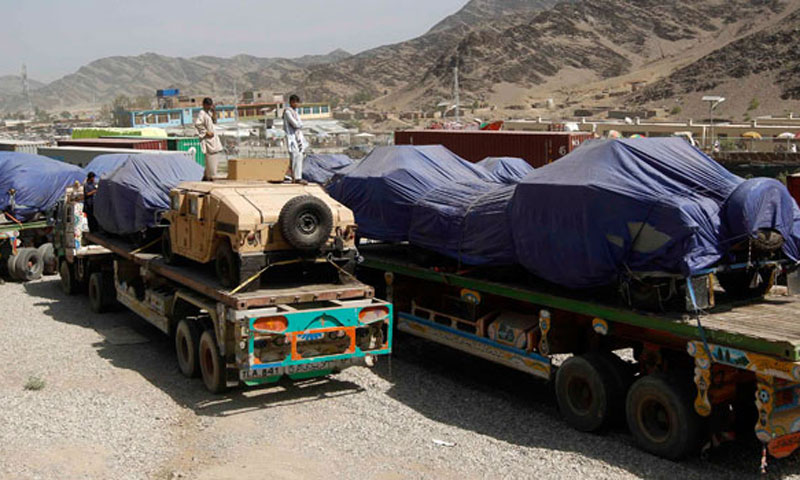
The beheaded body parts of Shia Deputy Superintendent of Police (DSP).Altaf Hussain Durani has shocked Shia mourners after he was
 kidnapped 3 days ago and embraced martyrdom, The Shia Post reported.
The villagers were shocked as beheaded body parts of 50 years old martyr DSP Altaf Hussain Durrani returned in his native village Dera Ismail Khan.
Altaf Hussain Durani embracedmartyrdom. He was kidnapped from Mardan 3 days ago.
Pro-Taliban terrorists have killed thousands of Shia Muslims across the country but governmnet, law enforcement agencies and judiciary have failed to protect its citizens.
kidnapped 3 days ago and embraced martyrdom, The Shia Post reported.
The villagers were shocked as beheaded body parts of 50 years old martyr DSP Altaf Hussain Durrani returned in his native village Dera Ismail Khan.
Altaf Hussain Durani embracedmartyrdom. He was kidnapped from Mardan 3 days ago.
Pro-Taliban terrorists have killed thousands of Shia Muslims across the country but governmnet, law enforcement agencies and judiciary have failed to protect its citizens.
shiapost.comSyria’s Permanent Representative to UN, Dr. Bashar al-Jaafari said that the reality of events in Syria is clear-cut, pointing out to the extent of the outrageous crimes committed against the Syrian people by the armed terrorist groups, mostly linked to al-Qaeda and brought by the Saudi regime, which is “the main funder and supporter to terrorism hotbeds around the world.” Al-Jaafari ‘s remarks came in the framework of Syria’s statement prior to the UN General-Assembly’s adopting a draft resolution presented by Saudi Arabia against Syria under the title of ” human rights condition in Syria”. He said that the international legal framework which UN member states are working within is based on the principle of non-interference in any state’s internal affairs under any pretext, which was documented in several international resolution charters, on top of which the UN Charter. “Proposing such sort of politicized resolutions, which is addressing a state in particular, violates the provisions of the Charter in general and hinders the bases of a peaceful political solution that is built on an inter-Syrian comprehensive national dialogue,” al-Jaafari added. He clarified that such resolutions would encourage continuing armed violence in service of certain countries that seek feverishly to foil the convening of Geneva 2 Conference. “The Saudi regime with the help of other states and governments brought terrorists to Syria from 83 countries, most of which are Arab, Islamic and Western states participating in proposing this politicized and hostile resolution,” al-Jaafari said. He said that the exposure of the reality of events in Syria has made many countries reconsider their stances and policies with the aim of correcting the grave mistakes committed against Syria and cleaning their image lest they would be questioned by their peoples and history on their distorted policies throughout the crisis in Syria. “What is ridiculous is that the Saudi regime, which represents the pinnacle of human rights violation against its people, the Arabs and Moslems and the main exporter of the fundamentalist Takfiri terrorism to all the world starting from Afghanistan in the 80′s of last century to September 11th in New York, London, Paris, Madrid and other countries in Arab and African countries, proposes a draft resolution calling for maintaining the Syrian people’s rights.” “This paradox coincides with the Saudi regime’s persisting on interfering in Syria’s affairs with no accountability for igniting the crisis and hindering a peaceful and political solution by the Syrians,” he added. Al-Jaafari said that the Saudi regime’s stance will lead to more breading of terrorism in the world and the eruption of terrorism inside Saudi Arabia itself, as well as the continuation of Syria’s human rights violations by the Takfiri armed terrorist groups it backs. He continued to say that the armed terrorist groups are desecrating Adra, a city home to more than 70,000 employees working in 600 factories and plants, where ugliest crimes are committed against them such as slaughtering with white arms, burning in furnaces and perpetrating field executions under directives of their funders and the arrangements of sectarian sheikhs. “Could anyone explain why the Saudi-Qatari terrorist hysteria is silenced on…and for what is this unjustifiable silence of the so-called international community on the fostering of terrorism by regimes of Saudi Arabia, Qatar and Turkey,” al-Jaafari wondered. “You will hear misleading talk lamenting the death of 100,000 victims in Syria, but you will not be briefed by representatives of the regimes of Saudi Arabia, Qatar or Turkey on the reason why these victims have been killed or by whom, neither will they explain how many of victims were killed with the white arms or by suicide bombings,” he added. ” Syria’s delegation urges member states to reconsider their voting and say no to the draft resolution in order not to get dragged behind the illusions of the countries adopting it in an attempt to divert attention from their inhuman, unethical and illegal exercises.” Al-Jaafari concluded.
AFPSyria now views Saudi Arabia as its number one enemy and accuses it of trying to destroy the country by arming jihadists and other rebels fighting to oust President Bashar al-Assad. The oil-rich Gulf monarchies have sided with the opposition from the start of Syria’s conflict in March 2011, with Riyadh leading calls for the fall of Assad. Syrian Deputy Foreign Minister Faisal Muqdad told AFP this week that Saudi Arabia was providing unfettered support for “terrorist groups” in Syria, while other nations had reviewed their positions.“I think that all those who supported these terrorist groups have the feeling now that they have made big mistakes,” Muqdad said in an interview on Thursday, referring to the rebels seeking to topple Assad. “The only party who is declaring the full support to the terrorist groups, to Al-Qaeda, is Saudi Arabia,” he said. Muqdad urged the world to press Saudi Arabia to halt its support for the rebels, to prevent what he said was “another 11 September incident”. “I think that if the world wants to avoid another 11 September incident, they must start telling Saudi Arabia ‘enough is enough,’” he said, referring to Al-Qaeda’s 2001 attacks on the US. Earlier this month, Assad’s government urged the United Nations to take a stand against Saudi support for Islamist groups whose influence has grown on the battlefield. “We call on the UN Security Council to take the necessary measures to put an end to the unprecedented actions of the Saudi regime, which is supporting takfiri (Sunni extremist) terrorism tied to Al-Qaeda,” the foreign ministry said in a message to UN chief Ban Ki-moon.It was the first time the Syrian government has appealed to the international body to take action against Riyadh. “Saudi Arabia is not content to merely send weapons and to finance but also mobilises extremist terrorists and sends them to kill the Syrian people,” the Syrian message said.
 Domestic workers protested outside the Indian consulate in New York on Friday, calling for justice for a housekeeper allegedly mistreated by a Indian diplomat and demanding an end to slavery.
More than 30 workers and their allies took part in the spirited but peaceful protest on a sidewalk outside the mansion house used by the Indian government in New York.
"Hey, hey! Ho, ho! Slavery has to go!" chanted the group of mostly women wrapped up against the cold in hats and puffer jackets on behalf of the maid identified as Sangeeta Richard.
"Free, free domestic workers! End, end slavery!"
They called on the Indian government to recognize that the housekeeper had been "verbally abused" and called on all countries to create minimum legal standards of work for maids.
They held up homemade placards carrying slogans such as "does immunity protect human rights violations?" "justice now" and "hold diplomats accountable, justice for domestic workers."
"There are diplomats trafficking domestic workers all over this city," shouted one of the organizers. "It's been happening for years with impunity."
"We demand that the Indian government recognize that her rights were violated. We demand respect and protection for the family of this worker in India," said another.
India on Friday angrily brushed aside fresh efforts by the United States to defuse the row over the December 12 arrest of Devyani Khobragade, a deputy consul general in New York.
She was taken into custody and released on bail for allegedly defrauding a visa application, lying to U.S. officials and underpaying her housekeeper.
Revelations that she was stripped by U.S. Marshals and subjected to a body search have caused outrage in India, whose government wants Washington to drop the case and offer an apology.
The protesters condemned that Khobragade was strip-searched, but said it was a disgrace that, in one of the richest cities in the world, a housekeeper was paid as little as $3.31 an hour.
They called for justice for the maid, including a fair trial and compensation, and an end to labor trafficking.
India is trying secure full diplomatic immunity for Khobragade by shifting her to its U.N. mission in New York, although such a move needs State Department approval.
One of the protesters, Meches Rosales, told Agence France Presse that she estimated around 70 percent of domestic workers in New York City suffer from some kind of problems related to their employers.
"I would never survive on $3.31 an hour. Enough is enough. We need to end exploitation," she said.
Domestic workers protested outside the Indian consulate in New York on Friday, calling for justice for a housekeeper allegedly mistreated by a Indian diplomat and demanding an end to slavery.
More than 30 workers and their allies took part in the spirited but peaceful protest on a sidewalk outside the mansion house used by the Indian government in New York.
"Hey, hey! Ho, ho! Slavery has to go!" chanted the group of mostly women wrapped up against the cold in hats and puffer jackets on behalf of the maid identified as Sangeeta Richard.
"Free, free domestic workers! End, end slavery!"
They called on the Indian government to recognize that the housekeeper had been "verbally abused" and called on all countries to create minimum legal standards of work for maids.
They held up homemade placards carrying slogans such as "does immunity protect human rights violations?" "justice now" and "hold diplomats accountable, justice for domestic workers."
"There are diplomats trafficking domestic workers all over this city," shouted one of the organizers. "It's been happening for years with impunity."
"We demand that the Indian government recognize that her rights were violated. We demand respect and protection for the family of this worker in India," said another.
India on Friday angrily brushed aside fresh efforts by the United States to defuse the row over the December 12 arrest of Devyani Khobragade, a deputy consul general in New York.
She was taken into custody and released on bail for allegedly defrauding a visa application, lying to U.S. officials and underpaying her housekeeper.
Revelations that she was stripped by U.S. Marshals and subjected to a body search have caused outrage in India, whose government wants Washington to drop the case and offer an apology.
The protesters condemned that Khobragade was strip-searched, but said it was a disgrace that, in one of the richest cities in the world, a housekeeper was paid as little as $3.31 an hour.
They called for justice for the maid, including a fair trial and compensation, and an end to labor trafficking.
India is trying secure full diplomatic immunity for Khobragade by shifting her to its U.N. mission in New York, although such a move needs State Department approval.
One of the protesters, Meches Rosales, told Agence France Presse that she estimated around 70 percent of domestic workers in New York City suffer from some kind of problems related to their employers.
"I would never survive on $3.31 an hour. Enough is enough. We need to end exploitation," she said.
Life has all of a sudden become difficult for Prime Minister Erdoğan at the very moment he considered his political future secure. The pro-government media is rallying now to discredit the corruption investigation which involves a large number of detentions, and which includes the sons of three government ministers, one mayor from Erdoğan’s Justice and Development Party (AKP), and prominent businessmen and bankers. Everyone is wondering now what is behind this operation, and the first “suspect” to come to many minds is the Islamist Gülen movement. Tensions between this group and the AKP have been rising over the years, and boiled over recently due to the prep-school issue - a matter that has received wide media coverage. The Gülen movement denies this but the vitriol flying between daily Zaman, which is close to Gülen, and Yeni Şafak, which is staunchly pro-AKP, is enough to give one a sense of the bitter struggle involved. The former is emphasizing the rule of law now while the latter is talking about a conspiracy against Erdoğan, including the not surprising claim that Israel is somehow behind this investigation. No doubt the coming days will rake up all sorts of claims, and the rumor that the investigation covers a government minister who allegedly took a 1.5 million dollar bribe shows how ugly some of these will be. All of this is disastrous for Erdoğan who has tried to build his political reputation on combating corruption. All the lofty remarks he made on this score, especially against governments before the AKP, are now in the air. His own Minister for Interior Muammer Güler, whose son is among those detained, remarked not so long ago, in connection with Gezi Park protests, that the police would not arrest anyone without reason. The pro-Erdoğan media constantly seconded this opinion at the time, praising the police that were brutalizing demonstrators. The same police force is being vilified now by this media. Many also wonder whether Güler still feels the same about police arrests now that his son has been taken in. It is not hard to imagine how bad it looks for Erdoğan to see not just the son of his interior minister, but also the sons of his economy minister, and housing and environment minister under arrest. Nothing has been proven yet and legally everyone is presumed innocent until proven guilty. But this is Turkey where judgments, whether justified or not, come instantly. Because of this, loaded questions are flying in the air now. Many are asking if these three ministers were aware their sons were using “daddies’ influence” to line their pockets. They are also wondering if these three ministers will resign. Then there is the question of just how much Erdoğan knew about this investigation, which is said to have been going on for more than a year. If he knew about it why did he not act? If he did not know, and the charges leveled by the prosecutors are proven true, then what does this say about his competence as a party leader who is supposedly keen to combat corruption? Many are also wondering what Erdoğan and his ministers will say or do about the prosecutors in charge of this case. They cannot have them fired because they are led by the same man who initiated the Ergenekon investigation which pleased the AKP so much at the time. And finally, what political damage will all this have done to the AKP in the lead-up to crucial local elections? This question is particularly important because some of the major allegations in the current investigation involve shady dealings in the building sector, which technically cannot put one brick on another without municipal and government approval. Call it a hornet’s nest that he has walked into or a political banana peel he has stepped on, what is clear is that Erdoğan is not a very happy man today, especially when it is clear there are scores of questions that will hound him for days, weeks and months, if not years.SEMİH İDİZ
 Ten international human rights groups have sent a letter to the United Nations, denouncing the arrest and torture of Bahraini journalists by the Al Khalifa regime.
The letter, which had been signed by the Media Legal Defense Initiative and the International Federation for Human Rights, among other rights groups, was sent to UN Special Rapporteur on the Promotion and Protection of the Right to Freedom of Opinion and Expression Frank La Rue, and UN Special Rapporteur on Torture Juan Méndez on Friday.
The rights groups called for a probe into the arrest, detention and capture of three Bahraini journalists Mohamed Hassan, Hussain Hubail and Qassim Zain al-Deen.
The three have been in the regime’s custody since August and face trial on charges related to their coverage of the anti-regime demonstrations across the Persian Gulf kingdom.
Since mid-February 2011, thousands of pro-democracy protesters have held numerous demonstrations in the streets of Bahrain, calling for the Al Khalifa royal family to relinquish power.
On March 14, 2011, troops from Saudi Arabia and the United Arab Emirates invaded the country to assist the Bahraini government in its crackdown on peaceful protesters.
According to local sources, scores of people have been killed and hundreds arrested.
Physicians for Human Rights says doctors and nurses have been detained, tortured, or disappeared because they have "evidence of atrocities committed by the authorities, security forces, and riot police" in the crackdown on anti-government protesters.
Ten international human rights groups have sent a letter to the United Nations, denouncing the arrest and torture of Bahraini journalists by the Al Khalifa regime.
The letter, which had been signed by the Media Legal Defense Initiative and the International Federation for Human Rights, among other rights groups, was sent to UN Special Rapporteur on the Promotion and Protection of the Right to Freedom of Opinion and Expression Frank La Rue, and UN Special Rapporteur on Torture Juan Méndez on Friday.
The rights groups called for a probe into the arrest, detention and capture of three Bahraini journalists Mohamed Hassan, Hussain Hubail and Qassim Zain al-Deen.
The three have been in the regime’s custody since August and face trial on charges related to their coverage of the anti-regime demonstrations across the Persian Gulf kingdom.
Since mid-February 2011, thousands of pro-democracy protesters have held numerous demonstrations in the streets of Bahrain, calling for the Al Khalifa royal family to relinquish power.
On March 14, 2011, troops from Saudi Arabia and the United Arab Emirates invaded the country to assist the Bahraini government in its crackdown on peaceful protesters.
According to local sources, scores of people have been killed and hundreds arrested.
Physicians for Human Rights says doctors and nurses have been detained, tortured, or disappeared because they have "evidence of atrocities committed by the authorities, security forces, and riot police" in the crackdown on anti-government protesters.
 The United Nations' human rights office raised concerns Friday over the treatment of a Saudi activist punished for advocating a constitutional monarchy in the conservative oil-rich kingdom.
"We are deeply concerned about the intimidation and sometimes prosecution of individuals in Saudi Arabia for exercising their right to freedom of expression," said Ravina Shamdasani, spokeswoman for the U.N. High Commissioner for Human Rights.
The United Nations' human rights office raised concerns Friday over the treatment of a Saudi activist punished for advocating a constitutional monarchy in the conservative oil-rich kingdom.
"We are deeply concerned about the intimidation and sometimes prosecution of individuals in Saudi Arabia for exercising their right to freedom of expression," said Ravina Shamdasani, spokeswoman for the U.N. High Commissioner for Human Rights.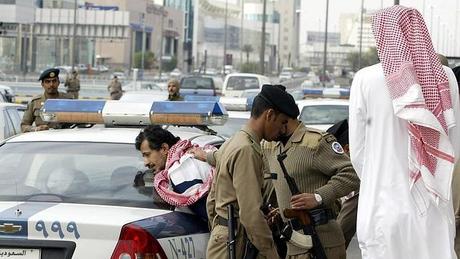
"Both in private conversations and public comments some western politicians have started voicing their thoughts that given that Jihadists and terrorists who are building up their influence in Syria, occupying territories, immediately introducing Sharia law after it, massacring minorities and burning people alive only because they are adherents of a different faith, Bashar Assad being the leader of Syria is a lesser threat for the country than terrorists taking over it," the Russian Foreign Minister stated. Assad didn’t ask Russia to grant his safety in case he steps down Syrian President Bashar Assad hasn’t asked Russia to grant his safety in case he steps down, Russian Foreign Minister Sergei Lavrov said in an interview. "We have received no such requests either from Assad or anyone in Damascus," the Minister said answering a query from a journalist. Lavrov also reminded that Assad "repeatedly said he wasn’t going to leave his country and wished to stay with his people and fulfill his duties". According to the Russian Foreign Minister, Assad might run for presidency next year. "Indeed, he said he didn’t exclude the possibility of running for presidency once again next year. He will make a decision closer to an election and it will depend on whether he would feel the support from the people," Lavrov underlined. Russia ready to discuss EU-Ukraine association agreement at summit in January 2014 - Lavrov Russia is ready to discuss the issue of an association agreement between the EU and Ukraine at a Russia-EU summit in January 2014, Russian Foreign Minister said in an interview. "We’ll be ready for it. We were ready for it before, amid the tensions in Ukraine. Everything will depend on EU readiness to solve the problem taking into consideration the best interests of Russia and member countries of the EU’s Eastern Partnership project," the Minister stated. He also reminded that it was Ukrainian authorities who set out the proposal to hold trilateral consultations between Russia, Ukraine, and the EU. "The proposal to hold trilateral consultations in order to fairly consider trade terms existing between Russia and Ukraine, Ukraine and the EU, Russia and the EU, hiding nothing from each other and without trying to deceive one another, was a very good one. President Putin backed it immediately, but the EU rejected it or European officials rejected it, to be exact. When I was in Brussels a week ago and met all the 28 EU Foreign Ministers, some of them said that the proposal of trilateral consultations was a good one. They said it was a right and constructive way, not the confrontational one. So European bureaucrats seem to have taken upon themselves a bit more than EU member countries would want them to take. And I reiterate that the proposal of consultations is a good one," he concluded. Western nations have indicated to the Syrian opposition that peace talks next month may not lead to the removal of President Bashar al-Assad, adding that he must remain in power to prevent an al-Qaeda takeover of the country. "Our Western friends made it clear in London that Assad cannot be allowed to go now because they think chaos and an Islamist militant takeover would ensue," said one of the senior members of the Syrian National Coalition at a meeting of the anti-Assad Friends of Syria alliance in London last week Western diplomats confirmed the shift, saying that the rebels have been warned that any "transitional administration" would have to include a major presence from Alawites, and that Assad could stay as president with "diminished powers." If the rebels reject that plan "they will lose most of the West," one diplomat said, reflecting the dwindling confidence in the secular rebels’ ability to accomplish anything on their own. The shift in Western priorities, particularly the United States and Britain, from removing Assad towards combating Islamist militants is causing divisions within international powers backing the nearly three-year-old revolt, according to diplomats and senior members of the coalition. Read more: http://voiceofrussia.com/news/2013_12_20/West-admits-Assad-heading-Syria-is-better-than-terrorists-Lavrov-8769/The West has started admitting that Bashar Assad heading Syria is not that dangerous as terrorists could be in case they take control over the country, Russian Foreign Minister Sergei Lavrov said in an interview. Read more: http://voiceofrussia.com/news/2013_12_20/West-admits-Assad-heading-Syria-is-better-than-terrorists-Lavrov-8769/
www.shiitenews.comHamid Mir, an Islamabad-based journalist who is known for his pro-Taliban reporting, has again sided with the Yazidi terrorists by proposing that Shiites should change the route of anniversary of Chehlum of Imam Hussain (AS) in Rawalpindi. He argued that in view of security threat, route of the mourning procession of Chehlum anniversary should be changed. But, he forgets that for the first time in the history, organizers of Masjid-e-Zarrar that sponsored an organized attack on Ashura procession has announced holding a conference on Chehlum. Rule of law requires the government of Pakistan to ensure the security of the route that has been endangered again by the Yazidi nasbi Deobandi fanatics whose malafide intention is proved by proposed conference on Chehlum. That means they have again planned to attack the mourning procession like they did on Ashura. Hamid Mir had contributed an exclusive interview of Osama Bin Laden in which he claimed to posses nukes. That interview was also a disservice to Muslim Ummah because Bin Laden was an agent of the U.S. and that stance made the global public opinion believe that Osama was planning nuclear attacks from inside Af-Pak region. Relatives of Colonel Imam and Mr. Khwaja have said that Hamid Mir got them assassinated through Taliban terrorists. Both were kidnapped and killed in the captivity. So, some quarters dubbed him as double agent. However, Shiites of Pakistan rejected his proposal saying that suicide bombers attacked Shia namazis inside mosques and mourners inside Imam Bargah and murdered Shia doctors in their clinic and other professional in their offices and on roads. They went on to plant bombs in their cars. Should these attacks be deemed justifiable for demands that Shiites should not go to their mosques, imam bargahs and offices? So security threat exists everywhere and no saner person will propose to such persons to live their lives inside their homes and never dare coming out. It is logical and justifiable to demand that the terrorists and fanatics should be eliminated and crushed to remove the security threat. Army personnel, police cops continue to wear uniforms and perform duties despite several attacks on them, would Hamid Mir like to propose to them not to perform their duties and not to wear uniforms to avoid attacks of the terrorists. Should they change their deployment in view of security threat or should they establish their writ by eliminating terrorists.
http://sports.ndtv.com/
Pakistan Cricket Board has raised concerns over the growing anti-Pakistan sentiments in Bangladesh and says it will wait until January to take any decision.The Pakistani cricket authorities might be maintaining a diplomatic stance on their national team's participation in the forthcoming Asia Cup and World T20 events in Bangladesh, to be held early next year, but chances of a pullout are looming large. A source told PTI that there are concerns in the Pakistan Cricket Board (PCB) about the situation in Bangladesh and the growing anti-Pakistan sentiments. "We are monitoring the situation but we are waiting to see what the International Cricket Council decides in January whether to hold the World Twenty20 in Bangladesh in March-April or shift it somewhere else," he said. "If the ICC shifts the World T20 from Bangladesh then the Asia Cup (in Feb-March) will also be called off in Bangladesh and postponed for the next few months until a feasible window and host is found for the tournament," he said.

http://www.thehindu.com/As nationwide protests in Bangladesh continued against Pakistan’s criticism of the hanging of Jamaat leader Quader Mollah, Prime Minister Sheikh Hasina has joined the outcry, denouncing Islamabad for “meddling” in the country’s internal affairs. The Pakistan National Assembly resolution and a senior Pakistani Minister’s assertion that Mollah’s execution was “judicial murder,” has incensed public opinion in the country. The Prime Minister said: “Pakistan has proved that it never accepted the victory of Bangladesh in the Liberation War in 1971, and it still has allies in Bangladesh.” People of all ages and political faiths have held rallies, organised processions and burnt the Pakistani flag in all major city centres including Dhaka, and even in villages.

 Former Pakistani military ruler Pervez Musharraf has spoken publicly for the first time since he was put under house arrest earlier this year.
In interviews given to two television channels on Thursday night, he defended his actions during his nine-year rule.
The former president faces charges of murder and restricting the judiciary.
He has been granted bail in all cases, but has been summoned to a court hearing next week to face another charge of high treason.
Mr Musharraf has remained confined to his residence in Islamabad because of security concerns. He is on a list of individuals not allowed to travel abroad.
The treason accusation relates to his decision in 2007 to impose emergency rule shortly before the Supreme Court was due to decide on the legality of his re-election as president while still being head of the army.
"I will inshallah (God willing) get out of this pressure because I am pretty sure I did not commit any wrong thing. Whatever I did was for the betterment and welfare of Pakistan and its people," he told Pakistan's private ARY television channel.
"I will face all cases... I will not run away,"
Resurgent judiciary
Gen Musharraf seized power in a military coup in 1999, and remained president until 2008 when a democratically-elected government forced him to resign.
He went into exile soon afterwards, apparently to avoid possible imprisonment by a resurgent judiciary whose judges he had sacked during his rule.
He also faced threats from Pakistani militants who blamed him for ordering the storming of Islamabad's Red Mosque in 2007 in which more than 100 people, many of them militants, were killed.
He returned to the country in March to stand in elections, but was barred from contesting by the courts.
Soon afterwards he was put under house arrest on a slew of charges, including the murder of former Prime Minister Benazir Bhutto, the killing of a tribal Baloch politician, placing judges under house arrest and ordering the Red Mosque operation.
In his first television appearance in months, Mr Musharraf defended himself against those charges and the treason allegations.
Correspondents say that so far the cases against him have proceeded slowly, veering from adjournment to adjournment with little clear progress apart from the granting of bail.
In November the government ordered the 70-year-old to appear before a special court on 24 December to face the treason charges. The BBC's M Ilyas Khan in Islamabad says that it will be the first time in Pakistan's history that a former military ruler will face trial for treason.
But Mr Musharraf said on Thursday that he was ready to face the trial.
"These are all [fraudulent] cases which lack any substantial evidence," he said.
"Whatever I did, I did for the people of Pakistan keeping the state's best interests in mind," he said.
The former president also spoke about the Taliban threat, saying unless terrorism was controlled Pakistan would neither see investment nor a sound economy.
"The Taliban are our people so we should speak to them, but we shouldn't beg them," he said.
Former Pakistani military ruler Pervez Musharraf has spoken publicly for the first time since he was put under house arrest earlier this year.
In interviews given to two television channels on Thursday night, he defended his actions during his nine-year rule.
The former president faces charges of murder and restricting the judiciary.
He has been granted bail in all cases, but has been summoned to a court hearing next week to face another charge of high treason.
Mr Musharraf has remained confined to his residence in Islamabad because of security concerns. He is on a list of individuals not allowed to travel abroad.
The treason accusation relates to his decision in 2007 to impose emergency rule shortly before the Supreme Court was due to decide on the legality of his re-election as president while still being head of the army.
"I will inshallah (God willing) get out of this pressure because I am pretty sure I did not commit any wrong thing. Whatever I did was for the betterment and welfare of Pakistan and its people," he told Pakistan's private ARY television channel.
"I will face all cases... I will not run away,"
Resurgent judiciary
Gen Musharraf seized power in a military coup in 1999, and remained president until 2008 when a democratically-elected government forced him to resign.
He went into exile soon afterwards, apparently to avoid possible imprisonment by a resurgent judiciary whose judges he had sacked during his rule.
He also faced threats from Pakistani militants who blamed him for ordering the storming of Islamabad's Red Mosque in 2007 in which more than 100 people, many of them militants, were killed.
He returned to the country in March to stand in elections, but was barred from contesting by the courts.
Soon afterwards he was put under house arrest on a slew of charges, including the murder of former Prime Minister Benazir Bhutto, the killing of a tribal Baloch politician, placing judges under house arrest and ordering the Red Mosque operation.
In his first television appearance in months, Mr Musharraf defended himself against those charges and the treason allegations.
Correspondents say that so far the cases against him have proceeded slowly, veering from adjournment to adjournment with little clear progress apart from the granting of bail.
In November the government ordered the 70-year-old to appear before a special court on 24 December to face the treason charges. The BBC's M Ilyas Khan in Islamabad says that it will be the first time in Pakistan's history that a former military ruler will face trial for treason.
But Mr Musharraf said on Thursday that he was ready to face the trial.
"These are all [fraudulent] cases which lack any substantial evidence," he said.
"Whatever I did, I did for the people of Pakistan keeping the state's best interests in mind," he said.
The former president also spoke about the Taliban threat, saying unless terrorism was controlled Pakistan would neither see investment nor a sound economy.
"The Taliban are our people so we should speak to them, but we shouldn't beg them," he said.
The Express TribuneAn improvised explosive device (IED) blast took place near a girls’ college in Chaman on Friday. No loss of life was reported in the blast. “Bomb was planted in a motorbike which was parked on the main road near the college and the railway station,” said District Police Officer (DPO) Atif Ikram. Police and security forces reached the site of the blast and cordoned off the area. The DPO added that “the blast took place right after vehicles of security forces passed by the college.” “It is possible that target of the blast was the security forces,” the police officer further stated. According to Bomb Disposal Squad, two kilogrammes of explosive materials were used in the blast.
We all know this government has no policy on terrorism - unless dithering passes for policy. Yet in the name of combating terrorism it has managed the impossible: a near-revolt in the Police Service of Pakistan (PSP) Punjab. PSP officers haven’t come out on the Mall holding placards. But their mental state is little short of rebellious. The cause of grievance: a half-baked move on the part of the prime minister’s secretariat to set up a new-fangled counterterrorism division, banking heavily upon the induction of army personnel and bypassing the regular police force. I went and saw things for myself, over a hundred police officers (the PSP being the officer cadre of the police) gathered in the Central Police Office where the inspector general (IG) sits, minus the IG of course against whom there is a good deal of ill-feeling for having let the force down by not standing up to the government’s ill-conceived move (ill-conceived as they see it). I thought they would be guarded in their comments but there was no reticence at all, the mood very defiant. PSP discontent is not the same as army discontent. It does not mean the march of the Triple One Brigade on Islamabad. But it’s serious nonetheless. As if we didn’t have enough problems already…and this at a time when the country is virtually in a state of war, or should be, against the forces of zealotry as exemplified by the Taliban. But this is a self-created problem and a wholly gratuitous one. And I can bet anything that it comes from the District Management Group (DMG) whizz-kids in the PM’s Sectt. There are some DMG samurai there perfectly capable of such harebrained ideas. To be sure, the principal secretary, Javed Aslam, again from the DMG (there being no escaping this nuisance) is a sensible guy. How did he allow such a proposal to get through? Nothing will come of it, I am reasonably certain. The Sharifs keep getting such brainwaves, mostly tutored by their DMG advisers on whom they seem to excessively rely (there is a treatise on psychology here waiting to be written). It’s like that great brainwave about digging a tunnel through the Margalla Hills and creating another Islamabad on the other side of the mountains, the idea riding the prime minister’s imagination soon after coming to power. Terrorism, the Taliban, energy crisis, state of the economy…all these paled before the vision of that feat of engineering. Where is it now? In that great dustbin reserved for bizarre ideas. Judging by that yardstick, the fate of this police scheme is likely to be no different. But needless damage has been done. And the IG has been made to look like a pliant instrument in the government’s hands. Doomed command. Will his officers look up to him anymore? None of this is earth-shaking stuff but it does reflect a bigger problem: a lack of capacity at all levels of government. Institutional reform we find difficult. So we go for shortcuts. Some bright DMG officer close to the PM or the chief minister Punjab prepares a working paper. There is little political input because no one has time for that and with this government there is little political input to begin with. Only this time a wishy-washy idea has struck the hard rock of PSP resistance and the government doesn’t know what to do. The Sharifs have a presentation problem, and something to do with the English language as well. A good presentation is eye-catching and DMG boys are good at this. I have seen it myself…the promotion and adoption of a measure no matter how fanciful and unrealistic, provided the presentation is skilful. And DMG unity is exemplary, officers protecting each other’s flanks and covering for each other. All the dumb ideas mooted in Punjab in the last five years – sasti roti, sasta tandoors, daanish schools, aashiyana housing schemes, etc – schemes barely mentioned nowadays, came about in this manner, the intellectual seeds scattered by the mostly young officers around the CM. The Punjab governance got away with all this because on the other side we had the disaster which was the PPP. Anything looked good, even heroic, in comparison. Another thing to note: between the DMG and PSP exists a rivalry for one-upmanship and supremacy more bitter than Indo-Pak rivalry. The DMG is no good looking after its own work – revenue, for instance, and other departments which come under its purview – but as a tradition it is eloquent at pinpointing the failings of the police. I am no admirer of the PSP. No man in his right mind can be an admirer of any government department (save perhaps the Post Office which used to work so well but we’ve managed to destroy it, even as we managed to destroy our railways). The last district police officer in Chakwal was a talkative clown, given to the kind of bootlicking of dumb politicos that an average thanedar would have found beneath his dignity. But then I have seen district coordination officers (usually from the DMG) keeping goats and buffaloes in their official houses and having men from the agriculture department looking after them. From personal knowledge I can say that DMG officers are not above getting cuts and commissions, ingeniously to be sure, from the line departments, like road-building, etc. Call this the steel-frame of any empire? Whatever name we give to this state of affairs it doesn’t entitle any DMG officer to cast stones at the police department. In their respective spheres both luminous services are about equally corrupt and incompetent (which doesn’t make the journalist or the politician any better but that’s another tale to tell). As pointed out by Ejaz Haider on this page, the Punjab police is a large force, at over 170,000 in its ranks equal to about three corps of the Pakistan army (the strength of the British army today is 80-90,000). You can’t keep interfering in the working of this force and then expect it to perform like a well-oiled organism. What if regimental and brigade commanders in the army were appointed on the advice of politicians. Would anything be left of the army? Similarly, if an IG is not master of the force he commands and the CM’s secretariat keeps interfering in its working all the time how does anyone expect him to deliver? These are the things that need looking into. It would also help if half the Lahore police were not employed guarding so-called VIPs. If there was one residence to guard that would be different. But when there is an extended family and hangers-on and different wives and so on, and a string of establishments to protect, people start talking and that’s not good for any organisation, least of all a supposedly disciplined one, especially when ordinary cops and thanedars and even police officers die in the line of duty, victims of terrorism, and the priorities at the top are different instead of making the fight against terrorism the number one priority. Tailpiece: After only six months not even the government’s wildest detractors would have brought up the subject of mid-term elections. It just wouldn’t sound right. Trust Ch Nisar, this government’s gift to brevity, to mention the unthinkable and make it a familiar topic of public conversation. But the opposition walking out of the National Assembly when Nisar uses the word ‘tamasha’ to describe their performance…since when was this a word of abuse? Walkouts should be for exceptional things, not variations of language. The art of the riposte, the telling counter-attack, when will our heroes learn that? Tailpiece Two: Considering the frequency with which the new army chief is calling on the PM, and the PM looking so pleased when he meets him, the army chief may consider having a permanent office for himself in the PM House.By Ayaz Amir
 Leader of the opposition Syed Khurshid Shah Friday said that the Interior Minister, Chaudhry Nisar Ali Khan must take back his word ‘Tamasha’ uttered in the parliament, which the opposition parties consider it to be contemptuous remark against the opposition.
Talking to Geo News here, Syed Khurshid Shah said that he would be seen standing with the government in every difficult time, but insisted for taking back the word ‘Tamasha’ uttered by Chaudhry Nisar in the parliament. He said that Chudhry Nisar was in the habit of heating up the environment of the assembly through his speeches.
Referring to the dollar weakening against rupee, he said it augurs well and added he would not make the government target of criticism.
As regards local bodies elections, he said that the success of Pakistan People’s Party (PPP) in Karachi hinged on the voters’ leanings.
Leader of the opposition, Khurshed Shah said that the government would have to take a decision on the Taliban issue soon or the situation would deteriorate.
Leader of the opposition Syed Khurshid Shah Friday said that the Interior Minister, Chaudhry Nisar Ali Khan must take back his word ‘Tamasha’ uttered in the parliament, which the opposition parties consider it to be contemptuous remark against the opposition.
Talking to Geo News here, Syed Khurshid Shah said that he would be seen standing with the government in every difficult time, but insisted for taking back the word ‘Tamasha’ uttered by Chaudhry Nisar in the parliament. He said that Chudhry Nisar was in the habit of heating up the environment of the assembly through his speeches.
Referring to the dollar weakening against rupee, he said it augurs well and added he would not make the government target of criticism.
As regards local bodies elections, he said that the success of Pakistan People’s Party (PPP) in Karachi hinged on the voters’ leanings.
Leader of the opposition, Khurshed Shah said that the government would have to take a decision on the Taliban issue soon or the situation would deteriorate.




