
"Both in private conversations and public comments some western politicians have started voicing their thoughts that given that Jihadists and terrorists who are building up their influence in Syria, occupying territories, immediately introducing Sharia law after it, massacring minorities and burning people alive only because they are adherents of a different faith, Bashar Assad being the leader of Syria is a lesser threat for the country than terrorists taking over it," the Russian Foreign Minister stated. Assad didn’t ask Russia to grant his safety in case he steps down Syrian President Bashar Assad hasn’t asked Russia to grant his safety in case he steps down, Russian Foreign Minister Sergei Lavrov said in an interview. "We have received no such requests either from Assad or anyone in Damascus," the Minister said answering a query from a journalist. Lavrov also reminded that Assad "repeatedly said he wasn’t going to leave his country and wished to stay with his people and fulfill his duties". According to the Russian Foreign Minister, Assad might run for presidency next year. "Indeed, he said he didn’t exclude the possibility of running for presidency once again next year. He will make a decision closer to an election and it will depend on whether he would feel the support from the people," Lavrov underlined. Russia ready to discuss EU-Ukraine association agreement at summit in January 2014 - Lavrov Russia is ready to discuss the issue of an association agreement between the EU and Ukraine at a Russia-EU summit in January 2014, Russian Foreign Minister said in an interview. "We’ll be ready for it. We were ready for it before, amid the tensions in Ukraine. Everything will depend on EU readiness to solve the problem taking into consideration the best interests of Russia and member countries of the EU’s Eastern Partnership project," the Minister stated. He also reminded that it was Ukrainian authorities who set out the proposal to hold trilateral consultations between Russia, Ukraine, and the EU. "The proposal to hold trilateral consultations in order to fairly consider trade terms existing between Russia and Ukraine, Ukraine and the EU, Russia and the EU, hiding nothing from each other and without trying to deceive one another, was a very good one. President Putin backed it immediately, but the EU rejected it or European officials rejected it, to be exact. When I was in Brussels a week ago and met all the 28 EU Foreign Ministers, some of them said that the proposal of trilateral consultations was a good one. They said it was a right and constructive way, not the confrontational one. So European bureaucrats seem to have taken upon themselves a bit more than EU member countries would want them to take. And I reiterate that the proposal of consultations is a good one," he concluded. Western nations have indicated to the Syrian opposition that peace talks next month may not lead to the removal of President Bashar al-Assad, adding that he must remain in power to prevent an al-Qaeda takeover of the country. "Our Western friends made it clear in London that Assad cannot be allowed to go now because they think chaos and an Islamist militant takeover would ensue," said one of the senior members of the Syrian National Coalition at a meeting of the anti-Assad Friends of Syria alliance in London last week Western diplomats confirmed the shift, saying that the rebels have been warned that any "transitional administration" would have to include a major presence from Alawites, and that Assad could stay as president with "diminished powers." If the rebels reject that plan "they will lose most of the West," one diplomat said, reflecting the dwindling confidence in the secular rebels’ ability to accomplish anything on their own. The shift in Western priorities, particularly the United States and Britain, from removing Assad towards combating Islamist militants is causing divisions within international powers backing the nearly three-year-old revolt, according to diplomats and senior members of the coalition. Read more: http://voiceofrussia.com/news/2013_12_20/West-admits-Assad-heading-Syria-is-better-than-terrorists-Lavrov-8769/The West has started admitting that Bashar Assad heading Syria is not that dangerous as terrorists could be in case they take control over the country, Russian Foreign Minister Sergei Lavrov said in an interview. Read more: http://voiceofrussia.com/news/2013_12_20/West-admits-Assad-heading-Syria-is-better-than-terrorists-Lavrov-8769/
Friday, December 20, 2013
West admits Assad heading Syria is better than terrorists - Lavrov

President Obama willing to extend deadline on U.S.-Afghanistan security deal
Afghan Policewoman, Pregnant Teacher Kidnapped, Hanged
Hamid Mir sides with Yazidi terrorists by proposing change of Chehlum route
www.shiitenews.comHamid Mir, an Islamabad-based journalist who is known for his pro-Taliban reporting, has again sided with the Yazidi terrorists by proposing that Shiites should change the route of anniversary of Chehlum of Imam Hussain (AS) in Rawalpindi. He argued that in view of security threat, route of the mourning procession of Chehlum anniversary should be changed. But, he forgets that for the first time in the history, organizers of Masjid-e-Zarrar that sponsored an organized attack on Ashura procession has announced holding a conference on Chehlum. Rule of law requires the government of Pakistan to ensure the security of the route that has been endangered again by the Yazidi nasbi Deobandi fanatics whose malafide intention is proved by proposed conference on Chehlum. That means they have again planned to attack the mourning procession like they did on Ashura. Hamid Mir had contributed an exclusive interview of Osama Bin Laden in which he claimed to posses nukes. That interview was also a disservice to Muslim Ummah because Bin Laden was an agent of the U.S. and that stance made the global public opinion believe that Osama was planning nuclear attacks from inside Af-Pak region. Relatives of Colonel Imam and Mr. Khwaja have said that Hamid Mir got them assassinated through Taliban terrorists. Both were kidnapped and killed in the captivity. So, some quarters dubbed him as double agent. However, Shiites of Pakistan rejected his proposal saying that suicide bombers attacked Shia namazis inside mosques and mourners inside Imam Bargah and murdered Shia doctors in their clinic and other professional in their offices and on roads. They went on to plant bombs in their cars. Should these attacks be deemed justifiable for demands that Shiites should not go to their mosques, imam bargahs and offices? So security threat exists everywhere and no saner person will propose to such persons to live their lives inside their homes and never dare coming out. It is logical and justifiable to demand that the terrorists and fanatics should be eliminated and crushed to remove the security threat. Army personnel, police cops continue to wear uniforms and perform duties despite several attacks on them, would Hamid Mir like to propose to them not to perform their duties and not to wear uniforms to avoid attacks of the terrorists. Should they change their deployment in view of security threat or should they establish their writ by eliminating terrorists.
Pakistan likely to pull out of Asia Cup, World Twenty20 in Bangladesh due to security issues
http://sports.ndtv.com/
Pakistan Cricket Board has raised concerns over the growing anti-Pakistan sentiments in Bangladesh and says it will wait until January to take any decision.The Pakistani cricket authorities might be maintaining a diplomatic stance on their national team's participation in the forthcoming Asia Cup and World T20 events in Bangladesh, to be held early next year, but chances of a pullout are looming large. A source told PTI that there are concerns in the Pakistan Cricket Board (PCB) about the situation in Bangladesh and the growing anti-Pakistan sentiments. "We are monitoring the situation but we are waiting to see what the International Cricket Council decides in January whether to hold the World Twenty20 in Bangladesh in March-April or shift it somewhere else," he said. "If the ICC shifts the World T20 from Bangladesh then the Asia Cup (in Feb-March) will also be called off in Bangladesh and postponed for the next few months until a feasible window and host is found for the tournament," he said.
Bangladesh: Journos urge UN for action against Pakistan

Bangladesh: Hasina joins outcry against Pakistan
http://www.thehindu.com/As nationwide protests in Bangladesh continued against Pakistan’s criticism of the hanging of Jamaat leader Quader Mollah, Prime Minister Sheikh Hasina has joined the outcry, denouncing Islamabad for “meddling” in the country’s internal affairs. The Pakistan National Assembly resolution and a senior Pakistani Minister’s assertion that Mollah’s execution was “judicial murder,” has incensed public opinion in the country. The Prime Minister said: “Pakistan has proved that it never accepted the victory of Bangladesh in the Liberation War in 1971, and it still has allies in Bangladesh.” People of all ages and political faiths have held rallies, organised processions and burnt the Pakistani flag in all major city centres including Dhaka, and even in villages.

Pakistan: Former President Pervez Musharraf speaks out
 Former Pakistani military ruler Pervez Musharraf has spoken publicly for the first time since he was put under house arrest earlier this year.
In interviews given to two television channels on Thursday night, he defended his actions during his nine-year rule.
The former president faces charges of murder and restricting the judiciary.
He has been granted bail in all cases, but has been summoned to a court hearing next week to face another charge of high treason.
Mr Musharraf has remained confined to his residence in Islamabad because of security concerns. He is on a list of individuals not allowed to travel abroad.
The treason accusation relates to his decision in 2007 to impose emergency rule shortly before the Supreme Court was due to decide on the legality of his re-election as president while still being head of the army.
"I will inshallah (God willing) get out of this pressure because I am pretty sure I did not commit any wrong thing. Whatever I did was for the betterment and welfare of Pakistan and its people," he told Pakistan's private ARY television channel.
"I will face all cases... I will not run away,"
Resurgent judiciary
Gen Musharraf seized power in a military coup in 1999, and remained president until 2008 when a democratically-elected government forced him to resign.
He went into exile soon afterwards, apparently to avoid possible imprisonment by a resurgent judiciary whose judges he had sacked during his rule.
He also faced threats from Pakistani militants who blamed him for ordering the storming of Islamabad's Red Mosque in 2007 in which more than 100 people, many of them militants, were killed.
He returned to the country in March to stand in elections, but was barred from contesting by the courts.
Soon afterwards he was put under house arrest on a slew of charges, including the murder of former Prime Minister Benazir Bhutto, the killing of a tribal Baloch politician, placing judges under house arrest and ordering the Red Mosque operation.
In his first television appearance in months, Mr Musharraf defended himself against those charges and the treason allegations.
Correspondents say that so far the cases against him have proceeded slowly, veering from adjournment to adjournment with little clear progress apart from the granting of bail.
In November the government ordered the 70-year-old to appear before a special court on 24 December to face the treason charges. The BBC's M Ilyas Khan in Islamabad says that it will be the first time in Pakistan's history that a former military ruler will face trial for treason.
But Mr Musharraf said on Thursday that he was ready to face the trial.
"These are all [fraudulent] cases which lack any substantial evidence," he said.
"Whatever I did, I did for the people of Pakistan keeping the state's best interests in mind," he said.
The former president also spoke about the Taliban threat, saying unless terrorism was controlled Pakistan would neither see investment nor a sound economy.
"The Taliban are our people so we should speak to them, but we shouldn't beg them," he said.
Balochistan: Blast near girls' college in Chaman
The Express TribuneAn improvised explosive device (IED) blast took place near a girls’ college in Chaman on Friday. No loss of life was reported in the blast. “Bomb was planted in a motorbike which was parked on the main road near the college and the railway station,” said District Police Officer (DPO) Atif Ikram. Police and security forces reached the site of the blast and cordoned off the area. The DPO added that “the blast took place right after vehicles of security forces passed by the college.” “It is possible that target of the blast was the security forces,” the police officer further stated. According to Bomb Disposal Squad, two kilogrammes of explosive materials were used in the blast.
Pakistan: For better or worse, cluelessness as leadership
We all know this government has no policy on terrorism - unless dithering passes for policy. Yet in the name of combating terrorism it has managed the impossible: a near-revolt in the Police Service of Pakistan (PSP) Punjab. PSP officers haven’t come out on the Mall holding placards. But their mental state is little short of rebellious. The cause of grievance: a half-baked move on the part of the prime minister’s secretariat to set up a new-fangled counterterrorism division, banking heavily upon the induction of army personnel and bypassing the regular police force. I went and saw things for myself, over a hundred police officers (the PSP being the officer cadre of the police) gathered in the Central Police Office where the inspector general (IG) sits, minus the IG of course against whom there is a good deal of ill-feeling for having let the force down by not standing up to the government’s ill-conceived move (ill-conceived as they see it). I thought they would be guarded in their comments but there was no reticence at all, the mood very defiant. PSP discontent is not the same as army discontent. It does not mean the march of the Triple One Brigade on Islamabad. But it’s serious nonetheless. As if we didn’t have enough problems already…and this at a time when the country is virtually in a state of war, or should be, against the forces of zealotry as exemplified by the Taliban. But this is a self-created problem and a wholly gratuitous one. And I can bet anything that it comes from the District Management Group (DMG) whizz-kids in the PM’s Sectt. There are some DMG samurai there perfectly capable of such harebrained ideas. To be sure, the principal secretary, Javed Aslam, again from the DMG (there being no escaping this nuisance) is a sensible guy. How did he allow such a proposal to get through? Nothing will come of it, I am reasonably certain. The Sharifs keep getting such brainwaves, mostly tutored by their DMG advisers on whom they seem to excessively rely (there is a treatise on psychology here waiting to be written). It’s like that great brainwave about digging a tunnel through the Margalla Hills and creating another Islamabad on the other side of the mountains, the idea riding the prime minister’s imagination soon after coming to power. Terrorism, the Taliban, energy crisis, state of the economy…all these paled before the vision of that feat of engineering. Where is it now? In that great dustbin reserved for bizarre ideas. Judging by that yardstick, the fate of this police scheme is likely to be no different. But needless damage has been done. And the IG has been made to look like a pliant instrument in the government’s hands. Doomed command. Will his officers look up to him anymore? None of this is earth-shaking stuff but it does reflect a bigger problem: a lack of capacity at all levels of government. Institutional reform we find difficult. So we go for shortcuts. Some bright DMG officer close to the PM or the chief minister Punjab prepares a working paper. There is little political input because no one has time for that and with this government there is little political input to begin with. Only this time a wishy-washy idea has struck the hard rock of PSP resistance and the government doesn’t know what to do. The Sharifs have a presentation problem, and something to do with the English language as well. A good presentation is eye-catching and DMG boys are good at this. I have seen it myself…the promotion and adoption of a measure no matter how fanciful and unrealistic, provided the presentation is skilful. And DMG unity is exemplary, officers protecting each other’s flanks and covering for each other. All the dumb ideas mooted in Punjab in the last five years – sasti roti, sasta tandoors, daanish schools, aashiyana housing schemes, etc – schemes barely mentioned nowadays, came about in this manner, the intellectual seeds scattered by the mostly young officers around the CM. The Punjab governance got away with all this because on the other side we had the disaster which was the PPP. Anything looked good, even heroic, in comparison. Another thing to note: between the DMG and PSP exists a rivalry for one-upmanship and supremacy more bitter than Indo-Pak rivalry. The DMG is no good looking after its own work – revenue, for instance, and other departments which come under its purview – but as a tradition it is eloquent at pinpointing the failings of the police. I am no admirer of the PSP. No man in his right mind can be an admirer of any government department (save perhaps the Post Office which used to work so well but we’ve managed to destroy it, even as we managed to destroy our railways). The last district police officer in Chakwal was a talkative clown, given to the kind of bootlicking of dumb politicos that an average thanedar would have found beneath his dignity. But then I have seen district coordination officers (usually from the DMG) keeping goats and buffaloes in their official houses and having men from the agriculture department looking after them. From personal knowledge I can say that DMG officers are not above getting cuts and commissions, ingeniously to be sure, from the line departments, like road-building, etc. Call this the steel-frame of any empire? Whatever name we give to this state of affairs it doesn’t entitle any DMG officer to cast stones at the police department. In their respective spheres both luminous services are about equally corrupt and incompetent (which doesn’t make the journalist or the politician any better but that’s another tale to tell). As pointed out by Ejaz Haider on this page, the Punjab police is a large force, at over 170,000 in its ranks equal to about three corps of the Pakistan army (the strength of the British army today is 80-90,000). You can’t keep interfering in the working of this force and then expect it to perform like a well-oiled organism. What if regimental and brigade commanders in the army were appointed on the advice of politicians. Would anything be left of the army? Similarly, if an IG is not master of the force he commands and the CM’s secretariat keeps interfering in its working all the time how does anyone expect him to deliver? These are the things that need looking into. It would also help if half the Lahore police were not employed guarding so-called VIPs. If there was one residence to guard that would be different. But when there is an extended family and hangers-on and different wives and so on, and a string of establishments to protect, people start talking and that’s not good for any organisation, least of all a supposedly disciplined one, especially when ordinary cops and thanedars and even police officers die in the line of duty, victims of terrorism, and the priorities at the top are different instead of making the fight against terrorism the number one priority. Tailpiece: After only six months not even the government’s wildest detractors would have brought up the subject of mid-term elections. It just wouldn’t sound right. Trust Ch Nisar, this government’s gift to brevity, to mention the unthinkable and make it a familiar topic of public conversation. But the opposition walking out of the National Assembly when Nisar uses the word ‘tamasha’ to describe their performance…since when was this a word of abuse? Walkouts should be for exceptional things, not variations of language. The art of the riposte, the telling counter-attack, when will our heroes learn that? Tailpiece Two: Considering the frequency with which the new army chief is calling on the PM, and the PM looking so pleased when he meets him, the army chief may consider having a permanent office for himself in the PM House.By Ayaz Amir
Pakistan: Take decision on Taliban issue soon or situation will worsen
 Leader of the opposition Syed Khurshid Shah Friday said that the Interior Minister, Chaudhry Nisar Ali Khan must take back his word ‘Tamasha’ uttered in the parliament, which the opposition parties consider it to be contemptuous remark against the opposition.
Talking to Geo News here, Syed Khurshid Shah said that he would be seen standing with the government in every difficult time, but insisted for taking back the word ‘Tamasha’ uttered by Chaudhry Nisar in the parliament. He said that Chudhry Nisar was in the habit of heating up the environment of the assembly through his speeches.
Referring to the dollar weakening against rupee, he said it augurs well and added he would not make the government target of criticism.
As regards local bodies elections, he said that the success of Pakistan People’s Party (PPP) in Karachi hinged on the voters’ leanings.
Leader of the opposition, Khurshed Shah said that the government would have to take a decision on the Taliban issue soon or the situation would deteriorate.
Thursday, December 19, 2013
Bangladesh: CHAUDHRY NISAR ALI KHAN IS IN THE WRONG.

Pakistan did right by Bangladesh many years ago by recognizing it, by inviting its leader Sheikh Mujibur Rahman to Pakistan in 1974, and by finally making public the Hamood-ur-Rehman Commission Report, which documented Pakistan’s blunders in 1971. So then what was Chaudhry Nisar Ali Khan, Pakistan’s interior minister, doing by nearly condemning Abdul Quader Molla’s execution?http://newsweekpakistan.com/molla-juts/


Malala Yousafzai: Teen idol
http://www2.macleans.ca/
In a world where girls are gazed at more than heard, this newsmaker is no less than a revolutionary

Yousafzai has come to occupy a singular position in the West, a culture used to gazing at 16-year-old girls, not listening to them. Her voice was first heard in a BBC Urdu blog diary in January 2009; the Grade 7 student wrote under a pseudonym about the Taliban ban on educating girls. Within the year, she was advocating publicly, despite death threats. But she didn’t have name recognition in North America until she was the victim of horrific violence returning from school in October 2012. The world watched in wonder as she recovered in England, where the family now lives. Her attack garnered protests and international condemnation. It spurred a UN petition, under the slogan “I am Malala,” demanding children worldwide be in school by the end of 2015; as a result, Pakistan passed its first Right to Education Bill. Pakistan officially condemned Yousafzai’s attack but she remains a controversial figure. Her book has been banned in most schools. Extremists claim her shooting was staged by the CIA to justify drone attacks, even though she has spoken against them: “A war can never be ended by a war,” she told CBS this year. She has also been derided as a spy and a mouthpiece for Western agendas.
Blast in Quetta leaves one dead, 15 wounded
At least one person was killed and another 22 were injured in a powerful blast in Quetta, the capital of Balochistan province on Thursday, police said. Five of the injured are said to be in critical condition. Police said miscreants had planted a bomb near an ice cream shop in Mitha Chowk area of Pashtoonabad, located in the outskirt of Quetta. The bomb went off at a time when there was crowd of people. Police said eight children were among the injured. The strength of blast smashed the windows of nearby homes and shops causing panic in the area. Most of the inhabitants of the area were confined to their homes for fear of another blast. Police, frontier corps and rescue workers were quick at the scene to shift the injured to civil hospital Quetta for medical treatment. "More than 15 injured are brought to civil hospital Quetta for treatment," Dr. Rasheed Jamali, a doctor on duty told Dawn.com. Emergency was imposed in civil hospital to ensure timely treatment for the injured. All doctors and paramedics were called to treat the injured in the blast. Security in and around Quetta civil hospital was tightened to avert another untoward incident. An official of the bomb disposal squad told Dawn.com that more than two kilogram of explosive materials were used in the blast.
World Powers should not force small countries to 'choose sides'
 No country in the world can hope to survive in an environment of tense military confrontation. Once the foreign strategies of major powers force small and medium-sized countries to choose which side to take, it is bound to create problems.
Protests began on November 21 in Ukraine, with peaceful demonstrators demanding change, but these soon snowballed into massive demonstrations, one after the other, against the government. The demonstrators are trying to force European integration on the country. Others hope that the President will apply pragmatism in taking action on the economy, rather than choosing to take sides between the European Union (EU) and Russia.
Western public opinion is very clear on the current Ukraine crisis. Some scholars have criticized the United States and the EU for not showing enough support to the country, even complaining that "Ukraine has been abandoned by the U.S.".
Although more than two decades have passed since the end of the Cold War, symbolized by the fall of the Berlin Wall in 1991, in the heart of many western people there still remains a strong "sense of family". They take it for granted that in a tug-of-war between the Western powers and Russia, Ukraine should become a "family member " of the western bloc.
In the eyes of such Westerners, Russia is not part of their clan; likewise, Russia always maintains a vigilant attitude to the West. The end of the Cold War did not bring about the end of such confrontations.
Geopolitical competition between traditional power blocs still exists in the current globalized world. Washington and Moscow are still rivals in the competition to strengthen their influence on Russian’s neighboring countries, according to Charles A. Kupchan, professor of international relations at Georgetown University and senior fellow at the Council on Foreign Relations in the U.S.
A month ago, NATO held a week-long military exercise, code-named "Steadfast Jazz 2013", in Poland and Latvia. It was the biggest NATO drill in 10 years.
Since the 2008 international financial crisis, power relations have undergone a shift. Many experts predict that in the face of a relative decline in their influence, the Western powers will redirect their attention to achieving a new balance by means of adjusting the global management mechanism.
However, the massive demonstrations staged in Ukraine remind us that although the process of economic recovery is very difficult, and internal national politics and wider society are in a period of adjustment, the focus of the western powers' strategy has not moved fundamentally – dominance remains the driving force.
Today, the game between powers still dominates international trends. We can see its shadow behind major world events such as the Syrian crisis and the Iranian nuclear issue.
Traditional logic in the relations among major powers will be further showcased in the international arena in the immediate future; it will remain the most prominent political phenomenon during a period when the old model of power relations will transit to a new one. Powers will strive to carve a more favorable position for themselves in the future world system.
But small and medium-sized countries in vital geopolitical locations, like Ukraine, will face difficult times in the games of major powers. It appears that such countries would benefit from the competition between the two big powers by means of "equidistance diplomacy" on condition that the two powers are of equal strengths.
Ukraine’s current problem is that it is being forced into choosing between becoming the "bridge" or "link" either to the EU of to Russia.
Despite the challenges facing Ukraine, no experts believe that it will make a full commitment to one side or the other in the near future. Voices advocating that foreign policy should address itself first and foremost to the national interest are already making themselves heard in Ukraine, showings a growing awareness of the importance of taking an independent stand for small and medium-sized countries.
No country in the world can hope to survive in an environment of tense military confrontation. Once the foreign strategies of major powers force small and medium-sized countries to choose which side to take, it is bound to create problems. At the same time, the rising power of emerging small countries will constitute an important factor shaping the future relations of big powers.
Putin: I envy Obama, because he can 'spy' and get away with it

 I envy Obama because he can spy on his allies without any consequences, said Putin when asked about how his relations had changed with the US following Snowden’s espionage revelations.
During an annual question-and-answer session with journalists, Putin praised Edward Snowden’s actions, saying that he was working for a “noble cause.” At the same time he accepted the importance of espionage programs in the fight against global terrorism, but said the NSA needed guidelines to limit its powers.
“There is nothing to be upset about and nothing to be proud of, spying has always been and is one of the oldest professions,” said Putin.
Referring to the vast amounts of metadata gathered on citizens by the NSA, Putin said it is impossible to sift through all of that information. It is “useless” to look at the analysis of spy agencies because it is the opinion of analysts and not facts and as such can be misleading.
“You need to know the people who analyze them, I know, I did it,” said Putin, harking back to his career as a KGB agent.
The Russian president described Snowden as a “curious character” and said it was not clear why the former CIA contractor had decided to blow the whistle on the NSA’s international espionage program at such a young age.
Russia is not working with Snowden and has not received classified documents from him, Putin said. The whistleblower has been allowed to reside in Russia but only on the condition he does not “engage in anti-American propaganda.”
Snowden fled to Russia from Hong Kong back in June after leaking a trove of classified information on Washington’s espionage activities. He disseminated the documents to international media outlets who published them in articles blowing the whistle on the NSA’s espionage activities.
The spy revelations triggered massive diplomatic backlash and have had an adverse effect on the Obama administration’s foreign policy. Europe in particular reacted angrily after it was found that the NSA had been monitoring high-ranking political figures, including German Chancellor Angela Merkel.
The European Parliament’s Committee on Civil Liberties and Home Affairs met Wednesday to discuss what action the EU should take in the wake of the spy revelations. Glenn Greenwald, the former Guardian journalist renowned for publishing Edward Snowden’s leaks, testified at the meeting. Greenwald claimed that the NSA’s activities had nothing to do with the fight against terrorism and are instead aimed at the elimination of privacy worldwide.
“What a lot of this spying is about has nothing to do with terrorism and national security. That is the pretext. It is about diplomatic manipulation and economic advantage,” said Greenwald.
In the wake of the spy scandal Washington has defended the NSA, saying their work has foiled over 50 terror plots in the US and EU.
Putin says Russia helps Ukraine as brotherly nation
 Russia decided to provide Ukraine with loans and cut price for gas supplies because Moscow sees Kiev as a brotherly nation in difficult situation, President Vladimir Putin said at his annual press conference on Thursday.
"We should behave as close relatives and support Ukrainian people," Putin said.
No one attempted to "suffocate" Ukrainians but if they wanted to be independent, they had to pay for that, he said.
The Russian president noted that his country was not going to support Ukrainian economy at its own expense.
If Ukraine signed up for the European Union's (EU) technical standards, it would lose Russian market completely. For Ukraine, it would take much time and hundreds of billions of dollars to switch for EU standards, he said.
Putin reiterated that Moscow did not oppose Kiev's association with the EU but Russia had to protect its market in case Ukraine opened its borders for European goods.
"In these circumstances we've made a decision in the interests of Ukrainian people as well as for pragmatic reasons. We expect we'll find long-term decisions to cooperate at a deeper level," Putin said.
It was Putin's ninth such press conference as president and the second since his returned to the Kremlin last May. More than 1,300 reporters gathered for the event. Last year, the marathon conference lasted for 4.5 hours.
President Obama: 'I've Got 3 Opinionated, Strong, Tall Women'
 "I've got three opinionated, strong, tall women," says President Barack Obama. "If they get together, they can have fun about my ears or being too loud, or how I dress."
If only that genial ribbing was the worst of his year. The President, joined by Michelle Obama in the White House's Blue Room, also answered questions about the glitchy launch of healthcare.gov – yes, he tried to log on, and initially found it "frustrating" when he couldn't – and his awkward call to German Chancellor Angela Merkel after it was revealed that the U.S. National Security Agency was listening in on her conversations.
"Because technology is changing so fast and the information is out there, we have to make sure that just because we can do something, doesn't mean we do do something."
 If you eavesdropped on a typical day at the White House, it might sound a lot like any home with young teens. The Obamas reveal that daughters Sasha, 12, and Malia, 15, weigh in on Mom's fashion choices and have tutored Dad in using Instagram and Vine. And, like any kids, they are occasionally embarrassed by their parents.
"Malia had friends over, and there was a question about whether she was going to even introduce them [to her dad], because sometimes he gets a little formal, asking them about school and interests," the First Lady tells PEOPLE. "She says, 'I don’t know if my friends can handle that.'" Then she turns to her husband and says, "But she said that you actually did quite well."
"I acquitted myself well," notes the President. "I did not embarrass her."
U.S. Prosecutor Defends Charges Against Indian Diplomat


Afghanistan: White House: Can no longer wait for BSA signing

Local Turf-Sharing Accord With the Taliban Raises Alarm in Afghanistan
Controversial ID Cards Expose Ethnic Divisions In Afghanistan
http://www.rferl.org/Violent street protests, walkouts in parliament, and scuffles among politicians -- an effort to introduce new national ID cards is causing an identity crisis in Afghanistan. The Afghan government wants to issue biometric cards to citizens in time for the country's presidential election in April to help curtail voter fraud and promote national unity. But the omission of citizens' ethnicity has instead highlighted Afghanistan's historical ethnic divisions, largely because critics believe putting everyone under the "Afghan" umbrella is politically advantageous to the country's largest ethnic group, the Pashtuns. The resulting uproar has derailed the government’s plan to distribute the cards. Ethnic rifts run deep in Afghanistan, and ethnicity is closely tied to citizens' broader sense of political and social identity. Some argue that, with precise population estimates unavailable because Afghanistan has never conducted a nationwide census, documenting citizens' ethnicity on the national ID card could help the government accurately determine the size of the country's various ethnic groups. This is an issue because ethnic minorities in Afghanistan argue that population estimates used to determine political representation greatly overstate the percentage of Pashtuns, which results in the group taking a greater share of power than it deserves. Promoting Unity? Advocates of the effort to forge a common Afghan identity, however, say singling out citizens' ethnicity could be divisive. Excluding mention of ethnicity on the ID cards, they argue, could promote unity in the volatile multiethnic country. Under the proposed format of the new biometric documents, known as "taskera," holders' ethnicity would in fact be contained on the cards' smart chips. Their ethnicity, however, would not be printed on the face of the card itself. In addition to the words "Islamic Republic of Afghanistan" identifying the card as an official state document, the cards would also feature the word "Afghani" to describe the individual cardholder. This is not suitable to citizens such as Haydar, a Kabul resident who argues that the country needs to ensure fair political representation. "The new ID cards should mention Afghan nationality but also whether a citizen is an ethnic Tajik, a Hazara, or an ethnic Uzbek," he says. In lieu of a national census, the government has relied on figures compiled from sample censuses dating back to the 1970s to determine the country's ethnic makeup. The fact that Afghan governments have been dominated by Pashtuns has helped fuel sentiments among ethnic minorities that they are being politically marginalized, and even that the Pashtuns have a stake in preventing a national census from being conducted. Even the word "Afghan" itself, which is historically synonymous with Pashtuns, is a source of contention among members of minority groups. Halim, a student at Kabul University, says the country needs to abandon such lines of thinking. "If Afghan nationality is not printed on the cards, then how are we to identify ourselves?" he asks. "Nationality must be included. If nationality is omitted then the name of the country itself will come under threat and will be changed too. Soon after that people will question the name of our currency [afghani] and also blame that on Pashtuns." The proposed national ID card project is expected to cost $100 million, and will be paid for by the Finance Ministry. Inflamed Tensions The government has said the new system would cut down on electoral fraud and help it develop better social and economic policies, among other things. So far, as evidenced by a very public row playing out in the Afghan media and parliament, the issue has only inflamed ethnic tensions. Abdul Wahid Taqat, a retired Afghan general turned political analyst, was arrested on December 12 after making a series of inflammatory remarks on a talk show on Zhwandoon TV, a Pashto-language television station based in Kabul. Taqat reportedly said ethnic minorities, including ethnic Tajiks and Uzbeks, should go back to their countries and that Afghanistan was the land of the Pashtuns. His arrest came after the Attorney General's Office on December 8 launched an official investigation into the discriminatory remarks made by Taqat. He and several Zhwandoon TV employees were summoned for questioning. Hundreds of Kabul residents staged a demonstration on December 7 to protest against Taqat and Zhwandoon TV. The protest was only one of dozens that have sprung up across the country in reaction to the proposed card system. The controversy over Zhwandoon TV came after a bust-up during a Senate session on December 2. While the Senate was debating the merits of the new cards, several lawmakers flung water bottles at each other, prompting a brief scuffle. The Afghan parliament has itself further muddied the waters. The Wolsei Jirga, the lower house of parliament, approved a law to print ethnicity on the cards earlier this year. But the text of the law sent to and approved by the Meshrano Jirga, the Senate, excluded ethnicity from the cards. A special commission is currently trying to settle the dispute. At the center of the investigation is Mohammad Saleh Saldzhuki, the speaker of the lower house of parliament, who sent the letter to the Senate. He has been accused of changing the original text. Saldzhuki is currently being questioned and has not spoken to the media. Abdullah, a shopkeeper in Kabul, says ethnocentric views are very dangerous. He cites the country’s devastating civil war in the early 1990s, which was fought mainly along ethnic lines. Abdullah accuses opportunistic politicians of using the issue to garner support ahead of presidential and provincial elections slated for April. "We are all living in Afghanistan and we are all Afghans even though our ethnicity is either Tajik, Uzbek, Hazara, or Pashtun," he says. "This issue is being used by some figures as a political tool."
Bangladesh: We are outraged- ''We protest Pak assembly resolution''
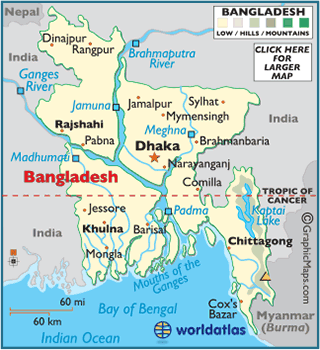
Bangladesh: Police foil march on Pak High Commission


Pakistan Protests May Make US Fly War Cargo Out
 U.S. officials, frustrated that hundreds of military shipments heading out of Afghanistan have been stopped on the land route through Pakistan because of anti-American protests, face the possibility of flying out equipment at an additional cost of $1 billion.
More than a week after Pakistani officials promised Defense Secretary Chuck Hagel that they would take "immediate action" to resolve the problem, dozens of protesters are still gathering on the busy overland route, posing a security threat to convoys carrying U.S. military equipment out of the war zone before combat ends a year from now.
U.S. officials said Wednesday they have seen no effort by the Pakistanis to stop the protests, which prompted the U.S. three weeks ago to halt NATO cargo shipments going through the Torkham border crossing and toward the port city of Karachi.
A Pakistani official says the government is looking for a peaceful settlement but notes that citizens have the right to protest as long as they are not violent.
The U.S. officials, speaking on condition of anonymity because they were not authorized to speak publicly about the planning, said flying the military equipment out of Afghanistan to a port will cost five to seven times as much as it does to truck it through Pakistan. About a hundred trucks are stacked up at the border, and hundreds more are loaded and stalled in compounds, waiting to leave Afghanistan.
The shipments consist largely of military equipment that is no longer needed now that the Afghan war is ending. Sending the cargo out through the normal Pakistan routes will cost about $5 billion through the end of next year, said a defense official. Flying the heavy equipment, including armored vehicles, out of Afghanistan to ports in the Middle East, where it would be loaded onto ships, would cost about $6 billion if it continued through next year, said the official.
A northern supply route, which runs through Uzbekistan and up to Russia, was used for about seven months last year when Pakistan shut down the southern passages after U.S. airstrikes accidentally killed 24 Pakistani soldiers at two border posts. That northern route, however, was used primarily to bring shipments into Afghanistan, and is much longer, more costly and often requires cargo to be transferred from trucks to rail.
The deadlock, if not resolved, could also be costly for Pakistan. In private meetings in Islamabad early last week, Hagel warned Pakistani leaders that unless the military shipments resumed, political support could erode in Washington for an aid program that sends them billions of dollars.
Hagel received assurances from Pakistan leaders during the meetings that they would resolve the problem but no progress has been made.
Pentagon spokesman Adm. John Kirby said Hagel is concerned about the issue and has talked with his top commanders in the region about it. "He knows they (the commanders) are working the issue very hard," Kirby said.
But Marine Gen. Joseph Dunford, the top U.S. commander in Afghanistan, was in Pakistan on Monday for a meeting with Pakistan's new Army chief, and it wasn't clear if he broached the issue with him.
The protesters are demonstrating against the CIA's drone program, which has targeted and killed many terrorists but has also caused civilian casualties.
The group gathers daily at a toll booth on the outskirts of the provincial capital of Peshawar, in Pakistan's northern Khyber Paktunkhwa province. All traffic going into the tribal areas and on to the Torkham crossing must pass through the toll booth.
Earlier this week, a group of about 40 protesters were at the toll booth, including about 10 who were waving flags as vehicles and trucks drove past. A makeshift enclosure was set up on the side of the road, complete with chairs arranged under a tent encircled by barbed wire to keep the protest from spilling into traffic.
A few police officers stood nearby, with orders to allow the protests to go on but ensure that no one got unruly or attacked the drivers.
"We will continue this sit-in until there is a good decision on the drones," said Fayaz Ahmed Khalid, a political organizer with the Pakistan Tehreek-e-Insaf party. "It's for ourselves, for our country."
He said the group has been stopping container trucks going into Afghanistan and looking at their papers to determine whether they are carrying cargo bound for NATO troops. If so, the protesters force the trucks to turn around.
Khalid said the group got instructions not to stop trucks coming out of Afghanistan into Pakistan, and added that they've also noticed there has been little traffic coming from Karachi and heading into Afghanistan. Companies know, he said, that they will be turned back at the checkpoint. He said it has been about a week since the protesters encountered a truck carrying NATO goods.
The protesters, however, appear to be in this for the long haul. Khalid had a schedule listing who would be manning the sit-in each day through mid-January.
Officials from PTI said they had received no pressure from the federal government to stop the protests. Shah Farman, a PTI member who serves as the provincial information minister, said the national government, controlled by the Pakistan Muslim League-N, hasn't moved to aggressively reopen the route because they don't want to be seen as supporting the drone campaign.
"Why is the federal government silent? Because they can't go against the public pulse," said Farman.
Tasnim Aslam, a spokeswoman for the Ministry of Foreign Affairs, said a July 2012 agreement between Pakistan and the U.S. allows NATO to take supplies out of Afghanistan through Pakistan. But she said the issue is a sensitive one due to the widespread opposition to the U.S. drone strikes in Pakistan.
"Obviously the government would be looking for a peaceful way out to move the protesters from there, to convince them to move," she said. "Our constitution gives people this right, if they're not violent. They have the right to protest. So I don't know if they can be forcibly removed from that place."
Cargo usually goes through the Torkham crossing in northern Pakistan or the Chaman crossing in southern Pakistan's Baluchistan province. As the U.S. drawdown in Afghanistan continues, the goal has been to move about 30 shipments per day out of Afghanistan to Karachi. Shipments through Torkham stopped in late November.
U.S. officials say that just a small percentage is taken out through the Chaman route because it is more dangerous and crosses through the insurgency-plagued Baluchistan province.
Pakistan: At least 23 suspected militants killed in N Waziristan
 At least 23 suspected militants were killed late on Wednesday during a clash with security forces in the country's troubled northwest, officials said.
According to a security official who requested anonymity, the suspected militants tried to ambush a convoy of security forces which was returning back from Khajuri checkpost area in Mirali Tehsil of North Waziristan tribal region.
The convoy had gone in the area to rescue soldiers who were injured in a suicide bomb attack yesterday.
Security forces retaliated with gunfire and encircled the suspects inflicting heavy casualties.
The gun-battle continued for several hours during which the 23 suspected militants were killed.
Moreover, three security personnel were also injured in the clash.
A search operation was underway in the area.
The clash follows a suicide attack on a military checkpoint which killed at least five soldiers and wounded 34 others. The attack had taken place while the security men were offering prayer in a mosque at the post.
Tehrik-i-Taliban Pakistan (TTP) spokesperson, talking to Dawn.com, claimed that the militant group was behind the suicide attack and that it was carried out to avenge ex-TTP chief Hakimullah Mehsud's death.
North Waziristan, one of the seven tribal districts along the Afghan border, is a hotbed for Al Qaeda and TTP militants.
The TTP has led a bloody campaign against the Pakistani state in recent years, carrying out hundreds of attacks on security forces and government targets, mainly in the country's northwest.
Three Pakistani pilgrims among 11 martyred on way to Karbala for Chehlum of Imam Hussain (AS)
www.shiitenews.comAt least three Pakistani pilgrims were among those 11 Shiites who embraced martyrdom while they were on way to Karbala to commemorate the anniversary of Chehlum of Imam Hussain (AS) there. Shiite News Correspondent reported that Iraqi officials said that attacks on pilgrims were made across the country in which 11 were martyred. Three among them were Pakistani pilgrims. Police officials said outside the city of Samarra, 95 kilometers (60 miles) north of Baghdad, gunmen opened fire on a bus carrying Pakistani pilgrims, killing three Pakistanis and wounding 12, along with two Iraqis — the group’s driver and the translator. Shia parties and leaders have condemned the targeted attacks of Yazidi nasbi takfiri terrorists who have defamed Islam and Muslims and caused irreparable losses to the Ummah by their ferocious terrorism and ideology of hatred for whole humanity, let alone fellow Muslims.
Taliban warn Imran against supporting polio campaign
http://dunyanews.tv/Pakistani Taliban on Wednesday said they will turn their guns on Imran Khan for pledging his support to polio campaign. Imran Khan had earlier on Wednesday appealed to the Pakistani Taliban and others not to attack polio workers and pledged to spearhead the vaccination campaign in the restive northwest that continues to be in the grip of the crippling disease. He said attacks on polio workers must end. "Those who are attacking polio workers are doing injustice to our province, our country and the whole of humanity," Khan told reporters. "If we run a full-fledged campaign against polio in the coming three months we can eradicate polio from the country and I will personally lead this campaign," Imran said.
Long march for the missing persons reaches Thatta
 Participants of the long march that began from Quetta for the recovery of missing persons has reached Thatta.
The long march is led by Voice of Missing Person’s chief Mama Qadeer while the participants included relatives of the missing persons.
The long march was accorded warm welcome in Thatta.
Mama Qadeer claimed that he has been receiving threats for the last three days, however, he said that he is not afraid of threats.
He further said that if any thing bad happened to the march, the Sindh and Federal government would be responsible for it.
The participants said that they would submit memorandum in the United Nations office in Islamabad.
Subscribe to:
Posts (Atom)