
Tuesday, December 17, 2013
Pakistan: Damning mollycoddling
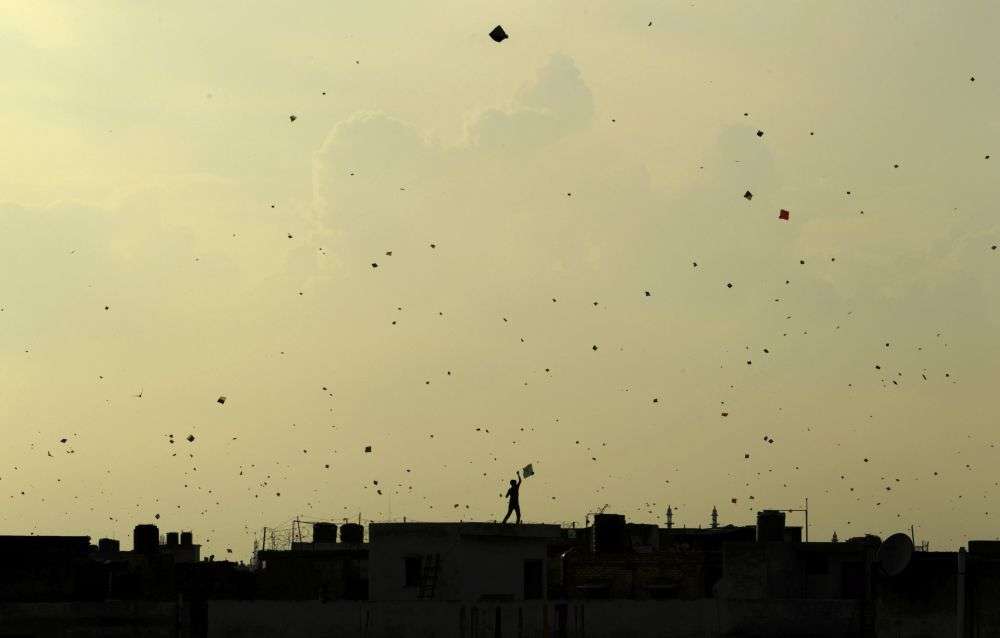
Bilawal Bhutto to Organise Basant Festival in Karachi
Pakistan People's Party leader Bilawal Bhutto Zardari has made arrangements for hosting the popular festival in this port city in February.
For the first time in years, Karachi will host Basant on the beach as part of a "Sindh festival" aimed at promoting, protecting and preserving the Indus Valley Civilisation.
 Speaking about his plans, Bilawal mentioned how Basant was banned by the PML-N government in Punjab.
"We are promoting the culture of peace, while terrorists want to impose their culture through the barrel of a gun," the patron-in-chief of PPP said.
"I have realised that Pakistan is gradually moving towards becoming 'banistan'. If we find someone offensive on YouTube, we ban the website. If we can't compete with the Indian cinema, we ban movies," he said at a ceremony here last night.
The PML-N banned Basant on the ground that the glass-coated twine used to fly kites during the festival had caused many deaths. Civil society groups say the ban was influenced by pressure from right-wing and extremist groups which claim the festival has "Hindu overtones".
Despite requests from civil society groups and associations representing thousands of kite-makers, the Punjab government refused to lift the ban.
Bilawal's sister Bakhtawar is also involved in planning and organising the festival.
Bilawal announced that opening ceremony of the Sindh Festival 2014 would be held in Mohenjodaro.
"Let's bask in the glory of Indus civilisation. Let's live in the Pakistan we want to see. Move away London 2012, we have Mohenjodaro 2014," he said.
Bilawal said that Pakistanis were being dragged backwards, towards "more regressive dark ages".
"We have been taught distorted history about our culture and religion by military dictators like Zia-ul-Haq, and his proteges. They want to put a gun to our heads and impose their rules on us. But we won't let them," Bilawal said.
Introducing the events to be held during the two-week festival, Bakhtawar said it would have "best of what Sindh and Pakistan has to offer".
She said the festival would have a cattle race, grand Mushaira, donkey cart race, deep sea fishing tournament, among others.
It will be held in various parts of Sindh and Karachi, Bilawal said.
"Our heritage is under threat," Bilawal said.
A 'fictionalised and imported' culture is being imposed on Pakistan "despite the fact that the country has its own rich cultural heritage", he asserted.
"Terrorists want Pakistan to have a primitive society ...It is up to us to preserve our own history and culture," he said.
"I'm proud to be a Sindhi, Muslim and Pakistani...Let's preserve, protect and promote Sindh. Let's preserve, protect and promote Pakistan's heritage," he added.
Bilawal stressed that the Sindh festival would be an 'apolitical' festival.
He said that every citizen of Pakistan, including Prime Minister Nawaz Sharif, his daughter, Imran Khan and members of all political parties are invited to the Sindh festival.
Speaking about his plans, Bilawal mentioned how Basant was banned by the PML-N government in Punjab.
"We are promoting the culture of peace, while terrorists want to impose their culture through the barrel of a gun," the patron-in-chief of PPP said.
"I have realised that Pakistan is gradually moving towards becoming 'banistan'. If we find someone offensive on YouTube, we ban the website. If we can't compete with the Indian cinema, we ban movies," he said at a ceremony here last night.
The PML-N banned Basant on the ground that the glass-coated twine used to fly kites during the festival had caused many deaths. Civil society groups say the ban was influenced by pressure from right-wing and extremist groups which claim the festival has "Hindu overtones".
Despite requests from civil society groups and associations representing thousands of kite-makers, the Punjab government refused to lift the ban.
Bilawal's sister Bakhtawar is also involved in planning and organising the festival.
Bilawal announced that opening ceremony of the Sindh Festival 2014 would be held in Mohenjodaro.
"Let's bask in the glory of Indus civilisation. Let's live in the Pakistan we want to see. Move away London 2012, we have Mohenjodaro 2014," he said.
Bilawal said that Pakistanis were being dragged backwards, towards "more regressive dark ages".
"We have been taught distorted history about our culture and religion by military dictators like Zia-ul-Haq, and his proteges. They want to put a gun to our heads and impose their rules on us. But we won't let them," Bilawal said.
Introducing the events to be held during the two-week festival, Bakhtawar said it would have "best of what Sindh and Pakistan has to offer".
She said the festival would have a cattle race, grand Mushaira, donkey cart race, deep sea fishing tournament, among others.
It will be held in various parts of Sindh and Karachi, Bilawal said.
"Our heritage is under threat," Bilawal said.
A 'fictionalised and imported' culture is being imposed on Pakistan "despite the fact that the country has its own rich cultural heritage", he asserted.
"Terrorists want Pakistan to have a primitive society ...It is up to us to preserve our own history and culture," he said.
"I'm proud to be a Sindhi, Muslim and Pakistani...Let's preserve, protect and promote Sindh. Let's preserve, protect and promote Pakistan's heritage," he added.
Bilawal stressed that the Sindh festival would be an 'apolitical' festival.
He said that every citizen of Pakistan, including Prime Minister Nawaz Sharif, his daughter, Imran Khan and members of all political parties are invited to the Sindh festival.

Bangladesh: Khaleda a Pakistani agent: Hanif
 The joint general secretary of the ruling Awami League, Mahbub-ul-Alam Hanif, on Monday alleged that the BNP-Jamaat coalition, under the leadership of Bangladesh Nationalist Party (BNP) chairperson Khaleda Zia, was conspiring to turn the country into a failed state. He was addressing a pre-procession rally in front of the Institution of Engineers in the city. The AL joint general secretary alleged that the Pakistani Jamaat-e-Islami staged the Gayebena Namaj-e-Janaza for the execution of Jamaat leader Abdul Quader Mollah, which makes it clear that they are still conspiring to destabilise Bangladesh and that BNP chairperson Khaleda Zia is playing the role of a Pakistani agent.
Hanif said: “The BNP is killing people, hurling bombs on them in the name of enforcing a political programme when we are observing Victory Day. So it is clear that the BNP–Jamaat alliance wants to turn the country into Pakistan.”
Referring to the war crimes trials, the AL leader said the rest of the verdicts of the war crimes trials would be executed under the leadership of Prime Minister Sheikh Hasina, to free the nation from the curse of the country’s 30 lakh martyrs.
“We promised the nation that we would try the war criminals who committed crimes against humanity during the Liberation War in 1971. We went a step ahead in fulfilling our commitment by executing war criminal and Jamaat leader Abdul Quader Mollah,” Hanif claimed.
Vowing to build up a ‘Rajakar’-free Bangladesh, the AL leader said: “We got the country after millions sacrificed their blood and we shall save the country, sacrificing our last drop of blood, if necessary.”
The AL leader said BNP-Jamaat’s anarchy would not be tolerated any more. The leaders and workers of the AL-led 14-party alliance would resist their destructive activities across the country.
Among others, Dhaka city AL acting president MA Aziz, Awami League central leaders Shahara Khatun, Jahangir Kabir Nanok, advocate Qamrul Islam, Mofazzal Hossain Chowdhury Maya, Ahmed Hossain, Khalid Mahmud Chowdhury and Asim Kumar Ukil were present at the rally.
Meanwhile, as in previous years, thousands of Awami League supporters, including many from its frontal organisations, brought out a victory procession carrying banners, festoons, placards and portraits of Prime Minister Sheikh Hasina and her father Bangabandhu Sheikh Mujibur Rahman, from the vicinity of the Institution of Engineers shouting the slogan ‘Joy Bangla… Joy Bangabandhu’, to observe the 43rd Victory Day.
With a vow to resist anti-liberation forces, the leaders and workers of the ruling Awami League marched through the city’s main streets, throwing traffic out of gear, to converge at Dhanmondi 32.
The joint general secretary of the ruling Awami League, Mahbub-ul-Alam Hanif, on Monday alleged that the BNP-Jamaat coalition, under the leadership of Bangladesh Nationalist Party (BNP) chairperson Khaleda Zia, was conspiring to turn the country into a failed state. He was addressing a pre-procession rally in front of the Institution of Engineers in the city. The AL joint general secretary alleged that the Pakistani Jamaat-e-Islami staged the Gayebena Namaj-e-Janaza for the execution of Jamaat leader Abdul Quader Mollah, which makes it clear that they are still conspiring to destabilise Bangladesh and that BNP chairperson Khaleda Zia is playing the role of a Pakistani agent.
Hanif said: “The BNP is killing people, hurling bombs on them in the name of enforcing a political programme when we are observing Victory Day. So it is clear that the BNP–Jamaat alliance wants to turn the country into Pakistan.”
Referring to the war crimes trials, the AL leader said the rest of the verdicts of the war crimes trials would be executed under the leadership of Prime Minister Sheikh Hasina, to free the nation from the curse of the country’s 30 lakh martyrs.
“We promised the nation that we would try the war criminals who committed crimes against humanity during the Liberation War in 1971. We went a step ahead in fulfilling our commitment by executing war criminal and Jamaat leader Abdul Quader Mollah,” Hanif claimed.
Vowing to build up a ‘Rajakar’-free Bangladesh, the AL leader said: “We got the country after millions sacrificed their blood and we shall save the country, sacrificing our last drop of blood, if necessary.”
The AL leader said BNP-Jamaat’s anarchy would not be tolerated any more. The leaders and workers of the AL-led 14-party alliance would resist their destructive activities across the country.
Among others, Dhaka city AL acting president MA Aziz, Awami League central leaders Shahara Khatun, Jahangir Kabir Nanok, advocate Qamrul Islam, Mofazzal Hossain Chowdhury Maya, Ahmed Hossain, Khalid Mahmud Chowdhury and Asim Kumar Ukil were present at the rally.
Meanwhile, as in previous years, thousands of Awami League supporters, including many from its frontal organisations, brought out a victory procession carrying banners, festoons, placards and portraits of Prime Minister Sheikh Hasina and her father Bangabandhu Sheikh Mujibur Rahman, from the vicinity of the Institution of Engineers shouting the slogan ‘Joy Bangla… Joy Bangabandhu’, to observe the 43rd Victory Day.
With a vow to resist anti-liberation forces, the leaders and workers of the ruling Awami League marched through the city’s main streets, throwing traffic out of gear, to converge at Dhanmondi 32.
Monday, December 16, 2013
Al-Qaida militants kill over 100 Syrians near Damascus

Moscow confirms deployment of Iskander missiles on NATO borders


Russia Denies Blackmailing Ukraine Over EU Deal
 Russia has never threatened Ukraine with sanctions over a cooperation agreement with the European Union, Foreign Minister Sergei Lavrov said Monday.
But Moscow did warn Kiev in advance that Ukraine could lose its favorable status in trade relations with Russia, Lavrov said.
“We have not blackmailed anyone,” the minister told Rossiya 24 television after a meeting with his EU counterparts in Brussels. “We are not talking about sanctions, we are simply saying that we would return to normal trade relations with Ukraine or any other country that would choose this way [association with EU].”
Lavrov said that the sides agreed that Ukraine’s sovereignty should be respected and that people should have a free choice as to how they want their state to develop.
“Any decision as to how to develop its economy, how to build relations with its leading partners… must be taken without external interference, in line with the country’s national interests,” he said.
Both the EU and Moscow have accused each other of using strong-arm tactics to secure economic ties with Kiev.
But Lavrov said that the meeting in Brussels showed that a large number of EU countries believed the crisis in Ukraine should be discussed in a “tripartite format”. Russia’s views had been heard “with understanding” by EU members.
The talks focused on prospects for political dialogue between Russia and the European Union on Ukraine and other issues including the civil war in Syria.
Kiev turned its back on a widely expected Association Agreement to strengthen trade links with the EU last month, saying it would harm economic relations with Russia. President Yanukovych is expected in Moscow Tuesday for talks with President Vladimir Putin.
Ukraine’s rejection of the EU deal has prompted mass demonstrations in protest and thrown the country into a political crisis as hundreds of thousands of people attend rallies demanding the dissolution of the government and early elections.
Prime Minister Mykola Azarov said last Wednesday that Kiev would return to talks on the agreement with the EU in the spring. Brussels suspended negotiations on Sunday after the EU’s enlargement chief Stefan Fuele dismissed the Ukrainian government’s arguments as having “no grounds in reality.”
Russia has never threatened Ukraine with sanctions over a cooperation agreement with the European Union, Foreign Minister Sergei Lavrov said Monday.
But Moscow did warn Kiev in advance that Ukraine could lose its favorable status in trade relations with Russia, Lavrov said.
“We have not blackmailed anyone,” the minister told Rossiya 24 television after a meeting with his EU counterparts in Brussels. “We are not talking about sanctions, we are simply saying that we would return to normal trade relations with Ukraine or any other country that would choose this way [association with EU].”
Lavrov said that the sides agreed that Ukraine’s sovereignty should be respected and that people should have a free choice as to how they want their state to develop.
“Any decision as to how to develop its economy, how to build relations with its leading partners… must be taken without external interference, in line with the country’s national interests,” he said.
Both the EU and Moscow have accused each other of using strong-arm tactics to secure economic ties with Kiev.
But Lavrov said that the meeting in Brussels showed that a large number of EU countries believed the crisis in Ukraine should be discussed in a “tripartite format”. Russia’s views had been heard “with understanding” by EU members.
The talks focused on prospects for political dialogue between Russia and the European Union on Ukraine and other issues including the civil war in Syria.
Kiev turned its back on a widely expected Association Agreement to strengthen trade links with the EU last month, saying it would harm economic relations with Russia. President Yanukovych is expected in Moscow Tuesday for talks with President Vladimir Putin.
Ukraine’s rejection of the EU deal has prompted mass demonstrations in protest and thrown the country into a political crisis as hundreds of thousands of people attend rallies demanding the dissolution of the government and early elections.
Prime Minister Mykola Azarov said last Wednesday that Kiev would return to talks on the agreement with the EU in the spring. Brussels suspended negotiations on Sunday after the EU’s enlargement chief Stefan Fuele dismissed the Ukrainian government’s arguments as having “no grounds in reality.”
Judge: NSA’s collecting of phone records is probably unconstitutional
A federal judge ruled Monday that the National Security Agency’s daily collection of virtually all Americans’ phone records is almost certainly unconstitutional. U.S. District Judge Richard J. Leon found that a lawsuit by Larry Klayman, a conservative legal activist, has “demonstrated a substantial likelihood of success” on the basis of Fourth Amendment privacy protections against unreasonable searches. Leon granted the request for an injunction that blocks the collection of phone data for Klayman and a co-plaintiff and orders the government to destroy any of their records that have been gathered. But the judge stayed action on his ruling pending a government appeal, recognizing in his 68-page opinion the “significant national security interests at stake in this case and the novelty of the constitutional issues.” “I cannot imagine a more ‘indiscriminate’ and ‘arbitrary invasion’ than this systematic and high tech collection and retention of personal data on virtually every single citizen for purposes of querying and analyzing it without prior judicial approval,” said Leon, a judge on the U.S. District Court for the District of Columbia. “Surely, such a program infringes on ‘that degree of privacy’ that the founders enshrined in the Fourth Amendment.” The strongly worded decision stands in contrast to the secret deliberations of 15 judges on the nation’s surveillance court, which hears only the government’s side of cases and since 2006 has held in a series of classified rulings that the program is lawful. A Justice Department spokesman, Andrew Ames, said Monday that the government was reviewing Leon’s decision. “We believe the program is constitutional as previous judges have found,” he said. The challenge to the NSA’s once-classified collection of phone records is one of a series of cases filed in federal court since the program’s existence was revealed in June by former NSA contractor Edward Snowden. Snowden praised the ruling in a statement made to journalist Glenn Greenwald, who received NSA documents from Snowden and first reported on the program’s existence. “I acted on my belief that the NSA’s mass surveillance programs would not withstand a constitutional challenge, and that the American public deserved a chance to see these issues determined by open courts,” said Snowden, who has received temporary asylum in Russia, where he is seeking to avoid U.S. prosecution under the Espionage Act for leaking NSA documents. “Today, a secret program authorized by a secret court was, when exposed to the light of day, found to violate Americans’ rights. It is the first of many.” The ruling also comes as Congress is debating whether to end the NSA’s “bulk” collection of phone data or endorse it in statute. The White House, U.S. officials say, supports maintaining the program. “It will be very difficult for the administration to argue that the NSA’s call-tracking program should continue when a federal judge has found it to be unconstitutional,” said Jameel Jaffer, deputy legal director of the American Civil Liberties Union, which has also sued the government over the program’s constitutionality. But George Washington University law professor Orin Kerr said, “It gives opponents of the NSA program more fuel to add to the fire, but its legal impact is quite limited because the case now just goes to the court of appeals.” The government has stressed that the program collects only “metadata,” such as numbers dialed and the times and lengths of calls, but no phone content or subscriber names. Officials say that only numbers linked to suspected terrorists are run against the database. Leon’s opinion countered that the program is so sweeping — the database easily contains billions of records — that it amounts to a “dragnet” that intrudes on the constitutional expectation of privacy. He dismissed the government’s claim that “special needs” requiring quick access to data that could thwart a terrorist plot make a warrant impracticable. “No court has ever recognized a special need sufficient to justify continuous, daily searches of virtually every American citizen without any particularized suspicion,” he said. The government’s legal justification for the call-tracking program is based on a 1979 case, Smith v. Maryland, involving the surveillance of a criminal suspect over a two-day period. In that case, the Supreme Court said that Americans have no expectation of privacy in the telephone metadata that companies hold as business records, and that therefore a warrant is not required to obtain such information. A succession of judges on the Foreign Intelligence Surveillance Court have adopted the government’s argument based on that ruling. But Leon said the question the Supreme Court confronted in 1979 is not the same as the one he was faced with. “Indeed, the question in this case can more properly be styled as follows: When do present-day circumstances — the evolutions in the government’s surveillance capabilities, citizens’ phone habits, and the relationship between the NSA and telecom companies — become so thoroughly unlike those considered by the Supreme Court thirty-four years ago, that a precedent like Smith does not apply?” he wrote. “The answer, unfortunately for the government, is now.” Kerr said Leon is wrong to suggest that Smith no longer applies. That decision, he said, draws a clear distinction between the collection of data on numbers dialed and on call content. The metadata information the government is gathering today, Kerr said, is the same type of information the court said that law enforcement could collect more than 30 years ago. “The opinion is more valid now than it was,” Kerr said, adding that “it’s up to the Supreme Court to overturn its decision, not trial judges.” Leon, who was nominated by President George W. Bush and appointed to the bench in 2002, said the government has played down the program’s invasiveness. The “almost-Orwellian technology” that allows the government to collect, store and analyze phone metadata is “unlike anything that could have been conceived in 1979” and, “at best, the stuff of science fiction,” he said. Klayman, founder of the public interest group Freedom Watch, called Leon’s ruling “courageous.” “This is a warning to both parties that they'd better start observing the rule of law and protecting the American people or there will be severe consequences,” he said. Meanwhile, Verizon Communications, named as a defendant, filed a motion Monday asking to be dismissed from the case. The request was based in part on a certification also filed Monday by the Justice Department that the company has immunity against lawsuits since it was compelled by a court order to comply with the government’s request for data. That immunity was authorized under a 2008 law known as the FISA Amendments Act. Leon rejected the government’s argument that Klayman and a co-plaintiff — the father of an NSA cryptologist killed in Afghanistan in 2011 — lacked standing to bring the suit because they were customers of Verizon Communications subsidiary Verizon Wireless, which has not been publicly revealed as taking part in the program. “The government,” he said, says it has created a “comprehensive” database — “in which case, the NSA must have collected metadata from Verizon Wireless, the single largest wireless carrier in the United States.” Yet, at the same time, he wrote, the government asserts that the plaintiffs lack standing “based on the theoretical possibility” that the NSA has not collected Verizon’s records. “Candor of this type defies common sense and does not exactly inspire confidence!” he wrote. To draw an analogy, he wrote, omitting Verizon Wireless, AT&T or Sprint “would be like omitting John, Paul and George” and building a “Ringo-only database.”By Ellen Nakashima and Ann E. Marimow

Obama to meet with tech execs to talk NSA, health care
North Korean army stages mass rally as loyalty to Kim dynasty
The North Korean army stages a massive rally to pledge its loyalty to the Kim dynasty, as the reclusive country prepares to mark the second anniversary of the late leader Kim Jong-il's death.
Bangladesh & Hamid Mir: A rose not to be taken
Pakistani journalist Hamid Mir’s recent article in daily Jang, asking for the release of Ghulam Azam, the Bangladesh mastermind of ‘71 war crimes, appeared as a surprise gift for those who witnessed Mir’s photo session in front of Islamabad Press Club demanding Pakistan’s apology for the genocide of 1971.By Maskwaith Ahsan

Hamid Mir became a hero in Bangladesh for this photo session and a few reconciliatory articles published in daily Prothom Alo. Mir’s father Waris Mir stood up against the ‘71 killings and was hence humiliated and defamed as a traitor by the then establishment. Recently, Hamid Mir visited Dhaka to receive national recognition on behalf of his father’s heroic role in 71 as a friend of Bangladesh and humanity. With the help of his father’s credibility and standing Hamid Mir has been portraying himself as a politically correct activist in Bangladesh. However, all it took was an article in favor of Ghulam Azam to expose Hamid’s deceptive agenda. In his article he has tried to defame the Bangladesh tribunal as being a farce and a mere conduit for political witch hunting. Interestingly, it’s the same line of propaganda used by the lobbyists hired by Jamaat leaders of Bangladesh. Hamid Mir has used the same illogical argument that when Pakistan could not bring to trial the 195 army officers involved in the killings of ’71, what then is the basis if trying their Bangladeshi collaborators! Ironically for Hamid Mir, he defeated his own argument in the article by writing that had the war criminals listed in the Inquiry commission report of 1972 been punished, Pakistan and Bangladesh could have reconciled the tragedy of ‘71. Basically, he accepts that war crimes were committed but doesn’t want the Jamaat perpetrators punished. To give him credit, Hamid Mir has raised an important point: Awami League won the 1970 national elections with a clean majority and by launching an operation in the then east Pakistan, the Pakistan army committed a crime by violating the rights of the majority and by that reason violated the rules of the state, so why didn’t Pakistan try those involved with an illegitimate army operation against the legitimate majority of the then East Pakistan? Having raised this question it is now Hamid Mir and his politically correct friends’ responsibility to request the Pakistan Government to seek state apology for ‘71 and to implement the commission report by trying those Pakistanis implicated in the 1972 inquiry commission report. Bangladesh cannot take responsibility for the failure of Pakistan’s actions. At our end, the youth of Bangladesh voted Awami League into power in 2008 for bringing war criminals to justice. With that mandate Awami League formed this tribunal to try top local collaborators who were involved in the civilian killings of 1971. My observation so far has been that Hamid Mir writes secular columns in English and reactionary ones in Urdu. He knows well that the ‘burger’ crowds of Pakistan don’t/can’t read Urdu and that’s why they invite him to fashionable human rights rallies, whereas his ‘bun kabab’ fans read only Urdu and consider him an icon of right-wingism. In this manner he gets to swing both ways: by seeking apology for ‘71 in English and in the same breath by seeking pardon for Ghulam Azam’s war crimes in Urdu. This sort of blatant hypocracy earns nothing; it only unmasks the heart of darkness. Hamid Mir suffers from the dilemma of the contrast between his father’s ideology and of his own. His father’s influence inspired him to become a part of the movement for seeking apology for the 1971 crimes, while his Jamaat ties forced him to call Ghulam Azam a hero. As evident on social media, this dilemma has cost Hamid Mir his young followers in Bangladesh in a matter of minutes. Bangladeshi thinker Professor Humayun Azad once made a very generic and personal comment that he could not trust a Pakistani, not even one offering him a rose. In my case I would narrow it down to just I would say the same about Hamid Mir.

Bangladesh: Celebrations of triumph 1971

 Victory Day is one of the biggest national celebrations across the country, and despite the ongoing political turmoil, a lot of programmes are scheduled for the day, including some unique attempts.
One of the most elaborate programmes of the day is being chalked out by the Gonojagoron Mancha. Titled “Bijoy 2013”, a wide array of programmes will be held at the historic Suhrawardy Udyan. Starting at 11:15am, noted artistes and groups will perform at the stage, followed by a ‘Concert for Freedom’ beginning at 2:30pm. After a cultural presentation by the Sector Commanders’ Forum at 3:45pm, a ‘documentary act’ on the surrender of the Pakistan army will be held at 4:10pm, followed by a choral singing of the National Anthem at 4:31pm, the exact time of surrender by the Pak army in 1971. A token oath-taking and flag handover to the second-in-command of the Liberation War Air Vice Marshall (retd) AK Khandaker and a performance by artistes of Shadhin Bangla Betar Kendro, a fireworks display is scheduled for 5:20pm, after which the concert will resume.
At the National Parade Ground, Telecom Company Robi Axiata Limited is attempting to break a World Record by making the largest human flag in the world, titled “Laal Shobuj’er Bishwa Joy”. A staggering number of 30,000 people are expected to take part in holding up the largest human flag ever made. The event will begin at 10am and is scheduled till 2pm.
Channel i is also holding a daylong Channel i Bijoy Mela at its office at Tejgaon today. Freedom Fighters, cultural and literary personalities along with editors of the national dailies will be present at the inaugural session. As part of the Bijoy Mela, artists will take part in a painting programme. The event will include songs, recitations, plays, interviews and reminiscences on the war. There will also be several documentary screenings, and photography exhibitions on the Liberation War. Senior programme manager Amirul Islam and Shahidul Islam Sachchu will direct the event.
Apart from that, Sammilita Sangskritik Jote will continue their scheduled cultural programmes at 12 venues in and around the capital, in Gendaria, Bahadur Shah Park, Hajaribagh, Motijheel, Shaheed Minar, Dhaka University premises, Dhanmondi Rabindra Sharobor, Rayerbazar memorial, Uttara, Dania, Pallabiand Mirpur.
As part of the Liberation War Museum’s programmes, it will hold a children’s cultural programme featuring various cultural organisations and schools at its premises from 10am, while a separate programme at Mirpur’s ‘Jolladkhana’ memorial will feature cultural performances by various groups.
The National museum’s two-day Liberation War-based Film Festival will also see its final day from 2pm, screening films “Stop Genocide”, “Not a Penny, Not a Gun” and “The Birth Pangs of a Nation”.
Udichi Shilpi Goshthi has also chalked out three-day programmes on the occasion. Today’s programmes will feature a children’s painting competition at 3pm at the Hakim Chattar of Dhaka University, a rally, book fair, photography exhibition, cultural programme and film show.
Dhaka University Film Society’s Victory Day celebrations will include a wall painting session at TSC at 6:30pm, followed by a film screening. BUET is also organising a daylong fair and photography exhibition, followed by a cultural programme and an orchestral performance in the evening.
Victory Day is one of the biggest national celebrations across the country, and despite the ongoing political turmoil, a lot of programmes are scheduled for the day, including some unique attempts.
One of the most elaborate programmes of the day is being chalked out by the Gonojagoron Mancha. Titled “Bijoy 2013”, a wide array of programmes will be held at the historic Suhrawardy Udyan. Starting at 11:15am, noted artistes and groups will perform at the stage, followed by a ‘Concert for Freedom’ beginning at 2:30pm. After a cultural presentation by the Sector Commanders’ Forum at 3:45pm, a ‘documentary act’ on the surrender of the Pakistan army will be held at 4:10pm, followed by a choral singing of the National Anthem at 4:31pm, the exact time of surrender by the Pak army in 1971. A token oath-taking and flag handover to the second-in-command of the Liberation War Air Vice Marshall (retd) AK Khandaker and a performance by artistes of Shadhin Bangla Betar Kendro, a fireworks display is scheduled for 5:20pm, after which the concert will resume.
At the National Parade Ground, Telecom Company Robi Axiata Limited is attempting to break a World Record by making the largest human flag in the world, titled “Laal Shobuj’er Bishwa Joy”. A staggering number of 30,000 people are expected to take part in holding up the largest human flag ever made. The event will begin at 10am and is scheduled till 2pm.
Channel i is also holding a daylong Channel i Bijoy Mela at its office at Tejgaon today. Freedom Fighters, cultural and literary personalities along with editors of the national dailies will be present at the inaugural session. As part of the Bijoy Mela, artists will take part in a painting programme. The event will include songs, recitations, plays, interviews and reminiscences on the war. There will also be several documentary screenings, and photography exhibitions on the Liberation War. Senior programme manager Amirul Islam and Shahidul Islam Sachchu will direct the event.
Apart from that, Sammilita Sangskritik Jote will continue their scheduled cultural programmes at 12 venues in and around the capital, in Gendaria, Bahadur Shah Park, Hajaribagh, Motijheel, Shaheed Minar, Dhaka University premises, Dhanmondi Rabindra Sharobor, Rayerbazar memorial, Uttara, Dania, Pallabiand Mirpur.
As part of the Liberation War Museum’s programmes, it will hold a children’s cultural programme featuring various cultural organisations and schools at its premises from 10am, while a separate programme at Mirpur’s ‘Jolladkhana’ memorial will feature cultural performances by various groups.
The National museum’s two-day Liberation War-based Film Festival will also see its final day from 2pm, screening films “Stop Genocide”, “Not a Penny, Not a Gun” and “The Birth Pangs of a Nation”.
Udichi Shilpi Goshthi has also chalked out three-day programmes on the occasion. Today’s programmes will feature a children’s painting competition at 3pm at the Hakim Chattar of Dhaka University, a rally, book fair, photography exhibition, cultural programme and film show.
Dhaka University Film Society’s Victory Day celebrations will include a wall painting session at TSC at 6:30pm, followed by a film screening. BUET is also organising a daylong fair and photography exhibition, followed by a cultural programme and an orchestral performance in the evening.
Bangladesh: 'Victory Day today'
http://nation.ittefaq.com/
 The nation celebrates the 43rd Victory Day today, paying rich tributes to the three million martyrs for their supreme sacrifice for the country and with a renewed call for executing all the verdicts against war criminals.
On this day in 1971, Pakistani occupation forces surrendered after a nine-month war resulting in a free, independent and sovereign Bangladesh.
The day bears a special significance this year as it is going to be celebrated four days after the execution of war criminal Jamaat leader Abdul Quader Mollah. He was hanged on Thursday night.
The day is a public holiday.
Different political parties, socio-cultural organisations and educational institutions have drawn up elaborate programmes to celebrate the Victory Day.
The day will be heralded with 31 gun salutes. However, no parade will be held this year as law enforcers are currently busy ahead of the national election.
President Abdul Hamid, Prime Minister Sheikh Hasina and Leader of the Opposition Khaleda Zia will place wreaths at the National Mausoleum at Savar in the early hours to pay homage to the martyred freedom fighters.
People from all walks of life will also place wreaths at the National Memorial.
The national flag will be hoisted atop all government and private buildings, while the government and semi-government buildings and other public places will be illuminated and roads and islands will be decorated with flags and festoons in all cities of the country on the occasion.
National dailies will bring out supplements. The state-owned and private televisions and radios will broadcast special programmes highlighting the significance of the day.
Special prayers will be offered in mosques, temples, churches, pagodas and other places of worship seeking divine blessings for the peace and progress of the country.
The President will accord a reception to freedom fighters at Bangabhaban in the afternoon. The destitute children will be allowed to visit the children park in the capital on the day free of cost. Improved diets will be served in jails, hospitals, orphanages and vagrant homes across the country.
Bangladesh missions abroad will hoist the national flag and organise discussion, cultural function and reception.
The ruling Awami League has chalked out elaborate programmes to mark the day. National and party flags will be hoisted at the party's central office at Bangabandhu Avenue at dawn. Awami League leaders and workers will place wreaths at the National Memorial at Savar at the same time.
The ruling party leaders will also pay tributes to Father of the Nation Bangabandhu Sheikh Mujibur Rahman by placing wreaths at his portrait at Bangabnadhu Bhaban at Dhanmondi in the city in the morning.
Besides, the party leaders and workers will place wreaths at the graveyard of Bangabandhu at Tungipara in Gopalganj district.
The ruling party will also bring out a victory rally from Suhrawardy Udyan in the afternoon. The main opposition BNP will celebrate the Victory Day with various programmes across the country.
BNP Chairperson Khaleda Zia along with her party leaders and activists will place wreaths at the majar of late President and BNP founder Ziaur Rahman at Sher-e-Banglanagar in the capital around 8am. The party will also hold a discussion meeting at the Jatiya Press Club in the afternoon, marking the day.
Meanwhile, President Abdul Hamid, Prime Minister Sheikh Hasina and Leader of the Opposition Khaleda Zia have issued separate messages on the occasion. In his message, the President urged all irrespective of party affiliation and opinion to work together with a view to reaching the benefit of the independence to the doorsteps of people. The Prime Minister in her message said, "We're determined to build a hunger - and poverty-free, prosperous and peaceful Golden Bangladesh by 2021 as dreamt by the Father of the Nation."
She also underscored the need for maintaining the continuity of the development and democracy to achieve the target.
The opposition leader, in her message, said, "We must forge a national unity imbued with the spirit of the Liberation War to save our beloved country, its independence and sovereignty from the hands of the evil forces and make the democracy free from danger."
The nation celebrates the 43rd Victory Day today, paying rich tributes to the three million martyrs for their supreme sacrifice for the country and with a renewed call for executing all the verdicts against war criminals.
On this day in 1971, Pakistani occupation forces surrendered after a nine-month war resulting in a free, independent and sovereign Bangladesh.
The day bears a special significance this year as it is going to be celebrated four days after the execution of war criminal Jamaat leader Abdul Quader Mollah. He was hanged on Thursday night.
The day is a public holiday.
Different political parties, socio-cultural organisations and educational institutions have drawn up elaborate programmes to celebrate the Victory Day.
The day will be heralded with 31 gun salutes. However, no parade will be held this year as law enforcers are currently busy ahead of the national election.
President Abdul Hamid, Prime Minister Sheikh Hasina and Leader of the Opposition Khaleda Zia will place wreaths at the National Mausoleum at Savar in the early hours to pay homage to the martyred freedom fighters.
People from all walks of life will also place wreaths at the National Memorial.
The national flag will be hoisted atop all government and private buildings, while the government and semi-government buildings and other public places will be illuminated and roads and islands will be decorated with flags and festoons in all cities of the country on the occasion.
National dailies will bring out supplements. The state-owned and private televisions and radios will broadcast special programmes highlighting the significance of the day.
Special prayers will be offered in mosques, temples, churches, pagodas and other places of worship seeking divine blessings for the peace and progress of the country.
The President will accord a reception to freedom fighters at Bangabhaban in the afternoon. The destitute children will be allowed to visit the children park in the capital on the day free of cost. Improved diets will be served in jails, hospitals, orphanages and vagrant homes across the country.
Bangladesh missions abroad will hoist the national flag and organise discussion, cultural function and reception.
The ruling Awami League has chalked out elaborate programmes to mark the day. National and party flags will be hoisted at the party's central office at Bangabandhu Avenue at dawn. Awami League leaders and workers will place wreaths at the National Memorial at Savar at the same time.
The ruling party leaders will also pay tributes to Father of the Nation Bangabandhu Sheikh Mujibur Rahman by placing wreaths at his portrait at Bangabnadhu Bhaban at Dhanmondi in the city in the morning.
Besides, the party leaders and workers will place wreaths at the graveyard of Bangabandhu at Tungipara in Gopalganj district.
The ruling party will also bring out a victory rally from Suhrawardy Udyan in the afternoon. The main opposition BNP will celebrate the Victory Day with various programmes across the country.
BNP Chairperson Khaleda Zia along with her party leaders and activists will place wreaths at the majar of late President and BNP founder Ziaur Rahman at Sher-e-Banglanagar in the capital around 8am. The party will also hold a discussion meeting at the Jatiya Press Club in the afternoon, marking the day.
Meanwhile, President Abdul Hamid, Prime Minister Sheikh Hasina and Leader of the Opposition Khaleda Zia have issued separate messages on the occasion. In his message, the President urged all irrespective of party affiliation and opinion to work together with a view to reaching the benefit of the independence to the doorsteps of people. The Prime Minister in her message said, "We're determined to build a hunger - and poverty-free, prosperous and peaceful Golden Bangladesh by 2021 as dreamt by the Father of the Nation."
She also underscored the need for maintaining the continuity of the development and democracy to achieve the target.
The opposition leader, in her message, said, "We must forge a national unity imbued with the spirit of the Liberation War to save our beloved country, its independence and sovereignty from the hands of the evil forces and make the democracy free from danger."
Delhi sees 125% jump in number of rape cases since December 16 rape case
 In the year since a brutal gang rape took the life of a young woman and made the entire country stand up and say enough is enough, there has been a 125% jump in the number of rape cases in Delhi. Molestation cases are up a massive 417%.
That may not necessarily be a bad thing.
It’s because more and more cases are being reported and registered, the police say. A tough new law now holds the cops directly accountable, with refusal to lodge a case inviting a two-year jail sentence.
But how long can the police sustain this, that’s the big question. The force deals with very real constraints - a severe manpower crunch that has sees one cop handling as many as 18-20 cases at a time, and a lack of forensic testing facilities that is crucial for evidence collection and analysis.
These constraints impact the quality of investigation. "An internal examination showed that only 60% of such complaints could withstand judicial scrutiny," an officer admitted.
Till November this year, the Delhi Police registered 1,493 cases of rape against 661 in the corresponding period last year, 3,237 cases of molestation against 625 in the same period, 852 cases of harassment against 165.
"Safety of women is our top priority and all necessary measures to ensure it are being taken," said commissioner BS Bassi.
Every complaint is converted into a first information report, each of which is then taken up for scrutiny on a regular basis for the filing of a charge sheet.
"All cases of sexual assault are monitored on a monthly basis," said Deepak Mishra, special commissioner of police (law and order). "Our endeavour is to file charge sheets in every single case within a month of its being reported."
But with just one forensic facility currently at their disposal, supplementary charge sheets are the best the police can do in most cases, they say. The 80,000-strong city force already has a backlog of 10,000 cases with new ones coming in at an alarming rate.
Lawyers, however, feel differently. "The police are duty-bound to register cases as and when received and the total number of complaints does not matter under the criminal procedure code. A closure report can be filed if investigation proves a false complaint. However, there’s enough manpower in the form of personnel serving in district lines who can be utilised for patrolling, if not investigation," said high court advocate Vikas Garg.
In the year since a brutal gang rape took the life of a young woman and made the entire country stand up and say enough is enough, there has been a 125% jump in the number of rape cases in Delhi. Molestation cases are up a massive 417%.
That may not necessarily be a bad thing.
It’s because more and more cases are being reported and registered, the police say. A tough new law now holds the cops directly accountable, with refusal to lodge a case inviting a two-year jail sentence.
But how long can the police sustain this, that’s the big question. The force deals with very real constraints - a severe manpower crunch that has sees one cop handling as many as 18-20 cases at a time, and a lack of forensic testing facilities that is crucial for evidence collection and analysis.
These constraints impact the quality of investigation. "An internal examination showed that only 60% of such complaints could withstand judicial scrutiny," an officer admitted.
Till November this year, the Delhi Police registered 1,493 cases of rape against 661 in the corresponding period last year, 3,237 cases of molestation against 625 in the same period, 852 cases of harassment against 165.
"Safety of women is our top priority and all necessary measures to ensure it are being taken," said commissioner BS Bassi.
Every complaint is converted into a first information report, each of which is then taken up for scrutiny on a regular basis for the filing of a charge sheet.
"All cases of sexual assault are monitored on a monthly basis," said Deepak Mishra, special commissioner of police (law and order). "Our endeavour is to file charge sheets in every single case within a month of its being reported."
But with just one forensic facility currently at their disposal, supplementary charge sheets are the best the police can do in most cases, they say. The 80,000-strong city force already has a backlog of 10,000 cases with new ones coming in at an alarming rate.
Lawyers, however, feel differently. "The police are duty-bound to register cases as and when received and the total number of complaints does not matter under the criminal procedure code. A closure report can be filed if investigation proves a false complaint. However, there’s enough manpower in the form of personnel serving in district lines who can be utilised for patrolling, if not investigation," said high court advocate Vikas Garg.
Afghanistan: BSA can be signed by Karzai's successor: Kerry
The Afghan challenge ahead
Genocide Of Pakistan's Shia: Pakistanis slam killing of Shia cleric
 Shia Muslims in Pakistan have held demonstrations in condemnation of the killing of a prominent Shia cleric in Lahore.
Allama Nasir Abbas, the leader of Tehreek Nifaz Fiqah-e-Jafaria, which is a banned organization in Pakistan, was gunned down by unidentified armed men on Sunday night, on his way home after addressing a religious gathering in the capital of Punjab Province.
“It is a targeted attack. The gunmen shot him from close range when he was driving home along with his driver and a friend,” said Lahore police chief Chaudhry Shafeeq. “Abbas died on the way to hospital. His driver and friend were unhurt.”
The followers of the cleric gathered at the hospital after hearing the news and held a protest.
Chanting slogans against the Pakistani government, the protesters said they will not bury his body until police arrest the killers.
Groups of Shias also demonstrated in front of the Punjab governor’s house early Monday to demand officials to bring the attackers to justice.
Three days of mourning have been announced in Lahore to honor the assassinated Muslim leader.
The latest killing comes more than a week after the assassination of Maulana Shamsur Rehman, the leader of the Sunni organization of Ahle Sunnat Wal Jamaat, near a mosque in Lahore. Shia groups have condemned the December 6 killing of the Sunni leader.
Shia Muslims, who make up about 20 percent of Pakistan’s 180 million population, have been the target of sectarian violence in recent years.
On November 19, gunmen killed a senior Shia university director along with his driver in Lahore, while another Shia leader and his guard were killed in Karachi early December.
More than 800 Shia Muslims have been killed in attacks in Pakistan since 2012, according to Human Rights Watch.
Shia Muslims in Pakistan have held demonstrations in condemnation of the killing of a prominent Shia cleric in Lahore.
Allama Nasir Abbas, the leader of Tehreek Nifaz Fiqah-e-Jafaria, which is a banned organization in Pakistan, was gunned down by unidentified armed men on Sunday night, on his way home after addressing a religious gathering in the capital of Punjab Province.
“It is a targeted attack. The gunmen shot him from close range when he was driving home along with his driver and a friend,” said Lahore police chief Chaudhry Shafeeq. “Abbas died on the way to hospital. His driver and friend were unhurt.”
The followers of the cleric gathered at the hospital after hearing the news and held a protest.
Chanting slogans against the Pakistani government, the protesters said they will not bury his body until police arrest the killers.
Groups of Shias also demonstrated in front of the Punjab governor’s house early Monday to demand officials to bring the attackers to justice.
Three days of mourning have been announced in Lahore to honor the assassinated Muslim leader.
The latest killing comes more than a week after the assassination of Maulana Shamsur Rehman, the leader of the Sunni organization of Ahle Sunnat Wal Jamaat, near a mosque in Lahore. Shia groups have condemned the December 6 killing of the Sunni leader.
Shia Muslims, who make up about 20 percent of Pakistan’s 180 million population, have been the target of sectarian violence in recent years.
On November 19, gunmen killed a senior Shia university director along with his driver in Lahore, while another Shia leader and his guard were killed in Karachi early December.
More than 800 Shia Muslims have been killed in attacks in Pakistan since 2012, according to Human Rights Watch.
Ahmadi Muslim Sect Under siege in Pakistan
http://ahmadiyyatimes.blogspot.com/Last year 20 cases against Ahmadis were registered, up from 10 cases in 2009. A bank clerk was arrested for wearing a ring with a Koranic verse and an entire family was charged for writing a Muslim greeting on a wedding invitation. A 72-year-old British doctor is in prison in Pakistan for "posing as a Muslim", charges that reveal an escalating ideological fight that often spills over into violence. Masood Ahmad is a quiet, reserved widower who returned to Pakistan to open a pharmacy in 1982 after decades of working in London to pay his children's school fees, his family said. He is also an Ahmadi, a sect that consider themselves Muslim but believe in a prophet after Mohammed. A 1984 Pakistani law declared them non-Muslims, and Ahmadis can be jailed for three years for posing as a Muslim or outraging Muslims' feelings. Some mullahs promise that killing Ahmadis earns a place in heaven. Leaflets list their home addresses. Three years ago, 86 Ahmadis were killed in two simultaneous attacks on Friday prayers in Lahore. There have been no mass attacks since then, but targeted killings are rising: last year 20 Ahmadis were killed, up from 11 in 2009. And legal prosecutions are on the rise, say Ahmadis, some of which they say are linked to property grabs. Ahmad was arrested in Pakistan's eastern city of Lahore last month when two men posing as patients questioned him about his faith and used mobile phones to secretly record him reading a verse from the Koran. "He (the patient) said you are like a father to me, please help me with some questions," said the doctor's older brother, Nasir Ahmad. "When (my brother) answered, they began beating him and dragged him outside by his neck." One of his accusers, Islamic teacher Muhammad Ihsan, told Reuters that Ahmad had preached to them illegally. Last year 20 cases against Ahmadis were registered, up from 10 cases in 2009. A bank clerk was arrested for wearing a ring with a Koranic verse and an entire family was charged for writing a Muslim greeting on a wedding invitation. Mullahs have twice sought the arrest of an entire town of Ahmadis - 60,000 people - for holding religious celebrations. Residents were serving food, giving out sweets and displaying bunting, the complaints said. "We would not have a problem with them if they did not use the name of Islam and the symbols of Islam," said Tahir Ashrafi, head of the powerful Ulema Council of clerics. "We are against the killing of any innocent, Qadiani or Shi'ite or any non-Muslim. Such attacks are not acceptable or allowed, but if they break the law, we have a right to go to the police," he said, using another term for Ahmadis. "HIS CHILDREN WATCHED HIM DIE" There are about half a million Ahmadis in Pakistan, their leaders say. Many only feel safe in Rabwa, a town they bought when Pakistan was created in 1947. On its main streets, banks of security cameras monitor fruit vendors and dozing dogs. Near the playing fields, blocks of flats house families that fled other parts of Pakistan after loved ones were murdered. Rafiatta, who asked her last name not be used, moved to Rabwa after gunmen killed her husband in 2010 in front of their young children. "He was just a hard-working man who loved his family," she said. The family fled after two Ahmadi neighbours were also killed and men tried to kidnap Raffiata's young son. The Ahmadi are also targets outside Pakistan. In Indonesia, a gruesome YouTube video recorded a mass lynching in 2011 as police looked on. Ahmadi publications are banned in Bangladesh, where a festival site was torched earlier this year. In Britain, Ahmadi buildings have been vandalised and leaflets have appeared forbidding them to enter shops and urging Muslims to kill them, British media have reported. But Pakistan is the epicentre of persecution. JAILED WITH NO BAIL Last April, a 25-year-old hospital clerk and his father were at home in Lahore reading an Ahmadi newspaper when a crowd of mullahs broke down their door, the clerk said. They beat the two while a crowd looted their home. Then a gunman forced the pair into a car without license plates, the clerk said. He asked not to be named for fear of retribution. Their kidnappers went free but the two were eventually charged with impersonating Muslims in special anti-terrorist courts designed to combat the Taliban. The clerk was released after a month, but his father, who has not yet been convicted, has been in prison for nine months. The family has since fled their home and the man now occupying it is refusing to pay them for it. "Nobody has the courage to give him bail or dismiss the case," the clerk said. And that's what Masood Ahmad's family fears. He has had three bail hearings. One was picketed by scores of mullahs chanting anti-Ahmadi slogans and his frightened lawyer skipped the next two. British authorities are giving him consular assistance. His son, one of seven children in Britain and Australia, said the family suspected someone was trying to steal his father's dispensary. "I feel so angry because I can't do anything from here," said 39-year-old Abbas Ahmad, a cab driver in Glasgow. "It's awful to know that people were plotting against someone you love."
Voice for Baloch Missing Persons launches second phase of its long march to Islamabad
http://balochwarna.com/The organisation representing families of enforced-disappeared Baloch launched its second phase of long march from Karachi to Islamabad on Friday. The convey consisting of hundreds of Baloch youth, children, elders and women headed by Mama Qadeer Baloch, father of murdered Jalil Reki, and Farzana Majeed Baloch, sister of abducted Baloch student leader Zakir Majeed Baloch, left to Islamabad on 13 December 2013 from Karachi Press Club. The people in convoy marched ten miles to reach Baloch Colony where they rested for a while and then restarted their journey in the evening.

Balochistan: NO REST FOR FAMILIES OF MISSING PERSONS
http://newsweekpakistan.com/MEN, WOMEN AND CHILDREN WHO HAD MARCHED FROM QUETTA TO KARACHI HAVE NOW SET OFF FOR ISLAMABAD TO DEMAND JUSTICE. Relatives of people who have gone missing from Balochistan province set off on a grueling 1,200-kilometer march from Karachi to Islamabad on Saturday, hoping to recover their loved ones. The more than two-dozen men, women and children had camped in the commercial hub for nearly three weeks after walking 700 kilometers from Quetta, the capital of Balochistan, where a violent insurgency against the Pakistani state has raged since 2004. The latest leg of their journey will take them from Karachi, which lies on the Arabian Sea, to the capital city in the foothills of the Himalayas. They hope to gain public support so they can pressure the government into freeing relatives who have disappeared, allegedly at the hands of Pakistan’s security services. “Our main objective is to secure release of our loved ones but unfortunately we have not received any help from the government so far,” said Muhammad Qadir Baloch, leader of the march. Baloch, 70, who also heads a non-governmental organization, Voice of Missing Baloch Persons, said: “Our next destination is Islamabad where we will finalize our future course of action.” Tired of waiting for justice—or even news of the fate of their brothers, sons, and husbands—the men and women undertook the unprecedented march from Quetta to Karachi. Balochistan is Pakistan’s largest but least populous province. It is also the least developed, which has exacerbated a long-running ethnic Baloch separatist movement that wants more autonomy and a greater share of its mineral wealth. The latest armed insurgency rose up in 2004 and separatist groups still regularly carry out attacks on Pakistani forces. Rights groups accuse the military and intelligence agencies of kidnapping and killing suspected Baloch rebels before leaving their bodies by the roadside. According to Human Rights Watch, more than 300 people have suffered this fate—known as “kill and dump”—in the province since January 2011. The security services deny the allegations and say they are battling a fierce rebellion in the province.
Bilawal unveils plan to promote peace
The Express Tribune

Three bomb disposal unit officials killed in Peshawar blast
http://www.thefrontierpost.com/A remote-controlled bomb blast in Peshawar Monday killed three officials of the bomb disposal unit (BDU), Local TV reported. According to the police, the remote-controlled explosion occurred in the Sheikh Mohammadi area of Badhber and targeted the vehicle of the BDU. Three officials, including the BDU in-charge, were killed in the blast. Police and other security personnel have cordoned off the Sheikh Mohammadi area and another bomb, containing four kilograms of explosive materials, was defused after a search operation went underway. Peshawar, the capital of Khyber Pakhtunkhwa, lies on the edge of Pakistan's tribal areas which have been labelled by Washington as the main sanctuary for Al Qaeda and Taliban militants in the country. The city has seen frequent attacks by militants in the past few years, with targets ranging from civilians to policemen and other law enforcement personnel.
Lahore: Sit-in outside Governor House continues against MWM' Allama Nasir killing
 Three officials of bomb disposal unit including the in-charge were killed in a blast at Sheikh Mohammadi in the outskirt here on Monday, Geo News reported.
Sources said that a minor blast had occurred last night at Badaber in the outskirt here and a bomb disposal unit in-charge Abdul Huque and other personnel of the team were on way to the scene of incident early this morning, when a roadside planted bomb near Sheikh Mohammadi went off and destroyed the vehicle, which resulted in the death of three personnel on board the vehicle including the BDU in-charge Abdul Huque and two injured.
Later, the injured were shifted to the Lady Reading Hospital, where they are being given treatment. Hospital sources said that the injured are still in critical condition.
Three officials of bomb disposal unit including the in-charge were killed in a blast at Sheikh Mohammadi in the outskirt here on Monday, Geo News reported.
Sources said that a minor blast had occurred last night at Badaber in the outskirt here and a bomb disposal unit in-charge Abdul Huque and other personnel of the team were on way to the scene of incident early this morning, when a roadside planted bomb near Sheikh Mohammadi went off and destroyed the vehicle, which resulted in the death of three personnel on board the vehicle including the BDU in-charge Abdul Huque and two injured.
Later, the injured were shifted to the Lady Reading Hospital, where they are being given treatment. Hospital sources said that the injured are still in critical condition.
Pakistani Shi'ite cleric shot dead in reprisal attack
Sunday, December 15, 2013
Yearender: Syrian crisis calls for international wisdom
Obama family leaves for Hawaii trip on Friday
http://www.usatoday.com/President Obama and his family will again spend the end-of-the-year holidays in his native Hawaii, starting late this week. The First Family leaves for Honolulu on Friday evening, according to the White House schedule. The White House has not announced a return date, but the president is expected to stay in Hawaii until after New Year's Day. Last year's holiday trip was interrupted by a fight with congressional Republicans over the "fiscal cliff," but no such dispute is on the horizon this month. "This will be the First Family's sixth Christmas in Hawaii since he was elected president, and keeping with tradition they are expected to spend it in Kailua. "Every year the Obamas have rented a few houses on Kailuana Place – creating quite the buzz in the beach side community. "'It's exciting. It's really an honor to have him here, and when he's around -- actually the place is super safe because we have all this security around,' said Lanette Hayashi, who lives in the neighborhood where the Obama."
Mandela filled vacuum of real political leadership in 20th century
South Africa's first black president Nelson Mandela was given a tearful state funeral in his childhood village of Qunu on Sunday, followed by a traditional burial attended by family and friends. A 21-gun salute and full military honour guard escorted Mandela's coffin to a marquee where 4,500 mourners said their final goodbyes. And, as Stephen Ellis, author of the book “Season of Rains: Africa in the World” and former editor of the African Affairs magazine, said in an exclusive interview with the Voice of Russia, Mandela became the leader for the generations to come. -Mr Ellis, hello and thank you very much for joining the program. Now I'd like you to elaborate on Nelson Mandela's legacy. Why is it so important for the world years after his retirement from politics? -Well, I think he made himself the world's most admired politician in the late 20th century and he didn't just mean something to the people of South Africa but to anybody who follows political affairs or even is just interested in current events anywhere in the world. -Why were so many people including high ranking politicians willing to pay their final respects to South Africa's first black president and who do you think out of all of those invited or all of those who were guests both during the funeral and burial ceremony and during mourning ceremony throughout the week owe Nelson Mandela in this or that way more than others? -There were many people who met him, very sincerely admired him so it is normal that also politicians would want to come and pay their last respects to him in his funeral. But he became as it were political gold dust. So people, active of aspiring politicians wanted to be seen with him because they felt that he transferred some of their glamour to them. And some of the newspapers here in the Netherlands for example and maybe elsewhere have been making the point that we seem to lack somewhat as clear political leadership in the world at present and he filled the vacuum for people who maybe were wanting to look up to somebody. So of the people who were present it's hard for me to say who were the people who he was really closest or for whom he had the greatest admiration but I think it's worth noting when he became president of South Africa in 1994 although he was very much embraced by the US president of the time – Bill Clinton, he insisted on hi right to visit and to praise and to be friendly with people like Fidel Castro of Cuba, Muammar Gaddafi of Libya, Yasir Arafat who we regard as fellow revolutionaries. He had no patience with western leaders who told him that he shouldn't be talking to people like that. -And what is your take on the behavior of some of the guests? You certainly heard that scandal about the UK PM and Barack Obama taking photos sort of selfy-style pictures during the mourning ceremony. And they even had to excuse themselves before the international media which was outraged by that behavior. -Well, that is actually news to me because I was ill last week so I was in hospital and I've just come home from hospital. It means that I've missed a lot of the international coverage and I wasn't aware of what you've just told me. But of course taking pictures of yourself or having pictures of yourself taken under these circumstances at a time of great sadness and dignity is not a very smart thing to do. So if that is what they did they had to apologize for it. I think it's pretty stupid and reprehensible behavior. - Mandela was a controversial figure for a much of his life denounced as a Marxist terrorist by critics and nevertheless gained international acclaim for his activism having received more than 200 honors including Nobel Peace Prize, US Presidential Medal of Freedom, even the Soviet Order of Lenin. His deep respect within South Africa often refer to as Madiba or Tata – Father. If there were like five words to describe Nelson Mandela – what would the five words be in your understanding? How would you describe Nelson Mandela, your personal take on this figure? -I don't think I could do it in five words. He was immensely important and I think he was the only person who was capable of presiding over the transition from Apartheid to post-Apartheid government and bringing really all population groups with him. And I must say that certainly since his retirement and up to his death he was deeply respected even by former members of the National Party government. And he was genuinely respected by people from the far right because they can see the depth of his achievement. -Mr Ellis, as an author of the book called Season of Rains: Africa in the World, how has Nelson Mandela changed Africa? How did he make it unique maybe more unique in a way or closer to other nations, closer to the West? How would you describe his role in introducing Africa to the world? -I think as one of his opponents once said the former PM of Rhodesia Ian Smith:'Nelson Mandela is the first statesman that Africa has produced'. And I think that is probably right, he certainly is the greatest statesman Africa produced and somebody who will bear comparison with any of the great political figures of the 20th or so far the 21st century. So that in itself is an achievement. I think he showed the whole world what is possible even in the country with violent history like that of South Africa, that peaceful coexistence is possible and that is something that people have learnt from Africa and from the experience of South Africa. So in that sense indeed it's a universal story but one that happens to come from Africa which is a continent, which is very often being regarded as somehow lugging behind the rest of the world. I think finally I did notice a very interesting point made by former British PM Tony Blair, who said:' Nelson Mandela made racism seem not really immoral but stupid'. In other words before that time it would be impossible for people in the right wing to believe that racial politics was something realistic and even pragmatic and after Nelson Mandela it just seemed very backward and very old-fashioned to hold such a view. Read more: http://voiceofrussia.com/2013_12_15/Mandela-filled-vacuum-of-real-political-leadership-of-20th-expert-6370/

Britain’s policy on Syria has just been sunk, and nobody noticed
The final bankruptcy of American and British policy in Syria came 10 days ago as Islamic Front, a Saudi-backed Sunni jihadi group, overran the headquarters of the Supreme Military Council of the Free Syrian Army (FSA) at Bab al-Hawa on the Syrian side of the border with Turkey. The FSA, along with the Syrian National Coalition, groups that the United States and Britain have been pretending for years are at the heart of Syrian military and political opposition, has been discredited. The remaining FSA fighters are in flight, have changed sides, or are devoting all their efforts to surviving the onslaught from jihadi or al-Qa’ida-linked brigades. The US and Britain stopped the delivery of non-lethal aid to the supply depot at Bab al-Hawa as the implications of the disaster sank in. The West’s favourite rebel commander, General Salim Idris, was on the run between Turkey and his former chief supporter and paymaster, Qatar. Turkey closed the border, the other side of which is now controlled by the Islamic Front. The so-called moderate wing of the Syrian insurgency has very limited influence, but its representatives are still being urged by Washington and London to attend the peace conference in Geneva on 22 January to negotiate Bashar al-Assad’s departure from power. Confusion over what is happening is so great that Western leaders may not pay as much of a political price at home as they should for the failure of their Syrian policy. But it is worth recalling that the Syrian National Coalition and the FSA are the same people for whom the US and UK almost went to war in August, and saw as candidates to replace Assad in power in Damascus. The recent debacle shows how right public opinion in both countries was to reject military intervention. Who are the winners in the new situation? One is Assad because the opposition to him – which started as a popular uprising against a cruel, corrupt and oppressive dictatorship in 2011 – has become a fragmented movement dominated by al-Qa’ida umbrella organisation the Islamic State of Iraq and the Levant (Isil); the other al-Qa’ida franchisee, the al-Nusra Front; and the Islamic Front, consisting of six or seven large rebel military formations numbering an estimated 50,000 fighters, whose uniting factor is Saudi money and an extreme Sunni ideology similar to Saudi Arabia’s version of Islam. The Saudis see this alliance as capable of fighting pro-Assad forces as well as the Islamic State of Iraq and the Levant, but Riyadh’s objections to the latter appears to be based on its independence of Saudi control rather than revulsion at its record of slaughtering Shia, Alawi, Christians, Armenians, Kurds, Turkomans or any dissenting Sunni. The allegation of Saudi control is becoming easier to substantiate. Until a year ago, the Saudis stayed somewhat in the background when it came to funding the Syrian rebels, in which the leading role was played by Qatar in association with Turkey. But the failure of the rebels to win and US anger that the Qataris and Turks had allowed much of the aid to go to jihadis led to an important change this summer, when Saudi Arabia took over from Qatar as chief supporter of the rebels. An interesting example of just how hands-on this Saudi direction has become is illustrated by a fascinating interview given by a top defector from the FSA to Isil, Saddam al-Jamal. Commander of the Liwa Allah Akbar battalion, he was until recently the top FSA commander in eastern Syria, much of which is under rebel control. He recalls that “we used to meet with the apostates of Qatar and Saudi Arabia and with the infidels of Western nations such as America and France in order to receive arms and ammo or cash”. He says Western intelligence operatives had of late been worried about the growing influence of al-Qa’ida affiliates and repeatedly asked him why he was growing a beard. Jamal gives an account of a recent three-day meeting between the FSA commanders from northern and eastern Syria with Western, Saudi, Qatari, Emirati and Jordanian intelligence operatives. This appears to have been soon after the Saudis took over the Syria file from the Qataris. He says the FSA commanders, including General Idris, had a meeting with Prince Salman bin Sultan, the Saudi deputy defence minister who was the leading figure at the meeting. Jamal says that Prince Salman “asked those who had plans to attack Assad positions to present their needs for arms, ammo and money”. The picture that Mr Jamal paints is of an FSA that was a complete pawn to foreign intelligence agencies, which is one reason why he defected. The Saudis subsequently decided that the FSA would not serve their purposes, and were frustrated by America backing away from war in Syria and confrontation with Iran. They set about using their limitless funds to attract into alliances rebel brigades such as the Islamic Front which would be Sunni fundamentalist, committed to the overthrow of Assad, against political negotiations, but distinct from al-Qa’ida. In reality, it looks highly unlikely that Saudi money will be enough to bring down or even significantly weaken Assad though it may be enough to keep a war going for years. The old, supposedly moderate, opposition has been marginalised. Its plan since 2011 has been to force a full-scale Western military intervention as in Libya in 2011 and, when this did not happen, they lacked an alternative strategy. The US, Britain and France do not have many options left except to try to control the jihadi Frankenstein’s monster that they helped create in Syria and which is already helping destabilise Iraq and Lebanon. Turkey may soon regret having given free passage to so many jihadi on their way to Syria. Ankara could close its 500-mile border with Syria or filter those who cross it. But Turkish policy in Syria and Iraq has been so dysfunctional in the past three years that it may be too late to correct the consequences of wrongly convincing itself that Assad would fall. The Geneva II peace conference on Syria looks as if it will be born dead. In so far as the FSA and its civilian counterparts ever repres-ented anyone in Syria they do so no longer. The armed opposition is dominated by Saudi-sponsored Islamist brigades on the one hand and by al-Qa’ida affiliates on the other. All US, British and French miscalculations have produced in Syria is a re-run of Afghanistan in the 1980s, creating a situation the ruinous consequences of which have yet to appear. As jihadis in Syria realise they are not going to win, they may well look for targets closer to home.BY PATRICK COCKBURN
Saudi Arabia admits defeat in anti-Syria plot: Analyst
Subscribe to:
Posts (Atom)