Saturday, December 14, 2013
Some more thoughts on Bangladesh
No change in Khyber Pakhtunkhwa , at all
 Uncertainty prevails on the results of action taken by the PTI-led government in Khyber Pakhtunkhwa.
People read and hear of laws drafted, postings and transfers made and actions taken against corrupt officials and criminals but the positive results of these actions are nowhere to be seen. People are not sure whether the KP government is just going through motions or will they see the changes promised by PTI.
The head of the biggest hospital in the province was changed just on Saturday after he had served only for two months. In other government hospital the changes seems to be getting new chiefs. Nobody has objected to any particular posting and transfer in the provincial government; however, the frequency of changes on top posts is worrisome.
The quick recurrence of removal of secretaries' from one ministry to another has become a common feature of the provincial government; no department, in spite of that, is showing any improvement.
Police officials are fired, suspended but the illegalities of the law enforcement personnel continue and with as much intensity. Nobody is objecting to the removal of these corrupt cops but the people want improvement not just punishments for the sake of punishments. Serving for a couple of months of appointees on their top positions has become the norm. It raises the question whether any serious consideration is given to the past record, qualifications and personal traits of those posted or transferred before the changes are made.
The frequency of these instances would suggest that with the PTI government it is a hit or miss situation. The KPK government probably thinks it will ultimately find the right man for the right job after a few inappropriate placements.
In more than one ways, the uncertainty shrouding the frequent orders for reshuffling in the top bureaucracy and choosing of professionals to high positions is understandable; It takes time to form a reliable team to one's liking. It, however, should not take more than a month.
The PTI government is now over six months old. By now it should have been able to make things visibly better just through administrative measures.
While most of the members of the KP cabinet are new to the job, Chief Minister Parvez Khattak and Senior Minister Siraj ul Haq are experienced and should have been able to guide the team of ministers.
Two aspects, it seems, are missing in the PTI government. First, the PTI cabinet, it seems, doesn't investigate the candidates' past thoroughly before putting anyone of them on any particular post. Second, the ministers rarely go to the field to check the progress made by the individuals appointed on high positions.
The people of KP, nevertheless, want positive changes and these are what they are not getting. The ruling party and its allies should rethink their strategy to cater to the wishes of the people; instead of sticking to the corporate method of running government.
Uncertainty prevails on the results of action taken by the PTI-led government in Khyber Pakhtunkhwa.
People read and hear of laws drafted, postings and transfers made and actions taken against corrupt officials and criminals but the positive results of these actions are nowhere to be seen. People are not sure whether the KP government is just going through motions or will they see the changes promised by PTI.
The head of the biggest hospital in the province was changed just on Saturday after he had served only for two months. In other government hospital the changes seems to be getting new chiefs. Nobody has objected to any particular posting and transfer in the provincial government; however, the frequency of changes on top posts is worrisome.
The quick recurrence of removal of secretaries' from one ministry to another has become a common feature of the provincial government; no department, in spite of that, is showing any improvement.
Police officials are fired, suspended but the illegalities of the law enforcement personnel continue and with as much intensity. Nobody is objecting to the removal of these corrupt cops but the people want improvement not just punishments for the sake of punishments. Serving for a couple of months of appointees on their top positions has become the norm. It raises the question whether any serious consideration is given to the past record, qualifications and personal traits of those posted or transferred before the changes are made.
The frequency of these instances would suggest that with the PTI government it is a hit or miss situation. The KPK government probably thinks it will ultimately find the right man for the right job after a few inappropriate placements.
In more than one ways, the uncertainty shrouding the frequent orders for reshuffling in the top bureaucracy and choosing of professionals to high positions is understandable; It takes time to form a reliable team to one's liking. It, however, should not take more than a month.
The PTI government is now over six months old. By now it should have been able to make things visibly better just through administrative measures.
While most of the members of the KP cabinet are new to the job, Chief Minister Parvez Khattak and Senior Minister Siraj ul Haq are experienced and should have been able to guide the team of ministers.
Two aspects, it seems, are missing in the PTI government. First, the PTI cabinet, it seems, doesn't investigate the candidates' past thoroughly before putting anyone of them on any particular post. Second, the ministers rarely go to the field to check the progress made by the individuals appointed on high positions.
The people of KP, nevertheless, want positive changes and these are what they are not getting. The ruling party and its allies should rethink their strategy to cater to the wishes of the people; instead of sticking to the corporate method of running government.
Militancy inspires fear in Pakistan's FATA region
In Landi Kotal Bazaar, a 27-year-old vendor pushes his cart through the streets of his Khyber Agency community in Pakistan’s Federally Administered Tribal Areas near the Afghanistan border, selling nail polish, pocket mirrors, lipstick, toothpaste and toothbrushes, face cream and other cosmetics. He used to earn $5 to $8 a day selling cellphones and ringtones in his shop, but now he said he attracts two to five customers a day and takes home just $1.50 to $2. The father of four, ages 1 to 7, speaking on condition of anonymity, said he closed his shop five years ago after threats from unknown militants. "I was compelled to abandon the education of two of my children, as we have no money to pay school fees," he said. FATA militancy has forced hundreds of tribal people to change jobs or even flee the country, fearing for their lives. From singers to tribal police officers, about 500 people have been injured or killed, or have lost property to militancy in the last 10 years, local government records and media reports show. Doctors, journalists, barbers, artists, electronics dealers and members of minorities, including Christians and Sikhs, are among those who say they have sacrificed money and property to appease militants from groups like the Taliban. Dozens of others have suffered injuries in explosions and target killings. Many professionals have escaped to safer zones in Pakistan and abroad. In some cases, militants forced them to change their professions or go underground. Under the Frontier Crimes Regulation, Pakistan's Constitution does not apply to FATA residents. So, by law, Muslims and non-Muslims alike do not enjoy full citizenship and other privileges, including basic rights. Mutahir Zeb, the Khyber Agency political agent, a senior local official, told UPI Next more than 200 government employees, including health workers, teachers and tribal police in FATA, were not performing their jobs because of threats and have hired proxies. Data collected in Khyber Agency by the Community Appraisal and Motivation Program, an Islamabad-based organization, suggests that dozens of barbers have changed jobs or moved from the Bara, Landikotal and Jamrud administrative areas of the agency, where militancy has reached its peak, to Peshawar and other Pakistani cities. A 34-year-old barber, speaking on condition of anonymity, told UPI Next he used to have a shop in a Bara bazaar but moved to China in 2009 with the help of a rich man from Peshawar after threats from militants, whom he refused to identify out of fear. "I came to Pakistan to see my parents and other family members and will leave soon to avoid any mishaps," he said during a visit back to Peshawar, during which he also renewed his visa. Seven blind brothers in Landikotal, who used to perform as a band, stopped performing 10 years ago when militancy increased in FATA and they lost their sole source of income. The brothers remember playing in men's guesthouses in nearby villages. One of the brothers, now 40, told UPI Next on condition of anonymity that growing militancy in the area after the 2001 U.S. invasion of Afghanistan forced them to dismantle the band. "I hope peace will soon be restored in FATA and people will again start arranging musical nights celebrating cultural and traditional events," he said. A tribal police official, speaking on condition of anonymity, told UPI Next several tribal police officers had been killed in attacks that drove many others underground. Gunmen assassinated two officers Sept. 22 in separate incidents in Khyber Agency, the official said. There have been several other cases of threatening lives and kidnapping for ransom, he said. Similarly, a former tribal police employee, also speaking on condition of anonymity, told UPI Next he had received many phone calls threatening that he would be targeted if he did not resign. He quit after two years and now drives a taxi to support his family. Many members of the Khasadars and Levies forces, tribal police directly under the control of the political agent, the top administrative officer, have died and many were kidnapped in militancy-related incidents. In a single incident in 2009, when the Bara subdivision of Khyber Agency was under the control of Mangal Bagh, head of the banned militant group Lashkar-e-Islam, 600 Bara Khasadar personnel collectively refused to perform their duties after Lashkar-e-Islam warned Khasadar personnel to resign or face dire consequences. The government fired them for negligence, although some were reinstated. Thirteen journalists have been killed since 2001 while reporting on FATA militancy, the Tribal Union of Journalists says. Mehboob Shah Afridi, the organization's general secretary, told UPI Next 25 journalists from Khyber Agency and 50 others from elsewhere in FATA had migrated to Peshawar and other safer areas of Pakistan. He said militancy peaked between 2005 and 2012, making it a hard time for journalists. His colleague Nasrullah Afridi, a Bara-based reporter, was killed in a car bomb attack in Peshawar Saddar on May 11, 2011. "Nasrullah Afridi was a brave and experienced reporter who never bowed down," Mehboob Afridi said. After he was killed, "international media and journalists' safety organizations advised FATA journalists to shift to Peshawar and elsewhere to ensure security for some time," Mehboob Afridi said. Nasrullah Afridi left behind three children, two of whom are disabled. His family now lives in a small rented home in Peshawar. His only healthy son, Ihsanullah, 18, told UPI Next tearfully his mother "stopped me from adopting the profession that took my father from us and left us helpless." Pakistan's former army chief, Gen. Ashfaq Perviz Kayani, invited Ihsanullah Afridi to Islamabad on Yaom-e-Shahadat, the Day of Martyrdom, and praised his father's contributions to journalism. Mehboob Afridi said the loss of the 13 tribal journalists has been a loss not only for journalists, but also for the tribal people. Their deaths have been protested with processions, sit-ins, boycotts and seminars across the FATA and Pakistan, with participants demanding the government provide foolproof security for all tribal people, including journalists. Tribal journalists Shams-ur-Rehman and Muheb Ali left the country after threats to their lives. Shams was once kidnapped, and Muheb Ali escaped a shooting. Shams, a cameraman with a private television channel, said he had been forced to cover the stories militants wanted to show their dominance over security forces. Jahangir Azam Wazir, a senior administrative official in Khyber Agency, told UPI Next that since he was posted there as assistant political agent in Jamrud Khyber Agency he has developed a security plan and started raiding suspected militants' hideouts. He said 200 people had been arrested in the Jamrud area. Wazir said the administration had tightened security in Khyber and was checking all individuals and vehicles at entrances and exits to Jamrud to ensure safety and security. "An organized intelligence setup has been established to ensure long-lasting peace in Jamrud," Wazir said. He noted the recent arrest of Javid Iqbal, who is suspected in many murders and kidnappings for ransom. Wazir said he tells people that peace has been restored and they should not delay starting activities such as sports, debates and cultural celebrations in Khyber Agency. Meanwhile, tribal people say they appreciate government and security forces' efforts and hope for lasting peace that will allow them to return to their home towns in Bara and the Tirah Valley soon. "The dark days have gone as security forces have flushed out militancy," said Khalid Khan, an engineer with a mobile telecommunication company in Peshawar. "And now we will again be able to have a peaceful and prosperous life, reinstating the culture and traditions we had before." Read more: http://www.upi.com/Top_News/Special/2013/12/13/Militancy-inspires-fear-in-Pakistans-FATA-region/11380315070268/#ixzz2nQKyRBe6By Ashrafuddin Pirzada

Friday, December 13, 2013
China wants more contribution to world peace
 China will continue to pursue a diplomacy of its own characteristics in the coming 2014 while making a greater contribution to world peace and development, Foreign Minister Wang Yi said here Wednesday.
Addressing a New Year reception for foreign diplomats and representatives of international organizations, Wang said Chinese diplomacy will strive to create a favorable external environment for the comprehensive deepening of its reforms and realizing the nation's great rejuvenation.
According to the foreign minister, 2013 has seen fresh and important progress in China's diplomatic work, as evidenced by the country's growing international standing and influence.
"We have advanced our ties with other countries and played the responsible role of a big country in dealing with important issues," Wang said.
In his address, Nolana Ta-Ama, dean of the Diplomatic Corps and Togo's ambassador to China, hailed China's achievements in 2013.
"I believe that China's development will bring important opportunities to the peace, development and prosperity of the world," he added.
More than 400 people, including Chinese State Councilor Yang Jiechi, attended Wednesday's reception in Beijing.
China will continue to pursue a diplomacy of its own characteristics in the coming 2014 while making a greater contribution to world peace and development, Foreign Minister Wang Yi said here Wednesday.
Addressing a New Year reception for foreign diplomats and representatives of international organizations, Wang said Chinese diplomacy will strive to create a favorable external environment for the comprehensive deepening of its reforms and realizing the nation's great rejuvenation.
According to the foreign minister, 2013 has seen fresh and important progress in China's diplomatic work, as evidenced by the country's growing international standing and influence.
"We have advanced our ties with other countries and played the responsible role of a big country in dealing with important issues," Wang said.
In his address, Nolana Ta-Ama, dean of the Diplomatic Corps and Togo's ambassador to China, hailed China's achievements in 2013.
"I believe that China's development will bring important opportunities to the peace, development and prosperity of the world," he added.
More than 400 people, including Chinese State Councilor Yang Jiechi, attended Wednesday's reception in Beijing.
Day Of Martyred Intellectuals of Bangladesh: We will redeem the old promise
 In the cold, sad winter of 1971, the collaborators of the Pakistan occupation army picked up and then picked off scores of our illustrious citizens in the naïve belief that the sorry end of these eminent men and women would cripple the new nation of Bangladesh at birth. Forty two years on, the ageing men who helped the enemy, through abducting and then murdering our academics, doctors, journalists and others on the eve of the arrival of liberty, thus giving a fresh, tortuous twist to our pain, find themselves facing the demands of justice.
Bangladesh: ‘Butcher of Mirpur’: Quader Mollah hanged

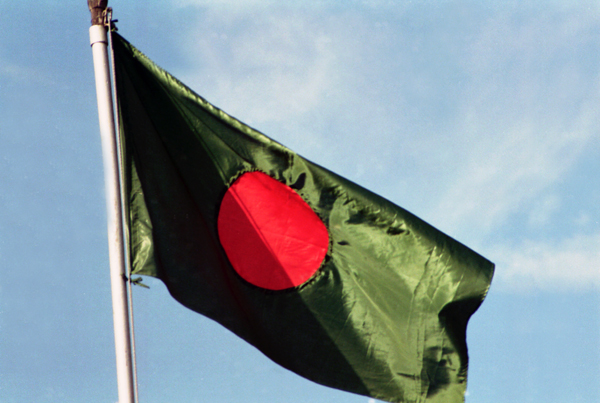
Abdul Quader Mollah, a top ranking Jamaat leader and a prime accused in the trial of war crimes, has at last been executed at one minute past ten on Thursday night at Dhaka Central Jail for his crimes against humanity during the Liberation War in 1971. Mollah was one of the six Jamaat leaders who have been awarded death sentence. His execution was the first case of hanging in the process of war crimes trial. Mollah was indicted in the war crimes trial on six charges. He was accused of killing women and children, a journalist and a poet, raping women and mass killing of 344 innocent civilians at the Alubdi village in Mirpur and elsewhere. His heinous crime earned him notoriety as the ‘butcher of Mirpur’. The International Crimes Tribunal – 2 found him guilty on five counts and awarded him life term in prison on February 5, 2013. This conviction sparked sharp reaction among different sections of the people and gave rise to countrywide movement demanding maximum punishment for Mollah. These events led to the amendment of the crimes tribunal act allowing both parties in the case to submit appeal prayer against the sentence. Following an appeal from the government seeking capital punishment, the Appellate Division of the Supreme Court found Mollah guilty of murders and other war crimes and converted his life sentence to death sentence. Later, on Tuesday night when the stage for his hanging was all set, the defence lawyers hurriedly submitted a review prayer with the SC, which rejected the review prayer after two day’s hearing. The final decision of the apex court cleared the way for the execution of Mollah. The people of the country had to wait for more than four decades to see the trial and punishment of the perpetrators of the most heinous crimes. The execution of Abdul Quader Mollah is just the beginning of the fulfilment of the long-cherished dream of the people who had to shed blood and tears and lose their near and dear ones to create a country of their own. They want to see the completion of the war crimes trial, award of deserving punishment to all war criminals along with execution of rest who have already been sent to the death house.''The execution of Quader Mollah is the beginning of the fulfilment of the long-cherished dream of Bangladeshis''
Bangladesh:Ban Jamaat, Hefazat by Dec: Shahriar Kabir
Ghatak Dalal Nirmul Committee President Shariar Kabir on Friday demanded the banning of Jamaat-e- Islami and Hifazat-e-Islam Bangladesh within December to uphold the achievements of the Liberation War. “Jamaat and qaumi madrasa based Islamist organisation Hifajat-e- Islam should be banned as political parties in Bangladesh within December to save the country,” demanded Shariar Kabir while speaking at the Ganajagaran Mancha at Shabag intersection in the capital. Ganajagarn Mancha is a platform formed immediately after an International Crimes Tribunal handed down life imprisonment to Jamaat leader Quader Mollah on February 5. The Mancha on Friday vowed to continue movement until all war criminals are tried and the verdicts are executed.
At the programme, Shahriar Kabir also claimed that Jamaat has waged war against the country to avenge Pakistan’s defeat and to stop the trial of war criminals. “The government should deploy army to resist them” Kabir said.
He said that Jamaat, accused of atrocities during the 1971 Liberation War, should not be allowed to pursue politics in the country as the High Court cancelled the party’s registration. Shahriar Kabir further said that no foreign conspiracy could foil the trial of war criminals.
Earlier, on June 27, the High Court declared Jamaat’s registration with the Election Commission ‘illegal and void’. The party had immediately challenged the verdict and sought a stay on the verdict. However, the Chamber Judge of the Supreme Court turned down Jamaat’s petition for a stay on the verdict.
On Thursday, Jamaat appealed to the Supreme Court against the HC verdict that declared its registration illegal.
Iftikhar Chaudhry demands fool proof security and bullet proof car! Where are his “Jannisar’s” now?
What a turn of events one can witness just two days after his retirement. The once Almighty, Iftikhar Muhammad Chaudhry knowing his sins and wrong done to the people of Pakistan though his judicial activism is requiring that he be given fool proof security and be allowed a bullet proof car and is essentially demanding the same protocol that he was enjoying as Chief Justice. Wah Sahab Wah! Kya baat aap kee! On the other hand, the incumbent CJ, Mr. Justice Tassaduq Hussain Jilani has asked for his protocol and additional security be removed! What a difference from Protocol demanding Iftikhar Muhammad Chaudhry. Afterall, a low-life like Iftikhar Muhammad Chaudhry could only demand such things! The “request” was moved just a few days before his retirement, by his front man, Dr. Faqir Hussain. It is worth remembering that Dr. Faqir Hussain is on his second extension granted by Iftikhar Muhammad Chaudhry. One must question Iftikhar Muhammad Chaudhry that if he has not done anything wrong to anyone, then he should not fear anything. He must have made judgments on the basis of “law” but having known the darkest period of Pakistan’s judicial activism, we know that Iftikhar Muhammad Chaudhry fears for his life. He allowed the Taliban and Sipah Sahaba terrorists to run havoc in the nation by acquitting them. His actions allowed for thousands of Shias to be killed. He hounded political parties. He hounded bureaucrats. He fired judges and employees of courts! Wah Abu Arsalan, Wah! Iftikhar Muhammad Chaudhry should acknowledge his sins and seek forgiveness from the people of Pakistan. Another key question is that Where are his “Jannisar’s” now? Why should the police be forced to provide security to a man who created a mess for everyone? - See more at: http://lubpak.com/archives/296179#sthash.STxy9fOO.dpufby Sarah Khan

Bilawal Bhutto: ''GSP-Plus status a triumph of Asif Zardari’s policy of “Trade Not Aid”
http://mediacellppp.wordpress.com/

 Bilawal Bhutto Zardari, Patron-In-Chief, Pakistan Peoples Party has hailed European Parliament’s decision to extend GSP-Plus facilities to Pakistan and termed it a triumph of former President Asif Ali Zardari’s “Trade Not Aid” policy, which People’s government vigorously pursued during its tenure that ended early this year.
With the fresh access to European market, Pakistan exports will earn a whooping amount estimated at Rs215 billion extra each year enabling the government to build thousands of schools and hospitals every year while created hundreds of thousands new job opportunities, Bilawal Bhutto Zardari said in a Press statement Friday.
He eulogized the hard-work of PPP Prime Minister Yousuf Raza Gillani, Ministers Makhdoom Amin Fahim, Hina Rabbani Khar and other team members spread over five years for lobbying and meeting the standards and criteria. “GSP-Plus status doesn’t come overnight. Behind it lay the great vision and foresight of former President Asif Ali Zardari and his team over the years,” he added.
PPP Patron-In-Chief pointed out that under directions of former president Asif Ali Zardari the PPP government had signed and ratified a number of conventions relating to human rights, labour rights and environment, lobbied at the highest level with countries of EU and set up special teams of experts and professionals in the ministries of commerce and foreign office to pursue the goal of GSP Plus status with the EU.
Bilawal Bhutto Zardari said PPP had always looked forward for the welfare of future Pakistan and its generations and always sacrificed its present for future generations. Instead of cosmetic schemes to lure the innocent people into debt traps, the PPP weaved long-term dreams for the economic prosperity of Pakistani masses. GSP-Plus status and the Pak-Iran Gas Pipleline are just a few landmark credits of the PPP’s last government at center, he concluded.
Bilawal Bhutto Zardari, Patron-In-Chief, Pakistan Peoples Party has hailed European Parliament’s decision to extend GSP-Plus facilities to Pakistan and termed it a triumph of former President Asif Ali Zardari’s “Trade Not Aid” policy, which People’s government vigorously pursued during its tenure that ended early this year.
With the fresh access to European market, Pakistan exports will earn a whooping amount estimated at Rs215 billion extra each year enabling the government to build thousands of schools and hospitals every year while created hundreds of thousands new job opportunities, Bilawal Bhutto Zardari said in a Press statement Friday.
He eulogized the hard-work of PPP Prime Minister Yousuf Raza Gillani, Ministers Makhdoom Amin Fahim, Hina Rabbani Khar and other team members spread over five years for lobbying and meeting the standards and criteria. “GSP-Plus status doesn’t come overnight. Behind it lay the great vision and foresight of former President Asif Ali Zardari and his team over the years,” he added.
PPP Patron-In-Chief pointed out that under directions of former president Asif Ali Zardari the PPP government had signed and ratified a number of conventions relating to human rights, labour rights and environment, lobbied at the highest level with countries of EU and set up special teams of experts and professionals in the ministries of commerce and foreign office to pursue the goal of GSP Plus status with the EU.
Bilawal Bhutto Zardari said PPP had always looked forward for the welfare of future Pakistan and its generations and always sacrificed its present for future generations. Instead of cosmetic schemes to lure the innocent people into debt traps, the PPP weaved long-term dreams for the economic prosperity of Pakistani masses. GSP-Plus status and the Pak-Iran Gas Pipleline are just a few landmark credits of the PPP’s last government at center, he concluded.
Pakistan's 'ghost schools' threaten next generation
4 Pakistani soldiers killed by blast
http://www.dayandnightnews.com/Four Pakistani soldiers were killed and five others injured in an IED blast in the lawless North Waziristan tribal region today. The Improvised Explosive Device was planted by the roadside and detonated as a security forces’ convoy was passing through the area, military sources said. Security forces cordoned off the area and launched a search operation. No other details were immediately available. No group claimed responsibility for the attack. US and Afghan officials described North Waziristan Agency as a safe haven for Taliban and Al Qaeda elements.
NICL scam: Gilani says he has immunity, cannot be arrested
The Express TribunFormer prime minister Yousaf Raza Gilani on Friday claimed that he has immunity and no one can arrest him, in relation to the National Insurance Company Limited (NICL) scam.
 Speaking to the media in Multan, Gilani said that he gave up his prime ministerial position for the sake of the president’s immunity and now the section one of Article 248 of the Constitution gives him immunity.
“I’ll see how anyone arrests me… The NAB [National Accountability Bureau] chairman is himself summoned, how can he summon me?” Gilani questioned.
Commenting on the National Reconciliation Ordinance (NRO) case, Gilani said that 4,008 people took advantage of the ordinance but none of them faced consequences. “The only people being punished in the case were those who were not related to the case… I don’t believe in this form of justice.”
Gilani has been ordered to appear before the NAB joint investigation team in relation of the NICL scam. The former premier was accused of making the alleged illegal transfer of the investigation officer in the scandal.
Speaking to the media in Multan, Gilani said that he gave up his prime ministerial position for the sake of the president’s immunity and now the section one of Article 248 of the Constitution gives him immunity.
“I’ll see how anyone arrests me… The NAB [National Accountability Bureau] chairman is himself summoned, how can he summon me?” Gilani questioned.
Commenting on the National Reconciliation Ordinance (NRO) case, Gilani said that 4,008 people took advantage of the ordinance but none of them faced consequences. “The only people being punished in the case were those who were not related to the case… I don’t believe in this form of justice.”
Gilani has been ordered to appear before the NAB joint investigation team in relation of the NICL scam. The former premier was accused of making the alleged illegal transfer of the investigation officer in the scandal.
Pakistan police guarding polio workers killed
 Gunmen have shot dead at least one policeman providing security to a team of polio workers in north-west Pakistan, officials say.
Two policemen were travelling from the town of Swabi to Topi by motorbike when they were attacked. It is unclear if the other guard survived the attack.
It is the latest in a series of attacks on polio teams around the country.
The Taliban oppose the polio vaccination scheme, which they see as a cover for international espionage.
Islamist militants have been at the forefront of a decade-long campaign of violence against health workers, who they also accuse of being part of a Western plot to sterilise Muslims.
But earlier this week a prominent religious seminary in Pakistan - which wields great influence with Taliban groups - backed polio vaccinations, saying they are not un-Islamic.
Pakistan is one of only three countries where polio remains endemic, due in part to militant resistance to polio mass vaccination campaigns. Nigeria and Afghanistan are the others.
The current campaign against immunisation was started by the current Pakistani Taliban leader, Mullah Fazlullah, in 2005, and turned more violent after US forces killed former al-Qaeda chief Osama Bin Laden, in a secret raid in 2011.
No group has said it carried out this latest attack.
Gunmen have shot dead at least one policeman providing security to a team of polio workers in north-west Pakistan, officials say.
Two policemen were travelling from the town of Swabi to Topi by motorbike when they were attacked. It is unclear if the other guard survived the attack.
It is the latest in a series of attacks on polio teams around the country.
The Taliban oppose the polio vaccination scheme, which they see as a cover for international espionage.
Islamist militants have been at the forefront of a decade-long campaign of violence against health workers, who they also accuse of being part of a Western plot to sterilise Muslims.
But earlier this week a prominent religious seminary in Pakistan - which wields great influence with Taliban groups - backed polio vaccinations, saying they are not un-Islamic.
Pakistan is one of only three countries where polio remains endemic, due in part to militant resistance to polio mass vaccination campaigns. Nigeria and Afghanistan are the others.
The current campaign against immunisation was started by the current Pakistani Taliban leader, Mullah Fazlullah, in 2005, and turned more violent after US forces killed former al-Qaeda chief Osama Bin Laden, in a secret raid in 2011.
No group has said it carried out this latest attack.
Polio's last stand? 2012 cases Nigeria - 97 Pakistan - 47 Afghanistan - 26 Chad - 5* Source: IMB * Polio is considered "non-endemic" in Chad
Thursday, December 12, 2013
Bangladesh: Jamaat islami leader Quader Mollah executed
In the first ever execution of any war-criminal in the country’s 42 years history, Jamaat leader Abdul Quader Mollah was executed at 10.01 pm on Thursday hours after receiving the copy of the order of the Appellate Division of the Supreme Court (SC) that dismissed the petitions filed by defence lawyers. Till the filing of this report at 10.10 pm the jail authorities were taking preparation to send his body to his village home in Faridpur.
Earlier, after meeting Mollah in the central jail at 7 pm, his son Hasan Jamil told the media that Mollah wanted to meet his lawyers to discuss the issue of filing mercy petition.
“He told us that as per the jail code he has seven days for filing mercy petition and he would finalise his decision by this time. He wants to meet his lawyers,” Jamil said.
Earlier, SC on Thursday rejected the review petitions of Mollah, clearing the way for the execution of the Jamaat leader.
Of the two petitions, defence counsels sought stay on the death warrant passed by the International Crimes Tribunal. The other plea sought a review on SC verdict that sentenced Mollah to death.
On September 17, the apex court had awarded death penalty to Mollah for crimes against humanity during the 1971 Liberation War.
The government decided to execute Mollah on Wednesday at 12.01 am, but his execution was halted following the defence petition moved on Tuesday night at the residence of Supreme Court chamber judge Justice Syed Mahmud Hossain.
The chamber judge stayed the operation of the execution order till 10.30am, following the defence petition.
After hearing the two petitions, the five-member bench of the Appellate Division, led by Chief Justice Md Muzammel Hossain, dismissed the pleas, saying, “Both the criminal review petitions—No. 17 and No. 18—of 2013 are dismissed.” However, the reason for dismissal could not be known immediately.
“There is no legal bar to execute Mollah following the apex court’s order,” attorney general Mahbubey Alam told reporters soon after the top court’s dismissal order.
However, barrister Abdur Razzak told reporters: “The jail authorities cannot take any action without getting the copy of today’s Supreme Court order as the court did not reject our petitions. The apex court may give its observations in the full verdict.”
Soon after the dismissal order was pronounced, pro-Jamaat lawyers brought out a protest procession on the SC premises and chanted slogans: “If Quader Mollah is hanged, every home will be set on fire”.
Pro-AL lawyers brought out a procession, hailing the SC ruling at the same venue.
There was tight security in and around the Supreme Court premises to avert any untoward incident ahead of the review petition hearing and its verdict.
Earlier, in the morning, the SC resumed hearing on the review petition of death row convict Quader Mollah around 9.20am. The court first heard arguments whether the petition could be accepted and asked the chief defence counsel, barrister Abdur Razzak, to start hearing on the merit of the review petition.
Razzak asked the court if it had accepted the review petition. The court replied that it was yet to take any decision on the maintainability of the petition.
Later, the defence counsel sought time from the court to take preparation for review hearing. Afterwards, Razzak began to put forward arguments on the merit of the review petition.
During the hearing, Razzak raised a question regarding the acceptability of the statement of witness Momena, as her statements at the tribunal and before the investigation officer were different.
“If the statement of a witness was not same, his/her statement cannot be acceptable and the court cannot deliver sentence to the accused person,” he added.
Then Justice Surendra Kumar Sinha told that the court had accepted her statement and awarded the death sentence to Mollah.
Referring to Article 104 of the Constitution—the Appellate Division shall has power to issue such directions, orders, decrees or writs as may
be necessary for doing complete justice in any case or matter pending before it, including orders for the purpose of securing the attendance of any person or the discovery or production of any document—Razzak said that the tribunal had issued the death warrant against Mollah by violating the jail code provision.
In response to Razzak’s submission, Justice Sinha said that the tribunal had issued the death warrant as per the apex court’s directives.
Razzak told the court that as per the jail code provision, after issuing the death warrant against any convicted person, the jail authorities cannot implement it before 21 days. But, it did not follow the jail code provision in Mollah’s case, he said.
Responding to Razzak’s submission, Justice Syed Mahmud Hossain said that the sentence of the tribunal would be implemented in accordance with the government order's as Section 20 (3) of the ICT Act states that any sentence awarded under this Act shall be carried out in accordance with the orders of the government.
Opposing Razzak’s submission, attorney general Mahbubey Alam told the court that as per Section 47 (A) (2) of the Constitution, Mollah would not get any remedy for filing a review petition against the apex court verdict.
After that the court went for tea break for 30 minutes at 11am. The court resumed hearing at 11.35.
Mahbubey Alam told the court that Mollah did not get remedy to file review petition against apex court order as the constitution does allow it for him. Barr
ister Razzak urged the court to accept the two petitions to ensure justice for Mollah.
Later, the court concluded the hearing at 11.47am and said that it would deliver verdict after 10 minutes. The court sat at 12.05pm and the verdict was delivered in one minute. Then the judges left the courtroom.
After coming out of the court, advocate Khandker Mahbub Hossain, another counsel for Mollah, told reporters that Mollah could not be hanged till the defence receives the full text of the order on the review petition. “The jail authorities would not be able to execute the verdict till we receive the full text of the order,” he said.
Appellate Division shall has power to issue such directions, orders, decrees or writs as may be necessary for doing complete justice in any case or matter pending before it, including orders for the purpose of securing the attendance of any person or the discovery or production of any document—Razzak said that the tribunal had issued the death warrant against Mollah by violating the jail code provision.
In response to Razzak’s submission, Justice Sinha said that the tribunal had issued the death warrant as per the apex court’s directives.
Razzak told the court that as per the jail code provision, after issuing the death warrant against any convicted person, the jail authorities cannot implement it before 21 days. But, it did not follow the jail code provision in Mollah’s case, he said.
Responding to Razzak’s submission, Justice Syed Mahmud Hossain said that the sentence of the tribunal would be implemented in accordance with the government order’s as Section 20 (3) of the ICT Act states that any sentence awarded under this Act shall be carried out in accordance with the orders of the government.
Opposing Razzak’s submission, attorney general Mahbubey Alam told the court that as per Section 47 (A) (2) of the Constitution, Mollah would not get any remedy for filing a review petition against the apex court verdict.
After that the court went for tea break for 30 minutes at 11am. The court resumed hearing at 11.35.
Mahbubey Alam told the court that Mollah did not get remedy to file review petition against apex court order as the constitution does allow it for him.
Barrister Razzak urged the court to accept the two petitions to ensure justice for Mollah.
Later, the court concluded the hearing at 11.47am and said that it would deliver verdict after 10 minutes. The court sat at 12.05pm and the verdict was delivered in one minute. Then the judges left the courtroom.
After coming out of the court, advocate Khandker Mahbub Hossain, another counsel for Mollah, told reporters that Mollah could not be hanged till the defence receives the full text of the order on the review petition.
“The jail authorities would not be able to execute the verdict till we receive the full text of the order,” he said.
However, Mahbubey Alam said that the jail authorities do not need the order’s copy as the Supreme Court did not provide any observation in the verdict.
Replying to a query, Alam said the government can execute Mollah any time.
Barrister Abdur Razzak, however, said that Mollah still has time to seek presidential clemency till December 23.
He said, “We still have time to seek the President’s clemency till December 23. We will meet Mollah on December 21 or 22 and a decision on seeking presidential clemency would be taken,” he added.
On Tuesday, state minister for law Quamrul Islam, at a press briefing, said Quader Mollah had refused to seek the president’s clemency in the presence of two magistrates.
Joyless Justice: The Unhappy Legacy of Pakistan's Newly 'Independent' Judiciary

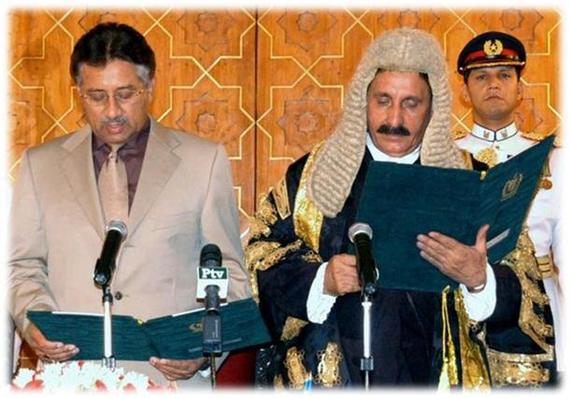
By Bilawal BhuttoPlato's philosophical discussion, the Crito, illustrates the dilemma faced by those of us who yearn for an independent judiciary in Pakistan. Too many of us had to suffer at the hands of a judiciary so independent that it often acted independently of both the basic principles of jurisprudence and the very constitution it swore to uphold and protect. Plato's Crito is a dialogue written about Socrates, who was imprisoned on trumped up charges. His friends come to him in prison, and try to convince him to escape. He refuses, stating that he had lived by the city's laws while they benefited him, he would live by these laws too even if it kills him; he could not pick and choose. His position was that one has to buy into the city and its laws in their entirety or not at all. In essence, it is ever good to respond to injustice with injustice? Can a state exist in which the law becomes optional?

Iran’s Border Violations in Balochistan
The Baloch Hal
MALIK SIRAJ AKBARTensions are brewing on Pakistan-Iran border in Balochistan. To explicitly explain the situation, on needs to borrow a term or two from the contemporary Pakistani political lexicon. The Iranians are violating our “sovereignty”. The Pakistanis routinely use the term “sovereignty” only to refer to the drone strikes launched by the United States. But there are two reasons why the Pakistani media does not report the violation of our sovereignty on the Pakistan-Iran border. One, sovereignty, according to the Pakistani official narrative, is something only a non-Muslim country such as the United States violates whereas Iran is an Islamic republic which cannot be involved in breaching the sovereignty of a brotherly Muslim country. Secondly, it indeed sounds absolutely ludicrous to call for Islamabad’s help considering the fact that Pakistan itself has been involved in violating people’s sovereignty in Balochistan for decades. For the past one month, the Iranian security forces have been excessively firing rockets from their side on the bordering towns of Panjgur and Mashkil located in Pakistani Balochistan. The unprovoked cycle of rocket attacks has caused significant outrage as well as fear among the local population. While one rocket attack on November 25 killed a three-year old Baloch girl and injured her parents and two siblings in Kech district, another citizen, Nasir Ahmed, a resident of Paroom area in Panjgur district, was shot dead by the Iranian authorities on December 10th. Mr. Ahmed’s killing took place only a day after the Iranian security forces fired nine rockets on Mashkil town of Washuk district while they shot another four rockets on Panjgur district. Local residents say the the attacks killed several goats and cows which are the primary source of livelihood for the poor Baloch families in the border areas. Last week, when the Iranians fired four more rockets on Baloch towns, Mir Mujeeb-ur-Rehman, a member of the Balochistan Assembly from the frontier towns, described the attack as a ‘border violation’. He said that a memorandum had been shared both the Iranian Foreign Ministry and the embassy in Islamabad against previous such unprovoked rocket attacks. On November 25, Balochistan Chief Minister Dr. Malik Baloch expressed his anguish over the Iranian aggression and repeated violation of the border. The head of the provincial government “condemned” the attacks and said he had raised the issue with Chaudhry Nisar Ali Khan, Pakistan’s Interior Minister. Contrary to the Chief Minister’s condemnation of the Iranian aggression, Balochistan’s Interior Secretary, Akbar Hussain Durrani, ironically, has been insisting that the Iranians did not fire the rockets. Mr. Durrani may only be attempting to cover up the issue but the matter is rapidly getting so serious that even officials in his own department have begun to leak information to the media about the unfolding situation. For example, Dawn, on December 9, 2013, quoted a Home Department official confirming that the Iranians had violated the border and fired rockets on 11 to 12 occasions within a month. The official added that the Iranian helicopters were also flying in Balochistan’s airspace. In the wake of these alarming activities, the Balochistan government, according to the same report published in Dawn, has written a letter to the National Crisis Management Cell while the Frontier Corps (F.C.), whose primary responsibility is to guard the border, has written a separate letter to the Interior Ministry. Pakistan’s foreign office and relevant departments have not uttered a single word to protest the killing and terrorizing of the Baloch population by the Iranians. The federal government’s indifference is deeply disappointing but still understandable, as stated above, because Islamabad is known for killing, not protecting, the Baloch people within its own borders. In the backdrop of absolute silence observed in Islamabad, one is compelled to agree with the assessment of the situation by the Baloch Republican Party. Headed by Switzerland-based pro-independence leader Nawabzada Bramdagh Bugti, the B.R.P. has alleged that Iran is carrying out these operations inside Balochistan with the support of Pakistan as a continuation of their longstanding anti-Baloch nexus. “Iranian attacks on the Baloch population have become the order of the day,” charged the B.R.P. in its statement which also condemned the recent unfortunate incidents. Pakistani Urdu columnist Saleem Safi may not even be acquainted with what Iran is doing inside Balochistan but his observations about Iran’s changing role in the region that he has mentioned in his column on December 10 in Daily Jang merits attention. Mr. Safi, an ethnic Pashtun and an expert on Afghan affairs, predicted that Iran would follow an aggressive policy toward Pakistan as soon as it improves its relations with the United States. That time has not fully arrived but Iran’s behavior indicates that it has already started asserting its hegemony in the region. As the Baloch expect little from Islamabad to come to their rescue from increasing attacks from the Iranians, we wish to remind Tehran that the world is fast changing and it’s become a different place. Therefore, it is the time for Tehran to give up its decades-old policy of suppressing the Baloch because of their race and (Sunni) religion. There are always batter ways to win the hearts and minds of the people. By attacking the Balochs on the Pakistani side of the border, Iran, in a way, is unnecessarily provoking mass reaction within the Baloch community on both sides. Attacking the Balochs on the Pakistani side will only mount tensions and create new enemies for Tehran. While the Balochs on the Pakistani side are fighting a non-religious, nationalist, secular battle against Islamabad for a free land, Tehran should stay away from this battle as they do not pose a direct threat to Iran’s interests. We fear that the mistreatment of the Baloch on both sides of the border could possibly lead to an unprecedented alliance between the religiously motivated anti-Iran Sunni militant groups, such as the Jundullah, and the multiple left-wing Baloch armed groups operating inside Pakistan. Intensification of the existing conflicts will not serve anyone’s interests. Both Islamabad and Tehran should end their war against the Baloch and treat them as equal citizens instead of brutalizing them.
Tehreek-e-Taliban Pakistan lies about involvement in attacks, officials say
http://centralasiaonline.com/en_GB
Forensic experts link Tehreek-e-Taliban Pakistan (TTP) to attacks that the group denies involvement in, proving that the insurgents lied in what some say is an effort to rebuild their image.The TTP has said it was not behind attacks on a Peshawar church, a passenger bus on Charsadda Road, the Qissa Khwani Bazaar and several others to protect their image, but police investigators and forensic experts say the evidence shows otherwise. "The people died from wounds caused by the same explosives we have seen in other attacks," Dr. Javaid Khan at the Khyber Medical College said. "There is complete resemblance among the explosive matter and human resources used in violent acts." "Telling lies and concealing the truth is a glaring example" of how the militants have no regard for people, he said. But, really, if the TTP is not doing these acts then who is behind them, he asked. "They have mastered the art of terrorism," he said. "When one hears the word 'Taliban,' the next word that comes to mind is 'terrorism.'" The reason for the denials is simple, he said. The TTP's image has suffered a black eye recently for its continued attacks on civilians. "If the TTP told the truth that it carried out all those bombings, it would harm their reputation," he said. A police official agreed. "Denying responsibility for attacks is part of their strategy to restore their dwindling image among the public," Peshawar police investigator Khalid Khan said. They denied involvement in the All Saints Church bombing in Peshawar, for example, only after it received international condemnation, he said. Citizens not believing Taliban claims The lame attempt at cover-up, though, is not really helping the TTP as Pakistanis are laughing at the Taliban's denials, Khan said. The TTP denying responsibility shows how ridiculous they are, Khan said, adding that further denial would erode their credibility, since it is a common knowledge that they carried these attacks. "Such untruths make them a laughing stock, and issuance of untruthful statements will not make any difference," he said, adding that the militants' attempts to absolve themselves of killing innocent people mercilessly hasn't found receptive ears. Charsadda-based police officer Saleem Khan, one who linked the Pakistani Taliban to the Peshawar Church attack, noted that Ansar-ul-Mujahideen, who confessed to committing the act, is a known TTP faction. "The faction couldn't have carried out the attack without out the TTP’s approval." he said. "There are about 65 groups that operate under the umbrella of TTP … with separate wings for suicide and bomb attacks, target killing, kidnapping and other crimes." Ansar-ul-Mujahideen, which also claimed to have conducted the suicide attack that killed KP Law Minister Israrullah Gandapur, is affiliated with TTP, according to its website, which means it permitted it. The Taliban typically likes to claim responsibility for attacks, because it gives the group an opportunity to spout off its hate message. "Taliban are part of the al-Qaeda-run terrorist network that operates in Iraq, Afghanistan, Yemen and other places," Javaid Khan said. "The modus operandi is the same, but it denies some incidents where public sentiments tend to run high." The stench of barbarism and brazenness and ignorance of fundamentalists is sheer example of shamelessness, he added. Gender hypocrisy, too The flip-flopping is not limited just to attacks. The Taliban has also voiced contradictory opinions about the treatment of women, Muhammad Rasool, a Swat-based social worker said. The militants claim they respect women, he said, but they see no problem with insulting, humiliating and flogging females, Rasool said, citing an April 2009 public flogging of a 17-year-old girl in Swat for her alleged illicit relationship with a man as an example to substantiate his claim. "First, the TTP said the decision was good and according to Islamic law, but later they termed it false after global outcry," Rasool said.
Hooligans’ takeover in Quetta
Justice Iftikhar played like Afridi, not Tendulkar: Aitzaz
Daily TimesSenior leader of Pakistan People’s Party (PPP) Aitzaz Ahsan has said that Chief Justice Iftikhar Muhammad Chaudhry played his innings like Shahid Afridi, not like Sachin Tendulkar. Talking to a private TV channel on Wednesday, he said, “Iftikhar Chaudhry did politics and he wants to be a politician,” he added. He said that the chief justice might not have been expecting such a reaction over permitting only one private TV channel to cover the full court reference. “Discrimination was just a no ball from the Supreme Court’s side,” Aitzaz Ahsan said. He maintained that the CJP committed a fatal mistake in the end and he did not leave as Tendulkar, “he just played like Afridi”. Meanwhile, Supreme Court Bar Association’s (SCBA) former president Ali Ahmad Kurd has said that the common man campaigned for two years to restore judiciary, but Iftikhar Chaudhry did not look back upon them after his reinstatement. Talking to a private TV channel, Kurd said that history will not remember Iftikhar Chaudhry as a successful judge. “Restoration of Iftikhar Chaudhry was a God-gifted thing and it was presented to him in a gold plate, but he kept that reward aside.” Kurd added that if the chief justice had issued directives for coverage of full court’s reference to only one channel then it was a blunder. “The chief justice was restored due to media and if media had not take a stand he could not have been restored,” he added. Another former president of SCBA, Asma Jahangir said that the legal fraternity wants a “constitutional and legal chief justice of Pakistan (CJP) rather than a political one”. She told a private TV channel on Wednesday that the CJP should “stop the role of a dramatist now” and it would be the biggest challenge for him in future. “If he fails to entertain media, the media would feel cheated and if he does it he would be inviting the wrath of bar associations,” she added. The former SCBA president said that it is a testing time for the coming judges so they should maintain a jirga system. “If judges said, ‘we are law’ it would be more terrible,” she warned. Asma also appealed to media to come forward by forgetting all unpleasant memories of the past. Ahmad Raza Qasuri, legal counsel of Pervez Musharraf, has said that Chief Justice Iftikhar Muhammad Chaudhry would be remembered as a controversial personality. He said that Iftikhar Chaudhry established the tradition of speaking rather than issuing verdicts, while it has always been said that judges do not speak their decisions, he added. Qasuri disclosed that many controversial verdicts had been issued during his term and particular people have been promoted. In 2007, Justice Chaudhry rose to prominence when he increasingly questioned attempts by then-president, Pervez Musharraf, to cling to power. The military ruler asked the judge to step down. Chaudhry refused. Musharraf later fired him and hundreds of other judges by imposing a state of emergency.
Bilawal Bhutto: PPP looking forward to restoration of justice
http://www.dailytimes.com.pk/Pakistan People’s Party (PPP) Patron in-Chief Bilawal Bhutto Zardari has said that he is “looking forward to the restoration of justice” after the retirement of Chief Justice Iftikhar Muhammad Chaudhry. On the eve of the retirement of the chief justice, Bilawal Bhutto Zardari said that he is hopeful that the people will have an “independent and unbiased Supreme Court” now. Bilawal wrote on Twitter, “Looking forward to the restoration of justice with the departure of the Chief Justice. High hopes we will now have a truly ind & unbiased SC”.
Pakistani Mob Kills Man After Fruit Found Wrapped In Koran Pages

Lawyer for doctor in Bin Laden search flees Pakistan
The main lawyer for a Pakistani doctor who helped the CIA find Osama bin Laden has fled Pakistan after receiving death threats from militants, his colleagues has said. The lawyer had represented Shakil Afridi since his arrest following the killing of Bin Laden in a US raid in Abbottabad in May 2011. The doctor ran a vaccination programme for the CIA to collect DNA to verify Bin Laden's presence at a compound in the city. An assistant and a colleague in Peshawar said the lawyer, Samiullah Afridi, who is not related to his client, had travelled to Dubai. "Samiullah Afridi before leaving for Dubai told me that he has received death threats from militants," Afridi's assistant said. The assistant and the colleague said Afridi had told them he was leaving the country to save his life. They spoke on condition of anonymity to avoid retaliation. The doctor's brother Jamil Afridi said the lawyer had not informed him about the departure. He said the family had a panel of attorneys and would have to choose another lead attorney if it was confirmed. Pakistani officials were outraged by the Bin Laden operation, which led to international suspicion that they had been harbouring al-Qaida's founder. In their eyes Afridi was a traitor who had collaborated with a foreign spy agency in an illegal operation on Pakistani soil. But the doctor, who is being held in a prison pending retrial on a separate allegation, was never charged by Pakistan for helping the CIA, and US officials have demanded his release. The case has caused friction between Pakistan and the US, complicating a relationship that Washington views as vital for fighting the Taliban and al-Qaida and negotiating an end to the war in Afghanistan. The doctor was convicted of "conspiring against the state" in May 2012 and sentenced to 33 years in prison. His conviction was related to allegations that he gave money and provided medical treatment to Islamist militants in Khyber. The doctor's family and the militants denied the allegations. His conviction was later overturned by a judicial official. Now the doctor faces a murder charge that stems from a complaint over a teenage boy who died after the doctor performed surgery on him for appendicitis in 2006. The complaint, filed by the boy's mother, Nasib Gula, alleges that Afridi was not authorised to operate on her son because he was a physician, not a surgeon.Colleagues say lawyer received death threats for defending Shakil Afridi, who helped CIA find al-Qaida leader

Wednesday, December 11, 2013
Cheers! People who drink alcohol outlive those who abstain, study shows
indiatimes.com

'Atheists face death in 13 Muslim countries'

In 13 countries around the world, all of them Muslim, people who openly espouse atheism or reject the official state religion of Islam face execution under the law, according to a detailed study issued on Tuesday. And beyond the Islamic nations, even some of the West's apparently most democratic governments at best discriminate against citizens who have no belief in a god and at worst can jail them for offences dubbed blasphemy, it said.The study, The Freethought Report 2013, was issued by the International Humanist and Ethical Union (IHEU), a global body uniting atheists, agnostics and other religious skeptics, to mark United Nations' Human Rights Day on Tuesday. "This report shows that the overwhelming majority of countries fail to respect the rights of atheists and freethinkers although they have signed UN agreements to treat all citizens equally," said IHEU President Sonja Eggerickx. The study covered all 192 member states in the world body and involved lawyers and human rights experts looking at statute books, court records and media accounts to establish the global situation. A first survey of 60 countries last year showed just seven where death, often by public beheading, is the punishment for either blasphemy or apostasy - renouncing belief or switching to another religion which is also protected under UN accords. But this year's more comprehensive study showed six more, bringing the full list to Afghanistan, Iran, Malaysia, Maldives, Mauritania, Nigeria, Pakistan, Qatar, Saudi Arabia, Somalia, Sudan, United Arab Emirates and Yemen. In others, like India in a recent case involving a leading critic of religion, humanists say police are often reluctant or unwilling to investigate murders of atheists carried out by religious fundamentalists. Across the world, the report said, "there are laws that deny atheists' right to exist, revoke their citizenship, restrict their right to marry, obstruct their access to public education, prevent them working for the state...." Criticism of religious faith or even academic study of the origins of religions is frequently treated as a crime and can be equated to the capital offence of blasphemy, it asserted. - See more at: http://www.hindustantimes.com/world-news/atheists-face-death-in-13-muslim-countries/article1-1161005.aspx#sthash.y7l1BMW5.dpuf
Subscribe to:
Posts (Atom)