The Express TribuneThe Punjab University administration, law enforcement agencies and the Punjab government are all on the same page in an operation to clear university hostels of illegal residents, officials told The Express Tribune. Dozens of students were arrested on Monday for various public disorder offences after protesters burned a bus, disabled vehicles on University Road to block traffic and clashed with police who were clearing out Hostel No 16. The atmosphere on campus on Tuesday was calm and academic activities continued as per routine. Though student unions are banned on campuses, the Islami Jamiat Talaba (IJT), the student wing of the Jamaat-i-Islami (JI), has long maintained a strong presence at the PU. The government, police and university administration finally decided to act against it when a suspected Al Qaeda handler was arrested from a hostel in September. Last month, Education Minister Rana Mashhood Khan, PU Vice Chancellor Professor Mujahid Kamran, Capital City Police Officer (CCPO) Chaudhry Shafiq Gujjar and others met to discuss what to do about the PU hostels. They decided to convert Hostel No 16, an IJT stronghold, into a hostel for girls, for whom accommodation on campus was short. “Some illegal occupants were residing there. The number of female students in PU is almost equal to the number of male students. A strategic decision was taken to shift girls to Hostel No 16, which is considered an IJT stronghold. The IJT went against this decision and took the law into their hands and were arrested for doing so,” a senior official told The Express Tribune. He said that the IJT was sheltering members of banned militant organisations at the hostels. “All such persons have been identified and nominated in FIRs. The Academic Staff Association, Punjab University administration and the government are on the same page on this issue,” the official said. A Punjab University spokesman said that there were a total of 7,500 students living in 28 hostels, of which 3,500 are females. But there were 18 hostels for boys and only 10 for girls, so they decided to convert Hostel No 16. “There was a shortage of rooms at hostels for girls, not boys, and that’s why this decision was taken,” he said. Hostel No 1 is also said to be an IJT stronghold, but officials said that there were no current plans to alter its status. The ASA, which represents faculty members, met on campus on Tuesday and thanked the Punjab government for supporting the administration’s action against the IJT. In a statement, the ASA alleged that IJT members involved in illegal activities had taken refuge at the JI headquarters in Mansoora. “It is shameful that a political party is giving refuge to those supporting militants belonging to banned organisations. Their activities are destroying the education atmosphere of not just PU, but of other prestigious institutes,” the ASA statement read. An IJT spokesman blamed the PU administration and the Punjab government for the situation. “Their aggressive attitude has created a stressful atmosphere on campus. They are trying to convert the university into a police state. The IJT has no connection with any banned organisation and has always struggled for the rights of students,” he said. The spokesman pointed out that an anti-terrorism court had deleted terrorism charges from one FIR registered against some IJT members. Officials of an intelligence agency were led to the Punjab University when a member of a reported Al Qaeda “suicide squad” repeatedly visited a man living in the hostels. That person was said to be the squad’s handler. He was arrested from the hostel in September. An intelligence officer who led the operations in which wanted Al Qaeda figures Ahmad Khalfan Ghalani and Naeem Noor Khan alias Abu Talha were arrested told The Express Tribune that JI had been “directly and indirectly involved” in providing accommodation to Al Qaeda operatives in Pakistan. Khalid Sheikh Mohammad, who is said to be the mastermind of the September 11 attacks in the US, was arrested in March 2004 from the house of a JI women’s wing leader in Rawalpindi, he said. JI Central Information Secretary Muhammad Anwar Niazi said that the allegations were baseless and neither the IJT nor the JI had any links to Al Qaeda. “Anybody is welcome to come to Mansoora and see whether anybody is hiding here,” he added. He said that the PU vice chancellor was spoiling the atmosphere at the PU and making false accusations against the IJT and the JI.
Wednesday, December 4, 2013
Punjab University: Consensus against IJT grew from al Qaeda man’s arrest
Pakistan: The innocent victims of conflict, violence and acts of terrorism
 The life of six-year-old Adnan changed forever after he stepped on a landmine planted on a dirt track leading to his school near his village in Kurram Agency. He lost both his legs in the blast.

Pakistan: A despicable joke
 What kind of a dirty joke is this? Why have the political establishment and the state election authority teamed up in playing this fun game on the nation so churlishly? When indeed will the electorate know for sure if at all the local government polls are on? Except for Balochistan, this it knows not as yet, although months have passed since the Supreme Court had ordered the holding of these elections that actually should have been held years ago but had been not. Disdainfully, while the governments of Punjab and Sindh are just keeping the electorate utterly confused with their ever-changing stances, the Khyber-Pakhtunkhwa's has not even still shown its first card, even as the province's ruling hierarchy is being led by a party that at the hustings had promised to be the first in giving the people their elected local bodies.
And no less is the election authority keeping the electorate befuddled with its own shifting positions, assuring one day that elections would go ahead on a given date but taking a reverse plunge the very next day that these would not. Until yesterday, voices from the authority's quarters were coming out that polls in Punjab and Sindh might have to be deferred to March or April. Even strong vibes were emanating from there that the polls in both the provinces might be postponed indefinitely. But now the authority says these would go ahead, as scheduled earlier, in January. What is all this? Why is so much of this dished-up uncertainty about these polls? Why is so much of dithering and foot-dragging on the official planes to carry out this task, which in any case is an obligatory constitutional requirement? Of course, it is not any hard to fathom the undeniably innate antipathy of the entrenched political class to the elected local government system. It does pose a potent threat to its ages-long hegemony on the nation's all politics and its stranglehold on the sinews of power. And that revealingly should explain why no civilian government has ever earned the distinction of holding elections to the local bodies.
Factually, it indeed is the military rulers who have had this distinction, though invariably earning the opprobrium from the political elite and the thinking class that they raise up elected local bodies to essentially lend spurious democratic façade to their dictatorial dispensations for acceptability of their forced rules nationally as well as internationally. Yes, no question about that. But when was it when we have been a democracy truly? Isn't it that after the praetorian adventurists walk out with their pack, walk in the oligarchs of the entrenched political class to foist their own civilian authoritarianism in place of the military dictatorship? Hasn't the so-styled democratic rule in the country always been a rule of the elite, by the elite and for the elite, and not a rule of the people, by the people and for the people, which in reality makes for a democracy? So how could one even imagine if this entrenched class would acquiesce into something that threatens its political domination, whereas a vibrant local government system unarguably makes up a formidable challenge to its hegemony? Just recall the local government system that Pervez Musharraf introduced. That system threw up nazims and other functionaries who caught the public fancy for their tremendous public services. A mayor of Karachi created waves at home and abroad with his monumental accomplishments and won a recognition that would be his own political clan's cherished envy.
The union councils, in the remoter countryside particularly, came up to be acclaimed widely for serving their electorates immensely gratifyingly. No exaggeration indeed, a silent civilian coup was in the making to eventually unseat the deeply-dug political class from its berth of eminence. Definitely, a new crop of leaders with roots in the masses and with hearts beating with the people was coming up.
But then the entrenched political nobility hit back, at once vindictively and vengefully. Musharraf's own caboodle of the king's party set out to emasculate the system, a hatchet job that they did with a lot of success. The successors were a lot more destructive. With just one stroke, they flamboyantly threw the entire system into the dustbin, blaring that a dictator's work couldn't hold in a democratic order. And then for five long years they just forgot all about the local government system practically, confining themselves to prattling about it sporadically just perfunctorily and acting about it deceptively. And it is now for the apex court's decree that they are moving about, wobblingly, with no heart whatsoever in the enterprise. And in all probability they would go round the exercise ritualistically, but ensuring with the feats of gerrymandering and devious administrative devices to keep the local governments firmly under the entrenched political gentry's thumb, beyond the outsiders' reach. But the election authority has not necessarily to play ball with this overbearing nobility. Unflinchingly, it must stay firm to its resolve to get over the job of local government elections by February countrywide.
And that, incidentally, includes KP's Provincially-Administered Tribal Areas (PATA), but not the Federally-Administered Tribal Areas (FATA). Will then someone in the Islamabad establishment or the election authority tell what cardinal sin have the FATA residents committed that they have still been found unfit for elected local governments and what have they to do to be deemed fit for it?
Another doctor kidnapped from Peshawar
The Frontier PostThe threat to the lives of the doctors in the Khyber Pakhtunkhwa continues as on Tuesday another doctor of Lady Reading Hospital was kidnapped by unknown kidnappers from Hayatabad Phase 7. Dr. Amjid Taqweem who was serving in LRH as Hematologist specialist was receiving threats from the kidnappers and extortionists from some time. According to reports the kidnappers in a Toyota white color corolla stopped the car of the senior professor and kidnapped him on the gun point. Earlier two doctors were also kidnapped who were still missing including doctor Mujahid and Kamran who were also kidnapped two months before.
Concesus of Christians in Pakistan: A Fact or Conspiracy?
 Fight and struggle to gain the fundamental rights and respect is always been a custom of alive and awakened nations. And such kind of efforts has had been made where strong class dominates the weak class, resulting violation of fundamental rights including many other problems. After bearing the persecution, weak class gathered on a platform to raise their voices, passing through a political or a bloody revolution it reaches to the desired destination. During this struggle strong class uses different tactics to block their ways. Discouragement, Inferiority or mentally paralyzation are the major tools of these tactics which can be used to destroy the efforts and weaken the voice of oppressed class. But Nations with Consistency, High morale, who can make through any circumstances to achieve their goals, who have strong will power and able to cross any kind of obstacles in their ways, success becomes their Fate. In Pakistan, before the election 2013, a report of census regarding minorities has been published in which Christians were shown in less number as compared to other minorities. Every sentient Christian was non-satisfied by this report. But the point is weather its a fact or conspiracy! Consider it as a fact then how come the existence of Christian community, institutes and Churches can be found at every corners of Pakistanwhile other minorites do not exists like this. However their population is quite handsome in Sindh Province but it does not seem like they can be more than Christian community. So if its a conspiracy then what could be the hidden objectives. Followers of Christianity is at the top so as the Christian countries and whenever any incident happens in which Christians are the victims, protests and rallies can be observed all over the world, a recent example of which is the Twin Blasts in Peshawar Church. Mostly Churches and Missionaries are linked with Foreign countries which is the reason that their screams can be heard all over the world. In Pakistan Christians are more aggressive against the violation of their fundamental rights and discriminative laws, resulting Govt. of Pakistan to bear a pressure from the whole world. In Pakistan amenities and privileges are distributed according to the ratio of population. A clear example of which can be seen in the National Assembly. According to the recent census report where Christian community is shown in less ditto through the poor electoral system the distribution of minorities seats were not even fair, which can be an objective of this conspiracy. If we do assessment of all these points then its easy to understand that current census report is more than a conspiracy rather than a fact. Objectives could be to put Christian community in a state of discouragement, Inferiority or mentally paralyzation. Furthermore to show the world that other minorities also live in Pakistan which are more in population and Christian community unnecessarily complaining. So its an effort to damage the struggles of Christian community. As a matter of fact, we need to get together to flip this conspiracy and raise our voices against this injustice in a rich manner. No doubt, its a responsibility of each Christian from all sectors. Merely, if Churches registered their members in a fair way it could help to resolve this issue. Its a humble request to all Political and Religious leaders if you wanted to achieve your fundamental rights then struggle well for the correction of census on priority. Success is guaranteed. - See more at: http://lubpak.com/archives/294289#sthash.YgCAu52p.dpuf
Washington Halts Military Shipments Through Pakistan
http://world.time.com
Washington has temporarily halted military supplies moving by ground out of Afghanistan along a key route through Pakistan, according to news agencies, citing safety concerns for its truck drivers.
Activists have been staging protests along key NATO supply routes in Pakistan since November, after a drone strike killed the leader of the Pakistani Taliban shortly before peace talks between the militant group and the government began. Some protestors have been detained for allegedly harassing truck drivers, according to reports.
At present, 60% of NATO supplies leaving Afghanistan ahead of next year’s troop withdrawal are moved by ground through Pakistan, according to the International Security Assistance Force (ISAF). Other ways to move shipments out, through Central Asia or by air, are more expensive.
Read more: Washington Halts Military Shipments Through Pakistan | TIME.com http://world.time.com/2013/12/04/washington-halts-military-shipments-through-pakistan/#ixzz2mUhhiCEA
Pakistan ranks 180 in literacy rate at world level: UNESCO
http://dunyanews.tv/
The 75 percent boys and girls left school before reaching 10th classAccording to latest report of UN education department UNESCO, the illiteracy percentage was 79 percent in Pakistan in 2012 and the number of Pakistan was 180 in the list of 221 in big or small countries in the world. The illiteracy percentage was 72 percent in the youth age 15 to 24 years, 57 percent in the aged 25 to 44 youths, 46 percentage in 45 to 54 years and 38 percent in the people aged 55 to 64 years in the year 2012, it said.Pakistan remained below in the illiteracy from China, Iran, Sri Lanka, Nepal and Burma, while it remained above from Afghanistan and Bangladesh. According to the report 3 million 75 lakh students were going to school and colleges in the year 2012 out of them 2.6 million were Primary level students, 2.9 million students of high school education and 1.5 million students were of colleges and universities. According to the report only 3 percent students reach to colleges and above level out of them 1 percent passed graduation. On the other hand the 75 percent boys and girls left school before reaching 10th class while 81 percent students of 3 classes could not read English words. The report added that 72 and 78 percent students aged from three to five years do not go to schools in Sindh and Balochistan respectively. During survey, the students of sixth and fifth class were asked to read an essay , but 94 percent and 68 percent students could not read the essay. Islam religion makes obligatory to all men and women to acquire education. But here fifty one lakh children are deprived of their basic education.
Tuesday, December 3, 2013
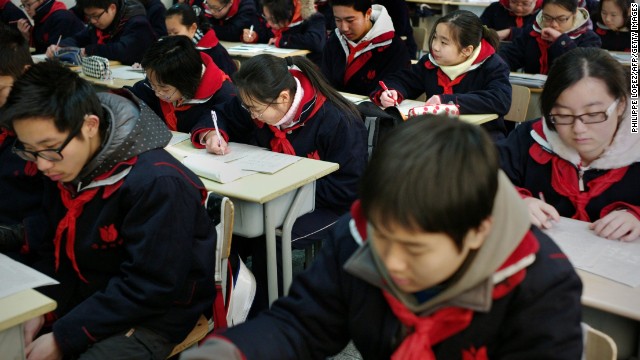
Opinion: What Asian schools can teach the rest of the world
In a global economy, the benchmark for educational success is no longer improvement by national standards alone, but the best performing school systems internationally. Results from the latest PISA assessment, the world's metric for evaluating learning outcomes at school, show amazing changes in the composition of the global talent pool.By Andreas Schleicher

Hezbollah blames Iranian embassy blasts on Saudi Arabia
Bahrain court denies parole for activist

Biden won't make headway in China if he repeats 'erroneous' remarks
U.S. Vice President Joe Biden should not expect to make much progress in defusing tensions over the East China Sea if he plans to repeat "erroneous and one-sided remarks" on the issue when he visits China, a top state-run paper said on Wednesday. Beijing's decision to declare an air defense identification zone in an area that includes disputed islands has triggered protests from the United States, Japan and South Korea and dominated Biden's talks in Tokyo on Tuesday. The United States has made clear it will stand by treaty obligations that require it to defend the Japanese-controlled islands, but it is also reluctant to get dragged into any military clash between rivals Japan and China. Biden is scheduled to meet Chinese President Xi Jinping and Vice President Li Yuanchao in Beijing on Wednesday before flying to Seoul later in the week. But he "should not expect any substantial headway if he comes simply to repeat his government's previous erroneous and one-sided remarks", the official English-language China Daily, often used by China to get its message across to the outside world, said in a strongly worded editorial. "If the U.S. is truly committed to lowering tensions in the region, it must first stop acquiescing to Tokyo's dangerous brinkmanship. It must stop emboldening belligerent Japanese Prime Minister Shinzo Abe to constantly push the envelope of Japan's encroachments and provocations." All aircraft have to report flight plans to Chinese authorities, maintain radio contact and reply promptly to identification inquiries under the zone's rules. U.S., Japanese and South Korean military aircraft have breached the zone without informing Beijing since it was announced on November 23. Japanese and South Korean commercial carriers have also been told by their governments to ignore the rules. China has repeatedly said the zone was designed to reduce the risk of misunderstandings, and stressed that since it was set up there had been no issues with freedom of flight for civilian airlines. The Defense Ministry on Tuesday slammed what it said were "distortions" and "mud throwing" over the zone and the country's intentions. "It is not aimed at any specific country or target, and it certainly does not constitute a threat towards any country or region," ministry spokesman Geng Yansheng said in a statement. NERVOUS REGION Still, the move has added to regional nervousness about China's strategic intentions as Beijing presses its territorial claims in the South China Sea and ramps up an ambitious military modernization program. In Tokyo, Biden called on Japan and China to find ways to reduce tensions, repeating Washington was "deeply concerned" by the announcement of the zone. However, influential Chinese tabloid the Global Times, published by the Communist Party's official People's Daily, noted that Biden had not come down heavily on Japan's side, saying he failed to "sate Japan's appetite" for strong words. White House spokesman Jay Carney said on Tuesday that China's decision was a provocative attempt to change the status quo in the East China Sea and urged Beijing not to implement the zone. He urged China to work with Japan and South Korea "to establish confidence-building measures, including emergency communications channels, to address the dangers its recent announcement has created and to lower tensions". The China Daily said it was obvious Washington had taken Tokyo's side in the dispute. "Biden needs to be reminded that Japan holds the key to peacefully solving the East China Sea dispute, because it is the Abe administration's recalcitrant denial of the existence of a dispute that has prevented Beijing and Tokyo from conducting meaningful communication and crisis control," it said. China wants Japan first to acknowledge that a formal dispute over sovereignty exists, experts say, a step that Tokyo has rejected for fear it would undermine its claim over the islands, known as the Senkaku in Japan and the Diaoyu in China. "Again, our timely visitor needs to be told: It is Japan that has unilaterally changed the status quo... China is just responding to Japanese provocations."BY BEN BLANCHARD
Obama takes on healthcare critics and says: there's no going back
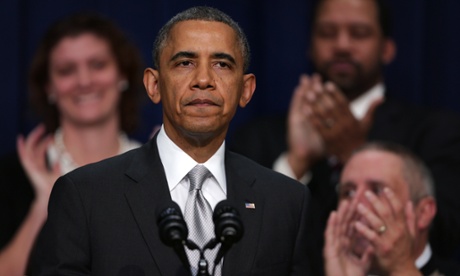
 Barack Obama went on the offensive over his ailing healthcare reforms on Wednesday, challenging Republicans to suggest alternatives and insisting there was no going back to the previous system that left 43 million Americans uninsured.
As the White House sought to use recent improvements to its broken website to turn the public debate around, Obama spoke in front of a group of patients who had already benefited from other reforms under the Affordable Care Act.
شہید بی بی عوام کے دلوں پر راج کرتی ہیں، آمروں کی باقیات یہ رشتہ کبھی نہیں توڑ سکتے۔ ترجمان بلاول ہاؤس
http://mediacellppp.wordpress.com/
کراچی 3 دسمبر 2013: بلاو ل ہاؤس کے ترجمان اعجاز درانی نے اسلام آباد میں بےنظیر انکم سپورٹ پروگرام کے مرکزی دفتر کے سائن بورڈ سے شہید محترمہ بے نظیر بھٹو کی تصویر کو کپڑا لگا کر چھپانے کی شدید الفاظ میں مذمت کی ہے اور انہوں نے اس شرمناک عمل کو پاکستان کے کروڑوں عوام، پیپلز پارٹی کے لاتعداد کارکنوں اور خصوصا ان لاکھوں گھرانوں کی دل آزاری قرار دیا ہے جنہیں BISPکے تحت ان کے اپنوں گھروں میں مالی امداد فراہم کی جارہی تھی۔ BISP کے سائن بورڈ سے شہید محترمہ بے نظیر بھٹو کی تصویر کو چھپانے کے بعد ملک بھر کے عوام خصوصا سوشل میڈیا میں غم و غصے کی شدید لہر دوڑ گئی ہے۔ جس کی وجہ پوری پاکستانی قوم کی جگ ہنسائی ہورہی ہے۔ اعجاز درانی نے کہا کہ حکومت فوری طور پر پاکستانی قوم کے سامنے وضاحت پیش کرے کہ اس شرمناک عمل میں حکومت کا کونسا وزیر یا متعلقہ محکمے کو کونسا معتصب افسر شامل ہے۔ جس کے بعد حکومت فوری طور پر ان وفاق دشمن عناصر کے خلاف سخت کاروائی کرے۔ بصورت دیگر پاکستان پیپلز پارٹی کے کارکنان اس شرمناک حرکت پر سراپا احتجاج ہوجانے پر مجبور ہوجائینگے۔ اعجاز درانی نے یاد دہانی کروائی کہ پانچ سال قبل بھی جنرل ضیاء کی باقیات نے شہید بے نظیر بھٹو کی یادگار شہادت پر ان کی تصاویر کو نذر آتش کر کے بھٹو خاندان سے اپنی دیرینہ نفرت کا اظہار کیا تھا۔ ترجمان نے مزید کہا کہ شہید محترمہ بے نظیر بھٹو ملک کے غریب، مظلوم اور محکوم عوام کے دلوں پر راج کرتی ہیں۔ ڈکٹیٹر ضیاء اور اس کی باقیات نے اپنے مختلف ادوار اور ڈکٹیٹر مشرف نے بھی اپنے اقتدار کے دوران ایسی شرمناک حرکات کے ذریعے عوام کے دلوں سے شہید محترمہ بے نظیر بھٹو کو دور کرنے کی سازشیں کی لیکن وہ ہمیشہ شرمناک ناکامیوں سے دوچار ہوئے۔ انہوں نے کہا کہ نواز حکومت اور ان کے حواریوں کی جانب سے BISP کے نام یا لوگو (Logo) میں کسی بھی قسم کی تبدیلی کے خلاف سخت احتجاج کیا جائے گا۔ ترجمان نے وزیر اعظم نواز شریف سے معاملے کی فوری تحقیقات اور ملوث افراد کے خلاف کاروائی کا مطالبہ کیا۔

One million new visits to Obamacare website Monday: White House
 President Barack Obama's chief of staff said on Tuesday that more than 1 million new visitors had checked out the HealthCare.gov website on Monday, the first day after a major overhaul of the troubled site used to shop for health insurance required under new reforms.
White House Chief of Staff Denis McDonough said the website's new queuing system, used in times of high traffic, worked "pretty well," with 13,000 visitors choosing to receive an email to return later on Monday when there was less traffic, and half of that group accepting that invitation.
"No matter what, we're going to see this thing through," said McDonough, who spoke to a forum organized by Georgetown University and law firm Arent Fox.
When it launched on October 1, the website was supposed to make it easy to buy health insurance in 36 states. Other states run their own marketplaces.
Consumers needing health insurance by January 1 have until Dec 23 to sign up, while all uninsured Americans are required to have plans by March 31.
But the federal website was a flop, frustrating users with errors and slow speeds.
"That's on us. That's on me," McDonough said, echoing apologies that Obama has made for the disaster that has damaged the president's credibility and popularity.
After weeks of around-the-clock fixes, and as the December 23 looms, the government said on the weekend that the website should work well for most Americans.
The White House has signaled that it plans to outline more aggressively the benefits of the healthcare reforms. Obama will kick off the campaign on Tuesday in a speech at 2:30 p.m.
Some of those benefits include ensuring that 129 million Americans with pre-existing medical conditions, including 17 million children, cannot be denied health insurance or charged more for it, McDonough said.
McDonough said work will continue to fix the site and that the strong traffic shows there is demand for affordable health insurance.
"I will say that I've worked on many complicated issues - Middle East peace, Iran, and budget deals. And I can tell everybody in this room that reforming the healthcare system is the single most complicated issue I've faced," McDonough said.
Militancy devastates Pakistani agriculture
centralasia.comLife for Sanaullah Shah was never as hard as it has been for the past few years. "I have 100 acres of fertile land that can grow all sorts of crops, but the wave of militancy has turned our field to barren land," the 52-year-old South Waziristan resident told Central Asia Online. Like other farmers in the Federally Administered Tribal Areas (FATA), he used to earn a decent income yearly, but the militancy that took off in 2007 has slowly but regularly sapped his livelihood. Shah is apparently not alone. "I know at least 50 land-owning families who have become so poor that they don't have enough food for their own use," he said. "About five years ago, the farmers were well off." Impact on economy, citizens Agriculture accounted for 25.9% of Pakistan's GDP in 1999-2000, but its share dwindled to 21.3% in 2009-2010, according to the 2012 Economic Survey of Pakistan. Neglect of irrigation systems has forced FATA farmers to growing farming cereal crops, it said. Before the militancy surged in 2007, 65% of the FATA population worked in agriculture, the survey said. Today, after all the disruptions, only 40% do. "[Besides other aspects of agriculture], the orchards in North and South Waziristan that produced high-quality plums, pine kernels, apricots, pears, peaches and pomegranates have been badly affected by the endless wave of militancy," Muhammad Shakoor, a field assistant at the FATA Agriculture and Livestock Department, said. Militants habitually cut power lines in the tribal areas, he said, adding that such sabotage has brought farming in Kurram, Khyber, Bajaur and Orakzai agencies to a standstill. "In 2000, about 35% of households lived below the poverty line in FATA, which reached 66% in 2011," Shakoor said. "We used to grow wheat, vegetables and fruits for the other parts of the country, but now everything is in shambles," Khyber Agency resident Muhammad Gul said. "Now we don't have enough food for own personal use, let alone for commerce." Likewise, farmers in Waziristan, who are respected for breeding sheep and producing high-quality wheat and maize, have been on the receiving end of the violence. Fear of the Taliban has discouraged agricultural consultants from venturing out even to peaceful areas of FATA, South Waziristan resident Saleh Muhammad said. Kurram Agency farmers suffered, as did their counterparts elsewhere in FATA. "We earned Rs. 5m (US $46,000) [yearly in 2005] from a variety of apples known for their flavour and sweetness," Parachinar-based farmer Shaiq Hussain said. "Our income dropped to a meagre Rs. 500,000 (US $4,600) [in 2011]." "Farmers faced problems in transporting their goods to markets due to closure of roads," he said. "Last year, the people [of Kurram] lost more than Rs. 250m (US $2.3m)." FATA taking steps To help farmers recover from those challenges, authorities in FATA have launched numerous programmes to strengthen agriculture. "We are preparing the farmers to increase their output by employing modern techniques," an official of the FATA Department of Agriculture Extension, said. The programme focuses on land reclamation, training farmers in off-season vegetable and mushroom cultivation and establishing farm service centres to boost their yield, he said. "We are establishing tea plantations in Orakzai, Kurram, Bajaur and South Waziristan agencies where 50,000 plants would be cultivated every year," he said. Results in the tea plantations indicate a bright future for that crop, he said. FATA vs. Malakand Farmers in Malakand Division, in adjoining Khyber Pakhtunkhwa Province, who suffered from the militancy between 2007 and 2009, are also back in business. A 2012 survey by the National Agricultural Research Centre (NARC) showed that nearly 48% of Pakistan's total fruit is produced in KP – with Swat District being a major contributor with 25%, which decreased to 10% when the Taliban ruled Malakand Division from 2007 to 2009, Murad Shah, secretary of the Malakand Farmers' Association, said. An estimated 55% to 70% of the fruit grown in Malakand went to waste during the era of Taliban shelling and bombings and the curfews and road blockades that authorities had to impose, he added. However, the restoration of security after a 2009 military operation in Malakand has meant a resumption of fruit and vegetable exports after the 2007-2009 Taliban reign of terror forced a halt. Swat, Buner, Lower Dir and Shangla districts are producing bumper crops of oranges, apple, grapes, peaches, persimmon and other fruits again, Malakand Farmers' Association Secretary Murad Shah said. Swat alone grows 18% of the country's tomatoes. "In the past two years, we earned about Rs 3.5m (US $32,000) [total] just from maize," Dir farmer Shinwar Shah said. "We are getting help from the government's experts on regular basis."
Pakistan: Jamaat-e-Islami has links with Taliban, Al-Qaeda
 MQM chief Altaf Hussain has alleged that the Jamaat-e-Islami (JI) has connections with Taliban and Al-Qaeda.
Addressing the MQM General Body workers meeting via telephone from London, Altaf Hussain said JI and the members of its student wing Islami Jamiat Tulaba (IJT) were being killed in US drone strikes in Pakistan and Afghanistan.
"The JI and IJT have close links with outlawed organasations and the federal government should announce a ban against them."
In reference to JI Ameer Munawar Hasan, Altaf said: “General Niazi was killed by Hakeemullah Mehsud but when Hakeemullah was killed he was called a martyr.”
The MQM chief further said the JI was involved in conspiracies to destroy Pakistan. Altaf Hussain also called for cases to be lodged against the JI.
Altaf Hussain asked the government, army and agencies to stop victimisation of Muhajirs. “The army will not be able to control the situation if the Quaid and his workers lose patience.”
He added that IJT activists involved in acts of violence in Punjab University were released a day after being arrested, while MQM workers were being targeted and arrested.
"If there are cases against IJT members, they are not arrested by any institution, and even if arrested, they are released ."
Removal of SMBB’s portrait from BISP logo disgusting and unpardonable, Bilawal House
A spokesman of Bilawal House has strongly condemned the defacing the logo of Benazir Income Support Programme (BISP) to remove portrait of Shaheed Mohtarma Benazir Bhutto from the signboard in its Islamabad Headquarters and demanded immediate action against the officials involved in disgusting and unpardonable act.
Afghanistan:Presidential hopefuls asked to explain position on rights
Afghanistan's HIV Rate Up 38 Percent in 2013
http://www.tolonews.com/Officials of the Ministry of Public Health (MoPH) on Sunday announced that cases of the deadly HIV virus in Afghanistan were up by 38 percent from last year. December 1 is the international day for building awareness of HIV/AIDS and fighting it. Najia Tareq, the Deputy Minister of Public Health, said new and more robust efforts were being taken in Afghanistan every year to address the spread of the disease. "The international day for fighting HIV is the best opportunity to raise people's awareness about HIV/AIDS and renew commitments to those who are fighting against HIV," Tareq said. According to the United Nations, around 5,000 people are thought to live with HIV in Afghanistan, but only 30 percent of them have been tested. "The Ministry of Haj and Islamic Affairs is committed to making the people more aware of HIV through the Mosques, Takya Khana and other religious places," Advisor to the Ministry of Haj and Islamic Affairs Mohammad Sharif Robati said. Meanwhile the United Nation International Children Fund (UNICEF) has said it will continue its efforts to curtail the spread of HIV in Afghanistan, especially amongst mothers, through 2015. "Reducing the transmission of HIV from mothers to children through 2015 is a real target and we believe that we will reach this target," UNICEF Health and Nutrition head in Afghanistan Dr. Nasreen Khan said. "In developed countries, the transmission of HIV from mother to children is entirely prevented by giving voluntary counseling, access to anti-virus medicines, safe child birth and breastfeeding." Ghulam Mujtaba Fayez, the Director of the HIV/AIDS treatment center in Kabul, told TOLOnews that five to seven people visit the center for testing daily. Based to official reports, more than 300,000 Afghans have been tested for HIV/AIDS this year.
Pakistan's Shia Genocide: Yazidi terrorists shot martyred a Shia Muslim in Karachi
https://www.shiitenews.comNotorious Yazidi takfiri nasbi terrorists shot martyred a Shia Muslim near Singer Chowrangi in Karachi on Tuesday. Shiite News Correspondent reported here that notorious terrorists of outlawed Sipah-e-Sahaba targeted Syed Zakir Shah in Korangi area near Signer Chowrangi. He embraced martyrdom and his body was taken to hospital for postmortem. Shia parties and leaders have condemned the targeted murder of Zakir Shah. They said that genocide of Shia Muslims continued unabated across Pakistan but government has been appeasing the terrorists instead of eliminating them. They demanded immediate action against the terrorists
Pakistan's Citizen & Police Centre: A hoax played too many times
Nobody in Pakistan, not even the citizens of Islamabad will find solace in the news that Islamabad Police has inaugurated a Citizen and Police Centre. Nobody is raising hopes high that after the setting of the centre the police will stop mistreating the poor citizens or favouring the more affluent party in incidents of crimes committed and FIRs filed.
The hoax has been played too many times to fool anybody.
Every major city, district, tehsil and even towns had in the country, some even have now, such committees and centres at one or another time and in spite of that the police arrested the innocent, beat them to pulp and forced them into confessing to crimes that they had not committed. If the arrested men and women were poor and could not bribe the concerned cops or knew nobody influential to back them up, they were, and are, tortured no matter how good the members of a toothless committee to coordinate efforts with police were. The presence of such committees and centres not withstanding; gambling dens, drug trade went on openly, and goes on even now, drug peddlers sell the poison even near police stations. Robberies, thefts, murders, rapes, abductions, batha mafias and the victim businessmen have existed side by side along with such committees and centres. If anything, these bodies are just public relation ploys by the department that wants to thwart any effort of the government in the direction of creating bodies of civilians who can supervise the police department and make sure that the officials stick strictly to the law when dealing with crimes and criminals, as well as the innocent.
From the citizens point of view these committees and centres, even if citizens are included in these, are toothless and cannot put the powerful and corrupt law enforcing agencies on the right path.
As far as Islamabad goes, the suggestions and proposals below are for the consideration of the country's Interior Minister Chaudhry Nisar, as he is responsible for the law and order of the capital. We also, nonetheless, request the home ministers of the provinces that if they want to improve the performance of police in their respective provinces, they should also consider our suggestions.
1) We should also take into account that the internal system of discipline has completely failed in all the provincial and capital police departments. 2) The police departments were organised by our British rulers not to serve the people but to intimidate them and force the masses into submission to the government run by the English. We are still clinging to the ancient police system in the impossible hope that the individuals who are part of police will find it in their heart to serve and not torture their fellow citizens. 3) The departments comprise mostly corrupt individuals from top to bottom. 4) Our police is not properly trained. 5) The selection process is so corrupt that even criminals with long charge sheets find employment in the police departments. 6) Police stations don't get government funds for their activities in connection to their field operations and even for purchasing stationery. 7) Police don't have swift and sturdy vehicles to purse criminals; 8) Cops don't have modern equipment and laboratories. 9) Police don't have modern weapons to fight the well-armed criminals. 10) Police salaries are very low compared to the lucrative chances they get to enhance their incomes by just allowing crimes to happen.
But when all is said and done, the most important missing link is that there is a total lack of local citizens' supervision over the law enforcing agencies, who can in a flash arrest a Pakistani, even an innocent one, and strip him or her of all his or her fundamental rights and diginity and keep him under custody. No police official high or low is punished for wilfully arresting a free citizen on trumped up or totally false charges.
There should be committees at tehsil and district level of respected citizens comprising retired or working principals of education institutions; president of local bars or their nominees, retired judges, journalists and known social workers. These committees should have the power to inspect police stations, ask for progress in investigation of cases and hold inquiries on applications against police by members of the ordinary public. In case, these committees find any cop or high official guilty; the punishment should be automatic and according to the guilt. These committees should have the right to make suggestions and these should be acted upon. Their recommendation should have teeth and the police official should know that the committees' views can result in their demotions, stoppage of salary, stoppage of annual increment, suspension from job and even dishonourable discharge.
Unless, such citizens committees are formed all over the country, there may be a hundreds such citizens and police centres in the country as the one recently inaugurated in Islamabad but the lawlessness inside the the police stations and outside the police stations will continue.
Pakistani Journalist Threatened For Reporting the Issues Of Minorities
It’s been more than once that Rana Tanveer has been threatened. Rana Tanveer is a Lahore-based reporter at a reputed English newspaper. As he reports, he received a one-page letter, in the Urdu language, terming him an apostate and accusing him of writing in favour of Ahmadis and Christians. “It warned me to stop writing ‘against’ Religion and seek ‘forgiveness’ from God,” he said. It further warned him that if he did not desist, he would be killed — since that is the punishment of a person declared an apostate. “I can’t work like this; no reporter can, if he cannot roam about freely,” said Tanveer. At first, he did not take the letter seriously, but a week later he received another letter after he says, he felt he was being followed on a motorbike. “It’s a scary experience. I made a few turns just to be sure that this was not a figment of my imagination, but the man on the motorbike persisted. I knew then that this was no joke and I had to do something. ”While on the other hand his seniors at work have advised him to file a complaint with the police, which he has without naming anyone “due to security reasons”. “My editor told me to keep a low profile and not to report on minority issues for a while, and if I had to, it would go without by-line,” said the journalist. One of his colleagues said, “As a journalist, perhaps the biggest satisfaction in this otherwise perilous and often under-paid profession is one’s by-line; it also lends credibility. However, the right to information is threatened when media persons threatened.” Rana Tanveer often times confronts a surfeit of minority rights abuses scattered around his city nevertheless he asserts that few journalists tend to engage in these issues. “Mine seems to be a lone battle. I am often scorned by my colleagues for reporting ‘chooras’ (derogatory term used for Christians, also among the poorest sections of society and consigned to menial janitorial jobs) and ‘Qadianis’. Nevertheless it’s not lack of sympathy to these rights issue by itself that keeps journalists from reporting on them. A senior journalist and communication expert, says,”It is also quite dangerous to write about “the victimisation of Ahmadis, Christians or Hindus”. Nevertheless, he added: “Journalists have to write what is right. Threats and killings are hazards of this job living in an increasingly intolerant society.” - See more at: http://www.christiansinpakistan.com/a-journalist-threatened-for-reporting-the-issues-of-minorities/#sthash.F5B6vcjA.dpufImperilled for the sake of minorities’ rights, a journalist faces threats as he writes for persecuted Christians in Pakistan.

Pakistan: Bail denied to Ahmadi doctor caught reading the Holy Qur'an
Ahmadiyya Times
A bail application was denied today for the 72 years old Ahmadi doctor who has been languishing in a Pakistani jail since Monday, November 25th. Dr Masood Ahmad, a British national, was arrested in Old Anarkali area of Lahore on blasphemy allegations for having read the translation of a verse from the Qur'an, the Muslim Holy Book. The Defendant was later charged with the Ahmadi-specific portion of the Blasphemy Law - section 298-C of the Pakistan Penal Code - when an enraged mob showed up at the police station demanding charging Dr Masood for ‘posing as a Muslim.' The mullahs presented a secretly recorded video as an evidence of the ‘crime’ showing Dr Masood referring to a Quranic verse while reading aloud its Urdu translation. The local police accepted the video tape into evidence and later raided the defendant's clinic for additional 'objectionable materials.' According to a Twitter post by the Ahmadiyya spokesperson in Pakistan, Mr Saleem-ud Din, 'the magistrate hearing the bail application dismissed it while there was a heavy presence of mullahs at the court premises.' According to the laws of Pakistan it is a criminal act for an Ahmadi to read the Holy Qur'ān or act in a manner that may project the Ahmadī as 'posing as a Muslim.'
Interview: Sherry Rehman, Former ambassador to the US (November 2011-May 2013)
Is there any truth to the commonly held perception that Pakistan has a love-hate relationship with the US?By Rehana Hakim

 Relationships with superpowers are anything but static. The love-hate binary is an intellectually lazy construct, because the relationship cannot be characterised as one profiled to doom or disengagement.
Pakistan is neither a lost love nor a hidden wife and all such metaphors should be thrown out the window. Bilateral relations between two states cannot and should not be reduced to sound bytes like this. States have interests, not irreversible enmities or love-fests.
What have been the major irritants in this relationship?
Some of the enduring irritants are related to unrealistic expectations from both sides. The problems are also often embedded in the public narratives that have evolved over the years. Pakistan, for instance, would be better served if we stopped looking for grand strategic bargains, which I think is a shift our civilian governments have made, but this has not filtered down to the public level. America would also do the bilateral relationship a favour if it looked at its Afghanistan challenge squarely in the eye, and acknowledged the complex issue of Afghan security and stability, which should not be made a responsibility or burden for Islamabad alone as the US exits Afghanistan.
On a specific level, of course, drone attacks constitute a major challenge for Pakistan’s civilian governments, as they find these politically unsustainable, while the US cannot erase the memory of finding OBL in Abbotabad, and so on. These issues fuel the infamous “trust deficit” which is always referenced in current discourse.
What were the challenges you faced in your tenure and how did you manoeuvre your way through the minefield: Osama bin Laden, Shakil Afridi, Afia Siddiqi, drones and Pakistan’s role in Afghanistan?
The bilateral relationship was facing its worst low when I was yanked out of parliament and sent in to deal with the crisis. After the multiple setbacks of 2011, the Raymond Davis and OBL episodes, the martyrdom of our soldiers at Salala literally spun the relationship into an extraordinary tailspin.
It was a huge diplomatic as well as personal challenge, because it entailed stepping straight into the eye of a strategic storm between the two countries, right after the Memogate and Salala crises.
My first job was to steady the potential decline, and to get both sides to start understanding what the other needed. The hardest part was the first six months, when I had to shuttle back and forth between Washington and Islamabad to explain how we could best unlock the latest and toughest knot.
In Islamabad this was the first time that any major foreign policy decision, not rhetoric, actually went to parliament, which is crucial for actions rooted in public consent. Washington was not used to waiting for Pakistan’s democracy to speak, and it took months of working days that blurred into nights in the winter months to explain why Islamabad was taking its time for the resumption of opening our highways to the NATO pullout from Afghanistan, and to advocate empathy to key Congressional leaders. And that the need for an apology for Salala was not my own hobby horse, but was required by the system, across the policy board, including parliament, to open the doors to the resumption of full ties.
Representing Pakistan’s interests, and explaining its multi-dimensional texture, was my only agenda, and I am grateful I had good American interlocutors in the State Department, White House and Pentagon, who did appreciate how we felt after months of constant meetings, but conveying that across the board, especially to Congress was a real daily challenge, even for them.
OBL’s presence on Pakistan’s soil is not something that Americans will likely forget, even though the Obama Administration learnt to put it aside in the interests of working through joint challenges. We often had to face tough words from Congress and the Senate over it, as well as on Shakeel Afridi, who was seen as the hero who led to OBL’s capture by many of his champions in Congress.
The drone issue was actually the toughest to navigate, because every time it was raised publicly in the US, or some international NGO would question the covert warfare drones allowed America to wage, we would see a strategically placed article in the mainstream DC press, which would allege, without any semblance of proof, that Pakistani governments, even after Musharraf’s regime, were somehow engaged in a “wink and nod policy,” whereas the reality was very different.
The reality was that it was the first issue I was asked to raise as ambassador in my high-level meetings, and it was the first item on our agenda back home in the highest-level internal causcuses we would hold whenever I was called back to Islamabad for consultations during the post-Salala crisis phase.
As the ambassador, my job was to be the first line of defence for Pakistan in the United States, so it was not for me to parse the efficacy of drones as an instrument that destroys terrorist targets. But it certainly was my job to insist that strikes need to go down and be completely stopped, especially given that the Americans would admit first privately and then publicly, that the core of Al Qaeda, which constituted their High Value Target list, has been degraded, dismantled and destroyed in our part of the world with Pakistan’s help.
It is generally believed that:
a) The Republicans are more supportive of Pakistan than the Democrats.
b) All US governments are more comfortable working with military governments in Pakistan (Generals Ayub, Zia and Musharraf).
Do you agree?
Things have changed in the US. However, I will not deny that historically all administrations have found it easier to work with military governments in Pakistan, because it gives them one window to deal with, and also because a great deal of the issues they prioritised have been security-centric. Today, though, Pakistan’s transition to democracy, with one government gracefully exiting for another after general elections and a full term, is also being appreciated in the US, across the board.
In the context of the war on terror in Pakistan, the US has continued to ask Pakistan to do more and more. Is there any understanding or realisation of what Pakistan itself has suffered in the war or terror?
There was very little understanding of that when I got there, and it’s a hard dynamic to shift, particularly when Pakistan was routinely in the crosshairs of alleged terror plots and headlines. Among other things, which included constant Congressional meetings, engaging key members of the American media, and public speaking, I started sending a weekly “Pakistan Casualty Count” to Congress, and key players, which did immediately register a point. It jolted quite a few offices out of the old narrative, but we still have a long way to go. The “do more” mantra will continue, albeit with more courtesy, as long as we too remain victims of our own terrorists. But in DC, it was important to stay away from the ‘victim narrative’ in reminding mainstream America that Pakistan has lost more than 50,000 of its own in this war on terror and is still under fire, because the point almost always registered with interlocutors and general audiences. Most of the time, they are fed a daily diet of one side of the picture, that is the nature of the international media.
Also, if one really wants to make a difference, this cannot be a one-wo/man job. One has to utilise the resources of senior officials in the embassy, empower them for outreach, give them a consistent message to carry, and let Brand Pakistan get some air. Our DCM, for instance, would team up with officials and go out on the Hill to brief staffers and media, and meet business leaders; this made a big difference. We did the same with the huge Pak-US community, reaching out via newsletters and phone conferences every month.
This government, as also previous ones, have talked of trade not aid from the US. Given the situation in Pakistan, do you think this is a realistic demand?
It certainly is. There is no appetite for an FTA ( Free Trade Agreement) in Congress, even if the administration pushes it, but there is certainly room for tariff changes for our exports to access their markets. And if we improve our security situation, there is a robust line of big US investors in the pipeline, ready to come in.
The search for sustained common ground like economic interests may seem like an unambitious or unglamorous goal, but believe me, it is the one that does the best service to Pakistan, and addresses our need to redefine our international role as a responsible and peace-mongering, democratic, global player.
In his book Shooting for a Century, Stephen Cohen maintains that the US policy apparatus for South Asia, has been severely deficient and dysfunctional. Do you agree? Also that the US policy of dehyphenation in the context of India and Pakistan has worked in India’s favour. Should Pakistan be feeling insecure about the US’s growing links with India?
Pakistan should certainly be looking to building peace constituencies with India and Afghanistan through very challenging times, and civilian governments do recognise that a pivot to the region should be their first priority. The US’s strategic embrace of India has to do with its own management of Pacific power plays, in the context of the whole China-Asia rising phenomenon, not as some rejection of Pakistan, which is unfortunately seen as a function of Afghan stability in a broad matrix.
But we have to understand that Indian diasporas bring some of the world’s biggest wealth-based business opportunities to the US-India equation, and Indian investment in the knowledge economy has yielded serious dividends in the American search for markets as well as equity. The Indian military’s expanding defence hardware shopping list, as the largest importer of arms in the world now, has also ensured a steep leverage gradient with the powerful mil-bus complex in the US. So while some of us talk about the inequity of the US-India nuclear deal there are very few takers for this conversation in American strategic circles.
In your view, does the US administration see Pakistan as a help or hindrance on the road to peace in Afghanistan?
The US undoubtedly sees Pakistan as a front-runner in the Afghan peace process. Pakistan, under its last civilian government, has tried very hard to shed the notion of aiming for “strategic depth” in Afghanistan. Afghanistan is for the Afghans to run, and for them to govern. This should be the strategic priority across the board in Pakistan’s corridors of power. Importantly, this is also the view of the majority of 180 million people of Pakistan. So we need to continue with that vision, but the problem, of course, still won’t go away. Who will secure, finance, stabilise and pacify Afghanistan? Pakistan certainly cannot carry that burden, nor should it seek to.
For the last five years, all offices in Islamabad have moved to assure Kabul of their neutrality. The idea was to transmit the sense that Pakistan does not want to play favourites, and yes, no one is invested in promoting the Taliban or any other power in Kabul. This has to be a long-drawn out Afghan decision.
We told the Afghans and Americans we will support their political reconciliation if that is what they want, we will support their 1.5 million refugees again until 2015, and we will support their elections, and assist development. But we should repeatedly emphasise that we can’t be the guarantors of a peaceful endgame as US/NATO forces transit out of Afghanistan, leaving in many places a security vacuum that has already begun to roil our eastern border and tribal areas.
The Americans will be leaving Afghanistan next year. Do you fear, as most Pakistanis do, that Pakistan will suffer the same fate, or worse, that it did post-1989, following the end of the Cold War?
The 2014 timeline poses challenges for the whole region, but Pakistan’s stakes in Afghan stability are vital. The long porous border that we share with Afghanistan makes Westphalian notions of security very difficult for us, as the border often becomes a revolving door for non-state actors that have developed the skills and acquired resources to stalemate, if not defeat the world’s largest international coalition of forces in Afghanistan. So yes, the short answer is, I would be worried, very worried about the escalated nature of the fallout on Pakistan if a security transition in Afghanistan is full of holes. Which it already is, and we see the playout already.
Does Pakistan have any friends on Capitol Hill?
Yes, we do, although after the OBL incident, they are few and far between. We had also not been leveraging our best assets in the Pak-US equation, which is the Pakistani-American community. I noticed that a sustained outreach campaign to this group ensured that they rallied very quickly to our call. They can’t change the game, that only happens when core realities shift on the ground, but they do form an invaluable bridge to the political heavyweights on the Hill, on the Beltway, and in the administration.
Which areas do Pakistan and the US need to particularly work in to develop a measure of trust?
Pakistan’s relationship with the US will change for a stabler, more normal trajectory, if we leverage that friendship in ways that are broad-based and focused on long-term futures. Our short and medium-term goals are too loaded with outliers and events not within either’s control, so we should seek to move beyond a security-based relationship. I think that is a stated mutual goal we should build very seriously on. Trust will also flow when there is less to take from each other, and more to build on together.
Ostensibly Prime Minister Nawaz Sharif failed to secure any concessions, any promises from the US President on his trip to the US: drones, Kashmir, Afia Siddiqi. Both agreed to disagree. Would that be a correct assessment?
One, this is the nature of the current relationship. At least it is mature enough to sustain disagreement. Two, why should any head of government only meet with his/her counterpart to obtain concessions? Three, we need to resolve outstanding bilateral issues with respect and grace, and that will happen faster when we set our own house in order. Four, we need to stop imagining that Americans like subtext. American culture prefers and respects plain talk. You don’t expect, you don’t ask, you don’t get.
If the Pakistan government makes any headway in its talks with the Taliban, do you see the Americans halting the drone attacks?
The drone attacks will likely continue as long as the US intel apparatus continues to identify High and Medium Value Targets in FATA through their own sources, satellite surveillance and otherwise. Or they decide the political costs are not worth the strikes any more. It will be an internally-driven decision, whenever it comes. We should hope for better outcomes, state our case as best as we can, and as I keep saying, get our own counter-terrorism plan in order, whatever that may be.
Was there ever a golden period in Pak-US relations?
We were all children then, but the image of Jackie Kennedy sweeping through the streets, pelted by rose petals and “I Love America” flags on a visit to Pakistan appears to resonate as a high period in the relationship. But I doubt very much that there was ever a “golden period”. It certainly functioned at a different level of innocence, if you like, with the Americans building signature projects like the Tarbela dam, and Pakistani students flocking to American Centers for study-aids and scholarships.
I told them in public lectures, that while I grew up in a Pakistan where US universities actively encouraged Pakistani students to apply for scholarship, and I went to Smith College on one, today’s young Pakistanis are unable to see the US from any other lens than the one they see refracted on television every time there is a drone attack. They see drones, unfortunately, as the projection of American power, not the Fulbright scholarships America invests in, with Pakistan now as their largest country programme. This promotes a dangerous cognitive disconnect between the two people, because the American side does not see drones unloading missiles at all, (it’s been for long, a largely covert programme in the US), while the Pakistani people see its ally raining missiles on 70 television screens. The future of foreign policy lies in societies, not just states, pressing for change and engagement, or its obverse.
This interview was originally published in the November 2013 issue of Newsline as part of the cover story on US-Pak relations.
Misleading figures: Shahbaz Sharif's Punjab omits dengue deaths from datasheet

Pakistan: Attack on Express: Journalists give govt 72-hour ultimatum to arrest culprits
The Express TribuneIn response to yesterday’s attack on the offices of the Express Media Group in Karachi, journalists boycotted the Punjab Assembly, Express News reported on Tuesday. Giving the government an ultimatum, they demanded that those responsible for the attack should be arrested within the next 72 hours. They added that if they were not caught in the given period of time, journalists would hold country-wide rallies. On Monday, at least four armed assailants riding motorbikes threw two home-made bombs and had indiscriminate fired at the entrance to the building. A security guard, Faizan Ali, was injured as a result. The journalists’ community strongly condemned the attack, terming it an act of terror. The press gallery leader said “we condemn this attack and we will show people that the media is not a soft target.” The leader of the press club, Arshad Ansari, said that ‘condemn’ is not a strong enough word. Addressing political leaders, he asked where the people responsible for the earlier attack on the Express Media Group are, adding that “in the country’s history, this is the first grenade attack on the press.” “We will not leave this place until the responsible parties are not brought forward,” Ansari stated. Pakistan Federal Union of Journalists (PFUJ) leader said that if the men who attacked the Express Media Group offices are not brought to justice within the next 72 hours, country-wide protests and rallies will be held. The earlier attack on the same building on August 16 had left two staff members injured. Condemning the attack Alliance for Access strongly condemned the attack on the Express Media Group office in Karachi. Alliance for Access is a nationwide coalition of civil society organizations, corporations, media houses, telecommunication companies, academics, and student groups to promote open access in Pakistan, “We are appalled and disappointed by the lack of security provided to the Express group office in Karachi, despite being under constant threat,” a press release by the coalition stated. According to the Committee for Protection of Journalists, over 24 journalists were targeted & killed for their work in Pakistan. Pakistan is on the 8th spot in the CPJ’s 2013 Impunity Index, which spotlights countries where journalists are murdered regularly and killers go free. Leaders and politicians of all major parties and members of the journalist community unanimously condemned the attack. Federal Minister for Information and Broadcasting Pervaiz Rashid had said in a statement that those involved in this heinous crime would be punished. Exclusively speaking to Express News, chief of the Muttahida Qaumi Movement (MQM) Altaf Hussain had denounced the attack. He had said that it was targeted because its newspapers and channel conduct impartial reporting, unlike other media groups. Senator Haji Muhammad Adeel of the Awami National Party had also slammed the incident and urged the government to make security arrangements for the working journalists.
Subscribe to:
Posts (Atom)