M WAQAR..... "A man's ethical behavior should be based effectually on sympathy, education, and social ties; no religious basis is necessary.Man would indeed be in a poor way if he had to be restrained by fear of punishment and hope of reward after death." --Albert Einstein !!! NEWS,ARTICLES,EDITORIALS,MUSIC... Ze chi pe mayeen yum da agha pukhtunistan de.....(Liberal,Progressive,Secular World.)''Secularism is not against religion; it is the message of humanity.'' تل ده وی پثتونستآن
Monday, December 2, 2013
Putin Condemns Ukraine Protests as 'Pogroms'
Bahrain sentences 16 activists to 7 years in jail
‘Modern slavery’: Intl delegation decries migrant rights abuses in Qatar
Qatar has made no progress in abolishing laws that effectively force foreign workers into slavery, an international delegation has said. A worker’s rights group has estimated 4,000 migrant workers could die if nothing is done before the 2022 World Cup.
A delegation from the International Trade Union Confederation concluded a four-day visit to Qatar on Sunday. In the press release published following the official visit, the delegation said
it found “no improvement in living and working conditions of migrant workers.”
Qatar uses the Kafala system to govern its domestic migrant workers. The system requires that foreign workers be sponsored by an employee who is responsible for their visa and legal status. Human Rights groups have found evidence that the Kafala system is being manipulated, with employers denying migrants’ wages and refusing to grant them an exit visa to leave the country.
“Professional and poor workers alike tell the same stories; they came to Qatar with optimism and good will, only to face despair when their employer decides they are disposable and refuses to pay wages, sack them without benefits and or refused to sign their exit permit,” said Sharan Burrow, General Secretary of the International Trade Union Confederation (ITUC).
Burrow added that Qatar has been offered the support it needs to change, but it must make a commitment to improving conditions for migrant workers in the country.
During their stay in Qatar, the delegation conducted hearings and interviews with migrant workers. They said that the number of woman and children in Qatar’s so-called labor camps has seen increases and predict that over 4,000 foreign workers could die due to poor conditions before FIFA 2022, if Qatar does not make the necessary reforms.
“Their desperation is multiplied when you visit the labor camps and hear the tales of terror from the poorest and most vulnerable workers forced to hit in squalor,” said Burrow, adding that “international companies should be on notice about the reputation risk of doing business in Qatar without respect for workers’ rights.”
About 88 percent of Qatar’s population of 2 million is made up of migrant workers.
“Modern slavery” The European Parliament passed a resolution in November condemning the current situation for migrant workers in Qatar. The document urges FIFA to “send a clear and strong message to Qatar to avoid the football World Cup 2022 [being] delivered [with] the assistance of modern slavery.” The Qatari government issued a swift response to the resolution, saying that it was “premature”. "Qatar takes the allegations that have been made concerning the construction sector extremely seriously and has therefore already put an independent review into those allegations in place, to be conducted as a matter of the utmost urgency," the Qatar foreign ministry said. The high-profile case of French footballer, Zahir Belounis, who was allowed to leave Qatar after two years of struggle last week, drew international press attention to migrant worker rights in Qatar. Belounis was granted an exit visa by his former football club, El-Jaish, but has to renounce his claim to a backlog of unpaid wages. "This is great news for Zahir and his family, but there are still huge numbers of men and women trapped in Qatar on account of its exit visa system," said Nicholas McGeehan of Human Rights Watch. The UN has also slammed Qatar for failing to comply with an international convention banning the use of forced labor in the run up to FIFA 2022.
New York: Investigators focus on speed in deadly NYC train derailment
NTSB investigators are trying to determine how fast a train was traveling when it derailed in NYC, killing four and injuring more than 60. Linda So reports.
Feinstein blasts Afghanistan’s Karzai over refusal to sign deal
Sen. Dianne Feinstein had strong words Sunday for Afghanistan’s president for refusing to sign an agreement governing the future of the presence of American troops in his country.
Mrs. Feinstein, a California Democrat who heads the Senate Select Committee on Intelligence, said she thinks Afghan President Hamid Karzai “is such a cipher.”
The senator told CNN’s “State of the Union” that Mr. Karzai is “so much the victim of what thought occurs to him right at the moment based on some anger that he feels about something that may not even be related.”
Mr. Karzai says he’ll leave the matter to the next president after April elections.
The U.S. has said it will plan to withdraw all troops after 2014 if he doesn’t sign promptly, and a signed deal is needed to enable U.S. troops to train Afghan forces.
Read more: http://www.washingtontimes.com/news/2013/dec/1/sen-dianne-feinstein-blasts-afghanistans-karzai-ov/#ixzz2mKm2fJVZ
New sticking point between U.S. and Afghanistan: fuel supplies
A simmering dispute between the U.S. and Afghan governments spilled over Sunday into a spat about whether U.S. and coalition forces have deliberately withheld fuel supplies from Afghan army and police units.
A statement posted Sunday night on the website of Afghan President Hamid Karzai accused the United States of "applying pressure and creating dependency" by cutting off fuel supplies to two or three army and police units. It quoted Afghan National Security Council officials as saying the alleged cutoff of "fuel and support services" had hampered security force operations.
The NATO-led International Security Assistance Force, in a brief statement late Sunday night, denied that any fuel to Afghan forces had been cut off. The Afghan military, which took over combat operations last summer from ISAF forces, still relies on the coalition for fuel, vehicles, logistics and other supplies.
"We continue to process all [fuel] orders as soon as they are received" from Afghan National Security Forces, the ISAF statement said. "We remain committed to supporting our ANSF partners and will continue to do so."
Karzai said his security council, in a meeting Sunday, considered the fuel issue "a pressure tool used by the United States until Afghanistan ignores its own conditions" and signs a proposed post-2104 security agreement with the United States. The statement accused the U.S. of acting "contrary to their previous commitments of a spirit of cooperation."
Karzai is locked in a political showdown with the United States over his refusal last week to sign the security deal despite agreeing earlier to the text of the proposed pact. Karzai has laid down several conditions, among them an immediate end to U.S. military raids on Afghan homes and airstrikes against insurgents that accidentally kill civilians.
According to the United Nations, Taliban and other insurgents are responsible for the vast majority of civilian casualties in Afghanistan.
Karzai, whose relationship with the United States has deteriorated since he accused American officials of scheming to undermine his presidential campaign in 2009, has said he will not sign the 10-year deal until after the Afghan presidential election in April. The pact would allow for U.S. military trainers and counterterrorism forces in Afghanistan after combat troops withdraw at the end of 2014.
Many Afghan politicians, including former members of Karzai’s government, have accused him of putting the nation’s security at risk in order to remain politically relevant as he enters a lame duck period. By law, Karzai cannot run for another term.
Collapse of the agreement would mean an end to billions of dollars in military aid to Afghanistan and probably would trigger significant cuts in reconstruction and development money that fuels the aid-dependent Afghan economy.
The terse war of words Sunday, waged in dueling official statements, reflects heightened tensions between the two governments as they approach an end of the year deadline for signing the agreement. U.S. officials have said they and their NATO partners will not be able to plan for a post-2014 military presence if the agreement is not signed by the end of the year.
A grand council of influential Afghans convened by Karzai unanimously recommended last month that he sign the agreement by Dec. 31.
http://www.latimes.com/world/worldnow/la-fg-wn-dispute-us-afghanistan-fuel-20131201,0,2499562.story#ixzz2mKitsKtY
Bilawal Bhutto condemns attack on Express News office
http://mediacellppp.files.wordpress.com/
Pakistan Peoples Party (PPP) Patron-in-Chief Bilawal Bhutto Zardari has strongly condemned the attack on Express News office in Karachi today. In a statement, Bilawal Bhutto Zardari said targeting of media offices was tantamount to suppressing freedom of expression. PPP Patron said in the past, several newspapers and TV channels were attacked by various groups, and it was the latest attack on media. He further said that PPP workers and supporters throughout the country stood united with media and would continue the struggle for free media. Bilawal Bhutto demanded the government to arrest all the culprits and provide adequate security to media professionals and offices.
The Syrian jihad is a distraction. Pakistan's diehards are the real threat
By Rob CrillyEvery few weeks we hear of another Briton killed in Syria, fighting for al-Qaeda linked groups. So far as many as 20 are thought to have been killed fighting government forces, reigniting fears of a new generation of British Muslims learning jihad overseas before returning to launch terrorist attacks at home. Maybe, but I'm told MI6 remains far more exercised about the dozens of Brits in Pakistan's tribal areas. And with good reason. Syria has proved a welcome distraction for both the government of Pakistan and the terror groups based in its territory. Security officials and members of the Pakistan Taliban have tried to talk up something of an exodus of jihadis to the Middle East. For Pakistan, it is a way of sweeping the problem under the carpet, and for the likes of the Pakistan Taliban it suggests the sort of global reach of which they can only dream. And for British Muslims it provides something of a five-star jihad experience, as my colleague Ruth Sherlock reported last week: Unlike the much more ascetic jihad in Afghanistan in the 1980s, where fighters followed the puritanical Wahhabi practices of Osama bin Laden and were cut off from the outside world for months, nights in Syria can be spent online gaming, chatting to family in the UK or watching al-Qaeda videos on the internet connection that is provided at their sleeping quarters. Indeed, the frontline is a taxi ride away from comfortable Turkish cities. Young jihadis have used Twitter to post pictures of Kit Kats and cans of Red Bull. Fight an oppressive regime by day, and be home for tea and YouTube. In contrast, Pakistan's tribal regions are an arduous journey away, skirting military checkpoints and the all-seeing, ever-present drones. Recruits are expected to survive on little more than dry bread and rice for days at a time. There are no Kit Kats for several hundred miles. Forget Wi-Fi: communications are limited to the occasional use of landlines or satphones. This is not for the fainthearted. And there are plenty of Four Lions-esque tales of soft, Western arrivals finding that perhaps this kind of jihad is not for them. Take this example from Der Spiegel, describing how a bunch of Germans decided that maybe they couldn't do without the comforts of home.
Likewise, winters in the Hindu Kush region can get really cold. For days and weeks on end, the would-be jihadists had to do without meat, bathrooms and warm showers. And then they had to sit around with Uzbeks without being able to understand a single word they said. During their telephone calls and in their e-mails back home, they sounded less and less enthusiastic and more and more discouraged about waging jihad. Rami M, for example, the overweight one, would complain about having to march for long distances with a heavy weapon on his shoulder.The truth is that Pakistan remains at the centre of terror nexus. This is where groups like al-Qaeda, the Taliban and the Haqqani Network run training camps swapping bomb-making skills and jihadi rhetoric. Life is tough. Death circles in the sky 24/7. The weather is brutal in winter. And there's not much on TV. It's no surprise then that I'm told Britons at training camps in Pakistan's tribal areas number "in the tens" – far, far fewer than the hundreds who have joined the Club Med jihad. But they have shown a dedication of purpose simply to get there. There's no taxi home. Nor a romantic fight against a brutal oppressor. While Syria is attracting the headlines and the militant wannabes, we must not take our eye off the real threat.
Pakistan continues silencing dissent through selective web blocks
Pakistan: History may not be that Kind to General Kayani
Pakistan’s new army chief: Nuclear ties with Saudis, US exit from Afghanistan, Riyadh’s anti-Iran drive
Pakistan: Dr Shakeel Afridi demands better conditions in prison
http://dunyanews.tv/A Pakistani doctor who helped the CIA find Osama bin Laden has spoken out to demand better conditions in prison and complain of being falsely implicated in a treason case, his lawyer said on Sunday. Shakeel Afridi also called for access to his lawyer in a letter that his attorney Samiullah Afridi, who shares his client s tribal name, said was genuine. Shakeel Afridi was arrested and charged with betraying his country after US troops killed al Qaeda leader bin Laden in the town of Abbottabad in May 2011. He was initially sentenced to 33 years in jail and given a fine, but a court in the northwestern city of Peshawar overturned his sentence in August and ordered a retrial. “I have been arrested and implicated in a false case,” said Afridi in the letter, a copy of which was obtained by AFP. “I am perhaps the first Pakistani who has been denied access to his lawyer. What kind of justice is this,” said the letter. In the letter, Afridi argued it was his legal right to see his lawyer, and said: “I am a (government) officer and a respectable Pakistani citizen.” He called for access to better conditions and security in jail. He also said he did not know on what basis his sentence had been overturned.
Peshawar Church Blasts: I Am Still Shocked By The Many Human Losses Says Bishop Humphrey Peters
Pakistan's Shia Genocide: Two Shia brothers shot martyred in Sipah-e-Yazid attack
www.shiitenews.comNotorious Yazidi takfiri nasbi terrorists shot martyred two Shia brothers near Peoples Secretariat and mausoleum of founder of Pakistan Mohammad Ali Jinnah in Karachi on Sunday night. Shiite News Correspondent reported here that notorious terrorists of outlawed Sipah-e-Sahaba made two real brothers for the only reason that they were Shiites. Mudabbir Raza and Haider Raza embraced martyrdom due to the straight fires of the Yazidi terrorists. Bodies were rushed to hospital for postmortems. Shia parties and leaders have condemned the targeted murder of two Shia brothers. They said that genocide of Shia Muslims continued unabated across Pakistan but government has been appeasing the terrorists instead of eliminating them.
Lahore: Police arrest 17 Jamiat members from Punjab University
The Express TribuneSeventeen male students of Punjab University (PU) – who belong to Islami Jamiat Talba (IJT) - were arrested on Monday, Express News reported. The IJT is the student wing of Jamaat-e-Islami (JI). After students were cleared out of a hostel and some were arrested, agitated students reacted by snatching keys from drivers and blocking roads and underpasses near the university. Police attempted to take them into custody, but the students hid in blocks in the university. Traffic has been cleared from some roads but others are still blocked despite police efforts. Jamiat members were protesting against a press conference held by the university in which the administration had alleged that members of the party had locked two teachers of the law college in classrooms on November 30. The protest was held on a bridge connecting the university with the hostels. The agitated students had blocked traffic on the bridge. A contingent of police officers arrested 13 boys and cleared out the university’s Hostel No 16, as it is considered a stronghold for Jamiat members. Following the evacuation, a group of students started pelting stones and police arrested another four IJT members. Police seized bottles of alcohol from the room of a Jamiat spokesperson, identified as Rao Adnan. There are conflicting reports about whether the police arrived first, after which the students began protesting, or if they came in response to the students’ protest against the administration. ‘Harbouring militants’ PU vice chancellor had accused IJT of harbouring militants in the university hostels. However, Jamiat had refuted the claim and accused the VC of “trying to defame Jamiat” to hide his own inefficiency. Early September, intelligence agencies had arrested Ahmed Sajjad, believed to have been the handler for a terrorist cell in Lahore, from PU Hostel No 1. A senior serving intelligence agency officer had told The Express Tribune that JI has been directly and indirectly involved in providing accommodation to al Qaeda operatives in Pakistan.
Pakistan sees eight-fold increase in HIV cases in 11 years
Pakistan: Is PTI turning into a fascist party?
By Yasser Latif HamdaniThey have used pictures from the Balochistan earthquake and Gaza as evidence for their claim that drones killed innocent civilians in the recent Hangu drone strike When I voted for the PTI on May 11, 2013, I did so for very good reasons and none of them had anything to do with drones. That Imran Khan, the tallest figure in Pakistani politics, was contesting from NA 122 — my constituency — was just icing on the cake. I felt that the PTI had not only managed to bring the apoliticised urban middle class into the democratic process but had also managed to wean a significant portion of the right wing vote from traditional right wing parties. The hope underlying my decision was that the PTI would become a party of the centre right and, with time, would absorb other right wing parties and lead Pakistan towards a genuine two party system. The results, however, returned PTI as the second largest party of the right. Having been placed in the Khyber Pakhtunkhwa government and in opposition at the centre, the PTI positioned itself to the right of the centre right PML-N, which had the overwhelming majority. The impact therefore has been precisely the opposite of what one had expected of the PTI’s rise. Instead of pulling the extreme right to centre right, the PTI has allowed itself to be pushed into the extreme right. To be fair, the first indication of this came when the party abandoned its principled stance on equality of citizenship by targeting an already demonized group, the Ahmadis, just before the elections. Next came the angst on display in Lalak Chowk in DHA, Lahore. The hitherto apoliticised urban middle class was upset that, despite having voted for Hamid Khan — the PTI candidate from NA 125 — the PML-N’s Khawaja Saad Rafique won the election. He did so because the overwhelming majority in NA 125 was not of DHA dwellers but of the slums around it. Saad Rafique had done his homework. Hamid Khan failed to do his. Yet PTI supporters were unable to reconcile themselves with the results; they wanted to know why, when they had braved the heat in May to vote for their favourite candidate, he was not elected. This is a dangerous attitude in a democratic process. The PTI won fair and square in Khyber Pakhtunkhwa. It did so because its anti-corruption slogan and pro-development stance resonated with the people in that province, who were sick and tired of the previous government’s woeful performance. Admittedly the PTI’s government in Khyber Pakhtunkhwa has been unable to overcome the multitude of problems confronting their province, and it is also not their fault. Instead of working hard at delivering on the many promises of their manifesto, the PTI has chosen the easy route; the unconstitutional politics of agitation. The agitation has been centered solely on the drone issue. I do not wish to go into the merits or demerits of drones but suffice it to say that the PTI’s rhetoric on the issue is composed largely of false statements and outright distortion of the facts. They have used pictures from the Balochistan earthquake and Gaza as evidence for their claim that drones killed innocent civilians in the recent Hangu drone strike. The Hangu drone strike killed Afghan Taliban leaders but the PTI’s information secretaries, not just in Pakistan but also in places as far off as New Jersey, continue to mislead the ordinary rank and file of PTI supporters with false evidence. These ordinarily intelligent and amenable folk become rabidly fanatic when someone holds a point of view contradictory to their own. Their charge is always the same: anyone who disagrees with them is being funded by the US. Imran Khan must share the blame for this. He has openly accused everyone who criticises him on his policies of being a US agent. I do not say that there are absolutely no critics with ulterior motives but to accuse everyone of being an agent is just plain wrong. In a democratic society there can be and there should be many voices. Dissent is the central feature and the strongest attribute of an inclusive and democratic country. In comparison, we must consider the main attributes of fascism. Obviously, fascism in the 21st century is not going to be the same as fascism in the 20th century. The paraphernalia of the Nazi regime and Italian fascists may be the most enduring historical symbols of fascism but they are irrelevant to the modern reality. The three core ideological components of fascism are said to be the rebirth myth, populist ultranationalism and the myth of decadence. Let us see how the PTI fares on these. The rebirth myth is self-evident in the ‘Naya Pakistan’ (new Pakistan) slogan. Drone agitation is a classic case of populist ultranationalism. Finally, every PTI worker believes that the system is completely decadent and must be brought down by radical politics outside the constitutional realm. The nature of the radical politics that PTI supports is also opposed to all forms of anti-conservative nationalism. These are the makings of a genuinely fascist party. Let me state here that I believe Imran Khan to be a humanist. His work with Shaukat Khanum Memorial Trust and Namal College indicates that he believes in positive and progressive change through education and provision of healthcare for all. His politics through the PTI in recent times, however, indicate otherwise. I hope Imran Khan can pause and reflect on where he is taking his political supporters and whether his political supporters in the end will overwhelm his humanist aspirations. Instead of committing PTI to an extreme agenda, would it not be worthwhile to focus on issues that have been entrusted to him? After all, foreign policy is not a provincial subject and the people of Pakistan have not given him a mandate on the federal level. Is it not prudent then to understand the limitations of the mandate that Imran Khan has received? Pakistan is bigger than any political party and the hour calls for statesmanship and not politics.
PPP urges new policy in post-Hakimullah scenario
Daily TimesOpposition leader in the National Assembly, Syed Khurshid Shah on Sunday advised the government to consult heads of political parties to make a new policy in the wake of post-Hakimullah Mehsud situation. Speaking to media persons in Sukkur, the senior PPP leader said he had requested the government to call an urgent all-parties conference to draw up a new strategy in the post-TTP chief death scenario and to re-initiate dialogue process with the militants for restoration of peace in the country. Shah complained that the government is not listening to them and that even its close ally Fazlur Rehman is also ignored in this regard. “If the government does not pay attention to us (PPP), it should listen to its close ally Maulana Fazalur Rehman who has been demanding an immediate all-partiers conference,” Shah said. He said if the government is not interested in calling the all-parties conference then it should take the heads of political parties on board to formulate a fresh policy to tackle terrorism. The opposition leader asked how would the country’s problems be solved if its prime minister did not pay attention to them. He noted Prime Minister Nawaz Sharif had not even visited parliament.
TURKEY SAYS PAKISTAN-TRAINED MILITANTS FIGHTING IN SYRIA
http://newsweekpakistan.com/As many as 500 Turks, some of them trained at terrorist camps in Afghanistan and Pakistan, have crossed over into Syria to fight the Bashar al-Assad regime alongside Al Qaeda and its affiliates, a report from Turkey’s interior ministry claims. Turkey’s government, which is fiercely opposed to al-Assad, has come under fire for allegedly turning a blind eye to militants and weapons crossing the country’s long border into Syria. The interior ministry report, published in several Turkish newspapers on Wednesday, said about 500 Turkish citizens had joined the ranks of the Al Nusra Front and the Islamic State of Iraq and Levant (ISIL). “Some have received training in Al Qaeda camps in Afghanistan and Pakistan,” the report says, according to press accounts. Based on data collected by the National Intelligence Organization and police, the report said 13 Turks fighting alongside Al Nusra had been killed in Syria. It said another 75 Turkish citizens had been killed in the conflict, which first erupted in March 2011. Officials from the interior ministry could not immediately be reached for comment. Western reluctance to back more moderate rebels in the uprising against al-Assad has strengthened the position of radical Islamist fighters, including ISIL and Al Nusra. Al Nusra, created in January 2012, joined Al Qaeda in December of that year and is on a U.S. list of foreign terror groups. It has carried out some of the deadliest attacks against the Syrian regime, including several suicide bombings. Turkish Foreign Minister Ahmet Davutoglu, on a trip to Washington last week, rejected charges that his country was allowing extremists to cross into Syria and called for greater intelligence cooperation to halt the flow. Turkey has taken in about 600,000 refugees from the Syrian conflict and also hosts the main opposition coalition.
Sunday, December 1, 2013
Aseefa hails Bilawal’s speech
Aseefa Bhutto Zardari has described the speech by Patron-in-Chief Pakistan People’s Party as inspiring and electrifying for every Jiyala heart on the occasion of the foundation day of the party at Bilawal House on Saturday.
“Today’s speech by Chairman Bilawal Bhutto Zardari made us all proud. Despite being away by thousands of miles for completion of my studies, the speech made the Jiyala in me electrified,” Aseefa Bhutto Zardari said in her message after listening the speech on TV channels.
She said that she also loved the speeches by party leaders like Chief Minister Syed Qaim Ali Shah, Senator Raza Rabbani, former ambassador to US Sherry Rehman and others.
“I am also proud of my party and all the workers who have given numerous sacrifices for democracy and for this party. Proud to be Jiyala of this party for life...Jiye Bhutto,” she said.
Bilawal Bhutto Zardari congratulates new CPNE office-bearers
Patron-In-Chief of Pakistan Peoples Party (PPP), Bilawal Bhutto Zardari, has congratulated the newly elected office-bearers of Council of Pakistan Newspapers Editors (CPNE) and wished them success in ensuring freedom of the Press.
This was stated in a Bilawal House Media Cell statement issued here on Sunday.
It said that Mujeebur Rahman Shami, the chief editor of daily Pakistan, Lahore, was elected its president, Dr Jabbar Khattak, the chief editor of daily Awami Awaz, Karachi, as its general secretary on Saturday.
Bilawal Bhutto Zardari said despite the advent of electronic and social media as swift source of information, the importance of print media remains intact for fairly edited contents.
He hoped the newly- elected office-bearers of CPNE will highlight the urge for increasing the level of media literacy among the readers to educate them to differentiate between news, information and biased propaganda aimed at individuals and groups.
Bilawal assured the CPNE cabinet of full cooperation from Pakistan Peoples Party in their endeavours for the improvement and progress of the Press and editorial freedoms.
Pakistan: Latent radicals
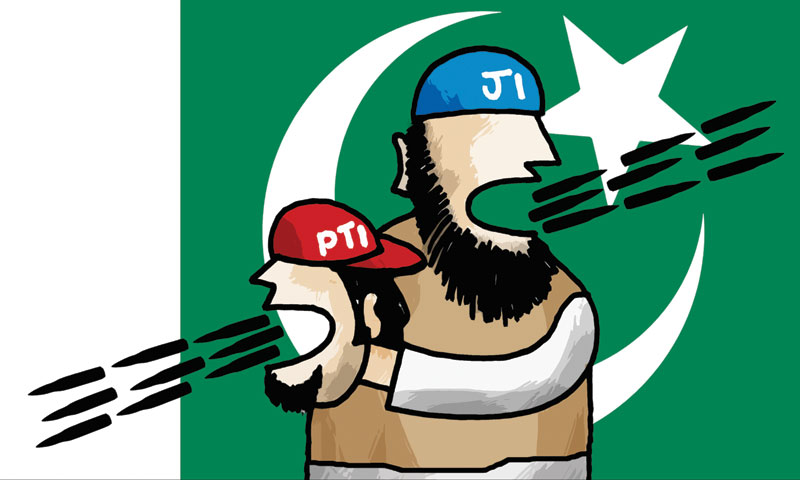
In his detailed history of 20th century terrorism Blood and Rage, author Michael Burleigh, while writing about left-wing terrorist groups in Germany that sprang up in the late 1960s/early 1970s, suggests that the young, urban middle-class men and women who were part of these groups were suffering from a guilty conscience. They were the children of parents who had lived in Hitler’s Germany, during his racist, violent regime, as supporters or silent observers. However, when their children entered their late teens and early 20s in the 1960s, they felt an overwhelming sense of guilt and awkwardness after realising how their parents had remained silent as Hitler went about constructing his fascist dystopia based on megalomaniacal delusions about racial superiority and mythical glory. As a response to this guilt, many children of otherwise docile and orderly middle-class Germans plunged into radical political action, like restless teens consciously indulging in ideas and acts that they knew would offend and disturb their parents. By the 1960s however, (West) Germany had begun to retreat and rebound from its Nazi past and had become a strong democracy, a robust economy and an ally of its former enemies, the United States and Britain. So when left-wing German radicals began targeting German politicians, businesses and some US military and business interests, Burleigh is of the view that they were trying to overcome their guilt of being the offspring of parents whom they had suspected of supporting fascism and Nazism. This is an intriguing theory and an interesting way to look at and understand left-wing terrorism and radicalism that emerged in Germany and Italy in the 1960s/'70s. Both the countries had witnessed fascist dictatorships in the 1930s and 1940s. This theory can also be applied to the present-day dynamics of activists associated with parties like Imran Khan’s Pakistan Tehreek-i-Insaaf (PTI) and its closet ally, the fundamentalist Jamaat-i-Islami (JI). The activistic ranks of both the parties are studded with urban middle and some lower-middle class young men and women who have recently been at the forefront of whipping up anti-West/anti-US sentiments in the country and are quick to explain everything — from Islamist terrorism to political corruption — as consequences of ‘American imperialism’ and hegemony in the region. One can safely assume that these activists are the children of parents who sided with those regimes and parties in Pakistan that (during the Cold War) were vehemently anti-left and had taken pro-US stances in America’s Cold War tussle with the former Soviet Union. JI’s links with the US during the Cold War have never been a secret. But till the 1980s when young JI activists were known to actually attack anti-US rallies held by leftist groups, today the children of these activists are perhaps the most enthusiastic anti-US radicals and the most likely to set fire to a US flag. What is even more interesting is the fact that a large number of young men who were JI activists before the end of the Cold War in 1991, settled in the US. Till 20 years ago it was rather easy for a JI man to get a US visa and even settle in that country. The parents of young PTI radicals too were most likely on the US side of the fence during the Cold War. They constituted urban middle-class folk who (even when they were not directly active in politics) benefitted from the perks of an economy that fattened during the right-wing dictatorship of Gen Zia, thanks to the multi-million-dollar aid that the US rolled into Pakistan during the so-called ‘anti-Soviet Afghan Jihad’ in the 1980s. What’s more, the chairman of the PTI, Imran Khan, almost perfectly exemplifies the theory in discussion here. He came from a well-to-do urban middle-class family who was opposed to the populist (quasi)-socialist maneouvers of the Z.A. Bhutto regime in the 1970s. But just like most of his young supporters today, Khan spent much of his time as an apolitical young man who almost suddenly became interested in politics, an act that equally suddenly triggered a latent, belated form of radicalism. So in a way when PTI and present-day JI activists wave their fists at supposed US imperialism or wallow in theories to passionately explain the supposed ‘real causes’ of Islamist terrorism (foreign hand, drone attacks, etc.), they are basically waving their fists at their older relatives who did not burn US flags or protest the violence of pro-US military regimes during the Cold War. Theirs is a latent radicalism that might make them feel different from their parents, but quite honestly, the content and symbolism of this radicalism is largely anachronistic. It is not of this time or age. What’s more, PTI radicalism is also like stubborn teenage angst and rebellion and is (thus) also highly self-consumed and narcissistic in nature. Yet it cannot be ignored as being just a passing phase of young men and women who are aping a radicalism that belongs to a time when they were either too young or not even born. Because radicalism born from Cold War era polemics may have meant something progressive 25 years ago, but in this day and age it can only be described as an impediment and a disruptive nuisance to whatever that is required today for a country to move forward and be compatible with the dynamics of international politics and economics. PTI and JI’s belated radicalism proves that for a country like Pakistan, ideology has become a burden. Especially for a country where young people are ever-ready to passionately defend obvious myths and spotty illusions, rather than get down to actually do some good in the fields of politics, economics and culture.NADEEM F. PARACHA
Karachi: Growing presence of Taliban worries DHA, its residents
The Express TribuneWith anti-vehicle barricades placed around the narrow streets, 10 private security guards along with police personnel keep a vigil on all moving vehicles and passers-by. This is the residential locality of Defence Housing Authority’s Phase II, where Awami National Party (ANP) Sindh President Shahi Syed feels unsafe due to the growing presence of Taliban militants. Syed recently shifted to the DHA due to security concerns but he feels that the Taliban are penetrating in different areas with the help of like-minded people. “The area is not safe anymore as most of the Taliban leadership is residing in the same vicinity and hiding in big houses to dodge the eyes of law-enforcement agencies,” he said, adding that only last month, the law-enforcement agencies seized a motorcycle laden with 16 kilogrammes of explosive from the area. “Can anyone say the DHA is a peaceful area anymore?” According to DHA officials, there are 42 mosques in the area out of which five are governed by the authority and 11 by local committees. The remaining 28 mosques, however, are not being monitored by any authority. The official also disclosed that most of the mosques were being used for residential purposes, saying that a notification was sent to the mosques asking them not to allow people to live on the premises. In September 2002, top five Al-Qaeda fugitives were arrested from the same locality, backing the theory that militants have managed to develop deep roots in various parts of the city, including the DHA.With anti-vehicle barricades placed around the narrow streets, 10 private security guards along with police personnel keep a vigil on all moving vehicles and passers-by. This is the residential locality of Defence Housing Authority’s Phase II, where Awami National Party (ANP) Sindh President Shahi Syed feels unsafe due to the growing presence of Taliban militants. Syed recently shifted to the DHA due to security concerns but he feels that the Taliban are penetrating in different areas with the help of like-minded people. “The area is not safe anymore as most of the Taliban leadership is residing in the same vicinity and hiding in big houses to dodge the eyes of law-enforcement agencies,” he said, adding that only last month, the law-enforcement agencies seized a motorcycle laden with 16 kilogrammes of explosive from the area. “Can anyone say the DHA is a peaceful area anymore?” According to DHA officials, there are 42 mosques in the area out of which five are governed by the authority and 11 by local committees. The remaining 28 mosques, however, are not being monitored by any authority. The official also disclosed that most of the mosques were being used for residential purposes, saying that a notification was sent to the mosques asking them not to allow people to live on the premises. In September 2002, top five Al-Qaeda fugitives were arrested from the same locality, backing the theory that militants have managed to develop deep roots in various parts of the city, including the DHA. DHA steps up In order to counter potential threats of law and order and growing militancy, the DHA has stepped up and conducted a survey to record the details of residential and commercial units. A DHA press release stated that the registration process aims to maintain a database to help improve the overall security in the area. The housing and commercial units in the DHA will be registered along with the essential details of their owners, occupants and servants or employees working/residing in these units. Foreign embassies in the area will also be required to furnish details of their employees, said the press release. An inside source of the DHA, however, said that the drive had come to a stop as certain residents and community representatives were not cooperating with the security team. AEC chief SSP Chaudhry Aslam did not rule out the possibility of the presence of Taliban militants in DHA. “The security forces have also increased vigilance with the help of the DHA officials and arrested some criminals, including militants and members of Lyari gang war,” he said while talking to The Express Tribune. “The targeted operations in Karachi have also forced criminals to shift their hideouts to the DHA.” The SSP, however, gave assurance that the law enforcers would not let anyone sabotage the peaceful environment of the DHA.
UN: Afghan aid workers under growing threat
Aid workers in Afghanistan are increasingly under threat, the United Nations has said, calling it a worrying trend as most US-led troops prepare to leave the country at the end of next year. The departure of Western troops will leave Afghan forces to fight the Taliban-led fighters on its own, a security concern for foreign workers and their Afghan colleagues working on development and reconstruction projects across the nation. "I am extremely concerned with this trend at a time when the country is in the midst of a difficult transition that may lead to increased humanitarian needs," UN Humanitarian Coordinator in Afghanistan, Mark Bowden, said in a statement on Saturday. A total of 36 aid workers have been killed in Afghanistan so far this year, the UN said. It gave no comparative figures but said the trend highlighted the growing risk surrounding the delivery of aid. Bowden's comments followed the execution of nine aid workers in two separate incidents in Afghanistan this month. According to the Aid Worker Security Database, 73 humanitarian workers have been killed, kidnapped or injured in Afghanistan since the start of the year, more than recorded for the whole of 2012. The figure is also the highest since the organisation began collecting the data in 1997. In an attack on November 26, three aid workers were blown up by a remote controlled bomb in southern Afghanistan. In the second attack on November 27, six aid workers with a French aid group in the west were shot by gunmen in an ambush. In a deadliest year for aid workers since the Taliban were ousted in 2001, both civilian and security force casualties have also soared in Afghanistan this year.At least 36 have been killed in the country so far this year, the UN says, calling the attacks a worrying trend.
Pakistan: Blasphemy: Sentenced to Death over a Cup of Water
French journalist Anne Isabelle Tollet, who served as Asia Bibi’s ghost-writer, tells her story in Blasphemy: A Memoir : Sentenced to Death over a Cup of Water.Anne Isabelle Tollet recalls her almost impossible venture saying,” It wasn’t easy. But I knew Pakistan and the Christian minority there very well because I had been living in Pakistan for three years. I could understand the people. I met Asia’s sister, and I knew her children and husband. I asked them many, many questions about her. I asked them about what she was like, and about her faith, and about their feelings on many things. And because I was involved in this story and knew Shahbaz Bhatti, the Pakistan minister of minorities (one of the men who was assassinated after speaking up for Bibi), I knew many things about the situation and about the family. Even though I never met Asia Bibi, I was able to interview her indirectly by asking questions through her husband, who was allowed to visit her once a week at the jail. I could also imagine where she was, because I used to visit different jails in Pakistan for other stories. I know how it is. I think I managed to do it, because when we gave the book to her family, they were very surprised because it portrayed exactly what she is.” While reflecting on the survival of Christians in Pakistan Anne Isabelle Tollet said, “It depends on where you live; whether you live in a small village or in PunjabPakistan’s most populated and developed area. Some people are not educated at all, and when you are a Christian you have to be careful. In a big town, you’re okay if you are living in a Christian community. They live together and don’t have any trouble with Muslim people.”
An extract from her book is presented below:One summer morning in Pakistan, a Christian woman named Asia Bibi took a break from her fieldwork to drink a cup of cold water from a well. Since she was a Christian, the Muslim women there saw her actions as contaminating the water. Angered, the women began to argue with her……Her question made the women furious. Bibi was beaten by a crowd and thrown into prison, accused of blasphemy and sentenced to death. She has been held since June 2009, and has become an international symbol of the capriciousness and cruelty of the Pakistani blasphemy law. Two Pakistani officials who spoke up for Bibi have been assassinated. - See more at: http://www.christiansinpakistan.com/blasphemy-a-memoir-sentenced-to-death-over-a-cup-of-water/#sthash.dvhnXAH8.dpuf
Pakistan's Shia Genocide: Shia student and Sunni friend shot martyred in Sipah-e-Yazid attack
www.shiitenews.comA Shia student and his Sunni friend were shot martyred in a targeted attack by notorious Yazidi terrorists of outlawed Sipah-e-Sahaba in Karachi on Friday night. Shiite News Correspondent reported here that A Shia student Shadab Hussain was on way back from Karachi University to his house in Federal B Area. His Sunni class-mate Hamza was accompanying him. When they reached at Maskan Chowrangi in Gulshan-e-Iqbal, Yazidi terrorists of outlawed Sipah-e-Sahaba and its student wing that was also banned opened sporadic firing on Shadab and Hamza. They were rushed to a nearby hospital for treatment but succumbed to wounds. Reports had it that bodies were taken to a government hospital for postmortem. Namaz-e-janaza of Shadab Hussain was held at Shohda-e-Karbala Imam Bargah and he was laid to rest in Wadi-e-Hussain (AS) Graveyard. Shia parties and leaders have condemned the targeted murders of Shia and Sunni students by the Yazidi terrorists. They demanded the arrest and hanging of the terrorists.
Pakistan: PPP provincial chief hints at alliance with ANP for LG polls
The Express TribuneThe Pakistan Peoples Party (PPP) might enter into an electoral alliance with other parties in upcoming local government (LG) elections, hinted PPP Provincial President Khanzada Khan. In his first public appearance after taking over as the party’s Khyber-Pakhtunkhwa chief, Khanzada addressed party workers on the eve of the PPP’s 46th Foundation Day. Taking a jab at the Pakistan Tehreek-e-Insaf (PTI), Khanzada said the PPP would contest every seat in the LG polls and hinted it would enter an alliance with other political parties, including the Awami National Party (ANP). Earlier reports stipulated the PPP and PTI had discussed the possibility of the former backing PTI in the K-P government. Back in May the PPP was not ready for an electoral understanding with the ANP for the general elections, however, it is hinting at it now. Khanzada went on to criticise PTI’s protests against Nato supply lines. He termed efforts to close routes passing through K-P “an attempt to hoodwink the masses.” The PPP leader also questioned the authority by which the PTI workers were inspecting vehicles carrying goods to Afghanistan. “Following the attack on the Salala check post in 2011, it was the PPP’s government which took concrete steps to close down Nato supply lines,” said Khanzada. The PTI government has failed to fulfil promises it made to the people, alleged the PPP leader. Speaking about his selection as provincial chief, Khanzada said he did not lobby for the post and the PPP co-chairman had put his trust in a party worker like him. PPP Co-chairperson Bilawal Bhutto Zardari was also scheduled to address the gathering through a video link, however, technical difficulties resulted in the cancellation of the address. Several PPP officials, including Arbab Alamgir Khan, Women’s Wing President Asma Alamgir Khan, Rahim Dad Khan, Syed Zahir Ali Shah, Senator Rubina Khalid, were not present at the occasion. However, former K-P assembly speaker Kiramatullah Chagarmati, Syed Ayub Shah, K-P General Secretary Humayun Khan, Liaqat Shabab and other party leaders were in attendance. Observing foundation day The 46th Foundation Day was also observed in Gilgit-Baltistan (G-B) on Saturday. Addressing a gathering of party workers in Gilgit Town, Chief Minister (CM) Mehdi Shah said governing G-B is very different from governing other provinces. According to Shah, Punjab’s CM does a better job because he has a well-established system under his command, something that is missing in G-B. He criticised the Pakistan Muslim League-Nawaz’s government at the centre, saying inflation had made even basic necessities out of the public’s reach. PPP GB General Secretary Aftab Haider also spoke on the occasion. He said his party had provided jobs to 15,000 unemployed youth in G-B during their four years in the government. PPP’s Foundation Day was also celebrated in Karak district and Malakand Division. A programme was organised at the residence of Karak district joint secretary Sultan Azam Khattak and various leaders were in attendance. Meanwhile, in Malakand Division, PPP leaders gathered at Bathkhela and vowed not to allow anyone to harm the party. with additional input from our correspondents in Malakand and Karak
30 November: The 46th Foundation Day of Pakistan Peoples Party
by H.A. Khan
The Pakistan Peoples Party (PPP) was founded by various progressive politiicians including former members of the now-defunct Pakistan Socialist Party, banned by then-Prime Minister Liaquat Ali Khan. In the 1960s, support for socialism as well as opposition to President General Ayub Khan’s pro-Western/pro-American policies mounted in West-Pakistan. General Ayub Khan’s unpopularity continued to grow following his decision to sign the Tashkent Agreement with rival India, in the aftermath of Indo-Pakistani war of 1965. The dismissal of charismatic democratic-socialist Zulfikar Ali Bhutto further angered and dismayed the public and the democratic-socialists, and made Bhutto determined to bring down the Khan government. As a result, a convention was held on 30 November 1967, in Lahore, where democratic-socialists and left-wing intellectuals gathered to meet with Bhutto at the residence of Dr. Mubashir Hassan, and the Pakistan Peoples Party (PPP) was formed. The newly formed party’s members elected Zulfikar Ali Bhutto as its first chairman, and its manifesto, titled “Islam is our Religion; Democracy is our Politics; Socialism is our Economy; Power Lies with the People”, was written by Bengali communist J. A. Rahim, and first issued on 9 December 1967.
The manifesto identified the party’s ultimate goal, main objective and raison d’etre as being the achievement of an egalitarian and “classless society”, which was believed to be attainable only through socialism. It called for “true equality of citizen’s fraternity under the rule of democracy”, within “an order of social and economic justice.” In 1968, a massive public-relations program was launched by the party, beginning in Punjab. Bhutto’s program directly targeted the country’s poverty-stricken masses. The left-wing oriented slogan, “Land to the Landless”, proved irresistible to the peasants and labour-force, as the party promised not only to abolish the fundamental feudalism that had plagued the country, but also to redistribute lands amongst the landless and the peasants. The working class and labour movement quickly flocked to the party, believing it to be a party dedicated to the destruction of capitalism in the country.
The young university students and teachers who often bore the brunt of Ayub Khan’s dictatorial regime during his decade-long rule were promised a better future with better educational and career opportunities. Many other members of society who had felt stifled and repressed by the press-control and heavy censorship practised by the authoritarian Khan regime also joined the new party. The party’s manifesto also attracted the country’s numerous sectarian minorities, who quickly joined the party.
Eventually, the socialist-oriented catchphrase Roti, Kapra aur Makan (lit. “bread, clothes, and housing”), became a nation-wide rallying-call for the party. By the 1970s, the Pakistan Peoples Party had become the largest and most influential leading socialist and democratic entity in the country. The party published its ideas in its newspapers, such as “Nusrat”, “Fatah”, and “Mussawat.
Bhutto wrote before his judicial mruder by army generals: I have reached to this stage because I thought the reconciliation can be done between the two classes, I was wrong and only one class will win and only a classless society is the aim of PPP.
- See more at: http://lubpak.com/archives/293737#sthash.J7OZy6vP.dpuf
پاکستان پیپلزپارٹی کا یوم تاسیس، بھٹو سے بلاول تک
http://mediacellppp.wordpress.com/
30 نومبر پاکستان کی تاریخ کا وہ اہم ترین دن ہے کہ جب آج سے 46 سال قبل لاہور میں پاکستان پیپلزپارٹی کے قیام کا اعلان کیا گیا اور جناب ذوالفقار علی بھٹو کو متفقہ طورپر اس پارٹی کا چیئرمین منتخب کیاگیا۔ 60ء کی دہائی ملکی تاریخ کی اہم ترین دہائی ہے۔ 1962 میں ایوب کا آئین 1964ء صدارتی انتخاب 1965 ء میں پاک بھارت جنگ اور معاہدہ تا شقند، 1966 ء میں جناب ذوالفقار علی بھٹو کی حکومت سے علیحدگی اور اس علیحدگی کے بعد کراچی تاخیبر بھٹو کی عوام میں پذیرائی کہ جس نے ایوانوں کو ہلا دیا اور ذوالفقار علی بھٹو عوام کے ہر طبقے خصوصاً نوجوانوں کے دلوں کی دھڑکن بن گئے۔ جنوری 1967 ء اگر تلہ سازش کیس کہ جو سقوط ڈھاکہ کی ذمے دار دستاویز ہے۔ جولائی 1967 میں مادر ملت کے انتقال اور ان کی تدفین کے موقع پر غم زدہ عوام پولیس کا وحشیانہ تشدد کیاگیا۔ اس موقعے پر کئی نوجوان پولیس فائرنگ میں شہید ہوگئے اور ملک بھر میں ایوب حکومت کے خلاف نفرت، بغاوت اور غم وغصہ انتہا پر تھا۔ 25 مارچ 1969ء کو یحییٰ خان کا مارشل لاء یہ سب 60ء کی دہائی کے واقعات ہیں کہ جس کے اثرات آج تک باقی ہیں۔ 1966ء میں جناب ذوالفقار علی بھٹو ایوب حکومت سے علیحدگی کے بعد کچھ عرصے کے لئے بیرون ملک چلے گئے تھے اور واپسی پر انہوں نے عوامی رابطہ مہم دوبارہ شروع کی۔ انہوں نے ایوب مخالف تمام جماعتوں سے ملاقاتیں کیں۔ اس انقلابی پارٹی نے اپنے قیام سے آج تک گزشتہ 46 سال میں 4 بار عوامی تائید و حمایت اور جمہوریت طریقے سے حق حکمرانی حاصل کیا اور تقریباً 16 سال عوام کی خدمت کی۔ پہلا دور جناب ذوالفقار علی بھٹو کا 20 دسمبر 1971ء سے 5 جولائی 1977 تک تھا۔ دوسرا دور 2 دسمبر 1988 سے 6 اگست 1990 تھا۔ تیسرا دور اکتوبر 1993 سے نومبر 1996 تک اور چوتھا دور 2008 سے 2013 کو یہ تمام ادوار ہر اعتبار سے پاکستان پیپلزپارٹی کے لئے مشکل ترین دور رہے۔ پاکستان پیپلزپارٹی کے پہلے دور اقتدار میں عوام دشمن استحصالی قوتوں اور سامراج کے گماشتوں کی گھناؤنی سازش کا مقابلہ ہوتا رہا۔ پیپلزپارٹی کے مخالفین نے حکومت کو غیر مستحکم کرنے کا ہر داؤ آزمایا۔ آج 2013 میں پاکستان پیپلزپارٹی کی تیسری نسل سرگرم عمل ہے۔ طویل جدوجہد اور پھر ذوالفقار علی بھٹو کا عدالتی قتل، شاہ نواز بھٹو کا سازشی قتل، مرتضیٰ بھٹو کا قتل اور بالآ سامراجی قوتوں کی منظم سازش کے تحت محترمہ بے نظیر بھٹو کا قتل، ان واقعات نے پاکستان پیپلزپارٹی کو ختم نہیں بلکہ دوام بخش دیا لیکن پاکستان پیپلزپارٹی آج بھی بھٹو خاندان کی قربانیوں کے طفیل اور اس کے بے لوث بے خوف کارکنوں کی جدوجہد کے سبب پاکستان کی تاریخ میں منفرد مقام رکھتی ہے اور رکھے گی۔ تمام مشکلات محدود وسائل بدترین مخالفانہ پروپیگنڈے نیز کفر کے فتوؤں کے باوجود پاکستان پیپلزپارٹی نے مغربی پاکستان (سندھ، پنجاب، سرحد، بلوچستان) میں واحد اکثریتی جماعت کی حیثیت حاصل کرلی۔ انتخابات کے بعد بدقسمتی سے حالات نے مختلف رخ اختیار کرلیا اور بیرونی قوتوں کی سازش، حکمرانوں کی نااہلی اور مجرمانہ کردار نے ایک 146146 عظیم المیہ145145 برپا کردیا۔ دنیا کی سب سے بڑی اسلامی ریاست دولخت ہوگئی۔ سقوط ڈھاکہ کے بعد پاکستان پیپلزپارٹی کو مغربی پاکستان کی اکثریتی جماعت ہونے کی وجہ سے انتہائی نامساعد حالات میں اقتدار منتقل کردیا گیا اور 20 دسمبر 1971ء کو جناب ذوالفقار علی بھٹو نے شکستہ پاکستان کی از سر نو تعمیر کے لئے صدر پاکستان کا حلف اٹھایا۔ پاکستان پیپلزپارٹی کا دوسرا دور جناب ذوالفقار علی بھٹو کی 5 جولائی 1977ء کے مارشل کے بعد شروع ہوتا ہے۔ اگست 1977ء میں فوجی حکمرانوں کے ہاتھوں لاڑکانہ سے گرفتاری کے بعد بیگم نصرت بھٹو اور محترمہ بے نظیر بھٹو کی قیادت میں آمریت کے خلاف تاریخی جدوجہد اور قربانیوں نے کارکنوں کو نیا حوصلہ دیا اور جناب ذوالفقار علی بھٹو کے عدالتی قتل کے بعد پارٹی قیادت بیگم نصرت بھٹو اور شہید بے نظیر بھٹو نے سنبھالی اور آمریت کے خلاف 11 سالہ جدوجہد میں بے نظیر بھٹو نے دنیا سے اپنے آپ کو لیڈر تسلیم کرایا۔ 8 اگست 1988ء کو بستی لال کمال میں آمریت جل کر راکھ ہوگئی اس آمریت کی راکھ سے جمہوریت کا گلاب کھل اٹھا اور بے نظیر بھٹو 1988ء میں عالم اسلام کی پہلی خاتون وزیراعظم منتخب ہوگئیں لیکن محلاتی سازشوں کے ذریعے انہیں صرف 20 ماہ بعد اقتدار سے علیحدہ کردیا گیا شہید بے نظیر نے ہمت نہ ہاری اور اپنی ذہانت جدوجہد اور قربانیوں سے 1993ء میں دوسری بار وزیراعظم منتخب ہوکر سامراجی گماشتوں کا مقابلہ کرتی رہیں اور ان کی کامیابیوں سے خوف زدہ ہوکر انہیں پھر نومبر 1996ء میں اقتدار سے علیحدہ کردیا گیا اور 27 دسمبر کو انہیں شہید کردیا گیا۔ بے نظیر بھٹو کے دونوں ادوار پر علیحدہ سے تفصیل سے تحریر کیا جائے گا۔ آج ایک عجیب تاریخی اتفاق عرض کرتا ہوں جناب بھٹو نے اپنی سیاست کا آغاز بھی تقریباً 25 سال کی عمر میں کیا تھا اور بے نظیر بھٹو نے بھی اپنی سیاست کا آغاز 25 سال کی عمر میں کیا اور بلاول بھٹو نے بھی اپنی سیاسی زندگی کا آغاز 25 سال کی عمر میں کیا۔ اپنے نانا اپنی ماں کے نقش قدم پر چلتے ہوئے انہیں بھی سامراجی قوتوں کی سازشوں کا سامنا ہے، پاکستان کے غریب عوام آج بھی بھٹو کی تیسری نسل کی قیادت میں اپنے مسائل کا حل تلاش کررہے ہیں غریبوں کارکنوںمحنت کشوں اور کسانوں کی جدوجہد جاری ہے اور جاری رہے گی۔
بھٹو نے غریب کا نعرہ لگا کر سرمایہ داروں اور جاگیرداروں کو چیلنج کیا تھا ،بلاول بھٹو زرداری
غریب کی آواز اٹھانے پرانہیں پھانسی پر چڑھا دیا گیا ، پیپلز پارٹی بدلی نہیں اب بھی وہی ہے، 2018ء میں دکھا دینگے کہ یہ پہلے سے بہتر ہے امراء سن لیں ان کی دولت اس ملک کی وجہ سے ہے غریبوں کو ان کا حق دلائینگے ،چیئرمین پاکستان پیپلز پارٹی کا یوم کے یوم تاسیس کے موقع پر خطاب کراچی(قدرت نیوز) پاکستان پیپلزپارٹی کے چیئرمین بلاول بھٹو زرداری نے کہا ہے کہ بھٹو نے غریب کا نعرہ لگا کر سرمایہ داروں اور جاگیرداروں کو چیلنج کیا تھا ، غریب کی آواز اٹھانے پرانہیں پھانسی پر چڑھا دیا گیا ، پیپلز پارٹی بدلی نہیں اب بھی وہی ہے ،2018ء میں دکھا دینگے کہ یہ پہلے سے بہتر ہے امراء سن لیں ان کی دولت اس ملک کی وجہ سے ہے غریبوں کو ان کا حق دلائینگے ۔ کراچی میں پاکستان پیپلز پارٹی کے یوم تاسیس کے موقع پر اپنے خطاب میں بلاول بھٹو زرداری نے کہا کہ آج سے 46سال قبل ایک وعدے کی زنجیر نے ملک کے ہر شخص کو پرو دیا تھا اور اس زنجیر کا نام پاکستان پیپلز پارٹی تھا شہید ذوالفقار علی بھٹو نے جو آواز لگائی وہی آواز بے نظیر بھٹو کی تھی جنہوں نے اس آواز پر اپنی جان بھی دے دی ۔ انہوں نے کہا کہ شہید ذوالفقار علی بھٹو نے روٹی کپڑا اور مکان کا نعرہ لگا کر سرمایہ داروں کے ظلم کو چیلنج کیا تھا اور پھر لینڈ ریفارمرز کرکے ان جاگیرداروں کو چیلنج کیا تھا جس سے ان کا اپنا تعلق بھی تھا ۔ ذوالفقار علی بھٹو غریب کی آواز تھے اور اسی آواز پر انہیں پھانسی پر چڑھا دیا گیا ۔ انہوں نے کہا کہ پاکستان پیپلز پارٹی نے ہمیشہ سٹیٹس کو کی مخالفت کی ہے اور ہمیشہ ظلم کیخلاف آواز اٹھائی ہے جب جمہوریت کی بات کی تو محترمہ بے نظیر بھٹو نے امریکہ کے پالتو غداروں کو للکارا تھا شہید محترمہ بے نظیر بھٹو نے مذہب کے ٹھیکیداروں کیخلاف جمہوری جہاد شروع کیا اور دنیا کے سامنے اسلام کو امن کا سفیر بنا کر پیش کیا تو انہیں سکیورٹی رسک قرار دیا گیا ۔ انہوں نے کہا کہ محترمہ نے جب انصاف کا مطالبہ کیا اور جب عوام کے دلوں سے بھٹو کی محبت نہ نکالی جاسکی تو بے نظیر کو شہید کردیا گیا ۔ انہوں نے کہا کہ آصف علی زرداری نے بیسویں ترمیم کے ذریعے تخت اسلام آباد کی آمریت کو لکارا شہید ذوالفقار علی بھٹو نے نیوکلیئر پروگرام شروع کیا اور اسلامی بم بنا کر دنیا کو چیلنج کیا وہ غریب عوام کی آواز تھے اور عوام کے دلوں میں بستے تھے بھٹو ہاری ہوئی زمین اور جنگی قیدیوں کو واپس لائے ۔ انہوں نے کہا کہ پاکستان پیپلز پارٹی ایک جنون اور ایک جذبہ ہے یہ ایک روایت ہے اور جذبے کبھی مرا نہیں کرتے اور نہ ہی ختم ہوتے ہیں اور روایت تبدیل نہیں ہوتی جو لوگ کہتے ہیں پاکستان پیپلز پارٹی بدل گئی وہ جھوٹ کہہ رہے ہیں پیپلز پارٹی اب بھی وہی ہے عوام بھی وہی ہیں اور جنون بھی وہی ہے آؤ آج اس منزل کی جانب چلیں جس کا راستہ شہید بھٹو نے دکھایا تھا اور دنیا کو دکھا دیں کہ پاکستانیوں کے دلوں سے بھٹو کی محبت کبھی نہیں نکل سکتی جیالا کبھی مایوس نہیں ہوتا اور کبھی نہیں ہارتا ۔ ہم 2018ء سے پہلے دنیا کو دکھائیں گے کہ پیپلز پارٹی زندہ بھی ہے اور پہلے سے بہتر ہے انہوں نے کہا کہ ہم ایک خوشحال اور پرامن پاکستان کے لیے لڑینگے کوئی امیر ہو یا غریب ، مسلم ہو یا غیر مسلم ، پنجابی ہو یا بلوچ قانون کی نظر میں سب برابر ہوں گے ہم وہ پاکستان بنائیں گے جہاں ترقی کی بنیاد صرف محنت ہوگی کوئی رشہ ، علاقہ یا سفارش محنت کا مقابلہ نہ کرسکے گی ۔ انہوں نے کہا کہ اگر آپ امیر ہو تو یاد رکھنا کہ یہ دولت میرے وطن کا تحفہ ہے یہ میری مٹی کا انعام اور لوگوں کی محنت ہے اور یہ میری دھرتی میری ہواؤں اور فضاؤں کی کمائی اور غریب عوام کے خون ، آنسوؤں اور غم کا بدلہ ہے اس لیے دولت پر غرور کرنے سے پہلے سوچ لینا کہ یہ دھرتی جتنی تمہاری ہے اتنی ہی غریبوں کی بھی ہے اگر آپ ان کی محنت سے امیر ہوئے تو غریبوں کا حساب واپس دے دو ۔ انہوں نے کہا کہ آج ملک معاشی بدحالی مہنگائی کا شکار ہے غریب سے اس کے منہ کا نوالہ چھین لیا گیا ہے ٹماٹر 200روپے کلو ہوگئے ہیں بجلی کے بل دگنے ہوگئے ہیں گیس ختم ہونے والی ہے اور غریبوں کا چولہا جلنا بند ہونے والا ہے بے نظیر انکم سپورٹ پروگرام کو ختم کرنے کے منصوبے بنائے جارہے ہیں قومی اداروں کی نجکاری کی جارہی ہے انہوں نے کہا کہ ہم نجکاری کیخلاف ہیں یہ لوگ نجکاری کے نام پر قومی ادارے دوستوں میں بانٹ رہے ہیں یہ پرائیویٹائزیشن نہیں کررہے ہیں یہ پرسنائلزیشن کررہے ہیں اور ہم یہ نہیں ہونے دینگے ۔ انہوں نے کہا کہ آج ہمارا ملک مشکل میں ہے اور ہم چاہتے ہیں کہ یہاں معاشی بدحالی کا وزن غریب عوام پر نہیں بلکہ ان لوگوں پر ڈالا جائے جو برداشت کرنے کی طاقت رکھتے ہیں اور یہ ہمارا کل بھی مطالبہ تھا آج بھی ہے ۔ انہوں نے کہا کہ غریب کی آواز بلند کرنے کی وجہ سے وہ ہمارے دشمن اور ہماری جان لینے پر تلے ہیں اور ہم پر کرپشن جیسے جھوٹے الزام لگاتے ہیں ہم پاکستان کے غریبوں کا چھینا ہوا حق انہیں واپس دلانا چاہتے ہیں اور امیر سے لیکر غریبوں کو دینا چاہتے ہیں اور انہیں ہماری کامیابی کا ڈر ہے انہوں نے کہا کسی نے یہ سچ کہا ہے کہ ’’ جس پر احسان کرو اس کے شر سے بچ - See more at: http://www.dailyqudrat.com/2013/11/30/%d8%a8%da%be%d9%b9%d9%88-%d9%86%db%92-%d8%ba%d8%b1%db%8c%d8%a8-%da%a9%d8%a7-%d9%86%d8%b9%d8%b1%db%81-%d9%84%da%af%d8%a7-%da%a9%d8%b1-%d8%b3%d8%b1%d9%85%d8%a7%db%8c%db%81-%d8%af%d8%a7%d8%b1%d9%88%da%ba/news.html#sthash.5gmzuPVs.dpuf
Subscribe to:
Posts (Atom)