
 But Karzai, in his final remarks to the four-day meeting, said he would not sign it until after a presidential election due next April.
"If there is no peace, then this agreement will bring misfortune to Afghanistan," he said. "Peace is our precondition. America should bring us peace and then we will sign it."
The president did not elaborate, but has previously said a free and fair vote is needed to guarantee peace in the country and his spokesman later said Karzai had not changed his mind.
As the meeting ended, assembly chairman Sibghatullah Mojeddedi told Karzai: "If you don't sign it, we will be disappointed." Karzai responded "Fine!" and left the stage.
Failure to clinch the deal could mean a full U.S. pullout, leaving Afghanistan to fight the Taliban insurgency on its own. U.S. troops have been in Afghanistan since leading a drive to remove the Taliban in late 2001.
U.S. officials, including Secretary of State John Kerry and Defense Secretary Chuck Hagel, said the deal must be signed by year-end to begin preparations for a post-2014 presence.
In his remarks, Karzai acknowledged there was little trust between him and U.S. leaders while saying signing the pact was broadly in Afghanistan's interests. Backing from the Jirga, handpicked by his administration, had been widely expected.
Most speakers were muted in their criticism of the thorniest issues in the document, including a U.S. request for immunity for its troops from Afghan law.
Critics say Karzai's recalcitrance on the date might reflect his desire to distance himself from any deal with the United States and avoid speculation that he has sold out to the West.
A former U.S. ambassador to Afghanistan, Ronald Neumann, said Karzai is known to use 11th hour demands to press for concessions from the United States during negotiations.
"He has to be the one ... to sign off on this loss of Afghan sovereignty. He knows intellectually that this is in Afghanistan's interest, but at the same time it's distasteful to him," Neumann said.
HE'S DONE IT AGAIN
The deal took a year to bash out and Karzai's volte-face threw the entire process into doubt just hours after both sides announced they had agreed on its terms.
Even in Afghanistan, where some view the security agreement with the United States with contempt, many officials were unsettled.
Some believe Karzai is simply concerned that the United States and other Western countries may attempt to interfere in next year's presidential election. Having served two terms, he is ineligible to run again.
By withholding his signature until after the vote, Karzai could also use ratification as leverage to ensure the United States does not try to back a candidate not to his liking.
Opposition leader Abdullah Abdullah, who dropped out of a run-off against Karzai in the 2009 elections, citing concerns about fraud, was among those who shared this suspicion.
"What he is asking for is a guarantee about the elections and most probably his favorite candidate," Abdullah told Reuters.
Karzai accused the international community of meddling during the 2009 election that he won, saying they had tried to encourage Afghans to vote for an opposition candidate.
Others were concerned that Karzai's reluctance to sign the agreement could jeopardize Afghanistan's relations with its international allies and its economic future.
"If we keep talking about signing the agreement after the election, we will lose our biggest ally," said Freshta Amini, an MP from southwestern Nimroz province. But some Loya Jirga members supported Karzai's comment about delaying ratification.
"If the Americans want to sign this pact with Afghanistan, then they should also respect our demands for a transparent election, and peace and security in the country," said Farid Alokozai, provincial council chief in Wardak, outside Kabul.
One cabinet minister close to Karzai said many members of the president's team were unhappy with his decision.
"There are people who want this pact to be signed immediately after the Loya Jirga. But there are spoilers too, who have a lot of influence over the president."
But Karzai, in his final remarks to the four-day meeting, said he would not sign it until after a presidential election due next April.
"If there is no peace, then this agreement will bring misfortune to Afghanistan," he said. "Peace is our precondition. America should bring us peace and then we will sign it."
The president did not elaborate, but has previously said a free and fair vote is needed to guarantee peace in the country and his spokesman later said Karzai had not changed his mind.
As the meeting ended, assembly chairman Sibghatullah Mojeddedi told Karzai: "If you don't sign it, we will be disappointed." Karzai responded "Fine!" and left the stage.
Failure to clinch the deal could mean a full U.S. pullout, leaving Afghanistan to fight the Taliban insurgency on its own. U.S. troops have been in Afghanistan since leading a drive to remove the Taliban in late 2001.
U.S. officials, including Secretary of State John Kerry and Defense Secretary Chuck Hagel, said the deal must be signed by year-end to begin preparations for a post-2014 presence.
In his remarks, Karzai acknowledged there was little trust between him and U.S. leaders while saying signing the pact was broadly in Afghanistan's interests. Backing from the Jirga, handpicked by his administration, had been widely expected.
Most speakers were muted in their criticism of the thorniest issues in the document, including a U.S. request for immunity for its troops from Afghan law.
Critics say Karzai's recalcitrance on the date might reflect his desire to distance himself from any deal with the United States and avoid speculation that he has sold out to the West.
A former U.S. ambassador to Afghanistan, Ronald Neumann, said Karzai is known to use 11th hour demands to press for concessions from the United States during negotiations.
"He has to be the one ... to sign off on this loss of Afghan sovereignty. He knows intellectually that this is in Afghanistan's interest, but at the same time it's distasteful to him," Neumann said.
HE'S DONE IT AGAIN
The deal took a year to bash out and Karzai's volte-face threw the entire process into doubt just hours after both sides announced they had agreed on its terms.
Even in Afghanistan, where some view the security agreement with the United States with contempt, many officials were unsettled.
Some believe Karzai is simply concerned that the United States and other Western countries may attempt to interfere in next year's presidential election. Having served two terms, he is ineligible to run again.
By withholding his signature until after the vote, Karzai could also use ratification as leverage to ensure the United States does not try to back a candidate not to his liking.
Opposition leader Abdullah Abdullah, who dropped out of a run-off against Karzai in the 2009 elections, citing concerns about fraud, was among those who shared this suspicion.
"What he is asking for is a guarantee about the elections and most probably his favorite candidate," Abdullah told Reuters.
Karzai accused the international community of meddling during the 2009 election that he won, saying they had tried to encourage Afghans to vote for an opposition candidate.
Others were concerned that Karzai's reluctance to sign the agreement could jeopardize Afghanistan's relations with its international allies and its economic future.
"If we keep talking about signing the agreement after the election, we will lose our biggest ally," said Freshta Amini, an MP from southwestern Nimroz province. But some Loya Jirga members supported Karzai's comment about delaying ratification.
"If the Americans want to sign this pact with Afghanistan, then they should also respect our demands for a transparent election, and peace and security in the country," said Farid Alokozai, provincial council chief in Wardak, outside Kabul.
One cabinet minister close to Karzai said many members of the president's team were unhappy with his decision.
"There are people who want this pact to be signed immediately after the Loya Jirga. But there are spoilers too, who have a lot of influence over the president."

 Legendary Pakistani film actor, producer and script writer Waheed Murad was remembered on his 30th death anniversary on Saturday.
Waheed Murad was born on October 2, 1938 in Sialkot. He was the only child of well-off film distributor Nisar Murad.
He got early education from Karachi Grammar School, did graduation from S.M. Arts College Karachi and then masters in English literature from University of Karachi.
He is well-known for his charming expressions, attractive personality, tender voice and unusual talent for acting in films. His style of acting made him popular amongst the young cinema viewers of South Asia.
Waheed Murad started his film career by joining his father's established 'Film Art' in 1961 as producer of the film Insaan Badalta Hai.
He appeared in a supporting role in 1962's in the film Aulad. Heera aur Pathar was his first movie as a leading actor and considered to be his major breakthrough.
He acted in a total of 124 films of which 38 were black and white and 86 were in color.
He acted in films 115 Urdu, 8 Punjabi movies and one Pashto film. He received on 32 prestigious film awards. He was awarded Nigar award for best actor in Heera aur pathar in 1964, Armaan in1966, Andaleeb in1969, Mastana Mahi in1971and Legend Award for life time in 2002.
In November 2010, 27 years after his death, he was awarded the Sitara-e-Imtiaz for distinguished contributions in the fields of literature and arts.
He died on November 23, 1983 in Karachi.
Legendary Pakistani film actor, producer and script writer Waheed Murad was remembered on his 30th death anniversary on Saturday.
Waheed Murad was born on October 2, 1938 in Sialkot. He was the only child of well-off film distributor Nisar Murad.
He got early education from Karachi Grammar School, did graduation from S.M. Arts College Karachi and then masters in English literature from University of Karachi.
He is well-known for his charming expressions, attractive personality, tender voice and unusual talent for acting in films. His style of acting made him popular amongst the young cinema viewers of South Asia.
Waheed Murad started his film career by joining his father's established 'Film Art' in 1961 as producer of the film Insaan Badalta Hai.
He appeared in a supporting role in 1962's in the film Aulad. Heera aur Pathar was his first movie as a leading actor and considered to be his major breakthrough.
He acted in a total of 124 films of which 38 were black and white and 86 were in color.
He acted in films 115 Urdu, 8 Punjabi movies and one Pashto film. He received on 32 prestigious film awards. He was awarded Nigar award for best actor in Heera aur pathar in 1964, Armaan in1966, Andaleeb in1969, Mastana Mahi in1971and Legend Award for life time in 2002.
In November 2010, 27 years after his death, he was awarded the Sitara-e-Imtiaz for distinguished contributions in the fields of literature and arts.
He died on November 23, 1983 in Karachi.
http://lubpak.com/archives/292831

Bilawal Bhutto Zardari, Patron-In-Chief, Pakistan Peoples Party said violence against women is the worst form of human rights violations and its complete elimination remains the core dream of any progressive human society.http://mediacellppp.wordpress.com/


http://www.sada-e-azadi.net/A vast majority of the consultative Loya Jirga on Saturday accorded approval to the controversial clause of the Bilateral Security Agreement (BSA) concerning judicial jurisdiction over US troops staying in Afghanistan beyond 2014. With 20 articles of the deal debated on Friday, the 50 jirga committees are to thrash out the remaining six today. The article on legal jurisdiction over foreign soldiers -- being an emotive issue for the Afghans -- was to be decided by the tribal assembly. Jirga Chairman Sibghatullah Mujaddedi said the text contained no major controversial point. The US soldiers committing crimes in Afghanistan would be tried under the American military law, he added, explaining there was no question of immunity. “We have suggested the best way is to prosecute US soldiers under the US law in the presence of Afghans,” said Mujaddedi, a former president and reconciliation commission chairman. One participant Asadullah Jamali, also the Faryab peace committee head, told Pajhwok Afghan News all contents of the accord were debated in detail and members floated a string of suggestions. “There were differences over Article 13 (that concerns judicial jurisdiction over international troops). All of us believe the US soldiers involved in criminal offences in Afghanistan should be prosecuted here,” he said. If their proposals were not accepted, the delegates would not oppose the troops’ trial in the US, he explained, confirming the long-running issue between the two sides had been settled. Haji Mohammad Omar Ahmadzai, another participant from central Logar province, proposed that victims should be given a chance to watch criminal proceedings against the US soldiers, who were prosecuted for crimes committed in Afghanistan.
 Afghan elders at a grand assembly in Kabul have called for a security deal with the US to be signed this year.
The pact allows thousands of US troops to remain in Afghanistan once combat operations end in 2014.
But President Hamid Karzai, who wants to delay the deal, told delegates he would only sign it once the US had brought peace to his country.
Afghan elders at a grand assembly in Kabul have called for a security deal with the US to be signed this year.
The pact allows thousands of US troops to remain in Afghanistan once combat operations end in 2014.
But President Hamid Karzai, who wants to delay the deal, told delegates he would only sign it once the US had brought peace to his country.
http://www.firstpost.com/To stop infiltration and continuous ceasefire violations from the Pakistani side, India is now all set to raise a 10-metre high embankment running along the 197-Km stretch of the International Border in the Jammu sector. The serpentine wall will pass through 118 villages in Jammu district. Seen from the Pakistani side, the border will be demarcated clearly by first a fence, a trench and then the 10-metre high wall. A strip of land as wide as 135 feet is being acquired for the purpose, to accommodate several bunkers and outposts for the border security forces. Earth excavators are set to be used to dig the parallel trench, which will make infiltration virtually impossible, said sources. The International Border in Jammu and the Line of Control (LoC) in Kashmir have both remained tense throughout this year. The inspiration for this wall seems to have been drawn from a similar wall in the West Bank, erected by Israeli authorities who say the wall has served as a deterrent for violence perpetuated by the Palestinian militants. The wall constructed by India is supposed to be higher than the Berlin Wall which separated Europe during the Cold War. It will be the first of its kind between the two neighboring countries. More than 200 ceasefire violations were reported through 2013 in different places across Jammu and Kashmir, most of them in the area along which the Government of India is now planning to build the embankment. On Oct 23, early this year, Pakistani rangers fired at more than 50 locations in Samba sector which was described by security forces as the most extensive ceasefire violation in one night in the past two decades. Director General of Border Security Forces (BSF) Subash Joshi said in New Delhi that the BSF was waiting for the government of Jammu and Kashmir to acquire land along the stretch. “We have identified the land. The embankment will be followed by the fence,” he said. Under the Land Acquisition Act of the Jammu and Kashmir government, the project also has to be given a green signal by 24 MLAs, who will have to give a no-objection certificate to the state government. “For the wall to come we have already identified and acquired land in 29 villages,” said Divisional Commissioner (Samba) R K Verma, said. A similar exercise has been initiated in Kathua too. Sources say the decision has been taken by the authorities with much persistence by the BSF in view of the 2014 withdrawal of NATO troops from Afghanistan. The violence in the troubled state of Jammu and Kashmir has seen an unexpected spurt this year. “It is only possible to construct a wall of this size in certain places in the state. It cant be done throughout the state. Jammu being the easiest one, it will help to stop the infiltration and drug smuggling also, a home Ministry official told Firstpost. Read more at: http://www.firstpost.com/india/cross-border-terror-india-all-set-to-build-a-berlin-wall-in-jammu-1245321.html?utm_source=ref_article
 For much of the past decade, the residents of this village near Pakistan’s border with India have lived in relative peace, tending their water buffalo and goats, despite a history of tensions between the countries.
But this fall, mortar shells from India killed a 40-year-old rickshaw driver and several animals, residents say.
“I have sent my family to relatives and keep my door locked,” said Mohammad Iqbal, 55. “When I am sure peace is restored, I will bring them back.”
Recent attacks involving Indian and Pakistani troops have been the worst border violence since a 2003 cease-fire. Now, with snow falling on the mountainous border, fighting has subsided and displaced residents are trickling home.
But analysts fear the calm will be relatively short-lived. While few expect another war, the flare-ups illustrate the simmering tensions that may only increase as the two countries jostle for influence in Afghanistan while U.S. troops withdraw.
“This is the new normal,” said Stephen P. Cohen, a senior fellow and South Asia analyst at the Brookings Institution. “This is going to be just like the Middle East, but only with two countries with nuclear weapons.”
The fighting this fall, which included artillery and mortar fire, claimed civilian and military lives on both sides of the border. Ominously, it took place not only in Kashmir, which has been a source of tension for decades, but also farther south on the outskirts of Sialkot, an industrial area known for producing quality soccer balls.
Since predominantly Muslim Pakistan was separated from mostly Hindu India in 1947, the countries have fought two wars over Kashmir, which is divided between them but has a majority Muslim population.
Each side has blamed the other for the recent fighting.
Pakistanis speculate that the Indian government is becoming more aggressive toward its neighbor, in part to gain support ahead of national elections. Meanwhile, Indians accuse Pakistan of failing to rein in Islamist militants seeking an independent Kashmir. Some of the militant groups are widely suspected of having ties to the Pakistani military and intelligence services.
The conflict started in January, when Pakistan accused Indian forces of killing a Pakistani soldier on the disputed border in Kashmir, known as the Line of Control. India then claimed Pakistani soldiers or militants crossed the border and killed three of its soldiers.
In August, the feud took a dangerous turn when five Indian soldiers were slain in Kashmir. Pakistan denied responsibility but shelling between the two sides escalated.
Last month, Pakistan’s military accused India of firing 4,000 mortar shells and 59,000 machine-gun rounds during a two-day period that coincided with Pakistani Prime Minister Nawaz Sharif’s meeting with President Obama in Washington. One of those shells killed the rickshaw driver in Tahir Joian.
“We were forced to retaliate,” said Brig. Mateem Ahmed Khan, a senior commander for Pakistan’s border force near Sialkot. He accused India of stoking the tension to undermine Sharif’s visit to Washington. “It was a rain of fire coming down on our villages and posts,” he said.
With Pakistan restricting Western reporters’ access to the border, it is difficult to verify the claims of its military. In Tahir Joian, chunks of concrete were missing from walls and a hole was visible in a thatched roof, but there did not appear to be widespread damage.
Efforts to avoid crisis
When a reporter visited a Pakistani ranger outpost recently, soldiers were looking out over a tranquil border, listening to music from an Indian Border Security Force bunker about a quarter-mile away.
The sound of music across the border underscores a crucial point: Unlike previous conflicts in the 1990s and early 2000s, which led to fears of another major war, India and Pakistan are working to keeping their skirmishes from turning into an international crisis.
The directors of military operations for both countries hold weekly conference calls to try to keep hostilities in check. Khan recently met his Indian counterpart at the border to discuss matters such as how Indian forces can clear brush around their outposts without fear of being targeted.
Sharif, who campaigned on improved relations with India before taking office in June, is pressing for security and trade negotiations with Indian Prime Minister Manmohan Singh. Though the two met in late September, Singh has appeared hesitant to engage in substantive talks, expressing concern that Pakistan is not doing enough to control Islamist militant groups including Lashkar-e-Taiba, responsible for the 2008 Mumbai terrorist attacks.
But many Pakistani analysts doubt that this country’s military is to blame for the tension, since it is focused on battling domestic militants. A bloody insurgency by the Pakistani Taliban has claimed more than 45,000 lives.
“Pakistan is preoccupied with domestic issues at the moment, so the military would have no interest in heating up the Line of Control, none whatsoever,” said Maleeha Lodhi, a former Pakistani ambassador to Washington. “In fact, it has an interest in assuring all is peaceful on the eastern front so it can focus on the western front” with Afghanistan, an area where many militants are based.
Lodhi said Singh may be adopting a tougher approach to Pakistan because of Indian elections in the spring. Singh is stepping aside, but his Congress Party faces a stiff challenge from the BJP party, led by Narendra Modi, an ardent Hindu nationalist who wants to take a harder line with Pakistan.
The Afghanistan factor
Even after the elections, analysts fear, the India-Pakistan border could turn volatile as the two countries struggle for influence in Afghanistan.
In recent months, Afghan President Hamid Karzai has been reaching out to India for military aid, a potential alliance that unnerves Pakistani leaders, who fear their country could become further isolated in the region.
To Pakistanis, their nation’s regional importance was highlighted this summer when U.S. officials turned to the country for help in trying to arrange peace talks between the Taliban and Karzai’s government. The talks ultimately didn’t happen.
In Pakistan, some officials believe India escalated tension at the border to draw attention away from Pakistan’s diplomatic efforts.
“India was anxious it was getting left out and that Pakistan was not taking it seriously,” said Riaz Khokhar, Pakistan’s foreign secretary from 2002 to 2005.
Sushant Sareen, a researcher at the Institute for Defense Studies and Analyses in New Delhi, called Khokhar’s comments “utter rubbish.” The real cause of the skirmishing on the border, he said, was Pakistan’s unwillingness to stop Islamist militant groups from crossing the border.
In recent weeks, before snows in the Himalayan mountains made passage difficult, as many as 100 Pakistani insurgents sneaked into Indian territory, according to Indian intelligence and security officials. They say the insurgents plan to carry out attacks before the elections and stoke separatist fervor in Indian-controlled Kashmir.
“Before, there was this looming American presence in the region that kept things from happening,” Sareen said. “But now, with that focus shifting from the area, it’s going back to business as usual.”
For much of the past decade, the residents of this village near Pakistan’s border with India have lived in relative peace, tending their water buffalo and goats, despite a history of tensions between the countries.
But this fall, mortar shells from India killed a 40-year-old rickshaw driver and several animals, residents say.
“I have sent my family to relatives and keep my door locked,” said Mohammad Iqbal, 55. “When I am sure peace is restored, I will bring them back.”
Recent attacks involving Indian and Pakistani troops have been the worst border violence since a 2003 cease-fire. Now, with snow falling on the mountainous border, fighting has subsided and displaced residents are trickling home.
But analysts fear the calm will be relatively short-lived. While few expect another war, the flare-ups illustrate the simmering tensions that may only increase as the two countries jostle for influence in Afghanistan while U.S. troops withdraw.
“This is the new normal,” said Stephen P. Cohen, a senior fellow and South Asia analyst at the Brookings Institution. “This is going to be just like the Middle East, but only with two countries with nuclear weapons.”
The fighting this fall, which included artillery and mortar fire, claimed civilian and military lives on both sides of the border. Ominously, it took place not only in Kashmir, which has been a source of tension for decades, but also farther south on the outskirts of Sialkot, an industrial area known for producing quality soccer balls.
Since predominantly Muslim Pakistan was separated from mostly Hindu India in 1947, the countries have fought two wars over Kashmir, which is divided between them but has a majority Muslim population.
Each side has blamed the other for the recent fighting.
Pakistanis speculate that the Indian government is becoming more aggressive toward its neighbor, in part to gain support ahead of national elections. Meanwhile, Indians accuse Pakistan of failing to rein in Islamist militants seeking an independent Kashmir. Some of the militant groups are widely suspected of having ties to the Pakistani military and intelligence services.
The conflict started in January, when Pakistan accused Indian forces of killing a Pakistani soldier on the disputed border in Kashmir, known as the Line of Control. India then claimed Pakistani soldiers or militants crossed the border and killed three of its soldiers.
In August, the feud took a dangerous turn when five Indian soldiers were slain in Kashmir. Pakistan denied responsibility but shelling between the two sides escalated.
Last month, Pakistan’s military accused India of firing 4,000 mortar shells and 59,000 machine-gun rounds during a two-day period that coincided with Pakistani Prime Minister Nawaz Sharif’s meeting with President Obama in Washington. One of those shells killed the rickshaw driver in Tahir Joian.
“We were forced to retaliate,” said Brig. Mateem Ahmed Khan, a senior commander for Pakistan’s border force near Sialkot. He accused India of stoking the tension to undermine Sharif’s visit to Washington. “It was a rain of fire coming down on our villages and posts,” he said.
With Pakistan restricting Western reporters’ access to the border, it is difficult to verify the claims of its military. In Tahir Joian, chunks of concrete were missing from walls and a hole was visible in a thatched roof, but there did not appear to be widespread damage.
Efforts to avoid crisis
When a reporter visited a Pakistani ranger outpost recently, soldiers were looking out over a tranquil border, listening to music from an Indian Border Security Force bunker about a quarter-mile away.
The sound of music across the border underscores a crucial point: Unlike previous conflicts in the 1990s and early 2000s, which led to fears of another major war, India and Pakistan are working to keeping their skirmishes from turning into an international crisis.
The directors of military operations for both countries hold weekly conference calls to try to keep hostilities in check. Khan recently met his Indian counterpart at the border to discuss matters such as how Indian forces can clear brush around their outposts without fear of being targeted.
Sharif, who campaigned on improved relations with India before taking office in June, is pressing for security and trade negotiations with Indian Prime Minister Manmohan Singh. Though the two met in late September, Singh has appeared hesitant to engage in substantive talks, expressing concern that Pakistan is not doing enough to control Islamist militant groups including Lashkar-e-Taiba, responsible for the 2008 Mumbai terrorist attacks.
But many Pakistani analysts doubt that this country’s military is to blame for the tension, since it is focused on battling domestic militants. A bloody insurgency by the Pakistani Taliban has claimed more than 45,000 lives.
“Pakistan is preoccupied with domestic issues at the moment, so the military would have no interest in heating up the Line of Control, none whatsoever,” said Maleeha Lodhi, a former Pakistani ambassador to Washington. “In fact, it has an interest in assuring all is peaceful on the eastern front so it can focus on the western front” with Afghanistan, an area where many militants are based.
Lodhi said Singh may be adopting a tougher approach to Pakistan because of Indian elections in the spring. Singh is stepping aside, but his Congress Party faces a stiff challenge from the BJP party, led by Narendra Modi, an ardent Hindu nationalist who wants to take a harder line with Pakistan.
The Afghanistan factor
Even after the elections, analysts fear, the India-Pakistan border could turn volatile as the two countries struggle for influence in Afghanistan.
In recent months, Afghan President Hamid Karzai has been reaching out to India for military aid, a potential alliance that unnerves Pakistani leaders, who fear their country could become further isolated in the region.
To Pakistanis, their nation’s regional importance was highlighted this summer when U.S. officials turned to the country for help in trying to arrange peace talks between the Taliban and Karzai’s government. The talks ultimately didn’t happen.
In Pakistan, some officials believe India escalated tension at the border to draw attention away from Pakistan’s diplomatic efforts.
“India was anxious it was getting left out and that Pakistan was not taking it seriously,” said Riaz Khokhar, Pakistan’s foreign secretary from 2002 to 2005.
Sushant Sareen, a researcher at the Institute for Defense Studies and Analyses in New Delhi, called Khokhar’s comments “utter rubbish.” The real cause of the skirmishing on the border, he said, was Pakistan’s unwillingness to stop Islamist militant groups from crossing the border.
In recent weeks, before snows in the Himalayan mountains made passage difficult, as many as 100 Pakistani insurgents sneaked into Indian territory, according to Indian intelligence and security officials. They say the insurgents plan to carry out attacks before the elections and stoke separatist fervor in Indian-controlled Kashmir.
“Before, there was this looming American presence in the region that kept things from happening,” Sareen said. “But now, with that focus shifting from the area, it’s going back to business as usual.”
 At least three people, including two students, were killed and one other injured Sunday in two separate explosions that took place in Upper Kurram Agency, DawnNews reported.
According to the political administration of the area, a roadside bomb was detonated near a car in the Shablan area of Upper Kurram Agency. Subsequently, two people were killed whereas one person sustained injuries.
The second explosion occurred in the Dal area of Upper Kurram Agency due to which one person was killed.
Following the explosions, the political administration cordoned off the area and a probe into the incident went underway.
Kurram Agency, which is close to the Pakistan-Afghanistan border, is one of the seven regions in Pakistan’s Federally Administered Tribal Areas (FATA), governed by tribal laws.
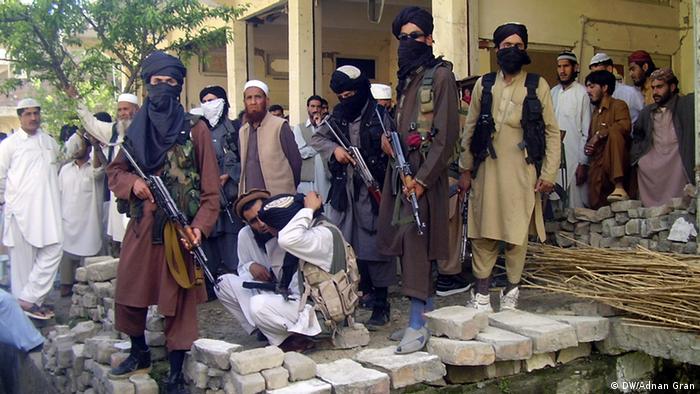
An extremist insurgency led by Tehrik-i-Taliban Pakistan (TTP) plagues the region while the area is known to be infested with militants, including the Al-Qaeda, Taliban and several other armed extremist organisations.
Separately, a police official was killed when unknown motorcylists opened fire on him within the remit of the Bannu Township police station.
Meanwhile, a roadside-bomb was defused near Karam Kot on the Miramshah-Mirali road.
At least three people, including two students, were killed and one other injured Sunday in two separate explosions that took place in Upper Kurram Agency, DawnNews reported.
According to the political administration of the area, a roadside bomb was detonated near a car in the Shablan area of Upper Kurram Agency. Subsequently, two people were killed whereas one person sustained injuries.
The second explosion occurred in the Dal area of Upper Kurram Agency due to which one person was killed.
Following the explosions, the political administration cordoned off the area and a probe into the incident went underway.
Kurram Agency, which is close to the Pakistan-Afghanistan border, is one of the seven regions in Pakistan’s Federally Administered Tribal Areas (FATA), governed by tribal laws.
An extremist insurgency led by Tehrik-i-Taliban Pakistan (TTP) plagues the region while the area is known to be infested with militants, including the Al-Qaeda, Taliban and several other armed extremist organisations.
Separately, a police official was killed when unknown motorcylists opened fire on him within the remit of the Bannu Township police station.
Meanwhile, a roadside-bomb was defused near Karam Kot on the Miramshah-Mirali road.
Corruption in parts of Pakistani community is growing problem that politicians have underestimated, Government’s chief legal adviser saysCorruption in parts of the Pakistani community is “endemic” and a growing problem that politicians have underestimated, the Government’s chief legal adviser has said. Dominic Grieve QC, the Attorney General, said ministers should “wake up” to the threat of corruption in public life, which he attributed to “minority communities” that operate a “favour culture”. In an interview with The Daily Telegraph, Mr Grieve praised the integration of minorities into British life, and pointed out that corruption can also be found in the “white Anglo-Saxon” community. But he said that the growth of corruption was “because we have minority communities in this country which come from backgrounds where corruption is endemic. It is something we as politicians have to wake to up to”. Mr Grieve said he was referring to “mainly the Pakistani community” but added that other minority communities had similar problems. His remarks could affect Britain’s relations with Pakistan. In 2010 David Cameron refused to apologise after he accused the country of “exporting terror”. Ministers are aware that high-profile stories involving child abuse, Islamist extremism, slavery and corruption in the Pakistani community are being used by far-Right agitators such as the English Defence League to stir sectarianism. Mr Grieve, the MP for Beaconsfield in Buckinghamshire, has a sizeable South Asian community in his constituency. “I can see many of them have come because of the opportunities that they get. But they also come from societies where they have been brought up to believe you can only get certain things through a favour culture,” he said. “One of the things you have to make absolutely clear is that that is not the case and it’s not acceptable.” He said electoral corruption in particular had increased. He identified Slough, Berks, as an example of where abuses had occurred. In 2008 a Tory councillor, Eshaq Khan, was found guilty of fraud involving postal ballots. Earlier this year the Electoral Commission announced it was considering introducing ballot box identity checks in Tower Hamlets, east London, in an effort to stamp out electoral fraud in areas with large South Asian communities. Asked if he was referring to the Pakistani community, Mr Grieve said: “Yes, it’s mainly the Pakistani community, not the Indian community. I wouldn’t draw it down to one. I’d be wary of saying it’s just a Pakistani problem.” He added: “I happen to be very optimistic about the future of the UK. We have managed integration of minority communities better than most countries in Europe.” Tory ministers have avoided singling out particular communities over political corruption. However, in 2010, Baroness Warsi claimed the Tories lost three seats at the general election as a result of voter fraud within the Asian community. Mr Grieve also said the Government was considering how to deal with the expected influx of Bulgarian and Romanian migrants when movement controls are lifted in January. He acknowledged that “the volume if immigrants may pose serious infrastructure issues”.
Dubbed as the 'most powerful man' in Pakistan, army chief Kayani is stepping down soon, leaving behind a violence-marred country. Experts believe it is a result of his half-hearted attempts at fighting the Taliban.

www.dailytimes.comPakistan’s nuclear procurement was exposed as early as 1987 with the arrest of a Pakistani national, resulting in sharp divisions in the US government, but then Regan administration decided to ignore it in lieu of Islamabad’s contribution in Afghanistan against the Russians, American media quoted the latest set of US declassified documents as saying, on Saturday. The arrest of a Pakistani national Arshed Pervez in July 1987 on charges of illegal nuclear procurement roiled US-Pakistan relations and sharpened divisions within the Reagan administration, according to recently declassified documents published by the National Security Archive and the Nuclear Proliferation International History Project. Arms Control and Disarmament Agency (ACDA) director Kenneth Adelman wanted to crack down on the Pakistani nuclear programme by cutting military and economic aid. Adelman argued that failure to do so “would be seen as ‘business as usual,’” taking the pressure off Pakistan “at the very time we should be trying to increase pressure on them to stop … illegal procurement activities in the US”. By contrast, the State Department took a contrary view because US aid to Pakistan supported the mujahideen in Afghanistan. “We are particularly concerned about weakening the president’s hand in discussions with the Soviets on Afghanistan, which (are) at a critical stage.” Pervez, who had tried to bribe a Customs official to get an export licence, sought to purchase high strength maraging steel, uniquely suited for gas centrifuge enrichment technology, and quantities of beryllium for his country’s covert nuclear programme. This arrest and then an indictment in California on another case made headlines in the United States. The revealed document say Adelman wanted president Reagan to invoke the Solarz amendment (after then-Rep. Stephen Solarz, D-NY), which required an aid cut-off in the event that governments receiving US aid or their agents illegally tried to procure material that could be used for a nuclear weapons programme. Reagan, however, refused to invoke the Solarz amendment. Although Pervez would be found guilty, the White House kept US aid flowing to Islamabad for reasons of “national security.” For the Reagan administration, aiding the anti-Soviet war in Afghanistan trumped non-proliferation policy interests. The report says the high priority given to a close US-Pakistan relationship may have encouraged, as some journalists have alleged, State Department officials to warn the Pakistanis of the imminent arrest of their agents. The declassified documents say a key figure in the AQ Khan nuclear procurement network, Inamul Haq, who was working closely with Pervez, evaded arrest by slipping out of the United States at the last minute. The declassified documents show the “illegal network” had Islamabad’s “approval, protection, and funding”. A few weeks later, under secretary of state for political affairs Michael Armacost explained to Pakistani ruler General Ziaul Haq that State had unsuccessfully tried to get information about the Customs Bureau’s investigation of Pervez, but “we did alert the GoP (Government of Pakistan) through letters, Ambassador Hinton, and our talks with the foreign minister that there was an issue here that needed to be addressed urgently.” “I understand the idea of warning, Zia replied.” The Pervez case demonstrates how the US government agencies, including the Customs Bureau and ACDA, sought to monitor and disrupt Pakistan’s nuclear procurement activities. For its part, the Reagan White House used loopholes in US non-proliferation laws to avoid the enforcement of sanctions on Pakistan. The documents released in Saturday’s publication illustrate these and related developments. They include: Records compiled by the US government lawyers for prosecuting Pervez, including correspondence between Pervez and the Khan front company, Multinational, Inc., Pervez’s correspondence with Carpenter Technology Corporation, the supplier of maraging steel, and Pervez’s personal notes, which include references to “atom” and “military” which his lawyers could not explain. A memorandum by Kenneth Adelman shortly after Pervez’s arrest said: “If we now ‘lawyer our way around’ the Solarz amendment”, and seek to avoid its enforcement, “Zia will conclude once again that he need do nothing about his bomb programme.” An ACDA memo on the applicability of the Solarz amendment which concluded that “there is no plausible end-use for 25 tonnes of grade 350 maraging steel other than in the manufacture of centrifuges” for producing highly-enriched uranium and “for which Pakistan has no use except in nuclear explosives”.

http://mediacellppp.wordpress.com/
 Ambassador for Polio Eradication in Pakistan, Aseefa Bhutto Zardari has strongly condemned the kidnapping of eleven innocent teachers who were preparing to set out for the polio vaccination drive in Bara.Militants kidnapped 11 teachers involved in a polio vaccination campaign for school children in the Bara district of the Khyber tribal agency on Saturday morning.In a statement, Aseefa Bhutto Zardari said that we needed to stand with our brave teachers, our lady workers who were risking their lives for the future of our nation. “We have to stand with the brave people of Bara who have suffered so much at the hands of the terrorists”, she added.
Aseefa Bhutto called on the government to do everything in its power to locate and free the kidnap victims and create a democratic environment that is peaceful, safe and secure for everyone in the country. “I have been repeatedly urging the respective governments to own the immunization program”, she further said.
“It’s a big tragedy and my thoughts and prayers are with the kidnapped teachers and their families”, she said. Aseefa Bhutto Zardari also prayed for their speedy recovery.
Ambassador for Polio Eradication in Pakistan, Aseefa Bhutto Zardari has strongly condemned the kidnapping of eleven innocent teachers who were preparing to set out for the polio vaccination drive in Bara.Militants kidnapped 11 teachers involved in a polio vaccination campaign for school children in the Bara district of the Khyber tribal agency on Saturday morning.In a statement, Aseefa Bhutto Zardari said that we needed to stand with our brave teachers, our lady workers who were risking their lives for the future of our nation. “We have to stand with the brave people of Bara who have suffered so much at the hands of the terrorists”, she added.
Aseefa Bhutto called on the government to do everything in its power to locate and free the kidnap victims and create a democratic environment that is peaceful, safe and secure for everyone in the country. “I have been repeatedly urging the respective governments to own the immunization program”, she further said.
“It’s a big tragedy and my thoughts and prayers are with the kidnapped teachers and their families”, she said. Aseefa Bhutto Zardari also prayed for their speedy recovery.

In an interview with Prince Talal of Saudi Arabia, the Wall Street Journal has observed, “If Iran does go nuclear, Saudi Arabia may not be far behind. It has options. Riyadh underwrote Pakistan’s atomic-bomb program and keeps the country’s economy afloat with its largess.” To a question about how Saudi Arabia can go nuclear, Prince Talal said, “the arrangement with Pakistan is too strong. . . . Nawaz Sharif, specifically, is very much Saudi Arabia’s man in Pakistan”. (Read: http://online.wsj.com/news/articles/SB10001424052702304337404579211742820387758) These are not words of the LUBP editors. These are the words of Prince Talal, which show how dangerous Nawaz Sharif to world peace is. Of course, he is not the only one. It is the Pakistan Army which is a mercenary organization and has sold nuclear secrets in the past for money. But it is through Nawaz Sharif, the “very much Saudi Arabia’s man in Pakistan” that the world might see a nuclear holocaust. Neither Nawaz Sharif nor any of his myriads of spokesmen has condemned Prince Talal’s reductive, in fact insulting, description of him. Because this is the true description of the man who is more loyal to the Saudis than to his own country. The world must take note of the dangers he and his Saudi masters pose. - See more at: http://lubpak.com/archives/292845#sthash.cZDDWcId.dpuf
http://fox4kc.com/A historic deal was struck early Sunday between Iran and six world powers over Tehran’s nuclear program that freezes the country’s nuclear development program in exchange for lifting some sanction while a more formal agreement is worked out. The agreement — described as an “initial, six-month” deal — includes “substantial limitations that will help prevent Iran from creating a nuclear weapon,” U.S. President Barack Obama said in a nationally televised address. The deal, which capped days of marathon talks, addresses Iran’s ability to enrich uranium, what to do about its existing enriched uranium stockpiles, the number and potential of its centrifuges and Tehran’s “ability to produce weapons-grade plutonium using the Arak reactor,” according to a statement released by the White House. Iran also agreed to provide “increased transparency and intrusive monitoring of its nuclear program,” it said. Catherine Ashton, the EU’s foreign policy chief, formally announced the agreement in Geneva where the foreign ministers representing Iran, the United States, Britain, China, Russia, France and Germany were meeting. The Iran nuclear deal is a first step requiring actions by both sides, which have “a strong commitment to negotiate a final comprehensive solution,” Ashton said. According to a statement released by the White House, the deal halts Tehran’s nuclear program, including halting the development at the Arak reactor and requiring all of the uranium enriched to 20% — close to weapons-grade — to be diluted so it cannot be converted for military purposes. But there were conflicting reports about whether Iran’s right to enrich uranium had been recognized. The senior administration official said the deal does not recognize the right, while Iranian Deputy Foreign Minister Seyed Abbas Araghchi — on a Twitter feed commonly attributed to him by Iranian media — said that “our enrichment program was recognized.” “Congratulation(s) to my nation which stood tall and resisted for the last 10 years,” Araghchi said in the post. For years, Iran and Western powers have left negotiating tables in disagreement, frustration and at times open animosity. But the diplomatic tone changed with the transfer of power after Iran’s election this year, which saw President Hassan Rouhani replace Mahmoud Ahmadinejad. Caustic jabs at the United States and bellicose threats toward Israel were a hallmark of Ahmadinejad’s foreign policy rhetoric. He lambasted the West over the economic sanctions crippling Iran’s economy and at the same time, pushed the advancement of nuclear technology in Iran. Rouhani has struck up a more conciliatory tone and made the lifting sanctions against his country a priority. Despite the sanctions, Iran today has 19,000 centrifuges and is building more advanced ones, according to Mark Hibbs, a nuclear policy expert at the Carnegie Endowment for International Peace. Most world powers believe that Iran could not realistically build a usable bomb in less than a year, Hibbs said. And Iran recently signed a deal with the International Atomic Energy Agency that agrees to give the U.N. nuclear watchdog agency access to long-unseen nuclear sites, including a heavy-water reactor in Arak. Tehran is also a party to the Treaty on the Non-Proliferation of Nuclear Weapons, which requires it not to create nuclear weapons or enable other countries to obtain them.
 It is nothing short of bizarre to see another tale of a Saudi girl who loved a Yemeni man and, fleeing Saudi Arabia, set her sights on Yemen. So often, Saudi men — exploiting the poverty, destitution and desperation of Yemeni women — have robbed them of their innocence through so-called “tourist marriages,” leaving them to raise the resultant children alone.
Today’s story runs in the opposite direction. Indeed, it is almost a mark of shame upon the kingdom’s inhabitants to see one of their young women fall in love with a Yemeni, rebel against her family and flee to Yemen — a country where even I, a local citizen, cannot find my rights as a woman. How much harder then, for a [foreign] woman, unable to return to her home because she forfeited her people’s [protection] by falling in love with a simple Yemeni. For, as is well known, there is no lower degree of citizenship among the other Gulf states than one who holds Yemeni nationality.
It is nothing short of bizarre to see another tale of a Saudi girl who loved a Yemeni man and, fleeing Saudi Arabia, set her sights on Yemen. So often, Saudi men — exploiting the poverty, destitution and desperation of Yemeni women — have robbed them of their innocence through so-called “tourist marriages,” leaving them to raise the resultant children alone.
Today’s story runs in the opposite direction. Indeed, it is almost a mark of shame upon the kingdom’s inhabitants to see one of their young women fall in love with a Yemeni, rebel against her family and flee to Yemen — a country where even I, a local citizen, cannot find my rights as a woman. How much harder then, for a [foreign] woman, unable to return to her home because she forfeited her people’s [protection] by falling in love with a simple Yemeni. For, as is well known, there is no lower degree of citizenship among the other Gulf states than one who holds Yemeni nationality.
 The strange thing is that the Yemeni security forces let loose all manner of terrorist criminals and don’t bring about security or justice. Yet when it comes to the weak — those without connections or a tribe to protect them — the law suddenly comes into full force upon a woman who has been torn from her people, and tossed into a Yemeni prison.
This is not to speak ill against the law, to engage in incitement against it or anything of that nature. Rather, it is only befitting that we strive to embody just values and lofty morals, and not to simply hurl this girl into prison, to avenge ourselves upon her just because she’s a Saudi Arabian. First and foremost, she is a woman and a member of God’s umma, or community. Huda ought to be considered courageous, for she stood up in court, holding fast to her love and her decision. From here, imagine strong, empowered Saudi women standing up to and challenging the traditions, conventions and legal procedures of Saudi Arabia — all of which Huda has done to marry a Yemeni, something that is completely repudiated within the kingdom.
The systematic deportation of thousands of [Yemeni] expatriates from Saudi Arabia doesn’t mean that we should put this girl’s head on the chopping block, and send her back so that she can be readied for the slaughter, when her only “crime” is to have fallen in love with a Yemeni man. However, this position may be difficult to support — this illegitimate and unnatural idea propounded by men of religion. But reproof will come from people, whether in Yemen or Saudi Arabia, due to the violence and authoritarianism practiced against their women [driving them] to rebel. This is a large and complex issue, but I sincerely hope that we will show the fullest extent of our Yemeni morals by protecting this woman, allowing her to feel as safe as though she were in her own country (even though I reject this idea, because Yemeni women cannot live in safety in their own country).
I hope that we will go back to a time when women were free to make their own decisions and bear the burden of their mistakes without the law and the courts stepping in to declare her a criminal. I hope that women will live in normal social circumstances — integrated with men in education and professionally. I hope that it will be balanced, as opposed to women bearing the burdens of male mistakes because she was created as a woman, and thus surrounded by shame for being a female. It seems that such tales are repeated inside the country and abroad for the simple reason that the people and their social circumstances are closed off, and women’s rights are violated. Huda chose her path and will continue in that path whether she wants to or not. She will learn from the past, the present how to be present or absent, for she stood up to her country — a country that did not allow her the freedom to choose her own destiny.
Read more: http://www.al-monitor.com/pulse/culture/2013/11/yemen-saudi-marriage-women.html#ixzz2lX39i400
The strange thing is that the Yemeni security forces let loose all manner of terrorist criminals and don’t bring about security or justice. Yet when it comes to the weak — those without connections or a tribe to protect them — the law suddenly comes into full force upon a woman who has been torn from her people, and tossed into a Yemeni prison.
This is not to speak ill against the law, to engage in incitement against it or anything of that nature. Rather, it is only befitting that we strive to embody just values and lofty morals, and not to simply hurl this girl into prison, to avenge ourselves upon her just because she’s a Saudi Arabian. First and foremost, she is a woman and a member of God’s umma, or community. Huda ought to be considered courageous, for she stood up in court, holding fast to her love and her decision. From here, imagine strong, empowered Saudi women standing up to and challenging the traditions, conventions and legal procedures of Saudi Arabia — all of which Huda has done to marry a Yemeni, something that is completely repudiated within the kingdom.
The systematic deportation of thousands of [Yemeni] expatriates from Saudi Arabia doesn’t mean that we should put this girl’s head on the chopping block, and send her back so that she can be readied for the slaughter, when her only “crime” is to have fallen in love with a Yemeni man. However, this position may be difficult to support — this illegitimate and unnatural idea propounded by men of religion. But reproof will come from people, whether in Yemen or Saudi Arabia, due to the violence and authoritarianism practiced against their women [driving them] to rebel. This is a large and complex issue, but I sincerely hope that we will show the fullest extent of our Yemeni morals by protecting this woman, allowing her to feel as safe as though she were in her own country (even though I reject this idea, because Yemeni women cannot live in safety in their own country).
I hope that we will go back to a time when women were free to make their own decisions and bear the burden of their mistakes without the law and the courts stepping in to declare her a criminal. I hope that women will live in normal social circumstances — integrated with men in education and professionally. I hope that it will be balanced, as opposed to women bearing the burdens of male mistakes because she was created as a woman, and thus surrounded by shame for being a female. It seems that such tales are repeated inside the country and abroad for the simple reason that the people and their social circumstances are closed off, and women’s rights are violated. Huda chose her path and will continue in that path whether she wants to or not. She will learn from the past, the present how to be present or absent, for she stood up to her country — a country that did not allow her the freedom to choose her own destiny.
Read more: http://www.al-monitor.com/pulse/culture/2013/11/yemen-saudi-marriage-women.html#ixzz2lX39i400
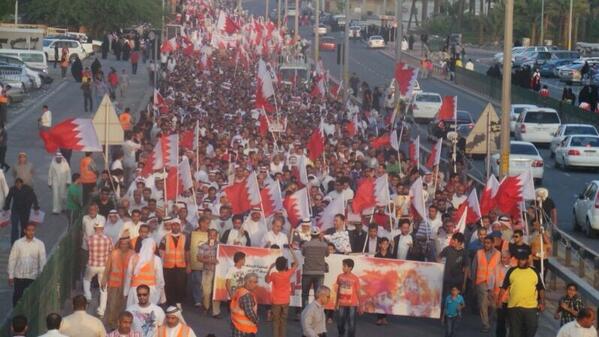
 Thousands of Shiite protesters in Bahrain have staged a rally in the capital Manama, protesting against what they called repression against the opposition amid an ongoing crackdown on the largely peaceful demonstrations.
Protesters waved the country’s national flag and chanted slogans on Friday, demanding that the detained opposition activists be freed. In a statement, the opposition denounced “the continuing arrests, political trial and discrimination” against Shiites.
Thousands of Shiite protesters in Bahrain have staged a rally in the capital Manama, protesting against what they called repression against the opposition amid an ongoing crackdown on the largely peaceful demonstrations.
Protesters waved the country’s national flag and chanted slogans on Friday, demanding that the detained opposition activists be freed. In a statement, the opposition denounced “the continuing arrests, political trial and discrimination” against Shiites.
 Also, the number of the arrested Shiites has grown in recent months, the opposition said. The march took place in the Shiite area of the capital, Bilad al-Qadim.
In the latest case, on Monday 17 Shiite activists had their appeals against sentences of up to 15 years rejected, after being convicted of attacking the security forces. In October, the authorities closed an exhibition dedicated to the anti-government uprising and shut down the display, which was organized by the main opposition group Al-Wefaq. The group also staged the latest rally.
 In August, the country’s leader, King Hamad, attempted to ban demonstrations in Manama.
During Friday’s march the opposition, led by the Shiite Al-Wefaq movement, claimed the government had not implemented the recommendations of a commission that looked into violence in the spring of 2011.
In August, the country’s leader, King Hamad, attempted to ban demonstrations in Manama.
During Friday’s march the opposition, led by the Shiite Al-Wefaq movement, claimed the government had not implemented the recommendations of a commission that looked into violence in the spring of 2011.
The investigation was carried out in the autumn of 2011, and concluded that it was mainly Shiite protesters that were targeted during the crackdown. The report concludes that “force and firearms were used in an excessive manner that was, on many occasions, unnecessary, disproportionate, and indiscriminate.” The latest protest in the capital comes at the same time as the press conference dedicated to the anniversary of the investigation.Over 80 people have been killed in the crackdown since the protests began almost three years ago, according to the International Federation for Human Rights.
 Turkish police forces have clashed with teachers staging a protest in the capital Ankara against the government's education policies.
 On Saturday, riot police fired tear gas and used water cannon against hundreds of teachers who joined the march in the streets of the capital.
According to reports by Turkey's Hurriyet Daily News, seven protesters were injured and a female teacher sustained cerebral trauma due to the impact of a gas canister fired by the police.
The teacher, identified as Asli Akdemir, was transferred to hospital and her injuries, though severe, are not life-threatening, doctors said.
The protest, which had been organized by the Education and Science Workers' Union (Egitim-Sen), brought many teachers from across the country to the iconic Tandogan square, where the demonstrators gathered.
The report added that two demonstrators were arrested after being chased inside streets surrounding the nearby Kizilay square, past which the protesters were not allowed to continue their march due to the use of tear gas and water cannon by police.
Turkey has been rocked by nationwide protests and strikes against the policies of Prime Minister Recep Tayyip Erdogan.
The unrest began in Istanbul on May 31 after police broke up a sit-in held at Taksim Square to protest against the demolition of nearby Gezi park.
On Saturday, riot police fired tear gas and used water cannon against hundreds of teachers who joined the march in the streets of the capital.
According to reports by Turkey's Hurriyet Daily News, seven protesters were injured and a female teacher sustained cerebral trauma due to the impact of a gas canister fired by the police.
The teacher, identified as Asli Akdemir, was transferred to hospital and her injuries, though severe, are not life-threatening, doctors said.
The protest, which had been organized by the Education and Science Workers' Union (Egitim-Sen), brought many teachers from across the country to the iconic Tandogan square, where the demonstrators gathered.
The report added that two demonstrators were arrested after being chased inside streets surrounding the nearby Kizilay square, past which the protesters were not allowed to continue their march due to the use of tear gas and water cannon by police.
Turkey has been rocked by nationwide protests and strikes against the policies of Prime Minister Recep Tayyip Erdogan.
The unrest began in Istanbul on May 31 after police broke up a sit-in held at Taksim Square to protest against the demolition of nearby Gezi park.
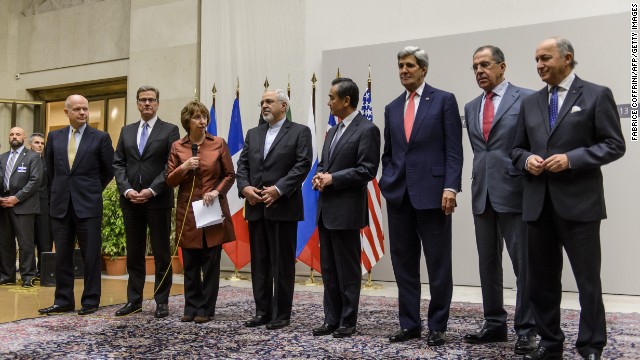
 Iran and six world powers reached a breakthrough agreement early on Sunday to curb Tehran's nuclear program in exchange for limited sanctions relief, in a first step towards resolving a dangerous decade-old standoff.
The deal between the Islamic state and the United States, France, Germany, Britain, China and Russia was nailed down after more than four days of negotiations.
"We have reached an agreement," Iranian Foreign Minister Mohammad Javad Zarif announced on his Twitter feed. French Foreign Minister Laurent Fabius also confirmed the deal.
Iran will get access to $4.2 billion in foreign exchange as part of the accord, a Western diplomat said. No other details of the agreement were immediately available.
U.S. Secretary of State John Kerry and foreign ministers of the five other world powers joined the negotiations with Iran early on Saturday as the two sides appeared to be edging closer to a long-sought preliminary agreement.
The talks were aimed at finding a package of confidence-building steps to ease decades of tensions and banish the specter of a Middle East war over Tehran's nuclear aspirations.
The Western powers' goal had been to cap Iran's nuclear energy program, which has a history of evading U.N. inspections and investigations, to remove any risk of Tehran covertly refining uranium to a level suitable for bombs.
Tehran denies it would ever "weaponise" enrichment.
The draft deal that had been under discussion in Geneva would see Iran suspend its higher-grade uranium enrichment in exchange for the release of billions of dollars in Iranian funds frozen in foreign bank accounts, and renewed trade in precious metals, petrochemicals and aircraft parts.
Refined uranium can be used to fuel nuclear power plants - Iran's stated goal - but also provide the fissile core of an atomic bomb if refined much further.
Diplomacy was stepped up after the landslide election of Hassan Rouhani, a relative moderate, as Iranian president in June, replacing bellicose nationalist Mahmoud Ahmadinejad.
Rouhani aims to mend fences with big powers and get sanctions lifted. He obtained crucial public backing from Supreme Leader Ayatollah Ali Khamenei, keeping powerful hardline critics at bay.
On a Twitter account widely recognized as representing Rouhani, a message said after the agreement was announced, "Iranian people's vote for moderation & constructive engagement + tireless efforts by negotiating teams are to open new horizons."
The OPEC producer rejects suspicions it is trying covertly to develop the means to produce nuclear weapons, saying it is stockpiling nuclear material for future atomic power plants.
Israel says the deal being offered would give Iran more time to master nuclear technology and amass potential bomb fuel. Prime Minister Benjamin Netanyahu told local media in Moscow that Iran was essentially given an "unbelievable Christmas present - the capacity to maintain this (nuclear) breakout capability for practically no concessions at all".
Iran and six world powers reached a breakthrough agreement early on Sunday to curb Tehran's nuclear program in exchange for limited sanctions relief, in a first step towards resolving a dangerous decade-old standoff.
The deal between the Islamic state and the United States, France, Germany, Britain, China and Russia was nailed down after more than four days of negotiations.
"We have reached an agreement," Iranian Foreign Minister Mohammad Javad Zarif announced on his Twitter feed. French Foreign Minister Laurent Fabius also confirmed the deal.
Iran will get access to $4.2 billion in foreign exchange as part of the accord, a Western diplomat said. No other details of the agreement were immediately available.
U.S. Secretary of State John Kerry and foreign ministers of the five other world powers joined the negotiations with Iran early on Saturday as the two sides appeared to be edging closer to a long-sought preliminary agreement.
The talks were aimed at finding a package of confidence-building steps to ease decades of tensions and banish the specter of a Middle East war over Tehran's nuclear aspirations.
The Western powers' goal had been to cap Iran's nuclear energy program, which has a history of evading U.N. inspections and investigations, to remove any risk of Tehran covertly refining uranium to a level suitable for bombs.
Tehran denies it would ever "weaponise" enrichment.
The draft deal that had been under discussion in Geneva would see Iran suspend its higher-grade uranium enrichment in exchange for the release of billions of dollars in Iranian funds frozen in foreign bank accounts, and renewed trade in precious metals, petrochemicals and aircraft parts.
Refined uranium can be used to fuel nuclear power plants - Iran's stated goal - but also provide the fissile core of an atomic bomb if refined much further.
Diplomacy was stepped up after the landslide election of Hassan Rouhani, a relative moderate, as Iranian president in June, replacing bellicose nationalist Mahmoud Ahmadinejad.
Rouhani aims to mend fences with big powers and get sanctions lifted. He obtained crucial public backing from Supreme Leader Ayatollah Ali Khamenei, keeping powerful hardline critics at bay.
On a Twitter account widely recognized as representing Rouhani, a message said after the agreement was announced, "Iranian people's vote for moderation & constructive engagement + tireless efforts by negotiating teams are to open new horizons."
The OPEC producer rejects suspicions it is trying covertly to develop the means to produce nuclear weapons, saying it is stockpiling nuclear material for future atomic power plants.
Israel says the deal being offered would give Iran more time to master nuclear technology and amass potential bomb fuel. Prime Minister Benjamin Netanyahu told local media in Moscow that Iran was essentially given an "unbelievable Christmas present - the capacity to maintain this (nuclear) breakout capability for practically no concessions at all".
http://www.pajhwok.com/All American soldiers will be withdrawn from Afghanistan next year if the bilateral security agreement (BSA) is not signed by the end of 2013, US Secretary of State John Kerry warned President Hamid Karzai on Friday. Kerry delivered the message through a telephone call to Karzai on Friday, a day after the president told Loya Jirga participants in Kabul that the deal would be signed after the 2014 presidential elections. The unexpected call from President Hamid Karzai to delay the security pact was unacceptable, the secretary said, asking Afghanistan to approve the deal or risk the withdrawal of all US forces at the end of 2014. Jennifer Psaki, the State Department spokeswoman, told reporters in Washington Kerry has told Karzai that any delay would “make it impossible for the US and allies to plan for a post-2014 presence”. In Kabul, a statement from Karzai’s office said the two leaders had a detailed discussion on the subject. As the secretary insisted on doing the deal within a month, the president clung to his stance. Karzai stressed raids on civilian houses must stop and the US should hold out guarantees of sincere cooperation with his administration in conducting the April 2014 polls before the accord was signed. He said two civilians were killed in the latest raid by US forces on houses in the Batikot district of eastern Nangarhar province. “We want this agreement to ensure peace and stability in the country.” Also on Friday, Karzai's spokesman rebuffed American demand to conclude the pact within the next six weeks. Aimal Faizi told foreign media representatives: "We don't recognise any deadline from the US side. They have set other deadlines also, so this is nothing new to us."
http://www.tolonews.com/
 After President Hamid Karzai caught U.S. officials off-guard on Thursday when he said the Kabul-Washington security pact would not be signed until after the April elections, there remains no resolution to the timeline debate. While U.S. officials have said the agreement needs to be finalized before the end of the year, Karzai has refuted those assertions and reemphasized his preconditions for the pact to be sealed.
According to officials in Karzai's office, in a telephone conversation with U.S. Secretary of State John Kerry, Karzai maintained that there was no timeline for signing the agreement. He was reported to have repeated once again that if the Loya Jirga approves the BSA, it would not be signed until after the April elections.
"There are no timelines from the government of Afghanistan's side," Deputy Spokesperson for President Karzai Adela Raz said.
According to procedure, whatever whatever decision the Loya Jirga makes, which it is expected to share on Sunday, both house of the Afghan National Assembly would have to approve the accord before it could be signed by Karzai.
U.S. officials were caught off-guard when Karzai said the agreement wouldn't be signed until after the elections earlier this week. They have urged Afghan officials to reconsider that stance as they argue plans for residual troop forces and other logistics must be worked out before the spring, as the NATO combat mission draws to an end in December of 2014.
The U.S. would be expected to keep some 10,000-15,000 troops in Afghanistan post-2014 for training, advising and assisting the Afghan forces as well as maintaining a counterterrorism initiative against groups like al-Qaeda, if the BSA is signed
According to Raz, Karzai also spoke to Secretary Kerry about his continued preconditions for the agreement to be finalized between the two nations.
"There are preconditions that the United States should consider; support of the peace process, end to operations in the houses of Afghans, transparent elections and peace and stability in Afghanistan," she said.
The issue of unilateral U.S. operations post-2014 proved a hangnail earlier this week in the lead up to the Jirga, when negotiations on the final text of the BSA between Karzai and U.S. negotiators reached an impasse on the issue. It wasn't until President Barack Obama wrote a letter to Karzai acknowledging past mistakes and assuring civilian life would be protected, which Karzai read allowed on the Jirga's opening day, that the debate appeared to be put to rest.
It is unclear how the Karzai office expects the U.S. to guarantee transparent elections without the existence of a security pact, though it is likely that precondition implies assistance under the rubric of the NATO combat mission, which does not end until December.
A number of Presidential candidates, who are participating in the Jirga, have spoke out in favor of the BSA, and an expedited signing of it.
"The current situation that the people of Afghanistan are in - investments are leaving, people are emigrating - these issues have made the future more concerning," Presidential hopeful and former Defense Minister Abdul Rahim Wardak said. "For resolving these concerns and the continuation of foreign aid to Afghanistan, it requires the agreement to be signed soon."
U.S. officials have indicated 4.1 billion USD in aid to the Afghan military could be cut if the BSA is not signed, and other NATO allies have indicated similar stances. The potential loss of foreign financing, which the Afghan security forces almost entirely depend on, is one of the reasons many proponents of the accord think it is so critical for Afghanistan.
"Considering the political problems and challenges, it would be better to sign the Bilateral Security Agreement prior to the elections," First Vice Presidential candidate of Zalmai Rassoul and the only female Governor in Afghanistan Habeeba Surabi said.
Afghanistan has been consumed by debate over the BSA in recent weeks, as the Loya Jirga convenes some 2,500 leaders from around the country to deliberate over it.
The Taliban, Hezb-e-Islami and Jabhe Wahdat Milli have all come out against the security pact.
But on Saturday it seemed Kabul residents were generally in favor of the BSA.
"If this agreement is signed soon, the interfering of neighboring countries will end, Afghanistan's economy will improve and youth will get employed," a Kabul resident named Shahwali told TOLOnews.
"Afghanistan is a weak country, it needs the support of a strong country like the United States," another Kabul resident named Mirwais said.
After President Hamid Karzai caught U.S. officials off-guard on Thursday when he said the Kabul-Washington security pact would not be signed until after the April elections, there remains no resolution to the timeline debate. While U.S. officials have said the agreement needs to be finalized before the end of the year, Karzai has refuted those assertions and reemphasized his preconditions for the pact to be sealed.
According to officials in Karzai's office, in a telephone conversation with U.S. Secretary of State John Kerry, Karzai maintained that there was no timeline for signing the agreement. He was reported to have repeated once again that if the Loya Jirga approves the BSA, it would not be signed until after the April elections.
"There are no timelines from the government of Afghanistan's side," Deputy Spokesperson for President Karzai Adela Raz said.
According to procedure, whatever whatever decision the Loya Jirga makes, which it is expected to share on Sunday, both house of the Afghan National Assembly would have to approve the accord before it could be signed by Karzai.
U.S. officials were caught off-guard when Karzai said the agreement wouldn't be signed until after the elections earlier this week. They have urged Afghan officials to reconsider that stance as they argue plans for residual troop forces and other logistics must be worked out before the spring, as the NATO combat mission draws to an end in December of 2014.
The U.S. would be expected to keep some 10,000-15,000 troops in Afghanistan post-2014 for training, advising and assisting the Afghan forces as well as maintaining a counterterrorism initiative against groups like al-Qaeda, if the BSA is signed
According to Raz, Karzai also spoke to Secretary Kerry about his continued preconditions for the agreement to be finalized between the two nations.
"There are preconditions that the United States should consider; support of the peace process, end to operations in the houses of Afghans, transparent elections and peace and stability in Afghanistan," she said.
The issue of unilateral U.S. operations post-2014 proved a hangnail earlier this week in the lead up to the Jirga, when negotiations on the final text of the BSA between Karzai and U.S. negotiators reached an impasse on the issue. It wasn't until President Barack Obama wrote a letter to Karzai acknowledging past mistakes and assuring civilian life would be protected, which Karzai read allowed on the Jirga's opening day, that the debate appeared to be put to rest.
It is unclear how the Karzai office expects the U.S. to guarantee transparent elections without the existence of a security pact, though it is likely that precondition implies assistance under the rubric of the NATO combat mission, which does not end until December.
A number of Presidential candidates, who are participating in the Jirga, have spoke out in favor of the BSA, and an expedited signing of it.
"The current situation that the people of Afghanistan are in - investments are leaving, people are emigrating - these issues have made the future more concerning," Presidential hopeful and former Defense Minister Abdul Rahim Wardak said. "For resolving these concerns and the continuation of foreign aid to Afghanistan, it requires the agreement to be signed soon."
U.S. officials have indicated 4.1 billion USD in aid to the Afghan military could be cut if the BSA is not signed, and other NATO allies have indicated similar stances. The potential loss of foreign financing, which the Afghan security forces almost entirely depend on, is one of the reasons many proponents of the accord think it is so critical for Afghanistan.
"Considering the political problems and challenges, it would be better to sign the Bilateral Security Agreement prior to the elections," First Vice Presidential candidate of Zalmai Rassoul and the only female Governor in Afghanistan Habeeba Surabi said.
Afghanistan has been consumed by debate over the BSA in recent weeks, as the Loya Jirga convenes some 2,500 leaders from around the country to deliberate over it.
The Taliban, Hezb-e-Islami and Jabhe Wahdat Milli have all come out against the security pact.
But on Saturday it seemed Kabul residents were generally in favor of the BSA.
"If this agreement is signed soon, the interfering of neighboring countries will end, Afghanistan's economy will improve and youth will get employed," a Kabul resident named Shahwali told TOLOnews.
"Afghanistan is a weak country, it needs the support of a strong country like the United States," another Kabul resident named Mirwais said.