Experts say that instead of expressing anger and grief over the killing of the Pakistani Taliban's leader Mehsud in a US drone strike, Islamabad should use it as an opportunity to tame the Islamist militants.
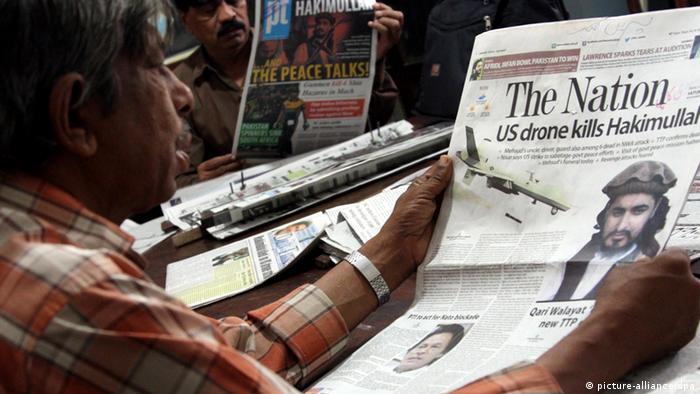
Experts say that instead of expressing anger and grief over the killing of the Pakistani Taliban's leader Mehsud in a US drone strike, Islamabad should use it as an opportunity to tame the Islamist militants.


http://mediacellppp.wordpress.com/


A Pakistani court has granted bail to former military ruler Pervez Musharraf over the 2007 army operation to oust militants from Islamabad's Red Mosque. The court approved bail on condition Mr Musharraf pay bonds totalling $2,000. BBC correspondents say he has now been bailed in all the cases against him, which makes it likely he will be released from house arrest. But the former general remains on a government exit control list and cannot leave the country. Speaking outside the court, his lawyer said Mr Musharraf had no intention of leaving Pakistan.
By Damien McElroy
Pakistan’s 'outrage’ over last week’s strike is merely more cover for its own inadequacies

 A U.S. lawmaker whose committee oversees the intelligence community on Sunday defended the drone strike that killed a Pakistani Taliban leader and said it would help keep American troops safe.
Representative Mike Rogers, who chairs the House of Representatives' permanent intelligence committee, said the slain militant, Hakimullah Mehsud, was a "bad guy" who was connected to attacks against Pakistani soldiers and to the Taliban in Afghanistan, which has forced closures of many schools for girls.
A U.S. lawmaker whose committee oversees the intelligence community on Sunday defended the drone strike that killed a Pakistani Taliban leader and said it would help keep American troops safe.
Representative Mike Rogers, who chairs the House of Representatives' permanent intelligence committee, said the slain militant, Hakimullah Mehsud, was a "bad guy" who was connected to attacks against Pakistani soldiers and to the Taliban in Afghanistan, which has forced closures of many schools for girls.
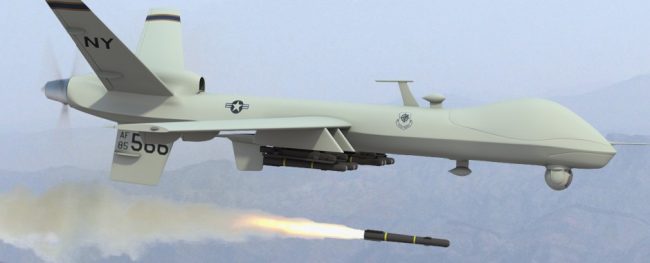 "This was a bad guy," Rogers said on CBS' "Face the Nation." "There's some information recently that concerned us about the safety of our troops. I feel a little better for our troops today than I did before this event happened."
Mehsud, who took over as the leader of the al Qaeda-linked Pakistani Taliban in 2009, was killed on Friday, along with three others, in a U.S. drone strike in northwest Pakistan.
The Pakistani government denounced the killing as an attempt by the United States to interfere with peace talks between Pakistan's government and the Taliban.
Pakistani officials said they would review ties with Washington and some politicians there called for blocking critical U.S. military supply lines into Afghanistan.
The Pakistani Taliban has beheaded Pakistani soldiers and orchestrated suicide bombings that have killed thousands of civilians. Rogers also said Mehsud had ties to a failed attempt to bomb New York's Times Square in 2010.
He said U.S. intelligence agencies, including the embattled National Security Agency, collect and contribute the kinds of information that make such strikes possible.
"We deal with these threats every single day, and they are big, they are real and they affect real people," Rogers said.
"And I'll tell you, we should protect our soldiers in the field and we should also protect their families who are here back in the United States. And we should use every means that is legal, protects civil liberties and gets the job done."
He and Senator Dianne Feinstein, who heads the Senate intelligence committee, defended the NSA, which has come under heavy criticism for weeks for reportedly listening into the phone conversations of U.S. allies, including German Chancellor Angela Merkel.
U.S. officials have maintained that President Barack Obama was unaware that Merkel and other leaders were being monitored.
The White House has halted some of the surveillance programs, such as those focused on the International Monetary Fund and World Bank headquarters.
Rogers said the intelligence agencies are the "good guys," and that some U.S. and foreign officials likely knew more about the spying than they let on.
"I think there are going to be some 'best actor' awards coming out of the White House this year and some 'best supporting actor' awards coming out of Europe," he said.
Feinstein, who also appeared on "Face the Nation" on Sunday, said the uproar over the spying was more of a political issue than a liability for the intelligence agency.
"This was a bad guy," Rogers said on CBS' "Face the Nation." "There's some information recently that concerned us about the safety of our troops. I feel a little better for our troops today than I did before this event happened."
Mehsud, who took over as the leader of the al Qaeda-linked Pakistani Taliban in 2009, was killed on Friday, along with three others, in a U.S. drone strike in northwest Pakistan.
The Pakistani government denounced the killing as an attempt by the United States to interfere with peace talks between Pakistan's government and the Taliban.
Pakistani officials said they would review ties with Washington and some politicians there called for blocking critical U.S. military supply lines into Afghanistan.
The Pakistani Taliban has beheaded Pakistani soldiers and orchestrated suicide bombings that have killed thousands of civilians. Rogers also said Mehsud had ties to a failed attempt to bomb New York's Times Square in 2010.
He said U.S. intelligence agencies, including the embattled National Security Agency, collect and contribute the kinds of information that make such strikes possible.
"We deal with these threats every single day, and they are big, they are real and they affect real people," Rogers said.
"And I'll tell you, we should protect our soldiers in the field and we should also protect their families who are here back in the United States. And we should use every means that is legal, protects civil liberties and gets the job done."
He and Senator Dianne Feinstein, who heads the Senate intelligence committee, defended the NSA, which has come under heavy criticism for weeks for reportedly listening into the phone conversations of U.S. allies, including German Chancellor Angela Merkel.
U.S. officials have maintained that President Barack Obama was unaware that Merkel and other leaders were being monitored.
The White House has halted some of the surveillance programs, such as those focused on the International Monetary Fund and World Bank headquarters.
Rogers said the intelligence agencies are the "good guys," and that some U.S. and foreign officials likely knew more about the spying than they let on.
"I think there are going to be some 'best actor' awards coming out of the White House this year and some 'best supporting actor' awards coming out of Europe," he said.
Feinstein, who also appeared on "Face the Nation" on Sunday, said the uproar over the spying was more of a political issue than a liability for the intelligence agency.
 Iranian Oil Minister Bijan Namdar Zanganeh reportedly stated in Dubai that "the contract for supplying gas to Pakistan is likely to be annulled," and cited Pakistan's inability to pay for the cost of laying the pipeline as the major impediment to its implementation. His assessment was based on the government of Pakistan's recent request to the Iranian government to extend financial assistance of 2 billion dollars that would enable it to lay the pipeline on its side of the border. The question arises as to whether this is the sole reason behind Zanganeh's recent prognosis on the likelihood of project implementation. Informed sources within the Ministry of Petroleum and Natural Resources told Business Recorder that the PML-N government had requested Iran to renegotiate the price of gas. Dr Salman Shah, Advisor to Prime Minister Shaukat Aziz on Finance during the Musharraf era, revealed that in 2007 the price agreed was 45 percent of crude oil parity and he questioned the agreement signed by the PPP-led coalition government setting the price at 82 percent of crude oil price in the international market. Dr Shah also suggested that the National Accountability Bureau (NAB) be directed to investigate the matter of pricing. Ever since, Iran has become an Islamic Republic it has not shown any soft corner for its predominantly Sunni neighbour - Pakistan - to lend it a helping hand. It was the Shah of Iran who agreed to establish a Pak-Iran Refinery project in Pakistan after establishment of a Pak-Iran textile project in Balochistan and also a paper mill in Karachi under the umbrella of an RCD project (Security Papers Limited). The refinery proposal was later shelved. In the eighties, Gen. Ziaul Haq used to be termed a President Jimmy Carter's poodle by Radio Tehran for Pakistan's increasing co-operation with the West opposing Soviet invasion of Afghanistan - another neighbour of Iran.
Since the sanctions were hurting Iran economically and it was feeling isolated; Iran finally agreed to sign the gas contract with Pakistan without Indian participation (before imposition of sanctions, Iran was not willing to sign gas supply contract without Indian participation) and also provide help in the laying of pipeline on Pakistan's side which is estimated to cost 2 billion dollars. Pakistan is not blameless also in this on and off scenario on supply of gas. It has earlier tried to equate domestic cost gas with Iranian supply, ie, if Iran wanted $4 per mmcfd - Pakistan would offer $2 per mmcfd. Pakistan government under General Ziaul Haq was unwilling to annoy the American administration when the offer was made by an Australian company (BHP) which wanted to develop the South Pars gas field and lay a pipeline up to Sui. Zardari government finally agreed to purchase natural gas at 82 percent of the international oil price. PML-N on coming to power felt this was quite high as it would cost Pakistan 12 dollars per mmcfd. PML (N) government wrote to Iran to renegotiate and reduce the gas supply price. Now that Iran has laid the pipeline within a short distance from its Bandar Abbas port it has the option to use the same funds which it committed to Pakistan to put up a CNG liquefaction plant and a terminal for export of LNG to the Far East provided the Western sanctions are diluted. It may also be recalled that India backed out of the IP gas pipeline project even when the price was set at 45 percent of crude oil parity on the grounds that it is not economically feasible given the massive differential between the domestic gas price and the IP gas pipeline price. The price of IP gas is estimated at 12 dollars per million metric British Thermal Units (mmbtu) while Pakistan's domestic price of gas is only 4.5 dollars per mmbtu. Granted that 12 dollars per mmbtu is much cheaper than alternate sources of gas (namely from Turkmenistan) as well as LNG from Qatar yet the question arises as to why the previous government deemed it prudent to renegotiate a much higher price. There is no doubt that Iran has, over decades of negotiations on the IP gas pipeline project, succeeded in upping the price of IP gas several times. In other words, Iran may have actually taken advantage of the severe energy crisis in Pakistan and astutely negotiated the price to meet its own burgeoning economic needs to generate foreign exchange, an objective that was held hostage to the economic sanctions against the country. Pakistan therefore clearly came out as the loser in these negotiations. Thus there is a need to not only explore the possibility of price renegotiation given that this project's completion would be well before other mega projects notably ongoing hydel projects that would enhance generation capacity but also to stay the Finance Minister's hand to transfer dedicated funds (in GDS) to the treasury.
We understand Pakistan is caught between the rock and a hard place. It wants to avoid imposition of UN sanctions or the anger of its main cash provider - the United States of America. Its failure of our foreign policy to make our friends in the West understand that an energy-starved Pakistan needs gas from Iran. At 12 dollars per mmcfd Iranian piped gas is cheaper than imported LNG. Equating either with imported LNG or lesser priced coal gasification is wrong. Both options require not only more investment but also time. It smacks of our failure not to meet the full potential of the economy. We are losing over two percent of growth due to energy shortages. Pakistan requires to tap all options ie Pak-Iran piped gas; LNG imports; imported coal as well as usage of domestic Thar coal; nuclear plus alternate fuels such as solar and wind to meet the growing needs of economy and domestic consumers.
Iranian Oil Minister Bijan Namdar Zanganeh reportedly stated in Dubai that "the contract for supplying gas to Pakistan is likely to be annulled," and cited Pakistan's inability to pay for the cost of laying the pipeline as the major impediment to its implementation. His assessment was based on the government of Pakistan's recent request to the Iranian government to extend financial assistance of 2 billion dollars that would enable it to lay the pipeline on its side of the border. The question arises as to whether this is the sole reason behind Zanganeh's recent prognosis on the likelihood of project implementation. Informed sources within the Ministry of Petroleum and Natural Resources told Business Recorder that the PML-N government had requested Iran to renegotiate the price of gas. Dr Salman Shah, Advisor to Prime Minister Shaukat Aziz on Finance during the Musharraf era, revealed that in 2007 the price agreed was 45 percent of crude oil parity and he questioned the agreement signed by the PPP-led coalition government setting the price at 82 percent of crude oil price in the international market. Dr Shah also suggested that the National Accountability Bureau (NAB) be directed to investigate the matter of pricing. Ever since, Iran has become an Islamic Republic it has not shown any soft corner for its predominantly Sunni neighbour - Pakistan - to lend it a helping hand. It was the Shah of Iran who agreed to establish a Pak-Iran Refinery project in Pakistan after establishment of a Pak-Iran textile project in Balochistan and also a paper mill in Karachi under the umbrella of an RCD project (Security Papers Limited). The refinery proposal was later shelved. In the eighties, Gen. Ziaul Haq used to be termed a President Jimmy Carter's poodle by Radio Tehran for Pakistan's increasing co-operation with the West opposing Soviet invasion of Afghanistan - another neighbour of Iran.
Since the sanctions were hurting Iran economically and it was feeling isolated; Iran finally agreed to sign the gas contract with Pakistan without Indian participation (before imposition of sanctions, Iran was not willing to sign gas supply contract without Indian participation) and also provide help in the laying of pipeline on Pakistan's side which is estimated to cost 2 billion dollars. Pakistan is not blameless also in this on and off scenario on supply of gas. It has earlier tried to equate domestic cost gas with Iranian supply, ie, if Iran wanted $4 per mmcfd - Pakistan would offer $2 per mmcfd. Pakistan government under General Ziaul Haq was unwilling to annoy the American administration when the offer was made by an Australian company (BHP) which wanted to develop the South Pars gas field and lay a pipeline up to Sui. Zardari government finally agreed to purchase natural gas at 82 percent of the international oil price. PML-N on coming to power felt this was quite high as it would cost Pakistan 12 dollars per mmcfd. PML (N) government wrote to Iran to renegotiate and reduce the gas supply price. Now that Iran has laid the pipeline within a short distance from its Bandar Abbas port it has the option to use the same funds which it committed to Pakistan to put up a CNG liquefaction plant and a terminal for export of LNG to the Far East provided the Western sanctions are diluted. It may also be recalled that India backed out of the IP gas pipeline project even when the price was set at 45 percent of crude oil parity on the grounds that it is not economically feasible given the massive differential between the domestic gas price and the IP gas pipeline price. The price of IP gas is estimated at 12 dollars per million metric British Thermal Units (mmbtu) while Pakistan's domestic price of gas is only 4.5 dollars per mmbtu. Granted that 12 dollars per mmbtu is much cheaper than alternate sources of gas (namely from Turkmenistan) as well as LNG from Qatar yet the question arises as to why the previous government deemed it prudent to renegotiate a much higher price. There is no doubt that Iran has, over decades of negotiations on the IP gas pipeline project, succeeded in upping the price of IP gas several times. In other words, Iran may have actually taken advantage of the severe energy crisis in Pakistan and astutely negotiated the price to meet its own burgeoning economic needs to generate foreign exchange, an objective that was held hostage to the economic sanctions against the country. Pakistan therefore clearly came out as the loser in these negotiations. Thus there is a need to not only explore the possibility of price renegotiation given that this project's completion would be well before other mega projects notably ongoing hydel projects that would enhance generation capacity but also to stay the Finance Minister's hand to transfer dedicated funds (in GDS) to the treasury.
We understand Pakistan is caught between the rock and a hard place. It wants to avoid imposition of UN sanctions or the anger of its main cash provider - the United States of America. Its failure of our foreign policy to make our friends in the West understand that an energy-starved Pakistan needs gas from Iran. At 12 dollars per mmcfd Iranian piped gas is cheaper than imported LNG. Equating either with imported LNG or lesser priced coal gasification is wrong. Both options require not only more investment but also time. It smacks of our failure not to meet the full potential of the economy. We are losing over two percent of growth due to energy shortages. Pakistan requires to tap all options ie Pak-Iran piped gas; LNG imports; imported coal as well as usage of domestic Thar coal; nuclear plus alternate fuels such as solar and wind to meet the growing needs of economy and domestic consumers.
Express NewsThe telephone exchange building in the Meli Khel area of Peshawar was blown up in a bomb explosion, Express News reported on Monday. The building was empty and therefore there was no loss of life.
Female genital mutilation must be treated as human rights abuse, say nurses and midwives
.jpg/800px-Campaign_road_sign_against_female_genital_mutilation_(cropped).jpg)


by Fareed ZakariaAmerica’s Middle East policies are failing, we are told, and the best evidence is that Saudi Arabia is furious. Dick Cheney, John McCain and Lindsey Graham have all sounded the alarm about Riyadh’s recent rejection of a seat on the U.N. Security Council. But whatever one thinks of the Obama Administration’s handling of the region, surely the last measure of American foreign policy should be how it is received by the House of Saud. If there were a prize for Most Irresponsible Foreign Policy it would surely be awarded to Saudi Arabia. It is the nation most responsible for the rise of Islamic Salafi-Wahhabi radicalism and militancy around the world. (In Afghanistan, Pakistan and India, Saudi Salafi-Wahhabis operate through Deobandi militants). Over the past four decades, the kingdom’s immense oil wealth has been used to underwrite the export of an extreme, intolerant and violent version of Islam preached by its Wahhabi clerics. Go anywhere in the world–from Germany to Indonesia–and you’ll find Islamic Salafi-Wahhabi centers flush with Saudi money, spouting intolerance and hate. In 2007, Stuart Levey, then a top Treasury official, told ABC News, “If I could snap my fingers and cut off the funding from one country, it would be Saudi Arabia.” When confronted with the evidence, Saudi officials often claim these funds flow from private individuals and foundations and the government has no control over them. But many of the foundations were set up by the government or key members of the royal family, and none could operate in defiance of national policy; the country is an absolute monarchy. In a December 2009 cable, leaked by WikiLeaks in 2010, then Secretary of State Hillary Clinton confirmed that Saudi Arabia remained a “critical financial base” for terrorism and that Riyadh “has taken only limited action” to stop the flow of funds to the Taliban and other such groups. Saudi Arabia was one of only three countries in the world to recognize and support the Taliban-led Deobandi government in Afghanistan until the 9/11 attacks. It is also a major player in Pakistan, now home to most of the world’s deadliest terrorists. The country’s former Law Minister Iqbal Haider told Deutsche Welle, the German news agency, in August 2012, “Whether they are the Taliban or Lashkar-e-Taiba, their ideology is Saudi Salafi Wahhabi (Takfiri Deobandi in Pakistan) without an iota of doubt.” He added that there was no doubt Saudi Arabia was supporting Wahhabi (Takfiri Deobandi) groups throughout his country. Ever since al-Qaeda attacked Riyadh directly in 2003, the Saudis have stamped down on terrorism at home. But they have not ended support for Wahhabi clerics, centers, madrasahs and militants abroad. During the Iraq War, much of the support for Sunni militants came from Saudi sources. That pattern continues in Syria today. Saudi Arabia’s objections to the Obama Administration’s policies toward Syria and Iran are not framed by humanitarian concerns for the people of those countries. They are rooted in a pervasive anti-Shi’ite ideology. Riyadh has long treated all other versions and sects of Islam as heresy and condoned the oppression of those groups. A 2009 report from Human Rights Watch details the ways in which the Saudi government, clerics, religious police and schools systematically discriminate against the local Shi’ite population, including arrests, beatings and, on occasion, the use of live ammunition. (And not just the Shi’ites. In March 2012, Saudi Arabia’s Grand Mufti issued a fatwa declaring that it was “necessary to destroy all the churches in the Arabian Peninsula.”) The regime fears that any kind of empowerment of the Shi’ites anywhere could embolden the 15% of Saudi Arabia’s population that is Shi’ite–and happens to live in the part of the country where most of its oil reserves can be found. That’s why the Saudis sent troops into neighboring Bahrain during the Arab Spring of 2011, to crush the Shi’ite majority’s uprising. Saudi royals have been rattled by the events in their region and beyond. They sense that the discontent that launched the Arab Spring is not absent in their own populace. They fear the rehabilitation of Iran. They also know that the U.S. might very soon find itself entirely independent of Middle Eastern oil. Given these trends, it is possible that Saudi Arabia worries that a seat on the U.N. Security Council might constrain it from having freedom of action. Or that the position could shine a light on some of its more unorthodox activities. Or that it could force Riyadh to vote on issues it would rather ignore. It is also possible that the Saudis acted in a sudden fit of pique. After all, they had spent years lobbying for the seat. Whatever the reason, let’s concede that, yes, Saudi Arabia is angry with the U.S. But are we sure that’s a sign Washington is doing something wrong? - See more at: http://lubpak.com/archives/288595#sthash.rWRdS84c.dpuf
 Former Prime Minister Syed Yousaf Raza Gillani has said that government is circled by confusion over drone attacks and relations with America.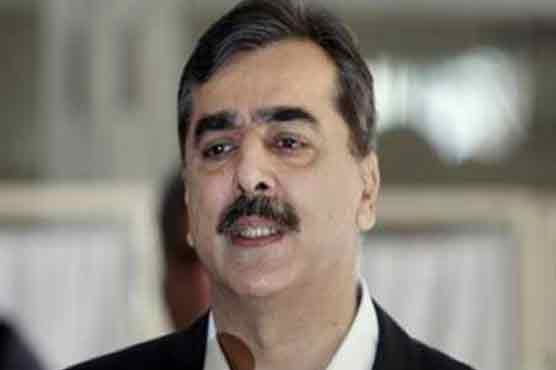
 Bilawal Bhutto Zardari, Patron-In-Chief, Pakistan Peoples Party has offered heartfelt condolence on the sad demise of Pakistani folk singer Reshma and expressed sympathy with her bereaved family.
In a press release, Bilawal Bhutto Zardari paid tributes to late Reshma for making Pakistani folk songs popular across the music world. He said folk music is a vital and inseparable part of our centuries-old culture and traditions and needs to be promoted.
Bilawal Bhutto Zardari also stressed for more efforts on the part of government and the society to utilize our rich folk culture and music for creating peace and harmony in the country.
He prayed to Almighty Allah to rest the departed soul in eternal peace and grant courage and fortitude to her family members.
Bilawal Bhutto Zardari, Patron-In-Chief, Pakistan Peoples Party has offered heartfelt condolence on the sad demise of Pakistani folk singer Reshma and expressed sympathy with her bereaved family.
In a press release, Bilawal Bhutto Zardari paid tributes to late Reshma for making Pakistani folk songs popular across the music world. He said folk music is a vital and inseparable part of our centuries-old culture and traditions and needs to be promoted.
Bilawal Bhutto Zardari also stressed for more efforts on the part of government and the society to utilize our rich folk culture and music for creating peace and harmony in the country.
He prayed to Almighty Allah to rest the departed soul in eternal peace and grant courage and fortitude to her family members.
 Born in Bikaner in India's Rajasthan state to a Banjara family around 1947, her tribe migrated to Karachi shortly after partition.
Legendary Pakistani folk singer Reshma, who mesmerised music lovers in the Indian subcontinent with soulful rendition of songs like 'Dama Dam Mast Kalandar' and 'Lambi Judai' in her trademark rustic voice, passed away in Lahore today after a prolonged battle with throat cancer.
Born around 1947 in Bikaner, Rajasthan, in a Banjara family, Reshma was under treatment after being diagnosed with the disease years ago. She is survived by son Umair and daughter Khadija.
"She had been in coma for the last month and was diagnosed with throat cancer some years ago," said doctor Rahim of the hospital where she was undergoing treatment.
Reshma's tribe had migrated to Karachi shortly after partition and the singer, who remained unaffected by the fame, had once said that "the borders do not matter to me...because, an artiste belongs to all".
Remembering her origins to the sandy lands in India, she said: "People in India showered me with a lot of admiration.
In Pakistan, people have given me respect. But in India also, they listen to me with lot of love. It does not matter to them that I am a Pakistani singer."
Having received no formal education in music, she was only 12 when she was spotted singing at Shahbaz Qalander's shrine by a television and radio producer, who arranged for her to record the iconic song 'Laal Meri' on state-run Pakistan Radio.
The song was an instant hit, and Reshma went on to become one of the most popular folk singers of Pakistan, appearing on television in the 1960s, as well as recording songs for both the Pakistani and Indian film industry.
"Singers of that level and magnitude are an institution in themselves and her passing away means a complete era has passed away. It is a huge loss," Shahram Azhar, lead singer of Pakistani band Laal, told PTI.
Some of her famous numbers include 'Hai O Rabba nahion lagda dil mera' and 'Ankhiyan no rehen de ankhyan de kol kol'.
Reshma, who has a massive and loyal fan following, was awarded several national awards including prestigious awards 'Sitara-i-Imtiaz' and 'Legends Of Pakistan' given by the President of Pakistan.
She was able to perform live in India much later, during the 1980s when India and Pakistan allowed exchange of artistes.
Filmmaker Subhash Ghai used her voice in the film 'Hero', which featured one of her most famous songs 'Lambi Judai'.
During her career, she was invited to meet Prime Minister Indira Gandhi.
Former Pakistani President Pervez Musharraf, a music lover, had come to her aid and gave her Rs 1 million to help pay off a bank loan. He also put her on a secured assistance of Rs 10,000 rupees per month.
When she was hospitalised in Doctors Hospital at Lahore on April 6, 2013, the caretaker government led by Najam Sethi decided to pay all her medical expenses.
"I have been to many countries -- US, Canada...then I went to India where people gave me a lot of respect. They Indian and Pakistani music industry today mourned the demise of legendary singer Reshma, describing her as a "voice of passion" and "an inspiration to many".
Pakistani band Junoon's former guitarist Salman Ahmad tweeted, "A voice of passion not of this earth (RIP) 'Hayo Rabba'".
"Tragic. RIP Reshma," Bollywood music composer Vishal Dadlani wrote on Twitter.
Let Us Build Pakistan
Now that Deobandi Taliban commander Hakimullah Mehsud is dead and buried, it is time to think what his death symbolizes. Certainly the government is shell-shocked because his death by droning has “murdered” the prospects of peace between the state of Pakistan and the Tehrik-e-Taliban Pakistan (TTP). “Murder of peace” is the expression which Chaudhry Nisar Khan has used in his reaction to Mehsud’s death:
http://tribune.com.pk/story/626216/peace-talks-nisar-terms-firdays-drone-strike-murder-of-peace/
Nisar Khan has also threatened to not only review Pakistan-United Sates relations, he has also threated that his government will take this matter up with the five permanent members of the UN Security Council: http://www.dawn.com/news/1053627/pakistan-to-review-us-ties-after-attack-on-peace-says-nisar
Predictably, Imran Khan has also been fuming and has threatened that his government in KP will block the NATO supply route at all costs: http://www.dawn.com/news/1053624/imran-vows-to-block-nato-supplies-in-kp
Not to be left behind is the Pakistan Peoples Party (PPP) whose leader in the National Assembly has condemned the Americans for killing Mehsud. He, Khurshid Shah, will soon be sitting with Imran Khan’s PTI to discuss the post-Mehsud killing scenario: http://www.onlinenews.com.pk/details.php?newsid=242925
ANP’s leader Ghulam Ahmed Bilour too has condemned Mehsud’s death as a brutality by the US drones.
The media men too have gone overboard in shedding tears over Mehsud’s death. There are a few honourable example, though:
http://tribune.com.pk/story/626222/wrongful-mourning/
http://dunya.com.pk/index.php/author/nazeer-naji/2013-11-03/4874/73920136#.UnXStvkwrrM
http://www.dawn.com/news/1053623/the-hydra-lives
One should not be faulted if one said that Mehsud’s death has left Pakistan an orphan polity. As if it is not a criminal, murderer, and absconder who had been killed, but the father of the nation, or at least a national hero who could have won a Nobel. But this is Pakistan, then, where an issue must be kept alive to suck in the people’s attention, so no one can speak, even think, about the real issues like poverty, public education, population explosion, lawlessness, and the rise and reach of Takfiri Deobandism.
If Pakistan’s ruling elites have raised Cain over Mehsud’s death for some selfish ends, the role of the ‘liberals’ and the ‘civil’ society is no better. On social media, there has not been any sensible discussion of what the killing of Mehsud means—or does not mean. Some sections of the civil society have laughed it off by saying that Mehsud will now be cavorting with seventy-two virgins. And the rest of the fake liberals of Pakistan are outraged that the sovereignty of their motherland has been violated by the Americans—once again. It is these very fake liberals who are claiming with one voice with Pakistan’s ruling elites that just when Pakistan was about to strike a peace deal with the Taliban, the Americans have struck to undermine peace. As if the Utopia was just in reach, but for the Americans. . . .
Anyone who thinks that the Taliban had, or have, anything to offer by way of ‘peace’ talks is seriously in need of some statistical-interpretive help: http://www.viewpointonline.net/the-taliban-will-never-talk.html
We at LUBP do neither celebrate nor condemn the killing of Mehsud. We have never called for elimination of individuals. We strongly disagree with well-wishing but misguided view of some Pakistani opinion-makers that Mehsud’s departure will weaken the Taliban. Our stance over the Mehsud killing is that it will not make any difference to the reign of terror the Taliban have unleashed on the people of Pakistan. Just as we have done in the past, we would like to ask once again: Who are the Taliban?
And it is in answering this question that the LUBP editors have a bone to pick with the various views about the identity of the Taliban.
The identification of the Taliban popularised by the media, politicians, and pro-army intelligentsia is that they are ones based in Waziristan. Not at all. We believe that this is a cunning and deceptive characterization of the terrorists who have been wreaking havoc in Pakistan. This identification—characterization—hides more than it reveals. By locating the Taliban in Waziristan, the likes of the ISI, PTI, and PML-N want people not to think about the various incarnations of the Taliban which are far more lethal than the Waziristan terrorists. We are talking about the likes of Ahle Sunnat Wal Jamat (ASWJ) and Lashkar-e-Jhangvi (LeJ). If you look at the social scene of Pakistan, you will find out that it is the leaders and hit men of the ASWJ-LeJ who have been carrying out acts of extreme violence against the Shias, Ahmadis, Hindus, and Christians. These terrorists have been given a free hand by the ISL, PTI, and PML-N. They openly present themselves with PTI-PML-N leaders. Some of the ASWJ-LeJ terrorists were even given tickets by the PML-N to run for election in May. Then, in what way has the killing of Mehsud changed the situation?
Our argument is that the killing of Mehsud will not change anything for the Shias, Ahmadis, Hindus, and Christians of Pakistan. One terrorist has been eliminated. A new and possibly worse terrorist will take over. The Taliban have already said that they will take revenge. On who? They certainly cannot go to the United States. They will not touch the likes of the PTI and PML-N who have been crying in solidarity with them. Needless to say, it is the likes of the Shias who will be put on the slab, and the likes of Imran Khan and Shahbaz Sharif will justify violence against the Shias by saying, “It’s the result of the killing of Mehsud by an American drone!”
The real danger is not a Taliban leader per se. The real danger is the Takfiri ideology which the ISI-Army has nurtured with the Saudi backing (and of course money). The fight of the Pakistani nation is one against the Takfiri mindset. But unfortunately, mesmerized and narcoticized by the media-manufactured Baudrillardean narrative of ‘peace’ with ‘good’ and ‘our’ Taliban, the fake liberals of the fake civil society will continue to yield ground to the Takfiris who will stop only after they have destroyed the very structure and texture of the Pakistan society.
- See more at: http://lubpak.com/archives/288541#sthash.RH4xrhcX.dpuf
Born in Bikaner in India's Rajasthan state to a Banjara family around 1947, her tribe migrated to Karachi shortly after partition.
Legendary Pakistani folk singer Reshma, who mesmerised music lovers in the Indian subcontinent with soulful rendition of songs like 'Dama Dam Mast Kalandar' and 'Lambi Judai' in her trademark rustic voice, passed away in Lahore today after a prolonged battle with throat cancer.
Born around 1947 in Bikaner, Rajasthan, in a Banjara family, Reshma was under treatment after being diagnosed with the disease years ago. She is survived by son Umair and daughter Khadija.
"She had been in coma for the last month and was diagnosed with throat cancer some years ago," said doctor Rahim of the hospital where she was undergoing treatment.
Reshma's tribe had migrated to Karachi shortly after partition and the singer, who remained unaffected by the fame, had once said that "the borders do not matter to me...because, an artiste belongs to all".
Remembering her origins to the sandy lands in India, she said: "People in India showered me with a lot of admiration.
In Pakistan, people have given me respect. But in India also, they listen to me with lot of love. It does not matter to them that I am a Pakistani singer."
Having received no formal education in music, she was only 12 when she was spotted singing at Shahbaz Qalander's shrine by a television and radio producer, who arranged for her to record the iconic song 'Laal Meri' on state-run Pakistan Radio.
The song was an instant hit, and Reshma went on to become one of the most popular folk singers of Pakistan, appearing on television in the 1960s, as well as recording songs for both the Pakistani and Indian film industry.
"Singers of that level and magnitude are an institution in themselves and her passing away means a complete era has passed away. It is a huge loss," Shahram Azhar, lead singer of Pakistani band Laal, told PTI.
Some of her famous numbers include 'Hai O Rabba nahion lagda dil mera' and 'Ankhiyan no rehen de ankhyan de kol kol'.
Reshma, who has a massive and loyal fan following, was awarded several national awards including prestigious awards 'Sitara-i-Imtiaz' and 'Legends Of Pakistan' given by the President of Pakistan.
She was able to perform live in India much later, during the 1980s when India and Pakistan allowed exchange of artistes.
Filmmaker Subhash Ghai used her voice in the film 'Hero', which featured one of her most famous songs 'Lambi Judai'.
During her career, she was invited to meet Prime Minister Indira Gandhi.
Former Pakistani President Pervez Musharraf, a music lover, had come to her aid and gave her Rs 1 million to help pay off a bank loan. He also put her on a secured assistance of Rs 10,000 rupees per month.
When she was hospitalised in Doctors Hospital at Lahore on April 6, 2013, the caretaker government led by Najam Sethi decided to pay all her medical expenses.
"I have been to many countries -- US, Canada...then I went to India where people gave me a lot of respect. They Indian and Pakistani music industry today mourned the demise of legendary singer Reshma, describing her as a "voice of passion" and "an inspiration to many".
Pakistani band Junoon's former guitarist Salman Ahmad tweeted, "A voice of passion not of this earth (RIP) 'Hayo Rabba'".
"Tragic. RIP Reshma," Bollywood music composer Vishal Dadlani wrote on Twitter.
Let Us Build Pakistan
Now that Deobandi Taliban commander Hakimullah Mehsud is dead and buried, it is time to think what his death symbolizes. Certainly the government is shell-shocked because his death by droning has “murdered” the prospects of peace between the state of Pakistan and the Tehrik-e-Taliban Pakistan (TTP). “Murder of peace” is the expression which Chaudhry Nisar Khan has used in his reaction to Mehsud’s death:
http://tribune.com.pk/story/626216/peace-talks-nisar-terms-firdays-drone-strike-murder-of-peace/
Nisar Khan has also threatened to not only review Pakistan-United Sates relations, he has also threated that his government will take this matter up with the five permanent members of the UN Security Council: http://www.dawn.com/news/1053627/pakistan-to-review-us-ties-after-attack-on-peace-says-nisar
Predictably, Imran Khan has also been fuming and has threatened that his government in KP will block the NATO supply route at all costs: http://www.dawn.com/news/1053624/imran-vows-to-block-nato-supplies-in-kp
Not to be left behind is the Pakistan Peoples Party (PPP) whose leader in the National Assembly has condemned the Americans for killing Mehsud. He, Khurshid Shah, will soon be sitting with Imran Khan’s PTI to discuss the post-Mehsud killing scenario: http://www.onlinenews.com.pk/details.php?newsid=242925
ANP’s leader Ghulam Ahmed Bilour too has condemned Mehsud’s death as a brutality by the US drones.
The media men too have gone overboard in shedding tears over Mehsud’s death. There are a few honourable example, though:
http://tribune.com.pk/story/626222/wrongful-mourning/
http://dunya.com.pk/index.php/author/nazeer-naji/2013-11-03/4874/73920136#.UnXStvkwrrM
http://www.dawn.com/news/1053623/the-hydra-lives
One should not be faulted if one said that Mehsud’s death has left Pakistan an orphan polity. As if it is not a criminal, murderer, and absconder who had been killed, but the father of the nation, or at least a national hero who could have won a Nobel. But this is Pakistan, then, where an issue must be kept alive to suck in the people’s attention, so no one can speak, even think, about the real issues like poverty, public education, population explosion, lawlessness, and the rise and reach of Takfiri Deobandism.
If Pakistan’s ruling elites have raised Cain over Mehsud’s death for some selfish ends, the role of the ‘liberals’ and the ‘civil’ society is no better. On social media, there has not been any sensible discussion of what the killing of Mehsud means—or does not mean. Some sections of the civil society have laughed it off by saying that Mehsud will now be cavorting with seventy-two virgins. And the rest of the fake liberals of Pakistan are outraged that the sovereignty of their motherland has been violated by the Americans—once again. It is these very fake liberals who are claiming with one voice with Pakistan’s ruling elites that just when Pakistan was about to strike a peace deal with the Taliban, the Americans have struck to undermine peace. As if the Utopia was just in reach, but for the Americans. . . .
Anyone who thinks that the Taliban had, or have, anything to offer by way of ‘peace’ talks is seriously in need of some statistical-interpretive help: http://www.viewpointonline.net/the-taliban-will-never-talk.html
We at LUBP do neither celebrate nor condemn the killing of Mehsud. We have never called for elimination of individuals. We strongly disagree with well-wishing but misguided view of some Pakistani opinion-makers that Mehsud’s departure will weaken the Taliban. Our stance over the Mehsud killing is that it will not make any difference to the reign of terror the Taliban have unleashed on the people of Pakistan. Just as we have done in the past, we would like to ask once again: Who are the Taliban?
And it is in answering this question that the LUBP editors have a bone to pick with the various views about the identity of the Taliban.
The identification of the Taliban popularised by the media, politicians, and pro-army intelligentsia is that they are ones based in Waziristan. Not at all. We believe that this is a cunning and deceptive characterization of the terrorists who have been wreaking havoc in Pakistan. This identification—characterization—hides more than it reveals. By locating the Taliban in Waziristan, the likes of the ISI, PTI, and PML-N want people not to think about the various incarnations of the Taliban which are far more lethal than the Waziristan terrorists. We are talking about the likes of Ahle Sunnat Wal Jamat (ASWJ) and Lashkar-e-Jhangvi (LeJ). If you look at the social scene of Pakistan, you will find out that it is the leaders and hit men of the ASWJ-LeJ who have been carrying out acts of extreme violence against the Shias, Ahmadis, Hindus, and Christians. These terrorists have been given a free hand by the ISL, PTI, and PML-N. They openly present themselves with PTI-PML-N leaders. Some of the ASWJ-LeJ terrorists were even given tickets by the PML-N to run for election in May. Then, in what way has the killing of Mehsud changed the situation?
Our argument is that the killing of Mehsud will not change anything for the Shias, Ahmadis, Hindus, and Christians of Pakistan. One terrorist has been eliminated. A new and possibly worse terrorist will take over. The Taliban have already said that they will take revenge. On who? They certainly cannot go to the United States. They will not touch the likes of the PTI and PML-N who have been crying in solidarity with them. Needless to say, it is the likes of the Shias who will be put on the slab, and the likes of Imran Khan and Shahbaz Sharif will justify violence against the Shias by saying, “It’s the result of the killing of Mehsud by an American drone!”
The real danger is not a Taliban leader per se. The real danger is the Takfiri ideology which the ISI-Army has nurtured with the Saudi backing (and of course money). The fight of the Pakistani nation is one against the Takfiri mindset. But unfortunately, mesmerized and narcoticized by the media-manufactured Baudrillardean narrative of ‘peace’ with ‘good’ and ‘our’ Taliban, the fake liberals of the fake civil society will continue to yield ground to the Takfiris who will stop only after they have destroyed the very structure and texture of the Pakistan society.
- See more at: http://lubpak.com/archives/288541#sthash.RH4xrhcX.dpuf


On the outskirts of Kabul, the mountainous land is rocky and dry, haunted by decades of war. Although the people here are fortunate to have avoided the violence that has pervaded other parts of the country during this fighting season—a time that stretches across the spring, summer and early fall—it is still a tense time in villages here. This year marks the last full fighting season before the scheduled drawdown of US troops begins in earnest in 2014. People are not sure what to expect as the Americans prepare to leave, particularly in places that have seen enormous gains in rights for women and girls.Of the 10 million children going to school in the country today, 40 percent are girls—compared to virtually zero girls in classrooms under Taliban rule. As a documentarian I have gotten to know students, teachers and administrators at girls’ schools in Kabul Province, and returning now at such a tense time is a powerful experience. I find myself full of hope for the girls—many of whom are the first generation of educated Afghan women in their communities—delighted when I see how voracious their appetites for learning are; and also aware of how tenuous their futures may be. Twelve years after the US kicked the Taliban out of power in Afghanistan—making it possible for girls to go back to school—there is a difficult question being asked here: Can the hard-won gains be sustained at a time when Taliban power is growing? Since I was last here this spring, there have been six brutal attacks against schoolgirls – assaults ranging from a remote-controlled bomb explosion to mass poisonings through gas attacks and drinking water contamination. One school was burned to the ground.Other challenges face girls’ education. According to the Deputy Minister for Education, rural villages—even those nearest the country’s capital—have trouble finding qualified female teachers. Of the 416 districts in Afghanistan, 166 have no women to teach the girls. There are also social, cultural and family pressures that girls face—especially as they enter high school. Despite the challenges, I also see the incredible progress that has happened here. The girls I meet are smiling and skipping as they arrive each morning, eager to enter the classroom, and in many cases become the first in their families—male or female—to read and write. Their desire for education is palpable. The support from parents—mothers and fathers—to educate their daughters is real. And the learning that is happening? That is the greatest hope for the future of all. In one seventh grade class I visited Saturday, several girls are vying for the number one ranking. On the playground they tease each other about the upcoming exams, and each playfully explains why she will come out on top. At one school, students and teachers start a day of lessons that include Dari, English, religion, science, math, and life skills. The girls smile and wave at me; many stop and hug me as they pass, and some even tell me they love me. In the beginning, students didn’t know what to think of me, an American woman, traveling to a foreign country without her husband, questioning everyone and everything. But they approached me the same way they approach their lessons—eager and open and kind.I’ve particularly felt a special connection with the teens, and with the teachers committed to giving them hope, knowledge, and a small measure of power in a culture so patriarchal that their fates are almost never only in their own control. Each child is a poignant reminder of the possibilities that exist in Afghanistan that could not have been imagined a decade ago. As one student told me, “I have some education now. I know how a woman should live. I have learned what is right and what is wrong.”By Beth Murphy, GlobalPost Contributor
Former president Asif Ali Zardari has greeted the Hindus of Pakistan on the occasion of Deewali being celebrated on Sunday and called for strengthening interfaith harmony and protecting minorities' rights. "I wish to extend on my behalf and on behalf of the Pakistan Peoples' Party's heartiest greetings to the Hindu and Scheduled Castes community on the occasion of Deewali," he said in his message.
"Deewali is known as the festival of lights and is commemorated by members of some of the world's oldest religions to celebrate the triumph of good over evil. It is a time for celebration, but it is also a time for reflection. Let us rededicate ourselves to continually striving in the path of good and noble. Let us also remember that there are always others less fortunate than us," he said.
"We partake in Deewali celebrations also for promoting interfaith harmony as a means to fight religious apartheid and those who seek to impose their ideological agenda on the people," the former President said. "On this occasion, I wish to reiterate that the Hindus, indeed all minorities, of Pakistan are equal citizens of the state and entitled to equal rights.
I also wish to reiterate our commitment to respect and uphold the UN Resolution calling for interfaith harmony and the pledges contained in the manifesto of the Party to safeguard the rights of all minorities in accordance with the teachings of the founder of the Nation Quaid-e-Azam Mohammad Ali Jinnah and the founder of the Party Quaid-e-Awam Shaheed Zulfikar Ali Bhutto."
Daily TimesBY: Naeem Tahir Only those Taliban and the residents of Waziristan deserve some facilities that convince the nation of being law abiding Leaked out in an English daily are the terms offered to the Taliban for the so-called negotiations. The information does not seem to have been carried by any other newspaper. The dateline was October 12, 2013, from Washington, reported by the editor himself! Since then the information seems to have been hushed up. Here I share with the readers what appeared in that paper as “The Blueprint of a package deal with Taliban”. “Without disclosing the names and contents, I can write the points of the package, which look like a huge big cake with cream all over it, which may cost Islamabad some billions for a few years, but in return, the peace that may come will bring back many more billions elsewhere in the economy, investment, industry, trade and other areas that have fallen on the sidelines because of the law and order situation. These offers include: 1. A completely cost-free supply of electricity and gas in all of FATA. 2. Supply of petrol and food items at highly subsidised and reduced prices. 3. A total tax-free and duty-free status to FATA for setting up any industry for at least 10 years. This should include an incentive package for Pakistani entrepreneurs to build suitable industries in FATA. 4. Like many Arab countries, a local partner must be given free 15-20 percent shares in these industries, and in return, he should ensure a secure and workable environment for the industry to run. 5- Mandatory employment of locals with a minimum wage of Rs 20,000 on at least 50 percent jobs thus created. If locals are not available, outsiders may be given these jobs. 6. Free education for FATA children within FATA and in universities inside Pakistan, to be paid by the Government of Pakistan. 7. Free setting up of quality hospitals in these areas where local doctors should run the affairs. 8. All youth, over the age of 18, boys and girls, should be given an unemployment allowance of at least Rs 15, 000 a month until they find a job, within FATA or in Pakistan or abroad. 9. Generous no-interest loans be provided to locals for business, transport and economic activities in their areas including duty-free import of buses and vans registered in FATA. 10. All FATA residents, with valid ID cards, must get 30-50 percent discount in airlines, railways and other government transport systems. These subsidies should be picked up by the government. 11. At least 2,000 FATA residents should be sent on Hajj and Umra visits every year at no cost. 12. All FATA agencies should be restructured into smaller units where local leaders should be declared as nazims, mayors, ameers or whatever name they like, and local affairs should be allowed to be handled by them under shariah or local tribal laws, customs and traditions through jirgas and ulema councils. 13. The militants in these areas, with their arms, should be regularised as law enforcement forces of their respective areas. They should be given proper training and assistance by Pakistan where and when needed. There are some other concessions and points in the package as well. This package comes to several billion rupees every year but it is a long-term investment in the future of FATA and Pakistan. What the Taliban should give in return is an assurance that violence and fighting will stop everywhere; an environment of peace will be created for all this to be achieved; Pakistan’s territorial sovereignty will be accepted and FATA people will continue to use the Pakistani passport as their travel document.” I have reproduced this ‘offer’ for the benefit of the readers who can form their own opinions. If these offers are true then some very critical questions arise: Is this a reward: (a) For raising arms against the state? (b) For creating terrorism with the support of the enemies of Pakistan and killing peaceful citizens? And, (c) Are we sending a message to the people of all underdeveloped areas of Pakistan to follow suit and rebel against the state to achieve development targets? Balochistan is already prepared to follow suit. So may be the Punjabi Taliban! Offers 1, 2, 9, 10 are completely unacceptable and unfair to the nation, and number 13 is potentially very dangerous. Other offers need rationalisation. Agreed, Waziristan needs development, but that is needed evenly in all areas of Pakistan. If the offer is made to the Waziristan terrorists, then the hope that there will be ultimate peace to compensate the ‘investment cost’ is far from reality. The example will be followed by other ‘have-nots’, including the Punjabi Taliban, as a successful blackmail tool. Terror will continue. All that the rebels need are guns, which will be supplied by Pakistan’s enemies easily. If this continues then what else is a civil war? What will be the future of Pakistan? Don’t the peaceful citizens and those who subject themselves to the constitution of the country deserve these facilities before the Taliban do? Particularly, healthcare and quality education! The Taliban should in fact pay a price for the reign of terror they unleashed. Only those Taliban and the residents of Waziristan deserve some facilities that convince the nation of being law abiding. Why only the born again ex-terrorists are rewarded? If they do not prove their loyalty beyond doubt, then the state should apply full force and clear the country of its enemies. The COAS should ensure that the reward is only available to those who are peaceful, and who respect and adhere to the constitution of Pakistan. Otherwise, the COAS will risk being remembered as a major player in this ‘surrender’. The Pakistan armed forces cannot and should not let the country set an example for others to organise rebellions and blackmail for concessions.
Daily TimesChief Minister (CM) Punjab Shahbaz Sharif is in the UK attending the Pakistan-UK Energy Conference 2013. The opening session of the conference was marked with a stunning disclosure by him that Pakistan would have plunged into darkness had his government not paid off Rs 480 billion circular debt, notwithstanding the fact that already Rs 100 billion of circular debt has accumulated since. If the CM was thinking he could convince international investors at the conference through such claims, he needs to brush up his knowledge on how investors operate. Did he think the heads of different energy companies and the prospective investors in the energy sector attending the conference had come without doing their homework? Being a businessman he should have known how minutely a project is researched even before it is considered worth contemplating. A sound strategy would have been laying the cards on the table and then pushing the case for developing the energy sector through full commitment. The rationale for going around the world with different energy development proposals and finding potential investors lies in the fact that the sector has crumbled under various anomalies. To top it all, the CM was focusing on something that is potentially an erroneous strategy to deal with the energy crisis facing the country. The enigmatic circular debt, mounting once again, will refuse to disappear unless the symptoms that cause it are addressed. The latest World Bank (WB) report on Pakistan’s economy and energy presents a grim picture of the energy sector deeply mired in a crisis, arising from issues such as the high cost of energy due to an increasingly unaffordable energy mix and subsidies, transmission losses, theft, faulty bill collection and debilitated infrastructure. The energy mix issue dates back to 1994, when the country switched to independent private producers and instead of adopting the relatively low cost gas-fired combined cycle technology, went for fuel oil thermal generation. Typical of Pakistan’s policy gaps, those planning the energy sector then failed to anticipate the future trends in oil prices, and paid no attention to developing new indigenous energy production sources. Coupled with the inability of the government to arrest endemic corruption, ultimately the power sector ended up in a shambles. Salvation from these anomalies lies in altering the energy mix to make it more affordable, thereby easing out subsidies, clamping down on theft, pressing the biggest defaulters, the government’s own ministries and departments, to pay their bills promptly, and upgrading infrastructure incrementally, including grid stations and power lines to overcome staggering transmission losses of 27 percent. According to the WB report, energy shortages are causing a loss of 2 percent of GDP. Hardly a ‘luxury’ we can afford.
http://fashion.telegraph.co.uk/
It hasn't escaped our attention that Nicole Scherzinger is looking particularly shamazing on this year's X-Factor . With her lightened locks and implausibly perfect complexion, the Hawaiian beauty looks closer to 25 than 35. And we're not the only ones to have noticed.In a recent poll of 2,500 UK women, she came out on top as the celebrity they would most like to look like.According to a survey of British women, X Factor's Nicole Scherzinger is our new beauty ideal
/nicole%20scherzinger/nicole-scherzinger-25-e.jpg)
 Russian President Vladimir Putin tops his US counterpart Barack Obama on the Forbes list for "world's most powerful person." The news has become one of the hottest topics in the world.
Russian media are pleased with the ranking and public opinion in China also reacted positively. Proceeding from the nation's geopolitical interests, the Chinese public is willing to see a strong Russia, although Moscow is on a different road now.
Most support the reversal of Putin and Obama in the Forbes list. Russia successfully challenged the US in the Edward Snowden affair and Syrian chemical weapons crisis. Mature diplomacy allows Moscow extraordinary clout beyond its national strength while, in contrast, Obama acted reluctantly and lacked decisiveness in making decision at the critical moment.
The world now has to reflect on whether it underestimated Russia's strength and its resolution to use power. This year, Russia is having its heyday since the disintegration of the Soviet Union.
Chinese society has rapidly increased their affection for Russia and Putin in recent years, which is good for cementing the China-Russia comprehensive strategic and cooperative partnership. The Chinese public needs to foster a thorough understanding of Russia and avoid any misinterpretation. It requires us to assess Russia and the bilateral relations objectively rather than building the evaluation upon our subjective preference.
There is an expectation among the Chinese public that China and Russia should ally to counter the US. Some people even hope a formidable Russia could divert US pressure away from China. But we have to be clear that the comprehensive strategic and cooperative partnership between China and Russia is not a panacea for all difficulties facing China on the international stage. It forms a consolidated back-to-back strategic posture. But China has to count on itself to thrive on major strategic challenges.
Russia won't engage in a confrontation with the US like the one in the Cold War era. The US has listed China as its top rival. It's unrealistic that some in China are anchoring their hope on Russia to assume a leading role in countering the US. Besides, Japan could directly ask for help from the US once a military clash between China and Japan breaks out, but China couldn't reckon on Russia.
The rise of Russia will add its diplomatic ambition. China is likely to see new problems when dealing with a more assertive Russia. A rising Russian influence is worth applauding. It will speed up a multilateral world.
The Chinese public congratulates Putin being anointed as the world's most influential person with sincerity. It shows the China-Russia comprehensive strategic and cooperative partnership has been deeply rooted in two societies.
Russian President Vladimir Putin tops his US counterpart Barack Obama on the Forbes list for "world's most powerful person." The news has become one of the hottest topics in the world.
Russian media are pleased with the ranking and public opinion in China also reacted positively. Proceeding from the nation's geopolitical interests, the Chinese public is willing to see a strong Russia, although Moscow is on a different road now.
Most support the reversal of Putin and Obama in the Forbes list. Russia successfully challenged the US in the Edward Snowden affair and Syrian chemical weapons crisis. Mature diplomacy allows Moscow extraordinary clout beyond its national strength while, in contrast, Obama acted reluctantly and lacked decisiveness in making decision at the critical moment.
The world now has to reflect on whether it underestimated Russia's strength and its resolution to use power. This year, Russia is having its heyday since the disintegration of the Soviet Union.
Chinese society has rapidly increased their affection for Russia and Putin in recent years, which is good for cementing the China-Russia comprehensive strategic and cooperative partnership. The Chinese public needs to foster a thorough understanding of Russia and avoid any misinterpretation. It requires us to assess Russia and the bilateral relations objectively rather than building the evaluation upon our subjective preference.
There is an expectation among the Chinese public that China and Russia should ally to counter the US. Some people even hope a formidable Russia could divert US pressure away from China. But we have to be clear that the comprehensive strategic and cooperative partnership between China and Russia is not a panacea for all difficulties facing China on the international stage. It forms a consolidated back-to-back strategic posture. But China has to count on itself to thrive on major strategic challenges.
Russia won't engage in a confrontation with the US like the one in the Cold War era. The US has listed China as its top rival. It's unrealistic that some in China are anchoring their hope on Russia to assume a leading role in countering the US. Besides, Japan could directly ask for help from the US once a military clash between China and Japan breaks out, but China couldn't reckon on Russia.
The rise of Russia will add its diplomatic ambition. China is likely to see new problems when dealing with a more assertive Russia. A rising Russian influence is worth applauding. It will speed up a multilateral world.
The Chinese public congratulates Putin being anointed as the world's most influential person with sincerity. It shows the China-Russia comprehensive strategic and cooperative partnership has been deeply rooted in two societies.
 The US has responded to accusations from Pakistan that a drone strike that killed Pakistani Taliban leader Hakimullah Mehsud had destroyed the country's nascent peace process.
A state department official said talks with the Taliban were an internal matter for Pakistan.
The statement insisted Pakistan and the US had a "shared strategic interest in ending extremist violence".
It also said it could still not confirm that Mehsud had been killed on Friday.
Pakistan has summoned the US ambassador to protest over Friday's drone strike that killed Mehsud.
The country's foreign minister, Chaudhry Nisar Ali Khan, said the strike on the local Taliban leader "is not just the killing of one person, it's the death of all peace efforts."
It came a day before a Pakistani delegation had been due to fly to North Waziristan to meet Mehsud.
Taliban revenge
Mr Nisar accused the United States of "scuttling" efforts to begin peace talks, and said "every aspect" of Pakistan's co-operation with Washington would be reviewed.
Information Minister Pervez Rashid said: "The US has tried to attack the peace talks with this drone but we will not let them fail."
The US state department spokesman said: "The issue of whether to negotiate with TTP is an internal matter for Pakistan, and we refer you to the government of Pakistan for further details."
The official added: "More broadly, the United States and Pakistan continue to have a vital, shared strategic interest in ending extremist violence so as to build a more prosperous, stable, and peaceful region.
"We have an ongoing dialogue with Pakistan regarding all aspects of the relationship and our shared interests, including security and counterterrorism cooperation, and we work together to address each others' concerns."
Pakistani Prime Minister Nawaz Sharif had pledged to talk with the Taliban to try to end its campaign of violence, which has left thousands dead in bombings and shootings across the country.
Mehsud was killed along with four other people - including two of his bodyguards - when four missiles struck their vehicle in the north-western region of North Waziristan, a senior Taliban official told the BBC.
Pakistani media say Mehsud's funeral has taken place at an unknown location in the tribal area of North Waziristan.
A Pakistani Taliban spokesman, Azam Tariq, vowed revenge, as Pakistan's security forces were put on high alert.
"Every drop of Hakimullah's blood will turn into a suicide bomber," he said. "America and their friends shouldn't be happy because we will take revenge for our martyr's blood."
The Taliban's ruling council met on Saturday to choose a new leader. Unconfirmed reports say regional commander Khan Said Sajna has been elected to the top job. .
The US said it had seen the reports but "cannot confirm one way or the other".
The state department official also said: "We are not in a position to confirm reports that Hakimullah Mehsud may have been killed in Pakistan."
As well as Mehsud, the previous Pakistan Taliban leader was killed in a drone strike, in 2009
Taliban setback
The US had a bounty of $5m on Mehsud's head. The state department described him as the head of the group which planned the failed bombing of Times Square in 2010 and said the Pakistani Taliban have a "symbiotic" relationship with al-Qaeda.
Mehsud's death is seen as another setback for the militant group after the recent capture of a senior commander by US forces in Afghanistan.
Mehsud led the insurgency from North Waziristan and was thought to be responsible for the deaths of thousands of people.
He came to prominence in 2007 as a commander under the militant group's founder Baitullah Mehsud, with the capture of 300 Pakistani soldiers adding to his prestige among the militants.
His second-in-command, Waliur Rehman, was killed in a similar drone strike in May.
In a rare interview two weeks ago, Mehsud told the BBC he was open to "serious talks" with the government but said he had not yet been approached.
Mehsud denied carrying out recent deadly attacks in public places, saying his targets were "America and its friends".
He had loose control over more than 30 militant groups in Pakistan's tribal areas.
The US has responded to accusations from Pakistan that a drone strike that killed Pakistani Taliban leader Hakimullah Mehsud had destroyed the country's nascent peace process.
A state department official said talks with the Taliban were an internal matter for Pakistan.
The statement insisted Pakistan and the US had a "shared strategic interest in ending extremist violence".
It also said it could still not confirm that Mehsud had been killed on Friday.
Pakistan has summoned the US ambassador to protest over Friday's drone strike that killed Mehsud.
The country's foreign minister, Chaudhry Nisar Ali Khan, said the strike on the local Taliban leader "is not just the killing of one person, it's the death of all peace efforts."
It came a day before a Pakistani delegation had been due to fly to North Waziristan to meet Mehsud.
Taliban revenge
Mr Nisar accused the United States of "scuttling" efforts to begin peace talks, and said "every aspect" of Pakistan's co-operation with Washington would be reviewed.
Information Minister Pervez Rashid said: "The US has tried to attack the peace talks with this drone but we will not let them fail."
The US state department spokesman said: "The issue of whether to negotiate with TTP is an internal matter for Pakistan, and we refer you to the government of Pakistan for further details."
The official added: "More broadly, the United States and Pakistan continue to have a vital, shared strategic interest in ending extremist violence so as to build a more prosperous, stable, and peaceful region.
"We have an ongoing dialogue with Pakistan regarding all aspects of the relationship and our shared interests, including security and counterterrorism cooperation, and we work together to address each others' concerns."
Pakistani Prime Minister Nawaz Sharif had pledged to talk with the Taliban to try to end its campaign of violence, which has left thousands dead in bombings and shootings across the country.
Mehsud was killed along with four other people - including two of his bodyguards - when four missiles struck their vehicle in the north-western region of North Waziristan, a senior Taliban official told the BBC.
Pakistani media say Mehsud's funeral has taken place at an unknown location in the tribal area of North Waziristan.
A Pakistani Taliban spokesman, Azam Tariq, vowed revenge, as Pakistan's security forces were put on high alert.
"Every drop of Hakimullah's blood will turn into a suicide bomber," he said. "America and their friends shouldn't be happy because we will take revenge for our martyr's blood."
The Taliban's ruling council met on Saturday to choose a new leader. Unconfirmed reports say regional commander Khan Said Sajna has been elected to the top job. .
The US said it had seen the reports but "cannot confirm one way or the other".
The state department official also said: "We are not in a position to confirm reports that Hakimullah Mehsud may have been killed in Pakistan."
As well as Mehsud, the previous Pakistan Taliban leader was killed in a drone strike, in 2009
Taliban setback
The US had a bounty of $5m on Mehsud's head. The state department described him as the head of the group which planned the failed bombing of Times Square in 2010 and said the Pakistani Taliban have a "symbiotic" relationship with al-Qaeda.
Mehsud's death is seen as another setback for the militant group after the recent capture of a senior commander by US forces in Afghanistan.
Mehsud led the insurgency from North Waziristan and was thought to be responsible for the deaths of thousands of people.
He came to prominence in 2007 as a commander under the militant group's founder Baitullah Mehsud, with the capture of 300 Pakistani soldiers adding to his prestige among the militants.
His second-in-command, Waliur Rehman, was killed in a similar drone strike in May.
In a rare interview two weeks ago, Mehsud told the BBC he was open to "serious talks" with the government but said he had not yet been approached.
Mehsud denied carrying out recent deadly attacks in public places, saying his targets were "America and its friends".
He had loose control over more than 30 militant groups in Pakistan's tribal areas.



