On the outskirts of Kabul, the mountainous land is rocky and dry, haunted by decades of war. Although the people here are fortunate to have avoided the violence that has pervaded other parts of the country during this fighting season—a time that stretches across the spring, summer and early fall—it is still a tense time in villages here. This year marks the last full fighting season before the scheduled drawdown of US troops begins in earnest in 2014. People are not sure what to expect as the Americans prepare to leave, particularly in places that have seen enormous gains in rights for women and girls.Of the 10 million children going to school in the country today, 40 percent are girls—compared to virtually zero girls in classrooms under Taliban rule. As a documentarian I have gotten to know students, teachers and administrators at girls’ schools in Kabul Province, and returning now at such a tense time is a powerful experience. I find myself full of hope for the girls—many of whom are the first generation of educated Afghan women in their communities—delighted when I see how voracious their appetites for learning are; and also aware of how tenuous their futures may be. Twelve years after the US kicked the Taliban out of power in Afghanistan—making it possible for girls to go back to school—there is a difficult question being asked here: Can the hard-won gains be sustained at a time when Taliban power is growing? Since I was last here this spring, there have been six brutal attacks against schoolgirls – assaults ranging from a remote-controlled bomb explosion to mass poisonings through gas attacks and drinking water contamination. One school was burned to the ground.Other challenges face girls’ education. According to the Deputy Minister for Education, rural villages—even those nearest the country’s capital—have trouble finding qualified female teachers. Of the 416 districts in Afghanistan, 166 have no women to teach the girls. There are also social, cultural and family pressures that girls face—especially as they enter high school. Despite the challenges, I also see the incredible progress that has happened here. The girls I meet are smiling and skipping as they arrive each morning, eager to enter the classroom, and in many cases become the first in their families—male or female—to read and write. Their desire for education is palpable. The support from parents—mothers and fathers—to educate their daughters is real. And the learning that is happening? That is the greatest hope for the future of all. In one seventh grade class I visited Saturday, several girls are vying for the number one ranking. On the playground they tease each other about the upcoming exams, and each playfully explains why she will come out on top. At one school, students and teachers start a day of lessons that include Dari, English, religion, science, math, and life skills. The girls smile and wave at me; many stop and hug me as they pass, and some even tell me they love me. In the beginning, students didn’t know what to think of me, an American woman, traveling to a foreign country without her husband, questioning everyone and everything. But they approached me the same way they approach their lessons—eager and open and kind.I’ve particularly felt a special connection with the teens, and with the teachers committed to giving them hope, knowledge, and a small measure of power in a culture so patriarchal that their fates are almost never only in their own control. Each child is a poignant reminder of the possibilities that exist in Afghanistan that could not have been imagined a decade ago. As one student told me, “I have some education now. I know how a woman should live. I have learned what is right and what is wrong.”By Beth Murphy, GlobalPost Contributor
Sunday, November 3, 2013
Girls' schools in Afghanistan wonder 'what tomorrow brings'
Former president Zardari felicitates Hindus on Deewali
 Former president Asif Ali Zardari has greeted the Hindus of Pakistan on the occasion of Deewali being celebrated on Sunday and called for strengthening interfaith harmony and protecting minorities' rights. "I wish to extend on my behalf and on behalf of the Pakistan Peoples' Party's heartiest greetings to the Hindu and Scheduled Castes community on the occasion of Deewali," he said in his message.
"Deewali is known as the festival of lights and is commemorated by members of some of the world's oldest religions to celebrate the triumph of good over evil. It is a time for celebration, but it is also a time for reflection. Let us rededicate ourselves to continually striving in the path of good and noble. Let us also remember that there are always others less fortunate than us," he said.
"We partake in Deewali celebrations also for promoting interfaith harmony as a means to fight religious apartheid and those who seek to impose their ideological agenda on the people," the former President said. "On this occasion, I wish to reiterate that the Hindus, indeed all minorities, of Pakistan are equal citizens of the state and entitled to equal rights.
I also wish to reiterate our commitment to respect and uphold the UN Resolution calling for interfaith harmony and the pledges contained in the manifesto of the Party to safeguard the rights of all minorities in accordance with the teachings of the founder of the Nation Quaid-e-Azam Mohammad Ali Jinnah and the founder of the Party Quaid-e-Awam Shaheed Zulfikar Ali Bhutto."
Former president Asif Ali Zardari has greeted the Hindus of Pakistan on the occasion of Deewali being celebrated on Sunday and called for strengthening interfaith harmony and protecting minorities' rights. "I wish to extend on my behalf and on behalf of the Pakistan Peoples' Party's heartiest greetings to the Hindu and Scheduled Castes community on the occasion of Deewali," he said in his message.
"Deewali is known as the festival of lights and is commemorated by members of some of the world's oldest religions to celebrate the triumph of good over evil. It is a time for celebration, but it is also a time for reflection. Let us rededicate ourselves to continually striving in the path of good and noble. Let us also remember that there are always others less fortunate than us," he said.
"We partake in Deewali celebrations also for promoting interfaith harmony as a means to fight religious apartheid and those who seek to impose their ideological agenda on the people," the former President said. "On this occasion, I wish to reiterate that the Hindus, indeed all minorities, of Pakistan are equal citizens of the state and entitled to equal rights.
I also wish to reiterate our commitment to respect and uphold the UN Resolution calling for interfaith harmony and the pledges contained in the manifesto of the Party to safeguard the rights of all minorities in accordance with the teachings of the founder of the Nation Quaid-e-Azam Mohammad Ali Jinnah and the founder of the Party Quaid-e-Awam Shaheed Zulfikar Ali Bhutto."
Pakistan: Terms of the ‘surrender’ to terrorists
Daily TimesBY: Naeem Tahir Only those Taliban and the residents of Waziristan deserve some facilities that convince the nation of being law abiding Leaked out in an English daily are the terms offered to the Taliban for the so-called negotiations. The information does not seem to have been carried by any other newspaper. The dateline was October 12, 2013, from Washington, reported by the editor himself! Since then the information seems to have been hushed up. Here I share with the readers what appeared in that paper as “The Blueprint of a package deal with Taliban”. “Without disclosing the names and contents, I can write the points of the package, which look like a huge big cake with cream all over it, which may cost Islamabad some billions for a few years, but in return, the peace that may come will bring back many more billions elsewhere in the economy, investment, industry, trade and other areas that have fallen on the sidelines because of the law and order situation. These offers include: 1. A completely cost-free supply of electricity and gas in all of FATA. 2. Supply of petrol and food items at highly subsidised and reduced prices. 3. A total tax-free and duty-free status to FATA for setting up any industry for at least 10 years. This should include an incentive package for Pakistani entrepreneurs to build suitable industries in FATA. 4. Like many Arab countries, a local partner must be given free 15-20 percent shares in these industries, and in return, he should ensure a secure and workable environment for the industry to run. 5- Mandatory employment of locals with a minimum wage of Rs 20,000 on at least 50 percent jobs thus created. If locals are not available, outsiders may be given these jobs. 6. Free education for FATA children within FATA and in universities inside Pakistan, to be paid by the Government of Pakistan. 7. Free setting up of quality hospitals in these areas where local doctors should run the affairs. 8. All youth, over the age of 18, boys and girls, should be given an unemployment allowance of at least Rs 15, 000 a month until they find a job, within FATA or in Pakistan or abroad. 9. Generous no-interest loans be provided to locals for business, transport and economic activities in their areas including duty-free import of buses and vans registered in FATA. 10. All FATA residents, with valid ID cards, must get 30-50 percent discount in airlines, railways and other government transport systems. These subsidies should be picked up by the government. 11. At least 2,000 FATA residents should be sent on Hajj and Umra visits every year at no cost. 12. All FATA agencies should be restructured into smaller units where local leaders should be declared as nazims, mayors, ameers or whatever name they like, and local affairs should be allowed to be handled by them under shariah or local tribal laws, customs and traditions through jirgas and ulema councils. 13. The militants in these areas, with their arms, should be regularised as law enforcement forces of their respective areas. They should be given proper training and assistance by Pakistan where and when needed. There are some other concessions and points in the package as well. This package comes to several billion rupees every year but it is a long-term investment in the future of FATA and Pakistan. What the Taliban should give in return is an assurance that violence and fighting will stop everywhere; an environment of peace will be created for all this to be achieved; Pakistan’s territorial sovereignty will be accepted and FATA people will continue to use the Pakistani passport as their travel document.” I have reproduced this ‘offer’ for the benefit of the readers who can form their own opinions. If these offers are true then some very critical questions arise: Is this a reward: (a) For raising arms against the state? (b) For creating terrorism with the support of the enemies of Pakistan and killing peaceful citizens? And, (c) Are we sending a message to the people of all underdeveloped areas of Pakistan to follow suit and rebel against the state to achieve development targets? Balochistan is already prepared to follow suit. So may be the Punjabi Taliban! Offers 1, 2, 9, 10 are completely unacceptable and unfair to the nation, and number 13 is potentially very dangerous. Other offers need rationalisation. Agreed, Waziristan needs development, but that is needed evenly in all areas of Pakistan. If the offer is made to the Waziristan terrorists, then the hope that there will be ultimate peace to compensate the ‘investment cost’ is far from reality. The example will be followed by other ‘have-nots’, including the Punjabi Taliban, as a successful blackmail tool. Terror will continue. All that the rebels need are guns, which will be supplied by Pakistan’s enemies easily. If this continues then what else is a civil war? What will be the future of Pakistan? Don’t the peaceful citizens and those who subject themselves to the constitution of the country deserve these facilities before the Taliban do? Particularly, healthcare and quality education! The Taliban should in fact pay a price for the reign of terror they unleashed. Only those Taliban and the residents of Waziristan deserve some facilities that convince the nation of being law abiding. Why only the born again ex-terrorists are rewarded? If they do not prove their loyalty beyond doubt, then the state should apply full force and clear the country of its enemies. The COAS should ensure that the reward is only available to those who are peaceful, and who respect and adhere to the constitution of Pakistan. Otherwise, the COAS will risk being remembered as a major player in this ‘surrender’. The Pakistan armed forces cannot and should not let the country set an example for others to organise rebellions and blackmail for concessions.
Shahbaz Sharif: A non-credible approach
Daily TimesChief Minister (CM) Punjab Shahbaz Sharif is in the UK attending the Pakistan-UK Energy Conference 2013. The opening session of the conference was marked with a stunning disclosure by him that Pakistan would have plunged into darkness had his government not paid off Rs 480 billion circular debt, notwithstanding the fact that already Rs 100 billion of circular debt has accumulated since. If the CM was thinking he could convince international investors at the conference through such claims, he needs to brush up his knowledge on how investors operate. Did he think the heads of different energy companies and the prospective investors in the energy sector attending the conference had come without doing their homework? Being a businessman he should have known how minutely a project is researched even before it is considered worth contemplating. A sound strategy would have been laying the cards on the table and then pushing the case for developing the energy sector through full commitment. The rationale for going around the world with different energy development proposals and finding potential investors lies in the fact that the sector has crumbled under various anomalies. To top it all, the CM was focusing on something that is potentially an erroneous strategy to deal with the energy crisis facing the country. The enigmatic circular debt, mounting once again, will refuse to disappear unless the symptoms that cause it are addressed. The latest World Bank (WB) report on Pakistan’s economy and energy presents a grim picture of the energy sector deeply mired in a crisis, arising from issues such as the high cost of energy due to an increasingly unaffordable energy mix and subsidies, transmission losses, theft, faulty bill collection and debilitated infrastructure. The energy mix issue dates back to 1994, when the country switched to independent private producers and instead of adopting the relatively low cost gas-fired combined cycle technology, went for fuel oil thermal generation. Typical of Pakistan’s policy gaps, those planning the energy sector then failed to anticipate the future trends in oil prices, and paid no attention to developing new indigenous energy production sources. Coupled with the inability of the government to arrest endemic corruption, ultimately the power sector ended up in a shambles. Salvation from these anomalies lies in altering the energy mix to make it more affordable, thereby easing out subsidies, clamping down on theft, pressing the biggest defaulters, the government’s own ministries and departments, to pay their bills promptly, and upgrading infrastructure incrementally, including grid stations and power lines to overcome staggering transmission losses of 27 percent. According to the WB report, energy shortages are causing a loss of 2 percent of GDP. Hardly a ‘luxury’ we can afford.
British women wish they were hot like Nicole Scherzinger
http://fashion.telegraph.co.uk/
It hasn't escaped our attention that Nicole Scherzinger is looking particularly shamazing on this year's X-Factor . With her lightened locks and implausibly perfect complexion, the Hawaiian beauty looks closer to 25 than 35. And we're not the only ones to have noticed.In a recent poll of 2,500 UK women, she came out on top as the celebrity they would most like to look like.According to a survey of British women, X Factor's Nicole Scherzinger is our new beauty ideal

/nicole%20scherzinger/nicole-scherzinger-25-e.jpg)
Saturday, November 2, 2013
World rethinks opinion on Putin’s Russia
 Russian President Vladimir Putin tops his US counterpart Barack Obama on the Forbes list for "world's most powerful person." The news has become one of the hottest topics in the world.
Russian media are pleased with the ranking and public opinion in China also reacted positively. Proceeding from the nation's geopolitical interests, the Chinese public is willing to see a strong Russia, although Moscow is on a different road now.
Most support the reversal of Putin and Obama in the Forbes list. Russia successfully challenged the US in the Edward Snowden affair and Syrian chemical weapons crisis. Mature diplomacy allows Moscow extraordinary clout beyond its national strength while, in contrast, Obama acted reluctantly and lacked decisiveness in making decision at the critical moment.
The world now has to reflect on whether it underestimated Russia's strength and its resolution to use power. This year, Russia is having its heyday since the disintegration of the Soviet Union.
Chinese society has rapidly increased their affection for Russia and Putin in recent years, which is good for cementing the China-Russia comprehensive strategic and cooperative partnership. The Chinese public needs to foster a thorough understanding of Russia and avoid any misinterpretation. It requires us to assess Russia and the bilateral relations objectively rather than building the evaluation upon our subjective preference.
There is an expectation among the Chinese public that China and Russia should ally to counter the US. Some people even hope a formidable Russia could divert US pressure away from China. But we have to be clear that the comprehensive strategic and cooperative partnership between China and Russia is not a panacea for all difficulties facing China on the international stage. It forms a consolidated back-to-back strategic posture. But China has to count on itself to thrive on major strategic challenges.
Russia won't engage in a confrontation with the US like the one in the Cold War era. The US has listed China as its top rival. It's unrealistic that some in China are anchoring their hope on Russia to assume a leading role in countering the US. Besides, Japan could directly ask for help from the US once a military clash between China and Japan breaks out, but China couldn't reckon on Russia.
The rise of Russia will add its diplomatic ambition. China is likely to see new problems when dealing with a more assertive Russia. A rising Russian influence is worth applauding. It will speed up a multilateral world.
The Chinese public congratulates Putin being anointed as the world's most influential person with sincerity. It shows the China-Russia comprehensive strategic and cooperative partnership has been deeply rooted in two societies.
Russian President Vladimir Putin tops his US counterpart Barack Obama on the Forbes list for "world's most powerful person." The news has become one of the hottest topics in the world.
Russian media are pleased with the ranking and public opinion in China also reacted positively. Proceeding from the nation's geopolitical interests, the Chinese public is willing to see a strong Russia, although Moscow is on a different road now.
Most support the reversal of Putin and Obama in the Forbes list. Russia successfully challenged the US in the Edward Snowden affair and Syrian chemical weapons crisis. Mature diplomacy allows Moscow extraordinary clout beyond its national strength while, in contrast, Obama acted reluctantly and lacked decisiveness in making decision at the critical moment.
The world now has to reflect on whether it underestimated Russia's strength and its resolution to use power. This year, Russia is having its heyday since the disintegration of the Soviet Union.
Chinese society has rapidly increased their affection for Russia and Putin in recent years, which is good for cementing the China-Russia comprehensive strategic and cooperative partnership. The Chinese public needs to foster a thorough understanding of Russia and avoid any misinterpretation. It requires us to assess Russia and the bilateral relations objectively rather than building the evaluation upon our subjective preference.
There is an expectation among the Chinese public that China and Russia should ally to counter the US. Some people even hope a formidable Russia could divert US pressure away from China. But we have to be clear that the comprehensive strategic and cooperative partnership between China and Russia is not a panacea for all difficulties facing China on the international stage. It forms a consolidated back-to-back strategic posture. But China has to count on itself to thrive on major strategic challenges.
Russia won't engage in a confrontation with the US like the one in the Cold War era. The US has listed China as its top rival. It's unrealistic that some in China are anchoring their hope on Russia to assume a leading role in countering the US. Besides, Japan could directly ask for help from the US once a military clash between China and Japan breaks out, but China couldn't reckon on Russia.
The rise of Russia will add its diplomatic ambition. China is likely to see new problems when dealing with a more assertive Russia. A rising Russian influence is worth applauding. It will speed up a multilateral world.
The Chinese public congratulates Putin being anointed as the world's most influential person with sincerity. It shows the China-Russia comprehensive strategic and cooperative partnership has been deeply rooted in two societies.
Mehsud death: US says Pakistan-Taliban talks 'internal'
 The US has responded to accusations from Pakistan that a drone strike that killed Pakistani Taliban leader Hakimullah Mehsud had destroyed the country's nascent peace process.
A state department official said talks with the Taliban were an internal matter for Pakistan.
The statement insisted Pakistan and the US had a "shared strategic interest in ending extremist violence".
It also said it could still not confirm that Mehsud had been killed on Friday.
Pakistan has summoned the US ambassador to protest over Friday's drone strike that killed Mehsud.
The country's foreign minister, Chaudhry Nisar Ali Khan, said the strike on the local Taliban leader "is not just the killing of one person, it's the death of all peace efforts."
It came a day before a Pakistani delegation had been due to fly to North Waziristan to meet Mehsud.
Taliban revenge
Mr Nisar accused the United States of "scuttling" efforts to begin peace talks, and said "every aspect" of Pakistan's co-operation with Washington would be reviewed.
Information Minister Pervez Rashid said: "The US has tried to attack the peace talks with this drone but we will not let them fail."
The US state department spokesman said: "The issue of whether to negotiate with TTP is an internal matter for Pakistan, and we refer you to the government of Pakistan for further details."
The official added: "More broadly, the United States and Pakistan continue to have a vital, shared strategic interest in ending extremist violence so as to build a more prosperous, stable, and peaceful region.
"We have an ongoing dialogue with Pakistan regarding all aspects of the relationship and our shared interests, including security and counterterrorism cooperation, and we work together to address each others' concerns."
Pakistani Prime Minister Nawaz Sharif had pledged to talk with the Taliban to try to end its campaign of violence, which has left thousands dead in bombings and shootings across the country.
Mehsud was killed along with four other people - including two of his bodyguards - when four missiles struck their vehicle in the north-western region of North Waziristan, a senior Taliban official told the BBC.
Pakistani media say Mehsud's funeral has taken place at an unknown location in the tribal area of North Waziristan.
A Pakistani Taliban spokesman, Azam Tariq, vowed revenge, as Pakistan's security forces were put on high alert.
"Every drop of Hakimullah's blood will turn into a suicide bomber," he said. "America and their friends shouldn't be happy because we will take revenge for our martyr's blood."
The Taliban's ruling council met on Saturday to choose a new leader. Unconfirmed reports say regional commander Khan Said Sajna has been elected to the top job. .
The US said it had seen the reports but "cannot confirm one way or the other".
The state department official also said: "We are not in a position to confirm reports that Hakimullah Mehsud may have been killed in Pakistan."
As well as Mehsud, the previous Pakistan Taliban leader was killed in a drone strike, in 2009
Taliban setback
The US had a bounty of $5m on Mehsud's head. The state department described him as the head of the group which planned the failed bombing of Times Square in 2010 and said the Pakistani Taliban have a "symbiotic" relationship with al-Qaeda.
Mehsud's death is seen as another setback for the militant group after the recent capture of a senior commander by US forces in Afghanistan.
Mehsud led the insurgency from North Waziristan and was thought to be responsible for the deaths of thousands of people.
He came to prominence in 2007 as a commander under the militant group's founder Baitullah Mehsud, with the capture of 300 Pakistani soldiers adding to his prestige among the militants.
His second-in-command, Waliur Rehman, was killed in a similar drone strike in May.
In a rare interview two weeks ago, Mehsud told the BBC he was open to "serious talks" with the government but said he had not yet been approached.
Mehsud denied carrying out recent deadly attacks in public places, saying his targets were "America and its friends".
He had loose control over more than 30 militant groups in Pakistan's tribal areas.
The US has responded to accusations from Pakistan that a drone strike that killed Pakistani Taliban leader Hakimullah Mehsud had destroyed the country's nascent peace process.
A state department official said talks with the Taliban were an internal matter for Pakistan.
The statement insisted Pakistan and the US had a "shared strategic interest in ending extremist violence".
It also said it could still not confirm that Mehsud had been killed on Friday.
Pakistan has summoned the US ambassador to protest over Friday's drone strike that killed Mehsud.
The country's foreign minister, Chaudhry Nisar Ali Khan, said the strike on the local Taliban leader "is not just the killing of one person, it's the death of all peace efforts."
It came a day before a Pakistani delegation had been due to fly to North Waziristan to meet Mehsud.
Taliban revenge
Mr Nisar accused the United States of "scuttling" efforts to begin peace talks, and said "every aspect" of Pakistan's co-operation with Washington would be reviewed.
Information Minister Pervez Rashid said: "The US has tried to attack the peace talks with this drone but we will not let them fail."
The US state department spokesman said: "The issue of whether to negotiate with TTP is an internal matter for Pakistan, and we refer you to the government of Pakistan for further details."
The official added: "More broadly, the United States and Pakistan continue to have a vital, shared strategic interest in ending extremist violence so as to build a more prosperous, stable, and peaceful region.
"We have an ongoing dialogue with Pakistan regarding all aspects of the relationship and our shared interests, including security and counterterrorism cooperation, and we work together to address each others' concerns."
Pakistani Prime Minister Nawaz Sharif had pledged to talk with the Taliban to try to end its campaign of violence, which has left thousands dead in bombings and shootings across the country.
Mehsud was killed along with four other people - including two of his bodyguards - when four missiles struck their vehicle in the north-western region of North Waziristan, a senior Taliban official told the BBC.
Pakistani media say Mehsud's funeral has taken place at an unknown location in the tribal area of North Waziristan.
A Pakistani Taliban spokesman, Azam Tariq, vowed revenge, as Pakistan's security forces were put on high alert.
"Every drop of Hakimullah's blood will turn into a suicide bomber," he said. "America and their friends shouldn't be happy because we will take revenge for our martyr's blood."
The Taliban's ruling council met on Saturday to choose a new leader. Unconfirmed reports say regional commander Khan Said Sajna has been elected to the top job. .
The US said it had seen the reports but "cannot confirm one way or the other".
The state department official also said: "We are not in a position to confirm reports that Hakimullah Mehsud may have been killed in Pakistan."
As well as Mehsud, the previous Pakistan Taliban leader was killed in a drone strike, in 2009
Taliban setback
The US had a bounty of $5m on Mehsud's head. The state department described him as the head of the group which planned the failed bombing of Times Square in 2010 and said the Pakistani Taliban have a "symbiotic" relationship with al-Qaeda.
Mehsud's death is seen as another setback for the militant group after the recent capture of a senior commander by US forces in Afghanistan.
Mehsud led the insurgency from North Waziristan and was thought to be responsible for the deaths of thousands of people.
He came to prominence in 2007 as a commander under the militant group's founder Baitullah Mehsud, with the capture of 300 Pakistani soldiers adding to his prestige among the militants.
His second-in-command, Waliur Rehman, was killed in a similar drone strike in May.
In a rare interview two weeks ago, Mehsud told the BBC he was open to "serious talks" with the government but said he had not yet been approached.
Mehsud denied carrying out recent deadly attacks in public places, saying his targets were "America and its friends".
He had loose control over more than 30 militant groups in Pakistan's tribal areas.
Pro-Taliban's Pakistan's Interior Minister, Chaudry Nisar's wife, children are US nationals

PUBLISHED September 11, 2011

Pakistan Muslim League-Nawaz (PML-N)’s leader of the opposition in National Assembly Chaudhry Nisar Ali Khan assured the US in 2008 that he and his party were pro-American, according to a US embassy cable released by WikiLeaks. “Saying that his wife and children are in fact Americans, Nisar did admit that he went to the US Embassy in London to renew his daughter’s passport because he wanted to avoid being seen at the US Embassy in Islamabad.” More telling, however, is Khan’s stance on US military action within Pakistan, and how the PML-N would act to remain “publicly credible”. Nisar reportedly avoided saying that the PML-N opposed either air attacks or US ground action, contrary to its reaction over the May 2011 raid in Abbottabad by a US Navy SEALs team which killed al Qaeda leader Osama bin Laden. “What he did say was that the PML-N would have to criticise the Government of Pakistan for allowing US action. Otherwise, said Nisar, the party would have no credibility with the people.” Nisar said that US policy needed to be more transparent as “confusion bred unhelpful conspiracy theories”. He also told US diplomats that former president Pervez Musharraf was seen as too pro-US and so was “tainted in Pakistani eyes”. The release of the US embassy and consulate cables in Pakistan has also highlighted how various politicians have lobbied American diplomats for support. From Maulana Fazlur Rehman, the leader of his own faction of the Jamiat Ulema-e-Islam (JUI-F) to former foreign minister Shah Mehmood Qureshi, every major politician in Pakistan has looked to the diplomats for help.
Pakistan: In Defence of Drones
By Salman Zaidi

1st November, 2013 was about to pass as an ordinary day when I heard the news that the Tehreek e Taliban Pakistan (TTP) chief died in a drone strike, my happiness knew no bounds, but the news wasn’t confirmed yet and like many friends , I wanted the news to be true which later on did turn out to be true.What followed afterwards was a mix reaction from the people as well as our leaders, Imran Khan, the chairman of PTI condemned the drone strike and blamed USA for sabotaging peace talks, Hafiz Saeed, the head of Jamaat ud Dawa (defunct Lashkar e Tayyaba) demanded from the government to shoot down drones as they violated our sovereignty, the foreign office as well the interior minister Chaudhary Nisar Ali Khan condemned the drone strike. Our Prime Minister returned from his visit to the US a week ago, drones were on his agenda as according to the popular opinion drones violate our sovereignty and kill innocent civilians, well before saying that I think our Prime Minister who also happens to be the Foreign Minister as well as the Defense Minister needs to understand what exactly the word “sovereignty” means, according to the dictionary, it means authority over a specific area, so going by that definition, can we say that we hold authority over those areas in which drone strikes occur ? Can an ordinary citizen like me go visit those areas without any hassle ? I guess even a 4th grader would say NO. So what is this fuss about sovereignty ? When the Government, Army and the political leaders want to talk peace with those who keep on killing us, they should be happy with the drones who are doing the dirty work for the Army. Hellfire Missiles fired from drones cause lesser damage than the missiles fired from F-16 or a JF-17 Thunder, we don’t have drone technology, we don’t want to go after these terrorists and when someone is eliminating them for us, we whine about it, no matter how hard we try, u can’t talk peace with savages, they were dislodged from Swat with a military action and not talks, same holds true for South Waziristan. Though we see news reports and researches telling that drones are lethal and kill innocents but there are people from the same tribal areas who call the same drones “Safeenay Farishtay” or white angels because they know they will eliminate terrorists. So I would believe those tribal people more than these reports and researches since no journalists are allowed to go there so these reports can never be accurate. From the past many days and particularly when Hakimullah Mehsud was killed, there were people telling me not to celebrate because drones kill innocent people as well, my question for them is, why would innocent people live with the Taliban, either those “innocent people” are Taliban themselves or their accomplices. Secondly, the government of Pakistan has released the data about the number of innocent people killed in drone strikes, which is 67, I can guarantee this toll would have been way higher, had we bombarded the same areas with our warplanes, we keep on ranting about violation of our sovereignty and killings of innocents in drone strikes, yet we do nothing to dislodge and eliminate those elements due to which drone strikes occur. Is it not the failure of the political as well as the armed leadership that they have not destroyed these terrorist safe havens, it is because of them the “innocents” are dying in drone strikes and our sovereignty too is being violated. We are still treating FATA in the same way British treated it more than a century ago, the world has changed, the tribals wish to be included in the mainstream Pakistani diaspora which is evident from the ANP tribal jirga held 4 years ago in which tribal elders were of the view that FATA should either be made a separate province with complete provincial status or it should be merged into Khyber Pakhtunkha. So I guess it would be wiser to put our house in order before complaining about drone strikes, I would call it a violation of our sovereignty the day state of Pakistan would be able to exercise authority over FATA and it will be free of terrorists. Until then, I am sorry, at least I won’t be the one complaining about drone strikes. - See more at: http://lubpak.com/archives/288377#sthash.eP4zEcjF.dpuf

Thousands of Iraqi Shia Sunni and Kurd killed by Saudi funded Al Qaeda groups
Kerry says in some cases US spying 'reached too far'
 The United States has said in some cases its surveillance program has gone too far, an unprecedented admission in its tense row with Europe over US spying against allies.
After 10 days of scandal with key European allies, a statement Thursday by Secretary of State John Kerry was the first to explicitly acknowledge overstepping by US intelligence.
Kerry justified the surveillance in broad terms, citing the September 11, 2001 terror attacks in the United States, as well as attacks in London, Madrid and elsewhere to argue that the US and other countries have had to come together to fight "extremism in the world that is hell-bent and determined to try to kill people and blow people up and attack governments."
He said US intelligence has since 2001 averted attacks with intercepts of communications. But he acknowledged, without going into specifics, that at times it has been too much.
Kerry also sought to give assurances that such steps, which have roiled close allies like Germany, would not be repeated."I assure you, innocent people are not being abused in this process, but there's an effort to try to gather information," Kerry told a London conference via video link. "And yes, in some cases, it has reached too far inappropriately."
"And the president, our president, is determined to try to clarify and make clear for people, and is now doing a thorough review in order that nobody will have the sense of abuse," he said.
Kerry added that what Washington was trying to do was, in a "random way," find ways of determining if there were threats that needed responding to.
"And in some cases, I acknowledge to you, as has the president, that some of these actions have reached too far, and we are going to make sure that does not happen in the future," he said.
Recent allegations and reports of widespread spying by the US National Security Agency have sparked a major rift in trans-Atlantic ties.This week German Chancellor Angela Merkel angrily confronted President Barack Obama with allegations that the NSA was snooping on her phone, saying it would amount to a "breach of trust."
A German intelligence delegation and a separate group of EU lawmakers were in the US capital Wednesday to confront their American allies about the alleged bugging.
Kerry's remarks -- released in a State Department transcript -- came in response to a question addressed to both him and British Foreign Secretary William Hague about government surveillance.
Kerry spent a good portion of his answer justifying the collection of data as necessary due to the threat of terrorism and suggested Washington was not alone in doing so.
"Many, many, many parts of the world have been subject to these terrorist attacks," he said."And in response to them, the United States and others came together -- others, I emphasize to you -- and realized that we're dealing in a new world where people are willing to blow themselves up."
He added: "We have actually prevented airplanes from going down, buildings from being blown up, and people from being assassinated because we’ve been able to learn ahead of time of the plans."
Kerry also lashed out at some of the reporting about alleged spying, sparked by leaks from fugitive former NSA contractor Edward Snowden, wanted by Washington on espionage charges.
"Just the other day... there was news in the papers of 70 million people being listened to. No, they weren't. It didn't happen," Kerry said.
"There's an enormous amount of exaggeration in this reporting from some reporters out there."US intelligence chiefs have said these reports are based on a misinterpretation of an NSA slide leaked to the media by Snowden.
Rather than siphoning off the records of tens of millions of calls in Europe, as the slide seems to suggest, they argue that the data was in many cases gathered and shared by European agencies.
Still, fresh US spy allegations keep cropping around the world on a near daily basis.
Indonesia summoned the Australian ambassador in Jakarta Friday over a "totally unacceptable" report that his embassy was among diplomatic posts in Asia being used in a vast American surveillance operation.
The Sydney Morning Herald newspaper, amplifying an earlier report by the German magazine Der Spiegel, said earlier this week that a top-secret map leaked by Snowden showed 90 US surveillance facilities at diplomatic missions worldwide.
The paper also reported that Australian embassies in Asia were being used as part of the US-led spying network.
On Wednesday, meanwhile, a report in the Washington Post alleged that NSA technicians had tapped into Yahoo and Google data centers around the world, winning access to vast amounts of private data.
The report said a program dubbed MUSCULAR, operated with the NSA's British counterpart GCHQ, can intercept data directly from the fiber-optic cables used by the US Internet giants.
The United States has said in some cases its surveillance program has gone too far, an unprecedented admission in its tense row with Europe over US spying against allies.
After 10 days of scandal with key European allies, a statement Thursday by Secretary of State John Kerry was the first to explicitly acknowledge overstepping by US intelligence.
Kerry justified the surveillance in broad terms, citing the September 11, 2001 terror attacks in the United States, as well as attacks in London, Madrid and elsewhere to argue that the US and other countries have had to come together to fight "extremism in the world that is hell-bent and determined to try to kill people and blow people up and attack governments."
He said US intelligence has since 2001 averted attacks with intercepts of communications. But he acknowledged, without going into specifics, that at times it has been too much.
Kerry also sought to give assurances that such steps, which have roiled close allies like Germany, would not be repeated."I assure you, innocent people are not being abused in this process, but there's an effort to try to gather information," Kerry told a London conference via video link. "And yes, in some cases, it has reached too far inappropriately."
"And the president, our president, is determined to try to clarify and make clear for people, and is now doing a thorough review in order that nobody will have the sense of abuse," he said.
Kerry added that what Washington was trying to do was, in a "random way," find ways of determining if there were threats that needed responding to.
"And in some cases, I acknowledge to you, as has the president, that some of these actions have reached too far, and we are going to make sure that does not happen in the future," he said.
Recent allegations and reports of widespread spying by the US National Security Agency have sparked a major rift in trans-Atlantic ties.This week German Chancellor Angela Merkel angrily confronted President Barack Obama with allegations that the NSA was snooping on her phone, saying it would amount to a "breach of trust."
A German intelligence delegation and a separate group of EU lawmakers were in the US capital Wednesday to confront their American allies about the alleged bugging.
Kerry's remarks -- released in a State Department transcript -- came in response to a question addressed to both him and British Foreign Secretary William Hague about government surveillance.
Kerry spent a good portion of his answer justifying the collection of data as necessary due to the threat of terrorism and suggested Washington was not alone in doing so.
"Many, many, many parts of the world have been subject to these terrorist attacks," he said."And in response to them, the United States and others came together -- others, I emphasize to you -- and realized that we're dealing in a new world where people are willing to blow themselves up."
He added: "We have actually prevented airplanes from going down, buildings from being blown up, and people from being assassinated because we’ve been able to learn ahead of time of the plans."
Kerry also lashed out at some of the reporting about alleged spying, sparked by leaks from fugitive former NSA contractor Edward Snowden, wanted by Washington on espionage charges.
"Just the other day... there was news in the papers of 70 million people being listened to. No, they weren't. It didn't happen," Kerry said.
"There's an enormous amount of exaggeration in this reporting from some reporters out there."US intelligence chiefs have said these reports are based on a misinterpretation of an NSA slide leaked to the media by Snowden.
Rather than siphoning off the records of tens of millions of calls in Europe, as the slide seems to suggest, they argue that the data was in many cases gathered and shared by European agencies.
Still, fresh US spy allegations keep cropping around the world on a near daily basis.
Indonesia summoned the Australian ambassador in Jakarta Friday over a "totally unacceptable" report that his embassy was among diplomatic posts in Asia being used in a vast American surveillance operation.
The Sydney Morning Herald newspaper, amplifying an earlier report by the German magazine Der Spiegel, said earlier this week that a top-secret map leaked by Snowden showed 90 US surveillance facilities at diplomatic missions worldwide.
The paper also reported that Australian embassies in Asia were being used as part of the US-led spying network.
On Wednesday, meanwhile, a report in the Washington Post alleged that NSA technicians had tapped into Yahoo and Google data centers around the world, winning access to vast amounts of private data.
The report said a program dubbed MUSCULAR, operated with the NSA's British counterpart GCHQ, can intercept data directly from the fiber-optic cables used by the US Internet giants.
U.S. ambassador to Afghanistan links aid to BSA: local media
 The ambassador of United States to Afghanistan, James Cunningham, has linked his country's assistance to inking security pact known as Bilateral Security Agreement (BSA) between Kabul and Washington, local newspapers reported on Saturday.
"Ambassador Cunningham on Wednesday said the United States has many beneficial programs for Afghanistan's future, but none will be implemented if the BSA is not signed," citing the ambassador, local newspaper Hasht-e-Subh wrote in its Saturday edition.
According to the newspaper, the ambassador, in talks with journalists on Wednesday, categorically stated that "granting immunity to American soldiers is essential in BSA," noting U.S. soldiers enjoy the right in any country of the world they stationed.
Furthermore, he pointed out that the U.S. Constitution mandates soldiers stationed abroad be under U.S. jurisdiction.
Quoting the U.S. ambassador to Afghanistan, the paper also said "the United States would halt aid to Afghanistan security forces if BSA was not finalized."
Allaying the concerns of Afghan government, the ambassador noted that the United States does not want any of its soldiers to go unpunished for wrongdoing.
Another newspaper, the Daily Mandegar, also reported in its Saturday edition that Cunningham categorically stated on Wednesday that the U.S. economic and security programs in Afghanistan are inter-linked and their implementation is conditioned to inking the BSA between Kabul and Washington, noting if the agreement is not finalized and inked, the U.S. aid to Afghanistan will not be continued in the future.
The ambassador of United States to Afghanistan, James Cunningham, has linked his country's assistance to inking security pact known as Bilateral Security Agreement (BSA) between Kabul and Washington, local newspapers reported on Saturday.
"Ambassador Cunningham on Wednesday said the United States has many beneficial programs for Afghanistan's future, but none will be implemented if the BSA is not signed," citing the ambassador, local newspaper Hasht-e-Subh wrote in its Saturday edition.
According to the newspaper, the ambassador, in talks with journalists on Wednesday, categorically stated that "granting immunity to American soldiers is essential in BSA," noting U.S. soldiers enjoy the right in any country of the world they stationed.
Furthermore, he pointed out that the U.S. Constitution mandates soldiers stationed abroad be under U.S. jurisdiction.
Quoting the U.S. ambassador to Afghanistan, the paper also said "the United States would halt aid to Afghanistan security forces if BSA was not finalized."
Allaying the concerns of Afghan government, the ambassador noted that the United States does not want any of its soldiers to go unpunished for wrongdoing.
Another newspaper, the Daily Mandegar, also reported in its Saturday edition that Cunningham categorically stated on Wednesday that the U.S. economic and security programs in Afghanistan are inter-linked and their implementation is conditioned to inking the BSA between Kabul and Washington, noting if the agreement is not finalized and inked, the U.S. aid to Afghanistan will not be continued in the future.
Afghanistan: Presidential Candidate Naeem Talks Pakistan, Corruption and BSA
Naeem was one of the 10 Presidential candidates who made the Independent Election Commission's (IEC) preliminary list last Tuesday. He is the nephew of former Afghan President Mohammad Daoud Khan. In the interview, Naeem acknowledged that improving relations between Kabul and Islamabad faced numerous obstacles, but was optimistic about their future. "We haven't reached a consensus with Pakistan over the issue of the Durand Line and water rights, but I believe that Pakistan is willing to forge friendly relations with Afghanistan in the long term," said Naeem. "We also need to settle the issue of refugees and pave the ground for their return." His comments come as President Hamid Karzai meets with Pakistani Prime Minister Nawaz Sharif and British Prime Minister David Cameron in London for trilateral talks. Although the focus of the meeting will be the Taliban peace process, the leaders are also expected to discuss relations between the South Asian neighbors more broadly. Naeem spoke about Afghanistan's struggle against pervasive corruption. Earlier this year, Transparency International ranked the Afghan judiciary as the most corrupt judicial system in the world. Responding to a question about administrative corruption, Naeem said that the country's fight against graft needed to be led first and foremost at the upper echelons of leadership. "We can't eliminate corruption in general, water should be clean from the source," said Naeem. "Honest and patriotic individuals should be placed in higher offices." Naeem also said that the signing of the BSA was important for Afghanistan and that he strongly felt that the people would endorse the agreement so long as it was in line with the national interests of the country. TOLOnews will be conducting interviews with each one of the 10 Presidential candidates approved by the Independent Election Commission (IEC) in the coming weeks.In exclusive interview with TOLOnews, Presidential candidate Sardar Muhammad Nadir Naeem said that it was imperative for Afghanistan's future to develop closer relations with Pakistan and curtail systemic corruption. He also expressed hope that the Kabul-Washington Bilateral Security Agreement (BSA) would be finalized soon.

Al-Qaeda recruits entering Syria from Turkey safehouses
Foreign jihadists - including Britons - are flooding into Syria to join al-Qaeda from safe houses in TurkeyHundreds of al-Qaeda recruits are being kept in safe houses in southern Turkey, before being smuggled over the border to wage “jihad” in Syria, The Daily Telegraph has learned. The network of hideouts is enabling a steady flow of foreign fighters - including Britons - to join the country’s civil war, according to some of the volunteers involved. These foreign jihadists have now largely eclipsed the “moderate” wing of the rebel Free Syrian Army, which is supported by the West. Al-Qaeda’s ability to use Turkish territory will raise questions about the role the Nato member is playing in Syria’s civil war. Turkey has backed the rebels from the beginning - and its government has been assumed to share the West’s concerns about al-Qaeda. But experts say there are growing fears over whether the Turkish authorities may have lost control of the movement of new al-Qaeda recruits - or may even be turning a blind eye. ”Every day there are Mujahideen coming here from all different nationalities,” said Abu Abdulrahman, a Jordanian volunteer managing the flow of foreign fighters. He handles a network of receiving centres in southern Turkey for volunteers wishing to join al-Qaeda’s branch in Syria, known as “the Islamic State of Iraq and the Levant” (ISIL).He spoke from inside an al-Qaeda safe house, using the Skype account of an intermediary and with volunteers from several countries, including Britain, listening in. Once the volunteer reaches Turkey, there are “procedures” before he can join al-Qaeda, explained Abu Abdulrahman: “If you want to enter, you have to be a proper Muslim. We have to research you to make sure you are not a spy. If you are foreign, someone in our network needs to recommend you,” he said. These hideouts are generally apartments rented under false names in villages along Turkey’s frontier with Syria. The recruits sometimes wait for weeks until they are cleared to cross the border. The homes are also used as “rest houses” for al-Qaeda fighters from the frontline in Syria. Perhaps 10,000 foreign fighters may now be in Syria, according to analysts. Some are hardened veterans of the Iraq war; others are young “first-time jihadists” - with a significant proportion from Western countries. Abu Abdullah, an Australian volunteer, said that he left to fight in Syria because a “Western lifestyle stands against Islam”. He was also repelled by the atrocities of President Bashar al-Assad’s regime. “When you see the women and children - any human being - being shot or raped or killed in front of their fathers and families, just because they pray to Allah, you have to be moved by the humanity of it. Prophet Mohammed said if one part of the body is wounded, then the whole body is sleepless. If just one person is injured and something goes against Islam, we must react.” But Abu Abdullah faltered as he tried to recall a passage from the Koran: “I am sorry, I am not the most knowledgeable of Muslims. Allah forgive me for that,” he said. Charles Lister, from IHS Jane’s, a defence consultancy, said: “There are strong suggestions that the number of foreign jihadists in Syria is increasing. Definitely taking a look at the nature of ISIL presence, the geographical spread of foreigners is expanding. This is likely to do with the ease with which recruits can cross the border.” Another analyst said that Turkey was “turning a blind eye” to the number of foreign fighters entering Syria across its territory, including through Antakya, the capital of the border province of Hatay. The result, he added, was that jihadists had become a “thorn” in Turkey’s side, seizing de facto control of towns and villages near the border. Turkish officials vehemently deny this, blaming the influx on the failure of the international community to settle the Syrian war. “We have never been soft on this issue. We do not tolerate the presence of extremists and terrorist elements on our soil,” said one Turkish official. “If jihadists have crossed, it has been without our knowledge and out of our control. The presence of extremists in Syria is a common concern for Turkey and other countries - and the reason why the numbers of jihadists continues to grow in Syria is because of the failure of the international community to solve the crises at hand.” The official appealed to foreign countries not to "just point the blame" at Turkey, and to work to tighten surveillance on citizens that might want to travel to Syria: "Unless we are given information that these people are al-Qaeda members, people from a terrorist organisation, what legal basis do we have to stop them if they travel on a valid passport?" Turkish police are seeking to close down the al-Qaeda safe houses, running raids on the apartments when intelligence about an al-Qaeda presence is gleaned. And the Turkish authorities have started improving the quality of border controls. But with more than 560 miles of shared frontier between Turkey and Syria, and with the sheer number of foreign jihadists arriving in the country, they have, so far, been unable to stem the pipeline. If the police detain someone, they are unable to imprison them or send deport them back to a home country because it is difficult to prove that they are an ISIL member, one jihadi gloated. In the border town of Kilis, three hours drive from Antakya, jihadists feel comfortable enough to sip coffee in the lobbies of hotels murmuring quietly to their colleagues. This week the Telegraph spoke to one a member of ISIL in one of these hotels. Whether Turkey wants to or not, "she has been very good to us," the jihadi, who wouldn't be named, said, with a wink.
Report: Al-Qaeda Militia enter Syria from Safe Houses in Turkey

Two Pakistani Christians Brothers Booked in Blaspheme Case


Balochistan: Sectarian violence: Six Hazaras slain in Mach
The Express TribuneGunmen mowed down six coal miners on Friday in a sectarian motivated attack in Mach town, about 90 kilometres from Quetta. Another miner was seriously wounded in the assault. The coal miners were members of the Hazara community. Waheed Shah, deputy commissioner in Kach district, said that the seven men were on their way back from Mach bazaar when they were attacked by unidentified assailants on a motorcycle. “The victims were Hazara labourers and Shia Muslims,” confirmed Shah. “It is clearly a targeted killing on sectarian basis.” Shah explained that every Friday the miners would go to the bazaar for grocery shopping. The crime scene was seven kilometres off the main highway. “The armed men opened fire at their vehicle just as they crossed a huge nulla,” Shah said, adding that the killers managed to flee. The Balochistan Levies and other security forces reached the spot shortly after the incident, and immediately cordoned off the area. The deceased were later identified as Ali Nigar, Zaamen, Hakeem, Bolan Misteri and Ibrahim. “Their bodies have been sent to Quetta for burial while the injured miner, Juma Khan, is admitted at Combined Military Hospital Quetta,” a Levies official said. Khan is currently in a critical condition. In the past, the banned militant outfit Lashkar-e-Jhangvi has claimed responsibility for similar attacks on Shias but, so far, no group has come forward to own this particular incident. Last week, an attempt was made to blow up a convoy of buses carrying Shia pilgrims on the National Highway in Dringar, Mastung. Although the pilgrims remained unhurt, two Frontier Corps personnel died when an explosive device placed in a car went off. Just a few days ago, police and other security forces held a meeting to form a security plan for the month of Muharram.
Nawaz Sharif’s foreign trips and his need at home

Imran should hold his horses

TTP terrorist Hakeemullah Mehsud Deobandi killed! Imran Khan, Nawaz Sharif, Ansar Abbasi, Najam Sethi declare 40-day mourning period. Congrats to Pakistani nation!
http://lubpak.com/archives/288325

Friday, November 1, 2013
US drone strike kills head of Pakistani Taliban
 The head of the Pakistani Taliban, Hakimullah Mehsud, was killed by a US drone strike on Friday, Pakistani intelligence officials told Reuters anonymously. Senior sources within the militant group confirmed the death.
“We can confirm, Hakimullah Mehsud was killed in the drone strike,” one senior security official told Reuters.
Agents sent to the site of the attack in North Waziristan region identified Hakimullah Mehsud as one of the killed, said the sources, who wished to remain unnamed as they were not authorized to talk to the media.
According to another intelligence source, the Taliban leader’s funeral has already been scheduled for Saturday, and will take place in the main regional city of Miranshah.
At least three people were killed in what is believed to be a US drone strike on the tribal region’s village of Dande Derpa Khel, AP reported quoting intelligence officials.
Reuters sources have, however, put the number of drone strike victims at 25, saying that the chief’s closest men were also killed.
“Among the dead, who are in large numbers, are Hakimullah’s personal bodyguard, Tariq Mehsud, and his driver, Abdullah Mehsud, two of his closest people,” the agency was told.
A house was destroyed by the strike in the village, which is said to be the stronghold of the Haqqani network. The Islamist insurgent network is known for routinely targeting NATO troops in neighboring Afghanistan.
Mehsud, one of Pakistan’s most wanted men believed to be in his mid-30s, has been reported dead several times before. He took over the Pakistani Taliban in August 2009 after a drone strike killed the previous militant leader, his mentor.
The head of the Pakistani Taliban, Hakimullah Mehsud, was killed by a US drone strike on Friday, Pakistani intelligence officials told Reuters anonymously. Senior sources within the militant group confirmed the death.
“We can confirm, Hakimullah Mehsud was killed in the drone strike,” one senior security official told Reuters.
Agents sent to the site of the attack in North Waziristan region identified Hakimullah Mehsud as one of the killed, said the sources, who wished to remain unnamed as they were not authorized to talk to the media.
According to another intelligence source, the Taliban leader’s funeral has already been scheduled for Saturday, and will take place in the main regional city of Miranshah.
At least three people were killed in what is believed to be a US drone strike on the tribal region’s village of Dande Derpa Khel, AP reported quoting intelligence officials.
Reuters sources have, however, put the number of drone strike victims at 25, saying that the chief’s closest men were also killed.
“Among the dead, who are in large numbers, are Hakimullah’s personal bodyguard, Tariq Mehsud, and his driver, Abdullah Mehsud, two of his closest people,” the agency was told.
A house was destroyed by the strike in the village, which is said to be the stronghold of the Haqqani network. The Islamist insurgent network is known for routinely targeting NATO troops in neighboring Afghanistan.
Mehsud, one of Pakistan’s most wanted men believed to be in his mid-30s, has been reported dead several times before. He took over the Pakistani Taliban in August 2009 after a drone strike killed the previous militant leader, his mentor.
Drone strike kills Pakistani Taliban chief,Hakimullah Mehsud
Afghanistan: BSA essential for post-2014 presence

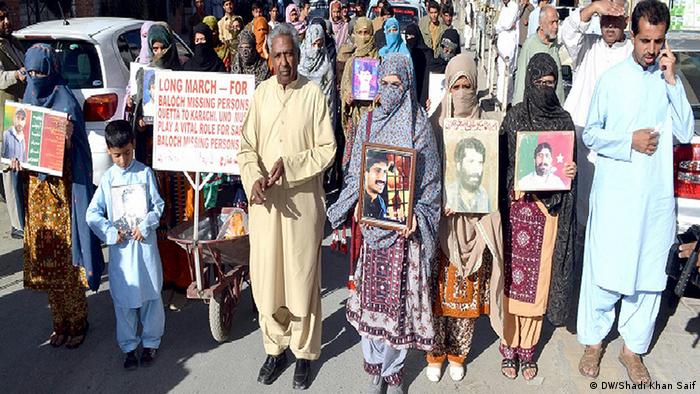
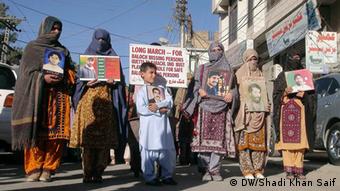
Pakistan: Baloch protesters march against government kidnappings
Mothers Of Czech Hostages In Pakistan Make Plea For Mercy
The mothers of Antonie Chrastecka, 25, and Hana Humpalova, 24, Czech women who were kidnapped in southern Pakistan seven months ago, have released a video message in which they ask their daughters' captors for mercy.
Pakistan: Another Ahmadi gunned down in Karachi's Orangi Town area
Ahmadiyya TimesAn Ahmadi Muslim is shot dead for his faith in Orangi Town area of Karachi, a southern port city in Sind Provence of Pakistan. According to the local reports, approximately 70 years old victim, Bashir Kiyani, was on his way to offer Friday prayers when he was killed by unknown assailant(s). A 10 years old boy accompanying Bashir Kiyani was also struck with bullet(s) to his leg and the injury is being described as serious. Bashir Kiyani is the third member of a family to be target-killed, all in the same area. Mr. Saleemud Din, national spokesperson of Jamā'at Ahmadiyya in Pakistan, noted that the victim’s son Ijaz Kiyani and son-in-law Zahoor Kiyani were also murdered in separate incident in the recent past at the same location. Ahmadis are regularly targeted in Pakistan because of their faith and many have lost their lives, while Ahmadi properties are routinely looted, places of worship defaced, and graveyards vandalized. Pakistani government's biased laws against Ahmadis encourage extremists to carry out hate crimes against Ahmadis with impunity.
Pak-Iran gas pipeline: End of the line?
The Pak-Iran gas pipeline, long presented as the best hope for overcoming our energy crisis, now appears to be dead. And with this devastating development we need to bury all the loud talk, repeated promises, tall claims of sovereignty and freedom to take decisions in our national interest, especially coming from our old and new rulers. The writing had been on the wall for some time. The US was particularly vociferous in warning Pakistan against going through with the project and international sanctions against Iran made it difficult for us to raise the $2 billion needed to build our portion of the pipeline. We had earlier requested Iran to fund us in this endeavour but, now that their oil minister has said that the contract for supplying gas to Pakistan will likely be annulled, that means the certain end of the pipeline. Iran had already constructed the pipeline on their side of the border but the added expense of paying for Pakistan’s part of the pipeline and the fear that we would abandon the project under US pressure has forced the Iranians to take this drastic step. As recently as last week, Nawaz Sharif was making the case for the pipeline at international forums and vowing not to bow down to international pressure. But Pakistan’s past of meek subservience to the superpower obviously weighed heavy on Iran’s mind. Let us be clear though: that the pipeline will not be pursued is because of the US, which wants to isolate Iran for its nuclear programme.
Some doubts had recently been raised about the efficacy of the pipeline. One organisation, the Sustainable Development Policy Institute (SDPI), claimed that Iran would have sold gas to Pakistan at many times the price of domestic gas. This, according to the institute, would have spelled an economic disaster for the country. That did not necessarily have to be the case. The price of domestic gas is indeed quite low right now but that is only because the government heavily subsidises its use. As we begin to run out of gas, those subsidies are gradually being reduced and we will most likely be paying the market price of gas within a few years. The SDPI also ignored how quickly our gas supplies are being depleted. Moving away from gas is simply not an option for us after the Musharraf government made switching to CNG such a priority. Our gas addiction will have to be fed, and Iran was the best option for that. Now the only available alternative is the Tapi pipeline, which comes with an American seal of approval. Constructing the Tapi pipeline will be fraught with risk though since it will run through Taliban-infested parts of Afghanistan. Still, now that the US has scuttled the Iranian pipeline, we have been forced into a corner and left with no other choice.
Pakistan: Inter-provincial inequality
The minister for Planning, Development and Reforms, Ahsan Iqbal, reportedly expressed concern over the inequality in development between the provinces - an inequality which, he maintained, would be dangerous for the federation. There is no doubt that Sindh and Punjab are relatively affluent provinces, with many economists labelling them as middle income, followed by Khyber Pakhtunkhwa (KPK) and tailed by the resource-rich Balochistan considered as the least developed province comparable to the least developed countries that include conflict-ridden Afghanistan.
There was nothing astute about Ahsan Iqbal's conclusion with respect to inter-provincial inequality and its resulting danger to the federation. The rise of fundamentalism in KPK is considered an outcome of economic deprivation and lack of job opportunities in rural/tribal areas - conditions that account for the successful recruitment drive by the Pakistan Tehreek-e-Taliban Pakistan that, in turn, has led to the escalation in vicious terror attacks throughout the country. Need one add that the origin of the Punjabi Taliban, mainly from the economically-deprived South, simply strengthen the linkage between economic deprivation and fundamentalism/terrorism. The growing rural, urban divide must therefore be summarily addressed by even the relatively affluent provinces with the objective of providing an environment not conducive to either the rise of fundamentalism or militarism and to deter migration from rural to urban areas in search of jobs that leads to greater socio-economic problems facing the already over-crowded Pakistani cities.
The case of Balochistan is different as the Sardars have done little to share their enormous natural resource wealth, including gas and minerals, with the Baloch people. However, while political constraints require to be tackled, yet here too economic constraints do augment the cultural compulsion for the continuing hold of the Sardars over the hearts and minds of their people. In short, Pakistan has already reached the danger zone with respect to the federation as a direct outcome of developmental inequality between the provinces.
Ahsan Iqbal also pointed out that subsequent to the 18th Constitutional Amendment the provinces have a greater share of the resources relative to the federation and the onus of development would therefore increasingly rest with the provinces. Be that as it may, the federation cannot and must not absolve itself of the responsibility of ensuring that basic physical and social infrastructure is provided to the country's backward areas for in that way alone lies its ability to effectively and permanently deal with terrorism, a national as opposed to a provincial subject, which remains the main impediment to economic growth.
The 2010 landmark National Finance Commission award agreement led to a rise in weightage of poverty or backwardness to 10.3 percent raising allocations from the divisible pool to 9.09 percent for Balochistan and 14.62 percent to KPK. This is certainly not enough for the poor provinces to make a difference to their people and it needs to be supplemented by federal government injections. The Ministry of Planning, Development and Reforms can, of course, play a role in preparing province-specific development plans that would help narrow the stark gap between the provinces within a stipulated time period. For this to materialise, the Finance Ministry would need to make additional releases to ensure that this inequality is tackled and the road to end militancy, terrorism and inter-provincial disharmony in Pakistan is embarked upon.
'If polio drops are harmful, why would Saudi Arabia allow them?'
The Express TribuneReceiving polio drops is a major issue among the Pashtun community. However, the views of some in the community are changing. Fazal Jan, a Hajji from Mohammad Agency expresses the change in the way he thinks with regards to polio drops after his visit to Saudi Arabia.
Polio - Haji Camp by BlackBoxSounds In his interview he said “We were told we would receive polio drops at Jeddah Airport.” Further commenting on his views he added, “Had polio drops been harmful or dangerous why would Saudi Arabia being a Muslim country allow them?” He also stated, “We used to think that the foreigners were deceiving us with polio drops. We would wonder why they would spend so much money on us.We thought our children would die from these drops and that they were trying to erase Pakistan’s future generations. But that’s not the case. Had that been true, Pakistan’s population would have decreased instead of increasing at the rate it is.” While talking about the perspective of the Pashtun community regarding polio drops Medical Officer, Health Department Dr Assadullah Khan stated that “The pashtun community is of the view that on one hand the West is bombing its northern areas and Federally Administered Tribal Areas, and on the other they are providing polio drops to keep our children safe — so they wonder about these conflicting policies.” He also mentioned, “We have to clarify to them the fact that those dropping bombs are not involved in the health sector, just like the health sector doesn’t go fight wars in battlefields, nor are they part of any army.”
Pakistan: Another drone strike kills 3 in North Waziristan
A drone strike killed three people in North Waziristan on Friday, Express News reported. Two missiles were fired on a house in Danda Darpakhel Miranshah, with casualties expected to rise. This is the second drone attack in two days, after Wednesday’s strike killed three people in the same town.

Pakistan: Opposition moves privilege motion against Nisar in Senate
 The members of opposition parties in the Senate on Friday submitted a privilege motion against Interior Minister Chaudhry Nisar Ali Khan, Geo News reported.
Speaking to media outside the parliament here, Pakistan People’s Party (PPP) Senator Raza Rabbani said the Senate had been made hostage.
Rabbani said opposition was not taken into confidence over peace talks with Taliban.
The row between the government and opposition has intensified in the Senate over the statistics provided by Chaudhry Nisar on terrorism.
The opposition termed the statistics incorrect regarding deaths in terrorism related incidents and asked the interior minister to withdraw his statement, however, the latter refused to do so.
Following this, the opposition senators not only boycotted the Senate proceedings but also submitted the privilege motion.
The members of opposition parties in the Senate on Friday submitted a privilege motion against Interior Minister Chaudhry Nisar Ali Khan, Geo News reported.
Speaking to media outside the parliament here, Pakistan People’s Party (PPP) Senator Raza Rabbani said the Senate had been made hostage.
Rabbani said opposition was not taken into confidence over peace talks with Taliban.
The row between the government and opposition has intensified in the Senate over the statistics provided by Chaudhry Nisar on terrorism.
The opposition termed the statistics incorrect regarding deaths in terrorism related incidents and asked the interior minister to withdraw his statement, however, the latter refused to do so.
Following this, the opposition senators not only boycotted the Senate proceedings but also submitted the privilege motion.
Subscribe to:
Posts (Atom)