Saudi Arabia is angry with Washington.In Riyadh's view, the U.S. government isn't doing enough to support tyranny and war in the Middle East.The Obama administration should tell America's foreign "friends" that Washington acts in the interests of the American people, not corrupt dictators. Riyadh long has been an embarrassment for the U.S.Cooperation on issues of mutual interest is a reasonable approach in a region where there are distressingly few genuine "good guys."However, U.S. officials have gone much further, lavishing support and attention on their Saudi counterparts.Indeed, Washington treats the Saudi royals-who oppress and mulct their own people-as, well, royalty.Riyadh's former ambassador to America, Bandar bin-Sultan, became one of Washington's most celebrated and renowned political operators. Some Americans justify Washington's sycophancy as necessary to protect access to Saudi oil, but energy is an international market in which the sellers want to sell as much as buyers want to buy.Indeed, the Saudi royals need petroleum revenue to subsidize their lavish lifestyles, maintain state institutions of repression, and purchase public support. If the money stopped flowing, members of today's pampered elite might find themselves hanging from lamp posts.So Riyadh is going to ship oil to Americans even if Washington acts in America's rather than Saudi Arabia's interests.(Never mind new energy discoveries elsewhere in the world, including in the U.S., are steadily diminishing Riyadh's relative energy role.) Nevertheless, Washington has begun to resist Riyadh's demands, leading to reports that the King Abdullah is "angry."One former U.S. official toldWashington Postcolumnist David Ignatius that "Somebody needs to get on an airplane right now and go see the king," since the latter is "very tribal" and believes that "your word is your bond." More dramatically, the Saudi government successfully campaigned for one of the ten elected term seats on the Security Council, only to then ostentatiously announce that the kingdom would not take its seat."This was a message for the U.S., not the UN," said Bandar. Riyadh's apparent bill of particulars against the U.S. is impressive for its irresponsibility.As one unnamed U.S. officials said of Bandar:"Obviously he wants us to do more."Obviously. The Saudis are upset because Washington did not bomb Syrian government forces after the Assad regime's use of chemical weapons.Saudi officials attacked the U.S.-Russia agreement to eliminate Damascus' weapons as a "capitulation."UN Ambassador Abdallah al-Mouallimi complained that "Allowing the ruling regime in Syria to kill and burn its people by the chemical weapons, while the world stands by idly" demonstrated the Security Council's incapacity.Turki al-Faisal, Riyadh's ambassador to America, argued that international oversight of Syrian chemical weapons "would be funny if it were not so blatantly perfidious, and designed not only to give Mr. Obama an opportunity to back down, but also to help Assad butcher his own people." Yet the very same royal regime subsidized Saddam Hussein's Iraq in its aggressive war, which included use of chemical weapons, against Iran.Riyadh said nothing then about the killing and burning of Iranians in a conflict that cost perhaps a million lives.But mass butchery by Riyadh's de facto ally mattered less to the Sunni Saudi royals than defeating a Shia Islamic regime. Similarly, today Saudis actively oppose human rights in next door Bahrain, where Riyadh has offered military backing for the repressive Sunni royal family against the Shia popular majority.With American ships stationed at a naval base there U.S. policy has been conflicted, torn between democracy and stability.Washington has said little about Manama's brutality, but even so apparently has irritated the Saudis by offering less than fulsome praise for the Bahraini royals' willing to shoot and imprison demonstrators and dissidents alike. Nor do the Saudis worry about the poor and oppressed in Egypt.To the contrary, Riyadh is firmly on the side of Egypt's murderous military, which shot down as many civilians in Cairo as the Chinese military killed in Beijing's Tiananmen Square a quarter century ago.Argued Foreign Policy blogger Kori Schake:the Saudis want "the return to power of the deep state in Egypt (a model they would perpetuate throughout the region)."Thus, the Saudi royals are upset because Washington has cut much of its funding for a politicized military long subsidized and equipped by America. Finally, the Saudi government is appalled that Washington is negotiating with rather than bombing Iran.Riyadh also wanted the Obama administration to put more ships into the Gulf to protect the regime if the Iranians chose to retaliate, given Saudis' none-too-secret support for U.S. military action against Tehran. Apparently Riyadh isn't only worried about the prospect of an Iranian nuke.TheWall Street Journal'sKaren Elliott House noted that the royals were concerned that a deal would boost "Iran's prestige and influence at the expense of Saudi Arabia."Riyadh even complained that the Iranians-shock!-were working against Saudi Arabia as the latter opposed Iran in Lebanon, Syria, Bahrain, and Iraq.Said Prince Turki al-Faisal al-Saud, until recently in charge of Saudi intelligence:"You can't deal with us and then go and support somebody who wants to overturn us."Indeed, explained theJournal, the Saudis denounced Tehran for trying to "exploit Shiite populations in Arab countries across the region to try to undermine Sunni Muslim governments and their interests." Actually, it would be more accurate to state that Saudi Arabia and, even more so, Saudi ally Bahrain, are exploiting their Shia populations to remain wealthy and in power.Iran is merely backing the natural desire of subject Shia populations-a minority in Saudi Arabia but majority in Bahrain-not to be exploited by repressive Sunni monarchs. While Washington shouldn't be concerned about maintaining Saudi influence, the U.S. understandably prefers that Tehran not get a nuke.However, the costs of yet another war against another Muslim nation in the Middle East almost certainly would greatly exceed the benefits.Not that the Saudis care about how many Americans (and Iranians) might die and how much American wealth might be squandered.Even if the cost likely would be low, however, Washington shouldn't hire out its military personnel and materiel to the Saudis or anyone else. However, hypocrisy comes easily for licentious libertines living off of their subject peoples.America's pampered allies are unhappy and issuing threats.For instance, bin-Sultan, who now heads Saudi intelligence, reportedly has downgraded ties with the CIA in training and arming Syrian rebels and threatened a "major shift" in dealing with America.Ignatius noted that Saudi officials were expounding on their frustration even two years ago, and said "they increasingly regarded the U.S. as unreliable and would look elsewhere for their security."Moreover, the Saudis apparently announced they no longer will favor U.S. munitions makers, after spending $33.4 billion on U.S. weapons in 2011. Americans should respond, so what?Prince Bandar reportedly told European diplomats that "Saudi doesn't want to find itself any longer in a situation where it is dependent."Reducing Saudi dependency is in America's interest. In fact, Washington should encourage the Saudis to find another sucker to protect their exploitative regime.The Chinese?Not likely.Beijing has no spare aircraft carriers and no love for Islamists subsidizing Islamic fundamentalism around the globe.How about the Russians?They don't have the forces necessary to police the Persian Gulf.And after years of war in Chechnya and terrorist attacks in Russia, helping the publicly pious royals isn't likely to top Moscow's list either. The Europeans?They ain't got much of a military and even less will to use it.Especially for a regime which couldn't be more at odds with liberal European values.Who else?India or Brazil?Kenya or Indonesia?Japan or South Africa?Candidates to take over pampering the Saudis are in short supply.Author Christopher Davidson argued that "Saudi Arabia is retreating into its shell of countries that surround it and who rely on its aid and good will."If so, why should Washington object?Riyadh could limit or even end intelligence sharing and anti-terrorism cooperation with Washington.However, many of America's enemies target Saudi Arabia.Attempting to punish the U.S. in this way would increase the royals' vulnerability. Nor is Riyadh's refusal to serve on the Security Council a problem for America.The Saudi Foreign Ministry said that the royals would not join until the council was "reformed so it can effectively and practically perform its duties and discharge its responsibilities in maintaining international security and peace."Why, then, did Riyadh seek a seat in the first place?The Council's ineffectiveness is no secret and has no solution. Presumably the Saudis really meant to send a message to Washington, but the U.S. should file their protest in the round file.One wit, the anonymous blogger The Saker, observed:"With the predictable exception of Kuwait and Bahrain, who is going to be heartbroken at not having the Saudis sit at the horseshoe table?Kosovo?" As a U.S. diplomat toldForeign Policyblogger Colum Lynch, "Our interests increasingly don't align."In fact, the two nations' interests long have been substantially out of sync.Warned Schake:"bringing U.S. policies into alignment with Saudi Arabia is likely to create a Middle East even less in America's interest than the Obama administration's bungling has." The Saudis support radical rebels in Syria who may be as interested in killing Americans as in killing Bashar al-Assad's soldiers.Yet Joshua Landis at the University of Oklahoma surmised that the Saudis worried about increased pressure "to stop subsidizing Salafist militias in Syria" if they joined the Security Council:"Saudi Arabia doesn't want to reign [the radical rebels] in." Indeed, the Saudis always have gone their own way with little concern for U.S. interests.Saudi security analyst Mustafa Alani told theWall Street Journal:"We are learning from our enemies now how to treat the United States."Actually, they pioneered that sort of treatment. Riyadh was one of the few governments, joined by another American "ally," Pakistan, to recognize the Taliban regime in Afghanistan.The royals made little effort to curb funding for al-Qaeda until the latter was foolish enough to challenge the House of Saud-for being corrupt, libertine hypocrites.Only then did Riyadh act ruthlessly to dispatch terrorists who were America's enemies as well.For all the sweet nothings U.S. officials have whispered in the ears of leading Saudis, Riyadh always has been a leading "frenemy" of America. Almost alone, the U.S. military-industrial complex has benefited from the bilateral relationship, but subsidizing munitions makers shouldn't be the purpose of American foreign policy.If the only way to get Riyadh to buy U.S. weapons is to encourage tyranny and start wars, Washington should say no thanks. In fact, Ahmad Majidyar of the American Enterprise Institute speculated that the Saudis may just be attempting to pressure the U.S. to get Washington to more closely follow its wishes.After reports of Saudi dissatisfaction surfaced, theWall Street Journalwent into full administration-bashing mode, worrying about Saudi "disgust," "dismay," anger at being "burned" by Washington, and more.But Americans shouldn't be concerned that powerful Saudi elites, used to buying everything they want, are frustrated that they no longer can so easily purchase Washington's services. Admittedly, it isn't only Saudi Arabia which is upset with the Obama administration's inconsistent approach to the Middle East's endless complexities.The United Arab Emirates, Kuwait, Turkey, and even Israel have assigned Washington tasks which it has refused to carry out, much to their distress.However, American policy must be designed to serve the interests of Americans. Former White House aide Elliot Abrams argued that "When you're not viewed as a reliable ally, and as a country no longer as dominant in the region, you lose influence on everything."However, if the current mess reflects decades of dominant U.S. influence, Washington isn't going to lose much from backing away. Alliances should be a means to an end, a tool to advance U.S. security.Alas, in recent years America's alliances have become ends in themselves, a measure of international popularity a bit like accumulating "friends" on Facebook.It's bad enough when allies are indolent dependents, like the Europeans, South Koreans, and Japanese.At least they still are genuine friends of America. It is far worse when alliances turn into mechanisms used by undemocratic frenemies to manipulate U.S. policy for their own ends.So it has been for Saudi Arabia.President Obama deserves kudos for refusing to bend American policy to suit the whims of the Riyadh royals.Washington might not be able to stop the Saudis from promoting tyranny and war.But the U.S. certainly shouldn't aid them in their quest.
M WAQAR..... "A man's ethical behavior should be based effectually on sympathy, education, and social ties; no religious basis is necessary.Man would indeed be in a poor way if he had to be restrained by fear of punishment and hope of reward after death." --Albert Einstein !!! NEWS,ARTICLES,EDITORIALS,MUSIC... Ze chi pe mayeen yum da agha pukhtunistan de.....(Liberal,Progressive,Secular World.)''Secularism is not against religion; it is the message of humanity.'' تل ده وی پثتونستآن
Wednesday, October 30, 2013
It's Time For Washington To Tell Saudi Arabia To Pound Sand
China Arrests 5 (MUSLIM TERRORISTS) for Tiananmen 'Terror Attack'
Chinese police say they have arrested five people in connection with what they are now calling a terrorist attack Monday in Beijing's Tiananmen Square.
Authorities say three people in a sport utility vehicle crashed it through a barricade into tourists near the Forbidden City and deliberately set the SUV on fire. Police say they found gasoline, knives, steel sticks and a flag with extremist religious content inside the vehicle.
Officials say the three people in the vehicle were from the same family. Based on their names, it appears the three were members of the Uighur minority group. All three died, along with two tourists, a Philippine woman and a Chinese man.
Four of the five people taken into custody so far also appear to have typically Uighur names, although the fifth suspect has a traditionally Han Chinese name.
Exiled Uighur leaders reject accusations of Uighur involvement in terrorism. They accuse China's majority Han rulers of persecuting their people and turning them into a minority in their homeland.
China has long accused Uighur separatists and Islamic militants of carrying out a series of attacks in Xinjiang, in an effort to establish an independent state called East Turkestan.
China denies mistreating any of its minority groups, saying they are guaranteed wide-ranging religious and cultural freedoms.
'If we cared about Sunni-Shia differences, we would never have got married' - Syrian refugees
By Nadezhda KevorkovaIf you still wish to think that the war raging in Syria is of religious character, you only have to speak to people to revise your opinion, because practically every family’s story defies the theory. Foreign militants and their associates are not interested in how inter-religious and inter-communal relations are built in Syria. Neither are they aware of such a well-known fact in Syria that Bashar al-Assad’s wife is a Sunni. Because it undermines the basic idea of the Syrian conflict, according to which Sunnis are allegedly fighting against Alawites and Shias. The president’s family is not an isolated case – on the contrary, it is quite widespread. There are a number of families who turn the concept of the religious Shia-Sunni war in Syria on its head. Two and a half years of attempts aimed at splitting Syria into groups separated by religious background have fallen by the wayside, largely because of such inter-religious marriages. Zahir and Lina fled from Homs in November 2011. He is a Sunni, she is a Shia. They live in the north of the Beqaa Valley in Lebanon, in Hermel. The apartment building they live in was hit by a shell on April 20, 2012. Lina wears a Shia burqa – a black veil. She wore it when she lived in Syria and was wearing it when fleeing from her home after militants had encouraged the killing of Shias. She has met a lot of Sunni families in her life who supported her exactly for the reason she was a Shia who needed help and protection. Neither Zahir, nor his relatives have ever been asked why he married a Shia. Nobody has ever asked Lina about it, too, although her children follow the religion of their father. Zahir’s elder brother once owned a small factory manufacturing women’s handbags. The war started in the area it was located - the factory was ruined and the family members lost their jobs and money. “I am from the al-Khalidiyah neighborhood, where the latest fights took place – right where our factory used to be”, Zahir says. All his Sunni neighbors were the first ones to flee to Shia areas of Lebanon. I ask him, why he, his relatives and Sunni neighbors didn’t take the side of the rebels. “Because we saw that militants and bandits were in charge – supporting them was out of the question. It was not dissatisfied people that were behind the events in Baba Amr, it was the militants,” says Zahir. He is talking about one of the first times the opposition took a Homs district by force. Later, the army recaptured it and saw that the militants, equipped with foreign equipment, behaved in strange ways that didn’t conform with Muslim ideas at all; there were signs of public executions, torture, and piles of human bones lying around in the houses. “At first it was only the Syrian militants, but then foreigners joined them. We saw it with our own eyes,” Zahir says. He believes that it was the invasion of the foreigners that brought about the disillusionment, since they, unaware of the Syrian state of affairs, wanted to turn public unrest into a religious war. “They made people participate in demonstrations at gunpoint. We tried hiding in other districts, but then the worst started happening,” he says. By “the worst” Zahir means religious massacres. “Two of my friends were arrested and killed. They were Shia. Our neighbors were also killed. Unfortunately, these armed people were locals, and they knew who was Sunni and who was Shia,” Zahir explains. It’s clear that he’s reluctant to admit someone was killed in Syria because of their religion – it goes against the basic principles of Syrian life. He is convinced that the militant death squads were formed specifically to carry out such massacres and to instill terror in people’s hearts. “Most Syrians didn’t go along with that, despite the fear, the threats and the propaganda,” Zahir says. He talks about the help his family received from the Shia and the times when both the Shia and the Sunni gave them shelter. When they were running from Homs, many people helped them along the way and showed them safe paths, even though Zahir is Sunni and his wife is Shia. Thanks to all that help, they managed to survive and cross the border into Lebanon. ‘We knew that the Hezbollah-controlled regions (Hezbollah is Shia-dominated – RT) are peaceful and that the locals treat the Sunnis as family. We get on well with the people of Hermel,’ says Zahir. When the Hermel people learnt that a family with small kids had arrived in their town, they were quick to find accommodation for them. That Hezbollah never hesitates to help somebody out of trouble or solve their routine problems, is a well-known fact in Lebanon. Zahir and Lina didn’t even have to look for help: when people saw a family of refugees, they called the local authority, who quickly found food and shelter for them. The local government provides for their accommodation, their furniture, a washing machine, a cooker, and even their blankets. ‘No one has ever asked us: are you Sunnis? Trust me: we’ve never heard that question. We will confirm that to anyone who wants proof,’ says Zahir. I ask him whether the Shia do indeed hate the Righteous Caliphs, who are venerated by the Sunnis, or if they speak dishonorably of Aicha, the Prophet’s wife – in other words, whether the militant propaganda is right. And how does it affect their family? Zahir has heard worse, not only about the Shia, so the question does not surprise him. But he doubts anyone can seriously believe these claims. He believes no Muslim would say something like that. In Syria, he has never met a Sunni who would honestly believe such allegations. ‘My wife is Shia. If we cared about the Sunni-Shia differences, we would never have got married. No one would draw such dividing lines in Syria,’ says Zahir.I wonder what Zahir, a Sunni himself, would say if his Sunni children decided to join Hezbollah, a Shia movement. ‘If my kids want to join Hezbollah, as far as I am concerned, I am all for it. I would tell them, “God bless you”,’ says Zahir. He means what he says. When in 2006 Lebanon was attacked by Israel, the Sunni and the Shia alike joined the ranks of Hezbollah to take part in the Resistance campaigns and to release southern Lebanon from Israeli occupation. “I would give everything for Hezbollah, not only my children,” says Lina, joining our conversation. “We fare well enough here, as if we were still in Syria,” says the head of the family. “They have been so nice to us in Lebanon that we have almost forgotten we are not at home anymore. Besides, all of our Syrian relatives are here as well.” Zahir went to school until only the ninth grade, while his wife Lina almost made it to a university. “I had no luck passing an Arabic exam, so I just turned around and went home,” Lina tells me, laughing. They hope they might be able to return to Syria soon. Many refugees are already going back, provided that their home provinces have been cleared of insurgents. “Our friends are telling us the Syrian army has already gained control of our neighborhood. The government is clearing the rubble and planning a reconstruction effort. Our house needs repairs as it has gotten a few cracks, but it’s all better than a ruin. The government has promised to rebuild everything that’s been destroyed, and provide cash benefits, too,” says Zahir. Zahir believes the people of Syria have their own tenacity to thank for being safely delivered from a US-led bombing campaign. “We see it as Syria’s victory that the Americans have given up on the idea of air strikes,” he says. “In the words of our honorable President, he who ends a war is the true hero.” Zahir believes Syria will also manage the chemical weapons controversy, once it has been left to its own devices. Moreover, he is convinced the whole story was a false flag from the start. “There had been no mention of chemical weapons before the war,” he explains. “When Obama started blustering about his “red line,” it all sounded like empty talk to us. I won’t deny that I’m an Assad supporter, but let’s look at those allegations in terms of logic. The Syrian army was on the offensive at the time. Why would they use chemical weapons while advancing?” This family has been lucky: Zahir has managed to find a job in Lebanon as a barber. I ask him if he has enough clientele – after all, the Shia are known for keeping their beards. “Well, they still have their hair cut, don’t they?” Zahir laughs. “Besides, I have many clients, not all of them Hezbollah. And I cut people’s hair without asking them whether they are Sunni or Shia.”
Syria: Assad tells U.N. envoy peace talks can succeed only if aid to rebels stops
Bilawal Bhutto strongly slams Quetta blast
http://mediacellppp.wordpress.com/
Bilawal Bhutto Zardari, the Patron-in-Chief of PPP strongly condemned the blast occurred in Zarghoon road, Quetta on Wednesday. The Patron-in Chief of PPP expressed profound grief over the loss of precious lives of innocent people and injured in the blast. He further expressed sympathy with the bereaved family members and prayed for eternal peace for the departed souls and early recovery of injured. He asked the government for the provision of better treatment to the injured.
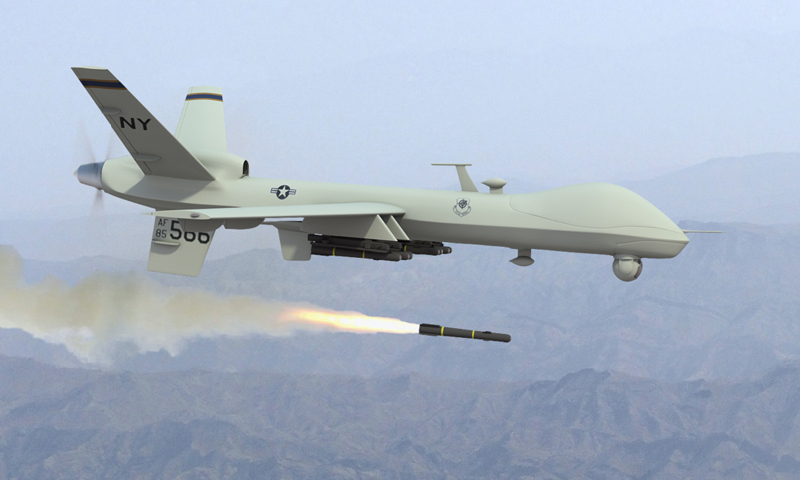
Drones killed only 67 civilians in five years: Pakistan
Police declare Musharraf innocent in Abdul Rashid Ghazi murder case
Geo News has received the copy of the challan against former president, General (retd) Pervez Musharraf in the murder case of Abdul Rashid Ghazi. After their investigation, police declared Musharraf innocent as there was no evidence or eyewitness presented against the former president. Earlier on Wednesday a local court reserved its verdict in the bail application of Musharraf in the case. The court will announce its verdict on November 1. During proceedings, Musharraf lawyer argued that his client had not issued any orders for the Lal Masjid operation.
Of holy lies and Lal Masjid
The Express Tribune
By Ejaz HaiderThe ongoing Lal Masjid case, leaving aside everything else, is an example, if one were still needed, of what’s wrong with us. Two sets of people want ‘justice’ for the Lal Masjid ‘victims’: those who want to bludgeon former General-President Pervez Musharraf, and the lying right wing that has made a habit of decrying everything this state stands for and then using the very institutions of this state, in this case the judiciary, to clamour for legal-constitutional rights and make space for their exclusionary agenda. Such in our beloved land are the ironies of public and private life. Now General Musharraf is not the flavour of the month. He hasn’t been since he left office. Since his return, he has been made to run from pillar to post, his nose rubbed in the dust. Perhaps he required a lesson in humility. He is being held responsible for much that has gone wrong. At least in that, bitter political rivals boo and curse him from the same side of the fence. I am no fan of Musharraf’s. In fact, when he took over, opposed as I am to military takeovers, despite the genius of Mian Nawaz Sharif on display from 1997 to that fateful day in 1999, I wrote against the coup. It was a difficult choice: it never is easy to choose between two bad options. I didn’t have too many takers, just like I didn’t when I wrote about the excesses of the lawyers and where their movement was headed. So, I can chalk a long list of bad decisions by Musharraf. And I did. Interestingly, the Lal Masjid operation didn’t find a place in that. Here’s why. The clerics of a mosque, in the heart of the capital, decided to challenge the state. Their shenanigans in the run-up to the operation are fully documented. I could give a blow by blow account of what happened, as also the clerical family that built its power through state patronage and ended up challenging the very state that has created many monsters but most of that too is known. What does need stressing is that everything they said or did showed a supra-state mindset. They used religion as a cover to demand concessions from the state which no state can concede. They did this even though it was a known fact since 2004 that they had issued a fatwa at the behest of Ayman alZawahiri against the military personnel fighting al Qaeda. “On the advice of al Qaeda, Maulana Abdul Aziz issued a religious decree in 2004 which declared the South Waziristan operation un-Islamic. The decree prohibited the burial of the soldiers in Muslim graveyards. Funeral prayers for those who had died in the action against Muslim militants in South Waziristan were forbidden. The decree was circulated throughout the country and 500 clerics signed it … All the combined guns of the militants could not have been as useful in belittling the Pakistan Army as that religious decree.” (Inside Al-Qaeda and the Taliban, Syed Saleem Shahzad, p.42) This, again, is just the tip of the iceberg. Shahzad, on pages 41-47 and then 159-162, writes in detail about the close nexus between Lal Masjid and al Qaeda (AQ) and how the two brothers were part of the AQ action plan. Incidentally, this is not the only account. There were several police, Intelligence Bureau and ISI/Military Intelligence (MI) assessments of what the two brothers were up to. In fact, Musharraf wanted to take action against the brothers much earlier but was stopped from doing so by the MI which was already worried because of large-scale desertions in the army following the 2004 fatwa. In a nutshell, the Lal Masjid clerics were pushing the AQ agenda and were deeply involved in activities that were unlawful, unconstitutional and anti-state. Not just that, and this is what no one seems to point to, they were using the seminarians under their charge, both boys and girls, in a game devised by AQ. Perhaps now, when they call for justice for those who died in the operation, the honourable court would take the trouble of asking them two questions: one, who rebelled against the state and created the circumstances that led to a military operation; two, who exploited the misdirected zeal of unsuspecting students and put them in harm’s way? These questions should have been part of the eight-point terms of reference of the inquiry commission the Supreme Court bench had set up. No one should go unheard; but neither should lies be allowed to govern our lives. Meanwhile, instead of taking a clear position on the issue at a time when Lal Masjid clerics are garnering support for their toxic cause, the GHQ stays quiet and chooses to file its reply through the Judge Advocate General’s Branch. And please spare me the argument that that is the proper channel and the army is only going by its traditional regard for democratic norms. We know, as the army does, that it sends out clear signals to whoever it wants to message when it deems its core interests to be under threat. So, does the army not consider the issue of Lal Masjid to be its core interest despite knowing about the mosque’s links with al Qaeda, and the fact that it lost men in that operation? Some of the officers are still serving; others have retired from very senior positions. I don’t need to name them. But since the Inter-Services Public Relations directorate will get to read this, here’s my suggestion to the army: the sacrifices of those men, officers and soldiers, demand that the facts on Lal Masjid be made known officially, from the mosque’s nexus with al Qaeda and Pakistani militant groups to the entire plan which the brothers were working on. The army owes this to the men it lost as well as to this beleaguered nation. This should be in addition to the letter submitted to the court through the JAG Branch. Finally, let me debunk the bunkum that has found its way into some press stories. The army never used any chemical weapons in the operation. Pakistan is a signatory to the Chemical Weapons Convention and does not possess chemical weapons. Do not confuse smoke grenades with chemical weapons. In fact, don’t talk about things your genius cannot even begin to comprehend, thank you. Published in The Express Tribune, October 30th, 2013.
Iranian forces open fire on Pakistani border area
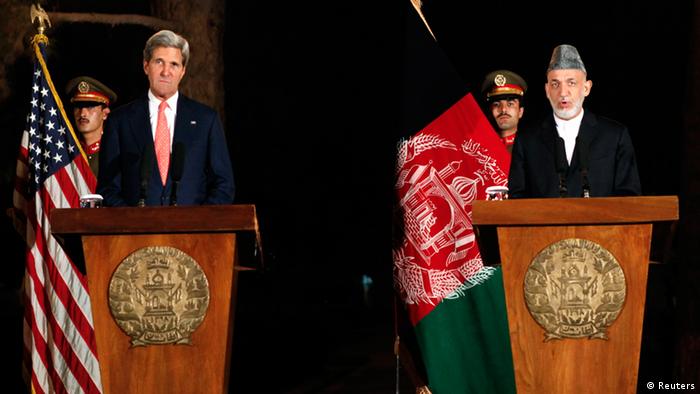
Karzai passes the buck on US troop immunity
Afghan President Hamid Karzai has called for the Loya Jirga to decide whether US forces should receive immunity from local prosecution. Washington has threatened to pull out all of its troops if immunity is not granted.For almost a year now, Washington and Kabul have butted heads over the details of a bilateral security agreement, which will govern a potential US troop presence in Afghanistan after NATO withdraws its combat forces in December, 2014.
The Obama administration reportedly wants to maintain between 5,000 - 10,000 troops and nine bases in Afghanistan to advise and train security forces and conduct counterterrorism operations against the remnants of al Qaeda.
In early October, US Secretary of State John Kerry met with President Karzai in Kabul, where the two men said they'd hammered out a basic draft agreement. But the issue of US troop immunity remained unresolved.
Despite Washington's call for an agreement to be concluded as quickly as possible, Karzai has opted to convene a Loya Jirga, or grand council, to vote on the draft in November and decide whether or not US troops should enjoy legal immunity from the Afghan judicial system.
"The Afghan constitution says that in questions of immense national important a Loya Jirga can be called and that's what Karzai is doing," Thomas Ruttig, co-director of the Afghanistan Analysts Network, told DW. "The Loya Jirga usually is doing what the current rulers want from them - that's the experience from history."
"The thing is there's always a margin of error, of uncertainty in it," Ruttig said. "So it can of course happen that - particularly if there's an incident briefly before - the mood swings and the agreement falls through."
'Political game'
Although the details of the draft agreement have not been made public, Karzai and Kerry held a press conference after their October negotiations, in which they reported progress on two key Afghan conditions.
Kabul has long demanded that the US end unilateral counterterrorism (CT) missions and instead seek Afghan approval for such operations. The Karzai government has also called on the US to guarantee Afghanistan's security against foreign intervention, presumably from neighboring Pakistan.
During the press conference, Karzai said that he had reached an agreement with Kerry that US forces "will no longer conduct operations by themselves." The Afghan president also said that they had agreed to a "written guarantee of the safety of the Afghan people" with "a clear definition of 'invasion.'"
"The security guarantee vis-à-vis Pakistan issue and the US bases in Afghanistan for CT issue, both of which were portrayed for a long time as being the outstanding questions, interestingly got resolved," Stephen Biddle, a US foreign policy expert with George Washington University in Washington D.C., told DW.
"And then Karzai raised one that everybody thought had been resolved a long time ago - the immunity issue," Biddle said.
According to Abdel Ghafoor Lewal, Karzai is "playing a political game" with the US. By calling the Loya Jirga, the Afghan president has created an element of uncertainty, which he hopes will give him leverage over the US.
"He wants actually to bring more force on American negotiators to accept some of these [Afghan] conditions on this agreement," Lewal, director of the Centre for Regional Studies of Afghanistan in Kabul, told DW.
In addition to ending unilateral counterterrorism missions and guaranteeing Afghanistan's security, Karzai also wants Washington to increase support for the Afghan armed forces and guarantee future economic assistance, Lewal said.
US threatens 'zero option'
But according to US foreign policy expert Biddle, Karzai may be overplaying his hand in negotiations with the White House.
"What he has believed at various times in the past is that the US has sacrificed so much in Afghanistan that we obviously think the place is terribly important to our national security," Biddle said.
But the Obama administration, increasingly at the end of its patience with the negotiating process, has threatened to withdraw all of its troops from Afghanistan - the so-called zero option - if US forces do not receive legal immunity from local prosecution.
"Part of the reason there have been these periodic trial balloons about zero options from the White House is because the White House is trying to convince him, no, we are actually going to leave," Biddle said. "And therefore, no, you can't extract concessions from us; you need this more than we do."
Karzai seeks political cover
According to Karzai, "the issue of jurisdiction for foreign forces is above the authority of the Afghan government and that is up to the Afghan people and the Loya Jirga."
"He thinks this is a historical responsibility if he decides by himself to give immunity for US troops," Lewal said. "He wants to share this responsibility with the representatives of the people of Afghanistan."
And the Afghan people are particularly sensitive when it comes to the immunity issue, Lewal said. In August, for example, US Army Staff Sergeant Robert Bales was sentenced by an American court to life in prison for murdering 16 Afghan civilians. The ruling angered the victims' families, who wanted the death penalty.
"[Karzai] needs to cover himself, because relations with the US - and particularly immunity and particularly after a couple of incidents where US soldiers went on killing sprees against Afghan civilians -are highly contentious," Ruttig said. "If he just in his capacity as president goes ahead, he will be attacked."
The Iraq precendent
In the case of Iraq, the Obama administration also sought a residual US troop presence. But the White House proved unwilling to sacrifice legal immunity for US troops in exchange for that continued presence. Kerry has publicly warned that the same would happen in Afghanistan if Kabul follows Baghdad's example.
"Up until minutes before the negotiation failed and the US committed itself to total withdrawal, the US was still trying to get an agreement in which we would stay," Biddle said, referring to the negotiations with the Iraqi government in 2011.
"What happens is that their perception of how important it is to stay wanes," he said of the White House. "And their willingness to accept cost and hassle therefore goes down."
Minorities In Pakistan To Face Increased Persecution After 2014 A Well Known Journalist Predicts
A Pakistan- born British journalist foresees more persecution for religious minorities in 2014.
According to details, Sheraz Khan, a Pakistan-born journalist, while talking outside the House of the Lords London expressed his concerns about the religious minorities in Pakistan doubting, that the religious and ethnic minorities of Pakistan specifically the Christians of the country will meet more persecution after the evacuation of North Atlantic Treaty Organisation (NATO) and US forces from Afghanistan in 2014. He sternly, condemned the persecution of Coptic Christians in Egypt.Sheraz Khan asserts, “The exit scenario of NATO and US forces could mean that the Taliban, who were toppled by the US-led invasion in 2001, will attempt to again impose themselves on the people of Afghanistan.”
He added, “Regardless of a Taliban success, there would be a massive spill over effect on Pakistan, as they would then attempt to infiltrate deeper into the country.”
He said that, “The recent upsurge in attacks orchestrated by Taliban in Pakistan had made already marginalised minorities communities more prone to abuse.” Meanwhile he called upon clerics of all persuasions to boost their labours for promotion a culture of peace, tolerance and co-existence.
Sheraz Khan has been engaged in an all-embracing struggle for the persecuted minorities in Pakistan. He worked for the ASSIST News Service (ANS) as a special correspondent in Pakistan campaigning for “empowerment of minorities in Pakistan and around the world.” For the most part he was “profoundly concerned” over the “widespread and on-going misuse of Pakistan blasphemy laws.”
“Minorities’ sacrifices in nation-building should be acknowledged and Pakistani government should make sure that members of minority communities are included in all prestigious public and private and policy-making institutions,” he added.
Sheraz Khan while reflecting on the topical PeshawarChurch calamity, he said, “The incident suggested that Taliban launched the attack to pressure Pakistan incumbent government to give into their demands.”
He also expressed deep grief over the incident at the same time he confessed that,” I was touched by an act of forgiveness by the Rev. Aftab Gohar, a Grangemouth minister of the Church of Scotland’s who reportedly pardoned people behind the All Saints Church suicide attack. Rev Gohar lost his mother, his nephew and a niece in the suicide attack, and yet instead of condemning them, prayed to God to give the killers wisdom.”
- See more at: http://www.christiansinpakistan.com/minotiries-in-pakistan-to-face-increased-persecution-after-2014-a-well-known-journalist-predicts/#sthash.r1ECIIar.dpuf
Pakistan: Censorship in public discourse: ‘Dogma has bred denial, killed dissent’
Distorted history books and religious dogma have left Pakistani society intolerant of debate and dissent and mired in denial, said speakers at a discussion on ‘Censorship in public discourse’ at the second session of the Khudi Festival of Ideas on Sunday.
Journalist and discussion moderator Mubasher Bukhari said the Pakistani press faced great pressure to censor facts from stories that challenged the established narrative. “In all my years as a journalist, I have been under pressure to censor reports, whether from political or religious parties or the establishment,” he said.
Journalists often practised self-censorship, he said. This particularly applied to blasphemy cases, which often went unreported. “With such practices in place there is no space left for counter narratives,” he said.
And self-censorship was not just restricted to the press, he said. “Forget media reports, even governments exercise self-censorship by not releasing reports on sensitive issues in their entirety,” he said.
Lawyer Yasser Latif Hamdani advocated a separation of the state and religion. “If we want to see Pakistan as a progressive state, we have to separate state from religion,” he said. Islam’s privileged status in the Constitution meant that it was always at the centre of public discourse. Even viewed in the legal paradigm, he said, one had little room to exercise religious and individual freedoms. In a society bent on establishing a single religious practice, there was no tolerance for alternative discourse, he said.
Distorted history textbooks further strengthened the resolve not to tolerate differing views, he added. History books were not written to establish facts and context, he said, but to establish people’s roles as either ‘good’ or ‘bad’. “Why must we have a history that identifies characters as heroes or villains?”
Research analyst Amir Mughal said Pakistani society was content to avoid issues by pretending they don’t exist. “Every topic deemed sensitive or controversial is brushed under the carpet by our government,” he said. Society’s natural response had been programmed such that anything varying from the established norms and narratives was either banned or censored. He questioned the ban on YouTube.
But the media was not blameless, he said. “The media is quick to criticise civilian governments, but what about the security establishment?” he asked. The media also played a part in the assassination of Salmaan Taseer. “Nowadays, the easiest thing for anyone to do is to label liberals or secular people as traitors,” he said.
ANP senator, ex-Indian MP exchange hot words over terrorism issue
PPP, ANP senators lambaste govt on gas crisis, criticise Imran over Kalabagh
THE FRONTIER POSTLeaders of the Pakistan Peoples Party (PPP) and the Awami National Party (ANP) during a Senate session on Tuesday accused the federal government of violating clauses of the Constitution by not providing gas to industrial units in the provinces of Sindh and Khyber Pakhtunkhwa. The session was chaired by Chairman Senate Nayyar Hussain Bokhari. Federal Minister for Petroleum Shahid Khaqan Abbasi told the Senate that the federal government could not provide any gas in newer areas due to the acute shortage of the resource. He further announced the decision of implementing urgent fees of Rs25000 for the installation of new gas connections, adding that after obtaining approval from the Oil & Gas Regulatory Authority (Ogra), 10 per cent of all new gas connections would be installed on the basis of urgent fees. During the session, Awami National Party (ANP) leader Senator Haji Adeel said providing gas and water was the basic duty of the government. He said it was the constitutional right of the people, adding that electricity, water and gas from KP were being provided by the government to the whole country, yet not to the province itself. Senator Raza Rabbani also accused the federal government of continually violating Article 158 of the Constitution by not providing gas to industrial units in Karachi. Senator Rabbani also protested after questions to the Ministry of Water and Power were postponed due to the absence of the concerned minister from the session. He stated no one was available to answer questions in the Senate regarding progress with regard to the aforementioned ministry. Moreover, PPP members protested against Imran Khan's statement regarding a campaign for construction of the Kalabagh dam. Senator Rabbani stated that members of the KP Assembly itself had earlier protested against the dam’s construction. He further insisted that the resolution passed on the matter should first be dealt with before the dam’s construction is seriously pursued. Senator Aajiz Dhamra said Imran Khan's statements regarding a campaign for the dam were an insult to three provincial assemblies of Pakistan. He stated that the campaign would be opposed under all circumstances. Senator Chaudhry Jaffar Iqbal of PML-N also opposed the campaign, reiterating Prime Minister Nawaz Sharif’s stance on mutual agreements before all important decisions could be taken. Meanwhile, the Muttahida Qaumi Movement (MQM) suggested the formation of a special Senate committee to monitor terrorism and the violation of human rights in Karachi. The Chairman said the opposition and the government should work together in order to form such a committee.
Balochistan: A Generation Lost
By Zahid Ali Baloch
The Baloch HalRich in natural resources but poor in development Balochistan, Pakistan’s largest but least populous province – is home to about 13 million people with the country’s lowest growth record and worst infrastructure, along with its highest rates of poverty, lowest social indicators for health and education remains a hotbed of insurgency, secretion violence, extra-judicial killings and tribal feuds from the last 65 years. Besides natural gas, petrol and other mineral the province has also got a warm sea with a beautiful Island that appeared as a result of the recent earth-quake that hit Awaran district of the province earlier a month killing at least 1000 and leaving thousands other injured. Despite having huge reserve of the gas, coal, copper, gold with a huge deep sea half of Balochistan’s total population lives below the poverty line. A local Pakistani English newspaper reported that the country’s largest and most resource-rich province is also the most impoverish, it further says that over 60% of the entire population of the province live below the poverty line. Most of the people in the province are frustrated that Balochistan is so poor, even though it has vast reserves of oil, gas and gold which remain largely untapped. And these were the reasons, which compelled ethno Baloch to fight five major wars against State; they accuse the federal government of extracting the province’s natural wealth without providing a corresponding amount of funds on development projects in the province. Ethno Baloch and Brahuis blame Pakistani State for exploiting their natural resources and occupying on their territory. In order to get rid off from Pakistan aggression Baloch fought two widespread guerrilla campaigns against the Pakistani state, seeking independence between 1973-77 and again in an ongoing fight starting in 2005. Leaders say they are seeking an independent Baloch state in the province’s southeast – with the northern Pashtun-majority area free to decide its own fate. They claim Balochistan was semi-independent prior to 1948 and was occupied through the instrument of accession by Pakistan after separation of sub continent in 1947. According to a report published in The Economist Balochistan was semi-independent under the British Raj and was forcibly annexed in 1948,sparking the first revolt of the people. This event has further resulted five on and of revolt mainly centered on the provincial autonomy and control over the natural resources. The latest movement began in 2005, and went up after the assassination of tribal Baloch nationalist leader Nawab Akbar Khan Bugti, the man who had served as governor and chief minister of the province, but who had increasingly distanced him from the central government and called for an independent Baloch state. Soon after the assassination of Bugti, the situation in Balochistan worsened, Mass arrest, extra-judicial execution, enforced disappearances, sectarian violence, kidnapping for ransom became a common practice in the region. Extra judicial killings and illegal abductions of political activists seem to be an ever-increasing problem of the troubled province today. According to the Vice for Missing Baloch (VBMP) more than 14,000 people from the province have been disappeared over the past nine years and around 700 bullet riddled dead bodies have been dumped. The exact figure of the missing persons in Balochistan is still unknown. The Baloch people in general claims that more than 16000 have gone missing since 2000. In many cases, the state instruments have been found guilty for picking and killing common people in the region. The illegal abduction of common people began after the military dictator General retired pervez Musharraf toppled Civilian government in the country in 19999, who ruled Pakistan as military dictator and president from 1999 to 2008. Rights activists say Musharraf escalated military operation in the province and an increase in enforced disappearances, extra-judicial execution of Baloch peaceful activists and throwing their bullet riddled bodies witnessed. Some analysts believe that the killing of one of the prominent political activist and 86 years old Nawab Akbar Bughti in 2006 is the sole reason of the deteriorated law and order situation in Balochistan. The Human Rights Watch reports says” Balochistan has historically had a tense relationship with Pakistani national government, in large part due to issue of provincial autonomy, control of mineral resources and exploitation, and consequent sense of deprivation. Under President Gen. Pervez Musharraf, Pakistani military ruler from 1999 until 2008, the situation deteriorated markedly. It seems the climate of the kill and dump policy has not changed despite of the change in the government. The violence still continues. Some of the family members have been waiting for the years to get to know about the fate of their loved ones while so many others recovered their dear ones in shape of dead body with several marks of torture on their bodies. Farzana Majeed, the sister of missing Zakir Majeed,, walked from the pillar to post for the recovery his missing brother but yet she has not been informed about the fate of Mr. Majeed abducted who went missing since 8th June 2008. In her interview with the Express Tribune she said” Look at me. I am 27 years old. My brother is 25. I want my life. I have my needs. What kind of life is this? I am spending all of my life in the protest and missing persons’ camp. If my brother has done anything wrong must be accessed to a legal council and punished according to the law .The security forces are enjoying the great deal of impunity despite of the fact they are seriously violating both national and international law. If this continues, the Baloch will lose an entire generation. Missing person’s families are in dire need of assistance on the humanitarian ground. They need to be helped to be engaged in their daily lives instead of spending their time in the long march or the missing persons camp. UN in general should play a pivotal role to stop the ongoing slow motion genocide of Baloch people.
Tuesday, October 29, 2013
Book review: ‘I Am Malala’ by Malala Yousafzai
By Marie Arana
Marie Arana is the author of the memoir “American Chica” and the biography “Bolivar: American Liberator.” She was also a scriptwriter for the recently released film about education in the Third World, “Girl Rising.”
Ask social scientists how to end global poverty, and they will tell you: Educate girls. Capture them in that fleeting window between the ages of 10 and 14, give them an education, and watch a community change: Per capita income goes up, infant mortality goes down, the rate of economic growth increases, the rate of HIV/AIDS infection falls. Child marriage becomes less common, as does child labor. Educated mothers tend to educate their children. They tend to be more frugal with family money. Last year, the World Bank reckoned that Kenya’s illiterate girls, if educated, could boost that country’s economy by $27 billion in the course of a lifetime.
Whether an emerging nation likes it or not, its girls are its greatest resource. Educating them, as economist Lawrence Summers once said, “may be the single highest-return investment available in the developing world.”
Nowhere is that lesson more evident than in the story of Malala Yousafzai, a Pashtun girl from Pakistan’s Swat Valley who was born of an illiterate mother, grew up in her father’s school, read Stephen Hawking’s “A Brief History of Time” by age 11 and has a gift for stirring oratory.
And nowhere did that lesson go more rebuffed than in the verdant Swat Valley, where hard-line jihadists swept out of the mountains, terrorized villages and radicalized boys, and where — one muggy day last October — a Taliban fighter leapt onto a school bus, shouted, “Who is Malala?” and shot her point-blank in the head for speaking out about her God-given right to attend school.
Malala tells of that life-shattering moment in a riveting memoir, “I Am Malala,” published this past week even as she was being cited as a possible candidate for the Nobel Peace Prize. Co-written with Christina Lamb, a veteran British journalist who has an evident passion for Pakistan and can render its complicated history with pristine clarity, this is a book that should be read not only for its vivid drama but for its urgent message about the untapped power of girls.
The story begins with Malala’s father, Ziauddin Yousafzai, the son of an imam (a preacher of Islam), who was instilled from boyhood with a deep love of learning, an unwavering sense of justice and a commitment to speak out in defense of both. Like Mohammad Ali Jinnah, the founder of Pakistan, Ziauddin was convinced that aside from the sword and the pen, there is an even greater power — that of women — and so, when his firstborn turned out to be a bright, inquisitive daughter, he raised her with all the attention he lavished on his sons.
Ziauddin’s greatest ambition, which he achieved as a relatively young teacher, was to establish a school where children could be raised with a keen sense of their human potential. As a Pashtun, he came from a tribe that had migrated from Kabul and settled on the lush but war-weary frontier that separates Pakistan from Afghanistan; as a Yousafzai, he was the proud inheritor of a rich legacy that could be traced to the Timurid court of the 16th century. But he was also a poor man with high ambitions and not a cent to his name.
Malala was born in 1997, as her father was struggling to found his school against a sea of troubles: a deeply corrupt government official to whom he refused to pay bribes; a mufti who lived across the way and objected to the education of girls, a practice he denounced as haram, or offensive to Islam; and the vicissitudes of a fierce jihad, visited upon them from time to time in Taliban raids that evolved from harsh rhetoric to outright killings. By the time Malala was 10 and the top student in her father’s surprisingly flourishing school, radical Talibs had penetrated the valley all the way to the capital of Islamabad and were beheading Pakistani police, holding their severed heads high on the roadsides.
“Moniba and I had been reading the Twilight books,” Malala recounts, and “it seemed to us that the Taliban arrived in the night just like vampires. They appeared in groups, armed with knives and Kalashnikovs. . . . These were strange-looking men with long straggly hair and beards and camouflage vests over their shalwar kamiz, which they wore with the trousers well above the ankle. They had jogging shoes or cheap plastic sandals on their feet, and sometimes stockings over their heads with holes for their eyes, and they blew their noses dirtily into the ends of their turbans.”
That was when the school bombings began and Maulana Fazlullah, a young extremist who had once operated the pulleys at a river crossing, became known as the Radio Mullah, a direct arm of the Taliban, installing a systematic rule of terror over the Swat Valley. Fazlullah announced the closing of girls’ schools; he lauded the killing of a female dancer; his goons killed a teacher for refusing to pull his trousers above the ankle the way the Taliban members wore theirs. “Nowhere in Islam is this required,” the teacher had cried out in his defense.
“They hanged him,” Malala relates dryly, “and then they shot his father.”
But for all the terror around them, Malala and her family were hardly cowed into submission. Ziauddin continued to rail at his country’s Talibanization in government offices, to the army, to anyone who would listen, gaining a name throughout Swat for his rectitude and courage. And although Malala learned to go to school with her books hidden under her shawl, she continued to study and excel, eventually giving public speeches on behalf of education that her father would help write. By 12, even as she pored over “Anna Karenina” and the novels of Jane Austen, she was writing a BBC blog about her experiences under the pen name Gul Makai.
When, in 2009, the family was forced to abandon the increasingly violent border area in “the biggest exodus in Pashtun history,” the Yousafzais made their way to Peshawar, where Malala did radio interviews, met Ambassador Richard Holbrooke, turned 13 and continued to speak out for girls’ education. Passing through Abbottabad as they made their escape, the family could not have imagined that Osama bin Laden himself had found refuge there. Finally winding their way home, they discovered that their beloved school — in a metaphor for their own defiance — had become a holdout against the Taliban for the Pakistani army.
We know how this story ends, with a 15-year-old child taking a bullet for a whole generation. It is difficult to imagine a chronicle of a war more moving, apart from perhaps the diary of Anne Frank. With the essential difference that we lost that girl, and by some miracle, we still have this one. Disfigured beyond recognition by her assailant’s gun, Malala was rushed to Peshawar, then Rawalpindi and finally to Birmingham, England, where doctors reconstructed her damaged skull and knit back the shattered face. But her smile would never be quite the same.
Resolute, Malala has never hidden that face — not when the Taliban insisted on it, and not when she emerged from her battle for survival to stand before the members of the United Nations in July and deliver her message yet again, a little louder.
“There is good news coming from the U.K.,” the head of military operations in Swat had told Malala’s desperate parents as they awaited word of their child’s condition. “We are very happy our daughter has survived.”
“Our,” Malala points out, because she had become the daughter of a nation.
But she is ours, too, because she stands for the universal possibility of a little girl.
Marie Arana is the author of the memoir “American Chica” and the biography “Bolivar: American Liberator.” She was also a scriptwriter for the recently released film about education in the Third World, “Girl Rising.”
I AM MALALA The Girl Who Stood Up for Education and Was Shot by the Taliban By Malala Yousafzai with Christina Lamb Little, Brown. 327 pp. $26
Why Pakistanis Are Talking About Salman Rushdie Again
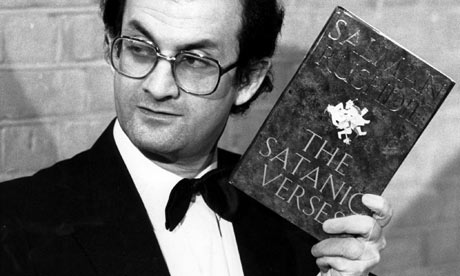
Salman Rushdie and his controversial 1988 novel The Satanic Verses have ignited a series of fresh zealous discussions in Pakistan, a country known for its love for conspiracy theories and controversies. We vividly remember books, such as The Satanic Verses and movies like The Innocence of Muslims that sparked violent protests in Pakistan, as well as in many other Islamic countries, where the Muslims insisted that the book and the movie had separately insulted Prophet Muhammad. Pakistan's stringent blasphemy laws recommend the death sentence for anyone who insults Muhammad. While Rushdie may not even know what he has actually done this time to outrage that Muslim-majority country's conservative commentators, Malala Yousafzai, the teenage campaigner for girls' education, has indeed landed in hot water for even mentioning The Satanic Verses only once in her recently released autobiography I Am Malala. Yousafazi, 16, was shot last year by the Pakistani Taliban for transgressing their restrictions in Swat valley on girls' education. She openly campaigned for the reconstruction and reopening of more than 400 schools destroyed and closed down by the Taliban. The right-wing commentators are manipulating a portion of Malala's book in which she had described her father, Ziauddin Yousafzai, as a strong believer in freedom of expression in the context of anti-Rushdie protests that erupted in Pakistan. Her father had implored fellow Muslims to respond to Rushdie's "anti-Islamic" book with a better pro-Islamic account instead of protesting violently. "My father also saw the book [Satanic Verses] as offensive to Islam but believes strongly in freedom of speech," wrote Malala in her book and quoted her father as saying, "Is Islam such a weak religion that it cannot tolerate a book written against it? Not my Islam!" I Am Malala is not only the autobiography of a courageous girl who was shot by the Taliban but it is an exposé of the Pakistani state's deep-rooted connections with radical Islamists and social fault lines that lead to discrimination against women. The book tells the story a Pashtun girl who is profoundly perturbed by increasing radicalization of the Pakistani society which consequently curtails women's freedoms and access to education. She explains how a young generation of Pakistanis is deeply disconnected from the rest of the world because their biased text books distort history and glorify wars in the name of Islam. Malala offers her unconventionally candid opinion and criticism on several issues which are still deemed as taboo for public debate in Pakistan. By discussing her country's internal policy failures and the army's tolerance, encouragement and protection for the Jihadist elements, Malala has alarmed the nexus between the mullah (clergy) and the military in her country. Ironically, books that often generate public reaction in countries like Pakistan are the ones that have even not been read by those who condemn the publication. This time, most Pakistanis have also not read I Am Malala for two reasons. Firstly, a significant majority of Pakistanis simply cannot read English. Secondly, the Pakistani Taliban have warned bookshops not to sell copies of the book. Hence, this has made conservative commentators' job easier to spread disinformation among the masses in a country with millions of illiterate but religiously passionate citizens. The campaign in Pakistan against I Am Malala is spearheaded by Orya Maqbool Jan, a conservative columnist for an Urdu language newspaper; Ansar Abbasi, a journalist infamous for his orthodox religious views and rigid anti-American views and Syed Talat Hussain, a nationalist broadcast journalist. On October 21, Mr. Jan, while writing in his article "Malala and her promoters" in Dunya newspaper, was the first columnist from the mainstream media to denounce Malala's book on the charges that it had defamed Islam and Pakistan. "If you read excerpts from the book," he wrote, "you will wonder who has put such abusive words in this 16-year-old girl's mouth against my religion, Pakistan and its people. The first person she has mentioned [in the book] is Salman Rushdie, who used disgusting language against our Prophet Muhammad, his wives and his family." Malala had blamed an unknown cleric allegedly linked with Pakistan's intelligence agencies for instigating anti-Rushdie protests in Pakistan in 1988 while Mr. Jan, the columnist, described it "the worst lie of the history." Unlike their English counterparts, the Urdu media have phenomenal accesses to and influence over millions of Pakistani readers and viewers. On October 24, Jang, Pakistan's most circulated Urdu newspaper, published a provocative column by Ansar Abbasi, who heads the newspaper's investigative team. In his article, "Is it the same Malala?", Abbasi said he wished Malala had not written the book because it had hurt the feelings of the Muslims. "Describing the Satanic Verses as an issue of freedom of expression is one such topic that has caused tensions between Muslims and the non-Muslims... we curse upon such freedom of expression that ridicules our Prophet," he wrote. Mr. Abbasi published a follow-up column in the same newspaper on October 28 wondering why the Pakistani media did not expose the "anti-Islam" portions of Malala's book. He insisted that the media should openly debate why it was wrong for Malala to say her father believed in Rushdie's right to free expression. In both of his articles, Mr. Abbasi has questioned Malala's commitment to Prophet Muhammad and Islam as he absurdly whines that the teenage girl did not use "Peace Be Upon Him" or (P.B.U.H.) each time she mentioned Prophet Muhammad in her book in order to show respect for Muhammad. The debate over I Am Malala is gradually shifting from newspapers to news channels. On October 26, Mr. Jan and Abbasi, both critics of Malala, bullied Pervez Hoodbhoy, a prominent liberal intellectual, so much that he had to quit the live show. I Am Malala provides the Pakistanis another opportunity for self-reflection. Malala did bravely survive the Taliban assault and managed to escape from her country in in the wake of a Taliban warning to target her once again if she returns to Pakistan. However, her battle is not over. Now, she has been pushed into totally different, or even unpleasant, media warfare against the pro-Taliban writers. Few writers, such as Khaperai Yousafzai, a columnist for The Baloch Hal, have rebutted the conservative propaganda against the teenage girl in what she billed as right-wing's "Malala-phobia". "This is very typical of writers like Orya Maqbool Jan to manipulate public sentiments in the name of religion," she wrote in her article on October 22, "they attack a women's character or accuse her of being anti-Islamic when they actually fail to support their arguments with facts and logic." World governments, writers and intellectuals must not leave Malala in lurch. They have to stand by her side as the pro-Taliban media in Pakistan seems to be intentionally preparing a very dangerous blasphemous case against Malala which could potentially jeopardize her safety, even in the United Kingdom where she currently lives.Malik Siraj Akbar
My father made personal issues political: Amir Hoti
Pakistan: Govt confused about Taliban issue
Opposition leader in the National Assembly, Syed Khursheed Ahmed Shah has said that government is utterly confused over the “Dialogue with Taliban” issue. Talking to journalists in his National Assembly chamber, he said that PPP would strongly resist any attempt at privatization of steel mills, warning that any further attempts to privatize any other public assets, or downsizing of employees would be strongly challenged in courts, Media Reports said. Declaring terrorism as an endemic morbidity, he said that even Ulema had issued their edict against terrorism, stressing government to evolve a comprehensive strategy to eliminate this menace. He cited the disastrous end -result of some privatizations carried out by PML-N led governments in the past.http://mediacellppp.wordpress.com/
Ethics A Discriminating Subject In Pakistani syllabus
Leader of Pakistani Minorities’ Teachers Association writes to the Prime Minister about a discriminating subject in the school syllabus.Professor Anjum James Paul leader of Pakistani Minorities’ Teachers Group has written to the Prime Minister of Pakistan Mian Muhammad Nawaz Sharif alleging that ethics textbooks show prejudice against non-Muslims. He stated that his group, are preparing to boycott these ethics textbooks. He said, “There is Islamization of textbooks as Islamic prayer is written almost on each and every textbook while these books are for all the students regardless of any creed”.
In his letter to the PM Paul says:“Article 25 (1) of the Constitution of Pakistan guarantees equal citizenship to all Pakistanis as it describes, ‘All citizens are equal before law and are entitled to equal protection of law. It is a sorrowful state that there is the violation of the constitution in this regard. There is discrimination with the fundamental rights of the students of the religious minorities. There are biases and propagation on the religious basis against Christianity, Hinduism, Sikhism, Christians, Hindus and Sikhs in the contents of the present curriculum and the textbooks. Muslim students have been provided the facility of the subject of Islamic Studies and of the teachers but the minority students have been have been deprived of their fundamental right to study their own religion/s. It is the responsibility of the state to provide equal opportunity to all citizens without any discrimination. Due to this the parents and students from the minorities are in oppression and depression. They feel insecure to send their children even to the public sector educational institutions because anything wrong can happen to them. The minority students have to suffer due to the biased curriculum, biased textbooks and biased environment of the educational institutions. Sir, the subject of Ethics has been introduced only for the minority students though it is the utmost need of all the students to have the human values such as tolerance, patience, human dignity and human rights. The minority students have to study mythology and comparison study of religions from grade 3 to grade 11 which is a master level course while the majority students have to study only the fundamental teachings of their own religion. The subject of Ethics is like a poison for these innocent minority students of the age 6 or 7. This is the age for them to know their own religion/s but they are going to be confused in the forthcoming textbooks. The curriculum in the subject of Ethics is biased and even there has not been any role of Christians, Hindus, and Sikhs to develop the textbooks according to their beliefs. The subject of Ethics is being imposed on the minority students. The minorities have always demanded the subject of “RELIGION” for their children as their constitutional and fundamental right but unfortunately no government has paid heed on this genuine demand.” Following are the demands Pakistan Minorities Teachers’ Association has put forth on behalf of the religious minorities of Pakistan. 1. The subject of ‘Ethics’ must be replaced into the subject of ‘Religion’. 2. There must be separate textbooks and teachers for Christian, Hindu, Sikh, Baha’i, Parsi and other minority students as it is in the case of the majority students. 3. The curriculum and textbooks in the subject of ‘Religion’ must be developed by the educationists and the theologians of the relevant religion/s. 4. The biased and hate promoting material against Christianity, Hinduism, Sikhism, Christians, Hindus, Sikhs and other religions must be abolished from all the textbooks. 5. Comparison between or among religions must be abolished from all the textbooks as it is described in the instructions of the Curriculum Wing, but deliberately violated while the textbooks are developed by the publishers. 6. There must be chapters on peace, human rights, human dignity, social and interfaith harmony at all levels. 7. The role of all the Pakistani heroes in different fields must be included in the textbooks without the distinction of race or creed as all the Pakistanis have played their role in the creation and construction of Pakistan. Sir, the rights of child are guaranteed not only in the Constitution of Pakistan but also in the Universal Declaration of Human Rights, Convention on the Rights of the Child, International Covenant on the Civil and Political Rights, International Convention on the Elimination of All Forms of Racial Discrimination and Declaration on the Elimination of All Forms of Intolerance and of Discrimination Based on Religion or Belief.” - See more at: http://www.christiansinpakistan.com/ethics-a-discriminating-subject-in-pakistani-syllabus-pmta/#sthash.JagXqaT6.dpuf
Malala and Nirbhaya: what Pakistan can learn from India
BY Usman JavaidWe can take lessons from our friends across the border in India and not deny the existence of violent impediments to girls’ education in Pakistan out of shame and denial. “I want to live!” were the last words of the brutal gang rape victim in Delhi that touched millions of hearts across the globe. As young Nirbhaya struggled for her life, people from around the world, particularly those in India, backed their feelings of sympathy, anger, and sadness with action. Thousands took to the streets in India demanding justice. They called for the trial and punishment of her abusers and strengthening of Indian laws to prevent such actions in the future. Just a few months before that tragedy, the young Malala Yousafzai was shot in the head for demanding girls’ right to education in Pakistan’s Swat valley. The Pakistan government and the international community came together for an unprecedented international rescue effort to save the young champion of education. Young Malala survived and became a symbol of education for girls worldwide. Unlike Nirbhaya in India however, Malala’s episode received mixed reactions at home. Far from coming out in the streets in large proportions to protest against the suppression of girls’ education, the same way the Indian people came out to condemn violence against women, some Pakistanis expressed a wide array of negativity towards Malala. Some became defensive, saying that children suffer abuse in other parts of the world so no one has the right to judge Pakistan. They went on further to say that there are a thousand Malalas so why should we care about this one? Others made it about the west, citing its record on military interventions and civilian casualties. They said that the west is using young Malala to pursue its own agenda. Some went as far as accusing Malala and her father of being CIA agents, and saying that the attack never really took place. They said that the purpose of the staged attack was to humiliate Pakistan. We Pakistanis certainly have a lot to learn from how people reacted to Nirbhaya’s case in India. In India, people did not say that there are many Nirbhayas so why care about this one. They did not say that the west has a poor record on gender equality so why should we be judged. They certainly did not say that Nirbhaya was never assaulted, and the incident was a western plot to demonise their country. Instead, they accepted that this tragedy happened due to shortcomings within their own society and vowed to improve on them. Nirbhaya became a symbol of women and the people of India decided that the current state of their country was unacceptable to them. They envisioned a better and safer India, and took to the streets to fight for it, regardless of how other countries or societies fare on the matter compared to it. Instead of questioning it, they welcomed international support and violence against women became a key development priority in India. Within a year, the perpetrators were brought to trial and sentenced. Furthermore, the Indian parliament passed the Criminal Law (Amendment) Act, 2013, improving Indian laws related to sexual offences. It would be wonderful if we in Pakistan showed Malala the support that Nirbhaya received from her country. We, at the very least though, can refrain from reacting negatively towards her. Reservations towards young Malala, who is nothing short of a hero, are baseless and unnecessary and I would like to touch on a few of them here. First, there is no need to feel offended or judged by the international attention Malala has received. It does not paint Pakistan as a place where girls cannot get an education. It also does not portray Islam as a religion that suppresses women. International aid organisations, governments and media have been very good at not pointing fingers at Pakistan or Islam but rather at the Taliban, who are militant extremists. To feel judged by international attention would be equating Pakistan and Islam to the Taliban. This is a prime opportunity for us to distance ourselves as far from the Taliban as possible. The best way to do so is to show our support for Malala and rally behind her cause for girls’ education. Second, pointing out western shortcomings on foreign policy misses the point. Malala Yousafzai is a child who demands no more than her right to education. We should support that right regardless of politics. I have had the pleasure of seeing Malala speak in person. Her articulate, well informed and passionate support for children’s education is beyond her age. Moreover, her wonderful smile, sense of humour, and stories of sibling rivalry are a joy to experience. Efforts to support Malala are about this child and millions like her around the globe. We should give Malala and these children unqualified support irrespective of what the west chooses to do. Third, helping Malala takes nothing away from all other children in need in Pakistan but helps them instead. Malala is shouting out for Pakistan and the world is listening. She spoke of the need for education to combat extremism in her speech to the UN. In her meeting with the World Bank President Jim Kim, she secured $ 200,000 for the Malala Fund, which is already planning its first school for girls in Swat. In her meeting with US President Barack Obama, Malala opposed drone strikes. Is this not helping Pakistan? Is this not what we wanted all along? After all those years of foreign governments speaking to the military and politicians, here is the US president listening to an ordinary young girl who is extraordinary in so many ways. Pakistan is lucky in that its ambassador for girls’ education survived. Not only is she not deterred, rather she is ready to fight even harder. We can take lessons from our friends across the border in India and not deny the existence of violent impediments to girls’ education in Pakistan out of shame and denial but rather rally together to remove them. Like in India, we must not be opposed to international attention and resources but rather welcome them to help fight extremism in our country. In addition to these lessons we must also understand that objections against young Malala are baseless and unnecessary, and that Malala is not only a positive force for girls’ education but a Pakistani ambassador to the world.
What The 'Zero Option' Would Look Like In Afghanistan
Subscribe to:
Posts (Atom)