The Express TribuneThree new polio cases surfaced from Khyber-Pakhtunkhwa (K-P) and the tribal areas on Sunday, while one was also reported from Karachi. The National Institute of Health, Islamabad confirmed the new cases. The infected children have not received a single dose of oral polio vaccine (OPV). Twelve-month-old Bushra, a resident of Hindi Khel, Frontier Region Bannu has not received a single dose of the vaccine as the area has been inaccessible for polio teams since June 2012. The second child confirmed to have the crippling disease is 12-month-old Tufail, son of Nair Shah and a resident of Mirdad Khel, Khyber Agency. Tufail has also not received any OPV dose. Two-month-old Nazeefa, daughter of Ziaul Haq and a resident of Miramand Banda, Swabi is also among the infected children. Although Swabi is one of the more accessible areas in K-P, the affected child has not received any OPV dose. Meanwhile, the fourth case to emerge on Sunday was 12-month-old Rehmatullah, son of Yar Muhammad and a resident of Gadap Town, Karachi. This is the second polio case recorded from Gadap this year. The total number of polio cases in the country has increased to 53 this year, as compared to 2012’s total of 58. Four cases have been reported from Sindh, three from Punjab, and the rest have been reported from tribal areas and K-P.
Tuesday, October 29, 2013
Pakistan: New polio cases surface in the country
IHC bars Najam Sethi to work as chairman PCB
 The Islamabad High Court on Tuesday suspended the ad hoc committee of the Pakistan Cricket Board and issued contempt of court notices to the five committee members, which included the acting PCB chief Najam Sethi, and sought a reply from them within four weeks, DawnNews reported.
A single-member bench IHC's Judge Shaukat Aziz Siddiqui resumed the hearing over an appeal filed by the PCB against the decision under which interim chairman PCB was allowed to work only on a day-to-day basis and was asked to conduct the elections for the new chairman by Oct 18.
The court while restraining Chairman PCB Najam Sethi from performing his duties gave the charge of acting chairman of Pakistan's cricket's governing body to the Secretary PCB.
The court suspended the ad hoc committe and formed a commission to conduct the elections of the PCB's chairman while stating that the commission would be headed by Justice (r) Munir A Shiekh.
The PCB's elections would be conducted in November, the court added.
Earlier this year, the IHC, removed former PCB chairman Zaka Ashraf from his post, while declaring his election as null and void.
Prime Minister Nawaz Sharif had then appointed Sethi as interim PCB chairman (in place of Zaka), also in violation of the PCB constitution, because it was the domain of the PCB governing board members to elect an interim chairman.
According to the PCB constitution, an interim chairman enjoys very limited powers.
Though, the IHC judge further reduced the powers of Sethi by ordering him to work only as caretaker — and not as interim chairman.
A contempt petition was filed by Ahmed Nawaz Khan against Najam Sethi saying that the court on July 4 had directed him to hold fresh elections within 90 days for the slot of PCB chairman but Sethi committing contempt of court has not taken any measure in this regard till this time.
The Islamabad High Court on Tuesday suspended the ad hoc committee of the Pakistan Cricket Board and issued contempt of court notices to the five committee members, which included the acting PCB chief Najam Sethi, and sought a reply from them within four weeks, DawnNews reported.
A single-member bench IHC's Judge Shaukat Aziz Siddiqui resumed the hearing over an appeal filed by the PCB against the decision under which interim chairman PCB was allowed to work only on a day-to-day basis and was asked to conduct the elections for the new chairman by Oct 18.
The court while restraining Chairman PCB Najam Sethi from performing his duties gave the charge of acting chairman of Pakistan's cricket's governing body to the Secretary PCB.
The court suspended the ad hoc committe and formed a commission to conduct the elections of the PCB's chairman while stating that the commission would be headed by Justice (r) Munir A Shiekh.
The PCB's elections would be conducted in November, the court added.
Earlier this year, the IHC, removed former PCB chairman Zaka Ashraf from his post, while declaring his election as null and void.
Prime Minister Nawaz Sharif had then appointed Sethi as interim PCB chairman (in place of Zaka), also in violation of the PCB constitution, because it was the domain of the PCB governing board members to elect an interim chairman.
According to the PCB constitution, an interim chairman enjoys very limited powers.
Though, the IHC judge further reduced the powers of Sethi by ordering him to work only as caretaker — and not as interim chairman.
A contempt petition was filed by Ahmed Nawaz Khan against Najam Sethi saying that the court on July 4 had directed him to hold fresh elections within 90 days for the slot of PCB chairman but Sethi committing contempt of court has not taken any measure in this regard till this time.
Balochistan: Missing persons long march
Balochistan: CM Baloch blows kisses in air
 Balochistan Chief Minister Abdul Malik Baloch admitted his failure in resolving the issue of \'missing persons\'. He also said that success on any front in the province depended on how amicably the problem was solved. It means that Baloch\'s government has been unable to accomplish anything for the last over four months. On the very first day of his assumption of the office, Baloch had vowed to resign in case he did not succeed in finding and returning the missing persons to their homes.
But Abdul Malik Baloch while accepting his inability in this matter has not shown any intention to resign.
Had he, however, not admitted to the failure, it would not have made any difference because the whole country already knew of the situation in that province.
The Balochistan chief minister is not naïve. He knew the situation fully well when as chief executive he promised to solve the many issues facing his province.
He knew he was given the charge of the whole province in name only; though, his police could legally only act in ten percent of the area called the category \'A\"; though, he had pledged to make the whole province peaceful.
The rest of about ninety percent of the area of called category \'B\' is in the hands of Baloch sardars or in the control of the army where the troops decided to take action in rare cases of extreme emergencies.
In the \'B\' areas the sardar rules and conduct smuggling operations whether it is of drugs or weapons; organise armed attacks; give security to all kinds of criminals and foreign agents while the chief minister has no control over these activities. As such when Baloch became the chief minister of that province and vowed to make things right there, there were many knowing smiles from those who knew the situation.
It was a given that the new chief minister was engaging in the usual oratory which all politicians do when anyone of them assumes the office of the chief minister.
Had CM Baloch taken firm commitment from the concerned authorities regarding the recovery of missing persons and that the Nawaz government will change the category \'B\' areas to category \'A\', before he took oath of office, his promises would have been believable. But with ninety percent of Balochistan area not in his control, his vows to correct the situation in the whole province was nothing more than blowing kisses in the air. Things like jobs, education and better health facilities signify economic independence for the masses but are considered firing by death squads on the sardari system in Balochistan. The people living in ninety percent of the province will remain deprived of these facilities till the end of sardars\' rule. Most of the blames of the situation in that province is put on the security forces. Sometimes even when a vehicle engine refuses to start accusing finger is pointed at the forces. However, the fact is that changing the status of the category \'A\' areas to \'B\' is the job of the civilian government. The transformation of the areas can bring a positive change in Balochistan and any provincial government making sincere efforts to bring law and order under control will be more successful. However, if the said change is made, it will adversely impact the sardars and that is the point where all political governments have wavered in favour of the sardars, of course.
All the militants, kidnappers, dacoits and armed separatists have their safe havens in the category \'B\' areas under the protection of the Sardars. The miscreants perform terrorist acts, kidnap people and take them to these areas to kill them or hold them hostage for ransom without least bit of worry about the law enforcing agencies. In case, the whole of the province is brought under the control of the regular law enforcing agencies and the jurisdiction of the judiciary is also extended there, the provincial government, if it wills, will be able to end the safe havens of the enemies of the country and the province, as the sardars will not be able to give them protection.
Abdul Malik Baloch is considered as not to belong to that class of Baloch sardars who for their own personal gains are risking the territorial integrity of the country. He is said to be an enlightened person who has raised his voice for the downtrodden people of his province. He is not earning a good name as he continues to hold the office of chief minister under the circumstances. In fact, with each passing day, he is tarnishing his reputation as an upright man who is in politics to benefit the common man; he is more and more considered as a politicians who, instead of upholding principles, will do anything to hold on to his office. He should have resigned long ago when he judged that he could not do the job either because of the circumstances or something lacking on his part. Still, it is better late than never. He should resign if he cannot keep his promises which he made when assuming office.
Balochistan Chief Minister Abdul Malik Baloch admitted his failure in resolving the issue of \'missing persons\'. He also said that success on any front in the province depended on how amicably the problem was solved. It means that Baloch\'s government has been unable to accomplish anything for the last over four months. On the very first day of his assumption of the office, Baloch had vowed to resign in case he did not succeed in finding and returning the missing persons to their homes.
But Abdul Malik Baloch while accepting his inability in this matter has not shown any intention to resign.
Had he, however, not admitted to the failure, it would not have made any difference because the whole country already knew of the situation in that province.
The Balochistan chief minister is not naïve. He knew the situation fully well when as chief executive he promised to solve the many issues facing his province.
He knew he was given the charge of the whole province in name only; though, his police could legally only act in ten percent of the area called the category \'A\"; though, he had pledged to make the whole province peaceful.
The rest of about ninety percent of the area of called category \'B\' is in the hands of Baloch sardars or in the control of the army where the troops decided to take action in rare cases of extreme emergencies.
In the \'B\' areas the sardar rules and conduct smuggling operations whether it is of drugs or weapons; organise armed attacks; give security to all kinds of criminals and foreign agents while the chief minister has no control over these activities. As such when Baloch became the chief minister of that province and vowed to make things right there, there were many knowing smiles from those who knew the situation.
It was a given that the new chief minister was engaging in the usual oratory which all politicians do when anyone of them assumes the office of the chief minister.
Had CM Baloch taken firm commitment from the concerned authorities regarding the recovery of missing persons and that the Nawaz government will change the category \'B\' areas to category \'A\', before he took oath of office, his promises would have been believable. But with ninety percent of Balochistan area not in his control, his vows to correct the situation in the whole province was nothing more than blowing kisses in the air. Things like jobs, education and better health facilities signify economic independence for the masses but are considered firing by death squads on the sardari system in Balochistan. The people living in ninety percent of the province will remain deprived of these facilities till the end of sardars\' rule. Most of the blames of the situation in that province is put on the security forces. Sometimes even when a vehicle engine refuses to start accusing finger is pointed at the forces. However, the fact is that changing the status of the category \'A\' areas to \'B\' is the job of the civilian government. The transformation of the areas can bring a positive change in Balochistan and any provincial government making sincere efforts to bring law and order under control will be more successful. However, if the said change is made, it will adversely impact the sardars and that is the point where all political governments have wavered in favour of the sardars, of course.
All the militants, kidnappers, dacoits and armed separatists have their safe havens in the category \'B\' areas under the protection of the Sardars. The miscreants perform terrorist acts, kidnap people and take them to these areas to kill them or hold them hostage for ransom without least bit of worry about the law enforcing agencies. In case, the whole of the province is brought under the control of the regular law enforcing agencies and the jurisdiction of the judiciary is also extended there, the provincial government, if it wills, will be able to end the safe havens of the enemies of the country and the province, as the sardars will not be able to give them protection.
Abdul Malik Baloch is considered as not to belong to that class of Baloch sardars who for their own personal gains are risking the territorial integrity of the country. He is said to be an enlightened person who has raised his voice for the downtrodden people of his province. He is not earning a good name as he continues to hold the office of chief minister under the circumstances. In fact, with each passing day, he is tarnishing his reputation as an upright man who is in politics to benefit the common man; he is more and more considered as a politicians who, instead of upholding principles, will do anything to hold on to his office. He should have resigned long ago when he judged that he could not do the job either because of the circumstances or something lacking on his part. Still, it is better late than never. He should resign if he cannot keep his promises which he made when assuming office.
Govt confused on Taliban issue, says Khursheed Shah
THE FRONTIER POSTOpposition leader in the National Assembly Syed Khursheed Ahmed Shah has said that government was utterly confused over the issue of dialogue with the Taliban. Talking to journalists in National Assembly chamber on Monday, he said that there was no talk between Nawaz Sharif and President Barrack Obama regarding Taliban issue. He said that Ulema had issued their edict against terrorism, stressing government to evolve a comprehensive strategy to eliminate this menace. To a question, he said that PPP would strongly resist any attempt at privatization of steel mills, warning that any further attempts to privatize any other public assets, or downsizing of employees would be challenged in courts. He cited the disastrous consequences of privatization carried out by PML-N led governments in the past. Shah said that when PPP left government, 85 institutions had 190 billion shares, which the current government cannot replace with privatizing just 35 institutions.
U.S. Disrupts Afghans’ Tack on Militants
A bungled attempt by the Afghan government to cultivate a shadowy alliance with Islamist militants escalated into the latest flash point in the troubled relationship between Afghanistan and the United States, according to new accounts by officials from both countries.
The disrupted plan involved Afghan intelligence trying to work with the Pakistan Taliban, allies of Al Qaeda, in order to find a trump card in a baroque regional power game that is likely to intensify after the American withdrawal next year, the officials said. And what started the hard feelings was that the Americans caught them red-handed.
Tipped off to the plan, United States Special Forces raided an Afghan convoy that was ushering a senior Pakistan Taliban militant, Latif Mehsud, to Kabul for secret talks last month, and now have Mr. Mehsud in custody.
Publicly, the Afghan government has described Mr. Mehsud as an insurgent peace emissary. But according to Afghan officials, the ultimate plan was to take revenge on the Pakistani military.
In the murk of intrigue and paranoia that dominates the relationship between Pakistan and Afghanistan, the Pakistanis have long had the upper hand. A favorite complaint of Afghan officials is how Pakistani military intelligence has sheltered and nurtured the Taliban and supported their insurgency against the Afghan government.
Now, not content to be merely the target of a proxy war, the Afghan government decided to recruit proxies of its own by seeking to aid the Pakistan Taliban in their fight against Pakistan’s security forces, according to Afghan officials. And they were beginning to make progress over the past year, they say, before the American raid exposed them.
Although Afghan anger over the raid has been an open issue since it was revealed in news reports this month, it is only now that the full purpose of the Afghan operation that prompted the raid has been detailed by American and Afghan officials. Those officials spoke on the condition of anonymity to discuss secret intelligence matters.
The thinking, Afghan officials said, was that the Afghans could later gain an advantage in negotiations with the Pakistani government by offering to back off their support for the militants.
Aiding the Pakistan Taliban was an “opportunity to bring peace on our terms,” one senior Afghan security official said.
From the American standpoint, though, it has exposed a new level of futility in the war effort here. Not only has Washington failed to persuade Pakistan to stop using militants to destabilize its neighbors — a major American foreign policy goal in recent years — but its failure also appears to have persuaded Afghanistan to try the same thing.
Worse still, for American officials, was the Afghans’ choice of militant allies. Though the Afghan and Pakistan Taliban are operationally distinct, they are loosely aligned; the Pakistani insurgents, for instance, pledge allegiance to Mullah Muhammad Omar, the founder of the Afghan Taliban. In the estimation of American officials, support for one invariably bleeds into assistance for the other.
At the same time, the Pakistan Taliban shares its base in the tribal areas of Pakistan with a number of Islamist groups that have tried to mount attacks in the West, including the remnants of Al Qaeda’s original leadership. The Pakistan Taliban have also showed a willingness to strike beyond the region, unlike the Afghan Taliban. Mr. Mehsud, for instance, is suspected of having a role in the foiled plot to detonate a car bomb in Times Square in 2010, American officials said.
American officials said they were also worried that the Afghan actions would give credibility to Pakistani complaints that enemies based in Afghanistan presented them with a threat equivalent to the Afghan insurgency. No one in the Western intelligence community believes the comparison to be anywhere close, given that the Afghan Taliban insurgency, with help from its Pakistani allies, has killed tens of thousands of people in Afghanistan in the past 12 years, including more than 2,000 Americans.
“What were they thinking?” said one American official of his Afghan counterparts.
Both Afghan and American officials said the Afghan plan to aid the Pakistan Taliban was in its preliminary stages when Mr. Mehsud was seized by American forces. But they agree on little else.
American officials interviewed about the raid say they saved Afghanistan from folly. Pakistan’s use of militants has left that country torn by violence with group after group spinning out of the government’s control — the Pakistan Taliban being Exhibit A. The Americans also said it was not clear how much help the Afghans could actually provide the Pakistan Taliban.
In the Afghan telling, the theft of their prized intelligence asset is an egregious example of American bullying, and President Hamid Karzai remains furious about it. Afghan officials assert that Mr. Mehsud’s continued detention could still derail a pact to keep American troops here beyond next year, despite the progress toward reaching a deal made during talks this month between Mr. Karzai and Secretary of State John Kerry.
Aimal Faizi, a spokesman for Mr. Karzai, said that Mr. Mehsud had been in contact with officials from the National Directorate of Security, Afghanistan’s intelligence agency, for “a long period of time.”
The Pakistan Taliban leader “was part of an N.D.S. project like every other intelligence agency is doing,” Mr. Faizi said in an apparent reference to the support provided to the Afghan Taliban by Pakistan intelligence. “He was cooperating. He was engaged with the N.D.S. — this I can confirm.”
Mr. Faizi did not elaborate on the nature of the cooperation. But two other Afghan officials, when asked why they were willing to discuss such a potentially provocative plot, said Mr. Mehsud’s detention by the United States had already been exposed — it was first reported by The Washington Post — ruining his value as an intelligence asset and sinking their plan.
As a consolation, the Afghan officials said they now wanted Pakistan to know that Afghanistan could play dirty as well. One said they would try again if given the opportunity.
Afghan officials dismissed American admonishments about the dangers of working with militants as the kind of condescension they have come to expect. No one in Mr. Karzai’s government was naïve enough to believe they could turn the Pakistan Taliban into a reliable proxy, said a former Afghan official familiar with the matter.
“I would describe what we wanted to do was foster a mutually beneficial relationship,” the former official said. “We’ve all seen that these people are nobodies — proxies.”
Another Afghan official said the logic of the region dictated the need for unseemly alliances. The United States, in fact, has relied on some of Afghanistan’s most notorious warlords to fight the insurgency here, the official tartly noted.
“Everyone has an angle,” the official said. “That’s the way we’re thinking. Some people said we needed our own.”
Afghan officials said those people included American military officers and C.I.A. operatives. Frustrated by their limited ability to hit Taliban havens in Pakistan, some Americans suggested that the Afghans find a way to do it, they claimed.
So Afghanistan’s intelligence agency believed it had a green light from the United States when it was approached by Mr. Mehsud sometime in the past year.
After months of negotiations with Mr. Mehsud, the intelligence agency struck an initial deal, two Afghan officials said: Afghanistan would not harass Pakistan Taliban fighters sheltering in mountains along the border if the insurgents did not attack Afghan forces.
Still, the Afghans decided to keep their relationship with Mr. Mehsud a secret and did not tell American officials.
An American official briefed on Mr. Mehsud’s case said there was “absolutely no way” any American would encourage the Afghans to work with the Pakistan Taliban or do anything that could result in attacks on Pakistani forces or civilians, the official said.
“If they thought we’d approve,” the American official added, “why did they keep it a secret?”
PAKISTAN: During the month of September 493 persons died and 555 were injured in different incidents of violence
http://www.humanrights.asia/news/ahrc-news/AHRC-STM-193-2013
Pakistan: Dear Mr Prime Minister
The Baloch HalBy Sanaullah Baloch In this very critical moment of history I am compelled to write this brief letter to remind you about your role as the chief executive of Pakistan, and the commitments you have made to the people of Pakistan, more particularly the downtrodden people of Balochistan. While your government may have pleasant stories for some, Balochistan is on the verge of death with a sharp increase in human rights violations, humanitarian crisis, and socio-economic erosion. It’s a heart-wrenching fact that since your takeover as prime minister around 90 barbarically tortured corpses of Baloch youth have been dumped in different parts of Balochistan and Karachi. Beginning from the All-Parties Conference held in London on July 7-8 in 2007, and as a leading opposition figure before the May elections, you made countless commitments condemning atrocities against the Baloch and demanded fair and just rights for them. The London APC’s resolution said that “today Balochistan bleeds under the heels of an army operation, where gunship helicopters are used for silencing dissenting political voices.” In reality, the current situation in the province is far worse than what it was in 2007. Balochistan’s sufferings have increased manifold. The province’s home and tribal affairs department’s recent report revealed horrific accounts of kill-and-dumps. The report says that 592 mutilated, killed and dumped bodies of Baloch political activists have been found from 2010 to September 2013. The worrying fact is that this barbaric trend has seen a sharp increase during the first three months of your government. Mr Prime Minister, Balochistan has unique socio-cultural and political characteristics including countless resources. This you are aware of and you recently signed a number of MoUs with Chinese companies without reaching out and initiating any ‘memorandum of political understanding’ with the people of Balochistan. My concerns are not just political – I worry because the ongoing conflict, military operation and immunity and impunity for crime and corruption have severely damaged Balochistan’s social, economic and political fabric. All this will have severe consequences both for the Baloch and the region. The province’s statistics depict a very bleak scenario – much worse than war-torn African states. Just imagine – 63 percent of its population lives below the poverty line compared to Punjab’s 19 percent. Data on health, employment, nutrition intake, infrastructure and education is equally grim and sadly terribly below the national average. Mian Sahib, there is a difference between being in opposition and being in power. The people of Balochistan are expecting much more from you. I would like to remind you that glitzy mega-projects without a genuine conflict resolution process are seen as an attempt to further exploit and marginalise the people. Skyscrapers and guzzling machines are no guarantee for peace. Huge, but controversial, mega projects failed to legitimise General Musharraf’s policies. His disguised-in-development colonisation didn’t envisage any political harmonisation, local participation and economic trickledown. His visionless and dictatorial policies further weakened the very delicate relations between the Baloch and Pakistan. Mr Prime Minister, it’s time to move on from political rhetoric. It’s time for genuine political action. If you remember, during our meeting in the Prime Minister’s Secretariat on June 12, 2013, I shared a brief note with you on behalf of the Balochistan National Party – a list of CBMs and recommendations on political stabilisation, economic development and a plan for the socio-economic uplift of the people of Balochistan. But regrettably instead of taking into account those CBMs, your government unilaterally signed a number of controversial projects with Chinese companies on contentious projects. Gwadar is one of them. Instead of sober, genuine and tested political process, your government is encouraging further militarisation of the already heavily militarised Baloch region. The recent supply of bullets and machine gunsis not a political gesture; it symbolises war and conflict escalation. Musharraf ruled Pakistan for nine years; he used sophisticated weapons and barbaric torture methods but miserably failed to subdue the politically conscious Baloch people. Balochistan demands respect, justice, and fair political partnership, not machine guns and soldiers. It is a society deprived of basic human needs. Sixty percent of its people lack drinking water, electricity and basic health facilities. Despite sitting on the world’s largest copper-gold deposit, two million children in Balochistan lack decent education. Mian Sahib, it’s impossible to rebuild Baloch trust on the state and its institutions without a time-tested conflict resolution process. A policy of more guns and more soldiers will only lead to more chaos and distrust. There is no doubt that security-sector reform is a crucial aspect of the Baloch problem. But these reforms should not be limited to enhance the killing capacity of the non-ethnic Baloch security apparatus to single out and suppress the ethnic Baloch. Your government must engage experts and identify the victims and ‘beneficiaries’ of the conflict. ‘Baboos’ with fancy PowerPoint presentations have misled many leaders in the past – and I am scared that they will continue to influence your policies too. Death and destruction in many parts of Pakistan, particularly in Balochistan, have become a huge money-making opportunity. Many powerful elements within the state structure prefer a continuation of suppressive policies. The conflict in Balochistan has created a complex power imbalance. And genuine conflict resolution process will definitely expose such elements and diminish their unnaturally grown role and authority. The rubberstamped Balochistan Assembly has no value and has miserably failed to deliver on pertinent issues as a legitimate legislature. The May 2013 election was political management of high standards. In Balochistan, state machinery, as usual, ensured fulltime ‘free, fair and transparent selection’. Mr Prime Minister, it’s a harsh but undeniable fact that Pakistan has physically shrunk in a few districts. Except a few areas in central Punjab including Lahore and Islamabad there is no place where people walk or sleep without fear. Following political and economic marginalisation, ethnic and religious minorities are struggling for their physical survival. A transparent profile of killings, human rights violations and marginalisation indicates the systematic targeting of marginalised communities with impunity. Mian Sahib, a leader who believes on rhetoric can neither reverse this cycle of violence nor correct this deliberately created chaos. To deal with such complex issues a leader must demonstrate extraordinary courage and political will to undo the damage. Balochistan deserves a politically mature and daring solution such as a comprehensive peace agreement with the real stakeholders. The multi-step process must focus on issues such as cessation of hostilities, implementation of agreed CBMs, talks and agreements on political, economic and security aspect of the crisis. And most importantly, avoiding a complete sale out of the Balochistan coast, coal, copper-gold, gas and natural wealth until the conflict is fully resolved. Balochistan’s political conflict and its unaddressed genuine grievances need courageous decision-making by a brave leader.
Monday, October 28, 2013
Afghanistan: Countdown to US withdrawal

Attention may now turn from the Arab uprisings to Afghanistan as the US and NATO forces prepare to leave in 2014.
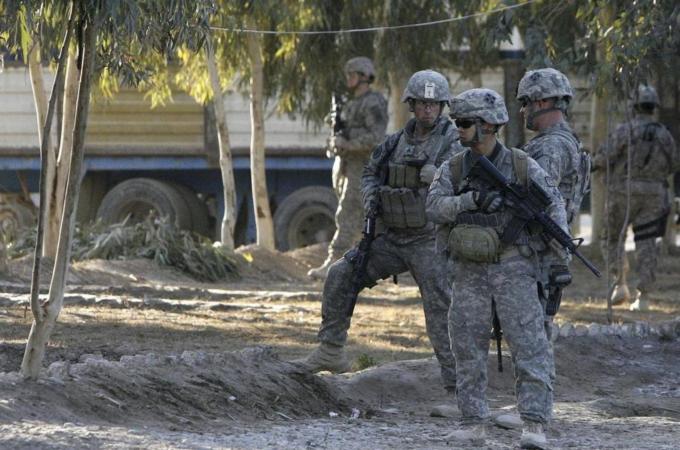 For three years, the world’s eyes have been focused on the Arab uprisings and subsequent events, but now the attention is going to turn to Afghanistan as US-led foreign troops prepare to leave the country next year. Even though some foreign advisers will remain, the NATO withdrawal will bring an end to the military response of President George W Bush against Afghanistan's Taliban rulers, which was launched with lofty promises after the September 11 attacks on the US.
It is undeniable that the war has been very costly. Today, the Taliban are stronger than they were immediately after their eviction from Kabul. The militancy has spread far beyond the country’s borders, and the mission that President Barack Obama called a "just war" is reaching its finale without its most important aims fulfilled.
It is difficult to think of an Afghan more congenial than Hamid Karzai that Washington could have found to install in power following the removal of the Taliban in 2001. As he prepares to leave office after the April 2014 election, President Karzai is sharply critical of NATO, remonstrating that "on the security front, the entire NATO exercise caused Afghanistan a lot of suffering, a lot of loss of life and no gains, because the country is not secure".
Afghan reality
NATO and the US have accused Karzai of unreliability and corruption, but they ignore the Afghan reality. President Karzai has to voice the deep antagonism felt against foreign troops in the country and cannot remain silent about civilian casualties. He is mindful of the fragile nature of Afghanistan's military and police forces, which NATO undertook to train and equip.
As many as 50,000 desertions are haemorrhaging Afghanistan's security forces every year. The latest high-profile defector was a special forces commander who joined the Hizb-e-Islami organisation, a Taliban-affiliated group, taking with him guns and high-tech military equipment.
Corruption has been a sad historical fact in a country that is among the most impoverished in the world. Ceaseless wars since the 1970s - wars in which external powers, the US, the Soviet Union and Afghanistan’s neighbours have been active participants - have made Afghanistan's destitution all the greater. Western accusations of corruption against the Karzai administration are self-serving at times, and ignore the West's own corrupt practices in the course of the Afghan war.
Military occupation and offence to the occupied go together. Afghans have suffered cruel losses and humiliation again and again during the past twelve years, under Soviet occupation in the 1980s and before. Afghanistan's ethno-tribal society requires its rulers to be close to their subjects in ways that Western governments have not fully understood.
A leader who imposes the will of a foreign master on fellow Afghans risks his credibility, his authority and worse. It should come as no surprise that in his final months in office President Karzai has thus far put up stubborn resistance to US pressure to grant complete immunity from prosecution to US troops who may be left behind for training Afghan security forces and for defending Western strategic assets.
The legacy of US war in Afghanistan
The departure of US and NATO troops in 2014 will be another landmark in the 35-year history of Afghan wars. The symbolism of the Soviet retreat in 1989 was greater because it happened as the Soviet empire was collapsing. The circumstances for the US empire are not so precarious, and NATO's immediate future is not in doubt.
However, in Afghanistan and outside, there are going to be those who will see this withdrawal as another defeat of a great power. The US will continue to struggle to justify its claim that the Afghan mission has been a success. Once fervent supporters of the mission to eliminate terrorism and redesign society now realise the Afghan project's grim realities. Even those less partisan may conclude that it has been a missed opportunity in several respects.
The legality and morality of US drone attacks across the Afghanistan-Pakistan border, and increasingly in other countries, is a subject of open debate, raising questions about laws of war, human rights and national sovereignty. The impact of this debate on international relations is going to be an enduring legacy of the Bush and Obama administrations.
That legacy will continue to evoke memories of the tense relationship between Obama and Karzai - who was the US choice to be the leader of Afghanistan but who could not entirely support Washington's agenda. For all his charm, elegance and urbane manners, Karzai is still an Afghan who cannot remove himself enough from his fellow countrymen to please the US. He will be remembered as a president whose true authority was always limited, but was held responsible for many of the failures of others.
nd of foreign involvement?
More than a decade after the US went to Afghanistan to eliminate the Taliban and al-Qaeda, the curtain is about to close on one more episode in the country's endless wars. In 1989, the Americans were euphoric about defeating the Soviet occupiers with the Mujahideen's help in a proxy war. As the Americans prepare to bail out in 2014, the old fog of euphoria has lifted, and it is possible to argue with greater certainty that, ultimately, Afghans do not need a major external power to fight the enemy.
Words attributed to two of the best known Afghan warlords of modern times are informative. In the 1980s, when Washington was the Mujahideen's main backer against the Soviet Union, Ismael Khan said: "The Americans want us to continue fighting but not to win, just to bleed the Russians." Another anti-Soviet commander, Ahmad Shah Masood, remarked: "We will not be a pawn in someone else's game; we will always be Afghanistan."
The Obama administration's attempts to launch negotiations with the Taliban on concrete matters have not brought success. At times, President Karzai has felt left out, and has reacted with his own overtures to the Taliban. Such overtures have not pleased the US, which has appeared to undermine Karzai's independent initiatives. The recent arrest of senior Taliban commander Latif Mehsud by the US angered the Afghan president, because it was reported that his government was trying to recruit Mehsud as a go-between for peace talks.
Haunting possibilities
As the departure of foreign troops draws closer, many in Afghanistan and its regional neighbourhood are concerned about the future. There are questions about next year's presidential election taking place in a peaceful and orderly manner, and whether the new government will be stable.
What will the Taliban and members of Pakistan's political and military establishments with links to the armed group do? How will Saudi Arabia and Iran, representing the Sunni-Shia struggle for influence in the Muslim world, affect Afghanistan as the country tries to stand on its own two feet? Will influential players of the international community help Afghanistan? Or will they walk away like they did following the 1989 Soviet retreat, leaving regional powers and Afghan factions to fight it out?
Such haunting possibilities are going to occupy minds more and more as US and NATO troops prepare to leave Afghanistan.
For three years, the world’s eyes have been focused on the Arab uprisings and subsequent events, but now the attention is going to turn to Afghanistan as US-led foreign troops prepare to leave the country next year. Even though some foreign advisers will remain, the NATO withdrawal will bring an end to the military response of President George W Bush against Afghanistan's Taliban rulers, which was launched with lofty promises after the September 11 attacks on the US.
It is undeniable that the war has been very costly. Today, the Taliban are stronger than they were immediately after their eviction from Kabul. The militancy has spread far beyond the country’s borders, and the mission that President Barack Obama called a "just war" is reaching its finale without its most important aims fulfilled.
It is difficult to think of an Afghan more congenial than Hamid Karzai that Washington could have found to install in power following the removal of the Taliban in 2001. As he prepares to leave office after the April 2014 election, President Karzai is sharply critical of NATO, remonstrating that "on the security front, the entire NATO exercise caused Afghanistan a lot of suffering, a lot of loss of life and no gains, because the country is not secure".
Afghan reality
NATO and the US have accused Karzai of unreliability and corruption, but they ignore the Afghan reality. President Karzai has to voice the deep antagonism felt against foreign troops in the country and cannot remain silent about civilian casualties. He is mindful of the fragile nature of Afghanistan's military and police forces, which NATO undertook to train and equip.
As many as 50,000 desertions are haemorrhaging Afghanistan's security forces every year. The latest high-profile defector was a special forces commander who joined the Hizb-e-Islami organisation, a Taliban-affiliated group, taking with him guns and high-tech military equipment.
Corruption has been a sad historical fact in a country that is among the most impoverished in the world. Ceaseless wars since the 1970s - wars in which external powers, the US, the Soviet Union and Afghanistan’s neighbours have been active participants - have made Afghanistan's destitution all the greater. Western accusations of corruption against the Karzai administration are self-serving at times, and ignore the West's own corrupt practices in the course of the Afghan war.
Military occupation and offence to the occupied go together. Afghans have suffered cruel losses and humiliation again and again during the past twelve years, under Soviet occupation in the 1980s and before. Afghanistan's ethno-tribal society requires its rulers to be close to their subjects in ways that Western governments have not fully understood.
A leader who imposes the will of a foreign master on fellow Afghans risks his credibility, his authority and worse. It should come as no surprise that in his final months in office President Karzai has thus far put up stubborn resistance to US pressure to grant complete immunity from prosecution to US troops who may be left behind for training Afghan security forces and for defending Western strategic assets.
The legacy of US war in Afghanistan
The departure of US and NATO troops in 2014 will be another landmark in the 35-year history of Afghan wars. The symbolism of the Soviet retreat in 1989 was greater because it happened as the Soviet empire was collapsing. The circumstances for the US empire are not so precarious, and NATO's immediate future is not in doubt.
However, in Afghanistan and outside, there are going to be those who will see this withdrawal as another defeat of a great power. The US will continue to struggle to justify its claim that the Afghan mission has been a success. Once fervent supporters of the mission to eliminate terrorism and redesign society now realise the Afghan project's grim realities. Even those less partisan may conclude that it has been a missed opportunity in several respects.
The legality and morality of US drone attacks across the Afghanistan-Pakistan border, and increasingly in other countries, is a subject of open debate, raising questions about laws of war, human rights and national sovereignty. The impact of this debate on international relations is going to be an enduring legacy of the Bush and Obama administrations.
That legacy will continue to evoke memories of the tense relationship between Obama and Karzai - who was the US choice to be the leader of Afghanistan but who could not entirely support Washington's agenda. For all his charm, elegance and urbane manners, Karzai is still an Afghan who cannot remove himself enough from his fellow countrymen to please the US. He will be remembered as a president whose true authority was always limited, but was held responsible for many of the failures of others.
nd of foreign involvement?
More than a decade after the US went to Afghanistan to eliminate the Taliban and al-Qaeda, the curtain is about to close on one more episode in the country's endless wars. In 1989, the Americans were euphoric about defeating the Soviet occupiers with the Mujahideen's help in a proxy war. As the Americans prepare to bail out in 2014, the old fog of euphoria has lifted, and it is possible to argue with greater certainty that, ultimately, Afghans do not need a major external power to fight the enemy.
Words attributed to two of the best known Afghan warlords of modern times are informative. In the 1980s, when Washington was the Mujahideen's main backer against the Soviet Union, Ismael Khan said: "The Americans want us to continue fighting but not to win, just to bleed the Russians." Another anti-Soviet commander, Ahmad Shah Masood, remarked: "We will not be a pawn in someone else's game; we will always be Afghanistan."
The Obama administration's attempts to launch negotiations with the Taliban on concrete matters have not brought success. At times, President Karzai has felt left out, and has reacted with his own overtures to the Taliban. Such overtures have not pleased the US, which has appeared to undermine Karzai's independent initiatives. The recent arrest of senior Taliban commander Latif Mehsud by the US angered the Afghan president, because it was reported that his government was trying to recruit Mehsud as a go-between for peace talks.
Haunting possibilities
As the departure of foreign troops draws closer, many in Afghanistan and its regional neighbourhood are concerned about the future. There are questions about next year's presidential election taking place in a peaceful and orderly manner, and whether the new government will be stable.
What will the Taliban and members of Pakistan's political and military establishments with links to the armed group do? How will Saudi Arabia and Iran, representing the Sunni-Shia struggle for influence in the Muslim world, affect Afghanistan as the country tries to stand on its own two feet? Will influential players of the international community help Afghanistan? Or will they walk away like they did following the 1989 Soviet retreat, leaving regional powers and Afghan factions to fight it out?
Such haunting possibilities are going to occupy minds more and more as US and NATO troops prepare to leave Afghanistan.
NATO shrinks scope of future Afghan mission
Aseefa Bhutto urges all political parties to put their differences aside and be united against Polio
On the occasion of ‘World Polio Day,’ ‘Aseefa Bhutto Zardari ‘ has urged all sections of society and media to support efforts to eradicate polio from Pakistan.http://mediacellppp.wordpress.com/


Asfandyar Wali ‘hero’ of Pakhtuns
 Awami National Party (ANP) leader Senator Zahid Khan has called Asfandyar Wali Khan ‘hero’ of Pakhtuns, Geo News reported.
In a reaction to Azam Khan Hoti’s press conference here Monday, Senator Zahid said he was shocked over this. He said ‘Azam Hoti is like our family member, therefore, his statement hurts more’.
Senator Zahid further said “there has been a conspiracy against our leadership in every era”. He said Hoti himself had admitted that there was no proof to these allegations, therefore, this press conference was worthless.
“We were in government during the last five years, why were these allegations not leveled then?”
ANP will give its officials reaction on Azam Hoti’s press conference in two days, he added.
Awami National Party (ANP) leader Senator Zahid Khan has called Asfandyar Wali Khan ‘hero’ of Pakhtuns, Geo News reported.
In a reaction to Azam Khan Hoti’s press conference here Monday, Senator Zahid said he was shocked over this. He said ‘Azam Hoti is like our family member, therefore, his statement hurts more’.
Senator Zahid further said “there has been a conspiracy against our leadership in every era”. He said Hoti himself had admitted that there was no proof to these allegations, therefore, this press conference was worthless.
“We were in government during the last five years, why were these allegations not leveled then?”
ANP will give its officials reaction on Azam Hoti’s press conference in two days, he added.
Pakistan: Under Shahbaz Sharif, the great Shia experiment is in the making in Punjab
All fascism begins in the name of legality and general goodness, even in the name of the ‘good’ of the victim. The Punjab government under Shahbaz Sharif has started a process to destroy Shia practices in the name of security, and has given it a legal cover. What the likes of Saudi Arabian-inspired Takfiri Deobandi outfits Ahle Sunnat Wal Jamat (ASWJ) and Lashkar-e-Jhangvi (LeJ aka Sipah Sahaba) have been demanding for years will now be done by the elected, democratic government of Punjab.
On Friday 25 Oct 2013, Colonel (retired) Shuja Khanzada, Shahbaz Sharif’s trusted lieutenant and Environment Minister of Punjab, announced that this time the month of Moharram will be regulated by the Punjab government with the following measures:
1. All unregistered Shia meetings (majalis) and processions (jaloos) will be banned.
2. Every Shia speaker will have to obtain a government license, or he/she will not be allowed to address the majalis.
3. Shia speakers will not be allowed to provoke people.
4. Shias will not be allowed to use loudspeakers for the majalis.
Before offering an editorial comment, we would like to understand the four measures one by one.
Unregistered meetings and processions
For centuries, the Shias of the subcontinent have been holding meetings and taking out processions to mourn the martyrdom of Imam Hussain and his companions. Shia religious meetings are not, and have never been, of proselytizing or provocative nature. At these meetings and processions, Shias mourn the martyrdom. They recount the tragic incidents at Karbala, cry, and beat their chests, etc. The sole object of their mourning is the suffering of the group of people led by Imam Hussain. Why should they have to get registered in order to mourn? Another point is: What if they government does not allow them to gather in a place and mourn? Here, there is a double whammy for the Shias. If they hold ‘unregistered’ meetings, they will be deemed to have done something illegal. If they protest if/when not given registration, they will be deemed to have acted illegally. And here is a third whammy: If they stop mourning, they will be conceding that the legality of their beliefs is no more than a matter of the government’s regulatory discretion.
Permit for Shia speakers
Again, it is a matter of regulation. All Shia speakers will be required to get a government permit. If a speaker, however good and knowledgeable he/she may be, is not given the permit and yet addresses a meeting, he/she will be deemed to have acted illegally. On what criteria will one be given the permit? Obviously those who ‘bahave’ and do not ‘provoke’. In the past, no Shia speaker has been convicted or even blamed for being provocative. Why now? Are there any Sunni registered speakers?
Not allowed to be provocative
It is true that some Shia speakers in rural areas go overboard, but this does not happen during the month of Moharram, which is the month of mourning. When Shia speakers react emotionally, it is often in response to a provocative speech made by a Takfiri-Deobandi. Shia speakers have never said a word against Sunnis, though they often refute Takfiri propaganda against their faith.
But why single out Shia speakers for this, and that too in the month of Moharram when the only leitmotif is the suffering of Imam Hussain and his companions?
Ban on loudspeakers
Loudspeakers have never been banned during Moharram. Why now? When we all know that Imam Hussain was a grandson of the Prophet (PBUH), and all the mourning is done for him, then who is disturbed when his name and his suffering is recounted on loudspeakers? Does the name of the grandson of the Prophet (PBUH) somehow impinge upon the sensibilities of the Non-Shia Muslims of Pakistan? If yes, who are those Muslims? Brelvis, the majority sect in Pakistan, have as much respect for Imam Hussain as the Shias. Who are the people who do not want to hear the name of Imam Hussain?
If you look closely at the four ‘legal’ measures to be implemented in the province of Punjab—-yes, and nowhere else in Pakistan—-you will draw at least one conclusion: There is a move by the Punjab government to rob the Shias of the legality of their mourning practices, and by implication their faith. Despite having pumped billions of petro-dollars in Pakistan, Saudi Arabia has not been able to dent the Shia faith. Despite the ASWJ-LeJ’s incessant murderous campaign against the Shias, the Shia faith continues to flourish. To weaken the Shia faith, the ASWJ-LeJ leaders have been campaigning that the Shia meetings and processions should be curtailed. But they always failed because the past governments would not listen to them. But now the opportunity has arisen. The PML-N and the ASWJ-LeJ are not only the two most powerful Saudi-supported lobbies in Pakistan, the two of them are political allies also. The PML-N has been protecting the ASWJ-LeJ assassins like Malik Ishaq.In the Takfiri-Deobandi ideology, Shias are the perfect Other whose very existence is a danger to their own ‘pure’ Islam. The House of Saud, the most heartless and equally lethal child of this ideology, has been trying to destroy the Shia Other. In the Gulf dictatorial monarchies, the Shias have few human rights. Now the House of Saud has found a perfect opportunity to dehumanize the Shias in Pakistan through its proxies such as the Sharif Brothers and the ASWJ-LeJ. Very few people are aware that in August, the Saudi government through its embassy in Islamabad ‘gifted’ 30 thousand ‘Islamic’ goodie bags to Islamabad’s school kids. These bags include booklets on Islamic rituals and ways of life. Pakistan’s corrupt media did not report it. All those books include is not Islam but Salafism. It happened only because the Sharif government made it possible. Now, the Sharif government has started a Great Shia Experiment in Punjab which will surely be replicated by the PTI government in KP. This is the plan to destroy the Shia faith. It seems to have the following stages:
First, terrify the Shias in the name of security: If you do not do as we say, the terrorists will bomb your meetings and processions!
Second, gain Shia acquiescence and subject Shia practices to a legality/illegality vector. Some Shias will not accept it, and thus there will be some discord between the ‘legally-minded’ Shias and the ‘recalcitrant’ ones. The likes of Ansar Abbas and Irfan Siddiqui will side with the ‘good’ Shias.
Third, under the cover of legality based upon the need of ‘security’, the Shias of Pakistan will be forced into enclosures. Their freedom to hold mourning meetings and processions will be curtailed.
Fourth, once the Shia Other has been located and localized in the new (created) ecology, it will be easy to confine his freedom and constrain his movements. Thus, ultimately the Shias of Pakistan will be caged and the Takfiri-Deobandi dream to destroy their faith realized.
Shias are routinely killed whether it is the month of Moharram or not. Thousands of them have so far been killed in Pakistan, and yet they have never said that they want to have their religion freedom restricted. It is the duty of the government to provide them security, and not take their freedom away in the name of security. But then the PML-N government itself is a Takfiri participant in league with Saudi Arabia and ASWJ-LeJ terrorist-assassins.
So, what is to be done? The Shias of Pakistan must not let it happen. Historically, the Shias have been killed in the millions and yet have never allowed their religious freedoms to be curtailed. Accepting bans from a Saudi proxy like the PML-N government will be like accepting the rule of Yazid. The Shia leadership and liberal Sunnis should come forward. Communities like Hindus, Christians, and Ahmadis should also support the Shias because in the freedom of one community lies the freedom of every community.
- See more at: http://lubpak.com/archives/287763#sthash.VvlaLmX5.dpuf
Pakistan: Polio: turning point
AROUND this time last year, approximately 48,000 families in Pakistan had refused vaccinations. In 2013, that number stands at 65,947.
On the eve of World Polio Day 2013, this highlighted an ever-increasing trust deficit between the government and the parents of at-risk children in outlying communities, a deficit that is costing Pakistani lives. We are at a strange turning point, where our indisputable success is marred by our unfortunate failures.
The polio eradication campaign’s numbers are certainly impressive on paper. 33.4 million children under the age of five are targeted for vaccinations. Over 200,000 people assist in a campaign that stretches across the country in 102 districts.
But inefficiency, deep-seated corruption, lack of proper security for health workers and inaccessibility to certain regions continue to act as a debilitating counterweight to the immunisation efforts. Chief among these, compromised access between children and health workers is what truly gives polio free rein.
Pages 115 through 127 of the Abbottabad Commission Report narrate how Dr Shakeel Afridi latched his work on hepatitis with local vaccination campaigns.
The Tehreek-i-Taliban Pakistan (TTP) has mandated that they are not against vaccinations in general, nor do they oppose comprehensive health for Muslims. Instead, they are wary of potential spying being conducted under the ruse of vaccinations.
But the truth, as always, goes deeper than that. State Minister for Health Services, Regulations and Coordination Saira Tarrar recognises the political acumen behind this narrative.
“The extremist elements recognise that there is a lot of international pressure on Pakistan to eradicate polio, and so they are using this to their advantage by clubbing other demands with this issue,” she says. “Through peace talks or any other means, immunisation must start in the tribal belt, or this problem will rapidly get out of control.”
The ban has been in effect in Fata since June 2012. This fear, and the threat of violence associated with it, has now permeated the general psyche of families that now regularly refuse vaccinations.
Unfortunately, a number of key questions about the unexpected fallout from this event remain unanswered, further exacerbating the issue. The media excels at asking pointed, scandalous questions about the inci-dent, but rarely quells any misconception.
For example, in a vaccination campaign, there are no bodily fluid samples needed, blood or otherwise. It is a simple matter of two drops of oral polio vaccine being administered. Each exposed child puts an additional 200 — 5,000 children at risk.
Dr Elias Durry, chief of the Polio Eradication Initiative at the World Health Organisation, who has developed expertise eliminating polio in 10 countries over two decades, feels that Pakistan has a great opportunity to capitalise on and interrupt polio.
The numbers support his viewpoint. The current tally is now at 49 for this year. This number is just nine short of 2012’s 58 confirmed cases. However, it is important to note that the bulk of these cases, 36 to be exact, come from parts of the country where the TTP-imposed ban is in effect.
The virus has thus been largely cornered. But if Pakistan does not immunise its children at this juncture, experts postulate that global eradication efforts may be put at risk, and that international travel restrictions may be applied to Pakistanis to curb the spread of polio.
Cases springing up in other provinces also highlight the ugly truth that Pakistan is currently unable to immunise its children, irrespective of the disease. The number of measles deaths went from 64 in 2011 to 306 in 2012, and this has only worsened in 2013.
Hiding behind the threat of violence for going into places like the North Waziristan and Khyber agencies may seem like a sound political excuse, convenient in its scope and clearly a detriment to national immunisation efforts. But this point becomes questionable when juxtaposed against the fact that the brunt of the recent measles epidemic was borne by Punjab and Sindh, not Fata.
This is further reinforced by the Pakistan Demographic and Health Survey, which highlights the current coverage rate of fully immunised children at an abysmal 53.8pc.
In Punjab and Sindh, 54pc of 8,844 children assessed between January 2012 and mid-May 2013 were not vaccinated against the disease. The point stands: Pakistan is unable to fully immunise its children. Ms Tarrar agrees. She feels that if we can build this infrastructure now, it will help us establish comprehensive, routine national vaccination campaigns. That is the only way forward.
This issue has a lot of moving parts. Efficient campaign management, steps to eliminate corruption, resolution with the TTP, grass-roots campaigning to convince parents to immunise their children, stemming misconceptions, a media that responsibly answers the questions it raises with reckless impunity, security for health workers, a strong political will to see the campaign through, and sustaining the success we have achieved so far, they all contribute the smaller pieces to the larger picture.
Once again, on paper, the strategy is impressive and comprehensive. But the execution is hampered by a myriad factors that must be countered with serious political resolve. Only then can we ensure optimal campaign activity in all parts of the country, including sustaining the campaign in the polio-free regions.
Brave Saudi women
People of India, Pak desire peace: Fatima Bhutto


Fatima Bhutto uses fiction to tell stories of women

Strikes on Pakistan can create nuclear holocaust
http://timesofindia.indiatimes.com/Pakistani soldier-turned-academic Feroz Khan's book Eating Grass is an insider account tracing the history of Pakistan's nuclear programme — and its survival despite hurdles. Khan, who was involved in formulating Pakistan's nuclear arms control policy, spoke with Sameer Arshad about how Pakistan's nuclear arsenal grew, implications of its nuclear race with India — and how restraints are possible: What explains Pakistan's nuclear programme's success despite sanctions and global opposition? Sanctions and global proliferation regimes were the engines that drove the resolve for the programme — the lighter the punitive response from the international community towards Indian proliferation, the more Pakistanis were determined to meet the non-proliferation challenge. The Indian military's continued pressure on Pakistan also helped. How this programme created the parity with India Zulfikar Ali Bhutto envisaged? Bhutto is undoubtedly the Pakistani nuclear bomb's father — even before the 1965 war, he envisioned the only way to offset the strategic imbalance was through nukes. Neither Bhutto, nor the current leadership seek parity with India — Pakistan seeks to balance Indian military might, which was instrumental in dismantling a unified Pakistan. What has been the extent of the grey market's involvement and Chinese assistance towards Pakistan's programme? The programme's success was predominantly that of indigenous scientists. It did tap into the grey market, which was opened for nuclear business, and was A Q Khan's genius — this proves if a state is determined, nothing is impossible. The extent of Chinese assistance is grossly overestimated in the western and Indian press, and usually absent in the Pakistani account. It was primarily leveraged to overcome technical barriers, similar to the French assisting Israelis. How real are Pakistan's anxieties over pre-emptive strikes, including those involving India? In the early 1980s, India's preventive strikes, as contemplated during Brasstacks, were feasible. Today, Pakistani arsenals have not only expanded but there is a robust security regime. It would be very counterproductive for any country to contemplate strikes — any such notion would result in a nuclear holocaust. How seriously are pressing internal threats regarded? There is no doubt about internal threats. Nuclear weapons are the most effectively guarded. Because of these threats, the Pakistani National Command Autho-rity ensures nuclear security is one of the highest priorities. How do you assess estimates of Pakistan having the fastest growing nuclear arsenal today? 'Fastest growing' is a subjective term with propagandist overtones. There is no clear barometer to measure what is slow or fast, especially considering the grey area between civil and military nuclear programmes. After the India-US nuclear deal, which frees resources for a military weapons programme, it's hard to determine which country has the fastest nuclear weapons capacity. There's no doubt Pakistani nuclear arsenals are growing with both HEU and plutonium production because of the introduction of battlefield nuclear weapons, cruise missiles and a sea-based deterrent. Pakistan will likely face economic restraints, uranium resource problems and re-evaluation of its nuclear diplomacy for other reasons, including its need to balance civil and military programmes. How pragmatic is Nawaz Sharif's call for ending the nuclear race? It is very important to resume serious dialogue. Rather than focussing on strategic competition, a cooperative security framework is essential. India and Pakistan must create constituencies for peace where the security paradigm is replaced with trade liberalisation and people-to-people contact. To achieve this, conventional and nuclear restraint — including an agreement on non-use of force and non-deployment of nuclear weapons — is the best way. India and Pakistan should re-enact the spirit of the 1999 Lahore Declaration, as Sharif alluded to in his UN speech.
Sunday, October 27, 2013
Afghanistan: Illiterate candidates on IEC list
Give Saudi women the right to drive

This weekend, Saudi women will once again defy their nation's long-standing driving ban and get behind the wheel, facing harassment, intimidation and arrest. On Saturday, the "Women2Drive" campaign will renew Saudi women's demand to exercise their right to drive. In many parts of Saudi Arabia, women are already driving and publishing online videos of themselves in the act. Interestingly, footage has also surfaced of Saudi men driving by and giving the thumbs-up sign to show their support. An informal Saudi ban on driving became official policy in November 1990 during the Gulf War. As female American soldiers based in Saudi Arabia drove freely through military bases, 47 Saudi women organized a convoy to drive the streets of Riyadh in protest against the law that restricted them. Officials arrested them and suspended many from their jobs.The Grand Mufti, the country's most senior religious authority, declared a fatwa, or religious edict, against women driving because driving would expose women "to temptation" and lead to "social chaos." Prince Nayef bin Abdulaziz, then minister of interior, issued a decree on the basis of the fatwa banning driving for women. The Grand Mufti who issued the fatwa died in 1999, as Prince Nayef did in 2012, but the ban has remained. When King Abdullah came to power in 2005, he said he believed that, "the day will come when women drive." That day might have arrived. Saudi Arabia issues warning to women drivers, protesters Saudi women launched the online "Women2Drive" campaign in 2011, perhaps inspired by women in Egypt, Yemen, Syria and Libya who stood shoulder to shoulder with men during uprisings to overthrow dictators and fight for freedom. They declared that starting on June 17, 2011, women with international drivers' licenses should take to the roads. Scores drove, and many were stopped by traffic police. Their male guardians were forced to sign pledges that they would not allow the women to drive again. One woman was sentenced to 10 lashes; later an appeals court overturned her sentence. Recently, Saudi Arabia has made several small advances in women's rights. Women can stand as candidates and vote in municipal elections, next due in 2015. They can work in various sectors without approval from their male guardians. The king has appointed 30 women to the Shura Council, his 150-member senior advisory body. Saudi Arabia has also recently passed a law criminalizing domestic violence. Despite these advances, Saudi women continue to face profound discrimination. The guardianship system still treats them as legal minors who cannot conduct official government business, travel abroad, marry, pursue higher education or undergo certain medical procedures without permission from their male guardians -- a husband, father, brother or even a young son. Two leading women's rights activists, Wajeha al-Huwaider and Fawzia al-Oyouni, who have also fought the driving ban, face imprisonment for trying to help a woman who said that her husband had locked her and her children in their home without food or water.The ban on driving may not be the most limiting form of discrimination for some Saudi women, yet it has become symbolic of a much deeper oppression that touches all aspects of women's lives in the kingdom: It has become for Saudi women what a bus seat was to Rosa Parks and other African-Americans in the 1950s. To explain why women cannot drive, Saudi authorities often use the excuse that "society is not ready." Yet on occasion, King Abdullah has chosen to ignore such arguments and sidestep the religious establishment. He opened the King Abdullah University for Science and Technology in 2009 as the first mixed-gender university in the kingdom. Then he fired a cleric on the Council of Senior Scholars, the highest state body for the interpretation of Islamic law, when the man spoke out against the mixing of men and women at the university. Recently, a cleric presented a new excuse to prohibit driving for women: he asserted that "driving affects women's ovaries." While this absurd contention is unsubstantiated by any medical or scientific evidence, it may be significant in Saudi discourse because it seems to separate the prohibition on driving from Islamic law, or Sharia, claiming women shouldn't drive because of health risks, rather than any religious prohibition. Even the head of the religious police stated in September that Sharia has no text forbidding women from driving. In short, the Saudi government, having ratified the U.N. Convention on All Forms of Discrimination Against Women, is obliged to treat women equally and not enforce a discriminatory policy. As Saudi women take to the roads again, the world should join them in demanding an end to this denial of basic rights.By Rothna Begum

Invoking Rosa Parks, Dozens Of Saudi Women Openly Defy Ban On Driving
 Brushing off threats from the government, more than 60 Saudi women got behind the wheel on Saturday in a bold protest of the nation’s de facto ban on women driving.
 Sara Hussein, a Saudi woman involved in the effort, drew parallels to the U.S. civil rights movement: “Think back in history — Rosa Parks was the only person who sat down on the bus, wasn’t she? And then it started to happen gradually. It does have to start with the few brave people who are willing to risk whatever there is to risk.”
Many women documented the act of civil disobedience on social media, even posting videos to YouTube. The most popular video, which has already been viewed nearly 100,000 times, was posted by May al-Sawyan, a 32-year-old economics researcher. She drove to the grocery store:
Many other videos are posted to the movement’s YouTube channel, October 26 Driving.
On Friday, the Interior Ministry threatened to punish anyone involved in the protest. So far, however, there are no reports of arrests or tickets issued.
Last month, a prominent Saudi cleric claimed that driving would damage women’s ovaries and cause birth defects.
Saudi Arabia does not formally prohibit women from driving, but effectively bans them from doing so by refusing to issue licenses to women.
Sara Hussein, a Saudi woman involved in the effort, drew parallels to the U.S. civil rights movement: “Think back in history — Rosa Parks was the only person who sat down on the bus, wasn’t she? And then it started to happen gradually. It does have to start with the few brave people who are willing to risk whatever there is to risk.”
Many women documented the act of civil disobedience on social media, even posting videos to YouTube. The most popular video, which has already been viewed nearly 100,000 times, was posted by May al-Sawyan, a 32-year-old economics researcher. She drove to the grocery store:
Many other videos are posted to the movement’s YouTube channel, October 26 Driving.
On Friday, the Interior Ministry threatened to punish anyone involved in the protest. So far, however, there are no reports of arrests or tickets issued.
Last month, a prominent Saudi cleric claimed that driving would damage women’s ovaries and cause birth defects.
Saudi Arabia does not formally prohibit women from driving, but effectively bans them from doing so by refusing to issue licenses to women.
Pakistan: Must not negotiate with Taliban, says head of Shia political party
The Express TribuneMajlis-e-Wahdat-ul-Muslimeen (MWM), the leading political group for the Shia community in Pakistan, said Sunday that there should not be any negotiations with the Taliban, Express News reported. Secretary General MWM Raja Nasir Abbas Jafari said this while addressing audience in the Azmat-e-Wilayat Conference at Nishtar Park today. Allama Ameen Shaheedi said on the occasion that negotiations with militants will only result in more terrorist attacks and more corpses to bury. The MWM leadership went on to denounce the ongoing operation against criminals in Karachi as a “mere show”. They said the Kashmir issue will remain unresolved unless a government truly representative of the citizens takes over. Jafari also criticised the judiciary for focusing on high-profile cases and ignoring those of the poor and helpless. Last month, Allama Jafari had said that Pakistani Shia Muslims were on the frontline in the nation’s war against terrorists and thousands have sacrificed their lives for the cause. He claimed citing financial, logistic and military aid to the terrorists, that the US in connivance with the Saudi monarchy was using them as proxies to spread terror in Pakistan and across the world.
On the directives Bilawal Bhutto , Syed Owais Muzaffar visits the family of victim in the village Karo Bheel
Sindh Minister for Local Government Syed Owais Muzaffar has directed DIG Hyderabad to hold fresh inquiry into the Pangriyo incident where some criminals had desecrated the body of Hindu Dalit folk singer, Bhooro Bheel, a few weeks back. On the directives of Patron-in-Chief of Pakistan People’s Party (PPP) Bilawal Bhutto Zardari, Syed Owais Muzaffar visited the family of victim in the village Karo Bheel near Pangriyo town today afternoon. He was accompanied by Minister Minority Affairs Gyanchand Esrani, MNA Sardar Kamal Khan Chand, MPAs Hasnain Mirza and Muhammad Nawaz Chandio, and Surender Valasai. Syed Owais Muzaffar summoned DIG Hyderabad, DC and SP Badin to village Karo Bheel and ordered that all the culprits involved in this gruesome incident should not be stared and assured the family of Bhooro Bheel justice will be made to them and the criminals cannot escape from the long arms of law. On the occasion, Syed Owais Muzaffar announced that land will be granted for the minorities’ graveyard and also asked the minority minister that a boundary wall is constructed around this graveyard. He further said that one member of Bhooro Bheel family will be given government job and his widow will be provided financial assistance from Sindh government. He said that a few people having criminal minds want to defame the province and the country through their nefarious designs but Sindh government will foil such conspiracies. He also took notice that a particular qabza group wants to encroach upon the graveyard land and ordered DC Badin to start operation against any kind of encroachment on government lands in Badin and asked him to requisition additional police contingents from anti-encroachment force, if needed.http://mediacellppp.wordpress.com/
Pakistan: Khursheed Shah urges PM to implement APC decisions
 Opposition leader, Khursheed Shah has said that decisions of All Parties Conference (APC) should be implemented because country cannot face more delay in this regard.
In a letter to Prime Minster, Shah asked the premier that why the government has not implemented the decisions of APC yet, adding decisions were taken in APC through national consensus so it should be implanted, he added.
He informed the PM that ministers do not visit parliament and they are insulting parliament by doing so, adding attendance of ministers should be regularised in the houses.
“Parliament and masses should be taken in confidence over decisions of APC”, opposition leader said.
Talking about dialogue with Taliban, Khursheed Shah wrote to PM that government had given mandate for talks, adding why talks have not been started? He questioned.
He maintained that masses are suffering due to raise in prices of electricity, gas and petroleum products.
Opposition leader, Khursheed Shah has said that decisions of All Parties Conference (APC) should be implemented because country cannot face more delay in this regard.
In a letter to Prime Minster, Shah asked the premier that why the government has not implemented the decisions of APC yet, adding decisions were taken in APC through national consensus so it should be implanted, he added.
He informed the PM that ministers do not visit parliament and they are insulting parliament by doing so, adding attendance of ministers should be regularised in the houses.
“Parliament and masses should be taken in confidence over decisions of APC”, opposition leader said.
Talking about dialogue with Taliban, Khursheed Shah wrote to PM that government had given mandate for talks, adding why talks have not been started? He questioned.
He maintained that masses are suffering due to raise in prices of electricity, gas and petroleum products.
Diplomatic relations with Pakistan make little sense
 Indian foreign policy suffers from capacity constraints. Strangely for a nation of 1.2 billion people it can only throw about 900 of them at the world - diplomatic bodies that is.
Its external affairs ministry budget is about $1.5 billion a year, that includes the overseas aid programmes and passport offices. Throw in interference from regional parties, a population whose idea of "phoren" is the Indian State next door and a soft power arsenal that consists of the Buddha and a lot of brassy films and one realises why no Indian official has ever said "superpower" and the name of his homeland in the same breath.
India needs to prioritise.
There are simply some countries or parts of the world that New Delhi cannot afford to expend too much time and energy to cultivate or generally influence. There are others that it makes sense for India to burn the midnight oil about.
Even among countries that matter to the national interest, there is a need to differentiate. Somewhat like choosing where to put your savings - gold, mutual funds and so on - India must recognise the returns in diplomatic investment can be very different.
The most obvious case is Pakistan. Diplomacy with this country is like wildcatting in the desert, but with minimal geological knowledge. The domestic political cost of getting things wrong is the higher than any other foreign policy initiative. The likelihood of returns is minimal. Most attempts at drilling will come up against hard stone and saline water.
Of course, if you were to succeed, there would be no greater diplomatic prize. Stabilising relations with Pakistan is the Holy Grail of Indian diplomacy. But the likelihood of winning this prize is so minute as to be akin to playing Russian roulette.
There is a reason that the great powers are where Indian leaders like to concentrate their energies. Partly it tickles Indian egos to see their netas parleying with American presidents and Chinese premiers.
But it is a sign of a country's maturity that the amount of time and effort you put into building relations with them is roughly coterminous with what you get in return.
Mind you, things can go wrong occasionally. Beijing became increasingly unpredictable in the last few years of Hu Jintao. Barack Obama has been difficult if only because his interest in foreigners seems to be limited to a) terrorists bearing bombs and b) businessmen bearing contracts.
On the other hand, George W Bush loaded India with more gifts than it could bear.
The bulk of India's neighbours are smallish countries. The concept is relative: Bangladesh would be a giant in population terms in any continent except Asia.
However, the pattern of diplomacy with these countries is similar to a SIP, small amounts of political capital and diplomatic initiative at regular intervals gives you small returns at regular intervals.
The point of all this is to ask whether the Manmohan Singh government is getting its investment priorities right in the global arena?
This is an Indian government on its last legs, its account in the bank of politics well overdrawn and the creditworthiness of the prime minister next to zero. Where should it be investing its foreign policy resources?
Singh is doing some spadework with the United States and China, repairing his failures on the first and seeing if some semblance of normality is possible with the latter. He has succeeded somewhat, an honourable thing to do as it will help his successor.
Relations with the small neighbours, an unsung if half-done success of the government, should not be neglected. As mentioned, like hothouse plants they need regular tending. Relations with Sri Lanka are tense, but should not be ignored. Those with Bhutan are gently entering a new phase. Nepal is good when it comes to India, not so good when it comes to itself.
Myanmar wants us to build roads, dams, supply arms and education - things New Delhi can't seem to do inside India let alone overseas, so that may have to be done later.
The basket that makes the least sense to be putting one's last few eggs in is the one woven in Islamabad. Prime Minister Nawaz Sharif has signalled from the start that he has no authority over his country's India policy.
The US withdrawal from Afghanistan has already meant that Kashmir and the Line of Control have become the favoured jihad of the unemployed militant. No black swan is possible with Pakistan. For a year or more, this is the dead horse of Indian diplomacy.
If our western neighbour is not the place where a fading government should expect to make waves, where should Manmohan Singh look? Waves evokes beaches, beaches evoke the Maldives. This is a country in trouble and it is about the right size for the prime minister's political status today.
Indian foreign policy suffers from capacity constraints. Strangely for a nation of 1.2 billion people it can only throw about 900 of them at the world - diplomatic bodies that is.
Its external affairs ministry budget is about $1.5 billion a year, that includes the overseas aid programmes and passport offices. Throw in interference from regional parties, a population whose idea of "phoren" is the Indian State next door and a soft power arsenal that consists of the Buddha and a lot of brassy films and one realises why no Indian official has ever said "superpower" and the name of his homeland in the same breath.
India needs to prioritise.
There are simply some countries or parts of the world that New Delhi cannot afford to expend too much time and energy to cultivate or generally influence. There are others that it makes sense for India to burn the midnight oil about.
Even among countries that matter to the national interest, there is a need to differentiate. Somewhat like choosing where to put your savings - gold, mutual funds and so on - India must recognise the returns in diplomatic investment can be very different.
The most obvious case is Pakistan. Diplomacy with this country is like wildcatting in the desert, but with minimal geological knowledge. The domestic political cost of getting things wrong is the higher than any other foreign policy initiative. The likelihood of returns is minimal. Most attempts at drilling will come up against hard stone and saline water.
Of course, if you were to succeed, there would be no greater diplomatic prize. Stabilising relations with Pakistan is the Holy Grail of Indian diplomacy. But the likelihood of winning this prize is so minute as to be akin to playing Russian roulette.
There is a reason that the great powers are where Indian leaders like to concentrate their energies. Partly it tickles Indian egos to see their netas parleying with American presidents and Chinese premiers.
But it is a sign of a country's maturity that the amount of time and effort you put into building relations with them is roughly coterminous with what you get in return.
Mind you, things can go wrong occasionally. Beijing became increasingly unpredictable in the last few years of Hu Jintao. Barack Obama has been difficult if only because his interest in foreigners seems to be limited to a) terrorists bearing bombs and b) businessmen bearing contracts.
On the other hand, George W Bush loaded India with more gifts than it could bear.
The bulk of India's neighbours are smallish countries. The concept is relative: Bangladesh would be a giant in population terms in any continent except Asia.
However, the pattern of diplomacy with these countries is similar to a SIP, small amounts of political capital and diplomatic initiative at regular intervals gives you small returns at regular intervals.
The point of all this is to ask whether the Manmohan Singh government is getting its investment priorities right in the global arena?
This is an Indian government on its last legs, its account in the bank of politics well overdrawn and the creditworthiness of the prime minister next to zero. Where should it be investing its foreign policy resources?
Singh is doing some spadework with the United States and China, repairing his failures on the first and seeing if some semblance of normality is possible with the latter. He has succeeded somewhat, an honourable thing to do as it will help his successor.
Relations with the small neighbours, an unsung if half-done success of the government, should not be neglected. As mentioned, like hothouse plants they need regular tending. Relations with Sri Lanka are tense, but should not be ignored. Those with Bhutan are gently entering a new phase. Nepal is good when it comes to India, not so good when it comes to itself.
Myanmar wants us to build roads, dams, supply arms and education - things New Delhi can't seem to do inside India let alone overseas, so that may have to be done later.
The basket that makes the least sense to be putting one's last few eggs in is the one woven in Islamabad. Prime Minister Nawaz Sharif has signalled from the start that he has no authority over his country's India policy.
The US withdrawal from Afghanistan has already meant that Kashmir and the Line of Control have become the favoured jihad of the unemployed militant. No black swan is possible with Pakistan. For a year or more, this is the dead horse of Indian diplomacy.
If our western neighbour is not the place where a fading government should expect to make waves, where should Manmohan Singh look? Waves evokes beaches, beaches evoke the Maldives. This is a country in trouble and it is about the right size for the prime minister's political status today.
Despite Gains, Pakistan's Transgender Community Under Attack
http://www.rferl.org/Zeba, a transgender rights activist in Pakistan who was born with both male and female sex organs, was resting at home in the Imamia Colony neighborhood of Peshawar when the front door was suddenly kicked open. Local police, together with angry residents of the area, stormed inside -- smashing Zeba's belongings and shouting threats. Forced outside into the street on that October 20 evening, Zeba saw that the same thing was happening to scores of others from Pakistan's transgender minority who have moved to the neighborhood during the last 25 years. "Nobody listens to our outcry. Now look at how these locals, along with police, have attacked our homes. They destroyed our household items and beat us badly. Some of our friends are now in the hospital. They injured us badly," Zeba said. Members of the long-oppressed community had hoped their plight would improve after the Supreme Court ordered national identity cards to include a third gender category in 2009. 'Third-Gender' Citizens Official status for "third-gender" citizens -- often loosely referred to as eunuchs or hijras, but which include hermaphrodites, transsexuals, eunuchs, and transvestites -- technically guarantees them the same basic civil rights of any other Pakistani citizen. But it took another two years before Pakistani election officials were ordered to register third-gender voters -- a development that was hailed when transgender candidates and voters participated in general elections this May. Despite the advancements, however, the plight of Pakistan's third-gender community is difficult. Discrimination limits employment opportunities, and the transgender minority regularly faces intimidation, humiliation, and abuse. Most describe themselves as professional wedding dancers. Zeba, for example, prefers to be referred to as a "Khwaja Saraa" -- the term used to identify the transgender courtesans who danced in the courts of the Mughul emperors during the 17th and 18th centuries. But rights activists say their main source of income is from begging or prostitution. Many also become the victims of extortion, sexual violence, and criminal gangs. That has driven them together into unofficial settlements such as Peshawar's Imamia Colony neighborhood. But that has caused tensions with Sunni and Shi'a Muslims and Pakistani Christians who also live in the neighborhood. Those groups -- often at odds elsewhere in Pakistan -- have united in Imamia Colony behind the goal of trying to force out members of the transgender community.Leading the campaign is Abdul Rehman, a 48-year-old Sunni Muslim who is trying to put pressure on the landlords of Imamia Colony to evict any transgender residents. Rehman told RFE/RL he sees his efforts as a "cleansing campaign." "All of them have made their homes in the area into brothels. Mostly, it is criminals who are visiting them. I witnessed an incident one night in which a drunk person was using abusive language. When a local resident tried to stop them, this drunk man shot him dead," Rehman said. "The case was registered in the local police station. I am also worried about the influence of these hijra on my own young children and other kids who live in this area. Those kids are naïve and young and they could be easily trapped into homosexuality." Shamaa, a Khwaja Saraa who moved to the neighborhood after being rejected by family at the age of 15, said Rehman's way of thinking about Pakistan's transgender minority is typical. "What can I say? The way people think about us and why they insult us depends upon everybody's personal way of thinking and their own level of consciousness," Shamaa said. "We were not born from the trees. We are human beings just as they are. We are also the children of Pashtuns and we are human." 'Un-Islamic' Most members of Peshawar's transgender community insist that they are good practicing Muslims. But Javed Nasim -- a provincial lawmaker in Peshawar and a member of the ruling Tehrik-i-Insaf political party -- disagrees. Nasim equates their lifestyle with homosexuality and says the very idea of a "third gender" is un-Islamic. "If I, Javed Nasim, change my gender I will be cursed by Allah. And if there is anybody who looks at my face, they will be committing a sin. Allah says that if you are born as a man or as a woman, you have to come to Him after death the same way," Nasim said. I.A. Rehman, the director of the Human Rights Commission of Pakistan, said that the situation for Pakistan's transgender minority has been deteriorating in northwestern Pakistan. "Generally in Pakistan, Khwaja Saraa are not under threat. But they are in Khyber-Pakhtunkhwa Province because [of the new coalition in power there and their concept of] a 'new Islam' under way," Rehman said. "Generally, human rights groups in Pakistan have done great advocacy on the issue of [third-gender] identity cards. For them, they have conducted and organized a lot of seminars and workshops. But to be honest, when people are asking about gay rights in Pakistan, it must be said that even the rights of non-gays are not protected. So how can gay rights be protected." Members of Peshawar's transgender community are trying to stand up for their own rights. They have taken to the streets during the past week to protest the targeted violence against them. But those demonstrations have deteriorated into street brawls with local police using truncheons to beat the protesters and break up their rallies.
Subscribe to:
Posts (Atom)