

http://www.hindustantimes.com/A new study has revealed that even though countries are likely to improve their infrastructure networks substantially in the future, the current path points to millions of people without access to basic infrastructure even by 2060. That’s among the key findings from “Building Global Infrastructure: Forecasting the Next 50 Years” -- the fourth volume in Patterns of Potential Human Progress (PPHP) -- published by the Frederick S Pardee Center for International Futures at the University of Denver’s Josef Korbel School of International Studies. “Millions of people around the world currently lack access to even basic infrastructure,” Dale S Rothman, lead author of the report and senior scientist at the Frederick S Pardee Center for International Futures, said. The data show that, in 2010, 62% of the rural population of low-income countries did not live within two kilometers of an all-season road, 76% of all people in low-income countries lacked household access to electricity, 34% to improved water, 63% to improved sanitation and 78% to modern forms of communication, such as mobile phones. “We forecast that, if we follow the current path, by 2060, most developing regions will achieve access rates to improved water and electricity that approach or even exceed those of high-income countries today, while access to mobile phones and mobile broadband will approach near universality much sooner,” Rothman said. Millions of people, however, will not feel the reach of these improvements. “We forecast that more than half-a-billion people will still not live within two kilometers of an all-season road by 2060 and a similar number will not have access to electricity. Approximately 250 million people will not have access to an improved source of drinking water, and more than 1 billion will not have access to improved sanitation,” he said. “The vast majority of these people will be in low-income and lower-middle-income countries in sub-Saharan Africa and elsewhere,” he added. Rothman said the current pace of infrastructure advance is not fast enough for most developing countries to achieve universal access to basic infrastructure by 2060, much less by the year 2030, the target date specified in a number of international discussions this week at the United Nations and elsewhere.
 Genocide was committed against our people, and yet we cannot agree to condemn it collectively.
WE are a severe critic of this government on many issues. But on the issue of holding war crimes trial we have no hesitation in saying that without the AL in power, and without Sheikh Hasina’s determined leadership, it would have never happened. For this we express our heartfelt gratitude, as we have done in the past, to the AL chief’s single minded focus and unwavering resolve to hold the trial and then see it through to the very end.
For those of us who remember the immediate post-Bangabandhu assassination period, we distinctly recall how the memories of our Liberation War and that of the leaders of those momentous days, especially the role of Bangabandhu and that of Awami League, were either gradually obliterated or made questionable by selective, incomplete, and sometimes fabricated history of the period.
Bangabandhu was the founder of Baksal and Awami League the party that killed democracy were the two oft-repeated narrative of that period. The former’s role in leading to the independence struggle — how he united a divided people, how he forged an ironclad unity behind Bengali nationalism, how he emboldened us all to first demand and then fight for our rights-were swept under the carpet, and only the fact that he formed Baksal (no doubt his biggest blunder) was grilled into the public mind.
All the narratives of the Liberation War were usurped by one sentence, that Maj. Zia declared independence, and hearing his announcement over the radio, people just spontaneously started the armed struggle.
There was no political struggle from 1947 to 1970, there were no movements for provincial autonomy — six points and eleven points — there was no anti-martial law movement, there were no anti-Ayub and anti-Yahya movements, there was no Agartala Conspiracy case, there were no student or mass movements. There was just Zia’s announcement, and like magic our Liberation War started.
Without going into the nitty-gritty of the trial and its real and imagined shortcomings, the question we need to ask is that why did it need the Awami League and Sheikh Hasina in power to bring it about? There is not a single Bangalee–save perhaps the perpetrators themselves–who will deny that genocide did take place on our soil during 1971. In that genocide millions were killed and hundreds and thousands of our women raped and thousands of our villages burnt. Even today one would not find a single family that did not have one or several of its family members killed, either by the Pakistani army or their local collaborators, including the dreaded Al-Badrs, Al-Shams, etc.
When such is the collective memory, then why is that it is only the AL and Sheikh Hasina who pursue the war crimes trials, and the rest of us, at best, watch like spectators and, at worst, pass sneering remarks about its so-called flawed process and legal lacunae.
Herein lies one of the biggest failures of our politics. It is so blinded by mutual hatred, jealousy, suspicion, and driven by vulgar opportunism, that we are willing to sacrifice everything, including facts relating to the Liberation War atrocities, just to suit our political convenience. We are among a few countries in the post Second World War history, which had the rare good fortune of fighting and creating a free and independent state of our own. In gaining that freedom we had to undergo tremendous sacrifices, immense sufferings, almost endless prison terms of many of our leaders, including, and especially, Sheikh Mujib.
In the final chapter of that struggle we had to face genocide. The state machinery of Pakistan and its formidable and highly trained and equipped armed forces — armed, by the way, by our tax and jute money — used their full might to quell our struggle for freedom. The idea was that they would kill everyone who demanded freedom and when sufficient numbers would be dead the rest would become silent.
What made our genocide different was that it was being perpetrated by “our own” army. In almost all other cases of genocide, the actor was an invading army. But in our case the army that we clothed, fed, trained, brought equipment for and housed in ideally located areas of the country, wanted a “pure Pakistani” people and wanted to eliminate the “impure Bengalis” from amongst them.
The above narrative was just to nudge the memory of those of us Muktijoddhas who seem to have forgotten how our Liberation War narrative was hijacked till Awami League and Sheikh Hasina retrieved it. (With a new fault of their own, that of excluding everybody from the narrative save Bangabandhu.) We hope to address that issue on a separate occasion)
We need to remember the atrocities of 1971 and the brutality perpetrated on our people, in order to fully understand the relevance of the war crimes trials. Yes, we wish we were a bit more efficient in going about it, more tech-savvy, more up to the international standard, etc. But all the shortcomings notwithstanding — all of which were eminently avoidable — the fundamental legal, moral and historical foundation of the process remains unshaken.
There is an urgent need for the nation to be united behind the war crimes trial. The present political process that shows a divided polity on the issue is an insult to the millions who laid down their lives so that we can live in freedom. This is not revenge, nor retribution, but only justice. There is no way we, as a self-respecting people, can and should forget what happened in 1971. Those who say why hang on to the past, the answer is simple. There are “pasts” whose value is so immense, whose significance in our national ethos so fundamental, and whose energising capacity to drive towards the future is so powerful, that giving it up is like giving up our very dream of building a nation of prosperity, freedom, and above all, DIGNITY.
Genocide was committed against our people, and yet we cannot agree to condemn it collectively.
WE are a severe critic of this government on many issues. But on the issue of holding war crimes trial we have no hesitation in saying that without the AL in power, and without Sheikh Hasina’s determined leadership, it would have never happened. For this we express our heartfelt gratitude, as we have done in the past, to the AL chief’s single minded focus and unwavering resolve to hold the trial and then see it through to the very end.
For those of us who remember the immediate post-Bangabandhu assassination period, we distinctly recall how the memories of our Liberation War and that of the leaders of those momentous days, especially the role of Bangabandhu and that of Awami League, were either gradually obliterated or made questionable by selective, incomplete, and sometimes fabricated history of the period.
Bangabandhu was the founder of Baksal and Awami League the party that killed democracy were the two oft-repeated narrative of that period. The former’s role in leading to the independence struggle — how he united a divided people, how he forged an ironclad unity behind Bengali nationalism, how he emboldened us all to first demand and then fight for our rights-were swept under the carpet, and only the fact that he formed Baksal (no doubt his biggest blunder) was grilled into the public mind.
All the narratives of the Liberation War were usurped by one sentence, that Maj. Zia declared independence, and hearing his announcement over the radio, people just spontaneously started the armed struggle.
There was no political struggle from 1947 to 1970, there were no movements for provincial autonomy — six points and eleven points — there was no anti-martial law movement, there were no anti-Ayub and anti-Yahya movements, there was no Agartala Conspiracy case, there were no student or mass movements. There was just Zia’s announcement, and like magic our Liberation War started.
Without going into the nitty-gritty of the trial and its real and imagined shortcomings, the question we need to ask is that why did it need the Awami League and Sheikh Hasina in power to bring it about? There is not a single Bangalee–save perhaps the perpetrators themselves–who will deny that genocide did take place on our soil during 1971. In that genocide millions were killed and hundreds and thousands of our women raped and thousands of our villages burnt. Even today one would not find a single family that did not have one or several of its family members killed, either by the Pakistani army or their local collaborators, including the dreaded Al-Badrs, Al-Shams, etc.
When such is the collective memory, then why is that it is only the AL and Sheikh Hasina who pursue the war crimes trials, and the rest of us, at best, watch like spectators and, at worst, pass sneering remarks about its so-called flawed process and legal lacunae.
Herein lies one of the biggest failures of our politics. It is so blinded by mutual hatred, jealousy, suspicion, and driven by vulgar opportunism, that we are willing to sacrifice everything, including facts relating to the Liberation War atrocities, just to suit our political convenience. We are among a few countries in the post Second World War history, which had the rare good fortune of fighting and creating a free and independent state of our own. In gaining that freedom we had to undergo tremendous sacrifices, immense sufferings, almost endless prison terms of many of our leaders, including, and especially, Sheikh Mujib.
In the final chapter of that struggle we had to face genocide. The state machinery of Pakistan and its formidable and highly trained and equipped armed forces — armed, by the way, by our tax and jute money — used their full might to quell our struggle for freedom. The idea was that they would kill everyone who demanded freedom and when sufficient numbers would be dead the rest would become silent.
What made our genocide different was that it was being perpetrated by “our own” army. In almost all other cases of genocide, the actor was an invading army. But in our case the army that we clothed, fed, trained, brought equipment for and housed in ideally located areas of the country, wanted a “pure Pakistani” people and wanted to eliminate the “impure Bengalis” from amongst them.
The above narrative was just to nudge the memory of those of us Muktijoddhas who seem to have forgotten how our Liberation War narrative was hijacked till Awami League and Sheikh Hasina retrieved it. (With a new fault of their own, that of excluding everybody from the narrative save Bangabandhu.) We hope to address that issue on a separate occasion)
We need to remember the atrocities of 1971 and the brutality perpetrated on our people, in order to fully understand the relevance of the war crimes trials. Yes, we wish we were a bit more efficient in going about it, more tech-savvy, more up to the international standard, etc. But all the shortcomings notwithstanding — all of which were eminently avoidable — the fundamental legal, moral and historical foundation of the process remains unshaken.
There is an urgent need for the nation to be united behind the war crimes trial. The present political process that shows a divided polity on the issue is an insult to the millions who laid down their lives so that we can live in freedom. This is not revenge, nor retribution, but only justice. There is no way we, as a self-respecting people, can and should forget what happened in 1971. Those who say why hang on to the past, the answer is simple. There are “pasts” whose value is so immense, whose significance in our national ethos so fundamental, and whose energising capacity to drive towards the future is so powerful, that giving it up is like giving up our very dream of building a nation of prosperity, freedom, and above all, DIGNITY.
 In the one central demand that India made of Pakistan in a meeting that was otherwise a spectacular non-starter, is the answer to the question of what is next for relations between the two countries. The short answer is: pretty much nothing. At least, not till there is some clarity on whether Prime Minister Nawaz Sharif can (or even wants to) assert control over the Pakistan army and not till a new government takes charges post-elections in India.
In New York, India’s condition for any normalisation of ties was that Pakistan had to first contain violations along the Line of Control (LoC). Since we now know that the Keran infiltrations (notwithstanding the debate over the missing bodies of 12 terrorists) were unfolding at about the same time as the two prime ministers were barely managing a smile for the cameras, it is even more ironic that the only conclusion that a lacklustre summit was able to reach was that the two Director Generals of Military Operations (DGMOs) would meet soon to find a mechanism for reducing tensions at the LoC.
But what worth can such a meeting possibly have (if it still takes place) after no less than India’s army chief has bluntly blamed the Pakistani military for “trying to keep Kashmir simmering” with “desperate” infiltration attempts that he warns will only worsen with the pull out of American forces from Afghanistan.
The multiple ceasefire violations — more than 100 in the last two months alone, 165 this year — reinforce the paradox of Sharif’s prime ministership. He is the first civilian politician in Pakistan who has dared to say that the country’s prime minister is the Boss, not its army chief.
The prime minister claims that he was ousted from power in the coup of 1999 because he advocated peace with India. He has made all the right noises on the dialogue process since being elected. Yet, in the 10 years of the 2003 ceasefire agreement, these few months right after Sharif got elected as prime minister, have been easily the most volatile and violent phase at the LoC.
Sharif is already battling his army on two different fronts. He’s at war within after his decision to open talks with the Pakistani Taliban, talks in which his outgoing army chief has already said “terrorists will not be allowed to set the terms”. But the Pakistan security establishment shows no such allergy to the Lashkar-e-Taiba or its founder and ideological patron Hafiz Saeed, who lives with impunity despite a $10-million US bounty for information resulting in his arrest.
In early September, Saeed was allowed to lead an inflammatory anti-India rally, right in the heart of Pakistan’s capital and not too far from its National Assembly.
Even more critical than the equation between Nawaz Sharif and his army is the relationship between his party base and Islamist groups in Pakistan. The Punjab government led by his brother has been repeatedly charged with looking the other way as Saeed mocks Indian concerns on the Mumbai attacks and the still-elusive action against its perpetrators and patrons.
In many ways Sharif’s bête noire — the man who forced him out of power and now finds himself in jail in a remarkable levelling of history — represents why Pakistan’s new prime minister could find it impossible to get his army to endorse any significant peace missive with India. General Pervez Musharraf does not even bother to deny reports that he violated the sanctity of the LoC himself, as the Chief of Pakistan’s Army.
Not just through the seriously botched misadventure in Kargil, but by crossing over into Indian territory in 1999 and spending a night 11 kilometres inside India with Pakistani soldiers.
In an old interview to me he said he would neither confirm nor deny what he called “military matters... but, but I’m telling you that I have been spending nights with my troops.” His claim may well have been an empty boast, rubbished firmly by Indian Army Chief General VP Malik.
But what is critical is his description in the same interview of the LoC as “violable.” Arguing that it was hardly significant whether he was on the Indian side of the LoC or in his own land, Gen Musharraf went on to tell me, “The LoC is not a permanent international boundary. That’s the first part. The second part is, why should I say whether I was on the other side of line of control or not. Why are you interested?” That a man who led Pakistan’s army and the country as president should so openly question the sanctity of the LoC is enough indication of what Sharif is up against.
In New York, both Nawaz Sharif and Manmohan Singh went through the token ritual of extending invitations to the other for State visits. As things stand, that is not just unlikely, it’s pretty much impossible. On the contrary, it’s pretty clear that the situation along the LoC is going to remain intensely inflammable for the next few months, and more so, as the uncertainty in Afghanistan spills over.
When Sharif and Singh met in New York both were weakened by the domestic politics of their own countries. One is a new PM grappling with the entrenched biases of his security establishment and trying to manage the optimism that followed his win swiftly turn into scepticism and cynicism; the other is an outgoing PM who has been beleaguered by scams, listless leadership and a party that sees him as far too fixated with his Pakistan project.
The best that can be said about the handshake in New York was that it was a non-event. In fact, India-Pakistan equations may be entering one of their worst phases in recent memory. The simmering LoC is a barometer of that impending fever.
In the one central demand that India made of Pakistan in a meeting that was otherwise a spectacular non-starter, is the answer to the question of what is next for relations between the two countries. The short answer is: pretty much nothing. At least, not till there is some clarity on whether Prime Minister Nawaz Sharif can (or even wants to) assert control over the Pakistan army and not till a new government takes charges post-elections in India.
In New York, India’s condition for any normalisation of ties was that Pakistan had to first contain violations along the Line of Control (LoC). Since we now know that the Keran infiltrations (notwithstanding the debate over the missing bodies of 12 terrorists) were unfolding at about the same time as the two prime ministers were barely managing a smile for the cameras, it is even more ironic that the only conclusion that a lacklustre summit was able to reach was that the two Director Generals of Military Operations (DGMOs) would meet soon to find a mechanism for reducing tensions at the LoC.
But what worth can such a meeting possibly have (if it still takes place) after no less than India’s army chief has bluntly blamed the Pakistani military for “trying to keep Kashmir simmering” with “desperate” infiltration attempts that he warns will only worsen with the pull out of American forces from Afghanistan.
The multiple ceasefire violations — more than 100 in the last two months alone, 165 this year — reinforce the paradox of Sharif’s prime ministership. He is the first civilian politician in Pakistan who has dared to say that the country’s prime minister is the Boss, not its army chief.
The prime minister claims that he was ousted from power in the coup of 1999 because he advocated peace with India. He has made all the right noises on the dialogue process since being elected. Yet, in the 10 years of the 2003 ceasefire agreement, these few months right after Sharif got elected as prime minister, have been easily the most volatile and violent phase at the LoC.
Sharif is already battling his army on two different fronts. He’s at war within after his decision to open talks with the Pakistani Taliban, talks in which his outgoing army chief has already said “terrorists will not be allowed to set the terms”. But the Pakistan security establishment shows no such allergy to the Lashkar-e-Taiba or its founder and ideological patron Hafiz Saeed, who lives with impunity despite a $10-million US bounty for information resulting in his arrest.
In early September, Saeed was allowed to lead an inflammatory anti-India rally, right in the heart of Pakistan’s capital and not too far from its National Assembly.
Even more critical than the equation between Nawaz Sharif and his army is the relationship between his party base and Islamist groups in Pakistan. The Punjab government led by his brother has been repeatedly charged with looking the other way as Saeed mocks Indian concerns on the Mumbai attacks and the still-elusive action against its perpetrators and patrons.
In many ways Sharif’s bête noire — the man who forced him out of power and now finds himself in jail in a remarkable levelling of history — represents why Pakistan’s new prime minister could find it impossible to get his army to endorse any significant peace missive with India. General Pervez Musharraf does not even bother to deny reports that he violated the sanctity of the LoC himself, as the Chief of Pakistan’s Army.
Not just through the seriously botched misadventure in Kargil, but by crossing over into Indian territory in 1999 and spending a night 11 kilometres inside India with Pakistani soldiers.
In an old interview to me he said he would neither confirm nor deny what he called “military matters... but, but I’m telling you that I have been spending nights with my troops.” His claim may well have been an empty boast, rubbished firmly by Indian Army Chief General VP Malik.
But what is critical is his description in the same interview of the LoC as “violable.” Arguing that it was hardly significant whether he was on the Indian side of the LoC or in his own land, Gen Musharraf went on to tell me, “The LoC is not a permanent international boundary. That’s the first part. The second part is, why should I say whether I was on the other side of line of control or not. Why are you interested?” That a man who led Pakistan’s army and the country as president should so openly question the sanctity of the LoC is enough indication of what Sharif is up against.
In New York, both Nawaz Sharif and Manmohan Singh went through the token ritual of extending invitations to the other for State visits. As things stand, that is not just unlikely, it’s pretty much impossible. On the contrary, it’s pretty clear that the situation along the LoC is going to remain intensely inflammable for the next few months, and more so, as the uncertainty in Afghanistan spills over.
When Sharif and Singh met in New York both were weakened by the domestic politics of their own countries. One is a new PM grappling with the entrenched biases of his security establishment and trying to manage the optimism that followed his win swiftly turn into scepticism and cynicism; the other is an outgoing PM who has been beleaguered by scams, listless leadership and a party that sees him as far too fixated with his Pakistan project.
The best that can be said about the handshake in New York was that it was a non-event. In fact, India-Pakistan equations may be entering one of their worst phases in recent memory. The simmering LoC is a barometer of that impending fever.

In those early, hopelessly naive years, when Canadian soldiers and their energetic general encamped in Kandahar to kill “scumbags” and set Afghanistan on the road to democracy, the accompanying media fell into line – in love with the general, the soldiers and their mission. The early coverage was largely ahistorical, gung-ho, a big group hug for the Canadians – a travesty of journalism, really. What Canadians needed then was a clear-eyed analysis of the country and its history, an understanding of its regional antagonisms, an appreciation of the daunting, even impossible task Canada and its government – to say nothing of the entire North Atlantic Treaty Organization – had signed up for in that forbidding, post-medieval place. Many years later, as the Americans prepare to withdraw their forces and the last Canadians (trainers for the Afghan army) can see the end of their time in Afghanistan, Westerners will have left behind graveyards of their fallen and a country still corrupt, tribally divided and closer to civil strife than civil peace. After that first full flush of nonsense reporting that, in fairness, played well at home and was supplemented by the country’s biggest windbag on Hockey Night in Canada, along came another group of correspondents, sympathetic to the troops and their travails, of course, but willing to question the party line and explore beyond the perimeters of the Canadian base in Kandahar. There were some very good journalists in this group, brave men and women in a place growing more violent every day. One lost her life. Another was held hostage. Another was seriously wounded. The Globe and Mail’s Graeme Smith (now with the International Crisis Group in Kabul) was among them. He stayed longer than most, took extraordinary risks around Kandahar and in Quetta across the Pakistani border, interviewed the Taliban (despite criticism for giving a microphone to the enemy) and, more than anyone else, exposed the story of Afghan prisoner detainees turned over by Canadians and other NATO forces to local authorities, who tortured and abused them. Canada’s government lied about many aspects of the detainee affair, insisting that Ottawa didn’t know what was happening or that Afghan authorities were examining all allegations of misconduct – despite memos from Canadian officials on the ground saying that wasn’t so. Mr. Smith explains the detainee affair, from the prison where he visited and interviewed prisoners to the government’s mendacity in the House of Commons, in The Dogs Are Eating Them Now, a memoir of his correspondent days in Kandahar and Kabul. But the detainees represent but one small part of a wise, enthralling, detailed, realistic account of his time in Afghanistan. Many are the lessons from Mr. Smith’s book, but one emerges above all: that the presence of foreigners did not necessarily turn the tide against the Taliban. Indeed, the foreigners’ military forays and strange (to the Pashtuns) ways may even have allowed the Taliban to survive and, ultimately, to grow. Mr. Smith doesn’t say so, but he would be honest to admit that his portrait is of only one part of a sprawling, diverse country. There were and are much less violent parts of Afghanistan, where leaders fought against the Taliban before and might do so again after the Americans leave. His is a picture of Kandahar and its surroundings, where the Pashtun code of tribal identity and revenge has for centuries proved difficult for foreigners to understand. In southern Afghanistan, at any rate, “we are leaving behind an ongoing war; at worst, it’s a looming disaster,” Mr. Smith says. How the West, including Canadians, unintentionally made things worse is a textbook case of cross-cultural misunderstanding and hubris. The West will tell itself heroic stories, then forget about Afghanistan. Perhaps unexpectedly, given his depressing account, Mr. Smith concludes that saying goodbye would be a mistake. The Afghan government Westerners leave behind will need support, and lots of it. Without foreign money and help, he argues, the chances of a moderately peaceful Afghanistan seem remote – as remote as that support continuing.BY JEFFREY SIMPSON
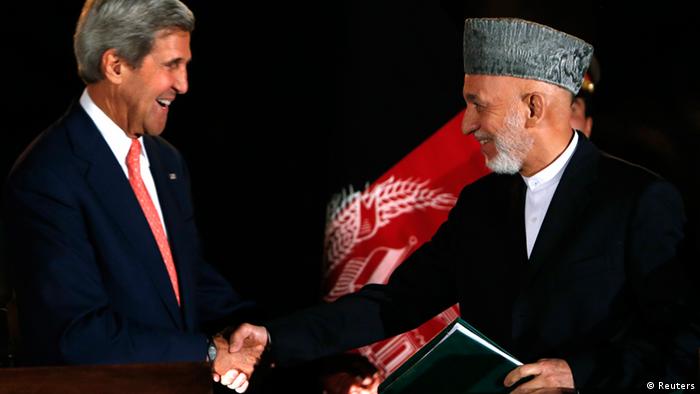 The pact was announced jointly by John Kerry and President Hamid Karzai late on Saturday following two days of talks in the Afghan capital, Kabul.
The deal would keep some US forces in Afghanistan after most foreign troops withdraw by the end of next year.
Both men said an agreement had been reached on a series of issues that had deadlocked talks in the past year. These included some sovereignty issues and the question of the safety of Afghan citizens at the hands of American and allied troops.
However, US officials said the issue of jurisdiction over the US troops who remain is still a sticking point.
The US has demanded that it retain jurisdiction over its troops, making them immune from Afghan law. Karzai opposes this and says he will put the matter before the Loya Jirga - a traditional Afghan assembly of elders, leaders and other influential people - for consideration.
The opinion of the Loya Jirga would then be given to the Afghan parliament, which would take the final decision.
Crunch issue
Kerry said that "unfortunately there cannot be a bilateral security agreement" without the issue of jurisdiction being resolved.
A similar security agreement between the US and Iraq in 2011 collapsed over the issue of troop immunity, and the US pulled its troops out of the country, which has since seen another surge in sectarian violence comparable with that in 2008. There are currently an estimated 87,000 international troops in Afghanistan, including some 52,000 Americans. That number will be halved by February, and all foreign combat troops are scheduled to leave by the end of 2014.
The US wants to leave as many as 10,000 of its troops in the country after 2014 to help fight the remaining al Qaeda militants in the country and train the Afghan national army.
If no agreement is signed, all US troops would have to leave by December 31, 2014.
The pact was announced jointly by John Kerry and President Hamid Karzai late on Saturday following two days of talks in the Afghan capital, Kabul.
The deal would keep some US forces in Afghanistan after most foreign troops withdraw by the end of next year.
Both men said an agreement had been reached on a series of issues that had deadlocked talks in the past year. These included some sovereignty issues and the question of the safety of Afghan citizens at the hands of American and allied troops.
However, US officials said the issue of jurisdiction over the US troops who remain is still a sticking point.
The US has demanded that it retain jurisdiction over its troops, making them immune from Afghan law. Karzai opposes this and says he will put the matter before the Loya Jirga - a traditional Afghan assembly of elders, leaders and other influential people - for consideration.
The opinion of the Loya Jirga would then be given to the Afghan parliament, which would take the final decision.
Crunch issue
Kerry said that "unfortunately there cannot be a bilateral security agreement" without the issue of jurisdiction being resolved.
A similar security agreement between the US and Iraq in 2011 collapsed over the issue of troop immunity, and the US pulled its troops out of the country, which has since seen another surge in sectarian violence comparable with that in 2008. There are currently an estimated 87,000 international troops in Afghanistan, including some 52,000 Americans. That number will be halved by February, and all foreign combat troops are scheduled to leave by the end of 2014.
The US wants to leave as many as 10,000 of its troops in the country after 2014 to help fight the remaining al Qaeda militants in the country and train the Afghan national army.
If no agreement is signed, all US troops would have to leave by December 31, 2014.
 In a shocking incident on Wednesday, lawyers in Islamabad's district courts locked the doors of 40 courtrooms, confining several judges in their chambers because a civil judge was reluctant to issue contempt notice to Capital Development Authority (CDA) Chairman for demolishing lawyers' chambers constructed on a football ground. The CDA had taken notice of encroachments on the area residents' complaints. A press report points out that the lawyers have been making encroachments right and left. They have constructed their chambers on footpaths, litigants' sitting area and almost every open space in front of the courtrooms. Last month, some of them razed the district courts security walls as well to erect their own structures there. It took a lot of discussion and the involvement of the Islamabad High Court Chief Justice Mohammad Anwar Khan Kasi for the black coats to agree to vacate the area in front of courtrooms. Preceding details make it plain that lawyers are in the wrong.
CDA and district authorities in several other cities have been demolishing encroachments on public space. There is no reason why members of the legal community should be treated any different; in fact they are expected to demonstrate a greater responsibility to abide by the rules. Unfortunately, however, what happened in Islamabad is not the first case of lawyers acting aggressively. They seem to have drawn wrong lessons from the success of the movement for the restoration of judiciary, which was inspired by a higher notion of rule of law. Many among them have come to see that as a licence to challenge everyone using uncouth means. In one instance, a lawyer threw a shoe at a civil judge for refusing to grant bail to his client. Another slapped a presiding judge for some similar reason leading to protest resignations by fellow judges. They even beat up an officer of the fearsome Punjab Police on the Lahore High Court premises. Black coats have also been attacking journalists for covering such incidents. Bar councils have done little to stop a growing aggressive trend among their members.
The bench and the bar are expected to work in harmony for better administration of justice. But putting pressure by members of the bar on judges to deliver orders to their liking comprises a grave threat to the administration of justice. Judges cannot be expected to do justice in the face of lawyers' menacing behaviour. They, of course, cannot deal with such situations on their own. Black coats' bullying and beatings on the court premises must come to a stop. Towards that end, leadership of various bar associations have a special responsibility to ensure the lawyers act in a civilised manner. The administration must also ensure that those resorting to violence get the punishment that they deserve. In the present case, all those involved in locking in the judges need to be brought to justice so that they think twice before taking any such step in future.
In a shocking incident on Wednesday, lawyers in Islamabad's district courts locked the doors of 40 courtrooms, confining several judges in their chambers because a civil judge was reluctant to issue contempt notice to Capital Development Authority (CDA) Chairman for demolishing lawyers' chambers constructed on a football ground. The CDA had taken notice of encroachments on the area residents' complaints. A press report points out that the lawyers have been making encroachments right and left. They have constructed their chambers on footpaths, litigants' sitting area and almost every open space in front of the courtrooms. Last month, some of them razed the district courts security walls as well to erect their own structures there. It took a lot of discussion and the involvement of the Islamabad High Court Chief Justice Mohammad Anwar Khan Kasi for the black coats to agree to vacate the area in front of courtrooms. Preceding details make it plain that lawyers are in the wrong.
CDA and district authorities in several other cities have been demolishing encroachments on public space. There is no reason why members of the legal community should be treated any different; in fact they are expected to demonstrate a greater responsibility to abide by the rules. Unfortunately, however, what happened in Islamabad is not the first case of lawyers acting aggressively. They seem to have drawn wrong lessons from the success of the movement for the restoration of judiciary, which was inspired by a higher notion of rule of law. Many among them have come to see that as a licence to challenge everyone using uncouth means. In one instance, a lawyer threw a shoe at a civil judge for refusing to grant bail to his client. Another slapped a presiding judge for some similar reason leading to protest resignations by fellow judges. They even beat up an officer of the fearsome Punjab Police on the Lahore High Court premises. Black coats have also been attacking journalists for covering such incidents. Bar councils have done little to stop a growing aggressive trend among their members.
The bench and the bar are expected to work in harmony for better administration of justice. But putting pressure by members of the bar on judges to deliver orders to their liking comprises a grave threat to the administration of justice. Judges cannot be expected to do justice in the face of lawyers' menacing behaviour. They, of course, cannot deal with such situations on their own. Black coats' bullying and beatings on the court premises must come to a stop. Towards that end, leadership of various bar associations have a special responsibility to ensure the lawyers act in a civilised manner. The administration must also ensure that those resorting to violence get the punishment that they deserve. In the present case, all those involved in locking in the judges need to be brought to justice so that they think twice before taking any such step in future.
The Express TribuneFour more children from the tribal areas have fallen victim to the crippling polio virus. The National Institute of Health Islamabad reported the fresh cases after laboratory tests confirmed the presence of the polio virus. So far, this year the disease has disabled 31 children from the Federally Administered Tribal Areas (FATA). In all 43 children across Pakistan were hit by the polio virus during the current year. The ban imposed by militant commanders on polio vaccination teams in North and South Waziristan Agencies and persistent security threats in other tribal agencies are hindering polio eradication efforts. The NIH on Friday confirmed the presence of the crippling virus in the stool samples of 30-months old Zulqarnain of Bara tehsil, Khyber Agency. The child has not received the oral polio vaccine (OPV) in the last 10 months due to volatile security situation. The same tribal agency has also reported two dozen cases of Sabin Like (II) Poliomyelitis (SL2), however due to the peculiar scientific and genetic nature of the SL2 virus strain, these cases have yet to be included in the national polio case count tally. The other three cases were reported from North Waziristan Agency where a nine-month old boy from Miramshah, and two girls aged 16 months and 12 months from Mir Ali contracted the disease. The children had not received the vaccination due to the ban imposed by the local warlord in the middle of 2012. “We are unofficially confirming these four cases on the basis of lab reports….the official notification will be issued in due time,” an official of the Expended Programme on Immunisation Fata said wishing not to be named. He said a recent move to administer anti-polio drops to every child at the security checkpoints of Bannu district on the entry and exit routes of the North and South Waziristan proved to be a great success. The teams are vaccinating 7,000-8,000 children in a month, he said.
 Members of the Lady Health Workers Union (LHWU), Hyderabad, and other vaccination staff boycotted the ongoing anti-polio drive on Friday in protest against non-payment of their three months salaries.
A large number of lady health workers held a protest demonstration outside the local press club and torched a couple of the hand-carry ice boxes meant for keeping polio vaccines during the door-to-door campaign.
The protest disrupted the October 9-13 campaign in Hyderabad.
LHWY president Rukhsana Mughal, general secretary Raheela Shaikh told the media that 1,200 women workers and 200 other staff engaged in the anti-polio work had not been paid their salaries since July although they had been doing their jobs to the entire satisfaction of the authorities concerned.
They said they would not resume their work until they were assured of the disbursement of their dues.
During the protest, some of them revealed that they were being provided substandard or expired vaccines which were ineffective. “Such vaccines are distinguished by their (purple and dark purple) colours,” they said.
If the parents of the polio drops recipients knew the expired drops being administered, they resist vaccination violently, they said.
“We complained to the high-ups in the health department about the issue but no one paid heed to the issue or our grievance,” they claimed.
Deputy provincial coordinator of the national programme for family planning and primary healthcare Dr Saifullah Qaimkhani along with district health officer Dr Ghulam Mustafa Abbasi and other officials concerned visited the protesting lady health workers and listened to their grievances.
Dr Qaimkhani assured them that they would get their one month salary on Monday and the remaining dues soon. On his assurance, the lady health workers ended their protest.
Dr Abbasi told the protesters that the claim about use of substandard or expired vaccines were investigated and found wrong.
Members of the Lady Health Workers Union (LHWU), Hyderabad, and other vaccination staff boycotted the ongoing anti-polio drive on Friday in protest against non-payment of their three months salaries.
A large number of lady health workers held a protest demonstration outside the local press club and torched a couple of the hand-carry ice boxes meant for keeping polio vaccines during the door-to-door campaign.
The protest disrupted the October 9-13 campaign in Hyderabad.
LHWY president Rukhsana Mughal, general secretary Raheela Shaikh told the media that 1,200 women workers and 200 other staff engaged in the anti-polio work had not been paid their salaries since July although they had been doing their jobs to the entire satisfaction of the authorities concerned.
They said they would not resume their work until they were assured of the disbursement of their dues.
During the protest, some of them revealed that they were being provided substandard or expired vaccines which were ineffective. “Such vaccines are distinguished by their (purple and dark purple) colours,” they said.
If the parents of the polio drops recipients knew the expired drops being administered, they resist vaccination violently, they said.
“We complained to the high-ups in the health department about the issue but no one paid heed to the issue or our grievance,” they claimed.
Deputy provincial coordinator of the national programme for family planning and primary healthcare Dr Saifullah Qaimkhani along with district health officer Dr Ghulam Mustafa Abbasi and other officials concerned visited the protesting lady health workers and listened to their grievances.
Dr Qaimkhani assured them that they would get their one month salary on Monday and the remaining dues soon. On his assurance, the lady health workers ended their protest.
Dr Abbasi told the protesters that the claim about use of substandard or expired vaccines were investigated and found wrong.
Opposition Leader in the National Assembly Syed Khurhsid Shah has strongly criticized the government for increasing inflation and said that the government was committing excesses.http://mediacellppp.wordpress.com/


 The White House, which released a photograph of Malala's meeting with the President that also showed First Lady Michelle Obama and their daughter Malia sitting in, did not confirm the account, only noting that the First Couple welcomed her to the Oval Office "to thank her for her inspiring and passionate work on behalf of girls education in Pakistan."
"The United States joins with the Pakistani people and so many around the world to celebrate Malala's courage and her determination to promote the right of all girls to attend school and realize their dreams. As the First Lady has said, investing in girls' education is the very best thing we can do, not just for our daughters and granddaughters, but for their families, their communities, and their countries," the White House said.
But in a statement issued through Associated Press, Malala claimed to have also "expressed my concerns that drone attacks are fueling terrorism. Innocent victims are killed in these acts, and they lead to resentment among the Pakistani people. If we refocus efforts on education it will make a big impact." The White House did not confirm the exchange.
The White House meeting, part of Malala's US tour that has included speaking at Harvard University, the World Bank, and numerous TV appearances, came on what is now celebrated as the International Day of the Girl. "As the President said in his proclamation to mark the International Day of the Girl, across the globe there are girls who will one day lead nations, if only we afford them the chance to choose their own destinies. And on every continent, there are girls who will go on to change the world in ways we can only imagine, if only we allow them the freedom to dream," the White House statement reminded, saluting Malala's efforts "to help make these dreams come true."
The White House, which released a photograph of Malala's meeting with the President that also showed First Lady Michelle Obama and their daughter Malia sitting in, did not confirm the account, only noting that the First Couple welcomed her to the Oval Office "to thank her for her inspiring and passionate work on behalf of girls education in Pakistan."
"The United States joins with the Pakistani people and so many around the world to celebrate Malala's courage and her determination to promote the right of all girls to attend school and realize their dreams. As the First Lady has said, investing in girls' education is the very best thing we can do, not just for our daughters and granddaughters, but for their families, their communities, and their countries," the White House said.
But in a statement issued through Associated Press, Malala claimed to have also "expressed my concerns that drone attacks are fueling terrorism. Innocent victims are killed in these acts, and they lead to resentment among the Pakistani people. If we refocus efforts on education it will make a big impact." The White House did not confirm the exchange.
The White House meeting, part of Malala's US tour that has included speaking at Harvard University, the World Bank, and numerous TV appearances, came on what is now celebrated as the International Day of the Girl. "As the President said in his proclamation to mark the International Day of the Girl, across the globe there are girls who will one day lead nations, if only we afford them the chance to choose their own destinies. And on every continent, there are girls who will go on to change the world in ways we can only imagine, if only we allow them the freedom to dream," the White House statement reminded, saluting Malala's efforts "to help make these dreams come true."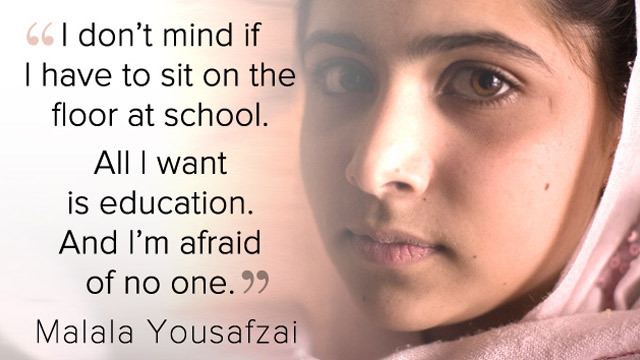
 The Islamabad Police and intelligence agencies, in a joint venture, have discovered a drone project, an invention of the al-Qaeda chapter in Pakistan, sources said on Friday, adding that the joint team of the Islamabad Police and intelligence agencies timely intervened and halted the al-Qaeda’s ambitious project.
“Yes, the al-Qaeda Pakistan chapter had acquired drone technology and was in the final stages of implemeting the plan when intercepted,” sources said.The Islamabad Police, during a recent raid in the Kashmir Housing Society in G-15 area, recovered a huge quantity of arms and ammunition. The house belonged to Professor Irtyaz Gilani, a graduate in electronic engineering from Ghulam Ishaq Khan (GIK) University who has also served in the Air Weapons Complex, Kamra. After leaving the job at Kamra, Irtyaz served as a lecturer at the International Islamic University, Islamabad, teaching electronics.
Gilani managed to dodge the raiding team and is still at large, intelligence agency sources said, while some other sources claimed that he had been held and shifted to an unknown place for thorough investigation. Police investigators have recovered evidence of his links with al-Qaeda. Evidence also suggested that Tanveer, a most wanted terrorist of al-Qaeda, had been staying at Gilani’s place since January 2013 till the recovery of VBIED from Bhara Kahu.
During the raid, it was observed that the house was purposefully built, having a dedicated lab in the basement which was being used to develop the ambitious project. The police found the layout of drone technology, which they believe was acquired from different sources.
Investigations revealed that work on the drone project was underway for one-and-a-half years and considerable progress had been made. Small drones, which had already been tested, were also recovered from the lab in the house.
“Complete parts of a drone, including the airframe, wings and propelling motor, were also recovered which, if made operational, could carry a significant quantity of explosives to damage vital buildings and other sensitive installations,” people engaged in the investigation of the case revealed.
“The al-Qaeda people had collected all parts of the spy plane from different sources and completed the assembling process in the basement laboratory in G-15 when the joint team swooped on them,” the sources said.
“They conducted a successful test flight of the spy plane in the Margalla hills but the small drone could fly within a radius of only one kilometre,” the sources disclosed. A large drone had almost been assembled and was to be tested before the law enforcing agencies raided the laboratory.
It is obvious that the al-Qaeda wants to target highly guarded complexes through these drones where ground access is impeded by the conventional security measures.
It is very important to remember that besides a few high-security buildings, there is no mechanism in place to guard against any aerial attack. Having realised the weakness, the al-Qaeda worked on this ambitious plan to give a surprise to the international law enforcement agencies, which has been averted, courtesy timely intervention by the police.
It is believed that Professor Irtyaz Gilani had been chosen for the task due to his qualification as well as work experience. It may be of value to remember that Ali Gondal, an employee of the AWC, was arrested in 2005 for planning an attack on Gen Pervez Musharraf. He had planted rockets in Rawalpindi; however, they malfunctioned leading to his arrest.
Ali Gondal is Tanveer’s real brother and links of the troika indicate the presence of al-Qaeda in leading anti-state operations in Rawalpindi and Islamabad.
Professor Irtyaz Gilani was working on a high-level post at the Pakistan Aeronautical Complex, Kamra, having rich technical information about putting up drone aircraft, the investigation report said. But it was still a mystery from where he got parts of the drone, investigators said.
The investigation report claimed that Professor Irtyaz Gilani, Tanveer Gondal and Hammad Adil were directly involved in the brazen attack on the Minhas Airbase of Pakistan Air Force (PAF) at Kamra on August 16, 2012, adding that Professor Gilani provided technical information and inside position of vital installations and aircraft to Tanveer Gondal and Hammad Adil before and during the attack while Tanveer and Hammad provided logistical support to the attackers.
Law enforcement agencies are hunting for Tanveer, the wanted associate of Professor Irtyaz and an old member of al Qaeda.The police authorities confirmed the report.
The Islamabad Police and intelligence agencies, in a joint venture, have discovered a drone project, an invention of the al-Qaeda chapter in Pakistan, sources said on Friday, adding that the joint team of the Islamabad Police and intelligence agencies timely intervened and halted the al-Qaeda’s ambitious project.
“Yes, the al-Qaeda Pakistan chapter had acquired drone technology and was in the final stages of implemeting the plan when intercepted,” sources said.The Islamabad Police, during a recent raid in the Kashmir Housing Society in G-15 area, recovered a huge quantity of arms and ammunition. The house belonged to Professor Irtyaz Gilani, a graduate in electronic engineering from Ghulam Ishaq Khan (GIK) University who has also served in the Air Weapons Complex, Kamra. After leaving the job at Kamra, Irtyaz served as a lecturer at the International Islamic University, Islamabad, teaching electronics.
Gilani managed to dodge the raiding team and is still at large, intelligence agency sources said, while some other sources claimed that he had been held and shifted to an unknown place for thorough investigation. Police investigators have recovered evidence of his links with al-Qaeda. Evidence also suggested that Tanveer, a most wanted terrorist of al-Qaeda, had been staying at Gilani’s place since January 2013 till the recovery of VBIED from Bhara Kahu.
During the raid, it was observed that the house was purposefully built, having a dedicated lab in the basement which was being used to develop the ambitious project. The police found the layout of drone technology, which they believe was acquired from different sources.
Investigations revealed that work on the drone project was underway for one-and-a-half years and considerable progress had been made. Small drones, which had already been tested, were also recovered from the lab in the house.
“Complete parts of a drone, including the airframe, wings and propelling motor, were also recovered which, if made operational, could carry a significant quantity of explosives to damage vital buildings and other sensitive installations,” people engaged in the investigation of the case revealed.
“The al-Qaeda people had collected all parts of the spy plane from different sources and completed the assembling process in the basement laboratory in G-15 when the joint team swooped on them,” the sources said.
“They conducted a successful test flight of the spy plane in the Margalla hills but the small drone could fly within a radius of only one kilometre,” the sources disclosed. A large drone had almost been assembled and was to be tested before the law enforcing agencies raided the laboratory.
It is obvious that the al-Qaeda wants to target highly guarded complexes through these drones where ground access is impeded by the conventional security measures.
It is very important to remember that besides a few high-security buildings, there is no mechanism in place to guard against any aerial attack. Having realised the weakness, the al-Qaeda worked on this ambitious plan to give a surprise to the international law enforcement agencies, which has been averted, courtesy timely intervention by the police.
It is believed that Professor Irtyaz Gilani had been chosen for the task due to his qualification as well as work experience. It may be of value to remember that Ali Gondal, an employee of the AWC, was arrested in 2005 for planning an attack on Gen Pervez Musharraf. He had planted rockets in Rawalpindi; however, they malfunctioned leading to his arrest.
Ali Gondal is Tanveer’s real brother and links of the troika indicate the presence of al-Qaeda in leading anti-state operations in Rawalpindi and Islamabad.
Professor Irtyaz Gilani was working on a high-level post at the Pakistan Aeronautical Complex, Kamra, having rich technical information about putting up drone aircraft, the investigation report said. But it was still a mystery from where he got parts of the drone, investigators said.
The investigation report claimed that Professor Irtyaz Gilani, Tanveer Gondal and Hammad Adil were directly involved in the brazen attack on the Minhas Airbase of Pakistan Air Force (PAF) at Kamra on August 16, 2012, adding that Professor Gilani provided technical information and inside position of vital installations and aircraft to Tanveer Gondal and Hammad Adil before and during the attack while Tanveer and Hammad provided logistical support to the attackers.
Law enforcement agencies are hunting for Tanveer, the wanted associate of Professor Irtyaz and an old member of al Qaeda.The police authorities confirmed the report.

 That there is no easy solution to the problem of militancy once again became obvious on Thursday when blasts in all the provincial capitals of Karachi, Lahore, Quetta and Peshawar rocked the country. In Karachi, three suspected militants mishandled an explosive device and ended up only killing themselves; in Lahore one person was killed when an explosive device placed in a restaurant in Anarkali detonated; in Quetta the worst happened when six people lost their lives and 42 were injured in the main shopping centre; and in Peshawar there was yet another explosion – although with no casualties this time. Anyone who thought that the prospects of peace talks may lead to a brief respite from the unceasing violence now has to confront the reality that the militants are not going to ease up on us. That much was obvious in an interview that the TTP chief Hakeemullah Mehsud gave to the BBC where he said that that the Pakistan state as it is currently configured does not follow the dictates of Islam. Mehsud has basically reiterated that he is not at war against just the government or the US; any of us who do not want to live in a country ruled by him and his ideology are legitimate targets in his eyes. At the same time, Mehsud did say that he was open to the prospects of talks with the government although he absolutely ruled out accepting any preconditions to come to the negotiating table.
Prime Minister Nawaz Sharif, even if he did not know before, should now be absolutely clear in his mind that we are facing an enemy that will remain violent and with whom almost no common ground can be found. This does not mean that he should abandon altogether the idea of negotiations with the TTP, as decided by the All-Parties Conference. But he should go into the talks understanding that there is only a limited amount talks can achieve. And since the militants refuse to stop attacking us even when the government is willing to talk, the prime minister should be under no obligation to cease law-enforcement and even military actions against the TTP. As it is, we face enough problems with prosecuting suspecting militants. That was pointed out by Nawaz Sharif in a visit to Peshawar where he said that even judges are too scared to take action against militants. The prime minister also reiterated changes in law enforcement that he had earlier proposed, including setting up a separate counterterrorism force and improving our intelligence capabilities. As the four blasts on Thursday showed, we are still a long way from being able to pre-empt attacks and will need major improvements in our terrorist-fighting capabilities. The only way talks with the TTP will yield any breakthroughs is if we have the strength and capacity to actually scare them into compromise. Right now, they are continuing to operate with impunity and that simply cannot be allowed to continue.
That there is no easy solution to the problem of militancy once again became obvious on Thursday when blasts in all the provincial capitals of Karachi, Lahore, Quetta and Peshawar rocked the country. In Karachi, three suspected militants mishandled an explosive device and ended up only killing themselves; in Lahore one person was killed when an explosive device placed in a restaurant in Anarkali detonated; in Quetta the worst happened when six people lost their lives and 42 were injured in the main shopping centre; and in Peshawar there was yet another explosion – although with no casualties this time. Anyone who thought that the prospects of peace talks may lead to a brief respite from the unceasing violence now has to confront the reality that the militants are not going to ease up on us. That much was obvious in an interview that the TTP chief Hakeemullah Mehsud gave to the BBC where he said that that the Pakistan state as it is currently configured does not follow the dictates of Islam. Mehsud has basically reiterated that he is not at war against just the government or the US; any of us who do not want to live in a country ruled by him and his ideology are legitimate targets in his eyes. At the same time, Mehsud did say that he was open to the prospects of talks with the government although he absolutely ruled out accepting any preconditions to come to the negotiating table.
Prime Minister Nawaz Sharif, even if he did not know before, should now be absolutely clear in his mind that we are facing an enemy that will remain violent and with whom almost no common ground can be found. This does not mean that he should abandon altogether the idea of negotiations with the TTP, as decided by the All-Parties Conference. But he should go into the talks understanding that there is only a limited amount talks can achieve. And since the militants refuse to stop attacking us even when the government is willing to talk, the prime minister should be under no obligation to cease law-enforcement and even military actions against the TTP. As it is, we face enough problems with prosecuting suspecting militants. That was pointed out by Nawaz Sharif in a visit to Peshawar where he said that even judges are too scared to take action against militants. The prime minister also reiterated changes in law enforcement that he had earlier proposed, including setting up a separate counterterrorism force and improving our intelligence capabilities. As the four blasts on Thursday showed, we are still a long way from being able to pre-empt attacks and will need major improvements in our terrorist-fighting capabilities. The only way talks with the TTP will yield any breakthroughs is if we have the strength and capacity to actually scare them into compromise. Right now, they are continuing to operate with impunity and that simply cannot be allowed to continue.
Ahmadiyya TimesThe attitude of the Saudi Arabian Government to human rights is well known, although the way the European Union treats it as an ally is at odds with its systematic violation of these rights. Recently, Sultan Hamid Marzouk Al‐Anzi and Faleh Sudi Awad Al‐Anzi, citizens born in Saudi Arabia whose only crime was to be members of the Ahmadiyya Muslim community, were arrested. They were held and charged with the crime of apostasy, since religious conversion is considered to be a crime in Saudi Arabia. Against this background, the international community continues to maintain its usual criminal silence, since Saudi Arabia is adopting the same double standards in the observance of human rights as the European Union. The Ahmadiyya community is a religious movement within Islam that is committed to peaceful expansion and calls for dialogue instead of holy war. The movement is persecuted in many Islamic countries where the extremist and fundamentalist Islamic movements have become strong, in many cases thanks to support provided by Saudi Arabia. While the Western powers bomb and occupy countries in the Middle East on the pretext of terrorism, Saudi Arabia, the main stronghold of the most radical Islamic fundamentalist and terrorist movements, is seen as an ally. Is the Vice-President/High Representative aware of the abovementioned arrests, which infringe respect for human rights? Does she intend to publicly condemn the Saudi Arabian Government for religious arrests of this kind? Does she intend to demand that Saudi Arabia abolish all provisions in its legislation that are in conflict with respect for human rights in the sphere of religious freedom? Does she intend to suspend relations within the Gulf Cooperation Council until Saudi Arabia undertakes to respect human rights?
By Vardha Khalil When Washington DC is sleeping, half of the world is awake and when morning appears here many countries, including Pakistan, are concluding their day. So when you wake up in the morning and check your phone and social media then you get updated about what was happening around the globe while you were asleep. When I got up in the morning, I got the horrible news on both regular and social media. The more I studied, the more pain I felt. The biggest optimism for any person is the belief that the future will be better than the present. And as a Pakistani, every time I think that now the country’s situation cannot get worse and may be now it will recuperate but one after one every blatant act of terrorism is making this a shallow and rusty hope. As the Pakistani government was weighing its options to tackle the Taliban and their affiliates, indulged in a debate of good and bad Taliban, at the same time those outfits were planning the suicide attacks at a church in Peshawar. More than 80 innocent Pakistani citizens perished in these atrocious attacks. The sense of loss over this grizzly massacre is quite natural yet some political circles cling to the idea of opening dialogue with the Taliban. The agenda of these political circles is no different from those Taliban who want to convert Pakistan into a sect-minority-free “Islamic State”. Extremist Taliban factors and their sympathizers in political parties, in a bid to enforce self-style version of Islam over Pakistan, are transforming it into a land where inhabitation of humans will be impossible. In current situation the terrified minorities and secular groups are already forced to leave their houses. After target killings of Hazara people in Balochistan, thousands of citizens are seeking shelter in other parts of the country. Several people are moving to other countries because of Shia genocide in the country. The Ahmadiyya community, which has already taken the brunt of sectarian hatred, is once again on the hit-list. Hunting of Ahmadiyya community had started right after the very creation of Pakistan. Yet, in 1973, their persecution was legalized by declaring them non-Muslims in the constitution. The “Islamisation” that started during Zia-ul-Haq’s era in 1980s not only failed miserably but such efforts also gave birth to such monsters who have changed the whole country into a haunted place. The requirement of the new era is to avoid transforming Pakistan into some ideology or religion and just make it a secular country which is suitable for a common human being to live in. We should strive to make our country a place where all human beings have basic rights and there is no human rights violation in the name of religion.Balcoh Hal
She didn’t win the Nobel peace prize — this year — but she has won the world’s admiration and respect. The gracefulness, poise and compassion of a 16-year-old girl who would rather campaign for every child’s right to education than against the Taliban who shot her in the face have been something truly remarkable to behold. That Malala was never your average schoolgirl has been evident for years; what the world has discovered in recent days is that she has grown into a truly extraordinary young woman. There is much sadness and despair in the reality of the circumstances that forced Malala into campaigning for the right to education and that have carried her to global fame. But Pakistan’s most famous young citizen has also demonstrated the kinder though no less resolute side of her country: Malala is focused on improving the human condition rather than lamenting its inadequacies.
To truly honour Malala and the millions of other schoolchildren she speaks for, Pakistan can attempt to translate her dream of universal education into reality. Whether it is school enrolment or the quality of education or infrastructure of the public school system, Pakistan consistently ranks near the bottom internationally — and even by regional standards, performs poorly. Fixing the broken education system here is not just about throwing more money at the problem — though surely the federal and provincial governments need to create the fiscal space to spend more on education and health. Every government comes in promising to improve the education sector, but none has left a significantly improved one as its legacy. The twin, and very familiar, problems of capacity and will appear to be the greatest impediments: the expertise to draft a realistic revival plan at the provincial level is missing as is the political and administrative will to stay focused on the issue of education.
Of course, there is also the very real problem of the radical mindset that opposes modernity and what the majority of the population would regard as the basic tenets of a good education. Malala’s mature and convincing voice has largely drowned out the howls of anger from the Taliban fringe in recent days, but for a still-too-large number of Pakistani children, especially girls, extreme conservatism and violent radicalism are crucial factors in denying them an education. Malala has shown what a single — though powerful and unique — voice can do to help change perceptions. Many more will have to add their voices to hers if the constitutional right to education is to become meaningful for all children.
President Barack Obama has met Malala Yousafzai at the White House in Washington and lauded her efforts for the promotion of girls' education.In a statement after the meeting‚ Malala Yousufzai thanked President Obama for the US support for education in Pakistan and Afghanistan and for Syrian refugees. She also expressed concerns that drone attacks are fueling terrorism. Innocent victims are killed in these attacks and they lead to resentment among the Pakistani people. Malala said it will make a big impact if we refocus efforts on education.


 As a campaign for Saudi women to defy the driving ban in their country heats up, one of the country's leading female bloggers was detained in Riyadh on Thursday after a woman she was with did just that.
Eman al-Nafjan, who tweets as Saudiwoman and has been one of the leading voices urging Saudi women to get behind the wheel on October 26, was in a car that was stopped by police in Riyadh, the capital, as she filmed another woman driving.
Al-Nafjan, who has been calling on Saudi women to upload videos of themselves driving in different parts of the kingdom, spoke exclusively with CNN on Friday about what happened.
"Yesterday, I kept getting called by women I know who wanted me to film them driving," she said, explaining how she spent most of the day filming and uploading information about those excursions online.
"When I was live tweeting, some people took it into their heads that we had to be stopped," said al-Nafjan, "and then called the police." She was live tweeting as they were pulled over, posting a picture of the police car that had pulled alongside them, accompanied by the message, "Police stopped us."
That tweet set off a flurry of concern and supportive messages from Twitter users throughout Saudi Arabia.
Al-Nafjan initially felt queasy about being stopped, but her unease and worry quickly dissipated when she saw that "police were smiling and easygoing, and their attitude was very positive. The police were really nice to us."
They were taken to the Olaya Police Station, where she and Azza, the woman who had driven her, waited.
"The vibe I got was that they didn't know what to do with us. We could see the police going around, calling, waiting," explained al-Nafjan, who says she believes this is a sign that the driving campaign has gained momentum and that many in Saudi Arabia, including officials, think the time has come to allow women to drive.
October 26 campaign
Women who want Saudi Arabia to lift a de facto ban on their driving have launched an online campaign urging Saudi women to stage a demonstration by driving cars on October 26.
"There is no justification for the Saudi government to prohibit adult women citizens who are capable of driving cars from doing so," reads part of an online petition on the Oct26driving.com website. Even though the website was reportedly blocked in Saudi Arabia shortly after its creation in late September, the petition has so far garnered more than 14,000 signatures.
No traffic law specifically prohibits women from driving in Saudi Arabia, but religious edicts there are often interpreted to mean women are not allowed to operate a vehicle.
CNN was unable to reach Saudi Arabia's Interior and Justice ministries for comment on the issue.
Just a day before being stopped by police, al-Nafjan posted online another video she filmed of a woman driving for two hours throughout Riyadh. They were not stopped, and the video shows male drivers waving to the women and supporting them with the thumbs-up sign. That video quickly went viral, eliciting numerous comments. While most were supportive, there was also a negative reaction -- at one point, a hashtag was created calling for al-Nafjan's arrest.
Al-Nafjan says her husband was also made to come to the police station Thursday. When al-Nafjan was finally told to come inside, she was asked if she knew that what she did was wrong.
"I said it's not wrong," said al-Nafjan, who was then told to sign two documents: one stating that she would no longer get into a car with a woman driving, and another that she would no longer film women driving.
When asked if she would adhere to those agreements, al-Nafjan said that "it doesn't matter whether or not I go out. This isn't about me. This is a people's movement. This is not about me. This is about many women."
Al-Nafjan, who was in extremely high spirits while speaking via phone with CNN, said the experience with police ultimately bolstered her confidence in the movement she is helping spearhead. She said the lack of her arrest and her and Azza's quick release show that this campaign is making a difference and things are beginning to change.
Other challenges to driving ban
The issue of women driving in the conservative kingdom has long been contentious. And while such demonstrations are extremely rare, they have been staged at least twice before.
In May 2011, prominent Saudi women's rights activist Manal al-Sharif was arrested after uploading a video to YouTube that showed her driving in Saudi Arabia. She spent more than a week in jail and quickly became a hero to numerous women in her country and across the Middle East.
In a sign of just how influential she had grown, on June 17, 2011, dozens of women across Saudi Arabia, emboldened and inspired by al-Sharif's ordeal, participated in the "Women2Drive" campaign by getting behind the wheel, defying the ban and driving throughout the streets of their cities.
In 1991, a group of 47 women protested the prohibition by driving through Riyadh. After being arrested, many were further punished by being banned from travel and suspended from their workplaces.
Recently, a leading Saudi cleric made headlines when giving an interview in which he warned Saudi women that driving could cause damage to their ovaries -- a comment that was widely interpreted to be a reaction against the October 26 driving campaign and how popular it had grown.
In addition to prohibiting driving, the country's strict and compulsory guardianship system also prevents women from opening bank accounts, working, traveling and going to school without the express permission of a male guardian.
Saudi Arabia has been moving toward change under its current ruler, King Abdullah, who is considered a cautious reformer and proponent of women's rights. In January, he appointed 30 women to the Shura Council, the first time women had been chosen for the country's top consultative body. In 2011, he announced that women could run for office and vote in local elections in 2015. And in 2009, he appointed Saudi Arabia's first female Deputy Minister.
As a campaign for Saudi women to defy the driving ban in their country heats up, one of the country's leading female bloggers was detained in Riyadh on Thursday after a woman she was with did just that.
Eman al-Nafjan, who tweets as Saudiwoman and has been one of the leading voices urging Saudi women to get behind the wheel on October 26, was in a car that was stopped by police in Riyadh, the capital, as she filmed another woman driving.
Al-Nafjan, who has been calling on Saudi women to upload videos of themselves driving in different parts of the kingdom, spoke exclusively with CNN on Friday about what happened.
"Yesterday, I kept getting called by women I know who wanted me to film them driving," she said, explaining how she spent most of the day filming and uploading information about those excursions online.
"When I was live tweeting, some people took it into their heads that we had to be stopped," said al-Nafjan, "and then called the police." She was live tweeting as they were pulled over, posting a picture of the police car that had pulled alongside them, accompanied by the message, "Police stopped us."
That tweet set off a flurry of concern and supportive messages from Twitter users throughout Saudi Arabia.
Al-Nafjan initially felt queasy about being stopped, but her unease and worry quickly dissipated when she saw that "police were smiling and easygoing, and their attitude was very positive. The police were really nice to us."
They were taken to the Olaya Police Station, where she and Azza, the woman who had driven her, waited.
"The vibe I got was that they didn't know what to do with us. We could see the police going around, calling, waiting," explained al-Nafjan, who says she believes this is a sign that the driving campaign has gained momentum and that many in Saudi Arabia, including officials, think the time has come to allow women to drive.
October 26 campaign
Women who want Saudi Arabia to lift a de facto ban on their driving have launched an online campaign urging Saudi women to stage a demonstration by driving cars on October 26.
"There is no justification for the Saudi government to prohibit adult women citizens who are capable of driving cars from doing so," reads part of an online petition on the Oct26driving.com website. Even though the website was reportedly blocked in Saudi Arabia shortly after its creation in late September, the petition has so far garnered more than 14,000 signatures.
No traffic law specifically prohibits women from driving in Saudi Arabia, but religious edicts there are often interpreted to mean women are not allowed to operate a vehicle.
CNN was unable to reach Saudi Arabia's Interior and Justice ministries for comment on the issue.
Just a day before being stopped by police, al-Nafjan posted online another video she filmed of a woman driving for two hours throughout Riyadh. They were not stopped, and the video shows male drivers waving to the women and supporting them with the thumbs-up sign. That video quickly went viral, eliciting numerous comments. While most were supportive, there was also a negative reaction -- at one point, a hashtag was created calling for al-Nafjan's arrest.
Al-Nafjan says her husband was also made to come to the police station Thursday. When al-Nafjan was finally told to come inside, she was asked if she knew that what she did was wrong.
"I said it's not wrong," said al-Nafjan, who was then told to sign two documents: one stating that she would no longer get into a car with a woman driving, and another that she would no longer film women driving.
When asked if she would adhere to those agreements, al-Nafjan said that "it doesn't matter whether or not I go out. This isn't about me. This is a people's movement. This is not about me. This is about many women."
Al-Nafjan, who was in extremely high spirits while speaking via phone with CNN, said the experience with police ultimately bolstered her confidence in the movement she is helping spearhead. She said the lack of her arrest and her and Azza's quick release show that this campaign is making a difference and things are beginning to change.
Other challenges to driving ban
The issue of women driving in the conservative kingdom has long been contentious. And while such demonstrations are extremely rare, they have been staged at least twice before.
In May 2011, prominent Saudi women's rights activist Manal al-Sharif was arrested after uploading a video to YouTube that showed her driving in Saudi Arabia. She spent more than a week in jail and quickly became a hero to numerous women in her country and across the Middle East.
In a sign of just how influential she had grown, on June 17, 2011, dozens of women across Saudi Arabia, emboldened and inspired by al-Sharif's ordeal, participated in the "Women2Drive" campaign by getting behind the wheel, defying the ban and driving throughout the streets of their cities.
In 1991, a group of 47 women protested the prohibition by driving through Riyadh. After being arrested, many were further punished by being banned from travel and suspended from their workplaces.
Recently, a leading Saudi cleric made headlines when giving an interview in which he warned Saudi women that driving could cause damage to their ovaries -- a comment that was widely interpreted to be a reaction against the October 26 driving campaign and how popular it had grown.
In addition to prohibiting driving, the country's strict and compulsory guardianship system also prevents women from opening bank accounts, working, traveling and going to school without the express permission of a male guardian.
Saudi Arabia has been moving toward change under its current ruler, King Abdullah, who is considered a cautious reformer and proponent of women's rights. In January, he appointed 30 women to the Shura Council, the first time women had been chosen for the country's top consultative body. In 2011, he announced that women could run for office and vote in local elections in 2015. And in 2009, he appointed Saudi Arabia's first female Deputy Minister.
 At least 190 people were killed and more than 200 taken hostage by Syrian rebels financed by private Gulf donors in an August 4 military offensive in the Latakia governorate, according to a Human Rights Watch report.
At least 67 of the victims executed had lived in government-aligned Alawite villages, HRW said in its report, “You Can Still See Their Blood,” released Friday, which saw the events as the first evidence of planned crimes against humanity perpetrated by opposition forces.
The killings took place when President Bashar Assad’s forces were overwhelmed by the militants, who then proceeded to enter the 10 Alawite villages nearby, sometimes rounding up and executing entire families, while taking others hostage.
Torture and decapitations were also testament to the aggravated nature of the military offensive, proof of which was gathered by HRW through reports, witness statements, hospital records and materials recorded by the rebels themselves. HRW’s Syria and Lebanon researcher, Lana Fakih, told Reuters that “homes were destroyed and burned. Most villagers had not returned.” She spoke to Hassan Shebli, whose elderly wife and disabled 23-year-old son were gunned down and buried next to his home, as he found upon his return to his village. The assailants took videos and posed with their victims before the killings.
According to the human rights watchdog, the nature, scale and coordination of the abuses and killings elevate them to the status of crimes against humanity. Acting Middle East director at HRW, Joe Stork, explained that “these abuses were not the actions of rogue fighters…this operation was a coordinated, planned attack on the civilian population in these Alawite villages.” The attacks were found to have been planned and carried out by five distinct groups, including the Al- Qaeda-linked Jabhat al-Nusra and the Islamic State of Iraq and the Levant, as well as jihadists originating from outside Syria.
However, the broader offensive, which lasted until August 18, was thought to include 20 distinct groups.
The operation was thwarted by government forces on that day, after regaining control of the area.
Although the report could not confirm the presence of fighters from the Western-backed Free Syrian Army, the force’s commander, Salim Idriss, posted a video a week after the Latakia attacks in which he claimed the FSA participated in the operation “to a great extent.”
Other groups boasted about their exploits in their own recordings, used by HRW to corroborate its findings, although the rebels themselves also recounted the offensive to correspondents from Reuters, claiming to have killed about 200 people.
However, not all the groups admitted to the killings. A member of the Sunni Ahrar al-Asham militia claimed that his fighters only shoot in self-defense, although the group was among the five that were found to have participated in the Latakia killings.
The Syrian National Coalition’s spokesman, Khaled Saleh, also condemned the attacks and said that if any abuses by rebels associated with the coalition were found to have happened in Latakia, the perpetrators would be brought to justice.
"We have previously committed ourselves to applying these rules on all the brigades that work for us and we will hold accountable, after investigation and fair trial, all those responsible for violations against human rights or international laws. The incidents in Latakia are not an exception and we will treat them as we treated previous case,” Saleh said in a written statement to Reuters.Nonetheless, dozens of witness accounts from the province remain, together with footage shot by rebels, as a gruesome reminder of the executions carried out on August 4. Returning residents reported finding the bodies of loved ones strewn around the streets, lying next to their homes, as well as charred corpses lying in mass graves.
The organization also wished to point out that the report is by no means a move away from scrutinizing the Syrian government’s own human rights abuses – including sectarian cluster bombings of Sunni areas in May, as reported By UN officials.
The report proposes that the UN Security Council imposes an embargo on supplying arms to all sides implicated in the systematic abuse of human rights and the carrying out of planned attacks, which is classified as a crime against humanity. The organization also proposed referring all transgressions to the International Criminal Court in The Hague.
Stork, HRW’s Middle East chief, said: “Syrian victims of war crimes and crimes against humanity have waited too long for the Security Council to send a clear message that those responsible for horrible abuses will be held to account.”
“The ICC referral is long overdue,” Stork said.
The civil war, now in its third year, has claimed the lives of more than 100,000 people, according to UN estimates. Many experts fear that the sectarian nature and conflicting interests of the rebel groups involved are exacerbated by outside funding, and are turning Syria into a hotbed of extremism drifting further away from any resolution that outside actors may have planned for it.
At least 190 people were killed and more than 200 taken hostage by Syrian rebels financed by private Gulf donors in an August 4 military offensive in the Latakia governorate, according to a Human Rights Watch report.
At least 67 of the victims executed had lived in government-aligned Alawite villages, HRW said in its report, “You Can Still See Their Blood,” released Friday, which saw the events as the first evidence of planned crimes against humanity perpetrated by opposition forces.
The killings took place when President Bashar Assad’s forces were overwhelmed by the militants, who then proceeded to enter the 10 Alawite villages nearby, sometimes rounding up and executing entire families, while taking others hostage.
Torture and decapitations were also testament to the aggravated nature of the military offensive, proof of which was gathered by HRW through reports, witness statements, hospital records and materials recorded by the rebels themselves. HRW’s Syria and Lebanon researcher, Lana Fakih, told Reuters that “homes were destroyed and burned. Most villagers had not returned.” She spoke to Hassan Shebli, whose elderly wife and disabled 23-year-old son were gunned down and buried next to his home, as he found upon his return to his village. The assailants took videos and posed with their victims before the killings.
According to the human rights watchdog, the nature, scale and coordination of the abuses and killings elevate them to the status of crimes against humanity. Acting Middle East director at HRW, Joe Stork, explained that “these abuses were not the actions of rogue fighters…this operation was a coordinated, planned attack on the civilian population in these Alawite villages.” The attacks were found to have been planned and carried out by five distinct groups, including the Al- Qaeda-linked Jabhat al-Nusra and the Islamic State of Iraq and the Levant, as well as jihadists originating from outside Syria.
However, the broader offensive, which lasted until August 18, was thought to include 20 distinct groups.
The operation was thwarted by government forces on that day, after regaining control of the area.
Although the report could not confirm the presence of fighters from the Western-backed Free Syrian Army, the force’s commander, Salim Idriss, posted a video a week after the Latakia attacks in which he claimed the FSA participated in the operation “to a great extent.”
Other groups boasted about their exploits in their own recordings, used by HRW to corroborate its findings, although the rebels themselves also recounted the offensive to correspondents from Reuters, claiming to have killed about 200 people.
However, not all the groups admitted to the killings. A member of the Sunni Ahrar al-Asham militia claimed that his fighters only shoot in self-defense, although the group was among the five that were found to have participated in the Latakia killings.
The Syrian National Coalition’s spokesman, Khaled Saleh, also condemned the attacks and said that if any abuses by rebels associated with the coalition were found to have happened in Latakia, the perpetrators would be brought to justice.
"We have previously committed ourselves to applying these rules on all the brigades that work for us and we will hold accountable, after investigation and fair trial, all those responsible for violations against human rights or international laws. The incidents in Latakia are not an exception and we will treat them as we treated previous case,” Saleh said in a written statement to Reuters.Nonetheless, dozens of witness accounts from the province remain, together with footage shot by rebels, as a gruesome reminder of the executions carried out on August 4. Returning residents reported finding the bodies of loved ones strewn around the streets, lying next to their homes, as well as charred corpses lying in mass graves.
The organization also wished to point out that the report is by no means a move away from scrutinizing the Syrian government’s own human rights abuses – including sectarian cluster bombings of Sunni areas in May, as reported By UN officials.
The report proposes that the UN Security Council imposes an embargo on supplying arms to all sides implicated in the systematic abuse of human rights and the carrying out of planned attacks, which is classified as a crime against humanity. The organization also proposed referring all transgressions to the International Criminal Court in The Hague.
Stork, HRW’s Middle East chief, said: “Syrian victims of war crimes and crimes against humanity have waited too long for the Security Council to send a clear message that those responsible for horrible abuses will be held to account.”
“The ICC referral is long overdue,” Stork said.
The civil war, now in its third year, has claimed the lives of more than 100,000 people, according to UN estimates. Many experts fear that the sectarian nature and conflicting interests of the rebel groups involved are exacerbated by outside funding, and are turning Syria into a hotbed of extremism drifting further away from any resolution that outside actors may have planned for it.
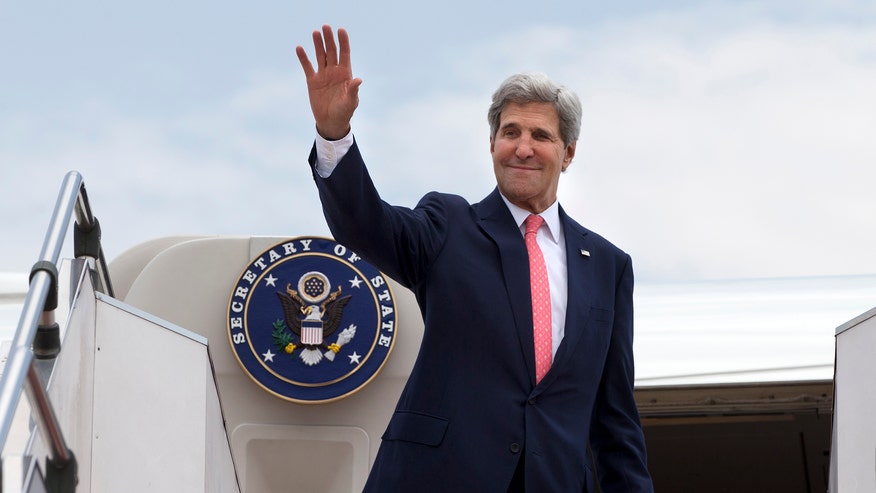
By Louisa Peacock
Malala Yousafzai doesn't need a prize to confirm her status as a heroine, says Louisa Peacock, who asks what's next for the 16 year-old schoolgirl living in Birmingham.

http://mediacellppp.wordpress.com/
 Bilawal Bhutto Zardari, Patron-In-Chief of Pakistan People’s Party said no nation on earth has registered a genuine progress without educating their girls. On the eve of International Day of the Girl Child, he urged the educationists of Pakistan to come up with innovative ideas of educating Pakistani girl children to pull out the country from slough of perpetual illiteracy.
In his message on the occasion of the International Day of Girl Child being observed on Friday under the aegis of United Nations, Bilawal Bhutto Zardari said it is auspicious moment as this Day is coinciding with the announcement of Nobel Peace Prize where Pakistani girl heroine Malala Yousufzai is seen as hot-contender by the peace-loving world.
Malala Yousufzai’s yearn for education to Pakistani girls will be remembered among the key foundations of a peaceful and developed Pakistan, when the dream comes true. Her vision, “One Child, One Teacher, One Book, & One Pen Can Change the World,” sends strong message across the world that education remains the key weapon to bring a lasting peace, progress and development.
Bilawal Bhutto Zardari stressed for adequate budget for education, especially for the girls in country as a mere 12 per cent literacy rate among girls and women in Pakistan makes its future bleak until some revolutionary steps are taken.
PPP Patron-In-Chief further pointed out there was an urgent need for improving and extending education facilities for girls in rural areas and Federal and Provincial governments need to pay attention to safeguard the future of coming generations.
Bilawal Bhutto Zardari, Patron-In-Chief of Pakistan People’s Party said no nation on earth has registered a genuine progress without educating their girls. On the eve of International Day of the Girl Child, he urged the educationists of Pakistan to come up with innovative ideas of educating Pakistani girl children to pull out the country from slough of perpetual illiteracy.
In his message on the occasion of the International Day of Girl Child being observed on Friday under the aegis of United Nations, Bilawal Bhutto Zardari said it is auspicious moment as this Day is coinciding with the announcement of Nobel Peace Prize where Pakistani girl heroine Malala Yousufzai is seen as hot-contender by the peace-loving world.
Malala Yousufzai’s yearn for education to Pakistani girls will be remembered among the key foundations of a peaceful and developed Pakistan, when the dream comes true. Her vision, “One Child, One Teacher, One Book, & One Pen Can Change the World,” sends strong message across the world that education remains the key weapon to bring a lasting peace, progress and development.
Bilawal Bhutto Zardari stressed for adequate budget for education, especially for the girls in country as a mere 12 per cent literacy rate among girls and women in Pakistan makes its future bleak until some revolutionary steps are taken.
PPP Patron-In-Chief further pointed out there was an urgent need for improving and extending education facilities for girls in rural areas and Federal and Provincial governments need to pay attention to safeguard the future of coming generations.
 Chemical weapons watchdog the Organisation for the Prohibition of Chemical Weapons (OPCW) has won this year’s Nobel Peace Prize.
The Norwegian Nobel Committee said that the Peace Prize had been awarded to the OPCW for its extensive efforts to eliminate chemical weapons.
Chemical weapons watchdog the Organisation for the Prohibition of Chemical Weapons (OPCW) has won this year’s Nobel Peace Prize.
The Norwegian Nobel Committee said that the Peace Prize had been awarded to the OPCW for its extensive efforts to eliminate chemical weapons.
 Despite being the favourite, Pakistan’s Malala Yousafzai did not win the prize but in the run-up to the announcement, the 16-year-old won the hearts of people around the world. Malala over the course of the last week appeared on several television channels and not only advocated her cause of education for all, but also projected a positive image of Pakistan.
In a recent interview on CNN, Malala Yousafzai said she wanted to become the prime minister of Pakistan to cheers from the live audience. “I think it’s really good because through politics I can save my whole country.”
Malala Background
Malala Yousafzai first rose to prominence in 2009 when at the age of 11 she wrote a blog for the BBC Urdu service chronicling life under Taliban rule in the scenic valley of Swat.
Her struggle resonated with tens of thousands of girls denied an education by militants across northwest Pakistan, where the government has been fighting local Taliban since 2007.
When the army launched an offensive to oust the Taliban, Malala fled Swat with her family led by her father Ziauddin, school principal and himself a seasoned campaigner for education.
After this difficult period she resumed her work promoting education, received the first national peace award from the Pakistani government and was nominated for the International Children's Peace Prize.
But on October 9 last year the men with guns decided they could no longer tolerate the girl with a book and sent two hitmen to kill Malala on her school bus.
The Pakistani Taliban claimed the attack and warned that any woman who stood up to them would suffer a similar fate.
Incredibly she survived -- the bullet grazed her brain and travelled through her neck before lodging in her shoulder -- and as she lay fighting for life in hospital, Pakistan and the world united in horror.
After surgery in Pakistan, Malala was flown for further treatment to Britain, where six days after the attack she woke up.
"The first thing I thought was, 'Thank God I'm not dead.' But I had no idea where I was. I knew I was not in my homeland," Malala wrote in an autobiography published this week.
Eventually she recovered enough to continue her studies at school in the central city of Birmingham, where her family moved to join her.
There she learned to enjoy things one might expect of a British teenager -- TV shows like "Masterchef" and "Ugly Betty", fried chicken and cheesy potato snacks.
But her determination to campaign for education, fired by her own mother's illiteracy, remains undiminished.
In her speech given to the UN on her 16th birthday in July, Malala pledged herself to the fight for all children to go to school and said the Taliban attack would not silence her.
"Nothing changed in my life, except this: weakness, fear and hopelessness died. Strength, power and courage was born," she said.
Time magazine has listed Malala as one of the 100 most influential people in the world, and she has spoken of her desire to enter politics to change Pakistan and improve education.
For now, she is concentrating on spreading the simple message she spelt out at the UN: "One child, one teacher, one pen and one book can change the world."
OPCW Background
The Hague-based OPCW was founded in 1997 to implement the Chemical Weapons
Convention signed on January 13, 1993.
Its work is currently in the spotlight, as it is supervising the dismantling of Syria's chemical arsenal and facilities by mid-2014 under the terms of a UN Security Council resolution.
A team of around 30 OPCW arms experts and UN logistics and security personnel are on the ground in Syria and have started to destroy weapons production facilities, with footage of their work broadcast on Syrian television.
The OPCW said on Tuesday it was sending a second wave of inspectors to bolster the disarmament mission in the war-ravaged nation.
Despite being the favourite, Pakistan’s Malala Yousafzai did not win the prize but in the run-up to the announcement, the 16-year-old won the hearts of people around the world. Malala over the course of the last week appeared on several television channels and not only advocated her cause of education for all, but also projected a positive image of Pakistan.
In a recent interview on CNN, Malala Yousafzai said she wanted to become the prime minister of Pakistan to cheers from the live audience. “I think it’s really good because through politics I can save my whole country.”
Malala Background
Malala Yousafzai first rose to prominence in 2009 when at the age of 11 she wrote a blog for the BBC Urdu service chronicling life under Taliban rule in the scenic valley of Swat.
Her struggle resonated with tens of thousands of girls denied an education by militants across northwest Pakistan, where the government has been fighting local Taliban since 2007.
When the army launched an offensive to oust the Taliban, Malala fled Swat with her family led by her father Ziauddin, school principal and himself a seasoned campaigner for education.
After this difficult period she resumed her work promoting education, received the first national peace award from the Pakistani government and was nominated for the International Children's Peace Prize.
But on October 9 last year the men with guns decided they could no longer tolerate the girl with a book and sent two hitmen to kill Malala on her school bus.
The Pakistani Taliban claimed the attack and warned that any woman who stood up to them would suffer a similar fate.
Incredibly she survived -- the bullet grazed her brain and travelled through her neck before lodging in her shoulder -- and as she lay fighting for life in hospital, Pakistan and the world united in horror.
After surgery in Pakistan, Malala was flown for further treatment to Britain, where six days after the attack she woke up.
"The first thing I thought was, 'Thank God I'm not dead.' But I had no idea where I was. I knew I was not in my homeland," Malala wrote in an autobiography published this week.
Eventually she recovered enough to continue her studies at school in the central city of Birmingham, where her family moved to join her.
There she learned to enjoy things one might expect of a British teenager -- TV shows like "Masterchef" and "Ugly Betty", fried chicken and cheesy potato snacks.
But her determination to campaign for education, fired by her own mother's illiteracy, remains undiminished.
In her speech given to the UN on her 16th birthday in July, Malala pledged herself to the fight for all children to go to school and said the Taliban attack would not silence her.
"Nothing changed in my life, except this: weakness, fear and hopelessness died. Strength, power and courage was born," she said.
Time magazine has listed Malala as one of the 100 most influential people in the world, and she has spoken of her desire to enter politics to change Pakistan and improve education.
For now, she is concentrating on spreading the simple message she spelt out at the UN: "One child, one teacher, one pen and one book can change the world."
OPCW Background
The Hague-based OPCW was founded in 1997 to implement the Chemical Weapons
Convention signed on January 13, 1993.
Its work is currently in the spotlight, as it is supervising the dismantling of Syria's chemical arsenal and facilities by mid-2014 under the terms of a UN Security Council resolution.
A team of around 30 OPCW arms experts and UN logistics and security personnel are on the ground in Syria and have started to destroy weapons production facilities, with footage of their work broadcast on Syrian television.
The OPCW said on Tuesday it was sending a second wave of inspectors to bolster the disarmament mission in the war-ravaged nation.

