 The August chemical weapons attack in the Syrian capital’s suburbs was done by a Saudi Arabian black operations team, Russian diplomatic sources have told a Russian news agency.
“Based on data from a number of sources a picture can be pieced together. The criminal provocation in Eastern Ghouta was done by a black op team that the Saudi’s sent through Jordan and which acted with support of the Liwa Al-Islam group,” a source in the diplomatic circles told Interfax.
The attack and its consequences had a huge impact on the Syrian situation, another source said.
“Syrians of various political views, including some opposition fighters, are seeking to inform diplomats and members of international organizations working in Syria what they know about the crime and the forces which inspired it,” he told the agency.
Liwa Al-Islam is an Islamist armed group operating near Damascus headed by the son of a Saudi-based Salafi cleric. The group claimed responsibility for the bombing of a secret governmental meeting in Damascus in July 2012 that killed a number of top Syrian officials, including Defense Minister Dawoud Rajiha, his deputy Asef Shawkat, and Assistant Vice President Hassan Turkmani.
The allegations mirror a number of earlier reports, which pointed to Saudi Arabia as the mastermind behind the sarin gas attack, which almost led to US military action against Syrian government. Proponents of this scenario say intelligence services in Riyadh needed a false flag operation to provoke an American attack in Syria, which would tip the balance in favor of the armed opposition supported by Saudi Arabia.
While the majority of Western countries say they are certain that the Syrian government carries the blame for the attack, Damascus maintains that the rebel forces must be behind it. Russia shares this conviction too, calling the incident a provocation.
Back in March US President Barack Obama said the use of chemical weapons would be a ‘red line’ for the Syrian government, crossing which would prompt America’s intervention into the bloody Syrian conflict. After the August attack, which the US believes has claimed some 1,400 lives, the president was called on his words by many supporters of the Syrian opposition both at home and outside of the US.
The plan for military action was put on pause after a Russia-brokered deal with Damascus, which agreed to join the Organization for the Prohibition of Chemical Weapons (OPCW) and destroy its stockpile of chemical weapons. Experts from OPCW are currently in Syria preparing for the disarmament.
Back in March, US President Barack Obama said the use of chemical weapons would be a ‘red line’ for the Syrian government, crossing which would prompt America’s intervention in the bloody Syrian conflict. After the August attack, which the US believes has claimed some 1,400 lives, the president was called to act on his words by many supporters of the Syrian opposition both at home and outside the US.
Earlier a UN report concluded that nerve gas had indeed been used “on a large scale” in August. However, the consistency of the findings is under question.
According to the report, none of the environmental samples the UN collected in Western Ghouta tested positive for Sarin, while biomedical samples, taken from affected people, all tested positive.
RT’s Worlds Apart host Oksana Boyko has spoken to Angela Kane, UN high representative for disarmament affairs, who has just returned from Damascus.
“If you read the report, the report comes out and says sarin was used. It is also a matter that maybe in the environmental samples they took there was no sarin found, but that does not mean that sarin was not used,” Kane told Worlds Apart. “It was there in the human samples. If they had more time to go around they would have found different samples. It was a limited collection that they did, but the collection was conclusive. I think, it was very comprehensive, therefore, we shared all of those samples with the Syrian government.”
At the same time, there have been concerns voiced that witnesses the UN team spoke to were brought by the opposition from different regions and did not live in Western Ghouta.
“I think it is not possible to say ‘We brought them all from a different area.’ To my mind that is inconceivable. You can come up with the theory, but this does not mean the theory is correct,” Kane said.
The August chemical weapons attack in the Syrian capital’s suburbs was done by a Saudi Arabian black operations team, Russian diplomatic sources have told a Russian news agency.
“Based on data from a number of sources a picture can be pieced together. The criminal provocation in Eastern Ghouta was done by a black op team that the Saudi’s sent through Jordan and which acted with support of the Liwa Al-Islam group,” a source in the diplomatic circles told Interfax.
The attack and its consequences had a huge impact on the Syrian situation, another source said.
“Syrians of various political views, including some opposition fighters, are seeking to inform diplomats and members of international organizations working in Syria what they know about the crime and the forces which inspired it,” he told the agency.
Liwa Al-Islam is an Islamist armed group operating near Damascus headed by the son of a Saudi-based Salafi cleric. The group claimed responsibility for the bombing of a secret governmental meeting in Damascus in July 2012 that killed a number of top Syrian officials, including Defense Minister Dawoud Rajiha, his deputy Asef Shawkat, and Assistant Vice President Hassan Turkmani.
The allegations mirror a number of earlier reports, which pointed to Saudi Arabia as the mastermind behind the sarin gas attack, which almost led to US military action against Syrian government. Proponents of this scenario say intelligence services in Riyadh needed a false flag operation to provoke an American attack in Syria, which would tip the balance in favor of the armed opposition supported by Saudi Arabia.
While the majority of Western countries say they are certain that the Syrian government carries the blame for the attack, Damascus maintains that the rebel forces must be behind it. Russia shares this conviction too, calling the incident a provocation.
Back in March US President Barack Obama said the use of chemical weapons would be a ‘red line’ for the Syrian government, crossing which would prompt America’s intervention into the bloody Syrian conflict. After the August attack, which the US believes has claimed some 1,400 lives, the president was called on his words by many supporters of the Syrian opposition both at home and outside of the US.
The plan for military action was put on pause after a Russia-brokered deal with Damascus, which agreed to join the Organization for the Prohibition of Chemical Weapons (OPCW) and destroy its stockpile of chemical weapons. Experts from OPCW are currently in Syria preparing for the disarmament.
Back in March, US President Barack Obama said the use of chemical weapons would be a ‘red line’ for the Syrian government, crossing which would prompt America’s intervention in the bloody Syrian conflict. After the August attack, which the US believes has claimed some 1,400 lives, the president was called to act on his words by many supporters of the Syrian opposition both at home and outside the US.
Earlier a UN report concluded that nerve gas had indeed been used “on a large scale” in August. However, the consistency of the findings is under question.
According to the report, none of the environmental samples the UN collected in Western Ghouta tested positive for Sarin, while biomedical samples, taken from affected people, all tested positive.
RT’s Worlds Apart host Oksana Boyko has spoken to Angela Kane, UN high representative for disarmament affairs, who has just returned from Damascus.
“If you read the report, the report comes out and says sarin was used. It is also a matter that maybe in the environmental samples they took there was no sarin found, but that does not mean that sarin was not used,” Kane told Worlds Apart. “It was there in the human samples. If they had more time to go around they would have found different samples. It was a limited collection that they did, but the collection was conclusive. I think, it was very comprehensive, therefore, we shared all of those samples with the Syrian government.”
At the same time, there have been concerns voiced that witnesses the UN team spoke to were brought by the opposition from different regions and did not live in Western Ghouta.
“I think it is not possible to say ‘We brought them all from a different area.’ To my mind that is inconceivable. You can come up with the theory, but this does not mean the theory is correct,” Kane said.
Friday, October 4, 2013
Saudi black op team behind Damascus Chemical weapons attack – diplomatic sources
The August chemical weapons attack in the Syrian capital’s suburbs was done by a Saudi Arabian black operations team, Russian diplomatic sources have told a Russian news agency.
“Based on data from a number of sources a picture can be pieced together. The criminal provocation in Eastern Ghouta was done by a black op team that the Saudi’s sent through Jordan and which acted with support of the Liwa Al-Islam group,” a source in the diplomatic circles told Interfax.
The attack and its consequences had a huge impact on the Syrian situation, another source said.
“Syrians of various political views, including some opposition fighters, are seeking to inform diplomats and members of international organizations working in Syria what they know about the crime and the forces which inspired it,” he told the agency.
Liwa Al-Islam is an Islamist armed group operating near Damascus headed by the son of a Saudi-based Salafi cleric. The group claimed responsibility for the bombing of a secret governmental meeting in Damascus in July 2012 that killed a number of top Syrian officials, including Defense Minister Dawoud Rajiha, his deputy Asef Shawkat, and Assistant Vice President Hassan Turkmani.
The allegations mirror a number of earlier reports, which pointed to Saudi Arabia as the mastermind behind the sarin gas attack, which almost led to US military action against Syrian government. Proponents of this scenario say intelligence services in Riyadh needed a false flag operation to provoke an American attack in Syria, which would tip the balance in favor of the armed opposition supported by Saudi Arabia.
While the majority of Western countries say they are certain that the Syrian government carries the blame for the attack, Damascus maintains that the rebel forces must be behind it. Russia shares this conviction too, calling the incident a provocation.
Back in March US President Barack Obama said the use of chemical weapons would be a ‘red line’ for the Syrian government, crossing which would prompt America’s intervention into the bloody Syrian conflict. After the August attack, which the US believes has claimed some 1,400 lives, the president was called on his words by many supporters of the Syrian opposition both at home and outside of the US.
The plan for military action was put on pause after a Russia-brokered deal with Damascus, which agreed to join the Organization for the Prohibition of Chemical Weapons (OPCW) and destroy its stockpile of chemical weapons. Experts from OPCW are currently in Syria preparing for the disarmament.
Back in March, US President Barack Obama said the use of chemical weapons would be a ‘red line’ for the Syrian government, crossing which would prompt America’s intervention in the bloody Syrian conflict. After the August attack, which the US believes has claimed some 1,400 lives, the president was called to act on his words by many supporters of the Syrian opposition both at home and outside the US.
Earlier a UN report concluded that nerve gas had indeed been used “on a large scale” in August. However, the consistency of the findings is under question.
According to the report, none of the environmental samples the UN collected in Western Ghouta tested positive for Sarin, while biomedical samples, taken from affected people, all tested positive.
RT’s Worlds Apart host Oksana Boyko has spoken to Angela Kane, UN high representative for disarmament affairs, who has just returned from Damascus.
“If you read the report, the report comes out and says sarin was used. It is also a matter that maybe in the environmental samples they took there was no sarin found, but that does not mean that sarin was not used,” Kane told Worlds Apart. “It was there in the human samples. If they had more time to go around they would have found different samples. It was a limited collection that they did, but the collection was conclusive. I think, it was very comprehensive, therefore, we shared all of those samples with the Syrian government.”
At the same time, there have been concerns voiced that witnesses the UN team spoke to were brought by the opposition from different regions and did not live in Western Ghouta.
“I think it is not possible to say ‘We brought them all from a different area.’ To my mind that is inconceivable. You can come up with the theory, but this does not mean the theory is correct,” Kane said.
Afghanistan: Students Launch Movement Seeking Youths’ Participation in Elections
 Meanwhile, the organizers emphasized that the movement is completely neutral, and it has no links with any political group or party. The main purpose of the movement is to persuade the young Afghan boys and girls to vote in the next spring's elections.
"Election is a vital pillar for democracy. We all should come forward and vote for our future. We should also participate in the movements that are aimed at encouraging the youth to participate in the elections," said Ms. Kubra Gawhari, a student participating in the movement.
"We want that this program attracts more citizens and persuades them to register themselves and vote in the elections," said Hashmatullah Bahnam, another student.
Meanwhile, several members of the Hezb-e-Mardom Afghanistan (HMA), at another gathering urged the youths to come out in large numbers and cast their ballots. The members said that the youths of can shape the future of Afghanistan.
"The youths across the country should monitor the elections and ensure that it is held in a free, fair and transparent manner," said Dawood Rawosh, the Chairman of the HMA.
The Afghan youth makes up 70 percent of the total population, and their vote is expected have major impact on the outcome of the upcoming elections. The choice of electoral candidates of the educated youth is considered vital to shape the future of Afghanistan.
Meanwhile, the organizers emphasized that the movement is completely neutral, and it has no links with any political group or party. The main purpose of the movement is to persuade the young Afghan boys and girls to vote in the next spring's elections.
"Election is a vital pillar for democracy. We all should come forward and vote for our future. We should also participate in the movements that are aimed at encouraging the youth to participate in the elections," said Ms. Kubra Gawhari, a student participating in the movement.
"We want that this program attracts more citizens and persuades them to register themselves and vote in the elections," said Hashmatullah Bahnam, another student.
Meanwhile, several members of the Hezb-e-Mardom Afghanistan (HMA), at another gathering urged the youths to come out in large numbers and cast their ballots. The members said that the youths of can shape the future of Afghanistan.
"The youths across the country should monitor the elections and ensure that it is held in a free, fair and transparent manner," said Dawood Rawosh, the Chairman of the HMA.
The Afghan youth makes up 70 percent of the total population, and their vote is expected have major impact on the outcome of the upcoming elections. The choice of electoral candidates of the educated youth is considered vital to shape the future of Afghanistan.
Afghanistan's road to World Cup 2015
The safe and unsafe in Pakistan
by Waseem Altaf


UNSAFEGenuine scientist, Abdus Salam who later won a Nobel Prize in physics took refuge in Italy for he was unwanted and unsafe in Pakistan.
SAFEFake scientist, Abdul Qadeer Khan, who stole nuclear designs from the Netherlands and traded nuclear secrets and illicit technology across several continents, took refuge here for he was “wanted” and safe in Pakistan.
UNSAFEThe conscientious and courageous judge namely, Pervez Ali Shah who had convicted and sentenced Mumtaz Qadri, the murderer of ex-Governor Salman Taseer took refuge in Saudi Arabia for he was unsafe in Pakistan.
SAFEKhalid Sheikh Mohammad, the mastermind of 9/11 terror attacks took refuge in Rawalpindi, for he was safe in Pakistan.
UNSAFEAfter police foiled a bomb plot to blow up his house in Lahore, the moderate Islamic scholar Javed Ahmad Ghamdi took refuge in Malaysia for he was unsafe in Pakistan.
SAFERamzi Yousaf, who was involved in 1993 bombing of World Trade Center and a plot to kill Pope John Paul II and plant bombs in passenger planes flying out of Bangkok, took refuge in Islamabad for he was safe in Pakistan.
UNSAFEAfter receiving death threats, Owais Sheikh, the lawyer of Sarabjeet Singh, the Indian spy incarcerated at Kot Lakhpat jail Lahore, took refuge in Sweden for he was unsafe in Pakistan.
SAFEWorld-renowned master terrorist Osama bin Laden, took refuge in Abbotabad, for he was safe in Pakistan. How ironic that those we should be proud of as a nation feel unsafe here while those we should be ashamed of feel safe in this country! - See more at: http://lubpak.com/archives/285777#sthash.uKZIARDW.dpuf
Pakistan: Journalist kidnapped in Waziristan
 Gunmen have kidnapped a journalist from one of Pakistan's tribal areas on the Afghan border, where Taliban militants are active, relatives said Friday.
Lal Wazir, 38, who works for a local newspaper in the South Waziristan town of Azam Warsak was taken from a shop by six masked gunmen on Thursday, his uncle Ibrahim Wazir told AFP.
“Nobody has claimed responsibility or contacted the family,” Wazir said, adding that his nephew had just returned from a trip to Islamabad.
Local tribal government officials confirmed the kidnapping.
Lal Wazir also works for an Islamabad-based think tank specialising in tribal affairs, the Fata Reasearch Centre.
Officials from the centre said they would not comment as the official authorised to speak to the press had gone out of the country.
The tribal areas are a haven for militants and according to the press campaign group Reporters Without Borders, Pakistan was the third deadliest country for journalists last year, behind Syria and Somalia.
Gunmen have kidnapped a journalist from one of Pakistan's tribal areas on the Afghan border, where Taliban militants are active, relatives said Friday.
Lal Wazir, 38, who works for a local newspaper in the South Waziristan town of Azam Warsak was taken from a shop by six masked gunmen on Thursday, his uncle Ibrahim Wazir told AFP.
“Nobody has claimed responsibility or contacted the family,” Wazir said, adding that his nephew had just returned from a trip to Islamabad.
Local tribal government officials confirmed the kidnapping.
Lal Wazir also works for an Islamabad-based think tank specialising in tribal affairs, the Fata Reasearch Centre.
Officials from the centre said they would not comment as the official authorised to speak to the press had gone out of the country.
The tribal areas are a haven for militants and according to the press campaign group Reporters Without Borders, Pakistan was the third deadliest country for journalists last year, behind Syria and Somalia.
Pakistan's Zardari to strengthen personal security
 Asif Ali Zardari has been granted permission to strengthen his already tight personal security due to threats to his life. A judge in Karachi approved Zardari's application for 100 extra licenses for his bodyguards to carry weapons.Former Pakistani president Asif Ali Zardari was Thursday granted permission to strengthen his already tight personal security due to threats to his life.
A judge in Sindh High Court in Karachi approved Zardari's application for 100 extra licenses for his bodyguards to carry weapons, on top of the official security he is entitled to as former head of state.
Asif Ali Zardari has been granted permission to strengthen his already tight personal security due to threats to his life. A judge in Karachi approved Zardari's application for 100 extra licenses for his bodyguards to carry weapons.Former Pakistani president Asif Ali Zardari was Thursday granted permission to strengthen his already tight personal security due to threats to his life.
A judge in Sindh High Court in Karachi approved Zardari's application for 100 extra licenses for his bodyguards to carry weapons, on top of the official security he is entitled to as former head of state. "The judge has approved our request and ordered the federal and provincial governments to ensure security for the former president," Abu Bakar Zardari, an aide to the president who filed a petition to the court on his behalf, told AFP.
Zardari's wife, former prime minister Benazir Bhutto, was assassinated in 2007 in an attack blamed on the Pakistani Taliban. He is known to be very concerned about his personal safety and rarely moves about on the roads.
When he does venture out, he travels in an entourage of more than a dozen vehicles, escorted by police commandos and three vanloads of paramilitary Rangers.
His convoy also regularly includes an ambulance and a vehicle carrying signal jammers to stop anyone using a mobile phone to detonate a bomb near him.
In July a suicide bomber killed Zardari's top personal security officer in an attack in Karachi.
Read more: http://india.nydailynews.com/newsarticle/5445f38e9b3fdfeb8a570cfec515ae0e/pakistans-zardari-to-strengthen-personal-security#ixzz2gkxiy6h2
"The judge has approved our request and ordered the federal and provincial governments to ensure security for the former president," Abu Bakar Zardari, an aide to the president who filed a petition to the court on his behalf, told AFP.
Zardari's wife, former prime minister Benazir Bhutto, was assassinated in 2007 in an attack blamed on the Pakistani Taliban. He is known to be very concerned about his personal safety and rarely moves about on the roads.
When he does venture out, he travels in an entourage of more than a dozen vehicles, escorted by police commandos and three vanloads of paramilitary Rangers.
His convoy also regularly includes an ambulance and a vehicle carrying signal jammers to stop anyone using a mobile phone to detonate a bomb near him.
In July a suicide bomber killed Zardari's top personal security officer in an attack in Karachi.
Read more: http://india.nydailynews.com/newsarticle/5445f38e9b3fdfeb8a570cfec515ae0e/pakistans-zardari-to-strengthen-personal-security#ixzz2gkxiy6h2
Amid Bloodshed in Pakistan, a Stock Exchange Soars
 By DECLAN WALSH
If the best time to buy, as the old business adage says, is when there is blood on the streets, then Pakistan’s commercial capital, Karachi, offers the ideal investment opportunity.
For more than a decade, the sprawling seaport megalopolis of about 20 million people has been racked by political, militant and criminal violence that has taken thousands of lives. Yet, over the same period, the city stock market, which is also Pakistan’s main exchange, has posted spectacular results.
Over the past 12 months alone, the Karachi Stock Exchange has surged more than 44 percent, placing it among the world’s top-performing stock markets in dollar terms this year, according to Bloomberg.
That follows a decade of growth in which one dollar invested in an index fund of Pakistani stocks 10 years ago would have earned, on average, 26 percent every year, analysts say, in a period otherwise notable mostly for bad news. As the stock market rose, the Pakistani military leader Gen. Pervez Musharraf fell, Osama bin Laden was captured and Taliban violence spread from the northwest to cities across the country, including Karachi.
Just as surprising, perhaps, Wall Street firms are driving the latest phase of the stock boom. Bad news can make for a good bargain, they say.
“What you see in the popular press is just one part of the picture,” said Mark Mobius, a fund manager at Franklin Templeton Investments, which has more than $1 billion invested in Pakistan stocks, mostly in the energy sector. “There’s another side to these countries, where life goes on. And that’s what we focus on.”
The gloomy image of Pakistan obscures positive aspects of its economy that, investors say, make some companies an attractive bet. Beyond the headline news, much of the country is getting on with normal life. And with a population estimated at nearly 200 million people — a high proportion of them young — Pakistan offers a large, lucrative market for consumer goods, construction and financial services firms, which constitute the bulk of the Karachi stock market.
The biggest publicly listed companies — like the multinational Nestlé, the Oil and Gas Development Company and Fauji Fertilizer, a military-run conglomerate — pay handsome dividends, which makes them attractive to foreign investors.
And the recent election victory of Prime Minister Nawaz Sharif, a business tycoon, has injected confidence into the financial community, which had been wary of the previous government.
For a time, Pakistani stocks were undervalued by as much as 50 percent to account for risk, compared with a regional discount of about 20 percent, said Taha Javed, a financial analyst in Karachi. Now, as foreign investors pile in, he said, “we are catching up.”
Still, there is much to overlook. With painful power shortages, a sliding national currency and dwindling foreign reserves, Pakistan’s economy has been on life support in recent years. In August, the International Monetary Fund approved a $6.6 billion emergency loan, on top of $5 billion that Pakistan already owes the fund.
Business safety is a problem. Paramilitary security forces combed Karachi last week as part of a fresh effort to combat criminal gangs that have terrorized the city. Kidnapping for ransom is common. In a “livability” survey of 140 world cities, published by the Economist Intelligence Unit in August, Karachi shared the fourth-to-last rank with the Algerian capital, Algiers. And that is only part of Pakistan’s broader security problem, with militant groups and frequent violence against religious and ethnic minorities.
And for all its impressive growth, the stock market can be worryingly unstable, as a sudden dive of about 5 percent last week demonstrated. That slump has now stabilized — it was more of a correction than a crash, it seems — but the market has a history of volatility.
The Karachi exchange closed for four months in late 2008 after an abrupt drop in prices; more recently, it has faced allegations by the news media of insider trading and cronyism. A former chairman of the Securities and Exchange Commission of Pakistan, which regulates the market, is being prosecuted for corruption and tax evasion.
The juxtaposition of a booming stock market with bombs and economic austerity suggests sides to Pakistan, both positive and negative, that are little appreciated outside the country. It shows resilience and business acumen, certainly, but also worrisome fragmentation in a society where rich and poor live ever further apart.
In Karachi, where most big companies and banks have their headquarters, about 2,500 people died violently last year. But the bloodshed is concentrated in the city’s working-class areas, allowing the wealthy to continue with life as normal — with some adjustments like layers of security barriers and heavily armed private security forces.
“As far as the killings go, forget about it — that’s part of life,” said Zain Hussain, chief executive of the stock brokerage firm Taurus Securities. “It’s something that I am immune to, and so are most investors.”
Despite some recent overhauls, experts say the exchange is also still perilously underregulated. The current boom was bolstered last year by a law that allowed investors to put money into stocks without having to explain its origin — effectively facilitating money laundering, critics said.
“The penalties are minimal here,” said Javed Hassan, chief executive of the Institute of Capital Markets, a body that licenses participants in the Karachi exchange. “Nobody has gone to jail for manipulating the market.”
While the Karachi market’s success is impressive, it has been built on the money of a small number of foreign investors like Mr. Mobius. If they were to withdraw precipitously, for whatever reasons, prices would most likely tumble again.
“Despite all the positives,” said Muddassar Malik, chief executive of BMA Funds, an investment firm, “it’s not a country for the fainthearted.”
By DECLAN WALSH
If the best time to buy, as the old business adage says, is when there is blood on the streets, then Pakistan’s commercial capital, Karachi, offers the ideal investment opportunity.
For more than a decade, the sprawling seaport megalopolis of about 20 million people has been racked by political, militant and criminal violence that has taken thousands of lives. Yet, over the same period, the city stock market, which is also Pakistan’s main exchange, has posted spectacular results.
Over the past 12 months alone, the Karachi Stock Exchange has surged more than 44 percent, placing it among the world’s top-performing stock markets in dollar terms this year, according to Bloomberg.
That follows a decade of growth in which one dollar invested in an index fund of Pakistani stocks 10 years ago would have earned, on average, 26 percent every year, analysts say, in a period otherwise notable mostly for bad news. As the stock market rose, the Pakistani military leader Gen. Pervez Musharraf fell, Osama bin Laden was captured and Taliban violence spread from the northwest to cities across the country, including Karachi.
Just as surprising, perhaps, Wall Street firms are driving the latest phase of the stock boom. Bad news can make for a good bargain, they say.
“What you see in the popular press is just one part of the picture,” said Mark Mobius, a fund manager at Franklin Templeton Investments, which has more than $1 billion invested in Pakistan stocks, mostly in the energy sector. “There’s another side to these countries, where life goes on. And that’s what we focus on.”
The gloomy image of Pakistan obscures positive aspects of its economy that, investors say, make some companies an attractive bet. Beyond the headline news, much of the country is getting on with normal life. And with a population estimated at nearly 200 million people — a high proportion of them young — Pakistan offers a large, lucrative market for consumer goods, construction and financial services firms, which constitute the bulk of the Karachi stock market.
The biggest publicly listed companies — like the multinational Nestlé, the Oil and Gas Development Company and Fauji Fertilizer, a military-run conglomerate — pay handsome dividends, which makes them attractive to foreign investors.
And the recent election victory of Prime Minister Nawaz Sharif, a business tycoon, has injected confidence into the financial community, which had been wary of the previous government.
For a time, Pakistani stocks were undervalued by as much as 50 percent to account for risk, compared with a regional discount of about 20 percent, said Taha Javed, a financial analyst in Karachi. Now, as foreign investors pile in, he said, “we are catching up.”
Still, there is much to overlook. With painful power shortages, a sliding national currency and dwindling foreign reserves, Pakistan’s economy has been on life support in recent years. In August, the International Monetary Fund approved a $6.6 billion emergency loan, on top of $5 billion that Pakistan already owes the fund.
Business safety is a problem. Paramilitary security forces combed Karachi last week as part of a fresh effort to combat criminal gangs that have terrorized the city. Kidnapping for ransom is common. In a “livability” survey of 140 world cities, published by the Economist Intelligence Unit in August, Karachi shared the fourth-to-last rank with the Algerian capital, Algiers. And that is only part of Pakistan’s broader security problem, with militant groups and frequent violence against religious and ethnic minorities.
And for all its impressive growth, the stock market can be worryingly unstable, as a sudden dive of about 5 percent last week demonstrated. That slump has now stabilized — it was more of a correction than a crash, it seems — but the market has a history of volatility.
The Karachi exchange closed for four months in late 2008 after an abrupt drop in prices; more recently, it has faced allegations by the news media of insider trading and cronyism. A former chairman of the Securities and Exchange Commission of Pakistan, which regulates the market, is being prosecuted for corruption and tax evasion.
The juxtaposition of a booming stock market with bombs and economic austerity suggests sides to Pakistan, both positive and negative, that are little appreciated outside the country. It shows resilience and business acumen, certainly, but also worrisome fragmentation in a society where rich and poor live ever further apart.
In Karachi, where most big companies and banks have their headquarters, about 2,500 people died violently last year. But the bloodshed is concentrated in the city’s working-class areas, allowing the wealthy to continue with life as normal — with some adjustments like layers of security barriers and heavily armed private security forces.
“As far as the killings go, forget about it — that’s part of life,” said Zain Hussain, chief executive of the stock brokerage firm Taurus Securities. “It’s something that I am immune to, and so are most investors.”
Despite some recent overhauls, experts say the exchange is also still perilously underregulated. The current boom was bolstered last year by a law that allowed investors to put money into stocks without having to explain its origin — effectively facilitating money laundering, critics said.
“The penalties are minimal here,” said Javed Hassan, chief executive of the Institute of Capital Markets, a body that licenses participants in the Karachi exchange. “Nobody has gone to jail for manipulating the market.”
While the Karachi market’s success is impressive, it has been built on the money of a small number of foreign investors like Mr. Mobius. If they were to withdraw precipitously, for whatever reasons, prices would most likely tumble again.
“Despite all the positives,” said Muddassar Malik, chief executive of BMA Funds, an investment firm, “it’s not a country for the fainthearted.”
BALOCHISTAN: Relief Delayed, Denied and Denounced
The Baloch Hal
BY: MALIK SIRAJ AKBARThe relief operations in Awaran are continuously experiencing a set-back because of the unwillingness of the Frontier Corps (F.C.) and the Baloch Liberation Front (B.L.F.) to cooperate with each other. While the F.C. insists that all assistance among the earthquake survivors, including what is coming from the non-governmental organizations, should be distributed through its channels, the nationalists, on their part, have clearly stated that they would not allow the Pakistan army to take control of any kind of relief distribution. The nationalists believe that the army would not only take the earthquake as an opportunity to increase its deployment in Awaran but it will also make an effort to ‘Pakistanize’ the local population by using the relief goods as an instrument of bribe. The B.L.F. has repeatedly called upon international organizations to operate in Balochistan but they refuse to offer similar assurances to the Pakistan Army and the F.C. The nationalists have somewhat emotionally blackmailed the local population asking them whether or not it was ethical to accept help from one’s enemy (the Pakistan army). The nationalists are imparting and inculcating lessons of self-respect/reliance, national honor, bravery and patriotism (toward the Baloch land) in an effort to convince the people that assistance coming from Pakistan is not worth submission to ‘occupying forces’. The people have begun to succumb to the nationalist approach and refused the army, F.C. assistance. A female survivor of the earthquake told the BBC News that Awaran was “Balochistan not Pakistan.” Another BBC reporter, while commenting on the response of the rest of Pakistan to the Balochistan earthquake, also observed that it seemed that Balochistan was totally disconnected from Pakistan. In a way, the nationalists have cashed public sentiments at a time when people urgently needed to be rescued from the remains of their homes soon after the earthquake. This was not sensible politics. For political reasons, a number of nationalist leaders have said they would accept assistance from anyone, including the ‘devil’, to get rid of Pakistan. One wonders then why they felt it was bad to accept assistance from the devil (read Islamabad) this time to save some precious human lives. Hence, the B.L.F. continues to disrupt relief operations that are spearheaded by the army. It has also snubbed Chief Minister Dr. Malik Baloch’s call for cooperation. In its worst attack on Wednesday, the B.L.F. killed two soldiers in a landmine blast in Mashky area of Awaran district. Having said that, the Pakistani media are only highlighting one side of the picture which discusses the attacks on the relief workers. But there is also insufficient reporting about the government’s own failure in arriving in the affected areas on time and begin timely relief operations. The army and the F.C., according to some analysts, are the root cause of escalation of tensions in Balochistan. Sending them to Balochistan after the earthquake, as noted by veteran journalist Rashed Rahman, amounts to adding salt to the Baloch injuries. Now that the rescue works have almost ended and the rehabilitation and reconstruction phase is commencing, the role of the F.C. and the army should be drastically minimized. The government should enhance the capacity of civilian institutions, such as the National/ Provincial Disaster Management Authority to professionally grapple with the post-disaster situations. The federal and the provincial governments are not on the same page on the issue of international assistance. The Chief Minister, Malik Baloch, says there is a need for international support but Prime Minister Nawaz Sharif has requested the masses to generously donate for the earthquake victims under a domestic relief fund. As a matter of fact, the Chief Minister is trying to please both sides i.e. the F.C. and the Baloch nationalists. On the one hand, he has emphasized the indispensability of F.C. in post-earthquake situation and, on the other hand, he has also echoed nationalist’s demand for international relief operations. The overall progress over recovery and normalization is extremely slow in Awaran. Reiterating our earlier recommendation for a ceasefire, we would once again urge the government and the nationalists to prioritize public needs over politics. Prime Minister Nawaz Sharif should take notice of increasing complaints against the F.C. and ensure the distribution of relief through civilian institutions. In addition, the government should immediately end the closure of Balochistan’s borders for international media and aid groups. Above all, Islamabad should stop treating Balochistan as an inaccessible colony. The government should respect the people who live there and address their pressing issues instead of treating the Baloch like untouchable animals. The people of Balochistan should be treated with respect as equal citizens and their civil rights should be protected. Once the government provides the international community access to Balochistan, the next immediate step should be to convene a donors’ conference to collect financial assistance for the reconstruction phase. While the earthquake was a nature disaster, the government’s failure to rehabilitate the Baloch will still have dire political consequences in the future. The government’s shortcomings will instinctively translate into support for the insurgent groups.
Pakistan: Calamity-hit Balochistan
DAWN.COMBy Syed Fazal-e-Haider NATURAL disasters have a greater impact on the least developed regions. How poor infrastructure, the absence of a communication network and widespread poverty can aggravate the catastrophe in human and economic terms is evident from the powerful earthquakes that struck Balochistan last month. The province is currently reeling under the devastating impact of the first, 7.7 magnitude earthquake which was followed by another one days later. The death toll is reported to have crossed 500, hundreds of villages and thousands of mud-brick homes have been demolished. Six districts — Awaran, Kech, Gwadar, Panjgur, Chaghi and Khuzdar — are the most affected areas where over 90pc of the villages have been reportedly destroyed affecting more than 300,000 people. Fundamental problems of development have contributed to the province’s vulnerability to the catastrophic effects of natural hazards. Environmental degradation, due to mismanagement of natural resources, inefficient public policies and delayed and misguided investments in infrastructure have raised the costs of the quake disaster. The earthquake has added to the health, social, and economic burden of the impoverished province. The disaster caused by the earthquake has exposed the poor development planning and disaster management in Balochistan. It draws attention to the need for integrating disaster prevention and mitigation efforts in development activities. The calamity-hit province requires a development plan that is long-term and sustainable. Balochistan has a unique geology. It is because of its geographical formations that it is more prone to natural disasters. The province has four geological regions — the central mountain ranges, the Chaghi hills and Raskoh ranges, the Makran ranges and the Kharan basin. There are many areas in northern Balochistan, including Quetta, which are located in an active seismic zone. The Quetta earthquake of 1935 was one of the most deadly with 35,000 fatalities. It devastated Quetta and the adjoining areas. The Makran coastal basin comprises the central and coastal Makran ranges, the Pab hills and the sub-mountainous areas in the southwest. The Hub, Porali, Hingol and Dasht are the principal rivers of the basin with erratic discharges. During the recent flash floods and heavy rains, the major rivers were in high flood. The cyclone that hit the Balochistan coastline in 2007 also exposed serious flaws of design at some points of the Makran coastal highway after parts of it were washed away by rains and floods. It was pointed out that the coastal highway project had been undertaken without proper planning. Flaws in its designing at some locations had surfaced as no study or data was available for annual rains and floods. A project like the coastal highway requires accurate studies to build as it is not intended for a limited period or limited traffic. Inadequate planning turned the coastal highway project into a white elephant. The coastal highway was rehabilitated at a cost of Rs300 million after it was hit by cyclone and heavy rains in 2007. Redesigning the highway will consume more funds. There is a dire need to integrate risk reduction in development planning and investments in Balochistan. Economic planners and policymakers should also focus on disaster prevention and mitigation in the development agenda for the province. The federal government should help the province build permanent technical and operational capacity to manage risk reduction. This would promote a process of sustainable development. It has been observed that the government’s development and disaster-related policies mainly focus on emergency response, which results in serious underinvestment in natural hazard prevention and mitigation. What is needed is a more strategic and rapid response to disasters and a strategy for integrating disaster prevention and mitigation efforts into the range of development activities. A national disaster management fund needs to be established for disaster-related financing. The fund would deal with key areas like prevention and mitigation, emergency response, rehabilitation and reconstruction. The degradation of natural resources increases the risk of disaster. The current increase in the frequency of disasters may reflect changing climate patterns. The authorities have also adopted a short-term approach of merely treating the symptoms. There is a need to break the cycle of destruction and reconstruction and address the root causes of vulnerability. Key issues related to disaster management include lack of strategic direction, inadequate infrastructure to handle disaster and lack of coordination of different services. What is needed is a more proactive and comprehensive approach to disaster management, encompassing both pre-disaster risk reduction and post-disaster recovery. There is a great need for developing national strategies for risk reduction, which will necessitate building a national legal and regulatory framework for bringing together the economic planning departments, provincial and local governments and civil society organisations. It will ultimately assess inter-sectoral priorities and allocate separate budgets for risk reduction. It has been observed that poor households and communities are more vulnerable to natural hazards, as they take a long period to recover from the deadly effects of disasters. The government must take steps for supporting the poor, reducing their vulnerability and recovering from disasters. The government should create conditions for the development of insurance markets and design economic and regulatory incentives for risk-reduction behaviour. Steps should be taken to stimulate coordinated actions and to mobilise regional resources for investment in risk mitigation.
The Balochistan Blackout
BALOCHISTAN: From the ruins of Awaran: ‘Angry, hungry and helpless’
The Express TribuneAs the roads ‘disappear’, I realise I am close to Awaran tehsil, the centre of all the earthquake relief activities. I see more trucks passing by, some empty, some laden with tents and sacks of food. Shops begin to appear – and so do their damaged structures. However, life and business continues in Awaran tehsil. This central area of the small town is built in such a way that shops line either side of the dirt pavement, while the houses are constructed behind the market. Only a couple of structures are more than one storey high. All except one building is made of cement, the rest are made up of ochre mud and stone. I only see men on the streets, sitting at PCOs or at shops that sell groceries, vegetables, and Irani petrol. The sound of helicopters drowns all other noise. We draw nearer to the source of the sound and find ourselves outside the Military Headquarters, Awaran – the army’s helipad is on the opposite side. Our cars turn inside the base. Several DSNG vans of the leading television channels are parked beside the mosque inside. There are clusters of cameras, mics and dozens of journalists – men – everywhere. A former Sindh MPA is the only woman besides me at the entire base. I speak to my colleagues to plan the coverage, but I can’t help but notice the stares I’m getting. Some officers ask me to sit inside the base comfortably. “But I’m working,” I insist. “Madam, please. It doesn’t look nice,” one of them says. However, I am saved by the Sindh chief minister’s car. As his protocol turns into the military headquarters, everyone gets into position. The SUVs swagger in, Sindh Chief Minister Qaim Ali Shah, along with his Baloch counterpart, get out of their vehicles, meet with journalists and go in a room for an army briefing. After the 15-minute briefing on earthquake disaster assessment, where the army assessed the death toll to be at 303 (the media was reporting 356 that day), the Balochistan chief secretary welcomes Sindh’s support. The chai and biscuits arrive. The chief ministers step outside and address the dozens of media men present. The short chief-ministerial visit is over. Sindh CM Qaim Ali Shah leaves after a helicopter ride over some of the quake-ravaged areas. Before it gets dark, my colleagues and I drive over to the village of Labach, two miles from the military headquarters. The short distance takes us nearly 30 minutes to cover as we drive through a dried-up stream first, and through heaps of sand next. A pick-up van with coolers, food and other relief goods is accompanying us. As we approach the village, I see a few men glaring at us, they look infuriated. Men and children of Labach surround our car and the truck as we turn off our engines. The angry crowd kicks the car, the men thump their fists on the windows. An Awaran government official with us in the car gets out and calms them down. A man grabs his collar, but he keeps his cool. He pats his shoulder and explains to him who we are in Balochi. Suddenly, the men yank our car door, but only to welcome us. One of them, Ahmed, points us to the village. He asks me to go talk to the women. I see why the villagers are angry. Everything they have is destroyed. The women I speak to pull me over to see their house that stands no more. Rocks that made up a house are scattered. Broken sections of roofs are hanging off a house, resembling a branch dangling off a tree. Another house, belonging to Rashida, is completely caved in. “We have nothing left,” says Rashida, her grey eyes glistening with tears. Her nephew had died in the earthquake. “We didn’t even have kaffan (shrouds) to bury our dead, we used our women’s dupattas.” Seeing that I am disappointed, Rashida brushes my head with her hand and apologises for the ‘ruckus’ created by the men of the village before. “They’re angry, hungry and helpless,” she says. “What do you do about food?” I ask. We borrow whatever food we can from nearby villages, she responds. We distribute the little food, coolers and other relief goods in the truck. That was the first kind of relief Labach had received. The eight other villages we visit have the same problems, the same complaints, and the same looks of disdain and dejection. They have no shelter, no food, no hope and, for some, no future. I gaze at the spectacular mountains of Awaran as we drive back to Karachi. I see the simplicity and beauty of the landscape and of its people juxtaposed with their hardship and lives of destitution. Will the survivors ever be able to recover from such a calamity? I snap out of it, sit up straight and look ahead. The roads have reappeared.
Thursday, October 3, 2013
Man who brought al Qaeda to Afghanistan now runs for president
The man said to be responsible for bringing al Qaeda to Afghanistan announced he was running for president on Thursday, a move likely to be greeted with apprehension by the international community.
President Hamid Karzai is barred from running by the constitution, and the new government is seen as an opportunity to push the country away from years of damaging allegations of corruption and maladministration.
“Today I nominate myself in order to serve my countrymen and my nation – I want to stand alongside the true servants of Afghanistan,” Abdul Rassoul Sayyaf told Reuters minutes before he registered at the offices of Kabul's Independent Election Commission. Next year, millions of Afghans will vote in what is being hailed as the most important election since the United States-led war against the Afghan Taliban began 12 years ago.
Nato and the US are also pushing for a credible vote ahead of the exit of tens of thousands of foreign combat troops by the end of the next year.
Western diplomats have previously told Reuters of their concerns regarding Sayyaf's nomination, given his deeply conservative views regarding women's rights and social freedoms, and his deep ties to militant Islam.
The Philippine insurgent group Abu Sayyaf is named after him and he was mentioned in the 9/11 commission reports as “mentor” to Khalid Sheikh Muhammad, the operational mastermind of the September 11, 2001, attacks.
A conservative Islamic scholar, Sayyaf ran paramilitary training camps in Afghanistan and Pakistan in the 1980s and 1990s, and it was there he meet al Qaeda leader Osama bin Laden.
In 1996, Sayyaf helped bin Laden return to Afghanistan after he was ejected from Sudan. Bin Laden stayed in the country under the protection of the Taliban until the American-led invasion of late 2001.
Sayyaf's nominee for first vice president, Ismail Khan, will also worry the country's Western backers.
Khan, from the country's west, is a warlord turned politician who has been accused of seeking to re-arm ahead of the Nato withdrawal.
Sayyaf's nomination comes two days after the first of the serious contenders, former Northern Alliance leader Abdullah Abdullah, announced his candidacy.
Other likely front runners, including foreign minister Zalmay Rassoul, Western-leaning liberal Ashraf Ghani and Karzai's brother, Qayum, are likely to register over the next few days, with nominations closing on Sunday.
Satellites reveal new views of Pakistan's 'Earthquake Island'
http://www.nbcnews.com/
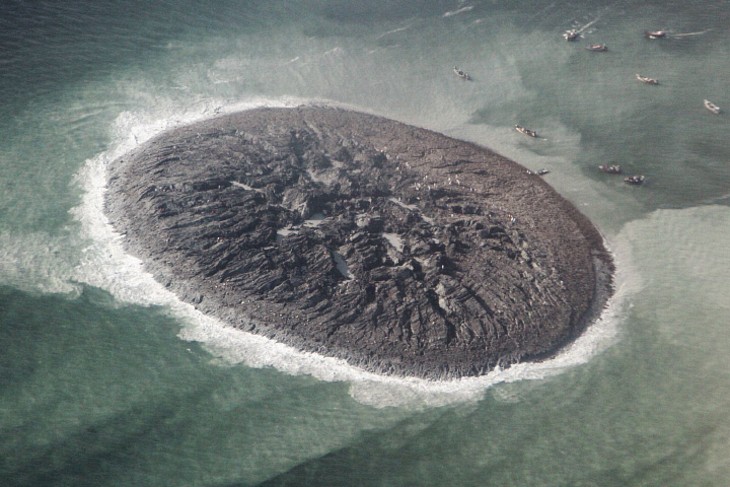
Earth performed the ultimate magic trick last week, making an island appear out of nowhere. The new island is a remarkable side effect of a deadly Sept. 24 earthquake in Pakistan that killed more than 500 people. Satellite images snapped a few days after the earthquake-triggered island emerged offshore, near the town of Gwadar, reveal that the strange structure is round and relatively flat, with cracks and fissures like a child's dried-up mud pie.
Visit NBCNews.com for breaking news, world news, and news about the economy
The French Pleiades satellite mapped the muddy hill's dimensions, which measure 576.4 feet (175.7 meters) long by 524.9 feet (160 m) wide. Aerial photos from Pakistan's National Institute of Oceanography suggest the gray-colored mound is about 60 to 70 feet (18 to 21 meters) high. [Gallery: Amazing Images of Pakistan's Earthquake Island] Gwadar is about 230 miles (380 kilometers) from the earthquake's epicenter. The magnitude-7.7 earthquake was probably centered on the Chaman Fault, Shuhab Khan, a geoscientist at the University of Houston told LiveScience last week. Geologists think the new island, named Zalzala Koh, is made of erupted mud, spewed from the seafloor when either trapped gases escaped or subsurface water was violently expelled.The new island could be the result of a mud volcano. Mud volcanoes form when hot water underground mixes with sediments and gases such as methane and carbon dioxide. If the noxious slurry finds a release valve, such as a crack opened by earthquake shaking, a mud volcano erupts, according to James Hein, a senior scientist with the U.S. Geological Survey in Santa Cruz, Calif. Geologists from the Pakistan Navy report that Zalzala Koh is releasing flammable gas. But seafloor sediments commonly hold methane-producing bacteria, so the possible methane coming from the island isn't a clincher to its identity. Shaking from the powerful Sept. 24 earthquake could have also loosened the seafloor sediments offshore of Pakistan, jiggling them like jelly. The great rivers coming down from the Himalayas dump tons of water-saturated sediment into the Arabian Sea every year. The new island could be a gigantic example of a liquefaction blow, when seismic shaking makes saturated sediments act like liquid, and trapped water suddenly escapes, Michael Manga, a geophysicist at the University of California, Berkeley, told LiveScience. Similar islands have appeared offshore of Pakistan after strong earthquakes in the region in 2001 and 1945. If the earlier examples hold, the soft mud island won't last a year, disappearing under the erosive power of the pounding of waves from monsoon storms.Report: Internet Freedom Declining
 Freedom House says Internet freedom has declined worldwide in the past year, sparked by broad surveillance, new laws controlling web content, and increasing arrests of social-media users.
However, the U.S.-based watchdog group says activists are becoming more effective in raising awareness of threats.
The findings were released on October 3 in the new edition of the "Freedom of the Net" report that covers developments in 60 countries between May 2012 and April 2013.
The report says Iran, Cuba, and China remain among the most restrictive countries in terms of access to the Internet and censorship.
Adrian Shahbaz, a researcher with Freedom House, told RFE/RL that the death in custody of a blogger in Iran was one of the main reasons why the Islamic republic ended up at the bottom of the list of countries that violate Internet freedom.
"There was actually an instance of an online user being killed in Iran -- that was Sattar Beheshti -- and that was an instance of somebody being brought to jail for something that they had written online, allegedly criticizing the government, and then killed while in police custody," he said.
"So that's something that really affected their score negatively."
Post-Soviet Restrictions
Belarus, Pakistan, and Uzbekistan are also among countries with the least Internet freedom, while Azerbaijan, Kazakhstan, Kyrgyzstan, and Russia were found to be partially free.
According to Laura Reed from Freedom House, a number of countries in the former U.S.S.R. have been involved in measures to restrict the Internet.
"In the former Soviet Union over the past year, we've seen additional steps by the governments to block content through a range of legislative and extra-legal measures," she says.
"We've also seen an increase in prosecutions of online users in about half the countries that we cover in the region. Russia, for example, really captures these trends in the past year. So, for example, the number of users that are currently prosecuted for online activities in Russia rose from 31 in 2011 to 103 in 2012."
Russia is singled out in the report as an "important incubator of surveillance technologies and legal practices" that are emulated by other former Soviet republics.
Three former Soviet countries -- Armenia, Georgia, and Ukraine -- have been ranked as free.
The report evaluates each country based on obstacles to access, limits on content, and violations of user rights.
Of the 60 countries surveyed by Freedom House, 34 have experienced drops in their ratings.
Freedom House says that, over the past year, the global number of censored websites has increased, while Internet users in various countries have been arrested, tortured, and killed over their online postings.
The group says Internet freedom also suffered setbacks in several democratic countries, in some cases as governments sought to balance freedom of expression with security.
As an example, Freedom House points to the United States. According to the report, freedom online significantly declined amid revelations of the National Security Agency's extensive surveillance programs.
The report lists the most commonly used methods by governments to control the Internet, including blocking and filtering, cyberattacks against government critics, surveillance, arrests, physical attacks, and murder.
Freedom House says this is the third year in a row that Internet freedom has been in decline globally. Despite the setbacks and negative trends, the report says a perceived increase in civic activism worldwide offers hope for future positive developments.
Freedom House says Internet freedom has declined worldwide in the past year, sparked by broad surveillance, new laws controlling web content, and increasing arrests of social-media users.
However, the U.S.-based watchdog group says activists are becoming more effective in raising awareness of threats.
The findings were released on October 3 in the new edition of the "Freedom of the Net" report that covers developments in 60 countries between May 2012 and April 2013.
The report says Iran, Cuba, and China remain among the most restrictive countries in terms of access to the Internet and censorship.
Adrian Shahbaz, a researcher with Freedom House, told RFE/RL that the death in custody of a blogger in Iran was one of the main reasons why the Islamic republic ended up at the bottom of the list of countries that violate Internet freedom.
"There was actually an instance of an online user being killed in Iran -- that was Sattar Beheshti -- and that was an instance of somebody being brought to jail for something that they had written online, allegedly criticizing the government, and then killed while in police custody," he said.
"So that's something that really affected their score negatively."
Post-Soviet Restrictions
Belarus, Pakistan, and Uzbekistan are also among countries with the least Internet freedom, while Azerbaijan, Kazakhstan, Kyrgyzstan, and Russia were found to be partially free.
According to Laura Reed from Freedom House, a number of countries in the former U.S.S.R. have been involved in measures to restrict the Internet.
"In the former Soviet Union over the past year, we've seen additional steps by the governments to block content through a range of legislative and extra-legal measures," she says.
"We've also seen an increase in prosecutions of online users in about half the countries that we cover in the region. Russia, for example, really captures these trends in the past year. So, for example, the number of users that are currently prosecuted for online activities in Russia rose from 31 in 2011 to 103 in 2012."
Russia is singled out in the report as an "important incubator of surveillance technologies and legal practices" that are emulated by other former Soviet republics.
Three former Soviet countries -- Armenia, Georgia, and Ukraine -- have been ranked as free.
The report evaluates each country based on obstacles to access, limits on content, and violations of user rights.
Of the 60 countries surveyed by Freedom House, 34 have experienced drops in their ratings.
Freedom House says that, over the past year, the global number of censored websites has increased, while Internet users in various countries have been arrested, tortured, and killed over their online postings.
The group says Internet freedom also suffered setbacks in several democratic countries, in some cases as governments sought to balance freedom of expression with security.
As an example, Freedom House points to the United States. According to the report, freedom online significantly declined amid revelations of the National Security Agency's extensive surveillance programs.
The report lists the most commonly used methods by governments to control the Internet, including blocking and filtering, cyberattacks against government critics, surveillance, arrests, physical attacks, and murder.
Freedom House says this is the third year in a row that Internet freedom has been in decline globally. Despite the setbacks and negative trends, the report says a perceived increase in civic activism worldwide offers hope for future positive developments.
After YouTube, Pak targets more sites
Sindh High Court accepts Zardari’s request for security
 The Sindh High Court has accepted former President Asif Ali Zardari’s request for security as he feared that his life was in danger.
 The former president’s lawyer, Senator Farooq Naek had submitted a petition in the SHC which made the Chief Secretary Sindh, Rangers and Federal Government respondents. The petition maintained that former Prime Minister Benazir Bhutto the late wife of Asif Ali Zardari was killed and he feared the same for himself. The petition stated that the former president faced threats from the Taliban.
The SHC has allowed the former president to keep a bullet proof vehicle and private guards on his own expense. Speaking to the media, Naeak said the former president did not want to burden the national exchequer for his security.
The former president’s lawyer, Senator Farooq Naek had submitted a petition in the SHC which made the Chief Secretary Sindh, Rangers and Federal Government respondents. The petition maintained that former Prime Minister Benazir Bhutto the late wife of Asif Ali Zardari was killed and he feared the same for himself. The petition stated that the former president faced threats from the Taliban.
The SHC has allowed the former president to keep a bullet proof vehicle and private guards on his own expense. Speaking to the media, Naeak said the former president did not want to burden the national exchequer for his security.
Pakistan: Alarming picture: Capital flight... $25m were being ‘smuggled’ out of the country
THE governor of the State Bank of Pakistan, Yasin Anwar, is perhaps the first senior official to concede that capital is being moved out of the country in very large sums, and also to quantify it. In his testimony before senators on Tuesday, Mr Anwar said $25m were being ‘smuggled’ out of the country in briefcases every day from four major airports — Karachi, Lahore, Islamabad and Quetta. He did not say how the bank had worked out the size of the illegal capital outflows and since when this practice had been going on — and these gaps in information have left some economists puzzled. However, even if half this staggering amount is going out of the country each day, it would confirm how porous our custom checkpoints have become, not least because of corruption and weak controls. It would also show how the weak enforcement of anti-money laundering laws is playing havoc with the economy.
Some analysts say the capital outflow could be the result of the recent decision to give tax collectors powers to access the bank accounts of the rich in order to apprehend tax cheaters. If so, the outflow could also be a major factor in the speculative pressure on the rupee and the currency’s rapid depreciation in recent days. But the capital flight is not altogether a new phenomenon. The wealthy have been moving their money out of Pakistan in order to avoid actual or expected taxes as well as unwanted government interventions. Earlier, capital flight took place through the informal channels of hundi and hawala. Now the people carry cash to circumvent the restrictions imposed by foreign states on these channels to curb funding for terrorism.
In many cases internationally, flight of capital is related to money made from activities such as drug trafficking, gunrunning, tax evasion, theft, etc. In other cases, it reflects the loss of confidence in the economy and its ability to bounce back. In either case, the implications can be serious for economic stability, investment, growth and equality. While the rich can and do move their financial assets out of the country, the poor are left to shoulder the burden of the depleting value of the currency. Therefore, it is imperative to place strict checks to curb the illegal transfer of money through ports or informal channels. But before that the government will also have to remove lacunae in the anti-money laundering laws, abolish ‘legal’ money-whitening schemes, and increase controls over money changers who help people move their ill-gotten money out of the country.
Pakistan Tehrik-e-Insaaf: the TTP’s Sinn Féin
The original proposal to talk directly to the TTP yet again — despite its past history of signing and flouting scores of talks and agreements — is getting nowhere due to the continued jihadist terrorism Peshawar — one of the oldest living cities on earth — is the heart of the Pashtun lands from Kandahar to Khyber and the Qissa Khwani bazar is the heart of this city. My hapless city was stabbed through its very heart when the jihadist terror struck again this past weekend, leaving at least 40 dead — 17 from one family — and scores maimed. Site of this bombing, apparently carried out through a remote-controlled device, is barely a mile from the All Saints Church where 100 Christians were martyred just days ago. It is but a few furlongs from where the lion of Peshawar, Bashir Ahmed Bilour, was slain in another bombing. The upright police officers Malik Sa’ad and Khan Raziq were martyred in a bombing not too far from this spot. Well, yet another sorrowful chapter has been added to the endless tale of blood and tears that the Qissa Khwani — the storytellers’ — bazar has been telling for years now. But as the Khyber-Pukhtunkhwa bleeds and grieves, its ruling party the Pakistan Tehreek-e-Insaaf (PTI) has a different story to tell and a heinous theory to sell. The PTI spokespersons claim that the recent string of terrorist atrocities has not been committed by the Tehreek-e-Taliban Pakistan (TTP). They blame unknown foreign elements for unleashing this dance of death on the Khyber-Pukhtunkhwa province to undermine the so-called peace talks that the PTI champions. They assert that there are ‘fake’ Taliban within the TTP who have been put up to this by the Afghan-US-Indo-Zionist combine. They even discard the vicious Mullah ‘FM Radio’ Fazlullah’s own admission that he ordered the hit against the martyred General Sanaullah Khan Niazi, claiming that Fazlullah is not ‘TTP proper’. PTI’s Chief Minister Pervez Khattak has blamed even the media for somehow triggering the bombings! Another absolutely rubbish idea peddled by the Khyber-Pukhtunkhwa’s Information Minister Shah Farman is that the present mayhem in that province is somehow related to the bombings that took place there in the 1970s-80s and were blamed on the nationalist and communist governments of Afghanistan then. Never mind the political context then and now and that just the recent church bombing killed more people than all explosions of the 1970-80s put together. Not to be outdone by his lieutenants, the PTI chief Imran Khan demanded the TTP be allowed to open its office in mainland Pakistan to conduct talks. Implied in this demand is some form of immunity for at least those TTP members who would run this shop. While some in the PTI disowned Mr Khan’s outrageous demand and comparison to the Afghan Taliban’s office in Qatar — note that it was not in Kabul or Kandahar — most of his party stood by him. The PTI’s vigorous defence of the brutal and criminal TTP, absolving it of any fault, makes the PTI look like the political face of the jihadist outfit and Mr Khan its opening batsman. The original proposal to talk directly to the TTP yet again — despite its past history of signing and flouting scores of talks and agreements — is getting nowhere due to the continued jihadist terrorism. The recent All Parties Conference (APC) declaration, which had disastrously elevated the TTP to the ‘stake holder’ level, is virtually dead now. It may be time for the Pakistani state to negotiate with the PTI not the TTP. The PTI is particularly fond of citing the British handling of the IRA insurgency as a template for talks with the TTP. The fact is that British did not directly negotiate with the IRA but with its political wing Sinn Féin. While there is nothing common between the savages of TTP and a modern nationalist IRA, in Mr Khan and the PTI, Hakeemullah Mehsud may still have found his Sinn Féin. Let the PTI make clear the nuts and bolts of what it is demanding on behalf of the TTP. The PTI leaders are already putting up a grotesque defence of the TTP’s brutalities daily; let them now serve officially as the banned outfit’s emissaries and guarantors. It would also obviate the need for a TTP office. The fact is that the PTI is providing the TTP prized ideological and political space as well as a tremendous amount of time to hone their machetes. Mr Khan and his confidants are actually mainstreaming a savage group that rejects the Pakistani state and its constitution and anything that is modern. Mark my words, the TTP is no Provisional IRA; it will eventually go after even Mr Khan when they have no use left for him. For now he is serving them well by muddying the waters enough to delay any operation against them. The TTP has no intention to enter a meaningful dialogue, not now, not ever. If the TTP were to accept Mr Nawaz Sharif’s naively stated conditions of dropping their guns and upholding the constitution before the talks, there would be no need for talks at all — as the TTP spokesman has already pointed out. But Mr Sharif seems quite content so long as the terrorist pyres burn down the Pashtun homes while the Punjab — his home province — is safe. Using the Pashtun lands as a buffer is neither new nor a foolproof policy and Mr Sharif will discover that soon — most likely in his present term. Both the Pakistan Muslim League-Nawaz and PTI invoke their recent electoral mandate to deliver peace as the carte blanche to give the TTP whatever they wish. They cannot be more wrong. These parties won an election not a referendum to pawn away the Pashtun lands to whomever they wish. The APC declaration is at best a political statement, not a constitutional one. It is not worth the paper it is written on, no matter what Mr Khan says. The APC declaration’s only significance now is that Mr Khan is using it to delay or thwart any military action against the TTP. The TTP may have the guns but it is their political face — the PTI — that is holding the Pakistani state hostage. This paralysis of the state, however, is untenable and must be upended with a robust action against the terrorist TTP and its affiliates. The Pakistan army has said that it can inflict a befitting response on the terrorists. It is time perhaps to take the army up on its word. The venue to chalk out course of such action must be the parliament, where the TTP’s Sinn Féin is represented too, not another APC.
Pakistan: More Punjab University students linked to terrorists
 The Punjab University management has told the Punjab government many more students have links with terrorists and if the management had been taken into confidence they would have been arrested when one al-Qaeda operative was nabbed recently.
After the arrest of al-Qaeda operative from Punjab University hostel, startling facts have come forth. The university administration has written to the Punjab government that had the police taken the university management into confidence before raiding the hostel, many other students of Islami Jamiat Talaba (IJT) could have been pinpointed against whom there was information of having links with the terrorists.
The documents recovered from the custody of al-Qaeda operative also include list of all the key members of IJT who have been linked with the Punjab University. University that documents recovered from the al-Qaeda operative arrested from Room No. 237 of Hostel-1 clearly show the deep links of ‘the wanted person’ with IJT.
The university spokesman while talking to The News said that during the past four years, at least seventy-five FIRs had been lodged against the IJT members by the University management including car theft, illegal weapons, firing, fighting and disturbance.
The Room No. 237 of Hostel-1 was allotted to one Ahmad Sajjad Rathore of Okara who was a student of Statistics Department and presented himself as Nazim IJT of the department. But, the documents reveal, upon inspection it was found that one clerk Basharat (under suspension) allotted the room to Ahmad Sajjad on fake documents. The IJT terms all such allegations as a conspiracy against it.
“Had the concerned officer taken us into confidence we could have pointed out other individuals who are most likely involved in such activities. It may also be added that a study of documents/literature etc., recovered from Room No.237 clearly shows the deep links of the wanted person with IJT”, the Registrar Punjab University has written to the Higher Education Department while explaining the varsity’s stance on arrest of al-Qaeda operative from its premises.
While explaining the details of the room from where the al-Qaeda operative was arrested, the PU Registrar writes: “The suspected person had been residing in Hostel No, Room No. 237, as a guest of Ahmad Sajjad a student of the College of Statistical & Actuarial Sciences.
It was further revealed that Ahmad Sajjad used to claim himself as a genuine allottee of that Room (No.237), since April, 2013. Basharat, Clerk (under suspension) of Hostel No.1 was found guilty of unlawful handing over of keys of Room No. 237 to Ahmad Sajjad when the said room was vacated by Aftab, a student of School of Biological Sciences, University of the Punjab, Lahore.
It is pertinent to note that Basharat was suspended from his duties in May 2013 due to some gross misconduct. Clerk, Basharat, (under suspension) was immediately called upon after the above said incidence of September 03, 2013 and he was directed by the Warden of Boys Hostel No.1 (Prof. Dr. Saeed Farooq) to produce the allotment form of Ahmed Sajjad; original resident of Room No. 237, but he (Basharat) came up with a fake allotment form not duly signed by either the Superintendent nor by the Hostel Warden. Despite knowing the fake nature of the testimonial Basharat insisted that the said form was original. The other three clerks who happened to be the successors of Basharat (under suspension) in a row were also interrogated thoroughly and were asked to locate/ produce genuine allotment form of Ahmad Sajjad but they failed to do so.”
The spokesman of Punjab University, Khurram Shahzad, while talking to The News said that the varsity administration has information about a few IJT members who have links with the terrorist. He maintained that the al-Qaeda operative was arrested from the room of one Ahmad Sajjad against whom the university had lodged two FIRs in the recent past. The News is in possession of those FIRs.
Moreover, the PU spokesman said, one Nazim of IJT Yasir Abbasi was involved in a case of car theft, which was later recovered from his custody and he has been nominated in the FIR. Khurram said that the university administration has been stopping the IJT from holding controversial functions in the university but the police helped them in conducting so. In other terms, the spokesman said, the police has been strengthening them.
The Punjab University management has told the Punjab government many more students have links with terrorists and if the management had been taken into confidence they would have been arrested when one al-Qaeda operative was nabbed recently.
After the arrest of al-Qaeda operative from Punjab University hostel, startling facts have come forth. The university administration has written to the Punjab government that had the police taken the university management into confidence before raiding the hostel, many other students of Islami Jamiat Talaba (IJT) could have been pinpointed against whom there was information of having links with the terrorists.
The documents recovered from the custody of al-Qaeda operative also include list of all the key members of IJT who have been linked with the Punjab University. University that documents recovered from the al-Qaeda operative arrested from Room No. 237 of Hostel-1 clearly show the deep links of ‘the wanted person’ with IJT.
The university spokesman while talking to The News said that during the past four years, at least seventy-five FIRs had been lodged against the IJT members by the University management including car theft, illegal weapons, firing, fighting and disturbance.
The Room No. 237 of Hostel-1 was allotted to one Ahmad Sajjad Rathore of Okara who was a student of Statistics Department and presented himself as Nazim IJT of the department. But, the documents reveal, upon inspection it was found that one clerk Basharat (under suspension) allotted the room to Ahmad Sajjad on fake documents. The IJT terms all such allegations as a conspiracy against it.
“Had the concerned officer taken us into confidence we could have pointed out other individuals who are most likely involved in such activities. It may also be added that a study of documents/literature etc., recovered from Room No.237 clearly shows the deep links of the wanted person with IJT”, the Registrar Punjab University has written to the Higher Education Department while explaining the varsity’s stance on arrest of al-Qaeda operative from its premises.
While explaining the details of the room from where the al-Qaeda operative was arrested, the PU Registrar writes: “The suspected person had been residing in Hostel No, Room No. 237, as a guest of Ahmad Sajjad a student of the College of Statistical & Actuarial Sciences.
It was further revealed that Ahmad Sajjad used to claim himself as a genuine allottee of that Room (No.237), since April, 2013. Basharat, Clerk (under suspension) of Hostel No.1 was found guilty of unlawful handing over of keys of Room No. 237 to Ahmad Sajjad when the said room was vacated by Aftab, a student of School of Biological Sciences, University of the Punjab, Lahore.
It is pertinent to note that Basharat was suspended from his duties in May 2013 due to some gross misconduct. Clerk, Basharat, (under suspension) was immediately called upon after the above said incidence of September 03, 2013 and he was directed by the Warden of Boys Hostel No.1 (Prof. Dr. Saeed Farooq) to produce the allotment form of Ahmed Sajjad; original resident of Room No. 237, but he (Basharat) came up with a fake allotment form not duly signed by either the Superintendent nor by the Hostel Warden. Despite knowing the fake nature of the testimonial Basharat insisted that the said form was original. The other three clerks who happened to be the successors of Basharat (under suspension) in a row were also interrogated thoroughly and were asked to locate/ produce genuine allotment form of Ahmad Sajjad but they failed to do so.”
The spokesman of Punjab University, Khurram Shahzad, while talking to The News said that the varsity administration has information about a few IJT members who have links with the terrorist. He maintained that the al-Qaeda operative was arrested from the room of one Ahmad Sajjad against whom the university had lodged two FIRs in the recent past. The News is in possession of those FIRs.
Moreover, the PU spokesman said, one Nazim of IJT Yasir Abbasi was involved in a case of car theft, which was later recovered from his custody and he has been nominated in the FIR. Khurram said that the university administration has been stopping the IJT from holding controversial functions in the university but the police helped them in conducting so. In other terms, the spokesman said, the police has been strengthening them.
Pakistan Land Of Pure: PCC demands probe in selling organs of dead Christian of Peshawar Church bombing
http://www.pakistanchristianpost.com/Dr. Nazir S Bhatti, President of Pakistan Christian Congress PCC have expressed grave concern on news published in international media that organs of dead Christians Christians in double suicide bombing in All Saints Church Peshawar were illegally taken out by medical staff of Lady Reading Hospital Peshawar with collaboration of KPK administration to sold in black market during postmortem without permission of their relatives. Officially 84 deaths of Christian’s worshipers were declared while 146 injured in suicide bombing in All Saint’s Church in Kohati Gate Peshawar on September 22, 2013. All dead bodies of 86 Christians of bomb blast were buried in same evening of September 22, 2013, in local Christian graveyards of Peshawar under pressure of Khyber Pukhtunkhawa KPK provincial’s government when denied by administration that there is no enough space in mortuary of Lady Reading Hospital and Hayat Hospital of Peshawar to keep dead bodies. The 86 dead bodies of Christian victims were handed over to relatives in wooden boxes in Lady Reading Hospital by KPK administration and pressurized to bury them same evening. Dr. Nazir Bhatti said “More than 45,000 Muslim died in attacks of Talaban attacks or their suicide bombing after Pakistan government joined international community in war against terrorism but news of heinous crime of human organ trafficking od dead Muslim bodies were never reported but selling of organs of dead Christian means that there is no value of Christian blood and dead bodies in Pakistan” Nazir Bhatti added “Where is Chief Justice of Supreme Court of Pakistan? Where is Imran Khan, Chairman of Pakistan Tehreek Insaf PTI whose party is governing KPK? Why Pervez Khattak, Chief Minister of KPK has not resigned? Why Prime Minister of Pakistan Mian Nawaz Sharif has not ordered any enquiry in organ trafficking of dead bodies of Christians of Peshawar Church bombing?” Nazir Bhatti said that Pakistan Christian Congress PCC demands Judicial Enquiry of heinous crime of organ trafficking of Christian dead bodies by Lady Reading Hospital staff, Peshawar Police and provincial administration of KPK and severe punishment to culprits. The news of organ trafficking of dead bodies of Christian victims of suicide bombing in Peshawar Church appeared in bulletin of Fides News agency Rome on September 29, 2013, and published on website of AHRC September 30, 2013.
Peshawar All Saints' update, death toll from the bombing on Sept. 22 stands at 127
http://www.anglicannews.org/
 In a conversation from Peshawar today, Bishop Humphrey Sarfaraz Peters of the Diocese of Peshawar said that the confirmed death toll from the bombing at All Saints’ Church on Sept. 22 in the old section of the city stands at 127, with 170 injured.
“It has been just devastating,” he said. “Quite a few children are paralyzed, and others are orphaned. This is a terrible time for the Christian community.” Financial assistance is urgently needed to support the families of the dead and injured, he said.
Government officials, including the Governor of Khyber Pakhtunkwa, the Chief Minister of Khyber Pakhtunkhwa, and federal ministers, have visited in order to express concern and condolence. The Bishop has met with them either at All Saints’, where he has been based over the week, or at his home on the grounds of St John’s Cathedral.
Yesterday’s car bomb in Qissa Khawani bazaar was detonated nearby while the All Saints’ congregation was again at worship on the first week’s anniversary of the Sept. 22 bomb. “People were in a panic, and there was such a rush,” Bp Humphrey said, “but after about 25 minutes we were able to get them settled and resume the service.” The bomb killed 40 people and was reported to have exploded about 300 yards from All Saints’, near a mosque and a police station. On Friday, 19 people died when a bomb planted on a bus carrying government employees exploded in the outskirts of Peshawar.
Today’s confirmed count of 127 dead and 170 wounded from the Sept 22 bomb is lower than the initial reports of 150 dead and 200 wounded, but it is considerably higher than the figure of 85 dead that is being circulated by global news media. Peshawar’s overall death toll from bomb blasts for the week is 176.
“The world reached out wonderfully when Malala Yousafzai was shot,” Bp Humphrey said, referring to the 15-year-old Pakistani girl who was shot in the head last October by the Taliban for advocating for girls’ education. “There are many Malalas now after the bombing,” he said in appealing for assistance.
Episcopal Relief and Development sent a $15,000 grant, the Bishop said. Other initiatives are being developed in the Episcopal Church and may be announced soon. Meanwhile, the Edwardes College Compassion Appeal has already begun receiving donations for victims and their families from concerned people in the USA as well as in Pakistan
In a conversation from Peshawar today, Bishop Humphrey Sarfaraz Peters of the Diocese of Peshawar said that the confirmed death toll from the bombing at All Saints’ Church on Sept. 22 in the old section of the city stands at 127, with 170 injured.
“It has been just devastating,” he said. “Quite a few children are paralyzed, and others are orphaned. This is a terrible time for the Christian community.” Financial assistance is urgently needed to support the families of the dead and injured, he said.
Government officials, including the Governor of Khyber Pakhtunkwa, the Chief Minister of Khyber Pakhtunkhwa, and federal ministers, have visited in order to express concern and condolence. The Bishop has met with them either at All Saints’, where he has been based over the week, or at his home on the grounds of St John’s Cathedral.
Yesterday’s car bomb in Qissa Khawani bazaar was detonated nearby while the All Saints’ congregation was again at worship on the first week’s anniversary of the Sept. 22 bomb. “People were in a panic, and there was such a rush,” Bp Humphrey said, “but after about 25 minutes we were able to get them settled and resume the service.” The bomb killed 40 people and was reported to have exploded about 300 yards from All Saints’, near a mosque and a police station. On Friday, 19 people died when a bomb planted on a bus carrying government employees exploded in the outskirts of Peshawar.
Today’s confirmed count of 127 dead and 170 wounded from the Sept 22 bomb is lower than the initial reports of 150 dead and 200 wounded, but it is considerably higher than the figure of 85 dead that is being circulated by global news media. Peshawar’s overall death toll from bomb blasts for the week is 176.
“The world reached out wonderfully when Malala Yousafzai was shot,” Bp Humphrey said, referring to the 15-year-old Pakistani girl who was shot in the head last October by the Taliban for advocating for girls’ education. “There are many Malalas now after the bombing,” he said in appealing for assistance.
Episcopal Relief and Development sent a $15,000 grant, the Bishop said. Other initiatives are being developed in the Episcopal Church and may be announced soon. Meanwhile, the Edwardes College Compassion Appeal has already begun receiving donations for victims and their families from concerned people in the USA as well as in Pakistan
Wednesday, October 2, 2013
Obama's Asia trip plans cut short as shutdown continues
Video: Pakistani Christians Targeted by Recent Violence, Blasphemy Law
 Christians make up only 2 percent of the population of Pakistan, but the country's colonial past makes the religious minority a target for grievances against the West. Fred de Sam Lazaro reports that suicide bombings, attacks on churches and a law against blasphemy have left Pakistani Christians living in fear.
Pakistan’s Terror Capital: Inside Peshawar, a City Under Siege
Pakistan: $25m flows out of country daily: SBP governor
The State Bank of Pakistan made a startling disclosure before a parliamentary committee on Tuesday that $25 million in foreign currency was illegally flowing out of the country each day from airports and that was perhaps one major reason for the recent battering of the rupee.
“About $25 million foreign exchange goes out every day from Quetta, Islamabad, Lahore and Karachi airports and we are signing an MOU with the Federal Investigation Agency to check suitcases to control this and plug holes,” SBP Governor Dr Yasin Anwar told the Senate Standing Committee on Finance.
Mr Anwar made the statement when senators raised questions about the government’s policy to restore people’s confidence in the rupee that had been losing its value for several weeks, leading to excessive dollarisation. “Even property dealers and big stores are doing business in dollars,” said Senator Haji Adeel of ANP.
At the committee meeting presided over by Senator Nasrin Jalil of MQM, Usman Saifullah Khan and Sughra Imam of PPP wanted to know the reason behind Prime Minister Nawaz Sharif’s recent meeting with Hungarian-American billionaire George Soros who they alleged was one of the leading global currency speculators and had played havoc with Southeast Asian economies in the 1990s. “We should also know who advised the prime minister for this meeting,” Senator Saifullah said.
The official response was that Mr Soros had no presence in Pakistan’s currency market but he had made some philanthropist contributions and his meeting with the prime minister was part of an interaction with leading international investors.
Senators criticised the government’s priorities, particularly providing $5 billion to IPPs instead of using the amount for development of hydropower projects like Bhasha dam, Dassu dam and Neelum Jhelum project where only nominal allocations were being made.
Secretary Finance Dr Waqar Masood Khan described the perception of dollarisation as baseless and said there was no evidence to prove that payments were made in foreign currency. He said the government was working to synchronise the anti-money laundering law with anti-terrorism financing to comply with international standards.
The SBP chief said economic policies were always designed for longer-term objectives and should not be assessed on the basis of short-term problems. He said the central bank was not a law-enforcement agency which could take direct action. But, he pointed out that its vigilance on market moves had led in the past to FIA’s actions against Khanani & Kalia and Zarco Exchange.
The flight of capital has always been a major pressure on foreign exchange reserves and exchange rate but such outflows were previously estimated at between $5-10 million a day. The revelation by SBP governor puts the amount of outflows by illegal means at a staggering $750 million a month or $9 billion a year — almost equivalent to the country’s total foreign exchange reserves.
Dr Anwar did not agree that the recent steep fall in the value of the rupee to Rs110 against the dollar was a regular feature because of withdrawal from foreign currency accounts. He said the rupee had touched its lowest point only for two minutes during which only $11.3 million was misappropriated. He said he had already held a meeting with banks and punishments had been decided against banks involved in the inappropriate activity.
He said the government and the central bank were being criticised for a single day fall in the value of the rupee but the critics did not appreciate the fact that the SBP managed the foreign exchange position from March to June, when a major transition was taking place from one political government to the interim government and to a new elected government despite predictions of crisis and defaults by major commentators.
He said the government’s decision to reach a bailout agreement with the International Monetary Fund (IMF) was taken at a suitable time because of outstanding foreign repayments of $6.6 billion when major multilateral lenders like the World Bank and the Asian Development Banks had stopped extending loans for development. This led to improved market sentiments and positive comments from international rating agencies.
He said parliamentarians should not compare the handling of exchange rate issue with India where 75 per cent banks were state-run, while in Pakistan 80 per cent banking was in the private sector.
As senators criticised the economic team for allowing the IMF to take micro-level decisions, both the secretary finance and the central bank governor said daily, weekly and monthly reporting of economic data to IMF was a prerequisite for all member countries but this compliance became strict when a nation adopted to have an IMF programme which was neither unusual nor a Pakistan specific condition.
Senator Sughra Imam expressed concern that policy-makers did not offer any incentive to people for keeping rupee deposits in banks and as a result savings were being diverted to foreign currency accounts for the sake of profits because of declining exchange rate. She asked why foreign exchange deposits were not subjected to taxes like the rupee accounts. “They are earning profits just by holding dollars in their accounts.”
UNCERTAIN INFLOWS: The senators criticised the government for banking on uncertain foreign exchange inflows through auction of 3G telecom licences, PTCL proceeds from Etisalat and coalition support fund (CSF) from the US which had not materialised over the past four years.
Secretary Waqar Masood said appointments to key positions in Pakistan Telecommunication Authority had been made and soon the matter would be pushed forward. He said Finance Minister Ishaq Dar had taken up the issue of PTCL proceeds with Etisalat.
He said out of $1.4 billion CSF inflows expected this year, about $325 million would be disbursed before Oct 15, although these were earlier expected in the first quarter of the fiscal year.
Pakistan: Financial bombs
Pakistan: Yet another oppressive move
 Monday saw the worst autocratic rule in the country when the federal government bypassed the National Electric Power Regulatory Authority (NEPRA)—the regulatory body of electricity – to make a massive increase of 210 per cent in the power tariff for domestic consumers effective. With same stroke of pen, the government increased the prices of petrol, diesel and other petroleum products.
Meaning thereby the fuel budget of every house—be it is of the poor, rich or industry-- will be multiplied, causing a major jack-up in the input cost of every sector.
Justifying its reckless act, the government has given some relief for the poor. Notwithstanding what it had offered to the poor, the fact is that the oil and power that constitutes fundamental ingredient of input of agricultural and industrial sector, the price of every house-hold item will be jacked up which will nullify the so-called and eye-wash relief offered to the poor in the minimum slab on power consumption. Every human being living in Pakistan will be facing more financial constraints as he will be paying more on anything he will consume.
Apart from price-hike that the massive jack-up in power and oil prices will also trigger a unprecedented inflation. There is every chance that the industrial sector will face severe liquidity crunch that may bring industrial wheels to a grinding halt that for sure will result in more unemployment. A significant proportion of the population already living below poverty line will be pushed to starvation and the middle class that is considered to be the main stray of the economy will also shed their buying power. Resultantly, the worst recession in the market is inevitable.
The government decision to make autocrat increase in the power and oil prices is the worst act that even a dictator cannot dare to implement. But the so-called peoples’ representatives have made mockery of the confidence the Electoral College that voted them to power, and after assuming power, the incumbent rulers have grown bigger than their size hence ignoring the national institutions—be it is the NEPRA or the Parliament—in making the decision of national importance.
Considering themselves unquestionable, the rulers are adopting short-cuts to squeeze out money from the hapless masses rather than carrying out remedial measures of eradicating massive corruption, high ratio of line losses, overstaffing and unmanageable perks & privileges to the WAPDA employees.
On the top of it, the able leadership did not launch drive to recover a receivable amount Rs 441 billion rather opted short-cut to generate total revenue of Rs 941 billion during one year on the call of their international financial managers sitting in the IMF.
The international donours may find the increase in power tariff satisfactory to shower some words of praise on the rulers but the reckless act of the government will surely spell economic disaster for the country and make life of common man a living hell.
Particular if the government continued to pass the burden of its incompetency and bad management of the state-run institutions to consumers who paid their dues regularly.
The recent increase is designed to raise an additional revenue of Rs175 billion against the IMF demand of doing away with the power subsidy of Rs396 billion.
Even earlier, the circular debt was paid off by burdening the common man—the decision that experts perceived as ultra-constitutional. it is advisable here that the country’s managers should revamp the existing system to make efficient and cost effective rather than fleecing consumers through direct increase prices and indirect increase in taxation on it, befooling the poor with slabs of benefits.
By no means, new slabs on power tariff will extend any breather to the poor. Soon the wrath of the tariff-hike will echo in the power corridors let the power bills reach the masses later this month. Similarly, the petrol is fuel of the poor. Unfortunately, again the petrol price is jacked up the maximum while the jet fuel for the rich gets a minimum push. The increase is simply too much, thus the government should revise its oppressive decision before it echoes on streets and roads in mass protests.
Monday saw the worst autocratic rule in the country when the federal government bypassed the National Electric Power Regulatory Authority (NEPRA)—the regulatory body of electricity – to make a massive increase of 210 per cent in the power tariff for domestic consumers effective. With same stroke of pen, the government increased the prices of petrol, diesel and other petroleum products.
Meaning thereby the fuel budget of every house—be it is of the poor, rich or industry-- will be multiplied, causing a major jack-up in the input cost of every sector.
Justifying its reckless act, the government has given some relief for the poor. Notwithstanding what it had offered to the poor, the fact is that the oil and power that constitutes fundamental ingredient of input of agricultural and industrial sector, the price of every house-hold item will be jacked up which will nullify the so-called and eye-wash relief offered to the poor in the minimum slab on power consumption. Every human being living in Pakistan will be facing more financial constraints as he will be paying more on anything he will consume.
Apart from price-hike that the massive jack-up in power and oil prices will also trigger a unprecedented inflation. There is every chance that the industrial sector will face severe liquidity crunch that may bring industrial wheels to a grinding halt that for sure will result in more unemployment. A significant proportion of the population already living below poverty line will be pushed to starvation and the middle class that is considered to be the main stray of the economy will also shed their buying power. Resultantly, the worst recession in the market is inevitable.
The government decision to make autocrat increase in the power and oil prices is the worst act that even a dictator cannot dare to implement. But the so-called peoples’ representatives have made mockery of the confidence the Electoral College that voted them to power, and after assuming power, the incumbent rulers have grown bigger than their size hence ignoring the national institutions—be it is the NEPRA or the Parliament—in making the decision of national importance.
Considering themselves unquestionable, the rulers are adopting short-cuts to squeeze out money from the hapless masses rather than carrying out remedial measures of eradicating massive corruption, high ratio of line losses, overstaffing and unmanageable perks & privileges to the WAPDA employees.
On the top of it, the able leadership did not launch drive to recover a receivable amount Rs 441 billion rather opted short-cut to generate total revenue of Rs 941 billion during one year on the call of their international financial managers sitting in the IMF.
The international donours may find the increase in power tariff satisfactory to shower some words of praise on the rulers but the reckless act of the government will surely spell economic disaster for the country and make life of common man a living hell.
Particular if the government continued to pass the burden of its incompetency and bad management of the state-run institutions to consumers who paid their dues regularly.
The recent increase is designed to raise an additional revenue of Rs175 billion against the IMF demand of doing away with the power subsidy of Rs396 billion.
Even earlier, the circular debt was paid off by burdening the common man—the decision that experts perceived as ultra-constitutional. it is advisable here that the country’s managers should revamp the existing system to make efficient and cost effective rather than fleecing consumers through direct increase prices and indirect increase in taxation on it, befooling the poor with slabs of benefits.
By no means, new slabs on power tariff will extend any breather to the poor. Soon the wrath of the tariff-hike will echo in the power corridors let the power bills reach the masses later this month. Similarly, the petrol is fuel of the poor. Unfortunately, again the petrol price is jacked up the maximum while the jet fuel for the rich gets a minimum push. The increase is simply too much, thus the government should revise its oppressive decision before it echoes on streets and roads in mass protests.
Subscribe to:
Posts (Atom)