Tuesday, September 24, 2013
Special Report: ''BALOCHISTAN: The struggle Pakistan does not want reported''
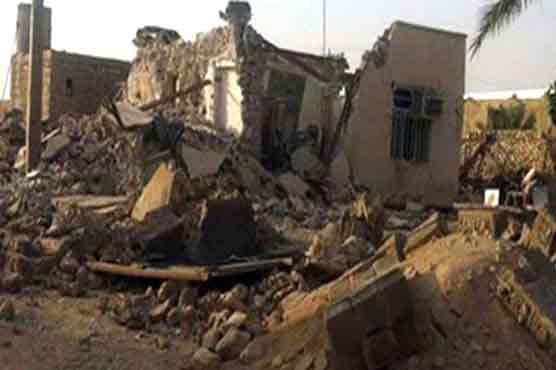
7.8 magnitude quake kills more than 150 in Balochistan

Imran Talib Fake Khan: ... ''From Apologist to Ally''
By Saroop Ijaz

10 dead as Pakistan hit by 7.8 magnitude earthquake
The Express TribuneA powerful 7.8-magnitude earthquake hit southwestern Pakistan on Tuesday, the US Geological Survey said, with tremors felt as far away as the Indian capital New Delhi. Ten people are confirmed dead in Awaran, Balochistan as a result of the earthquake, Express News reported.

Karzai condemns Peshawar Bombing

Peshawar church reopened after deadly blasts
130 year old historical Pakistan Church in Peshawar, which had been targeted by terrorists, was reopened for worship on Tuesday after repairs and cleaning. On Sunday, twin suicide blasts killed 83 people and injured up to 150 others, while Christians were coming out from the church located at Kohati Gate area of Peshawar. Police arrested 6 suspects involved in Peshawar church attack on Tuesday. At least 67 victims were discharged from the Lady Reading Hospital after their condition was declared stable by doctors. Special Investigation team constituted to probe the incident has revealed that one of the suicide bombers could be a young lady aged between 20-25 years. The attack on All Saints Church in the northwestern city of Peshawar after a service on Sunday is believed to be the deadliest ever to target the country's Christian minority. Christians demonstrated in towns and cities across Pakistan, including Islamabad, Lahore, Karachi and Peshawar, demanding better protection from authorities. - See more at: http://www.pakistantoday.com.pk/2013/09/24/news/national/peshawar-church-reopened-after-deadly-blasts-6-suspects-arrested/#sthash.HH7fKLag.dpuf

Strong earthquake strikes remote western Pakistan, felt in New Delhi
reuters.com
An strong earthquake struck remote western Pakistan on Tuesday and was felt in the Indian capital of New Delhi where buildings shook. The United States Geological Survey said that a 7.8 magnitude quake struck 145 miles southeast of Dalbandin, in Pakistan's western province of Balochistan.

Pakistan: Collective release of terrorists : SC moved for sacking interior minister Nisar
Daily TimesThe Supreme Court has been moved for the sacking of Interior Minister Chaudhry Nisar Ali Khan. Through a constitutional petition the court was told that the Interior Ministry was collecting particulars in connection with collective release of terrorists and accused persons, and one of former National Assembly member of PML-N had held talks with the 50 prisoners in Adiala jail. The petition further said that Article 45 of the constitution does not empower the president to grant en-masse immunity. The petitioner asked the Supreme Court to issue a stay order against the talks being held in this connection besides inquiring from the Interior Ministry if it has sent any summary to the president for the release of prisoners. Shahid Orakzai has filed the petition under Article 184 (3) of the constitution, making Interior Minister Chaudhry Nisar Ali Khan, Javed Paracha, ex-MNA, interior secretary and Punjab home secretary as respondents. The petitioner requested the court to restrain the federal government from engaging in negotiation with any person claiming to be a citizen but defying the constitution. “Instruct Punjab and all other provinces not to identify such prisoners and their location to any officer of the federal government without prior permission of the court,” he pleaded. The applicant questioned whether the federal or provincial government could negotiate with any group of convicts or under-trial prisoners for their release in violation of Article 45. “Will a federal minister facilitating such illegal contacts inside a prison would be working within the law?” he has asked. Orakzai contended that the interior minister was well aware that Javed Paracha had also been identified before the Peshawar High Court as the mastermind behind the jail break in Bannu in April 2012 wherein 384 prisoners escaped. Thereafter, in another attack on Central Jail Dera Ismail Khan 248 prisoners were freed. He stated that ex-MNA Paracha last week reportedly held a political meeting with some 50 prisoners in Rawalpindi’s Adiala Jail who were either convicted or facing trial for terrorist acts. Orakzai questioned how the government facilitated this contact. He said that Paracha had held a meeting in Islamabad with the interior minister and a high-ranking intelligence official. Orakzai said that there is no federal or provincial notification about his appointment to any public office. Only the respondent minister can explain under what authority or law has he been engaged/employed by the federation as a go-between with criminals. He stated that the ex-MNA claims that negotiations between the Interior Ministry and the insurgents have already begun and the prisoners, in Adiala and elsewhere, are being located with due approval of the ministry. Referring to Article 45 which empowers the president to grant pardon, reprieve and respite or remit, suspend or commute any sentence passed by any court, the petitioner said that the court may ask the Interior Ministry if it has moved any summary to the president about any specific prisoner or any group of prisoners in the Adiala Jail. He stated that the court should prevent contacts with the dangerous prisoners and their banned outfits. He also requested the court to instruct Punjab to take disciplinary action against the Adiala Jail superintendent.
Peshawar Chruch Attack: ''After the carnage''
 A day after the deadly attacks that killed more than 80 people from Pakistan’s Christian community – at a church in Peshawar – the sense of anger rages on. There have been protests in most major cities; Christians were joined by at least some members of the Muslim majority in most places. But it was sad to observe that, on the whole, the turnout of non-Christians was relatively low in many places. Clearly, many of us are still to learn that if we do not act now our country will be destroyed by the hate and fanaticism that have killed thousands of people over the years, most of them Muslims. It is unfortunate that not many in the provincial and federal governments are willing to address the killers by name, speaking only of ‘inhuman elements’ or ‘animals’. It is somewhat hard to understand how they have intended to conduct dialogue with those they themselves say are not human. Condemnations are coming thick and fast with Pope Francis and UN Secretary General Ban Ki-moon adding their voices to the worldwide outrage. Prime Minister Nawaz Sharif, moved by the voices of protests, has admitted, en route to the UN General Assembly session in New York, that the attacks have made it impossible to go ahead with the talks with the TTP. For now that is the only course he could have taken. Peace talks are a misnomer when one side is so hell bent on violence. Claims of responsibility have, as expected, come in from the TTP – specifically a new group which, its spokesman reportedly said, had been created to combat ‘foreign elements’. The authenticity of these claims is in some doubt. But what is beyond dispute is that the same extremists who had struck before have acted once again. The TTP has reportedly vowed to continue targeting foreigners and non-Muslims as revenge for drone attacks. What do our Christian and other non-Muslim brothers and sisters have to do with the drone attacks? Howsoever brutal and criminal drone attacks are – and they indeed are – the TTP is only using them as an excuse to continue attacks on any group whose faith they don’t accept.
It is a testament to the inherent peaceable nature of the Christian community that the protests all over the country were conducted in justifiable anger – but without violence. Church leaders stepped up and asked the community to demonstrate restraint, and admirably so. Anyone who would complain about protesters blocking roads and burning tires should understand just how traumatic the killings have been to a community that has already felt under siege. Understanding and empathy have certainly been lacking in the Khyber Pakhtunkhwa provincial government which spent as much time attacking its opponents as it did condemning the attack. The stance taken by PTI chief Imran Khan, whose party rules KP, is mysterious. He has suggested that elements opposed to dialogue had carried out the deadly attack. Various commentators have already asked why hundreds of other attacks have been conducted at times when there were no prospects of negotiations. The JUI-F too has suggested that the attacks were meant to derail peace talks. Do these leaders know something the rest of us do not? They should be able to share it with the families of those whose bodies and bones have littered the streets. Otherwise, they are doing nothing but earning a place in the hall of shame. The Peshawar police have said they will investigate the attack. But bringing the perpetrators to justice will be the tricky part. The federal government has vowed to rebuild the church – a fine gesture but meaningless unless the governments in Khyber Pakhtunkhwa and the centre can protect vulnerable groups and refuse to rest until their tormenters have been brought to justice. The country still needs something concrete, a collective effort, to wash this shame off its face.
A day after the deadly attacks that killed more than 80 people from Pakistan’s Christian community – at a church in Peshawar – the sense of anger rages on. There have been protests in most major cities; Christians were joined by at least some members of the Muslim majority in most places. But it was sad to observe that, on the whole, the turnout of non-Christians was relatively low in many places. Clearly, many of us are still to learn that if we do not act now our country will be destroyed by the hate and fanaticism that have killed thousands of people over the years, most of them Muslims. It is unfortunate that not many in the provincial and federal governments are willing to address the killers by name, speaking only of ‘inhuman elements’ or ‘animals’. It is somewhat hard to understand how they have intended to conduct dialogue with those they themselves say are not human. Condemnations are coming thick and fast with Pope Francis and UN Secretary General Ban Ki-moon adding their voices to the worldwide outrage. Prime Minister Nawaz Sharif, moved by the voices of protests, has admitted, en route to the UN General Assembly session in New York, that the attacks have made it impossible to go ahead with the talks with the TTP. For now that is the only course he could have taken. Peace talks are a misnomer when one side is so hell bent on violence. Claims of responsibility have, as expected, come in from the TTP – specifically a new group which, its spokesman reportedly said, had been created to combat ‘foreign elements’. The authenticity of these claims is in some doubt. But what is beyond dispute is that the same extremists who had struck before have acted once again. The TTP has reportedly vowed to continue targeting foreigners and non-Muslims as revenge for drone attacks. What do our Christian and other non-Muslim brothers and sisters have to do with the drone attacks? Howsoever brutal and criminal drone attacks are – and they indeed are – the TTP is only using them as an excuse to continue attacks on any group whose faith they don’t accept.
It is a testament to the inherent peaceable nature of the Christian community that the protests all over the country were conducted in justifiable anger – but without violence. Church leaders stepped up and asked the community to demonstrate restraint, and admirably so. Anyone who would complain about protesters blocking roads and burning tires should understand just how traumatic the killings have been to a community that has already felt under siege. Understanding and empathy have certainly been lacking in the Khyber Pakhtunkhwa provincial government which spent as much time attacking its opponents as it did condemning the attack. The stance taken by PTI chief Imran Khan, whose party rules KP, is mysterious. He has suggested that elements opposed to dialogue had carried out the deadly attack. Various commentators have already asked why hundreds of other attacks have been conducted at times when there were no prospects of negotiations. The JUI-F too has suggested that the attacks were meant to derail peace talks. Do these leaders know something the rest of us do not? They should be able to share it with the families of those whose bodies and bones have littered the streets. Otherwise, they are doing nothing but earning a place in the hall of shame. The Peshawar police have said they will investigate the attack. But bringing the perpetrators to justice will be the tricky part. The federal government has vowed to rebuild the church – a fine gesture but meaningless unless the governments in Khyber Pakhtunkhwa and the centre can protect vulnerable groups and refuse to rest until their tormenters have been brought to justice. The country still needs something concrete, a collective effort, to wash this shame off its face.
Pakistan: Muavia-led Punjabi Taliban behind church bombing
Jundul Hafsa, a subsidiary of the Tehrik-e-Taliban Pakistan, which has claimed responsibility for the Sept 22 Peshawar Church attack, is led by Commander Asmatullah Muavia, who was the ameer of the Punjabi Taliban before being sacked by the TTP’s central Shura last month for unilaterally welcoming Nawaz Sharif’s offer of peace talks.
But the leadership of the Pashtun Taliban led by Hakeemullah Mehsud and the Punjabi Taliban led by Asmatullah Muavia seem to have mended fences since then, as both the groups have already welcomed the government’s quest for peace with Taliban through talks, especially after the holding of the All Parties Conference (APC) in Islamabad.
Those investigating twin suicide attacks targeting churchgoers have convincing reasons to believe that they were masterminded by the Jundul Hafsa (the fist or union of the Lal Masjid-run Jamia Hafsa for girls). Hafsa bint Umar (RA) was one of the seven wives of the Prophet Muhammad (PBUH).
The TTP has claimed responsibility for the Church attack, saying it was carried out by the Jundul Hafsa which was formed recently to kill foreigners to avenge the US drone strikes on Taliban and al-Qaeda operatives in the Pakistani tribal belt. “We carried out the suicide bombings at Peshawar church and will continue to strike foreigners and non-Muslims until the American drone attacks stop,” Ahmadullah Marwat, a spokesman for the group told a foreign news agency by phone.
Marwat was quoted as saying: “The Christians are the enemies of Islam and Pakistan. Therefore, we have targeted them and we will continue our attacks on non-Muslims on Pakistani land,” he added.
The Jundul Hafsa had earlier claimed responsibility for killing 10 foreign climbers (on June 23, 2013) at a base camp of Nanga Parbat, the second highest mountain in Pakistan after K-2. Ten foreign mountaineers were among 11 persons killed, when terrorists who were wearing uniforms of the Gilgit Baltistan Scouts, attacked the Nanga Parbat base camp in the Bonar area of Diamer District and shot the climbers and a Pakistani guide at point-blank range.
The victims included an American national, three Ukrainians, two Slovakians, two Chinese, a Lithuanian and a Nepalese. The attack was claimed by the then TTP spokesman Ehsanullah Ehsan, saying it was carried out by an affiliate of the TTP — Jundul Hafsa — which was a new wing set up by the Taliban “to attack foreigners in revenge for US drone strikes.”
Ehsanullah Ehsan, who has already been replaced by Shahidullah Shahid as the TTP spokesman, further said the attack was also meant to avenge the death of their deputy chief Waliur Rehman in a US dronestrike near the Afghan border. “One of our factions, Jundul Hafsa, did it to avenge the killing of Commander Waliur Rehman,” said Ehsan.
Waliur Rehman, who had died on May 29, 2013 in a US drone attack on a house in North Waziristan, had a $5 million US bounty on his head for masterminding a deadly suicide bombing on an American base in Khost area of Afghanistan in December 2009 that killed seven CIA agents as well as a TTP-trained suicide bomber, Humam Khalil Abu-Mulal al-Balawi.
The main task of the CIA personnel stationed at the base was to provide intelligence supporting drone attacks against targets in Pakistan. The bombing was the most lethal attack against the CIA in 25 years. Appearing in a video along with Balawi on January 9, 2010, TTP chief Hakeemullah Mehsud had stated that the CIA base attack in Khost was meant to avenge the killing of Baitullah Mehsud in a US drone strike in August 2009. Since then, the TTP leadership has become the prime target of US drone attacks along with the fugitive al-Qaeda leaders who have been hiding in the Pakistani tribal areas.
The TTP’s responsibility claim was followed by the Jundul Hafsa spokesman Ahmed Marwat’s statement, saying: “We have conducted the attack to bring the world attention towards the US drone attacks.
These foreigners are our enemies and we proudly claim responsibility for having killed them. We will continue to carry out such attacks in the future. A few weeks later, on August 6, 2013, the Jundul terrorists killed Diamer District Senior Superintendent of Police (SSP), Muhammad Hilal Khan, and two Army officers, Colonel Ghulam Mustafa and Captain Ashfaq Aziz, in an ambush at Rohni in the Chilas District of Gilgit Baltistan. Both were involved in the investigation of the June 23, 2013, massacre of the foreign climbers at Nanga Parbat and were returning after a meeting in Diamer.
Asmatullah Muavia, who was sacked by the central Shura of the TTP in August this year for welcoming Nawaz Sharif’s offer of talks, had in fact launched the Jundul Hafsa after discarding Lashkar-e-Jhangvi (LeJ) and before becoming the ameer of the Punjabi Taliban. Muavia had launched Jundul Hafsa to avenge the July 2007 killing of Maulana Abdul Rasheed Ghazi and his followers in the infamous ‘Operation Silence’, carried out by Pakistan Army against the fanatic clerics of the Lal Masjid in the heart of Islamabad.
The prime aim of the Jundul was to target the military and the intelligence agencies and their headquarters, foreign dignitaries as well as the Shia community. Aqeel alias Dr Usman, the ring leader of the ten TTP fidayeen attackers who had stormed the GHQ in Rawalpindi in 2009, was a close aide to Asmatullah Muavia whose execution has been postponed recently by Prime Minister Nawaz Sharif, as demanded by the ameer of the Punjabi Taliban.
Besides being the ameer of the Punjabi Taliban, Muavia also serves as one of several al-Qaeda “company” commanders. In fact, Atiyah Abdul Rehman and Abu Yayha Al Libi, two top aides to Osama bin Laden who have since been killed in US drone strikes in Waziristan, had mentioned the existence of these companies in a December 2010 letter addressed to TTP ameer Hakeemullah Mehsud.
Muavia had appeared in a propaganda video (released in February 2013) on the Jamia Hafsa Urdu Forum and praised Ajmal Kasab of Lashkar-e-Taiba and Afzal Guru of Lashkar-e-Jhangvi who were hanged for their involvement in the Mumbai terrorist attack and the Indian Parliament building attack. Muavia said their executions would only strengthen the jehadis’ resolve to attack India and liberate Jammu & Kashmir. Muavia also threatened that attacks in India will increase in future as jehadis shift their focus from Afghanistan to India and Kashmir after the United States withdraws from the region.
Muavia’s threat of terrorist attacks in India came two months after he had extended in December 2012 a conditional ceasefire offer to the PPP government which envisaged an end to Islamabad’s participation in the Afghan war and the reshaping of the 1973 Constitution and foreign policy according to the Quran and Sunnah. The ceasefire offer was made through a letter endorsed by the TTP spokesman Ehsanullah Ehsan, saying it had the full backing of the TTP leadership.
After assuming power, Nawaz Sharif had subsequently extended an olive branch to the Taliban besides holding an APC, which had endorsed his quest for peace through talks.However, following the recent assassination of the General Officer Commanding of Swat by the Pashtun Taliban and the dastardly Peshawar Church bombings by the Punjabi Taliban, Prime Minister Sharif sounds least keen on negotiating a peace deal with the Taliban.
A visibly upset Sharif announced in London on Sunday his government could no longer move ahead with the APC-endorsed plan for talks with the Taliban following the twin bombings in a Peshawar church. “We had proposed peace talks with the Taliban in good faith, and with the consent of all political parties... but unfortunately, because of the latest attack, the government is unable to move forward on what it had envisaged, on what it had wished for,” he added.
Peshawar church bombings show the deadly outcome of religious intolerance
On Sunday, around 500 worshippers attended mass at the All Saints church in Peshawar, north-western Pakistan. After the service, they gathered outside the church to receive free food that was being distributed. As they did so, two huge explosions ripped through the crowd; a double suicide attack. The death toll currently stands at 81, with 100 more people injured. It was one of the most devastating attacks on the Christian population in Pakistan's history. It takes a lot to shock Pakistan, a country where small bomb attacks or targeted killings happen on a daily basis somewhere in the country, and often fail to make headlines. Nor are attacks on the country's religious minorities anything out of the ordinary. At the beginning of this year, an enormous attack in a Shia Muslim area of the southern province of Quetta killed more than 80 people, while Sunni militants have carried out numerous execution-style killings of Shias. Such extreme violence against minorities tends to be perpetrated by the country's many and various militant organisations. The group that claimed responsibility for this latest attack has links to the Tehreek-e-Taliban Pakistan and said it was acting in retaliation for drone strikes. Yet the problem runs far deeper than a few rogue elements. Disturbingly, these extremist groups, which have been allowed to operate by successive governments, do have an impact on the national debate. This has contributed to increasing intolerance across society. In May, an angry mob – ordinary citizens, not terrorists – destroyed Joseph Colony, a Christian area of Lahore, after a resident was accused of blasphemy. The law, which carries a maximum sentence of death for insulting the Prophet Muhammad or the Qur'an, is frequently used to hammer religious minorities. It is a legal mandate for bigotry which politicians are too afraid to amend, after two ministers who spoke out against it were killed several years ago. It is these major incidents that make international news, but a low level of discrimination is a fact of life for many of Pakistan's religious minorities. Christians make up around 1.6% of the population and number around 2.8 million. Generations ago, in pre-partition India, many were Hindus, subsequently converting from the very lowest caste (of dalit, once known as "untouchable"). Pakistan – a largely Muslim state – does not have a caste system, but its shadow can be seen in the treatment of Christians today. Many Christians I have interviewed speak of being refused water; uneducated Muslims do not want to share with them because they are seen to be unclean. Employers of domestic staff keep separate utensils for any Christian employees. Employment opportunities other than traditional, menial work can be hard to come by. A study of Pakistan, Christian Citizens in an Islamic State, by academic Theodore Gabriel, draws attention to school textbooks which say that Christians worship three gods and define citizens of Pakistan as Muslims. Of course, these views are by no means held by everyone. Across the country, Muslims and non-Muslims alike have turned out to protest against Sunday's attack and the government's inadequate response. Yet simultaneously, liberal commentators have drawn attention to the fact that none of the major news networks referred to the dead as shaheed, an Urdu word meaning martyr, commonly used for those who have been killed by terrorist violence. Pakistan was explicitly conceived as a secular state with Islam as its main religion. My grandmother, who left Pakistan 40 years ago, watched the news on Sunday in horror: the country that was formed when she was a young woman had set out to be tolerant and inclusive. In an oft-quoted speech at the country's creation, the founder Muhammad Ali Jinnah said: "We have many non-Muslims – Hindus, Christians, and Parsis – but they are all Pakistanis." Over the years, with military dictator General Zia ul-Haq's programme of Islamisation, and the increasing influence of extremists, this fundamental principle seems to have been lost.Samira Shackle

Pakistan's Christian Minority Faces Life On Increasingly Dangerous Margins

Pakistan Christians Issue Call for Protection
 By DECLAN WALSH
With its Muslim-style minarets topped by a large black cross, the All Saints Church in Peshawar has for more than a century offered a daring architectural expression of Muslim-Christian harmony and cohabitation.
This is how the Taliban destroyed it: two suicide bombers rushed the church doors as worshipers streamed out on Sunday. One attacker exploded his vest inside, the other just outside.
The death toll had risen to 85 by Monday evening, when Christians across the country protested the worst atrocity their community has suffered in Pakistan’s history.
Crowds blocked roads, burned tires and waved wooden crosses as they marched in Islamabad, Lahore, Karachi and Peshawar. Many shouted demands for government protection, while voicing skepticism about whether Prime Minister Nawaz Sharif’s government could stave off attacks. Mission schools announced they would close for three days.
For government critics, the atrocity highlighted the continuing failure of the state to protect minorities against hate attacks. Hundreds of Shiites, in particular, have been killed in devastating attacks over the past year. But it also further stirred a debate about a recent political decision to start peace talks with the Pakistani Taliban, billed as an attempt to stem the bloodshed.
“Pakistan’s politicians are failing at the most basic of questions — about what kind of Pakistan they want to shape and lead,” said Cyril Almeida, a writer with Dawn newspaper. “Whether out of sympathy, fear or cowardice, no one is willing to stand up to radical Islamists and say: ‘No, enough is enough. We are taking our country back.’ ”
Christians in Pakistan already contend with deep-rooted prejudice. Most are poor and traditionally carry out menial work like sweeping street garbage and cleaning sewers. Muslim mobs, enraged by rumors of blasphemy, occasionally rampage through Christian slums, and have burned hundreds of houses. Extremists killed the Christian minorities minister Shahbaz Bhatti in early 2011.
Still, Sunday’s attack touched a raw nerve across sectarian lines. Clerical organizations and all major political parties issued statements of condemnation. On Monday, Parliament passed a resolution condemning the bombing as “an attack on Pakistan.”
Perhaps the sharpest political fallout has been felt by Imran Khan, the former cricket star who has long urged a truce with the Taliban and whose political party runs Khyber-Pakhtunkhwa Province, where the bombing took place.
On Sunday, Mr. Khan, who is more used to adulation at his appearances, was jeered by Christians with cries of “shame” and “Imran is a dog” at a Peshawar hospital where victims were being treated.
Visibly rattled, Mr. Khan claimed the hostile reception had been whipped up by his political rivals. But he couched his reaction in vague terms, saying he condemned “whoever carried out the bombing.” (Some other Pakistani politicians went further in suggesting that the bombing had not been by the Taliban, but instead had been engineered to sabotage the prospects of talks with the militants.)
Mr. Khan also stuck by his longstanding support for peace talks. “There are only two solutions: either fight or have dialogue,” he said.
Mr. Khan’s stance has become mainstream, with most major parties supporting negotiations. But that has led to tensions with the military leadership, which has given conflicting signals about its stance.
The army chief, Gen. Ashfaq Parvez Kayani, supported a recent all-parties conference that authorized Mr. Sharif’s government to initiate talks. But the army is also furious at the killing of a two-star general in a Taliban ambush near the Afghan border a week ago. Recent statements suggest the military high command’s enthusiasm for talks is wavering.
While officials are mired in the debate, the Taliban and their allies have kept up their campaign of violence.
Over the past year, militants have stepped up attacks against Shiites and other religious sects, continued a drive to close girls’ schools, targeted the military and police, and deeply bloodied liberal political parties before the May elections.
Now, the bombing at the church, which is a member of the Church of Pakistan and part of the Anglican Communion, stands as a fresh reminder that the Taliban have been happy to drive deeper wedges into any division Pakistan presents.
“This was an attack on everyone who doesn’t subscribe to obscurantist agendas,” read an editorial in The News, a daily newspaper, on Monday. “We have remained silent for far too long, and silence now will have blood on its hands.”
By DECLAN WALSH
With its Muslim-style minarets topped by a large black cross, the All Saints Church in Peshawar has for more than a century offered a daring architectural expression of Muslim-Christian harmony and cohabitation.
This is how the Taliban destroyed it: two suicide bombers rushed the church doors as worshipers streamed out on Sunday. One attacker exploded his vest inside, the other just outside.
The death toll had risen to 85 by Monday evening, when Christians across the country protested the worst atrocity their community has suffered in Pakistan’s history.
Crowds blocked roads, burned tires and waved wooden crosses as they marched in Islamabad, Lahore, Karachi and Peshawar. Many shouted demands for government protection, while voicing skepticism about whether Prime Minister Nawaz Sharif’s government could stave off attacks. Mission schools announced they would close for three days.
For government critics, the atrocity highlighted the continuing failure of the state to protect minorities against hate attacks. Hundreds of Shiites, in particular, have been killed in devastating attacks over the past year. But it also further stirred a debate about a recent political decision to start peace talks with the Pakistani Taliban, billed as an attempt to stem the bloodshed.
“Pakistan’s politicians are failing at the most basic of questions — about what kind of Pakistan they want to shape and lead,” said Cyril Almeida, a writer with Dawn newspaper. “Whether out of sympathy, fear or cowardice, no one is willing to stand up to radical Islamists and say: ‘No, enough is enough. We are taking our country back.’ ”
Christians in Pakistan already contend with deep-rooted prejudice. Most are poor and traditionally carry out menial work like sweeping street garbage and cleaning sewers. Muslim mobs, enraged by rumors of blasphemy, occasionally rampage through Christian slums, and have burned hundreds of houses. Extremists killed the Christian minorities minister Shahbaz Bhatti in early 2011.
Still, Sunday’s attack touched a raw nerve across sectarian lines. Clerical organizations and all major political parties issued statements of condemnation. On Monday, Parliament passed a resolution condemning the bombing as “an attack on Pakistan.”
Perhaps the sharpest political fallout has been felt by Imran Khan, the former cricket star who has long urged a truce with the Taliban and whose political party runs Khyber-Pakhtunkhwa Province, where the bombing took place.
On Sunday, Mr. Khan, who is more used to adulation at his appearances, was jeered by Christians with cries of “shame” and “Imran is a dog” at a Peshawar hospital where victims were being treated.
Visibly rattled, Mr. Khan claimed the hostile reception had been whipped up by his political rivals. But he couched his reaction in vague terms, saying he condemned “whoever carried out the bombing.” (Some other Pakistani politicians went further in suggesting that the bombing had not been by the Taliban, but instead had been engineered to sabotage the prospects of talks with the militants.)
Mr. Khan also stuck by his longstanding support for peace talks. “There are only two solutions: either fight or have dialogue,” he said.
Mr. Khan’s stance has become mainstream, with most major parties supporting negotiations. But that has led to tensions with the military leadership, which has given conflicting signals about its stance.
The army chief, Gen. Ashfaq Parvez Kayani, supported a recent all-parties conference that authorized Mr. Sharif’s government to initiate talks. But the army is also furious at the killing of a two-star general in a Taliban ambush near the Afghan border a week ago. Recent statements suggest the military high command’s enthusiasm for talks is wavering.
While officials are mired in the debate, the Taliban and their allies have kept up their campaign of violence.
Over the past year, militants have stepped up attacks against Shiites and other religious sects, continued a drive to close girls’ schools, targeted the military and police, and deeply bloodied liberal political parties before the May elections.
Now, the bombing at the church, which is a member of the Church of Pakistan and part of the Anglican Communion, stands as a fresh reminder that the Taliban have been happy to drive deeper wedges into any division Pakistan presents.
“This was an attack on everyone who doesn’t subscribe to obscurantist agendas,” read an editorial in The News, a daily newspaper, on Monday. “We have remained silent for far too long, and silence now will have blood on its hands.”
Pakistan: Massacre at the church
 The government should either surrender to terrorists or fight them to the finish; the decision can no longer be delayed. Too many APCs and parliamentary resolutions all couched invariably in appeasing terms, have only emboldened them as their appetite for ever more human blood remains insatiable. When the political leadership across-the-board conceded them, albeit grudgingly, the status of 'stakeholders' in national affairs and invited them to talks, they have obviously taken it as a profound weakness on the part of the government and decided to raise pressure by launching even more barbaric attacks. Having scored a stunning blow to the Pakistan army by murdering an officer of its general staff, they attacked the historic church of Peshawar in Kohati Gate area on Sunday killing over 80 churchgoers and injuring twice that number. And, as if taking human lives is such a gratifying deed they announced their hand in it almost simultaneously. The TTP-affiliated Jundullah has claimed responsibility and promised more such attacks should the CIA-operated drone strikes continue. Obviously, this linkage between the drone strikes and the savagery on the compound of the Peshawar church is bound to complicate Pakistan's stand against the CIA-operated drone attacks at the United Nations. Maybe, in light of this development Prime Minister Nawaz Sharif decides not to take it up in his speech to the General Assembly. But at this moment of grim tragedy one's heart goes out to scores of families who lost their dear-ones and near-ones at the hands of brutes. Of the Christian community living in that old locality of Kohati Gate literally not a single family has been spared; there are families whose three to four members have been killed in the carnage wrecked by two suicide-bombers. Given that there were reports of the impending attack on the church and that appropriate security was not ensured the anger of the bereaved families could not be ruled out. The dilemma is that if the preceding ANP-led provincial government lost at the hustings for its 'failure' to curb terrorism the heavy mandate given to the PTI by the residents of Peshawar too is of absolutely no avail. Only a few weeks ago the Taliban carried out a daring D I Khan jailbreak which was not out of the blue; the PTI government was sounded a timely warning.
The attack on the churchgoers in Peshawar is certainly one of the most devastating. But by no means it is very different from many others; in the same city 137 persons, mostly women and children lost their lives in an explosion at Meena Bazar in October 2009 except for the fact that this time around the KP cabinet members and high functionaries were conspicuous by their absence at the scene of the blast after its occurrence. Nor can it be said that war has been declared on the churches in Pakistan - no less devastating attacks have been made on the worship places and shrines of other communities, most frequent target being the Muslims. The terrorists are out to capture power in Pakistan and they would do whatever it takes to win their goal. If terrorists are so much thoughtful about the glory of Islam then they should know that their cowardly attack on the Peshawar churchgoers has done their objective no good; in fact, they have earned alienation and estrangement for the Muslim minorities all over the world. We expect and hope the followers of other faiths will figure out this incident in its realistic setting; it is by no means a 'clash of civilisations'. Equally pressing is the imperative that our leaders reconsider the offer of talks made to the Tehreek-e-Taliban Pakistan and its ilk by the latest APC. Isn't it the TTP, which claimed the responsibility for the attack on Major General Sanaullah Niazi's convoy and the Jundullah that claims its men attacked the Peshawar church, are the 'stakeholders' the government of Pakistan is going to talk to? If these outfits are not the ones that are out to subvert the peace talks then who else is doing it. Imran Khan and some others who say so need to be more specific - for the time to communicate in innuendos has passed. Instead of confused double-speak the leaders must come up with clear, unambiguous assertions and claims, because what the Pakistani people have come face to face is not mere political point-scoring, it is the much-feared existential threat to their national independence. If at all it is accepted that some third party is seeking to spoil the peace talks why then the Taliban own responsibility for deadly attacks. Consider what Dr al-Zawahiri has to say, he says al Qaeda needs Pakistan as a hatchery and a base. Is there then a future for the APC peace initiative?
The government should either surrender to terrorists or fight them to the finish; the decision can no longer be delayed. Too many APCs and parliamentary resolutions all couched invariably in appeasing terms, have only emboldened them as their appetite for ever more human blood remains insatiable. When the political leadership across-the-board conceded them, albeit grudgingly, the status of 'stakeholders' in national affairs and invited them to talks, they have obviously taken it as a profound weakness on the part of the government and decided to raise pressure by launching even more barbaric attacks. Having scored a stunning blow to the Pakistan army by murdering an officer of its general staff, they attacked the historic church of Peshawar in Kohati Gate area on Sunday killing over 80 churchgoers and injuring twice that number. And, as if taking human lives is such a gratifying deed they announced their hand in it almost simultaneously. The TTP-affiliated Jundullah has claimed responsibility and promised more such attacks should the CIA-operated drone strikes continue. Obviously, this linkage between the drone strikes and the savagery on the compound of the Peshawar church is bound to complicate Pakistan's stand against the CIA-operated drone attacks at the United Nations. Maybe, in light of this development Prime Minister Nawaz Sharif decides not to take it up in his speech to the General Assembly. But at this moment of grim tragedy one's heart goes out to scores of families who lost their dear-ones and near-ones at the hands of brutes. Of the Christian community living in that old locality of Kohati Gate literally not a single family has been spared; there are families whose three to four members have been killed in the carnage wrecked by two suicide-bombers. Given that there were reports of the impending attack on the church and that appropriate security was not ensured the anger of the bereaved families could not be ruled out. The dilemma is that if the preceding ANP-led provincial government lost at the hustings for its 'failure' to curb terrorism the heavy mandate given to the PTI by the residents of Peshawar too is of absolutely no avail. Only a few weeks ago the Taliban carried out a daring D I Khan jailbreak which was not out of the blue; the PTI government was sounded a timely warning.
The attack on the churchgoers in Peshawar is certainly one of the most devastating. But by no means it is very different from many others; in the same city 137 persons, mostly women and children lost their lives in an explosion at Meena Bazar in October 2009 except for the fact that this time around the KP cabinet members and high functionaries were conspicuous by their absence at the scene of the blast after its occurrence. Nor can it be said that war has been declared on the churches in Pakistan - no less devastating attacks have been made on the worship places and shrines of other communities, most frequent target being the Muslims. The terrorists are out to capture power in Pakistan and they would do whatever it takes to win their goal. If terrorists are so much thoughtful about the glory of Islam then they should know that their cowardly attack on the Peshawar churchgoers has done their objective no good; in fact, they have earned alienation and estrangement for the Muslim minorities all over the world. We expect and hope the followers of other faiths will figure out this incident in its realistic setting; it is by no means a 'clash of civilisations'. Equally pressing is the imperative that our leaders reconsider the offer of talks made to the Tehreek-e-Taliban Pakistan and its ilk by the latest APC. Isn't it the TTP, which claimed the responsibility for the attack on Major General Sanaullah Niazi's convoy and the Jundullah that claims its men attacked the Peshawar church, are the 'stakeholders' the government of Pakistan is going to talk to? If these outfits are not the ones that are out to subvert the peace talks then who else is doing it. Imran Khan and some others who say so need to be more specific - for the time to communicate in innuendos has passed. Instead of confused double-speak the leaders must come up with clear, unambiguous assertions and claims, because what the Pakistani people have come face to face is not mere political point-scoring, it is the much-feared existential threat to their national independence. If at all it is accepted that some third party is seeking to spoil the peace talks why then the Taliban own responsibility for deadly attacks. Consider what Dr al-Zawahiri has to say, he says al Qaeda needs Pakistan as a hatchery and a base. Is there then a future for the APC peace initiative?
Pakistan: Rubbing salt into wounds: Protesting Christians beaten up, pastor, youth go missing
The Express Tribune


Poor response: Peshawar tragedy
EVEN for a country where tragedy and savagery are now the norm rather than the exception, Sunday’s attack on Peshawar’s All Saints Church was a new low. For years now, citizens and law enforcement personnel have faced a tidal wave of violence and extremism, with no let-up in sight. Yet the helplessness of the citizenry continues to be matched by that of the state, both at the federal and provincial levels. The state has been unable to work out an adequate response mechanism or crisis mitigation measures that could reduce the extent of the suffering. Pakistan has effectively been in a state of war for years now. Unfortunately, in terms of organisation, the country seems to be taking matters as though it were business as usual — at a tremendous cost to the people. If there is any doubt about this assertion, consider the systemic vulnerabilities exposed by the recent bombings in Peshawar. According to statistics, this year alone Peshawar division has seen more than 230 militant attacks. It would have been reasonable to expect that, through the years, the provincial administration would have evolved a set of workable strategies that included beefing up the capacity of government-run healthcare centres to ensure the timely deployment of ambulances as well as increased staff and emergency equipment. This would have been a most basic mitigation measure in an area beset by high levels of violence. Yet this has not proved to be the case. Sunday’s victims were rushed to the Lady Reading Hospital, but there were few doctors and nurses to attend to the crisis, nor was there any level of organisation — even though each time there is an act of terrorism in Peshawar, this is the first hospital to which the victims are rushed. True, this recent atrocity was perpetrated on a weekend when many doctors may have been on leave. But even so, the trajectory of violence demands that the city and its institutions be in a better state of preparedness. It is not just Peshawar, but other cities and towns as well that need to pay more attention to standards of preparedness in case of an emergency situation. Whichever shape a long-term solution to the extremist threat takes, there is little doubt that it will be some time before the present level of violence is brought down. At both the federal and provincial level, the state must improve its response and develop strategies that can save lives, while the citizenry too must be made aware of the dangers.

Pakistan's Christians under attack: Our bloody Sunday
Pakistan: National Maududian Hypocrisy and the Peshawar Blast
Ahmadiyya Times
Abu Ala Maududi and his Jamaat-e-Islami shamelessly participated in the massacre of Bengalis as the Army’s B-Team in 1971 in the name of the same Pakistan that Bengalis had fought to create 25 years earlier.As the nation comes to grip with the horrible massacre of Christians in Peshawar, Haider Maududi on Duniya TV (which shamelessly said “jo kachra saaf kartay thay un ka safaya ho giya) decided to muddy the waters by claiming that this was bound to happen in a country founded in the name of religion. FACT: This fiction that Pakistan was founded in the name of religion is the doing Haider Maududi’s father Maulana Abu Ala Maududi (who had in 1947 opposed the makers of Pakistan.) FACT: Abu Ala Maududi was behind the 1953 riots against Ahmadis and resorted to violence against Ahmadis which that community faces even today. FACT: Abu Ala Maududi and his Jamaat-e-Islami shamelessly participated in the massacre of Bengalis as the Army’s B-Team in 1971 in the name of the same Pakistan that Bengalis had fought to create 25 years earlier. FACT: Abu Ala Maududi’s Jamaat-e-Islami shamelessly supported General Zia’s Coup in 1977 and participated in the 9 star alliance to impose Islamic Law in Pakistan. FACT: Jamaat-e-Islami, Maududi’s creation, continues to support Taliban. Of course this Maududian hypocrisy is a national phenomenon.
Pakistani Christian Diaspora in North America and EU to protest against Peshawar Church carnage
http://www.pakistanchristianpost.com/
Pakistani Christian Diaspora in North America and Europe have announced to rally against killing of Christian worship in Peshawar to lodge protest in cities of New York, Toronto, Philadelphia and London in this week. Pakistan Christian Association in North America PCA, Global Christian Movement GCM, Pakistan Christian Congress PCC USA-Chapter and other Pakistani Christian organization will rally in front of United Nation office in New York on September 27, 2013, when Pakistani Premier Nawaz Sharif will be addressing General Assembly. On September 24, 2013, the Pakistani Christians in city of Philadelphia, PA will gather in local church to offer prayers for the victims’ families of suicide attack on All Saints Church in Peshawar on September 22, 2013. In Canada, Pakistani Christian Diaspora will rally on September 26th, 2013, in front of the Consulate General of Pakistan – Office in Vaughan, ON. On September 24, 2013, Pakistani Christian Diaspora will gather on invitation of BPCA in front of Pakistani High Commission in London to lodge protest.
Register case against Imran Khan and CM KPK on killing of Peshawar Christians
 Dr. Nazir S Bhatti, Chief of Pakistan Christian Congress PCC have demanded registration of FIR on murder charges against Imran Khan, Chairman of Pakistani Tehreek Insaf PTI, Syed Munawar Hassan, Ameer of Jamat Islami Pakistan, Pervez Khattak, Chief Minister of Khyber Pukntunkhawa KPK province, Moulana Siraj Ul Haq, Parliamentary leader of JI in KPK provincial assembly and Medial Superintendent Lady Reading Hospital Peshawar on not providing emergency medical assistance to injured Christians in suicide bombing in All Saints Church in Kohati Gate Peshawar on September 22, 2013.
The Central Secretariat of Pakistan Christian Congress PCC issued a press statement of Dr. Nazir S Bhatti, President of Pakistan Christian Congress here today saying that Chief Minister of KPK and Medical Superintendent of Lady Reading Hospital not issued any medical emergency due to which doctors were not present to provide medical assistance to injured Christians nor ambulances were deployed due to which dozens of injured Christian died in hospital.
Nazir Bhatti said “PTI Chairman Imran Khan publically announced in gathering in city of Tank during his speech in by-Elections of National Assembly in second week of September that he is a worthy Muslim because he converted 4 Christians to Islam which invited attention of Islamists”
“The statement of Imran Khan was not responsible which resulted in suicide attack on Christian worshipers in Peshawar” added PCC Chief
Nazir Bhatti said that if former President Pervez Musharraf can be charged in murder cases being crimes committed during his rule why Imran Khan, Pervez Khattak, Moulana Siraj Ul Haq and others cannot be charged under murder of Christians on not providing adequate security to Christians in KPK province which is ruled by them.
“If FIR is not registered under murder charges against responsible to not provide medical assistance to Injured Christians of Suicide bomb blast in Lady Reading Hospital then Christians will be forced to accept that their blood have no value in Pakistan” said Nazir Bhatti
PCC Chief alleged that KPK CM not issued medical emergency because he denied blood value of Christians.
PCC Chief clarified that until enquire is not complete PCC will take “Jandullaha” a faction of Talban which openly accepted responsibility of suicide bombing as killer of Christians in Church but those killed due to medical negligence in Lady Reading Hospital are victims of administration and PTI and PCC will press for charges against them.
Dr. Nazir S Bhatti, Chief of Pakistan Christian Congress PCC have demanded registration of FIR on murder charges against Imran Khan, Chairman of Pakistani Tehreek Insaf PTI, Syed Munawar Hassan, Ameer of Jamat Islami Pakistan, Pervez Khattak, Chief Minister of Khyber Pukntunkhawa KPK province, Moulana Siraj Ul Haq, Parliamentary leader of JI in KPK provincial assembly and Medial Superintendent Lady Reading Hospital Peshawar on not providing emergency medical assistance to injured Christians in suicide bombing in All Saints Church in Kohati Gate Peshawar on September 22, 2013.
The Central Secretariat of Pakistan Christian Congress PCC issued a press statement of Dr. Nazir S Bhatti, President of Pakistan Christian Congress here today saying that Chief Minister of KPK and Medical Superintendent of Lady Reading Hospital not issued any medical emergency due to which doctors were not present to provide medical assistance to injured Christians nor ambulances were deployed due to which dozens of injured Christian died in hospital.
Nazir Bhatti said “PTI Chairman Imran Khan publically announced in gathering in city of Tank during his speech in by-Elections of National Assembly in second week of September that he is a worthy Muslim because he converted 4 Christians to Islam which invited attention of Islamists”
“The statement of Imran Khan was not responsible which resulted in suicide attack on Christian worshipers in Peshawar” added PCC Chief
Nazir Bhatti said that if former President Pervez Musharraf can be charged in murder cases being crimes committed during his rule why Imran Khan, Pervez Khattak, Moulana Siraj Ul Haq and others cannot be charged under murder of Christians on not providing adequate security to Christians in KPK province which is ruled by them.
“If FIR is not registered under murder charges against responsible to not provide medical assistance to Injured Christians of Suicide bomb blast in Lady Reading Hospital then Christians will be forced to accept that their blood have no value in Pakistan” said Nazir Bhatti
PCC Chief alleged that KPK CM not issued medical emergency because he denied blood value of Christians.
PCC Chief clarified that until enquire is not complete PCC will take “Jandullaha” a faction of Talban which openly accepted responsibility of suicide bombing as killer of Christians in Church but those killed due to medical negligence in Lady Reading Hospital are victims of administration and PTI and PCC will press for charges against them.
Monday, September 23, 2013
Hillary Clinton 'not in any hurry' to make decision on 2016
http://news.yahoo.com/With the 2016 election a little more than three years away, Hillary Clinton says she won't rush into a decision whether to make a second go for the White House.

Iran president brings 'charm offensive' to U.N., but will Obama buy it?

Assad: Terrorists may attack chemical weapons inspectors, blame Damascus


Obama calls Kenya attack 'terrible outrage,' U.S. cooperating
http://www.reuters.com/

Canada condemns bomb attack on Pakistani church
Pakistani rights body questions talks with Taliban
 Condemning the suicide attack on a church in Peshawar that killed 81 people, the Human Rights Commission of Pakistan (HRCP) on Monday asked the government to explain how talks with the Taliban will address challenges facing the country.
The HRCP described yesterday's attack on the church, which was claimed by a Taliban faction, as "inhuman and an affront to the values to uphold which Pakistan was established".
The rights watchdog called on the government to share with the people its strategy to overcome "ongoing faith-based and militant-orchestrated attacks on citizens across the country".
It asked Prime Minister Nawaz Sharif's government to explain how holding talks with the Taliban will address the "challenges that haunt Pakistan today".
"How will such talks help rein in the multiple other actors engaged in a bloody movement by extremist militants at the domestic level?" HRCP said in a statement.
Over 120 people were also injured when two suicide bombers blew themselves outside the historic church in Peshawar, the capital of the restive Khyber-Pakhtunkhwa province.
Sharif has been pushing plans for talks with the Taliban but he too said yesterday's attack could affect the process.
HRCP said the suicide bombing and similar attacks in the past were symptomatic of a deeper malady. Amid the militants onslaught, the new government was yet to share "its vision and strategy for dealing with the problem of militancy in the name of religion", it said.
The organisation asked the government to take steps to reassure non-Muslim citizens that authorities have the will and ability to protect their lives and religious freedoms.
Condemning the suicide attack on a church in Peshawar that killed 81 people, the Human Rights Commission of Pakistan (HRCP) on Monday asked the government to explain how talks with the Taliban will address challenges facing the country.
The HRCP described yesterday's attack on the church, which was claimed by a Taliban faction, as "inhuman and an affront to the values to uphold which Pakistan was established".
The rights watchdog called on the government to share with the people its strategy to overcome "ongoing faith-based and militant-orchestrated attacks on citizens across the country".
It asked Prime Minister Nawaz Sharif's government to explain how holding talks with the Taliban will address the "challenges that haunt Pakistan today".
"How will such talks help rein in the multiple other actors engaged in a bloody movement by extremist militants at the domestic level?" HRCP said in a statement.
Over 120 people were also injured when two suicide bombers blew themselves outside the historic church in Peshawar, the capital of the restive Khyber-Pakhtunkhwa province.
Sharif has been pushing plans for talks with the Taliban but he too said yesterday's attack could affect the process.
HRCP said the suicide bombing and similar attacks in the past were symptomatic of a deeper malady. Amid the militants onslaught, the new government was yet to share "its vision and strategy for dealing with the problem of militancy in the name of religion", it said.
The organisation asked the government to take steps to reassure non-Muslim citizens that authorities have the will and ability to protect their lives and religious freedoms.
Death Toll In Pakistan Church Attack Reaches 85

Subscribe to:
Posts (Atom)