

http://www.euronews.com/The deadliest attack on Christians in Pakistan has brought protests in several cities. More than 80 people are known to have died after two suicide bombers blew themselves up outside an Anglican church in Peshawar on Sunday. Three days of mourning have been declared. Demonstrators vented their anger at the government, accusing it of failing to protect minorities. A militant group linked to the Pakistani Taliban claimed responsibility, saying it would continue its attacks on non-Muslims. People blocked streets in Islamabad and elsewhere, with more protests expected. Burials have been taking place in Peshawar, the northwestern city surrounded by tribal areas often controlled by militants. Pakistan’s Christians number about two percent of the population and are among the country’s poorest.
http://www.pajhwok.com/Gunmen dragged a female teacher out of a car and shot her dead in the Pushtkoh district in the Bala Baluk district of western Farah province, officials said on Monday. Farida, who taught at the Chah Zandan High School, was on her way to Farah City, the provincial capital, on Monday morning when gunmen intercepted the vehicle she was travelling in near Regi village. Abdul Rahman Zhwandai, the governor’s spokesman, accused the Taliban of killing the schoolteacher, but rebels have so far said nothing in this regard. Mohammadullah, who was in another car behind Farida, said five motorcyclists stopped her vehicle. He claimed the men were Taliban, who dragged the teacher out of the car and shot her to death on the spot. Her spouse Syed Nizamuddin works at the provincial Independent Election Commission (IEC) office, said the office head, Mirwais Azizi. She is the second teacher to be gunned down in a month. A male teacher was killed last month in an ambush in the Sangin district of southern Helmand province. Meanwhile, a security official said six insurgents had been killed during an overnight military operation in Grana and Seh Joy villages of Bala Baluk. An Afghan National Army spokesman, Mohammad Hanif Rezaee, said another seven suspected militants had been detained during the overnight offensive. The dead included Abdul Rahman Neka, a Taliban commander.
 The Pakistan Tehreek-i-Insaf and its allies tasted public anger for the first time when aggrieved families of those killed in the Sunday’s twin suicide attacks on All Saints Church in Peshawar city sparked anger over the government’s apathy.
“Shame, shame, we don’t want your posters and slogans. Come and help us,” the Lady Reading Hospital crowded with families of the killed and injured in the attacks resonated with protest chants as one PTI MPA turned up to give a statement on media present on the spot instead of consoling the families of the victims.
The yard outside the trauma centre resonated with cries of pain and anger as the aggrieved families did not let the MPA score points on media and speak. Mourners were chanting slogans against the provincial government and LRH management for not providing quick response to the traumatised wounded people.
“The government instead of giving severe punishment to the culprits has been releasing militants and criminals from prisons,” remarked Father John William, who stated that not a single murderer was brought to justice.
Umar Maseeh, another protester at LRH, accused PTI chairman Imran Khan of supporting the cause of militants. “Imran carried out his election campaign across the country, but he was never attacked, while we are unsafe even inside church, why?” he asked.
“It only shows Imran is a sympathiser of militants,” he alleged.
The bloody attack was a reality check for the coalition partners of PTI, including Qaumi Watan Party and Jamaat-i-Islami. The ministers and MPAs fearing backlash could not dare to visit the LRH for almost three hours after the incident to console the angry mourners and ensure timely treatment of the wounded. There were no arrangements at the official level to provide coffins. Thanks to Al Khidmat Foundation which arranged about 100 coffins for packing bodies.
Of total 59 cabinet members, advisors, special assistants and parliamentary secretaries, only senior minister Sikandar Khan Sherpao and PTI provincial information secretary Ishtiaq Urmar, who is also parliamentary secretary, reached the LRH, but the angry protesters did not let them speak. Agitated Christians forced Sikandar Sherpao and Mr Urmar to leave the hospital’s premises immediately.
The absence of Information Minister Shah Farman often seen in an offensive demeanour on the floor of the assembly and press briefings, was conspicuous.
Health Minister Shaukat Ali Yousafzai whose reckless statements frequently put the ruling coalition in hot waters was missing till the PTI chairman and chief minister turned up at the hospital where he just gave figures of the dead and injured in the attack.
Perhaps, it was the appearance of the former information minister Mian Iftikhar Hussain on media which might have spurred the PTI into action as Imran Khan came from Islamabad to the Peshawar hospital for damage control.
Imran, while talking to media, blamed his political rivals for inciting the aggrieved Christians against the provincial government. He condemned them for politicising the incident. However, he seemed willy-nilly in condemning the terrorists who had attacked the innocent worshippers at one of the oldest churches of the city.
“The previous government has left the mess for us and now people are being provoked against us,” he told media without mentioning the Awami National Party.
Interior Minister Chaudhry Nisar, on the directives of the President and prime minister, came too late (at around 8:00pm) with the message of the Punjab chief minister’s offer of medical help.
The agent of the federal government Engineer Shaukatullah, who did not come out from his palatial Governor’s House to console the religious minority brutally attacked by terrorists, was visible only when the interior minister was talking to media.
The Pakistan Tehreek-i-Insaf and its allies tasted public anger for the first time when aggrieved families of those killed in the Sunday’s twin suicide attacks on All Saints Church in Peshawar city sparked anger over the government’s apathy.
“Shame, shame, we don’t want your posters and slogans. Come and help us,” the Lady Reading Hospital crowded with families of the killed and injured in the attacks resonated with protest chants as one PTI MPA turned up to give a statement on media present on the spot instead of consoling the families of the victims.
The yard outside the trauma centre resonated with cries of pain and anger as the aggrieved families did not let the MPA score points on media and speak. Mourners were chanting slogans against the provincial government and LRH management for not providing quick response to the traumatised wounded people.
“The government instead of giving severe punishment to the culprits has been releasing militants and criminals from prisons,” remarked Father John William, who stated that not a single murderer was brought to justice.
Umar Maseeh, another protester at LRH, accused PTI chairman Imran Khan of supporting the cause of militants. “Imran carried out his election campaign across the country, but he was never attacked, while we are unsafe even inside church, why?” he asked.
“It only shows Imran is a sympathiser of militants,” he alleged.
The bloody attack was a reality check for the coalition partners of PTI, including Qaumi Watan Party and Jamaat-i-Islami. The ministers and MPAs fearing backlash could not dare to visit the LRH for almost three hours after the incident to console the angry mourners and ensure timely treatment of the wounded. There were no arrangements at the official level to provide coffins. Thanks to Al Khidmat Foundation which arranged about 100 coffins for packing bodies.
Of total 59 cabinet members, advisors, special assistants and parliamentary secretaries, only senior minister Sikandar Khan Sherpao and PTI provincial information secretary Ishtiaq Urmar, who is also parliamentary secretary, reached the LRH, but the angry protesters did not let them speak. Agitated Christians forced Sikandar Sherpao and Mr Urmar to leave the hospital’s premises immediately.
The absence of Information Minister Shah Farman often seen in an offensive demeanour on the floor of the assembly and press briefings, was conspicuous.
Health Minister Shaukat Ali Yousafzai whose reckless statements frequently put the ruling coalition in hot waters was missing till the PTI chairman and chief minister turned up at the hospital where he just gave figures of the dead and injured in the attack.
Perhaps, it was the appearance of the former information minister Mian Iftikhar Hussain on media which might have spurred the PTI into action as Imran Khan came from Islamabad to the Peshawar hospital for damage control.
Imran, while talking to media, blamed his political rivals for inciting the aggrieved Christians against the provincial government. He condemned them for politicising the incident. However, he seemed willy-nilly in condemning the terrorists who had attacked the innocent worshippers at one of the oldest churches of the city.
“The previous government has left the mess for us and now people are being provoked against us,” he told media without mentioning the Awami National Party.
Interior Minister Chaudhry Nisar, on the directives of the President and prime minister, came too late (at around 8:00pm) with the message of the Punjab chief minister’s offer of medical help.
The agent of the federal government Engineer Shaukatullah, who did not come out from his palatial Governor’s House to console the religious minority brutally attacked by terrorists, was visible only when the interior minister was talking to media.
Former Interior Minister Rehman Malik said that bomb blasts in Peshawar Church proved that terrorists are not serious in talks, SAMAA reports on Monday. Malik reached at the Lady Reading Hospital to express solidarity with the blast victims. He said ‘Mulla Baradar was set free and on the next day the Church blasts took place’. It is to be mentioned that two blasts took place in a church situated at Kohati Bazaar area of Peshawar which left at least 81 people dead while more than 100 people were injured.



 The senior Taliban leader released by Pakistan last week can no longer deliver what the U.S. and the Karzai regime expect from him
Pakistan released Mullah Abdul Ghani Biradar on September 21 after a three-year detention. He was the senior most member of the Taliban at the time of his arrest by a joint Pakistan military/U.S. intelligence team in Karachi in 2010.
There were conflicting theories about the reasons for his capture. It is believed that the U.S. authorities had located him and the Pakistani officials had no choice but to “extend cooperation” in making the arrest. Some believe that Mullah Biradar was in covert contact with the Americans for laying down the basis for reconciliation with the Taliban in Afghanistan, and that this had irked the Pakistan security establishment which could not digest any unilateral moves by Taliban leaders that bypassed it. That was enough excuse for restricting his freedom.
Yet another theory is that he was detained at the behest of the top Taliban leadership because of his alleged clandestine links with some American mediators.
Prolonging his detention did not deliver any political advantage for Pakistan. On the one hand, Islamabad got rid of a continuing and unwarranted headache by setting Biradar free; on the other it reciprocated Kabul’s overtures by accepting their demand for his release.
Handing him over to the authorities in Kabul would have created a permanent breach in relations with the Taliban leadership. So he has been released and allowed to go wherever he wants, and he may head to Qatar or Saudi Arabia where other senior cadre of the Taliban now live.
As mediator
The point, however, is that by detaining Biradar, Pakistan has irrevocably damaged his credentials and his possible role as peace mediator. The Taliban have consistently followed the policy of not acknowledging any of its cadre detained either in Afghanistan or Pakistan. Freed, they lose their relevance as far as the Taliban are concerned. Their bona fide becomes suspect for a number of reasons. In the eyes of the Taliban, detained and released cadre could have been tutored or even indoctrinated, and would speak the language of the captor. The foremost example of this is Mullah Zaeef, who was arrested by Pakistan in 2001 while he was still the Taliban’s ambassador in Islamabad.
The same thinking or yardstick would apply to Mullah Biradar. As Biradar is such a senior leader (or was), and is related to the Taliban leader Mullah Omar, he may prove to be of some help in providing insights into the Taliban mindset on issues such as the possible convergence of perceptions on how to mainstream the Taliban in the political and electoral processes of Afghanistan. He may even be useful in building bridges between the Taliban and the Americans, but certainly not between the Taliban and the Afghan regime.
The bedrock of the Taliban approach to any negotiated settlement remains the complete withdrawal of all coalition forces. This would continue to be the main stumbling block to any resolution of the conflict that is predicated upon the acceptance of the U.S. scheme of things in Afghanistan, including talks with the Karzai government.
Reaching out
Why was the Afghan government so desperately seeking the release of Mullah Biradar? For several years now Kabul has been investing a lot of labour and resources in opening up channels of communication with the Taliban leaders. The idea was to establish direct contacts with the movement’s leaders so that “other” mediators or “spoilers” could be bypassed and the Taliban pressured or persuaded to join the government in return for some representation in the various branches of the administration. This was never going to work. It was then decided to make efforts to secure the release of Mullah Biradar who could possibly use his clout and influence in helping to facilitate contacts between the regime and the Taliban leadership.
Towards settlement
The senior Taliban leader released by Pakistan last week can no longer deliver what the U.S. and the Karzai regime expect from him
Pakistan released Mullah Abdul Ghani Biradar on September 21 after a three-year detention. He was the senior most member of the Taliban at the time of his arrest by a joint Pakistan military/U.S. intelligence team in Karachi in 2010.
There were conflicting theories about the reasons for his capture. It is believed that the U.S. authorities had located him and the Pakistani officials had no choice but to “extend cooperation” in making the arrest. Some believe that Mullah Biradar was in covert contact with the Americans for laying down the basis for reconciliation with the Taliban in Afghanistan, and that this had irked the Pakistan security establishment which could not digest any unilateral moves by Taliban leaders that bypassed it. That was enough excuse for restricting his freedom.
Yet another theory is that he was detained at the behest of the top Taliban leadership because of his alleged clandestine links with some American mediators.
Prolonging his detention did not deliver any political advantage for Pakistan. On the one hand, Islamabad got rid of a continuing and unwarranted headache by setting Biradar free; on the other it reciprocated Kabul’s overtures by accepting their demand for his release.
Handing him over to the authorities in Kabul would have created a permanent breach in relations with the Taliban leadership. So he has been released and allowed to go wherever he wants, and he may head to Qatar or Saudi Arabia where other senior cadre of the Taliban now live.
As mediator
The point, however, is that by detaining Biradar, Pakistan has irrevocably damaged his credentials and his possible role as peace mediator. The Taliban have consistently followed the policy of not acknowledging any of its cadre detained either in Afghanistan or Pakistan. Freed, they lose their relevance as far as the Taliban are concerned. Their bona fide becomes suspect for a number of reasons. In the eyes of the Taliban, detained and released cadre could have been tutored or even indoctrinated, and would speak the language of the captor. The foremost example of this is Mullah Zaeef, who was arrested by Pakistan in 2001 while he was still the Taliban’s ambassador in Islamabad.
The same thinking or yardstick would apply to Mullah Biradar. As Biradar is such a senior leader (or was), and is related to the Taliban leader Mullah Omar, he may prove to be of some help in providing insights into the Taliban mindset on issues such as the possible convergence of perceptions on how to mainstream the Taliban in the political and electoral processes of Afghanistan. He may even be useful in building bridges between the Taliban and the Americans, but certainly not between the Taliban and the Afghan regime.
The bedrock of the Taliban approach to any negotiated settlement remains the complete withdrawal of all coalition forces. This would continue to be the main stumbling block to any resolution of the conflict that is predicated upon the acceptance of the U.S. scheme of things in Afghanistan, including talks with the Karzai government.
Reaching out
Why was the Afghan government so desperately seeking the release of Mullah Biradar? For several years now Kabul has been investing a lot of labour and resources in opening up channels of communication with the Taliban leaders. The idea was to establish direct contacts with the movement’s leaders so that “other” mediators or “spoilers” could be bypassed and the Taliban pressured or persuaded to join the government in return for some representation in the various branches of the administration. This was never going to work. It was then decided to make efforts to secure the release of Mullah Biradar who could possibly use his clout and influence in helping to facilitate contacts between the regime and the Taliban leadership.
Towards settlementThe Afghan authorities, rather than seeking the release of a prisoner, howsoever eminent and important, should realise that the long term and sustainable resolution to the conflict lies in creating a consensus, with all groups on board, that will ensure the withdrawal of all coalition forces from the country — a sine qua non for the country’s sovereignty and stability. A consensus that will be based on the following foundations: no foreign militants in Afghanistan; Afghan soil not to be allowed to be used against any other country; progress towards pluralism and institution-building; guaranteeing human rights and interacting with the international community. Afghan institutions like its Parliament, Constitution, President are sacrosanct but more sacrosanct is the integrity, unity and sovereignty of the country. Treating symptoms, sometimes successfully, can drive one into a state of complacency such that the focus shifts from resolving the underlying problem. The U.S. and its appendage in Kabul have been endeavouring to somehow diminish the strength or support for the insurgency by bribes, detentions, killings, weaning away the reconcilables, night raids, tortures — but the rebellion or insurgency has not abated or diminished in its intensity, vigour or the number of people offering their lives for a cause which they believe is just. Just as rank and file Afghans rose to defend their liberty in the wake of the former Soviet Union’s military intervention in the 1980s, rank and file Afghans are resisting the U.S.-led military intervention that has lasted for nearly 12 years. That however is no proof that the people of Afghanistan support the Taliban’s policies overwhelmingly. It only demonstrates the will of the people in supporting a movement that is in the vanguard of a struggle to free the country of foreign occupation. As for Pakistan, its short-sighted policy of detaining a person of such seniority and destroying his credibility and capability to facilitate useful, meaningful contacts with the Taliban for either Pakistan or America would be termed a grave error of judgment — whatever be the cause or motive for his detention.

As bodies became unseemly piles in the morgue and victims offered up mangled injuries for attention, Lady Reading Hospital (LRH) was mercilessly transported back to the horrors of October 28, 2009 when a bomb exploded at Meena Bazaar. “It is difficult to tell how many people have been killed or injured, they are just pouring in,” said LRH Chief Executive Officer Arshad Javaid initially. “This is the biggest trauma we have had to deal with since the 2009 attack, which killed 139 people.” And no one was prepared. The LRH chief confessed the hospital was running short of medicines, supplies, coffins and something he did not need to say out loud – space. Pervez Masih, an eyewitness waiting to get head and chest injuries looked at, described how an ordinary weekend mass at the 130-year-old church turned into a bloody Sunday. Around 400 people, including the elderly, women and children, were at the church, he estimated. “What sounded like a minor blast occurred outside the church, but people rushed out to the main gate.” That is when the second suicide bomber, clad in a police uniform, ran at the crowd and blew himself up, said Pervez. “We don’t understand what happened next,” he said, and he does not remember how he reached the hospital. Principal of Geovernment High School No-4 Nothia William Ghulam and his son Neil William, a student of Khyber Medical College Peshawar, were not as fortunate as Pervez. They died in the blasts, but William Ghulam’s wife, daughter, brother Anwar and sister-in-law survived, however, not unscathed. Anwar and his wife were being treated for head, chest and hand injures at the LRH. The aftermath of the twin suicide attack has resulted in at least 78 dead and more than 146 injured. By evening, Khyber Teaching Hospital had 25 patients – six women and three minors – and had sent 15 of their nurses to the LRH. A jolt to the system As the first closest point of response, the LRH took in the lion’s share of the casualties but Sunday meant lean staff; even the blood bank was shut. Doctors had to be called in; the hospital had to be woken up with a shock to its system. The first response to any calamity or attack determines many eventualities. Most importantly, it controls the increase in fatalities and severity of injuries. This was near impossible in the attack at the church as ‘ambulances’ took the shape and form of anything with wheels and a working engine. No Rescue 1122, a few Edhi and mostly Al Khidmat ambulances were visible hurrying to the LRH. The latter eventually took bodies waiting to be buried to their homes. Inside the hospital, while LRH doctors, nurses and staff were being called in, not much could be done about the shortage of space – the dead and the injured remained lying on the floor for nearly three to four hours. Below ground, the LRH morgue has the official capacity to store 60 bodies. Without sufficient hands on deck, the deceased lay askew on blocks of ice. The hospital had only 52 coffins at a point when it had at least 70 bodies. The last straw, the first brick Above ground, the chaos only brewed chaos. As relatives collected inside the halls, there were not enough medical professionals to cater to everyone’s injuries and beds were in short supply. A majority of the injured seemed to be women and children. Distraught, with no place to even sit, loved ones raised a voice, chanting slogans against the absence of facilities and the Pakistan Tehreek-e-Insaf (PTI) government. “Yeh zalim loug hain, yeh humain is mulk mein nahin jeenay dein geh,” cried an inconsolable family member of a deceased victim. Younas Masih, an older adult, led the impromptu protest which resulted in some broken window panes and a rowdy crowd. “We are citizens of this country and we have equal rights like other citizens. Why is the PTI government not providing us with security and with facilities in the hospital?” “We only ask for our rights,” said Younas. “This is a huge loss for us.” Security lapse? As the hospital was overrun with patients and caregivers, safety measures were invisible. Standard procedures after a blast dictate heightened security to ensure a second disaster does not follow, bur there were no policemen or private guards visible at the gates or inside. After the hospital gained some control, LRH chief Javaid assured the victims and their worried caregivers the hospital was fully staffed and will attempt to treat every patient. Referencing the blood bank which was shut earlier, Javaid promised the hospital was equipped with blood but encouraged people to go and donate. Published in The Express Tribune, September 23rd, 2013.The Express Tribune
The Express TribuneUN Secretary General Ban Ki-moon strongly condemned Sunday’s “atrocious” terrorist attack on a church in Peshawar and called on the government to bring the perpetrators to justice.

THERE are moments when the full force of the threat that stalks this land hits with a sickening intensity. Yesterday was one of those moments — a depressing, shocking, violent attack that made it apparent, as though a reminder was needed, of just how far this country has drifted from the ideals and principles upon which it was created. Mohammad Ali Jinnah’s Pakistan is not dead, for Christians still congregated in Peshawar yesterday to celebrate the Sunday mass. But the suicide bombers who attacked the All Saint’s Church and killed innocent, ordinary citizens were trying to kill Jinnah’s Pakistan. If this country is to survive and emerge one day as an embodiment of its founding father’s ideals, there can be no room for extremists, terrorists and militants. There is truly an either/or scenario for this country: either the terrorists are defeated or the Pakistan that the majority of the country wants will be lost forever. The targeting of Christians may seem to some as a new front being opened by the militants, but in fact it is logical progression of the extremist ideology. Be it other sects within Islam or other religions, the violent extremist wants to eliminate all others and produce a homogenous society in which only a particular version of Islamic interpretation rules over the people. The hatred and bigotry embedded in the extremist ideology is not just about foreigners, but also about the majority of Pakistanis themselves. Be it Shias, Ismailis, Barelvis, non-Muslims or anyone else deemed to be outside the pale of radical Islam as practised by the militants and terrorists, everyone is a target. Until that reality is absorbed by the country’s political leadership — that what confronts the country is a murderous ideology — there can be no real understanding of why Pakistan has been so wracked by violence. And without that understanding, there cannot begin to be a solution. For a week that began with the killing of an army general and ended with the murder of scores of Christians, the inevitable question is where does that leave the nascent dialogue process with the TTP? If dialogue was at the outset very unlikely to succeed, what chances of success are there now? Perhaps the most discouraging aspect about the dialogue process is the national political leadership’s abject surrender before the Taliban. Even yesterday voices were heard suggesting that the church bombing was an attempt to undermine the dialogue process. When deferring to the enemy trumps honouring your dead, what hope for peace, dialogue or anything of the like?


The death toll of twin suicide bombings at a church in Peshawar has reached 81, Geo News reported. The tragedy came to pass after two suicide attackers blew themselves up outside a church near Qissa Khawani bazaar here on Sunday. According to latest reports at least 145 people were injured in the attacks. Law Enforcement Agencies (LEAs) cordoned off the site of crime after what is said to be the Pakistan’s deadliest attack on the Christian community. The dead and injured, some of them seriously, were rushed to different hospitals of Peshawar including Lady Reading Hospital. AFP adds: The two attackers struck at the end of a service at All Saints Church in Peshawar, the main town in Khyber Pakhtunkhwa province, which has borne the brunt of a bloody extremist insurgency in recent years.There were 34 women and seven children among the dead. Pakistan's umbrella Taliban movement claimed responsibility, saying it had set up a new faction, Junood ul-Hifsa, to kill foreigners to avenge US drone strikes on Taliban and Al-Qaeda operatives. "We carried out the suicide bombings at Peshawar church and will continue to strike foreigners and non-Muslims until drone attacks stop," Ahmad Marwat, a spokesman for the group, told AFP by telephone. In June, the group claimed responsibility for killing 10 foreign climbers at a base camp of Nanga Parbat, the second highest mountain in Pakistan after K-2.Pope Francis also spoke out against the violence, calling it "a bad choice of hatred and war". The small and largely impoverished Christian community suffers discrimination in the overwhelmingly Muslim-majority nation but bombings against them are extremely rare. Schoolteacher Nazir Khan, 50, said at least 400 worshippers were greeting each other after the service when there was a huge explosion. "A huge blast threw me on the floor and as soon as I regained my senses, a second blast took place and I saw wounded people everywhere," Khan told AFP. An AFP reporter saw shreds of human flesh and bloodstains on the walls and floor of the church, whose windows had been ripped out by the blast. Pages of a Bible were scattered near the altar and rice meals mingled with dust on the floor amid shattered benches. Walls were gouged with ball bearings used in the explosives, he said. Grieving relatives blocked the main Grand Trunk Road highway with bodies of the victims to protest against the killings, an AFP reporter said. Christians in Karachi, Lahore, Multan and other cities also staged protest rallies to condemn the attacks and demand state protection for their lives and properties, AFP reporters said. In the southern port city of Karachi angry protesters clashed with police when they tried to clear a road in Isa Nagri, a low-income Christian neighbourhood.In the town of Gojra in Punjab province in 2009, a mob burned 77 houses and killed seven Christens.
http://troubledmindsthoughts.blogspot.com/On 22nd September 2013, around 78 people were killed and over a 100 were injured when two blasts occurred near a church in the Peshawar Kohati's gate area. Many women and children, including a three year old child, also died, and most of them are in a critical condition. What was their fault? What possible sin did they commit? What could they possibly have done to deserve something so horrific to happen to them? They were Christians. They were not Muslims. They did not believe what the 'official Muslims' of Pakistan believe in. Their fault is that they exist. Their fault is that they were born in Pakistan, the country which does not believe in the rights of minorities, rather it believes in the right to make their life a living hell. Their fault is that they are helpless. Their fault is that they are basically not Muslims. Today once again, the government has failed to provide adequate security to the minorities of Pakistan. Today once again people have died due to their beliefs. Today, children and women, for whom it was just an ordinary Sunday with ordinary church meetings, have died merely because they went to church to practise their beliefs. Now, they'll be returning home without their loved ones. Many of them will be returning to empty homes. But heartbreakingly, many of them will not be returning at all. All this commotion, all this haphazardness, all this chaos but the government just sits and does nothing. The government fails to provide adequate security to its minorities. It also fails to prevent hate speech against the minorities, all of them including Christians, Hindus, Ahmadis and Shias. It fails to give them their basic right - the right to live. No one can declare that any minority has been given that basic right, because that would be an outright lie. All the government can do when something like this happens is to fake a sad face, look grim and condemn the attack and demand for the victims to be brought to justice. They won't take any action against any perpetrators, they won't TRY to investigate the incident. Why? Because they're just minorities. So I ask the government and the politicians and everyone who just gave a statement condemning the attack - What will condemning the attack do? The victims, they don't need your fake sympathies. They don't need your phony statements about condemnation. They don't need your stupid statements to the press. They need security. They need justice. They need to be assured that this will not happen again. Can you provide it? Can you promise them this won't happen again? How can you when you don't even give a damn what happens to the minorities in Pakistan anyway? As long as no one hurts you and your family, why would you even care? We demand justice. We demand basic rights to be given to all minorities to be able to freely practise their religion, we demand them to be able to live without the fear of constantly look over their shoulder for someone who wants to kill them in the name of Islam. We want guarantee that all their rights will be safeguarded and that they will be provided security. We demand justice for each and every person who has been affected by those monstrous attacks in the name of Islam. This is not what Islam teaches. Islam is a religion of peace and love, it is not the religion of forcefulness and hatred and bloodshed. Today, Peshawar bleeds. Today Pakistan bleeds. You may not call them Pakistanis, you may even pass judgements that Christians have always been secretly working against Pakistan, but you know deep down that Christians are as Pakistani as they come. Today, they have lost over 60 members of their community. Just condemning an attack will not do. What good does it do to them? Will it bring their loved ones back? Will the perpetrators get what they deserve? Will the police even bother investigating? Or will they let it be, because after all, they're Christians, just another minority of Pakistan. Yesterday, the Kalima was removed from an Ahmadi mosque in Sialkot. Today, a massacre of Christians took place in Peshawar. What is next? Which minority is going to be targeted next? Shias? Hindus? Or back to Ahmadis? This is never going to end. This will keep on going until the extremists wipe out every minority from Pakistan and then live in the 'land of the pure'. That pure land which is now full of the blood of innocent men, women and children. The same pure land which all of these minorities helped to make. The same pure land which now has no place for anyone except the religious extremists inciting hatred against minorities and the greedy politicians, who only care about money and power. To the minorities, I say run. Run and do not look back. Pakistan is not the place to live right now, or anytime in the near future. Live somewhere where at least you will be treated like a human, at the very least. At least you would be able to live without the constant fear that you'll be murdered at that very spot. Run. To the attackers and the government, I say you can kill people and murder them in the name of Islam and you can condemn these incidents all you want, but God knows what is in your hearts. Fear the day when you will be judged in front of Him for murdering innocent people. Fear the day when He encompasses you in His Wrath. Because no wrath is greater than His. Fear that day. May some sense be knocked into you. So long. Till the next blast. Till the next minority attack in the name of Islam.
 Suicide bombing in an historic church in Peshawar, Pakistan, has been widely condemned by a UK-based human rights organisation as another example of how Pakistan’s authorities fail to protect minorities in the majority-Muslim country.
Global Minorities Alliance (GMA), which advocates for the rights of persecuted minorities the world over, has watched the story unfold with mounting concern as it becomes apparent that a lack of help at the scene has caused chaos and is hampering efforts to find the people still missing.
Suicide bombing in an historic church in Peshawar, Pakistan, has been widely condemned by a UK-based human rights organisation as another example of how Pakistan’s authorities fail to protect minorities in the majority-Muslim country.
Global Minorities Alliance (GMA), which advocates for the rights of persecuted minorities the world over, has watched the story unfold with mounting concern as it becomes apparent that a lack of help at the scene has caused chaos and is hampering efforts to find the people still missing. 
 Yesterday, Jinan Intermediate People's court in East China's Shandong Province, handed down a verdict in the widely tracked trial of Bo Xilai.
Bo was sentenced to life imprisonment, deprived of political rights for life, and relieved of all his personal property.
Although Bo is not the first former senior public servant to be tried and sentenced, his trial has captured the scrutiny of public opinion, and sent a warning signal to society.
Some claims, allegedly based on so-called experience, presumed that Bo would get a fixed-term imprisonment, a decade or so, and the details of his trial proceedings would not be open to the public.
These statements, however, attached some non-legal elements to Bo's case, such as his former high-ranking position in the central government. The facts have proved that the proceeding of Bo's trial was not plotted, but strictly followed the law.
Since last year when Neil Heywood's case was reinvestigated, China's judicial system has been run in rigid compliance of the law in the cases of Wang Lijun and Bo Xilai.
All people are equal in the face of the law. This principle is the most highlighted voice cried by civilians for social justice. The will of the people has been responded to in Bo's trial, the spirit of law also being upheld.
Exaggerated rumors and baseless speculation flooded public opinion when Bo was exposed one and a half years ago. Now the public trial has made the dust settle down, and has been approved by public opinion.
Bo was ushered into the spotlight in his trial, in which his charges and attitudes toward these charges were clearly shown to the public.
Although different opinions about the measurement of punishment were expressed after the verdict, they are just normal social responses to the trial.
China's anti-corruption campaign is now being pushed by all walks of life, but it can only be run on the basis of Chinese law.
Fighting corruption in accordance with the law needs rigid efforts, and Bo's trial and its verdict have greatly increased the authority and prestige of the law in Chinese society.
Some people believed that Bo would never fall because of his stature and position.
There were also some people convinced that Bo would receive a wild conviction. But the truth has dealt a blow to these assumptions.
Bo's trial has sounded the alarm for corrupt officials, showing the resolve and confidence of the central government to carry forward the anti-corruption campaign.
Such a campaign will not become empty talk.
Yesterday, Jinan Intermediate People's court in East China's Shandong Province, handed down a verdict in the widely tracked trial of Bo Xilai.
Bo was sentenced to life imprisonment, deprived of political rights for life, and relieved of all his personal property.
Although Bo is not the first former senior public servant to be tried and sentenced, his trial has captured the scrutiny of public opinion, and sent a warning signal to society.
Some claims, allegedly based on so-called experience, presumed that Bo would get a fixed-term imprisonment, a decade or so, and the details of his trial proceedings would not be open to the public.
These statements, however, attached some non-legal elements to Bo's case, such as his former high-ranking position in the central government. The facts have proved that the proceeding of Bo's trial was not plotted, but strictly followed the law.
Since last year when Neil Heywood's case was reinvestigated, China's judicial system has been run in rigid compliance of the law in the cases of Wang Lijun and Bo Xilai.
All people are equal in the face of the law. This principle is the most highlighted voice cried by civilians for social justice. The will of the people has been responded to in Bo's trial, the spirit of law also being upheld.
Exaggerated rumors and baseless speculation flooded public opinion when Bo was exposed one and a half years ago. Now the public trial has made the dust settle down, and has been approved by public opinion.
Bo was ushered into the spotlight in his trial, in which his charges and attitudes toward these charges were clearly shown to the public.
Although different opinions about the measurement of punishment were expressed after the verdict, they are just normal social responses to the trial.
China's anti-corruption campaign is now being pushed by all walks of life, but it can only be run on the basis of Chinese law.
Fighting corruption in accordance with the law needs rigid efforts, and Bo's trial and its verdict have greatly increased the authority and prestige of the law in Chinese society.
Some people believed that Bo would never fall because of his stature and position.
There were also some people convinced that Bo would receive a wild conviction. But the truth has dealt a blow to these assumptions.
Bo's trial has sounded the alarm for corrupt officials, showing the resolve and confidence of the central government to carry forward the anti-corruption campaign.
Such a campaign will not become empty talk.
 Saudi women activists have called for a new day of defiance next month of the longstanding ban on women driving in the ultra-conservative kingdom.
An online petition entitled "Oct 26th, driving for women" had on Sunday gathered more than 5,800 signatories, as activists try again to push authorities to end the unique ban.
"I will drive on October 26," activist Nasima al-Sada told AFP on Sunday, saying that some 20 women are going to take part in the campaign in the kingdom's Eastern Province.
"Many women are enthusiastic about learning to drive, or to teach other" women how to drive, she said, as many Saudi women have obtained abroad the driving licences they are denied in their homeland.
"There is not a single text in the Sharia Islamic law that prevents us (from driving). Any pretexts used to do that are based on inherited customs," said the online petition. "Just as revered women (at the time of the prophet) rode horses and camels, it is our right to drive cars -- the mode of our modern age, unless you want us to go back to mules and horses," the petition said.
The last day of of defiance against the ban was on June, 17 2011, when few women answered a call to drive, with some stopped by police and forced to sign a pledge not to take to the wheel again.
"I can't drive because of the pledge I signed," said Najla al-Hariri, who took part in the protest in 2011, expressing strong support for the new campaign.
In addition to the driving ban, Saudi Arabia imposes other major restrictions on women, including a requirement to cover from head to toe when in public.
The 2011 call, which spread through Facebook and Twitter, was the largest mass action since November 1990, when 47 Saudi women were arrested and severely punished after demonstrating in cars.
Saudi women activists have called for a new day of defiance next month of the longstanding ban on women driving in the ultra-conservative kingdom.
An online petition entitled "Oct 26th, driving for women" had on Sunday gathered more than 5,800 signatories, as activists try again to push authorities to end the unique ban.
"I will drive on October 26," activist Nasima al-Sada told AFP on Sunday, saying that some 20 women are going to take part in the campaign in the kingdom's Eastern Province.
"Many women are enthusiastic about learning to drive, or to teach other" women how to drive, she said, as many Saudi women have obtained abroad the driving licences they are denied in their homeland.
"There is not a single text in the Sharia Islamic law that prevents us (from driving). Any pretexts used to do that are based on inherited customs," said the online petition. "Just as revered women (at the time of the prophet) rode horses and camels, it is our right to drive cars -- the mode of our modern age, unless you want us to go back to mules and horses," the petition said.
The last day of of defiance against the ban was on June, 17 2011, when few women answered a call to drive, with some stopped by police and forced to sign a pledge not to take to the wheel again.
"I can't drive because of the pledge I signed," said Najla al-Hariri, who took part in the protest in 2011, expressing strong support for the new campaign.
In addition to the driving ban, Saudi Arabia imposes other major restrictions on women, including a requirement to cover from head to toe when in public.
The 2011 call, which spread through Facebook and Twitter, was the largest mass action since November 1990, when 47 Saudi women were arrested and severely punished after demonstrating in cars.
http://worldnewsviews.com/
 4 million employees work in the country's $20-billion garment export industry – 60 percent goes to Europe – and earn about $38 a month. They are demanding a raise to $103 a month.
Earlier, the Bangladeshi government agreed to a 20 percent increase, but the workers called the raise “inhuman and humiliating.”
“Our backs are against the wall, so we don’t have any alternative unless we raise our voice strongly,” Nazma Akter, president of the United Garments Workers’ Federation told protesters.
“We will not hesitate to do anything to realize our demand. We are not the object of mercy, the economy moves with our toll,” Reuters reported her as saying.
The rally lasted four hours and has been the largest gathering of its kind to realize their demand for raising wages,” according to Dhaka Metropolitan Police Chief Habibur Rahman.
Over 300 factories near the capital closed as employees staged a walk-out, blocking a highway and damaging a few cars.
The highway was blocked by at least 10,000 employees, according to local police. Several nearby factories were also vandalized by the protesters, which caused a halt in production.
Meanwhile, the country's leadership has been negotiating with the demonstrators and the factory owners. The factory owners are strictly against the raise, because their Western customers are used to buying cheap clothing from them.
The last time the government increased the minimum salary was in 2010, when they almost doubled it.
In July, Bangladesh gave a boost to workers' rights, after a factory building collapse three months earlier leaving over 1,100 people dead. Furthermore, In June, hundreds of workers were rushed to hospital after drinking contaminated water.
Bangladesh is also facing pressure from the EU, which threatened the country with sanctions, unless workers' safety standards are improved.
4 million employees work in the country's $20-billion garment export industry – 60 percent goes to Europe – and earn about $38 a month. They are demanding a raise to $103 a month.
Earlier, the Bangladeshi government agreed to a 20 percent increase, but the workers called the raise “inhuman and humiliating.”
“Our backs are against the wall, so we don’t have any alternative unless we raise our voice strongly,” Nazma Akter, president of the United Garments Workers’ Federation told protesters.
“We will not hesitate to do anything to realize our demand. We are not the object of mercy, the economy moves with our toll,” Reuters reported her as saying.
The rally lasted four hours and has been the largest gathering of its kind to realize their demand for raising wages,” according to Dhaka Metropolitan Police Chief Habibur Rahman.
Over 300 factories near the capital closed as employees staged a walk-out, blocking a highway and damaging a few cars.
The highway was blocked by at least 10,000 employees, according to local police. Several nearby factories were also vandalized by the protesters, which caused a halt in production.
Meanwhile, the country's leadership has been negotiating with the demonstrators and the factory owners. The factory owners are strictly against the raise, because their Western customers are used to buying cheap clothing from them.
The last time the government increased the minimum salary was in 2010, when they almost doubled it.
In July, Bangladesh gave a boost to workers' rights, after a factory building collapse three months earlier leaving over 1,100 people dead. Furthermore, In June, hundreds of workers were rushed to hospital after drinking contaminated water.
Bangladesh is also facing pressure from the EU, which threatened the country with sanctions, unless workers' safety standards are improved.
 By MICHAEL D. SHEAR
President Obama on Sunday eulogized the 12 victims of the Navy Yard shooting and lamented what he called a “creeping resignation” in America about the inevitability of gun violence.
In remarks to service members and their families who packed the bleachers in the barracks about two and a half blocks from where the killings took place last week, Mr. Obama vowed that he would not accept inaction after the latest in a string of mass shootings during his presidency.
But the president appeared exasperated with the political system that he leads, admitting that changes in the nation’s gun laws “will not come from Washington, even when tragedy strikes Washington.” He acknowledged that his previous effort to pass new gun laws had failed, but he did not specifically call for a new political battle, saying change would come only when Americans decide they have had enough.
The question is not, he said, “whether as Americans we care in moments of tragedy. Clearly we care. Our hearts are broken again. The question is do we care enough?”
“It ought to be a shock to all of us, as a nation and a people,” he said. “It ought to obsess us. It ought to lead to some sort of transformation.”
In his remarks to about 4,000 people, Mr. Obama called the Navy Yard shooting “unique,” and he remembered by name each of the victims, offering small memories from family members and friends of those who died: a volunteer, a Bible study leader, a Navy architect, a grandmother, a soccer coach, a car lover.
“These are not statistics,” he said. “They are the lives that have been taken from us.”
But he said the Navy Yard shootings were part of a pattern of gun violence that set America apart among advanced nations. Together, he said, they represented a kind of tragedy that has become accepted as “somehow just the way it is.”
Before the ceremony, Mr. Obama and the first lady, Michelle Obama, met privately with family members of the victims.
It has become an all-too-familiar role for Mr. Obama, who has presided over similarly grim services for the victims of shootings in Newtown, Conn.; Tucson; Aurora, Colo.; Oak Creek, Wis.; and Fort Hood, Tex. At each event, the president has sought to find the right balance between the sadness of a nation and the anger of its citizens.
But past memorial services have also served to provide Mr. Obama with the emotional power to fuel his efforts to curb gun violence. During each event, the president has urged the nation to pass laws that would keep firearms out of the hands of criminals and mentally ill people.
That message reached a fever pitch after the service for the 20 children who died at Sandy Hook Elementary School in Newtown, when Mr. Obama declared that it was time for Washington to take action.
“In the coming weeks,” he said at the Newtown memorial, “I will use whatever power this office holds to engage my fellow citizens — from law enforcement to mental health professionals to parents and educators — in an effort aimed at preventing more tragedies like this.”
That promise led to an effort by the administration to push through aggressive gun restrictions, including an expanded background-check system that would have closed loopholes that allowed guns to be sold without a check. But months later, that effort failed when the Senate could not pass a compromise background-check bill amid fierce opposition from the National Rifle Association and lawmakers who favor gun rights.
The president on Sunday did not specifically pledge to try again, noting that “the politics are difficult, as we saw this spring.” But he sought to reassure supporters of gun control measures that they would be successful, eventually, because of the grief that tragedies like the Navy Yard shooting produce.
“It may not happen tomorrow and it may not happen next week and it may not happen next month,” he said. “But it will happen, because it’s the change we need.
“Our tears are not enough,” he added. “Our words and our prayers are not enough.” If Americans want to honor the 12 men and women who died at the Navy Yard, he said, “we’re going to have to change. We’re going to have to change.”
Mr. Obama quoted from Robert F. Kennedy’s speech in the hours after Martin Luther King Jr. was assassinated in 1968. In that speech, the president said, Mr. Kennedy quoted a poet who wrote that “even in our sleep, pain which cannot forget falls drop by drop upon the heart” until later comes “wisdom through the awful grace of God.”
Mr. Obama ended his remarks by urging that “in our grief, let us seek that grace. Let us find that wisdom.”
The United States Navy Band played somber music as the guests quietly filed in ahead of the speakers, who included Vice Adm. William Hilarides, the commander of Naval Sea Systems Command, where the shootings took place.
Also speaking were Vincent Gray, the mayor of Washington; Adm. Jonathan Greenert, the chief of naval operations; Ray Mabus, the secretary of the Navy; and Chuck Hagel, the secretary of defense.
Mr. Gray echoed Mr. Obama’s frustration with the refusal to pass new gun laws, saying that “this time it happened within the view of our Capitol dome and I, for one, will not be silent about the fact that the time has come for action.”
Mr. Hagel declared that “together, we will recover.”
The memorial wound down with a reading of the names of the 12 people who were killed at the Navy Yard, and then a long, sad rendition of taps.
By MICHAEL D. SHEAR
President Obama on Sunday eulogized the 12 victims of the Navy Yard shooting and lamented what he called a “creeping resignation” in America about the inevitability of gun violence.
In remarks to service members and their families who packed the bleachers in the barracks about two and a half blocks from where the killings took place last week, Mr. Obama vowed that he would not accept inaction after the latest in a string of mass shootings during his presidency.
But the president appeared exasperated with the political system that he leads, admitting that changes in the nation’s gun laws “will not come from Washington, even when tragedy strikes Washington.” He acknowledged that his previous effort to pass new gun laws had failed, but he did not specifically call for a new political battle, saying change would come only when Americans decide they have had enough.
The question is not, he said, “whether as Americans we care in moments of tragedy. Clearly we care. Our hearts are broken again. The question is do we care enough?”
“It ought to be a shock to all of us, as a nation and a people,” he said. “It ought to obsess us. It ought to lead to some sort of transformation.”
In his remarks to about 4,000 people, Mr. Obama called the Navy Yard shooting “unique,” and he remembered by name each of the victims, offering small memories from family members and friends of those who died: a volunteer, a Bible study leader, a Navy architect, a grandmother, a soccer coach, a car lover.
“These are not statistics,” he said. “They are the lives that have been taken from us.”
But he said the Navy Yard shootings were part of a pattern of gun violence that set America apart among advanced nations. Together, he said, they represented a kind of tragedy that has become accepted as “somehow just the way it is.”
Before the ceremony, Mr. Obama and the first lady, Michelle Obama, met privately with family members of the victims.
It has become an all-too-familiar role for Mr. Obama, who has presided over similarly grim services for the victims of shootings in Newtown, Conn.; Tucson; Aurora, Colo.; Oak Creek, Wis.; and Fort Hood, Tex. At each event, the president has sought to find the right balance between the sadness of a nation and the anger of its citizens.
But past memorial services have also served to provide Mr. Obama with the emotional power to fuel his efforts to curb gun violence. During each event, the president has urged the nation to pass laws that would keep firearms out of the hands of criminals and mentally ill people.
That message reached a fever pitch after the service for the 20 children who died at Sandy Hook Elementary School in Newtown, when Mr. Obama declared that it was time for Washington to take action.
“In the coming weeks,” he said at the Newtown memorial, “I will use whatever power this office holds to engage my fellow citizens — from law enforcement to mental health professionals to parents and educators — in an effort aimed at preventing more tragedies like this.”
That promise led to an effort by the administration to push through aggressive gun restrictions, including an expanded background-check system that would have closed loopholes that allowed guns to be sold without a check. But months later, that effort failed when the Senate could not pass a compromise background-check bill amid fierce opposition from the National Rifle Association and lawmakers who favor gun rights.
The president on Sunday did not specifically pledge to try again, noting that “the politics are difficult, as we saw this spring.” But he sought to reassure supporters of gun control measures that they would be successful, eventually, because of the grief that tragedies like the Navy Yard shooting produce.
“It may not happen tomorrow and it may not happen next week and it may not happen next month,” he said. “But it will happen, because it’s the change we need.
“Our tears are not enough,” he added. “Our words and our prayers are not enough.” If Americans want to honor the 12 men and women who died at the Navy Yard, he said, “we’re going to have to change. We’re going to have to change.”
Mr. Obama quoted from Robert F. Kennedy’s speech in the hours after Martin Luther King Jr. was assassinated in 1968. In that speech, the president said, Mr. Kennedy quoted a poet who wrote that “even in our sleep, pain which cannot forget falls drop by drop upon the heart” until later comes “wisdom through the awful grace of God.”
Mr. Obama ended his remarks by urging that “in our grief, let us seek that grace. Let us find that wisdom.”
The United States Navy Band played somber music as the guests quietly filed in ahead of the speakers, who included Vice Adm. William Hilarides, the commander of Naval Sea Systems Command, where the shootings took place.
Also speaking were Vincent Gray, the mayor of Washington; Adm. Jonathan Greenert, the chief of naval operations; Ray Mabus, the secretary of the Navy; and Chuck Hagel, the secretary of defense.
Mr. Gray echoed Mr. Obama’s frustration with the refusal to pass new gun laws, saying that “this time it happened within the view of our Capitol dome and I, for one, will not be silent about the fact that the time has come for action.”
Mr. Hagel declared that “together, we will recover.”
The memorial wound down with a reading of the names of the 12 people who were killed at the Navy Yard, and then a long, sad rendition of taps.
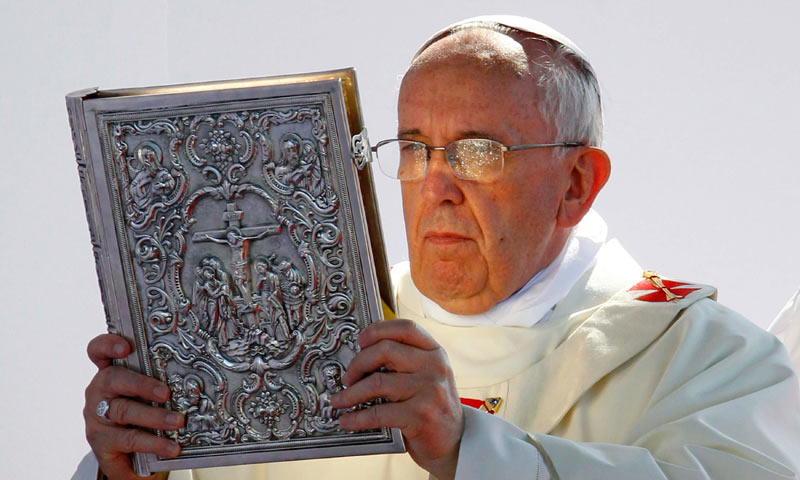
 A blast at a Protestant church in northwest Pakistan killed 77 people and wounded more than 120, a local official said.
The attack took place at the All Saints Church of Pakistan, in the violence-plagued city of Peshawar, about 120 kilometers (75 miles) from the country's capital, Islamabad.
Two attackers struck right as services concluded, according to the Peshawar Diocese. "Suicide bombers entered the church compound from the main gate and blew themselves up in the midst of the people," a statement posted on the diocese website read.
Choir members and children attending Sunday school are among the dead, they said.
The outside of the church was peppered with debris, and crowds of men and rescue officials covered in blood.
The Rev Humphrey S. Peters, Bishop of Peshawar, expressed condolences and called for prayers, but also struck a defiant tone. In a statement, Peters condemned the local government, calling the attack a "total failure" of official efforts to protect minorities.
Christians make up less than 3% of the population in the South Asian nation of 193 million.
No group immediately claimed responsibility for Sunday's attack.
A blast at a Protestant church in northwest Pakistan killed 77 people and wounded more than 120, a local official said.
The attack took place at the All Saints Church of Pakistan, in the violence-plagued city of Peshawar, about 120 kilometers (75 miles) from the country's capital, Islamabad.
Two attackers struck right as services concluded, according to the Peshawar Diocese. "Suicide bombers entered the church compound from the main gate and blew themselves up in the midst of the people," a statement posted on the diocese website read.
Choir members and children attending Sunday school are among the dead, they said.
The outside of the church was peppered with debris, and crowds of men and rescue officials covered in blood.
The Rev Humphrey S. Peters, Bishop of Peshawar, expressed condolences and called for prayers, but also struck a defiant tone. In a statement, Peters condemned the local government, calling the attack a "total failure" of official efforts to protect minorities.
Christians make up less than 3% of the population in the South Asian nation of 193 million.
No group immediately claimed responsibility for Sunday's attack.
 Former President Asif Ali Zardari has strongly condemned the suicide attack inside a church in Peshawar killing scores of innocent people including women and children and injuring many more.
In a message the former President said that no words were strong enough to condemn the barbaric and cruel attack on peaceful citizens professing a faith different from that of the majority and whose only fault was that they were offering their prayers.
He said the latest suicide attack should serve to open the eyes of those who still believe in appeasing the militants.
The militants cannot be appeased, they must not be, he said. Our values, our way of life and our very survival is threatened by the militants.
This threat cannot be wished away, it has to be fought back with courage, conviction and resoluteness of the entire nation.
The former President also prayed for those who lost their lives, expressed sympathies with bereaved families and prayed for early recovery of the injured. He also directed ppp workers to assist the victims families in rehabilitation.
Patron-In-Chief of Pakistan People’s Party Bilawal Bhutto Zardari has strongly condemned the bomb blast in a Church in Peshawar killing several innocent people this morning.
In a statement, Bilawal Bhutto Zardari said that almost every segment of Pakistani society, which wants peace is being targeted by terrorists.
From schools to hospitals and bazars to the places of worship, the terrorists seem to be unrestricted in mounting attacks, he said.
Pakistan Muslim League-Quaid (PML-Q) President Senator Ch Shujat Hussain and senior central leader and former Deputy Prime Minister Ch. Parvez Elahi have expressed their heartfelt grief and sorrow over heinous incident of attack on a church in Qissa Khwani Bazar of Peshawar.
Both the leaders contacted the Bishop of Lahore Rev. Irfan Jamil on telephone and expressed their solidarity with the Christian community over the incident.
In their message, they said that they share the grief and sorrow of the Christian community, strongly condemn the incident and demand protection of places of worship of the Christian community.
Former President Asif Ali Zardari has strongly condemned the suicide attack inside a church in Peshawar killing scores of innocent people including women and children and injuring many more.
In a message the former President said that no words were strong enough to condemn the barbaric and cruel attack on peaceful citizens professing a faith different from that of the majority and whose only fault was that they were offering their prayers.
He said the latest suicide attack should serve to open the eyes of those who still believe in appeasing the militants.
The militants cannot be appeased, they must not be, he said. Our values, our way of life and our very survival is threatened by the militants.
This threat cannot be wished away, it has to be fought back with courage, conviction and resoluteness of the entire nation.
The former President also prayed for those who lost their lives, expressed sympathies with bereaved families and prayed for early recovery of the injured. He also directed ppp workers to assist the victims families in rehabilitation.
Patron-In-Chief of Pakistan People’s Party Bilawal Bhutto Zardari has strongly condemned the bomb blast in a Church in Peshawar killing several innocent people this morning.
In a statement, Bilawal Bhutto Zardari said that almost every segment of Pakistani society, which wants peace is being targeted by terrorists.
From schools to hospitals and bazars to the places of worship, the terrorists seem to be unrestricted in mounting attacks, he said.
Pakistan Muslim League-Quaid (PML-Q) President Senator Ch Shujat Hussain and senior central leader and former Deputy Prime Minister Ch. Parvez Elahi have expressed their heartfelt grief and sorrow over heinous incident of attack on a church in Qissa Khwani Bazar of Peshawar.
Both the leaders contacted the Bishop of Lahore Rev. Irfan Jamil on telephone and expressed their solidarity with the Christian community over the incident.
In their message, they said that they share the grief and sorrow of the Christian community, strongly condemn the incident and demand protection of places of worship of the Christian community.
http://mediacellppp.wordpress.com/

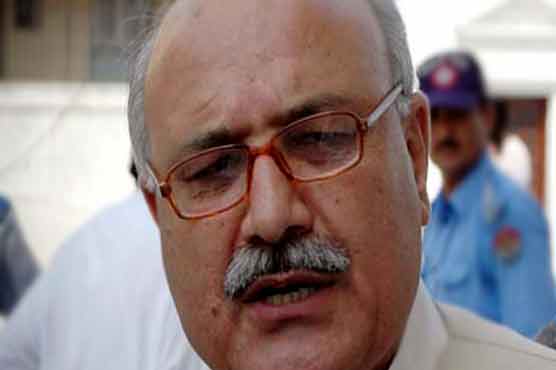


Six people were killed and three others injured in drone strike in South Waziristan on Sunday, Geo News reported. Sources said the unmanned jet fired two missiles at a house in Makeen area near the border. As a result, six people were killed and three others injured. The house was badly damaged in the strike, the sources added.The drone continued hovering over the area after the strike, sources said.
Awami National Party (ANP) leader Ghulam Ahmad Bilour, who himself is facing severe threat from the terrorists, lost no time to reach the Church attacked by two suicide bombers for expressing his sympathy and solidarity with the mourning Christian community on Sunday here, Geo News reported. However, he had to return soon as the environment over there was highly charged, while some enraged persons started voicing slogans. It may be recalled that at least 56 persons have lost their lives and over 70 wounded in this horrible suicide bombings till the filing of this report.
A blast at a Protestant church in northwest Pakistan killed at least 61 people and wounded more than 120, authorities said Sunday.
The attack took place at the All Saints Church of Pakistan, in the violence-plagued city of Peshawar, about 120 kilometers (75 miles) from the country's capital, Islamabad.
Witnesses told CNN affiliate Geo News that at least one suicide bomber blew himself up in a crowded bazaar near the church entrance as crowds of worshipers were leaving a Sunday morning service.
Some of the victims were children, the witnesses said.
The outside of the church was peppered with debris, and crowds of men and rescue officials covered in blood.
Christians make up less than 3% of the population in the South Asian nation of 193 million.
No group immediately claimed responsibility for Sunday's attack.
But Khyber Pakhtunkhwa, of which Peshawar is the capital, is rife with Islamic extremists and has been the site of clashes between Pakistani security forces and militants.
Earlier this month, a roadside bomb in the province killed a top Pakistani general, just a day after officials announced plans to withdraw troops from the region and pusue peace talks with Taliban militants.
ATaliban spokesman said then that there is no ceasefire with the Pakistani government, warning that such attacks will continue.
"We have killed them," Pakistani Taliban spokesman Shahidullah Shahid said, "as they are killing us."
http://mediacellppp.wordpress.com/
Patron-In-Chief of Pakistan Peoples Party Bilawal Bhutto Zardari has strongly condemned the bomb blast in a Church in Peshawar killing several innocent people this morning. In a statement, Bilawal Bhutto Zardari said that almost every segment of Pakistani society, which wants peace is being targeted by terrorists. From schools to hospitals and bazars to the places of worship, the terrorists seem to be unrestricted in mounting attacks, he said. The PPP leader sympathized with the grieved families of the innocent killed in the blast and demanded adequate and free medical treatment to all those wounded in the attack.
At least 55 people were killed and 70 others including women and children were injured in twin suicide blasts outside church in Qissa Khawani bazaar of Peshawar. Sources said suicide bombers blew themselves up outside Kohati gate near the Pakistan Church. Law Enforcement Agencies (LEAs) have cordoned off the area after the blast. Sources said 35 injured have been shifted to Lady Reading Hospital. More causalities are feared in the blast. The eyewitnesses said the worshipers were leaving the Church when the blast occurred. More than 500 people were present in the Church at the time of suicide attack. Commissioner Peshawar Sahidzada Anees has confirmed the death toll in the suicide blast, adding 45 people were also injured. The condition of some is said to be critical, he said. SSP City Police said a policeman was martyred and another wounded in the attack. Bomb disposal squad chief Abdul Haq said two suicide bombers blew themselves up outside the church when people were coming out after Sunday mass. Meanwhile, deputy commissioner Zaheerul Islam said "Six hundred people were inside the church when the blast took place".
http://www.ibtimes.co.uk/

At least 43 people, including women and children, have been killed in a suicide bomb blast near a church in Peshawar. A suicide bomber blew himself up near the Pakistan Church in Peshawar's Kohati Gate area, the reports said. At least 55 people have been injured, some critically. Security officials have cordoned off the area and the injured have been taken to Lady Reading Hospital. The blast occurred as more than 500 Sunday worshippers started to leave the church, Pakistan's News International reported, citing eyewitnesses. "We have received nine dead and more than 30 wounded," a spokesman for Peshawar's Lady Reading Hospital told Agence France-Presse. No militant outfit has claimed responsibility for the attack.
A local Awami National Party (ANP) leader was gunned down by unknown gunmen in Balu Khan village's Peer Baba area in Buner district on Sunday. Anwar Khan was also a member of a local peace committee which had formed a lashkar to resist the Taliban militants when they had taken control of the area in 2009.
Ahmadiyya Times
Three Ahmadiyya mosques in Sialkot, a town about 80 miles north of Lahore in the Punjab province in Pakistan, were vandalized by the police personnel themselves - not a mob, it is clarified by several sources in Pakistan. The rumors in the social media that an Ahmadiyya mosque was besieged by a large mob in Sialkot were put to rest by Mr. Saleemud Din, the national Ahmadiyya spokesperson in Pakistan. “There has been no mob attack on any Ahmadiyya Bayut Ul Zikar in Sialkot,” Saleem-ud Din wrote through Twitter in social media. An Islamists’ rally organized by Khatima-e Nubuwwat extremists did get started towards the Ahmadiyya locations in Sialkot city but, Mr. Din has confirmed, it was stopped from reaching the intended locations by the local police. In their odd attempt to pacify the angry mob, Punjab police personnel themselves defaced the properties they assumed were intended in the mullah action. Police erased Kalima (Islamic faith creed) and Quranic verses from the three Ahmadiyya mosques, Saleemud Din said. “The Bayut ul Zikar had small decorative minarets on the outer wall and doors that were damaged by the police,” Saleemud Din said. Mr. Saleemud Din says these events are a direct result of “the record number of anti-Ahmadiyya conferences allowed” recently by the authorities to spread anti-Ahmadiyya hatred across Pakistan The conferences and rallies are being convened by Islamists to commemorate the passing of 1974 anti-Ahmadiyya constitutional amendment. Saleemud Din reiterated that the police has a responsibility to protect Ahmadis - not appease the mullahs and lie down in front of their demands and comply. “Breaking few minarets are no means to deter Ahmadis from performing their spiritual duties,” Saleem ud Din wrote angrily in his twitter post. “Let me make it clear that no action what-so-ever can deter our faith & stop us from worshiping our Almighty Allah.”In their odd attempt to pacify the angry mob, Punjab police personnel themselves defaced the property by erasing Kalima (Islamic faith creed) and Quranic verses from the three Ahmadiyya mosques the police assumed were intended in the mullah action.
Ahlul Bayt News AgencyPakistan released its most senior Afghan Taliban detainee, Abdul Ghani Baradar on Saturday, a senior official of the interior ministry told AFP. “Yes Baradar has been released,” Omar Hamid, a spokesman for interior ministry told AFP, without elaborating. In order to further facilitate the Afghan reconciliation process, the detained Taliban leader, Mullah Abdul Ghani Baradar, would be released on 21 September 2013, the Foreign Ministry had said in a statement issued on Friday. Moreover, Pakistan’s top official on foreign affairs and national security Sartaj Aziz had earlier said that Baradar would be released as soon as this month. “Mullah Abdul Ghani Baradar will be freed into Pakistan and he will remain in the country until he decides himself to move anywhere he deems necessary to initiate the peace process,” Aziz told Dawn.com on Monday. Aziz, however, added that the former Taliban second-in-command will not be handed over to Afghanistan. “Handing over the key Taliban commander to Afghanistan will sabotage the purpose behind the decision of releasing him,” he said. Born in 1968 in the southern province of Uruzgan, Mullah Baradar fought the occupying Soviet forces in the late 1980s before becoming one of the founding members of the Taliban movement. When the Taliban took over in Kabul in 1996 after years of civil war, the young Baradar was a trusted friend of Mullah Omar and rose to become the movement’s top military strategist. After the fall of the Taliban, senior militants fled across the border to rear bases in Pakistan, where Mullah Baradar became a member of the so-called Quetta Shura, the movement’s ruling council. He was arrested in the country's southern port city of Karachi, reportedly in a secret raid by CIA and Pakistani agents, in an operation that was described as a huge blow to the Taliban. Meanwhile, the Afghan government had earlier welcomed Pakistan's announcement regarding release of Abdul Ghani Baradar, saying the move would help peace efforts after 12 years of war. “We welcome that this step is being taken,” Aimal Faizi, spokesman for Afghan president Hamid Karzai had told AFP. “We believe this will help the Afghan peace process. This is something we have been calling for a long time. It was on the agenda when the president visited Pakistan, so we are pleased.” Karzai made a two-day trip to Pakistan last month in a bid to overcome a series of public rows that have hampered efforts to end the war in Afghanistan as US-led Nato combat troops withdraw. During the visit, the Afghan president had urged Pakistan to help arrange peace talks between his government and the Taliban. Elements of the Pakistani state are widely accused of funding, controlling and sheltering the Taliban, but Islamabad says it will do anything to stop the fighting in Afghanistan.
http://abna.ir/data.asp?lang=3&id=465070At least three people were martyred and at least 15 injured when a hand grenade exploded near a Shia Imambargah (place of worship) in Karachi’s Landhi neighbourhood late on Thursday night. Police officials confirmed that the target of the attack was Imambargah Sajjadia located in Landhi’s Majeed Colony. The blast was so loud it was heard from far distances, said Nasir Aftab, a senior police officer. “Imambargah building among other nearby houses was partially damaged by the blast,” he said. Aftab said those injured in the attack were all Shia Muslims who were attending a religious ceremony. Three of them were in critical condition, he added. Karachi Police chief Shahid Hayat, confirming the incident, told the media that unidentified attackers hurled a hand grenade at the Imambargah, adding the attacker fled away from the scene immediately after the bast. Police and Rangers have cordoned of the area and launched an initial investigation into the incident. No group has so far claimed responsibility for the attack. However, Karachi, a city of 18 million people which contributes 42 per cent of Pakistan's GDP, is rife with murder and kidnappings and has been plagued for years by ethnic, sectarian and political violence. We the Ahlul Bayt News Agency condemn the Killings of innocent civilians in Peshawar. We strongly urge the incompetent government of Pakistan to resolve this matter and save innocent lives.


