 By MICHAEL D. SHEAR
President Obama on Sunday eulogized the 12 victims of the Navy Yard shooting and lamented what he called a “creeping resignation” in America about the inevitability of gun violence.
In remarks to service members and their families who packed the bleachers in the barracks about two and a half blocks from where the killings took place last week, Mr. Obama vowed that he would not accept inaction after the latest in a string of mass shootings during his presidency.
But the president appeared exasperated with the political system that he leads, admitting that changes in the nation’s gun laws “will not come from Washington, even when tragedy strikes Washington.” He acknowledged that his previous effort to pass new gun laws had failed, but he did not specifically call for a new political battle, saying change would come only when Americans decide they have had enough.
The question is not, he said, “whether as Americans we care in moments of tragedy. Clearly we care. Our hearts are broken again. The question is do we care enough?”
“It ought to be a shock to all of us, as a nation and a people,” he said. “It ought to obsess us. It ought to lead to some sort of transformation.”
In his remarks to about 4,000 people, Mr. Obama called the Navy Yard shooting “unique,” and he remembered by name each of the victims, offering small memories from family members and friends of those who died: a volunteer, a Bible study leader, a Navy architect, a grandmother, a soccer coach, a car lover.
“These are not statistics,” he said. “They are the lives that have been taken from us.”
But he said the Navy Yard shootings were part of a pattern of gun violence that set America apart among advanced nations. Together, he said, they represented a kind of tragedy that has become accepted as “somehow just the way it is.”
Before the ceremony, Mr. Obama and the first lady, Michelle Obama, met privately with family members of the victims.
It has become an all-too-familiar role for Mr. Obama, who has presided over similarly grim services for the victims of shootings in Newtown, Conn.; Tucson; Aurora, Colo.; Oak Creek, Wis.; and Fort Hood, Tex. At each event, the president has sought to find the right balance between the sadness of a nation and the anger of its citizens.
But past memorial services have also served to provide Mr. Obama with the emotional power to fuel his efforts to curb gun violence. During each event, the president has urged the nation to pass laws that would keep firearms out of the hands of criminals and mentally ill people.
That message reached a fever pitch after the service for the 20 children who died at Sandy Hook Elementary School in Newtown, when Mr. Obama declared that it was time for Washington to take action.
“In the coming weeks,” he said at the Newtown memorial, “I will use whatever power this office holds to engage my fellow citizens — from law enforcement to mental health professionals to parents and educators — in an effort aimed at preventing more tragedies like this.”
That promise led to an effort by the administration to push through aggressive gun restrictions, including an expanded background-check system that would have closed loopholes that allowed guns to be sold without a check. But months later, that effort failed when the Senate could not pass a compromise background-check bill amid fierce opposition from the National Rifle Association and lawmakers who favor gun rights.
The president on Sunday did not specifically pledge to try again, noting that “the politics are difficult, as we saw this spring.” But he sought to reassure supporters of gun control measures that they would be successful, eventually, because of the grief that tragedies like the Navy Yard shooting produce.
“It may not happen tomorrow and it may not happen next week and it may not happen next month,” he said. “But it will happen, because it’s the change we need.
“Our tears are not enough,” he added. “Our words and our prayers are not enough.” If Americans want to honor the 12 men and women who died at the Navy Yard, he said, “we’re going to have to change. We’re going to have to change.”
Mr. Obama quoted from Robert F. Kennedy’s speech in the hours after Martin Luther King Jr. was assassinated in 1968. In that speech, the president said, Mr. Kennedy quoted a poet who wrote that “even in our sleep, pain which cannot forget falls drop by drop upon the heart” until later comes “wisdom through the awful grace of God.”
Mr. Obama ended his remarks by urging that “in our grief, let us seek that grace. Let us find that wisdom.”
The United States Navy Band played somber music as the guests quietly filed in ahead of the speakers, who included Vice Adm. William Hilarides, the commander of Naval Sea Systems Command, where the shootings took place.
Also speaking were Vincent Gray, the mayor of Washington; Adm. Jonathan Greenert, the chief of naval operations; Ray Mabus, the secretary of the Navy; and Chuck Hagel, the secretary of defense.
Mr. Gray echoed Mr. Obama’s frustration with the refusal to pass new gun laws, saying that “this time it happened within the view of our Capitol dome and I, for one, will not be silent about the fact that the time has come for action.”
Mr. Hagel declared that “together, we will recover.”
The memorial wound down with a reading of the names of the 12 people who were killed at the Navy Yard, and then a long, sad rendition of taps.
By MICHAEL D. SHEAR
President Obama on Sunday eulogized the 12 victims of the Navy Yard shooting and lamented what he called a “creeping resignation” in America about the inevitability of gun violence.
In remarks to service members and their families who packed the bleachers in the barracks about two and a half blocks from where the killings took place last week, Mr. Obama vowed that he would not accept inaction after the latest in a string of mass shootings during his presidency.
But the president appeared exasperated with the political system that he leads, admitting that changes in the nation’s gun laws “will not come from Washington, even when tragedy strikes Washington.” He acknowledged that his previous effort to pass new gun laws had failed, but he did not specifically call for a new political battle, saying change would come only when Americans decide they have had enough.
The question is not, he said, “whether as Americans we care in moments of tragedy. Clearly we care. Our hearts are broken again. The question is do we care enough?”
“It ought to be a shock to all of us, as a nation and a people,” he said. “It ought to obsess us. It ought to lead to some sort of transformation.”
In his remarks to about 4,000 people, Mr. Obama called the Navy Yard shooting “unique,” and he remembered by name each of the victims, offering small memories from family members and friends of those who died: a volunteer, a Bible study leader, a Navy architect, a grandmother, a soccer coach, a car lover.
“These are not statistics,” he said. “They are the lives that have been taken from us.”
But he said the Navy Yard shootings were part of a pattern of gun violence that set America apart among advanced nations. Together, he said, they represented a kind of tragedy that has become accepted as “somehow just the way it is.”
Before the ceremony, Mr. Obama and the first lady, Michelle Obama, met privately with family members of the victims.
It has become an all-too-familiar role for Mr. Obama, who has presided over similarly grim services for the victims of shootings in Newtown, Conn.; Tucson; Aurora, Colo.; Oak Creek, Wis.; and Fort Hood, Tex. At each event, the president has sought to find the right balance between the sadness of a nation and the anger of its citizens.
But past memorial services have also served to provide Mr. Obama with the emotional power to fuel his efforts to curb gun violence. During each event, the president has urged the nation to pass laws that would keep firearms out of the hands of criminals and mentally ill people.
That message reached a fever pitch after the service for the 20 children who died at Sandy Hook Elementary School in Newtown, when Mr. Obama declared that it was time for Washington to take action.
“In the coming weeks,” he said at the Newtown memorial, “I will use whatever power this office holds to engage my fellow citizens — from law enforcement to mental health professionals to parents and educators — in an effort aimed at preventing more tragedies like this.”
That promise led to an effort by the administration to push through aggressive gun restrictions, including an expanded background-check system that would have closed loopholes that allowed guns to be sold without a check. But months later, that effort failed when the Senate could not pass a compromise background-check bill amid fierce opposition from the National Rifle Association and lawmakers who favor gun rights.
The president on Sunday did not specifically pledge to try again, noting that “the politics are difficult, as we saw this spring.” But he sought to reassure supporters of gun control measures that they would be successful, eventually, because of the grief that tragedies like the Navy Yard shooting produce.
“It may not happen tomorrow and it may not happen next week and it may not happen next month,” he said. “But it will happen, because it’s the change we need.
“Our tears are not enough,” he added. “Our words and our prayers are not enough.” If Americans want to honor the 12 men and women who died at the Navy Yard, he said, “we’re going to have to change. We’re going to have to change.”
Mr. Obama quoted from Robert F. Kennedy’s speech in the hours after Martin Luther King Jr. was assassinated in 1968. In that speech, the president said, Mr. Kennedy quoted a poet who wrote that “even in our sleep, pain which cannot forget falls drop by drop upon the heart” until later comes “wisdom through the awful grace of God.”
Mr. Obama ended his remarks by urging that “in our grief, let us seek that grace. Let us find that wisdom.”
The United States Navy Band played somber music as the guests quietly filed in ahead of the speakers, who included Vice Adm. William Hilarides, the commander of Naval Sea Systems Command, where the shootings took place.
Also speaking were Vincent Gray, the mayor of Washington; Adm. Jonathan Greenert, the chief of naval operations; Ray Mabus, the secretary of the Navy; and Chuck Hagel, the secretary of defense.
Mr. Gray echoed Mr. Obama’s frustration with the refusal to pass new gun laws, saying that “this time it happened within the view of our Capitol dome and I, for one, will not be silent about the fact that the time has come for action.”
Mr. Hagel declared that “together, we will recover.”
The memorial wound down with a reading of the names of the 12 people who were killed at the Navy Yard, and then a long, sad rendition of taps.
Sunday, September 22, 2013
Honoring Navy Yard Victims, Obama Asks: ‘Do We Care Enough’ to Change?
By MICHAEL D. SHEAR
President Obama on Sunday eulogized the 12 victims of the Navy Yard shooting and lamented what he called a “creeping resignation” in America about the inevitability of gun violence.
In remarks to service members and their families who packed the bleachers in the barracks about two and a half blocks from where the killings took place last week, Mr. Obama vowed that he would not accept inaction after the latest in a string of mass shootings during his presidency.
But the president appeared exasperated with the political system that he leads, admitting that changes in the nation’s gun laws “will not come from Washington, even when tragedy strikes Washington.” He acknowledged that his previous effort to pass new gun laws had failed, but he did not specifically call for a new political battle, saying change would come only when Americans decide they have had enough.
The question is not, he said, “whether as Americans we care in moments of tragedy. Clearly we care. Our hearts are broken again. The question is do we care enough?”
“It ought to be a shock to all of us, as a nation and a people,” he said. “It ought to obsess us. It ought to lead to some sort of transformation.”
In his remarks to about 4,000 people, Mr. Obama called the Navy Yard shooting “unique,” and he remembered by name each of the victims, offering small memories from family members and friends of those who died: a volunteer, a Bible study leader, a Navy architect, a grandmother, a soccer coach, a car lover.
“These are not statistics,” he said. “They are the lives that have been taken from us.”
But he said the Navy Yard shootings were part of a pattern of gun violence that set America apart among advanced nations. Together, he said, they represented a kind of tragedy that has become accepted as “somehow just the way it is.”
Before the ceremony, Mr. Obama and the first lady, Michelle Obama, met privately with family members of the victims.
It has become an all-too-familiar role for Mr. Obama, who has presided over similarly grim services for the victims of shootings in Newtown, Conn.; Tucson; Aurora, Colo.; Oak Creek, Wis.; and Fort Hood, Tex. At each event, the president has sought to find the right balance between the sadness of a nation and the anger of its citizens.
But past memorial services have also served to provide Mr. Obama with the emotional power to fuel his efforts to curb gun violence. During each event, the president has urged the nation to pass laws that would keep firearms out of the hands of criminals and mentally ill people.
That message reached a fever pitch after the service for the 20 children who died at Sandy Hook Elementary School in Newtown, when Mr. Obama declared that it was time for Washington to take action.
“In the coming weeks,” he said at the Newtown memorial, “I will use whatever power this office holds to engage my fellow citizens — from law enforcement to mental health professionals to parents and educators — in an effort aimed at preventing more tragedies like this.”
That promise led to an effort by the administration to push through aggressive gun restrictions, including an expanded background-check system that would have closed loopholes that allowed guns to be sold without a check. But months later, that effort failed when the Senate could not pass a compromise background-check bill amid fierce opposition from the National Rifle Association and lawmakers who favor gun rights.
The president on Sunday did not specifically pledge to try again, noting that “the politics are difficult, as we saw this spring.” But he sought to reassure supporters of gun control measures that they would be successful, eventually, because of the grief that tragedies like the Navy Yard shooting produce.
“It may not happen tomorrow and it may not happen next week and it may not happen next month,” he said. “But it will happen, because it’s the change we need.
“Our tears are not enough,” he added. “Our words and our prayers are not enough.” If Americans want to honor the 12 men and women who died at the Navy Yard, he said, “we’re going to have to change. We’re going to have to change.”
Mr. Obama quoted from Robert F. Kennedy’s speech in the hours after Martin Luther King Jr. was assassinated in 1968. In that speech, the president said, Mr. Kennedy quoted a poet who wrote that “even in our sleep, pain which cannot forget falls drop by drop upon the heart” until later comes “wisdom through the awful grace of God.”
Mr. Obama ended his remarks by urging that “in our grief, let us seek that grace. Let us find that wisdom.”
The United States Navy Band played somber music as the guests quietly filed in ahead of the speakers, who included Vice Adm. William Hilarides, the commander of Naval Sea Systems Command, where the shootings took place.
Also speaking were Vincent Gray, the mayor of Washington; Adm. Jonathan Greenert, the chief of naval operations; Ray Mabus, the secretary of the Navy; and Chuck Hagel, the secretary of defense.
Mr. Gray echoed Mr. Obama’s frustration with the refusal to pass new gun laws, saying that “this time it happened within the view of our Capitol dome and I, for one, will not be silent about the fact that the time has come for action.”
Mr. Hagel declared that “together, we will recover.”
The memorial wound down with a reading of the names of the 12 people who were killed at the Navy Yard, and then a long, sad rendition of taps.
Noor Jahan remembered on her 86th birth anniversary
Legendary singer and actress Noor Jahan
remembered on Saturday on her 86th birth anniversary.
Noor Jehan was the greatest film and music personality in the history of showbiz in Pakistan. Madam Noor Jahan was born on September 21, 1926 at Qasoor, Punjab.
She started her film career in the age of just nine years old and became super star as baby artist and then a top singer and actress in Indian movies.
After the partition, she moved from Bombay and started her film career in Pakistan as actress, since 1959 she became playback singer and dominated in more than 35 years.
She sung appropriately more than six thousand songs in Urdu, Punjabi and Sindhi films.
She legendary playback singer Malika-e-Tarannum Noor Jehan was an equally proficient ghazal singer. With rigorous training in classical music, Noor Jehan employed the essential features necessary to present the ghazal in an exceptional manner.
After partition, she moved from Bombay and started her film career in
Pakistan as actress, singer and the first female film director with film Chann We in 1951. Her last film Ghalib was released in 1961.
Since 1959 she became playback singer and dominated in more than 35 years. She sung appropriately more than six thousand songs in Urdu, Punjabi and Sindhi films.
She received many awards, including the highest Pakistani honour in
entertainment, Tamgha-e-Imtiaz (The Pride of Performance) in 1966.
She also sang Many Patriotic songs during 1965 India-Pakistan war which became very popular.
Madam Noor Jehan was born in a very poor family on September 21, 1926 at Qasoor, Punjab and died on December 23, 2000 at Karachi.
Pakistan Post has issued a commemorative postage stamp of 8 rupees
denomination on the occasion of her 86th birth anniversary.
Pope calls Pakistan church attack act of hate, war

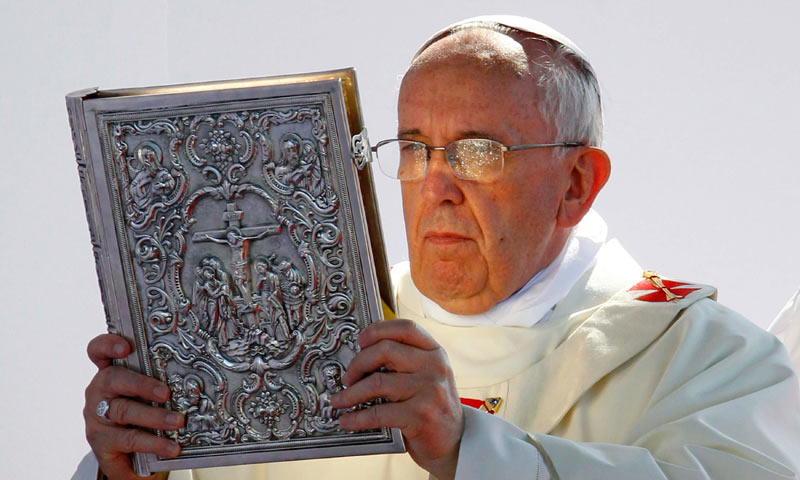
Muslim Suicide bombers kill 77 Christens at Pakistan church
 A blast at a Protestant church in northwest Pakistan killed 77 people and wounded more than 120, a local official said.
The attack took place at the All Saints Church of Pakistan, in the violence-plagued city of Peshawar, about 120 kilometers (75 miles) from the country's capital, Islamabad.
Two attackers struck right as services concluded, according to the Peshawar Diocese. "Suicide bombers entered the church compound from the main gate and blew themselves up in the midst of the people," a statement posted on the diocese website read.
Choir members and children attending Sunday school are among the dead, they said.
The outside of the church was peppered with debris, and crowds of men and rescue officials covered in blood.
The Rev Humphrey S. Peters, Bishop of Peshawar, expressed condolences and called for prayers, but also struck a defiant tone. In a statement, Peters condemned the local government, calling the attack a "total failure" of official efforts to protect minorities.
Christians make up less than 3% of the population in the South Asian nation of 193 million.
No group immediately claimed responsibility for Sunday's attack.
A blast at a Protestant church in northwest Pakistan killed 77 people and wounded more than 120, a local official said.
The attack took place at the All Saints Church of Pakistan, in the violence-plagued city of Peshawar, about 120 kilometers (75 miles) from the country's capital, Islamabad.
Two attackers struck right as services concluded, according to the Peshawar Diocese. "Suicide bombers entered the church compound from the main gate and blew themselves up in the midst of the people," a statement posted on the diocese website read.
Choir members and children attending Sunday school are among the dead, they said.
The outside of the church was peppered with debris, and crowds of men and rescue officials covered in blood.
The Rev Humphrey S. Peters, Bishop of Peshawar, expressed condolences and called for prayers, but also struck a defiant tone. In a statement, Peters condemned the local government, calling the attack a "total failure" of official efforts to protect minorities.
Christians make up less than 3% of the population in the South Asian nation of 193 million.
No group immediately claimed responsibility for Sunday's attack.
Zardari, Bilawal, Shujaat condemn Peshawar church attack
 Former President Asif Ali Zardari has strongly condemned the suicide attack inside a church in Peshawar killing scores of innocent people including women and children and injuring many more.
In a message the former President said that no words were strong enough to condemn the barbaric and cruel attack on peaceful citizens professing a faith different from that of the majority and whose only fault was that they were offering their prayers.
He said the latest suicide attack should serve to open the eyes of those who still believe in appeasing the militants.
The militants cannot be appeased, they must not be, he said. Our values, our way of life and our very survival is threatened by the militants.
This threat cannot be wished away, it has to be fought back with courage, conviction and resoluteness of the entire nation.
The former President also prayed for those who lost their lives, expressed sympathies with bereaved families and prayed for early recovery of the injured. He also directed ppp workers to assist the victims families in rehabilitation.
Patron-In-Chief of Pakistan People’s Party Bilawal Bhutto Zardari has strongly condemned the bomb blast in a Church in Peshawar killing several innocent people this morning.
In a statement, Bilawal Bhutto Zardari said that almost every segment of Pakistani society, which wants peace is being targeted by terrorists.
From schools to hospitals and bazars to the places of worship, the terrorists seem to be unrestricted in mounting attacks, he said.
Pakistan Muslim League-Quaid (PML-Q) President Senator Ch Shujat Hussain and senior central leader and former Deputy Prime Minister Ch. Parvez Elahi have expressed their heartfelt grief and sorrow over heinous incident of attack on a church in Qissa Khwani Bazar of Peshawar.
Both the leaders contacted the Bishop of Lahore Rev. Irfan Jamil on telephone and expressed their solidarity with the Christian community over the incident.
In their message, they said that they share the grief and sorrow of the Christian community, strongly condemn the incident and demand protection of places of worship of the Christian community.
Former President Asif Ali Zardari has strongly condemned the suicide attack inside a church in Peshawar killing scores of innocent people including women and children and injuring many more.
In a message the former President said that no words were strong enough to condemn the barbaric and cruel attack on peaceful citizens professing a faith different from that of the majority and whose only fault was that they were offering their prayers.
He said the latest suicide attack should serve to open the eyes of those who still believe in appeasing the militants.
The militants cannot be appeased, they must not be, he said. Our values, our way of life and our very survival is threatened by the militants.
This threat cannot be wished away, it has to be fought back with courage, conviction and resoluteness of the entire nation.
The former President also prayed for those who lost their lives, expressed sympathies with bereaved families and prayed for early recovery of the injured. He also directed ppp workers to assist the victims families in rehabilitation.
Patron-In-Chief of Pakistan People’s Party Bilawal Bhutto Zardari has strongly condemned the bomb blast in a Church in Peshawar killing several innocent people this morning.
In a statement, Bilawal Bhutto Zardari said that almost every segment of Pakistani society, which wants peace is being targeted by terrorists.
From schools to hospitals and bazars to the places of worship, the terrorists seem to be unrestricted in mounting attacks, he said.
Pakistan Muslim League-Quaid (PML-Q) President Senator Ch Shujat Hussain and senior central leader and former Deputy Prime Minister Ch. Parvez Elahi have expressed their heartfelt grief and sorrow over heinous incident of attack on a church in Qissa Khwani Bazar of Peshawar.
Both the leaders contacted the Bishop of Lahore Rev. Irfan Jamil on telephone and expressed their solidarity with the Christian community over the incident.
In their message, they said that they share the grief and sorrow of the Christian community, strongly condemn the incident and demand protection of places of worship of the Christian community.
Bilawal Bhutto strongly condemns inhumane attack on Peshawar Church, announces to raise funds to rebuild the Church
http://mediacellppp.wordpress.com/


Peshawar Chruch Attack: Govt has no policy over terrorism: ANP
Dialogue with Taliban? Deobandi militants of TTP-ASWJ massacre at least 70 Christians in Peshawar


Drone strike kills six in South Waziristan
Six people were killed and three others injured in drone strike in South Waziristan on Sunday, Geo News reported. Sources said the unmanned jet fired two missiles at a house in Makeen area near the border. As a result, six people were killed and three others injured. The house was badly damaged in the strike, the sources added.The drone continued hovering over the area after the strike, sources said.

Peshawar Church attack: Bilour arrives on the spot to express solidarity
Awami National Party (ANP) leader Ghulam Ahmad Bilour, who himself is facing severe threat from the terrorists, lost no time to reach the Church attacked by two suicide bombers for expressing his sympathy and solidarity with the mourning Christian community on Sunday here, Geo News reported. However, he had to return soon as the environment over there was highly charged, while some enraged persons started voicing slogans. It may be recalled that at least 56 persons have lost their lives and over 70 wounded in this horrible suicide bombings till the filing of this report.
Blast at Pakistan church kills more than 60
A blast at a Protestant church in northwest Pakistan killed at least 61 people and wounded more than 120, authorities said Sunday.
The attack took place at the All Saints Church of Pakistan, in the violence-plagued city of Peshawar, about 120 kilometers (75 miles) from the country's capital, Islamabad.
Witnesses told CNN affiliate Geo News that at least one suicide bomber blew himself up in a crowded bazaar near the church entrance as crowds of worshipers were leaving a Sunday morning service.
Some of the victims were children, the witnesses said.
The outside of the church was peppered with debris, and crowds of men and rescue officials covered in blood.
Christians make up less than 3% of the population in the South Asian nation of 193 million.
No group immediately claimed responsibility for Sunday's attack.
But Khyber Pakhtunkhwa, of which Peshawar is the capital, is rife with Islamic extremists and has been the site of clashes between Pakistani security forces and militants.
Earlier this month, a roadside bomb in the province killed a top Pakistani general, just a day after officials announced plans to withdraw troops from the region and pusue peace talks with Taliban militants.
ATaliban spokesman said then that there is no ceasefire with the Pakistani government, warning that such attacks will continue.
"We have killed them," Pakistani Taliban spokesman Shahidullah Shahid said, "as they are killing us."
Bilawal Bhutto Condemns Attack on Peshawar Church
http://mediacellppp.wordpress.com/
Patron-In-Chief of Pakistan Peoples Party Bilawal Bhutto Zardari has strongly condemned the bomb blast in a Church in Peshawar killing several innocent people this morning. In a statement, Bilawal Bhutto Zardari said that almost every segment of Pakistani society, which wants peace is being targeted by terrorists. From schools to hospitals and bazars to the places of worship, the terrorists seem to be unrestricted in mounting attacks, he said. The PPP leader sympathized with the grieved families of the innocent killed in the blast and demanded adequate and free medical treatment to all those wounded in the attack.

Deaths in Peshawar church bombing rise to 55
At least 55 people were killed and 70 others including women and children were injured in twin suicide blasts outside church in Qissa Khawani bazaar of Peshawar. Sources said suicide bombers blew themselves up outside Kohati gate near the Pakistan Church. Law Enforcement Agencies (LEAs) have cordoned off the area after the blast. Sources said 35 injured have been shifted to Lady Reading Hospital. More causalities are feared in the blast. The eyewitnesses said the worshipers were leaving the Church when the blast occurred. More than 500 people were present in the Church at the time of suicide attack. Commissioner Peshawar Sahidzada Anees has confirmed the death toll in the suicide blast, adding 45 people were also injured. The condition of some is said to be critical, he said. SSP City Police said a policeman was martyred and another wounded in the attack. Bomb disposal squad chief Abdul Haq said two suicide bombers blew themselves up outside the church when people were coming out after Sunday mass. Meanwhile, deputy commissioner Zaheerul Islam said "Six hundred people were inside the church when the blast took place".
Suicide Blast at Church in Pakistan's Peshawar Kills 50 INNOCENT Christens
http://www.ibtimes.co.uk/

At least 43 people, including women and children, have been killed in a suicide bomb blast near a church in Peshawar. A suicide bomber blew himself up near the Pakistan Church in Peshawar's Kohati Gate area, the reports said. At least 55 people have been injured, some critically. Security officials have cordoned off the area and the injured have been taken to Lady Reading Hospital. The blast occurred as more than 500 Sunday worshippers started to leave the church, Pakistan's News International reported, citing eyewitnesses. "We have received nine dead and more than 30 wounded," a spokesman for Peshawar's Lady Reading Hospital told Agence France-Presse. No militant outfit has claimed responsibility for the attack.
ANP's peace committee member gunned down in Buner
A local Awami National Party (ANP) leader was gunned down by unknown gunmen in Balu Khan village's Peer Baba area in Buner district on Sunday. Anwar Khan was also a member of a local peace committee which had formed a lashkar to resist the Taliban militants when they had taken control of the area in 2009.
Pakistan: 3 Ahmadiyya mosques vandalized by Punjab police personnel
Ahmadiyya Times
Three Ahmadiyya mosques in Sialkot, a town about 80 miles north of Lahore in the Punjab province in Pakistan, were vandalized by the police personnel themselves - not a mob, it is clarified by several sources in Pakistan. The rumors in the social media that an Ahmadiyya mosque was besieged by a large mob in Sialkot were put to rest by Mr. Saleemud Din, the national Ahmadiyya spokesperson in Pakistan. “There has been no mob attack on any Ahmadiyya Bayut Ul Zikar in Sialkot,” Saleem-ud Din wrote through Twitter in social media. An Islamists’ rally organized by Khatima-e Nubuwwat extremists did get started towards the Ahmadiyya locations in Sialkot city but, Mr. Din has confirmed, it was stopped from reaching the intended locations by the local police. In their odd attempt to pacify the angry mob, Punjab police personnel themselves defaced the properties they assumed were intended in the mullah action. Police erased Kalima (Islamic faith creed) and Quranic verses from the three Ahmadiyya mosques, Saleemud Din said. “The Bayut ul Zikar had small decorative minarets on the outer wall and doors that were damaged by the police,” Saleemud Din said. Mr. Saleemud Din says these events are a direct result of “the record number of anti-Ahmadiyya conferences allowed” recently by the authorities to spread anti-Ahmadiyya hatred across Pakistan The conferences and rallies are being convened by Islamists to commemorate the passing of 1974 anti-Ahmadiyya constitutional amendment. Saleemud Din reiterated that the police has a responsibility to protect Ahmadis - not appease the mullahs and lie down in front of their demands and comply. “Breaking few minarets are no means to deter Ahmadis from performing their spiritual duties,” Saleem ud Din wrote angrily in his twitter post. “Let me make it clear that no action what-so-ever can deter our faith & stop us from worshiping our Almighty Allah.”In their odd attempt to pacify the angry mob, Punjab police personnel themselves defaced the property by erasing Kalima (Islamic faith creed) and Quranic verses from the three Ahmadiyya mosques the police assumed were intended in the mullah action.

Pakistan's Nawaz Sharif agreed to massacre more Shias by releasing senior Taliban commander
Ahlul Bayt News AgencyPakistan released its most senior Afghan Taliban detainee, Abdul Ghani Baradar on Saturday, a senior official of the interior ministry told AFP. “Yes Baradar has been released,” Omar Hamid, a spokesman for interior ministry told AFP, without elaborating. In order to further facilitate the Afghan reconciliation process, the detained Taliban leader, Mullah Abdul Ghani Baradar, would be released on 21 September 2013, the Foreign Ministry had said in a statement issued on Friday. Moreover, Pakistan’s top official on foreign affairs and national security Sartaj Aziz had earlier said that Baradar would be released as soon as this month. “Mullah Abdul Ghani Baradar will be freed into Pakistan and he will remain in the country until he decides himself to move anywhere he deems necessary to initiate the peace process,” Aziz told Dawn.com on Monday. Aziz, however, added that the former Taliban second-in-command will not be handed over to Afghanistan. “Handing over the key Taliban commander to Afghanistan will sabotage the purpose behind the decision of releasing him,” he said. Born in 1968 in the southern province of Uruzgan, Mullah Baradar fought the occupying Soviet forces in the late 1980s before becoming one of the founding members of the Taliban movement. When the Taliban took over in Kabul in 1996 after years of civil war, the young Baradar was a trusted friend of Mullah Omar and rose to become the movement’s top military strategist. After the fall of the Taliban, senior militants fled across the border to rear bases in Pakistan, where Mullah Baradar became a member of the so-called Quetta Shura, the movement’s ruling council. He was arrested in the country's southern port city of Karachi, reportedly in a secret raid by CIA and Pakistani agents, in an operation that was described as a huge blow to the Taliban. Meanwhile, the Afghan government had earlier welcomed Pakistan's announcement regarding release of Abdul Ghani Baradar, saying the move would help peace efforts after 12 years of war. “We welcome that this step is being taken,” Aimal Faizi, spokesman for Afghan president Hamid Karzai had told AFP. “We believe this will help the Afghan peace process. This is something we have been calling for a long time. It was on the agenda when the president visited Pakistan, so we are pleased.” Karzai made a two-day trip to Pakistan last month in a bid to overcome a series of public rows that have hampered efforts to end the war in Afghanistan as US-led Nato combat troops withdraw. During the visit, the Afghan president had urged Pakistan to help arrange peace talks between his government and the Taliban. Elements of the Pakistani state are widely accused of funding, controlling and sheltering the Taliban, but Islamabad says it will do anything to stop the fighting in Afghanistan.
Pakistan's Incompetent Govt: Blast Near Shia Mosque Kills 3, Injures 15 in Karachi
http://abna.ir/data.asp?lang=3&id=465070At least three people were martyred and at least 15 injured when a hand grenade exploded near a Shia Imambargah (place of worship) in Karachi’s Landhi neighbourhood late on Thursday night. Police officials confirmed that the target of the attack was Imambargah Sajjadia located in Landhi’s Majeed Colony. The blast was so loud it was heard from far distances, said Nasir Aftab, a senior police officer. “Imambargah building among other nearby houses was partially damaged by the blast,” he said. Aftab said those injured in the attack were all Shia Muslims who were attending a religious ceremony. Three of them were in critical condition, he added. Karachi Police chief Shahid Hayat, confirming the incident, told the media that unidentified attackers hurled a hand grenade at the Imambargah, adding the attacker fled away from the scene immediately after the bast. Police and Rangers have cordoned of the area and launched an initial investigation into the incident. No group has so far claimed responsibility for the attack. However, Karachi, a city of 18 million people which contributes 42 per cent of Pakistan's GDP, is rife with murder and kidnappings and has been plagued for years by ethnic, sectarian and political violence. We the Ahlul Bayt News Agency condemn the Killings of innocent civilians in Peshawar. We strongly urge the incompetent government of Pakistan to resolve this matter and save innocent lives.
Security Essential to Avoid Hindu Exodus From Balochistan
Interview by Muhammad Akbar Notezai Professor Aziz Mohammad Bugti is a renowned Baloch author, intellectual and analyst. He has authored several books in Urdu and Balochi languages about the Baloch people and Balochistan. He has also a great contribution toward Balochi Literature. Our correspondent Muhammad Akbar Notezai spoke to him about the history of Hindus based in Balochistan, their contributions and contemporary challenges. Excerpts:The Baloch Hal
How did the Hindus settle in Balochistan? It is exactly unknown how the Hindus settled in Balochistan. But it is said that the Hindus lived in the adjacent areas of Karachi, like Hub and Lasbella before the invasion of Mohammad Bin Qasim (712 AD). Besides, traces of the Hindus settlement are also found in Kalat and Sevi (Presently known as Sibi). The name of Kalat city has also been taken from a Hindu ruler, the Kalat Seva. But after the arrival of the Arabs and Balochs, Hindus’ influence and domination dwindled gradually and slowly. In Balochistan, how do you trace back the history of sacred places of Hindus? In Balochistan, the sacred places of Hindus are located in Bella, Kalat Seva (Kali Mata Temple) and Sevi, which are very old. These sacred places have been existing in these districts since Hindus’ domination in the areas of Balochistan. The Hindu people’s hub, Deybal, where they ruled, is near the Bella. The Hinglaj Mata temple is situated there. It signifies, the Hindus have ruled once over here too. Still, Hindu devotees come from all over Pakistan to visit Hinglaj Mata temple of Balochistan. How do you describe the plight of the Hindus in Balochistan? Historically, the Hindus lived in Baloch populated districts. But they were also lived in Pashtun districts, such as Lorlai, Hindu Bagh (now named as Muslim Bagh) and Chaman, before the Partition days in 1947. They, after the Partition, migrated from these districts due to religious tumult. Now, a small number of Hindus lives in Pashtun-majority districts. However, the Hindus are fleeing Balochistan due to insecurity. They are migrating to Sindh and India. What are the reasons behind it? Well, they are deprived of the local people’s security and support which they enjoyed in the past. They have become strangers on their own indigenous land. The government is also not taking measures to address the challenges faced by the Hindu community. How would the Baloch elders, especially Nawab Akbar Khan Bugti, treat the Hindus community of Balochistan? The Baloch elders, especially Nawab Akbar Bugti, have been very sympathetic to the Hindu community of Balochistan. They would never isolate the Hindus from themselves and their people due to their religion. Very interestingly, Baloch and the Hindus were treated equally by the Baloch elders. They were given all kinds of freedom. Presently, it is pertinent to say that the Baloch elders cannot safeguard their rights because their tribal influence is diminishing due to the intervention of establishment in the tribal affairs. What sacrifices have they tendered for Balochistan? In Balochistan, Hindus have been tendering sacrifices from the day first. They have been side by side with the Baloch people in the struggles for rights. They have also been with each other at the time of happiness and sorrows. There have been 65 Hindus killed in Dera Bugti District of Balochistan in the military assault against Nawab Akbar Khan Bugti in March, 2005. And in that assault, many more sustained serious injuries. How can the Hindus overcome these sufferings? Hindus cannot get rid of these all sufferings until or unless they are ensured safety. It can also stop them from migrating. But if this is not done, then Hindus’ migration process may never stop.
“بلاول بھٹو زرداری کی صورت میں پاکستانی قوم کو ایک اور ذوالفقار علی بھٹو مل گیا”
http://mediacellppp.wordpress.com/


شہید محترمہ بے نظیر بھٹو اور جناب آصف علی زرداری کے صاحبزادے جناب بلاول بھٹو زردارری کی 25ویں سالگرہ کے موقع پر آج بلاول ہاؤس میں لاکھوں تہہ نیتی اور مبارک باد کے پیغام موصول ہوئے۔ ساری دنیا سے نوجوانوں نے اپنے پیغامات میں اس یقین کا اظہار کیا ہے کہ بلاول بھٹو زرداری کی صورت میں پورے پاکستان، عالم اسلام اور دنیا بھر کے لوگوں کو ایک اور “ذوالفقار علی بھٹو” مل گیا ہے۔ دنیا بھر سے موصول ہونے والے یہ پیغامات بلاول ہاؤس کراچی، بلاول ہاؤس لاہور، نوڈیرو ہاؤس، زرداری ہاؤس اسلام آباد، زرداری ہاؤس شہید بے نظیر آباد، پاکستان پیپلز پارٹی کے مختلف سیکریٹریٹ اور میڈیا دفاتر میں موصول ہوئے۔
Saturday, September 21, 2013
US Air Force once dropped live hydrogen bomb on North Carolina – report
 The revelation offers the first conclusive evidence after decades of speculation that the US military narrowly avoided a self-inflicted disaster. The incident is explained in detail in a recently declassified document written by Parker F. Jones, supervisor of the nuclear weapons safety department at Sandia National Laboratories.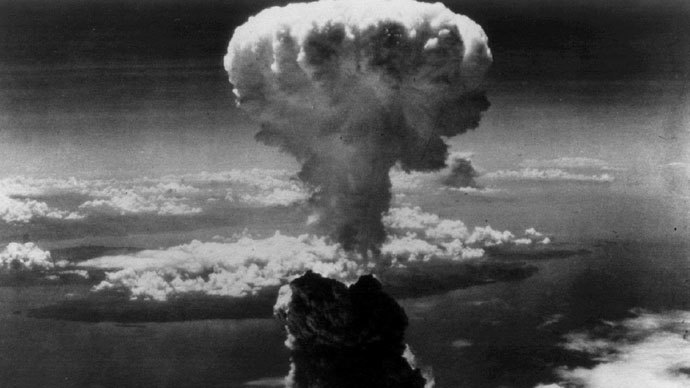
Analysis: Nairobi mall attackers:........'''why this target?'''
The militants who struck at the heart of Nairobi could scarcely have picked a target that would attract more international attention than the Westgate shopping mall. Nairobi is the transport and commercial hub of east and central Africa. It is also home to dozens of diplomats including many posted at the United Nations complex in the city, which is the only UN headquarters duty station in the developing world. The mall – 15 minutes' drive from the UN headquarters – is where well-off Kenyans and many expatriates spend their weekends. With its air-conditioned shops and themed restaurants, it attracts a multicultural crowd of shoppers and, by picking midday on Saturday as the time of their attack, the assailants aimed to maximise casualties. In her book on the anti-corruption crusader John Githongo, British author Michela Wrong offered a detailed description of the mall to describe inequalities in Kenyan society although her depiction could also be read as defining why an attacker aiming to maximise western casualties would have picked that target. "Open seven days a week, extending over two storeys and boasting motorised shopping trolleys for the disabled, its shelves offered everything from dog muzzles to mattresses, artificial flowers to birthday cards, nappies to dishwashers. Slicing Parma ham and handling French cheese takes certain skills; [supermarket] staff had been taught them and they had been drilled to the point where they could recite the precise location of key products without a moment's hesitation." The fact Kenya is a close western ally and attracts thousands of tourists annually beside being home to dozens of diplomats and expatriates has made it a favourite target of militants. Long before the 11 September attacks in New York and the 7 July bombings in London, al-Qaida militants killed more than 200 people in the US embassy bombing in downtown Nairobi on 7 August 1998. Kenya subsequently became one of the key partners of the US and Britain in the war against radical militants in the Horn of Africa. The country's troops crossed the border into Somalia in an operation against al-Shabaab militants who had staged several attacks within Kenyan borders in October 2011. Reports from witnesses caught up in the attack in the mall indicated the assailants identified themselves as affiliated to al-Shabaab and some said they were acting in response to the military operation in Somalia. "Kenya went to Somalia and killed our people. We have come to revenge," one witness, Abdul Jamal, reported the attackers as saying. Kenyan and African Union troops from Uganda and Burundi have recorded significant success in their fight against al-Shabaab. For the first time since the collapse of the Siad Barre regime in 1991, major cities such as Mogadishu and Kismayu are witnessing significant reconstruction efforts after militants were pushed out of those cities. But the repeated attacks within the borders of the troop-contributing countries, including this attack and the June 2010 bombing of football fans watching the World Cup final in the Ugandan capital Kampala, shows a major weakness in the strategy against al-Shabaab and its affiliates. While Kenya, for example, boasts a highly trained and professional army which earned plaudits for its mission to push al-Shabaab out of the port city of Kismayu, the police and immigration services in the country are viewed as corrupt. In repeated public surveys, the police force is ranked by ordinary Kenyans as the most corrupt institution in the country. Efforts to improve it must be incorporated into any strategy to stop the activities of militants in countries such as Kenya. While the military has applied a squeeze on al-Shabaab in Somalia, the internal security forces appear unable to cope with militants operating within Kenya. The world must also realise that in today's interconnected universe, the effect of having a failed state such as Somalia on the doorstep can be felt far away from its borders. Numerous militants of British and American birth have been reported as crossing from Kenya into Somalia for the last five years. One day, they could attack far beyond the country's borders. The need to rebuild a functional state in Somalia and to support the new authorities in Somalia is more urgent now than it has ever been.Murithi Mutiga
Fascist Islamist Attackers will never break Kenyan spirit
http://www.nation.co.ke/The deadly attack on Westgate Mall Saturday has once again reminded Kenyans of the need to remain vigilant against people who thrive on senseless violence.
 While it is too early to draw firm conclusions, initial reports indicate that the violent assault on one of the capital’s biggest malls was consistent with a terrorist attack.
Today, as we mourn the dead and nurse the injured, it is more important than ever for Kenyans to stand together as one — notwithstanding creed, race, religion, gender or political persuasion — and emerge stronger from this misfortune. The dark intentions of our enemies are to spread fear and despondency, and eventually bend us to their dishonourable whims. It is a pleasure this great nation must not afford them.
Kenyans have in the past proved resilient in the face of such attacks. Indeed, for the past few years, following several suspected terrorist onslaughts blamed on Somalia’s al-Shabaab militia and their sympathisers, the country’s security apparatus has taken obtrusive steps to improve safety. Metal detectors and body searches have become part of our urban life since 2011, when the Kenya Defence Forces moved into Somalia to fight the terror group, a mission that has so far been largely successful.
Frisking people at the entrance of most buildings in major towns is standard practice. And we are aware numerous attacks have been prevented in the past through sound intelligence and co-operation with foreign security agencies.
Saturday's attack was a tragic reminder that, for all their efforts, the forces which look after us are not perfect.
However, the emergency response, and the subsequent intervention by police and the military at Westgate, was commendable. Swift support by public-spirited Kenyans, some of whom took the injured to hospital and even donated blood, gladdens the heart. Updates by the Ministry of Interior and the Inspector-General of Police, including on social media, averted panic and squelched rumours.
Nonetheless, questions are bound to be asked about Kenya’s level of security alert. That a group of more than 10 heavily armed men could plan and execute an attack of this magnitude in one of the capital city’s busiest shopping and recreation locations is disturbing. Such operations demand elaborate planning and co-ordination, something the intelligence network should uncover and deter or, at the very least, detect in order to take precautions.
After the mourning, it will be necessary to shine the spotlight on the state security system that ordinary citizens, and foreign visitors, rely on to protect our borders and ask the question: How was the Westgate attack allowed to happen?
The past two months have been an unhappy season for Kenya. First the Jomo Kenyatta Airport fire, then this. A struggling economy such as Kenya’s can only take so much strain on its foundations. We cannot afford the perception of instability and insecurity that such incidents provoke.
The basis of our country’s existence is a democratic system hinged on the rule of law. Groups and individuals which plan and execute attacks like yesterday’s base their logic on hate, sectarian ideology and defensive failure. In the end, they are cowards who indiscriminately kill and maim innocent people, including children.
They must never be allowed to break the true Kenyan spirit.
While it is too early to draw firm conclusions, initial reports indicate that the violent assault on one of the capital’s biggest malls was consistent with a terrorist attack.
Today, as we mourn the dead and nurse the injured, it is more important than ever for Kenyans to stand together as one — notwithstanding creed, race, religion, gender or political persuasion — and emerge stronger from this misfortune. The dark intentions of our enemies are to spread fear and despondency, and eventually bend us to their dishonourable whims. It is a pleasure this great nation must not afford them.
Kenyans have in the past proved resilient in the face of such attacks. Indeed, for the past few years, following several suspected terrorist onslaughts blamed on Somalia’s al-Shabaab militia and their sympathisers, the country’s security apparatus has taken obtrusive steps to improve safety. Metal detectors and body searches have become part of our urban life since 2011, when the Kenya Defence Forces moved into Somalia to fight the terror group, a mission that has so far been largely successful.
Frisking people at the entrance of most buildings in major towns is standard practice. And we are aware numerous attacks have been prevented in the past through sound intelligence and co-operation with foreign security agencies.
Saturday's attack was a tragic reminder that, for all their efforts, the forces which look after us are not perfect.
However, the emergency response, and the subsequent intervention by police and the military at Westgate, was commendable. Swift support by public-spirited Kenyans, some of whom took the injured to hospital and even donated blood, gladdens the heart. Updates by the Ministry of Interior and the Inspector-General of Police, including on social media, averted panic and squelched rumours.
Nonetheless, questions are bound to be asked about Kenya’s level of security alert. That a group of more than 10 heavily armed men could plan and execute an attack of this magnitude in one of the capital city’s busiest shopping and recreation locations is disturbing. Such operations demand elaborate planning and co-ordination, something the intelligence network should uncover and deter or, at the very least, detect in order to take precautions.
After the mourning, it will be necessary to shine the spotlight on the state security system that ordinary citizens, and foreign visitors, rely on to protect our borders and ask the question: How was the Westgate attack allowed to happen?
The past two months have been an unhappy season for Kenya. First the Jomo Kenyatta Airport fire, then this. A struggling economy such as Kenya’s can only take so much strain on its foundations. We cannot afford the perception of instability and insecurity that such incidents provoke.
The basis of our country’s existence is a democratic system hinged on the rule of law. Groups and individuals which plan and execute attacks like yesterday’s base their logic on hate, sectarian ideology and defensive failure. In the end, they are cowards who indiscriminately kill and maim innocent people, including children.
They must never be allowed to break the true Kenyan spirit.
Twitter: The angriest site on the Internet?
 In the seven years since its founding, Twitter has become a go-to place for news updates, witty one-liners, political one-upmanship and even absurdist storytelling.
It's also become a go-to place for intolerant bile.
On Sunday night, Nina Davuluri, an American of Indian ancestry, was named Miss America. Immediately, the Twitterverse started spewing.
"This is Miss America... not Miss Foreign Country," said @MeredithRoanell.
"Congratulations Al-Qaeda. Our Miss America is one of you," posted @Blayne_MkItRain.
What is it about Twitter? Whether the events are earthshaking or trivial, the site of more than a half-billion accounts has something to say -- and often, it's upset.
Ben Affleck is named the new Batman; the anger flows. George Zimmerman is acquitted; people fly off the handle. Comments on sports, TV shows, politics, news media -- when there's something negative to be said, it will be said (occasionally with poor spelling and IN ALL CAPS) on Twitter.
As Stephen Colbert summarized the Miss America outcry on "The Colbert Report," "And Twitter, as usual, could not be happy."
David Reiss, a San Diego-based psychiatrist who specializes in personality dynamics, observes that Twitter's impulsiveness can get the best of people.
"It's very easy to jot something off and hit send, and you can impulsively say something without thinking it through," he says, noting that it's the reverse of the classic angry letter you write and then put in a drawer until you cool off. "With Twitter, you don't need to (do that). And if there is feedback or push back, you don't necessarily even see it."
As of Friday afternoon, Twitter had not responded to a request from CNN for comment.
'Anger is more influential'
Such anger isn't just limited to Twitter, of course. You can find it on other social media platforms, news site comment boards -- including on CNN.com -- and pretty much all over the Internet. YouTube, for example, also has been known for attracting mean-spirited comments.
Still, Twitter is an easy target. Besides the impulsiveness Reiss mentions, there's a typical litany of virtual-world reasons for Twitter's vitriol: anonymity, a perceived lack of consequences, a troll-ish desire to stir the pot.
But perhaps the most intriguing was revealed in a study published recently by Beijing University researchers. By analyzing posts on Weibo, a Chinese version of Twitter, they determined that anger is the most powerful online emotion.
Of the four basic emotions into which they classified tweets, sadness and disgust barely travel. Joy does better. But anger, like a potent virus, spreads the fastest and most widely of all.
"Our results show that anger is more influential than other emotions like joy, which indicates that the angry tweets can spread quickly and broadly in the network," the researchers wrote.The idea of Twitter anger is so prominent that Monica Stephens, a geography professor at Humboldt State University in California, put together a map titled "The Geography of Hate." The project was inspired, in part, by racial slurs on Twitter after President Obama's re-election.
The map highlights sections of the country that engage in certain hate speech based on keywords, aggregated by county and adjusted for population. The results have favored rural areas, which Stephens attributes to insularity and fear of outsiders.
Indeed, a more accurate title for the map would be "the geography of xenophobia," she says.
The map certainly hit home with certain parts of the country, Stephens says.
"So many people lashed out in anger towards me after seeing it," she says. "I have hundreds of really angry e-mails that start with the term 'racist bitch.'"
Anonymity and distance
This isn't the sort of thing that tends to happen as widely on Facebook or other social media sites. There are a couple reasons for that, says Tammy Vigil, a professor at Boston University's School of Communication.
One is that Facebook is largely a closed system in which you mainly communicate with people you know -- unlike Twitter, where a tweet goes out to the whole world.
Moreover, Facebook friends can react more directly to vitriolic posts, either by calling the poster out or simply unfriending him or her, she says. In May, the site strengthened policies to stamp out hate speech.
"With Facebook, there's more accountability," says Vigil. "Most people's Facebook accounts have multiple pictures of them, they've got connections to 'these are my friends.' There's a lot less of the anonymity, so there's a little less of the disinhibition that occurs."
Twitter also creates more distance, adds Lesley Withers, a communications professor at Central Michigan University.
"It's asynchronous -- you're not chatting real-time with another person -- so there's less of a sense that the other people out there are real," she says. A phone call or even some kinds of online dialogue establishes a connection that you're dealing with actual human beings.
But on Twitter, that connection isn't there, so "that allows us to go off in ways that we wouldn't choose to do if we had to look at another person's face when we did it."
Consequences?
Twitter's brief screeds seldom have consequences, though that may be changing. The site recently created a "report abuse" button and the media -- which is often to blame for highlighting anger -- is paying more attention to bullying on the site.
But the idea of consequences is hard for Twitter users to understand, observes Withers.
"I think people don't think about the long-term ramifications," she says. "When I talk with students about how they use social media and say that a lot of employers will look to see what kinds of things you're posting on Facebook or Twitter, I'm surprised by the number of people who say, 'Any employer that would stalk me that way online, I wouldn't want to work for them anyway.'"
There are signs that a growing number of Twitter users don't like the venom in their midst. After the nastiness with Miss America, a number of people responded with positive tweets congratulating her. Some even reprimanded the angry tweeters -- and received apologies.
"I am so sorry. I didn't think before I tweeted what I did. I absolutely did not mean to hurt or offend anyone. Again I am SO very sorry!!!" tweeted @JAyres15.
Withers points out that the system has much to overcome.
"People use Twitter to get reactions out of others," she says. "It's like a popularity contest: If you can put something out there that's quick and inflammatory and it gets retweeted a ton, that's your feedback -- that's how you know that it was an interesting or effective tweet. And people don't seem to be as concerned if the response is positive or negative."
And what works? Let's all scream it at the top of our lungs: Anger.
"Anger is an empowering emotion. You can post something angry and it can make other people feel something. It allows us an opportunity to be dramatic," says Withers. "And a lot of people really like drama."
In the seven years since its founding, Twitter has become a go-to place for news updates, witty one-liners, political one-upmanship and even absurdist storytelling.
It's also become a go-to place for intolerant bile.
On Sunday night, Nina Davuluri, an American of Indian ancestry, was named Miss America. Immediately, the Twitterverse started spewing.
"This is Miss America... not Miss Foreign Country," said @MeredithRoanell.
"Congratulations Al-Qaeda. Our Miss America is one of you," posted @Blayne_MkItRain.
What is it about Twitter? Whether the events are earthshaking or trivial, the site of more than a half-billion accounts has something to say -- and often, it's upset.
Ben Affleck is named the new Batman; the anger flows. George Zimmerman is acquitted; people fly off the handle. Comments on sports, TV shows, politics, news media -- when there's something negative to be said, it will be said (occasionally with poor spelling and IN ALL CAPS) on Twitter.
As Stephen Colbert summarized the Miss America outcry on "The Colbert Report," "And Twitter, as usual, could not be happy."
David Reiss, a San Diego-based psychiatrist who specializes in personality dynamics, observes that Twitter's impulsiveness can get the best of people.
"It's very easy to jot something off and hit send, and you can impulsively say something without thinking it through," he says, noting that it's the reverse of the classic angry letter you write and then put in a drawer until you cool off. "With Twitter, you don't need to (do that). And if there is feedback or push back, you don't necessarily even see it."
As of Friday afternoon, Twitter had not responded to a request from CNN for comment.
'Anger is more influential'
Such anger isn't just limited to Twitter, of course. You can find it on other social media platforms, news site comment boards -- including on CNN.com -- and pretty much all over the Internet. YouTube, for example, also has been known for attracting mean-spirited comments.
Still, Twitter is an easy target. Besides the impulsiveness Reiss mentions, there's a typical litany of virtual-world reasons for Twitter's vitriol: anonymity, a perceived lack of consequences, a troll-ish desire to stir the pot.
But perhaps the most intriguing was revealed in a study published recently by Beijing University researchers. By analyzing posts on Weibo, a Chinese version of Twitter, they determined that anger is the most powerful online emotion.
Of the four basic emotions into which they classified tweets, sadness and disgust barely travel. Joy does better. But anger, like a potent virus, spreads the fastest and most widely of all.
"Our results show that anger is more influential than other emotions like joy, which indicates that the angry tweets can spread quickly and broadly in the network," the researchers wrote.The idea of Twitter anger is so prominent that Monica Stephens, a geography professor at Humboldt State University in California, put together a map titled "The Geography of Hate." The project was inspired, in part, by racial slurs on Twitter after President Obama's re-election.
The map highlights sections of the country that engage in certain hate speech based on keywords, aggregated by county and adjusted for population. The results have favored rural areas, which Stephens attributes to insularity and fear of outsiders.
Indeed, a more accurate title for the map would be "the geography of xenophobia," she says.
The map certainly hit home with certain parts of the country, Stephens says.
"So many people lashed out in anger towards me after seeing it," she says. "I have hundreds of really angry e-mails that start with the term 'racist bitch.'"
Anonymity and distance
This isn't the sort of thing that tends to happen as widely on Facebook or other social media sites. There are a couple reasons for that, says Tammy Vigil, a professor at Boston University's School of Communication.
One is that Facebook is largely a closed system in which you mainly communicate with people you know -- unlike Twitter, where a tweet goes out to the whole world.
Moreover, Facebook friends can react more directly to vitriolic posts, either by calling the poster out or simply unfriending him or her, she says. In May, the site strengthened policies to stamp out hate speech.
"With Facebook, there's more accountability," says Vigil. "Most people's Facebook accounts have multiple pictures of them, they've got connections to 'these are my friends.' There's a lot less of the anonymity, so there's a little less of the disinhibition that occurs."
Twitter also creates more distance, adds Lesley Withers, a communications professor at Central Michigan University.
"It's asynchronous -- you're not chatting real-time with another person -- so there's less of a sense that the other people out there are real," she says. A phone call or even some kinds of online dialogue establishes a connection that you're dealing with actual human beings.
But on Twitter, that connection isn't there, so "that allows us to go off in ways that we wouldn't choose to do if we had to look at another person's face when we did it."
Consequences?
Twitter's brief screeds seldom have consequences, though that may be changing. The site recently created a "report abuse" button and the media -- which is often to blame for highlighting anger -- is paying more attention to bullying on the site.
But the idea of consequences is hard for Twitter users to understand, observes Withers.
"I think people don't think about the long-term ramifications," she says. "When I talk with students about how they use social media and say that a lot of employers will look to see what kinds of things you're posting on Facebook or Twitter, I'm surprised by the number of people who say, 'Any employer that would stalk me that way online, I wouldn't want to work for them anyway.'"
There are signs that a growing number of Twitter users don't like the venom in their midst. After the nastiness with Miss America, a number of people responded with positive tweets congratulating her. Some even reprimanded the angry tweeters -- and received apologies.
"I am so sorry. I didn't think before I tweeted what I did. I absolutely did not mean to hurt or offend anyone. Again I am SO very sorry!!!" tweeted @JAyres15.
Withers points out that the system has much to overcome.
"People use Twitter to get reactions out of others," she says. "It's like a popularity contest: If you can put something out there that's quick and inflammatory and it gets retweeted a ton, that's your feedback -- that's how you know that it was an interesting or effective tweet. And people don't seem to be as concerned if the response is positive or negative."
And what works? Let's all scream it at the top of our lungs: Anger.
"Anger is an empowering emotion. You can post something angry and it can make other people feel something. It allows us an opportunity to be dramatic," says Withers. "And a lot of people really like drama."
Islamic militants' attack on Kenyan shopping mall leaves at least 39 dead
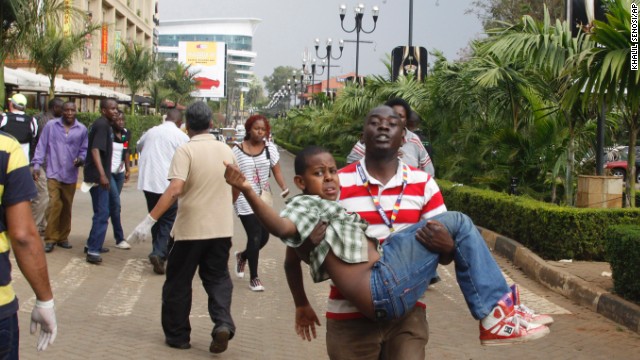
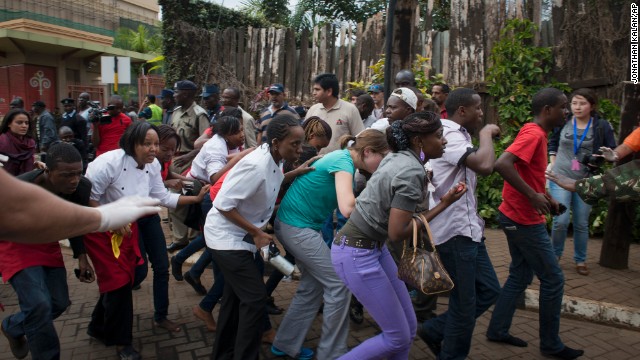
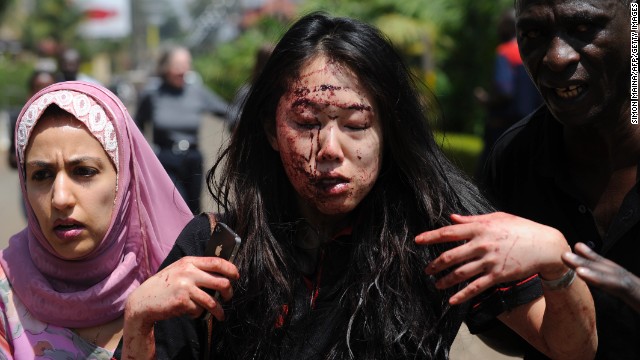
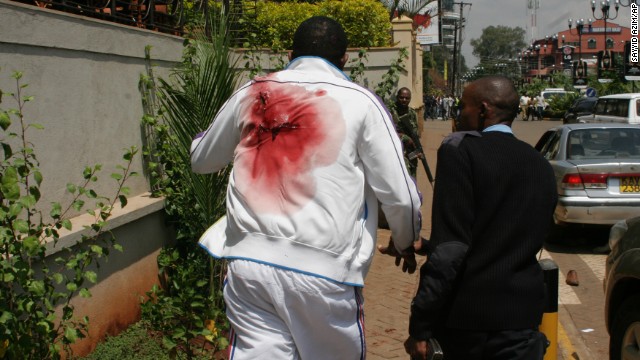
 Dozens of people have been killed in Nairobi as Islamic militants stormed a shopping mall in the worst terrorist attack Kenya has suffered since the US embassy bombings in east Africa that brought al-Qaida to international attention in the 1990s.
At least 39 people, including many women, children and "very close members" of Kenyan President Uhuru Kenyatta's family, were killed and more than 150 wounded when heavily armed attackers pulled up in several cars and shot their way into the most upmarket shopping centre in the Kenyan capital, ordering Muslims out if they could prove their religion by reciting a prayer.Shoppers, expatriates and rich Kenyans fled in any direction that might be safe: into back corners of stores, back service hallways and bank vaults. Over the next several hours, pockets of people poured out of the mall as undercover police moved in. Some of the wounded were being transported in shopping carts.
Dozens of people have been killed in Nairobi as Islamic militants stormed a shopping mall in the worst terrorist attack Kenya has suffered since the US embassy bombings in east Africa that brought al-Qaida to international attention in the 1990s.
At least 39 people, including many women, children and "very close members" of Kenyan President Uhuru Kenyatta's family, were killed and more than 150 wounded when heavily armed attackers pulled up in several cars and shot their way into the most upmarket shopping centre in the Kenyan capital, ordering Muslims out if they could prove their religion by reciting a prayer.Shoppers, expatriates and rich Kenyans fled in any direction that might be safe: into back corners of stores, back service hallways and bank vaults. Over the next several hours, pockets of people poured out of the mall as undercover police moved in. Some of the wounded were being transported in shopping carts.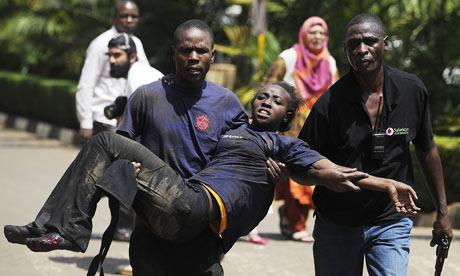
Russia may change stance on Syria if Assad ‘cheats’ - Kremlin
 Russia is in theory prepared to change its stance on Syria if it finds out that Syrian President Bashar Assad is “cheating,” the Kremlin chief of staff said Saturday.
“I am talking theoretically and hypothetically here, but if we see any certainty that Assad is cheating, we could change our position,” said Sergei Ivanov, head of Russia’s presidential administration, speaking at the International Institute for Strategic Studies’ Global Strategic Review conference in Stockholm.
Russia has been a staunch supporter of Assad’s government since fighting broke out in Syria in March 2011 between government forces and rebels. It has vociferously opposed the military intervention advocated by the US in the wake of a recent sarin gas attack on civilians near Damascus, and has repeatedly suggested that responsibility for the attack in late August lies with the armed rebels. The US and other Western countries say all evidence suggests that the government was to blame for the attack.
On Wednesday, Assad, who denies using sarin gas against his people, pledged to destroy his country’s chemical arsenal, as stipulated by an agreement reached last Saturday between Russia and the US.
Ivanov described another hypothetical situation: one in which it emerges that both the Syrian government and the opposition have used chemical weapons.
“I can imagine what the global community will do then,” Ivanov said, adding that in the event of such a scenario, Russia would take “only diplomatic action – what else can we do?”
The Kremlin chief of staff warned that the Syrian opposition would entirely lose interest in any future negotiations in the event of external military intervention.
“It will count on the US – like in Libya – bombing the regime until it’s wiped out, and in doing so paving the way of the militants to easy victory,” Ivanov said.
He reiterated that it was the US’s responsibility to get the Syrian opposition to attend talks with the Syrian government that the US and Russia have been trying to organize for several months.
“The assertion that cruise missile strikes will help move along the peace process is not only unrealistic, it’s irresponsible,” Ivanov added.
Russia is in theory prepared to change its stance on Syria if it finds out that Syrian President Bashar Assad is “cheating,” the Kremlin chief of staff said Saturday.
“I am talking theoretically and hypothetically here, but if we see any certainty that Assad is cheating, we could change our position,” said Sergei Ivanov, head of Russia’s presidential administration, speaking at the International Institute for Strategic Studies’ Global Strategic Review conference in Stockholm.
Russia has been a staunch supporter of Assad’s government since fighting broke out in Syria in March 2011 between government forces and rebels. It has vociferously opposed the military intervention advocated by the US in the wake of a recent sarin gas attack on civilians near Damascus, and has repeatedly suggested that responsibility for the attack in late August lies with the armed rebels. The US and other Western countries say all evidence suggests that the government was to blame for the attack.
On Wednesday, Assad, who denies using sarin gas against his people, pledged to destroy his country’s chemical arsenal, as stipulated by an agreement reached last Saturday between Russia and the US.
Ivanov described another hypothetical situation: one in which it emerges that both the Syrian government and the opposition have used chemical weapons.
“I can imagine what the global community will do then,” Ivanov said, adding that in the event of such a scenario, Russia would take “only diplomatic action – what else can we do?”
The Kremlin chief of staff warned that the Syrian opposition would entirely lose interest in any future negotiations in the event of external military intervention.
“It will count on the US – like in Libya – bombing the regime until it’s wiped out, and in doing so paving the way of the militants to easy victory,” Ivanov said.
He reiterated that it was the US’s responsibility to get the Syrian opposition to attend talks with the Syrian government that the US and Russia have been trying to organize for several months.
“The assertion that cruise missile strikes will help move along the peace process is not only unrealistic, it’s irresponsible,” Ivanov added.
New video exposes NYPD brutalizing students in protest against Petraeus’ professorship
Video footage has emerged showing New York police using heavy-handed tactics while detaining students protesting against former CIA chief David Petraeus becoming a university professor. RT spoke to one of the arrested rally participants.
The video shows a demonstrator being pressed against the pavement by several policemen, with one of the captors punching the man’s exposed kidney area.
The footage supports the claim of the activists from the City University of New York (CUNY) that police were brutal in dispersing a rally on Tuesday, when 75 people took part in a demonstration protesting former CIA chief, David Petraeus, being given a teaching position at the school.
Six of the protesters were arrested that day and have been charged with obstruction of governmental administration, riot, resisting arrest and disorderly conduct. One of them is 24-year-old Denise Ford, who spent 28 hours in police custody following the rally.
“They pushed us on to the street and they just started from there where they grabbed one of my comrades, slammed his head against the car and were just all on top of him”, Ford told RT’s Marina Portnaya. “Then I went to try help him out and in the process I ended up falling in between two cars on the back of my head. Then I proceeded to get up. And when I looked to the back of me there were cops on top of my other comrade. I witnessed they picked up his shirt and a police officer took two to five blows to his kidneys. And then a cop just came and grabbed me, pulled me back and cuffed me”. The Ad Hoc Committee Against the Militarization of CUNY, the organizer of the rally, issued a press release which described what happened on Tuesday as a “brutal, unprovoked police attack during a peaceful protest” and cited eyewitnesses accounts as proof of that.
"As students were chanting 'War Criminal Petraeus Out of CUNY Now,' I was shocked to see several police officers grab and brutalize one of the demonstrators," said City College student Yexenia Vanegas, according to the press-release. "This was completely unprovoked, as demonstrators made clear that they were there to defend our university in a peaceful protest."
Petreaus’ involvement with the university has been met with broad criticism from students, faculty and staff members who say they don’t want their college to host the man who oversaw wars, drone strikes and alleged torture tactics in the Middle East. Academics and graduate students at CUNY have released a statement calling for all charges to be dropped against the six students arrested by the NYPD.
“We emphatically support the efforts of these CUNY students to resist the attempts by the U.S. government and the CUNY administration to turn the university into an infamous “war college" with the appointment of Petraeus. He is responsible for countless deaths and innumerable destruction in Iraq and Afghanistan as a war commander and chief of the CIA,” the letter reads.
Petreaus’ plans to begin a new career as a visiting professor for CUNY have been met with criticism this summer. In July news emerged he would receive a six figure salary for the job. Following widespread indignation the ex CIA chief’s lawyer announced that the general would fill the post for just $1.
“Whether being paid $200,000 or $1, this mass murderer must not be allowed to teach at CUNY,” a leaflet calling for September protests reads.
The demonstration occurred during a fundraiser event, outside CUNY’s Macauley Honors College where Petraeus has been appointed to teach a class on public policy.
'Sexual jihad': Tunisian women go to Syria to 'relieve' holy warriors, return pregnant
 Tunisian women have traveled to Syria to wage 'sexual jihad', performing intercourse with dozens of Islamist fighters and returning home pregnant, Tunisia’s Interior Minister Lotfi ben Jeddou told MPs.
The Tunisian girls “are [sexually] swapped between 20, 30, and 100 rebels and they come back bearing the fruit of sexual contacts in the name of sexual jihad and we are silent doing nothing and standing idle,” the minister said during an address to the National Constituent Assembly on Thursday.
"After the sexual liaisons they have there in the name of 'jihad al-nikah' [sexual holy war] they come home pregnant," ben Jeddou continued.
Ben Jeddou did not elaborate on how many Tunisian women had returned to the country pregnant with the children of jihadist fighters.
Former Mufti of Tunisia Sheikh Othman Battikh in April said that 13 Tunisian girls “were fooled” into traveling to Syria to offer their sexual services to rebels fighters.
The mufti, who was subsequently dismissed from his post, described the so-called “sexual Jihad” as a form of “prostitution.”
“For jihad in Syria, they are now pushing girls to go there. Thirteen young girls have been sent for sexual jihad. What is this? This is called prostitution. It is moral educational corruption,” Al Arabiya cites the mufti as saying.
Some Sunni Muslim Salafists, however, consider sexual jihad as a legitimate form of holy war.
The sexual Jihad Fatwa made its first appearance in Syria several months back. It allows for fighters to enter sexual relations with a woman after agreeing upon a temporary contract that loses effect after a few hours, Fars News reported in August.
The temporary nature of the contract allows the woman to have sex with multiple partners a day.
In August, general director of public security service in Tunisia Mostafa Bin Omar said that a “sexual jihad cell” had been broken up in an area west of the country known for its concentration of Al-Qaeda fighters.
Bin Omar told Al Arabiya that Al-Qaeda affiliate Ansar Shariah was offering minor girls with their faces covered as sexual offerings for jihadist fighters.
Meanwhile, Bin Jeddou said the Interior Ministry has banned 6,000 Tunisians from traveling to Syria since March 2013. Eighty-six more individuals had been arrested on suspicion of forming 'networks' that send Tunisian youth for 'jihad' to Syria.
He also hit back at human rights groups who criticized the government’s decision to ban suspected militants from leaving the country. Many of those facing travel bans are under 35 years of age, he said.
“Our youths are positioned in the frontlines and are taught how to steal and raid [Syrian] villages,” Bin Jeddou said.
Hundreds of Tunisian men have set off for Syria to wage jihad against the government of President Bashar Assad, while thousands more have joined the ranks of militant Islamists in states like Iraq and Afghanistan over the last 15 years.
Tunisian women have traveled to Syria to wage 'sexual jihad', performing intercourse with dozens of Islamist fighters and returning home pregnant, Tunisia’s Interior Minister Lotfi ben Jeddou told MPs.
The Tunisian girls “are [sexually] swapped between 20, 30, and 100 rebels and they come back bearing the fruit of sexual contacts in the name of sexual jihad and we are silent doing nothing and standing idle,” the minister said during an address to the National Constituent Assembly on Thursday.
"After the sexual liaisons they have there in the name of 'jihad al-nikah' [sexual holy war] they come home pregnant," ben Jeddou continued.
Ben Jeddou did not elaborate on how many Tunisian women had returned to the country pregnant with the children of jihadist fighters.
Former Mufti of Tunisia Sheikh Othman Battikh in April said that 13 Tunisian girls “were fooled” into traveling to Syria to offer their sexual services to rebels fighters.
The mufti, who was subsequently dismissed from his post, described the so-called “sexual Jihad” as a form of “prostitution.”
“For jihad in Syria, they are now pushing girls to go there. Thirteen young girls have been sent for sexual jihad. What is this? This is called prostitution. It is moral educational corruption,” Al Arabiya cites the mufti as saying.
Some Sunni Muslim Salafists, however, consider sexual jihad as a legitimate form of holy war.
The sexual Jihad Fatwa made its first appearance in Syria several months back. It allows for fighters to enter sexual relations with a woman after agreeing upon a temporary contract that loses effect after a few hours, Fars News reported in August.
The temporary nature of the contract allows the woman to have sex with multiple partners a day.
In August, general director of public security service in Tunisia Mostafa Bin Omar said that a “sexual jihad cell” had been broken up in an area west of the country known for its concentration of Al-Qaeda fighters.
Bin Omar told Al Arabiya that Al-Qaeda affiliate Ansar Shariah was offering minor girls with their faces covered as sexual offerings for jihadist fighters.
Meanwhile, Bin Jeddou said the Interior Ministry has banned 6,000 Tunisians from traveling to Syria since March 2013. Eighty-six more individuals had been arrested on suspicion of forming 'networks' that send Tunisian youth for 'jihad' to Syria.
He also hit back at human rights groups who criticized the government’s decision to ban suspected militants from leaving the country. Many of those facing travel bans are under 35 years of age, he said.
“Our youths are positioned in the frontlines and are taught how to steal and raid [Syrian] villages,” Bin Jeddou said.
Hundreds of Tunisian men have set off for Syria to wage jihad against the government of President Bashar Assad, while thousands more have joined the ranks of militant Islamists in states like Iraq and Afghanistan over the last 15 years.
Where have India's females gone?
The New Delhi rape case left the whole world wondering why India is treating its women so badly. In fact, discrimination against women already starts in the womb: India has some of the most distorted sex-ratios in the world. There are regions where fewer than 800 girls are born for every 1,000 boys. For many reasons Indian culture prefers sons. An expensive bride-price, or dowry, is only one of them.So day-by-day, thousands of parents circumvent rarely enforced laws and have their baby daughters aborted after an ultrasound scan has revealed the sex of the fetus. It is estimated that India has been losing up to 12 million baby girls over the last three decades.
I wanted to find out what it means for a society if such a significant number of women are missing.
In one village just two hours drive outside Delhi, I met Narinder, a schoolteacher, and his family. He had three brothers and only one of them got married. There weren't enough brides, because the village has been aborting their daughters for decades.Narinder told me that he had already reached out to an agent who would find him a bride from afar. In fact, he planned to share this bride with his brothers.
I felt sorry for Narinder, because he totally understood that his misery was due to the fact that his village has been actively selecting for sons. Still, in a quiet moment, he confided to me, that if his purchased wife would be pregnant, he'd make sure it was a son. I was perplexed. Everyone in this village knew it was wrong to prefer sons over girls, everyone experienced the problems firsthand.
And still, like sleepwalkers, they continued their way, because culture dictates that sons are a blessing and daughters a curse.
After the Delhi rape case, the whole world looked at India in disbelief, its urban middle class took to the streets. I returned to India to meet Shafiq Khan, a former Maoist rebel, who realized that violence is not the way forward. Shafiq now uses his wit and bravery to make inroads into rural India's patriarchal societies.We hit the dusty streets, down to Haryana where Shafiq introduced me to women who do not have a voice, women for whom nobody demonstrates. They are abused and raped and sold like cattle and nobody cares. They are called Paro, or strangers. They are the sort of women Narinder will buy -- those who make up for the scores who are never born.
Akhleema and Tasleema, two sisters from Kolkata, were born into a poor family, before her aunt sold them via an agent to two brothers in Haryana, who could not find a bride. Within weeks, Akhleema was beaten so hard by her husband, that she lost hearing in her left ear. Both spend their time cooking, cleaning and tending the fields. They have no rights, no voice and, most shockingly: there is no way back. They have children with their men and it is culturally unacceptable to leave them behind.
But where are all these trafficked women coming from? In a cruel paradox, it's the poor northeastern states of India, like West Bengal or Assam, where sex-ratios aren't that skewed, that make up for large parts of all the missing women.
Assam is beautiful, even during the dry season. The Brahmaputra winds its way through the plains, quietly and peacefully.
"But don't be mistaken", Shafiq says. Because during the rainy season, the river erupts over its banks, destroys fields and villages. In these already poverty-stricken regions, flooding takes away the little people have. Thousands of families are pushed into poverty and helplessness. They end up in flood shelters, vulnerable and easy prey for traffickers, like Saleha and her husband Husain. Their daughter Jaida went missing two years ago. They saw a man entering the hamlet and talking to Jaida. She vanished without a trace.
In a remote village on the dusty floodplains we meet Halida. She had just turned 14, when a man kidnapped her while fetching water. For two days he raped Halida, told her that he would bring her to Delhi in order to sell her. Halida could escape, but now she cannot go to school anymore, because all the children know of the rape and tease her. The parents, day-laborers, cannot find work anymore, because they are ostracized by the whole village. The rape destroyed the family.
While the trafficker may have lost his prey, it's unlikely that he will ever be punished. The police are corrupt and the more destruction there is, the easier it will be for him to find new victims.
Thus closes a vicious circle in which millions of India's women are trapped. The prejudices against women are so deeply engrained in the cultural fabric, that only a combined effort, old and young, urban and rural, will be able to break it once and for all.
Afghanistan stores 40,000 tons of opiates – Russia’s drug watchdog
Some forty thousand tons of opiates are stockpiled in Afghanistan, Russian authorities revealed, urging coalition forces to focus on the elimination of drug laboratories in the Islamic Republic.
It is unlikely that the situation with the production and trafficking of drugs will worsen after the scheduled withdrawal of NATO combat troops from Afghanistan at the end of 2014, says Viktor Ivanov, the head of Russia's Federal Drug Control Service (FSKN).
“Narcotics manufacturing is well run in Afghanistan. Around 40,000 tons of opiates are already stored there. So, in fact, they have reached saturation point,” he said as quoted by Interfax.
The amount of drugs in Afghanistan is so large, that markets in neighboring countries are overloaded, Ivanov added.
The Russian official called on the US-led coalition in the republic to work on the elimination of drug laboratories, which he sees as a possible solution to the problem. Afghan law enforcers don’t have enough resources to cope with drug crimes in the country on their own, he explained.
For Russia – where an estimated 8.5 million people use drugs – battling the problem remains vitally important. Between 20,000 and 30,000 people die in the country annually through drug abuse, and around 100,000 from narcotics-related illnesses, according to FSKN.
Russian drug police seized and destroyed about a ton of Afghan opiates this summer alone, the drug control service chief said.
Russia is the target market for over 2,000 laboratories in the northern Afghan provinces.
“Afghan heroin continues to shape the Russian drug market,” Ivanov said earlier in September, at a meeting in Troitsk.
Heroin production in Afghanistan has increased 40 times since NATO began its ‘War on Terror’ in 2001, according to FSKN. Over one million people have died from Afghan heroin since then.
Afghanistan retains its position as the world leader in the production and cultivation of opium – which is used to make heroin – the UN said in its World Drug Report 2013.
Moscow has repeatedly pushed for the eradication of poppy fields in Afghanistan as the simplest solution. This year, illegal poppy cultivation in Afghanistan is expected to reach record proportions, the UN’s Office on Drugs and Crime said in a report published in April.
“Poppy cultivation is not only expected to expand in areas where it already existed in 2012, but also in new areas or places where poppy cultivation had been stopped,” the document said, adding that if there is no disruption to this year’s poppy harvest, Afghanistan will have the dubious honor of producing 90% of the world’s opium.
Armed groups(TALIBAN ZOMBIES) begin patrolling Peshawar streets
 After increasing influence in the limits of Badaber and Matani police stations, armed groups have started patrolling the streets in Sarband and Pishtakhara areas to set the alarm bells ringing in the provincial capital.
“A large number of armed people, suspected to be militants, have recently started patrolling the streets in the limits of Sarband and Pishtakhara police stations. Their movement has panicked the residents of the villages located close to the boundary with Khyber Agency,” a source told The News.
The source said the groups operating in the areas are also targeting Hayatabad and University Road where not only the incidents of kidnapping have increased but a few houses were also bombed and hit with rockets in the last few days. The area is without a supervisory officer as its deputy superintendent of police (DPS) was transferred due to political pressure by a local politician for refusing his ‘illegal orders’.
The militants have already increased their influence in the limits of the Matani and Badaber police stations, causing a serious threat to the towns on both sides of the Kohat-Peshawar Road. The towns in the two police stations have witnessed hundreds of attacks by the militants from the nearby Khyber Agency and Darra Adamkhel during the last several years.
There are reports that the activities of the armed groups have also increased in the urban areas, including Gulbahar, Faqirabad,Yakatoot, Bhanamari and Mathra. Kidnappings, calls for ransom, robberies and other crimes are on the rise in the limits of all these police stations as well as the rest of the city.
The city witnessed a large number of target killings in the past few months. However, the groups involved in these attacks were busted last month, bringing down the number of the targeted attacks.
Peshawar had witnessed a similar situation a few years ago when armed groups were active all over the provincial metropolis. They carried out attacks in the urban and cantonment areas of the city before making their escape back to the tribal areas.
The spokesman for the capital city police, Waqar Ahmad, rejected reports about the patrolling of the militants in the limits of Peshawar. “The Sarband as well as the Badaber and Matani areas are fully under the control of police,” said the spokesman.
About the crimes in the rest of the city, the police spokesman said a number of rings involved in calls for extortion as well kidnapping and robberies were busted recently.
However, a late night attack on a masjid in Achini village in the limits of Sarband police station speaks volumes of the increasing influence of the militants in the area. At least three persons were killed and 20 injured when the armed men attacked the Pirano Masjid in the village with hand grenade and automatic weapons late Thursday night.
The FIR of the incident was lodged on Friday in the Sarband Police Station. There were reports that a search operation was also carried out in the area, during which over a dozen suspects were held.
The area is located close to the boundary with Khyber Agency. There were reports that the police were hesitant to reach the spot and rescue the wounded. The wounded were shifted to the hospital by the villagers.
After increasing influence in the limits of Badaber and Matani police stations, armed groups have started patrolling the streets in Sarband and Pishtakhara areas to set the alarm bells ringing in the provincial capital.
“A large number of armed people, suspected to be militants, have recently started patrolling the streets in the limits of Sarband and Pishtakhara police stations. Their movement has panicked the residents of the villages located close to the boundary with Khyber Agency,” a source told The News.
The source said the groups operating in the areas are also targeting Hayatabad and University Road where not only the incidents of kidnapping have increased but a few houses were also bombed and hit with rockets in the last few days. The area is without a supervisory officer as its deputy superintendent of police (DPS) was transferred due to political pressure by a local politician for refusing his ‘illegal orders’.
The militants have already increased their influence in the limits of the Matani and Badaber police stations, causing a serious threat to the towns on both sides of the Kohat-Peshawar Road. The towns in the two police stations have witnessed hundreds of attacks by the militants from the nearby Khyber Agency and Darra Adamkhel during the last several years.
There are reports that the activities of the armed groups have also increased in the urban areas, including Gulbahar, Faqirabad,Yakatoot, Bhanamari and Mathra. Kidnappings, calls for ransom, robberies and other crimes are on the rise in the limits of all these police stations as well as the rest of the city.
The city witnessed a large number of target killings in the past few months. However, the groups involved in these attacks were busted last month, bringing down the number of the targeted attacks.
Peshawar had witnessed a similar situation a few years ago when armed groups were active all over the provincial metropolis. They carried out attacks in the urban and cantonment areas of the city before making their escape back to the tribal areas.
The spokesman for the capital city police, Waqar Ahmad, rejected reports about the patrolling of the militants in the limits of Peshawar. “The Sarband as well as the Badaber and Matani areas are fully under the control of police,” said the spokesman.
About the crimes in the rest of the city, the police spokesman said a number of rings involved in calls for extortion as well kidnapping and robberies were busted recently.
However, a late night attack on a masjid in Achini village in the limits of Sarband police station speaks volumes of the increasing influence of the militants in the area. At least three persons were killed and 20 injured when the armed men attacked the Pirano Masjid in the village with hand grenade and automatic weapons late Thursday night.
The FIR of the incident was lodged on Friday in the Sarband Police Station. There were reports that a search operation was also carried out in the area, during which over a dozen suspects were held.
The area is located close to the boundary with Khyber Agency. There were reports that the police were hesitant to reach the spot and rescue the wounded. The wounded were shifted to the hospital by the villagers.
Latest Pakistani Hopes For Peace Talks With Taliban Could Be Short-Lived
 0n September 9, political parties at a government-sponsored All Parties Conference (APC) in Pakistan agreed on dialogue with militants as the first option to address ongoing terrorism in the country.
The daylong meeting was attended and briefed by, among others, Pakistan's two most powerful men: Army Chief General Ashfaq Pervez Kayani and the director-general of the country's prime intelligence agency, Inter-Services Intelligence (ISI), Lieutenant General Zaheer-ul-Islam.
The government's offer of talks with the Tehrik-e-Taliban Pakistan (TTP) amid increasing incidents of terrorism was regarded by many as a goodwill gesture and was widely welcomed in Pakistan.
However, any high hopes suffered a serious blow when two senior army officers were killed in a roadside bomb attack in an area near the Afghan border on September 15 and the claim of responsibility instantly came from the TTP.
In a resulting fit of anger, it was the army chief who came out with a blunt warning, saying that "terrorists would not be allowed to take advantage of the military's support to the political process."
Since then, potential peace negotiations with the Taliban have become the topic of heated debate in the Pakistani print and electronic media, with some key questions being raised about the proposed process:
a. Among the 62 proscribed militant outfits, which should be chosen for such talks?
b. Would the Taliban surrender their arms and accept state authority?
c. Would militants agree to end their jihadist activities inside Pakistan and across the border into Afghanistan?
d. Would the Waziristan-based militants agree to cut ties with international terrorist groups like Al-Qaeda and the Islamic Movement of Uzbekistan (IMU)?
e. And would they accept the Pakistani Constitution by ending their armed struggle for the implementation of a Shari'a-based system.
Many Pakistani analysts suggest that if the answer to any of these questions is a clear "no," then the last option left to the Pakistani government is the use of force rather than any futile attempt at talks.
Commenting on the government's olive branch to the Taliban and the latter's killing of two senior army officers, the leading English-language daily "Express Tribune" asked:
"How many more of the upper echelons of the military are we to see murdered before the state makes a robust response? Time to walk the walk Mr prime minister, if you can because the time for merely talking the talk is over."
Another English daily newspaper, "Dawn," in an editorial on September 16 questioned the Pakistan army's policy toward the Taliban and warned that before hoping to achieve lasting peace, the military establishment needed to do away with its allegedly duplicitous policies of "good" and "bad" Taliban:
"Has the army leadership publicly distanced itself from groups like the Difa-e-Pakistan Council and sundry right-wingers running around the country trying to stir up trouble?"
In an op-ed piece in "Dawn," retired police officer Tariq Khosa asked the government and the military leadership to work together to counter the Taliban threat:
"If the political leadership and the military establishment want to be on the same page regarding the post-APC developments, they will have to come up with a purposeful and well-planned response to the offensive launched by the TTP and its affiliates despite the offer of talks and the unanimous political will to give peace a chance."
In his op-ed piece for the "Daily Times" on September 19, columnist Muhammad Taqi argued that "without setting the parameters for what exactly is the state willing to concede to the TTP in exchange for peace, the prime minister and his APC have left the door wide open for the terrorists to keep making highly perverse demands."
Since 2001, the government of Pakistan has signed various peace agreements with militants in different parts of northern Pakistan. But critics complain that each agreement has ended up further strengthening the Taliban and eroding people's trust in writ of the state.
Elaborating on the same point in an op-ed piece for "The News International" on September 19, columnist Kamila Hayat said that "each new cease-fire called over the years appears to have given the militants time to re-group, strengthen their ranks and welcome back freed fighters."
Following the killing of the two army officers in the September 15 bomb attack claimed by the TTP, some leading columnists asked for an across-the-board action against the militants. That came against the backdrop of years in which the Pakistani army has been accused of using certain jihadist groups as "strategic assets" in Afghanistan and India.
Columnist Kamran Shafi, in an op-ed piece for the "Express Tribune" on September 20, wrote:
"The question is: have our strategists finally decided that there are no ‘good' Taliban; that all of the many factions are joined at the hip, be they the Mehsuds or the Haqqanis or the Fazlullahs or the Punjabis or whatever's? That all of them ultimately pay allegiance to Mullah Omar, that al Qaeda is the Mother of All Umbrellas and that strategic depth in Afghanistan is dead as a dodo? And, finally, that though most difficult it will be, North Waziristan must be cleansed come hell or high water?"
Conservative Urdu-language media also expressed anger over the Taliban attacks and advised the government not to hesitate to employ force if the first option (talks) was not going to bear positive results.
The "Daily Express," in an editorial on September 19, wrote that "the government peace talks offer to the Taliban was a golden chance which they [Taliban] wasted following their attack on the army officers in Dir Upper of northern Pakistan."
Writing in another Urdu-language newspaper, "Daily Jang," columnist Irfan Siddiqi said the killing of army officers and the instant claim of responsibility by the Taliban have shattered hopes for peace talks. Though still supporting a midpoint between the use of force and negotiations, Irfan Siddiqi said the Taliban claim that it killed the army officers on September 15 has provided a golden opportunity to those who support the use of force in order to crush the Taliban insurgency.
0n September 9, political parties at a government-sponsored All Parties Conference (APC) in Pakistan agreed on dialogue with militants as the first option to address ongoing terrorism in the country.
The daylong meeting was attended and briefed by, among others, Pakistan's two most powerful men: Army Chief General Ashfaq Pervez Kayani and the director-general of the country's prime intelligence agency, Inter-Services Intelligence (ISI), Lieutenant General Zaheer-ul-Islam.
The government's offer of talks with the Tehrik-e-Taliban Pakistan (TTP) amid increasing incidents of terrorism was regarded by many as a goodwill gesture and was widely welcomed in Pakistan.
However, any high hopes suffered a serious blow when two senior army officers were killed in a roadside bomb attack in an area near the Afghan border on September 15 and the claim of responsibility instantly came from the TTP.
In a resulting fit of anger, it was the army chief who came out with a blunt warning, saying that "terrorists would not be allowed to take advantage of the military's support to the political process."
Since then, potential peace negotiations with the Taliban have become the topic of heated debate in the Pakistani print and electronic media, with some key questions being raised about the proposed process:
a. Among the 62 proscribed militant outfits, which should be chosen for such talks?
b. Would the Taliban surrender their arms and accept state authority?
c. Would militants agree to end their jihadist activities inside Pakistan and across the border into Afghanistan?
d. Would the Waziristan-based militants agree to cut ties with international terrorist groups like Al-Qaeda and the Islamic Movement of Uzbekistan (IMU)?
e. And would they accept the Pakistani Constitution by ending their armed struggle for the implementation of a Shari'a-based system.
Many Pakistani analysts suggest that if the answer to any of these questions is a clear "no," then the last option left to the Pakistani government is the use of force rather than any futile attempt at talks.
Commenting on the government's olive branch to the Taliban and the latter's killing of two senior army officers, the leading English-language daily "Express Tribune" asked:
"How many more of the upper echelons of the military are we to see murdered before the state makes a robust response? Time to walk the walk Mr prime minister, if you can because the time for merely talking the talk is over."
Another English daily newspaper, "Dawn," in an editorial on September 16 questioned the Pakistan army's policy toward the Taliban and warned that before hoping to achieve lasting peace, the military establishment needed to do away with its allegedly duplicitous policies of "good" and "bad" Taliban:
"Has the army leadership publicly distanced itself from groups like the Difa-e-Pakistan Council and sundry right-wingers running around the country trying to stir up trouble?"
In an op-ed piece in "Dawn," retired police officer Tariq Khosa asked the government and the military leadership to work together to counter the Taliban threat:
"If the political leadership and the military establishment want to be on the same page regarding the post-APC developments, they will have to come up with a purposeful and well-planned response to the offensive launched by the TTP and its affiliates despite the offer of talks and the unanimous political will to give peace a chance."
In his op-ed piece for the "Daily Times" on September 19, columnist Muhammad Taqi argued that "without setting the parameters for what exactly is the state willing to concede to the TTP in exchange for peace, the prime minister and his APC have left the door wide open for the terrorists to keep making highly perverse demands."
Since 2001, the government of Pakistan has signed various peace agreements with militants in different parts of northern Pakistan. But critics complain that each agreement has ended up further strengthening the Taliban and eroding people's trust in writ of the state.
Elaborating on the same point in an op-ed piece for "The News International" on September 19, columnist Kamila Hayat said that "each new cease-fire called over the years appears to have given the militants time to re-group, strengthen their ranks and welcome back freed fighters."
Following the killing of the two army officers in the September 15 bomb attack claimed by the TTP, some leading columnists asked for an across-the-board action against the militants. That came against the backdrop of years in which the Pakistani army has been accused of using certain jihadist groups as "strategic assets" in Afghanistan and India.
Columnist Kamran Shafi, in an op-ed piece for the "Express Tribune" on September 20, wrote:
"The question is: have our strategists finally decided that there are no ‘good' Taliban; that all of the many factions are joined at the hip, be they the Mehsuds or the Haqqanis or the Fazlullahs or the Punjabis or whatever's? That all of them ultimately pay allegiance to Mullah Omar, that al Qaeda is the Mother of All Umbrellas and that strategic depth in Afghanistan is dead as a dodo? And, finally, that though most difficult it will be, North Waziristan must be cleansed come hell or high water?"
Conservative Urdu-language media also expressed anger over the Taliban attacks and advised the government not to hesitate to employ force if the first option (talks) was not going to bear positive results.
The "Daily Express," in an editorial on September 19, wrote that "the government peace talks offer to the Taliban was a golden chance which they [Taliban] wasted following their attack on the army officers in Dir Upper of northern Pakistan."
Writing in another Urdu-language newspaper, "Daily Jang," columnist Irfan Siddiqi said the killing of army officers and the instant claim of responsibility by the Taliban have shattered hopes for peace talks. Though still supporting a midpoint between the use of force and negotiations, Irfan Siddiqi said the Taliban claim that it killed the army officers on September 15 has provided a golden opportunity to those who support the use of force in order to crush the Taliban insurgency.
Pakistan: Christian woman faces discrimination in WAPDA-Pakpattan office by Muslim official
http://www.pakistanchristianpost.com/Farah a Christian Seventh Day Adventist Church Member is a senior clerk in WAPDA office Pakpattan, she is widow and being a Christian working with honesty, Mohammad Saeed SDO Wapda Pakpattan is her officer in WAPDA Office Pakpattan. Two senior clerks are working under Mohammad Saeed SDO WAPDA Pakpattan, one is Farah and the other is Mohammad Zakir a Muslim man. On 04/09/2013 in WAPDA office Pakpattan when Farah a Seventh Day Adventist Church Member was doing her office work in her office room at 9: 30 AM, in the meanwhile Mohammad Saeed SDO of bonga hyat sub-division WAPDA Pakpattan came in his office, adjacent to Farah office room and ordered to his peon ( Nibe Qasid ) Asim Pervaiz collect all the registers of Farah and place them out of the office room, room should be emptied from Farah's Registers and give place to Farah out of the office room and he also used immoral and vulgar language and then Farah left her seat and SDO gave the office room of farah to a newly appointed person of 3rd scale, Farah is working with scale 9. Javaid Sahotra Advocate, Pr. Yaqoob Amanat SDA Church Pakpattan, Elder Arshd Danniel, Nadeem Zaib National Coordinator of united Church Ministries and Nadeem Gill Evangelist and Christian community Pakpattan and Sahiwal Division strongly condemned this severe act of religious discrimination Javaid Sahotra Advocate and Pastor Yaqoob Amanat has sent applications to president of Islamic Jmauhria Pakistan, Chief Justice of Supreme court of Pakistan, Chief Justice of Lahore High Court, Governor Punjab, Chairman WAPDA, Chief Executive MEPCO WAPDA Multan, SE MEPCO WAPDA Sahiwal Division, And XEN MEPCO WAPDA Pakpattan for action against SDO and Demanded compliance of Article 25 and Article 27 of Constitution of Pakistan 1973, where stated that there shal be no discrimination on basis of sex. Javaid Sahotra and Pr. Yaqoob amanat added that actually Mohammad Saeed SDO does not bear a Christian lady on this Seat. They requested to the Government please save Christians from religious discrimination in Pakistan.
Pakistan: Christian slaughtered in Karachi over blasphemy allegation

 A Christian man was killed by a Muslim fellow worker in Karachi’s Liaqatabad Jewellers Market on Sept 14 for allegedly blaspheming against the Holy Prophet (PBUH) but the deceased’s family and police say that the killing was the result of a business rivalry, Pakistan Today learnt on Friday.
George Masih told Pakistan Today on the telephone from Karachi that his father, 58-year-old Boota Masih, worked as a gold scavenger in the Liaqatabad Gold Market for 30 years, and that the killer, identified as Muhammad Asif, also gathered gold dust from jewellers’ rugs or work carpets at the market.
“We were told that Asif kept shouting that my father was an infidel and had spoken derogatory words against Prophet Muhammad (PBUH) as he mercilessly stabbed him and then slit his throat with a dagger,” Masih said. “A large number of people, including four policemen and private security guards of the market, witnessed the entire scene, but no one tried to stop the killer, who walked away waving the dagger in his hand,” claimed Masih.
Masih said the family had registered case No. 226/13 with the Liaqatabad Police Station, but that police were making little effort to arrest the murderer.
“We asked everyone in the market if my father had said or done anything to deserve such a brutal death, but not one person complained against him,” he said. “They all said that he was a humble man and had never committed blasphemy as alleged by the killer. But if my father was innocent, why did the people just stand there and watch him being killed in this manner?”
He added that when police came to the murder scene, no one came forward to record a statement.
“Even if my father had said something to offend the killer, is this how he should have been punished?” he said. “The entire market testifies to his humility, but not one of them has come on the record to bear witness to the crime.”
Masih said that the police attitude had not changed, as officers had yet to make an arrest.
“After my father’s killing in the presence of so many people, it is quite clear that any Muslim can get away with murder just by claiming that they had killed a blasphemer,” he said.
Liaqatabad Jewellers Association General Secretary Muhammad Faraz indicated Boota Masih was likely killed out of jealousy.
“I was not present at the crime scene, but all of us are sure that Masih was not a blasphemer,” Faraz said. “Asif was apparently jealous of Masih because most jewellers only allowed the Christian to scavenge gold particles from their shops. He was a humble man and liked by everyone, which probably provoked Asif to kill him. We condemn the killing of an innocent man in the name of our Holy Prophet (PBUH).”
Sub-Inspector Hamid Ali Gondal, who is investigating the case, told Pakistan Today that investigations showed that Asif had used the blasphemy accusation against the Christian as a pretext to kill Masih.
“Asif is absconding since the murder – we have made several raids and also taken some of his relatives into custody to pressure him into surrendering,” he said. “Only when we arrest Asif will the real reason behind Masih’s murder be revealed,” he added.
“Only when they arrest Asif will we come to know why he killed my father,” George Masih said. “My younger brother and I have stopped going to work, fearing someone will kill us just like they killed my father.”
A Christian man was killed by a Muslim fellow worker in Karachi’s Liaqatabad Jewellers Market on Sept 14 for allegedly blaspheming against the Holy Prophet (PBUH) but the deceased’s family and police say that the killing was the result of a business rivalry, Pakistan Today learnt on Friday.
George Masih told Pakistan Today on the telephone from Karachi that his father, 58-year-old Boota Masih, worked as a gold scavenger in the Liaqatabad Gold Market for 30 years, and that the killer, identified as Muhammad Asif, also gathered gold dust from jewellers’ rugs or work carpets at the market.
“We were told that Asif kept shouting that my father was an infidel and had spoken derogatory words against Prophet Muhammad (PBUH) as he mercilessly stabbed him and then slit his throat with a dagger,” Masih said. “A large number of people, including four policemen and private security guards of the market, witnessed the entire scene, but no one tried to stop the killer, who walked away waving the dagger in his hand,” claimed Masih.
Masih said the family had registered case No. 226/13 with the Liaqatabad Police Station, but that police were making little effort to arrest the murderer.
“We asked everyone in the market if my father had said or done anything to deserve such a brutal death, but not one person complained against him,” he said. “They all said that he was a humble man and had never committed blasphemy as alleged by the killer. But if my father was innocent, why did the people just stand there and watch him being killed in this manner?”
He added that when police came to the murder scene, no one came forward to record a statement.
“Even if my father had said something to offend the killer, is this how he should have been punished?” he said. “The entire market testifies to his humility, but not one of them has come on the record to bear witness to the crime.”
Masih said that the police attitude had not changed, as officers had yet to make an arrest.
“After my father’s killing in the presence of so many people, it is quite clear that any Muslim can get away with murder just by claiming that they had killed a blasphemer,” he said.
Liaqatabad Jewellers Association General Secretary Muhammad Faraz indicated Boota Masih was likely killed out of jealousy.
“I was not present at the crime scene, but all of us are sure that Masih was not a blasphemer,” Faraz said. “Asif was apparently jealous of Masih because most jewellers only allowed the Christian to scavenge gold particles from their shops. He was a humble man and liked by everyone, which probably provoked Asif to kill him. We condemn the killing of an innocent man in the name of our Holy Prophet (PBUH).”
Sub-Inspector Hamid Ali Gondal, who is investigating the case, told Pakistan Today that investigations showed that Asif had used the blasphemy accusation against the Christian as a pretext to kill Masih.
“Asif is absconding since the murder – we have made several raids and also taken some of his relatives into custody to pressure him into surrendering,” he said. “Only when we arrest Asif will the real reason behind Masih’s murder be revealed,” he added.
“Only when they arrest Asif will we come to know why he killed my father,” George Masih said. “My younger brother and I have stopped going to work, fearing someone will kill us just like they killed my father.”
Bilawal Bhutto’s birthday today
http://www.sananews.net/
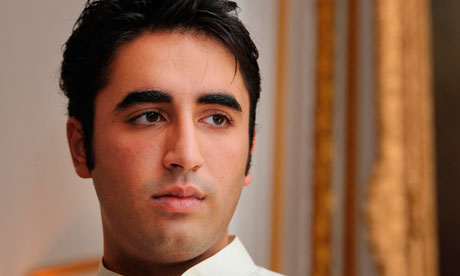
“Education for Peace”, stresses Bilawal Bhutto Zardari on International Day of Peace
http://mediacellppp.wordpress.com/

Subscribe to:
Posts (Atom)